
The Gamble House – Pasadena, CA
August 1, 2025Captivating Court Appearance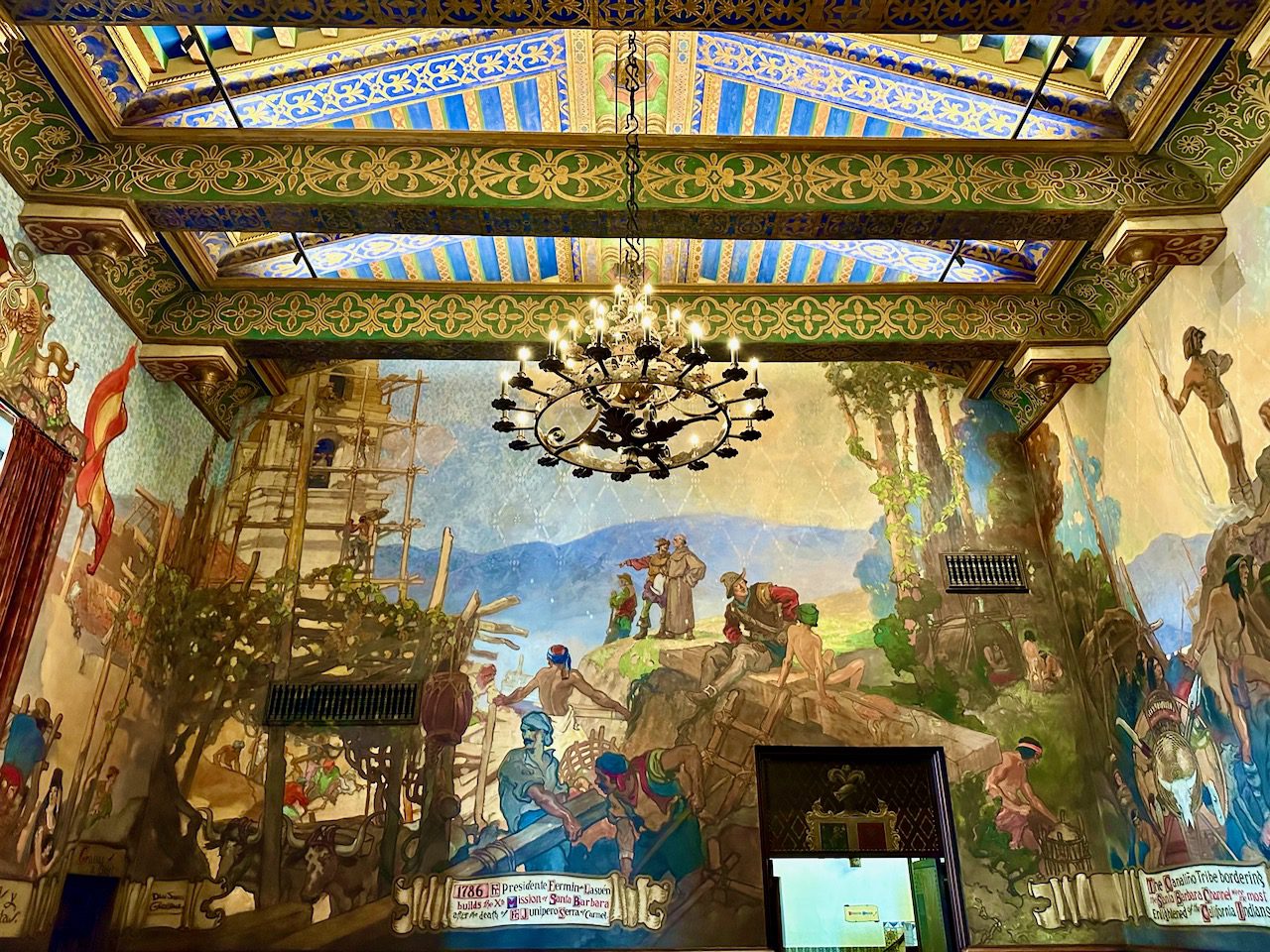
Santa Barbara County Courthouse – Santa Barbara, CA
Visited: September 2025
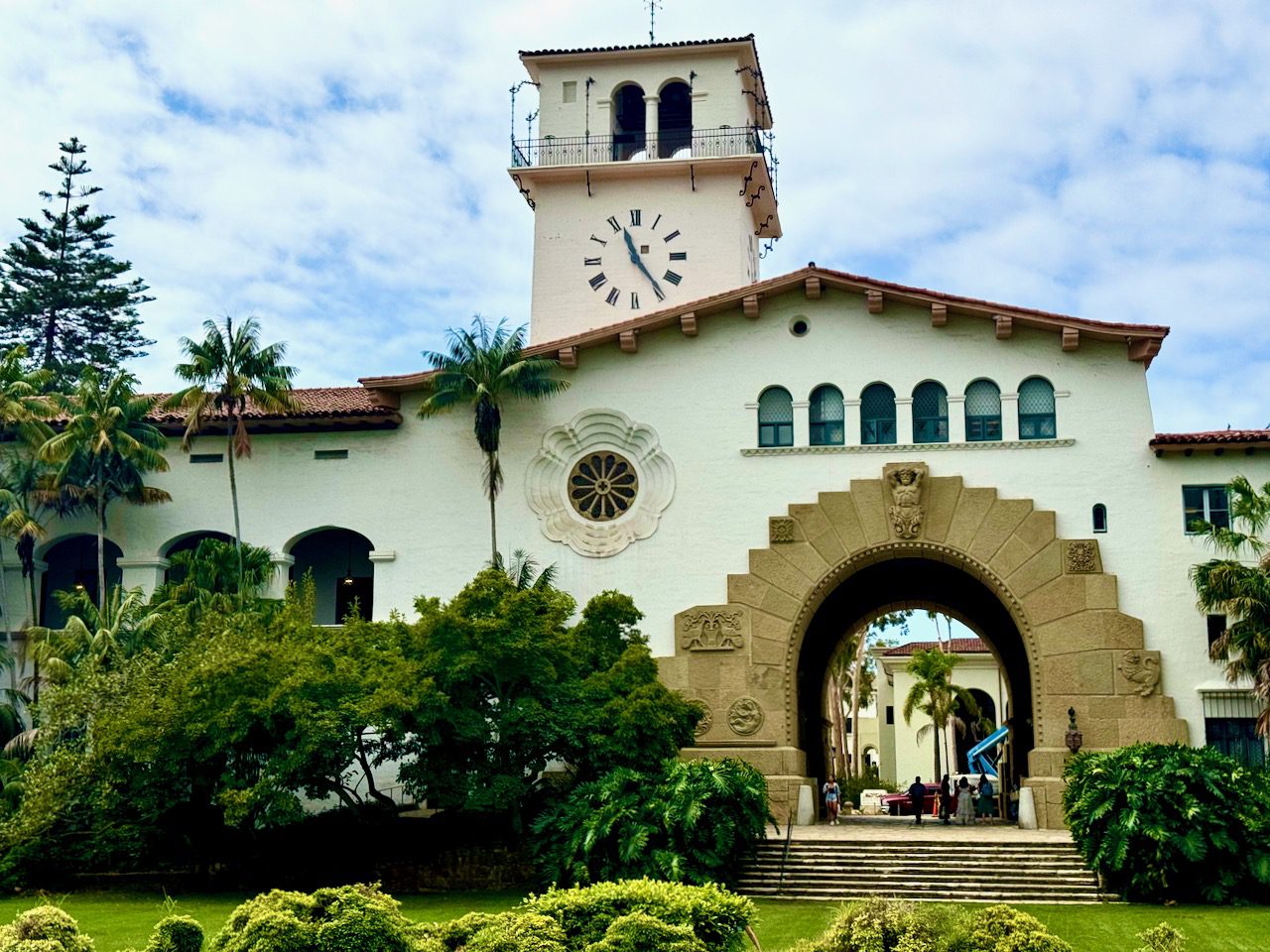
On a glorious Southern California morning, Tracy and I traveled up the coast to Santa Barbara for a court appearance, more specifically to tour its historic courthouse, which had been on our radar for years. There are regularly scheduled docent-led tours of this Spanish Colonial Revival style courthouse Monday through Friday at 10:30 a.m. and 2:00 p.m., except for court holidays. No reservations are required.
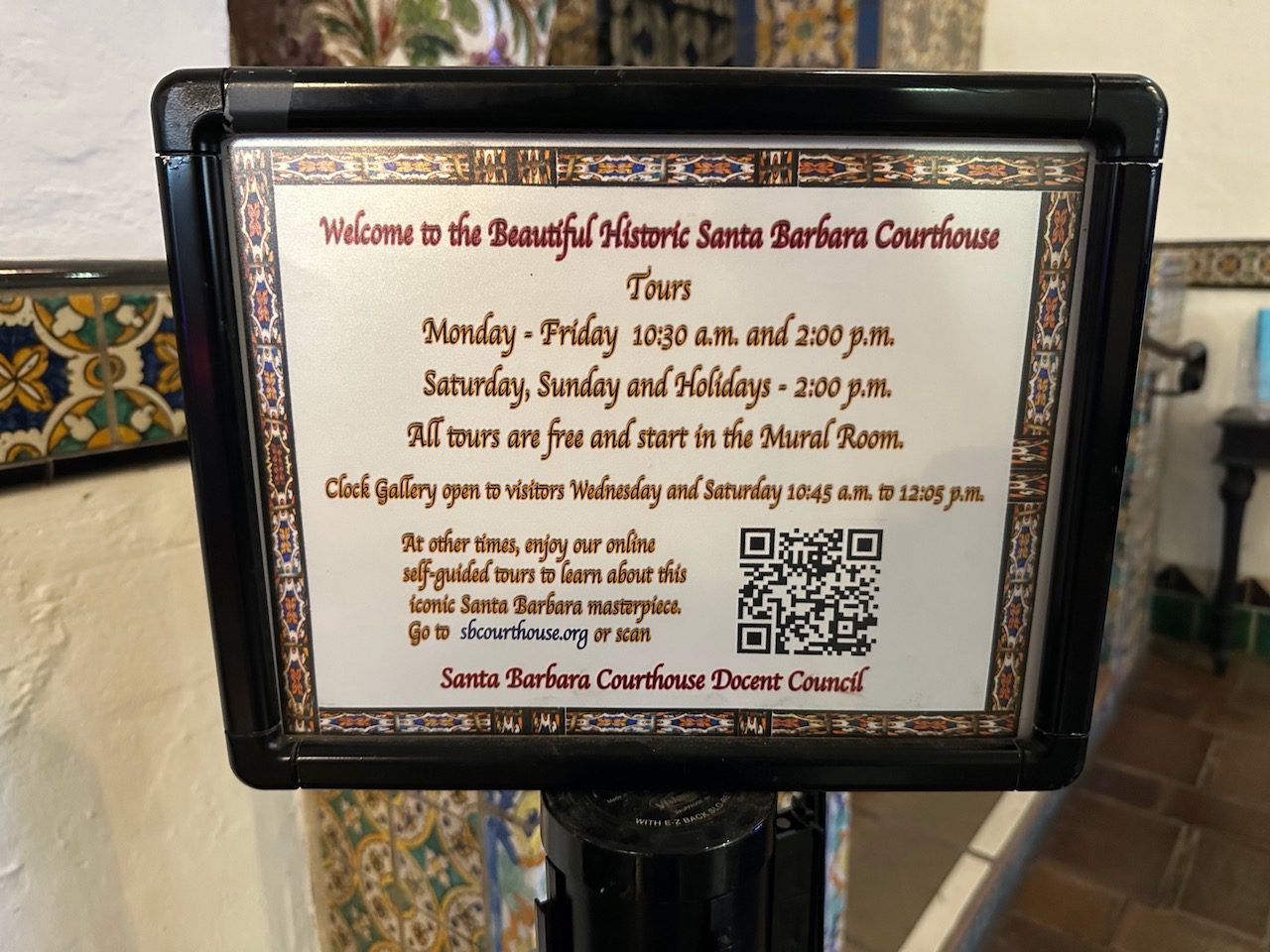
The docent on our morning tour was a retired doctor, who you could tell loved Santa Barbara, the courthouse and its history, which made for an interesting and informative tour. After going through security (it is still a working courthouse), we met up with the docent and tour group in the Mural Room to begin the tour.
The city of Santa Barbara was incorporated in 1850, the same year California became the 31st state. The original courthouse at this location was built in 1872 in the Greek Revival style and was expanded in 1890 with a Queen Anne style building. By 1919, Santa Barbara was a bustling community and there was a competition for a new courthouse, but the plans were put on hold due to the expense. In 1925 downtown Santa Barbara was nearly leveled by 6.5 magnitude earthquake. The courthouse suffered serious damage and had to be demolished. (Photo courtesy SB Courthouse.)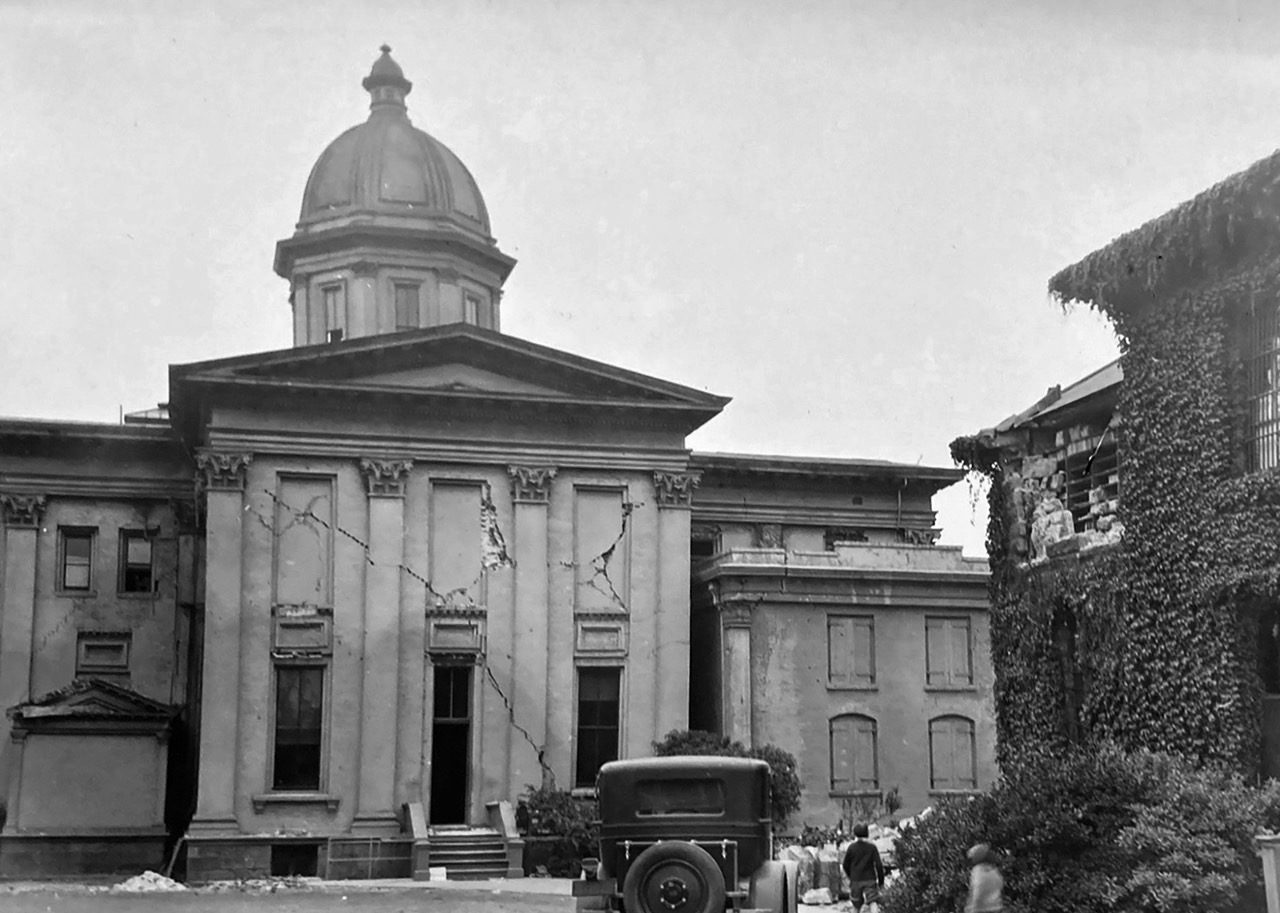
The City Council gave its drafting committee 24 hours to come up with a plan to rebuild the courthouse. Due to the immense popularity of the Spanish Colonial Revival architecture featured at the 1915 Panama-California Exposition in San Diego, the drafting commission designed a Spanish-Andalusian castle style building with an estimated construction cost of $900,000. Construction started in 1926 and was completed in 1929 with a final price tag of $1,368,000. And how did the city fund this project when they didn’t have any money in 1919? Fortunately for Santa Barbara, oil was struck nearby, and the resulting taxes paid for the building which was completed just a few months before the stock market crash of 1929 and the resulting Great Depression.
In addition to designing the courthouse, the drafting committee offered free plans to anyone to rebuild with the only caveat that the building must be in the Spanish-Andalusian castle style which is why you see so many buildings and homes with red-tiled roofs, white stucco facades and decorative balconies in Santa Barbara.
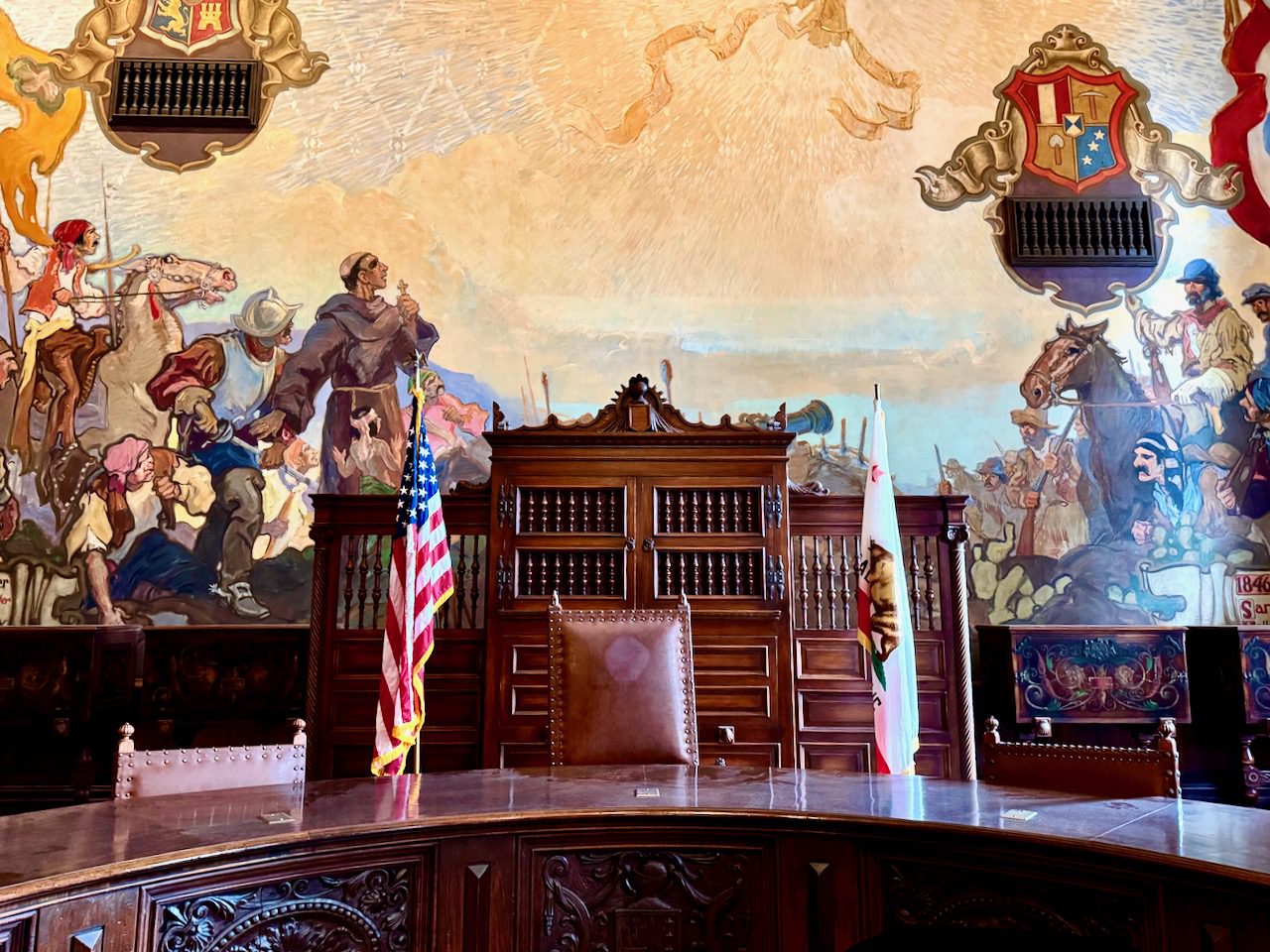
With a brief history behind us, our docent began discussing the interior of the building starting with the magnificent Mural Room (originally the County Supervisors’ Assembly Room, which is now utilized as a ceremonial room).  The murals cover 4,200 square feet and were completed in four months by self-trained artist Dan Sayre Groesbeck and two assistants. Mr. Groesbeck worked as a set designer with movie director Cecil B. DeMille. The murals were painted on muslin cloth so that they would flex in the event of an earthquake.
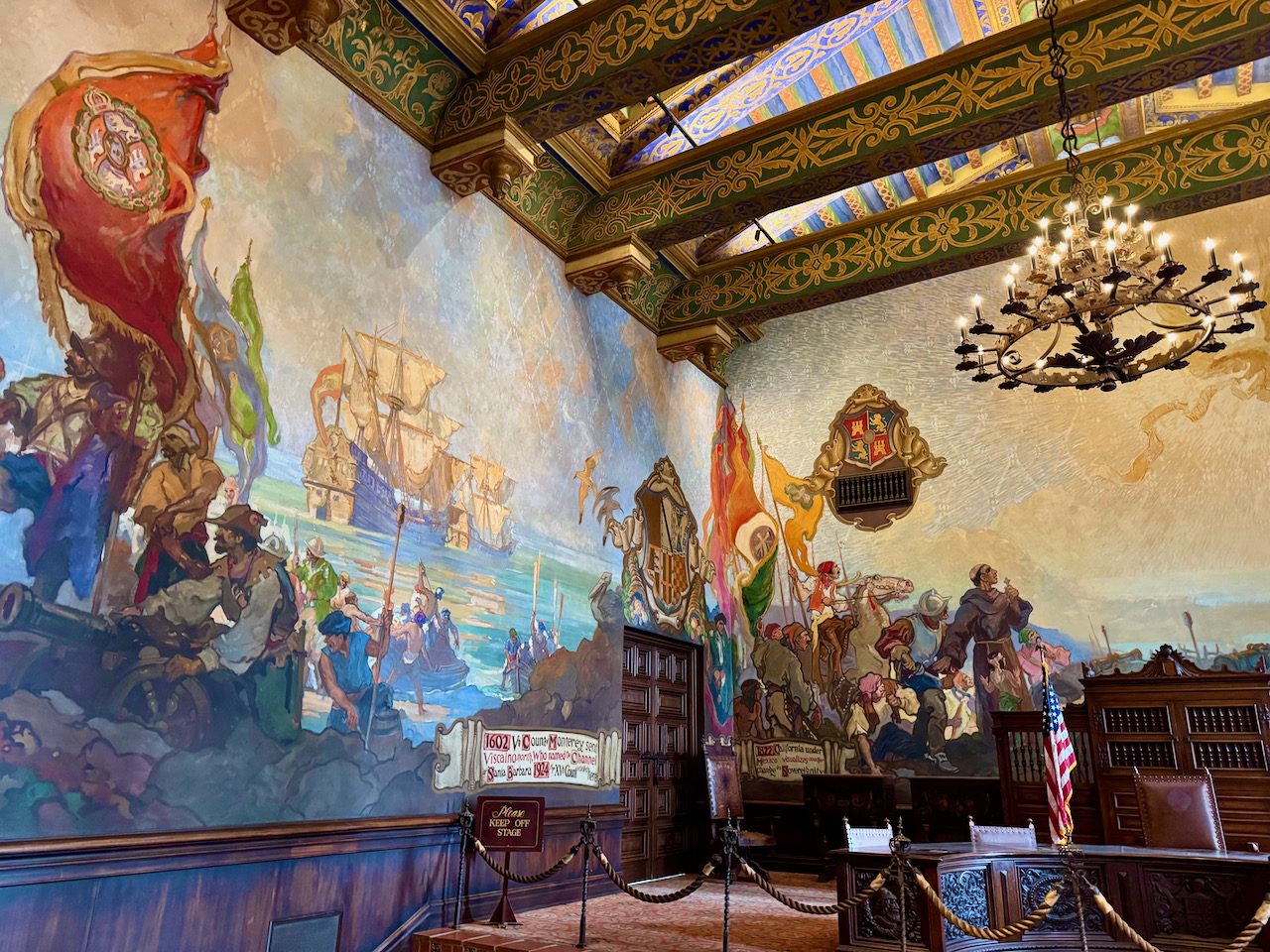

The murals depict Santa Barbara’s rich history which starts with the Chumash, who lived in the Santa Barbara area for 12,000 years before the Spanish arrived. Juan Rodriguez Cabrillo is shown coming ashore in 1542. On the right, explorer and mapmaker Sebastian Vizcaino is shown arriving in 1602. Vizcaino named one of the offshore islands in honor of Saint Barbara, which later led to the name given to the city, county and channel.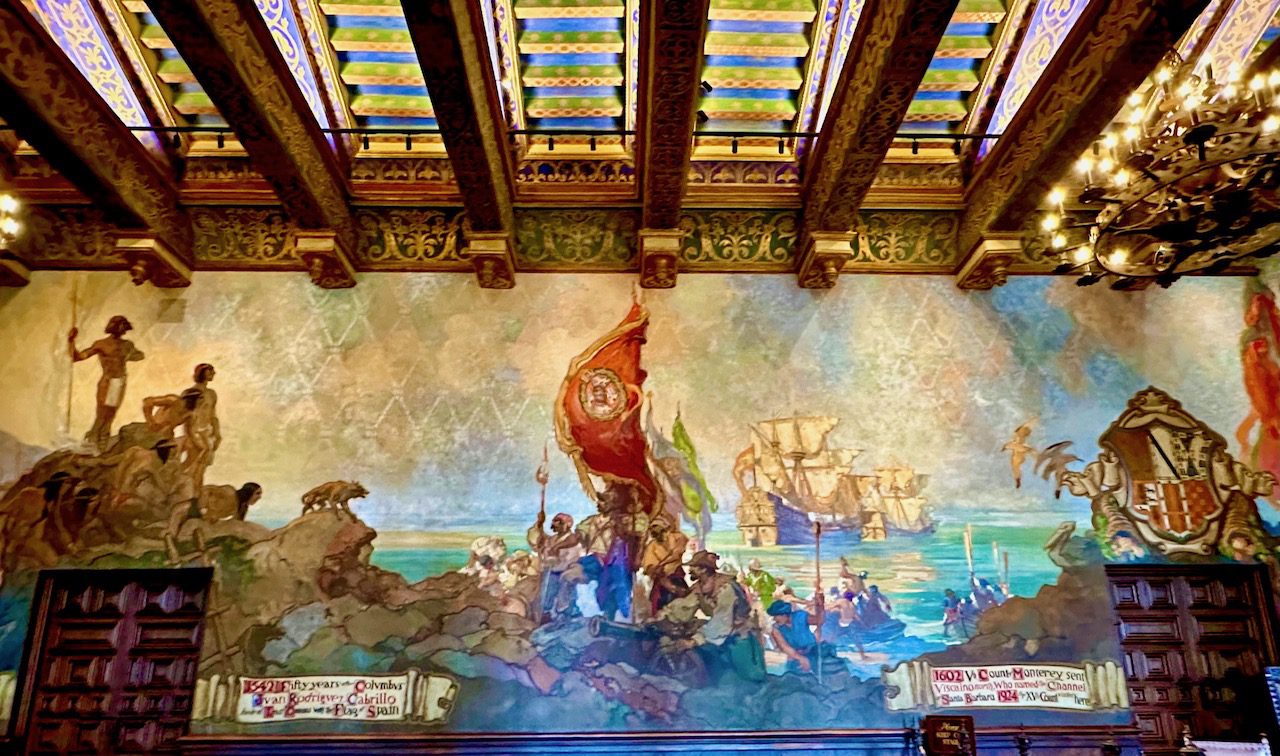
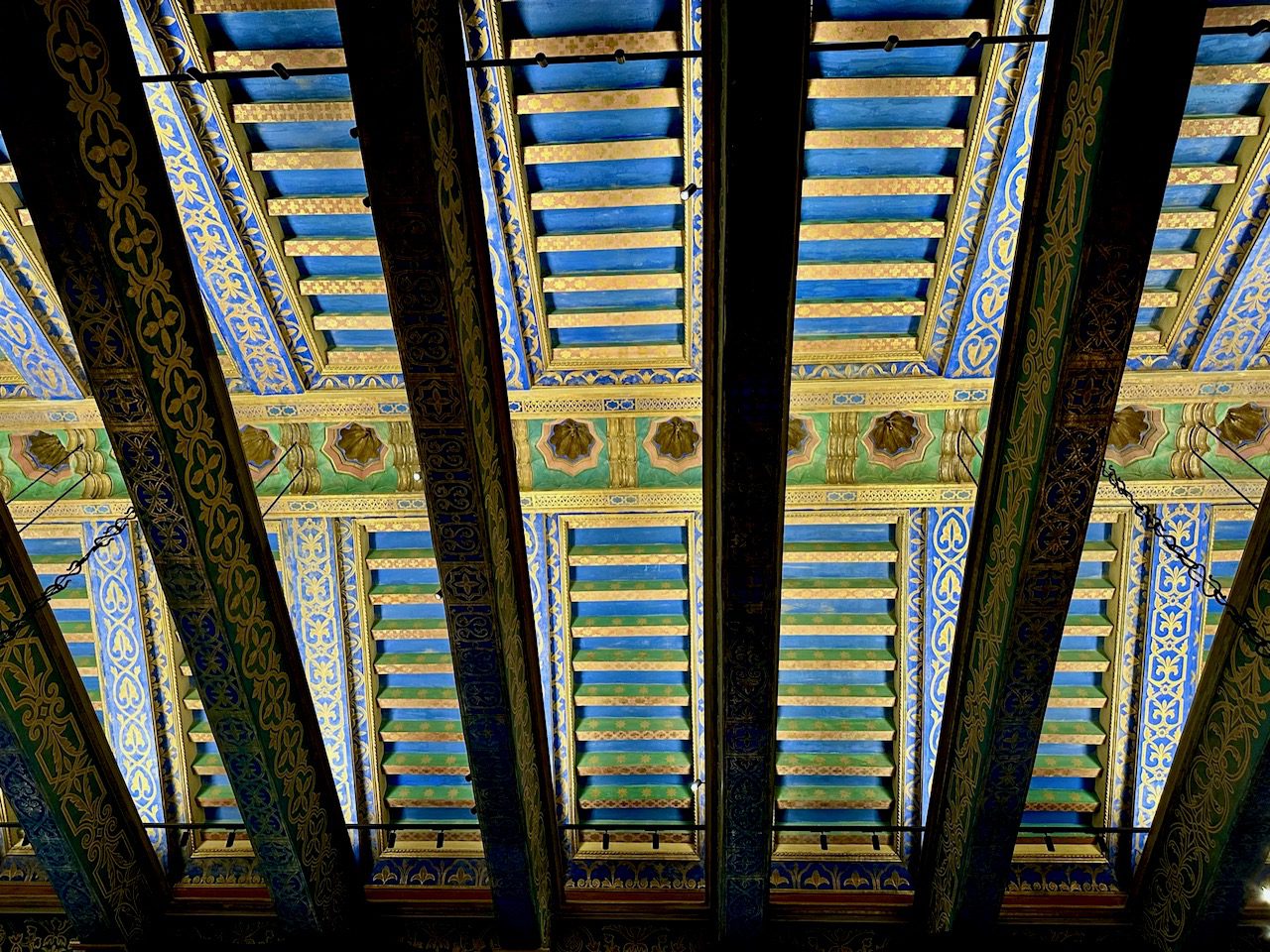
The ceiling was painted by artist John Smeraldi from Sicily, Italy who worked at the Vatican prior to immigrating to the United States where he painted the ceilings at Grand Central Station in New York, the Biltmore Hotel in Los Angeles and Pasadena’s Civic Auditorium among others. The Mural Room ceiling is based on the 12th century Palatine Chapel and Cathedral of Monreale in Palmero, Italy.
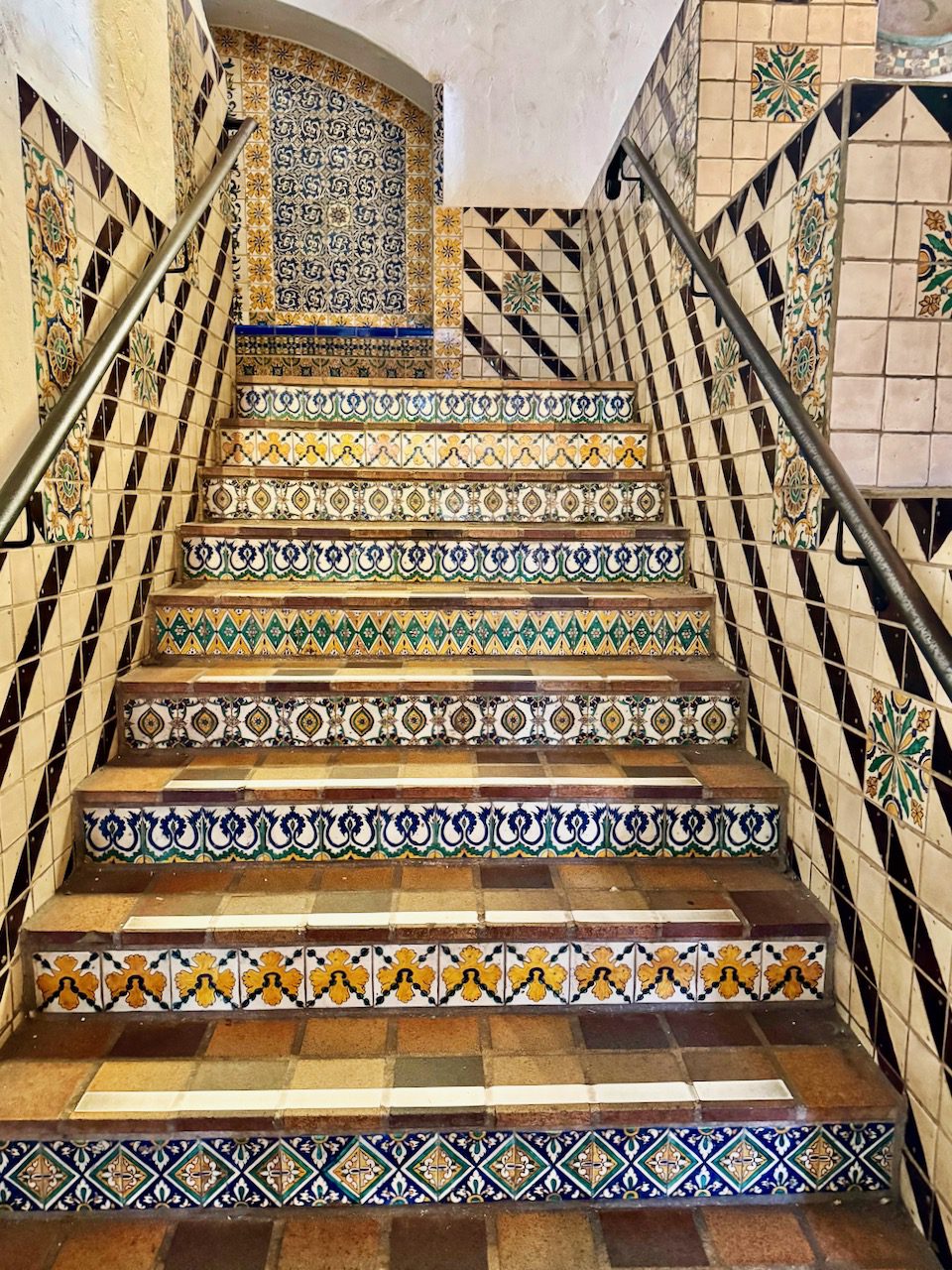
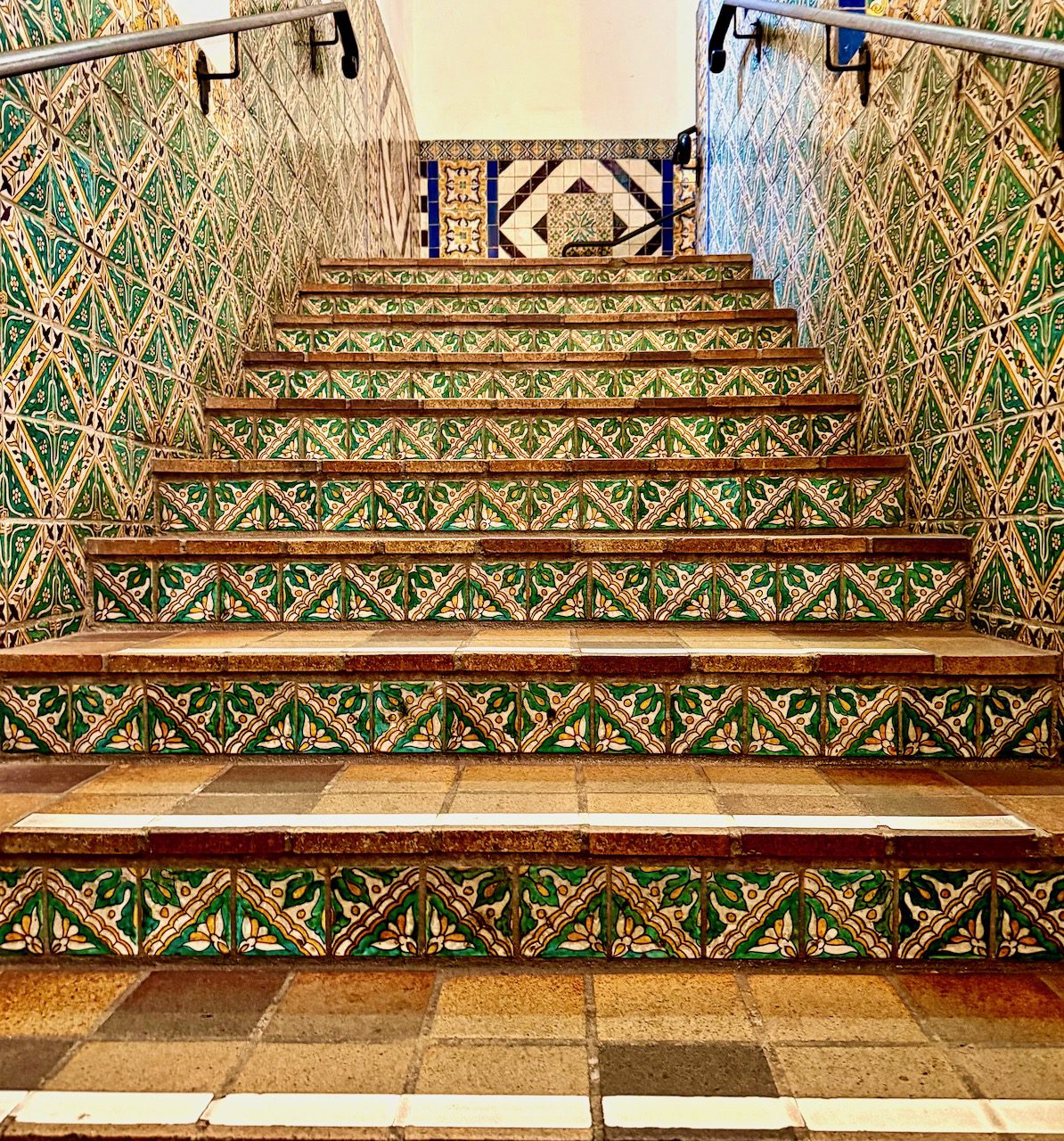
The ten-foot tall lantern hanging above the gorgeous staircase was based on Spanish galleon’s ship lantern. The Moroccan-style geometric patterned tiles on the staircase came from Tunisia in North Africa.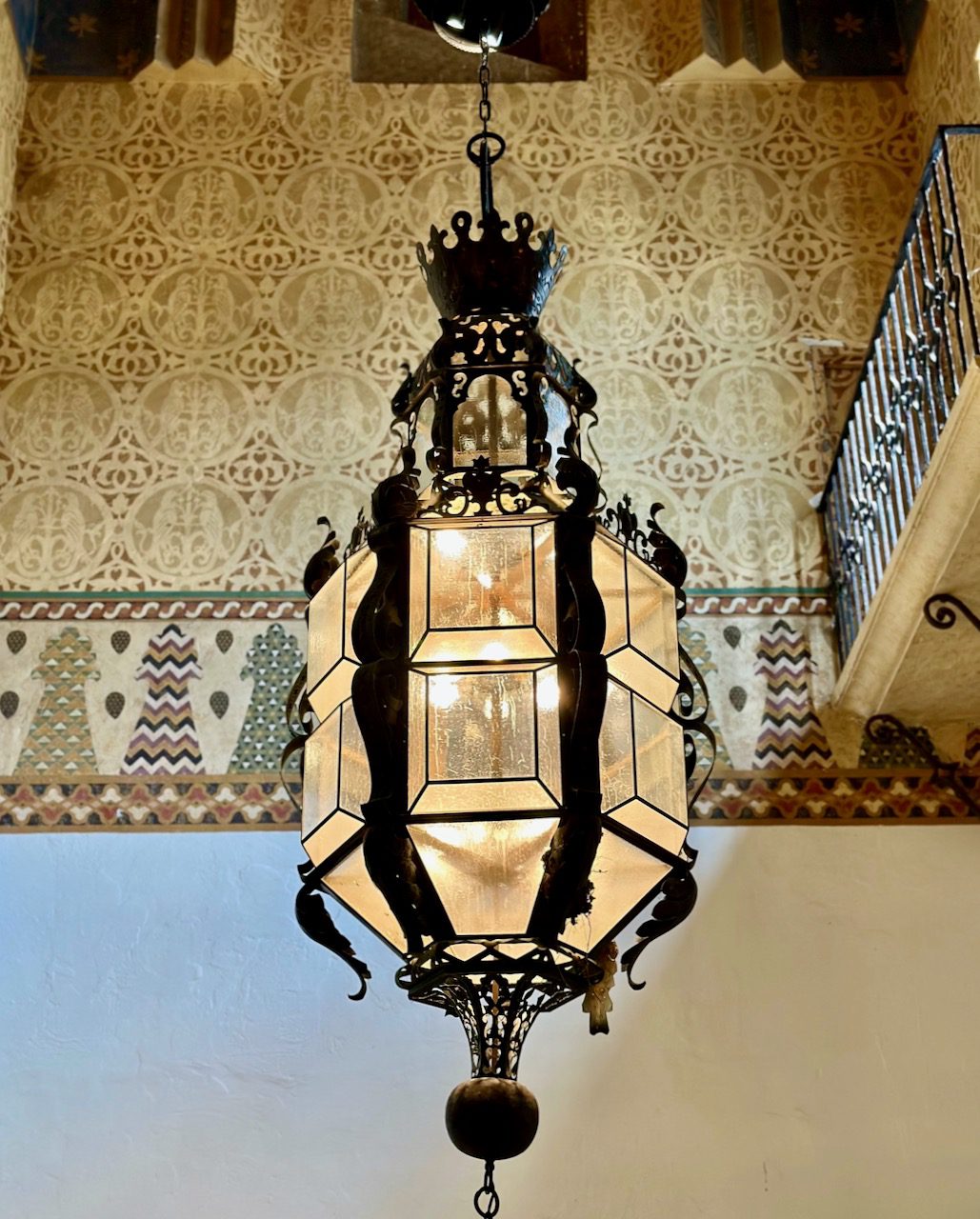
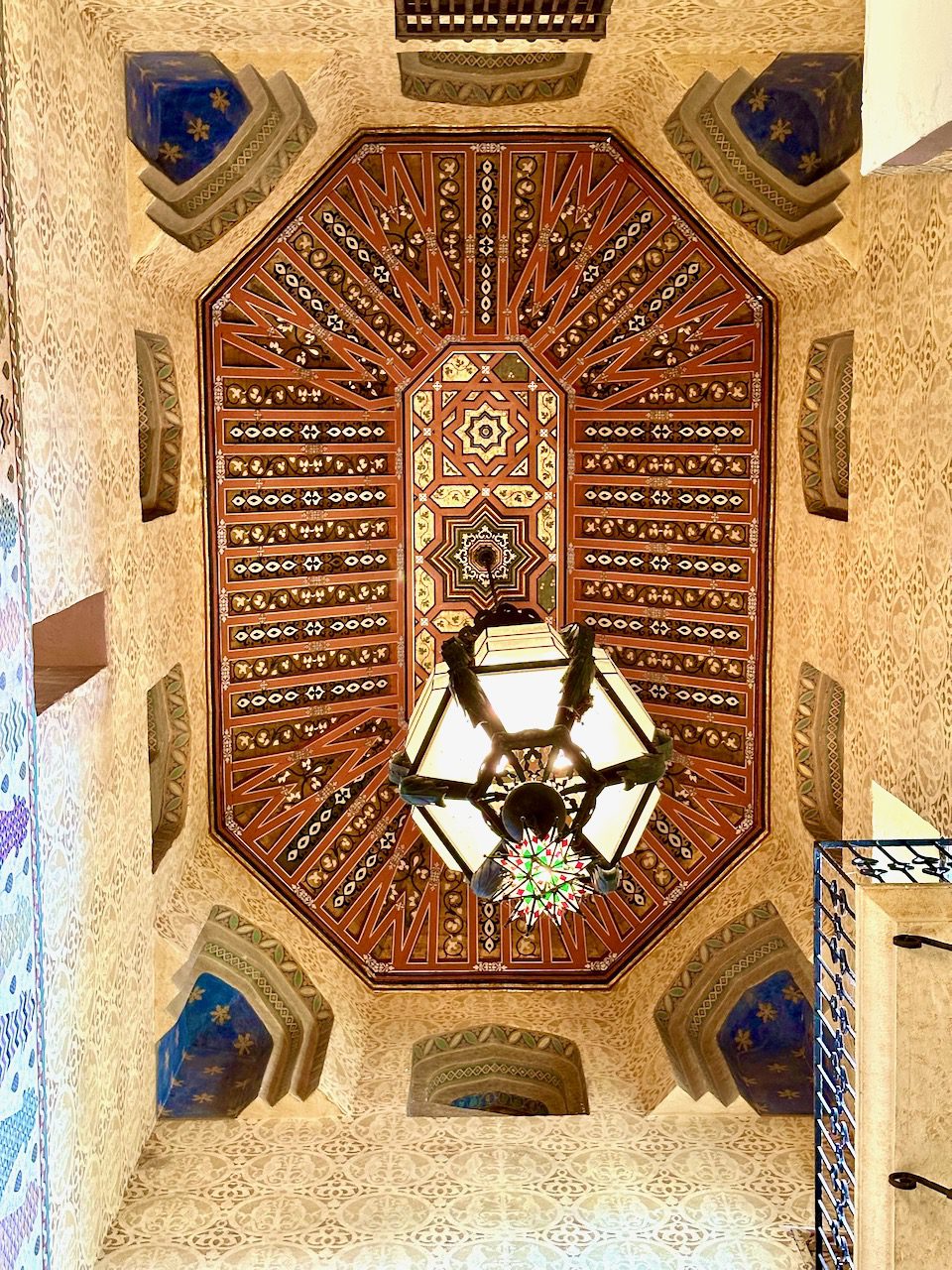
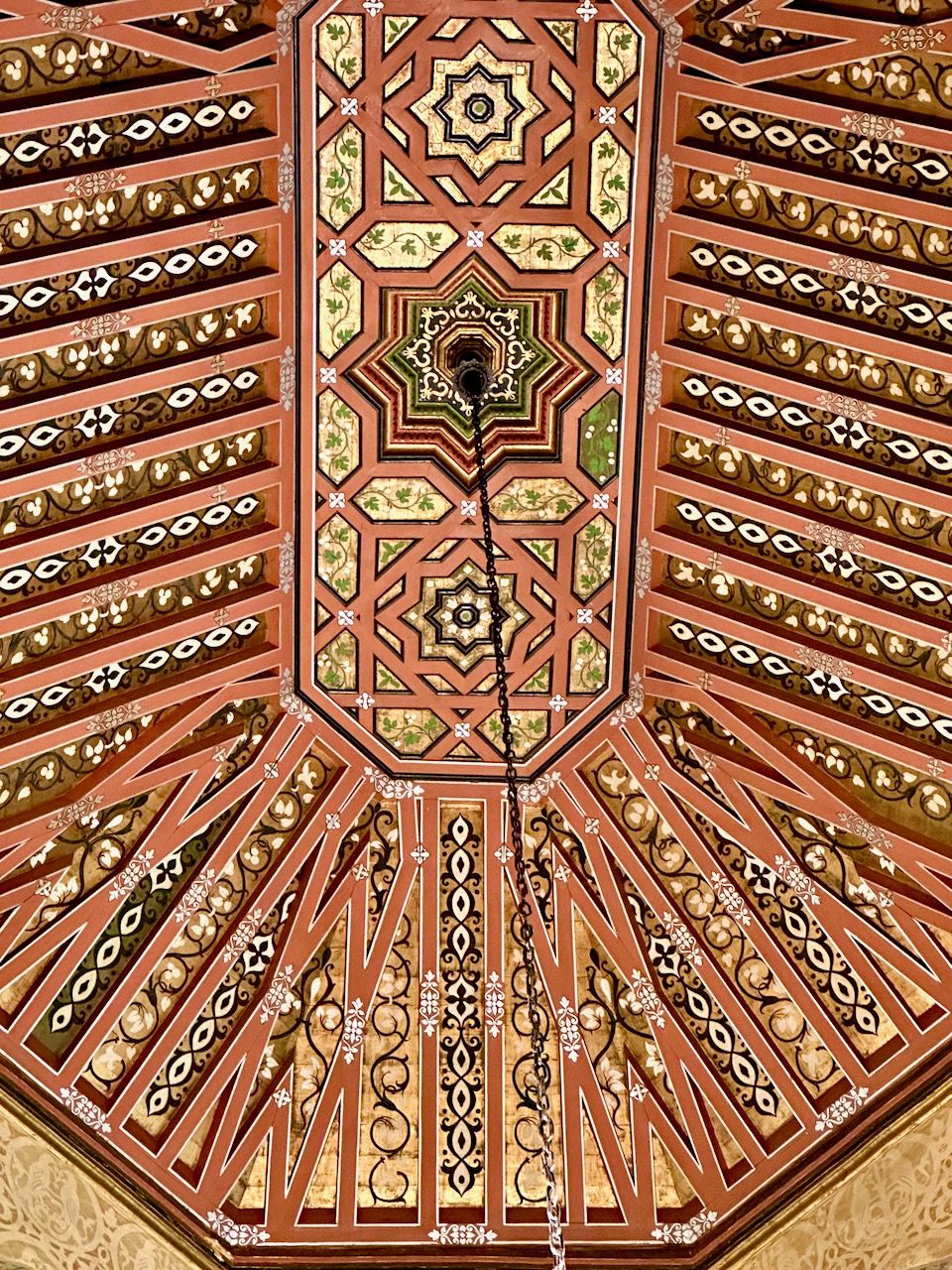
The ceiling over the staircase was also painted by Smeraldi this time in the Mudéjar-style and was inspired by the 14th century synagogue of El Tránsito in Toledo, Spain.
The painting hanging above the staircase was painted by Alan Gilbert Cram and is Dwight Murphy on his horse, El Rey de Los Reyes, the first Palomino horse registered with the Palomino Horse Association. Murphy, who was instrumental in Santa Barbara’s resurgence after the earthquake, is also credited with saving the golden Palomino horse from extinction (otherwise there may have never been Roy Rogers’ Trigger or Randolph Scott’s Stardust or Sam, the Palomino horse ridden by Sheriff Bart in Blazing Saddles).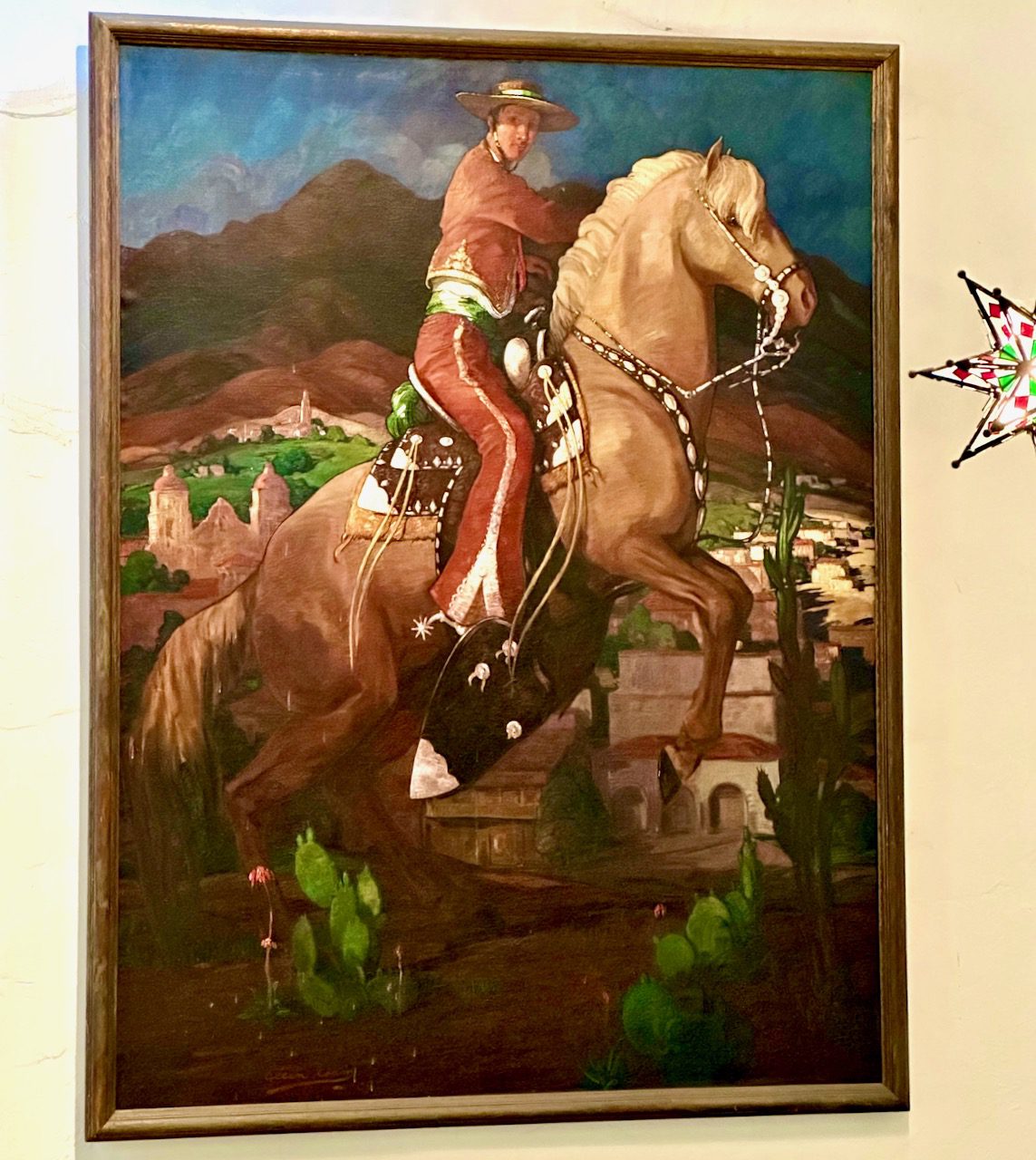
Murphy was such an important figure in Santa Barbara County that in his obituary the Santa Barbara News-Press dubbed him the city’s “Man of the Century.”
Most of the tiles on the staircase have distinctive Moorish-Islamic geometric pattern, while others have a Spanish design.
The large portrait of Cabrillo’s Landing on the second floor was painted by Dan Groesbeck and was why he was hired to paint the Mural Room.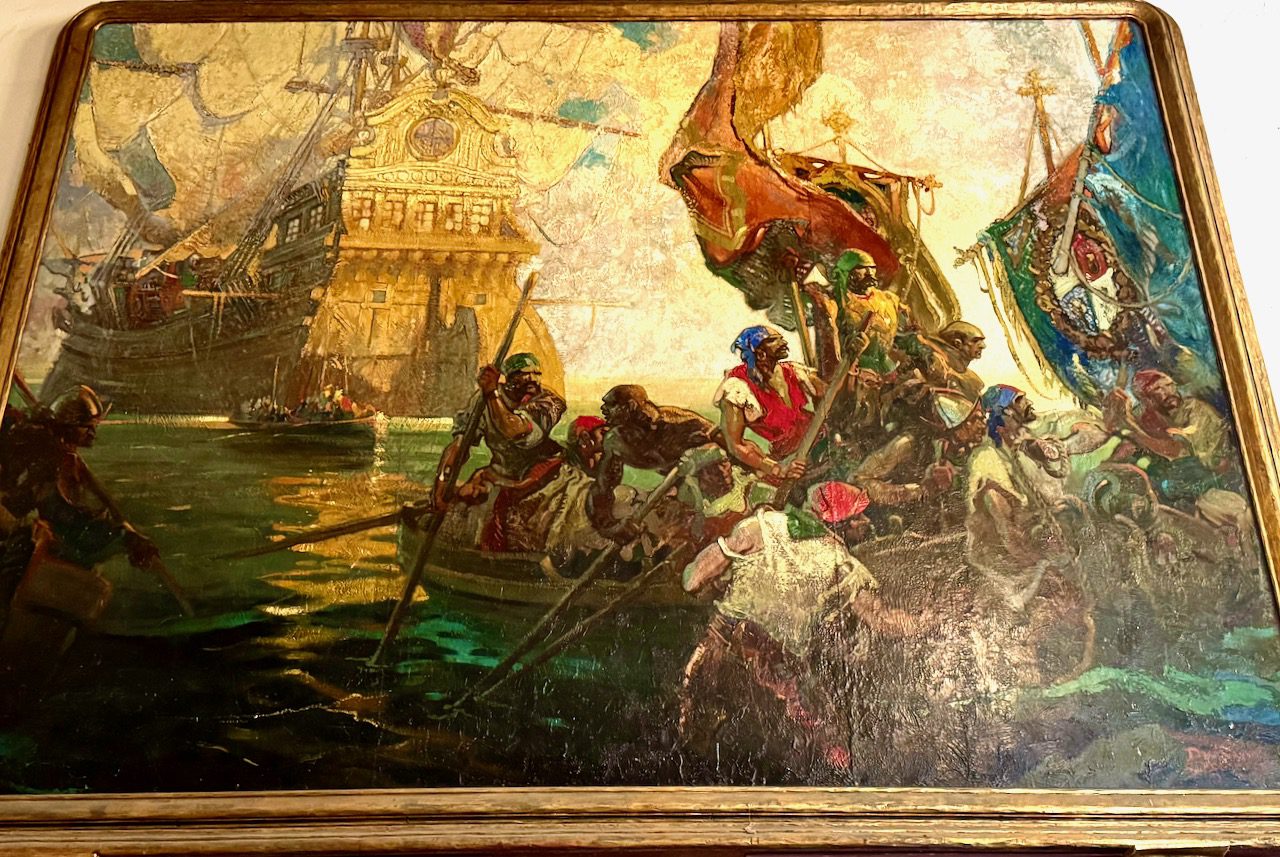
There is a Rose Window on the landing but it was difficult to photograph with the light fixtures.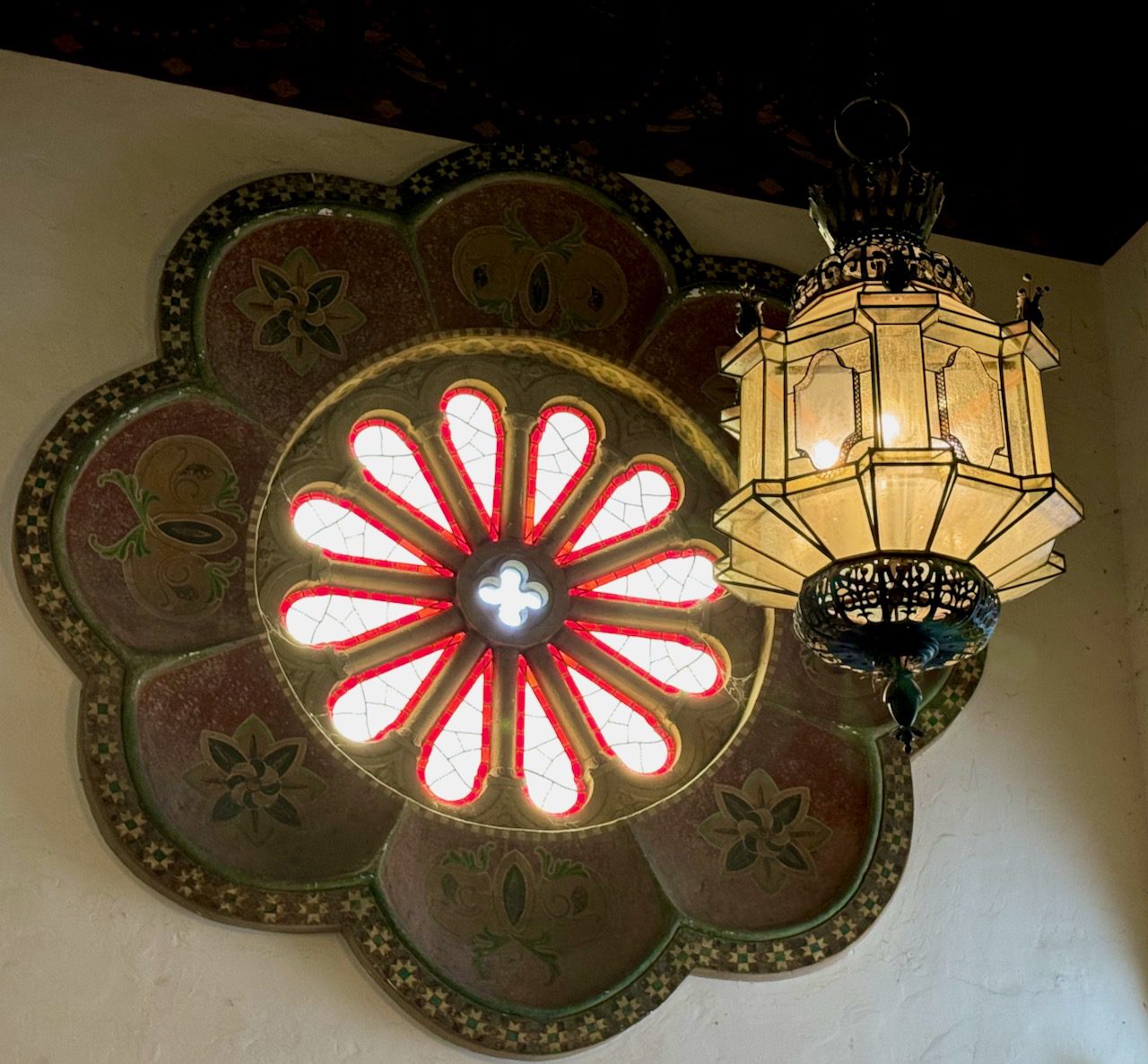
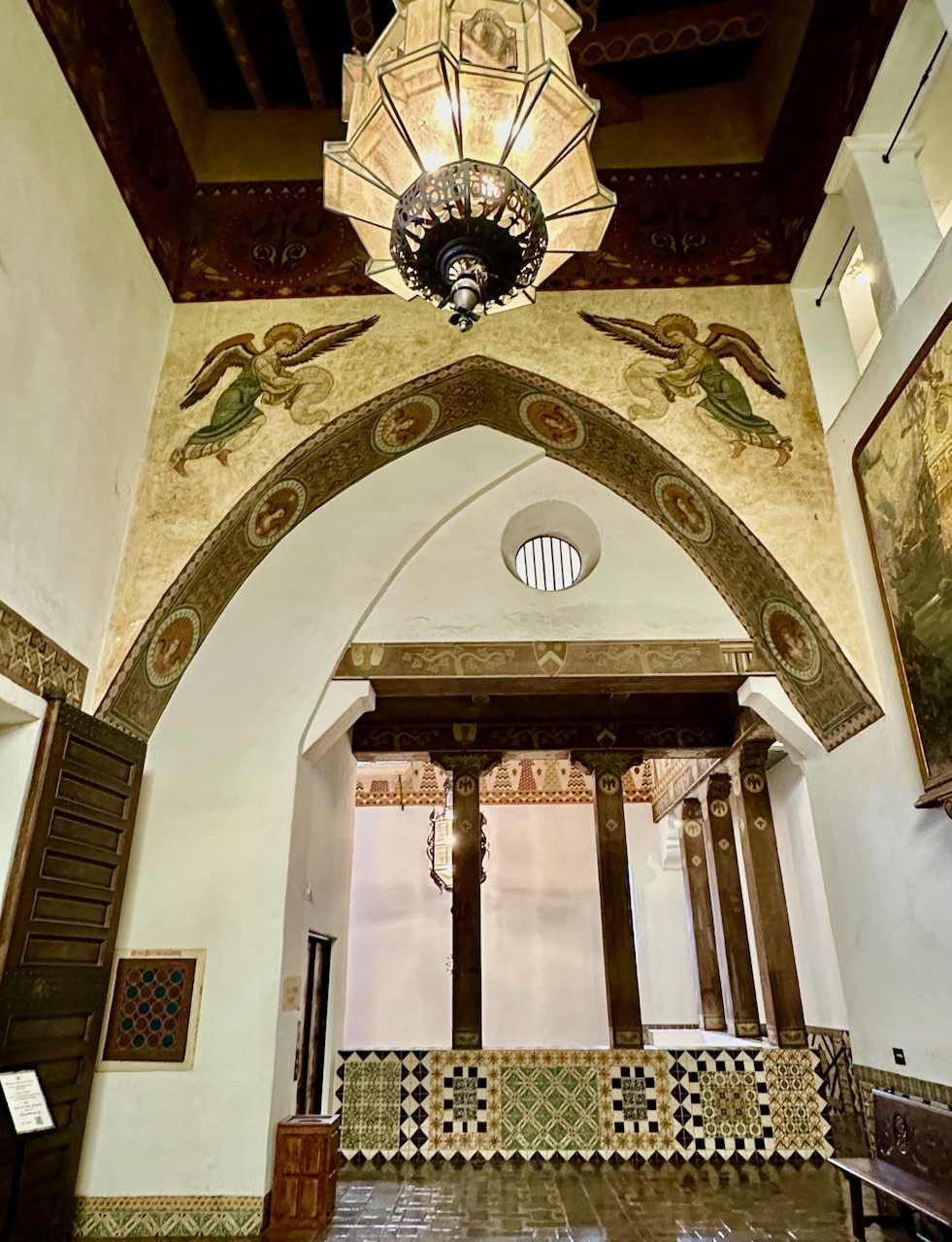
The angels painted on the arches on the second-floor lobby were also painted by Smeraldi to resemble Byzantine angels.
 A painting of the funeral of José Figueroa, general and the Mexican Governor of Alta California from 1833 to 1835 is also on this floor. Fun Fact: He wrote the first book ever published in California (Manifiesto a la Republica Mejicana in 1835).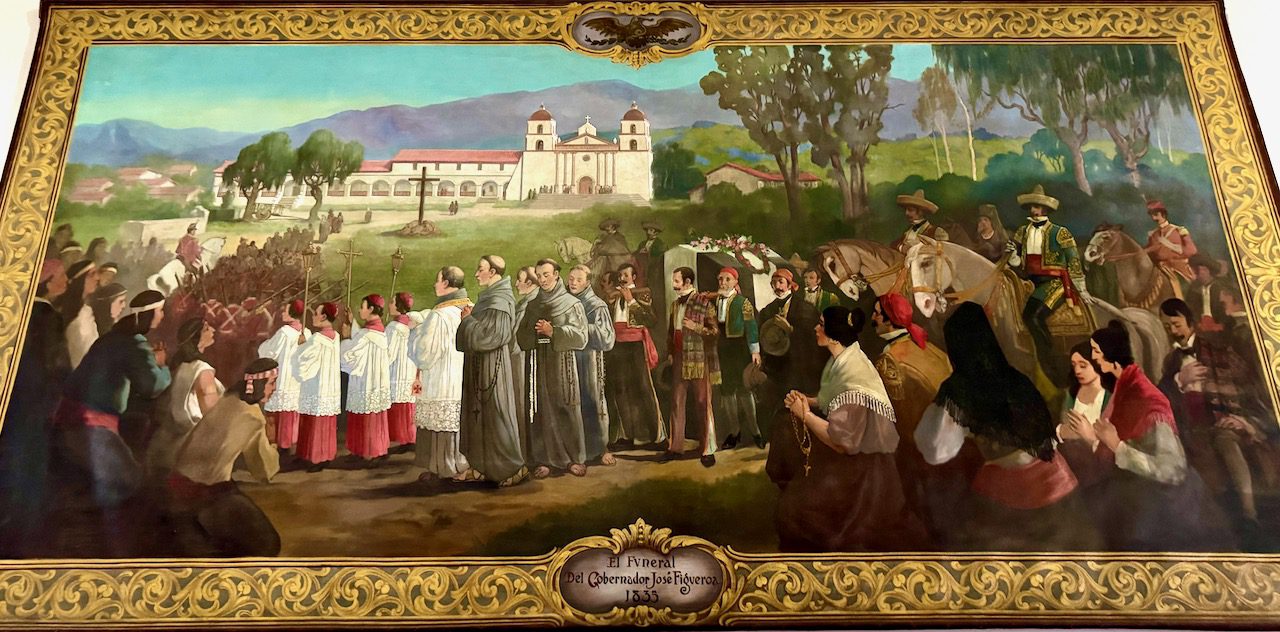
Luckily, we were not allowed on the Rotunda stairs, or else the Santa Barbara News-Press might have another obituary on its hands.
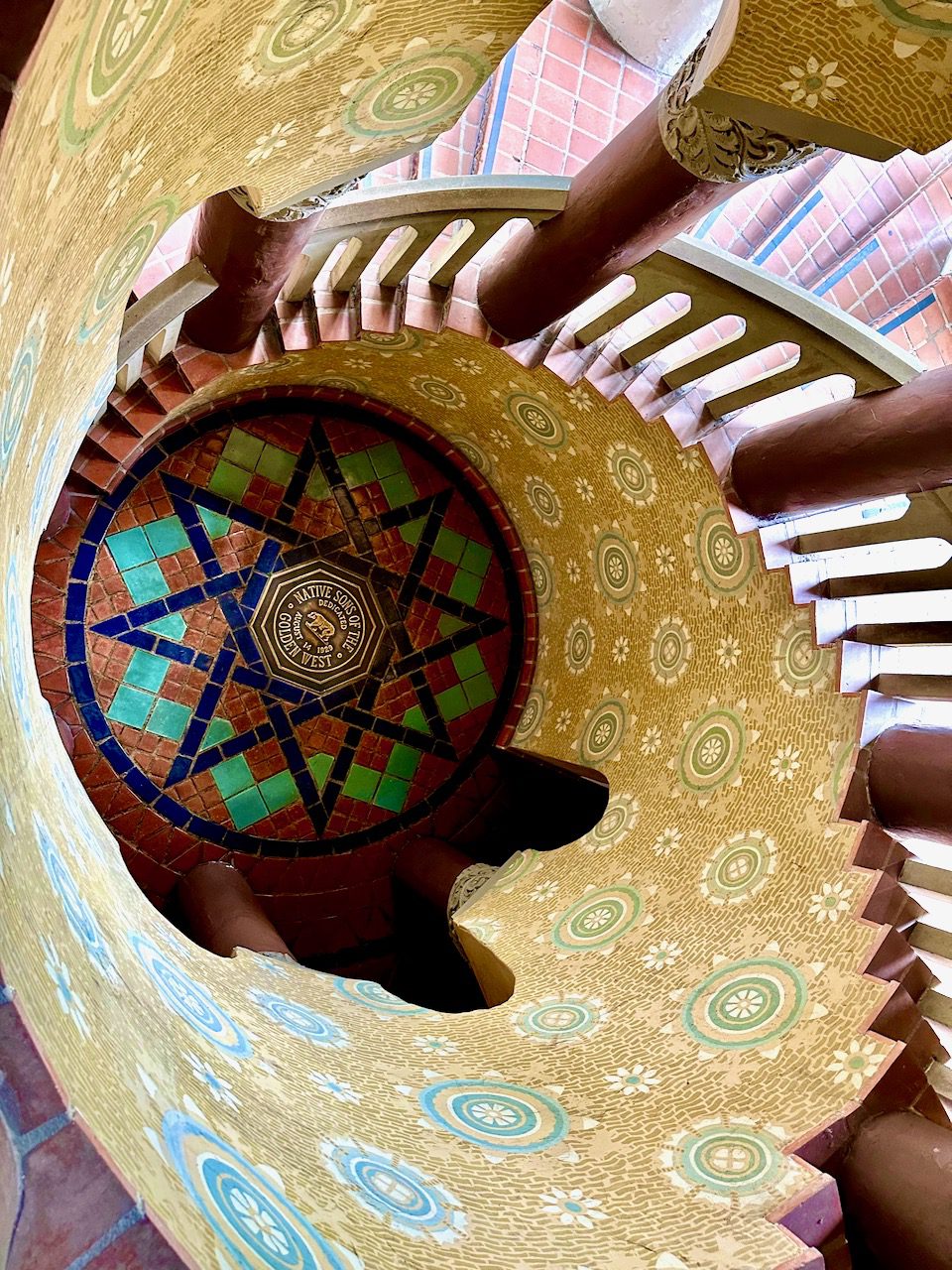
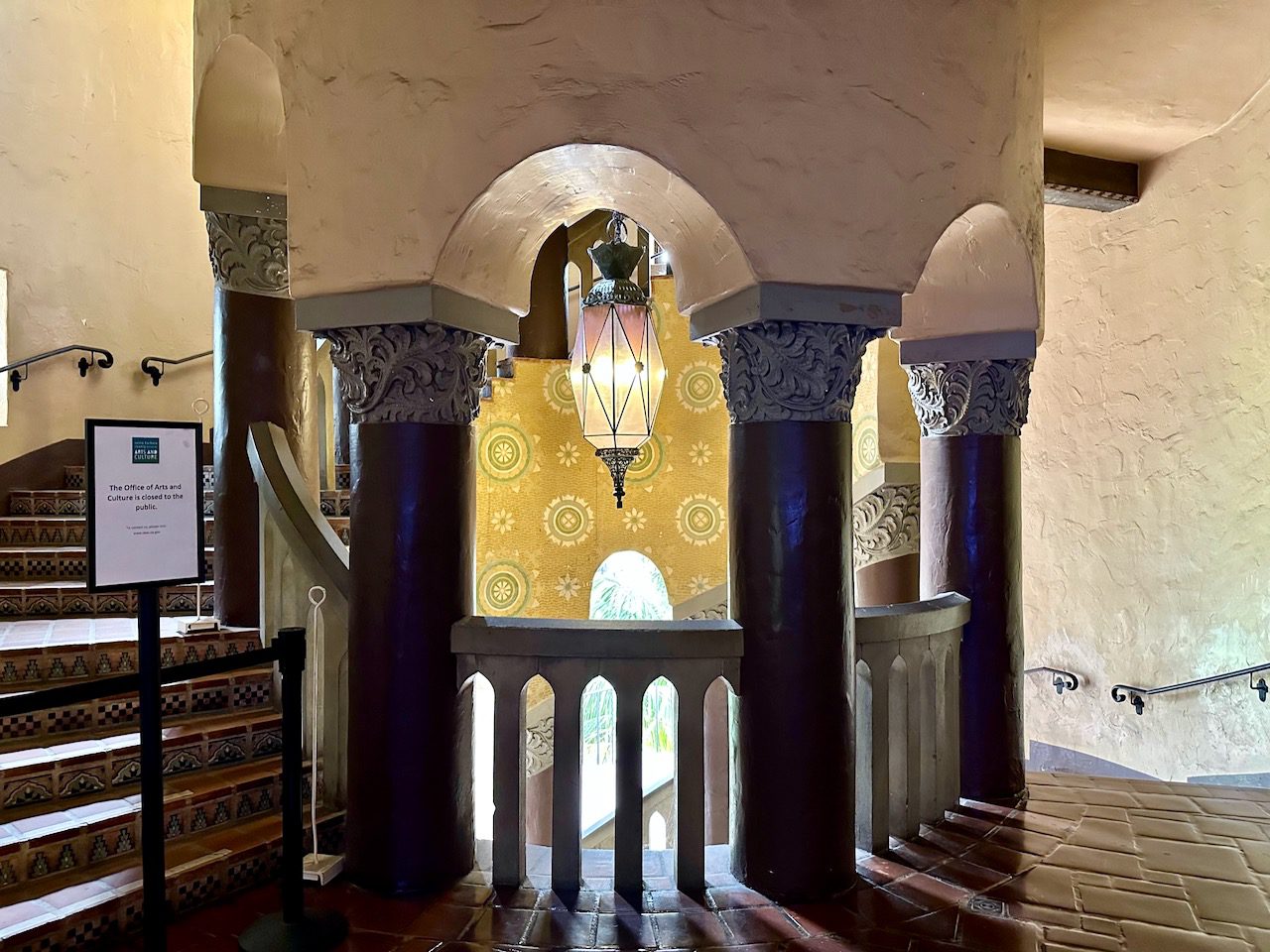
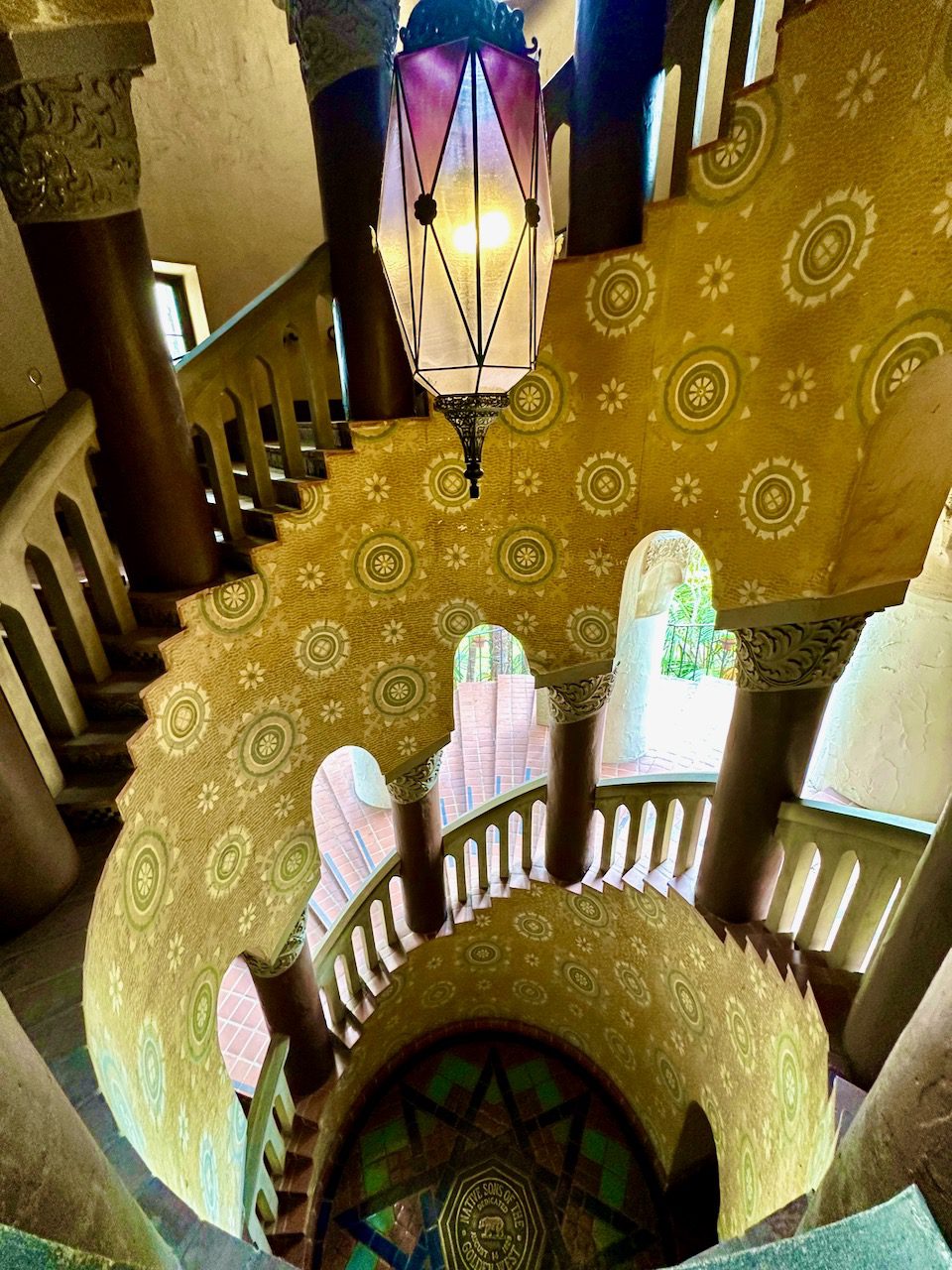
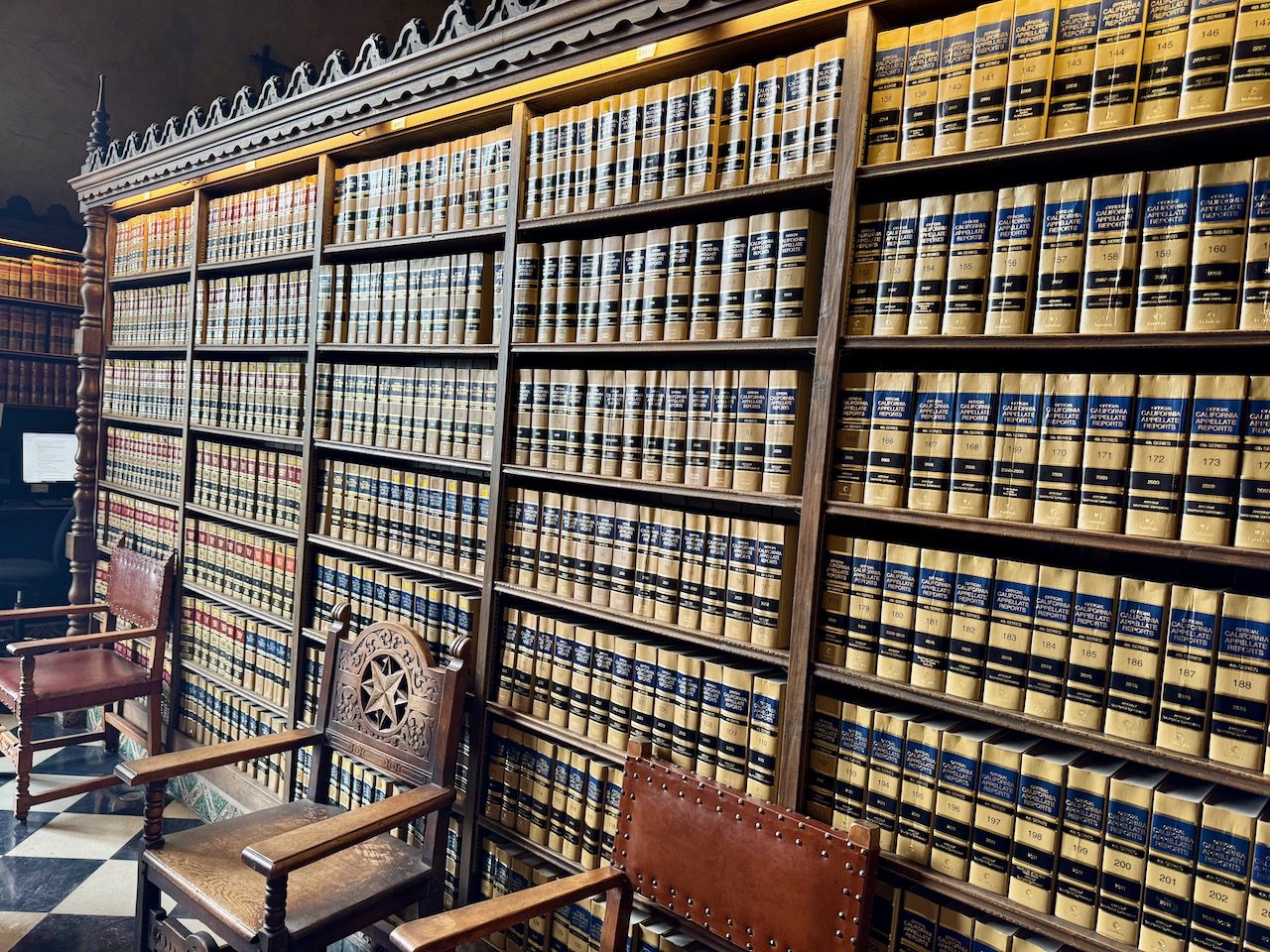
It didn’t take a genius to figure we might be entering a library.
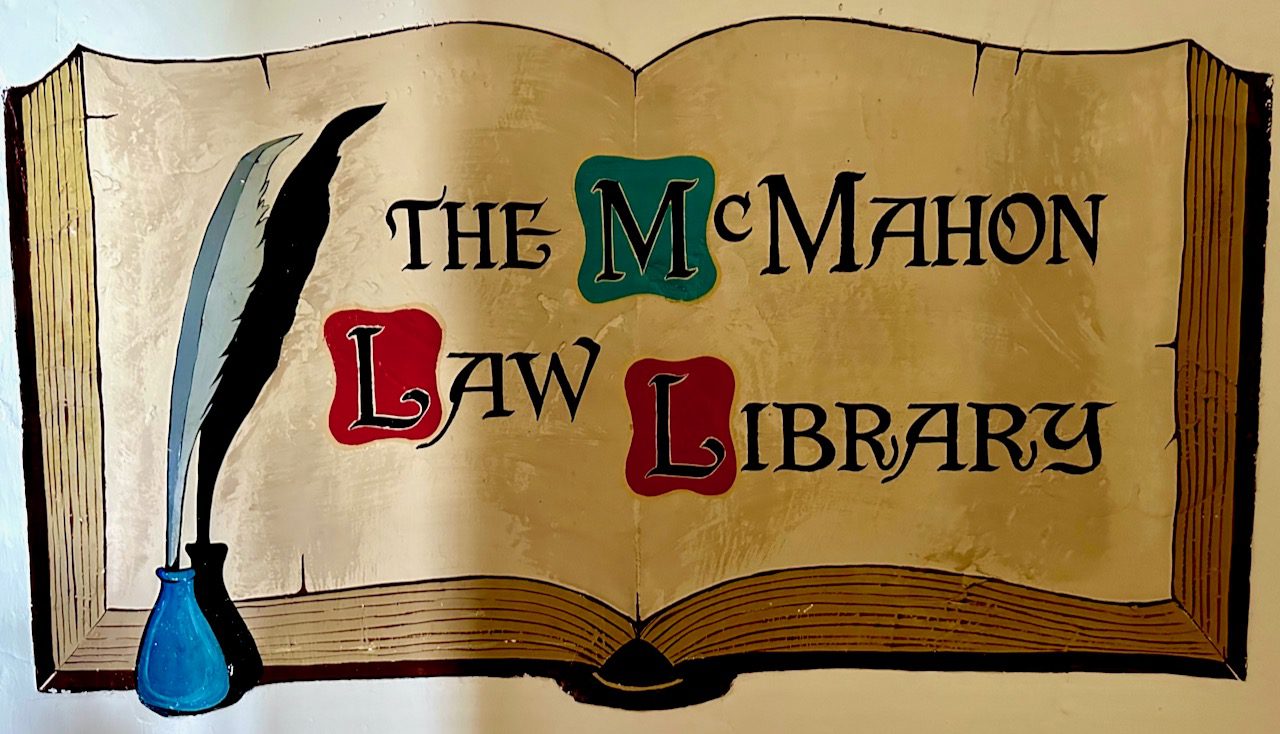
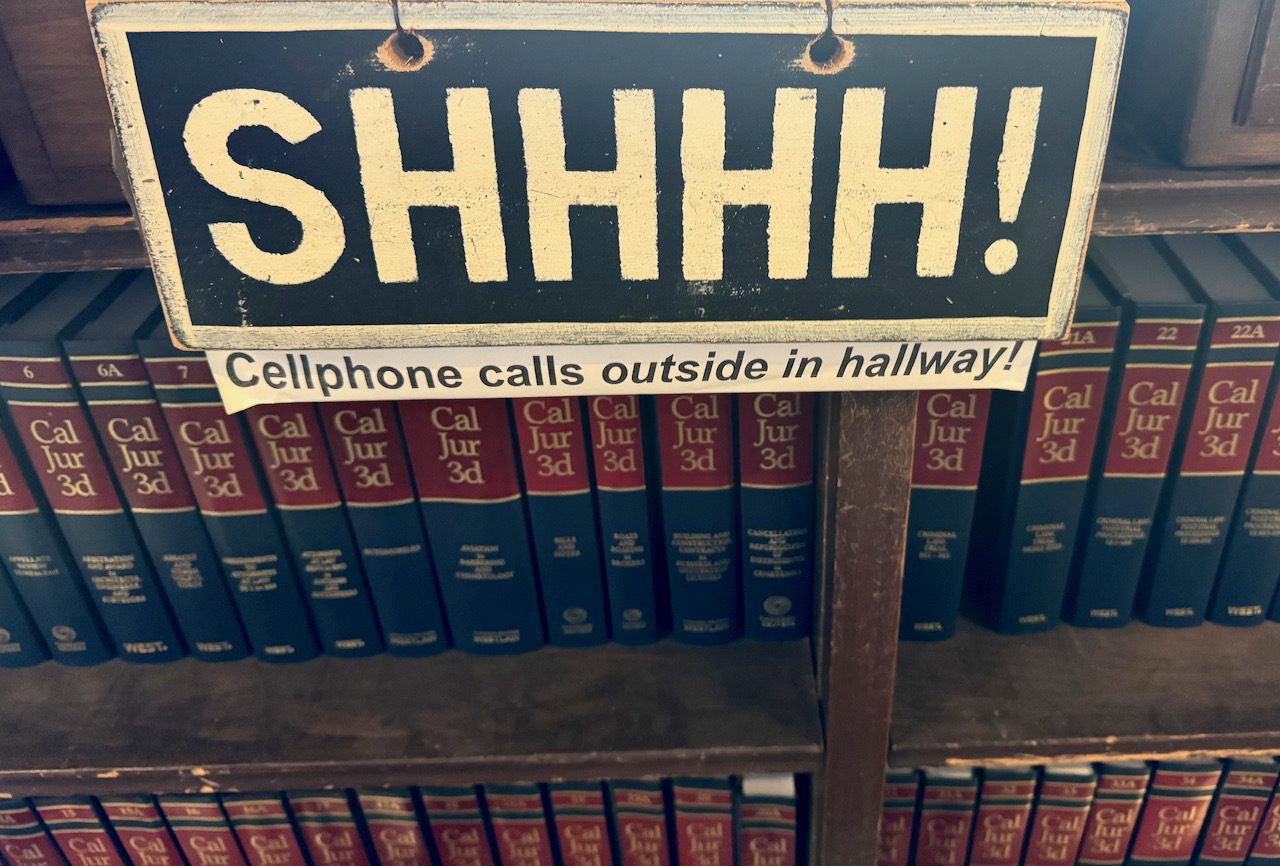
The books also gave it away.
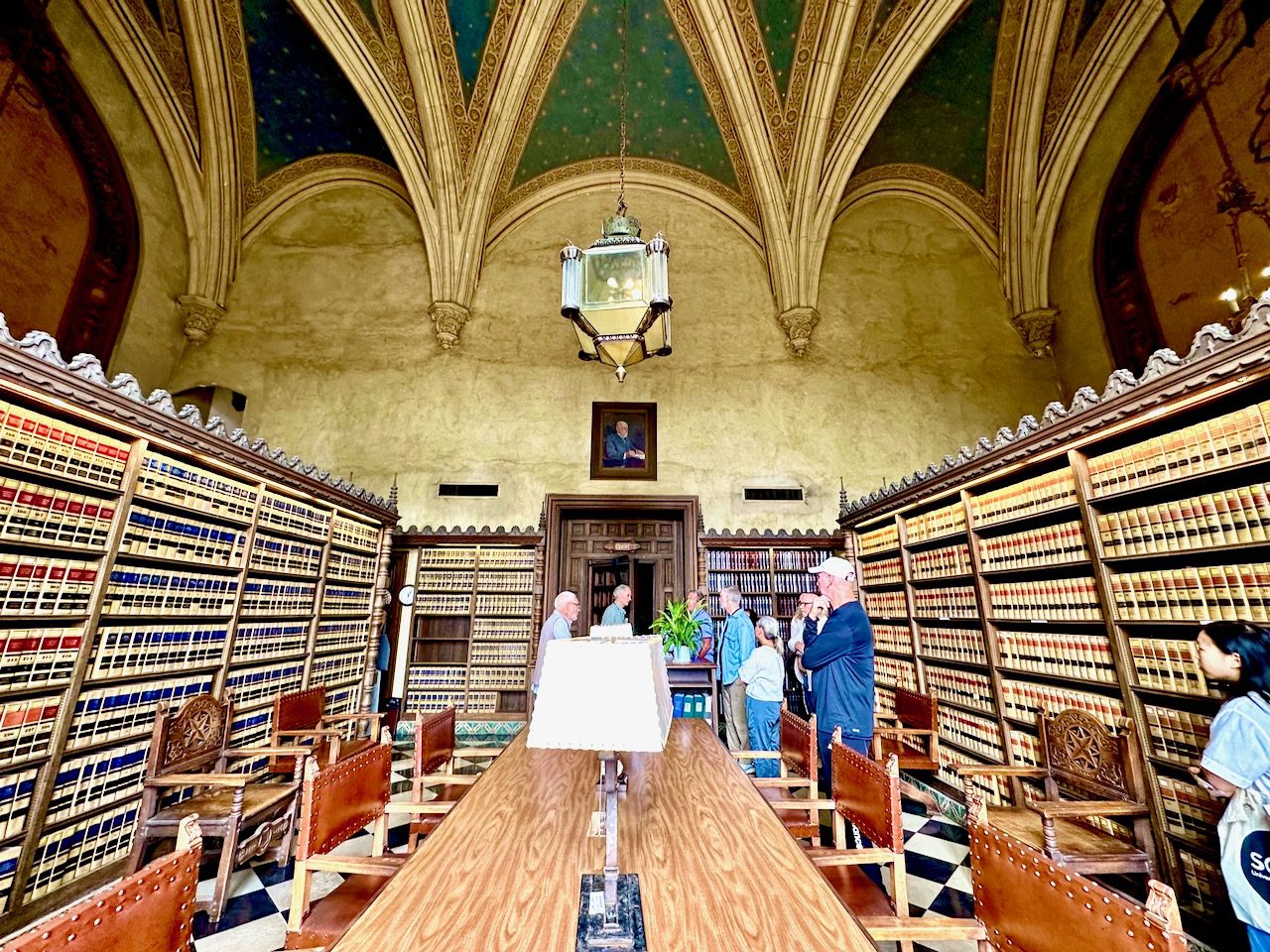
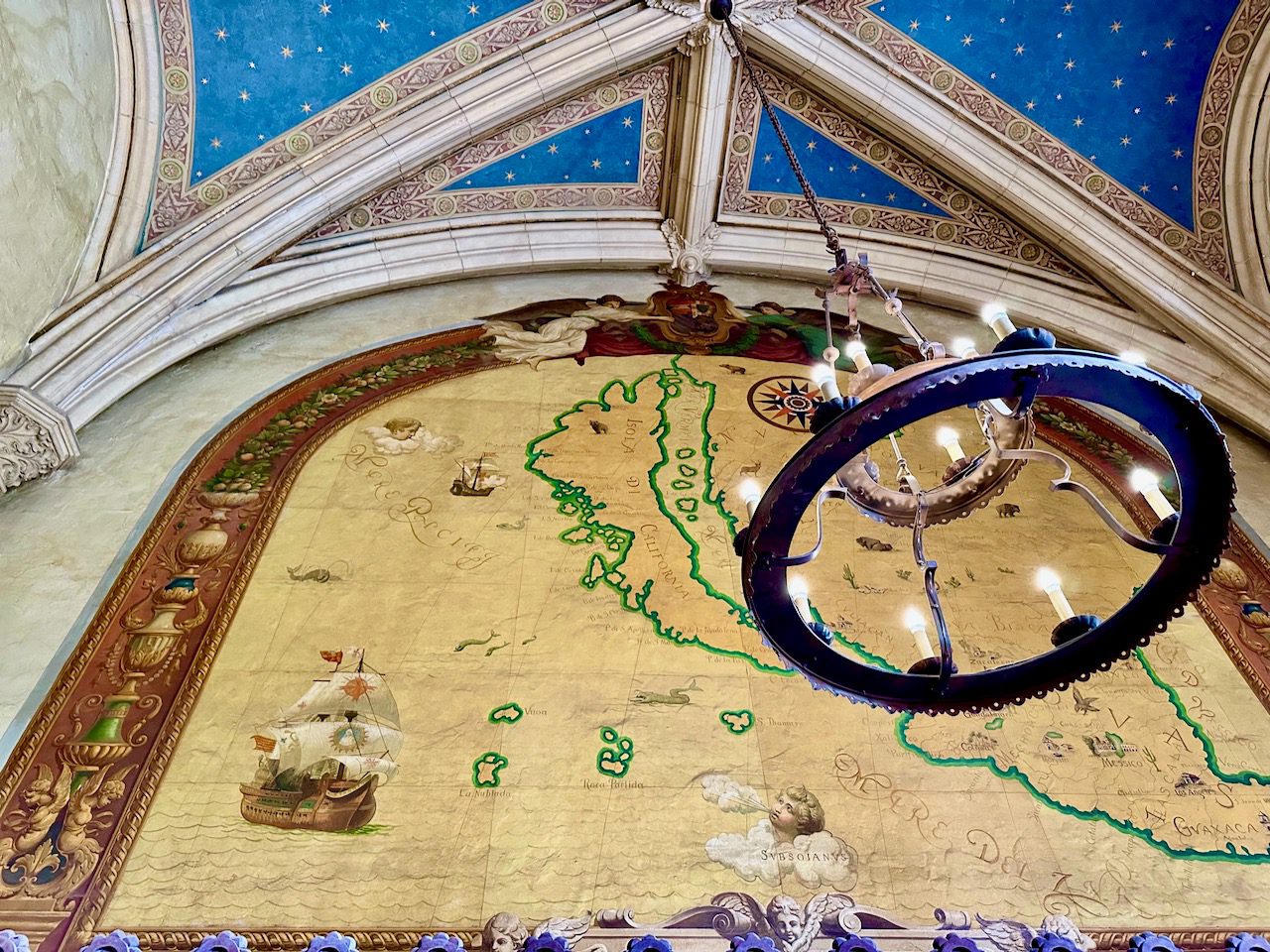
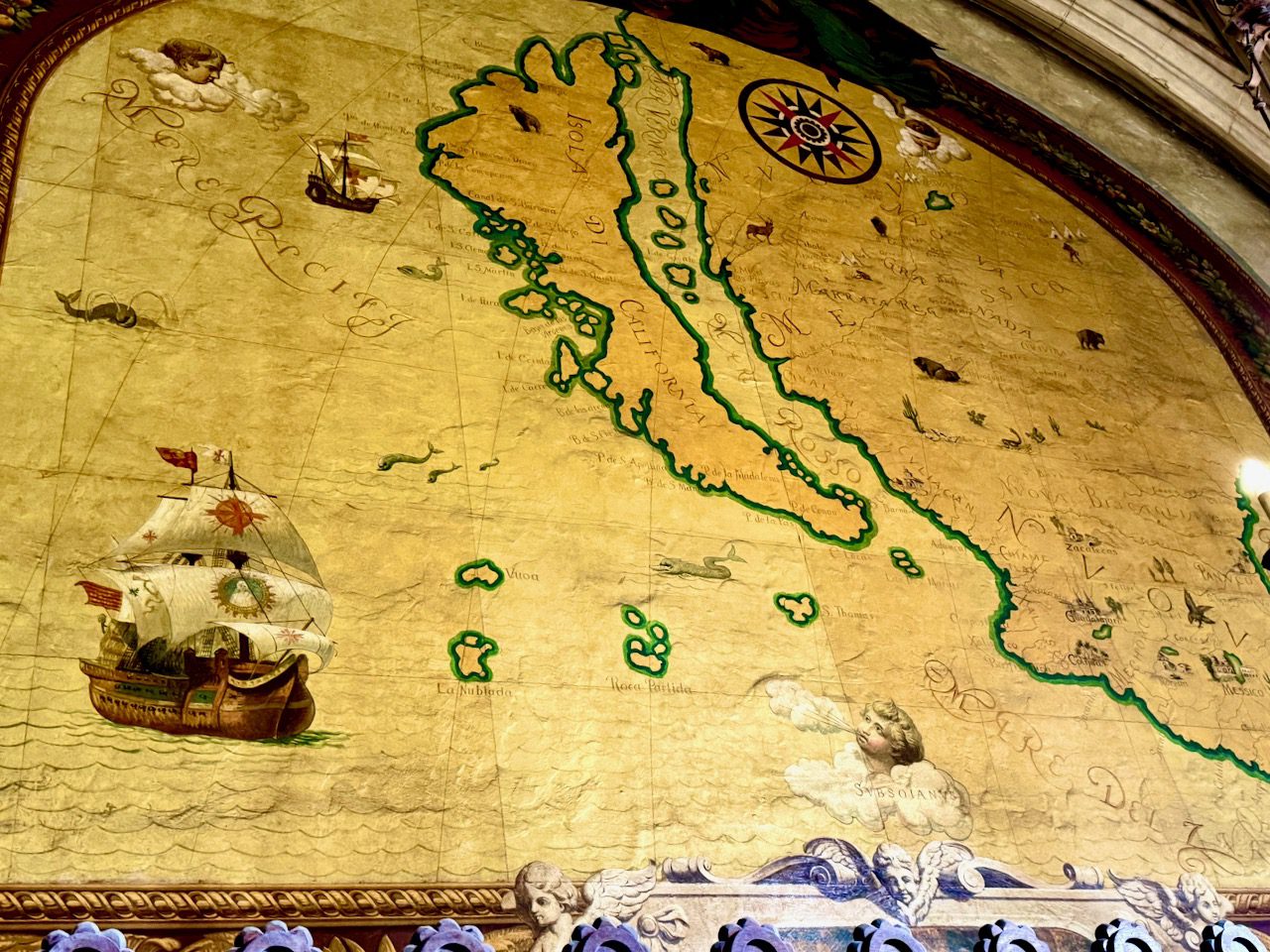
The maps and the starry Gothic ceiling in the law library were painted by … you guessed it, Smeraldi.
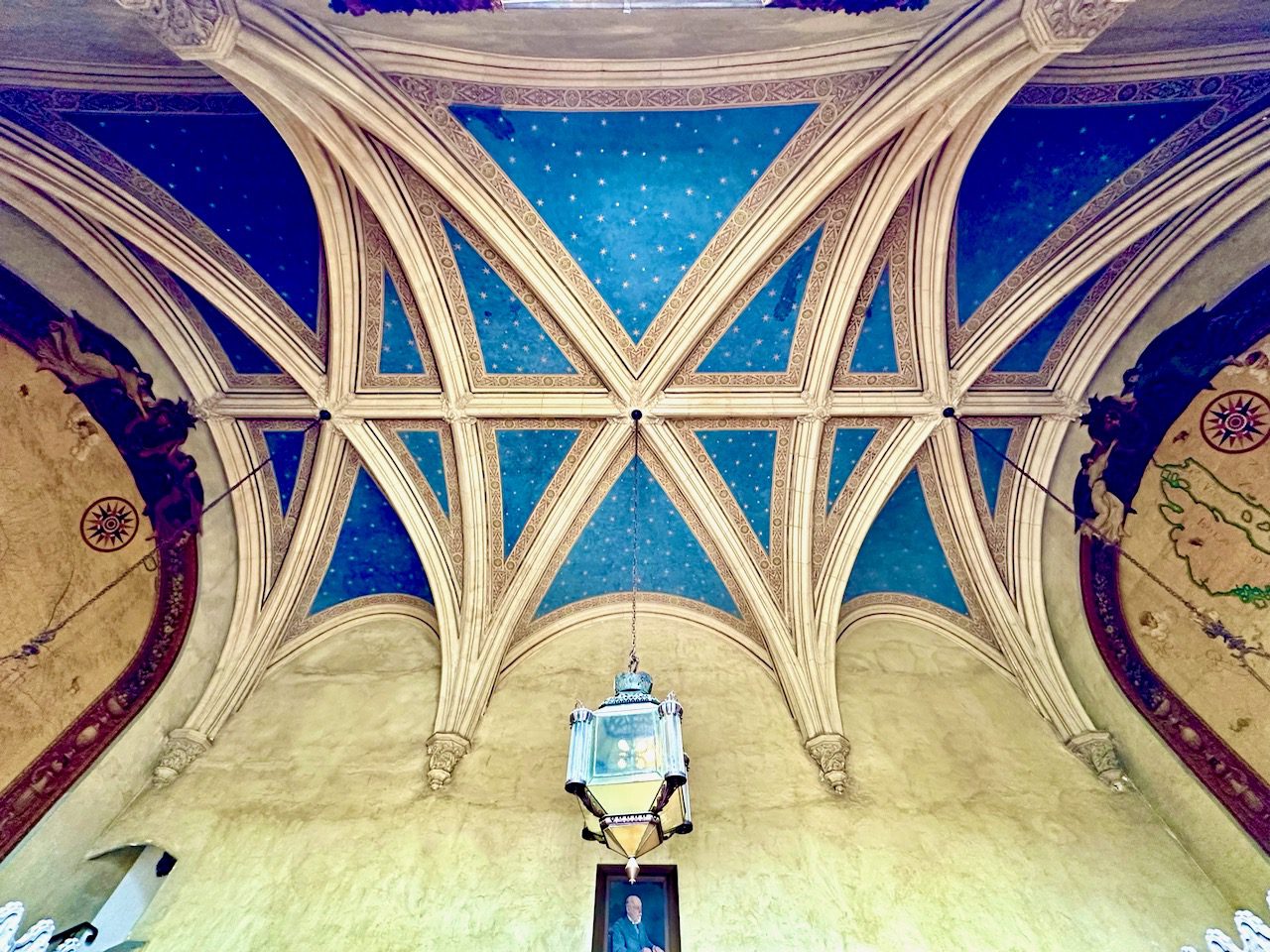
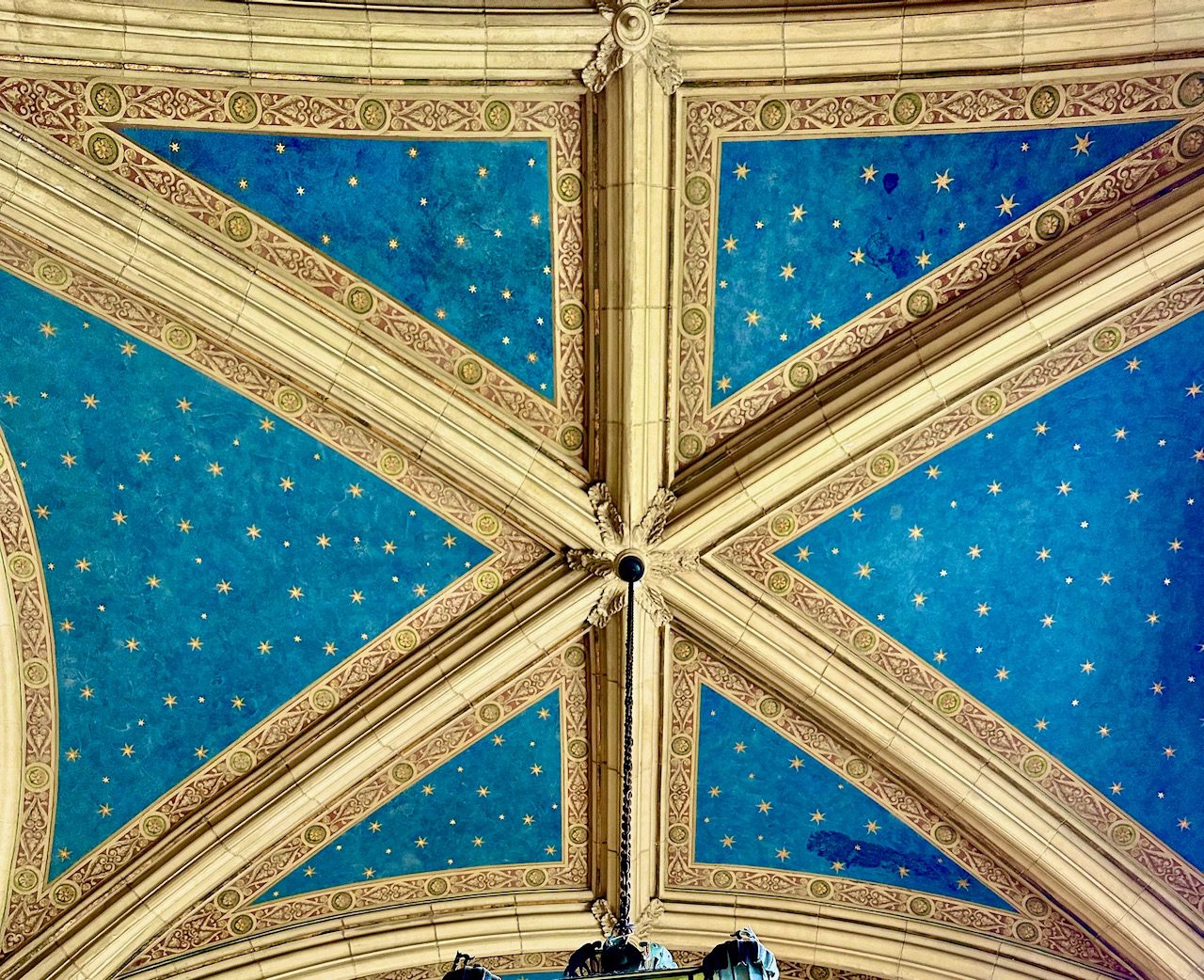
The map depicts California as an island.
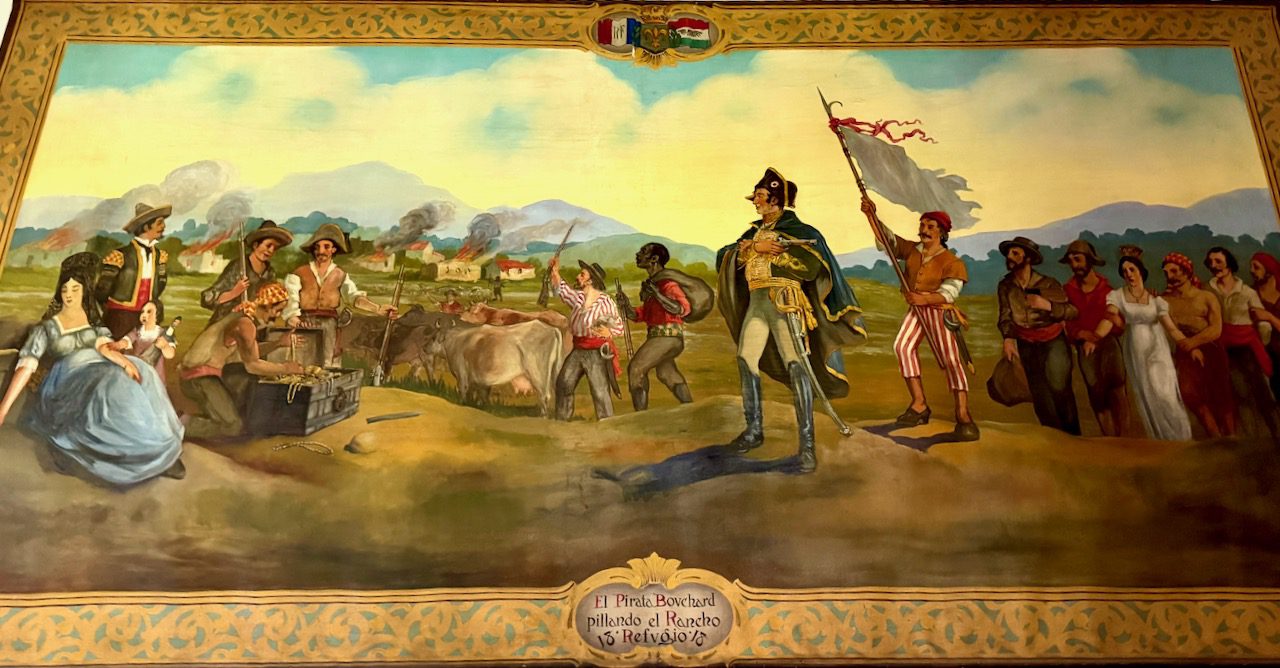
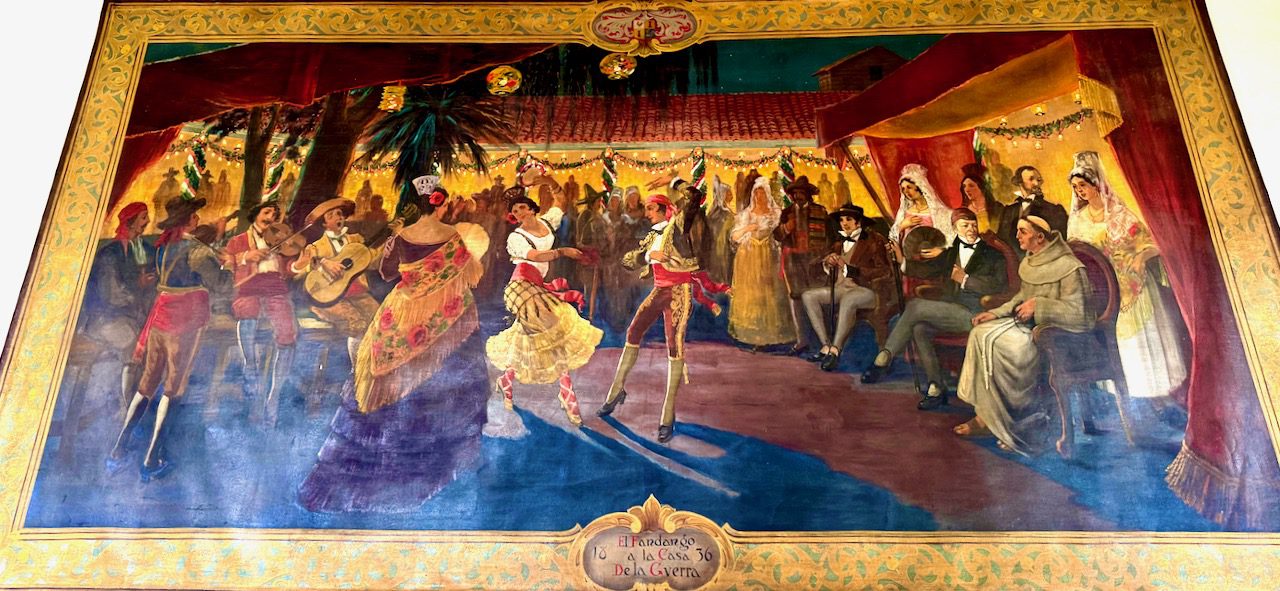
In the corridor were a couple of interesting paintings, including El Fandango a la Casa De la Guerra.
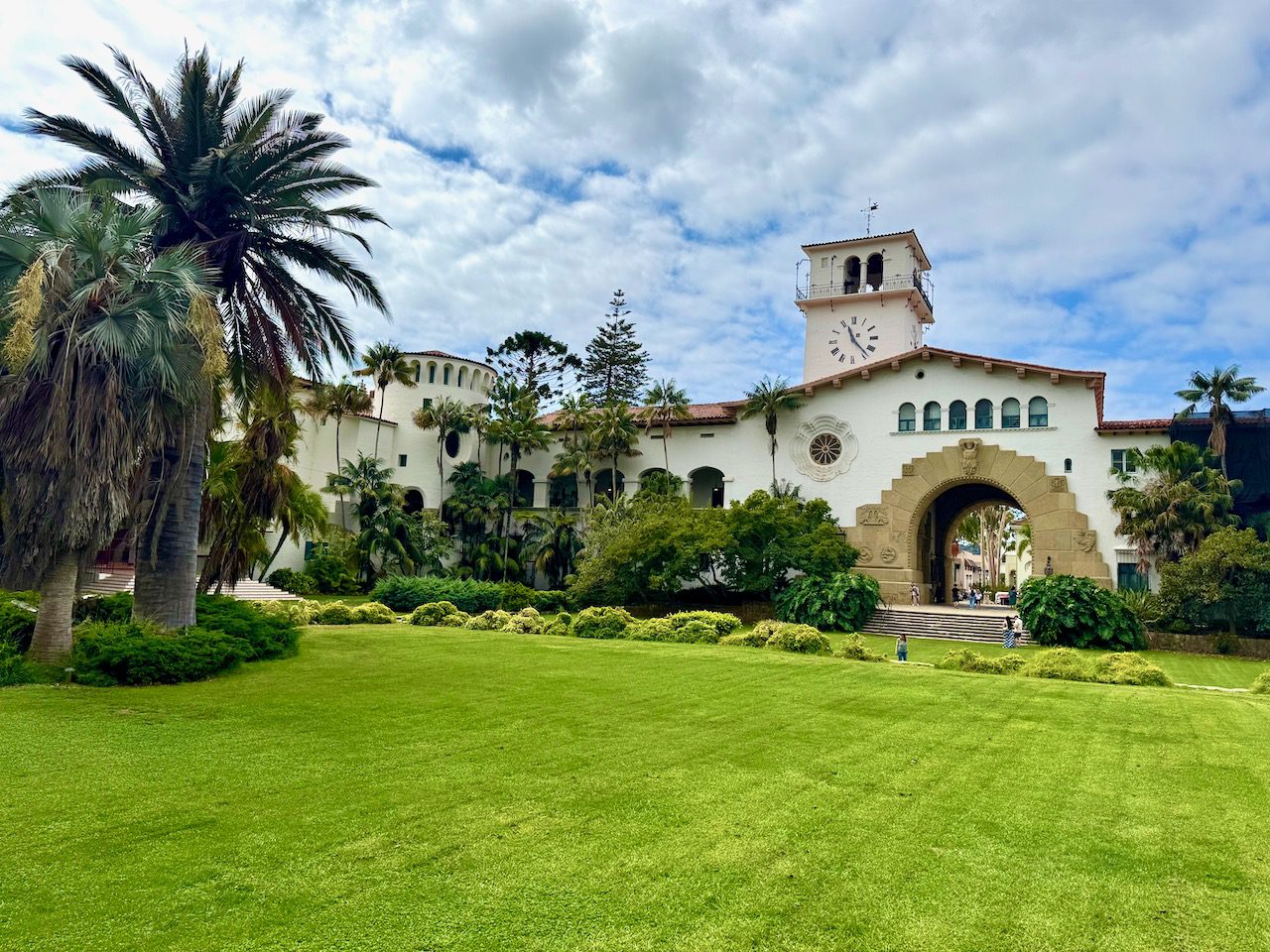
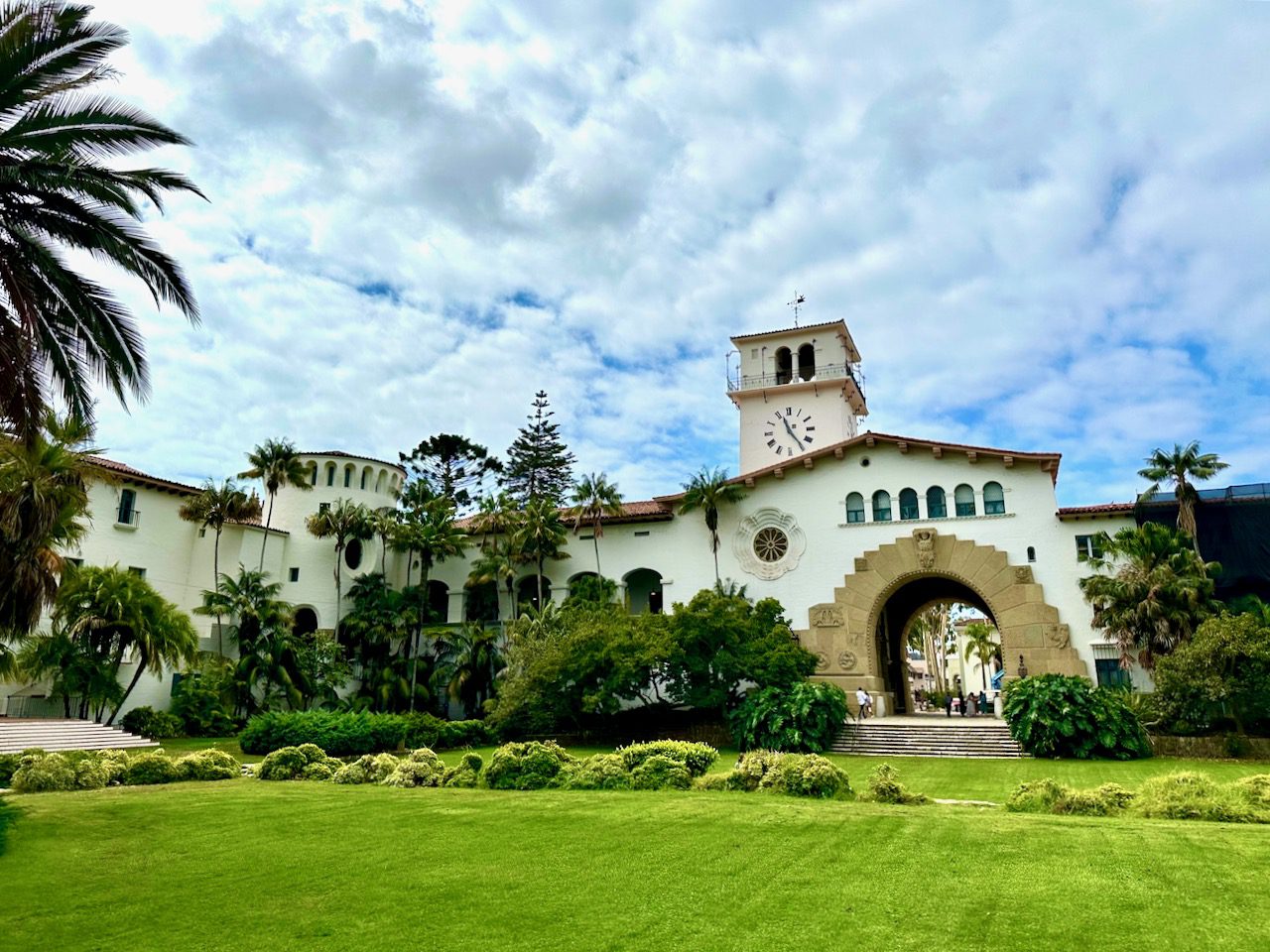
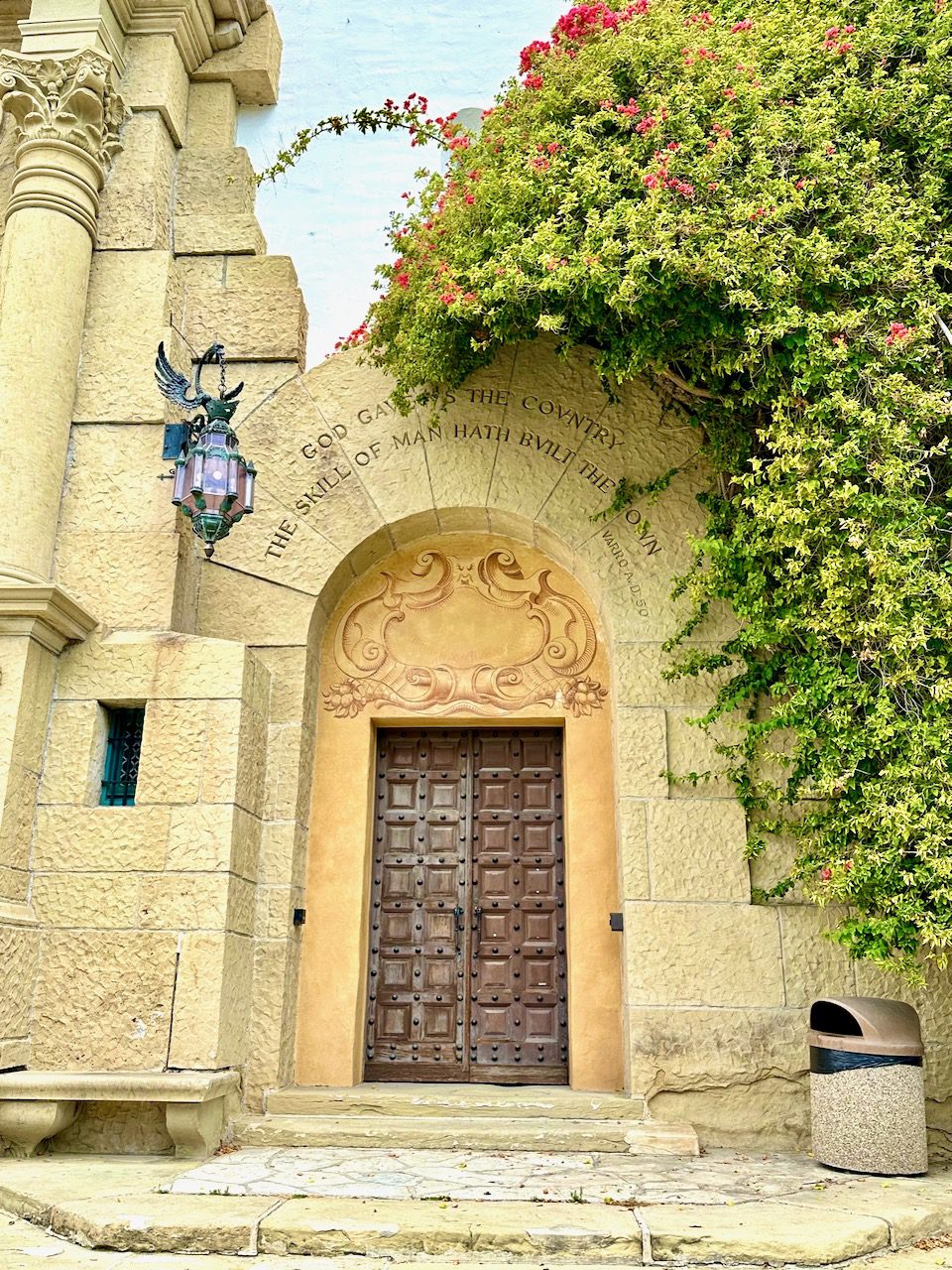
We stepped outside so we could admire the exterior architecture of the building.
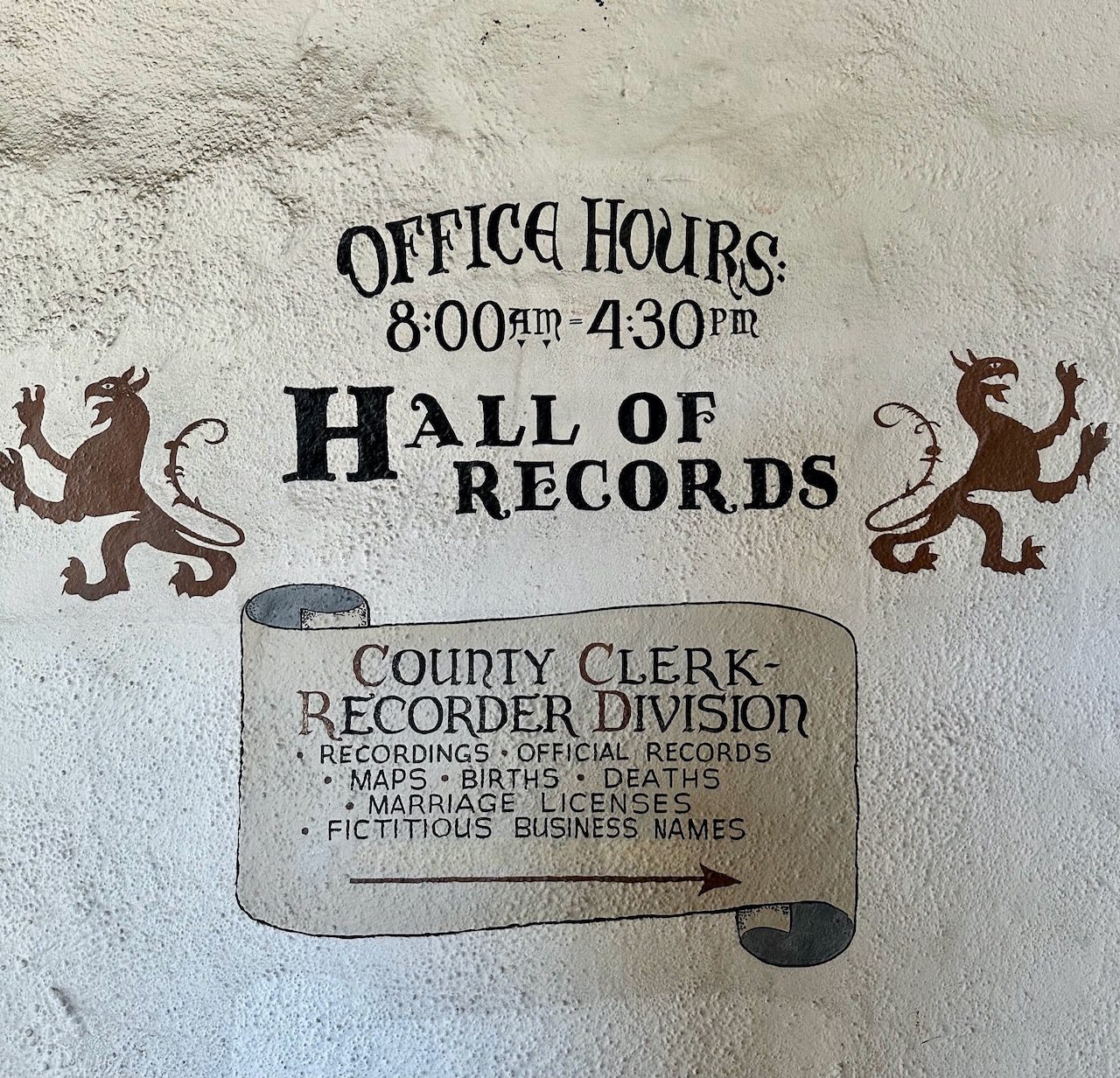
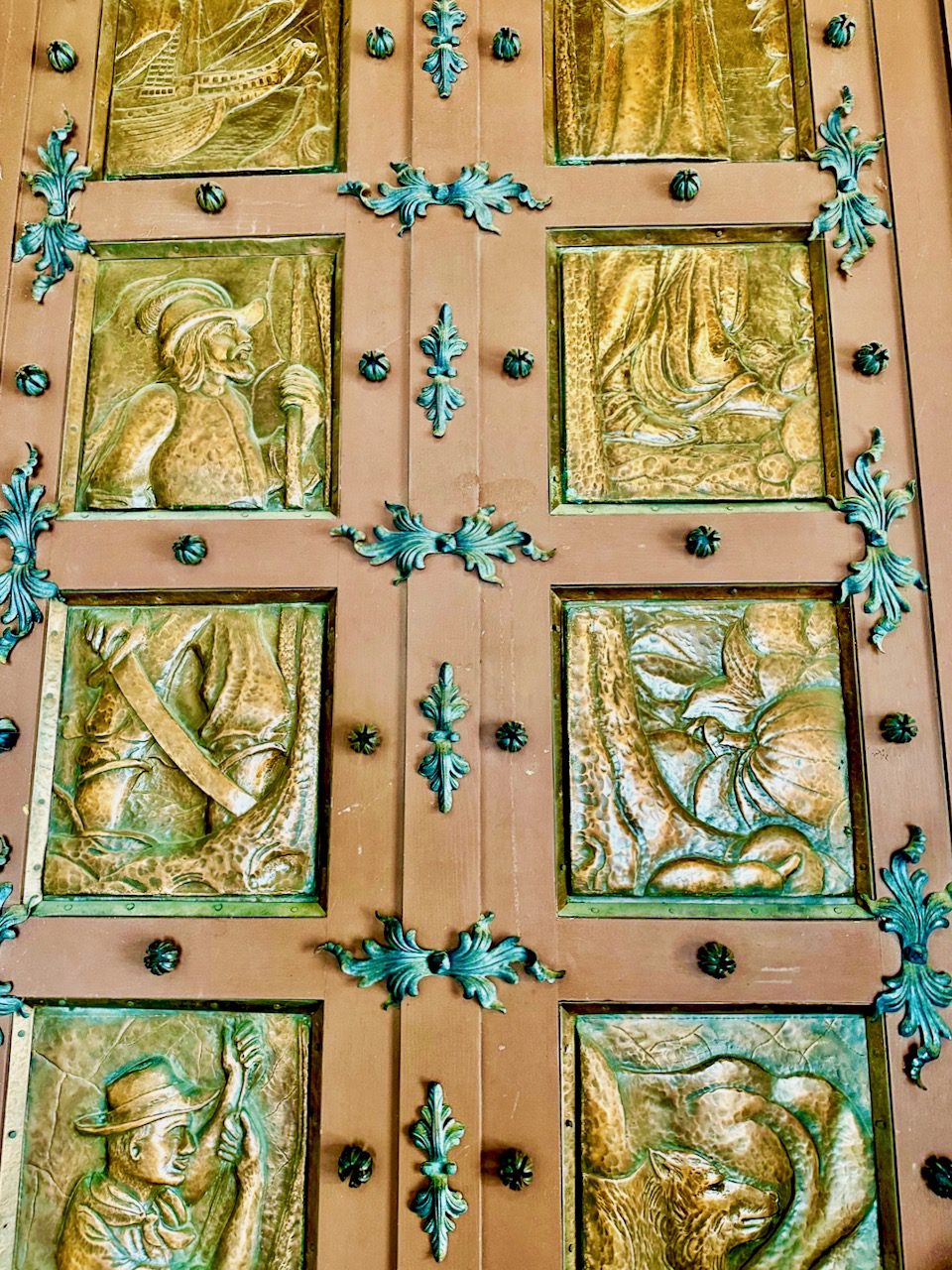
Then it was time to visit the Hall of Records. The Hall of Records was the first building built after the earthquake and has geothermal heat pumps underneath. The doors with 30 panels are constructed of hammered copper plates, one of which feature Queen Califia, the fictional queen of the Island of California in a novel written in 1510. Somehow we missed taking her photo.
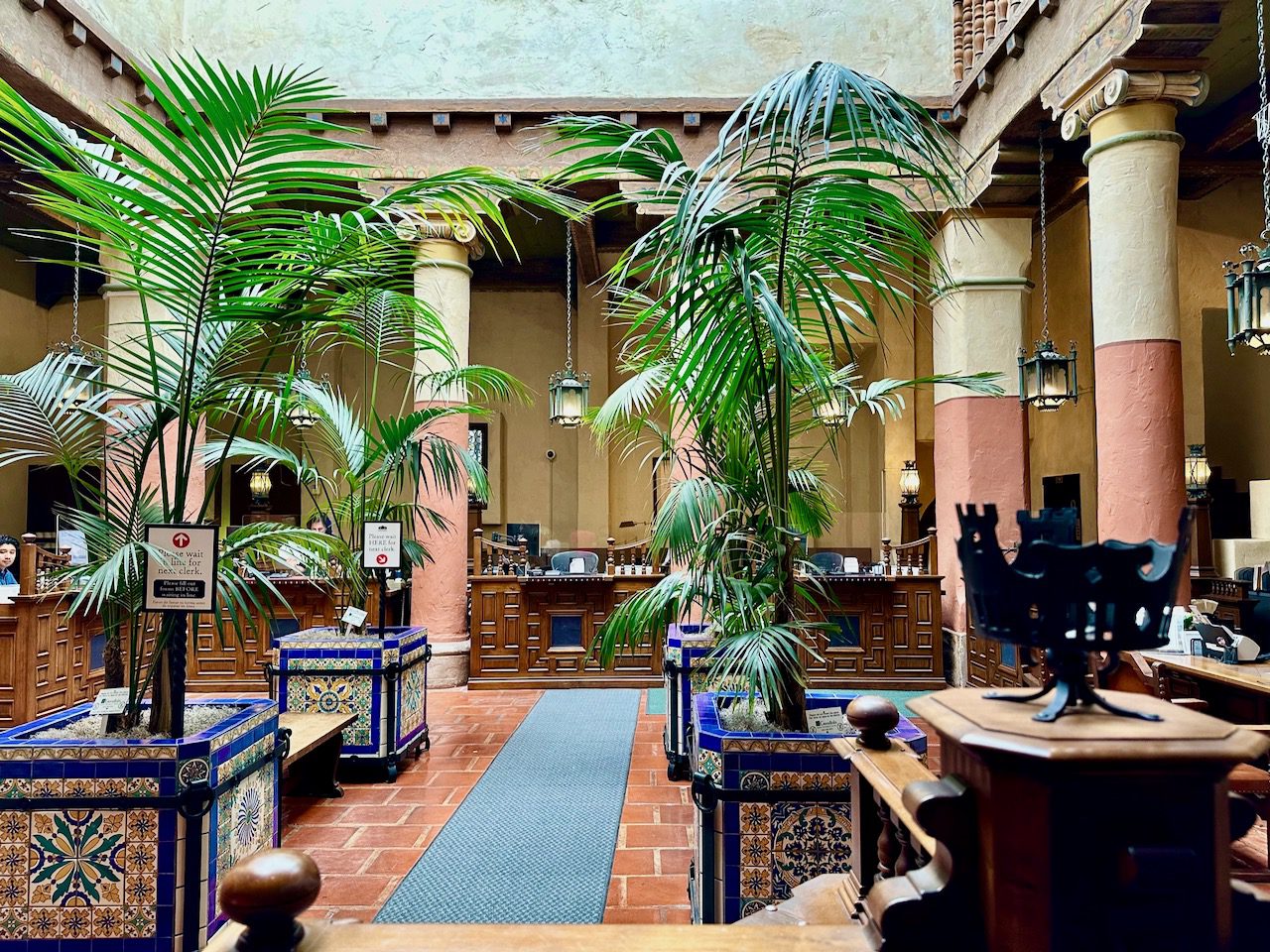
The renovated atrium area shows the results of the Marrakesh inspiration.
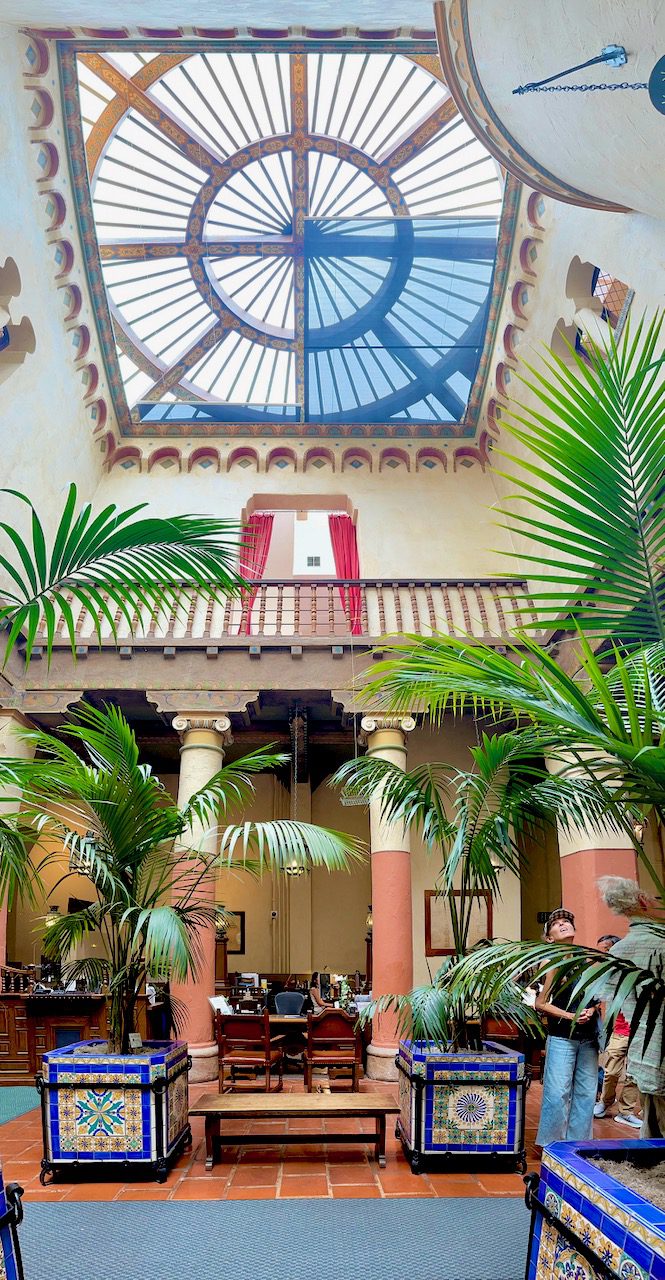
It was time to venture upwards into the Clock Tower, which was finished in 1929.
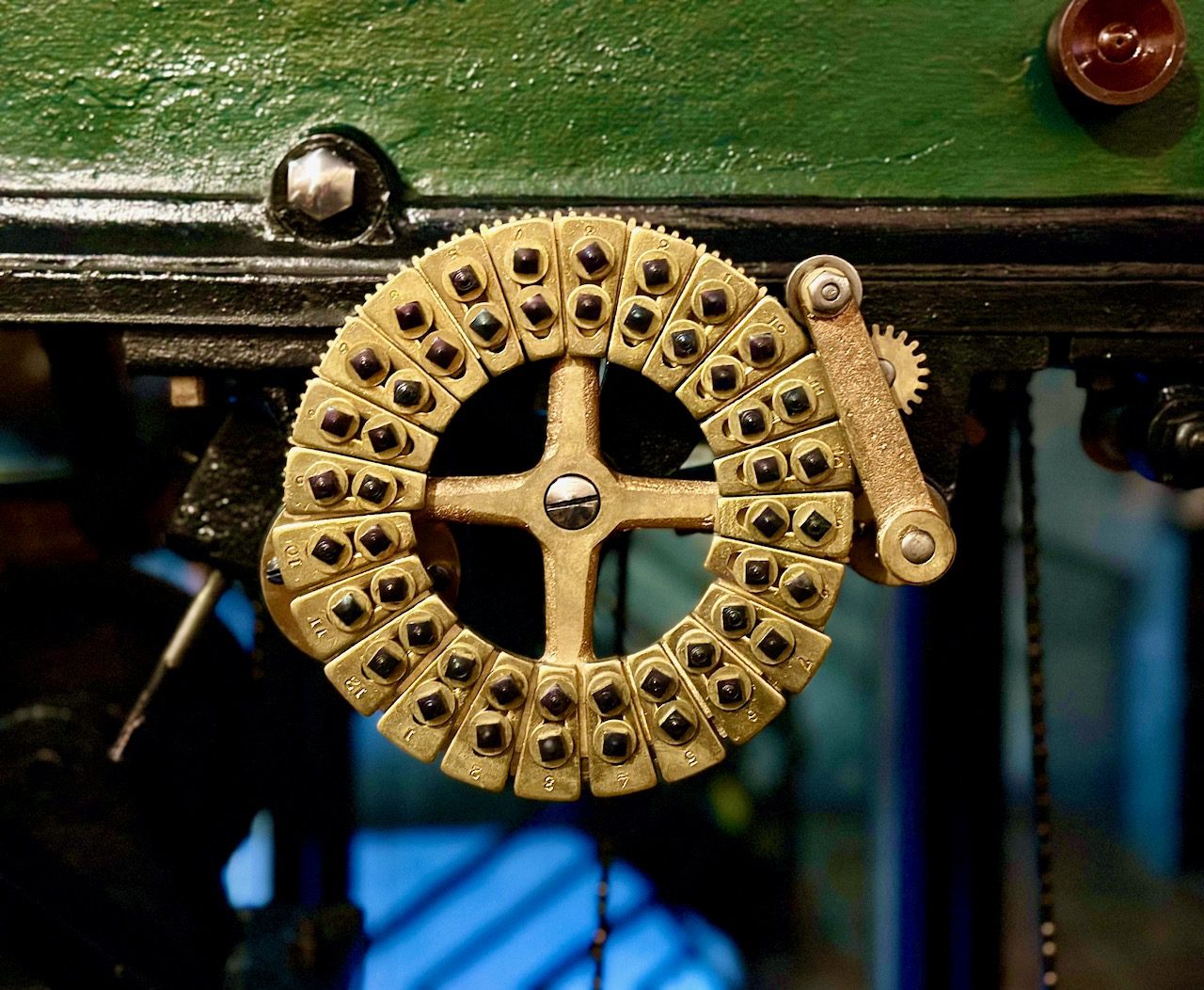
The Bisno Schall Clock Gallery contains a mechanical clock that is nearly 100 years old. There are only a couple of hundred left in the United States and this is the only one where you can stand inside the clock.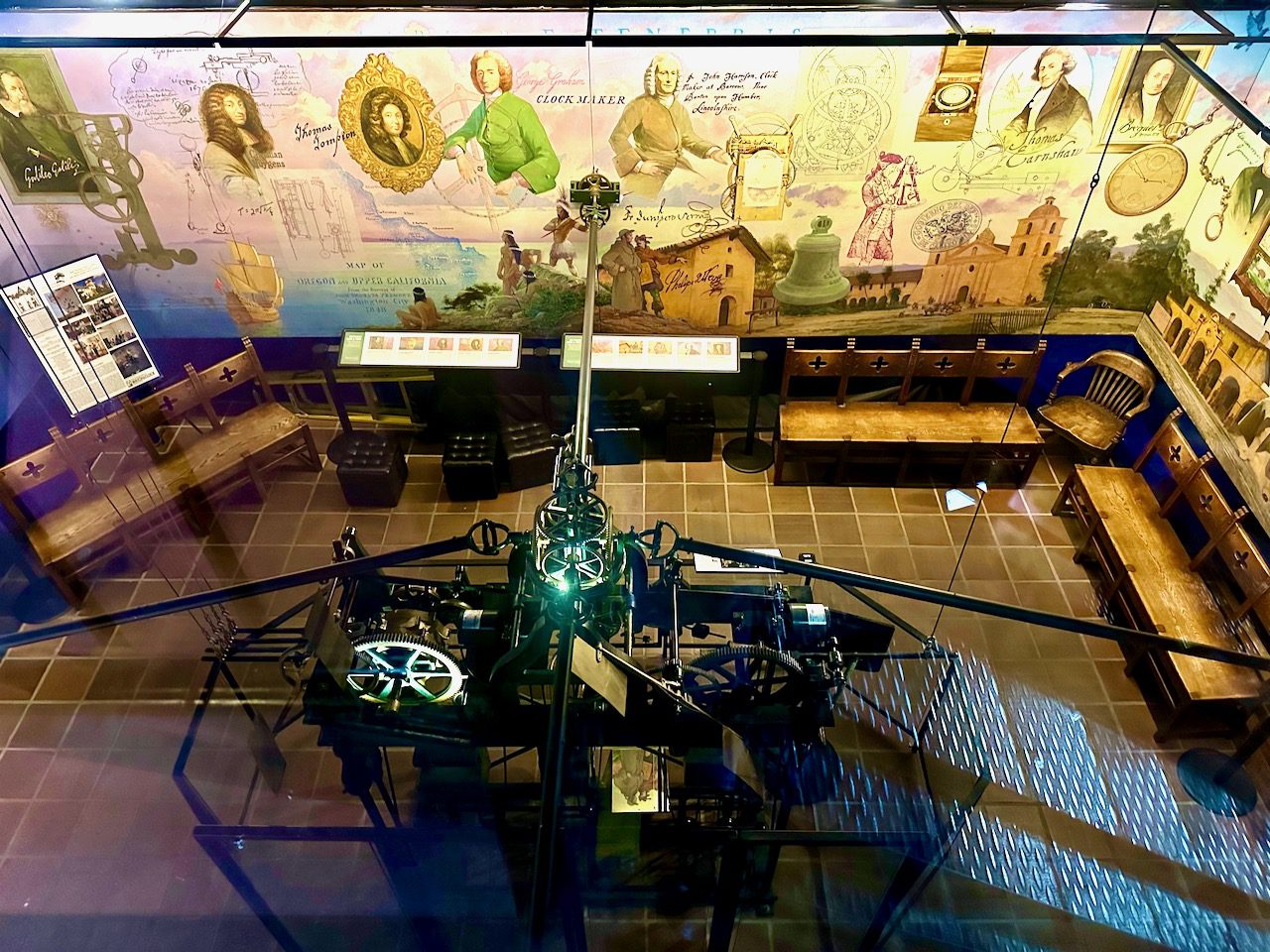
We checked out the pieces that make it tick and were there at the top of the hour when it chimed.
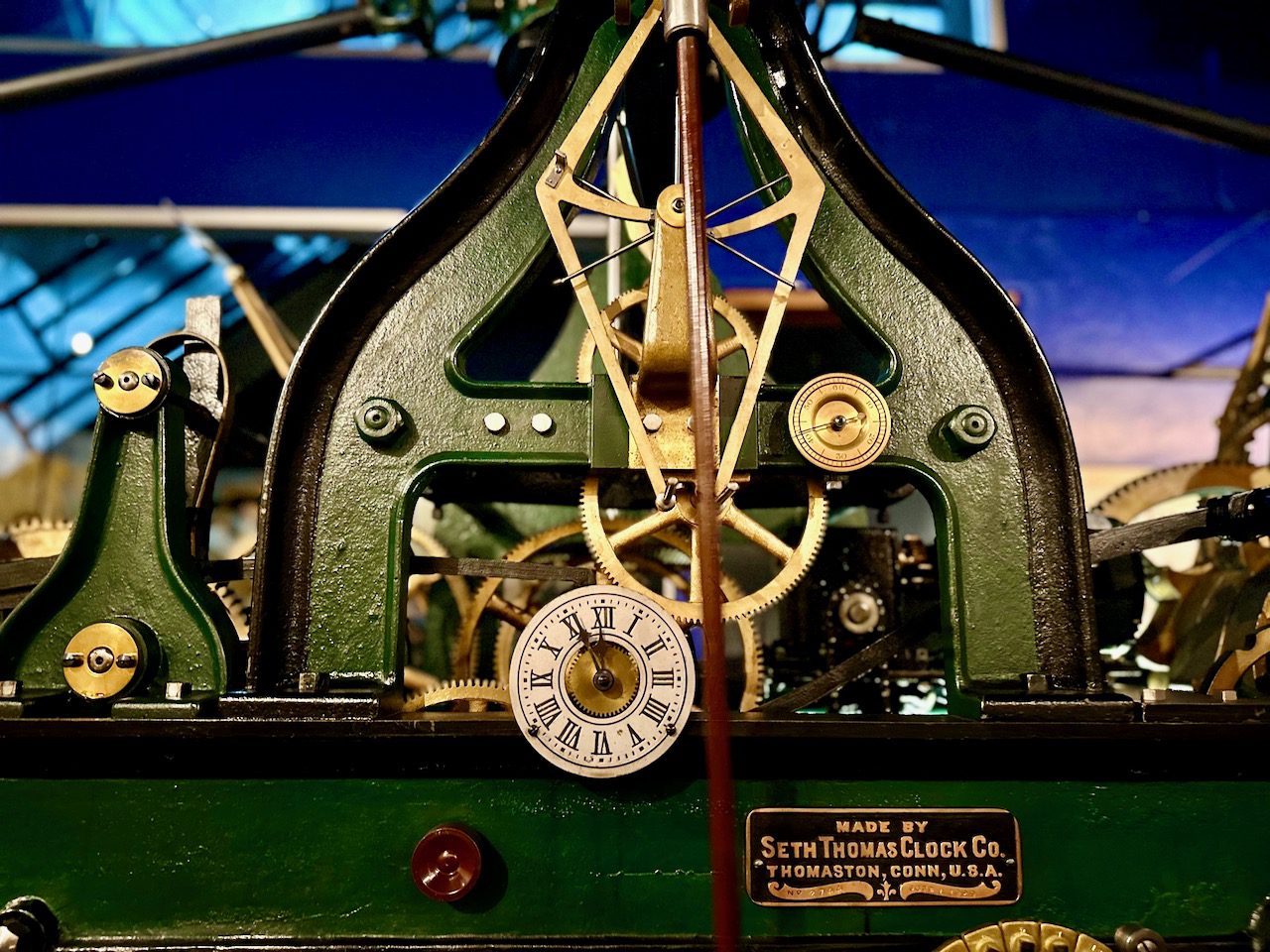
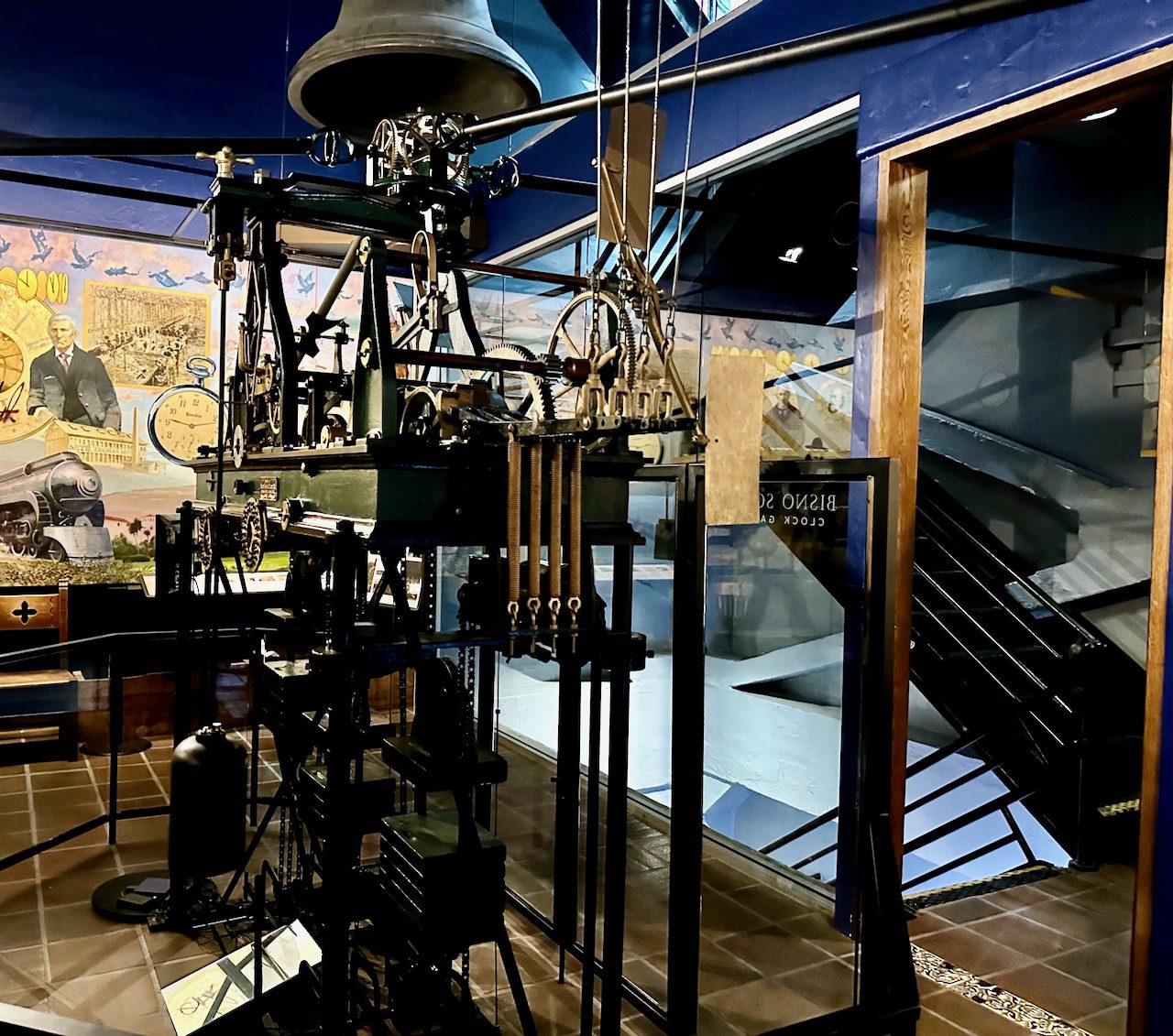
So you don’t go deaf while visiting, the bells in the tower are actually made of styrofoam with sensors to make the bell sound. During the Old Spanish Days Fiesta, the bells play Spanish guitar music for the annual five-day festival.
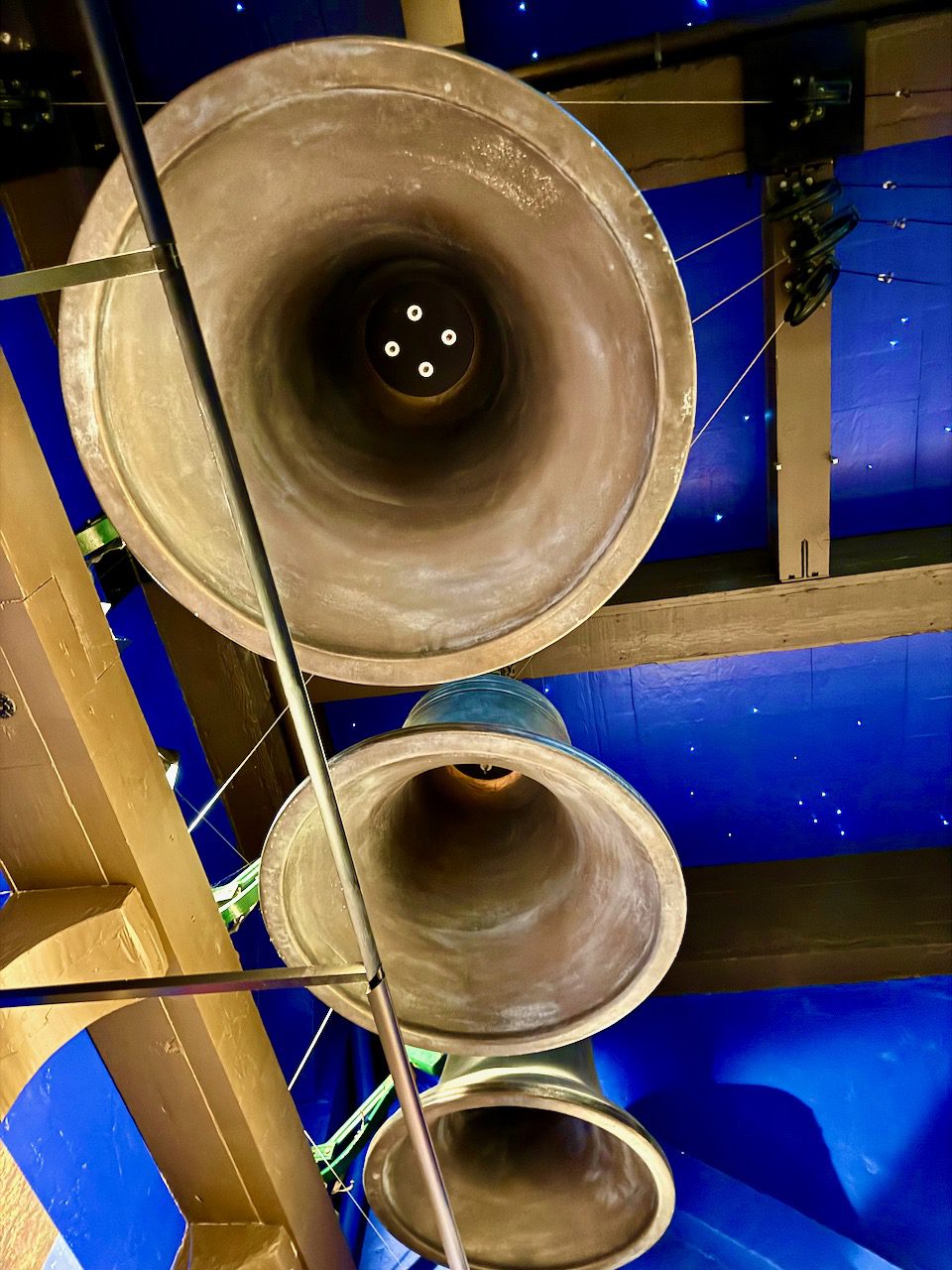
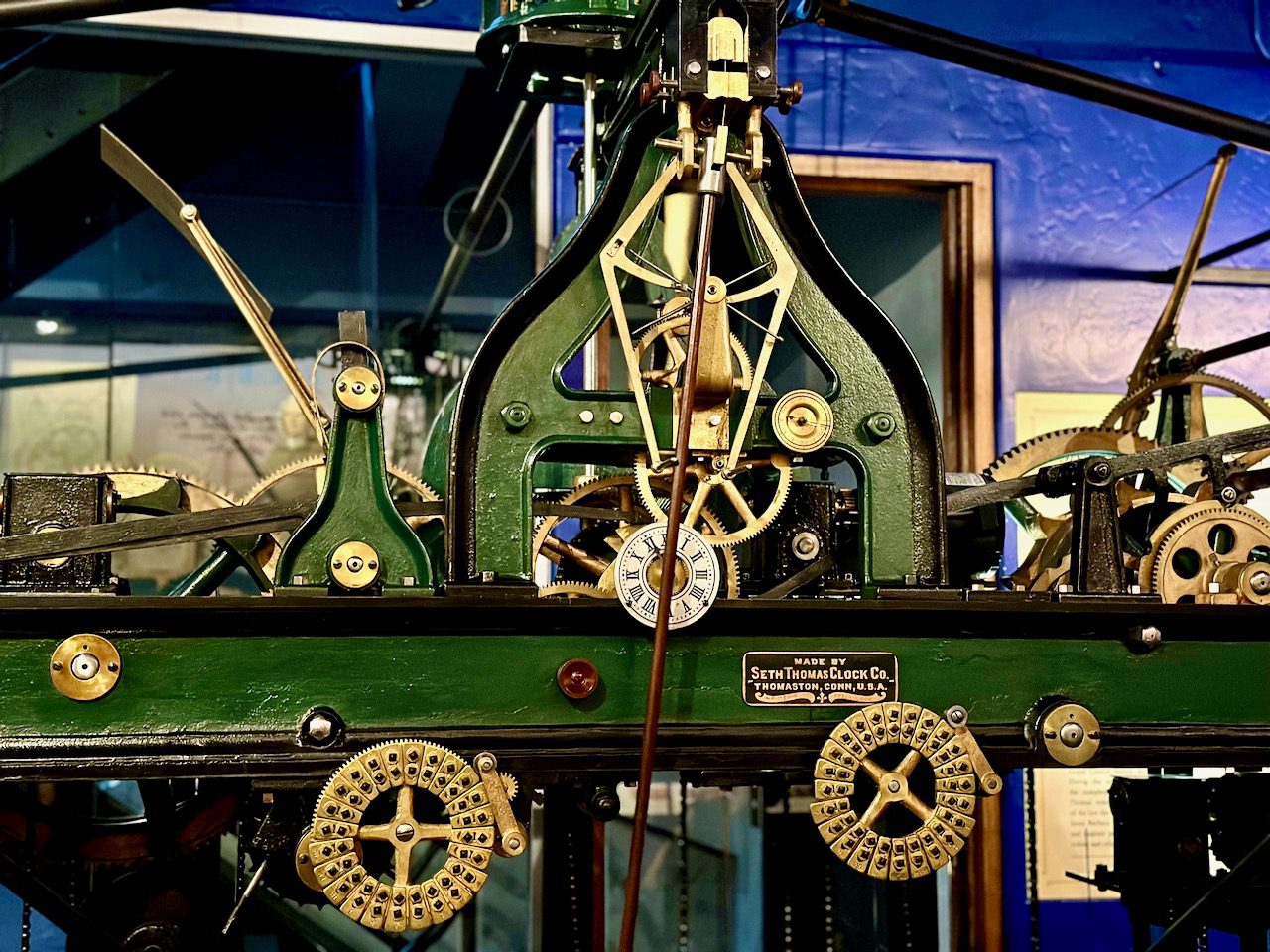
This area was hidden until 2012, when it was opened up for all to admire the historical timepiece.
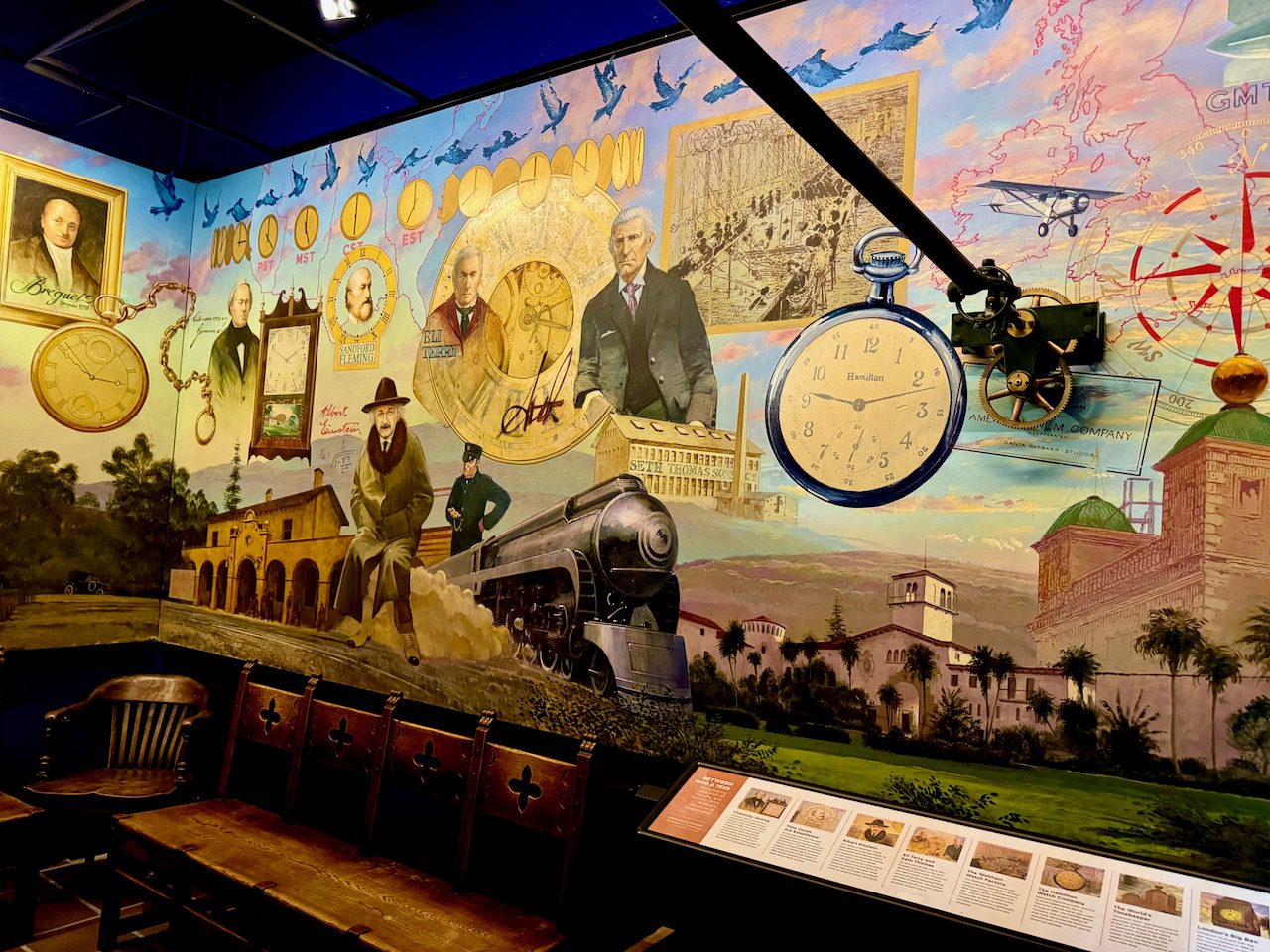
The 60-foot mural depicts the history of timekeeping, from Stonehenge through 1929, when the clock was put into operation.
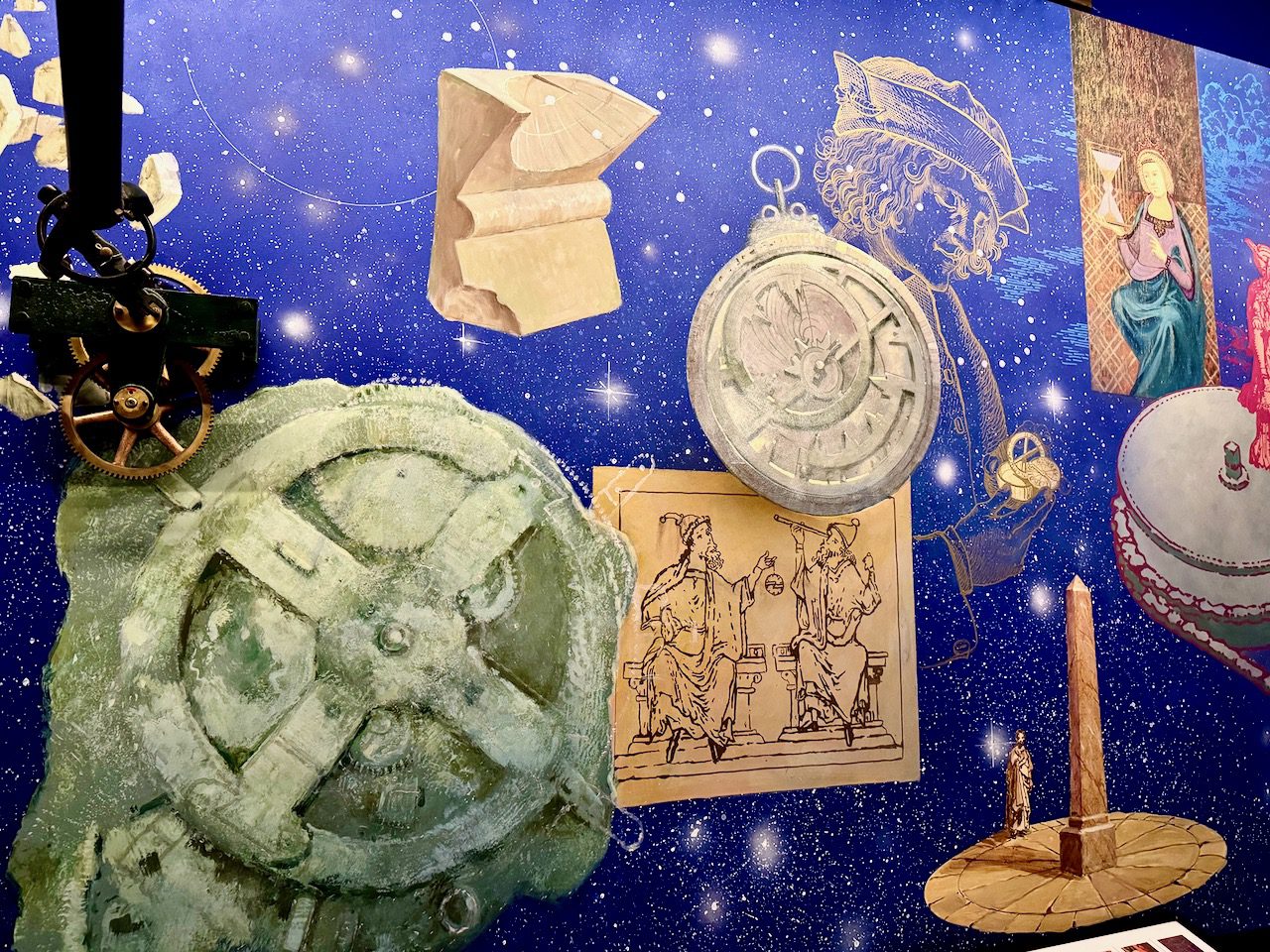
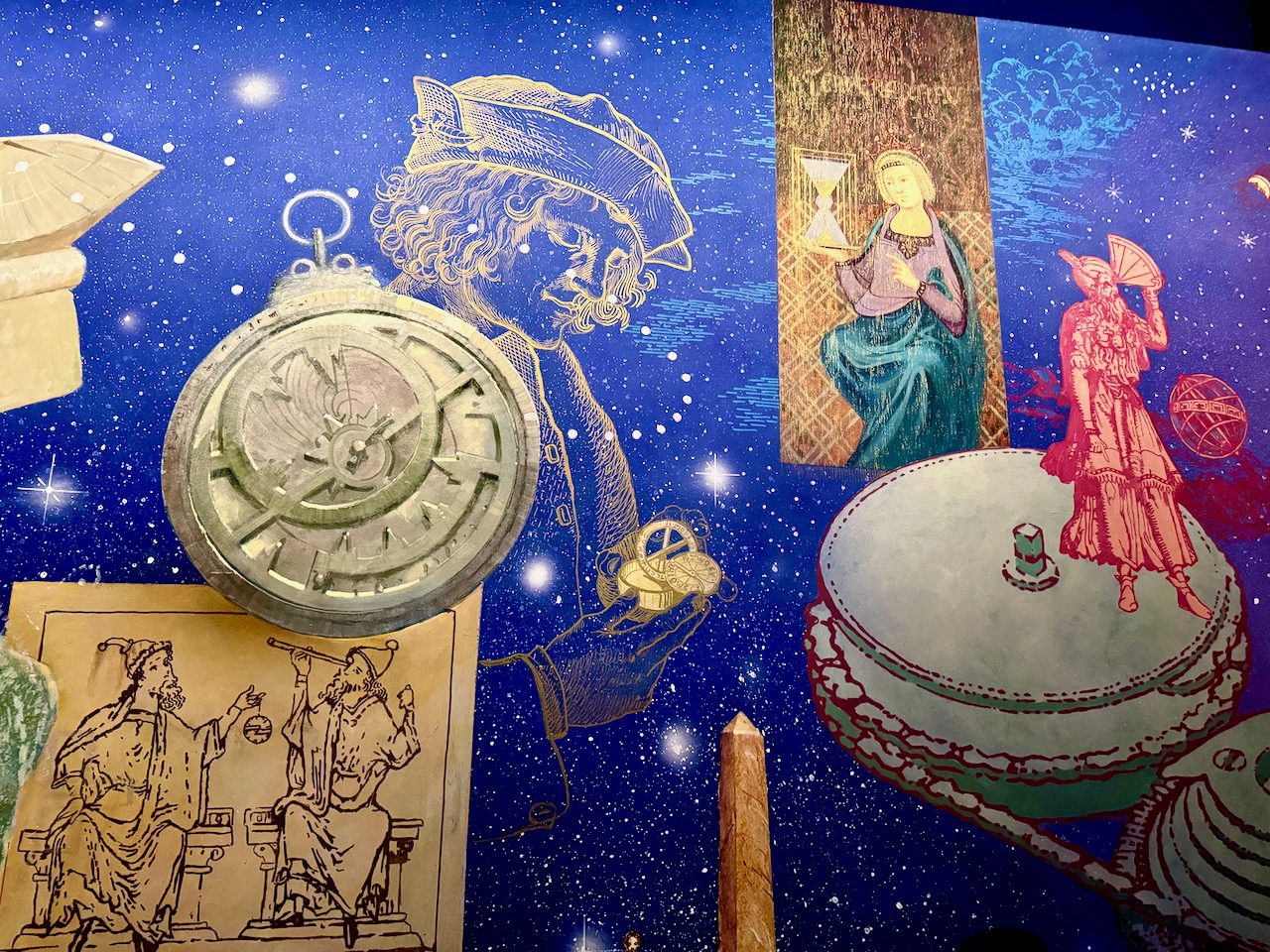
This portion of the mural features portraits of famed clockmakers Eli Terry and Seth Thomas, who were a couple of the most recognized names in American clockmaking in the 1800s.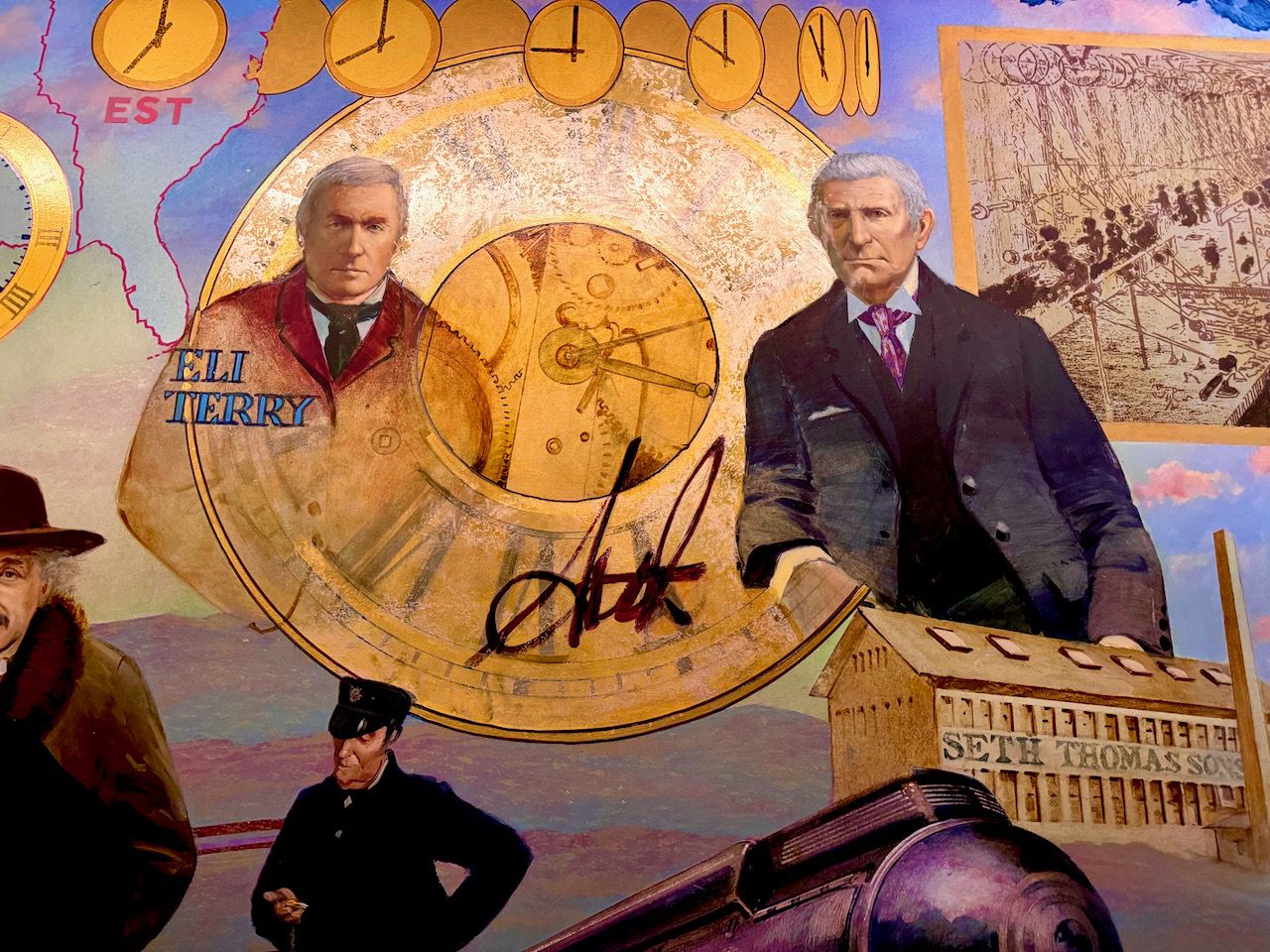
Afterward, we stepped up to take in 360° views from the clock tower platform. Mission Santa Barbara, which we would visit later in the day, can be seen in the distance in the photo.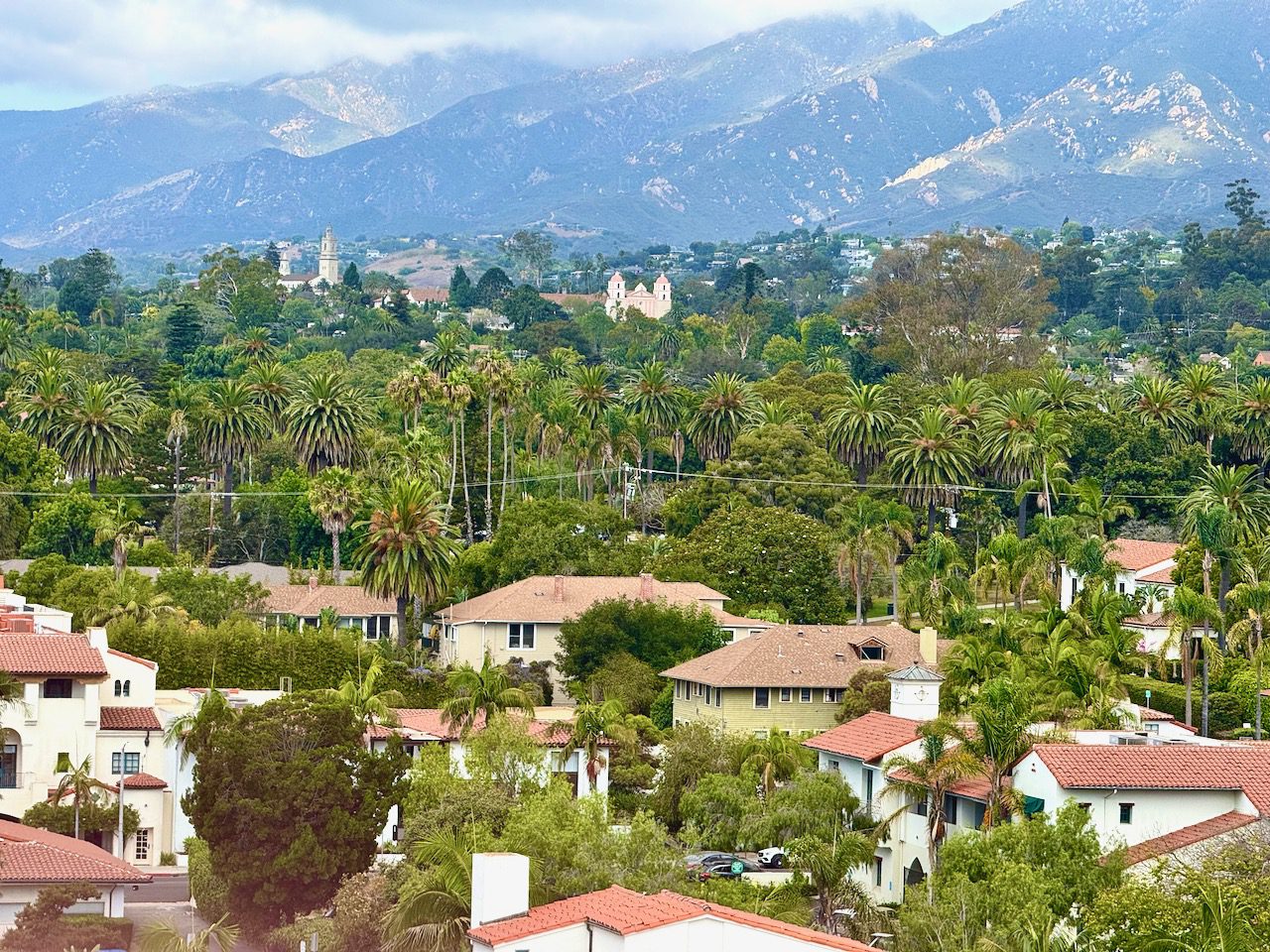
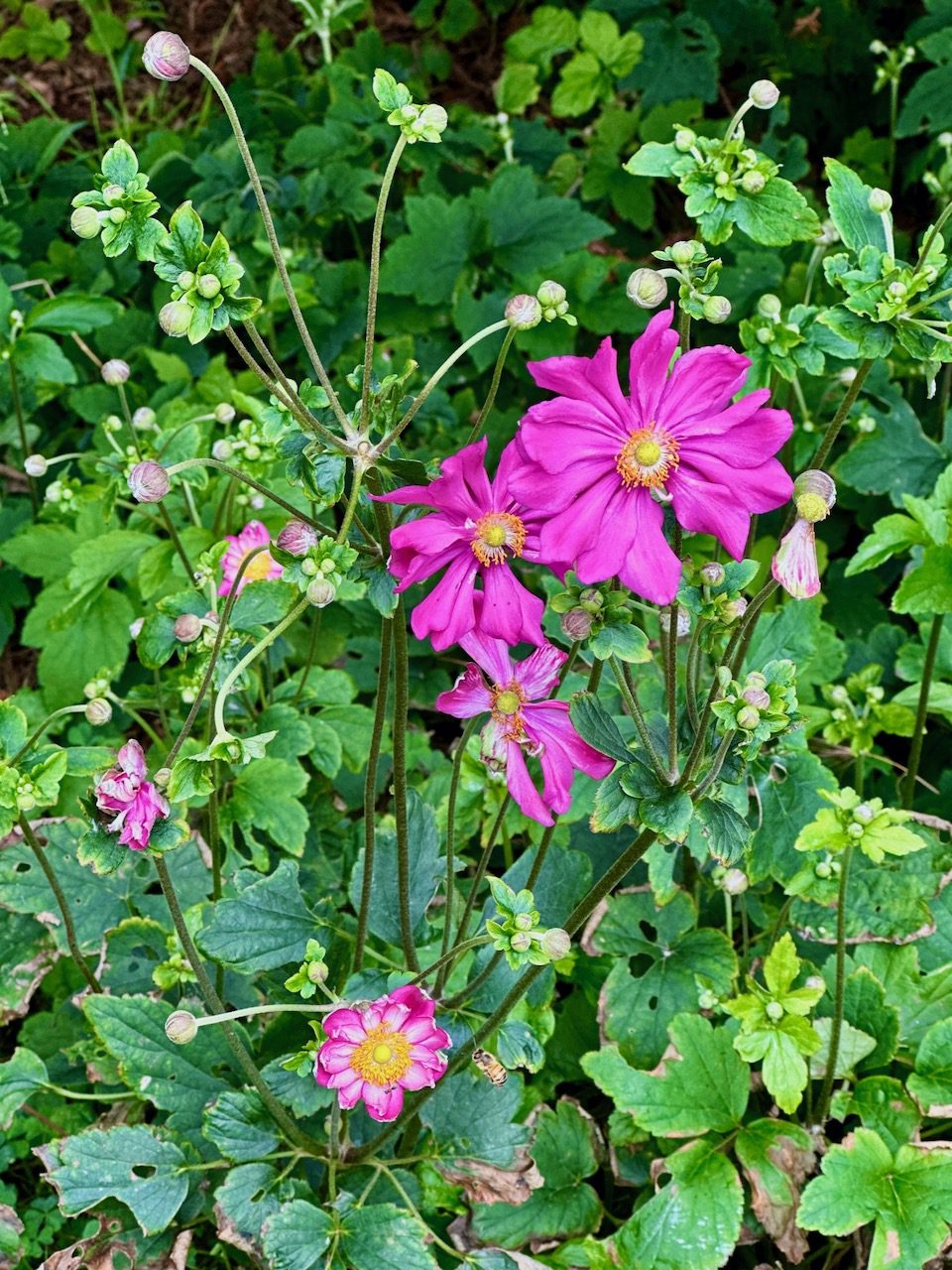
There are 35 different varieties of palms in the gardens. The sunken garden on the right is lined with stone from the destroyed courthouse.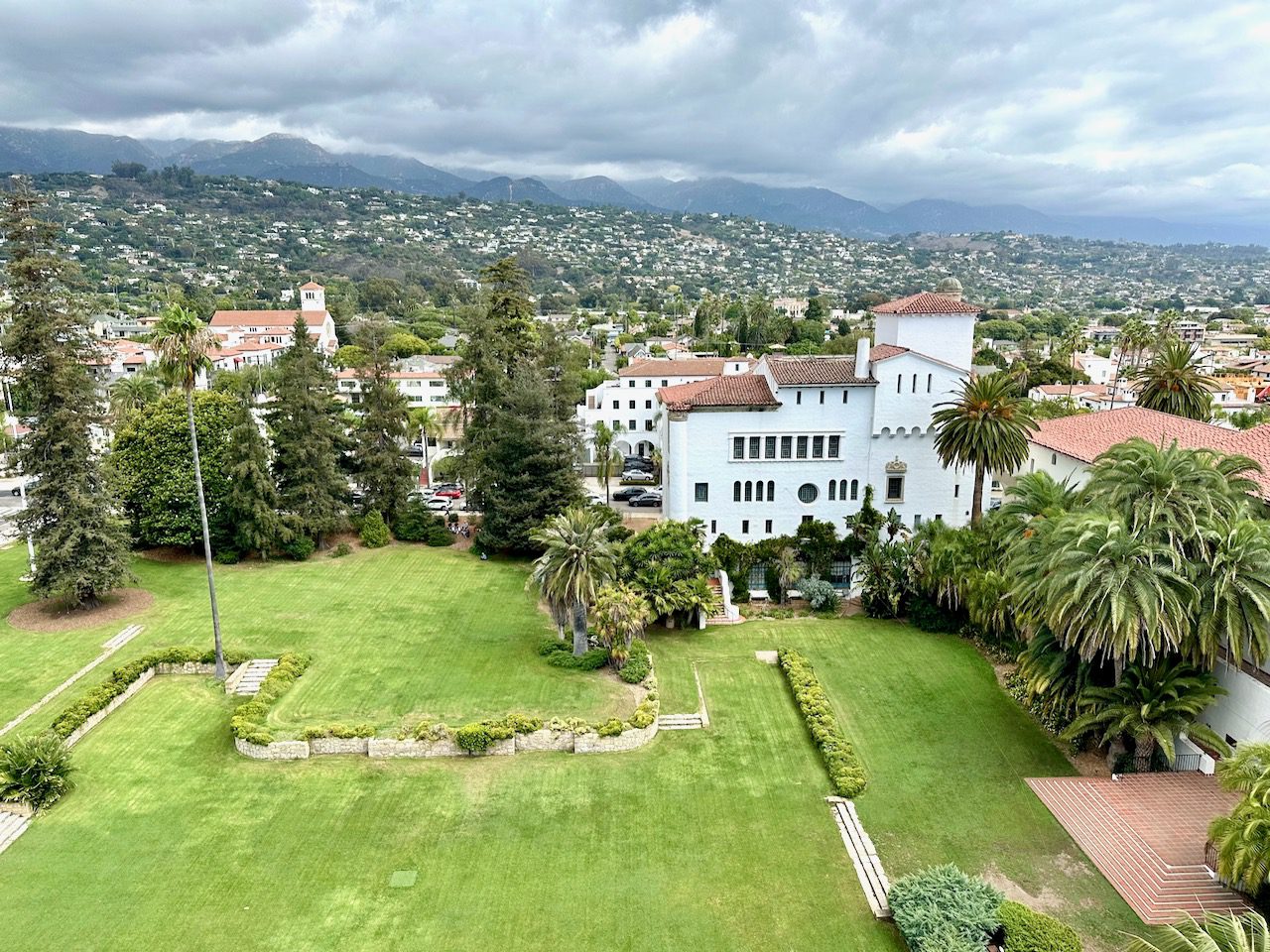
Back downstairs we saw a unique American flag created with fire hoses from the Santa Barbara County, Santa Barbara City and Montecito Fire Departments in fighting the December 2017 Thomas Fire.
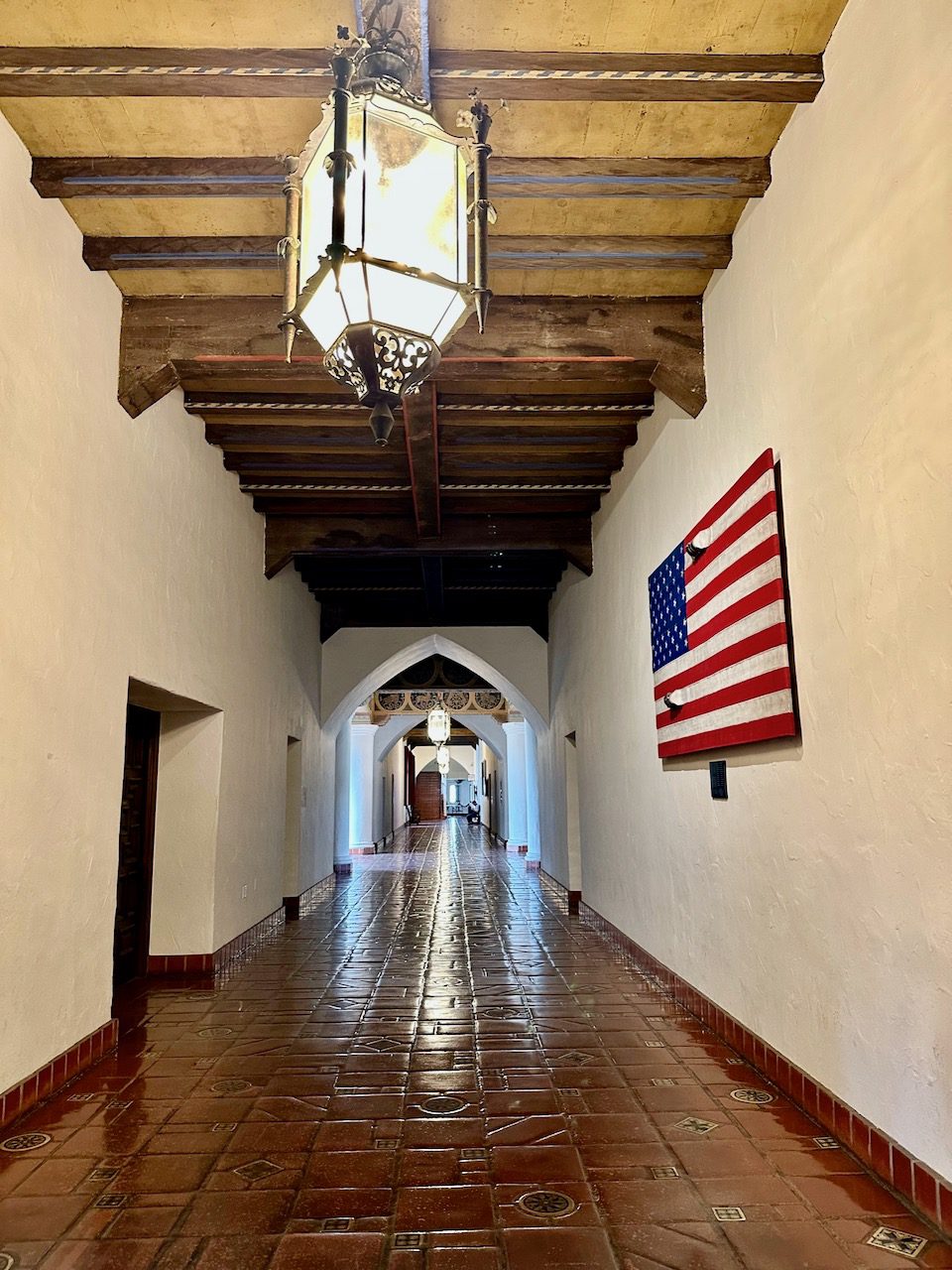
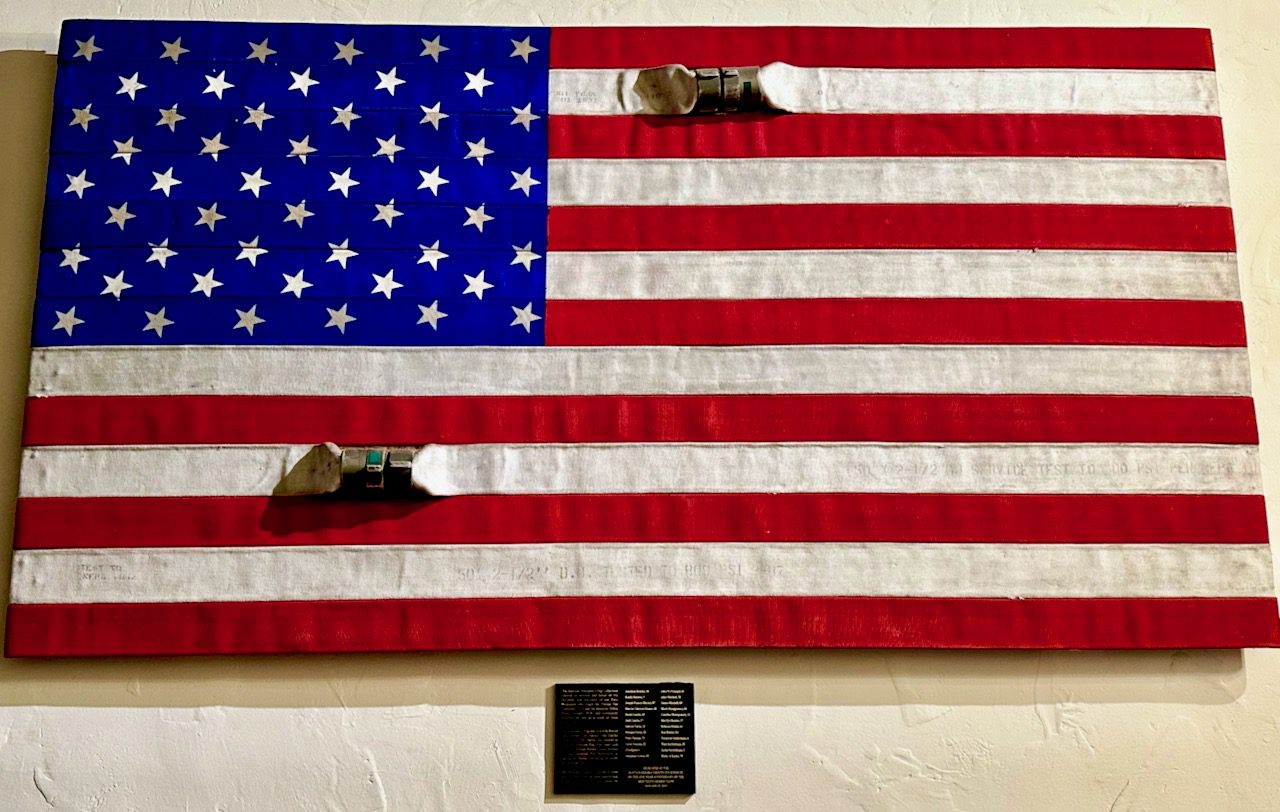
A plaque commemorates those who lost their lives in that fire and also the 2018 Montecito Debris Flow.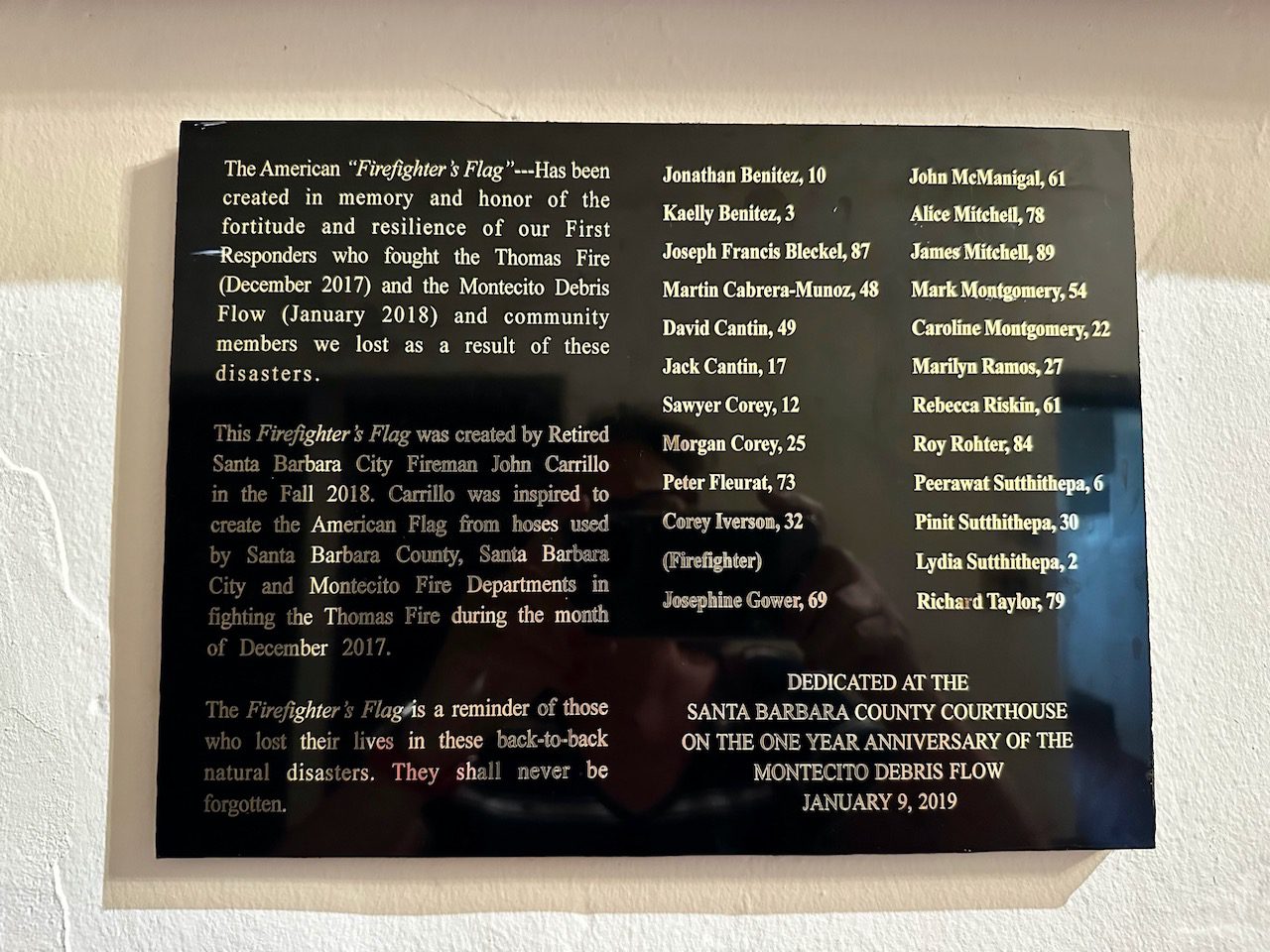
In addition to being a National Historic Landmark and a working courthouse, the lush gardens and the glorious Mural Room are available for weddings.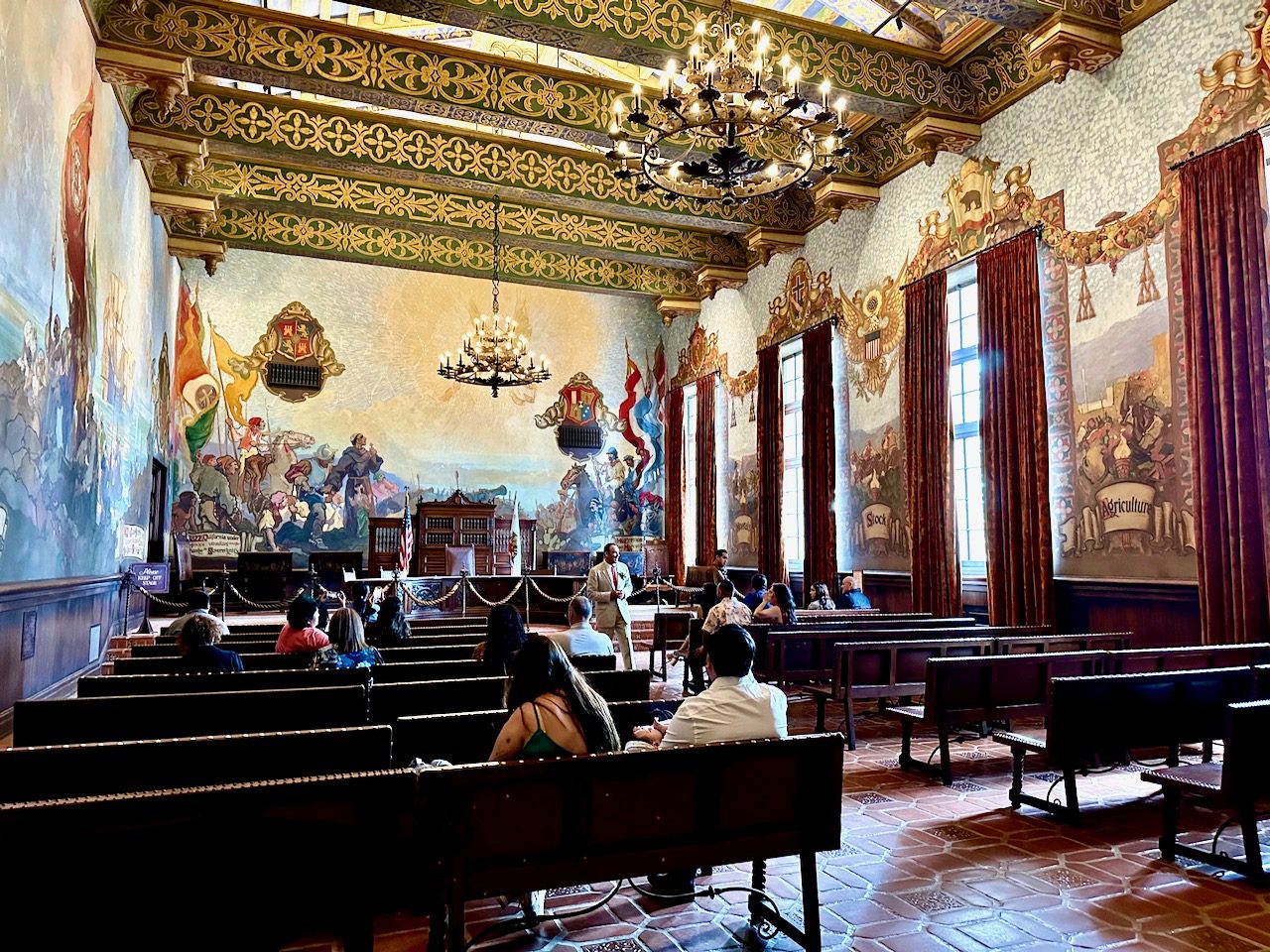
Outside, we caught one last look at The Spirit of the Ocean fountain, originally created in 1927 by Venetian artist Ettore Cadorin. It was installed two years later when the courthouse opened. Master carvers recreated it in 2011 after years of deterioration. It is one of the, if not the, largest stone-carved public sculpture in Southern California. 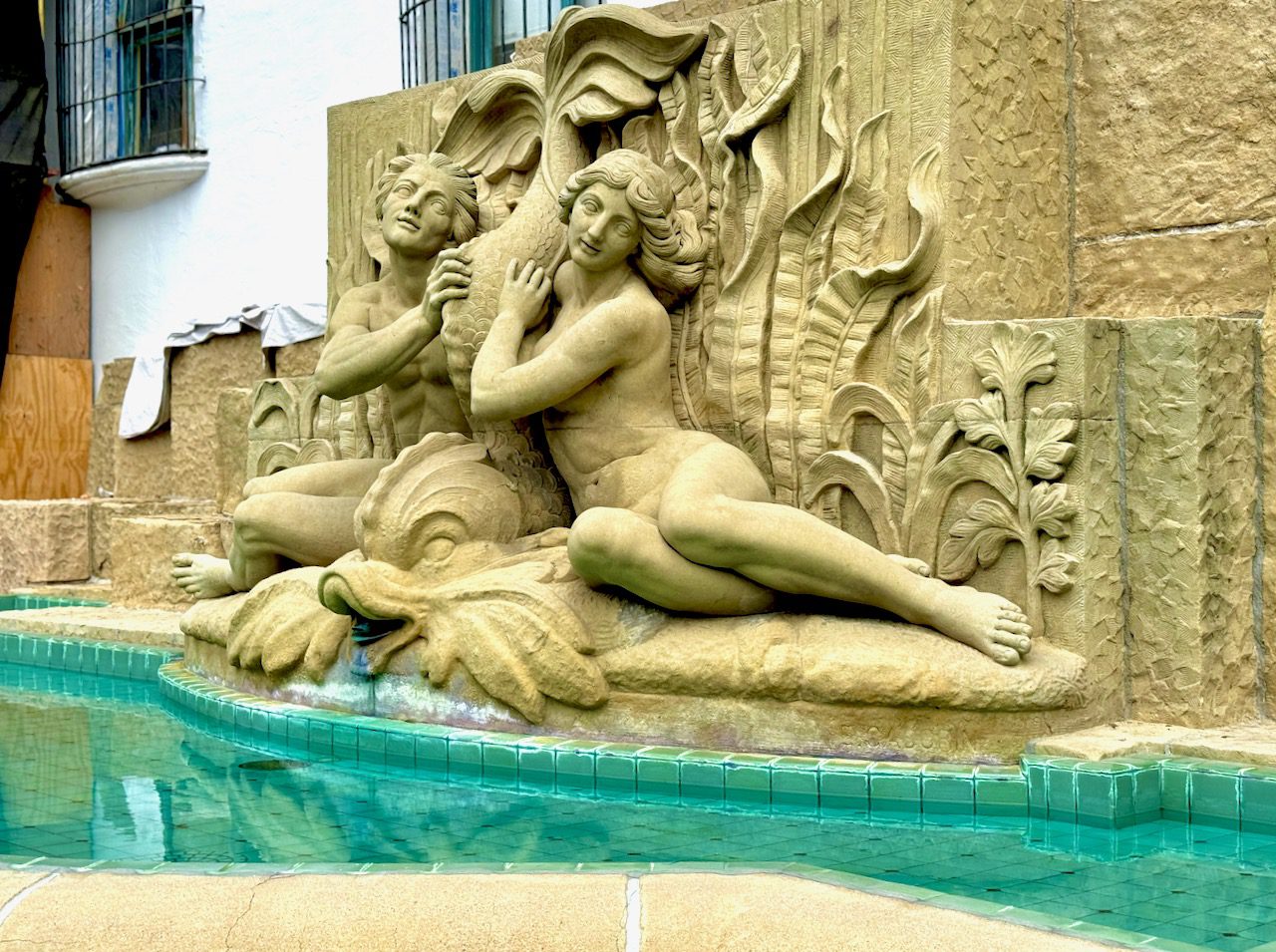
We had waited years to visit the magnificent Santa Barbara County Courthouse, and it certainly did not disappoint. It is one of the best free tours you are likely to experience in all of Southern California.
Santa Barbara County Courthouse
100 Anacapa Street
Santa Barbara, CA 93121
805.962.6464
Monday – Friday 8 am – 5 pm
Saturday/Sunday 10 am – 5 pm
Docent-led Tours Monday – Friday 10:30 am. & 2 pm.
No Tours on Court Holidays – No reservations are required
Parking: Across Street from Courthouse on Anacapa Street
(First 75 minutes free)
Santa Barbara County Courthouse


