Presidential Yacht USS Potomac – Oakland, CA
September 10, 2026George Lucas Bets It All on Los Angeles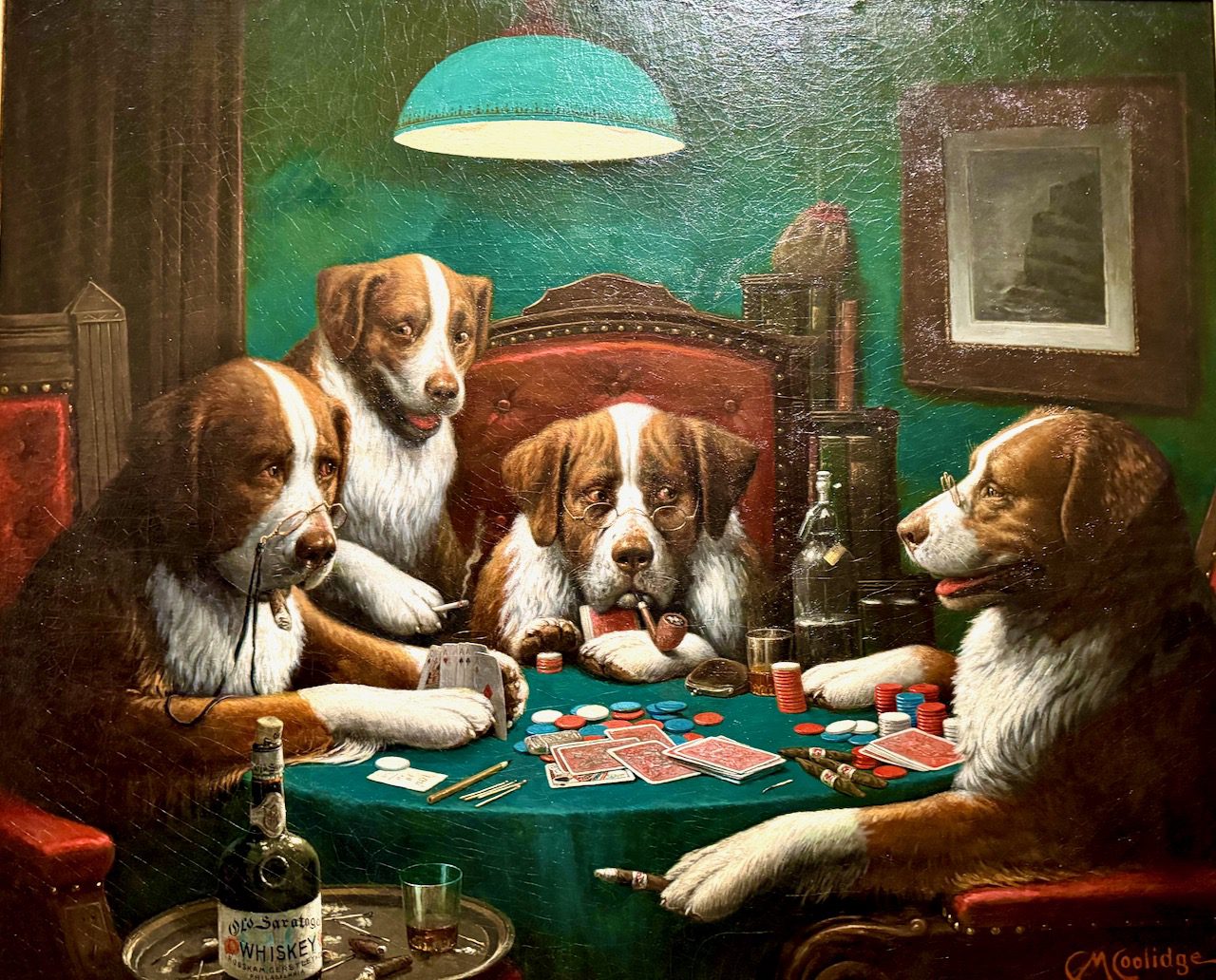
Lucas Museum of Narrative Art – Los Angeles, CA
Visited: 2026
After years of planning and building, the Lucas Museum of Narrative Art opened in late-September 2026 in Los Angeles. On the first day tickets became available online I was #1,035 in the queue and after two tedious hours, finally purchased tickets to see this creation of Star Wars’ filmmaker George Lucas and his wife, Melody Hobson, which houses the voluminous art collection they have accumulated.
The building is nestled in Exposition Park near the University of Southern California and across the street from the Coliseum, the Natural History Museum, the African American Museum and the California Science Center (which reopened in November 2026 with the Endeavour space shuttle now in exhibited in launch position). Photo is from the Lucas Museum’s Photography gallery.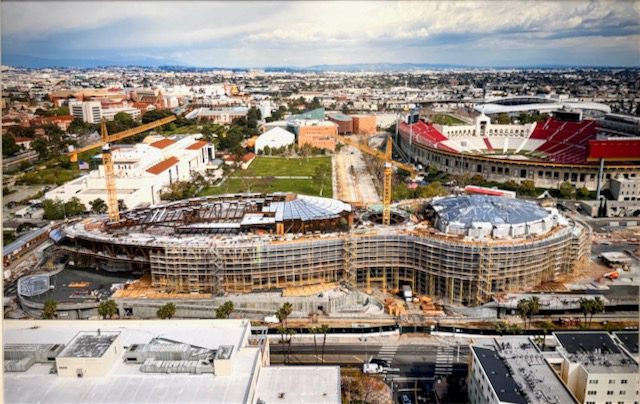
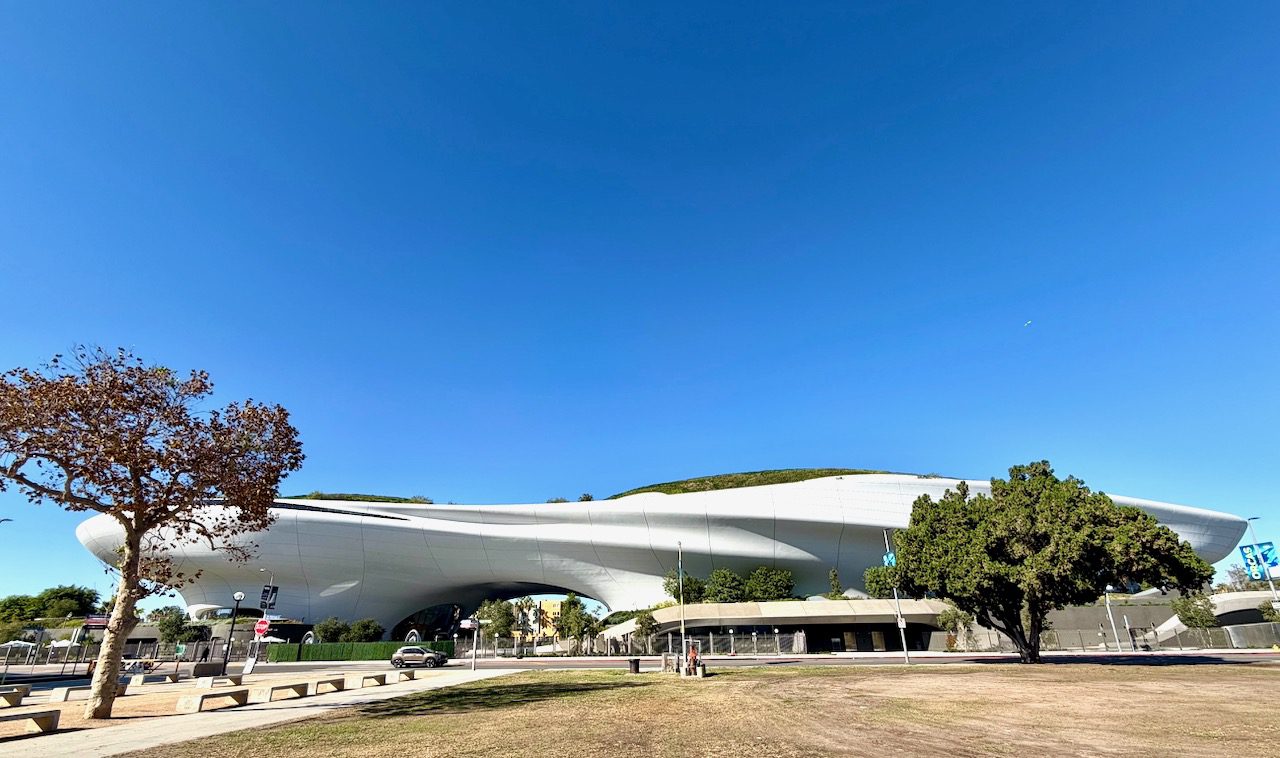
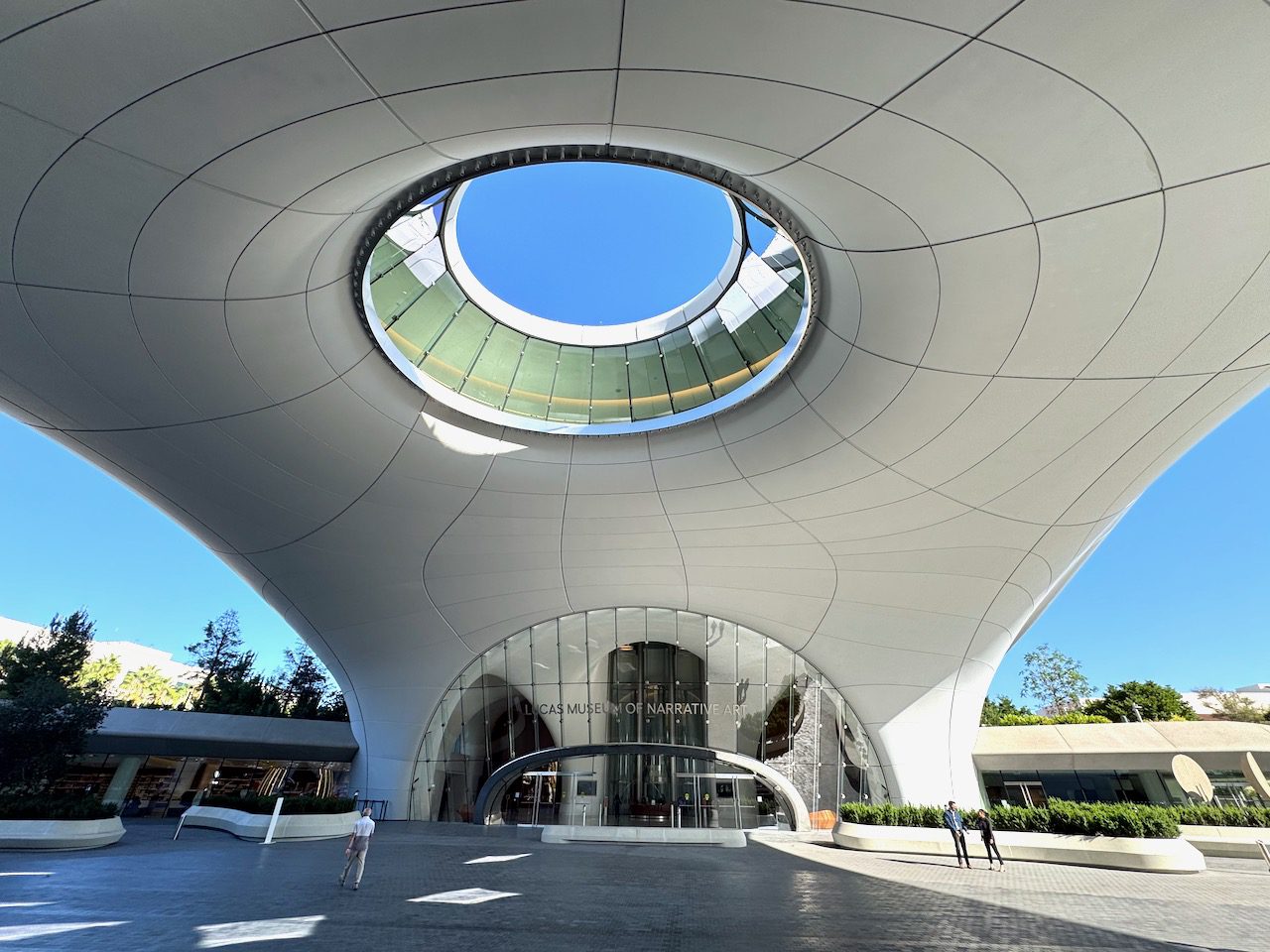
Maybe not so coincidentally, the exterior of the museum looks like a giant spaceship.
 .
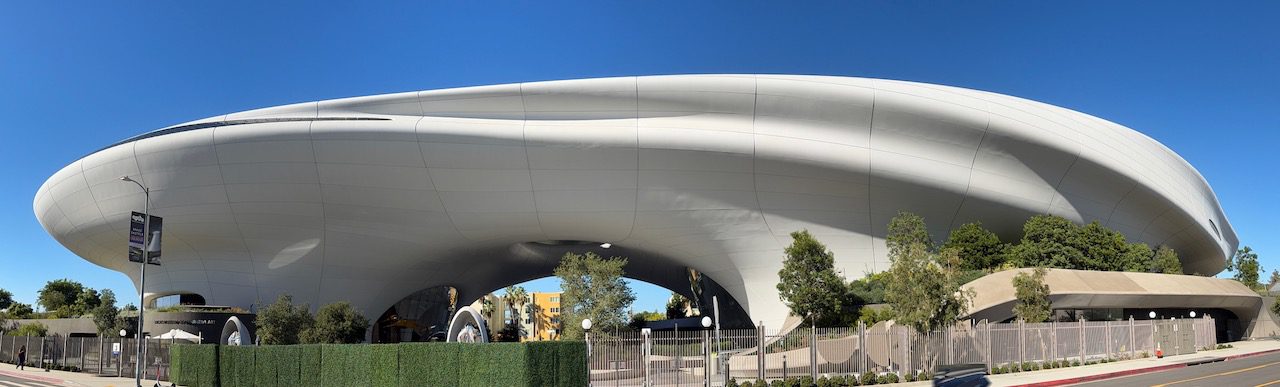
Los Angeles was not Lucas’s first choice. He initially tried to build his museum in San Francisco but was turned down by the Presido Trust for the museum’s proposed non-conformist architectural style. “Not a good fit,” they decreed.
He next tried Chicago and even had plans for a museum in the shape of a volcano drawn up by the global architecture firm, MAD Architects, but a preservation group sued and threatened to tie up the project for years in litigation. The Volcano Museum was now dormant. (Below is the rendering of the proposed Chicago museum.)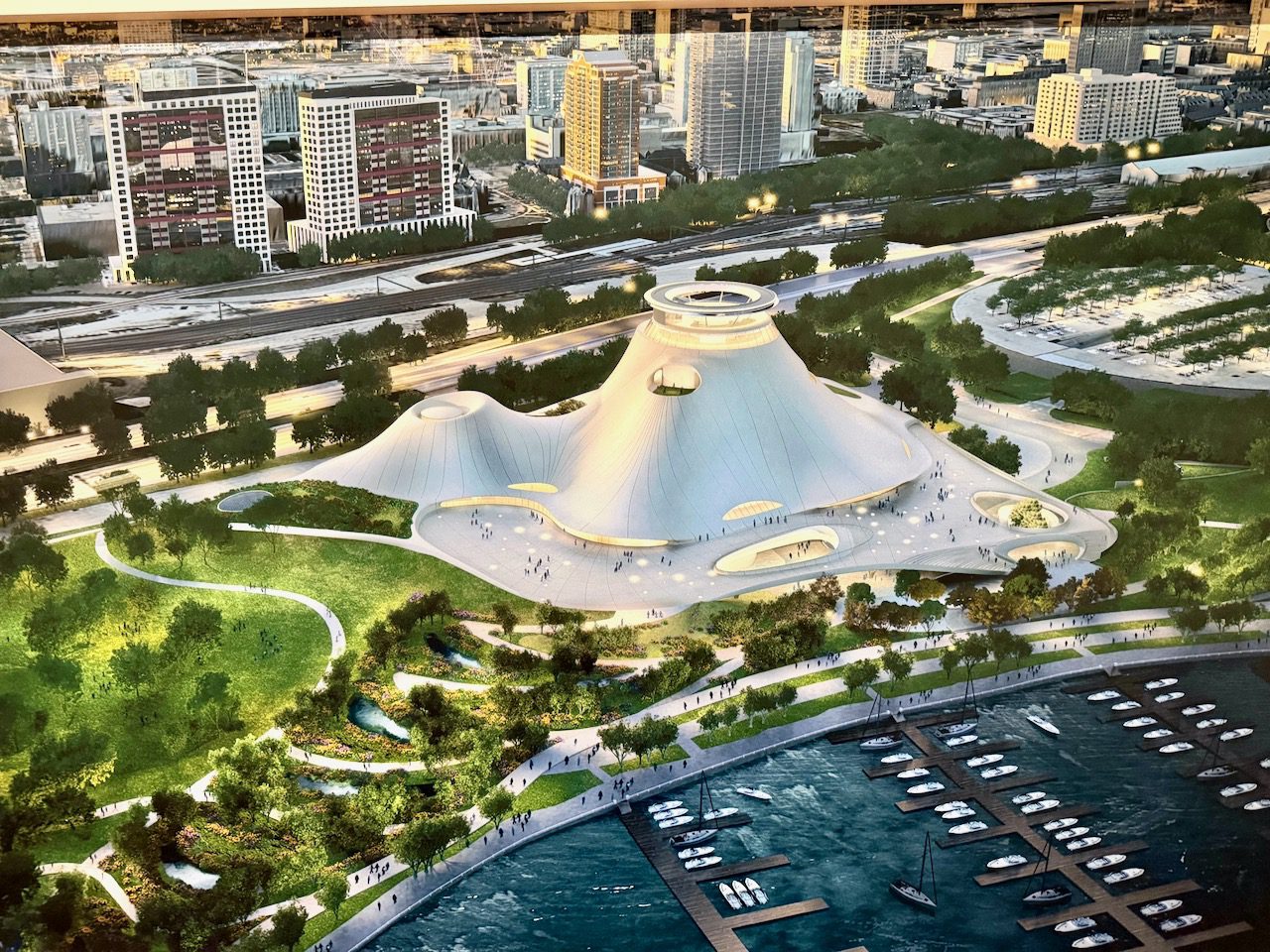
He thought about giving San Francisco another chance, this time hoping to build on Treasure Island, but after realizing there was not enough space, Lucas set his sights on Los Angeles. Lucas and Hobson fully funded the museum’s billion-dollar price tag themselves starting with hiring Chinese architect Ma Yansong of MAD Architects to design the five-story, 300,000 square foot museum. In addition to the fourth and fifth floors which house the collection, there are two state-of-the-art cinemas, a shop and ground floor café as well as the Skywalker Grill rooftop restaurant with panoramic views of Los Angeles (good luck with reservations!) and expansive gardens. 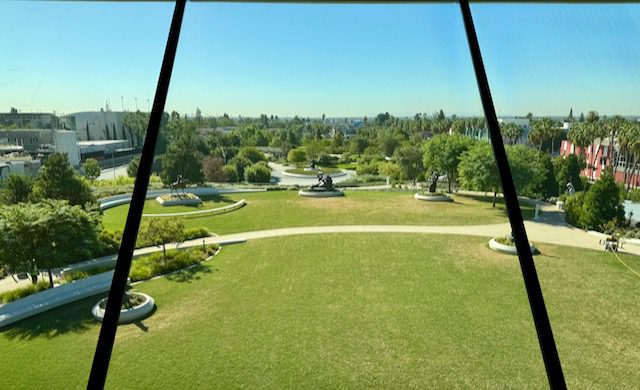
When the museum first opened, Tracy and two friends went without me, as I was sidelined with a bad knee. Her friends very much enjoyed the museum, but Tracy called me to say she was sort of disappointed with the collection. She said, “Eclectic collection. He is obviously a very rich guy, with varied interests who collected a lot of stuff, but I would like to know more about why he collected what he collected.” They do have some movies downstairs that you can see, but one of the volunteers said none of them describe how or why the Lucases accumulated such a varied collection.
Tracy was also bothered by the lack of curatorial content on the “tombstones,” which did not contain anything other than basic information regarding artist, medium, title and year. More on that later.
After looking at the photos Tracy took that day, I convinced her we needed to go back and give it another try, so along with our friend Paul the three of us walked through this immense museum. The bulk of the collection is housed on the fourth floor in 30+ galleries grouped together by theme: Children’s Stories, Photography, Comics, Graphic Stories, Adventure, Romance, Fantasy, Science Fiction, etc. or artist, Wyeth, Benton, Rockwell, Frazetta, Jessie Willcox Smith, Parrish.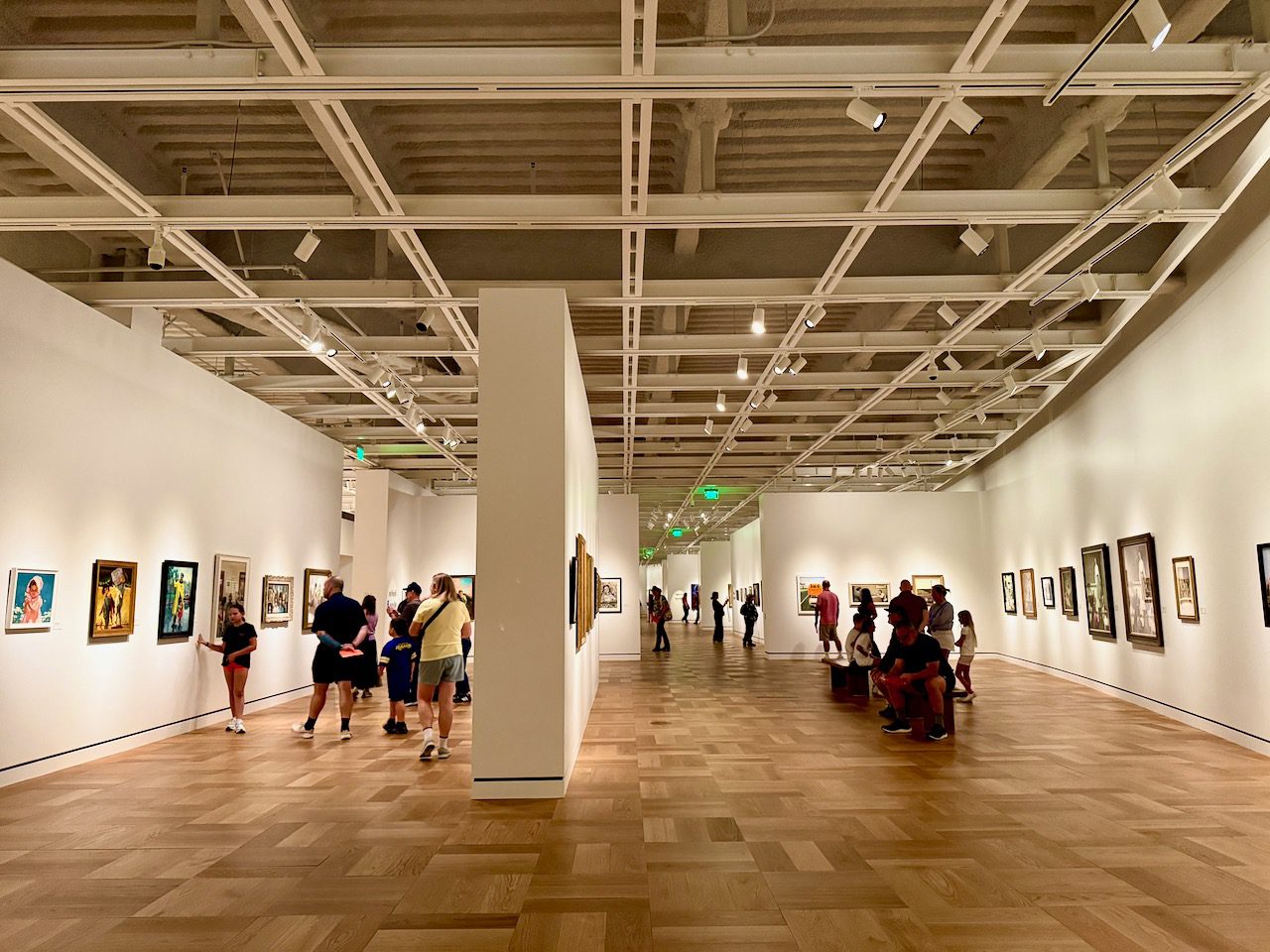
The most crowded gallery of the museum on the days we attended was the Cinema Section which contained Star Wars artifacts and props. I have read that this is to be part of a rotating collection and may not be here indefinitely.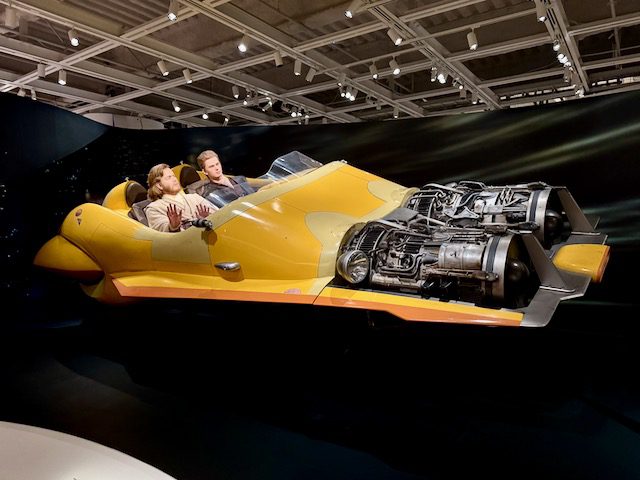
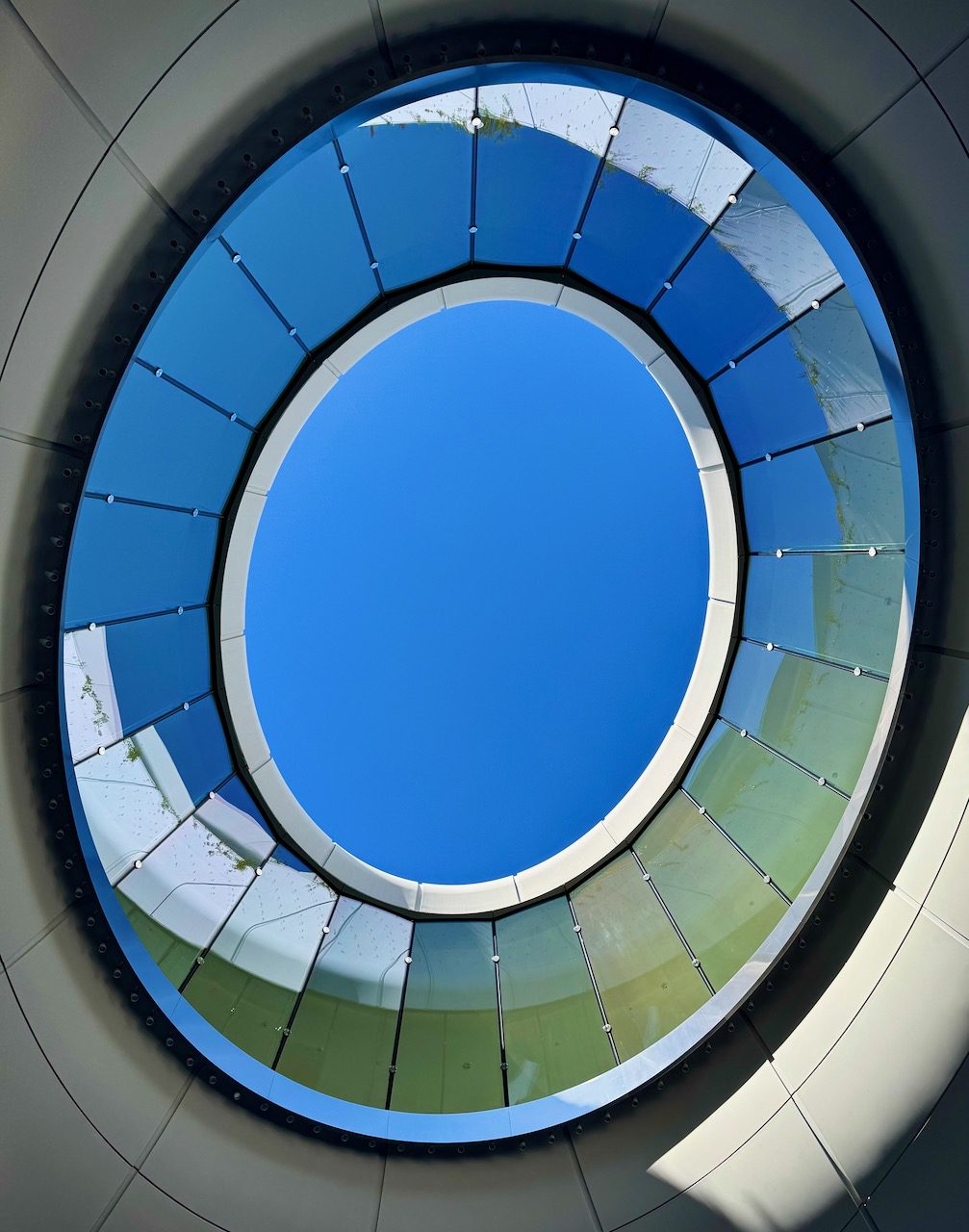
Before entering, we admired the oculus entrance designed by architect Ma Yansong of MAD Architects.
 .
Suspended above the entrance to the research library is an N-1 Starfighter (Naboo Starfighter), which means a lot more if you’re a Star Wars person. (Full disclosure: I am a Star Trek person.)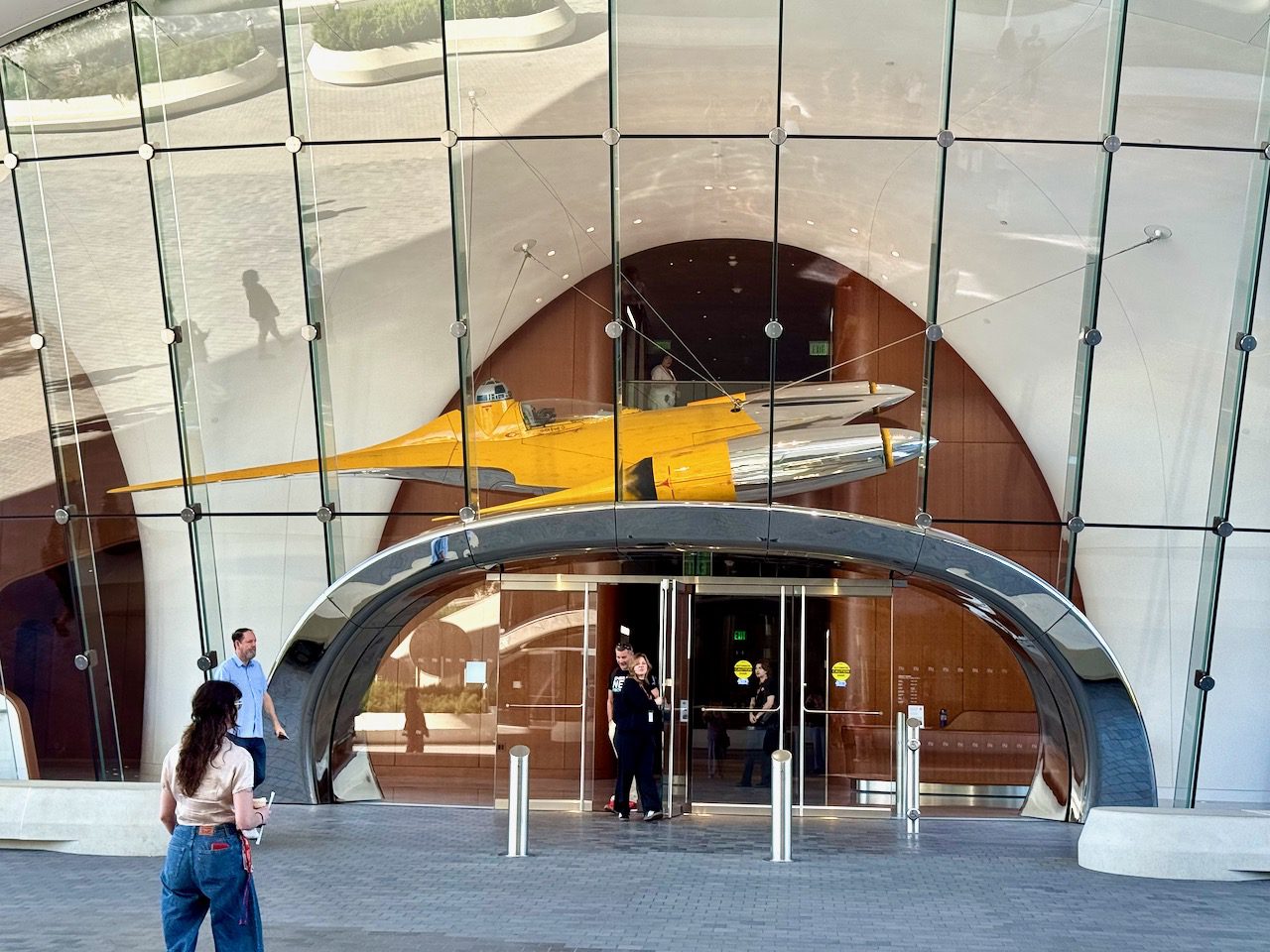
After riding the elevator tube to the fourth floor where most of the galleries are located …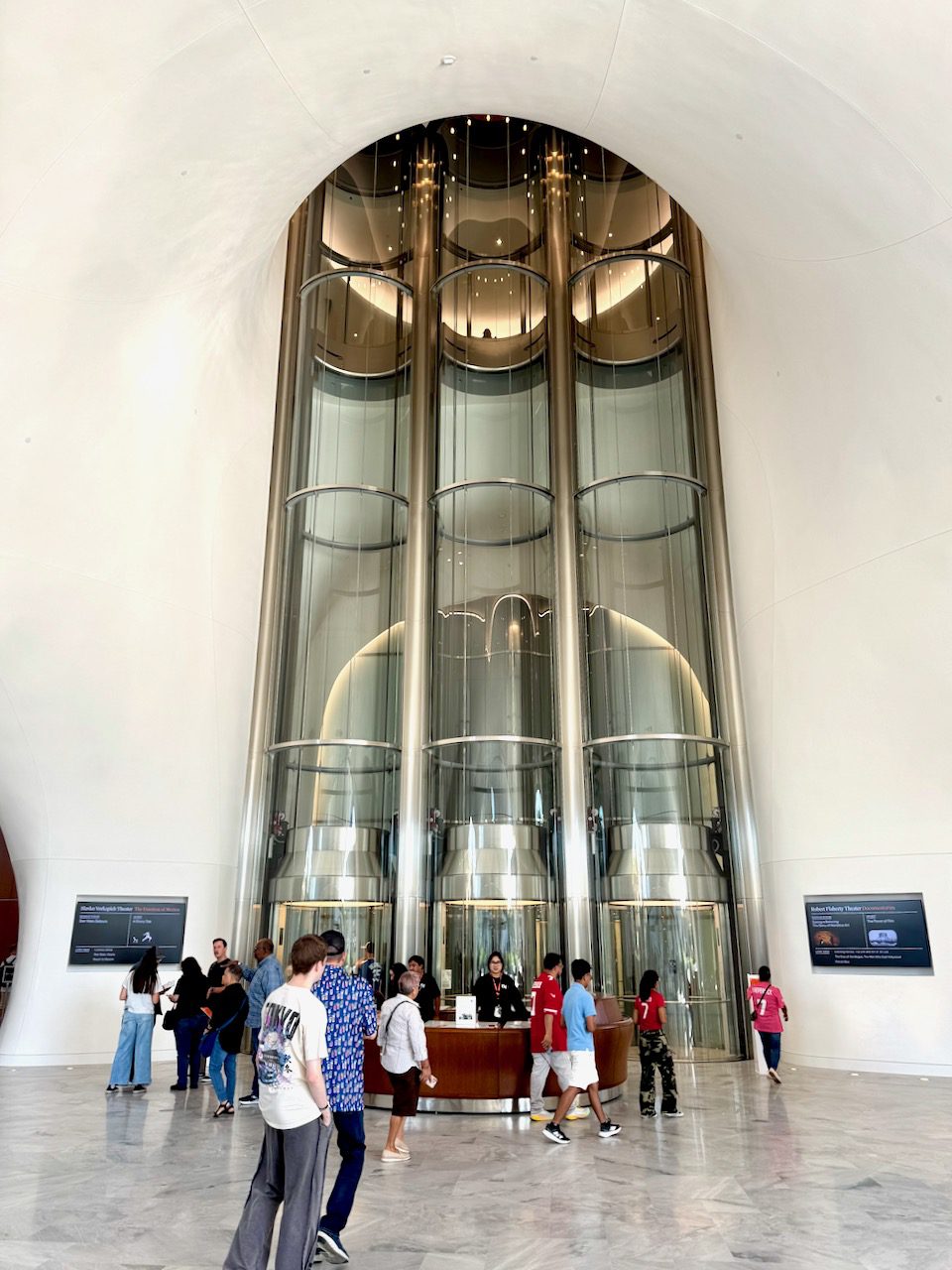
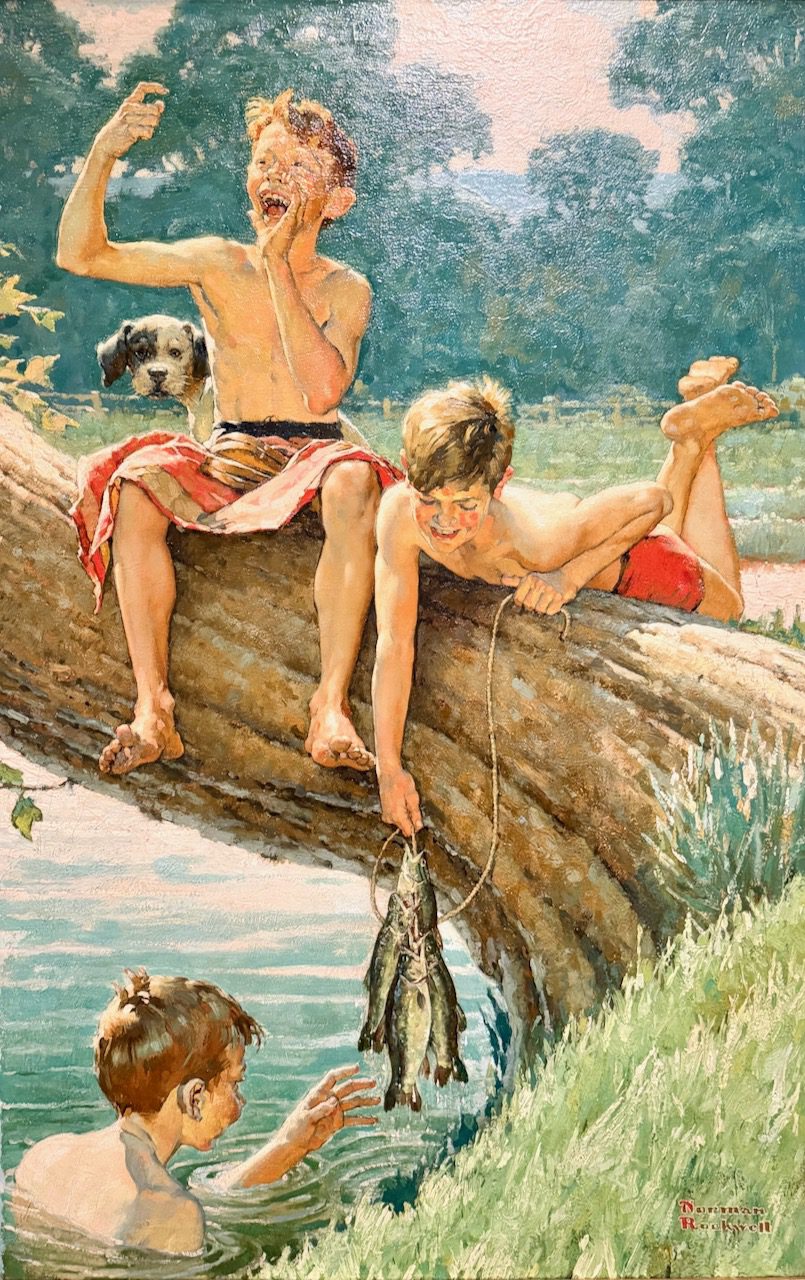
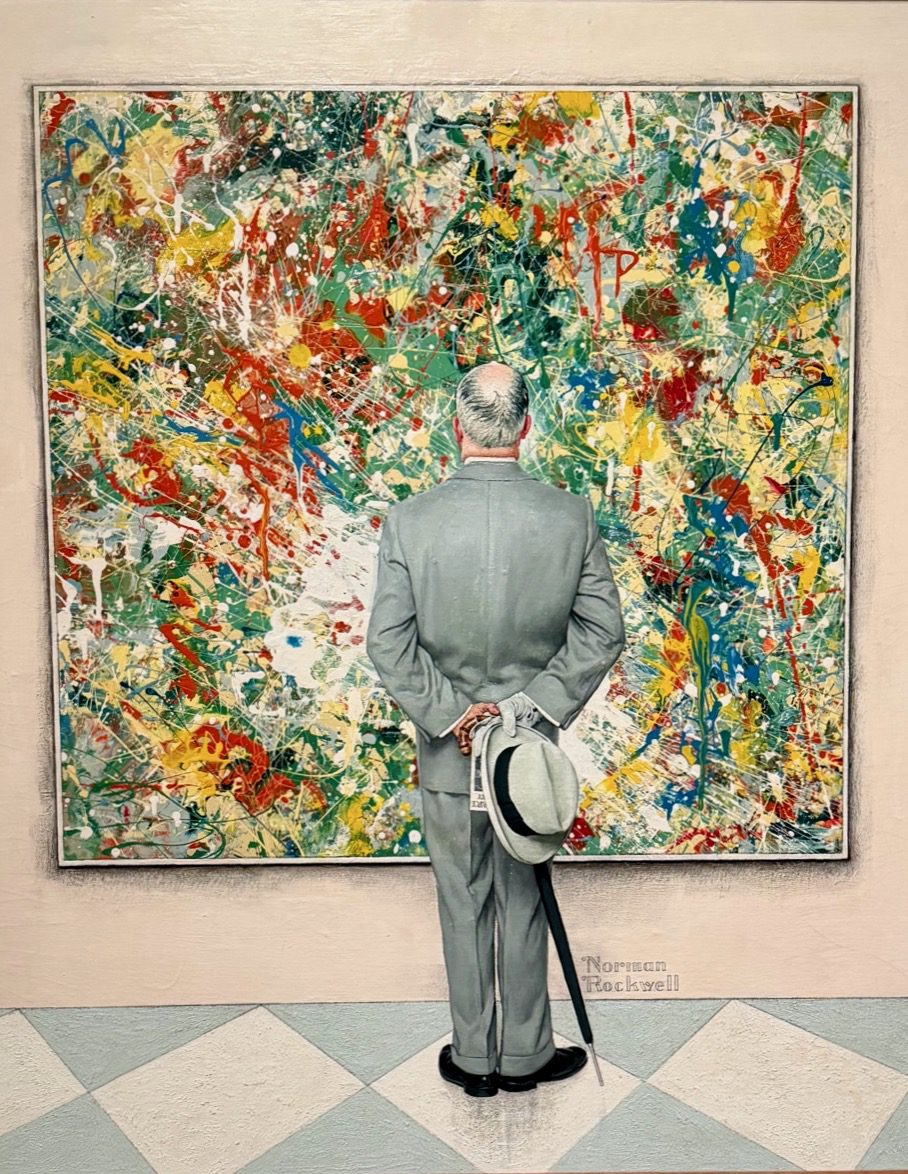
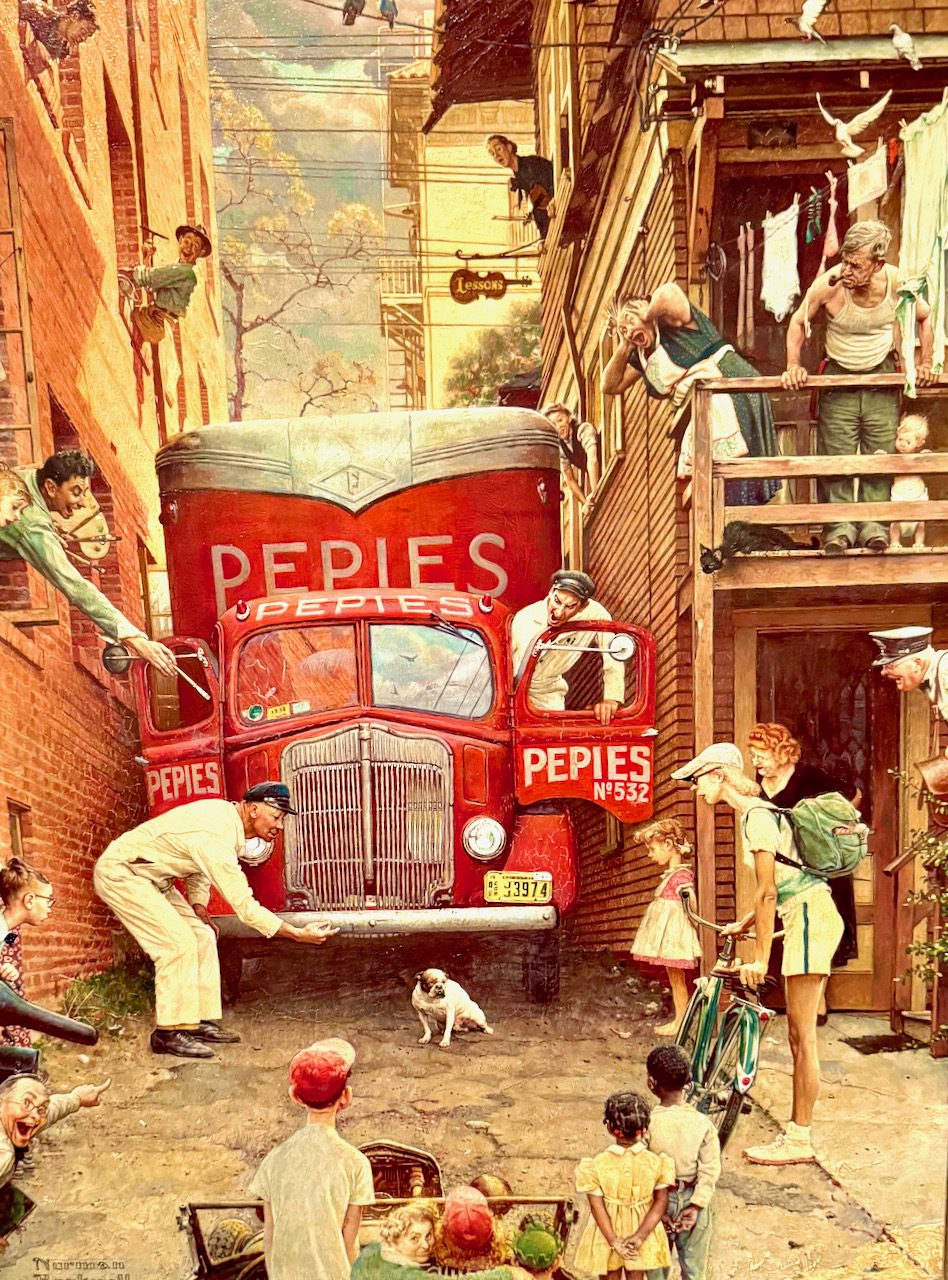
… we started in the (Norman) Rockwell section. I found out later that Lucas and fellow director Steven Spielberg are “two of the world’s most prominent collectors of Norman Rockwell’s art,” and credit Rockwell’s style for “deeply influencing their approach to filmmaking.”
 .
 .
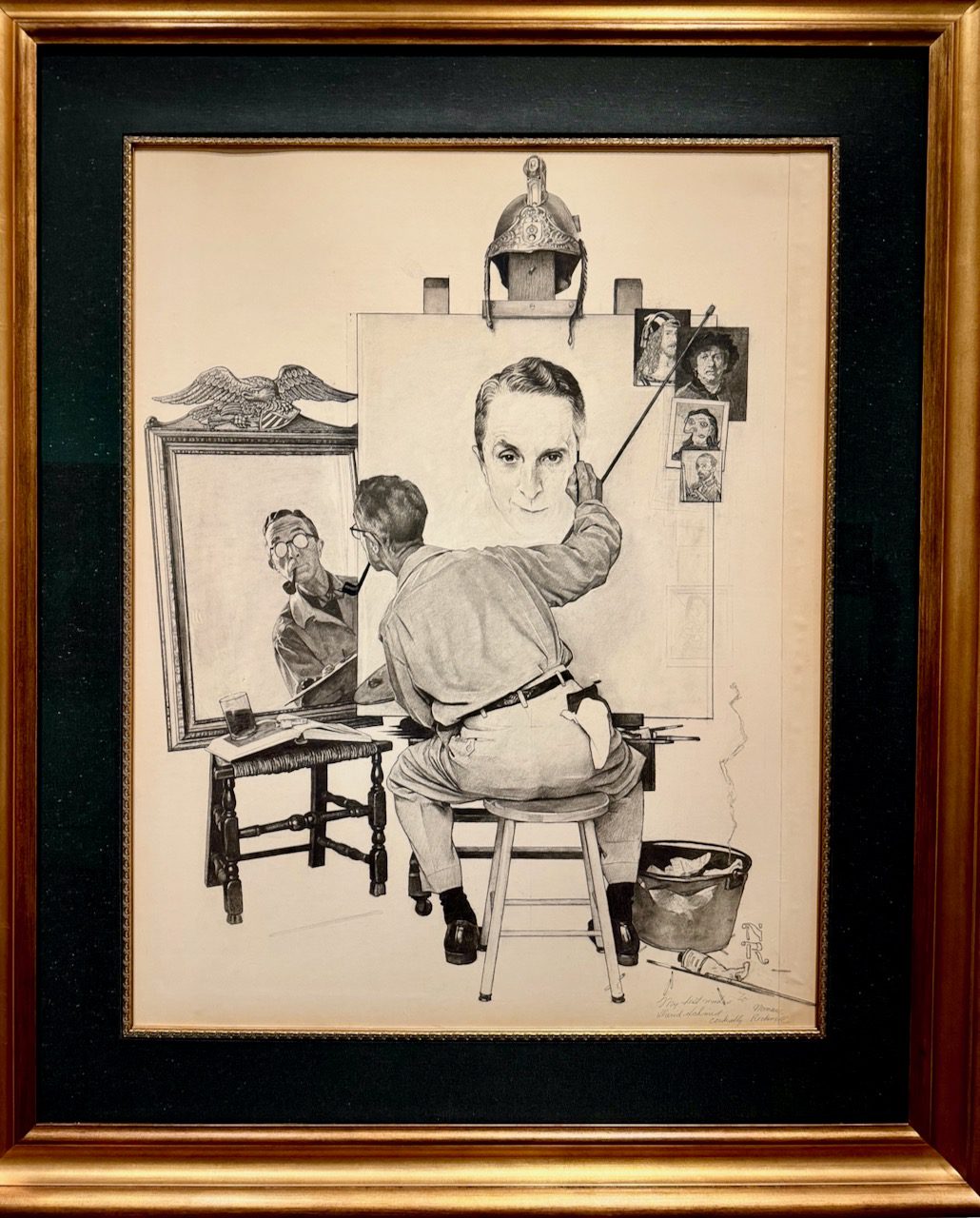
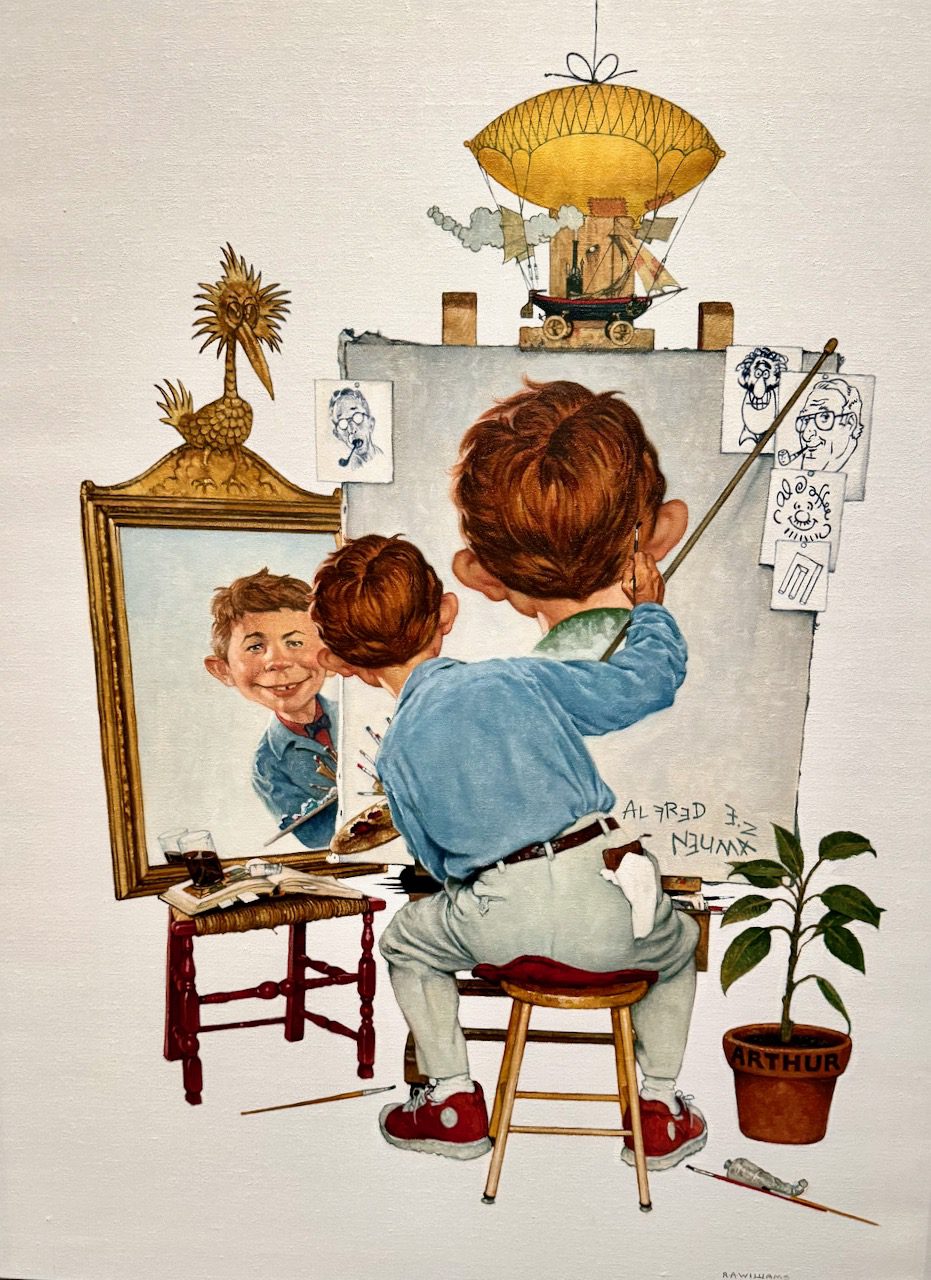
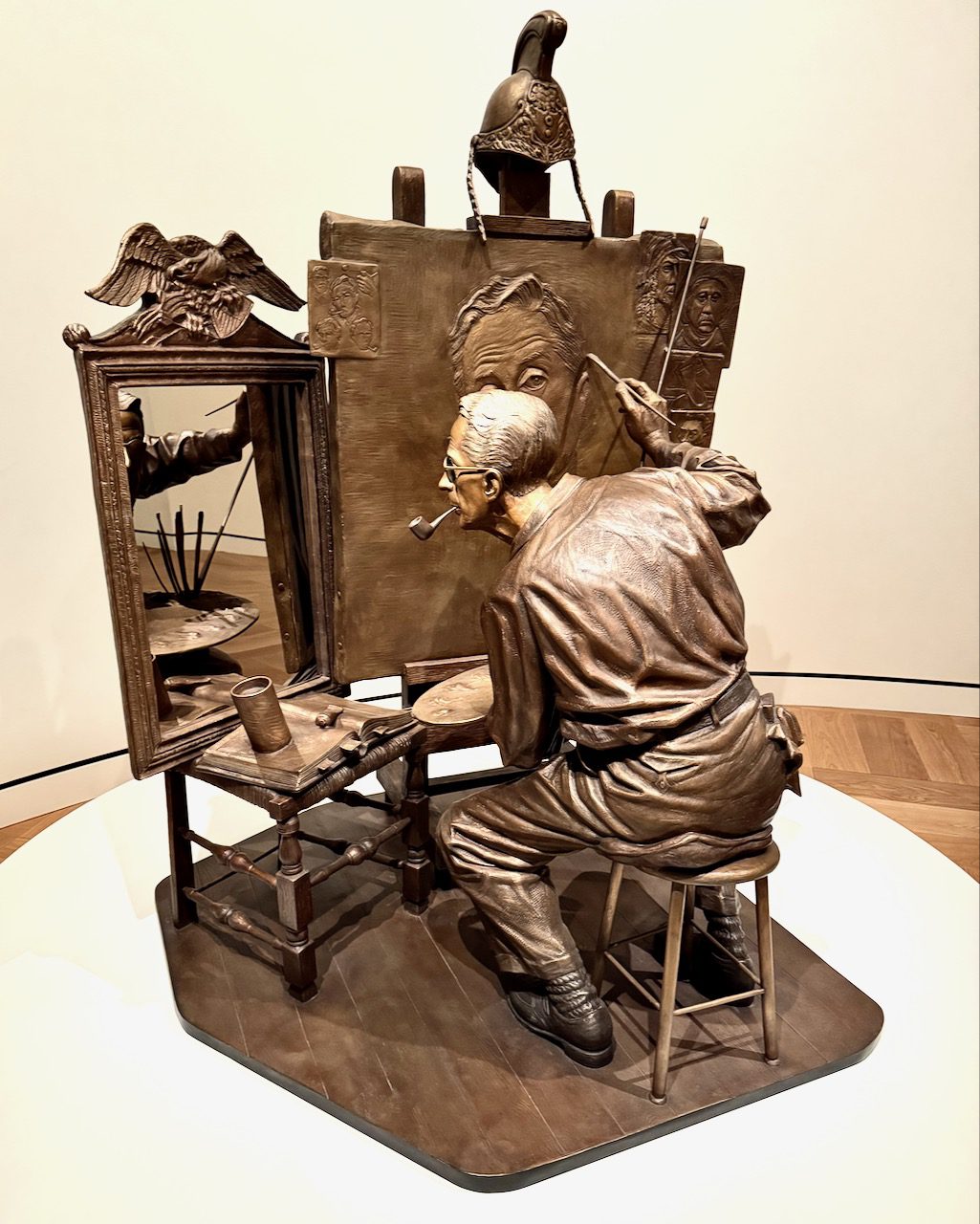
Rockwell’s Triple Self-Portrait on the left is parodied by Richard Williams’ version showing MAD Magazine’s Alfred E. Newman. What, me worry? The Lucas Museum also displays a bronze sculpture by Greg Polutanovich inspired by Norman Rockwell’s Triple Self-Portrait.
 .
 .
Rockwell’s narrative illustrations of everyday life spanned more than half a century, and he produced more than 4,000 original works in his lifetime. He is probably most famous for his Saturday Evening Post covers. Between 1916 and 1963 his illustrations graced the cover of that magazine an amazing 323 times, including the one below from 1938. (The Norman Rockwell Museum in Stockbridge, Massachusetts displays all his original Saturday Evening Post cover tear sheets in chronological order.)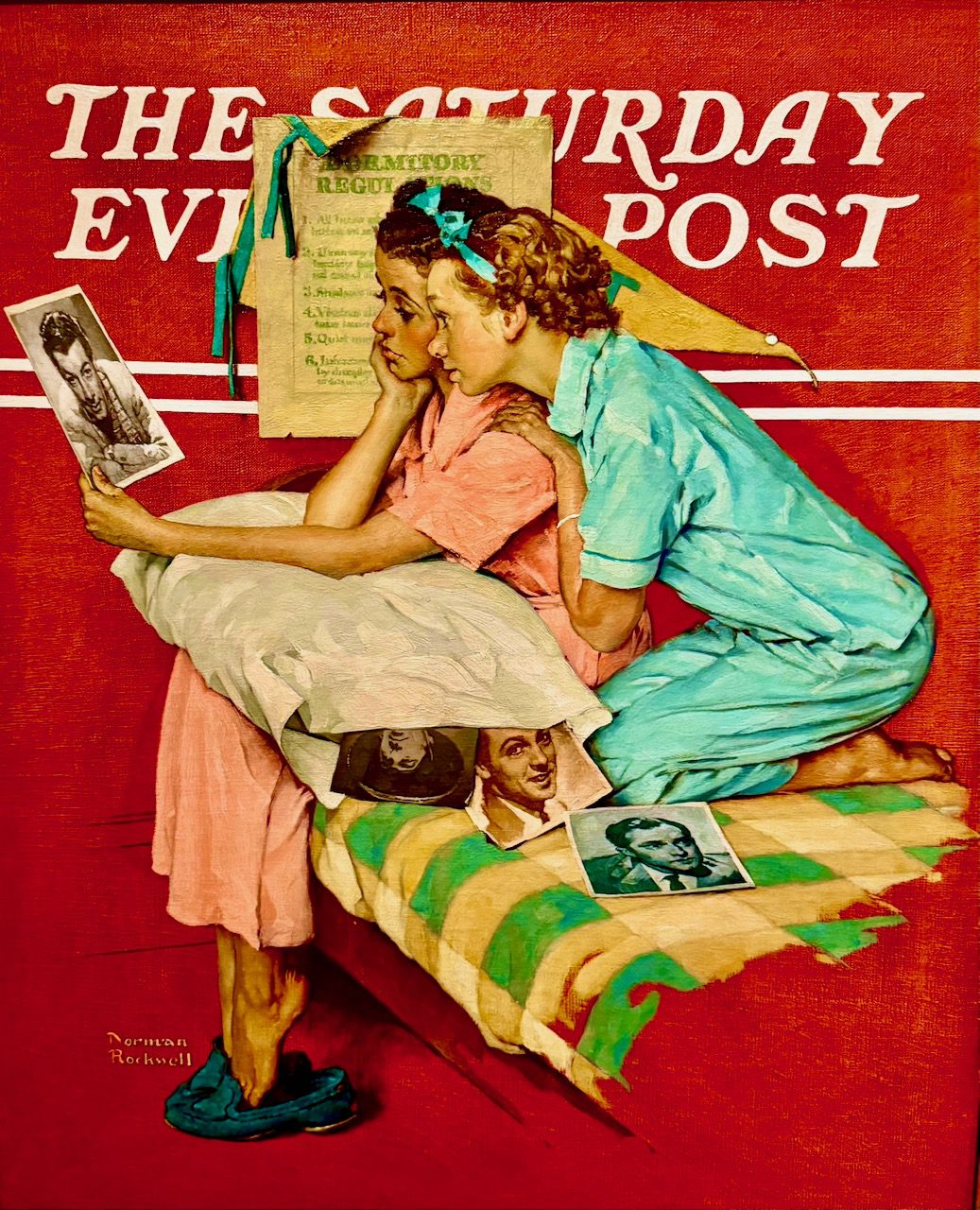
Criticized for focusing primarily on white Americans, which he said was due to strict editorial restrictions he received from the Post, …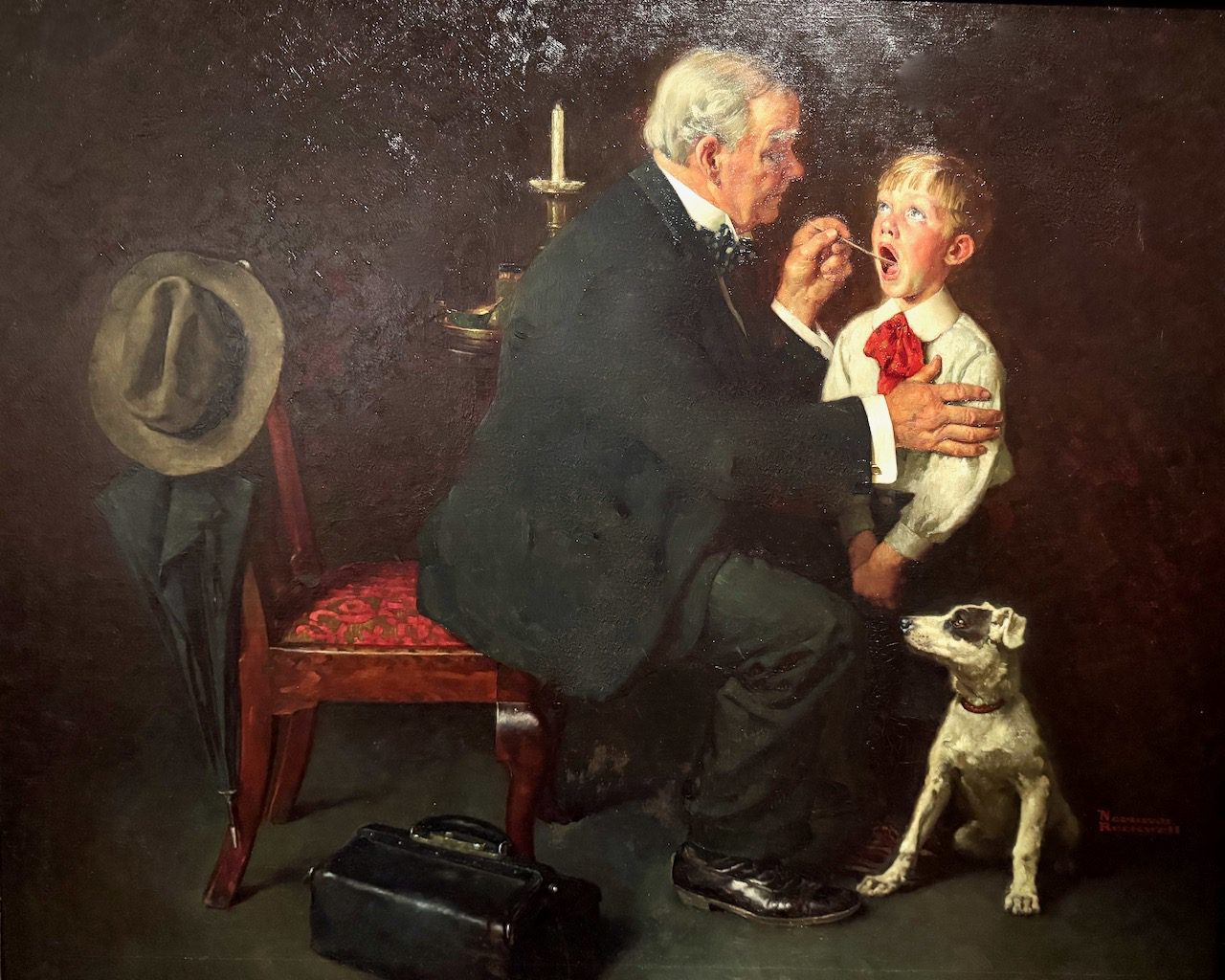
… Rockwell left the magazine in 1963 and decided to focus on civil right issues with pieces drawn for Look Magazine. One of his most famous pieces (which I remembered was famous, but only found out the backstory afterward), 1964’s The Problem We All Live With, depicting six-year-old Ruby Bridges (the first African American child to attend formerly whites-only William Frantz Elementary School in Louisiana) walking to school with federal marshals in front of a wall with racist graffiti and smashed tomatoes. In 2011, President Barrack Obama had the painting (on loan from the Rockwell Museum) placed in the West Wing hallway just outside the Oval Office.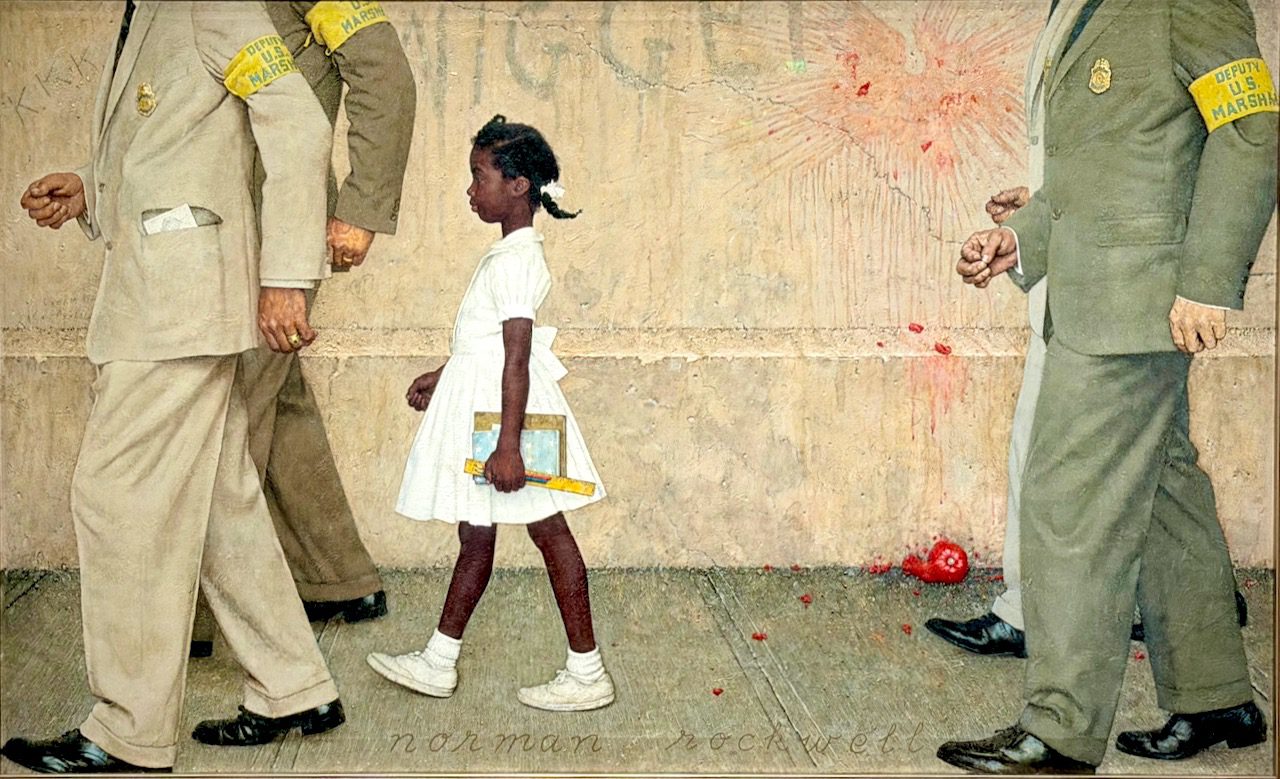
Tracy’s complaint about the tombstones at the Lucas Museum could be directed at paintings like this. Yes, the painting was powerful to look at on its own, but it would have been even more interesting to know further about its origin as I was standing there.
Diversion: When tombstones tell a story about a painting, it doesn’t have to be longwinded, but concise in telling (sorry Paul Harvey) the rest of the story, like the one described that we saw at Pinoteca do Brera in Milan in 2018.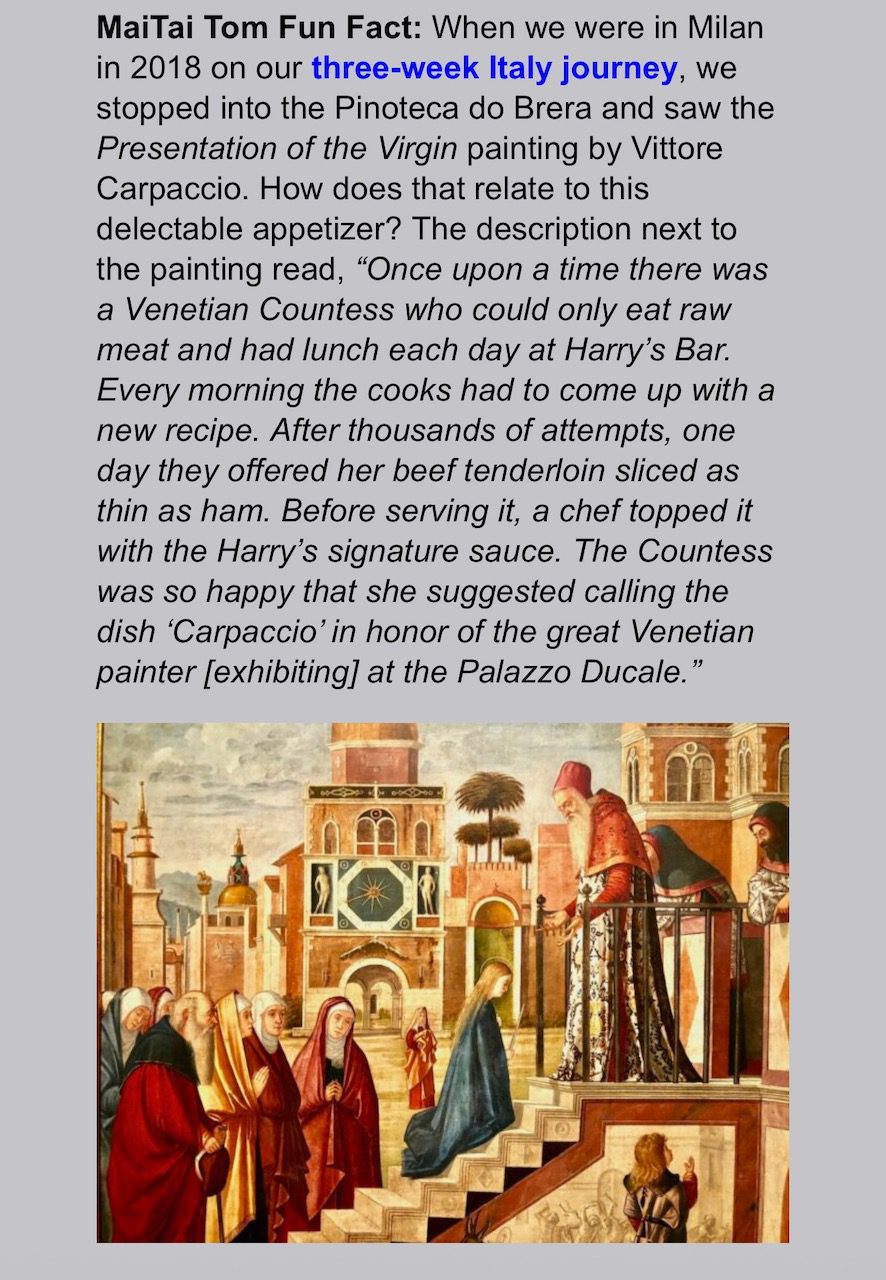
The Lucas is a directional challenge to navigate with very little signage telling you where to head next. It is confusing and easy to miss some rooms, but I think/hope we found them all. As far as content, it’s all over the board. I did have to use my imagination to tell a story about these two pieces, but I liked them.
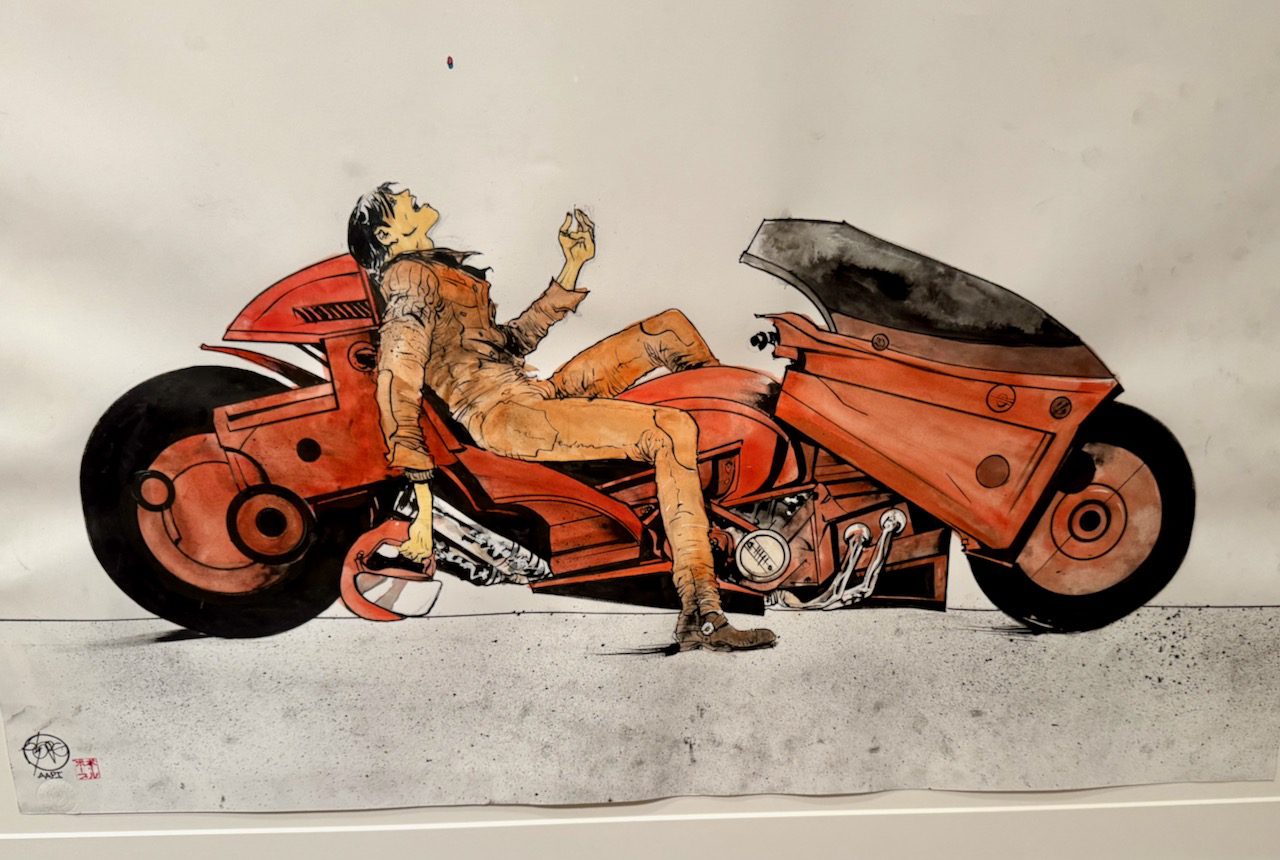
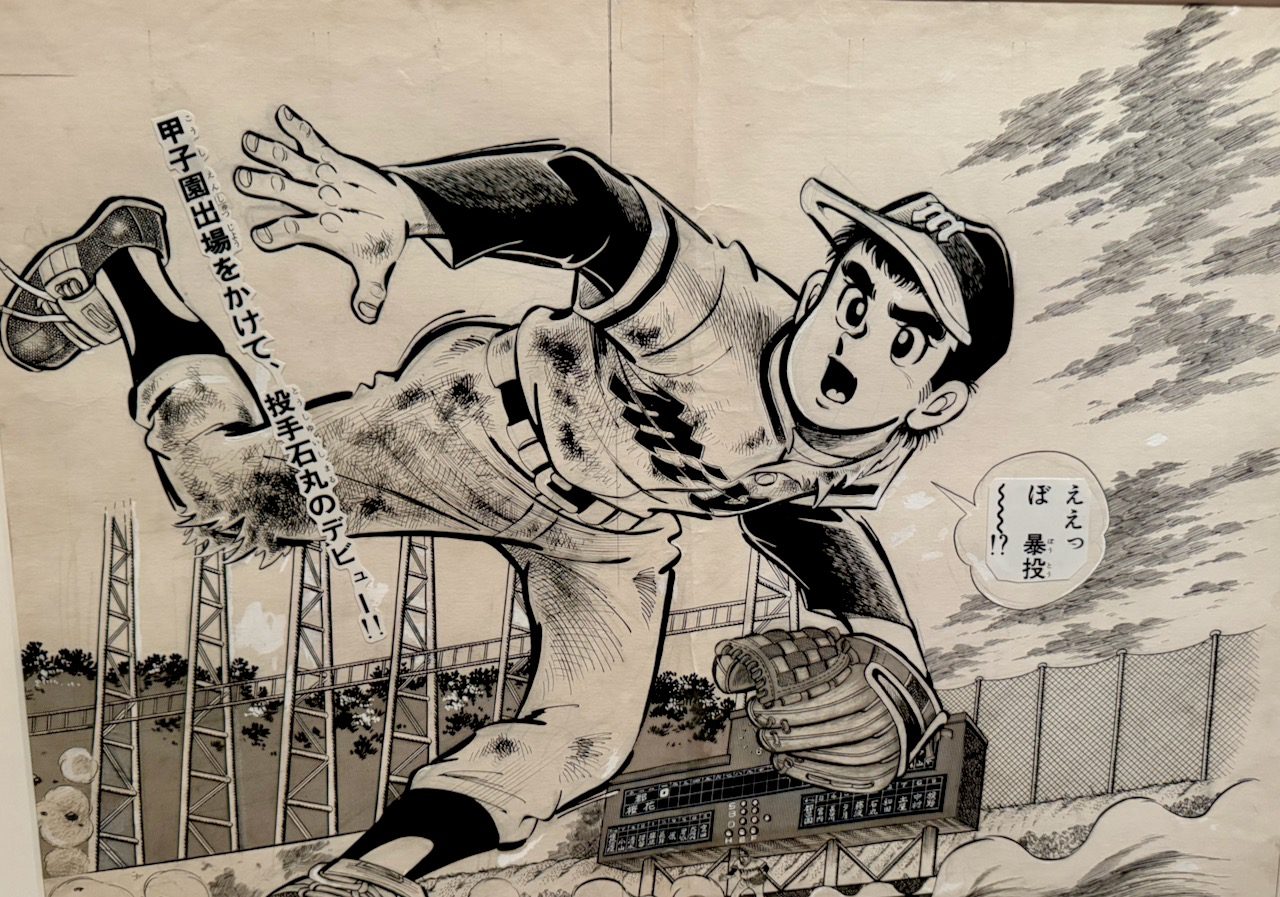
This painting caught my eye, and although, being a guy of a certain age, I didn’t know Pikachu is the official mascot of Pokémon, we did find the “Electric-type Mouse“ by Naoyo Kimura a cute little fella.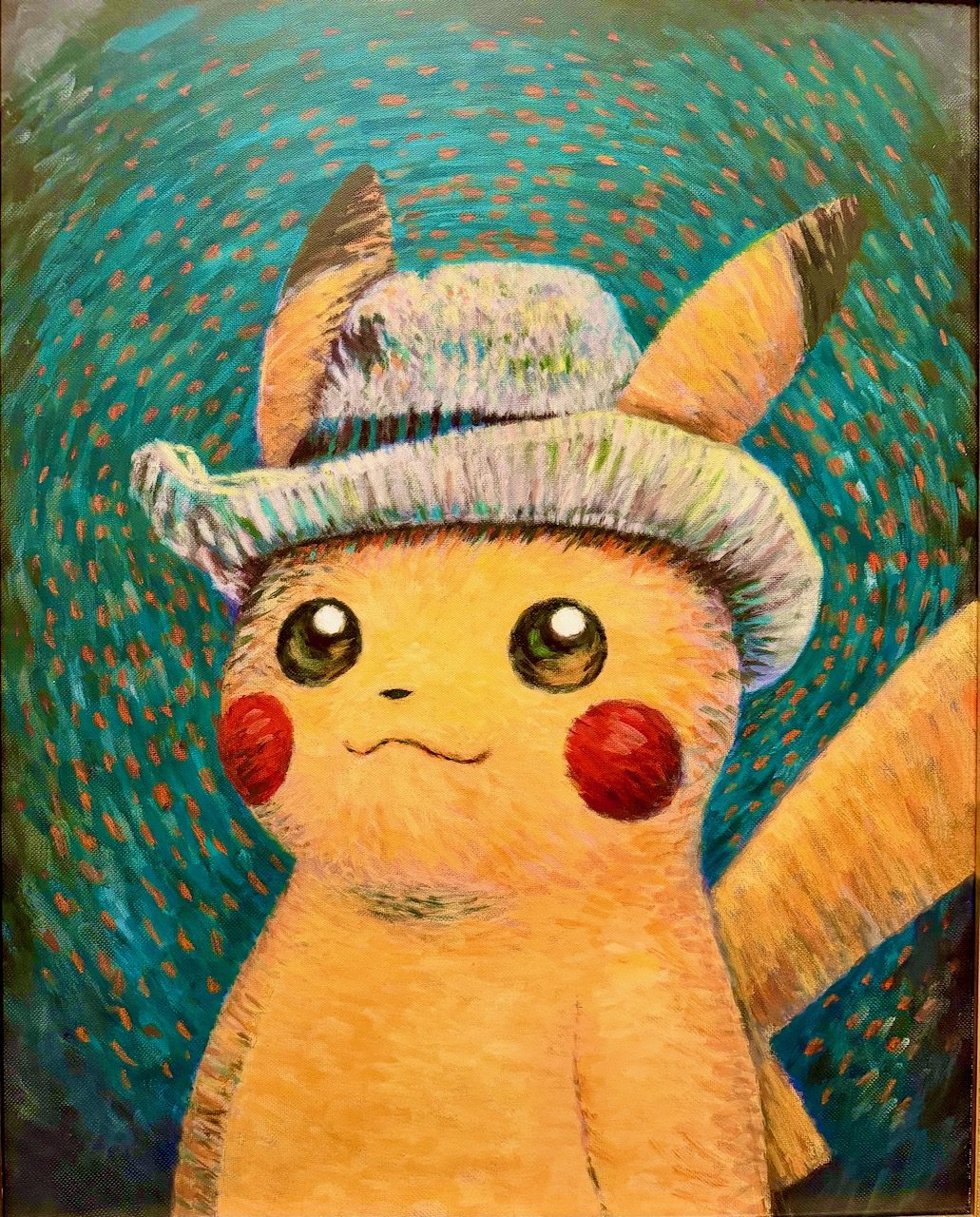
Meandering into another room, Death and the Woodcutter by Thomas Benton. Once again a tombstone (is that ironic here?) would have helped. Instead I turned to my sometimes reliably friend AI who told me, “The painting adapts the classic Aesop fable The Old Man and Death (also popularized by Jean de La Fontaine as Death and the Woodcutter). In the story, an exhausted, impoverished woodcutter drops his heavy bundle of sticks and calls out for Death to end his misery, only to quickly beg for help carrying his load once the grim figure actually appears.”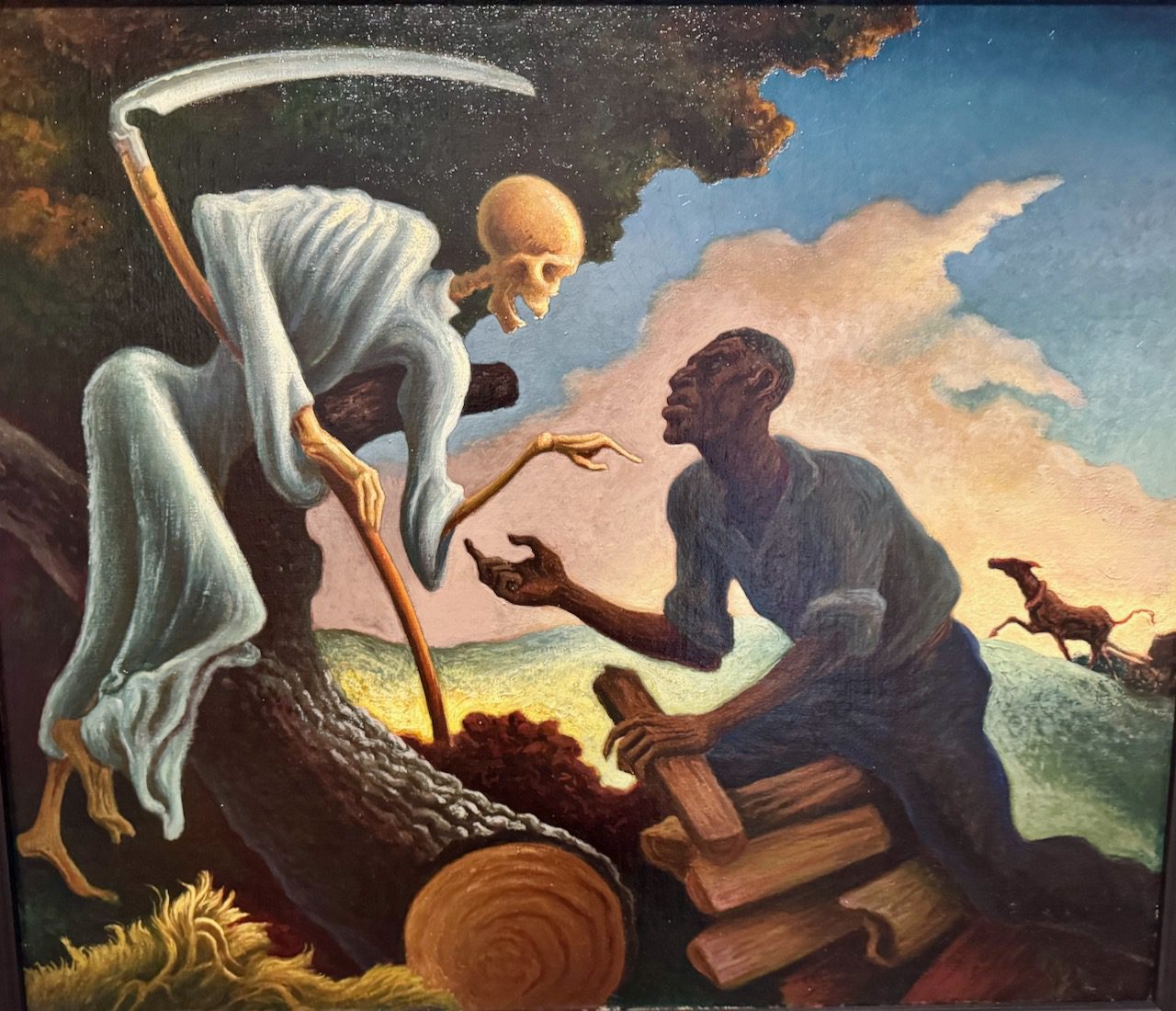
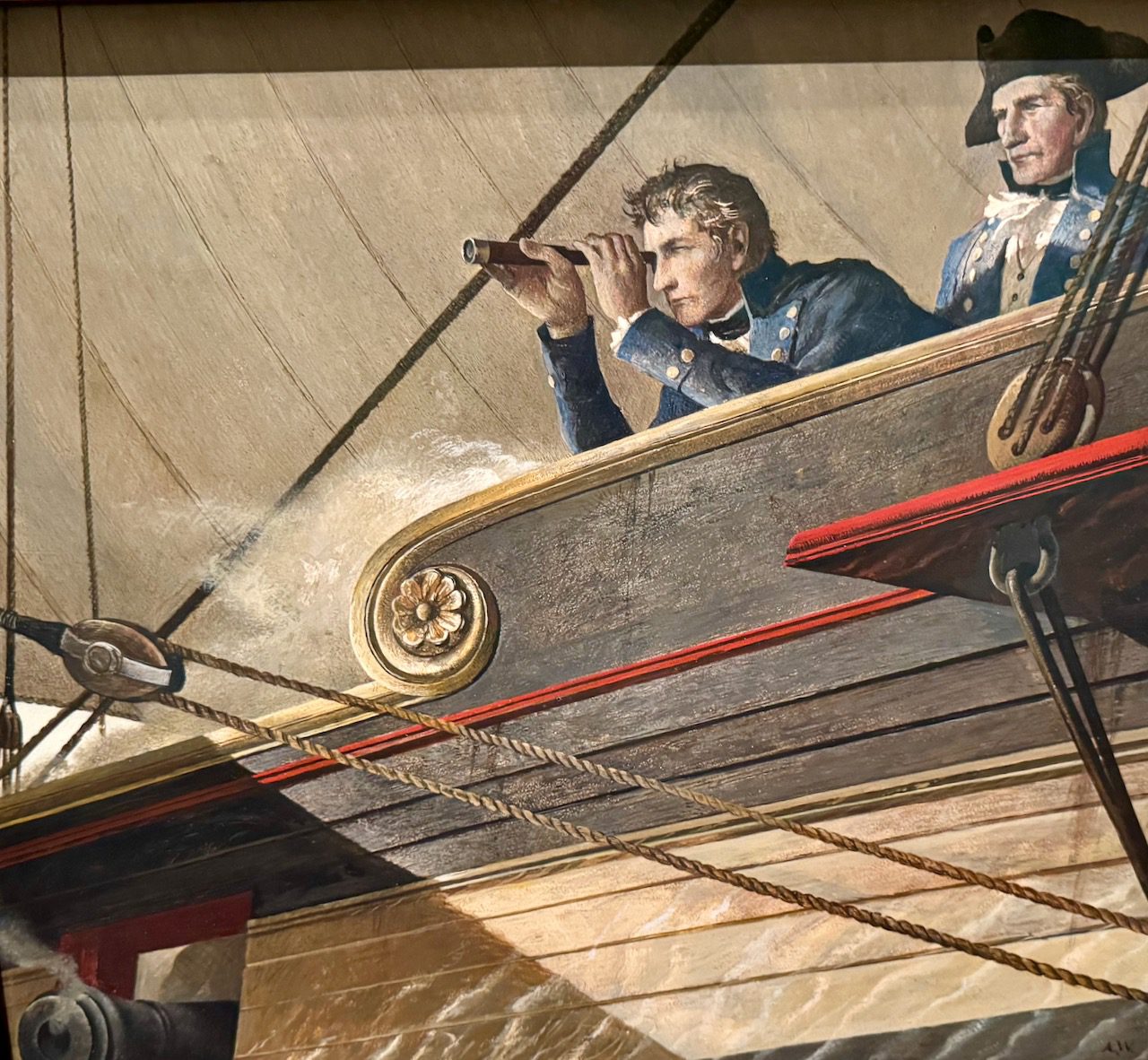
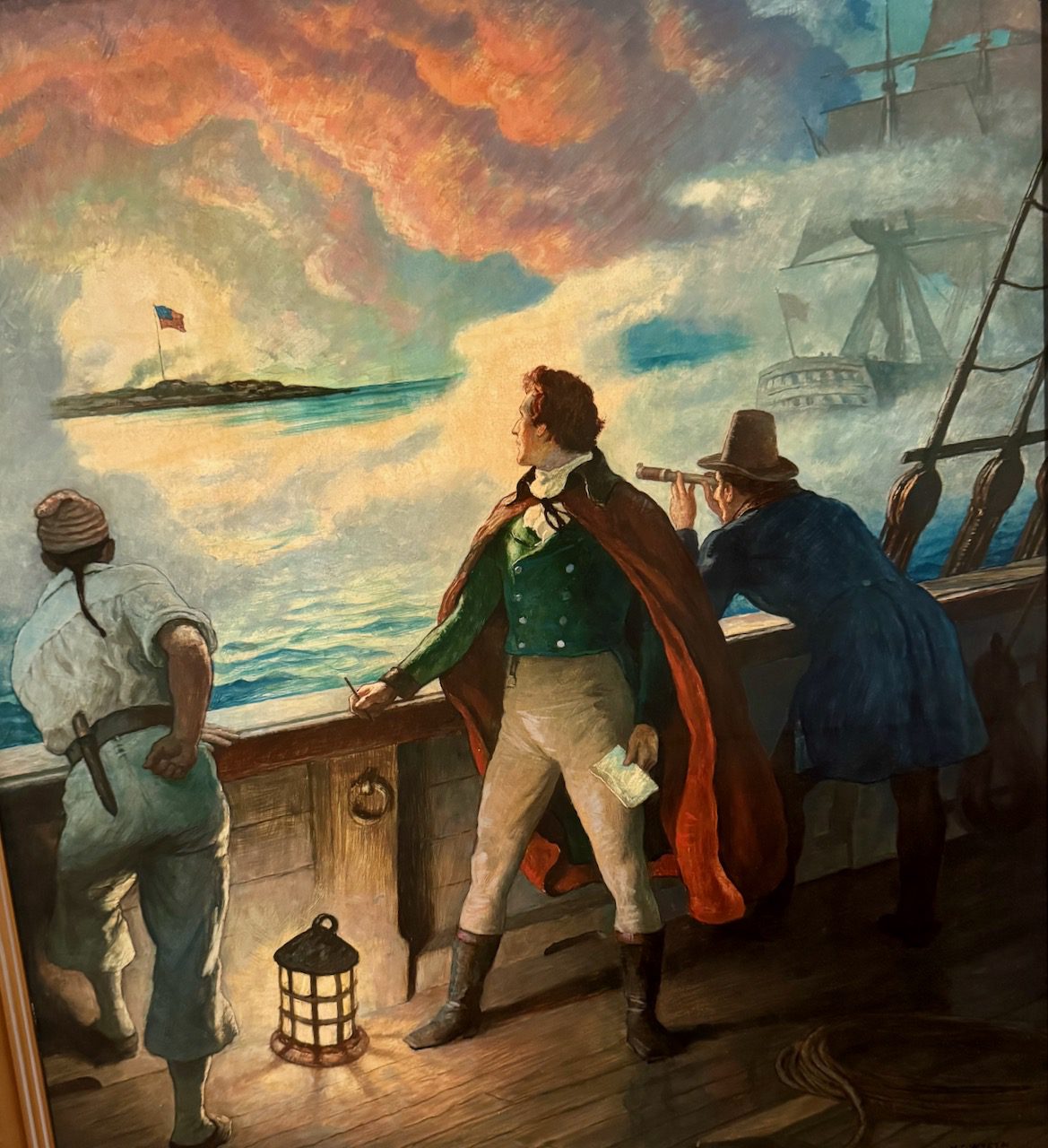
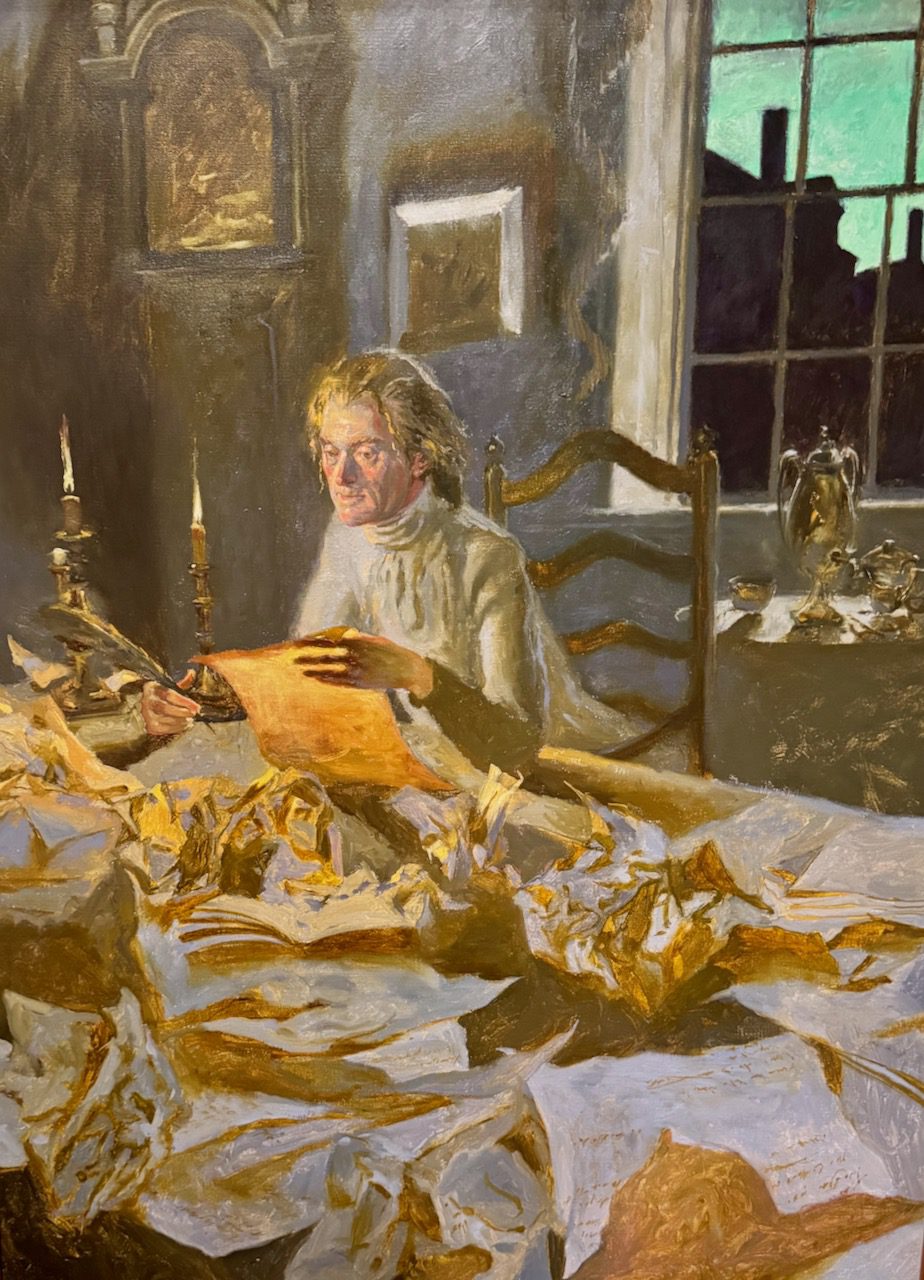
The Wyeth Gallery housed paintings and illustrations from N.C. (Newell Convers) Wyeth, his son, Andrew and grandson, Jamie. Not being very familiar with the Wyeths, we would later learn that N.C. had painted more than 3,000 paintings and illustrations for more than 100 classic books. The trifecta of Andrew’s Lt. Hornblower, N.C.’s The Star Spangled Banner and Jamie’s Declaration of Independence highlighted a Wyeth wonderland of paintings.
 .
 .
N.C. created The Governor as a narrative illustration for Rafael Sabatini’s historical novel The Romantic Prince. Just by looking at the painting, I might have to read that novel.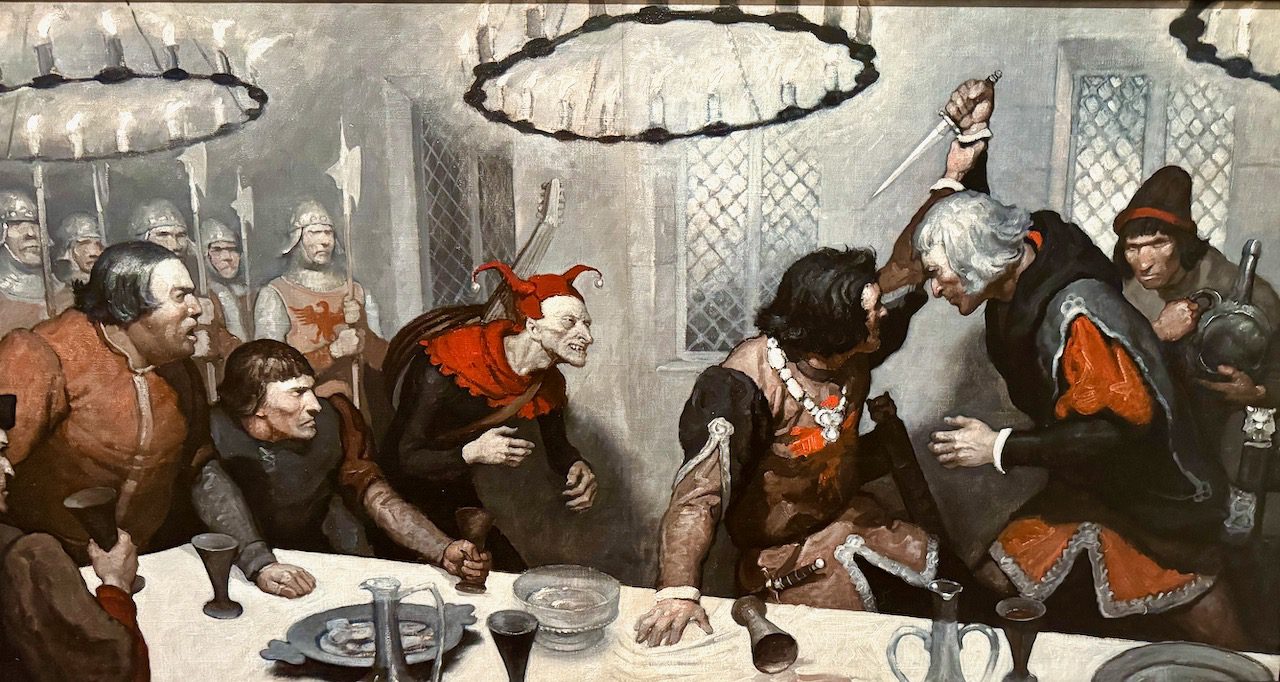
Back out onto one of the expansive walkways between rooms, we caught our first glimpse of a Banksy creation, Pair of Ornamental Garden Lions With Added Parts. It’s tough being a lion tamer.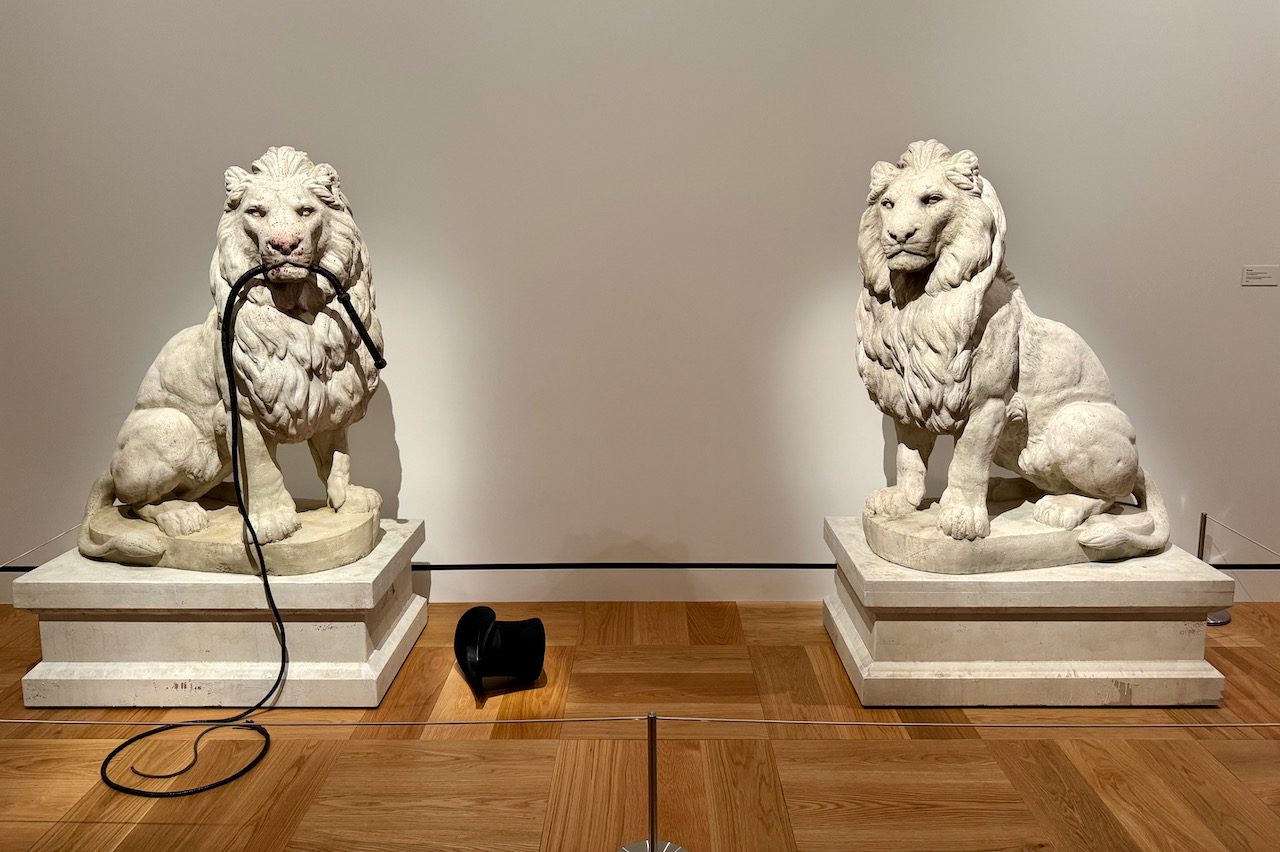
They look so innocent, and although I swore I would never use this line again, “You can’t hide those lion eyes (and bloody face).”
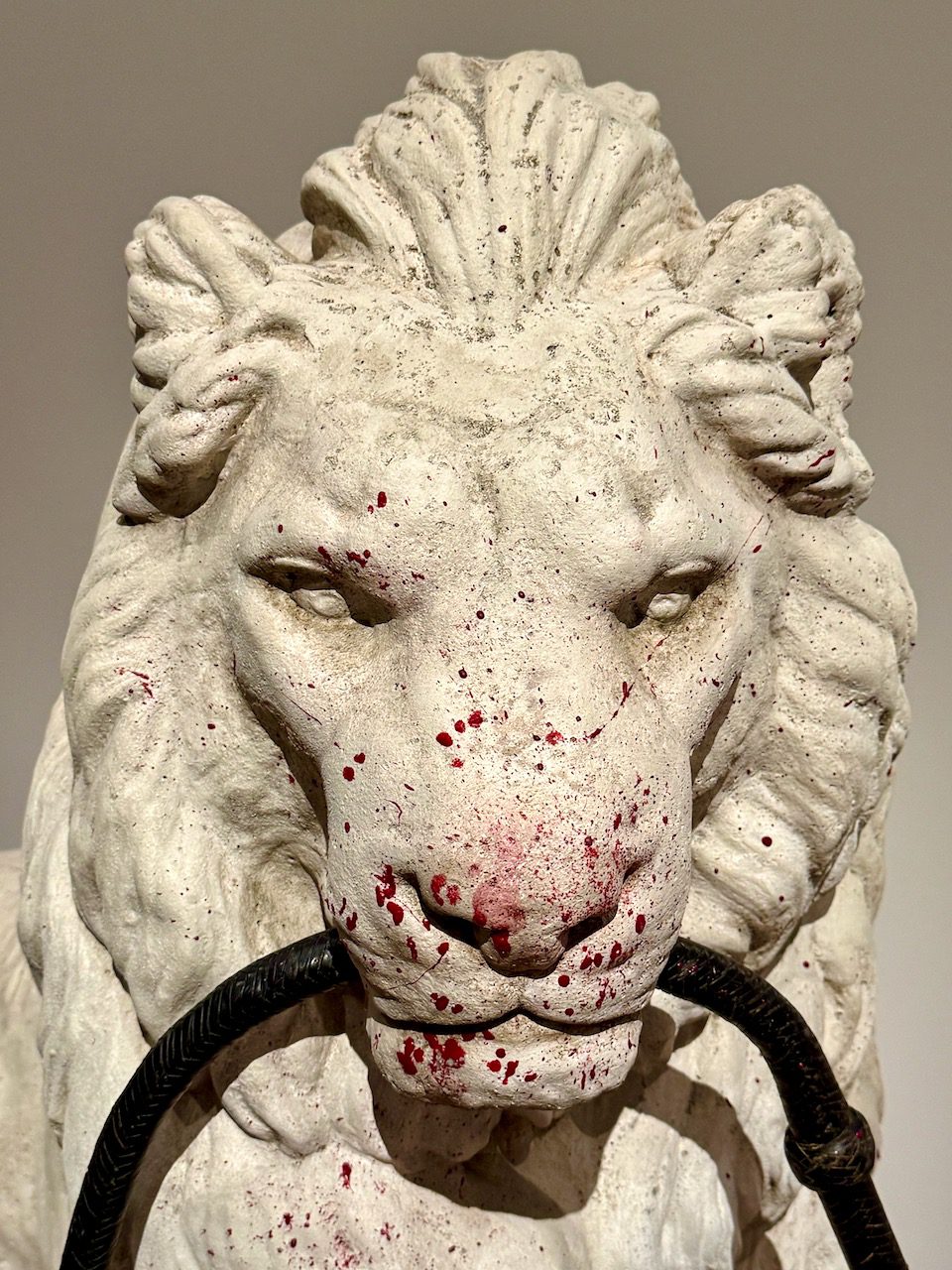
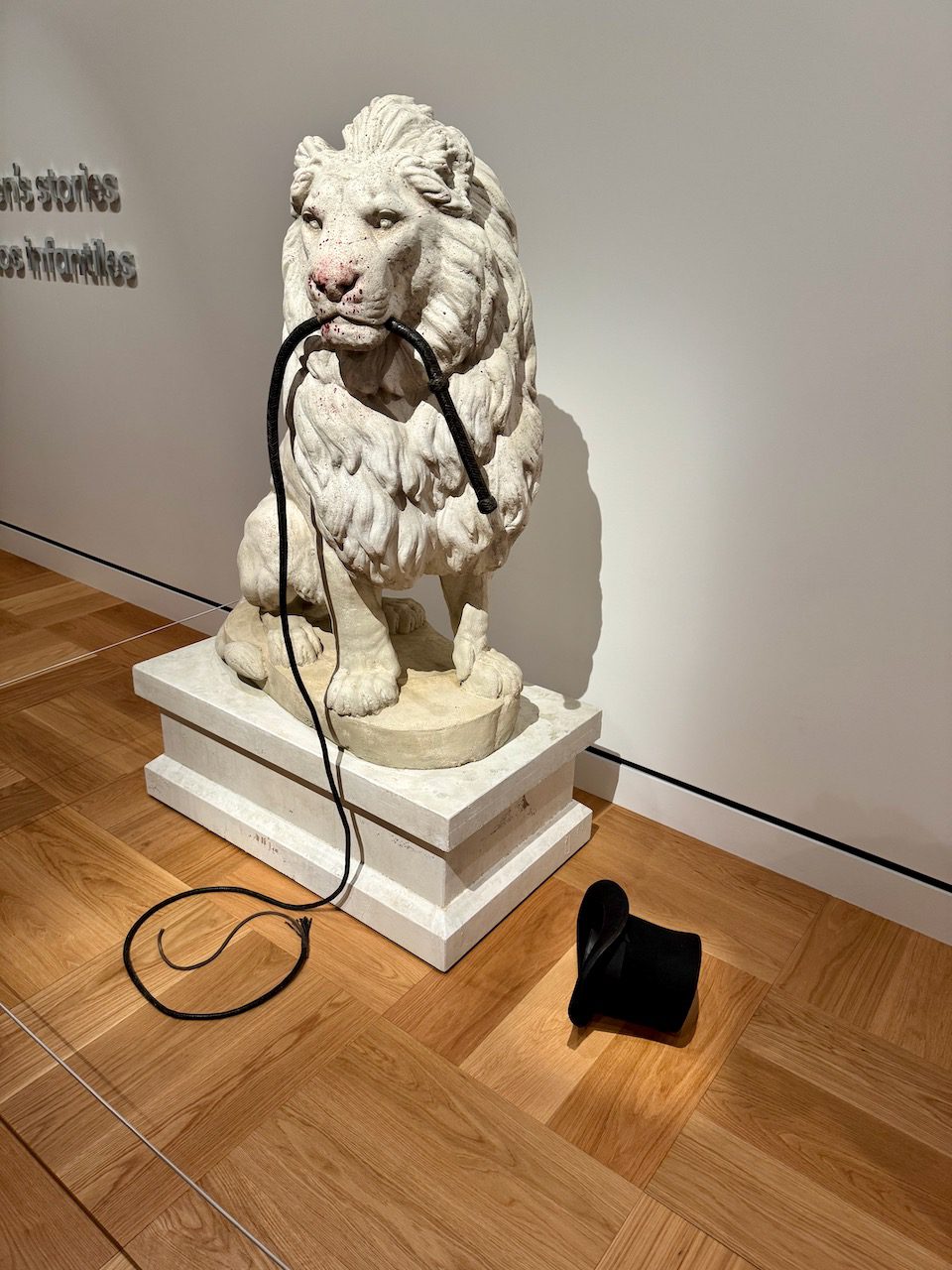
The bloody lion and his buddy are located just outside the Children’s Stories gallery.
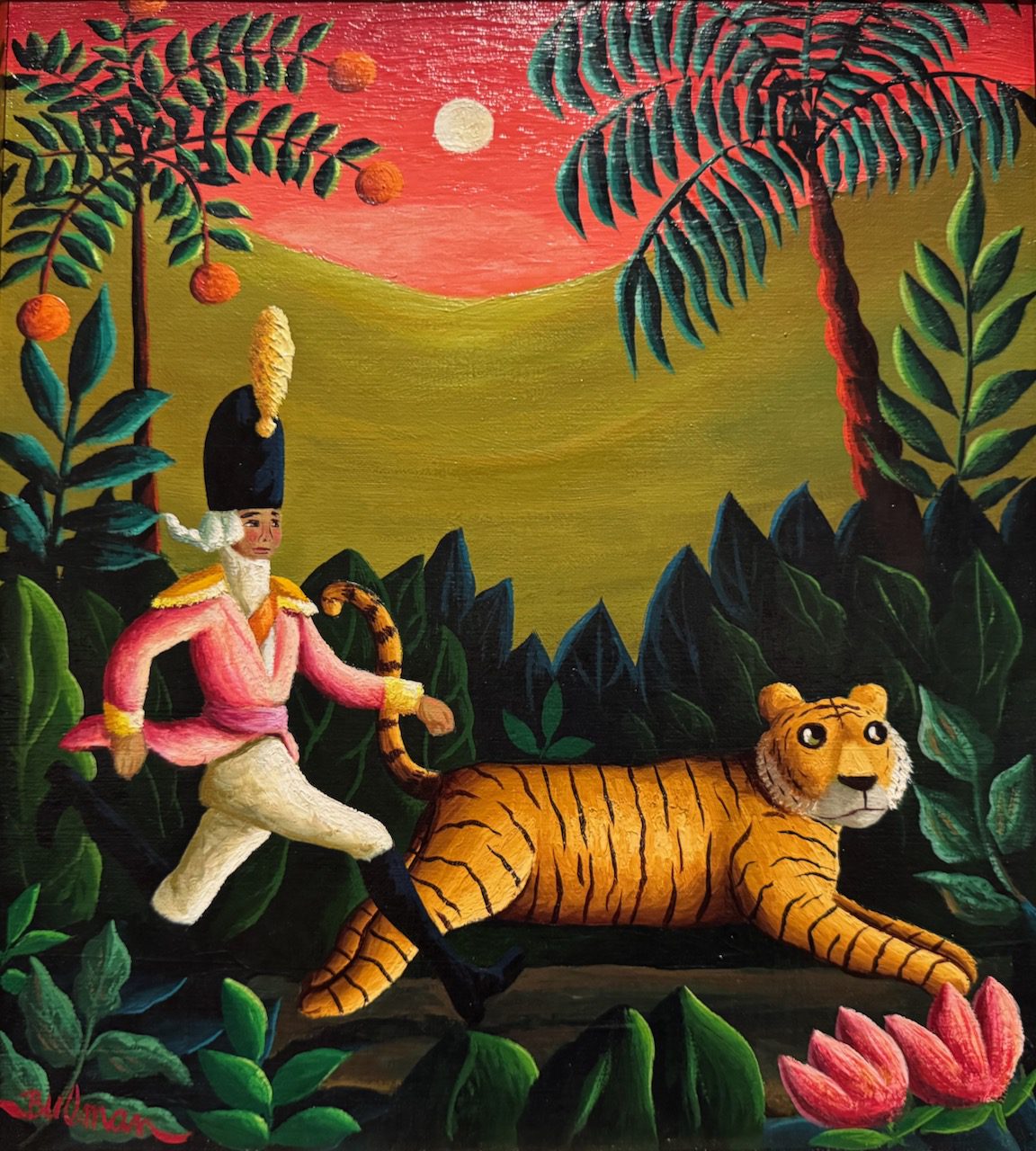
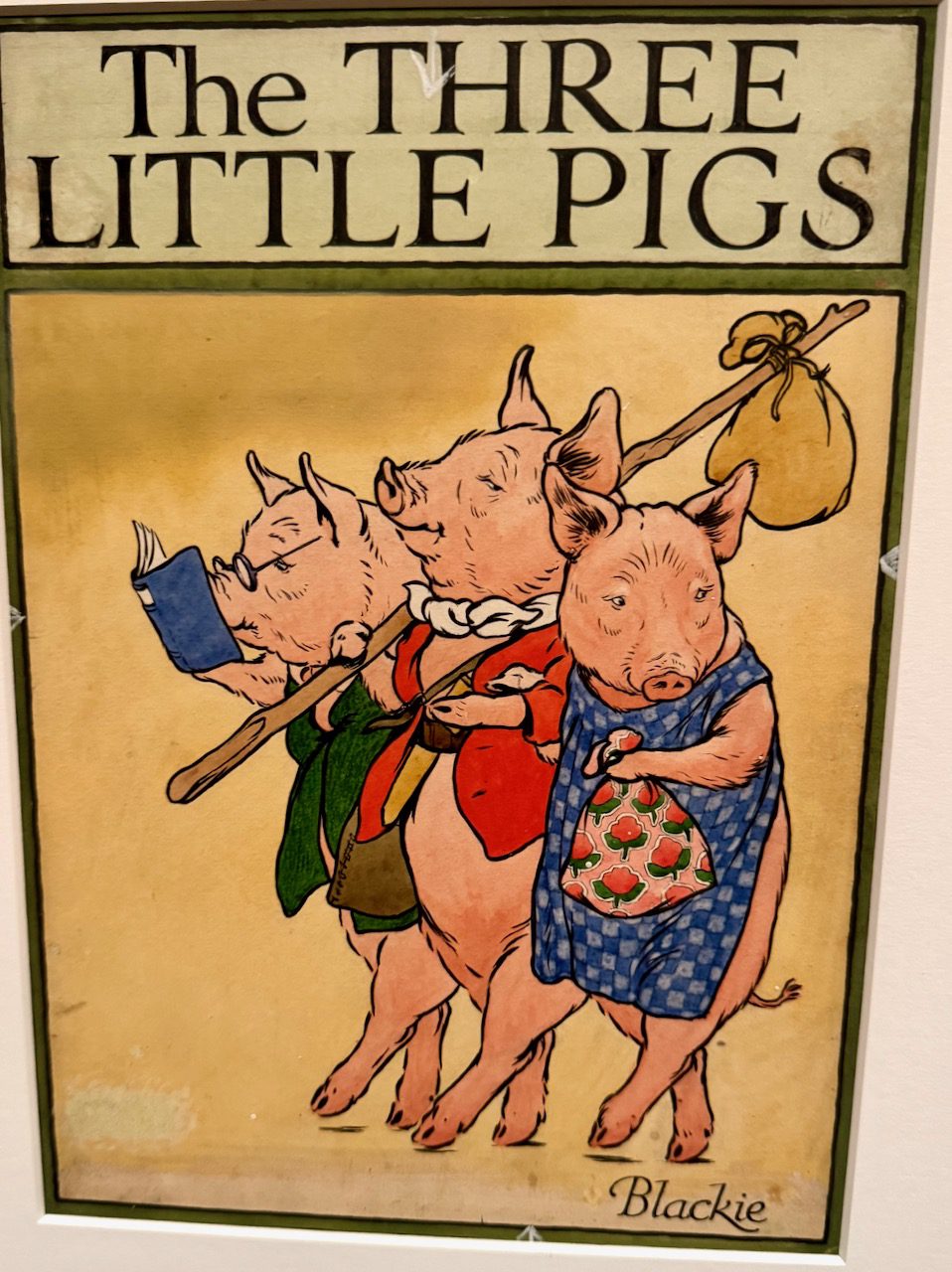
In front if us stood the Cowardly Lion from The Wizard of Oz. I didn’t have the courage to tell Tracy I first thought it was Chewbacca. In my defense, I have only seen Star Wars once, and I haven’t seen The Wizard of Oz in 50 years. Have a heart.
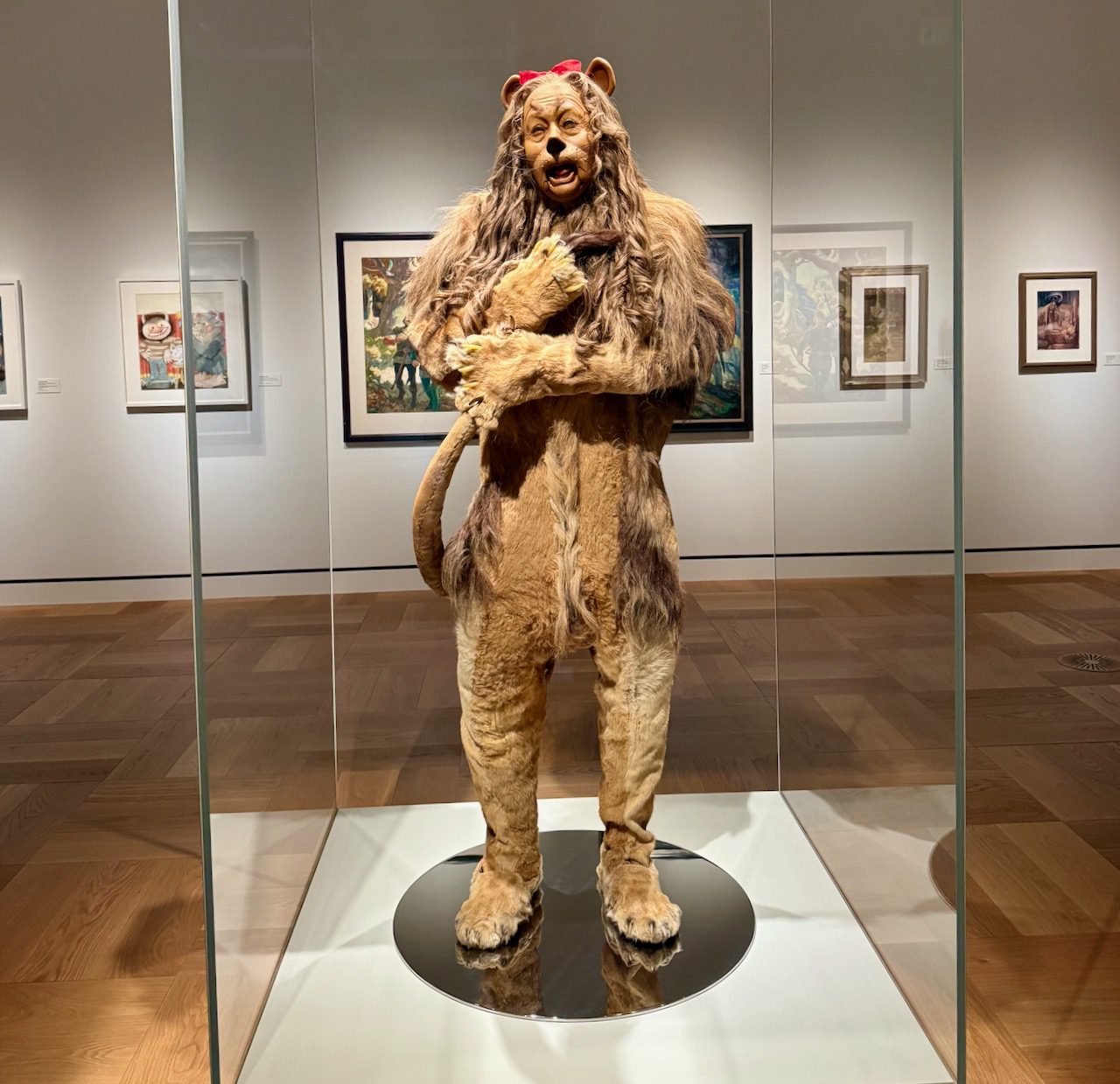 .
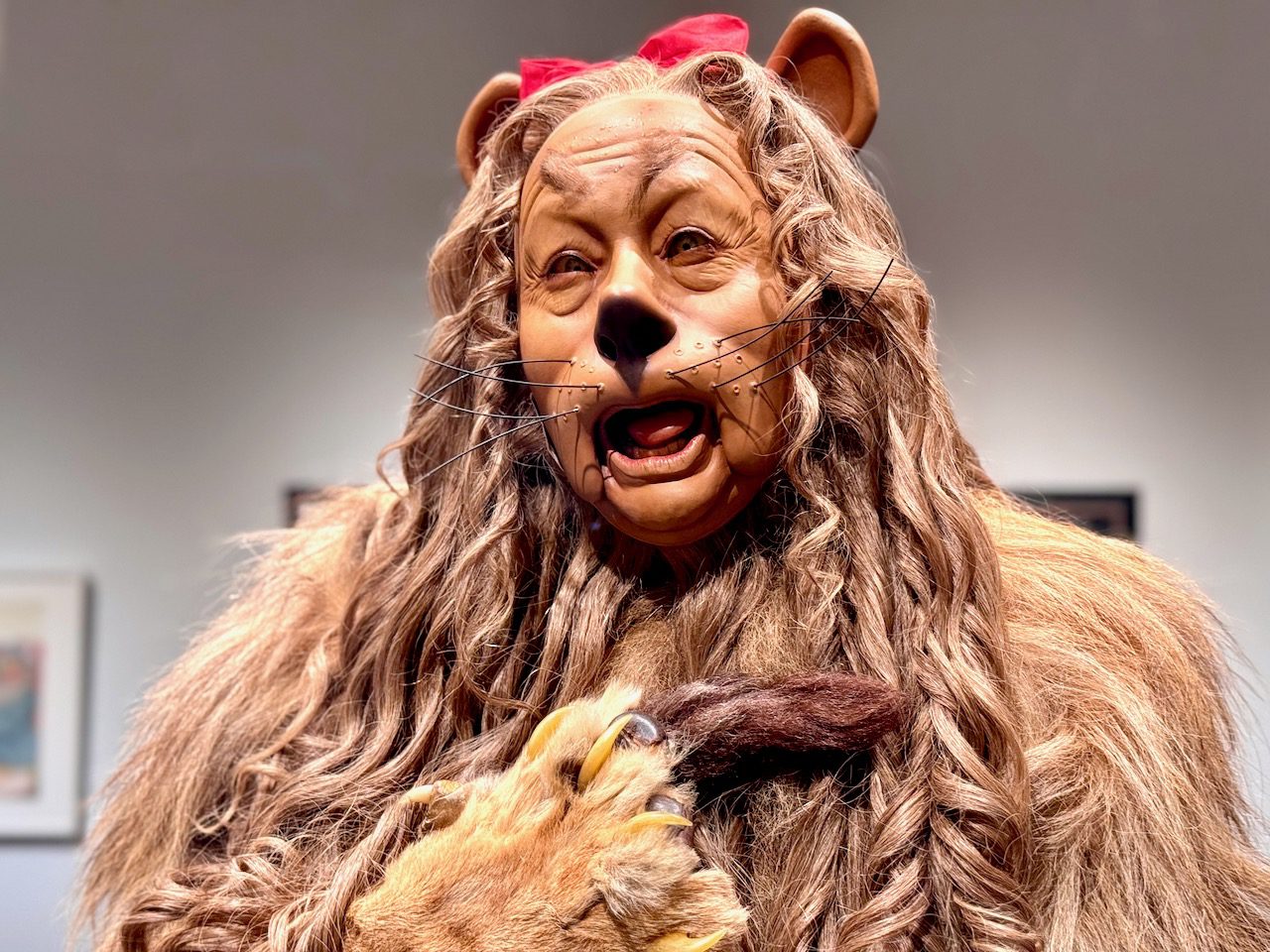
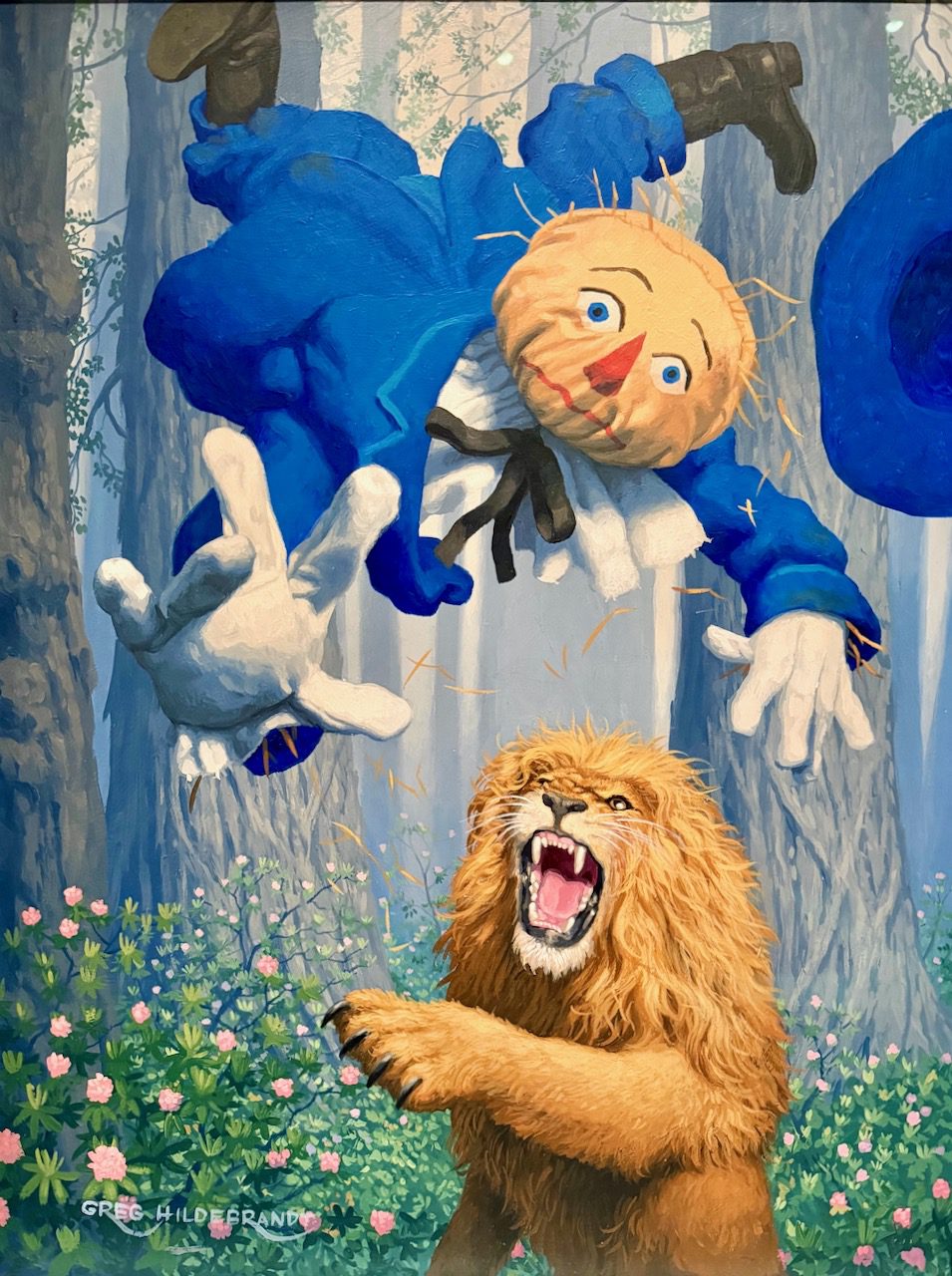
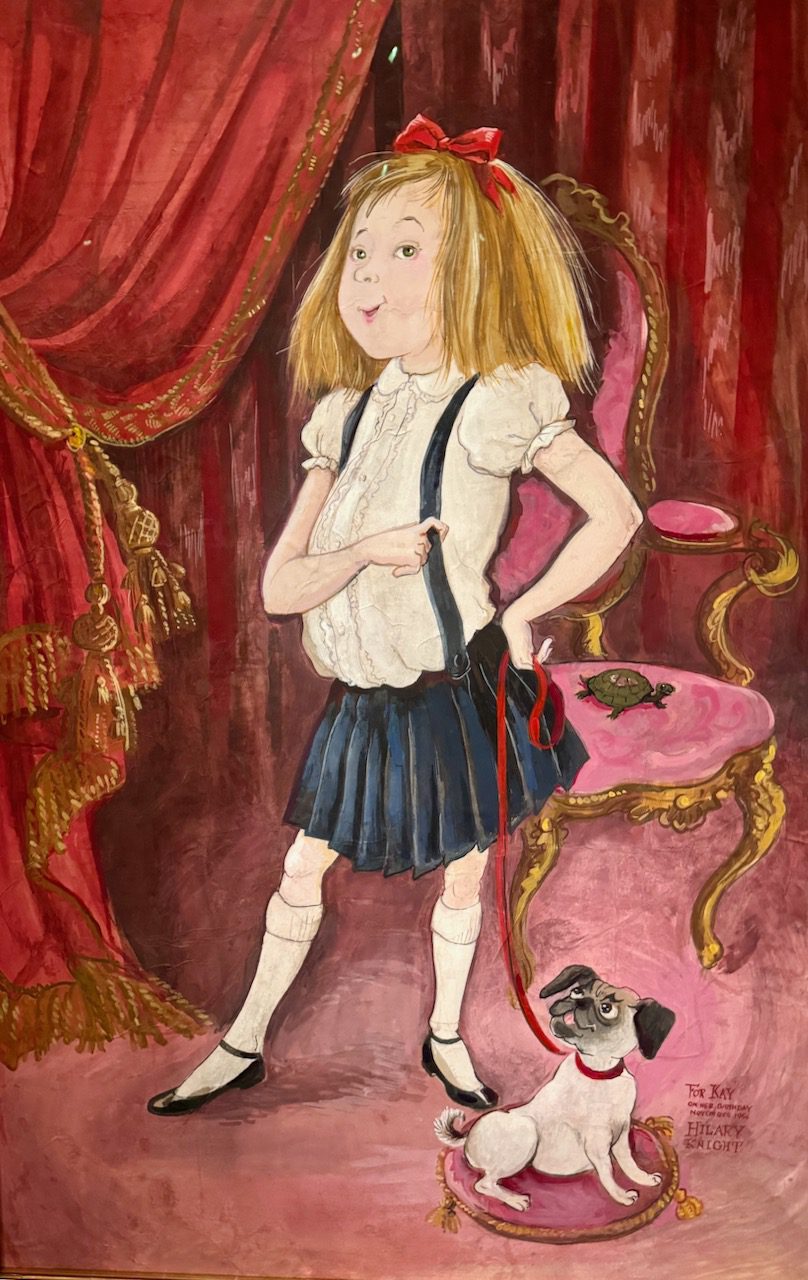
Nearby was Greg Hildabrandt’s The Cowardly Lion Sends The Scarecrow Spinning (doesn’t look so cowardly to me) and Hilary Knight’s Eloise
Andy Warhol told us it was Howdy Doody Time. It’s funny, I remember the song but not the show, and after looking at some old clips on Youtube after our visit, I’m glad I only remember the song.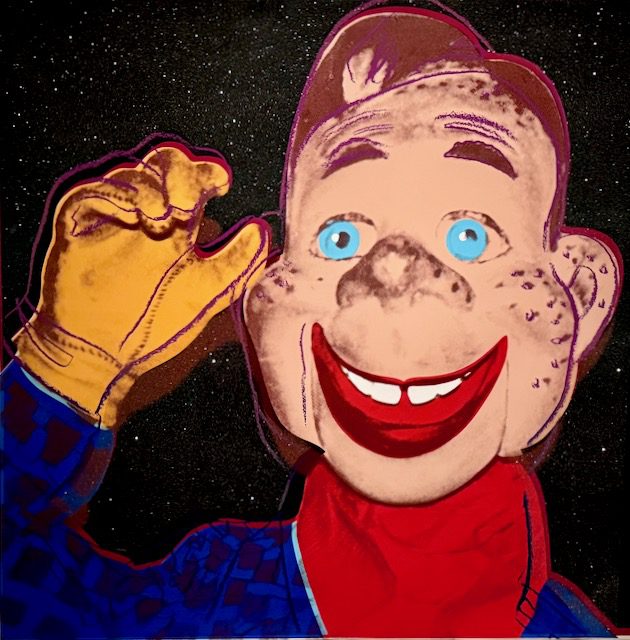
The Photography gallery has numerous photos of some famous (and not so famous) events and people. A few stood out to me like the John Dominis photo of Tommie Smith and John Carlos protesting against racial injustice and human rights violations during the medal ceremony at the 1968 Mexico City Olympics.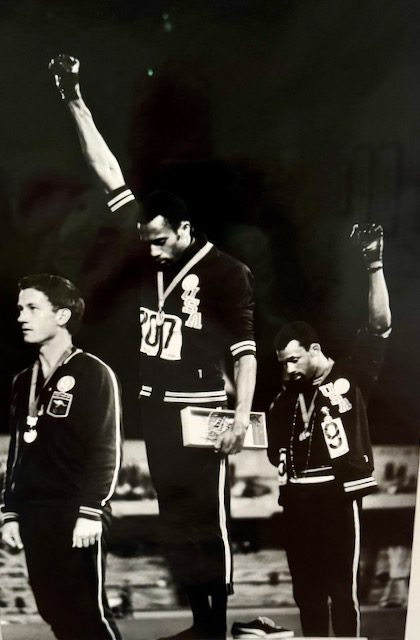
My all-time favorite athlete is Muhammad Ali, and Neil Leifer’s photo of the then Cassius Clay knocking out Sonny Liston (The “Phantom Punch”) in their second fight reminded me of sitting at the kitchen table with my dad listening to the bout on the radio. I can still recall screaming with excitement.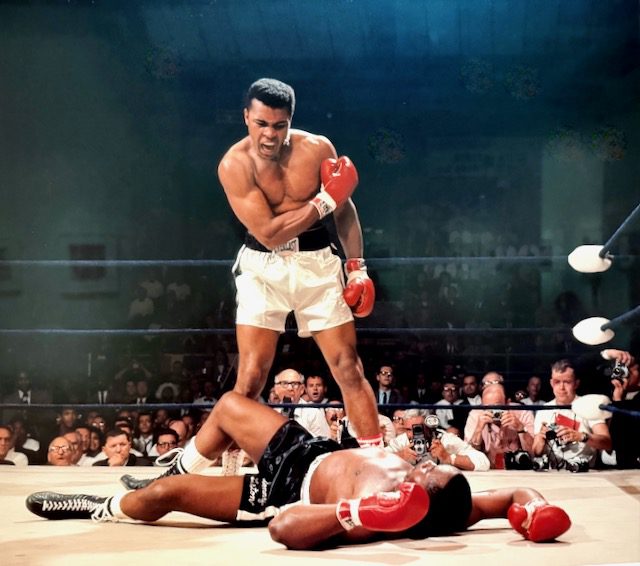
Mark Seliger’s photo Barack Obama, The White House, Washington DC, is from 2013. It’s too bad he can’t run for a third term, because I think I’d use this photo with the campaign slogan, “Obama’s Back!”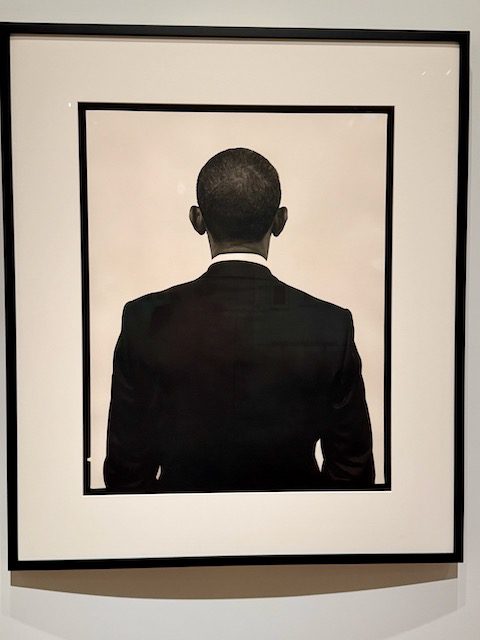
It was on to Civic Life and Protest Art. I Want Out is a 1971 anti-Vietnam War poster created by copywriter Larry Dunst, art director Murray Smith, and photographer Steve Horn. The not-so-happy Uncle Sam parodies James Montgomery Flagg’s famous 1917 World War I recruiting poster, I Want You for U.S. Army.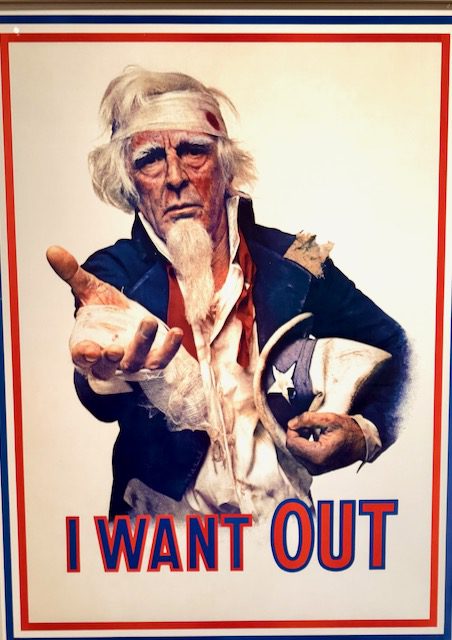
I thought this was a comment on current events, but it dates back to 2010.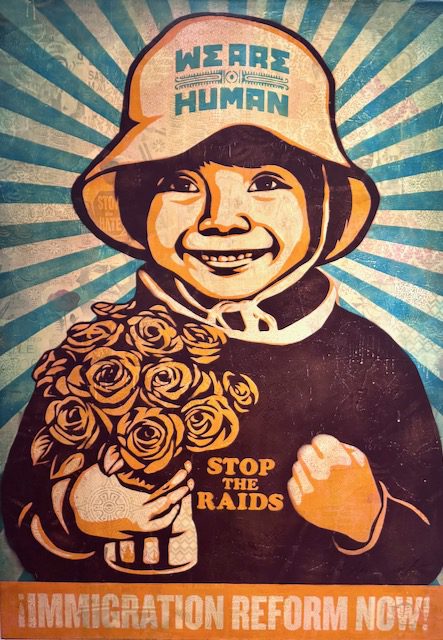
As I looked at this Norman Rockwell Elect Casey painting, someone nearby joked that it looked like Ken Paxton on election night.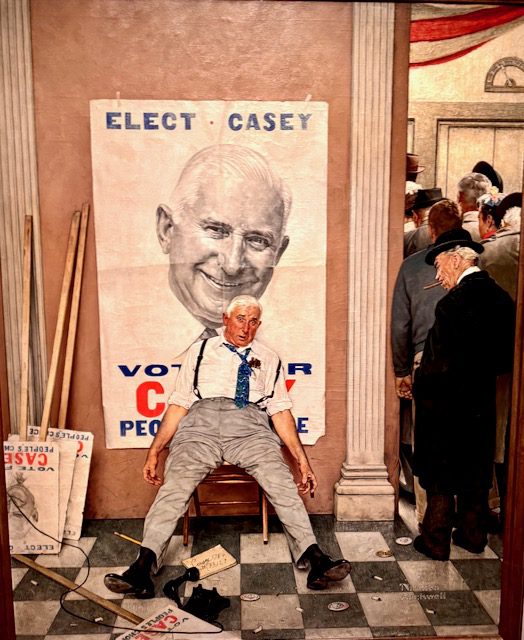
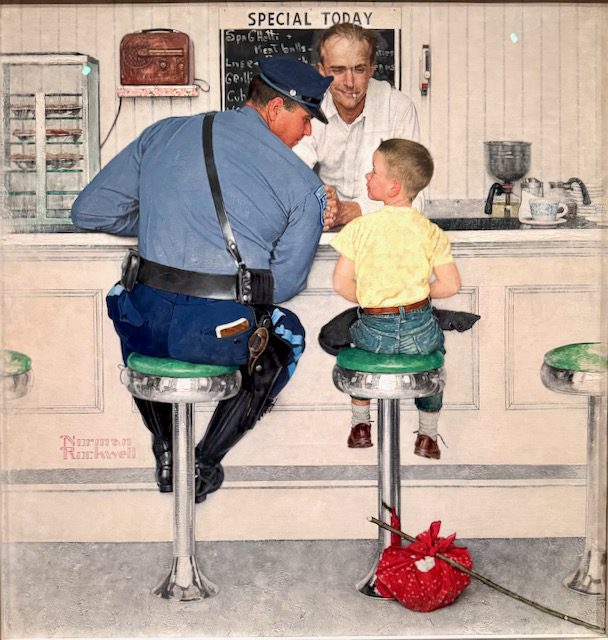
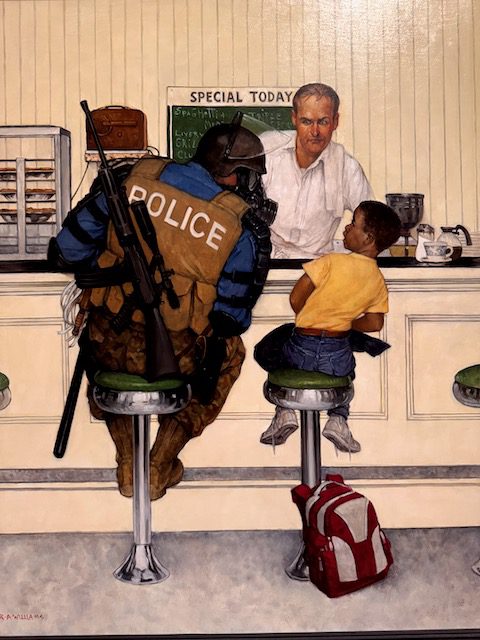
Rockwell’s The Runaway was positioned adjacent to Richard Williams’ The Militarization of the Police Department – Deadly Force.
 .
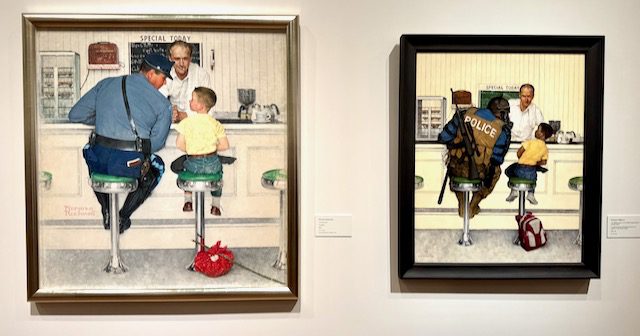 .
Rockwell’s 1963 portrait of JFK graced the April 6, 1963 cover of The Saturday Evening Post, showing a worried president.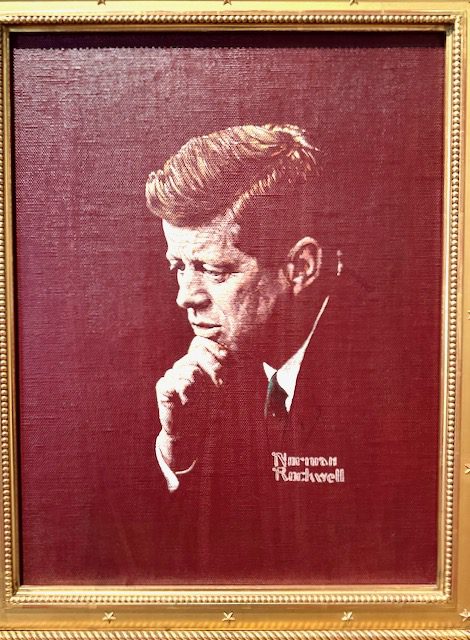
Rockwell’s 1959 painting Jury Room. I think it should have been named Eleven Angry Men and a Defiant Woman. Henry Fonda would have been proud.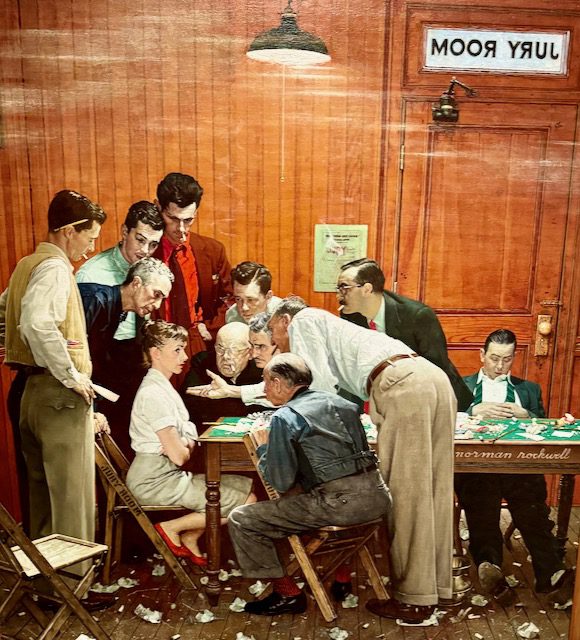
Cue Victor Laszio and the first line of La Marseillaise. 1870’s Aux Armes, Citoyens! (To Arms, Citizens!) by French-American artist Ernest-Étienne Narjot commemorates the date the French Third Republic was proclaimed following the collapse of Emperor Napoleon III’s Second Empire during the Franco-Prussian War. This is yet another one of many paintings that would have been much more impactful had we had that information while visiting the museum, instead of me having to look it up when I got home.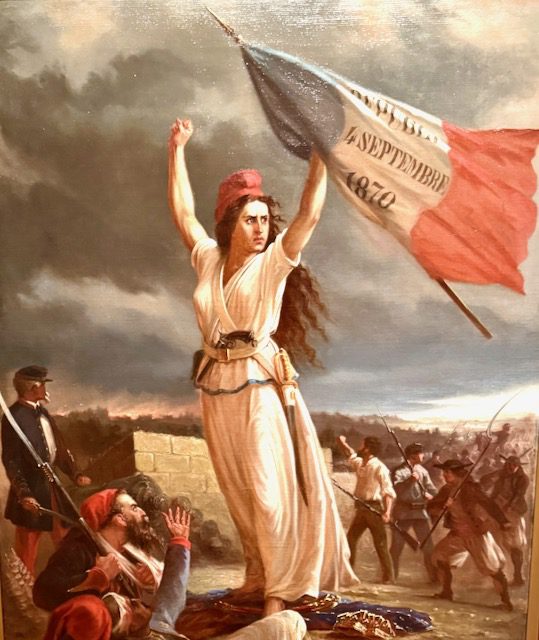
We had meandered somewhat aimlessly through the fourth floor seeing various genres of art, and when we were near an elevator Tracy suggested we take it to the fifth floor to see the murals. I have read many people visiting the museum didn’t even know there was a fifth floor. It was good to have an advance scout.
The first mural was a recognizable one that we saw in Mexico City at Museo & Palacio de Bellas Artes. Diego Rivera’s fresco El Hombre Controlador del Universo (Man, Controller of the Universe) is one of the Mexican artist’s most famous creations. His original, 1933’s Man At The Crossroads, was once displayed at 30 Rockefeller Center, but Nelson Rockefeller was not enamored with it due to perceived anti-capitalist propaganda and had the mural plastered over. The Lucas Museum piece is a reproduction print.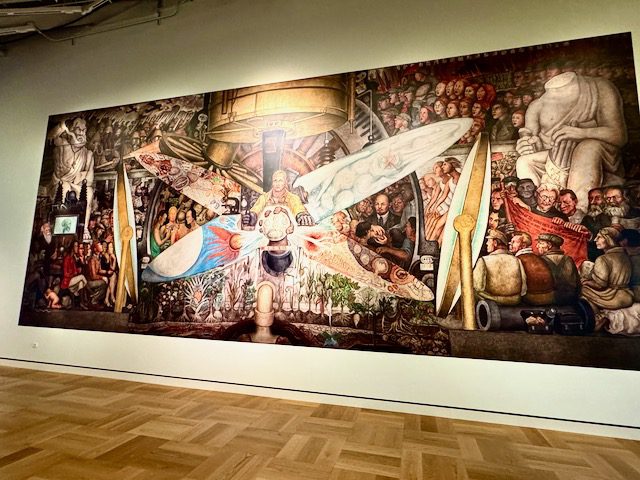
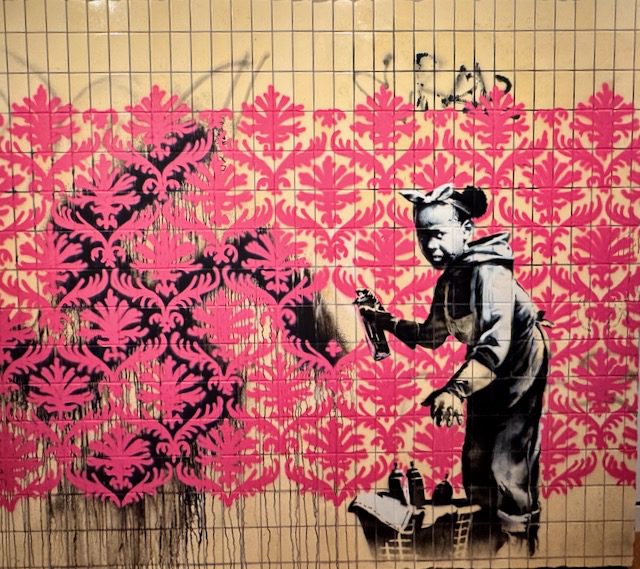
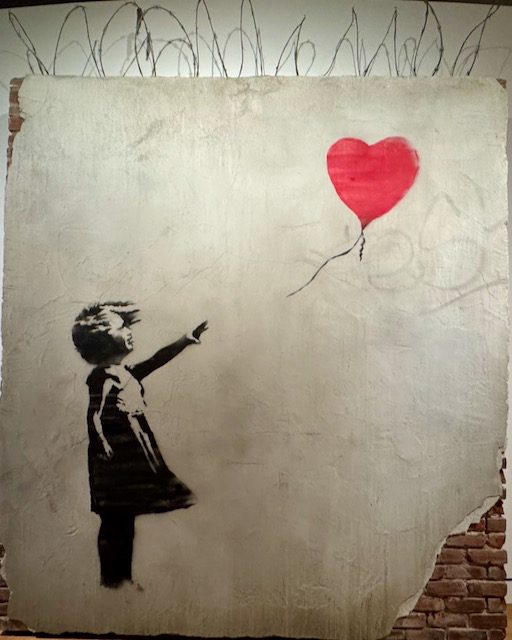
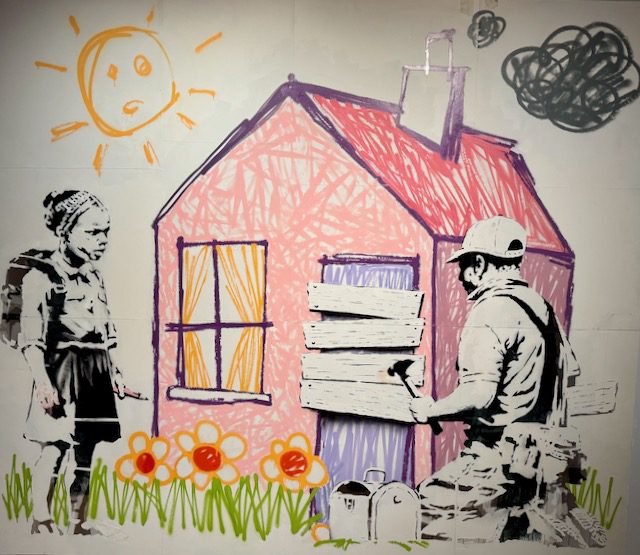
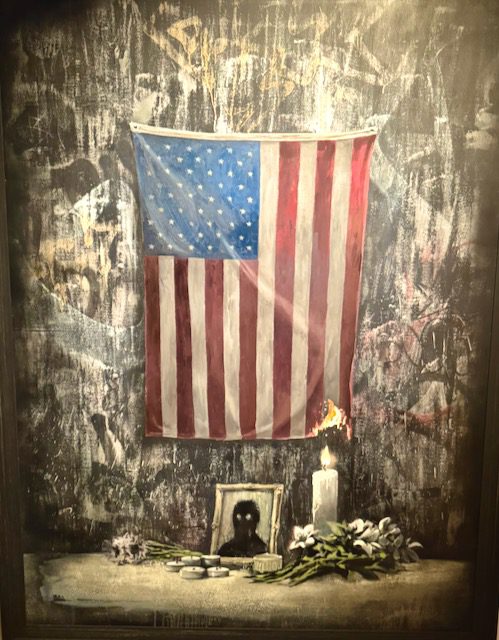
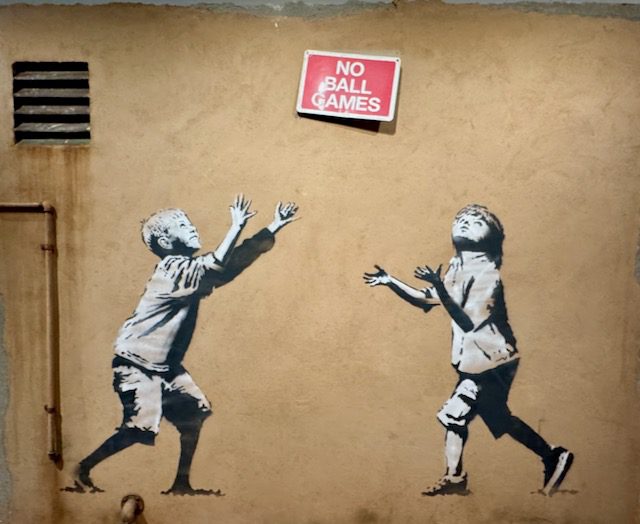
It was now time to check out some street art from the mysteriously famous Banksy, who for more than 30 years has created pieces in numerous cities throughout the world. 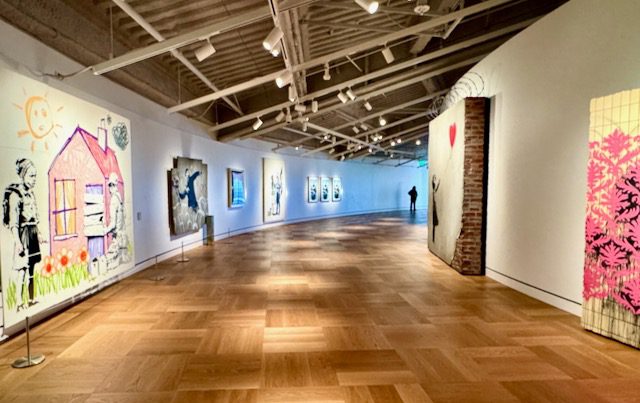
He is “renowned for his satirical, anti-authoritarian stencil graffiti and subversive public installations.” Tracy and I were especially interested in the Banksys. Unfortunately, we had to wait until we got home to find out more about the pieces and why they were at the Lucas. From Banksy Unofficial, “Banksy himself was involved in the [Lucas] installation, with a museum spokesperson stating that the artist “worked with the museum on the installation himself.” The museum’s own announcement independently confirms that previously unseen acquisitions came directly from Banksy’s studio.” 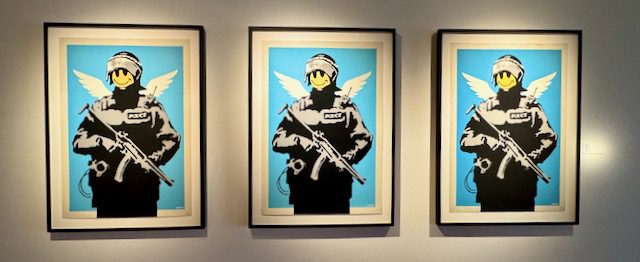
All of these street art pieces tell a story.
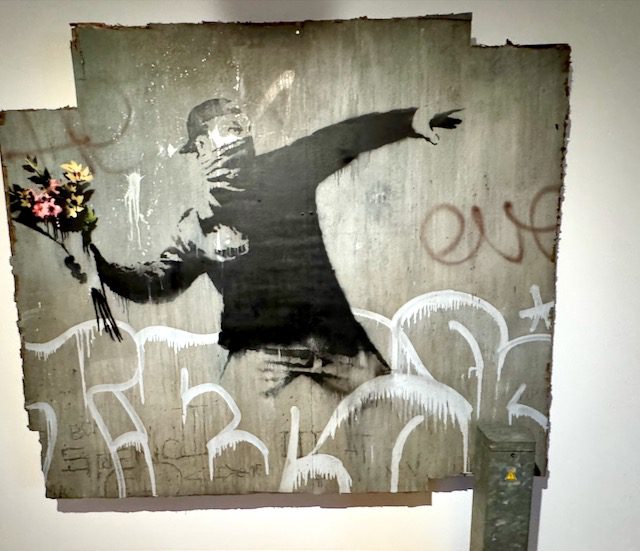 .
Also, from Banksy Explained, “Few images capture Banksy’s ability to humanize political rebellion as tenderly as Don’t Forget Your Scarf. At first glance, the composition appears almost comical. A middle-aged woman fusses affectionately over a young punk, carefully adjusting the scarf covering his face while he stands dressed in leather, holding an anarchist flag and sporting a brightly colored mohawk. The visual contradiction is immediate. One figure embodies domestic warmth and maternal care; the other appears to represent rebellion, confrontation, and anti-establishment ideals. Yet the painting’s true subject is not anarchism. It is motherhood….” 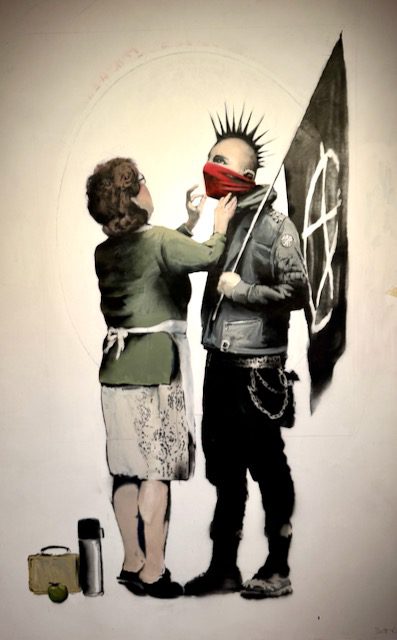
You might have seen Girl With A Balloon in London in the early aughts. The middle mural represents Downtown L.A.’s Housing Crash. The mural on the right is simply named After George Floyd.
 .
 .
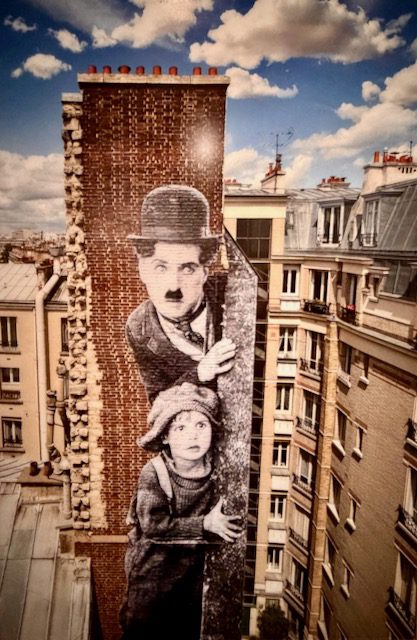
Also on the fifth floor is French street artist JR’s GIANTS, Kikito, which was one of the first installations at the Lucas. It depicts a 70-foot-tall scaffolding installation on the Mexican side of the border in Tecate in 2017. Kikota is a one-year old boy looking over the fence.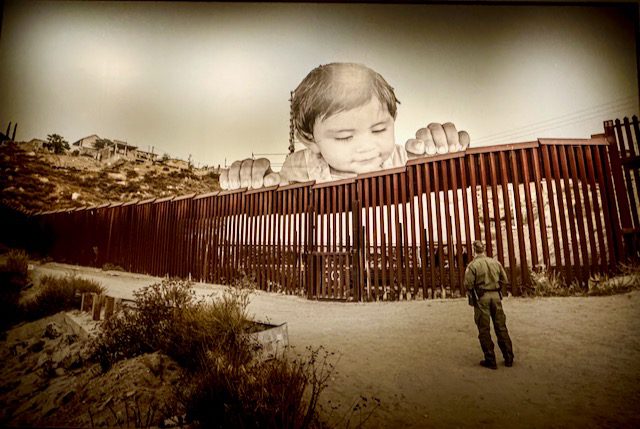
From the fifth floor we looked out at the sculptures in the garden, which features monumental narrative sculptures. 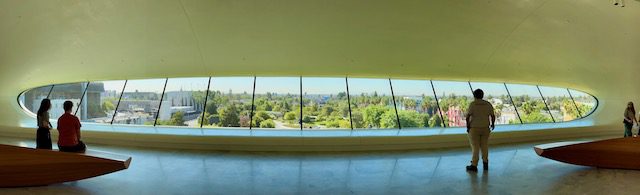
This one, Princess Leia Frees Herself from Jabba the Hutt by Mark Newman and Giovanni Nakpil, shows Princess Leia standing on top of Jabba the Hutt while choking him.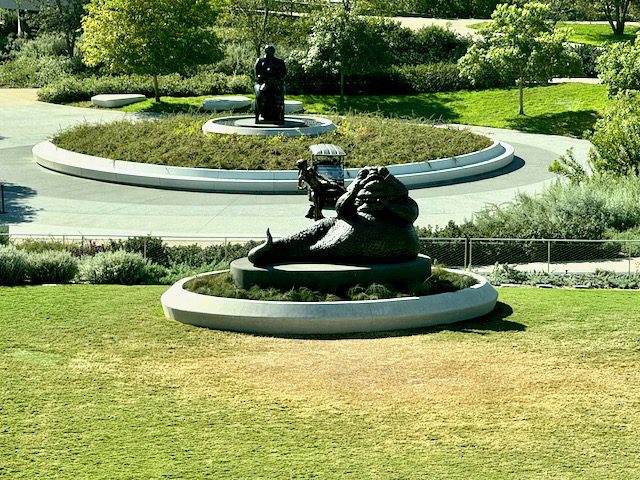
Satirical artist Darren Cullen, who works under the name Spelling Mistakes Cost Lives (I love that), very recently created Golf Cart One. It was commissioned by Lucas. This one certainly did not need a tombstone to gather the meaning.
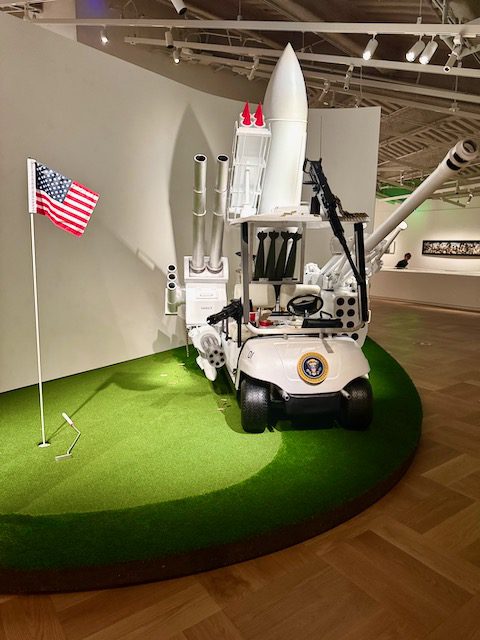
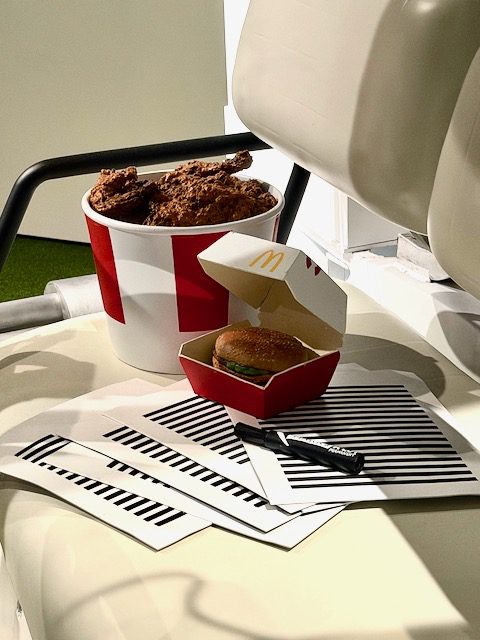
Speaking of presidents, back down on the fourth floor in the history section is a cast of Jean-Antoine Houdon’s famous full-length statue of George Washington.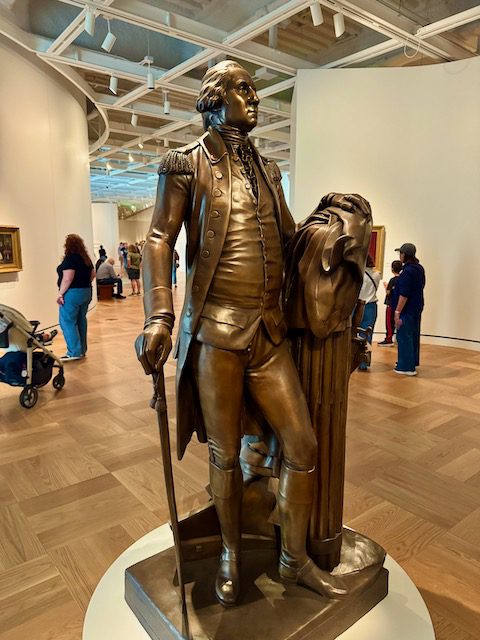
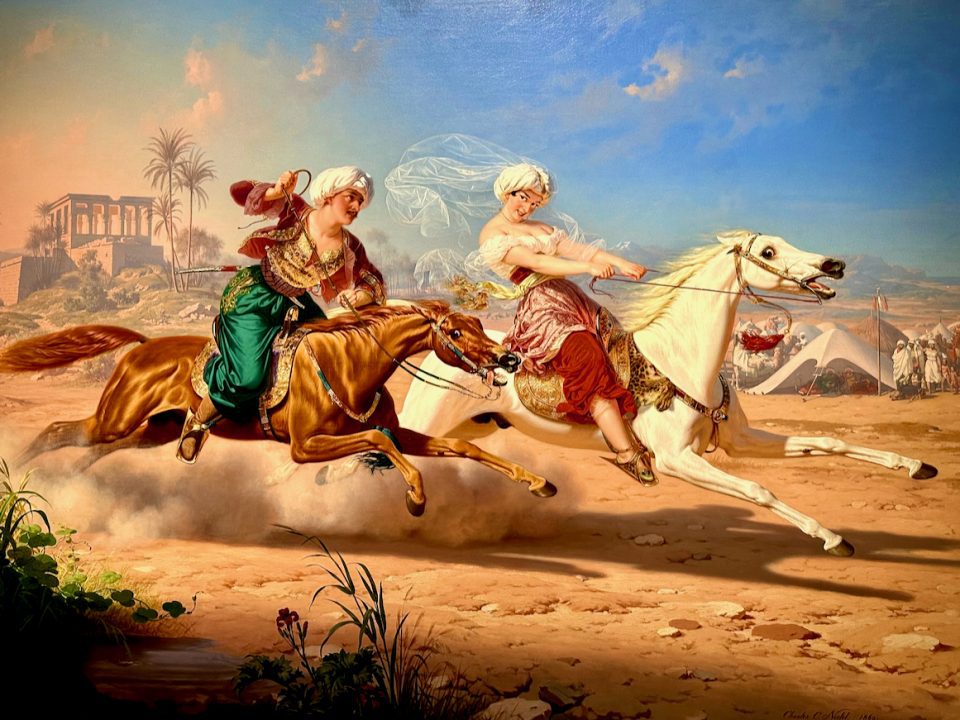
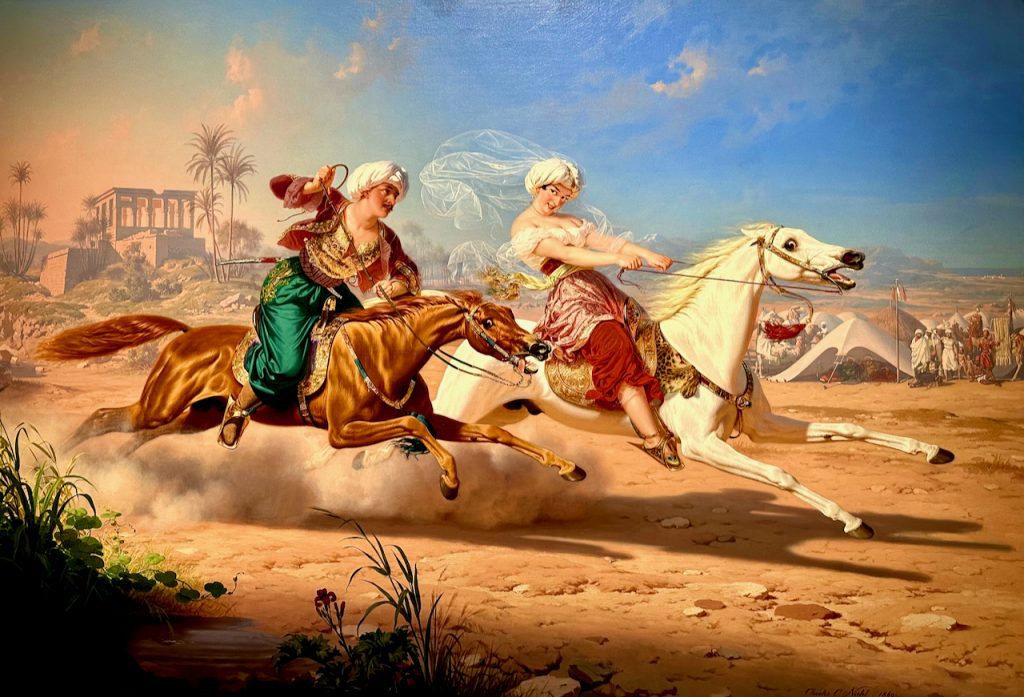
This painting made me stop and look, but knowing its story while at the Lucas would have made it even more meaningful. Mort Künstler’s original oil on canvas, The Glorious Fourth, portrays Ulysses S. Grant riding his horse, Cincinnati, in Vicksburg, Mississippi, on July 4, 1863, after a battle that gave the Union Army control of the Mississippi River. There are ten other Küntsler originals at the Lucas.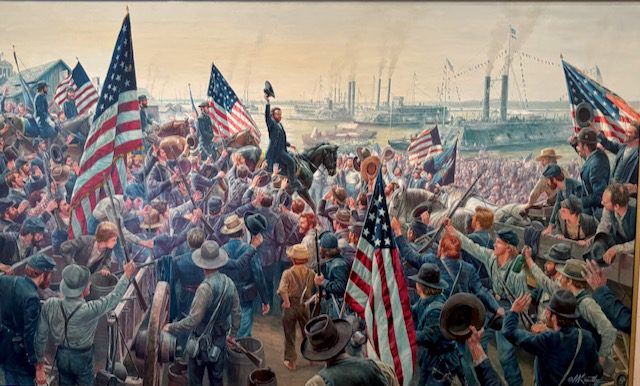
Of course, we all remember George Washington Carver Crossing The Delaware (he didn’t?). This parody by Robert Colescott “critiques traditional historical representation and racial stereotypes in American art and history.”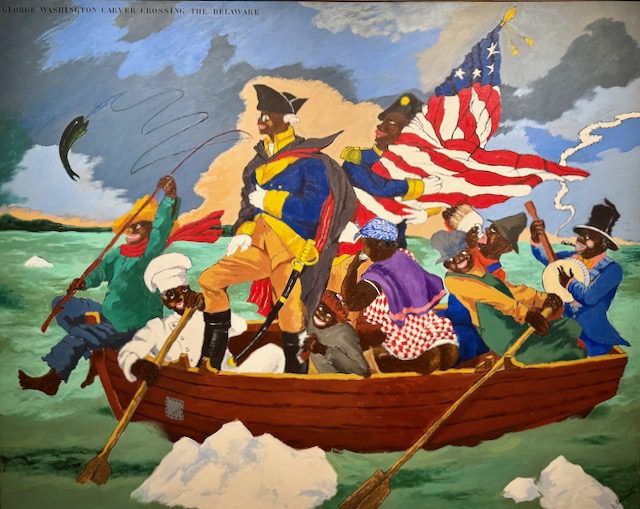
I know this guy.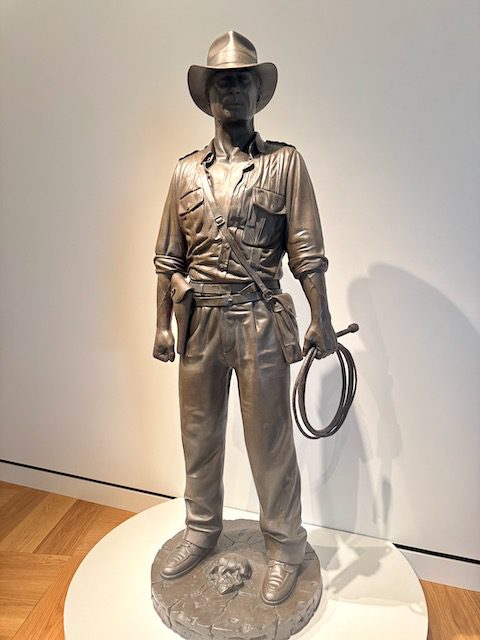
David Alfaro Siqueiros, Diego Rivera, and José Clemente Orozco were known as Los Tres Grandes (“The Big Three”) of Mexican muralists. At the Lucas, we saw Siqueiros’ 1951 The Good Neighbor Policy, showing a smiling person looking very much like Harry Truman “in military attire holding up a banknote while placing chains on a kneeling, armed figure, offering a sharp political critique of U.S. foreign and economic policy in Latin America.”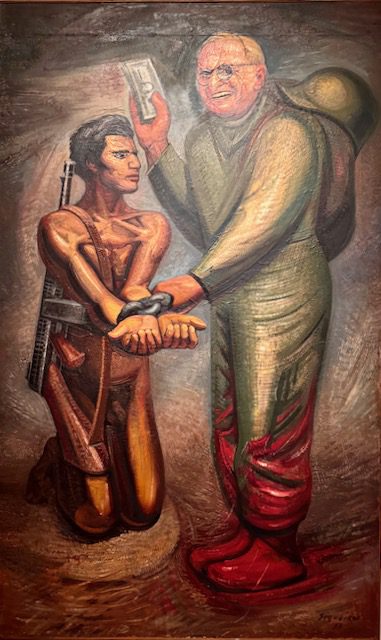
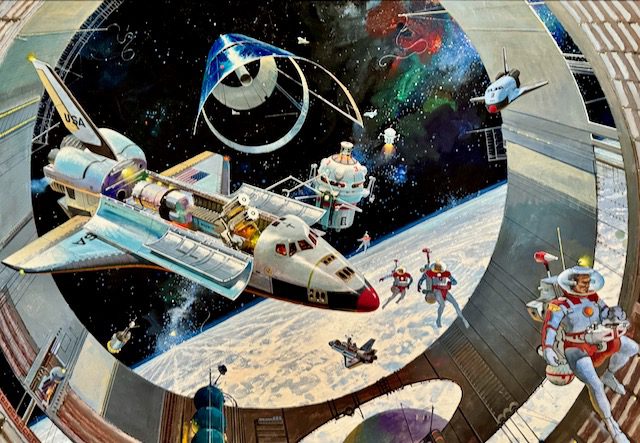
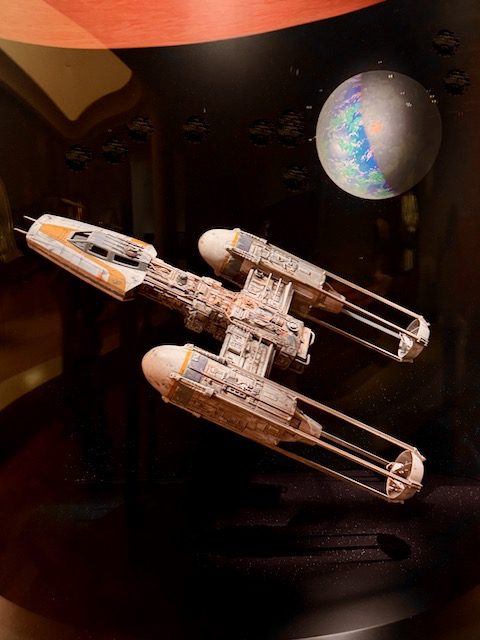
By now, we had rambled through most (I think) of the fourth floor galleries, but there were a few to go. The Science Fiction part of the museum held little interest to us …
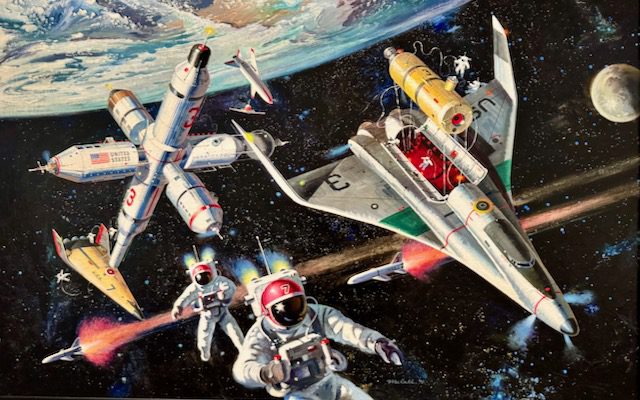 .
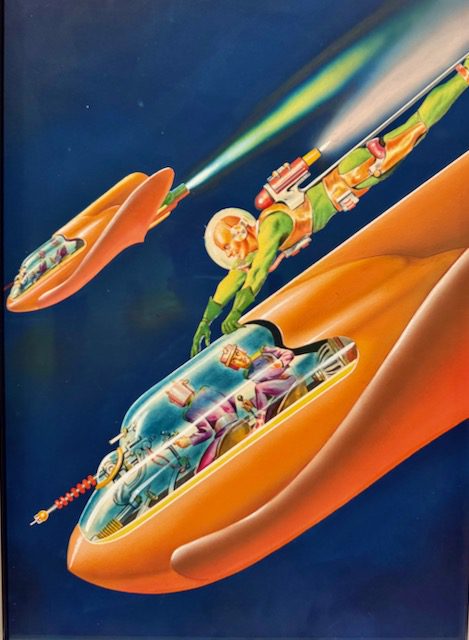
… but if Sci Fi is your thing there’s a lot to choose from.
We weren’t done yet.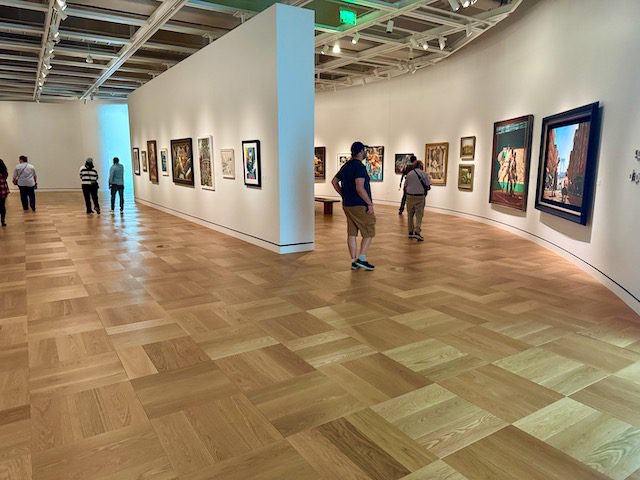
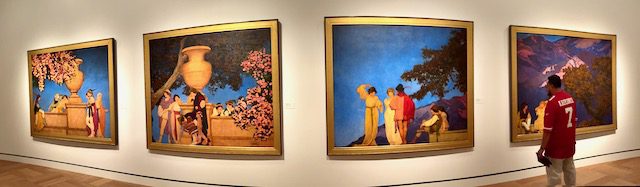
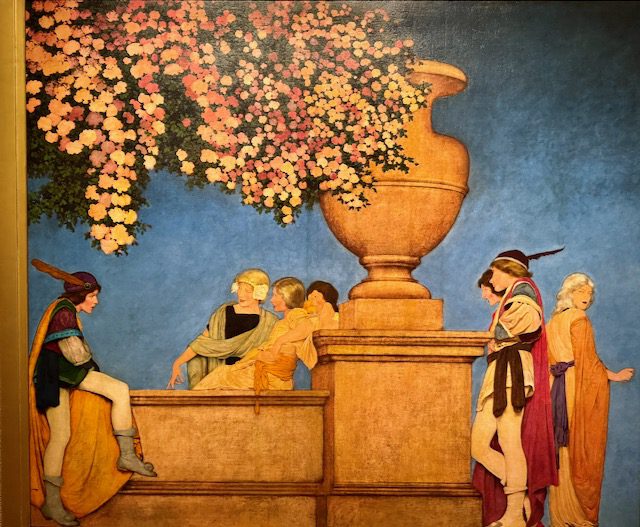
These four mural panels by American artist Maxfield Parrish are from The Gertrude Vanderbilt Whitney Mural.
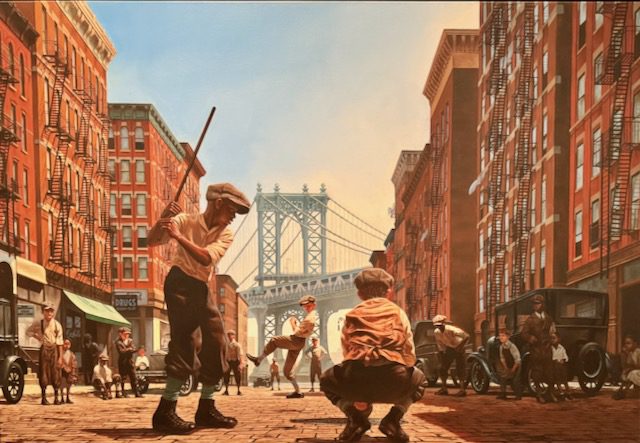
Some pictures really caught my eye. From stickball and baseball (Kadir Nelson’s painting celebrating the 1920 inaugural seasons of the Negro National League and the Southern Negro League) …
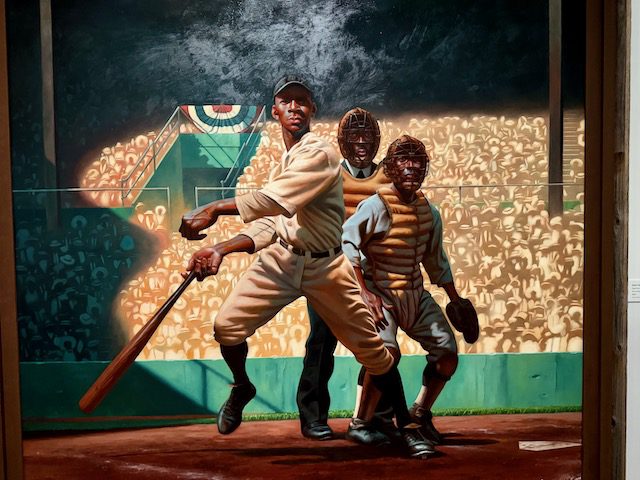
… to Henry Hintermeister’s Good At Both Ends …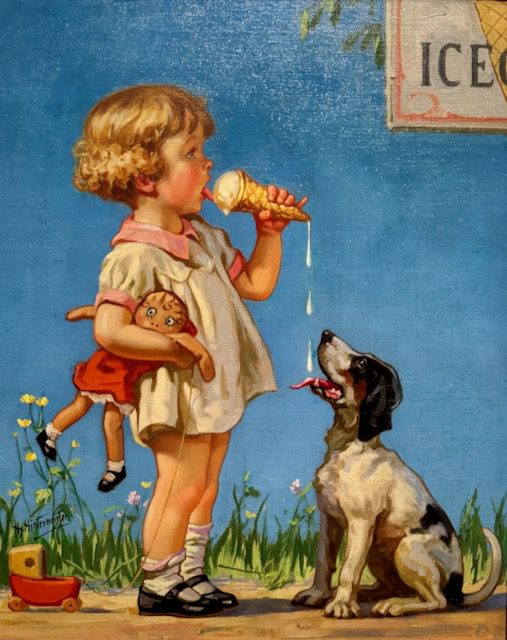
… or Yinka Sonibare’s Boy On Globe.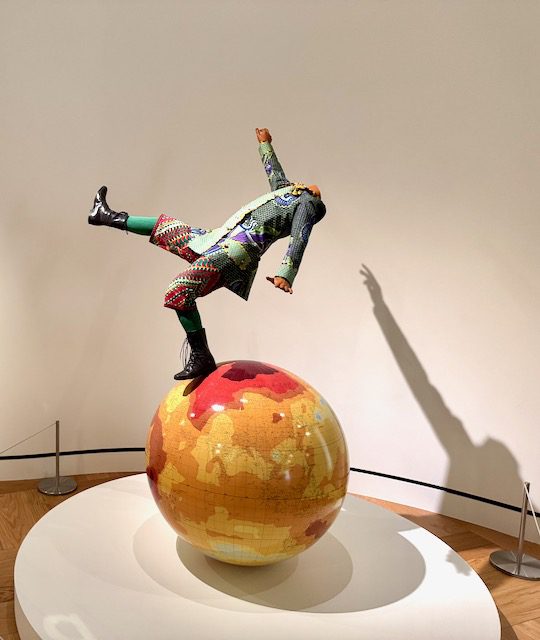
The next painting took me back to my junior year of college when a copy of this famous painting adorned our apartment living room. The 1894 original of Cassius Marcellus Coolidge’s A Pat Hand (aka Poker Game) is from his series of Dogs Playing Poker.
Frida Kahlo’s Self Portrait Dedicated to Dr. Eloesser was acquired by the Lucas Museum in 2020. Dr. Eloesser was a Bay area physician who helped Kahlo manage her chronic pain when she was living in San Francisco. We visited her museum on our trip to Mexico City in 2023.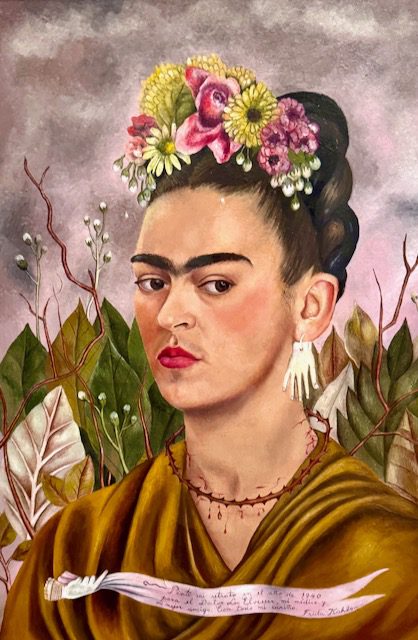 A few more fun and colorful paintings …
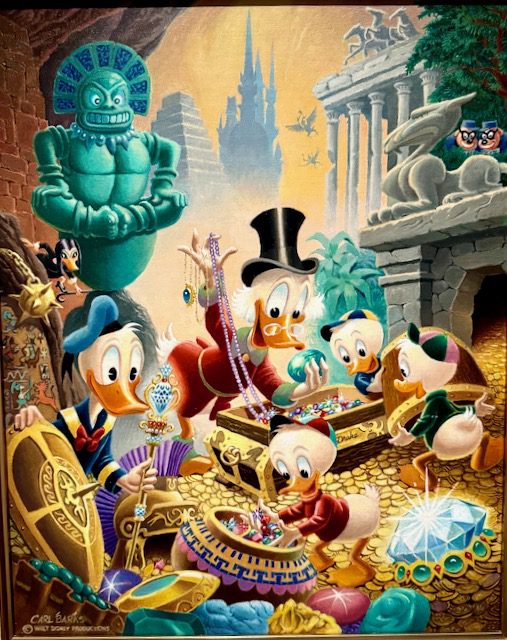 .
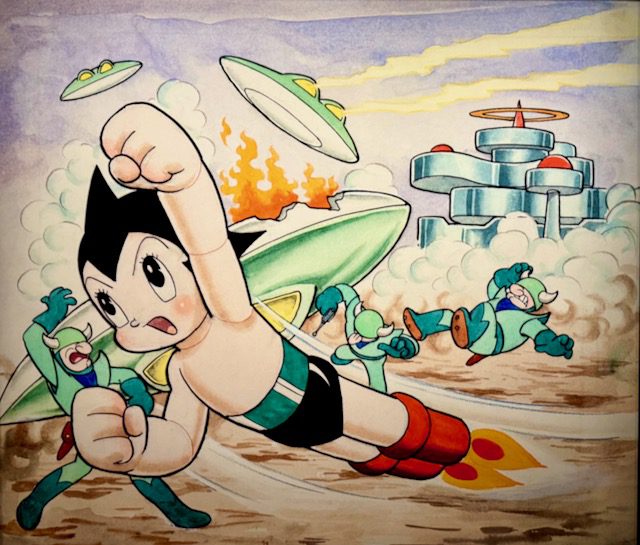 .
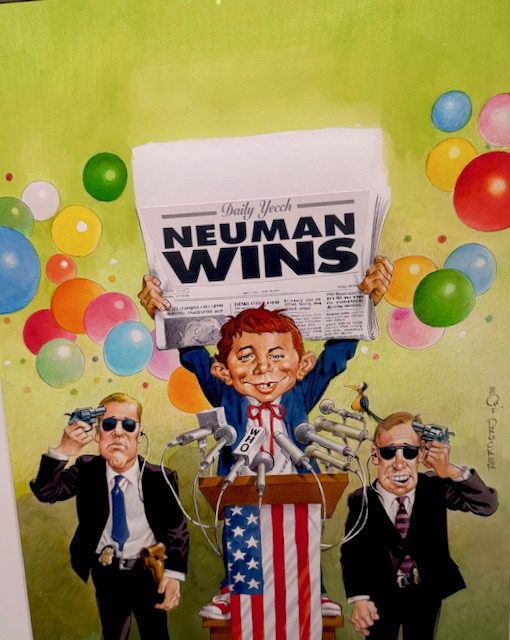
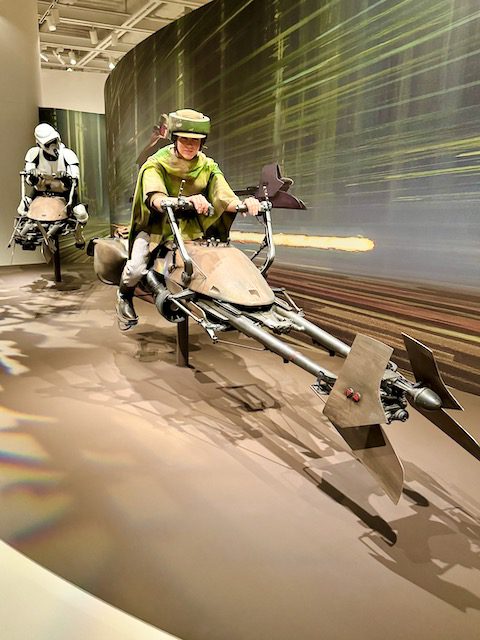
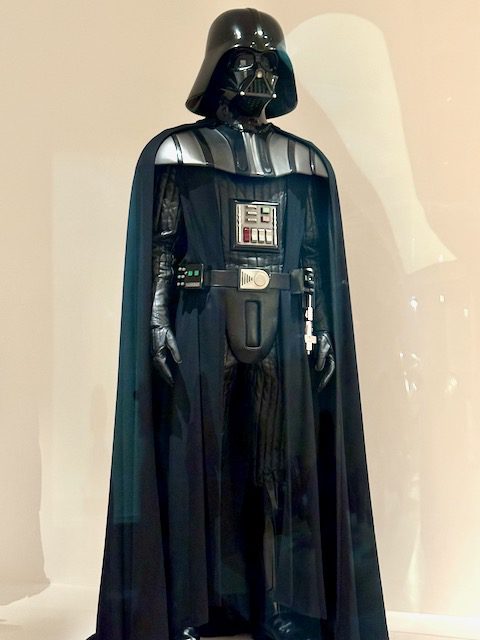
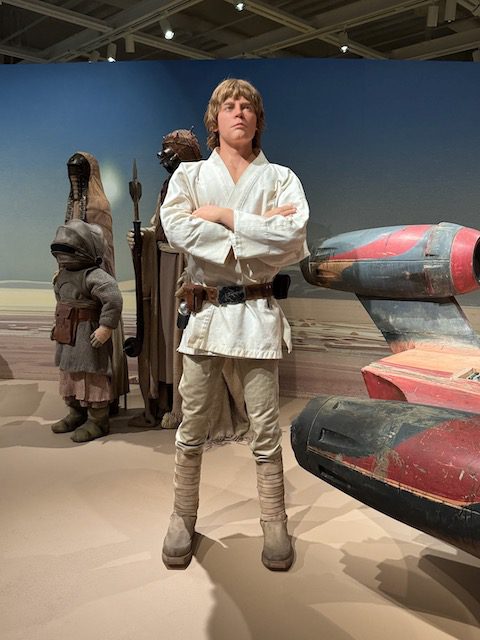
… and we arrived at the Star Wars Gallery, where we were greeted by R2 and D2. If they ever do a pirate Star Wars, I assume the name will be changed to Arrrrr2.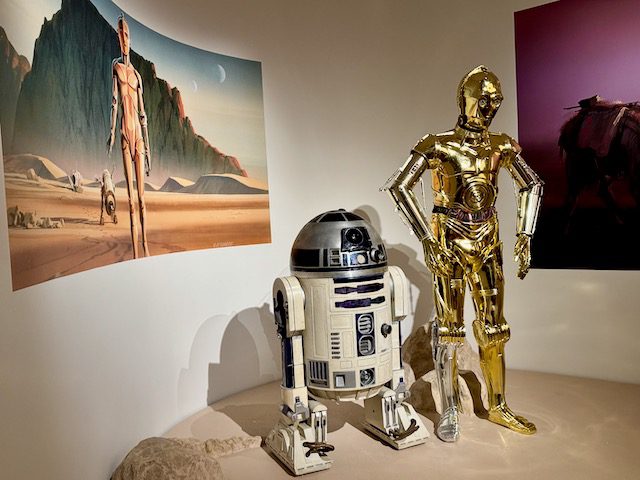
Definitely a lot of people were geeked to be in this section taking lots of selfies.
 .
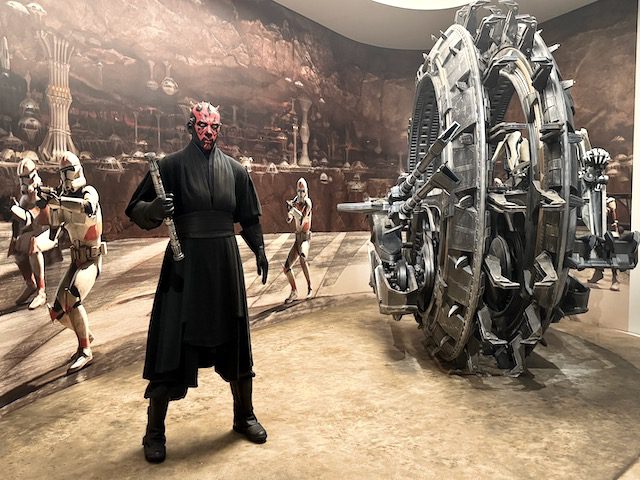
Like father, like son?
 .
Our morning and early afternoon at the Lucas Museum was now complete. Paul and Tracy were fairly lukewarm with their comments, but when it was all said and done, I must admit I enjoyed a number of the pieces of art I viewed at the Lucas. Yes, it is curated a little haphazardly for many, and I can see where that might disappoint some “purists,” but as my dad used to say, “there is the right way, the wrong way and Tom’s way.” That’s sort of how I viewed how this museum is laid out. To paraphrase Frank Sinatra (well, really Paul Anka), they just decided to do it … Their Way.
 .
 .
I definitely would recommend people give the Lucas Museum of Narrative Art a few hours of their time. It will not be everybody’s cup of tea, but I believe there will be numerous pieces of art that will surprise you, inspire your imagination, bring back some memories and, most importantly, make you think a little bit more about the world we live in. Thanks to George and Melody for finally deciding on Los Angeles as its home. Third time really is the charm. May the force be with you!
 Lucas Museum of Narrative Art
One Lucas Plaza
Los Angeles, CA 90037
Check website for hours
Metro: Expo/Vermont Station – E Line (Exposition Blvd & Vermont Ave)
lucasmuseum.org
MaiTaiTom Tip: If you want to be a dazzling urbanite, the metro stop is at the end of the block, so you don’t have to worry about parking. Speaking of parking, be sure you remember which COLOR lot and where you are parked (or have your Find My Car app fired up) as you may exit from a different area than you entered. The attendant told us the parking lot is four football fields long and people get lost all the time. At this time (2026) parking is a flat $20 for entry before 5 p.m.