
Chapter Two – A Day Fit For A King & Queen
November 25, 2025
Chapter Four: Get Me To The Church(es) On Time
December 20, 2025Celebrating España: MaiTaiTom’s Still “Insane For Spain”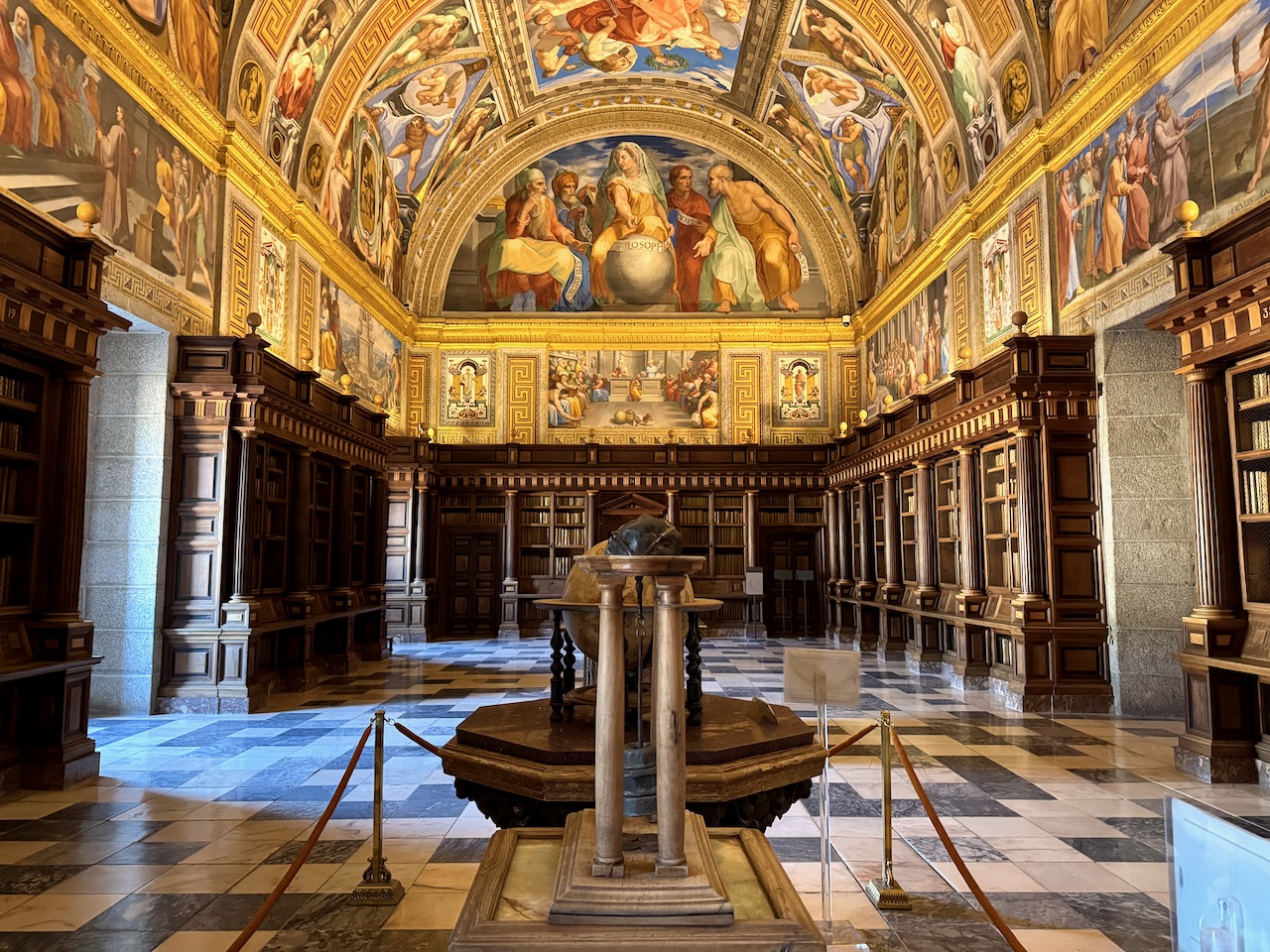
Chapter Three: Royal Site of San Lorenzo de El Escorial
Day Three: Skipping The Bus, The Largest Renaissance Building In The World, Eighth Wonder Of the World, A Royal Library, Are We Already Back In Madrid, Would You Like Some Tonic In That?, A (Very) Short Walk In The Park, The Inside Scoop On Tapas, Happening ‘Hood, and The Mouthwatering Vinoteca
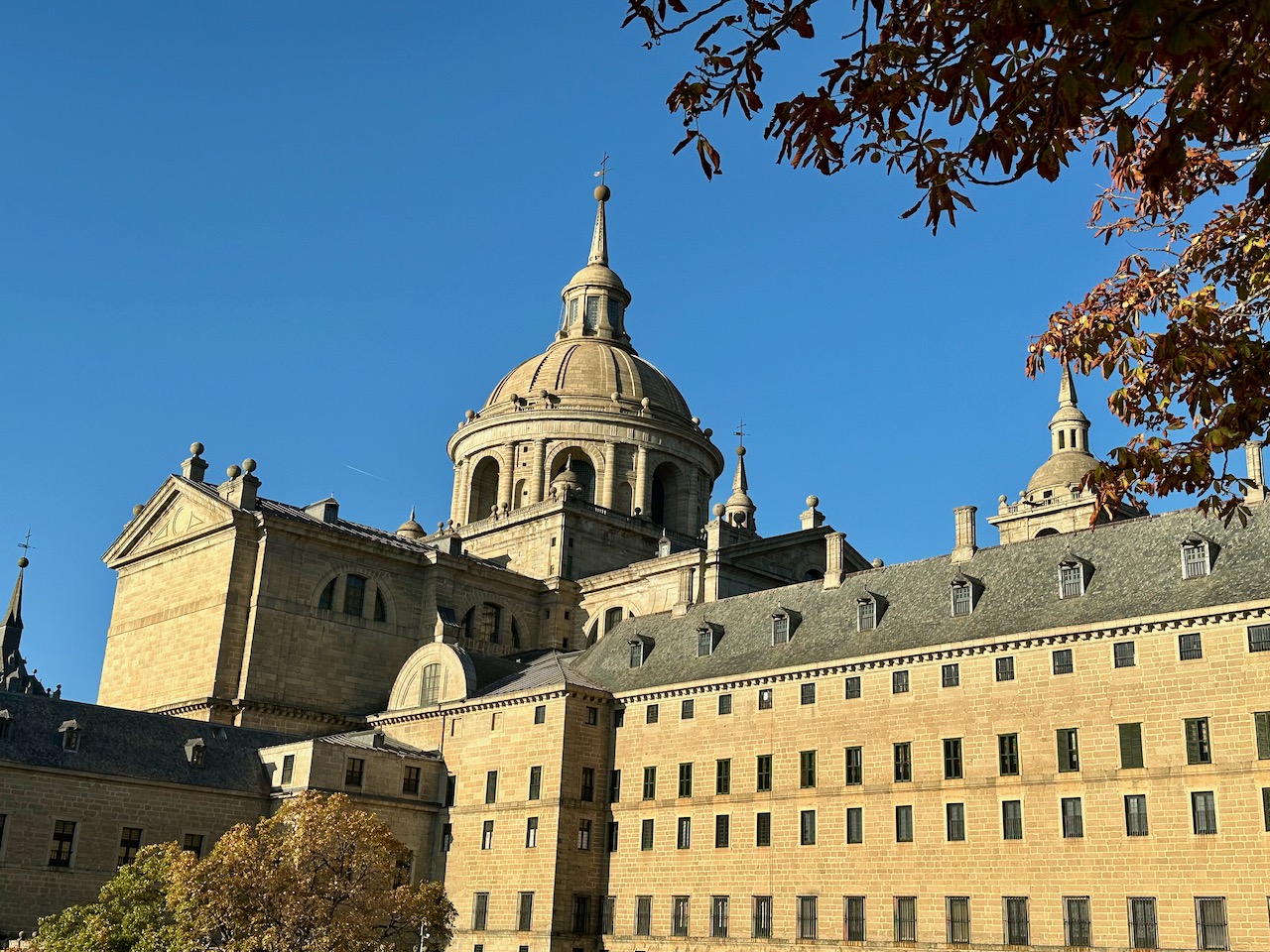 It was Tuesday morning and time to head out of town … for only half a day. We’d booked an online reservation for a 10 a.m. entrance to what has been called the “Eighth Wonder of the World,” which I believe is the eighth time we’ve visited a site that has been called that. That said, the Royal Site of San Lorenzo de El Escorial is the largest Renaissance building in the world and a place we looked forward to visiting.
Since we had used miles to book our flight, I decided this would be our transportation splurge of the trip. Many people take the bus ride from Madrid’s Moncloa interchange to El Escorial and it costs about €5. Knowing that we would have a late evening the night before and then having to take an early metro to the bus station to procure tickets would not be good for my marriage, we spent the extra Euro to have a taxi pick us up at our hotel. You can’t take it with you.
When we passed the Moncloa bus interchange and saw it was teeming with people and long, long lines, I knew I had made the correct choice. The journey took nearly 90 minutes (lots of traffic), but we were dropped off a little early to get our first glimpse of El Escorial.
King Philip II (together with over 3,000 workers and 6.2 million ducats) built the monastery, library and mausoleum between 1563 and 1584 to honor his father’s, Emperor Charles V, wishes that “a religious foundation [be built where] he was to be buried beside his wife, Isabella of Portugal” and also to “atone for the destruction of a church dedicated to St Lawrence at the Battle of San Quintin in 1557.” The monastery was originally occupied by the Hieronymite Order who were expelled and replaced in 1885 by the Augustinian Order which still occupies the monastery today.
We looked out at the manicured gardens and the box hedges, which look like “fine rugs from Damascus.” (per El-Escorial.com website.)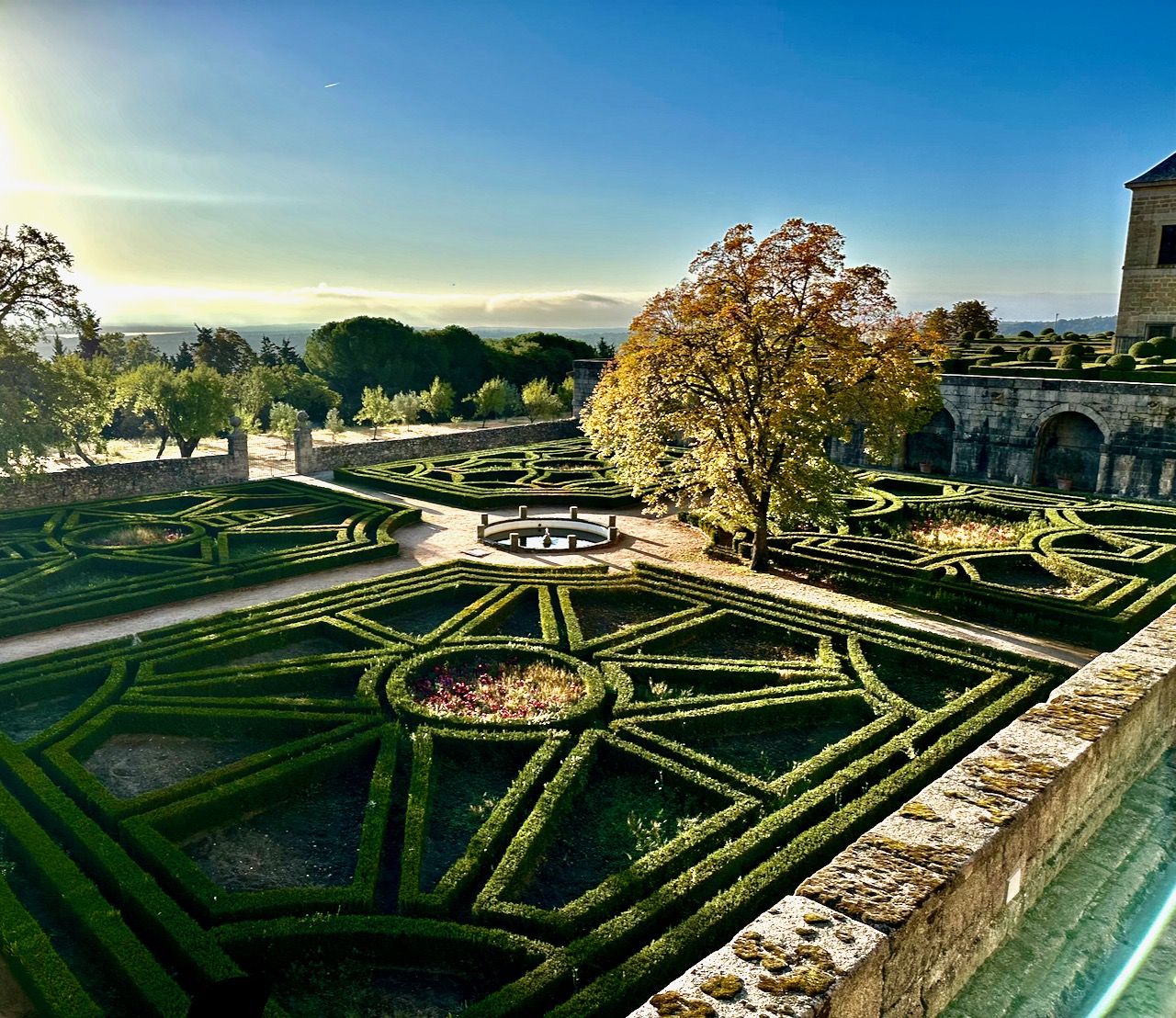
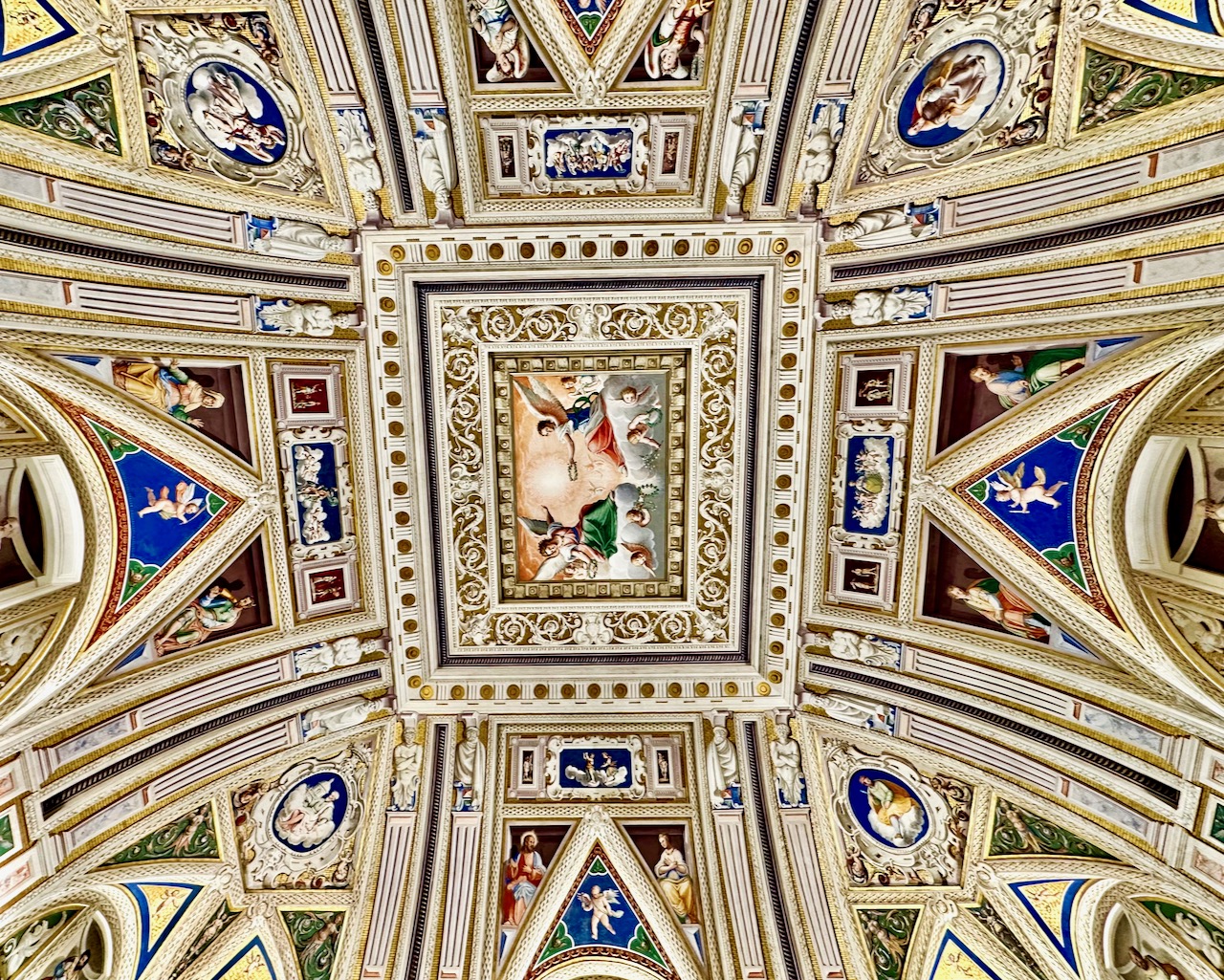
Entering the courtyard (audio guide in hand), we were directed first to the Main Room of the Escorial (or Laurentian) Library. Stepping inside we were wowed by the 175-foot long vaulted ceiling covered with spectacular frescoes making quite an indelible first impression.

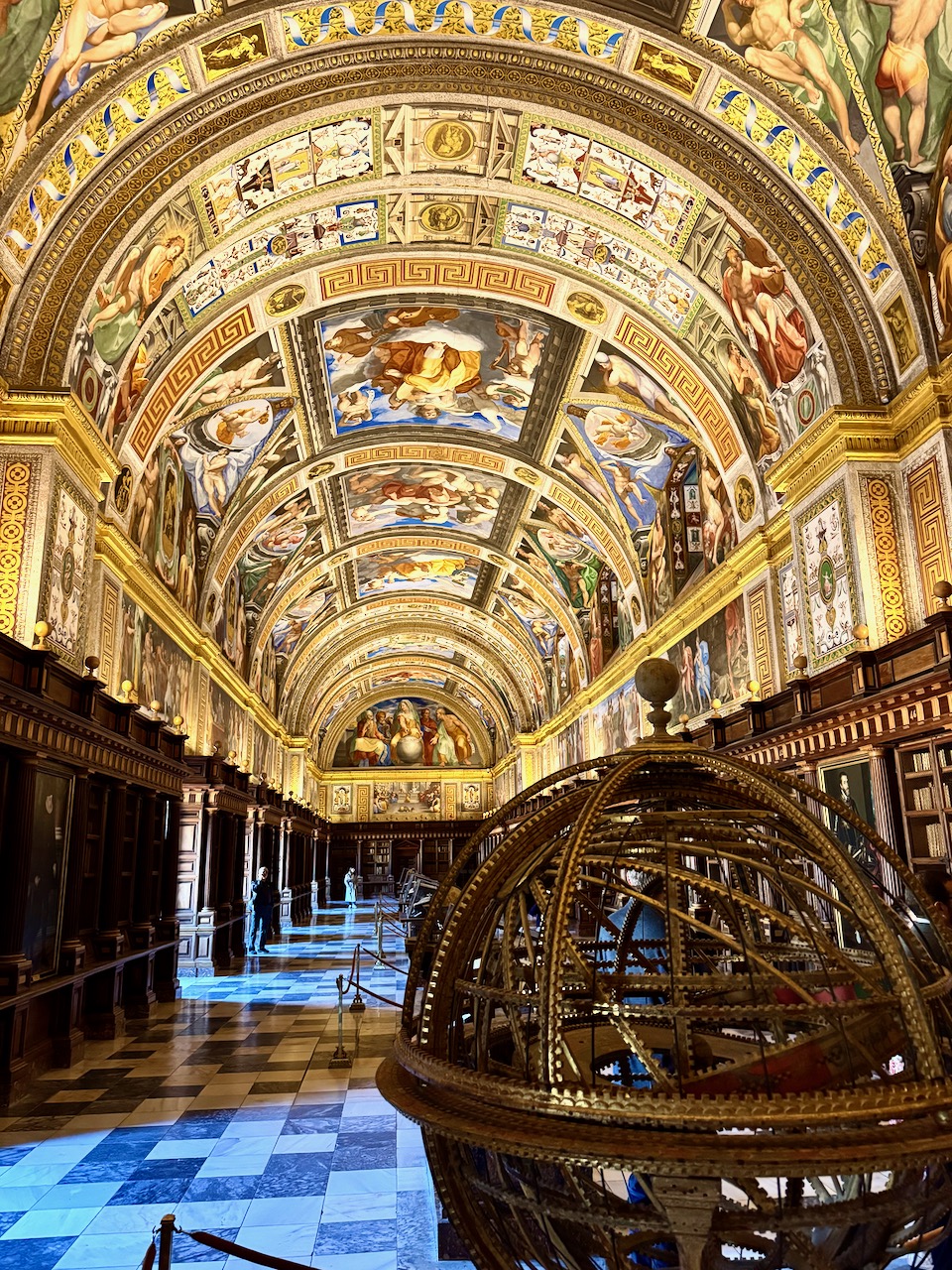
The frescoes were created by Pellegrino Tibaldi who was said to be inspired by Michelangelo’s Sistine Chapel.
There are seven zones in the vault, with frescoes representing the seven Liberal Arts studied at universities at that time (Grammar, Rhetoric, Logic, Arithmetic, Music, Geometry and Astrology). Being in the first group of the day, we were lucky to get photos without too many people in them. Philip II was very involved in the creation of the library, which he wanted to be “a universal center of knowledge that integrated the science and humanities.” Obviously, Philip was a literal Renaissance Man.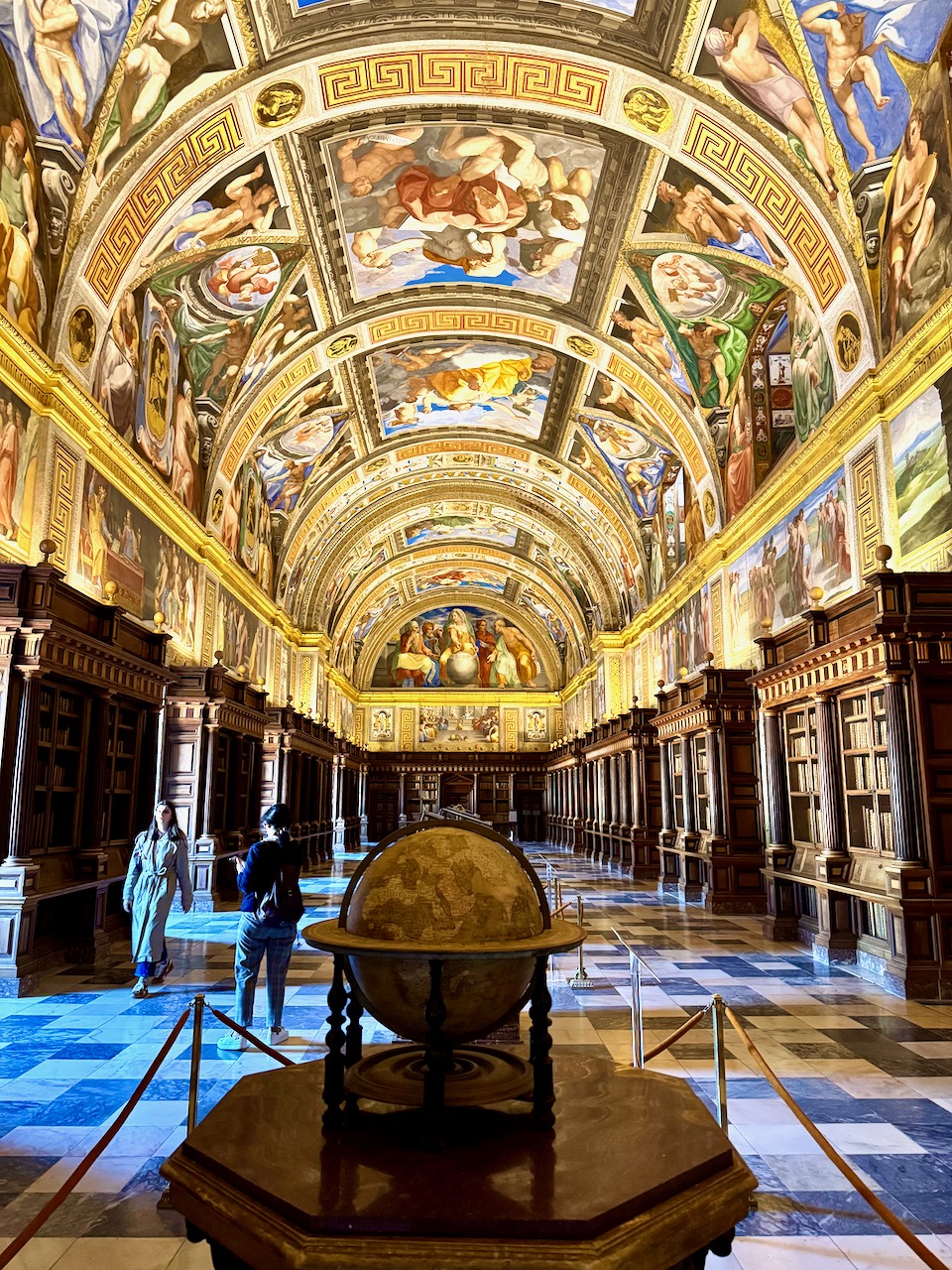
Philip II was also a collector, and since baseball cards weren’t a thing in the 16th century, one of the things he liked to collect were baroque globes.
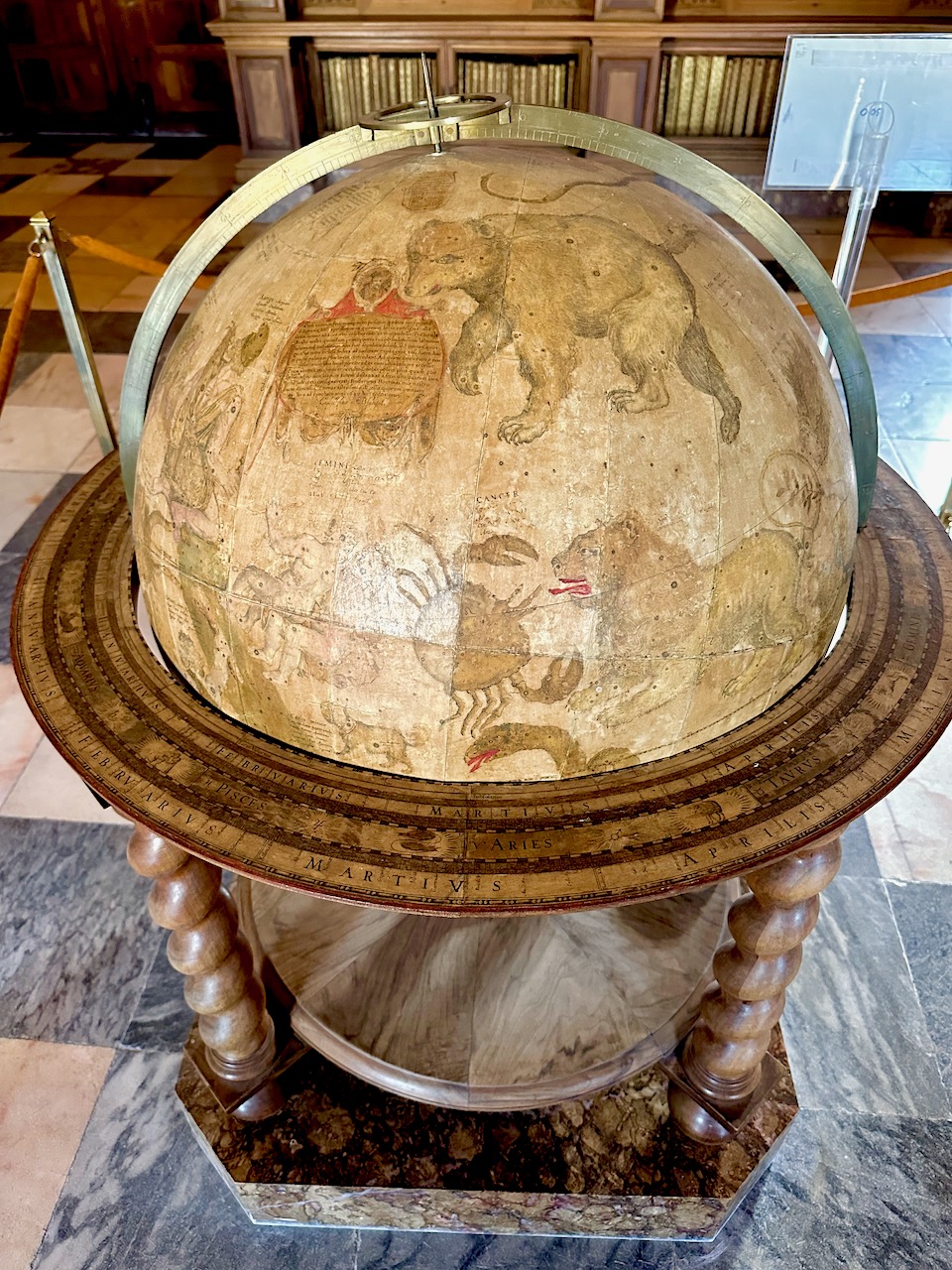

He also liked astronomical instruments including this 1582 Armillary Sphere. Although astronomy was one of the very few classes where I received an “A” in college, I did not know that this sphere “represents the Ptolemaic system whereby the Earth was believed to be the center of the universe.”
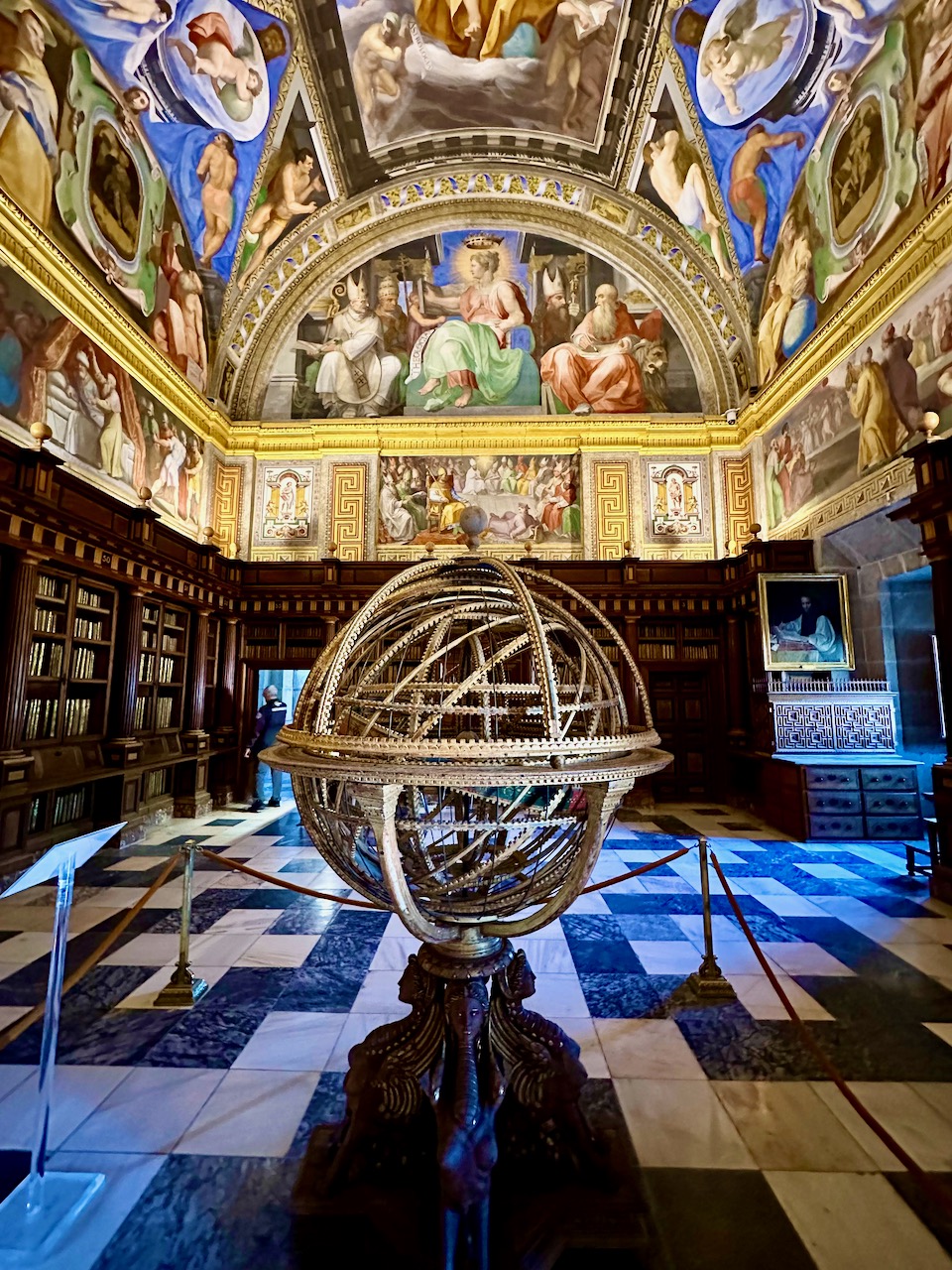

Despite a devastating fire in 1671 resulting in 4,000 codices in all languages, originals and copies being destroyed, the Royal Library today contains more than 40,000 printed books and 4,700 manuscripts.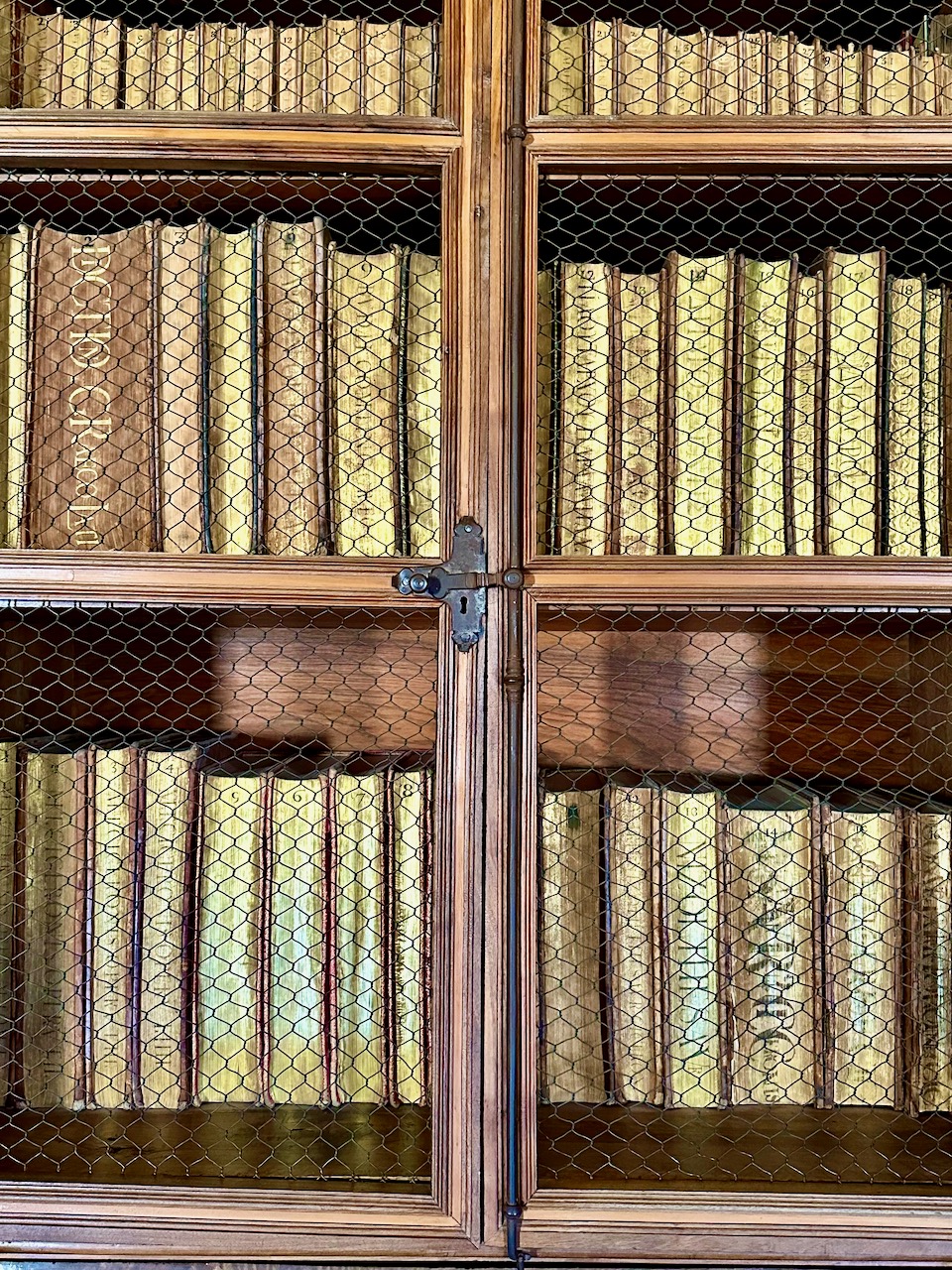
The gilt-edged pages of the books are all brushed golden, creating the illusion of a golden library.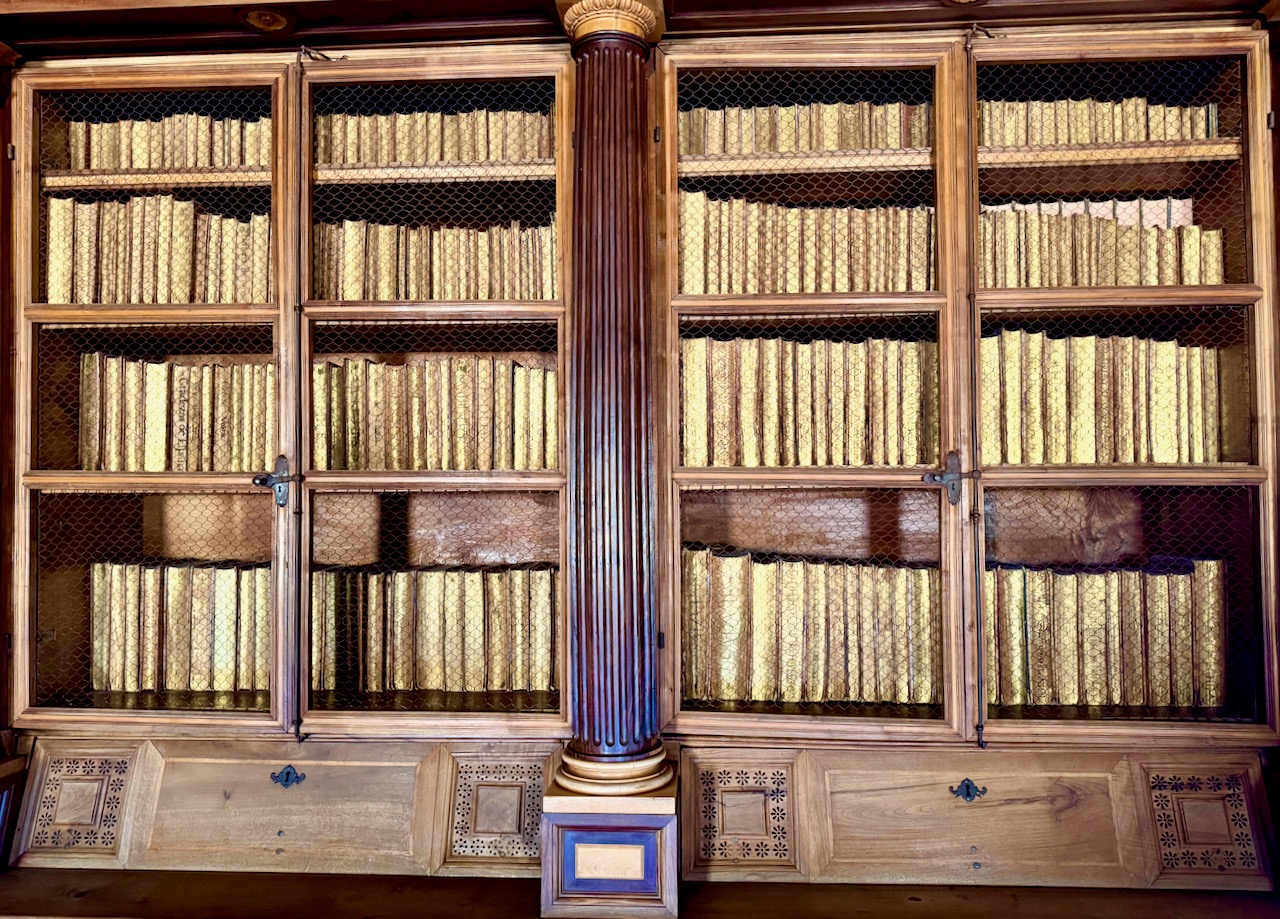
We’ve seen many spectacular libraries in our travels, and this one ranks near the top.


Turning the page, we headed to the basilica, which opened on August 10, 1586, which also happens to be the Feast day of Saint Lawrence.
Tibaldi’s Martrydom of Saint Lawrence is the focal point of the basilica high altar.
I believe Federico Zuccaro is responsible for the above fresco.


Walking through the basilica we saw the The Martyrdom of Saint Maurice by Romulo Cincinnato, which was commissioned by Philip. Philip rejected another version of this event (by a much more famous artist) that we would see later in the Chapter House.
If there are ceiling frescoes, you know who finds them.


Another painting that caught our attention was by Juan Gomez (The Martyrdom of Saint Ursula and Her 11,000 Virgin Companions).
There was no shortage of saint paintings which makes sense as this is a basilica.


Florentine sculptor Benvenuto Cellini originally wanted his sculpture of Christ on the Crucifix to adorn his own tomb, but money issues lead him to sell it to Cosimo I. Subsequently, the Grand Duke of Tuscany (Francisco I de Médici), gifted it to Philip II. Cellini’s Crucifix is considered one of the greatest works in the monastery although Philip thought the sculpture too muscular, so it was not displayed at the main altar.
Next stop was the fresco-filled Main Cloister, painted nearly entirely by Pellegrino, who by now must have been drinking lots of water. Stunning would be an apt description.


Equally stunning were the ceiling frescoes by Luca Giordano as we climbed the stairs between the lower and upper cloisters. It depicts the Glory of the Habsburg Dynasty.


The Wow factor continued as we entered the side Chapter Rooms.


As Rod Stewart might sing, “Every picture (or ceiling) tells a story.”

And here’s the story of the Martyrdom of Saint Maurice by El Greco that Philip did not want in the basilica. It’s said that Philip was displeased that El Greco put the martyrdom in the background and puts the moment he convinces his friends to remain loyal to Christ in the foreground. In the end, Cincinnato’s version of the martyrdom was installed in the basilica.
Although not as famous as da Vinci’s, Titian’s Last Supper was certainly good enough to be installed in the monks’ dining room.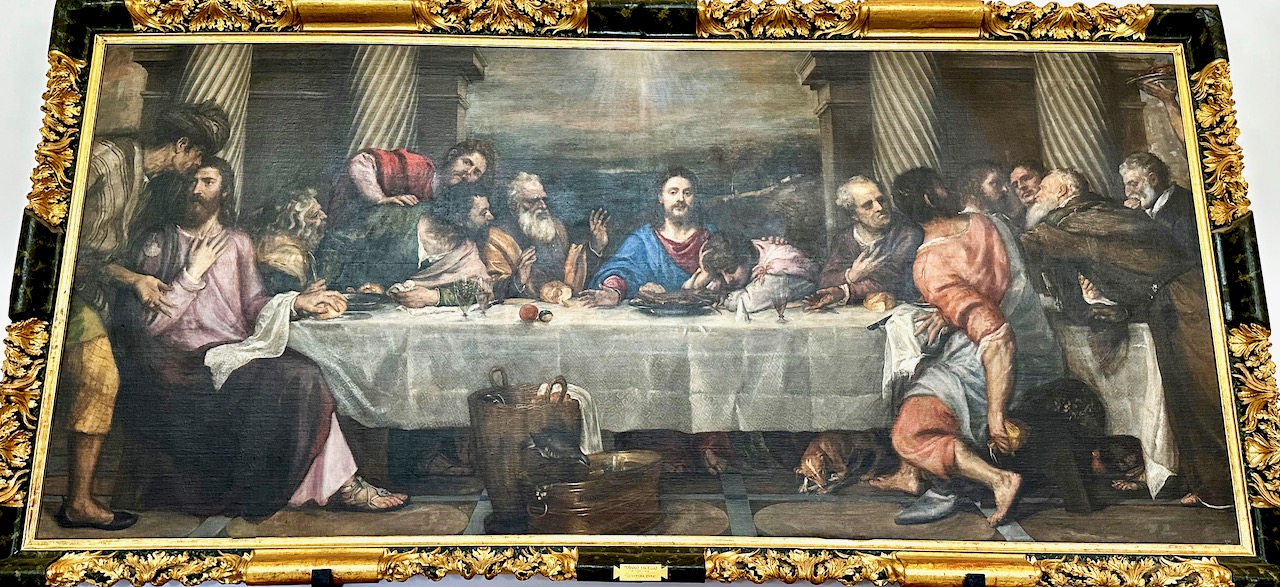
The Judgement of Solomon is on the ceiling of the Chapter Rooms Lower Prior’s cell.


On the way to the Royal Pantheon, we passed through the Pantheon of Infantes completed in 1888. There are a total of nine chambers containing not only royal children, but also queen consorts who did not give birth to a king, and other members of the royal family. This chapel includes the Children’s Collective Grave containing the remains of royal children who died before receiving their First Communion.


Many of the relatives of Queen Isabella II are in this chamber.
I carefully descended to the Royal Pantheon located beneath the basilica where no photos are allowed. Located here are the tombs of every monarch since Charles V and queens who were mothers of kings.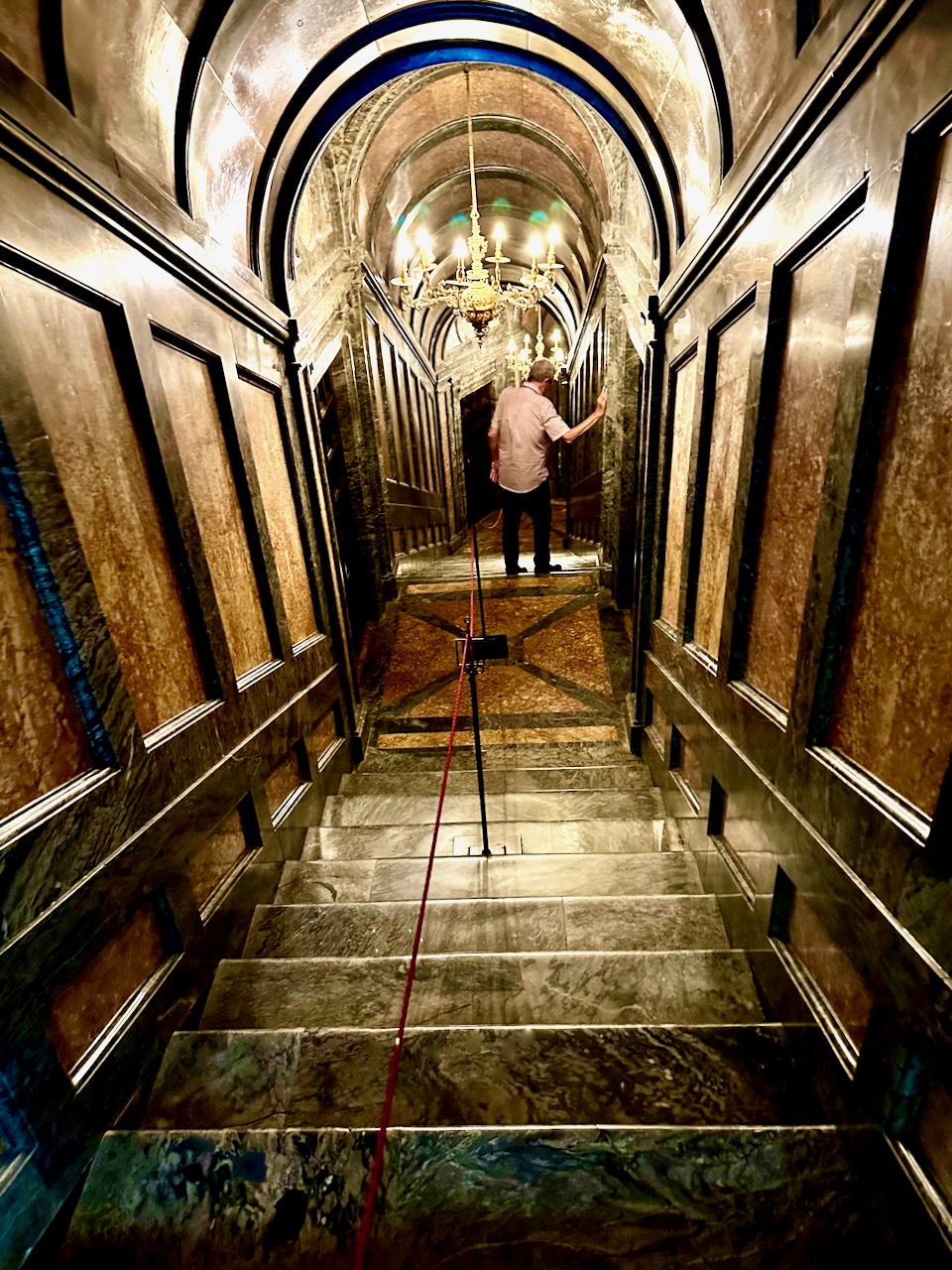
Morbid Fact: According to Atlas Obscura, after former King Juan Carlos I’s parents are interred in the Royal Pantheon it will be full as there are only 26 tombs. Where are his parents (who passed away in 1993 and 2002)? Also per Atlas Obscura, they’re in the “Royal Rotting Room” decomposing which takes about 20 years (although other sources state it takes 30 to 40 years). The purpose of this? Because only the bones will fit in the tombs.
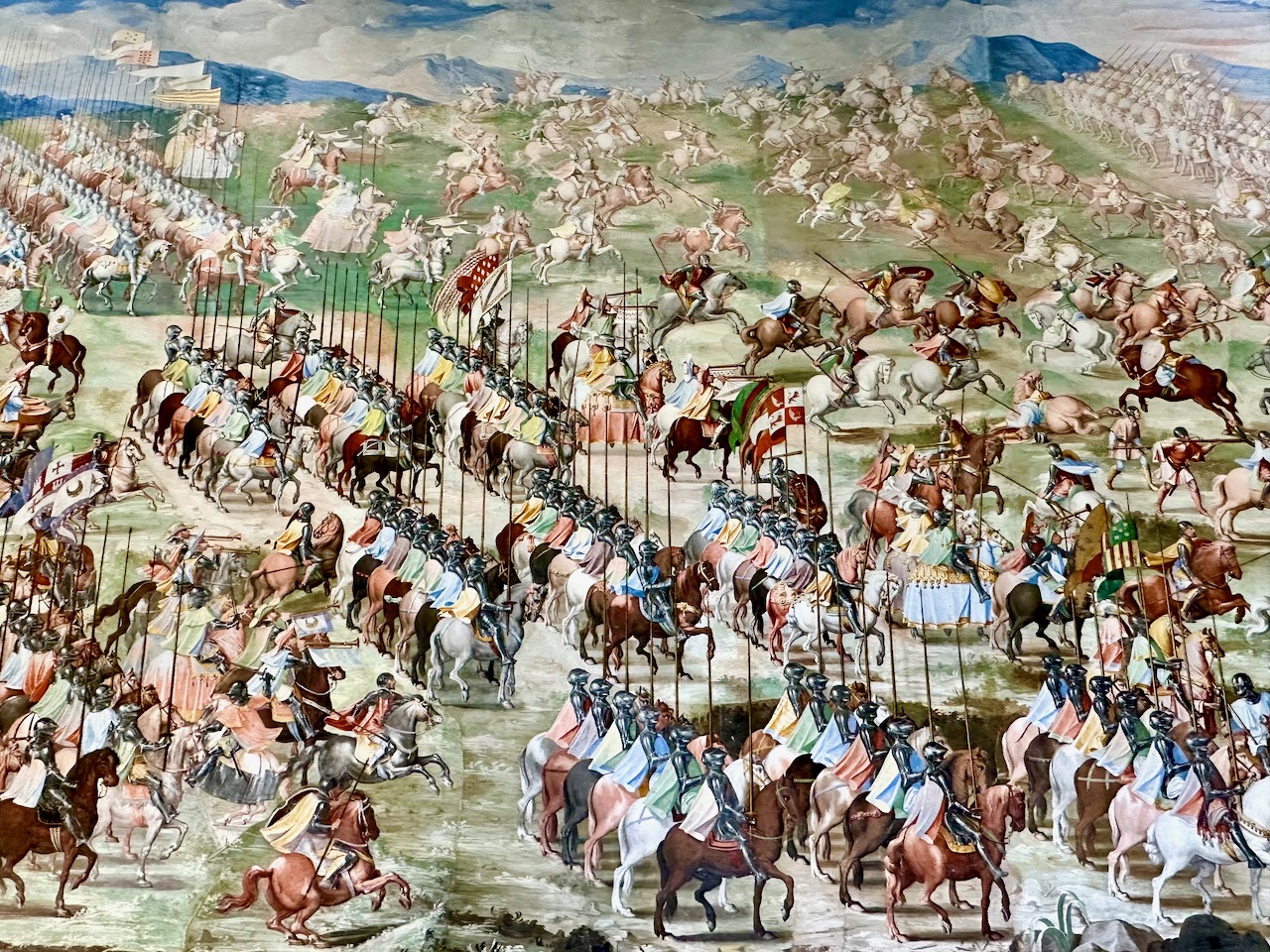
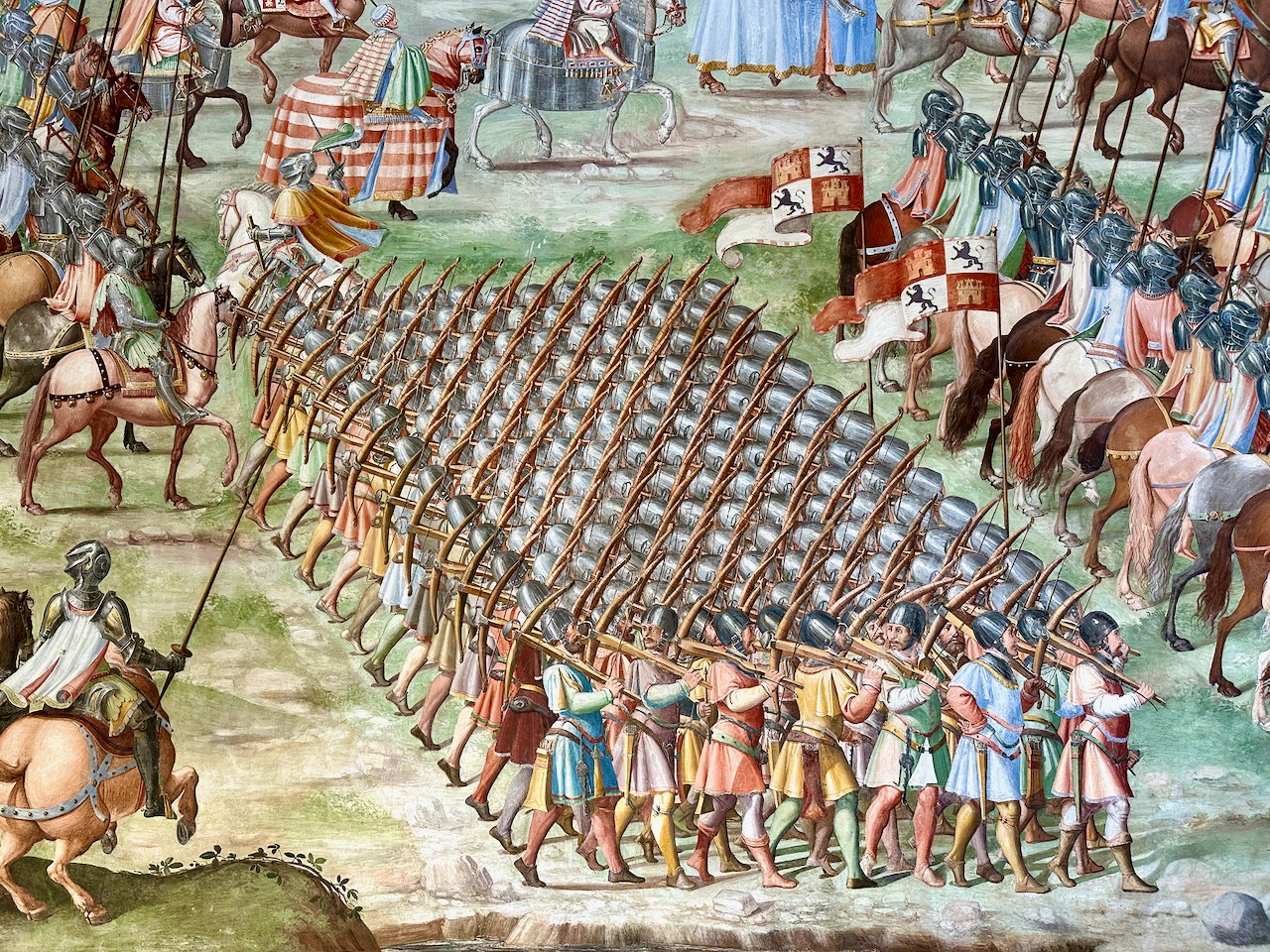
We had been wowed every step of the way, but we still had some more stunning rooms to visit. The (Sala de las Batallas) Battle Hall is a 180-foot corridor with containing impressive frescoes of Spanish military victories.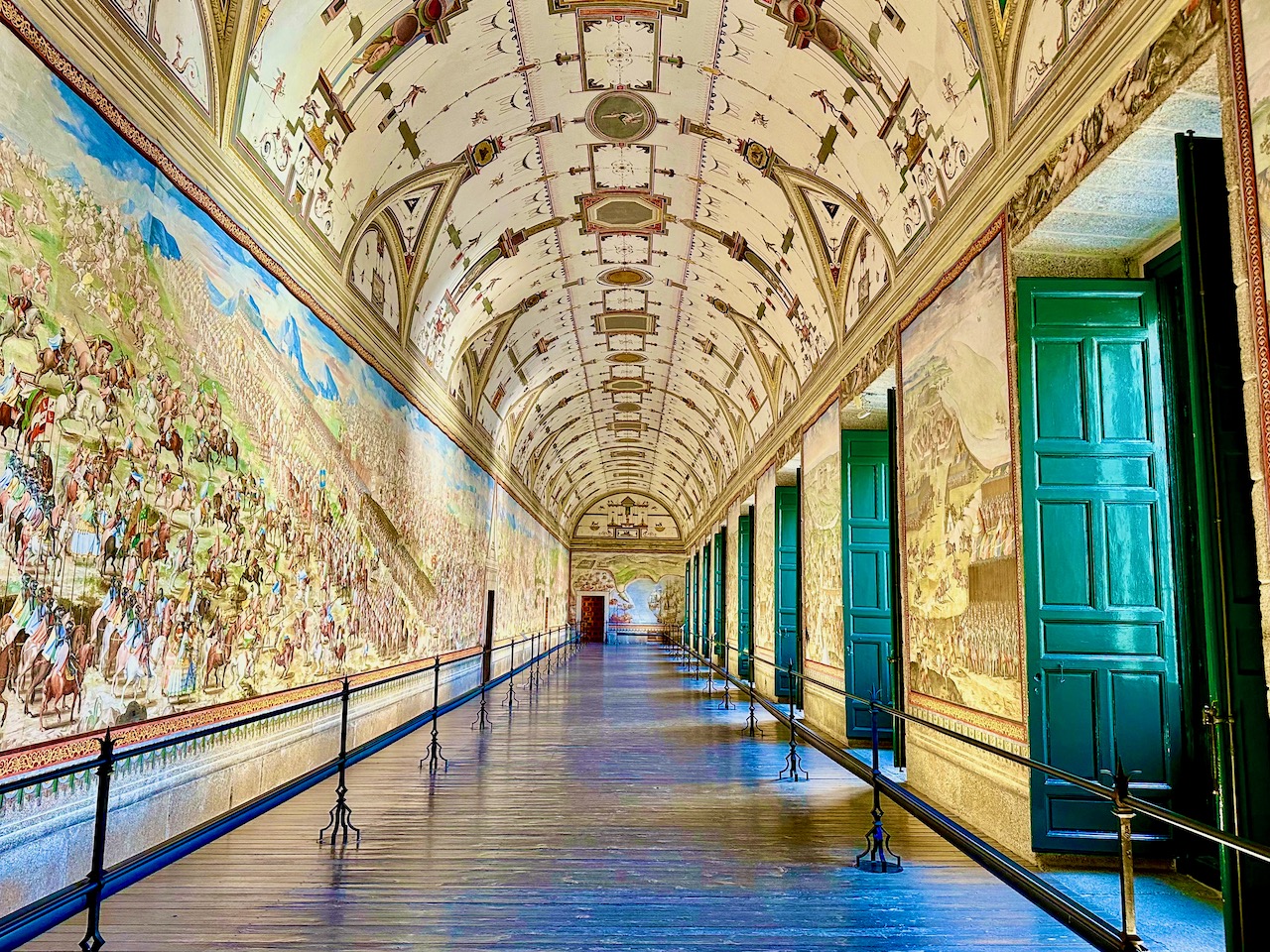
It was designed to showcase Philip II’s achievements.
The next few rooms included antechambers full of magnificent tapestries.
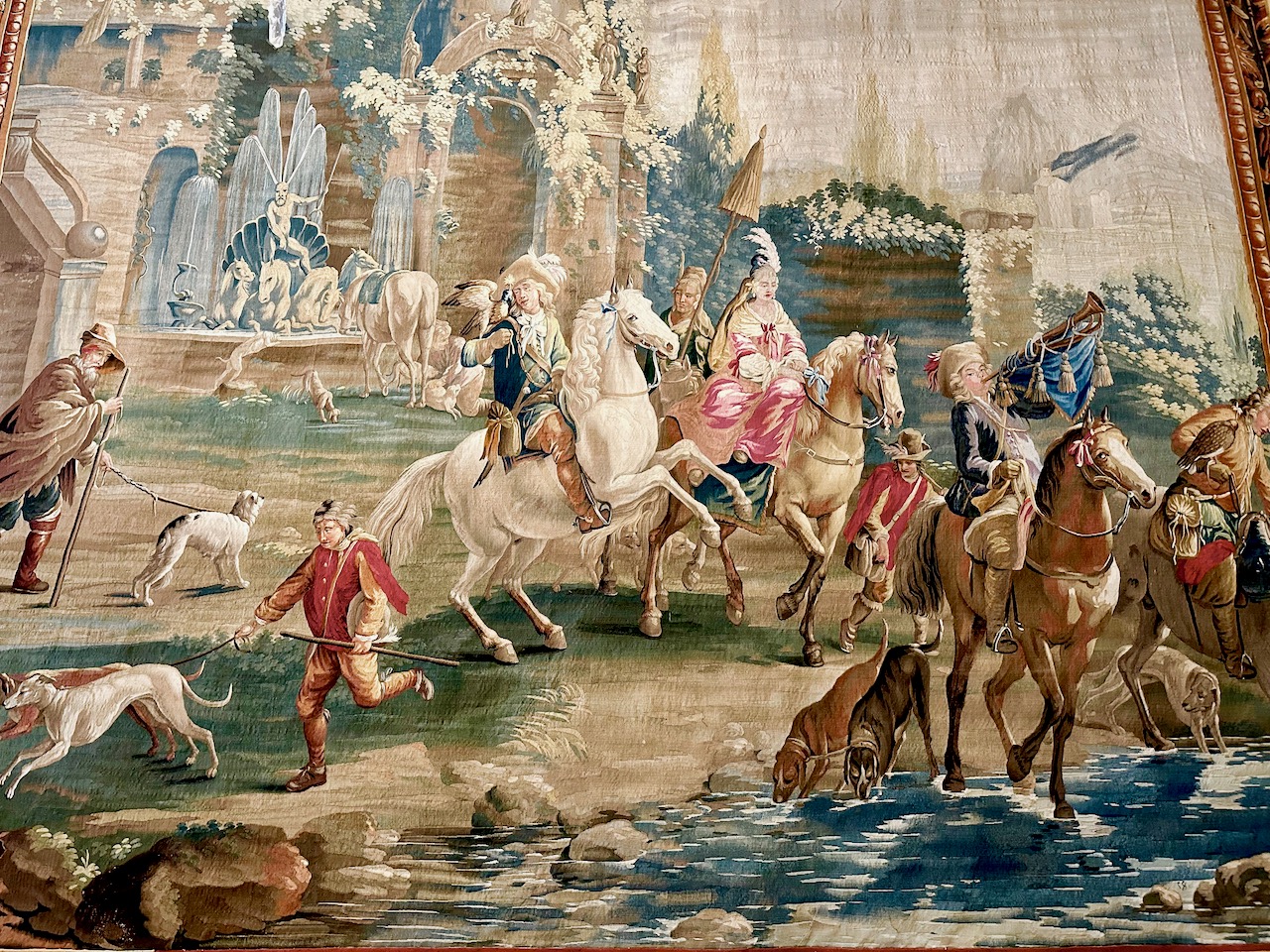
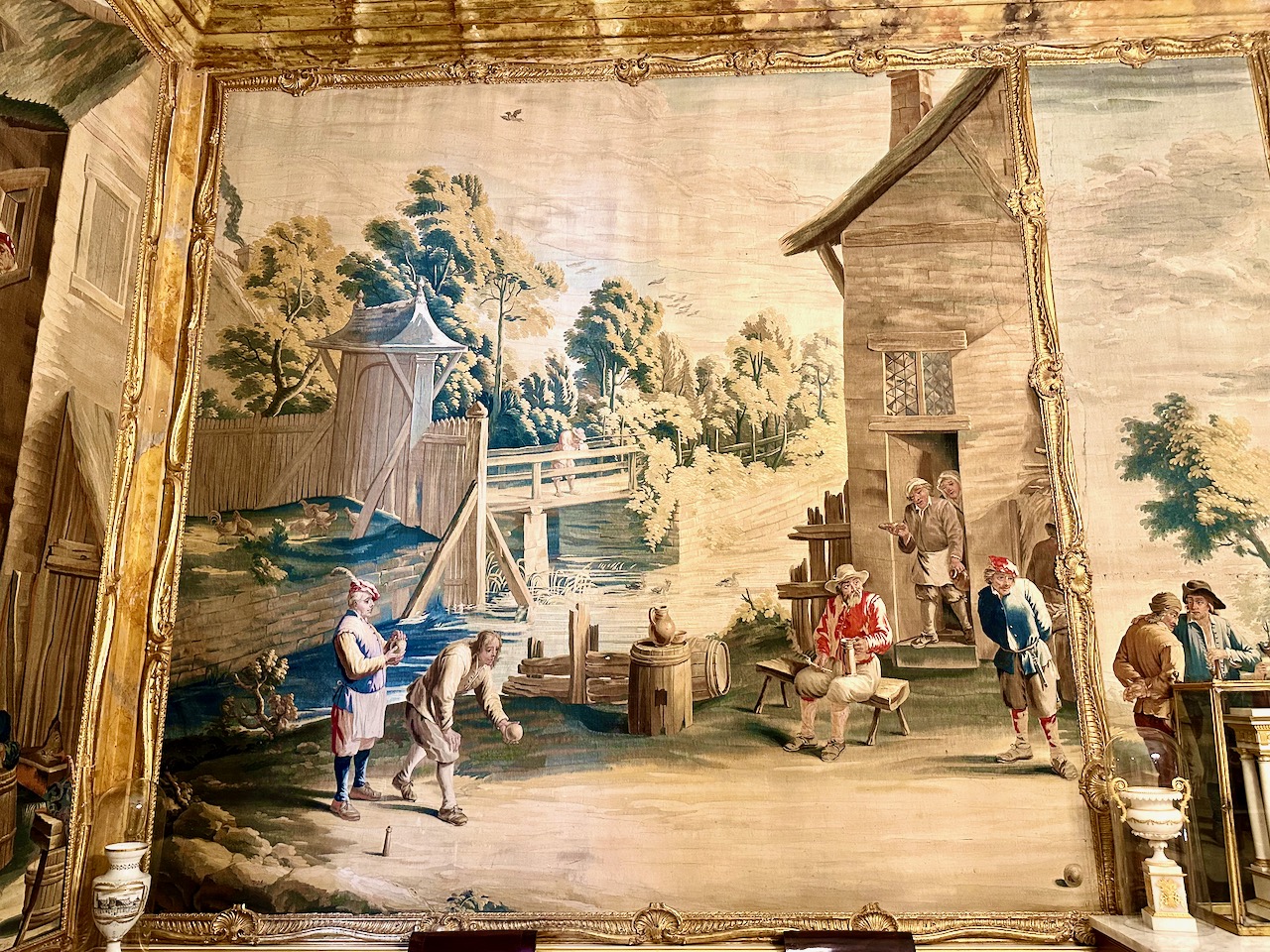
We’re not usually “tapestry people,” but coupled with the previous day’s visit to Galería de las Colecciones Reales, the tapestries we’d seen were in such great condition that it was hard not to be impressed.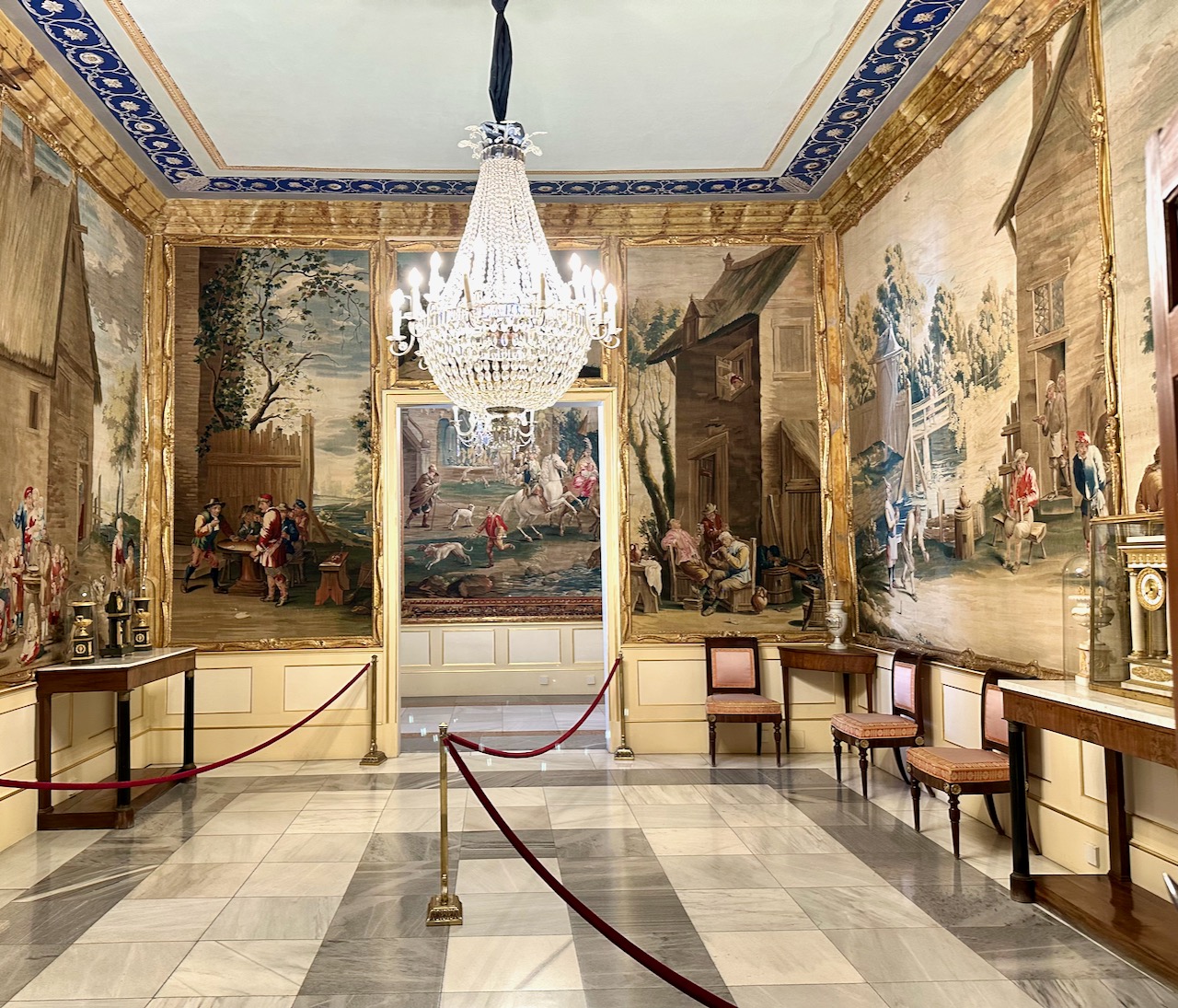
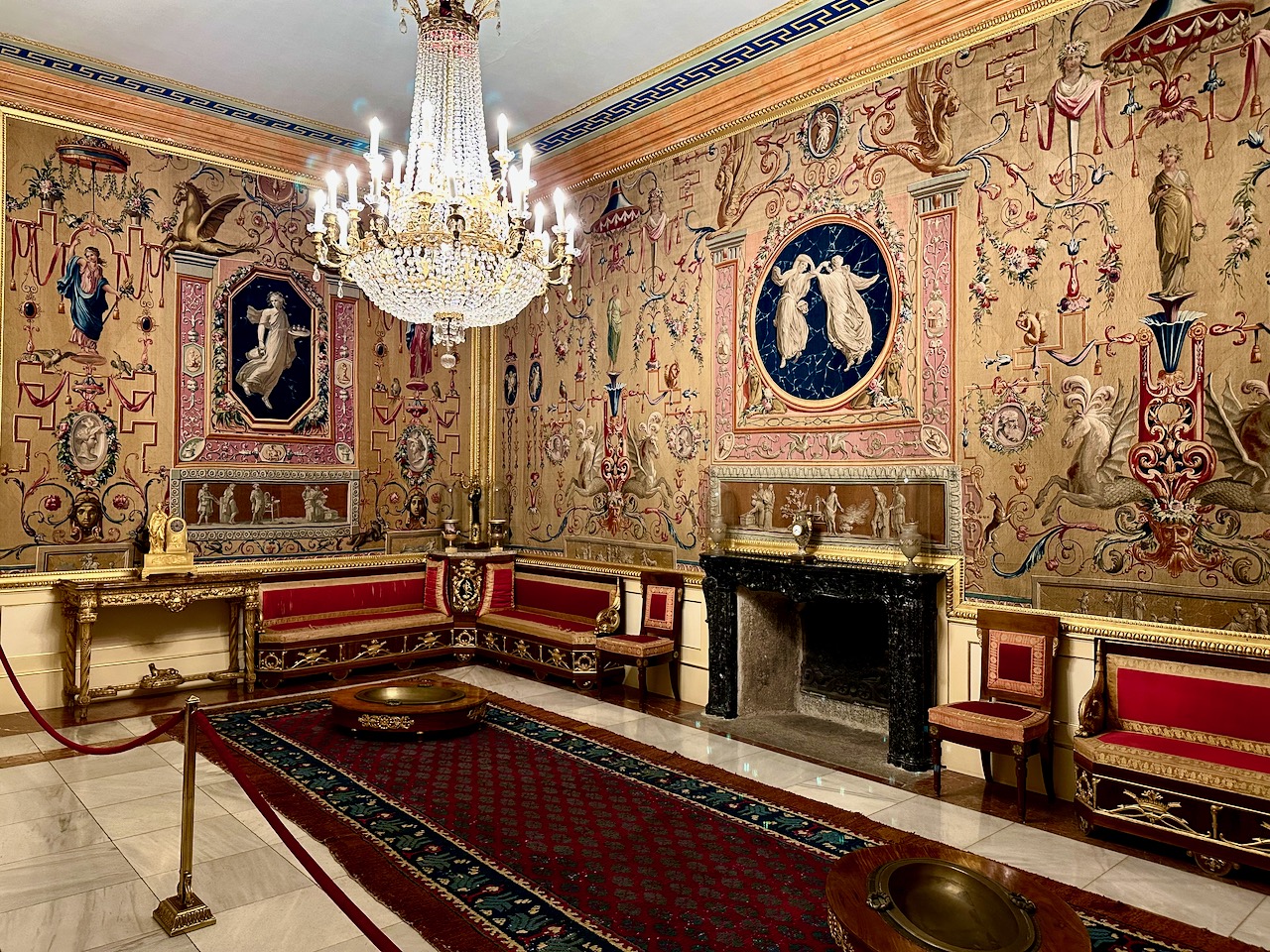
I am 73% sure this room is the Bourbon Palace Pompeian Hall.
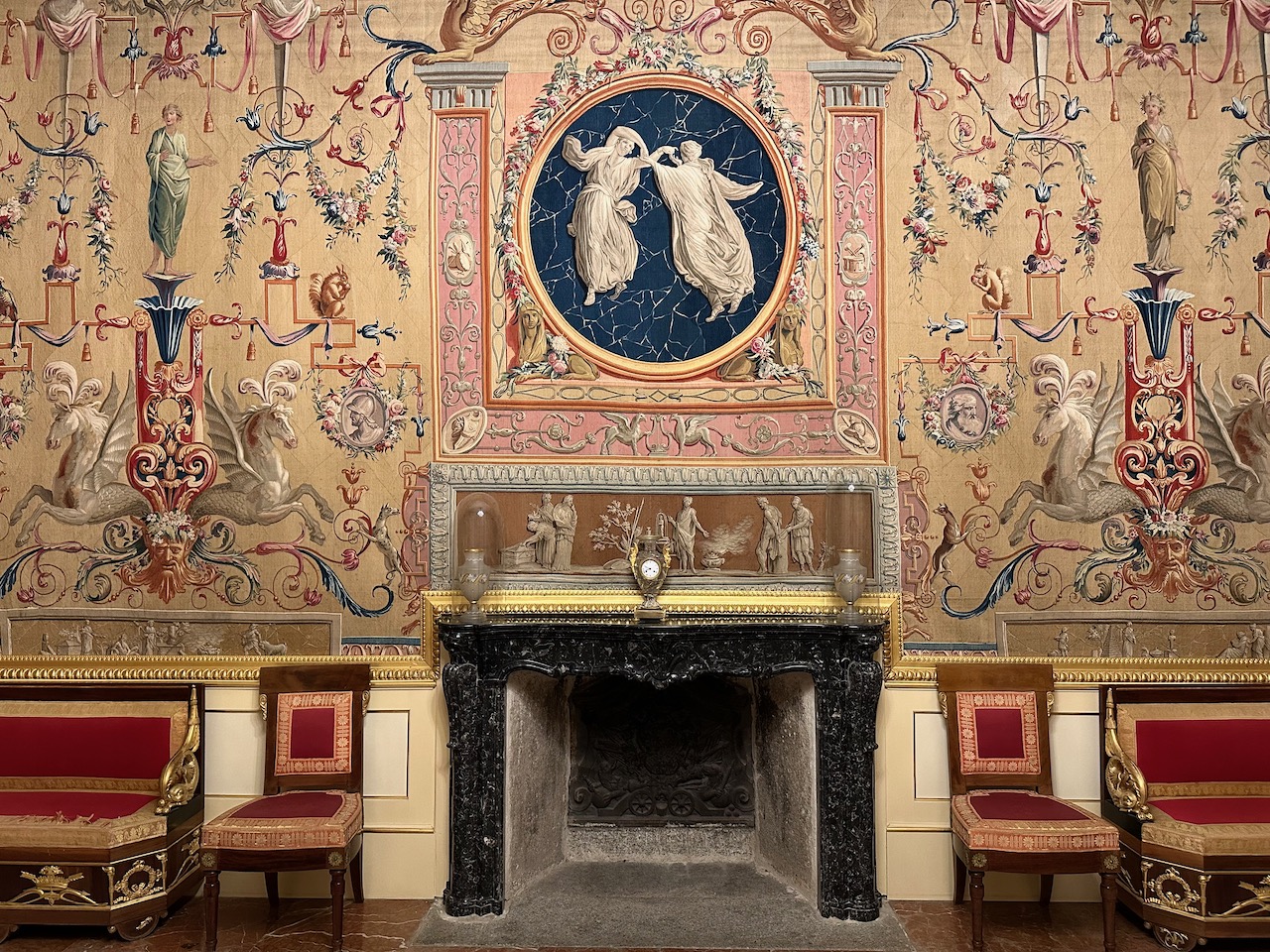
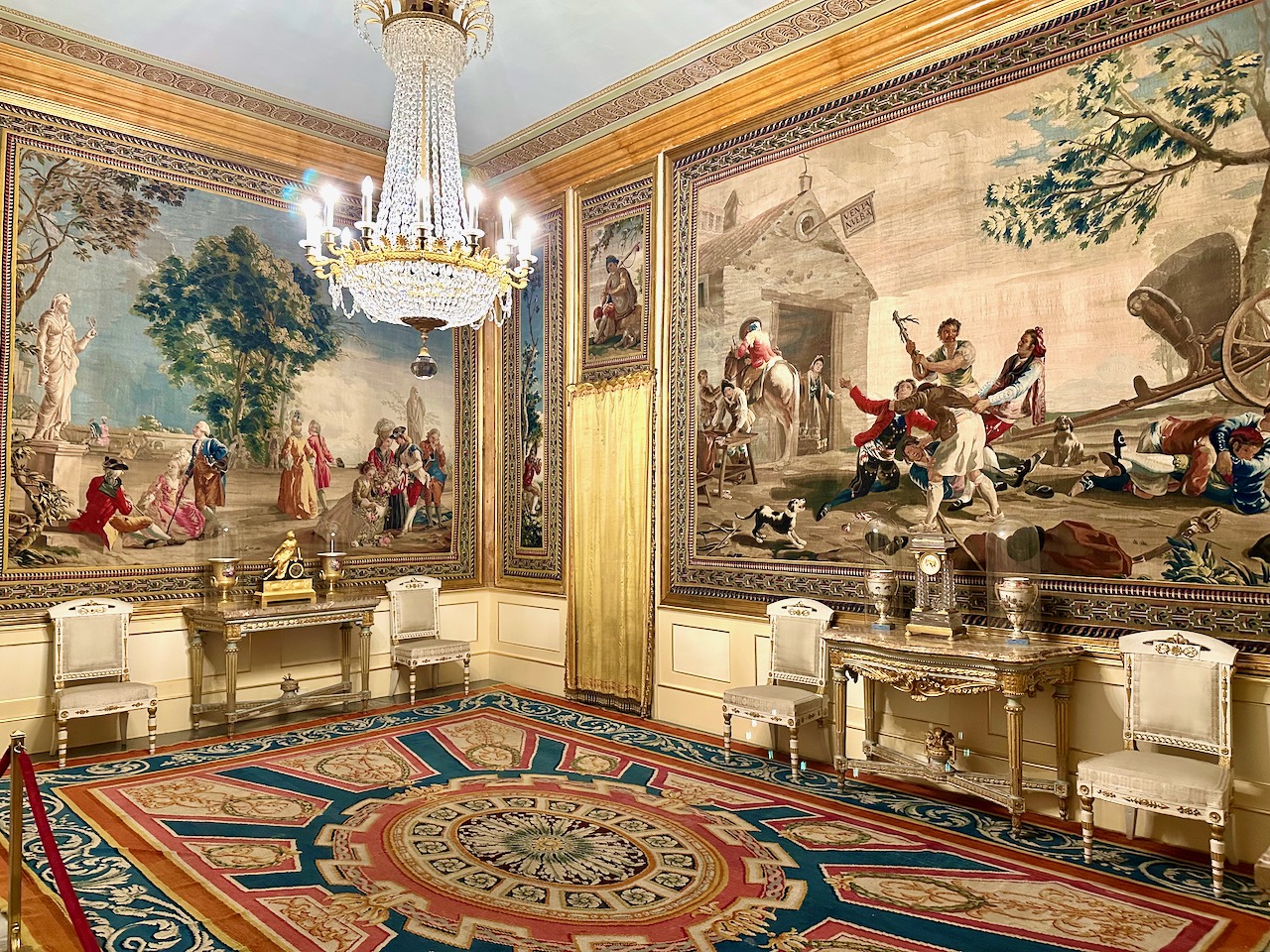
Francisco Goya was commissioned by the Spanish court to create tapestry cartoons (models for the weavers of the Royal Tapestry Factory to copy). A few of Goya’s tapestry cartoons hang in the King’s Room, including The Fight at the Venta Nueva, which essentially is a bar fight scene. According to the History of Art website, it “was one of a series of ten designs that were to be transferred to tapestries and hung together within the same location.”

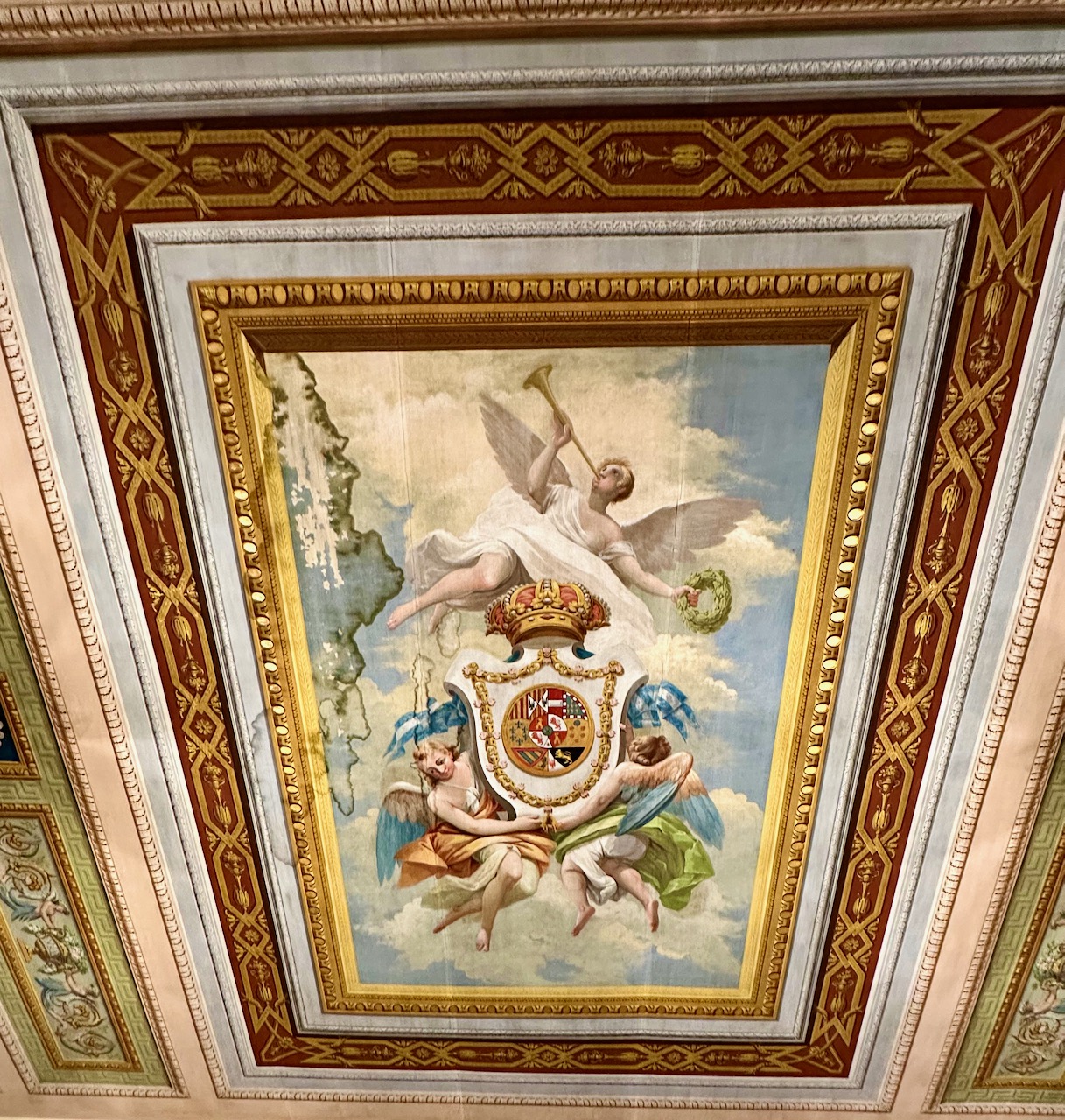
The Bourbon Palace Hall of Ambassadors is where Charles IV greeted dignitaries. On the ceiling is a painting with Charles III’s Coat of Arms taking center stage.
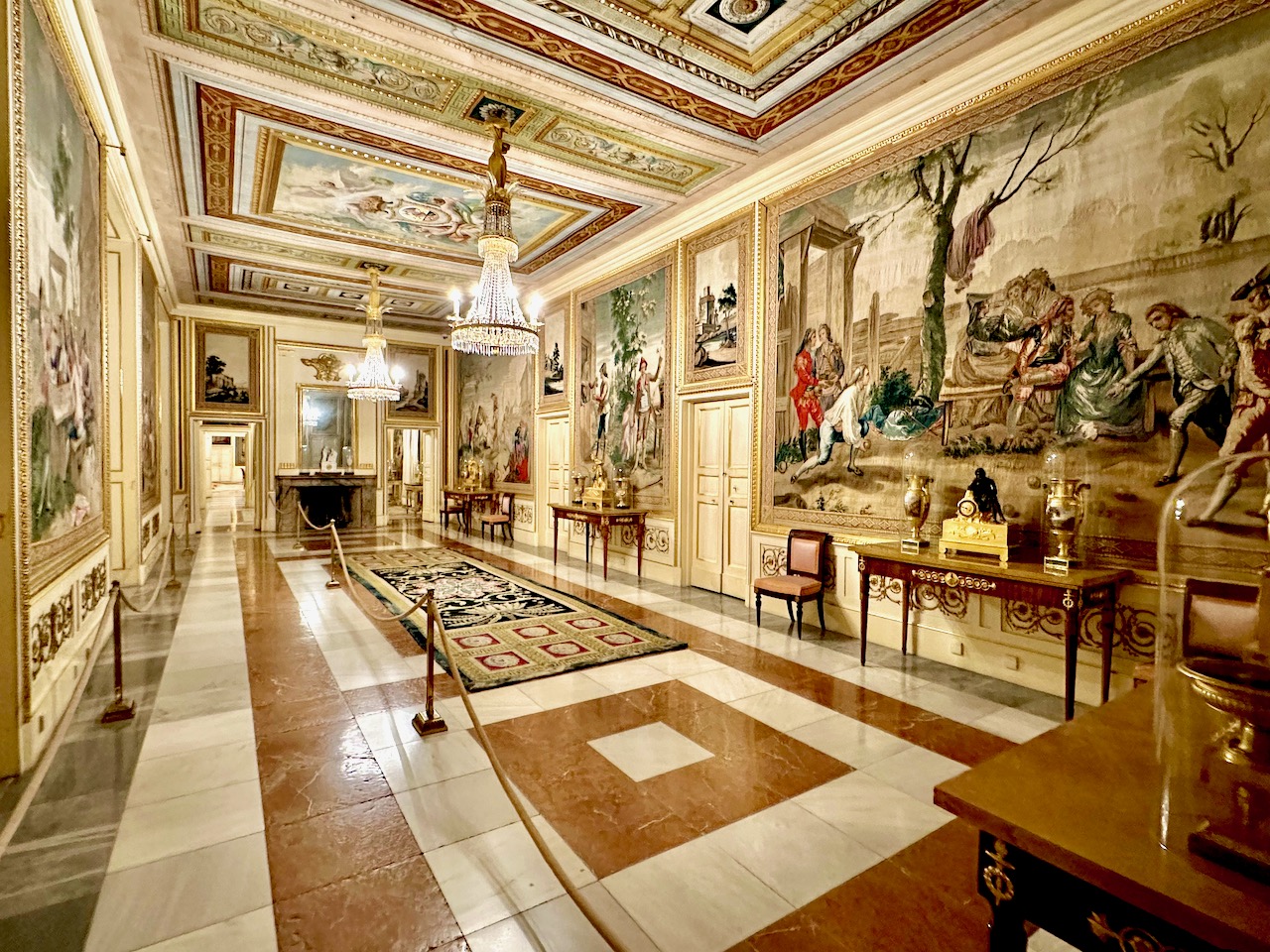
We visited a couple more rooms filled with vibrant tapestries …
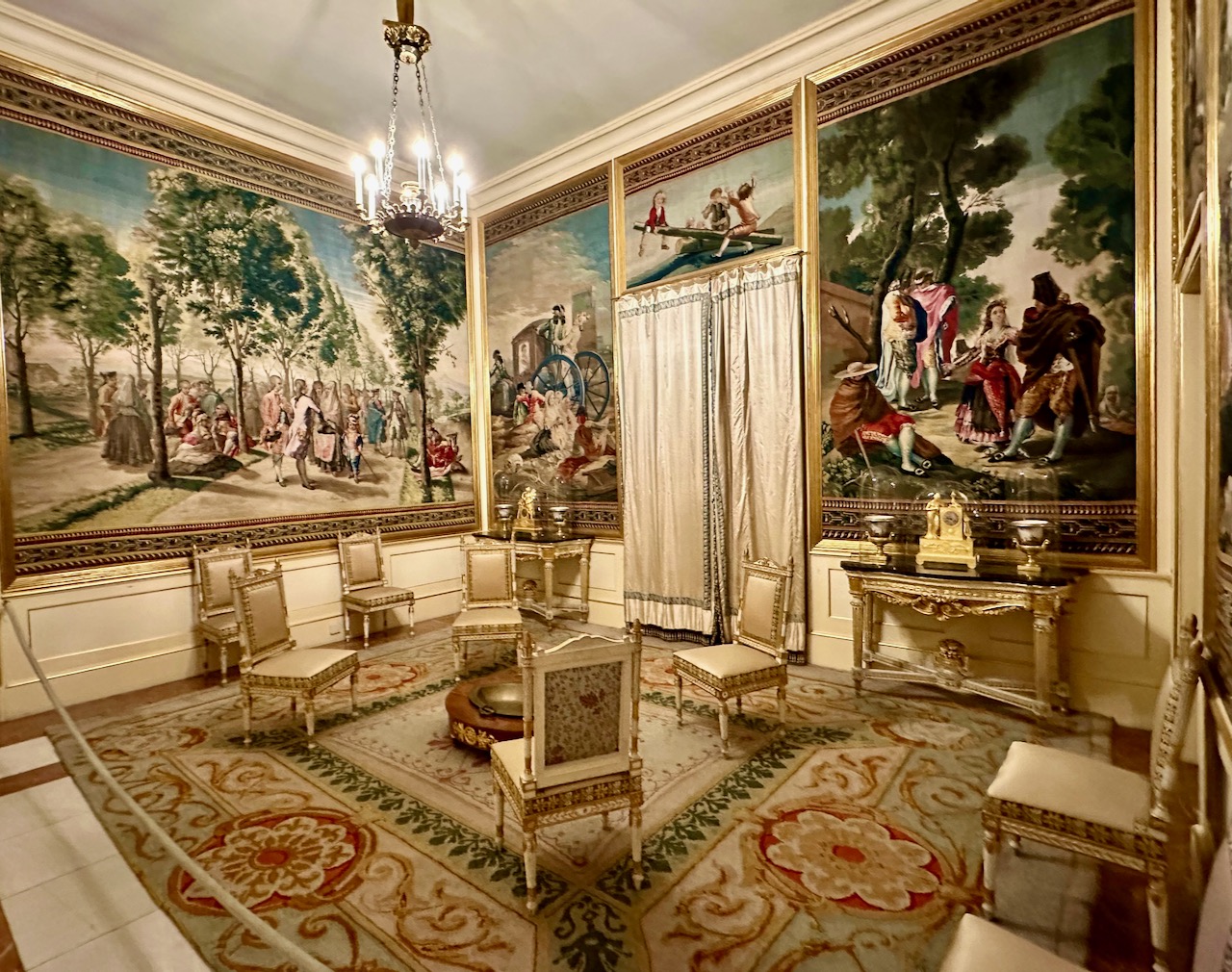
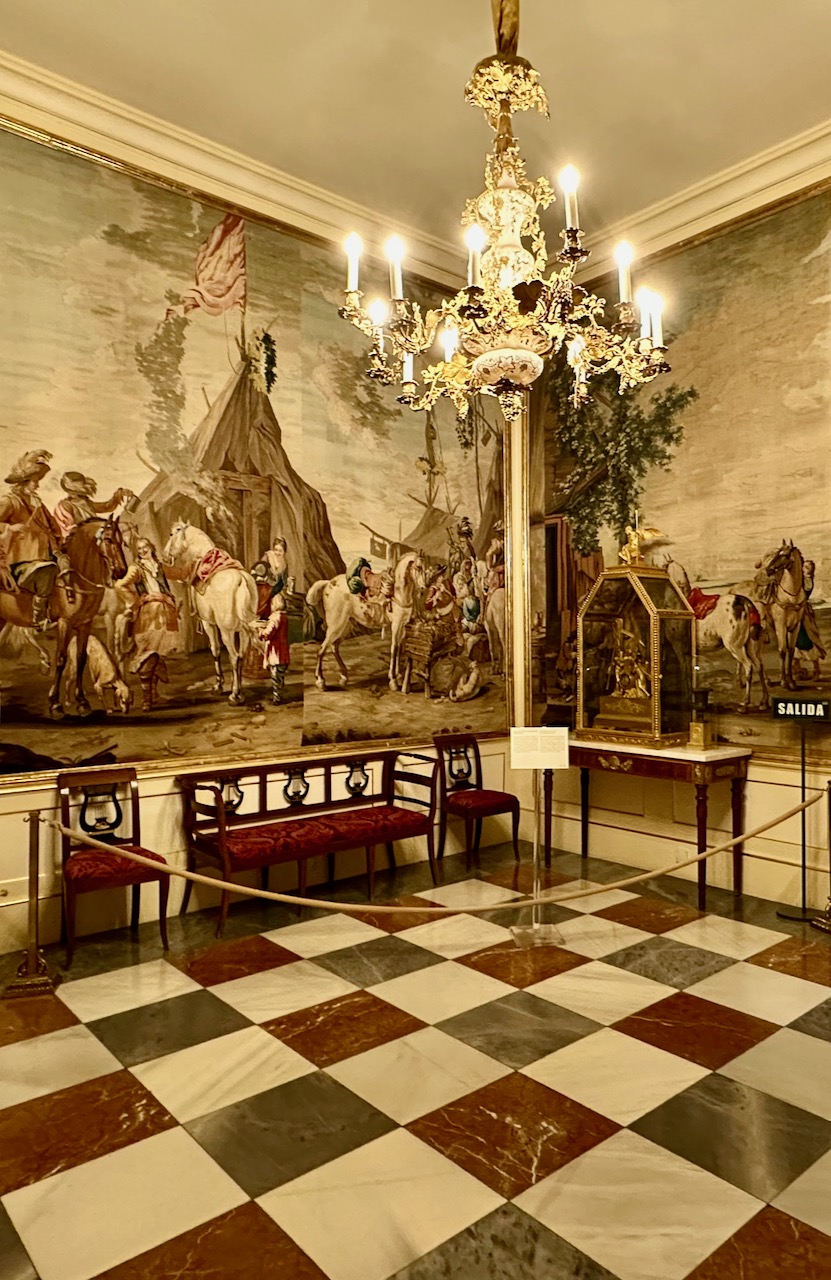
… after seeing the dining room table, Tracy and I knew it was time to return to Madrid and eat some lunch before joining the others in the “Royal Rotting Room.”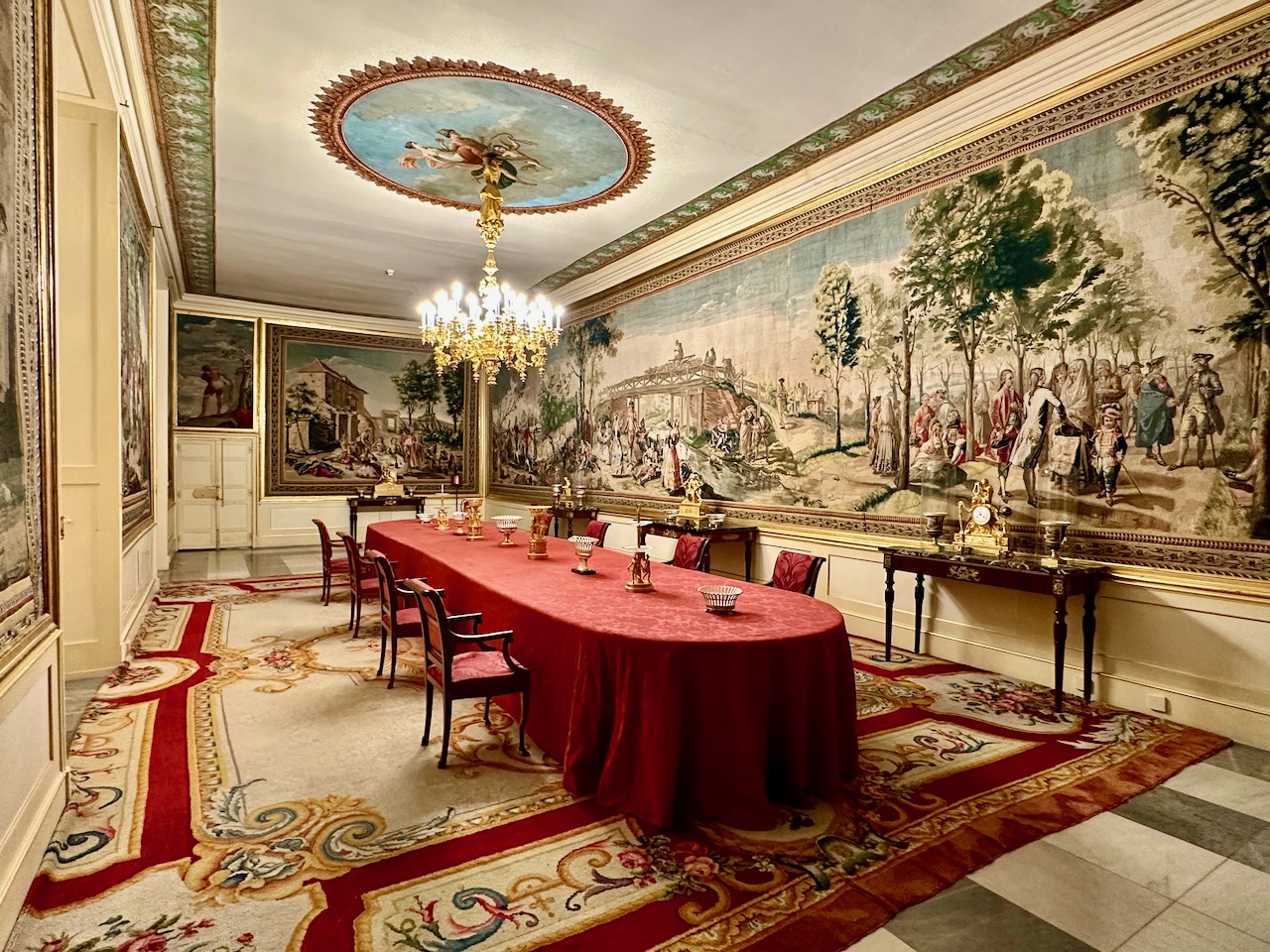
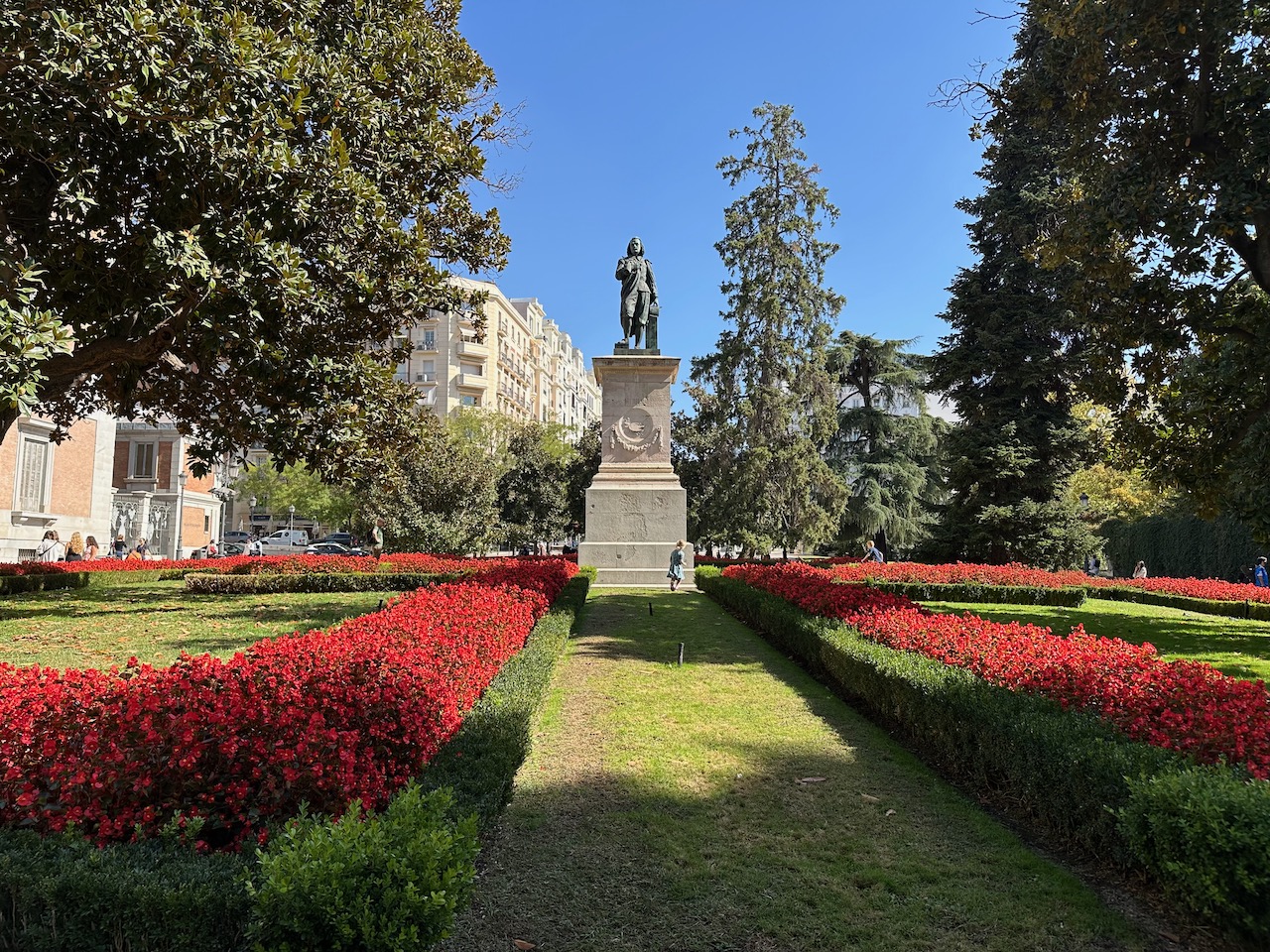
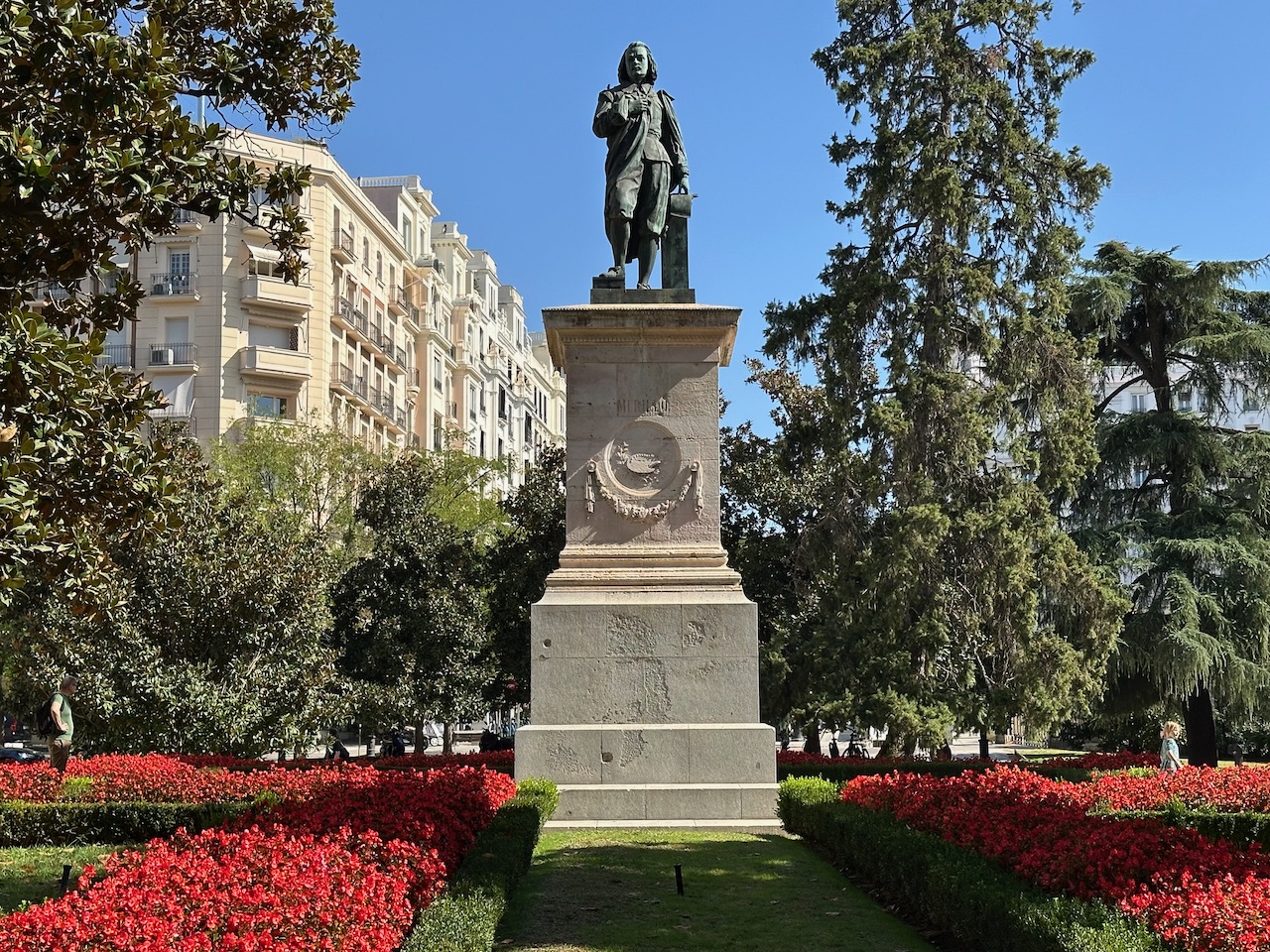
Instead of a taxi, we took an Uber, which saved about €20 from our morning taxi, and about 40 minutes thanks to a lack of traffic and our driver, who made my driving seem safe. I would not be surprised to see him at the Monaco Grand Prix. Dropping us off near the Prado, we took a glimpse at a monument dedicated to the Spanish Baroque painter Bartolomé Esteban Murillo. It is located in the aptly named Plaza Murillo.
Keeping with the Murillo theme, we walked to the cafe where I had my final GinTonic of our 2015 trip. On this day, it’s where I would have my first GinTonic of 2025 (well, in Spain anyway), Café Murillo. We had enjoyed our al fresco meal here ten years ago, so we were hoping it was still good.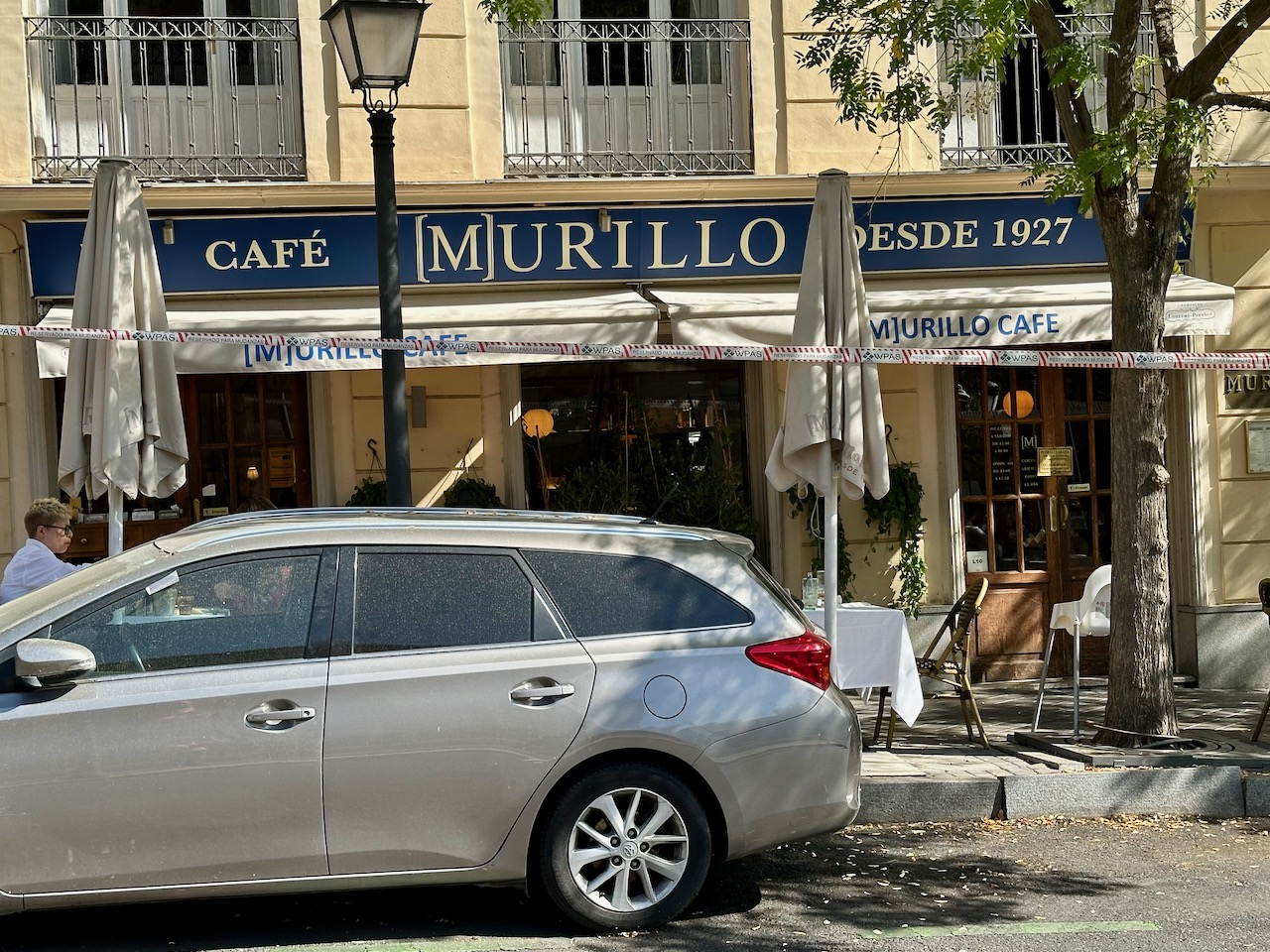
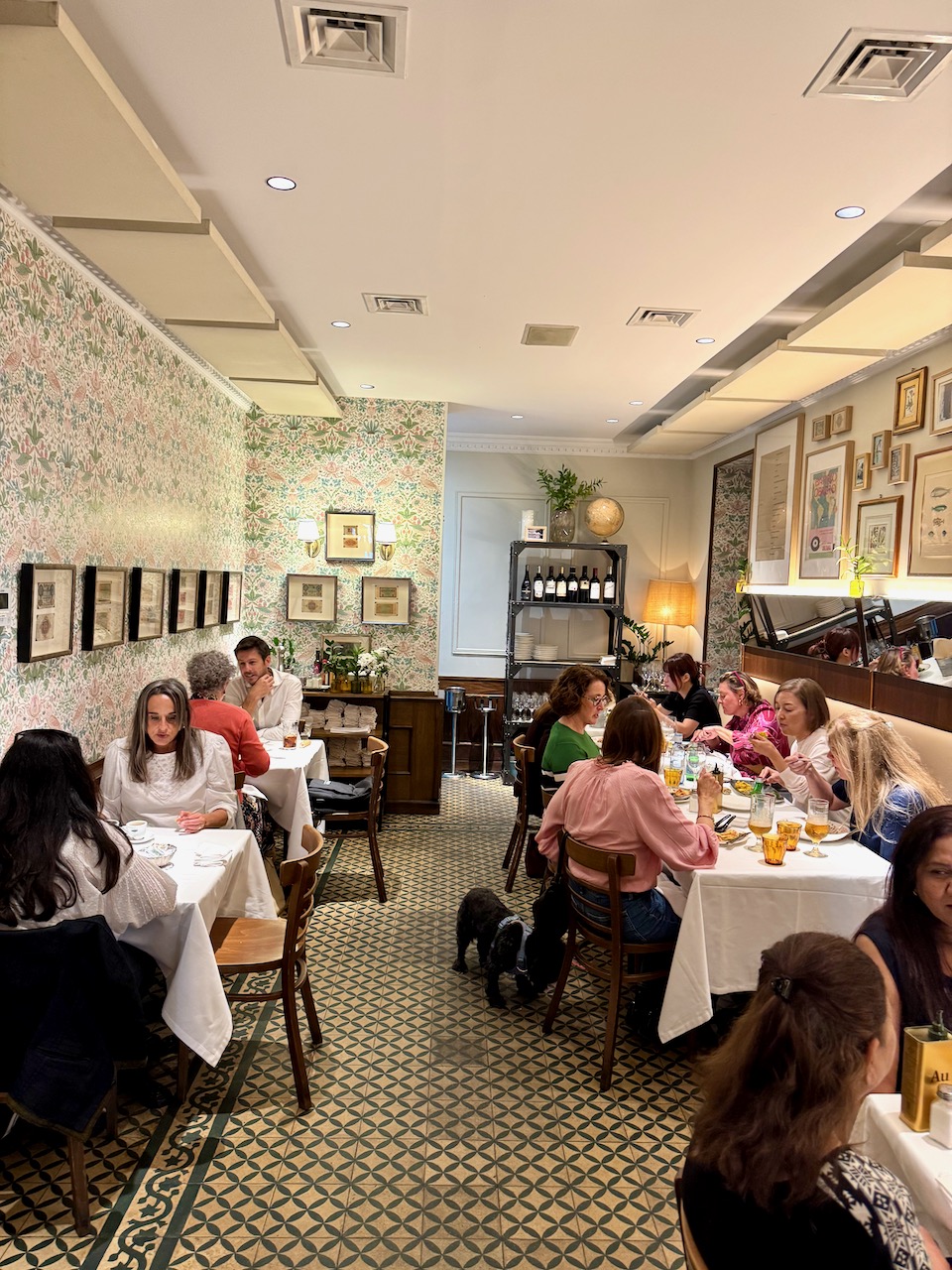
No tables were available outside, but they managed to squeeze us into the nearly packed restaurant.
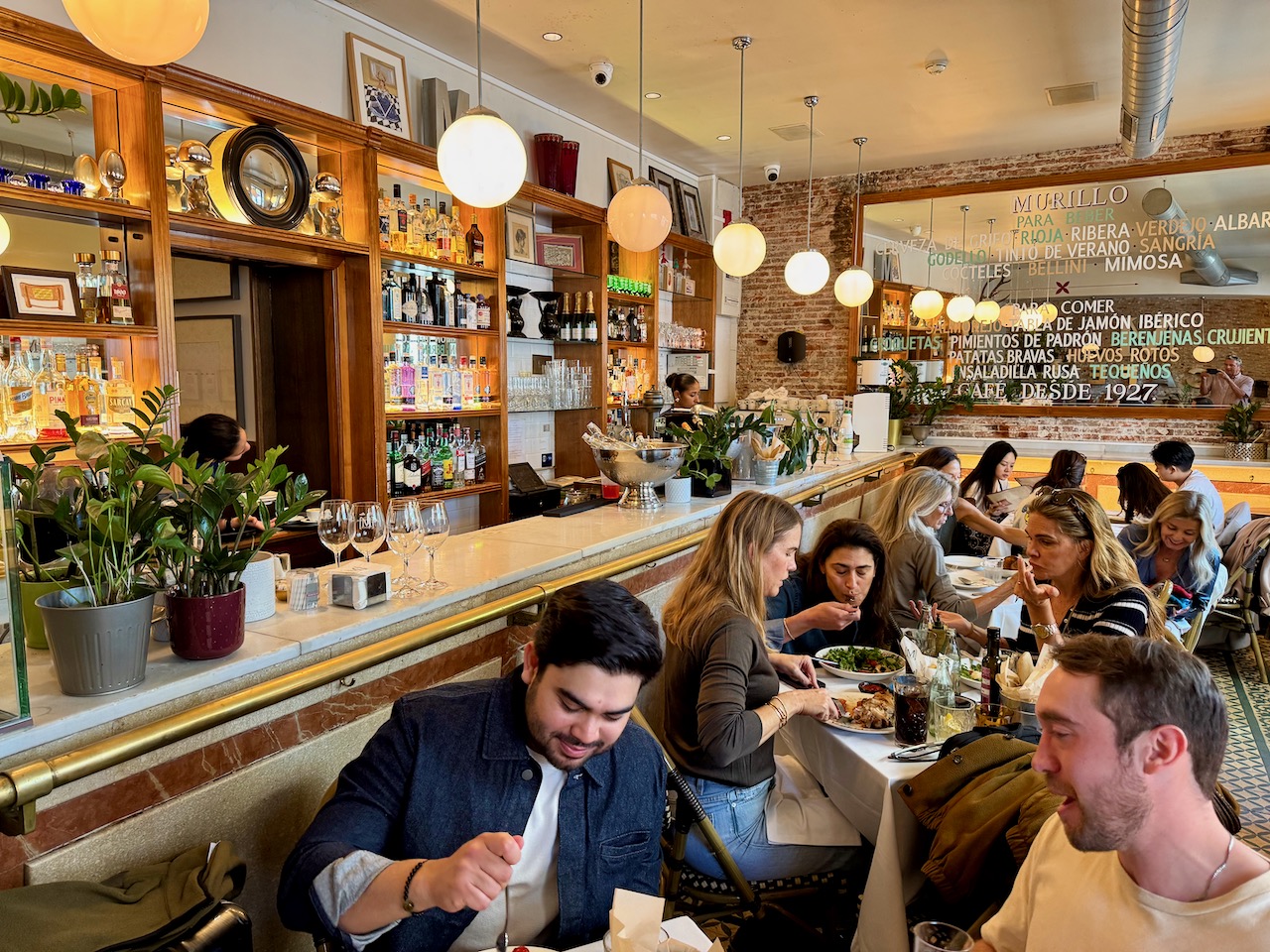
We happened to be seated next to a couple of Aussies, and when they saw my bubble glass with ice being filled nearly 2/3 of of the way with gin by our server, they nearly keeled over with laughter. I just said, “I always like a little tonic with my gin.”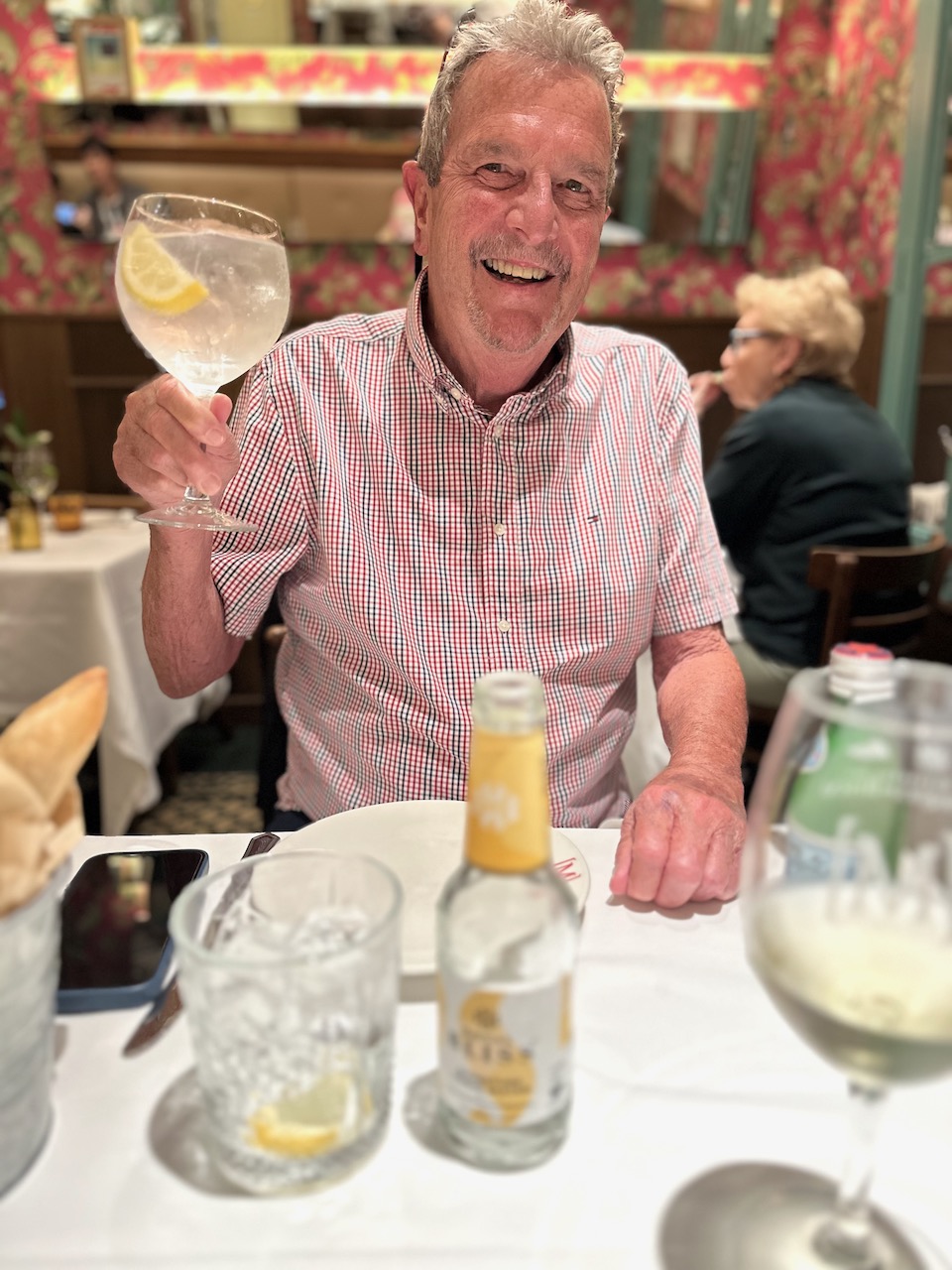
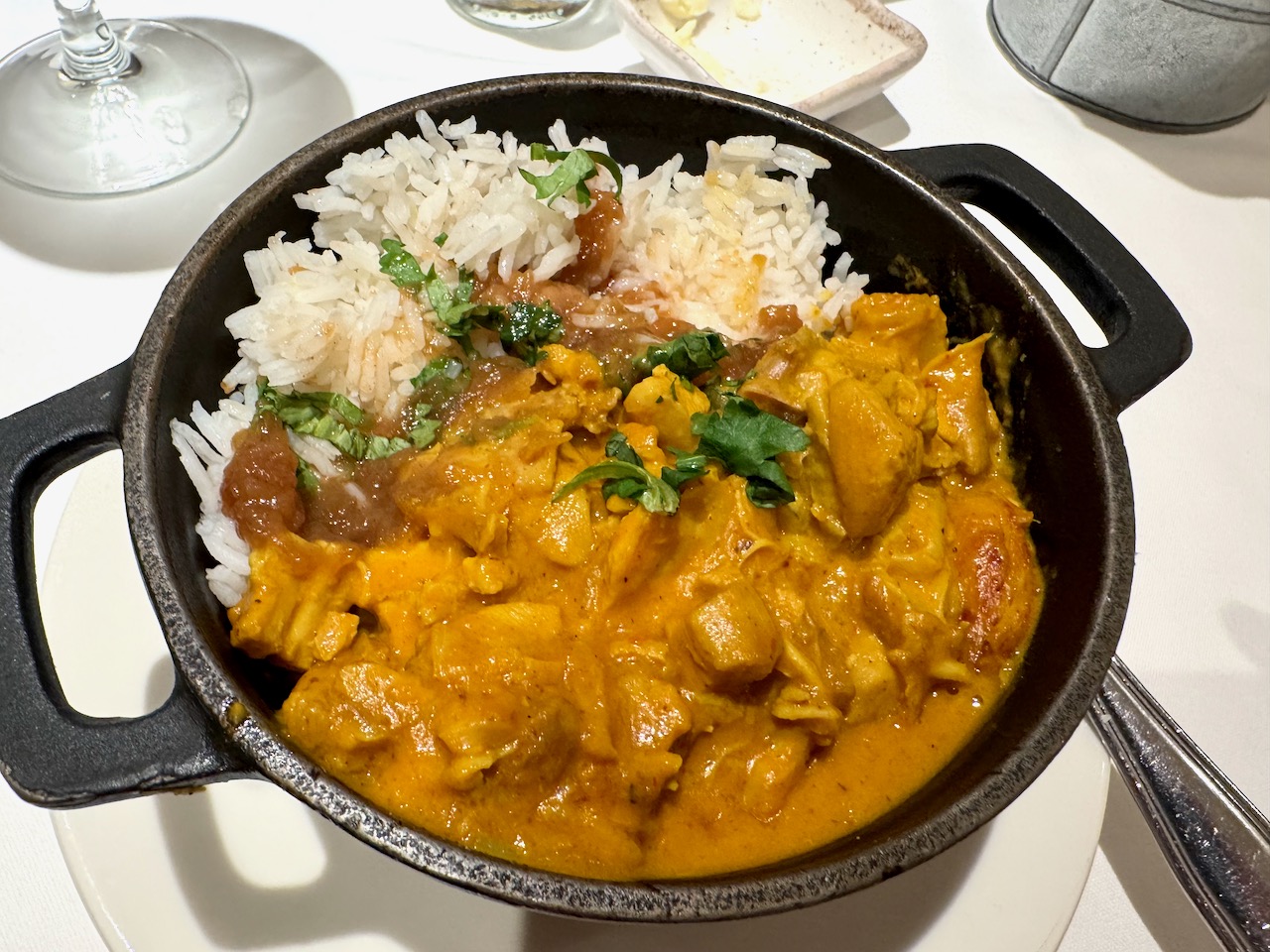
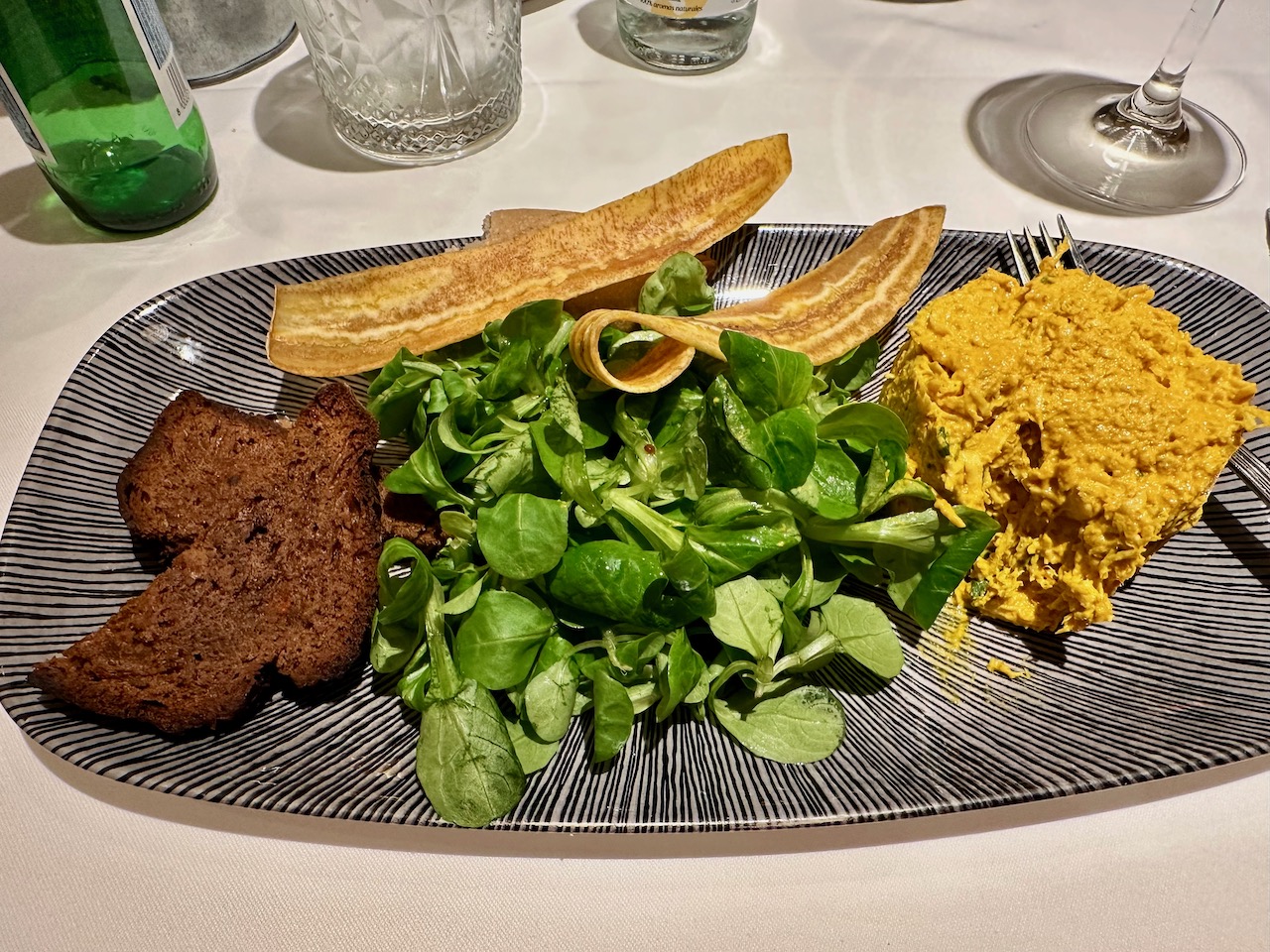
Attempting to curry favor with our server, and diverting from Spanish cuisine, I ordered a delicious yellow chicken curry served with “festive rice,” chutney and cherry tomatoes, while Tracy enjoyed a terrific chicken curry salad with banana bread. The only thing missing was Steph Curry.
Adjacent to the restaurant is the 16th century church San Jerónimo el Real, but like many sites in Madrid (and throughout Spain), it closes in the early afternoon and doesn’t reopen until early evening. At 3 p.m., I was still ready to roll, so I said to Tracy, “Let’s walk over to El Retiro Park to burn a few lunch calories.”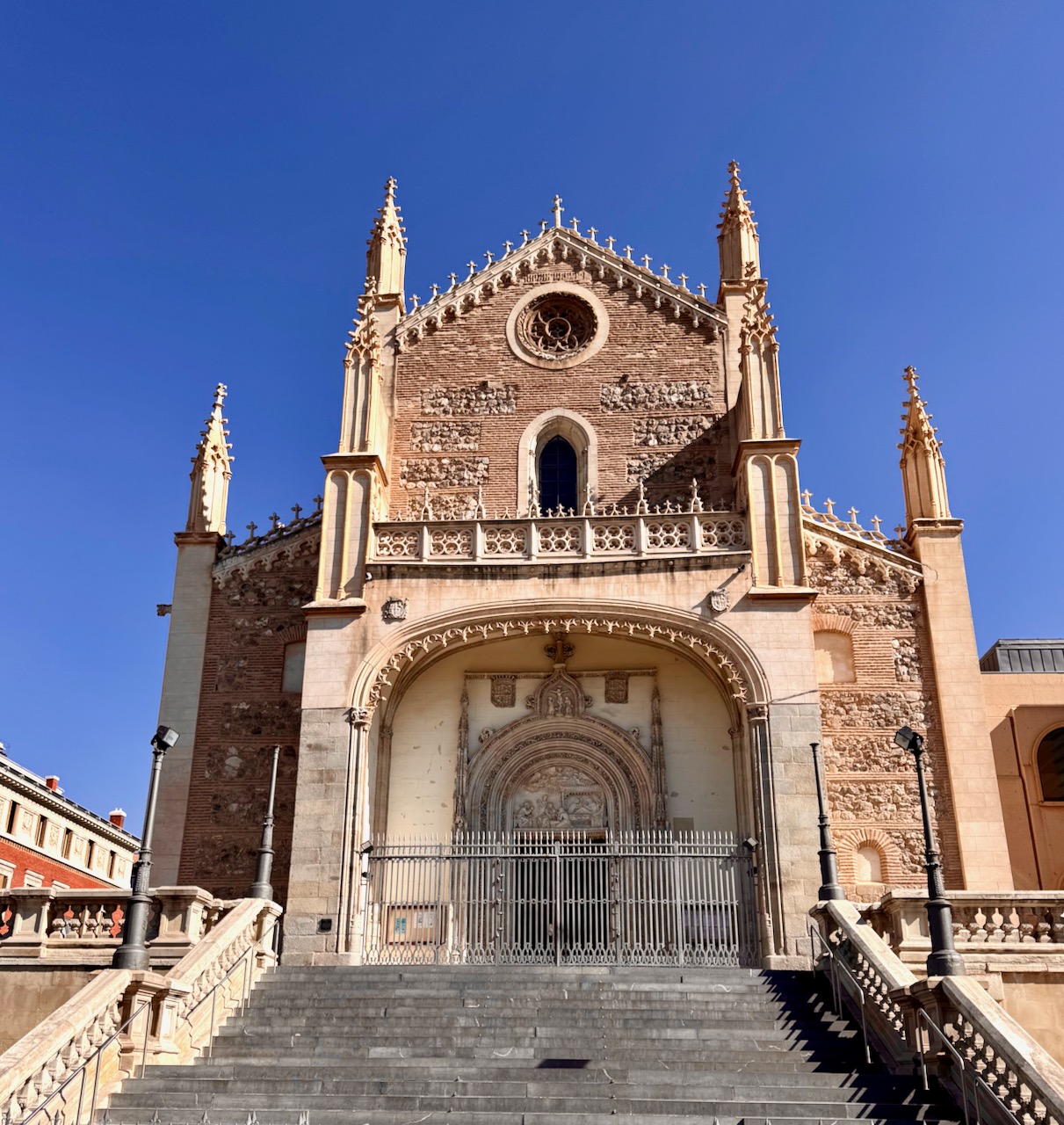
The afternoon had turned rather hot, and when we entered the park, I saw a very unhappy, sweating Tracy trudging after me. 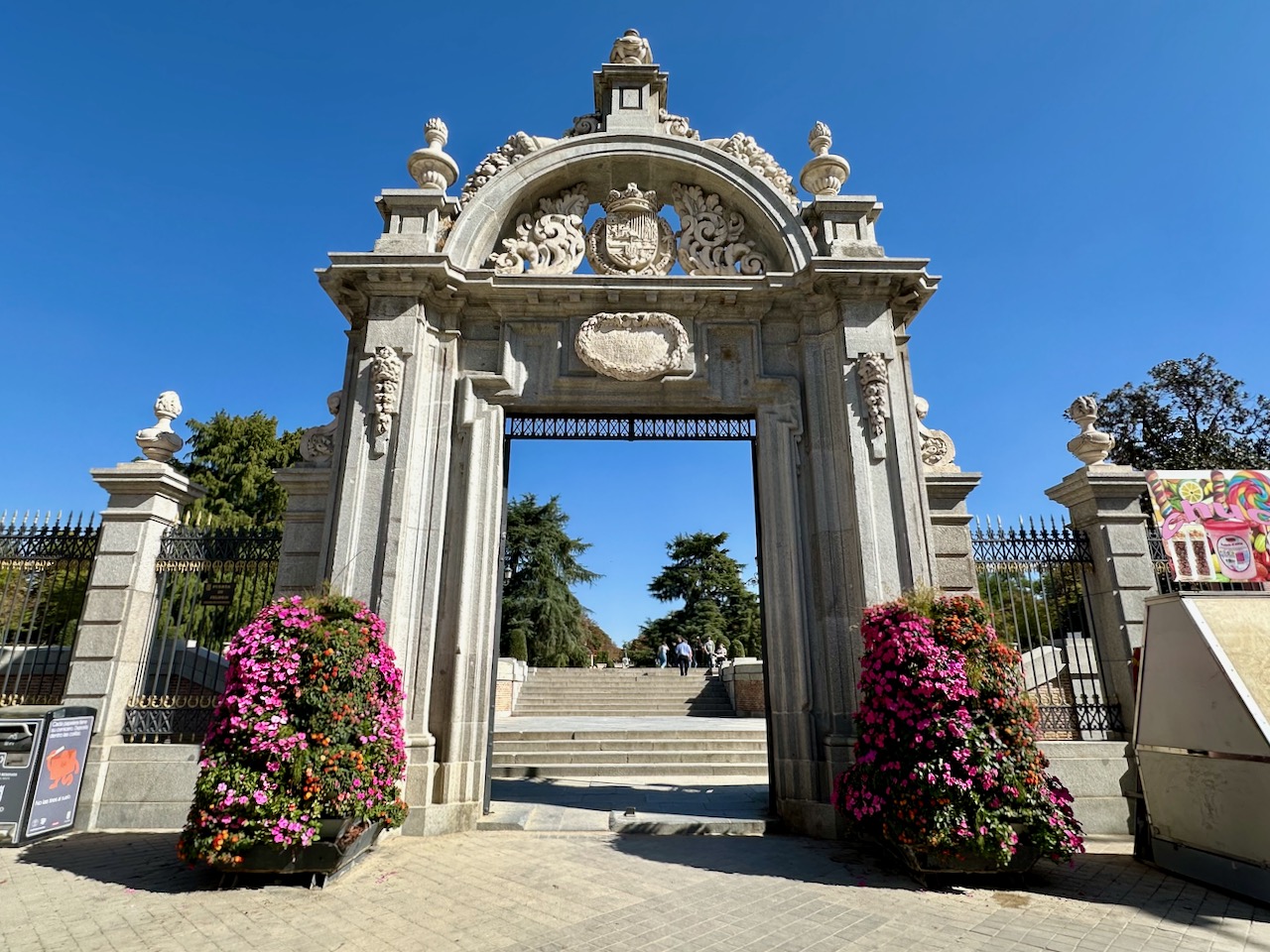
Then I spied a monument with a woman holding what looked like someone’s head and looking like she wanted to throw it somewhere. Glancing back at Tracy, it occurred to me that she had the same facial expression, except I believe it was my head she wanted to throw. Being the astute husband I am, I decided it would be probably be best to return to the hotel and air conditioning forthwith. (The monument is actually dedicated to Spanish playwright and Nobel prize winner Jacinto Benavente … he can be seen below the statue … and the head I thought the woman wanted to throw was a theatrical mask … an allegory to theater.)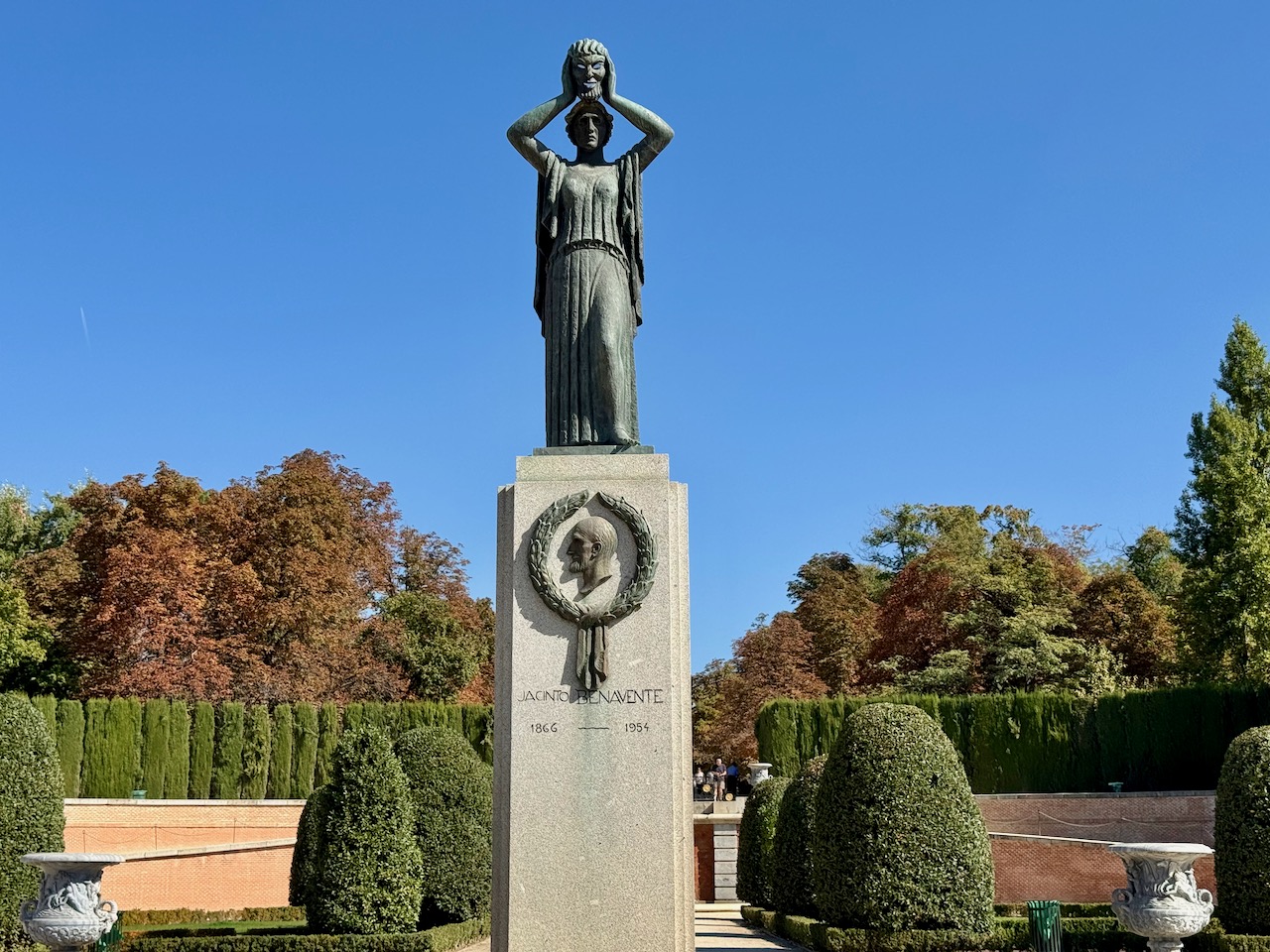
The 20-minute walk back to the hotel in the blazing sun did not help, but I was comforted by the fact that in just under two and half hours Sebastián would come to the rescue with his mixologist magic. At least we saw the restaurant we’d dine at tonight.
While sipping a glass of vino blanco at what we dubbed “Sebastián’s Happy Hour,” Sebastián gave us a primer on some of the best nearby neighborhood spots for tapas, drinks and flamenco. They included Cervecería Cervantes (which Maribel’s husband Philip also recommended), La Venencia for an afternoon sherry and Arrocería Marina Ventura for paella.
A little before 8 p.m. we headed down Calle de las Huertas for a leisurely stroll before dinner. If you wanted a happening scene Barrio de las Letras was the place to be on this Tuesday.
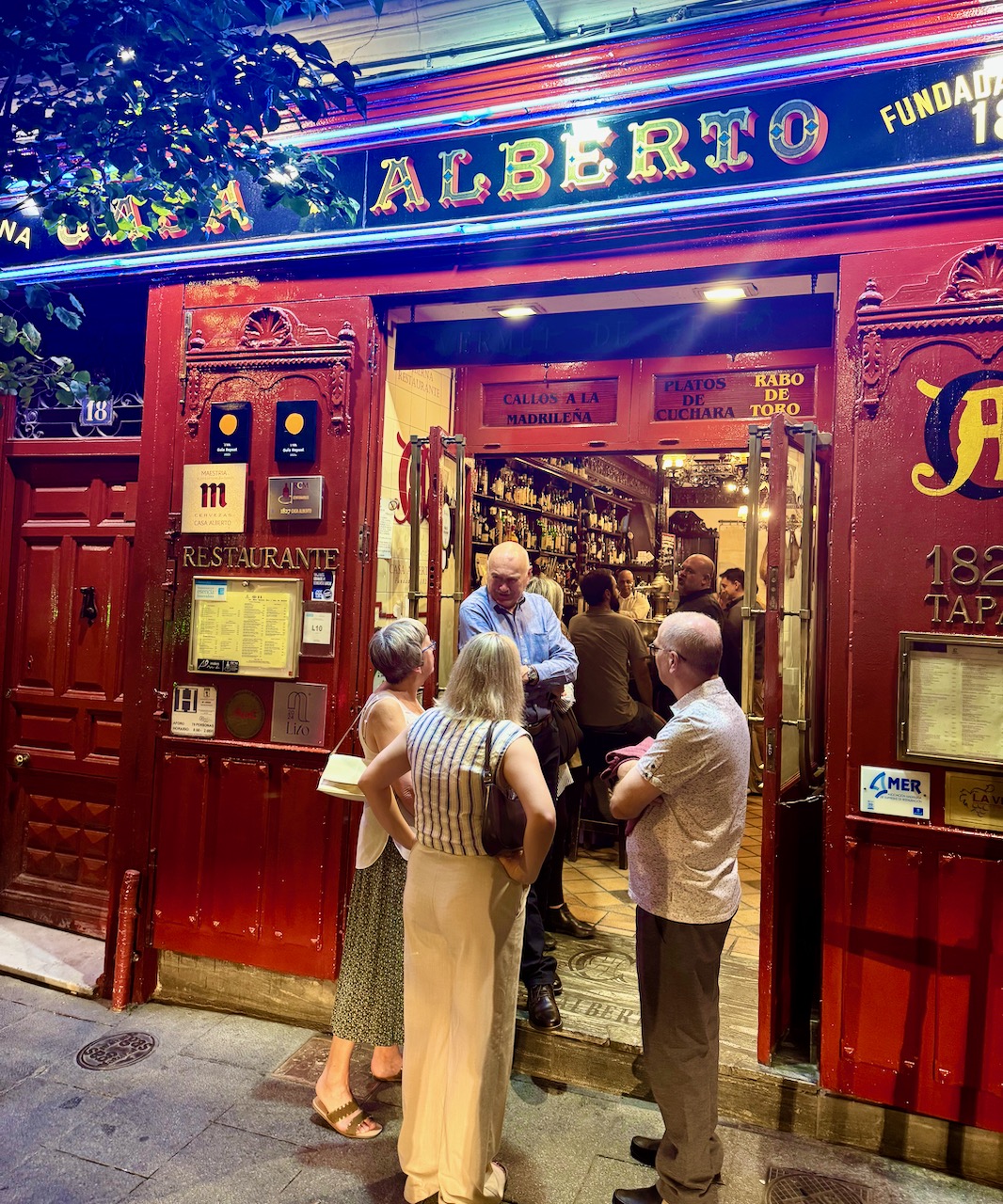
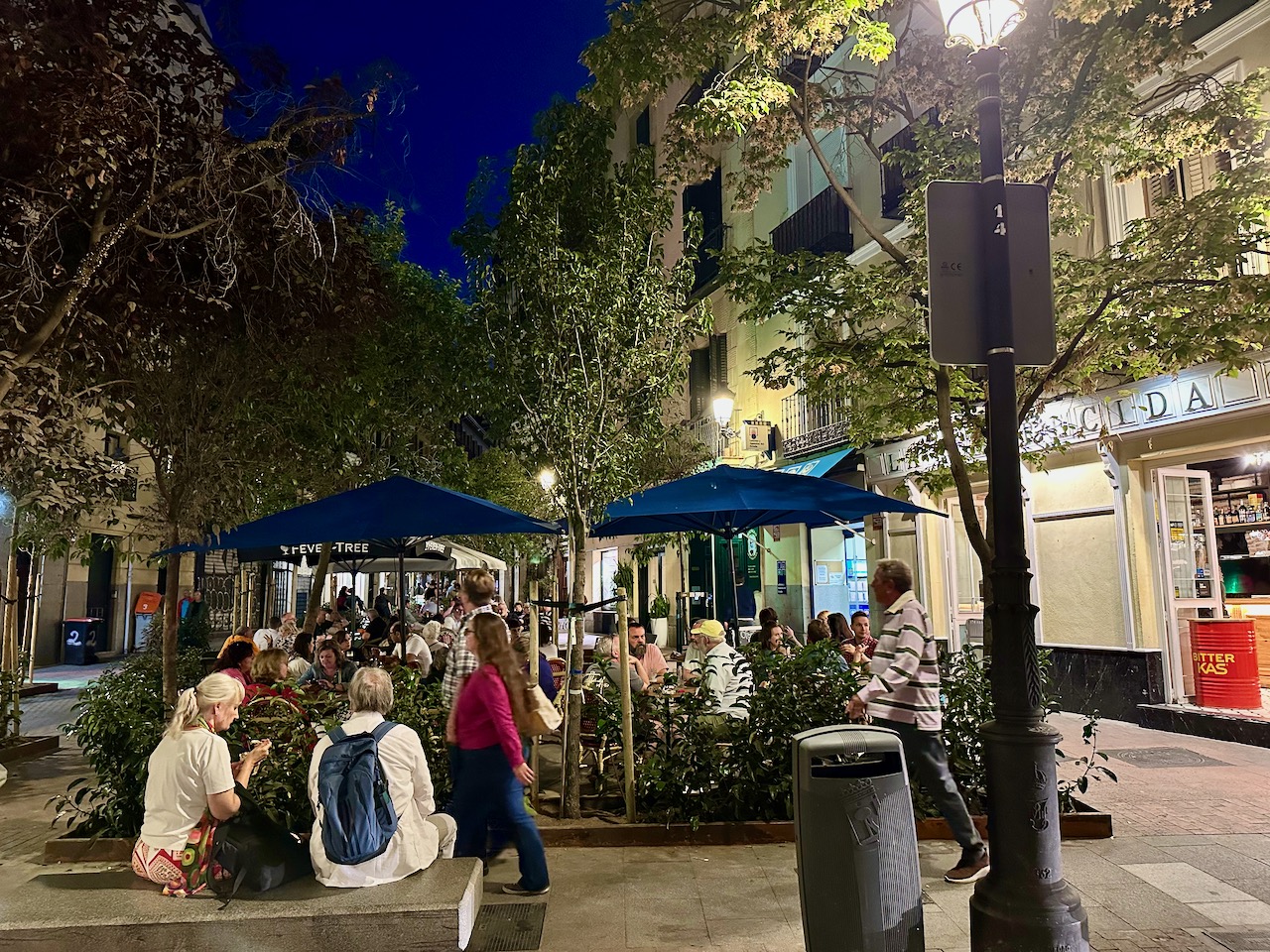
Happy and boisterous voices of those taking in the atmosphere in the Literary Quarter reverberated along the street.
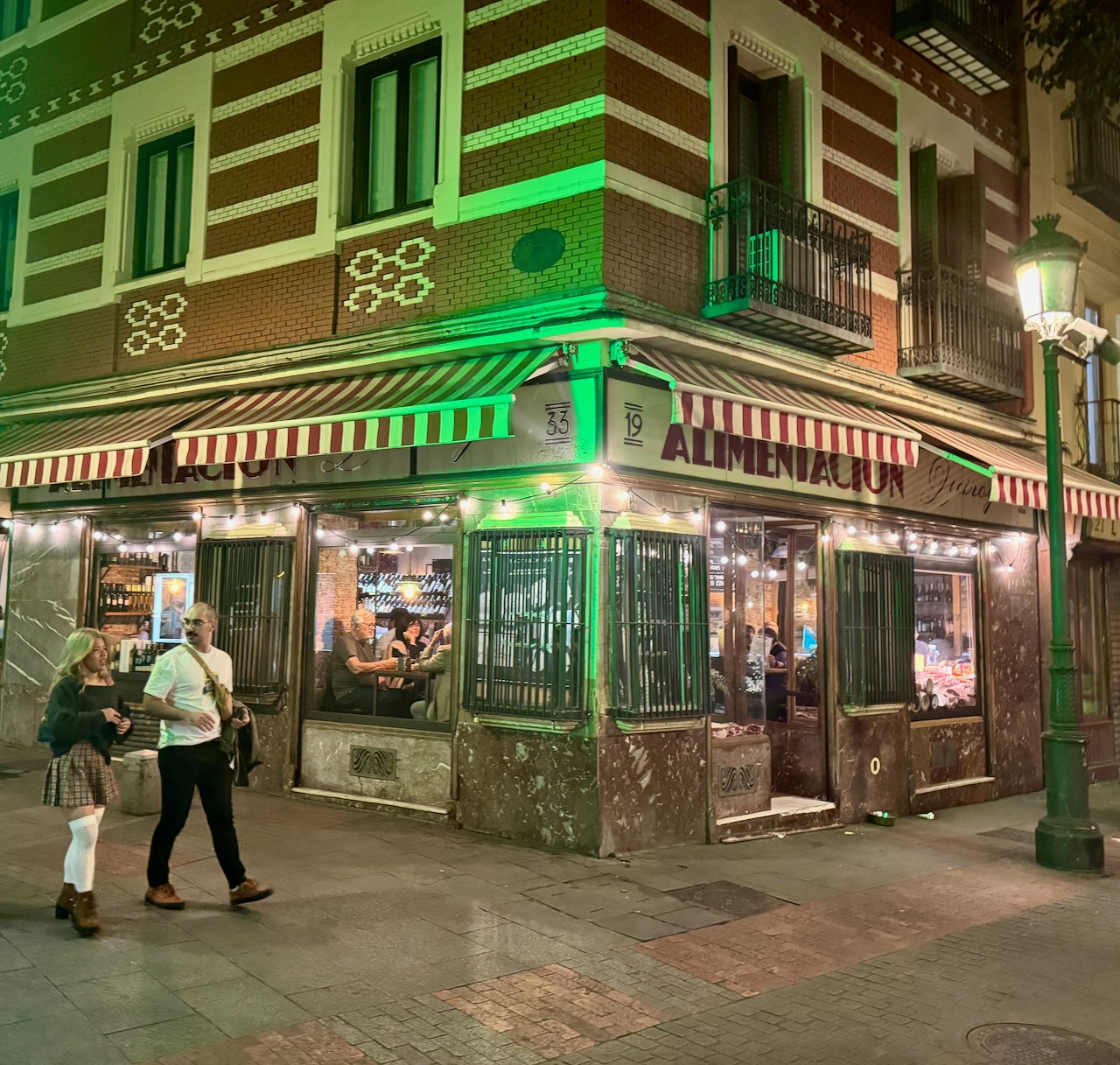
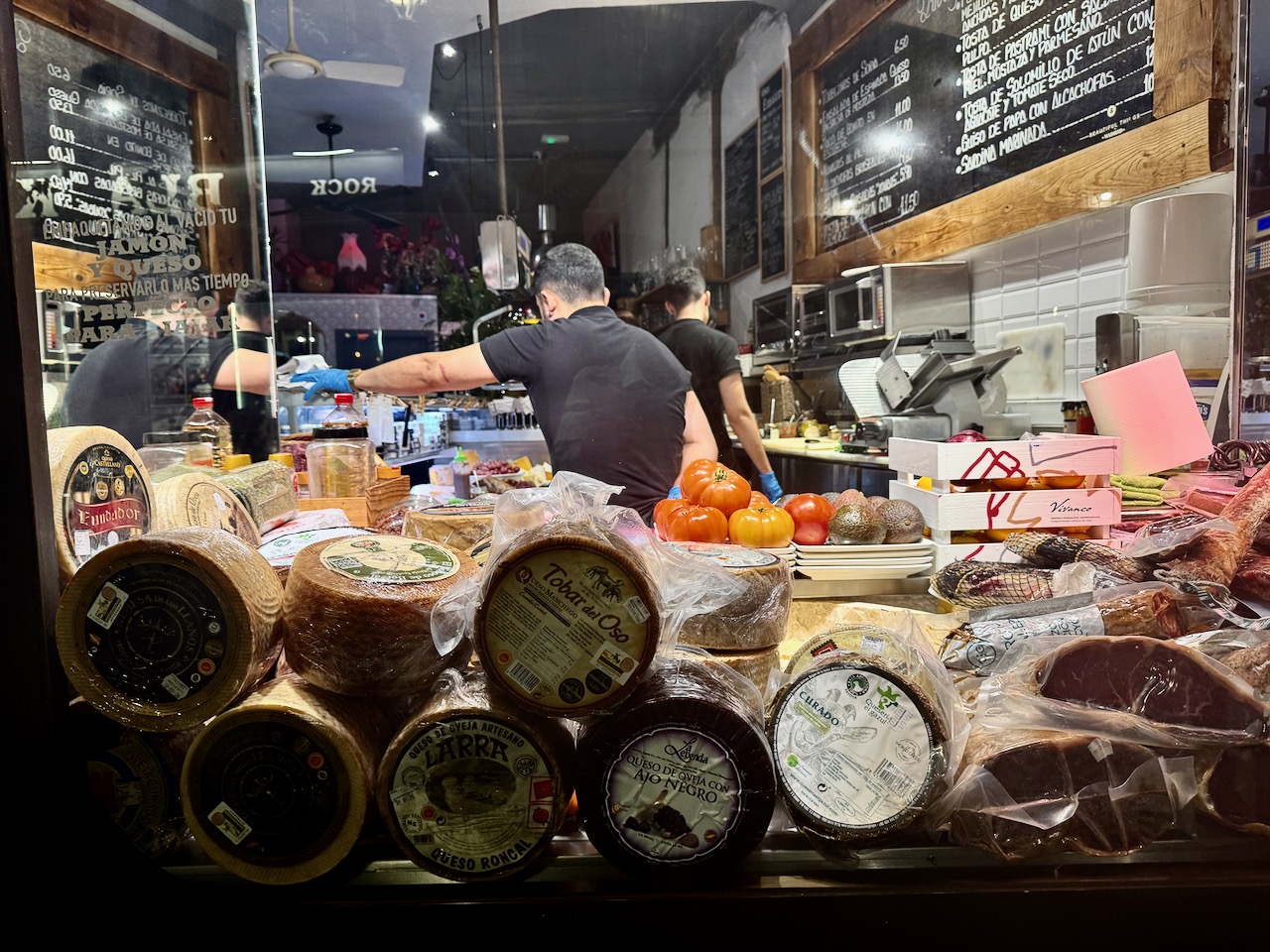
After one of Sebastián’s exceptional Old Fashioned cocktails, I was even in the mood to sing some karaoke. Tracy reminded me of my shower singing voice, and I was immediately dissuaded.
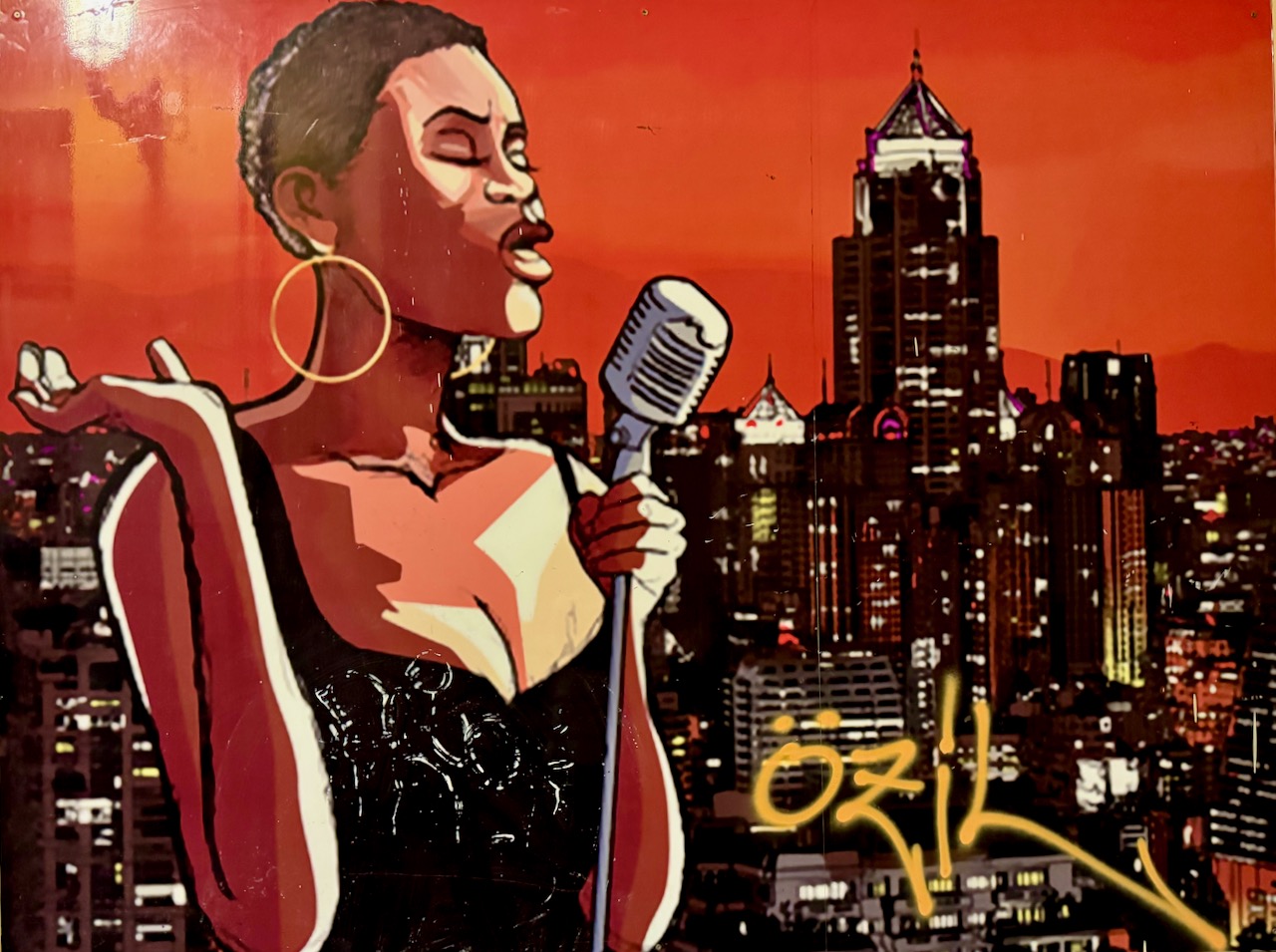
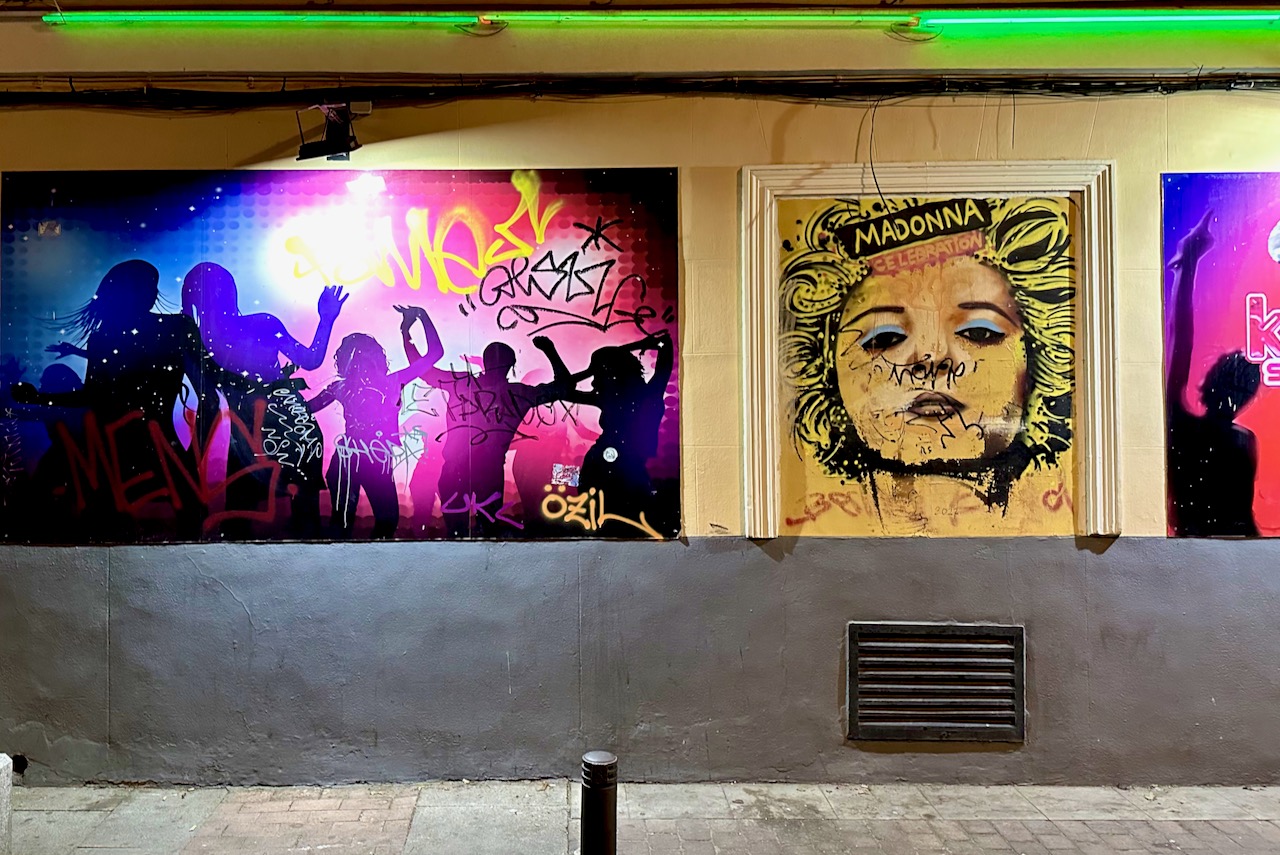
Fortunately, I had not had enough vino to get a tattoo. Of course, with my old-man thin skin, that would probably have necessitated an after-tattoo blood transfusion.
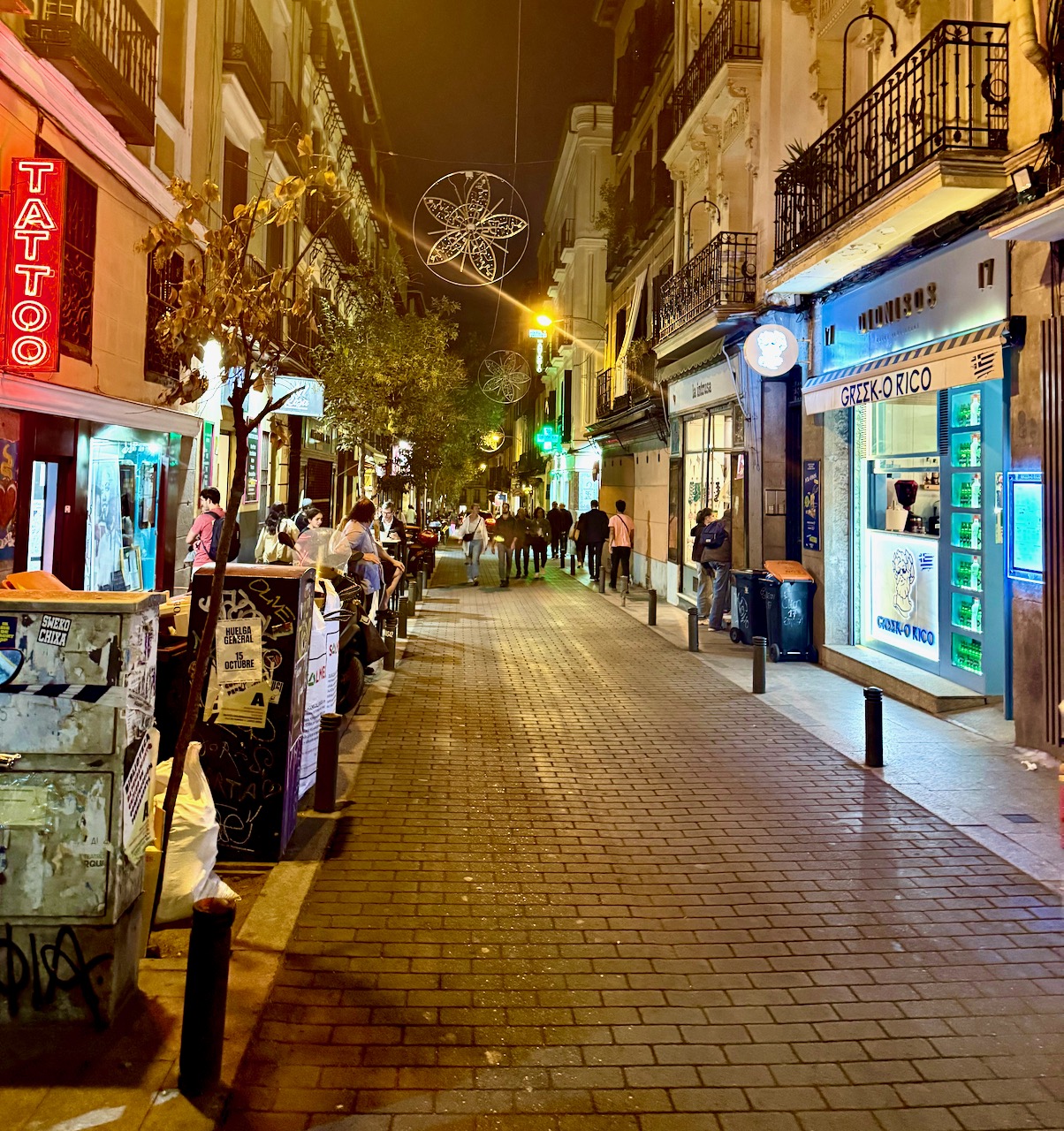
We walked down the quiet street … to Vinoteca Bistrot Moratin (C. de Moratín, 36), which we had walked past earlier on our death march from the park. Tiny, quaint restaurant with a limited menu but Wow! 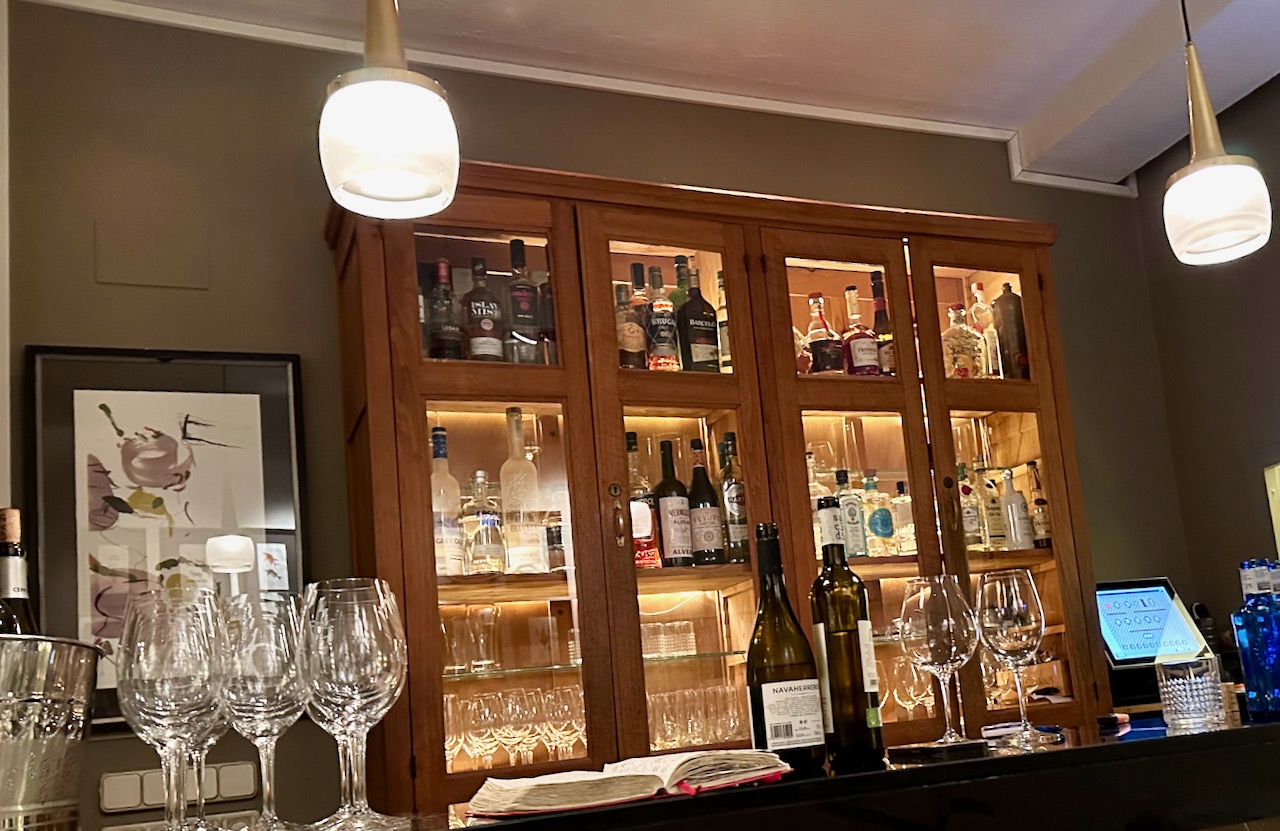
The chef/owner came to our table to explain the menu and food preparation. A platter of delectable crispy, roasted potatoes with olive oil and smoked paprika was delivered to our table. The green, peppery olive oil was so outstanding that Tracy asked what olive oil they used. The chef grabbed a bottle of Finca Alamillos Del Prior, which is a Spanish extra virgin olive oil and explained how to read the label. He left the bottle on our table, but I admonished Tracy not to take it.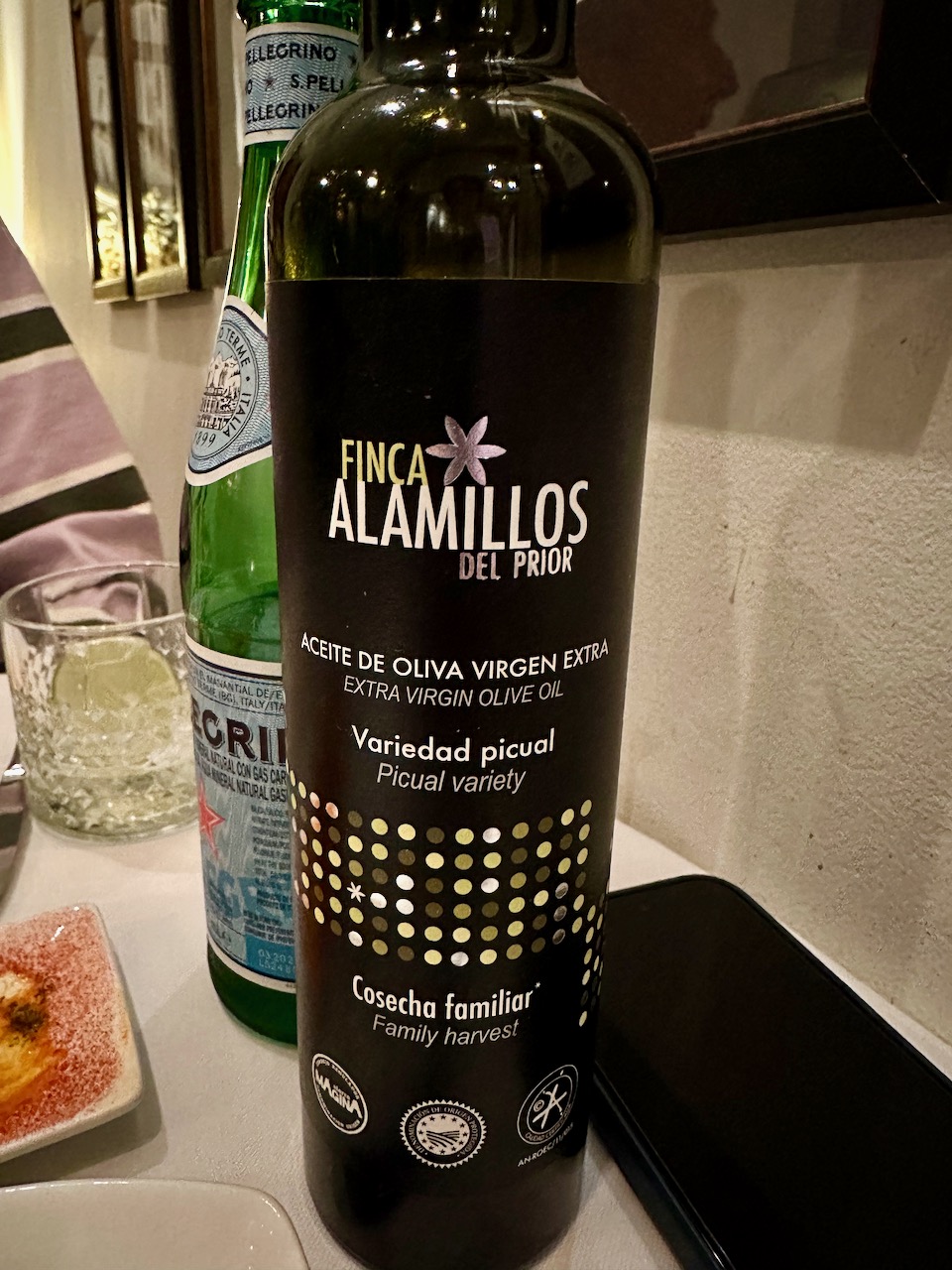
We both started with an excellent roasted tomato soup with goat cheese and at the recommendation of the chef, we shared two entrees. First up, the canelones rellenos de carrillada de terrera which was a very rich deconstructed canneloni with veal cheeks and bechamel sauce. Next was the bacalao confitado sobre escalibada de verduas which the chef explained was fresh cod cooked sous vide served eggplant and red peppers. Wow! that was stupendous and I don’t usually eat cod (or eggplant for that matter).
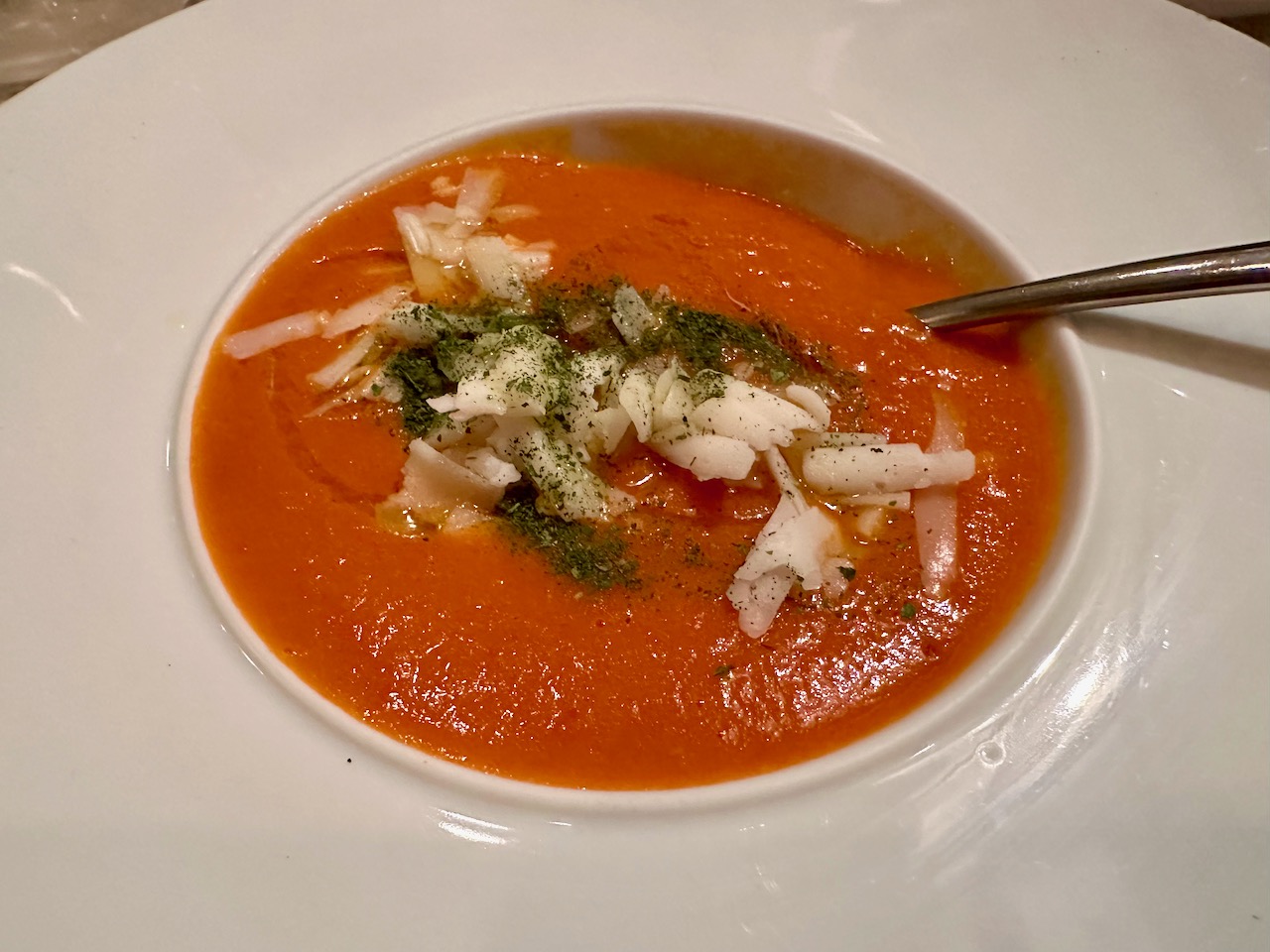
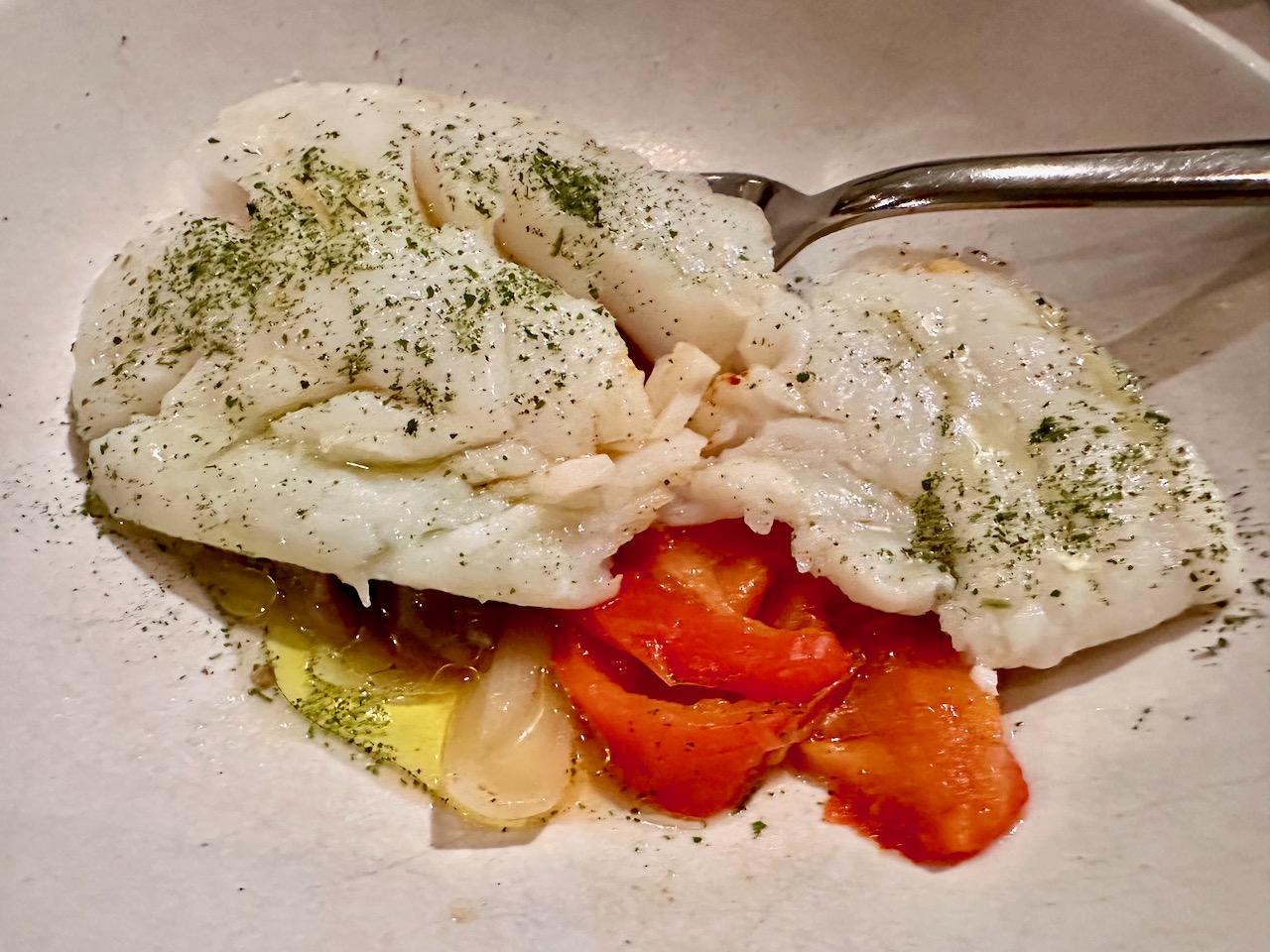
The sommelier selected Spanish wines by the glass to pair with each dish. Unfortunately, we did not leave room for dessert (blasphemy!). Between the superb food and attentive service it is no wonder Vinoteca Bistrot Moratin is a Michelin Bib Gourmand restaurant.
On our walk back to the hotel, our neighborhood was still going strong (many of these people were just beginning their night).
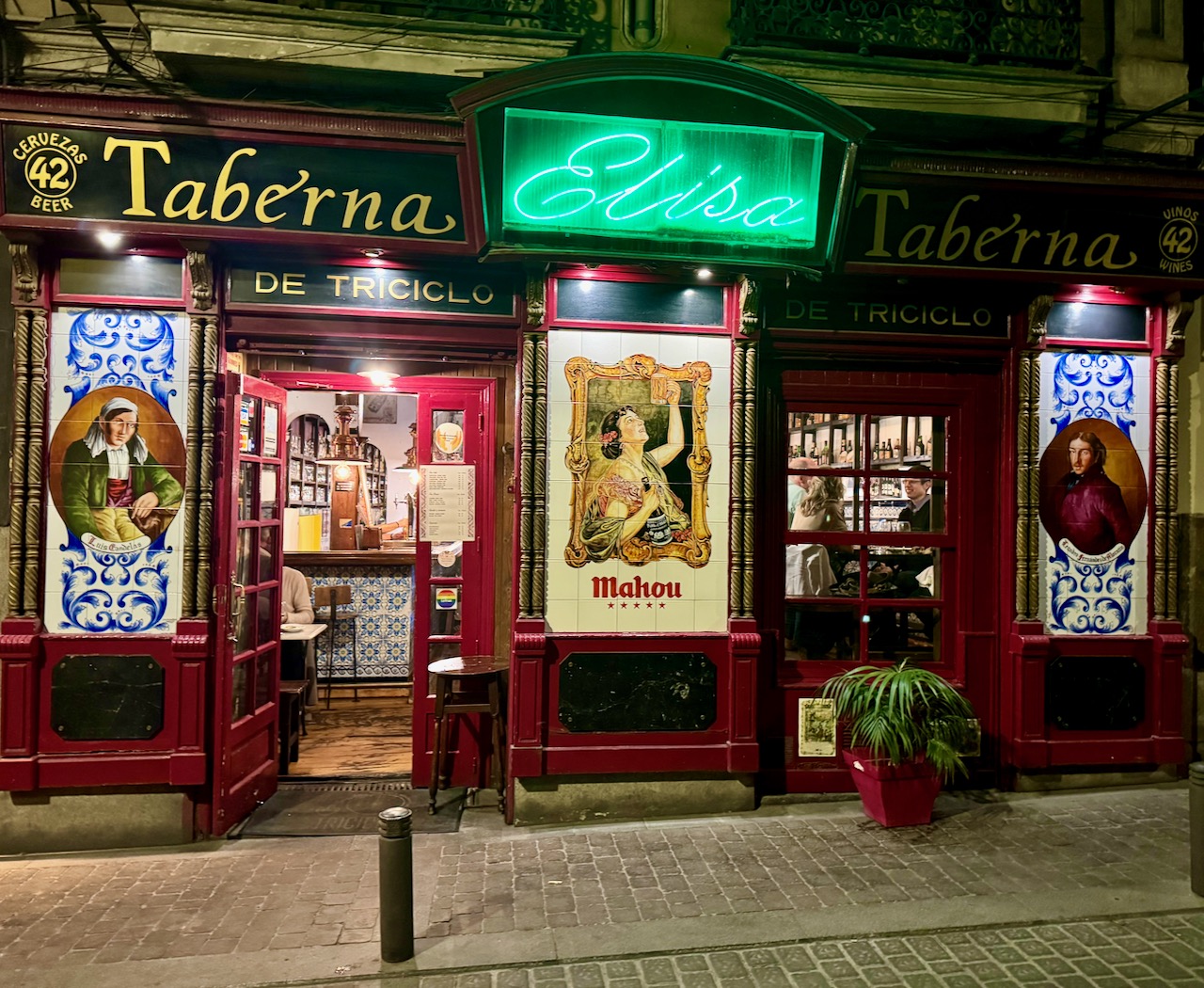
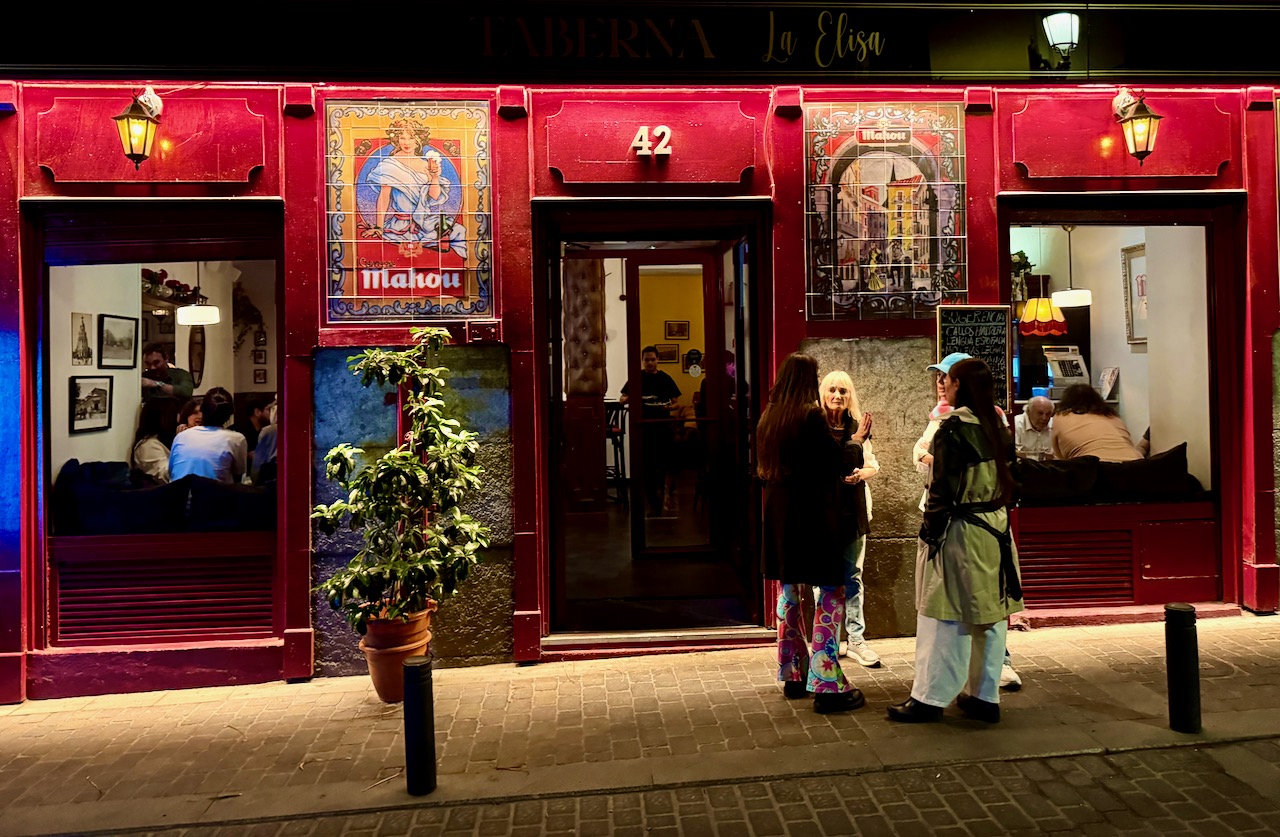
We were staying in the Literary Quarter and there were inscriptions inscribed on Calle Huertas from many of Spain’s most notable writers who had lived in this neighborhood, visited its cafes and imbibed here, including Miguel de Cervantes and Lope de Vega among dozens of others
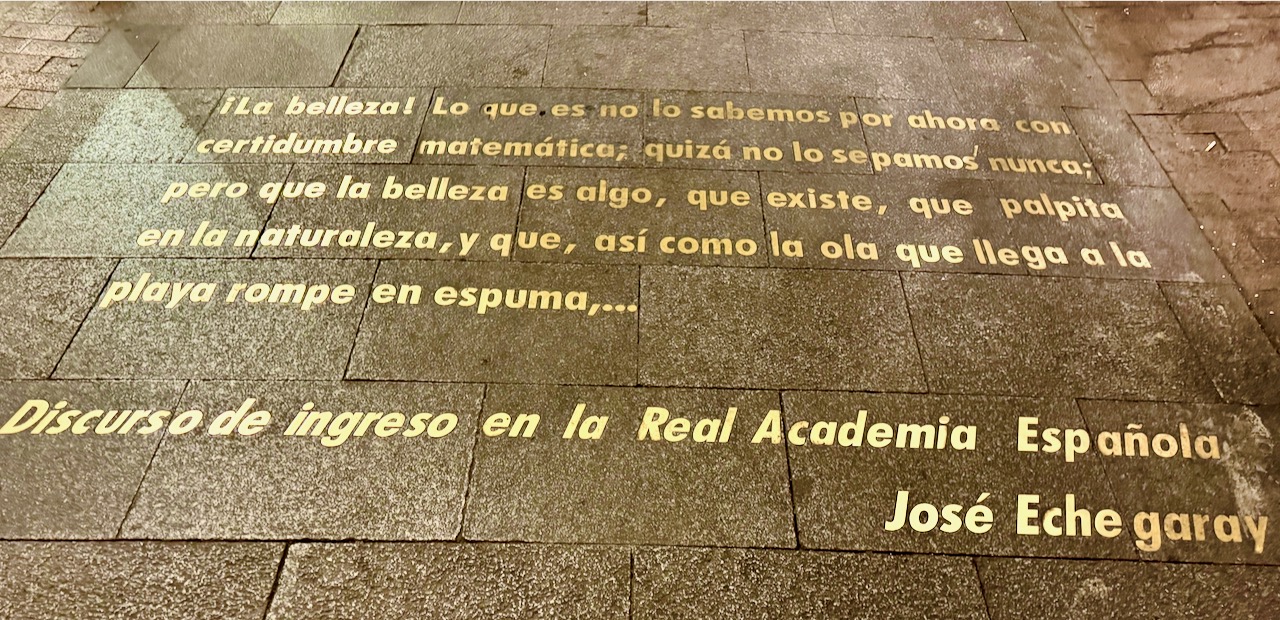
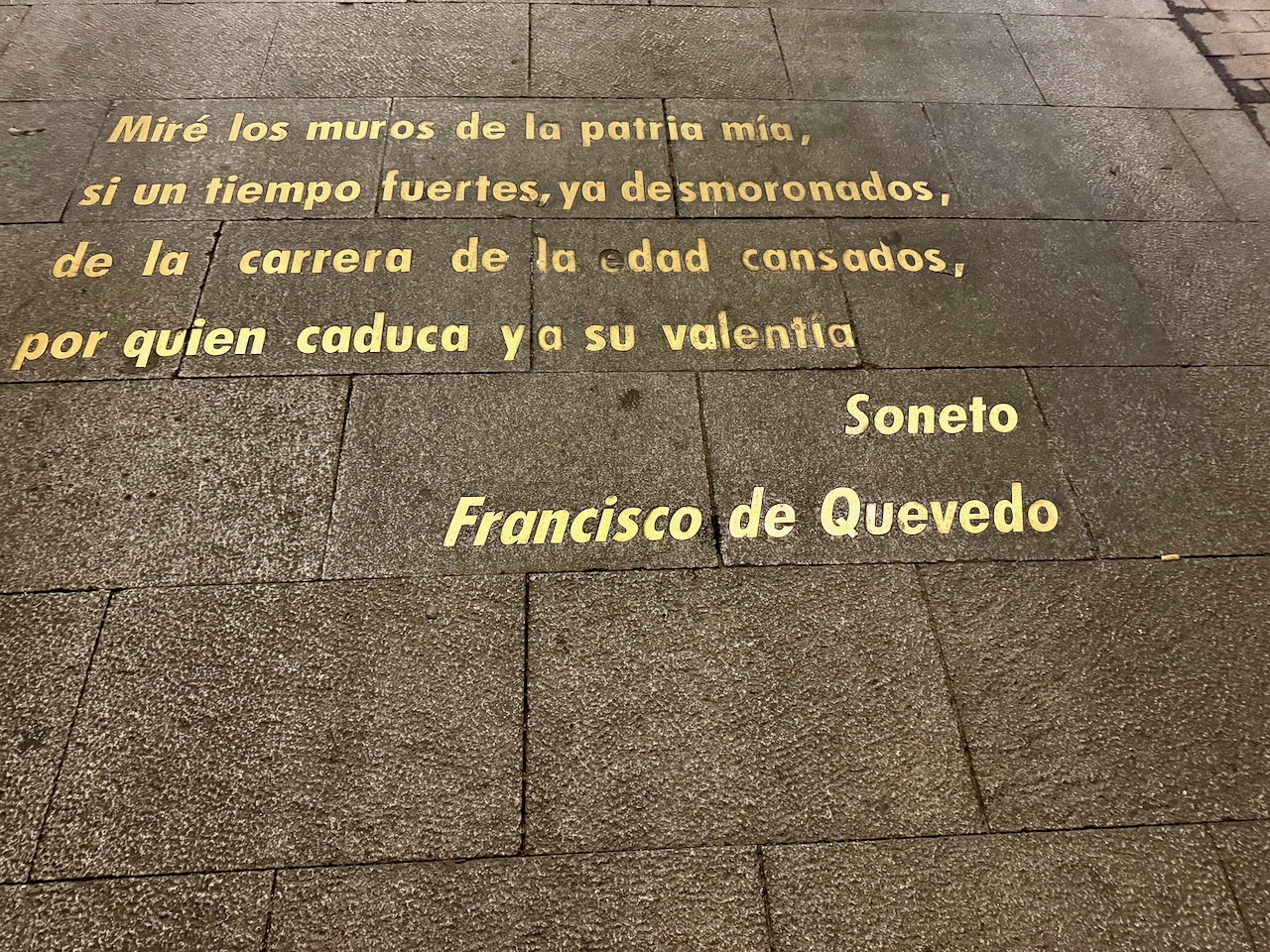
Just before we reached our hotel stood the Hemingway Gin and Cocktail Bar, with one of Hemingway’s favorite quotes which gave us a chuckle (see photo). We thought about entering, asking ourselves, “To have or have not?” Instead, we decided to book it over to Sebastián for a nightcap.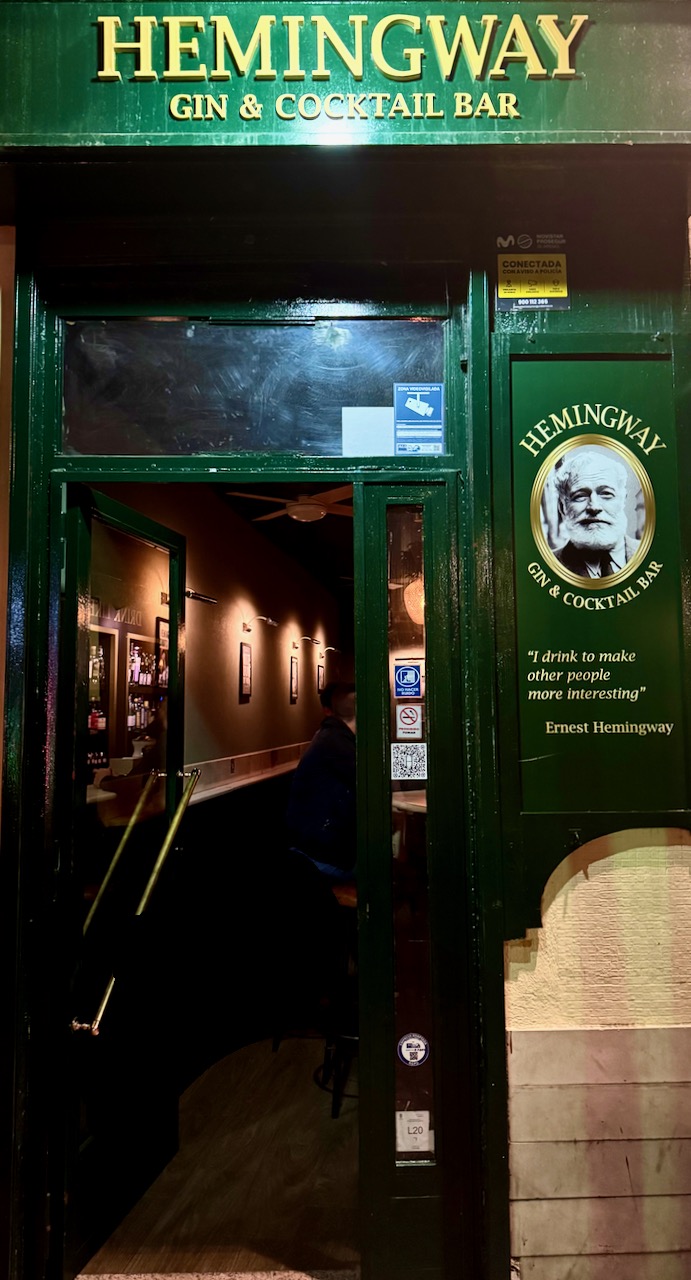
Tomorrow we’d visit four very different religious buildings. We’d be on the lookout for Dan Brown at El Real Oratorio del Caballero de Gracia, which is strongly linked to Opus Dei. Then we would view the spectacular frescoes adorning the inside of Iglesia de San Antonio de los Alemanes.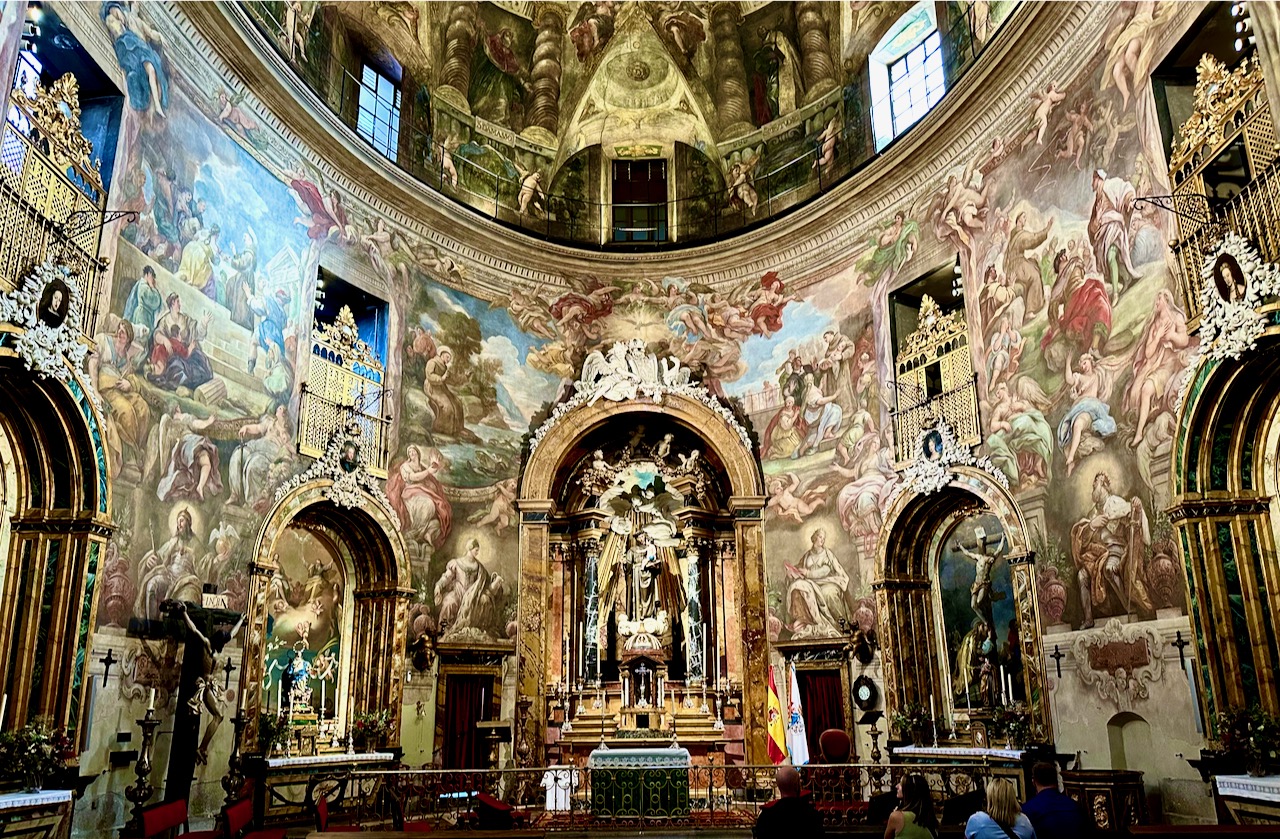
Next we’d take a tour of El Monasterio de las Descalzas Reales, the former residence and palace of Charles I and Isabella of Portugal, which is now an impressive monastery founded by their daughter. I’d have to see if that semester of Spanish I took in college would come in handy, since the tour was only in Español.
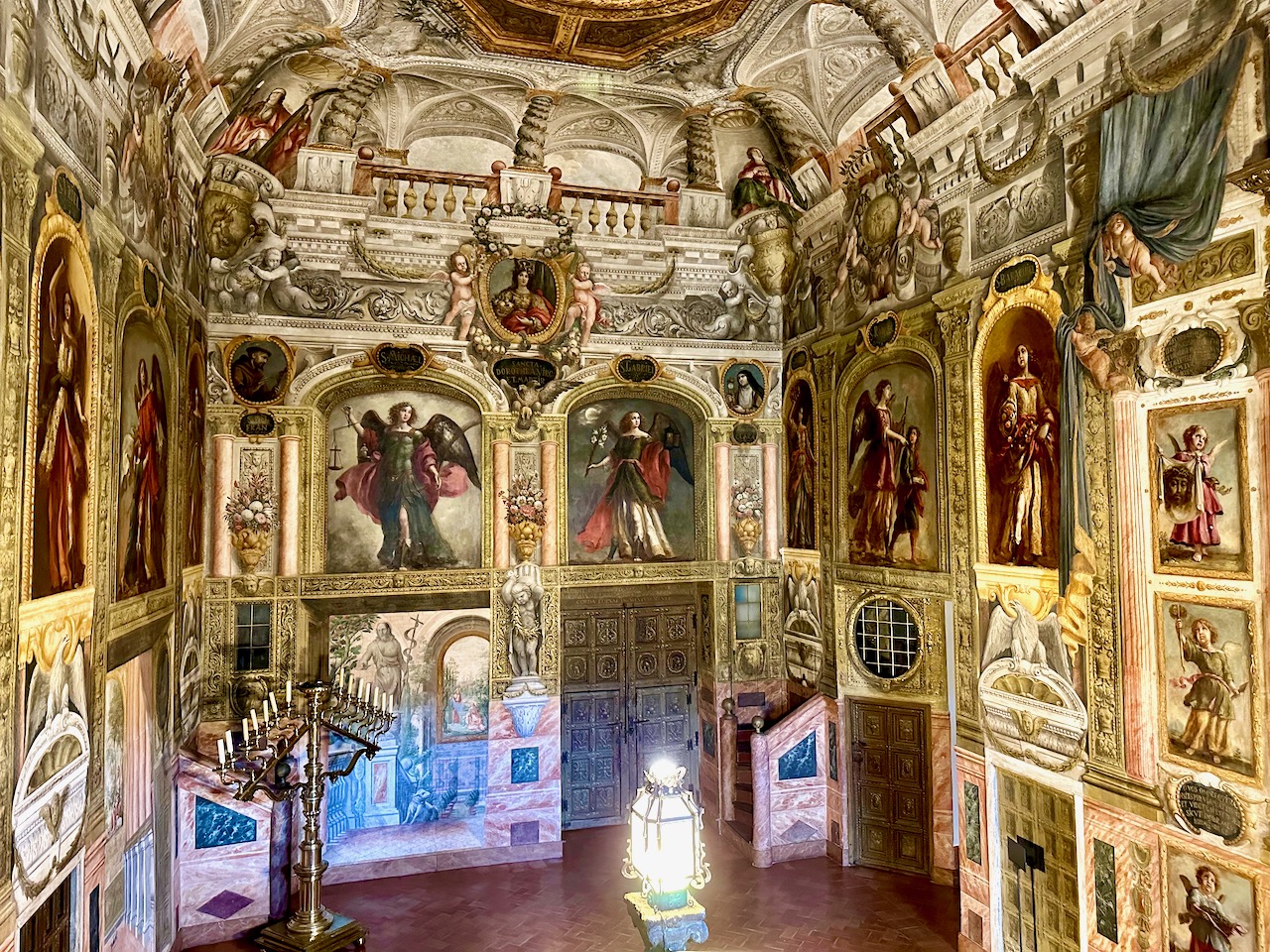 Completing our quadrifecta of religious buildings, we’d take a look at Monasterio de San Plácido, which includes arrested nuns and alleged demonic behavior during the Spanish Inquisition.
After a quick lunch and a short (very short) siesta, Tracy was ready for another attempt at El Retiro Park.
In the evening we navigated to the Chueca neighborhood, where we’d stroll through the famed Mercado de San Antón before settling down for a little Italian food for dinner. Damn, I’m pooped already.
Next: Chapter Four: Get Me To The Church(es) On Time
Day Four: Bear With Me, I Forgot My Hair Pants, Sistine Chapel Of Madrid, Convent Of The Barefoot Royals, Fab Frescoes, Marvelous Monastery, ¿hablas inglés?, Oh My God Is That Stanley Tucci?, A Monastery Steeped In Legend, A Mistake In Judgement, Finally A Walk In The Park, Mercado Mania and Okey Gnocchi