Chapter Six: Topping Off Our Terrific Time In Madrid
January 2, 2026
Chapter Eight: Marvelous Monasteries Of Burgos
February 4, 2026Celebrating España: MaiTaiTom’s Still “Insane For Spain”
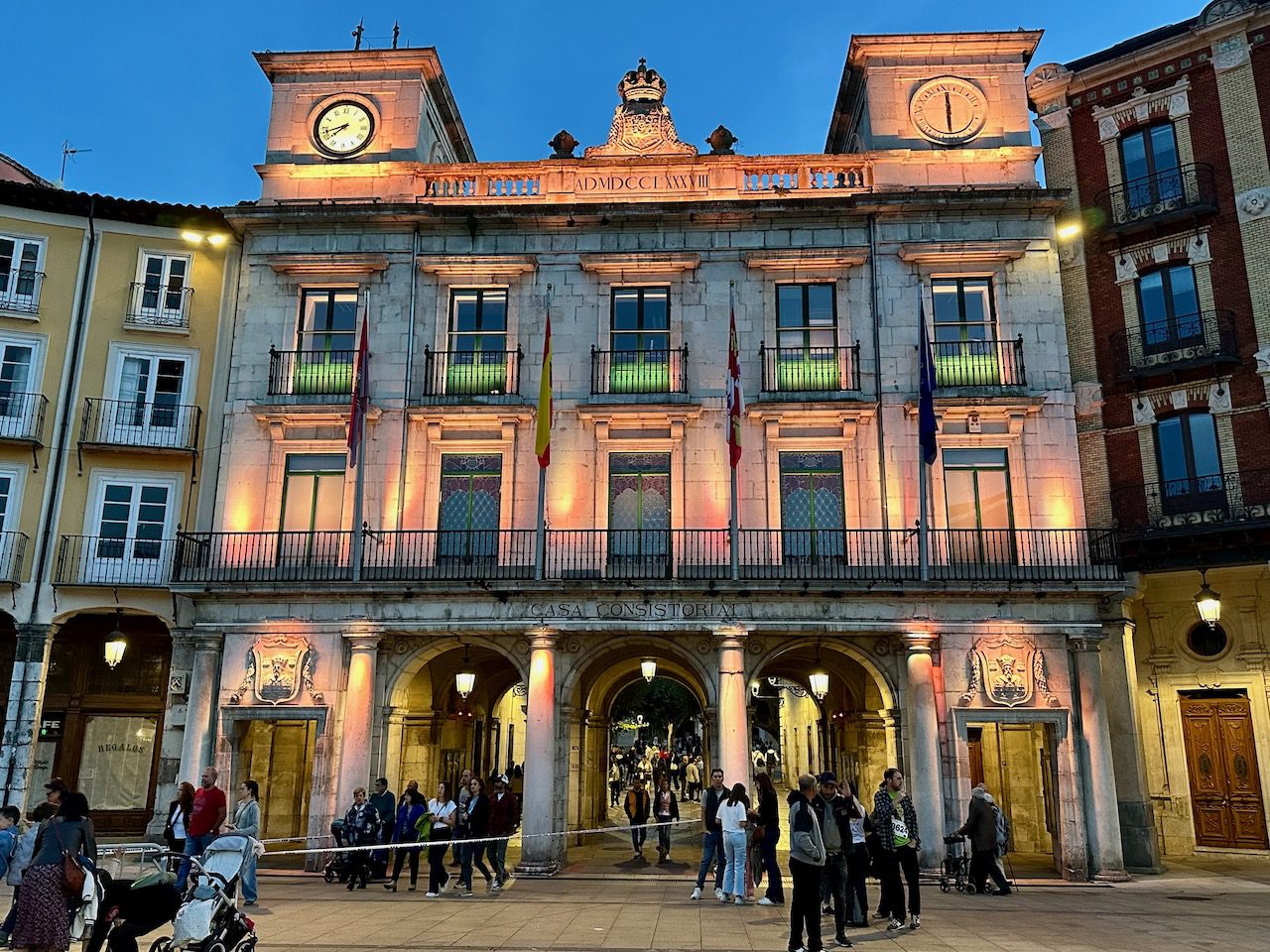
Chapter Seven: Burgos Bound
Day Seven: An Important Photo, Damn Is This Car Electric?, No Parking, Retirement Home for Altarpieces, Promenading Along The Paseo, A “Gothic Treasure,” Stairway To Heaven, El Cid’s Final Resting Place, It’s A Marathon Not A Sprint, Flood Zone, Party Time In Burgos, Taking It On The Lamb and “It Looks Like Spun Sugar!”
Promptly at 6:30 a.m. we bid “adios” to Room Mate Alba as the taxi whisked us off to the Madrid airport where we’d pick up our rental car. Although it was supposed to be open at 7 a.m., the Hertz office in the terminal was locked up tight. Fortunately a very helpful security guard directed us to the office located in the parking area.
As we waited in line, Tracy snapped a photo that would be invaluable when we returned the car.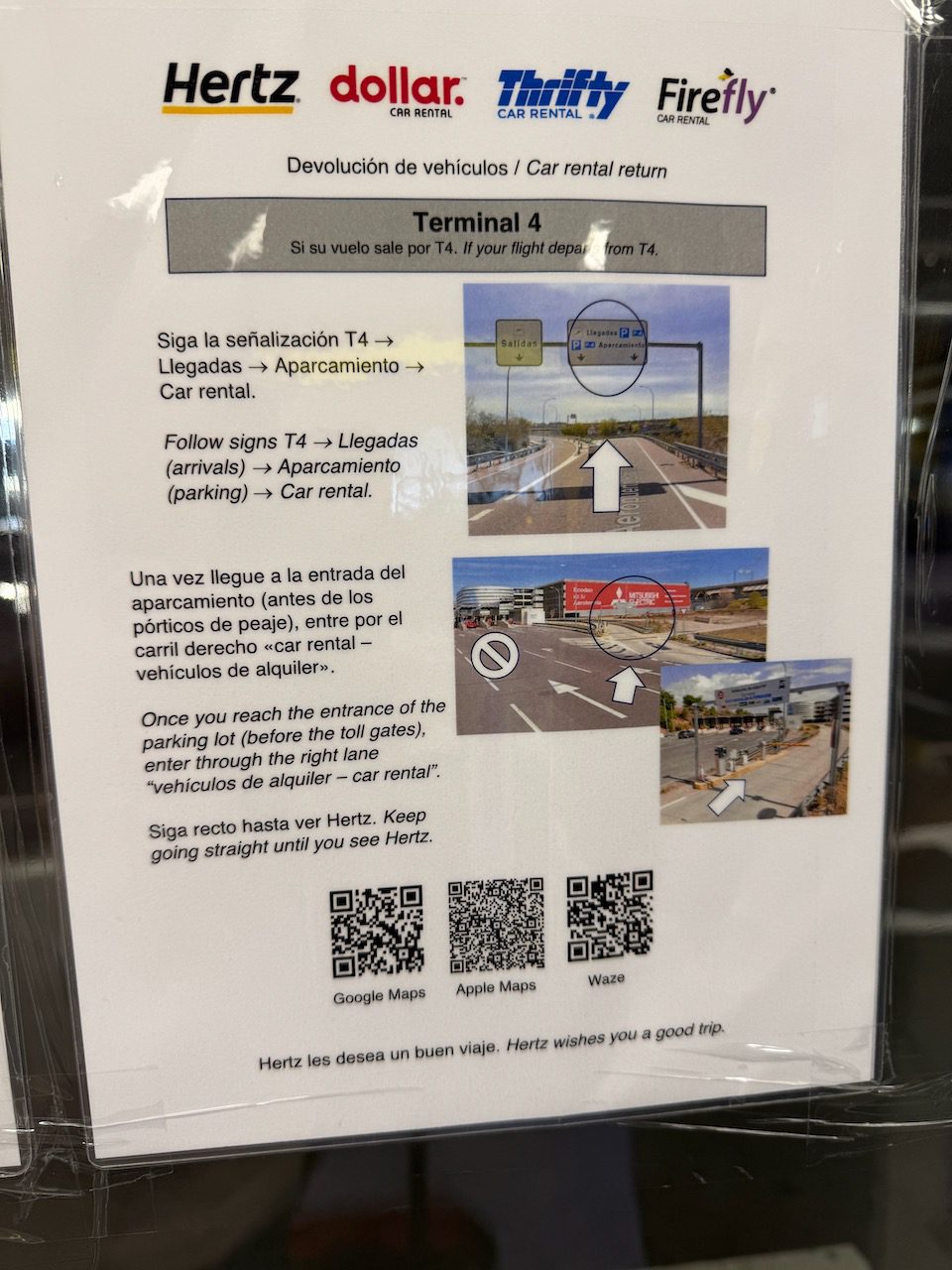
After picking up the keys, she also took some important videos that would save us from incurring more charges when we dropped the car (lots of dings already on the car … don’t forget to check the wheels), which happened to be a black, mid-size Mercedes (foreshadowing alert).
It’s an easy 2 1/2 hour drive north to Burgos, although when it comes to rental cars on vacation, the word “easy” is never in the vernacular. Sure enough, about halfway into our drive, Tracy was glancing at the display screen which was larger than my 1980s TV set, and suddenly she exclaimed, “Oh my God! a light just came on saying we need to charge the car soon. Is this car electric?”
My heart, which sadly is always in AFib these days, skipped 78 beats.
Her question raised two major red flags. Since we have never owned an electric car (although we do have an elderly Prius hybrid), we had no idea how to charge a fully electric vehicle, much less know how to find the place to charge between Madrid and Burgos. As soon as possible, we pulled into a service station, where to our great relief, we saw that the car had a gas tank. Knowing now that we had a plug-in hybrid, that would be the end of our rental car problems for the rest of the trip (or at least an hour).
The tower of the Burgos Cathedral could be viewed from the highway, and soon we were at a scenic tree-lined roundabout and heading into town for our stay at AC Burgos Hotel. There was a loading zone where we could park to drop our bags and check in.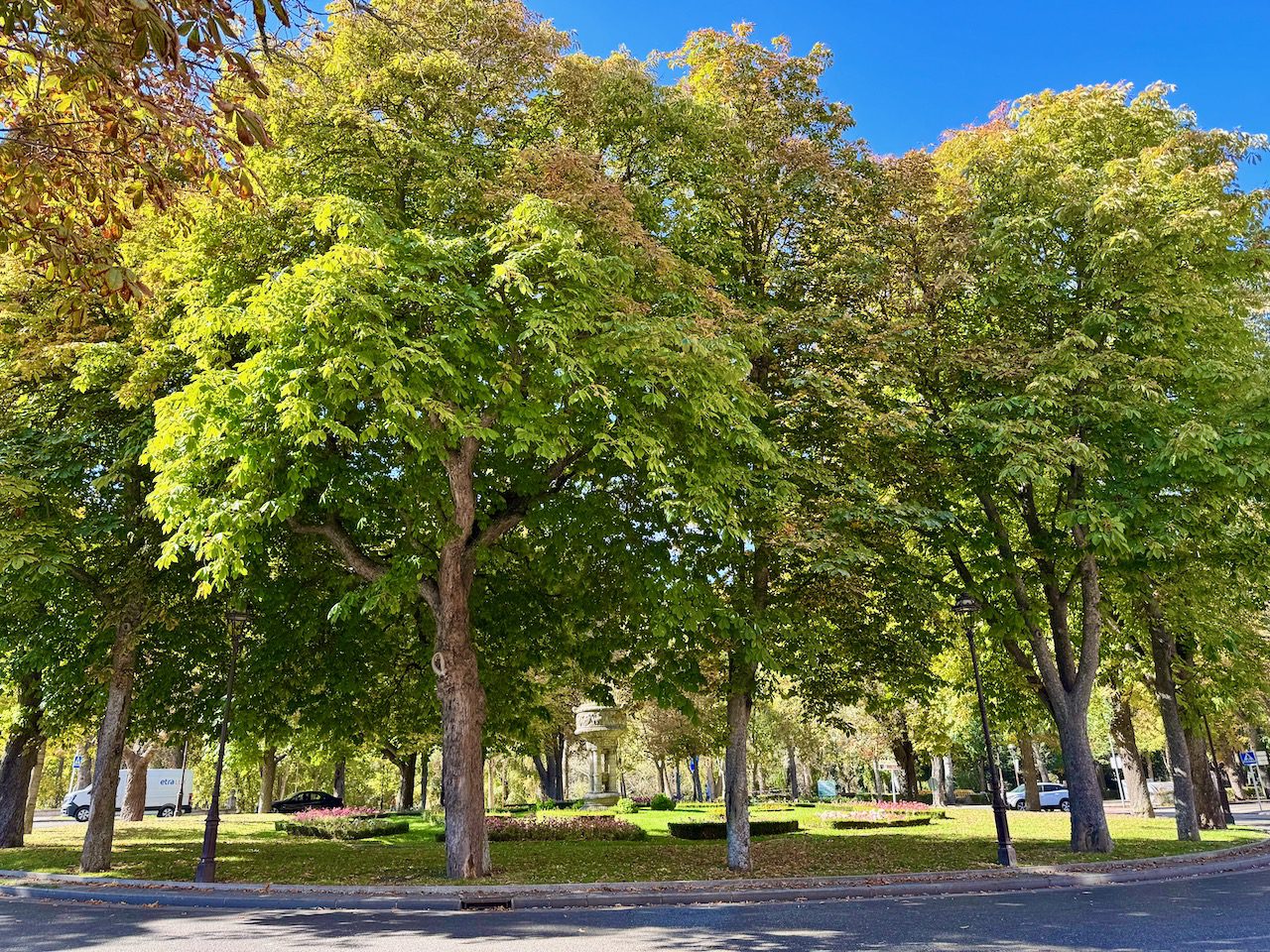
The hotel has underground parking, but I had read the parking garage was quite a challenge. We asked the desk person, and she suggested we take a look before attempting to park. I wish we had taken photos, but once inside the garage we realized that unless we had a clown car, there would be no way for us to drive to the lower parking levels without scraping the car, because instead of a circular ramp, it had nearly 90 degree angles at every turn. At this moment Tracy reminded me that Maribel’s husband Philip had warned us that they had scraped the paint off their car while parking here.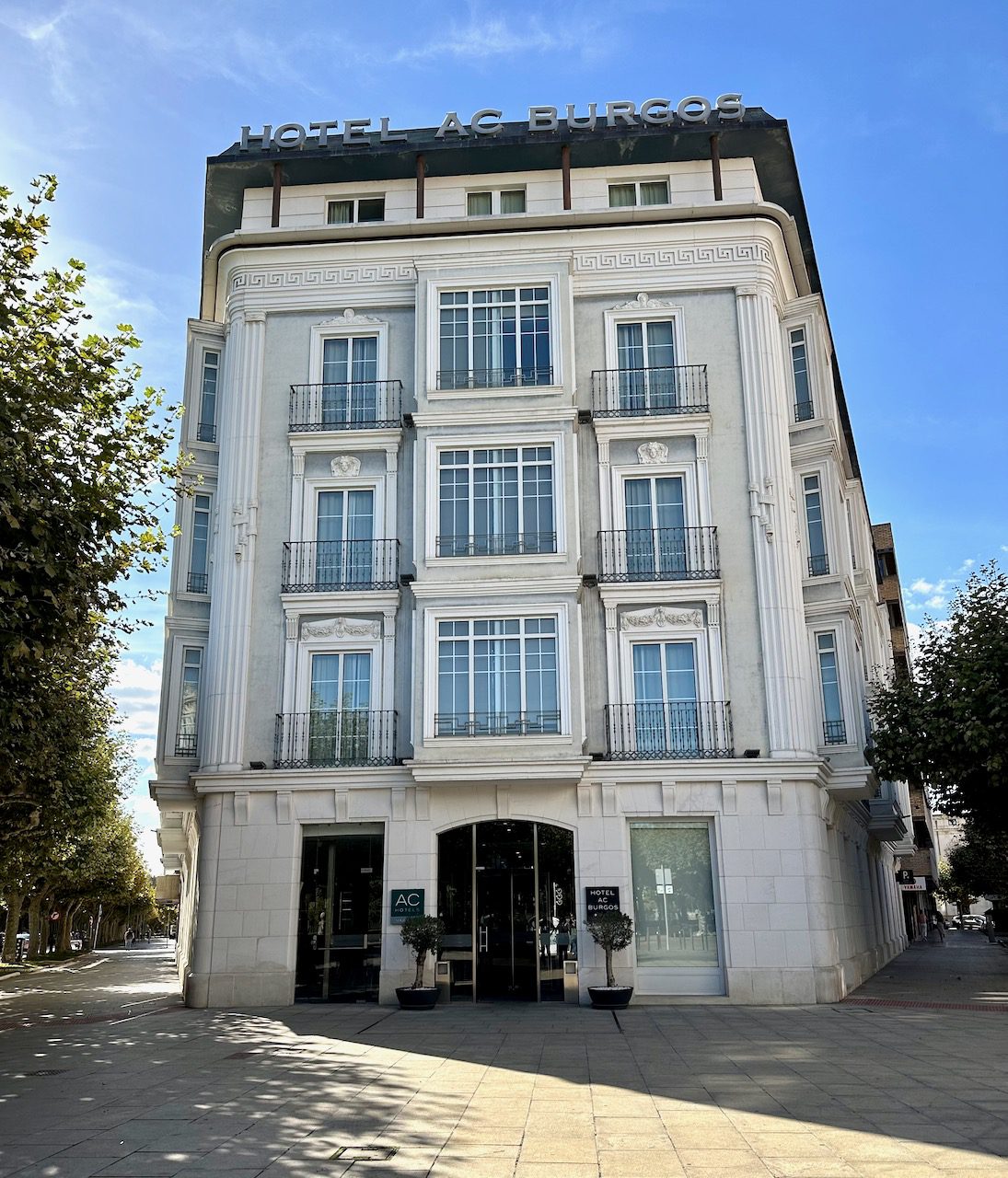
Back to the front desk for Plan B, where we learned we could park on the street if we could find a spot, and also that there was a public parking lot nearby if all the street parking was taken (it was), so we drove to the lot about 1/4 mile away and went inside. We quickly decided our car was way too big for this lot as the spaces were so narrow that had we found an empty one, Tracy and I would have been wedged into the car for all of eternity had someone parked next to us. (Plus the garage had the same ramps as our hotel). We carefully navigated through the lot and out the exit.
We had arrived in Burgos a little after ten, and by now it was almost 11. We went in search of street parking. And we went looking … and looking … and looking. There was not an open parking space within a one mile radius of searching, and I say that with confidence because for the better (or worse) part of the next hour we did nonstop searching.
Finally, we saw a car pull out of a space adjacent to the Paseo de la Audiencia not far from our hotel. We paid the meter and learned at the hotel we would not have to pay anymore for the weekend, because parking after 2 p.m. through the weekend was free.
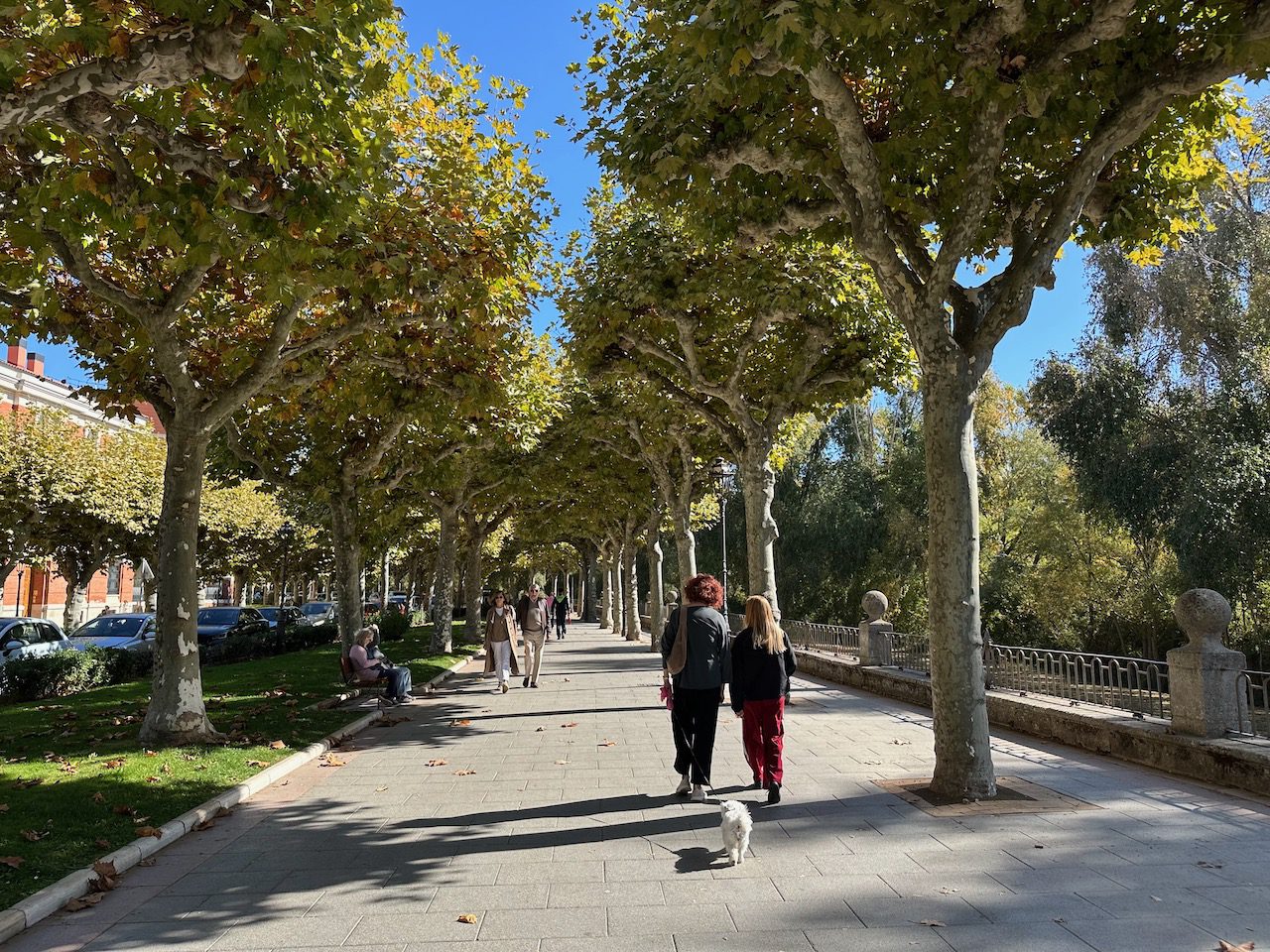
It was another glorious blue sky day, so although two hours later than I’d hoped, it was time to go explore Burgos. We passed by the Church-Convent of the Salesas, also known as the Monastery of the Visitation. It wasn’t open for a visitation.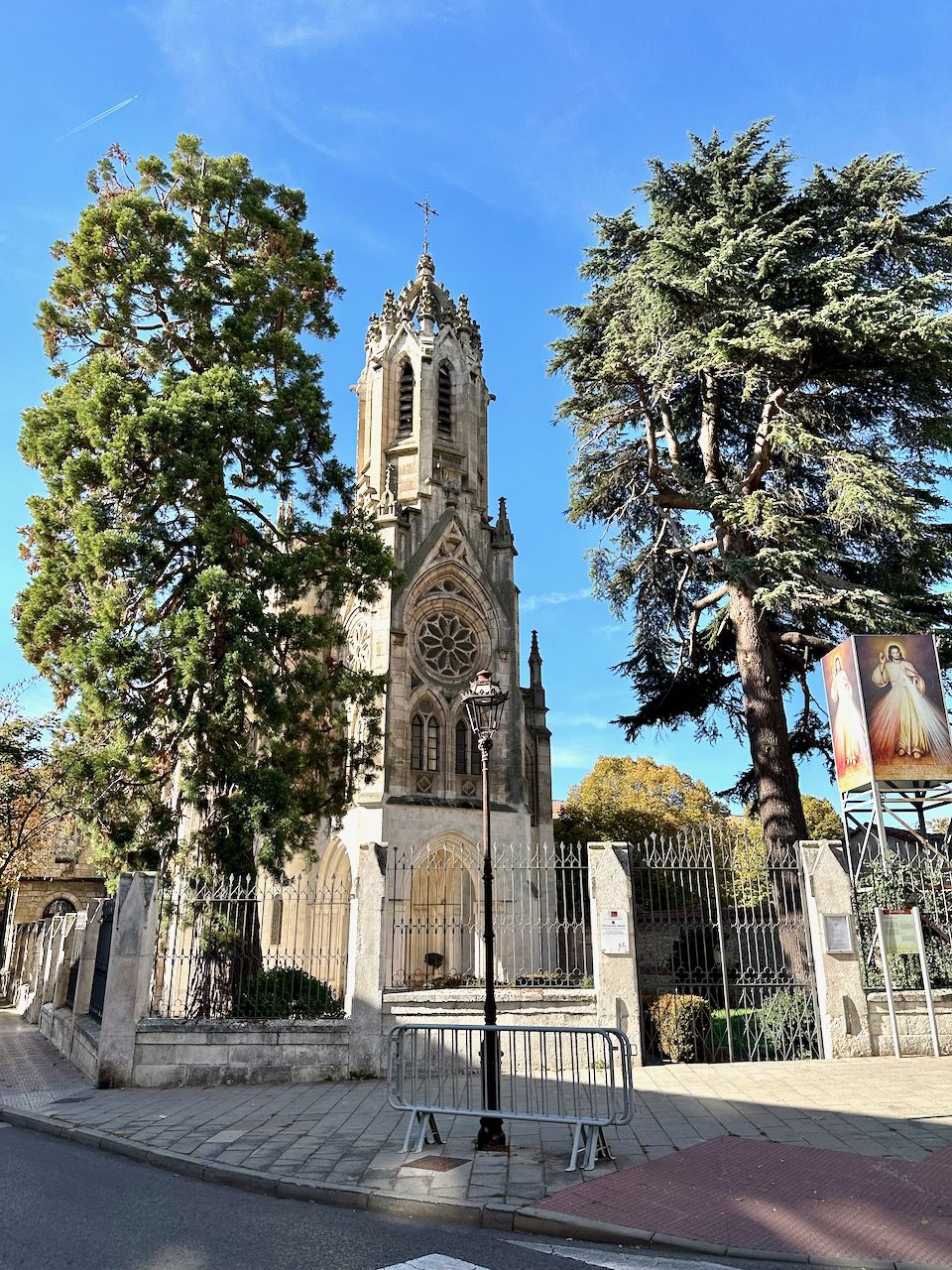
Our plan was to first visit Iglesia de San Nicolás de Bari de Burgos, which was supposed to close at 1 p.m. We climbed the flight of steps from Plaza de Santa María. It was a few minutes after noon when we strolled in, and the look we received upon entering clearly said we should not be there. That’s because a wedding was about to take place, and the church had closed early. At least we got a view of the cathedral from the steps.
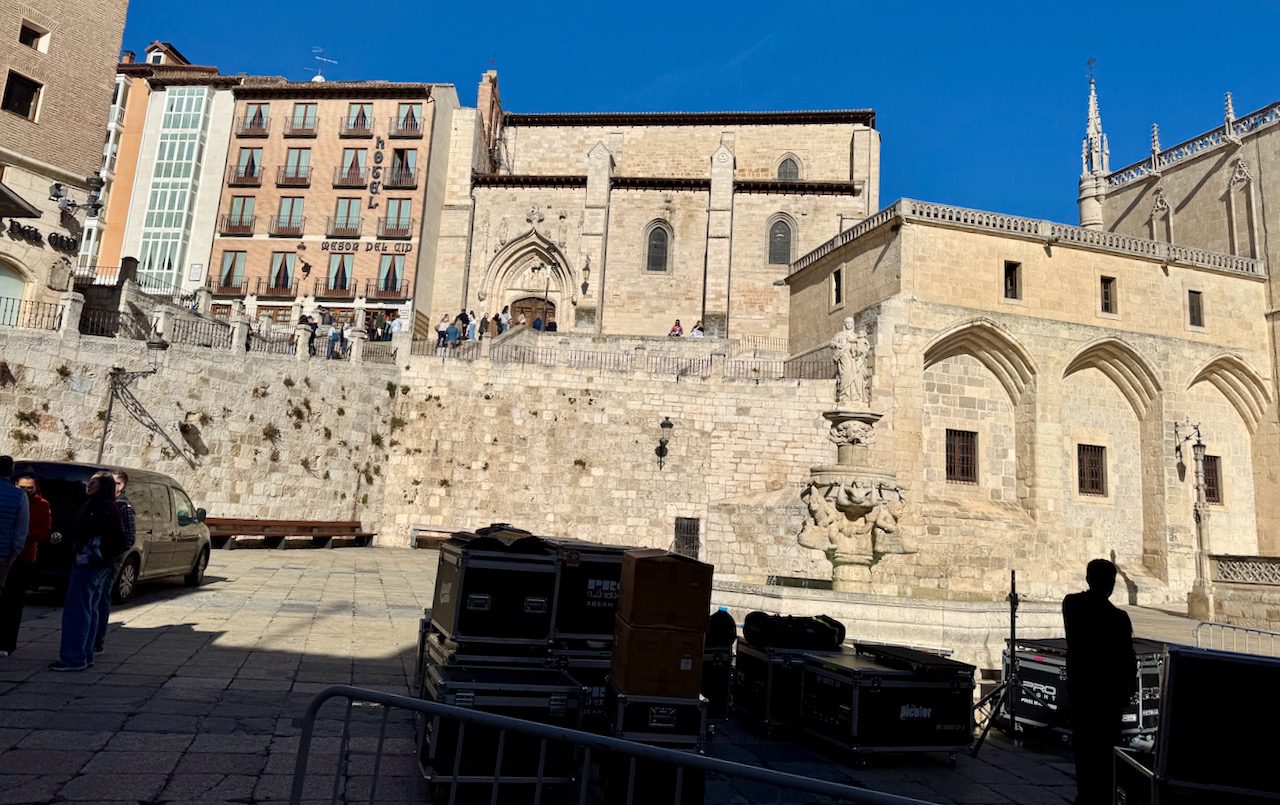
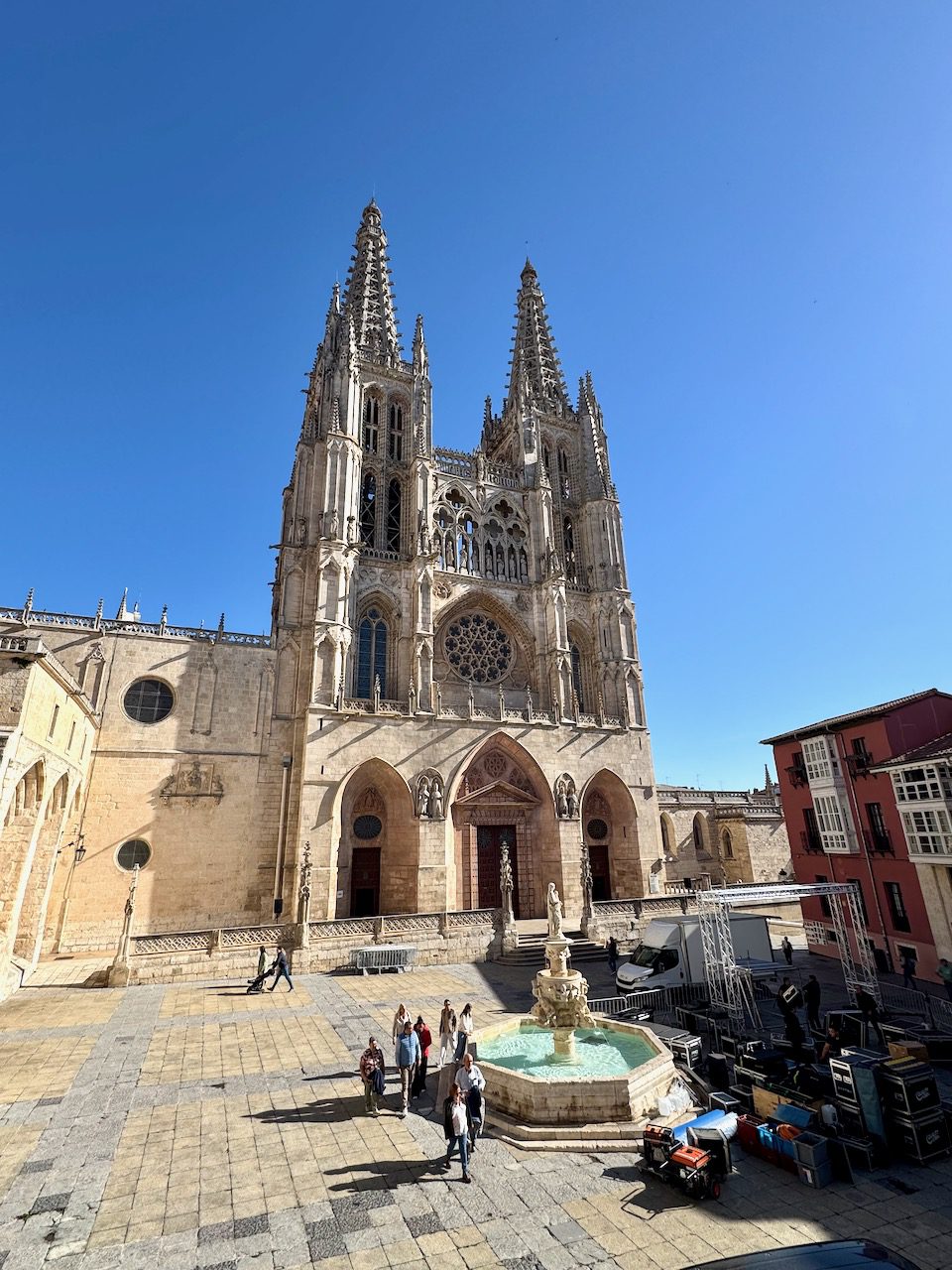
Since Burgos is located along the The Camino Francés (French Way), which is probably the most popular trek along the Camino de Santiago, we knew there would be no shortage of religious sights here and in our next stop, León. We trekked up to Iglesia de San Esteban/Museo del Retablo, or as Tracy dubbed it “The Neon Museum for Altarpieces,” referring to our visit to the Neon Museum in Las Vegas which is the final resting place of neon signs (and a must-see if you are in Vegas).
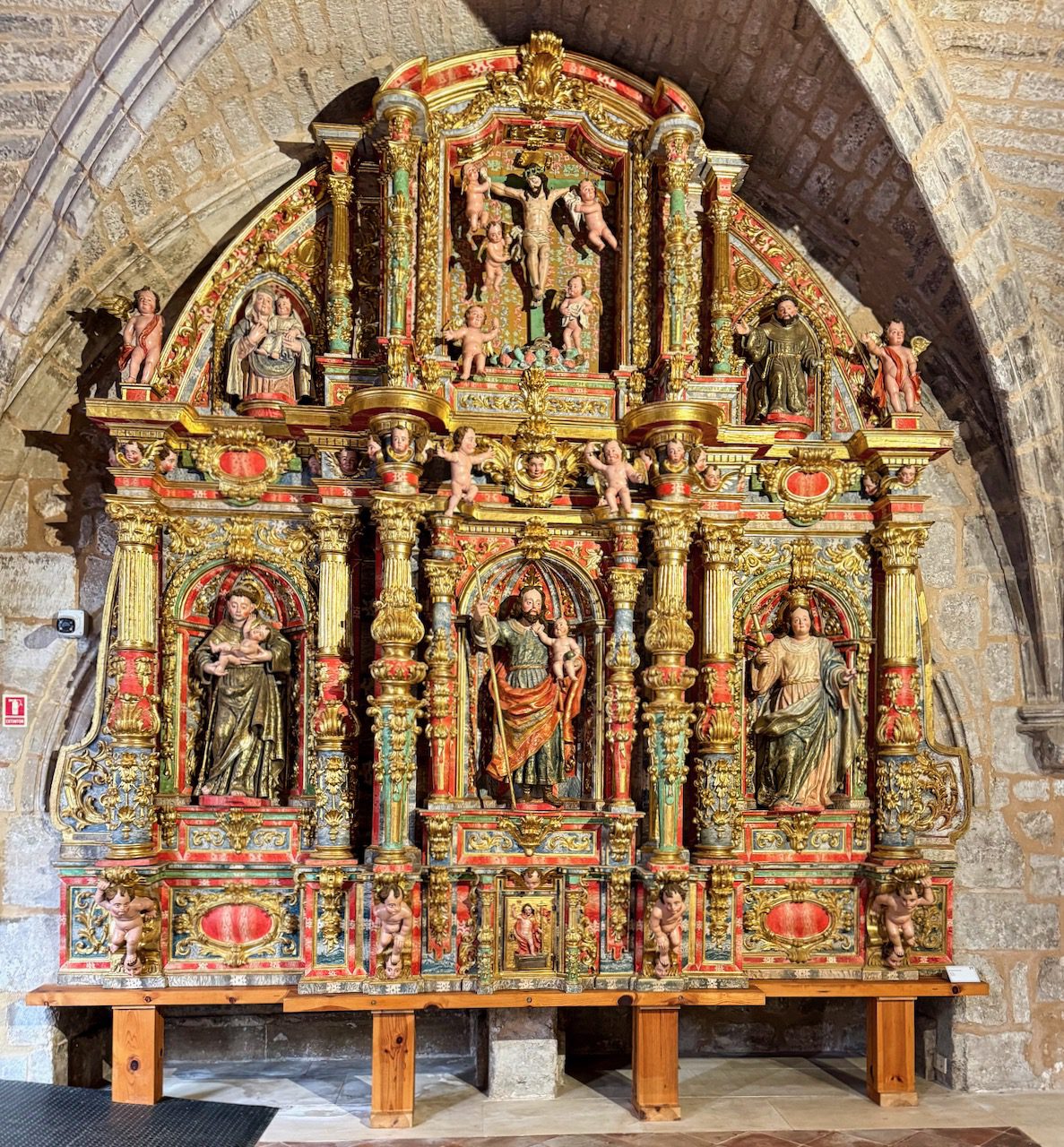
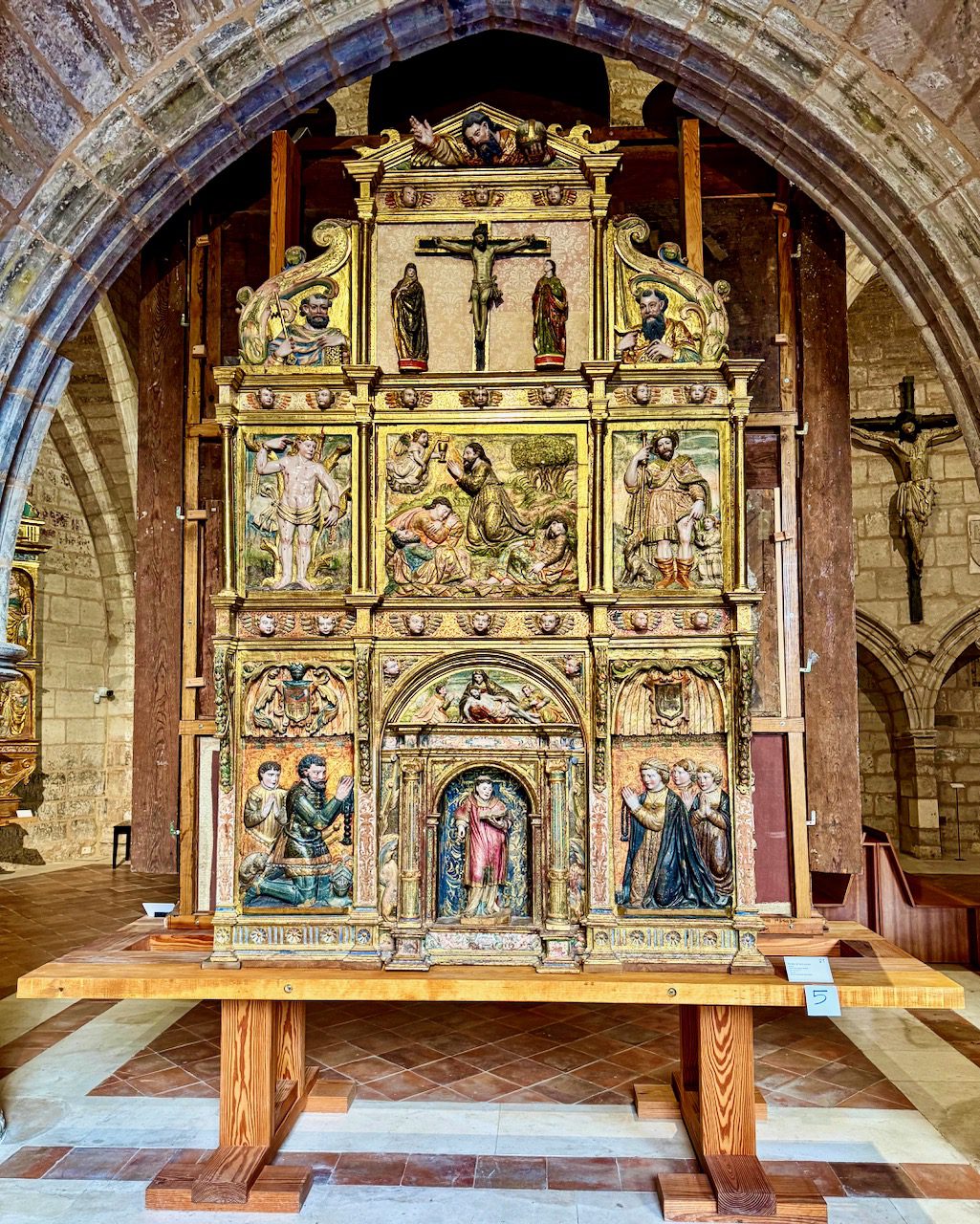
The 13th/14th century Iglesia de San Esteban no longer serves as a functioning church. It is literally a retirement home for old altarpieces, taking in and restoring many from the thousands of churches surrounding the Diocese of Burgos. Apparently, Burgos “possesses more religious monuments than any other Spanish diocese …” (Truth be told, by the end of this trip, it had started to feel like we had seen them all!)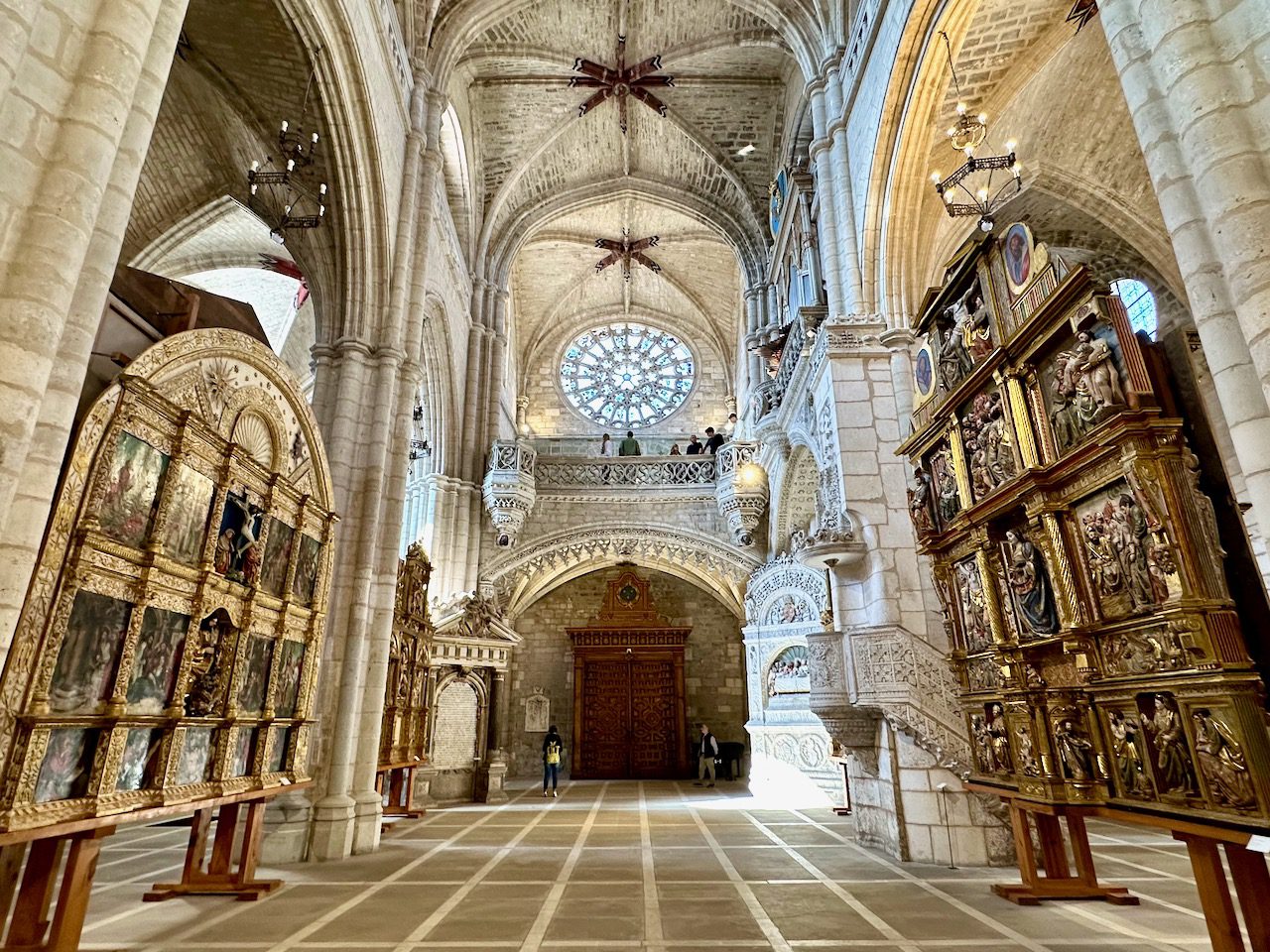
It is unique, because it focuses mainly on altarpieces from the 15th-18th centuries, making it the only museum of this type in the entire country.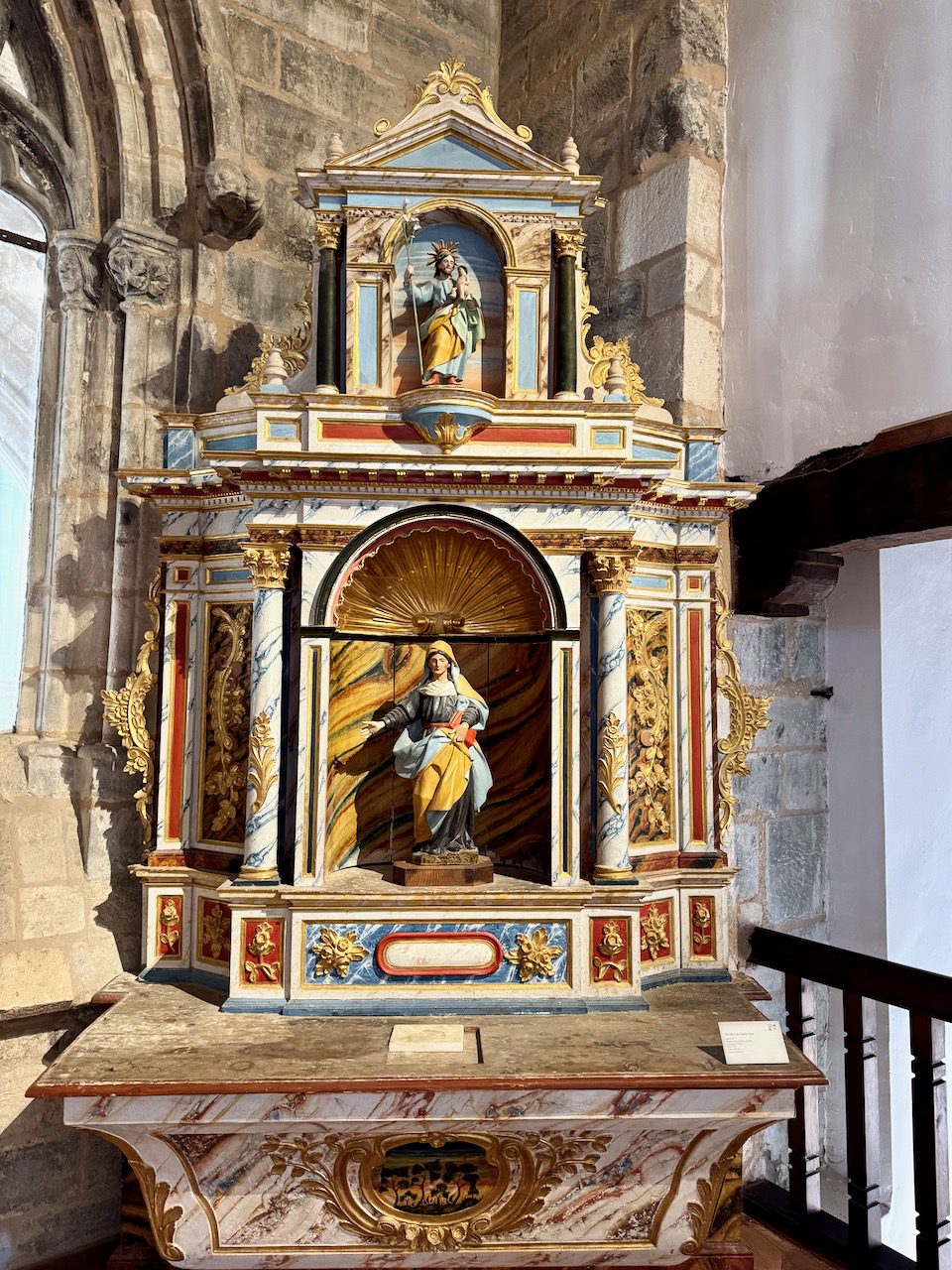
Although, you could find a wooden tomb like this one from the Monastery of Vilena or an old painting along the route.
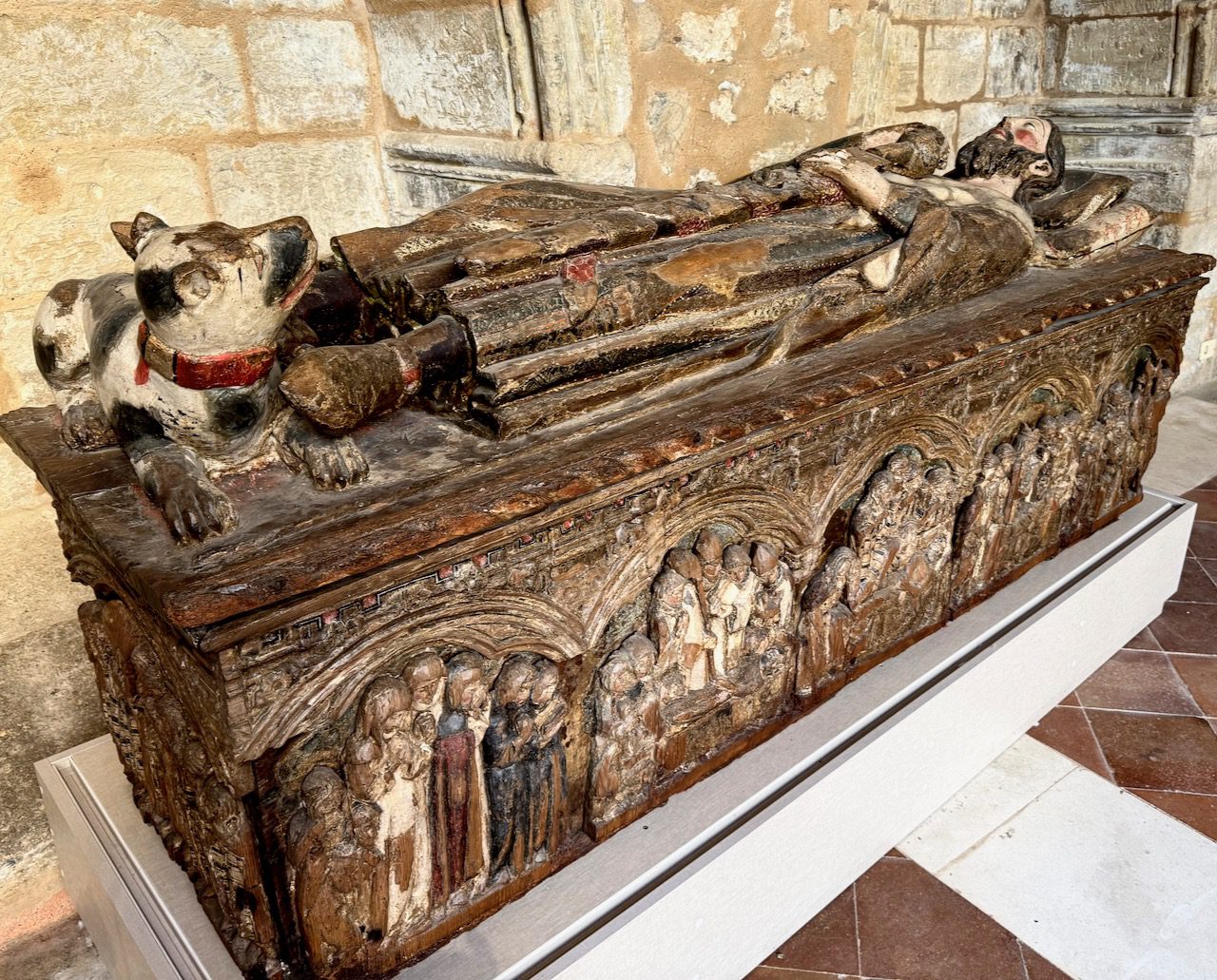
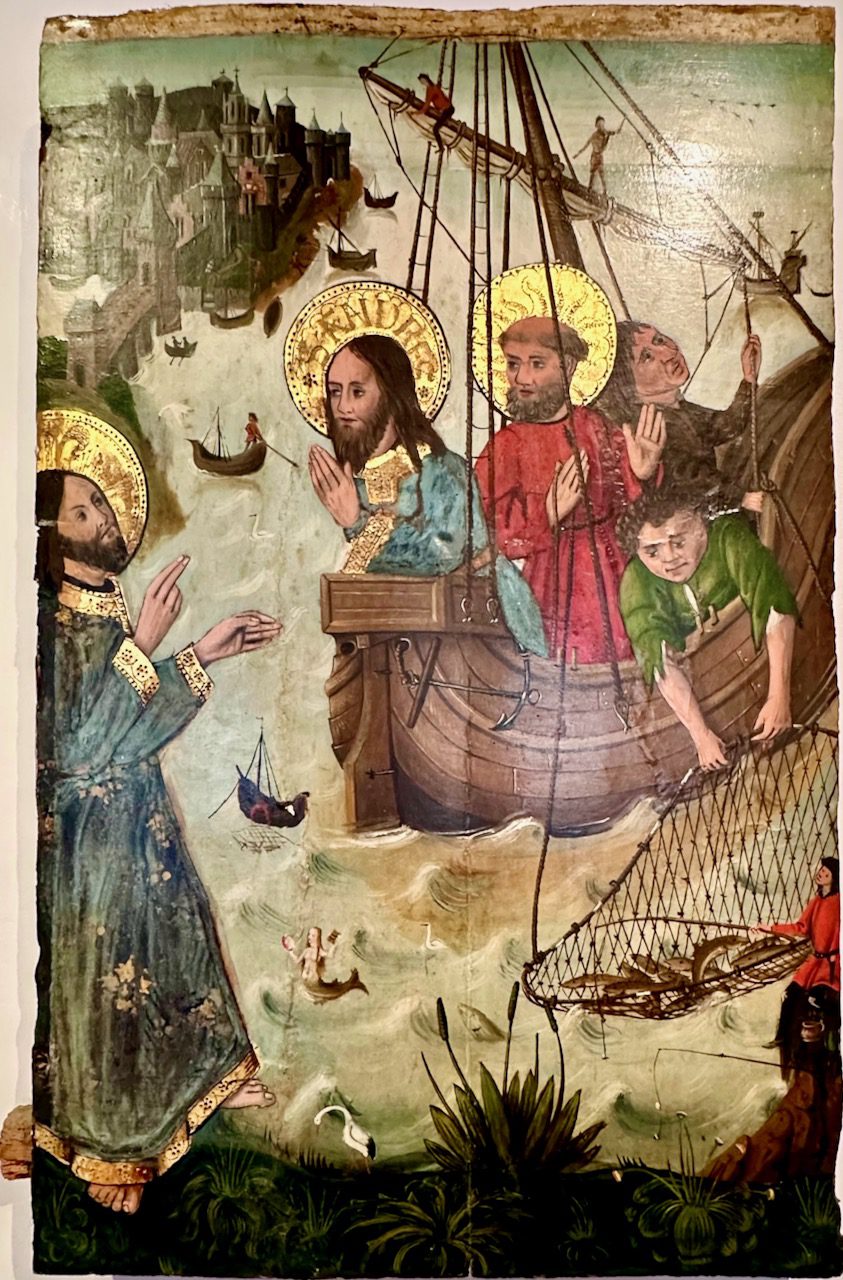
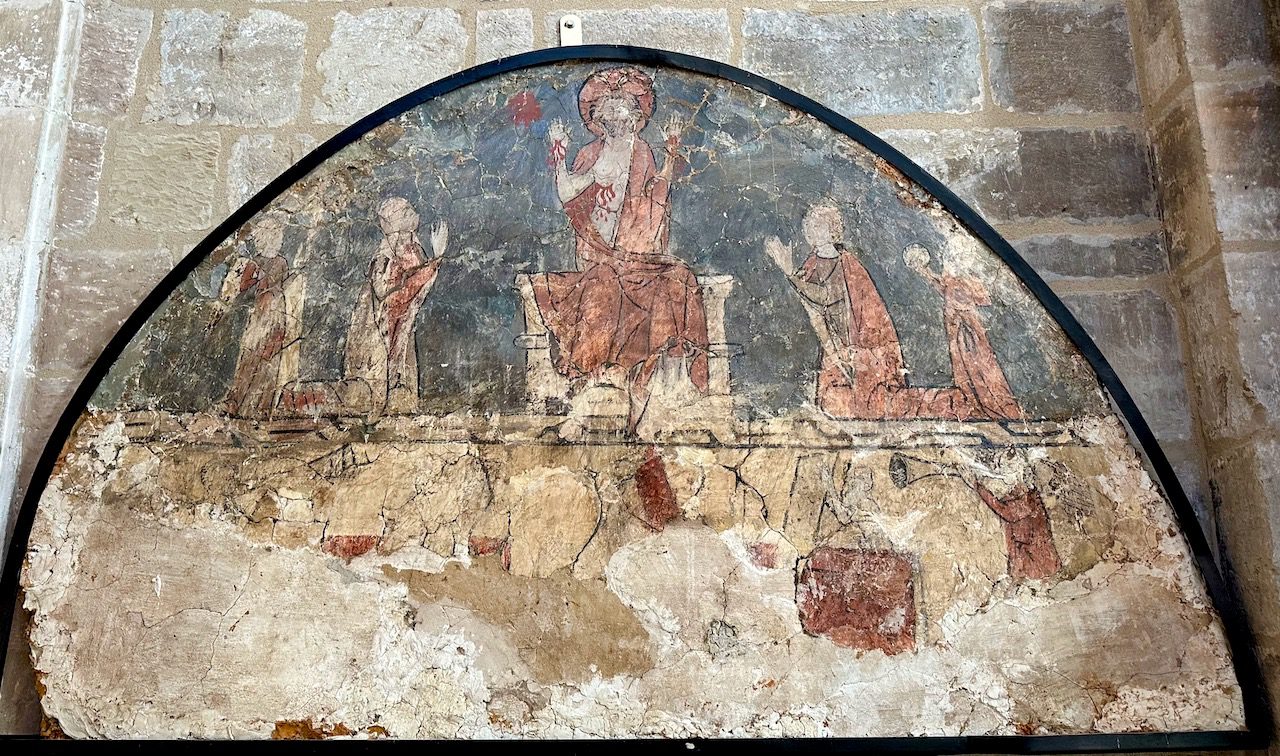
The restoration of these pieces, some seven centuries, old is remarkable. The top floor of includes biographical information on the stone artisan, Andres Martinez Abelenda, who repairs and restores the marble and stoneworks. 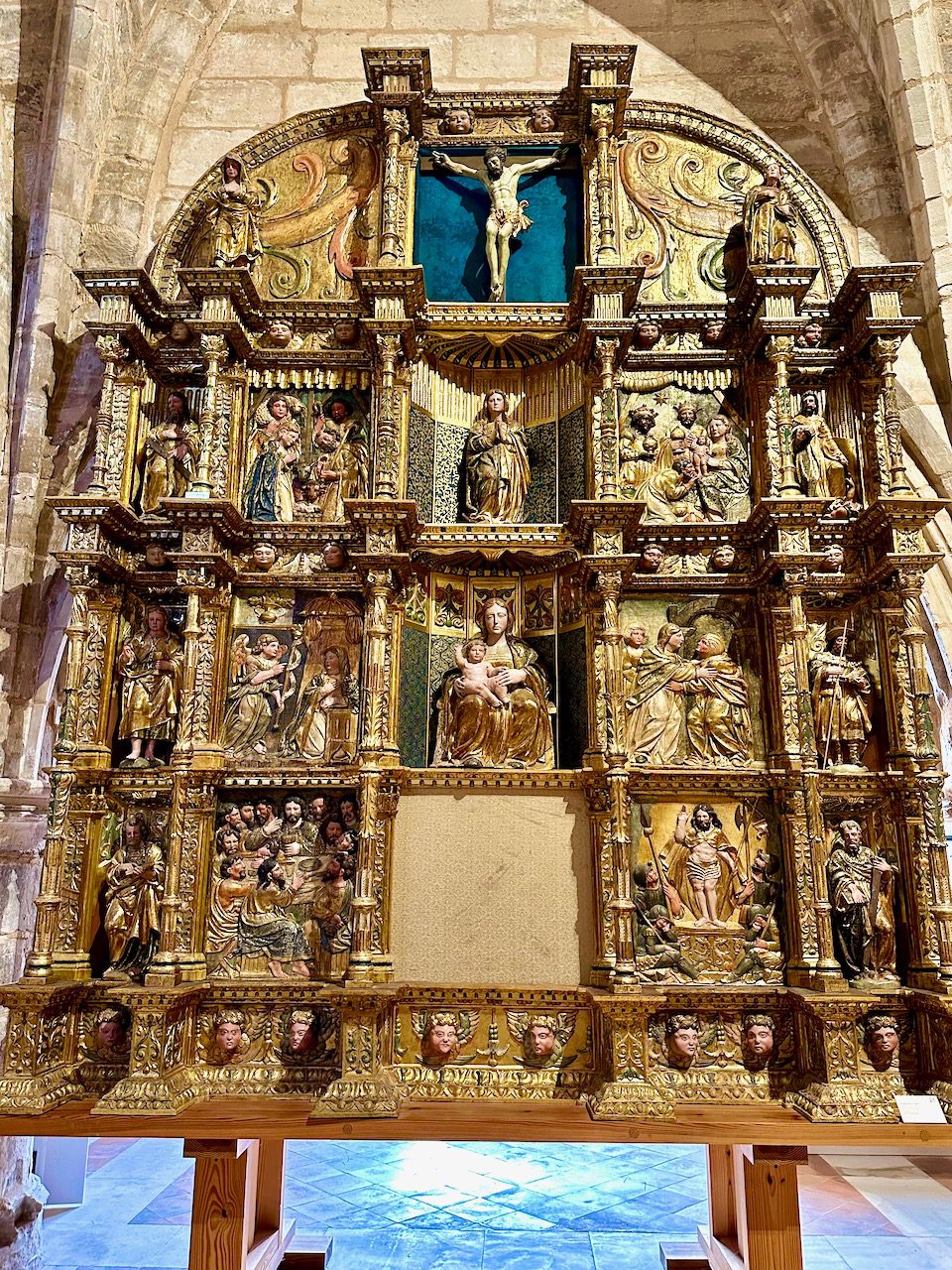
One of its most notable pieces is the 16th century Retablo San Mamés. From its website, “It is the main altarpiece of the parish church of Padrones de Bureba, from where it had to be dismantled due to the severe deterioration of its structure, which could barely remain standing, and transferred to the diocesan storage facility awaiting treatment before its reassembly.”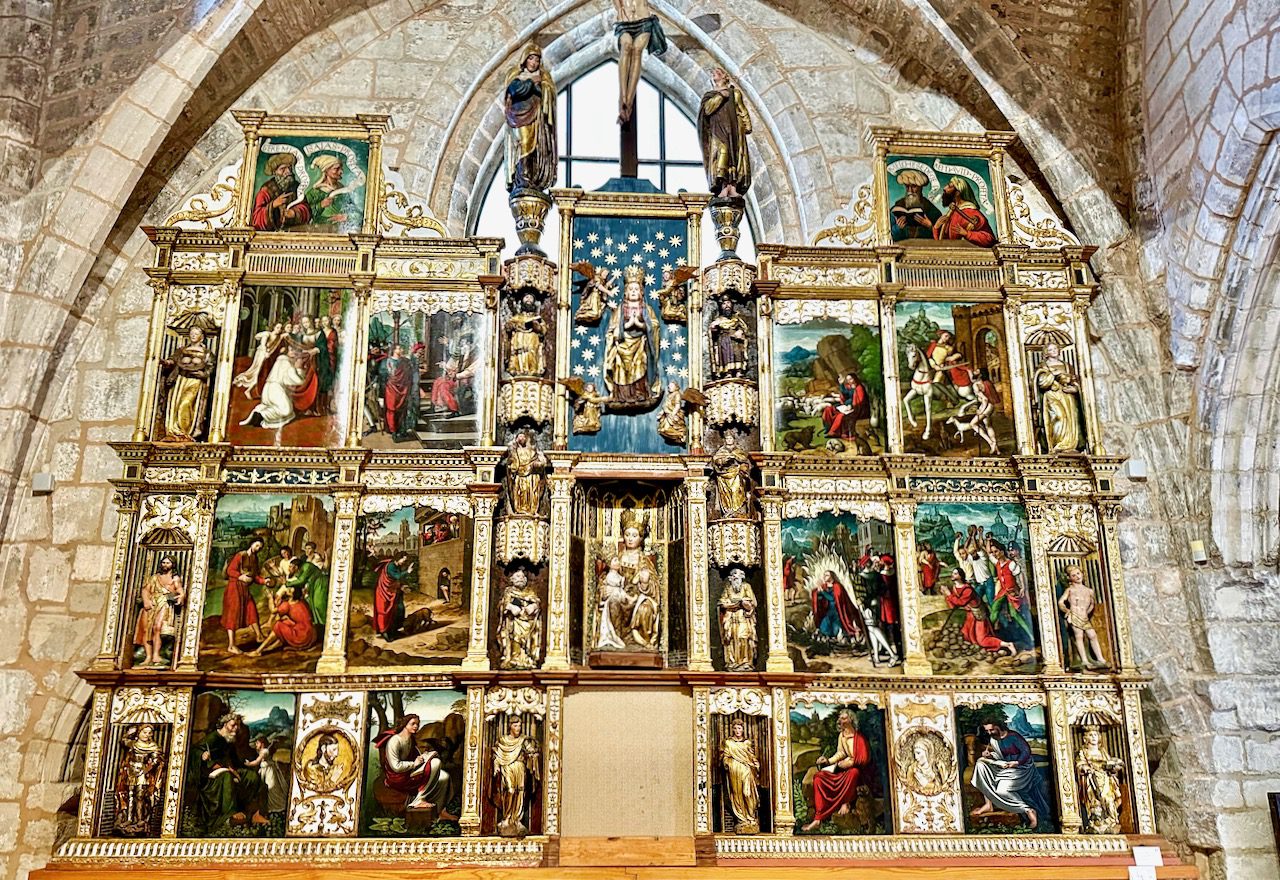
You get a great view from above …
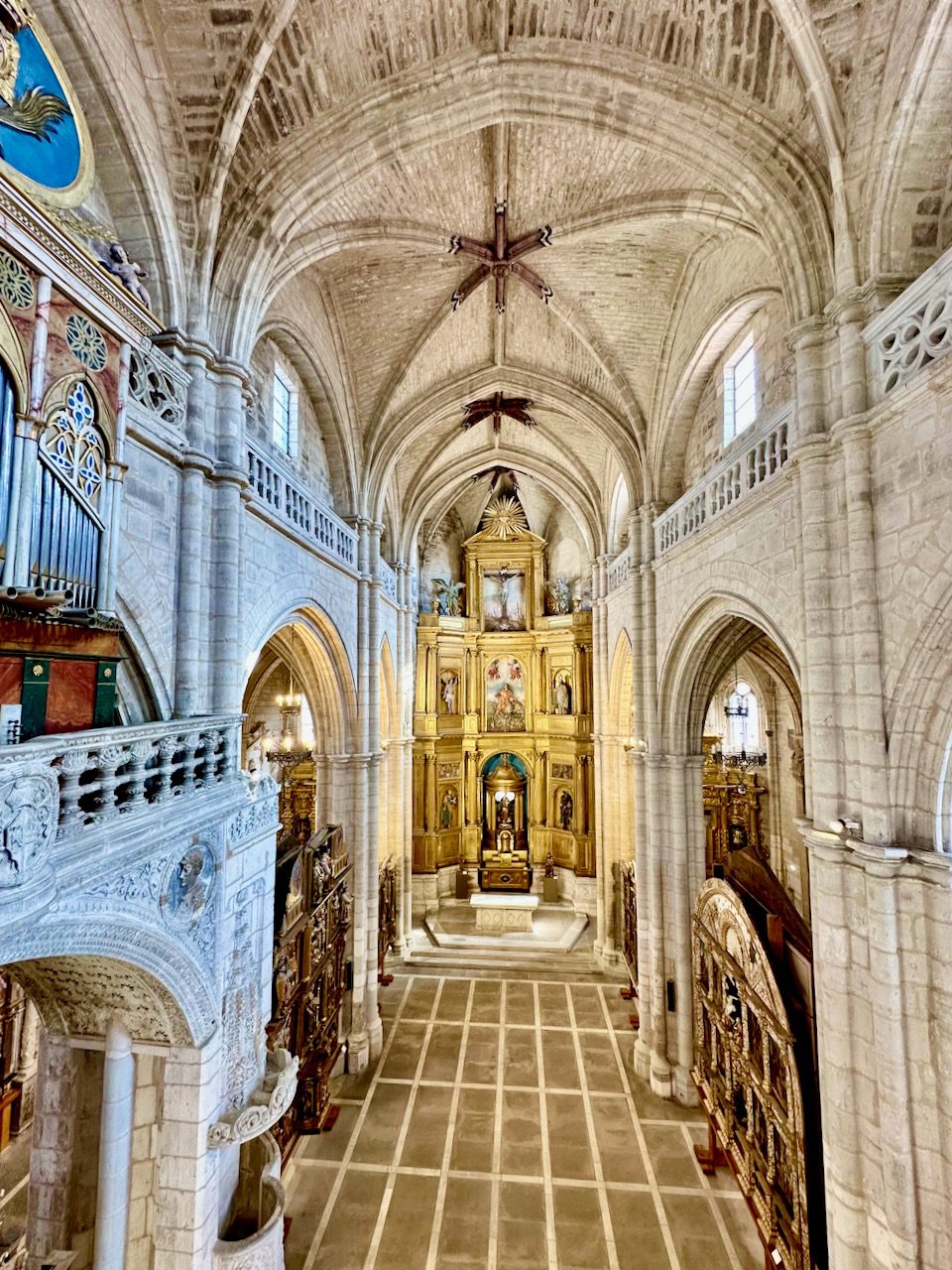
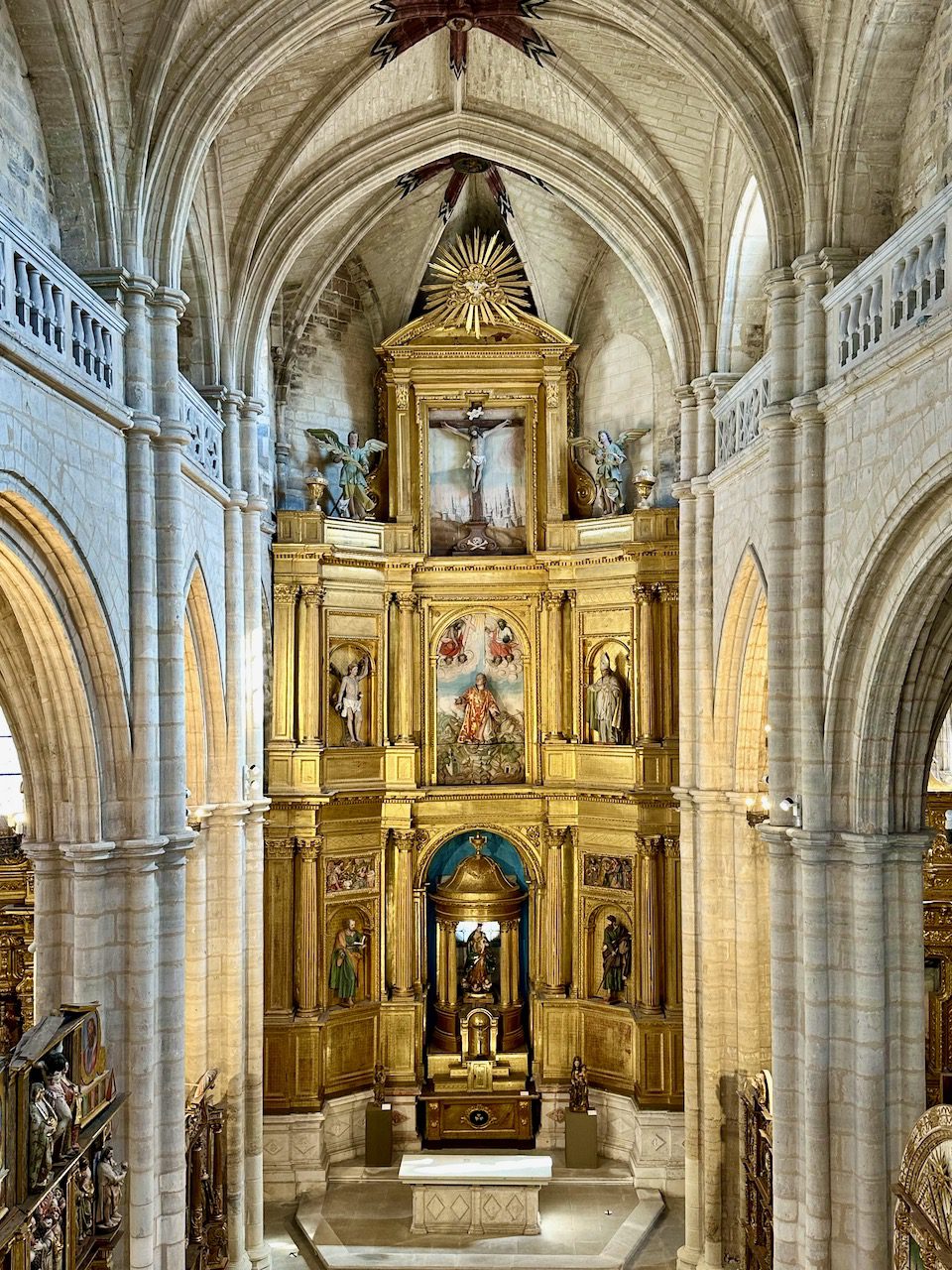
… and below.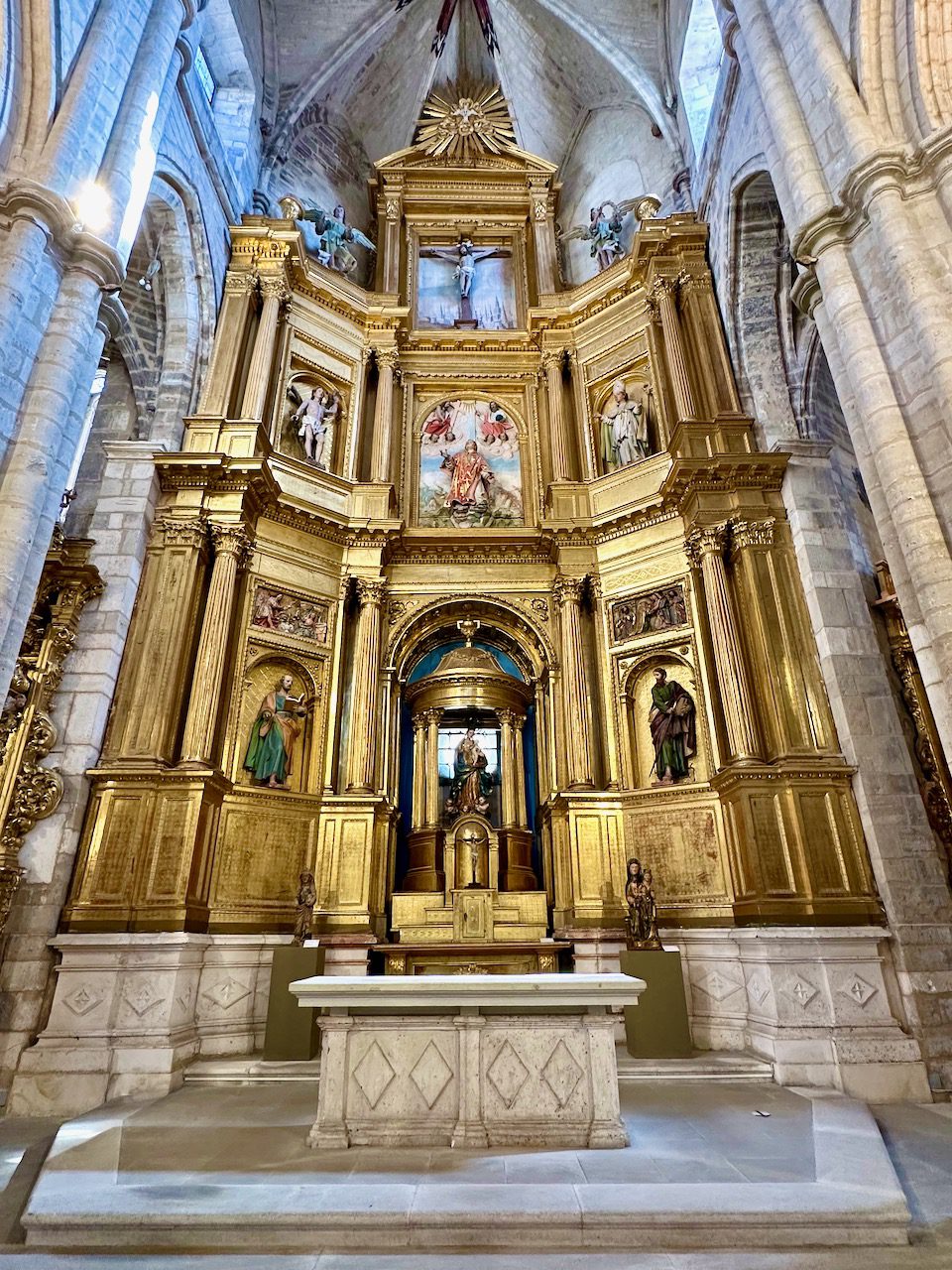
There are dozens more, but I’m sure you get the picture. One of the saints on one of the last pieces showed us (and that guy) off.


We walked outside, and then along the tree-shaded Paseo de la Audiencia …
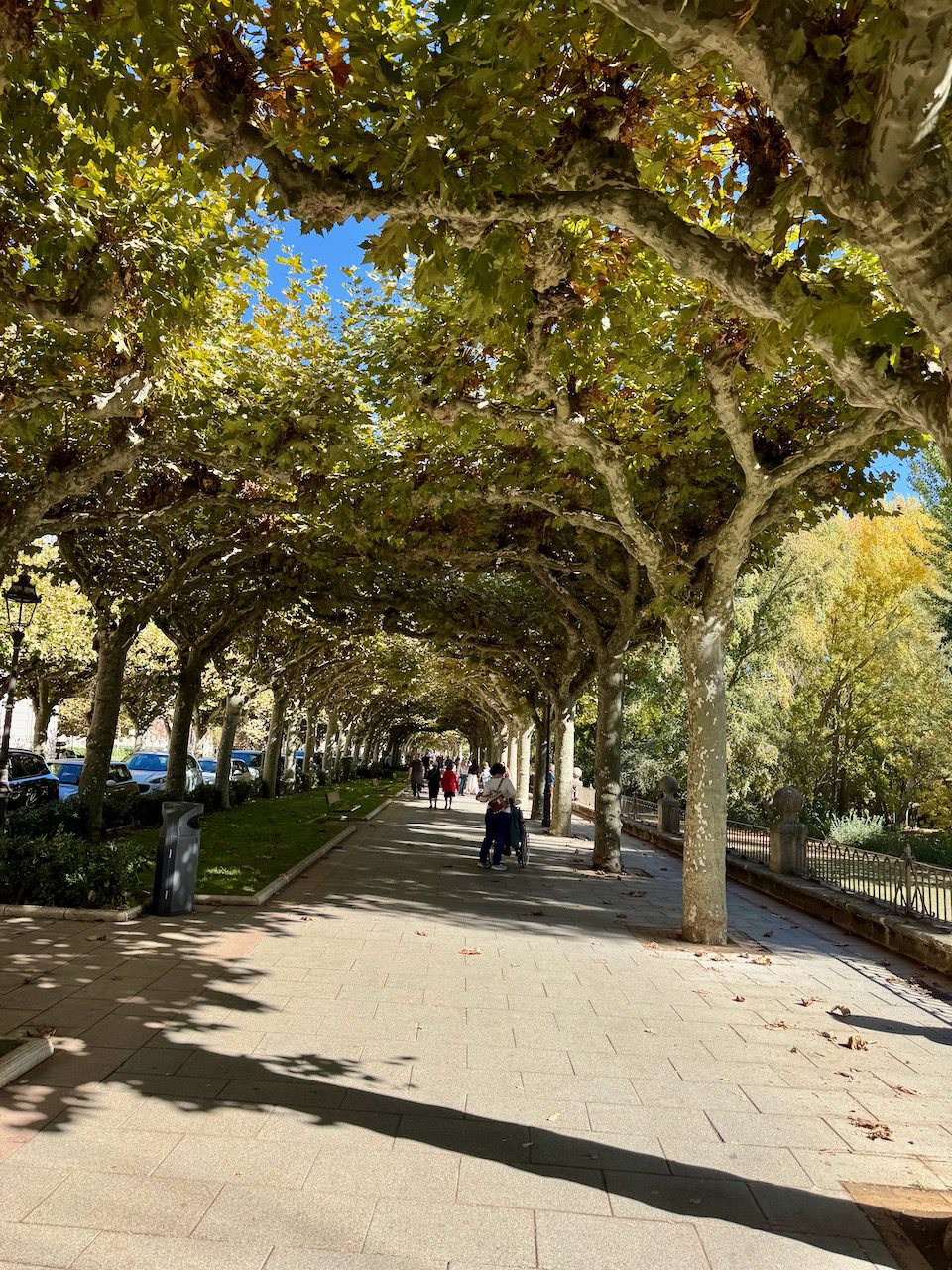
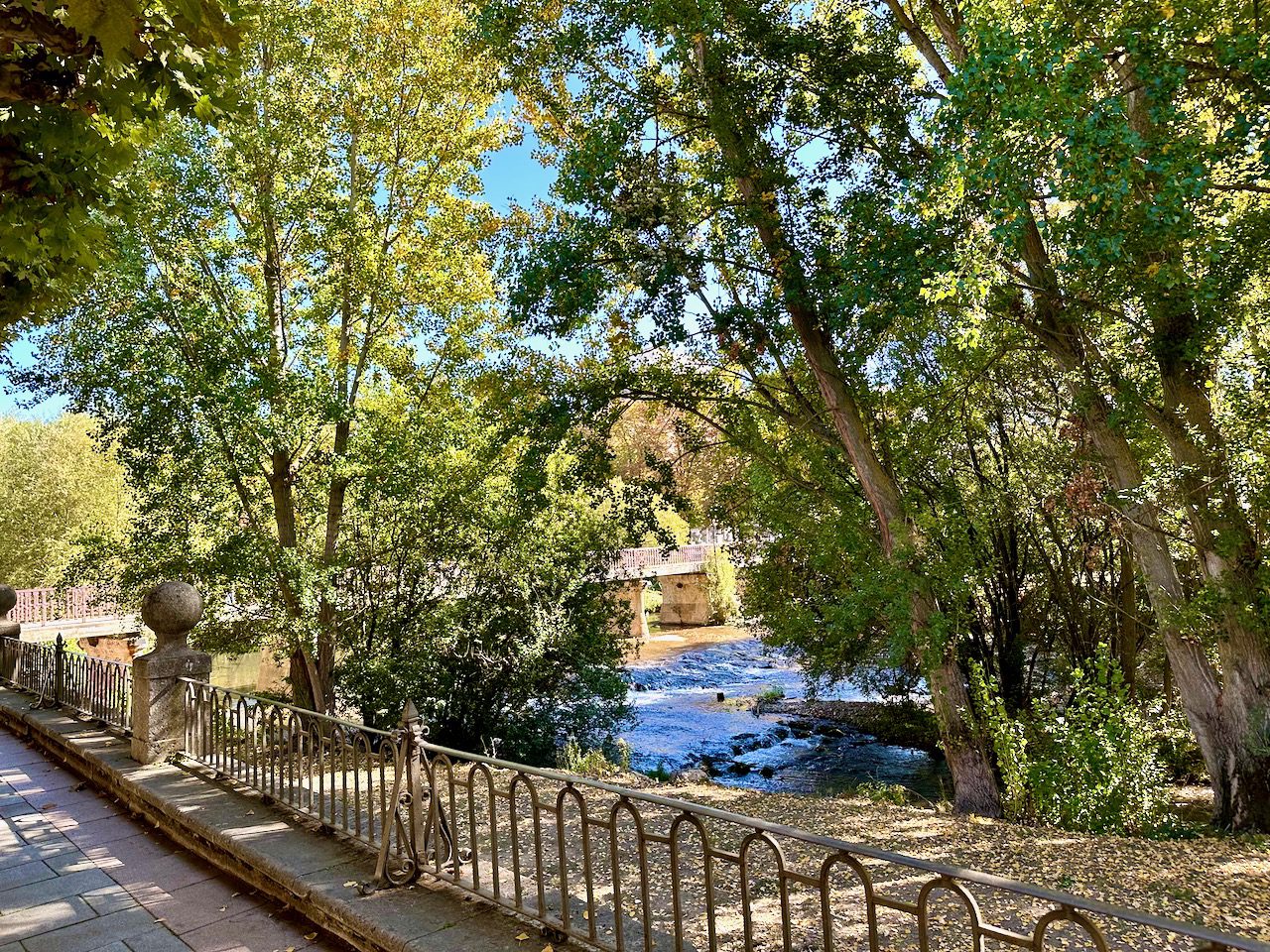
… toward the medieval stone Puente de Santa Maria, which has undergone many iterations throughout history thanks to the numerous floods of the Arlanzón River (more on that later) that have plagued Burgos. It is known as “The Gateway To Burgos.”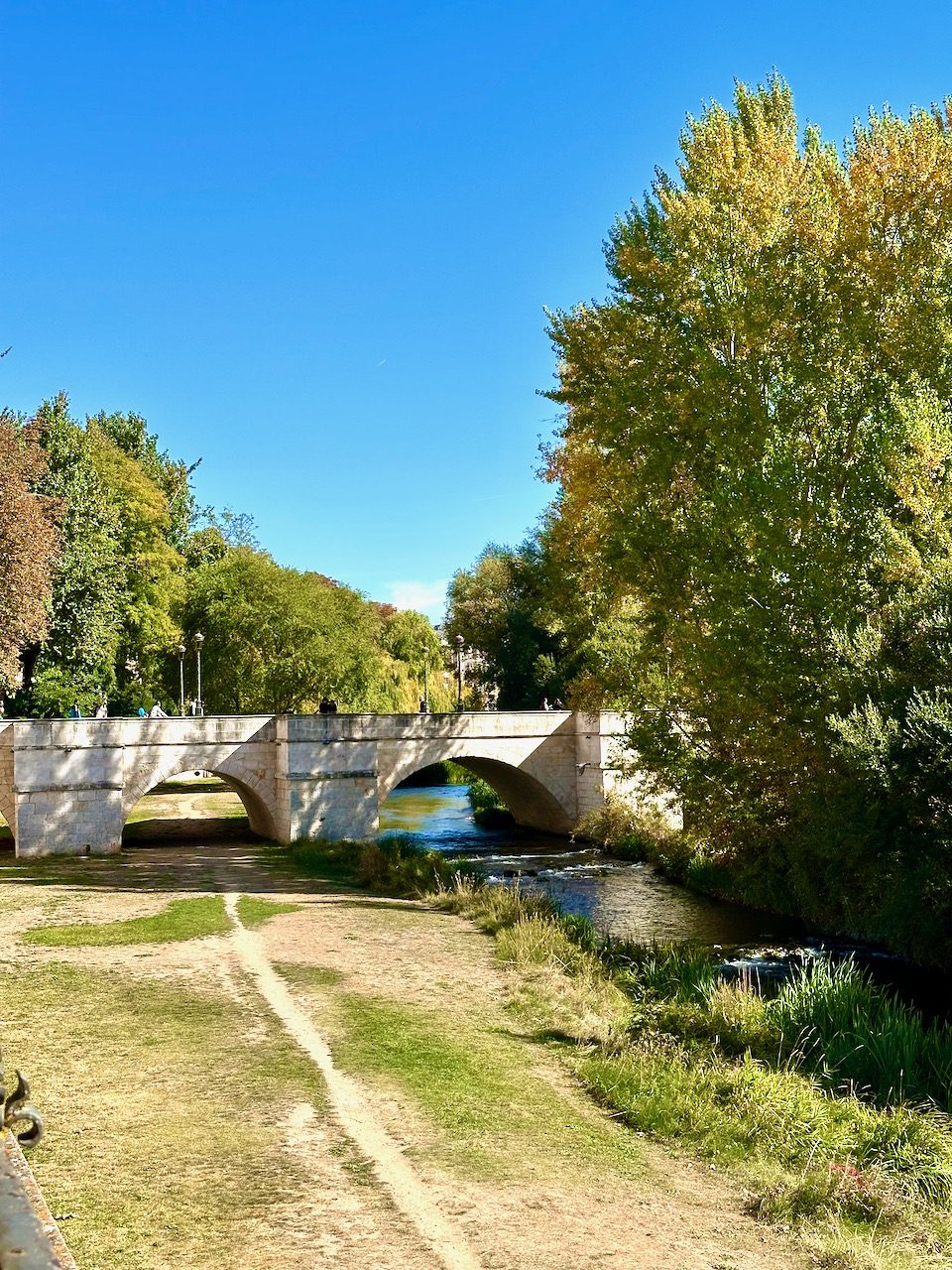
At one time Burgos was a walled city, but today there are few remnants. However, when you enter this area from the bridge you see the massive Arco de Santa Maria. Constructed during the mid-1500s, the arch got a facelift thanks to Carlos V. The faces on the façade include Carlos V, El Cid and some of the civic leaders who helped get the arch constructed.
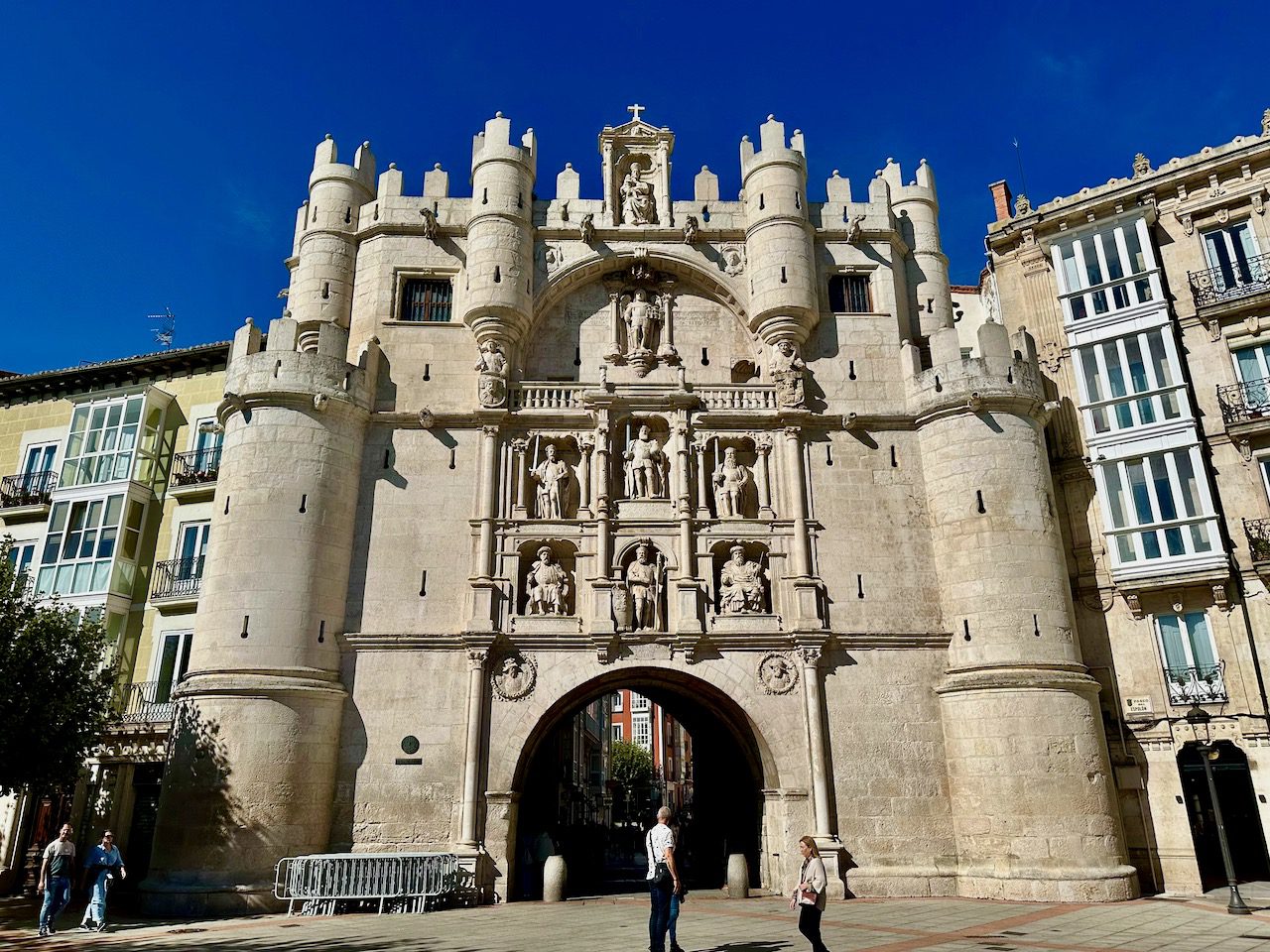
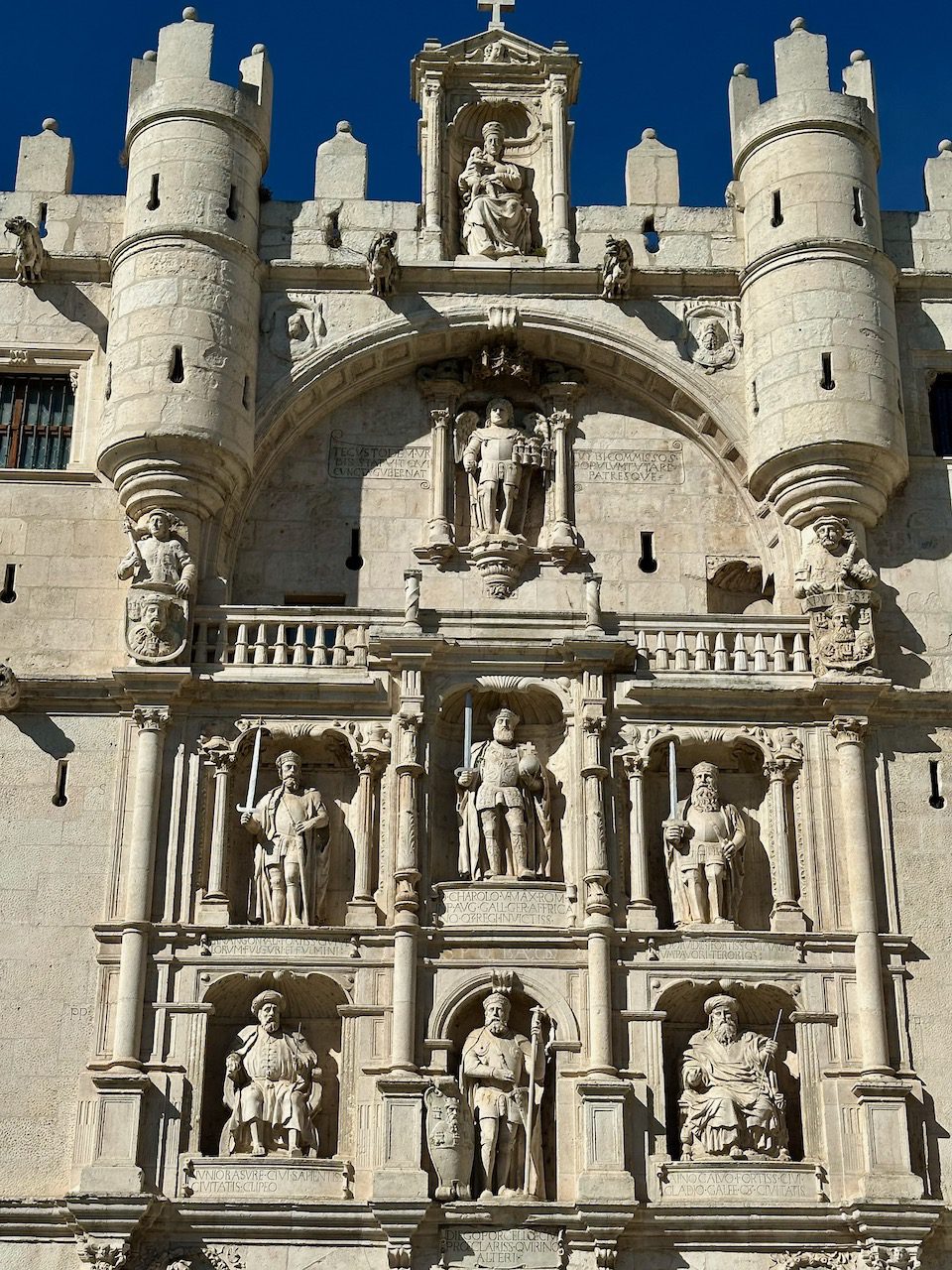
Heading further, we were now on the tree shaded Paseo del Espolón lined with shops and cafes. We stopped into one that seemed to be popular with locals for a late lunch.
After lunch, Tracy and I headed toward the Catedral de Burgos, which has been deemed a Unesco Heritage Site. Called “a masterpiece of Gothic architecture,” it is the third largest cathedral in Spain after the ones in Sevilla and Toledo.
We gained admittance through the Puerta del Perdón doorway, complete with Castilian king statues …
… and a statue of Bishop Mauricio, an advisor to King Ferdinand III of Castile, and the person who started the construction of the cathedral way back in the 1200s.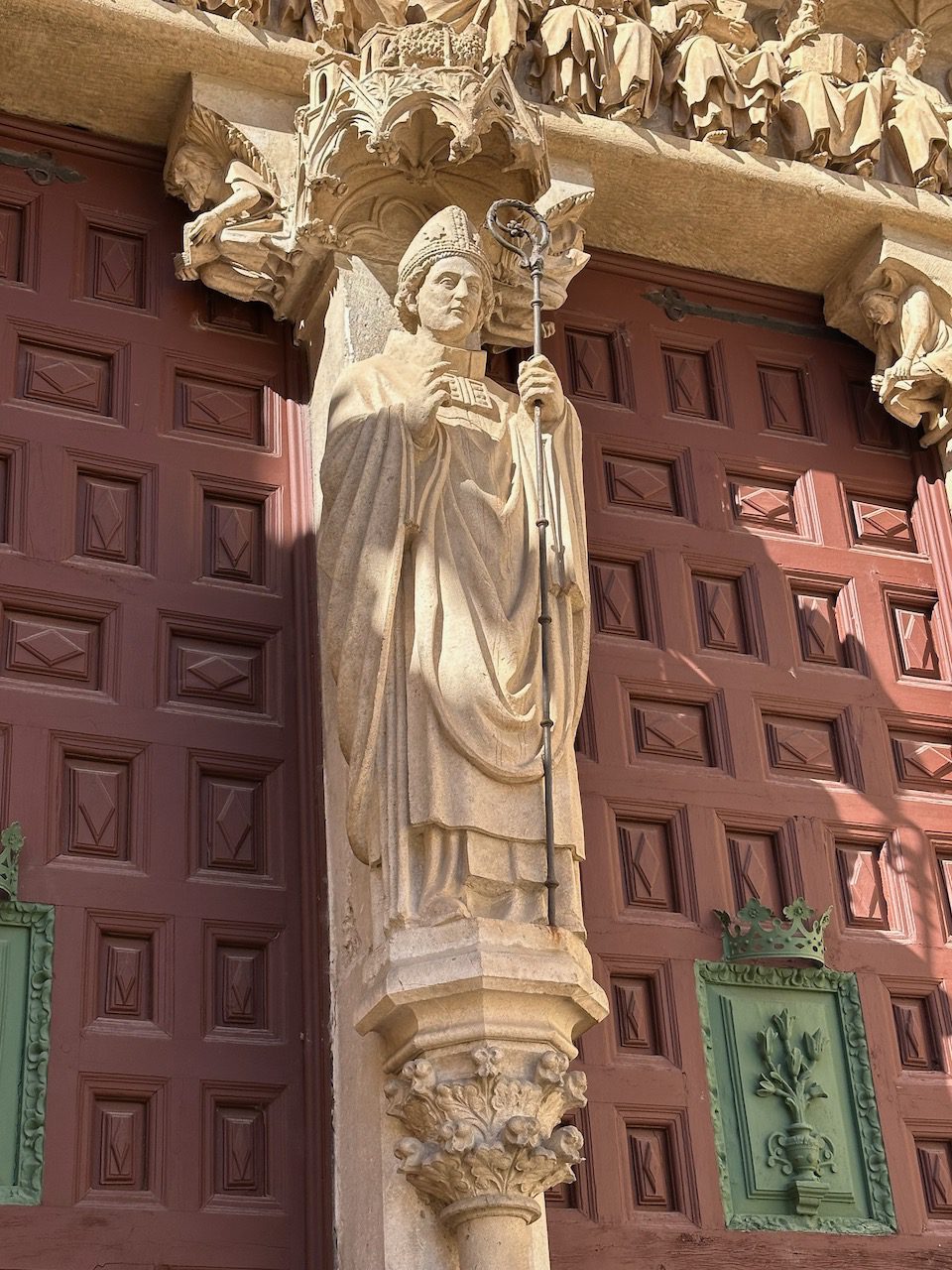
Once inside, we admired the rose window.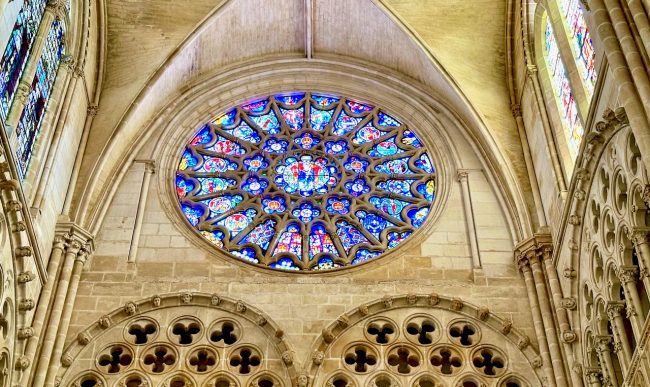 The side naves contain no less than 19 chapels, including the Capilla de la Visitación, home to the burial place of Alonso de Cartagena, a “Roman Catholic bishop, diplomat, historian and writer of Renaissance Spain.”
Capilla de San Enrique is, like most of the chapels, quite ornate. This chapel also contains a 1670s organ that I somehow overlooked.
As we strolled through this vast cathedral, things began looking up.
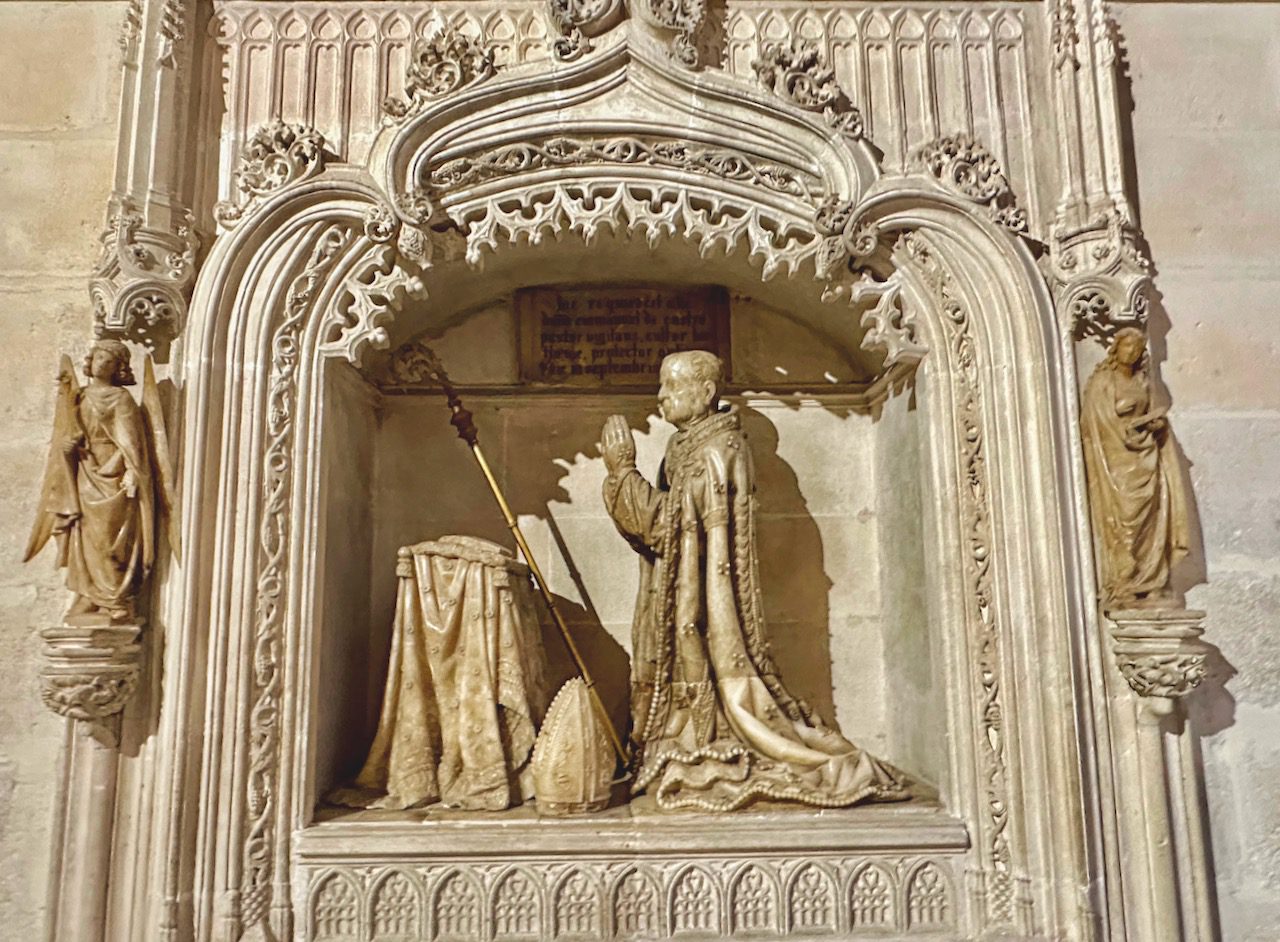
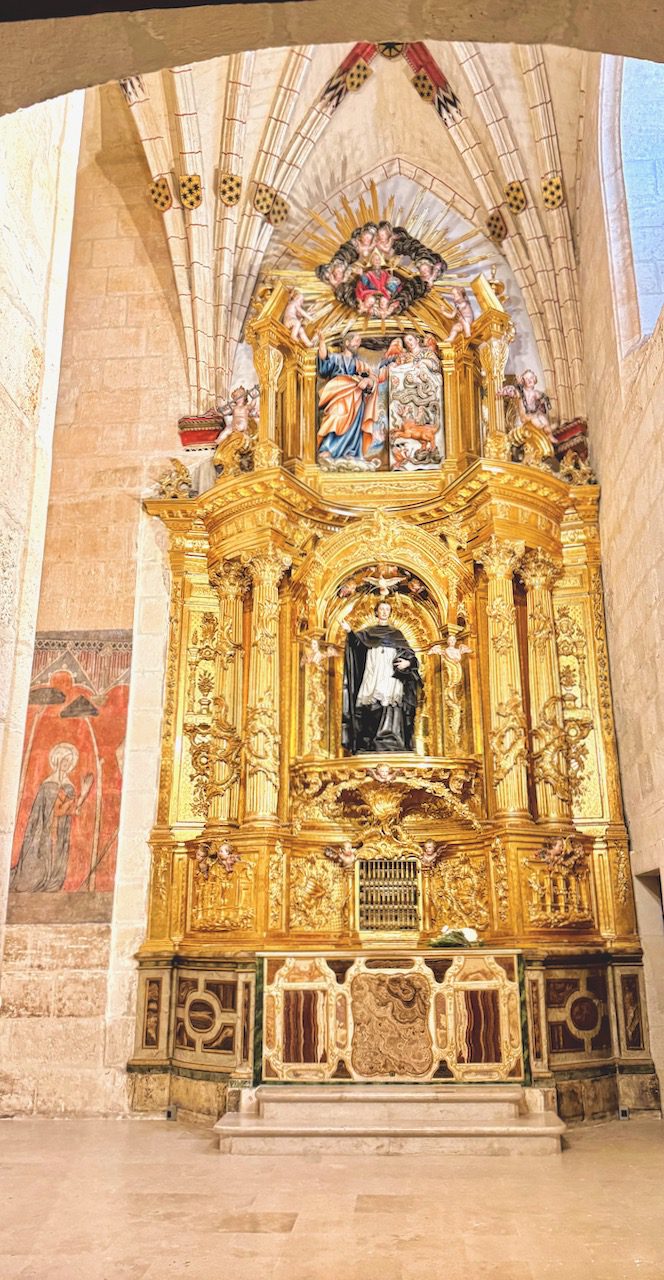
Passing by the tomb of Archbishop Manuel de Castro Alonso and the Rococo altarpiece of the Chapel of San Juan de Sahagún, which honors the man who was a Spanish Augustinian friar and preacher.
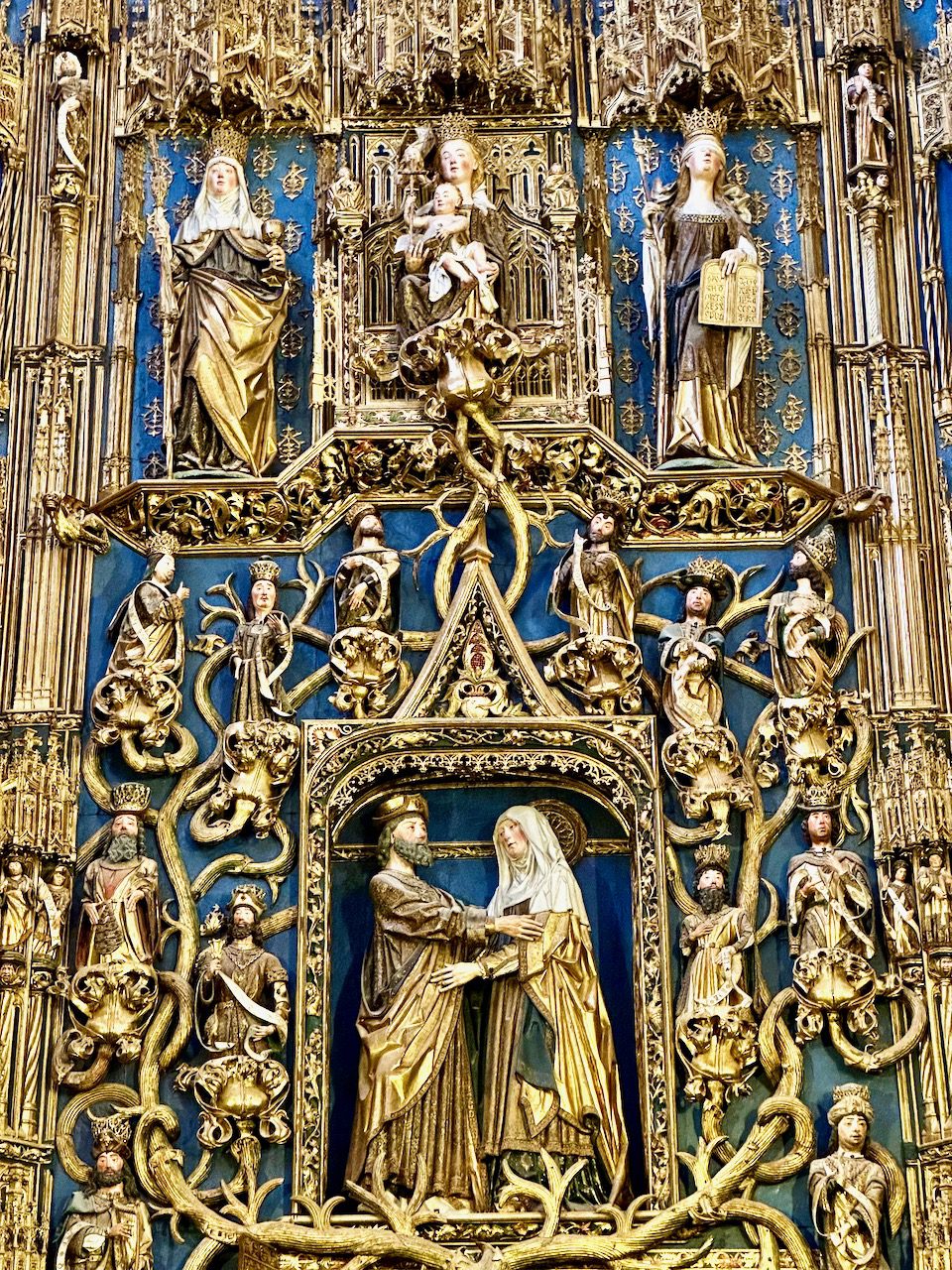
The Capilla Santa Anna was constructed between 1477 and 1488 and features the Tree of Jesse. It contains the tomb of the bishop who commissioned it.
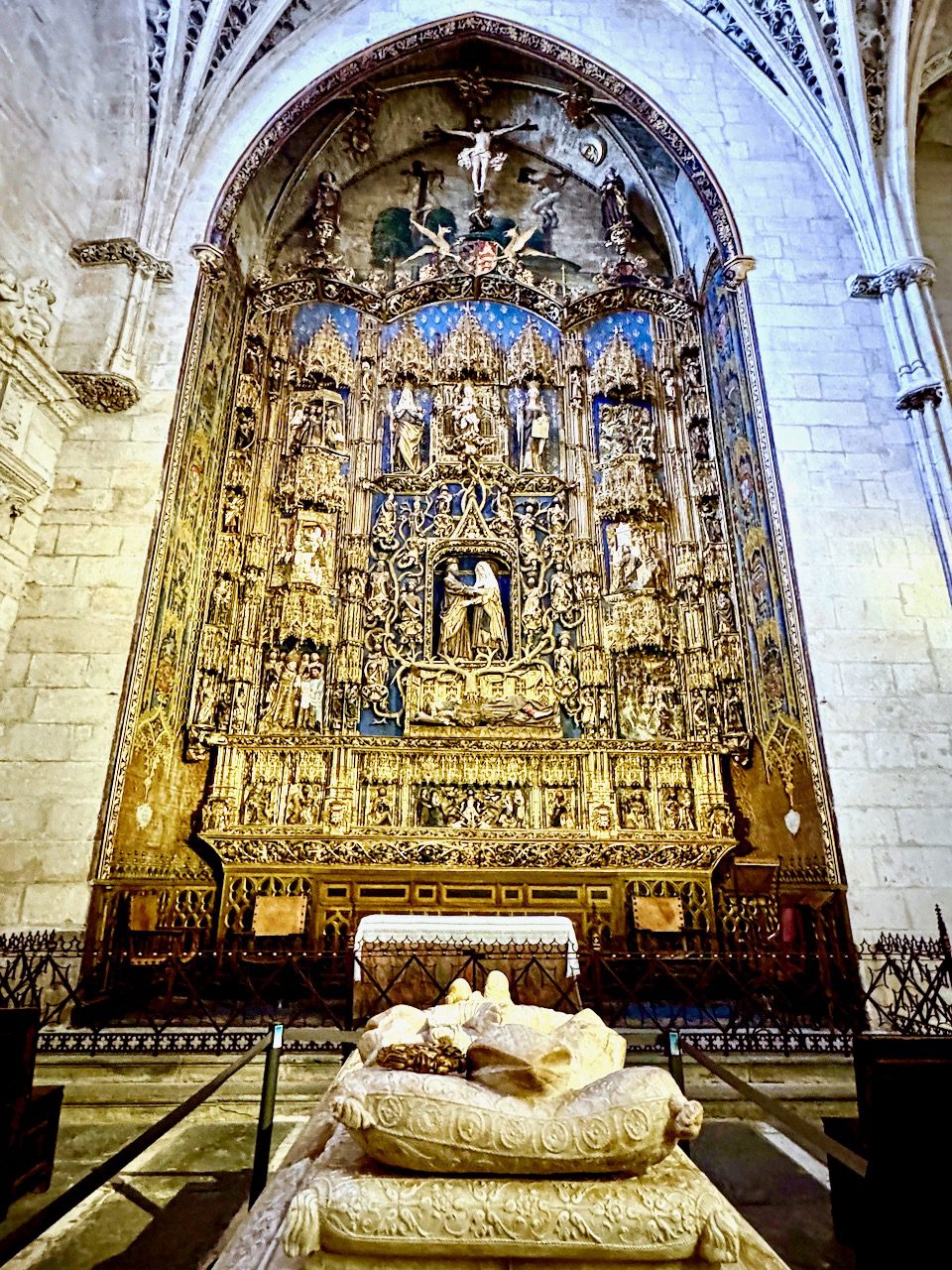
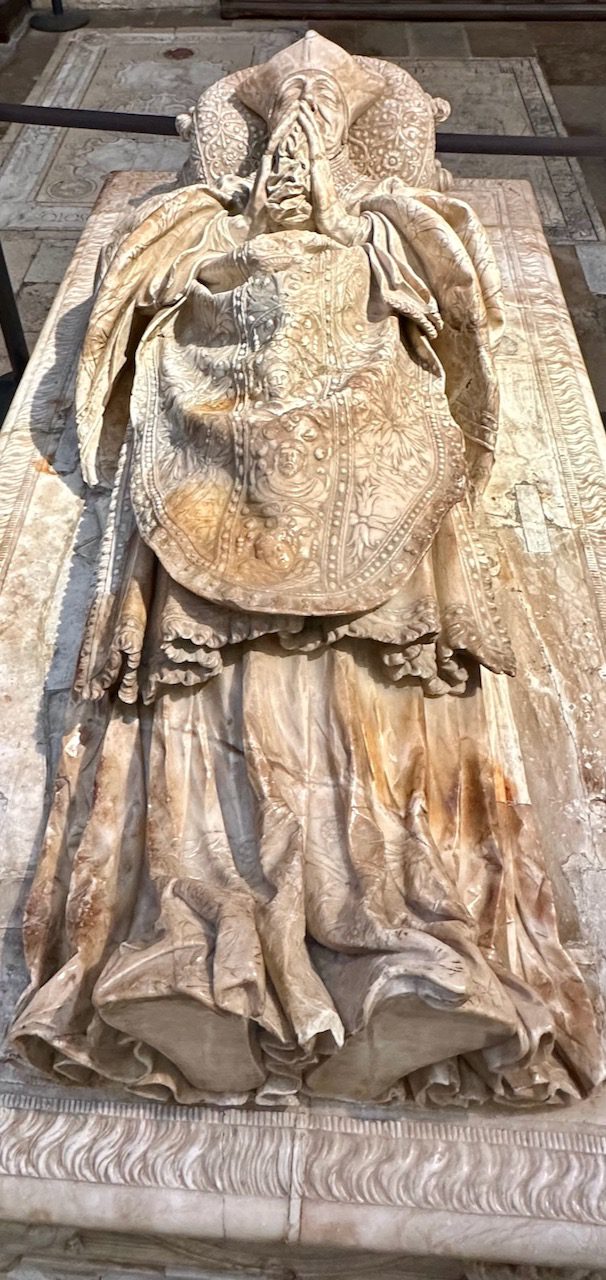
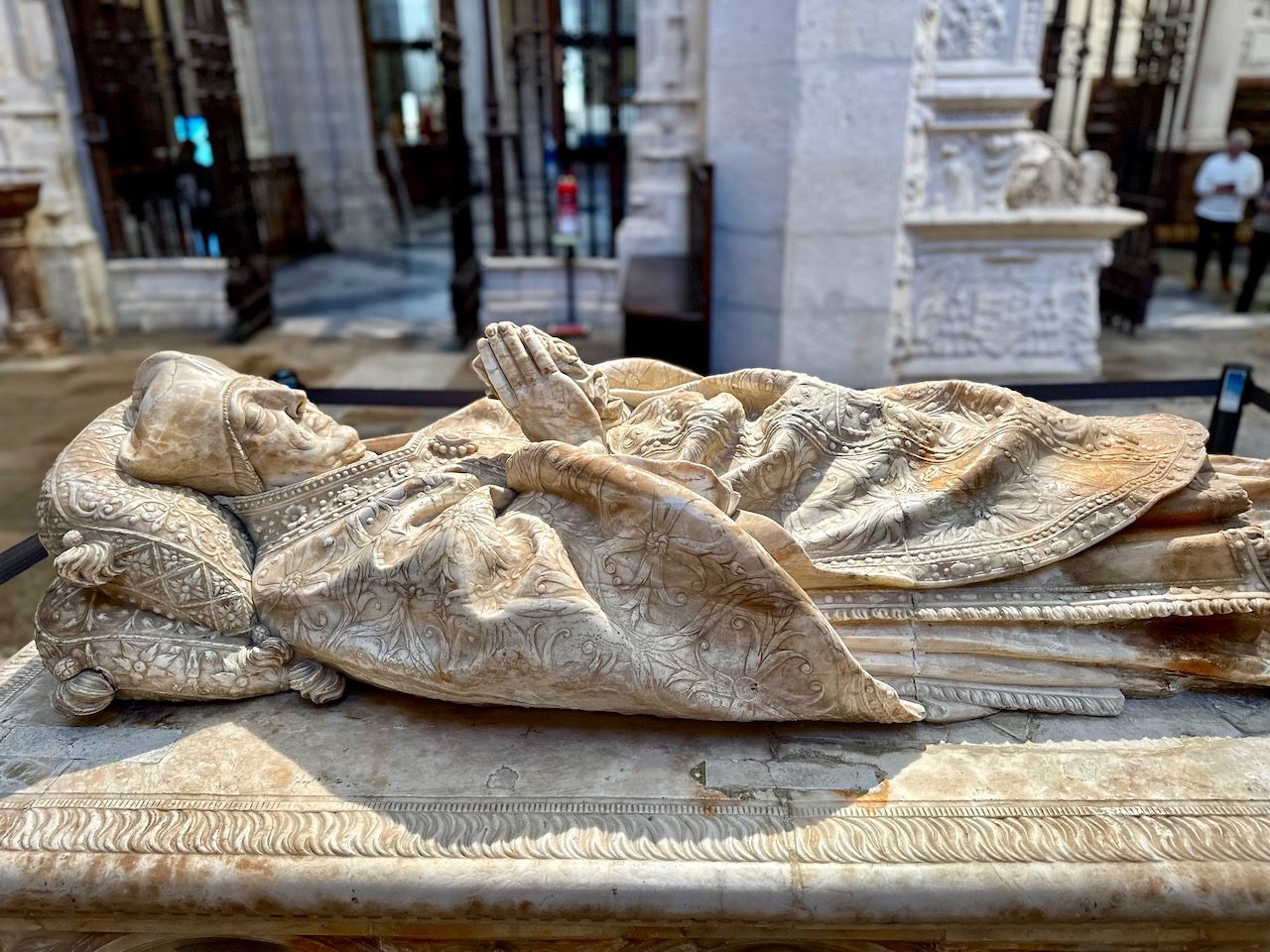
The 1524 tomb of effigy of Gonzalo Díez de Lerma, who was a canon of the Burgos Cathedral, could be found in the Capilla de la Presentación.
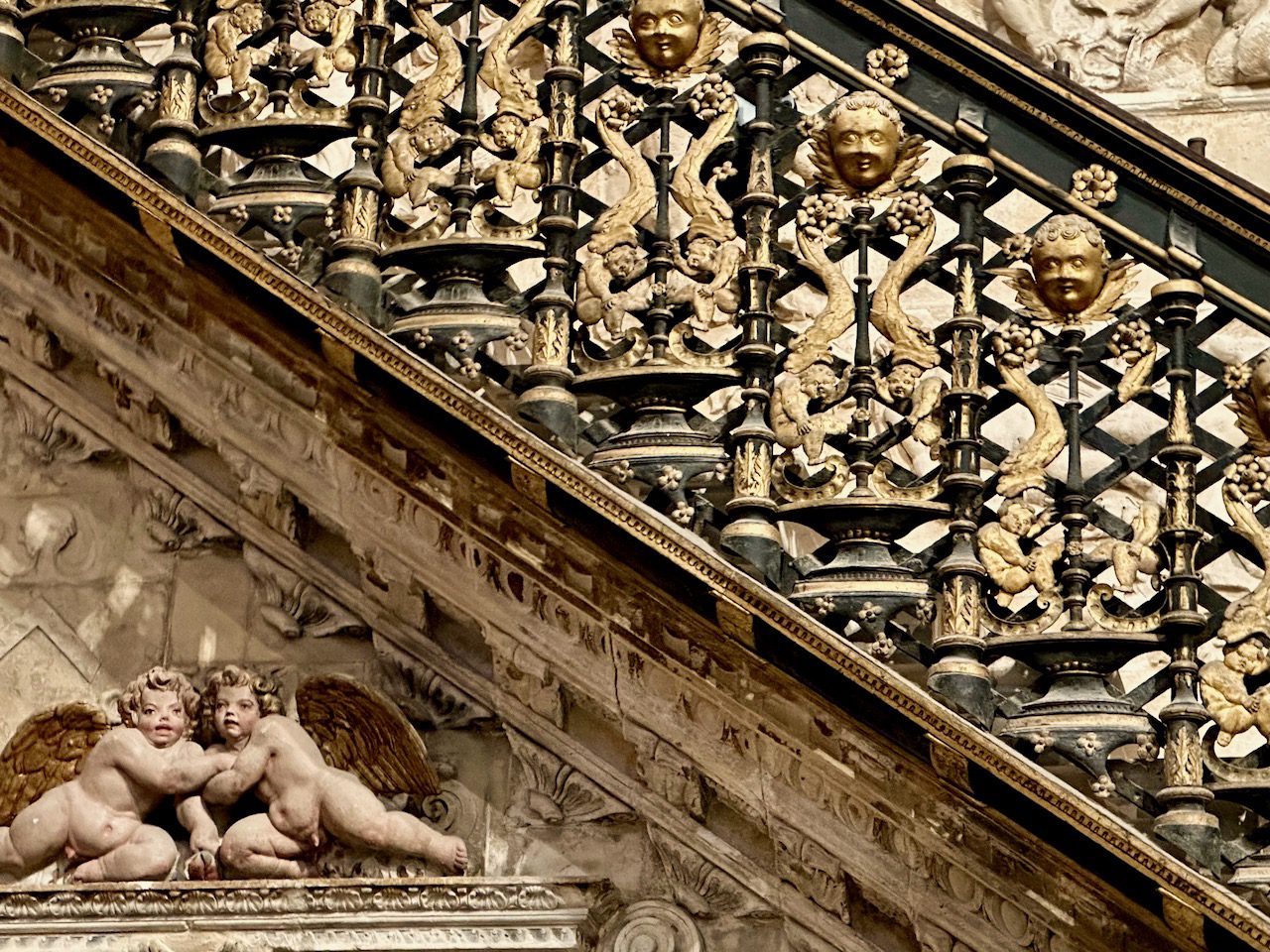
The Escolera Dorada (Golden Stairway) was inspired by Renaissance models of Bramante and Michelangelo, with the top resembling a grand pulpit. Fun fact: This staircase served as a model for the grand staircase of the Paris Opera House.

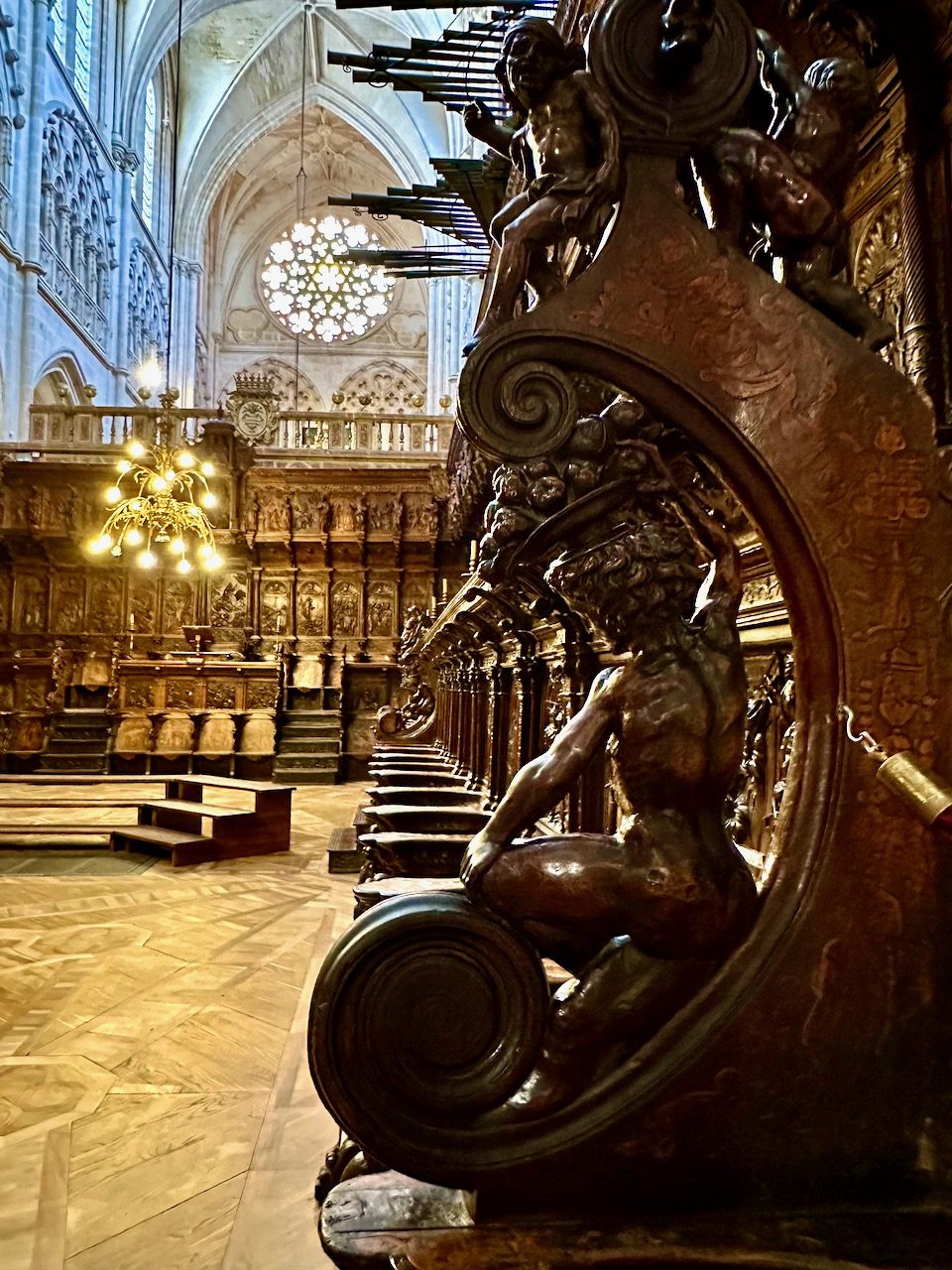
The ornate choir is where they sing to high heavens.

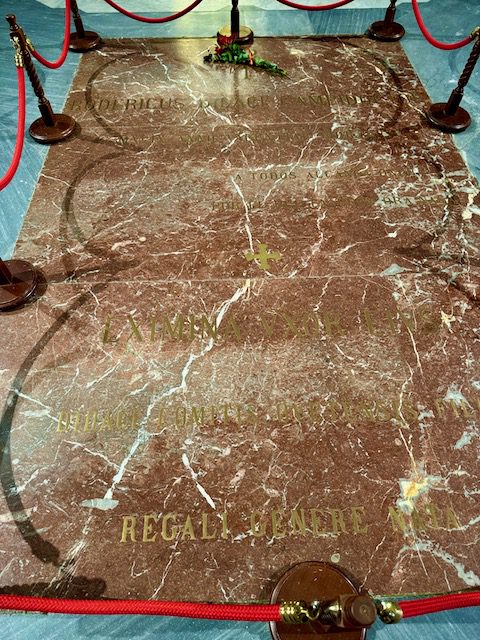
Because I have a failing memory, I forgot I took a photo of the tomb of El Cid (Rodrigo Díaz de Vivar) and his wife, Doña Jimena, which is located under the central dome. The remains were originally buried at the Monastery of San Pedro de Cardeña, but have been moved multiple times since, and finally were placed here in 1921. The tomb features a Latin inscription, “Brave and unconquered, famous in triumphs of war, lies in this tomb, Roderick the Great of Vivar.”
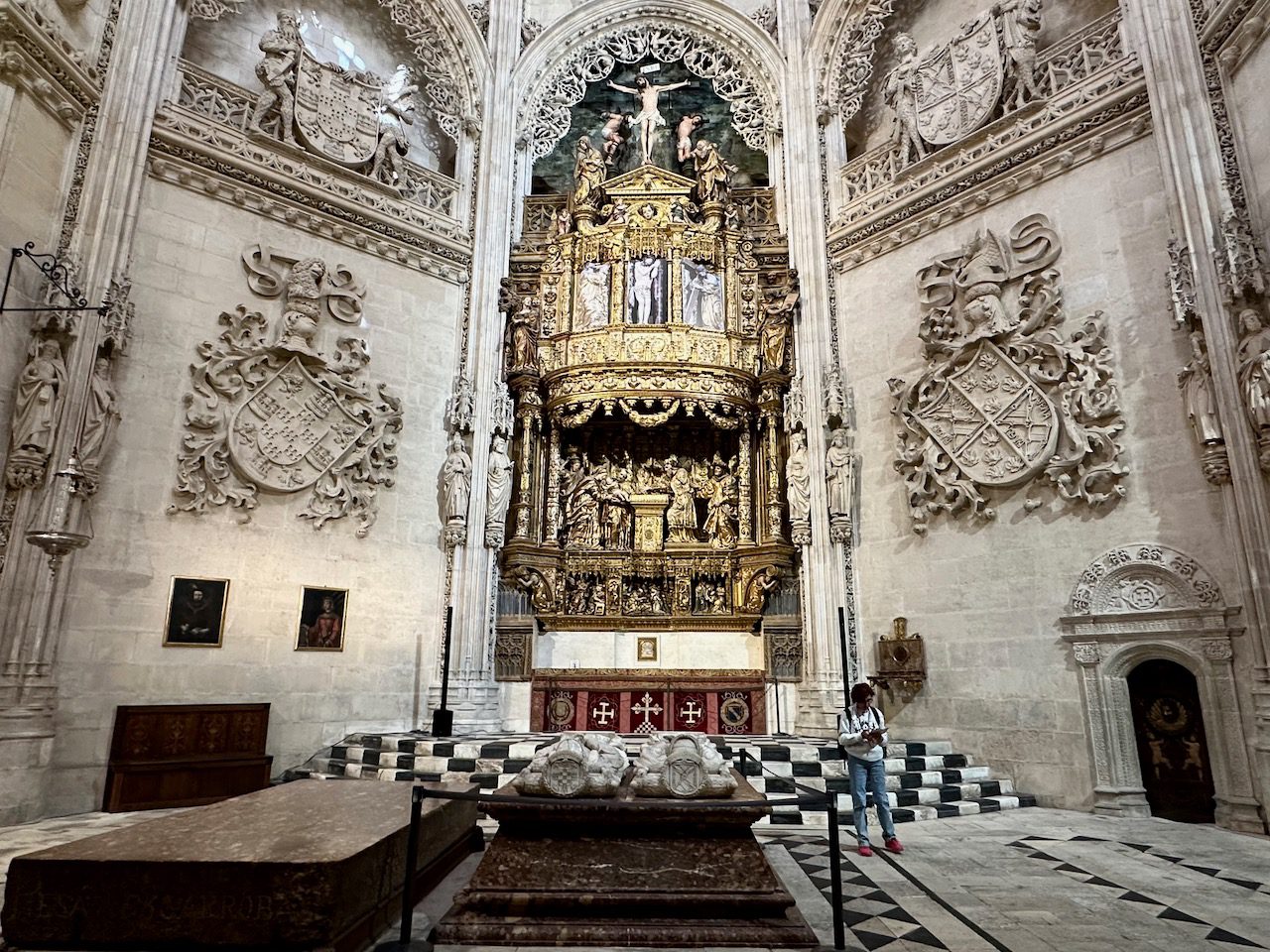
The elaborate altarpiece of the Chapel of Nativity combines with a cool ceiling.


Inside the Capilla de los Condestables, there were tomb effigies of chapel founders Pedro Fernández de Velasco, 2nd Count of Haro and Constable of Castile, and his wife, Mencía de Figueroa. (if you go online, many people purport this to be the tomb of El Cid and Doña Jimena. It is not.)

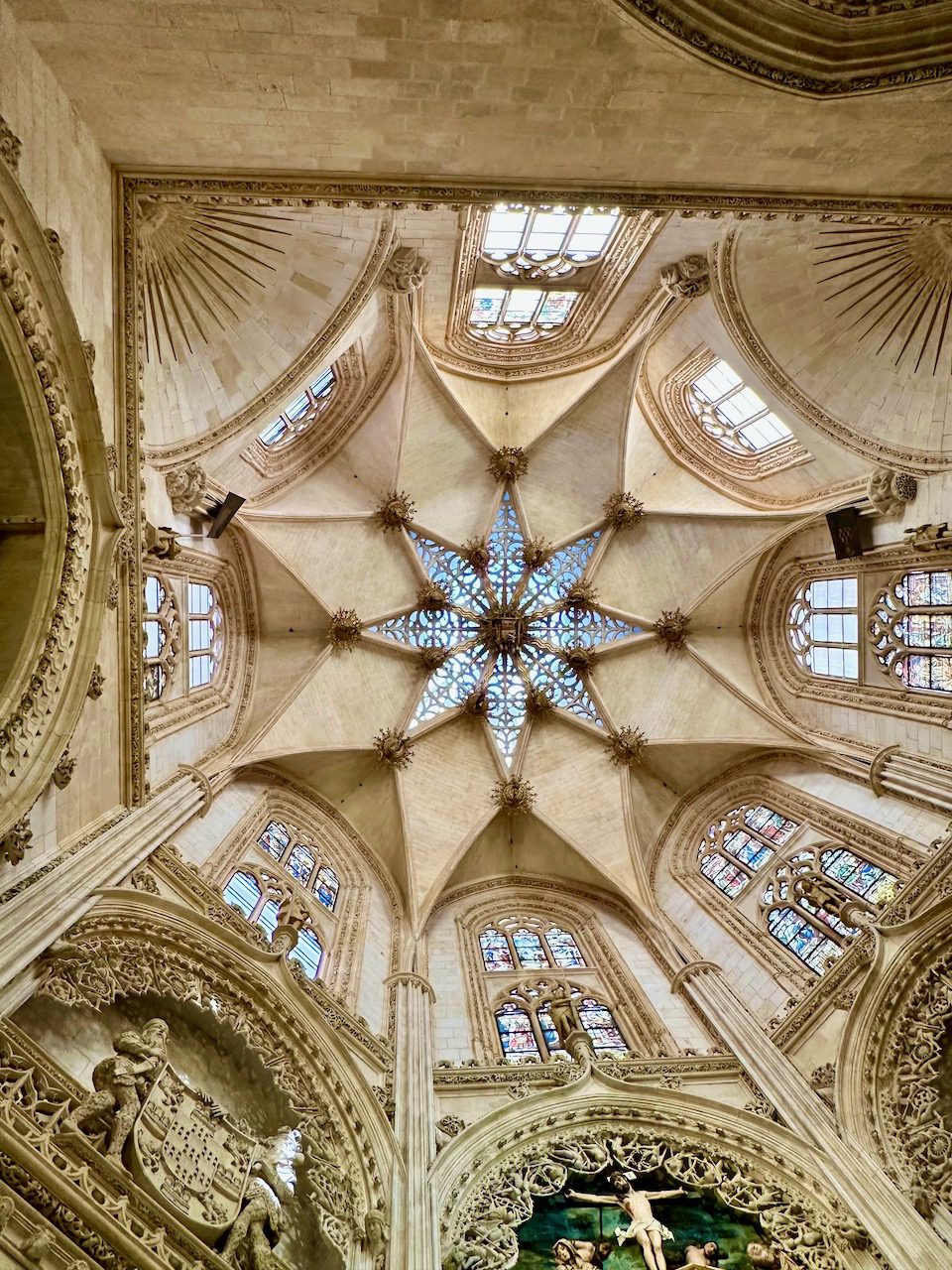
The star-shaped vault is what they get to gaze upon every day.
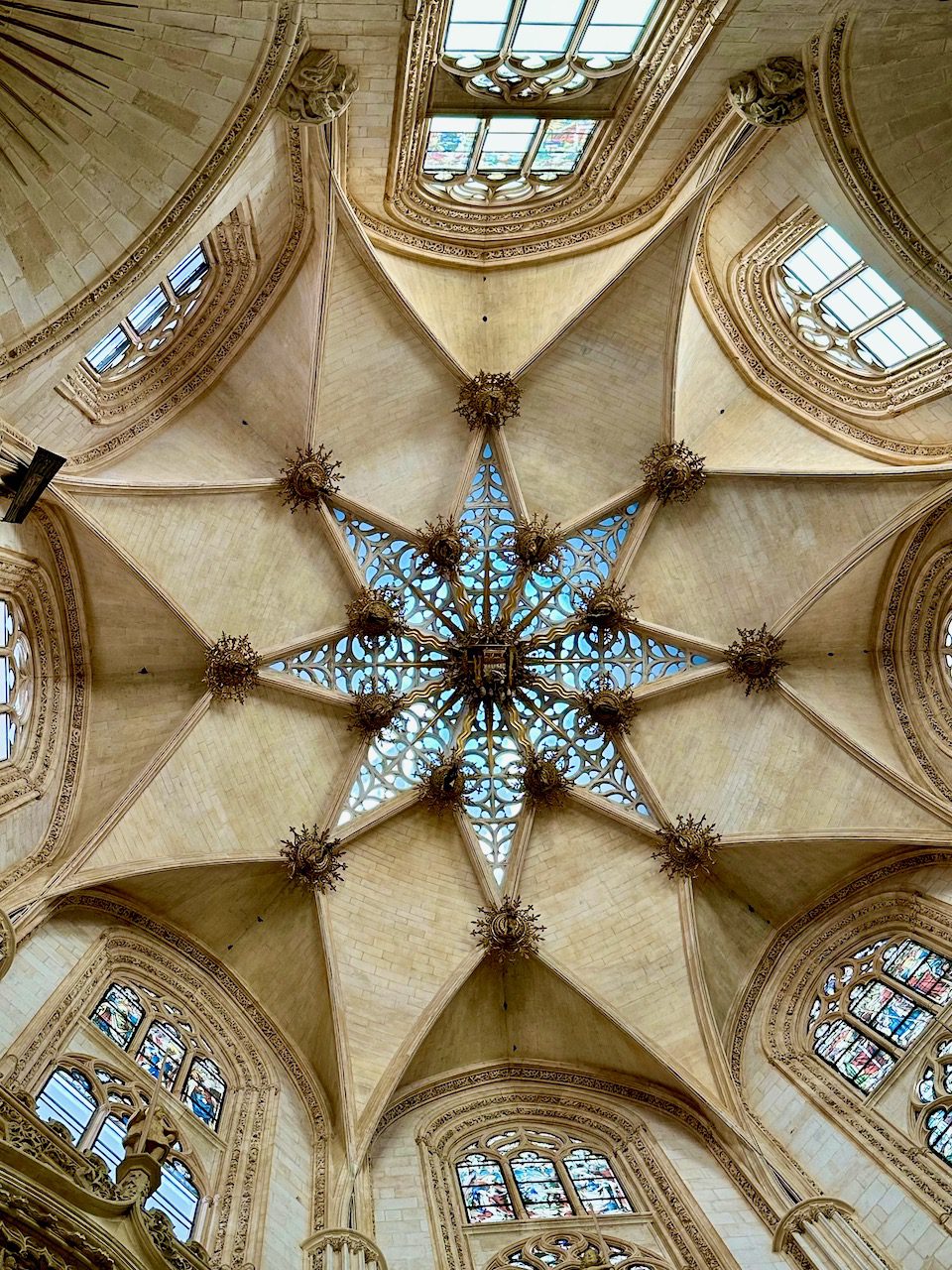
Speaking of star-vault, the star vault ceiling in the Chapter House wasn’t too shabby, either.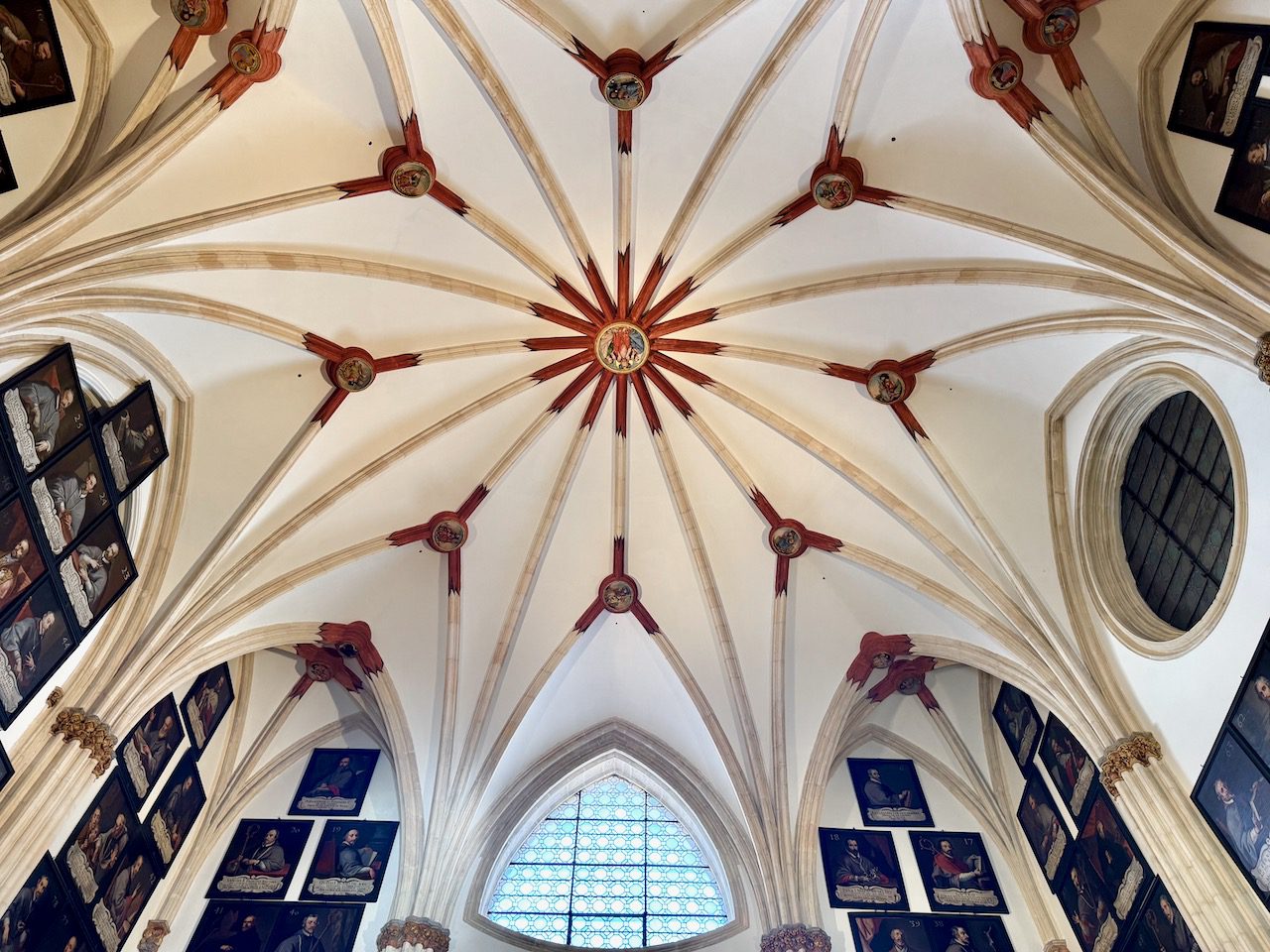
We were nearing the end of our cathedral journey …
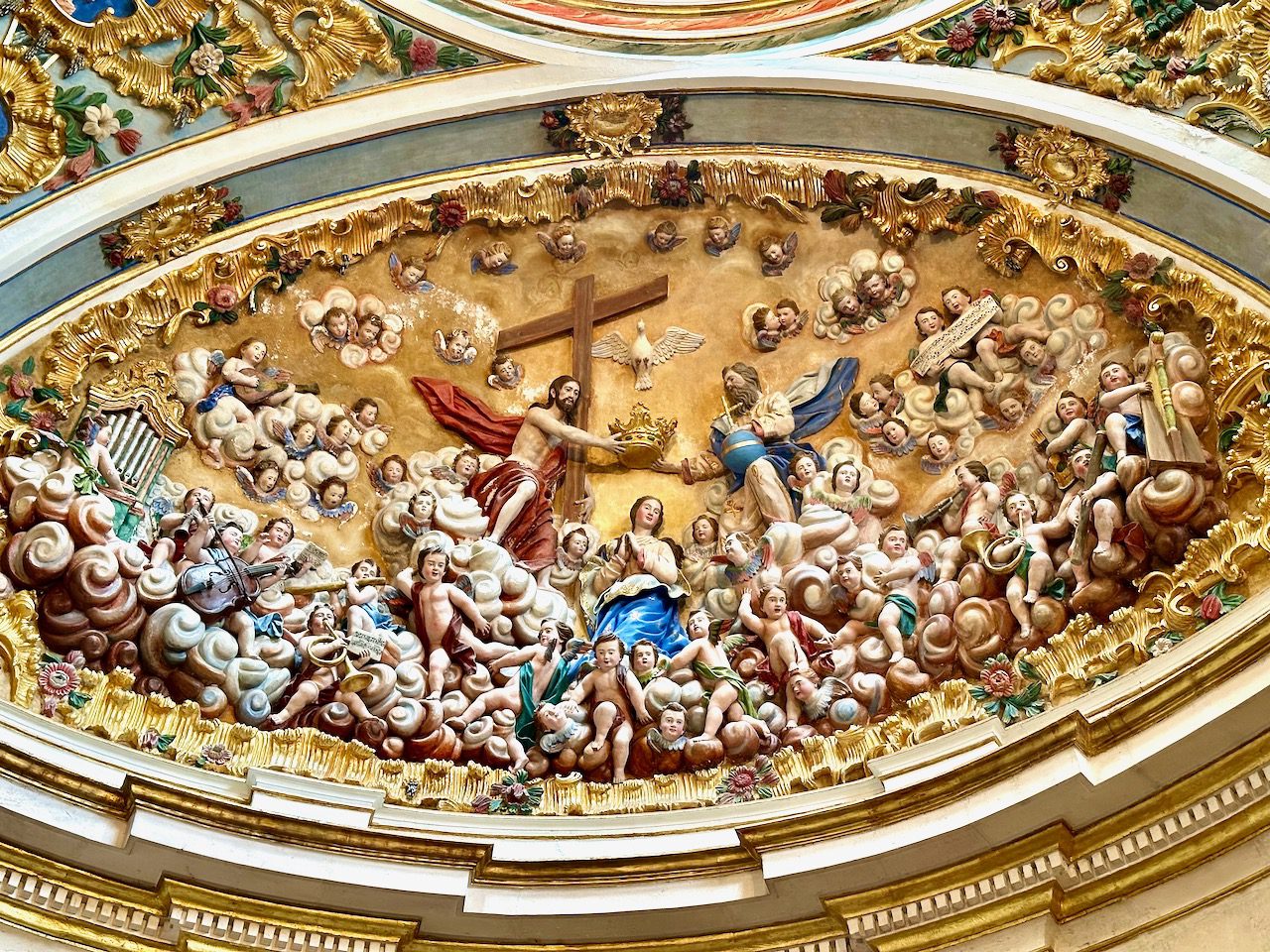
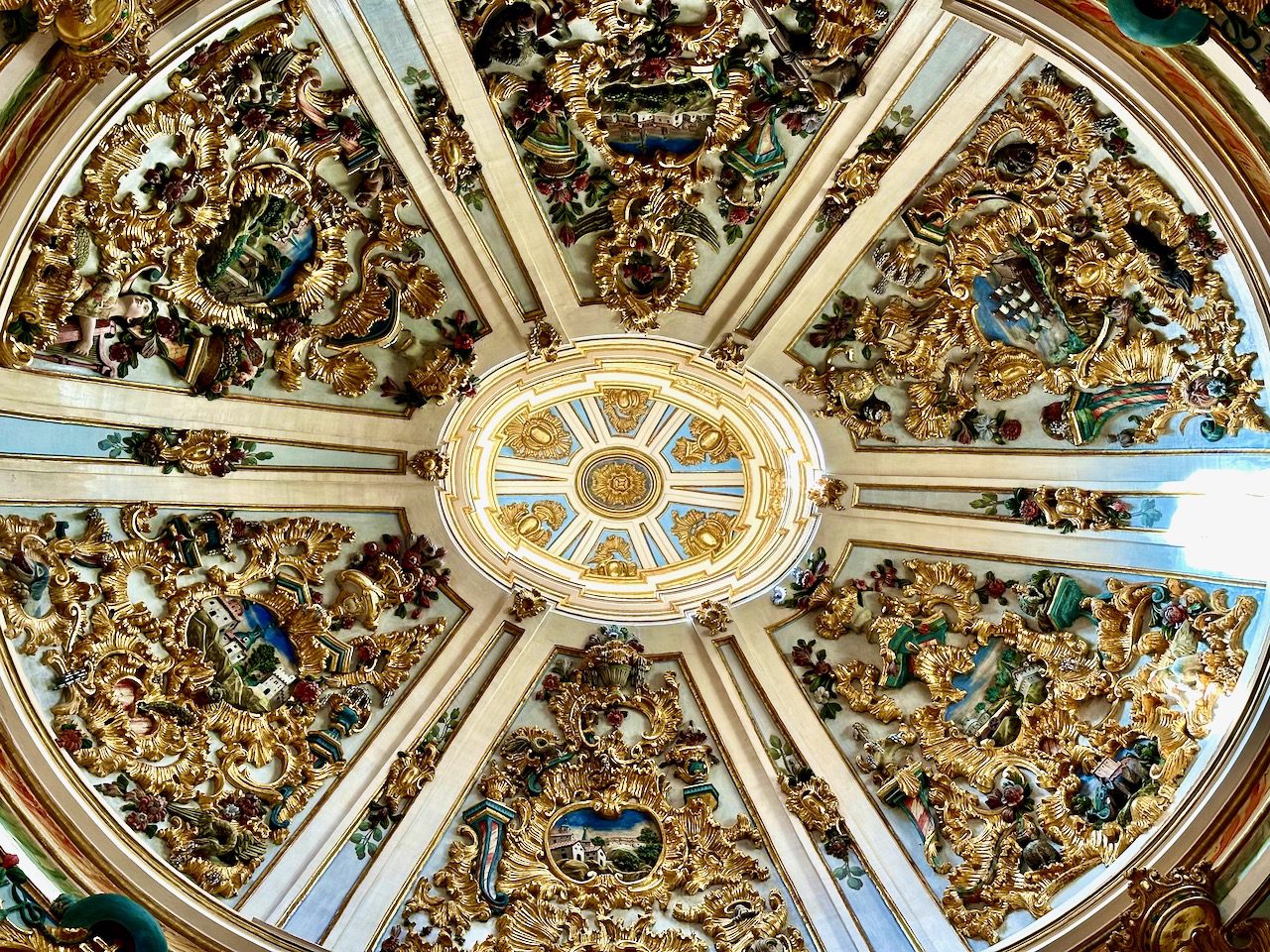
… when we came upon the Main Sacristy.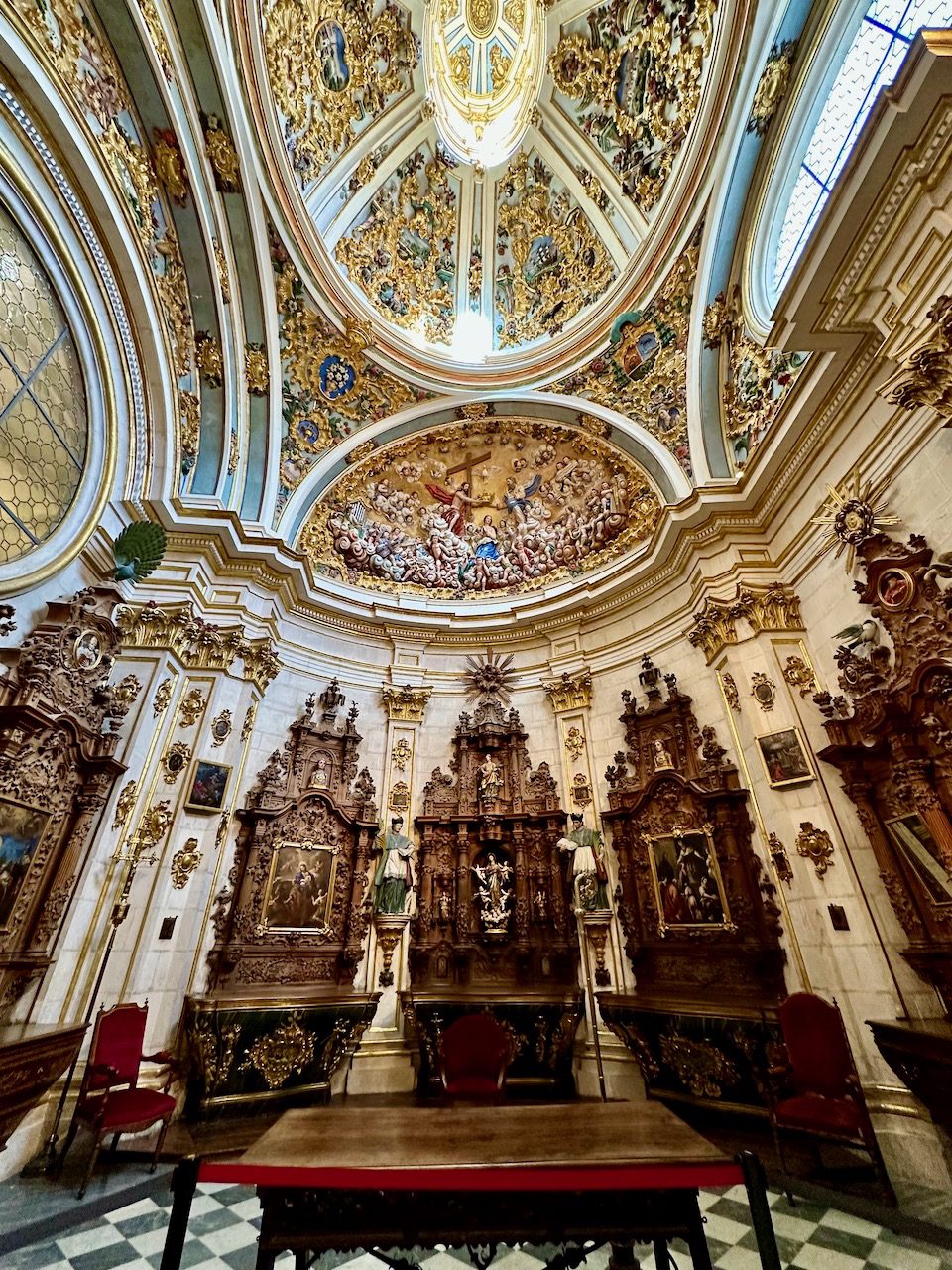
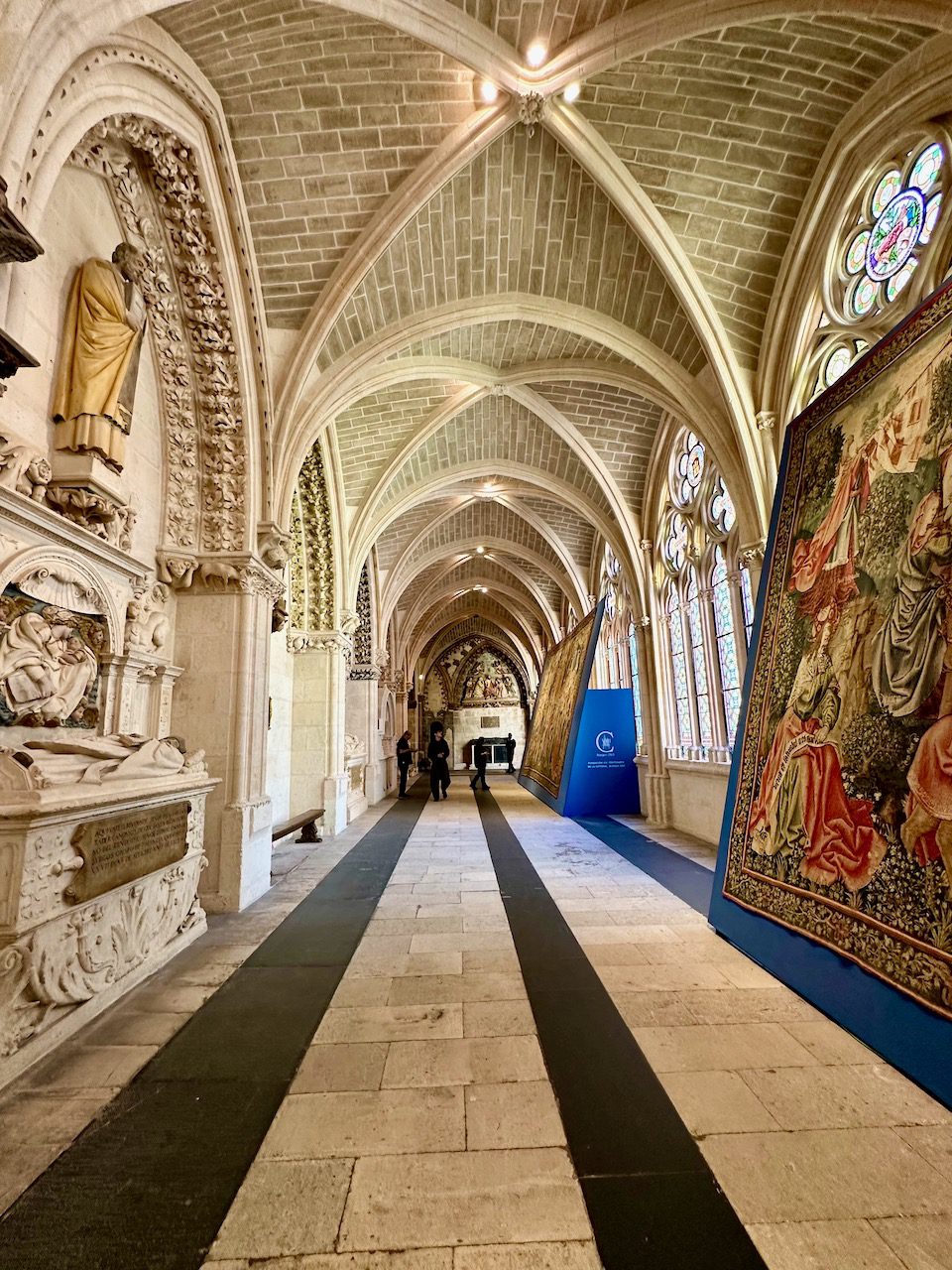
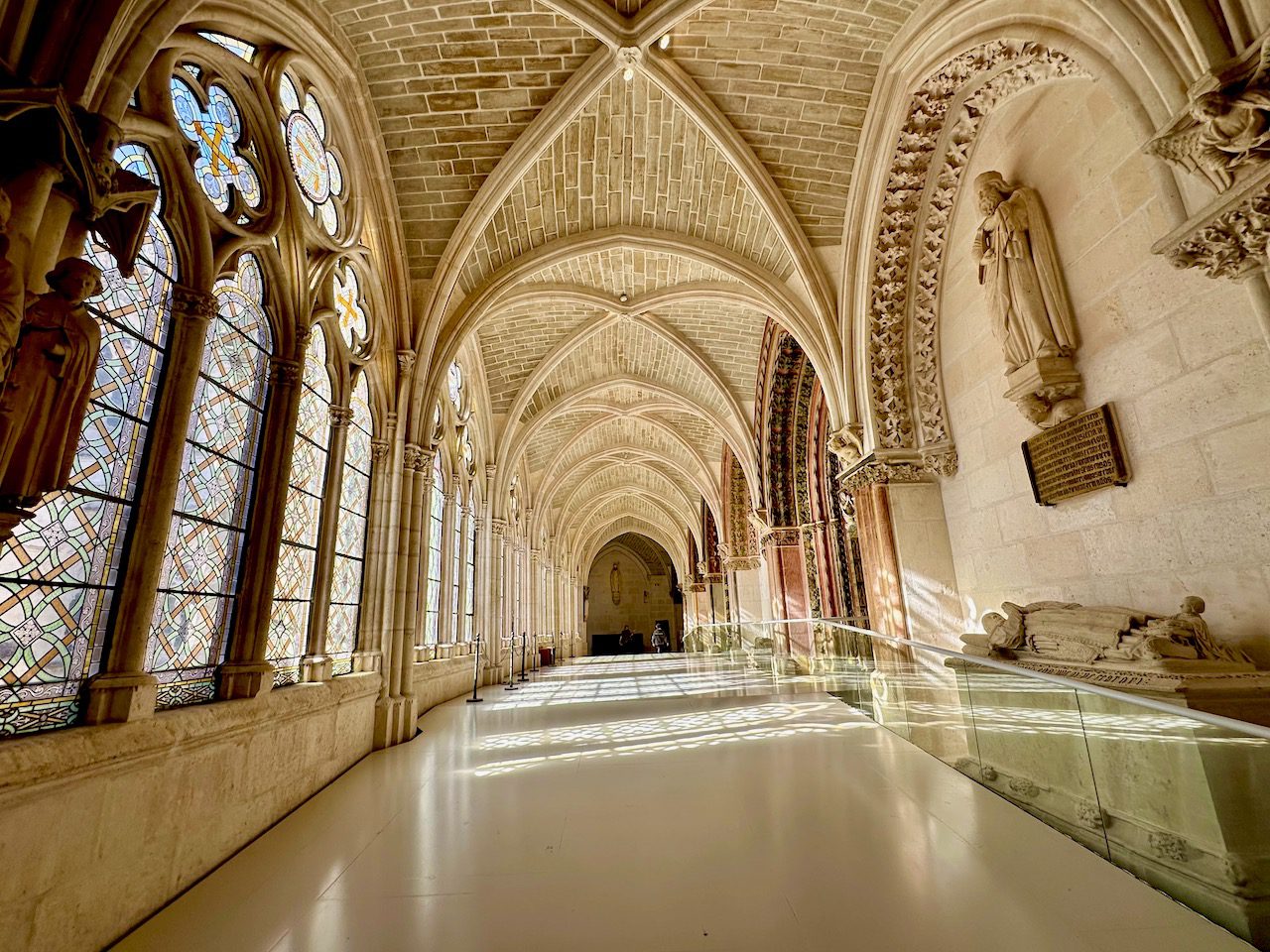
The Cloister was showing off some recently restored tapestries.
Right before leaving we caught a glimpse of a statue of Santiago Matamoros (Saint James the Moor-slayer), who was showing no mercy on his enemies. Here’s an interesting story from Camino Times Two that adds some insight on the statue.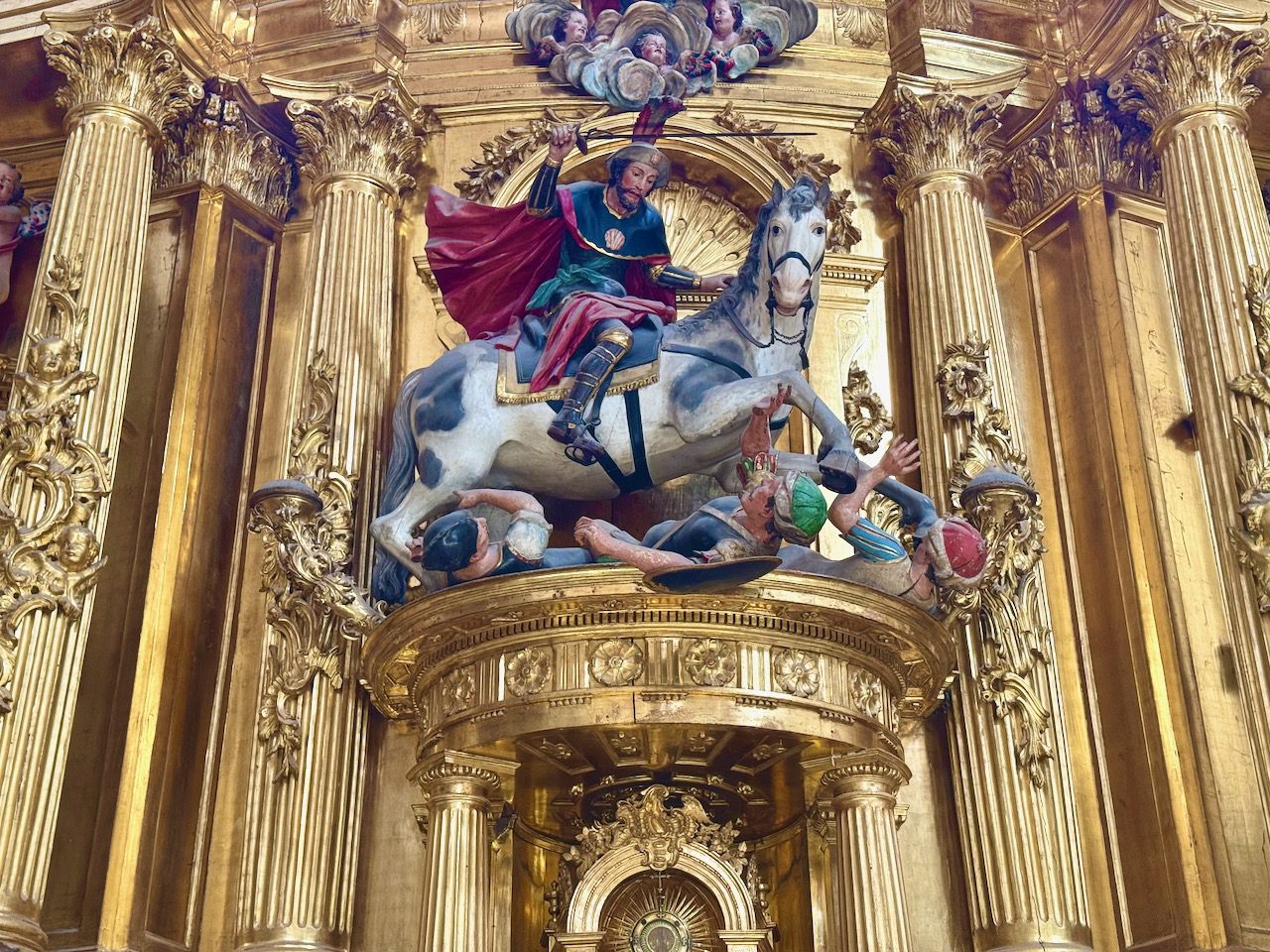
Finally, although we didn’t get a photo of El Cid’s final resting place (lots of people waiting … not worth the wait), we did get a photo of his historic iron-bound, wooden chest that dates back more than 1,000 years. It was used to store valuable documents and records within the cathedral. 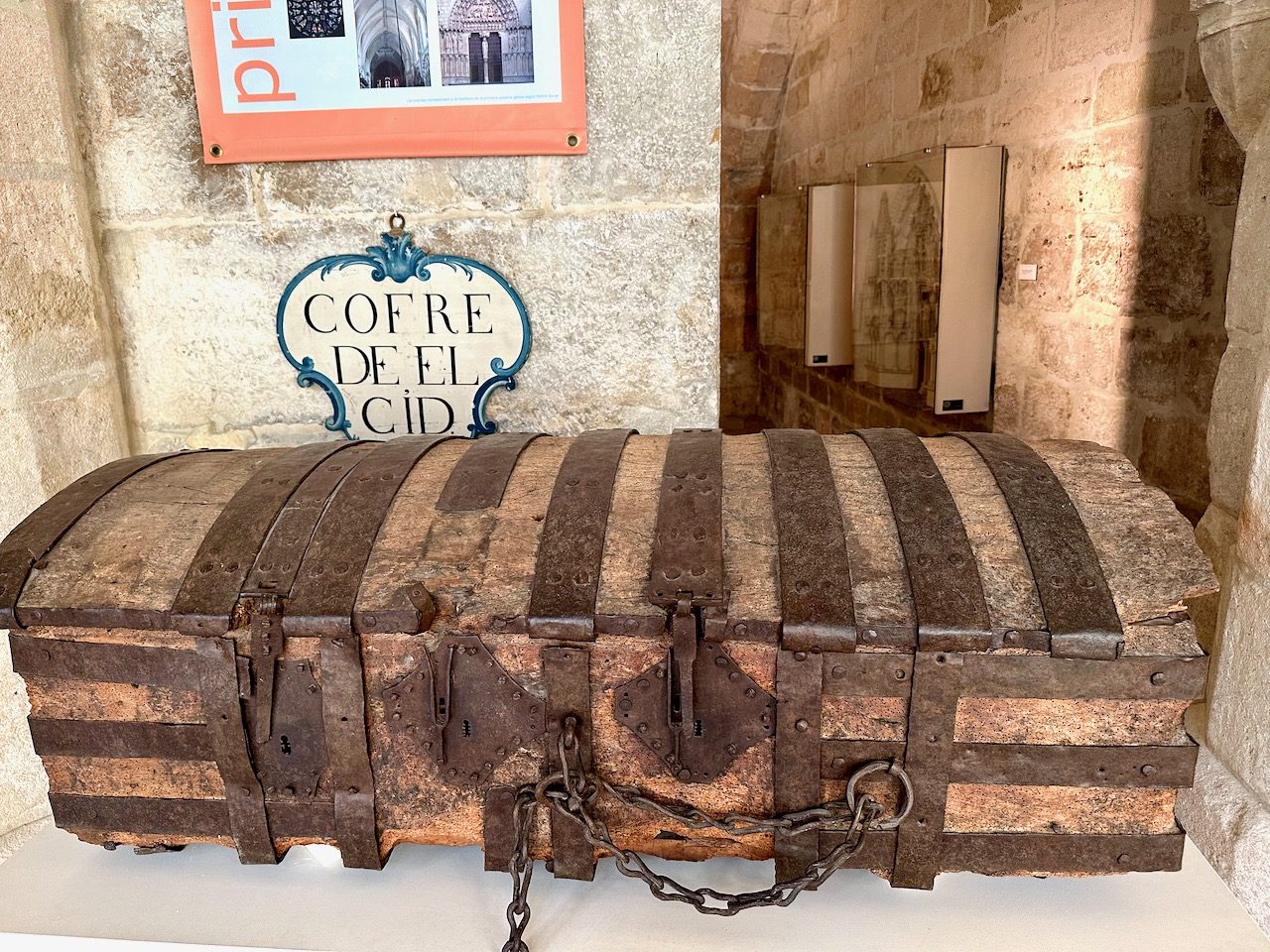
Tracy went back to the hotel for a little shut-eye, while I meandered around the Paseo del Espolón.
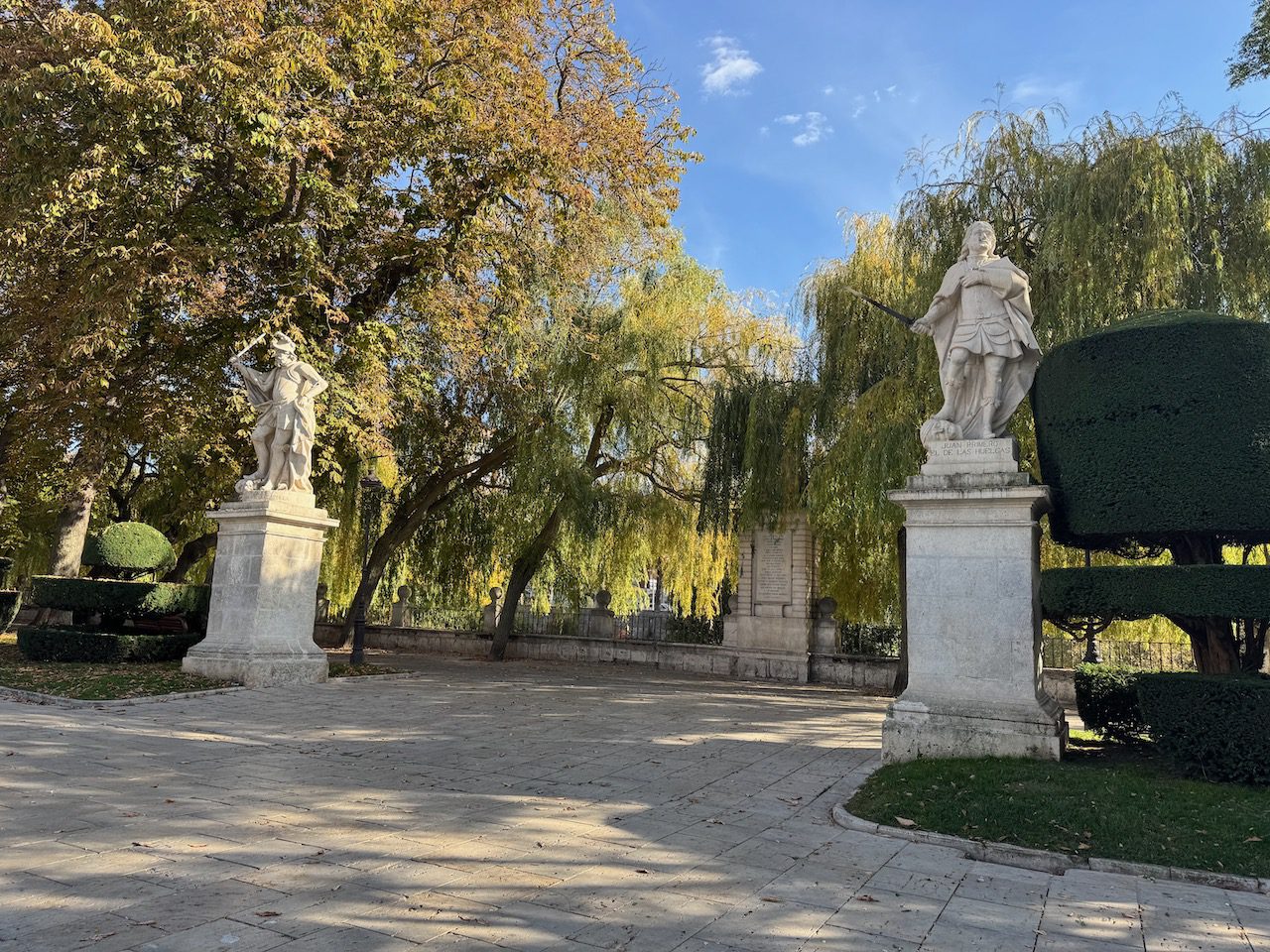
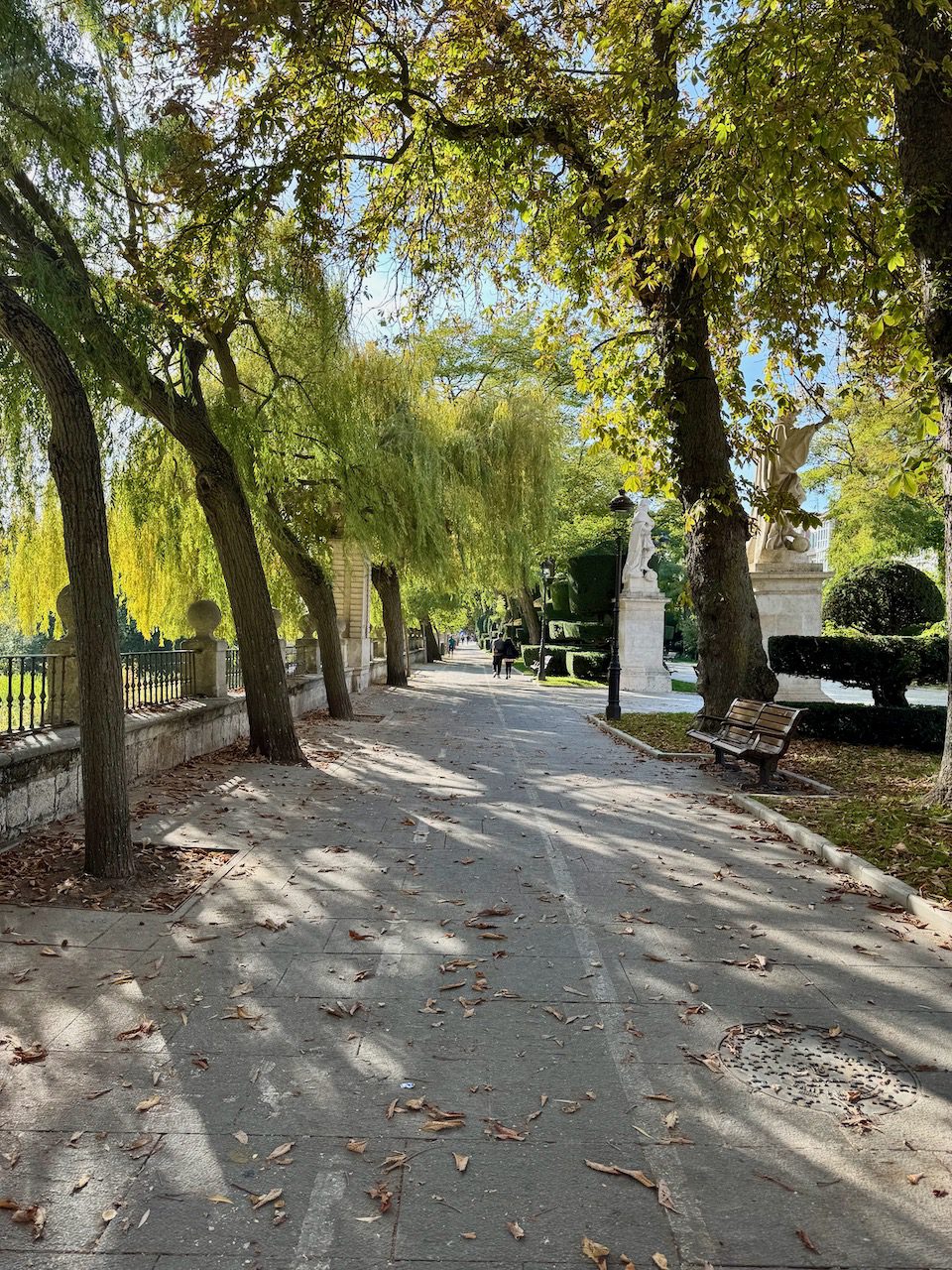
Then I walked over to Plaza Mayor which was pretty quiet for a Saturday afternoon, I thought. Old Carlos III didn’t have much company, so I thought I’d go join Tracy for a power nap before heading out for the evening.
A little before five, the streets were almost empty …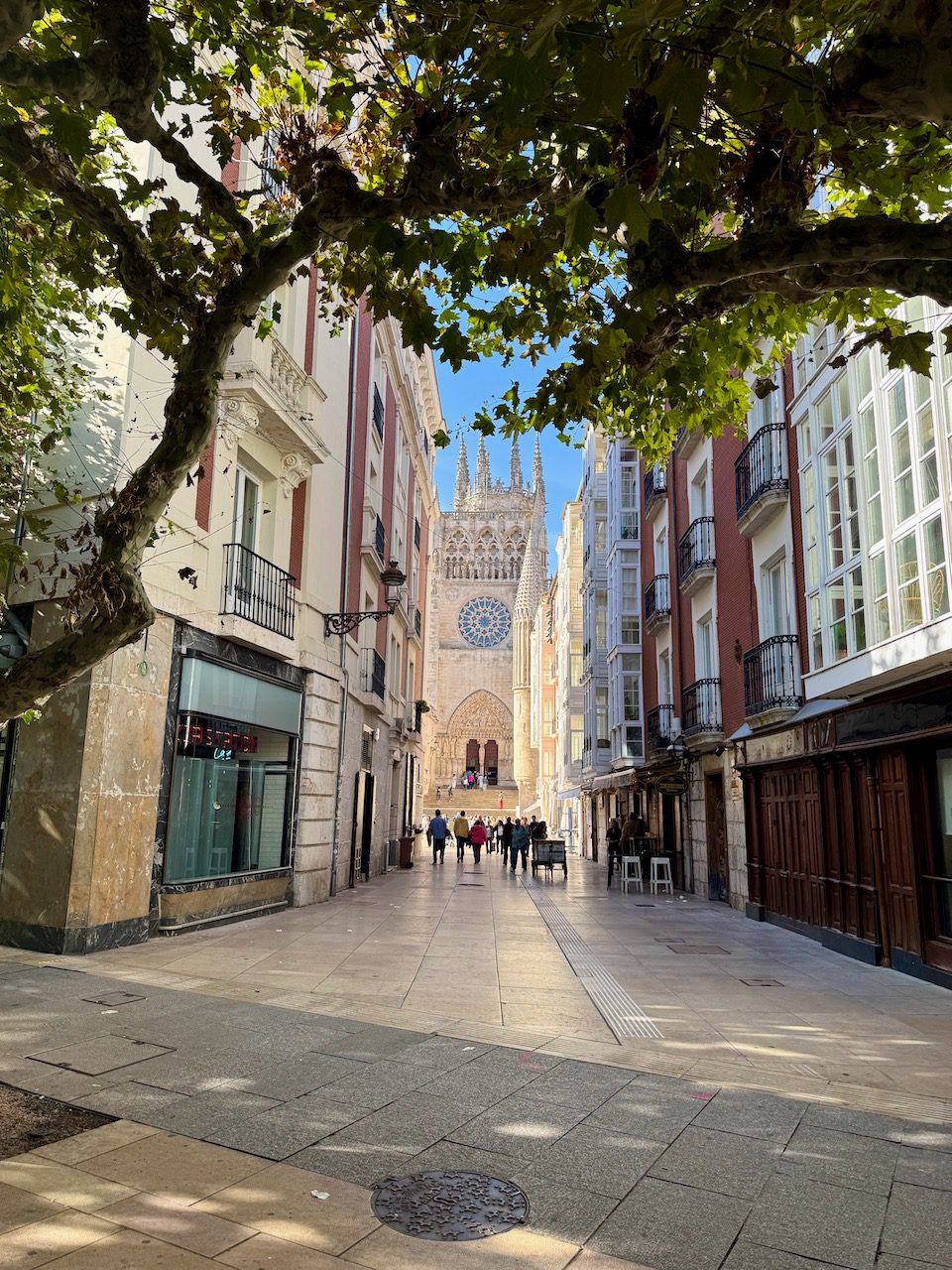
… however less than two hours later, when we returned, they were empty no more, as crowds surged from the area around the cathedral.
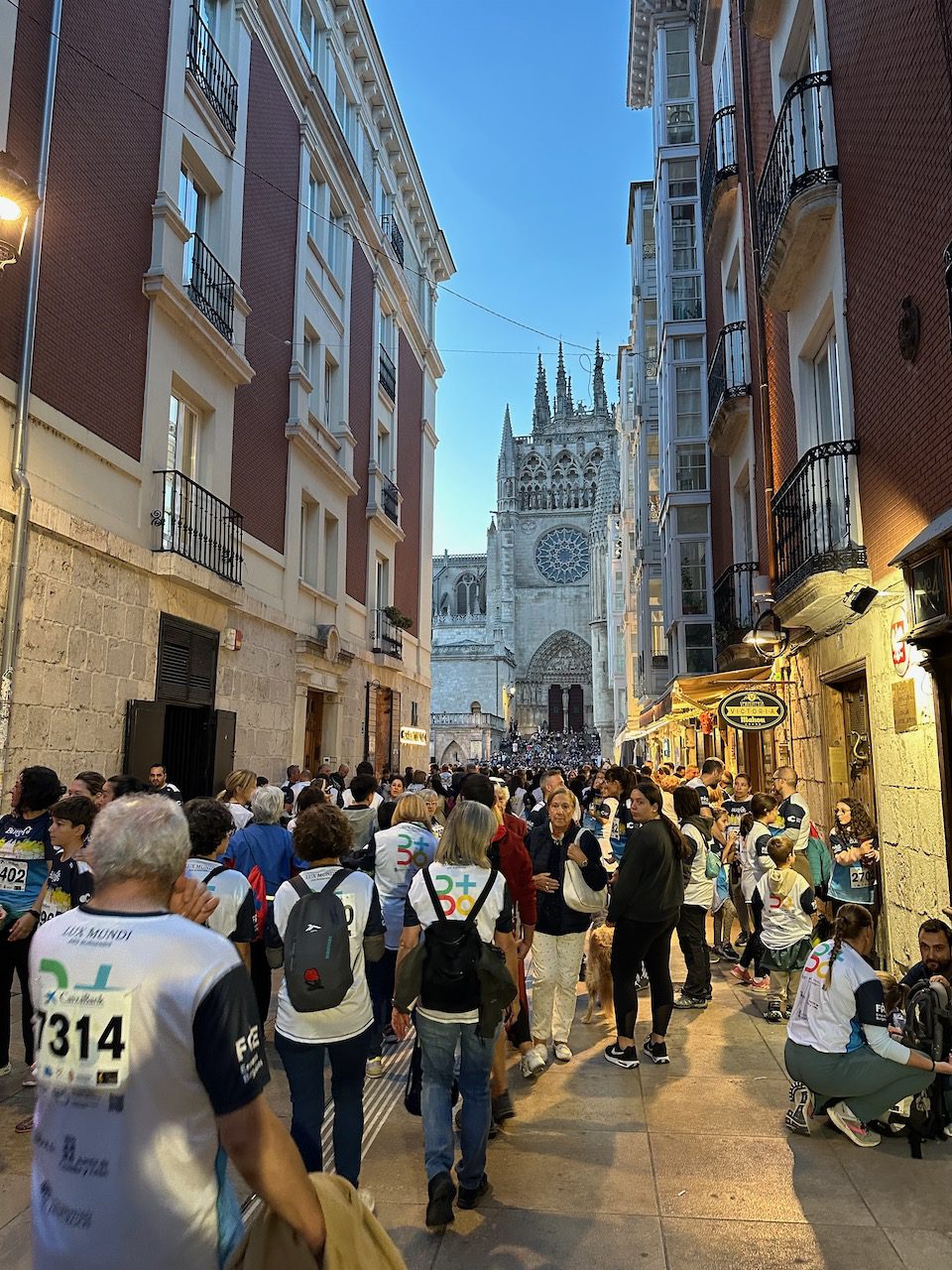
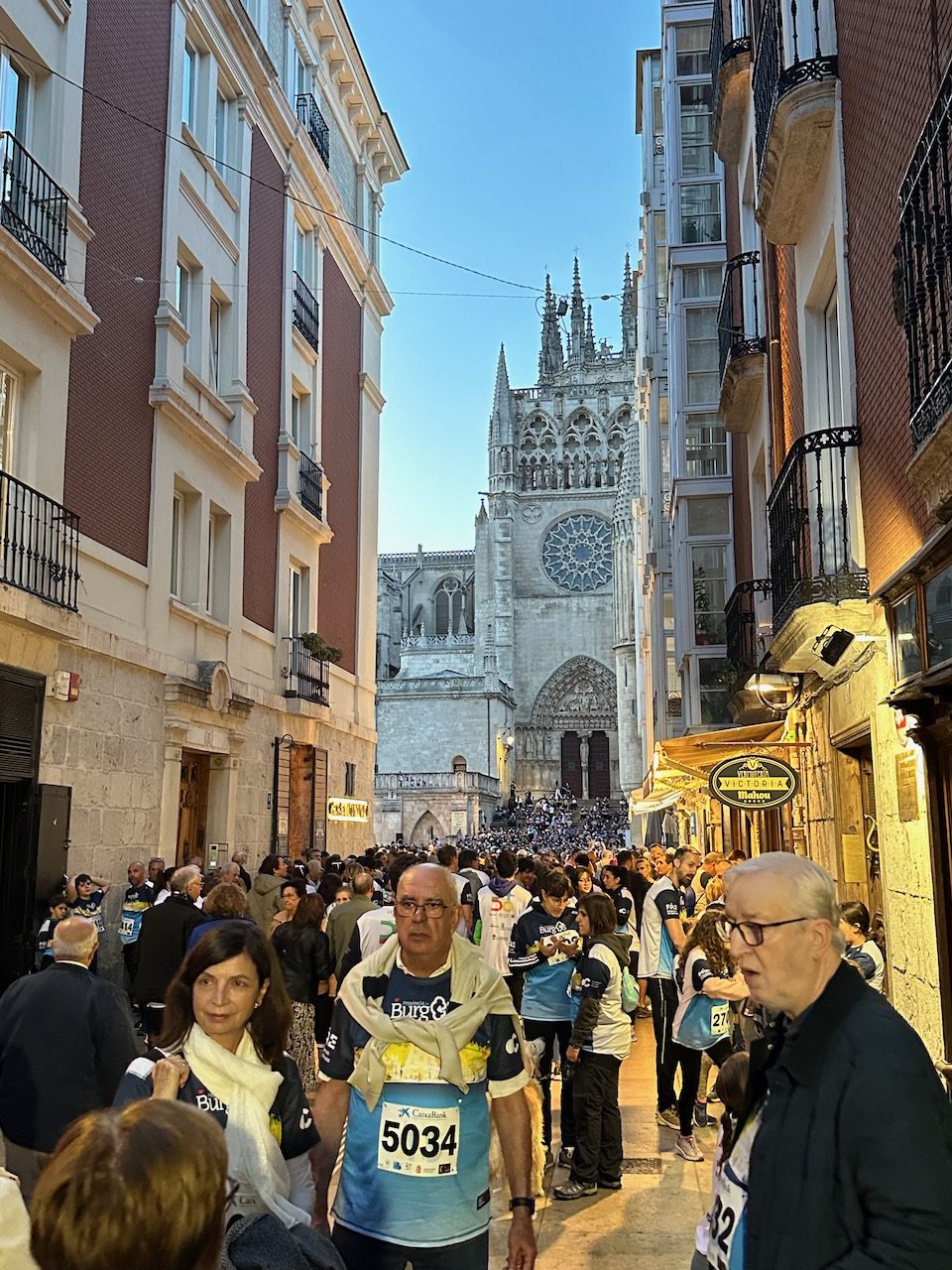
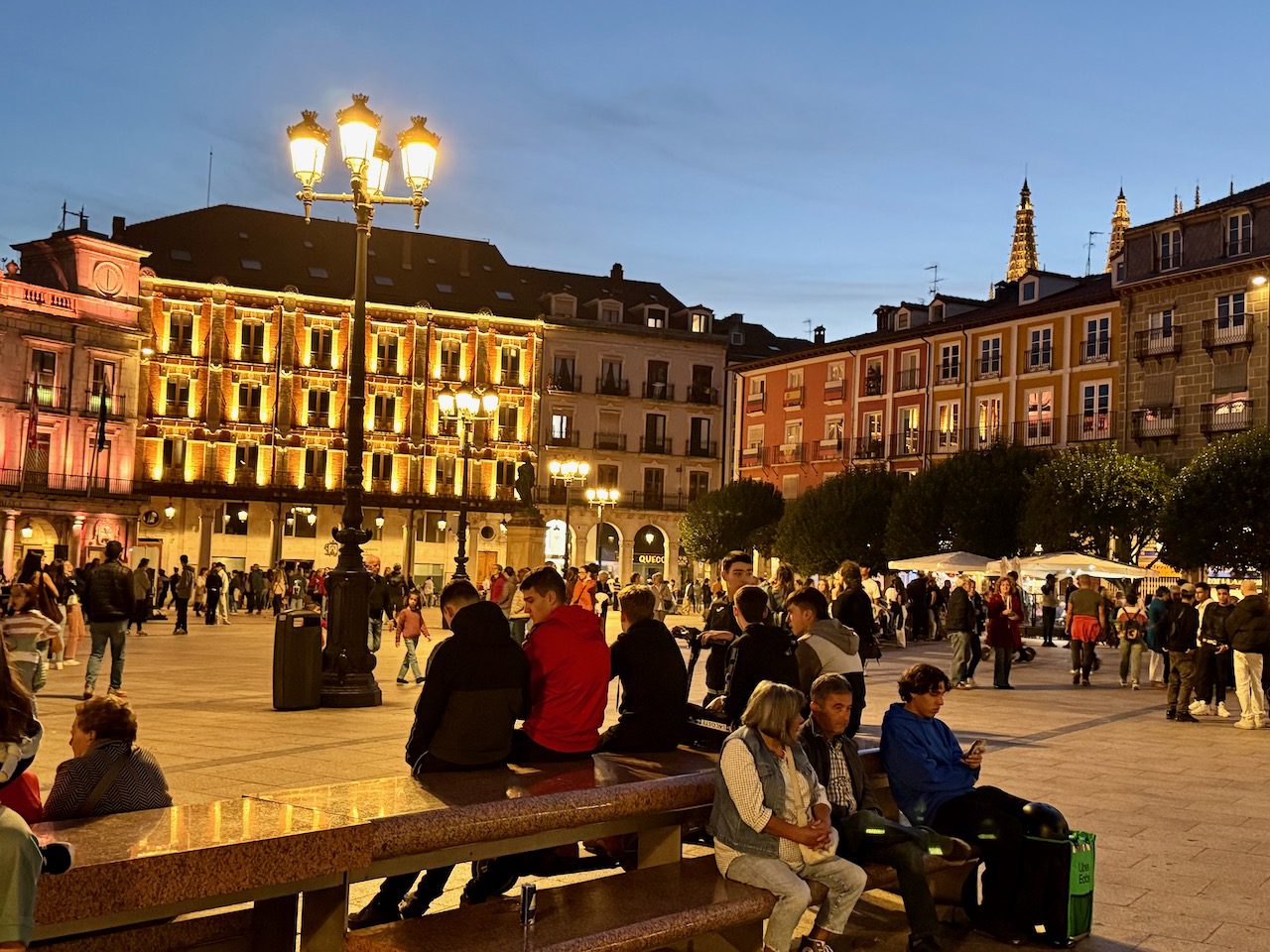
Over to Plaza Mayor, there were tons of people in a festive mood.
On the Paseo del Espolón, people were gathered under the plane trees near El Monumento de los Cuatro Reyes (Monument of the Four Kings), which has statues of Charles III, Wamba (King of the Visogoths), Alfonso VI, and Ferdinand I.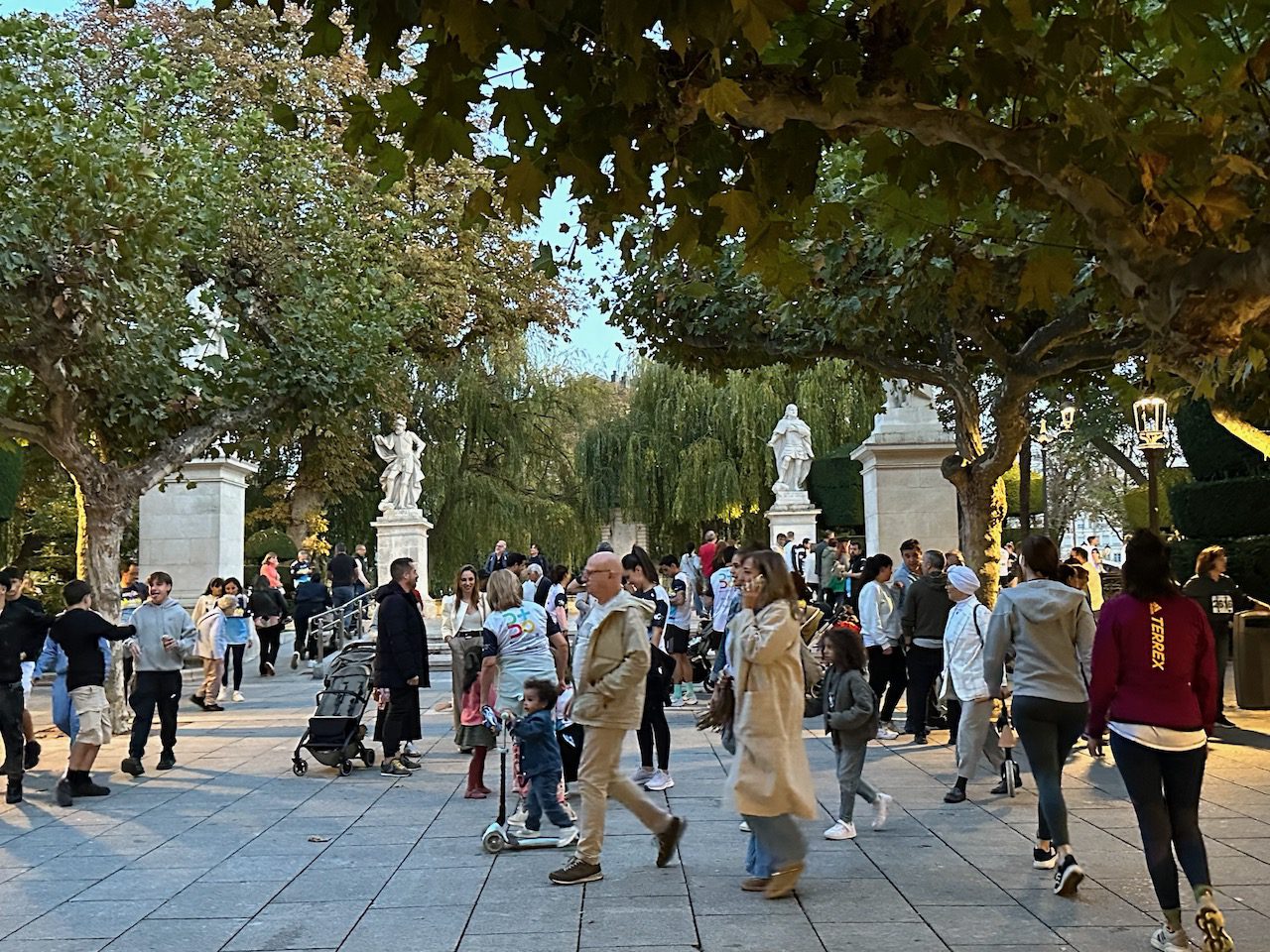
Had they just been waiting for us to take a nap?
No, it was part of the Burgos Ultra Stage Race: The Way of Legends, which is actually a six day event.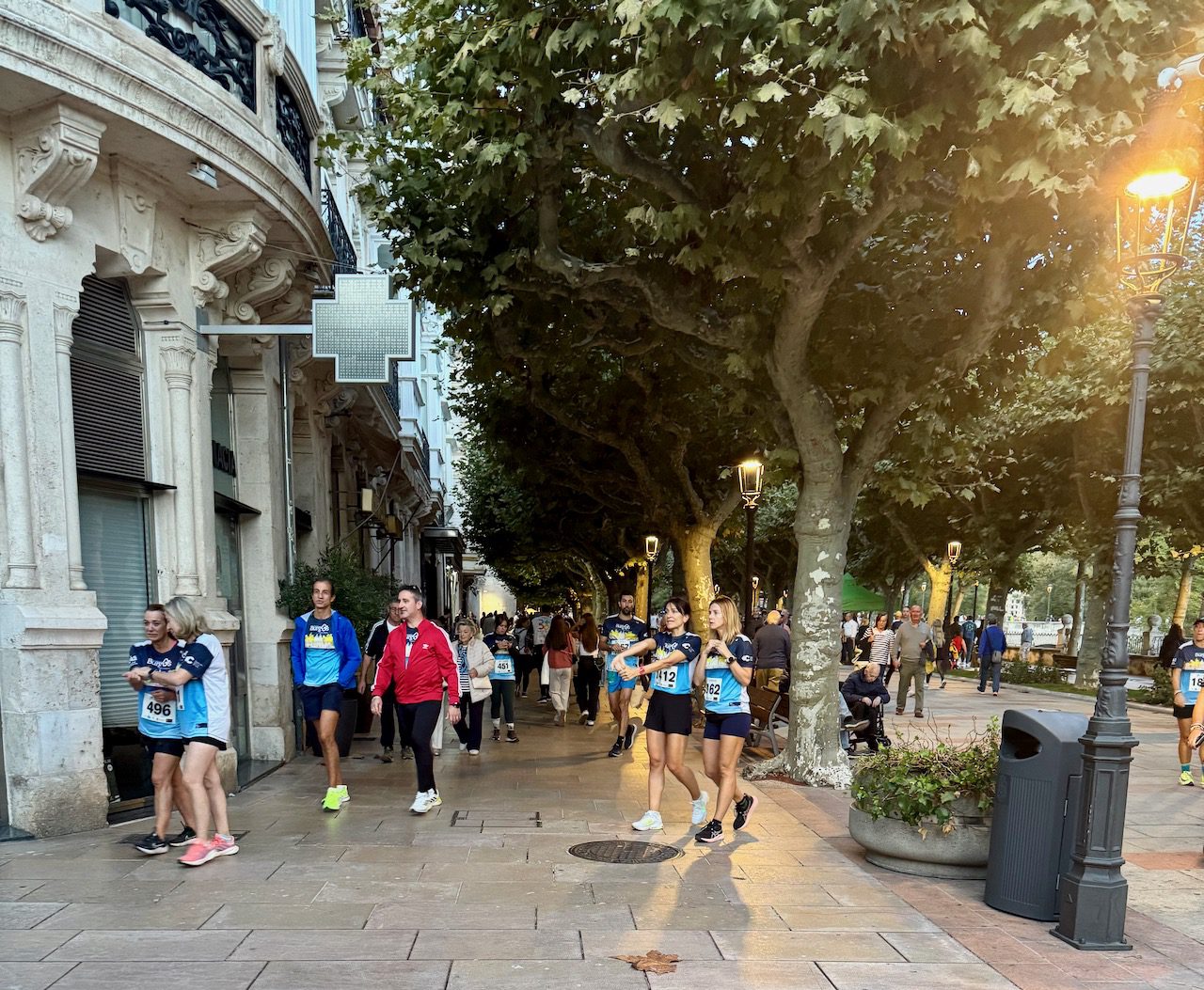
Back through Plaza Mayor and beyond we threaded through an alleyway full of people congregating for tapas and drinks.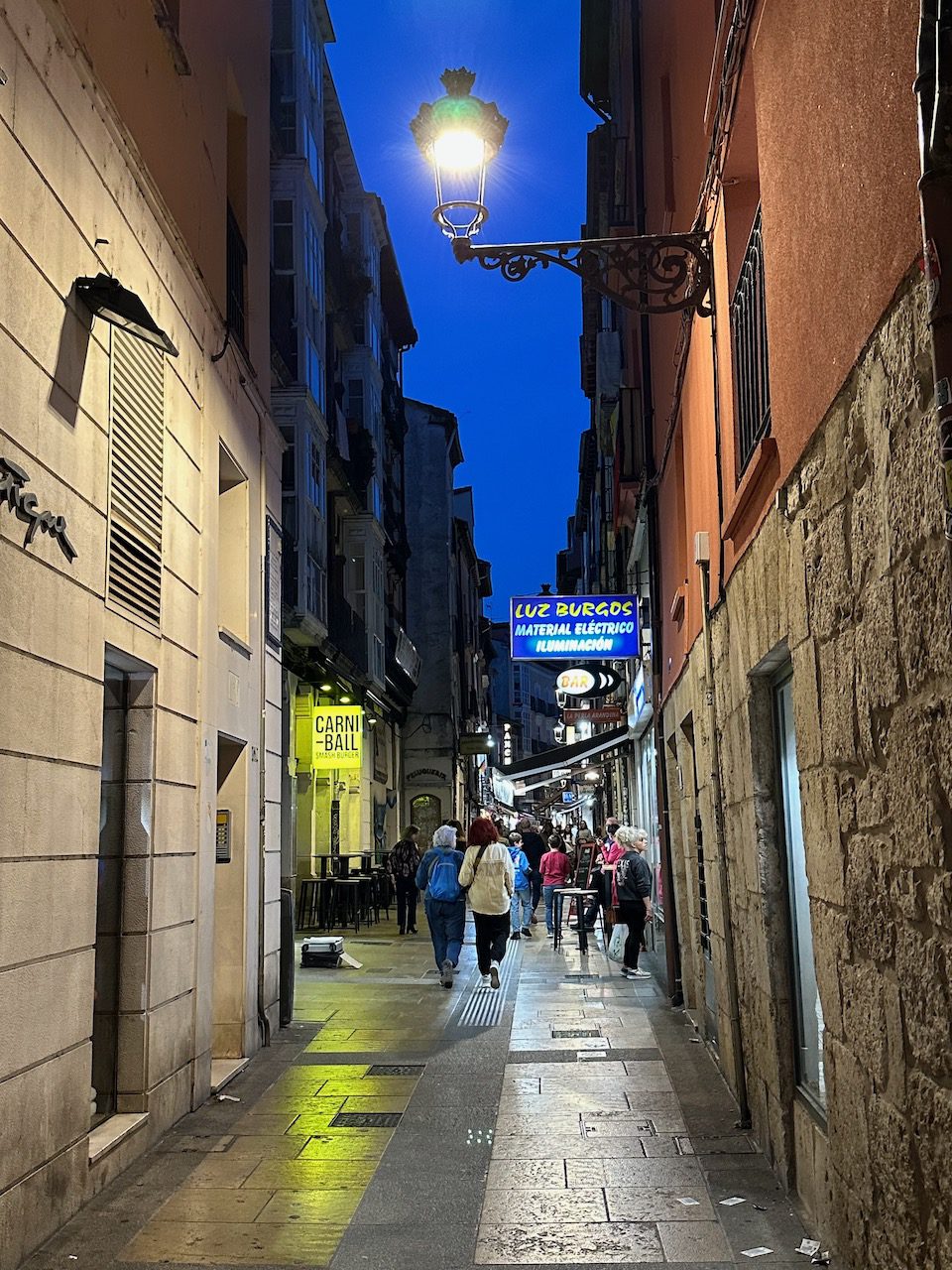
Hey, that’s Pancho’s. We’re eating there tomorrow. Looks popular.
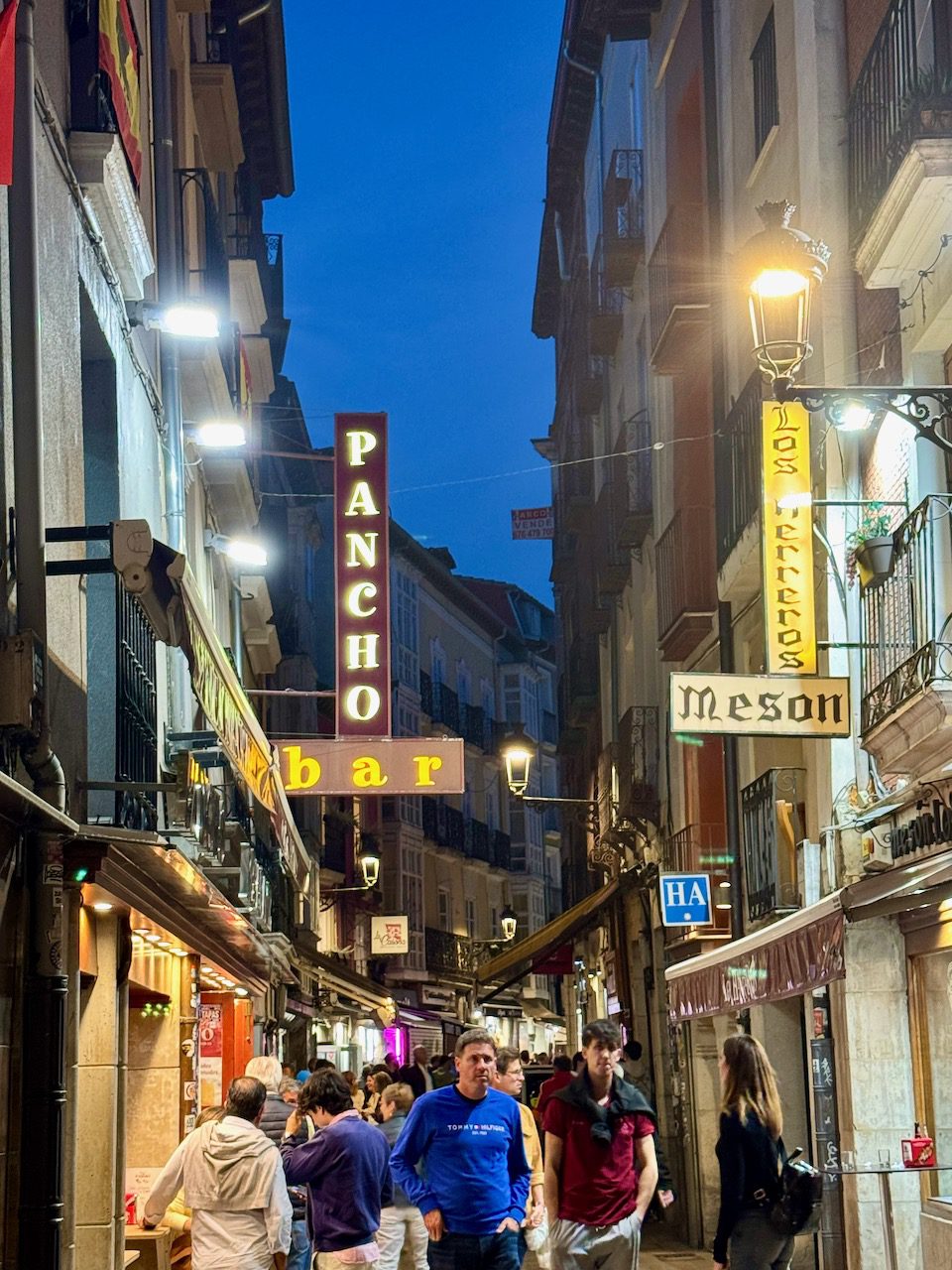
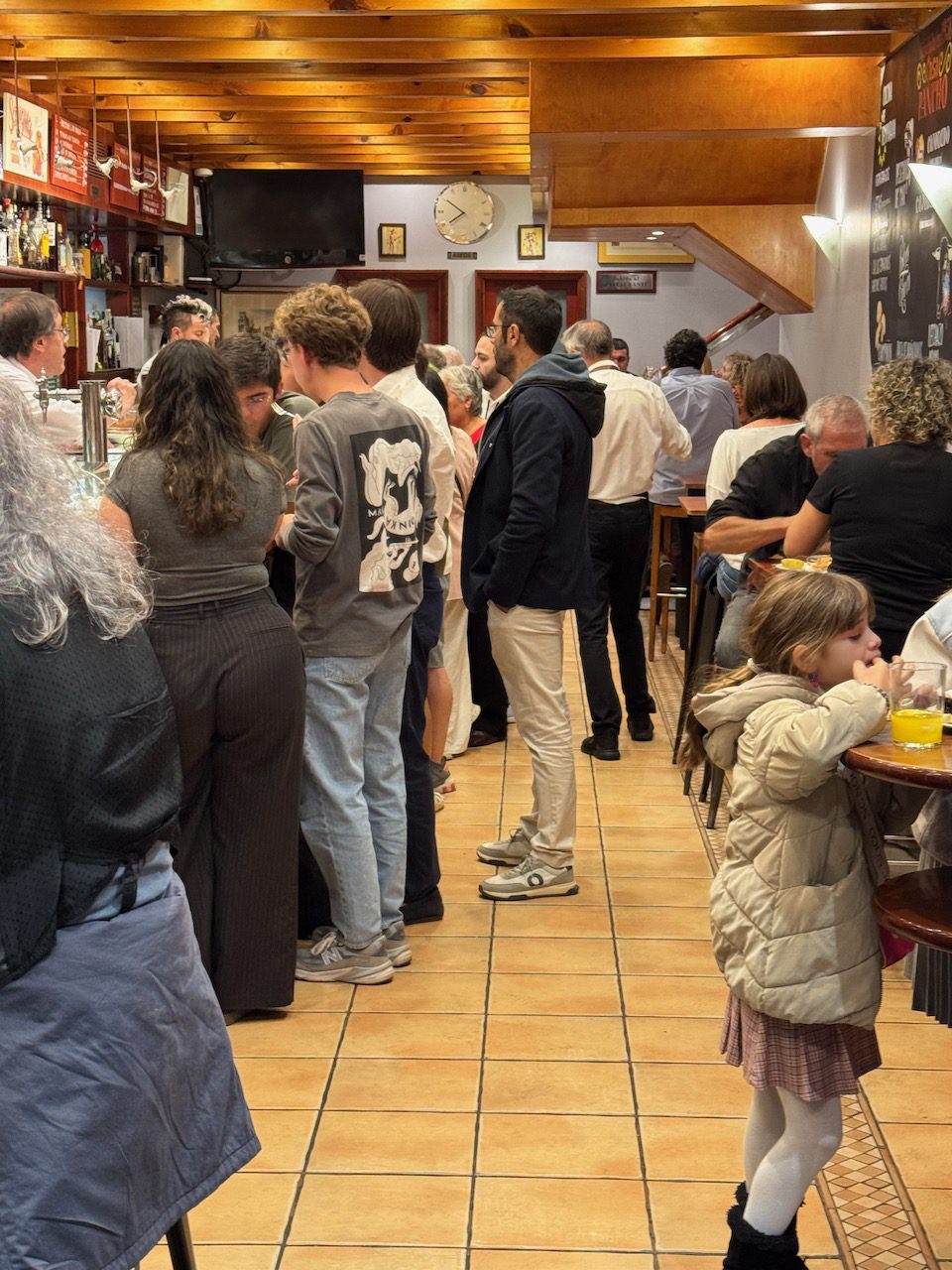
Back out on Plaza Mayor, crowds of people including children and dogs were enjoying the pleasant evening (rain was expected tomorrow).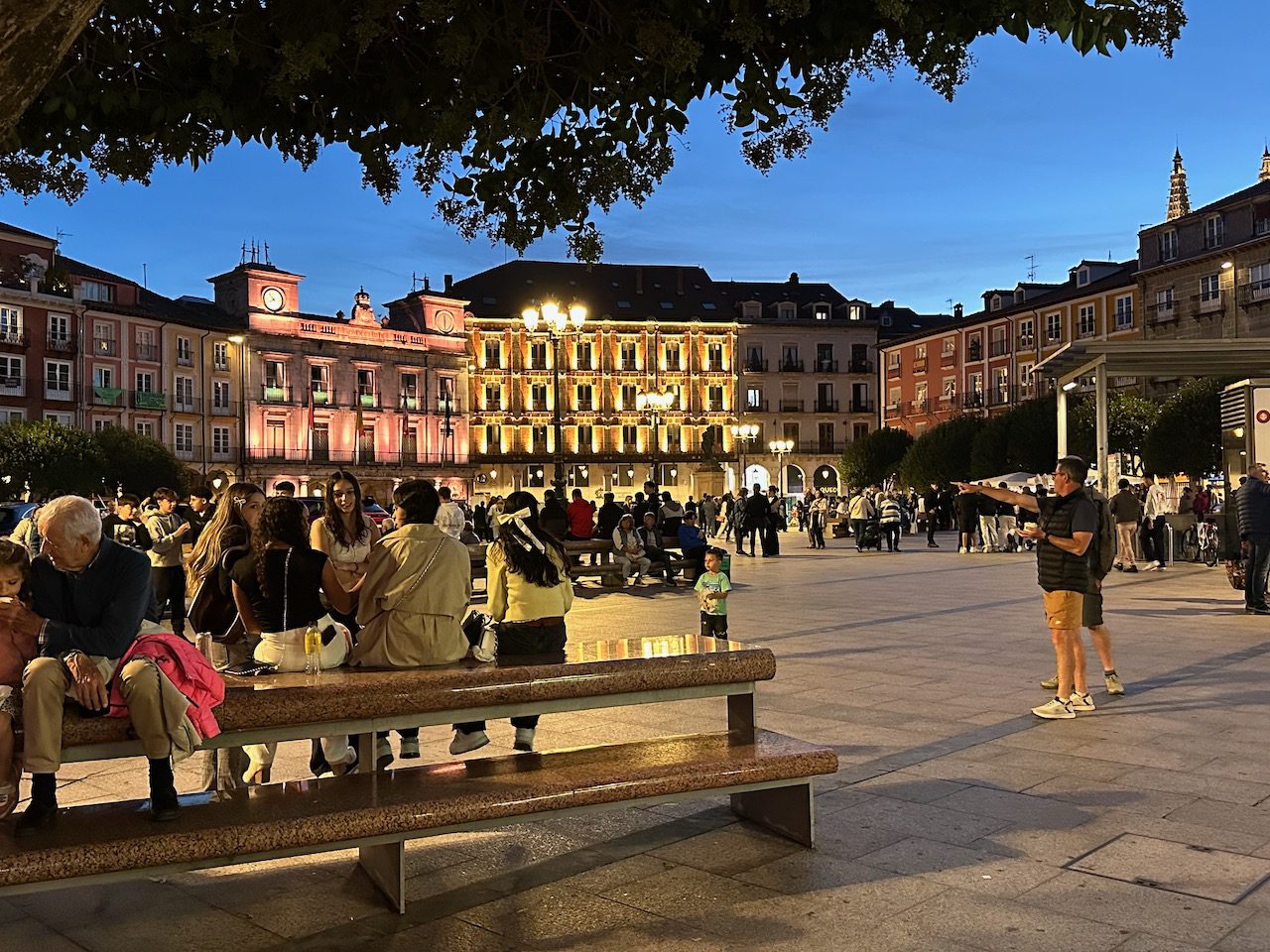
I posed near columns showing the flooding in this area in 1874 and 1930. There have been a lot more than those two.
No floods tonight. The bandstand was ready and people were sitting at outdoor cafes soaking in the atmosphere.
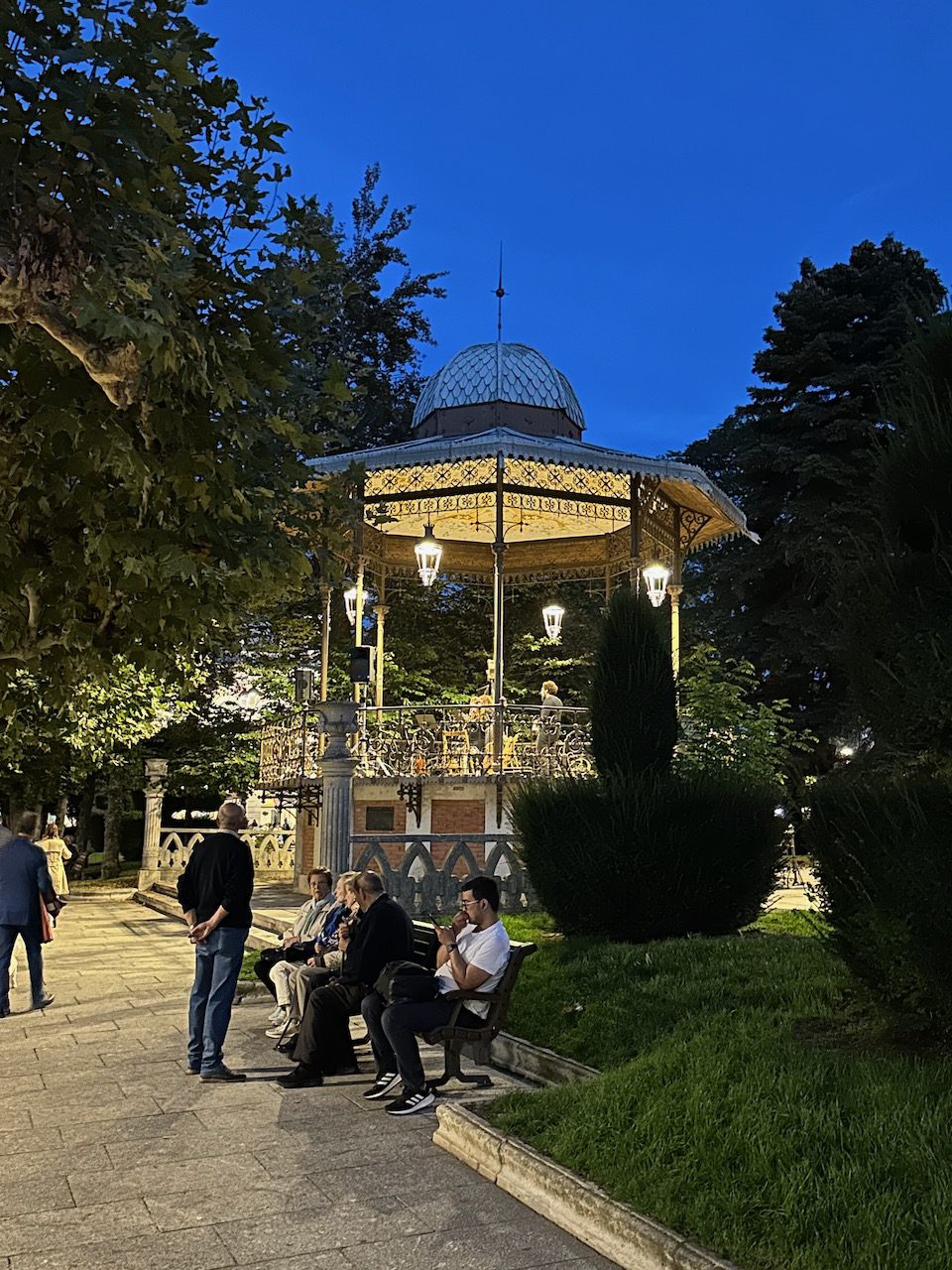

Paseo del Espolón runs directly into Teatro Principal de Burgos, which holds a variety of cultural events, plays and concerts throughout the year.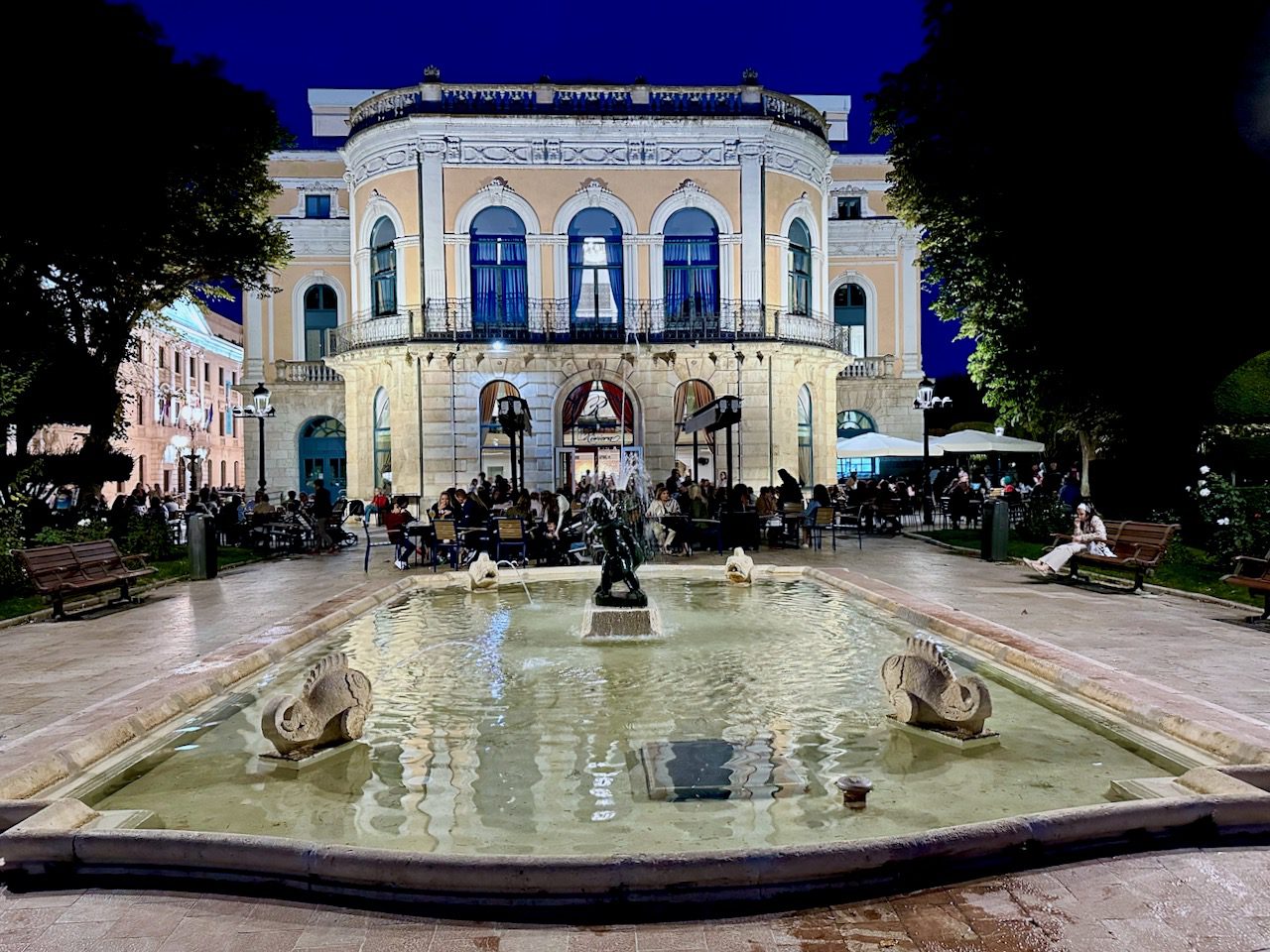
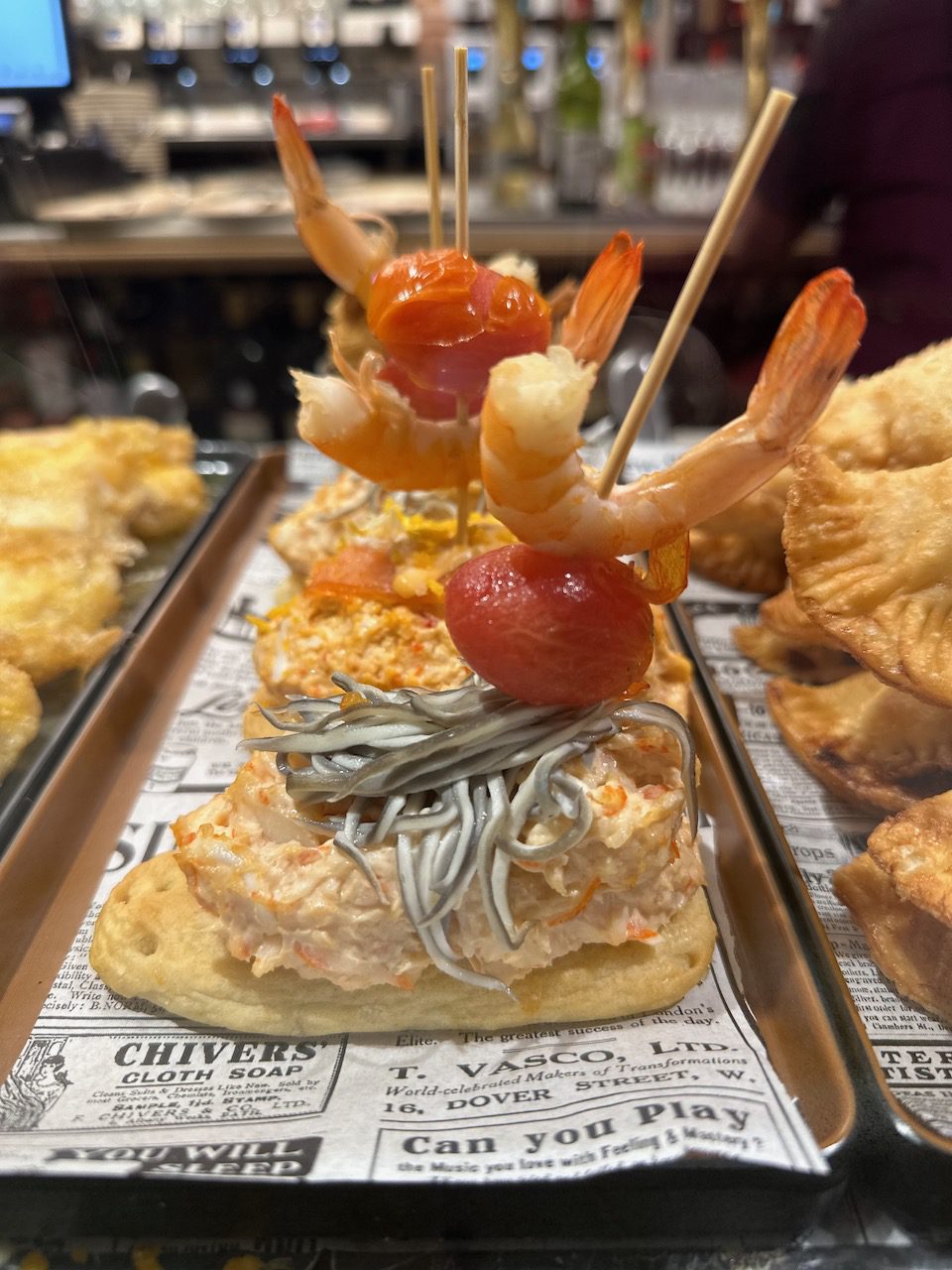
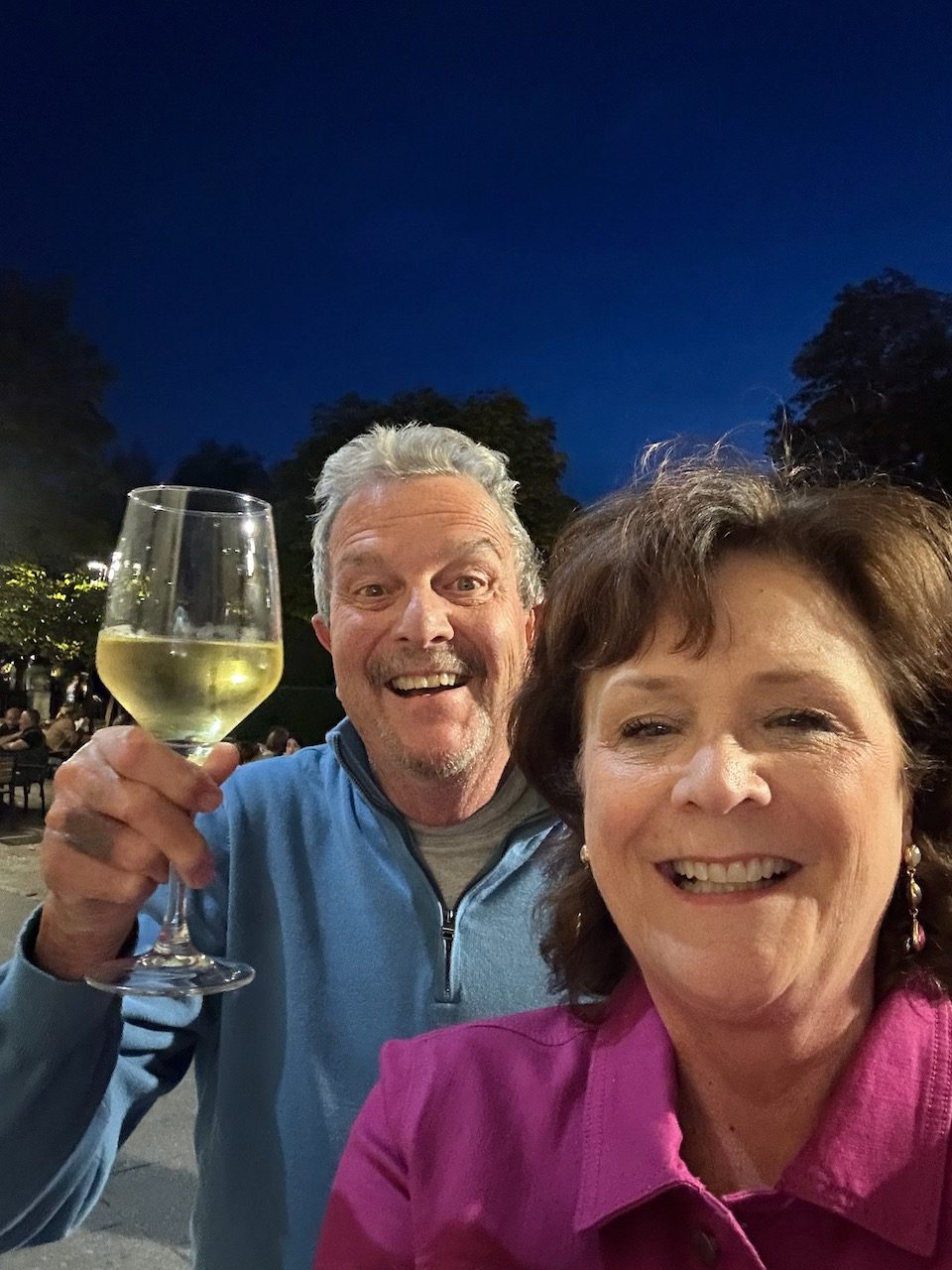
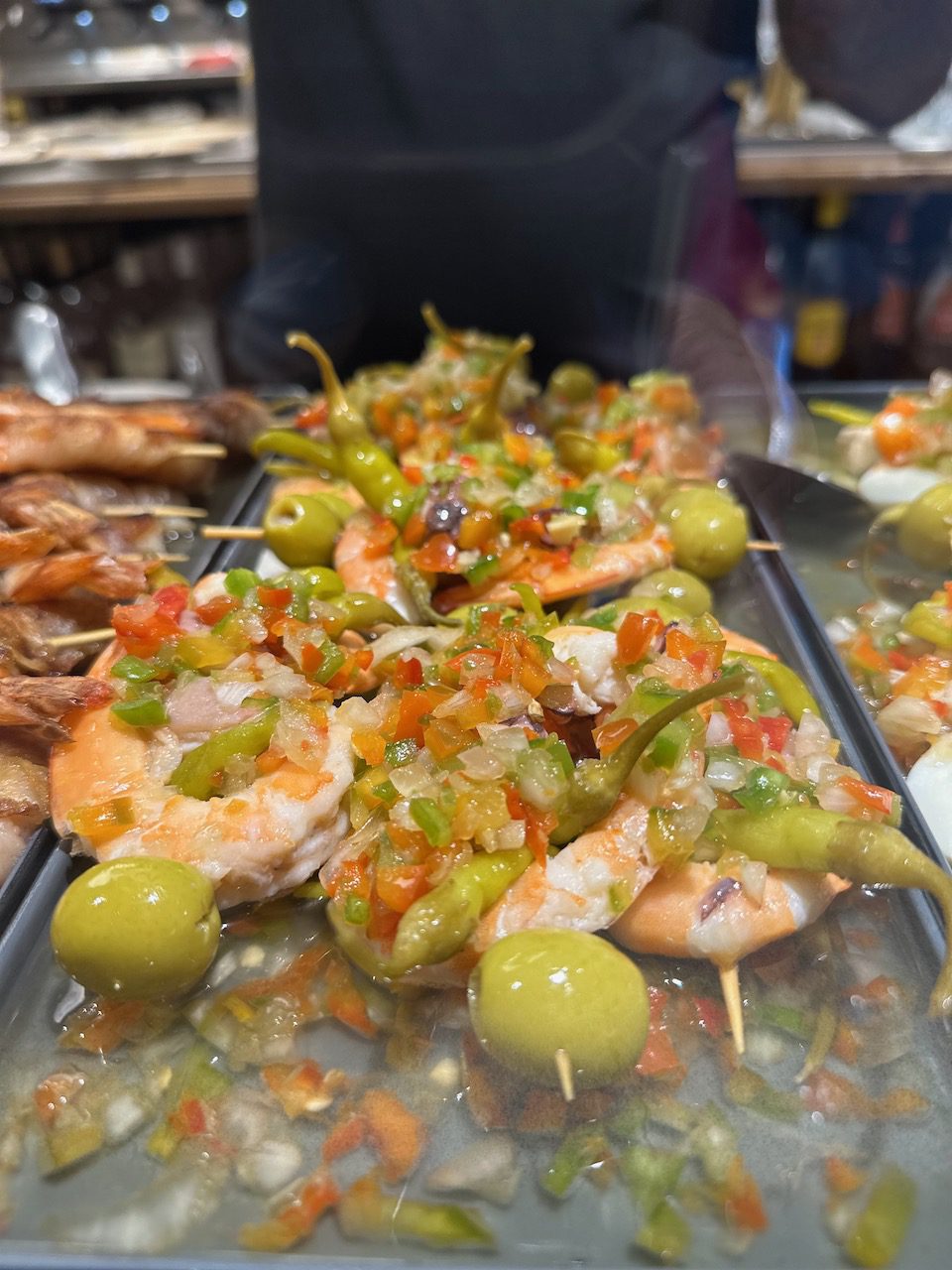
Tonight Riviera inside the theater also hosted a variety of delectable looking tapas and vino. Salud!
Some of the runners were heading for home.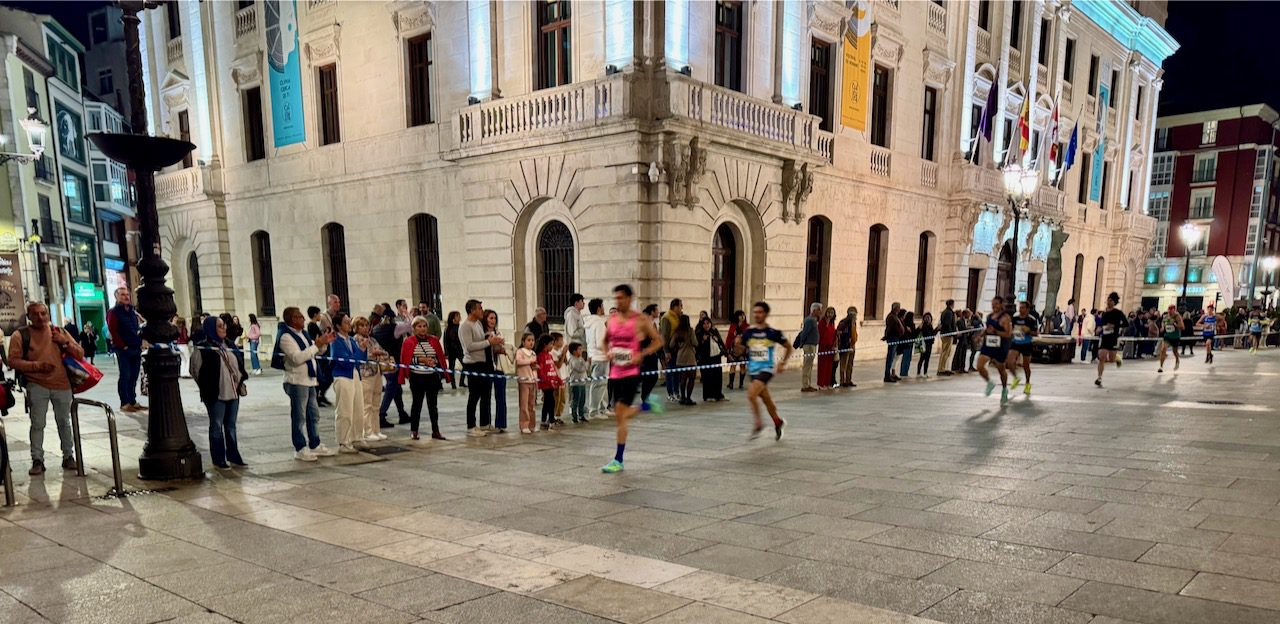
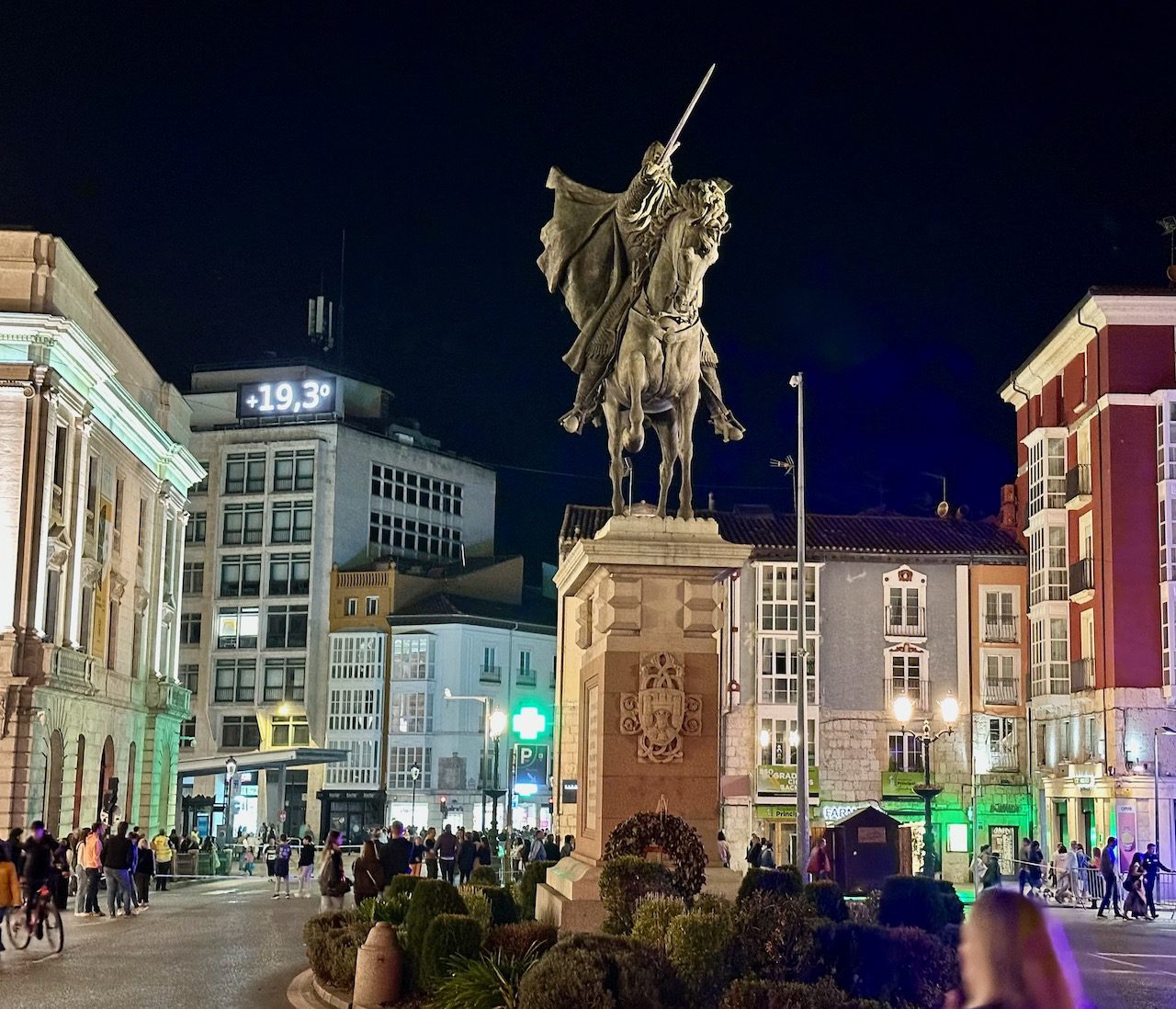
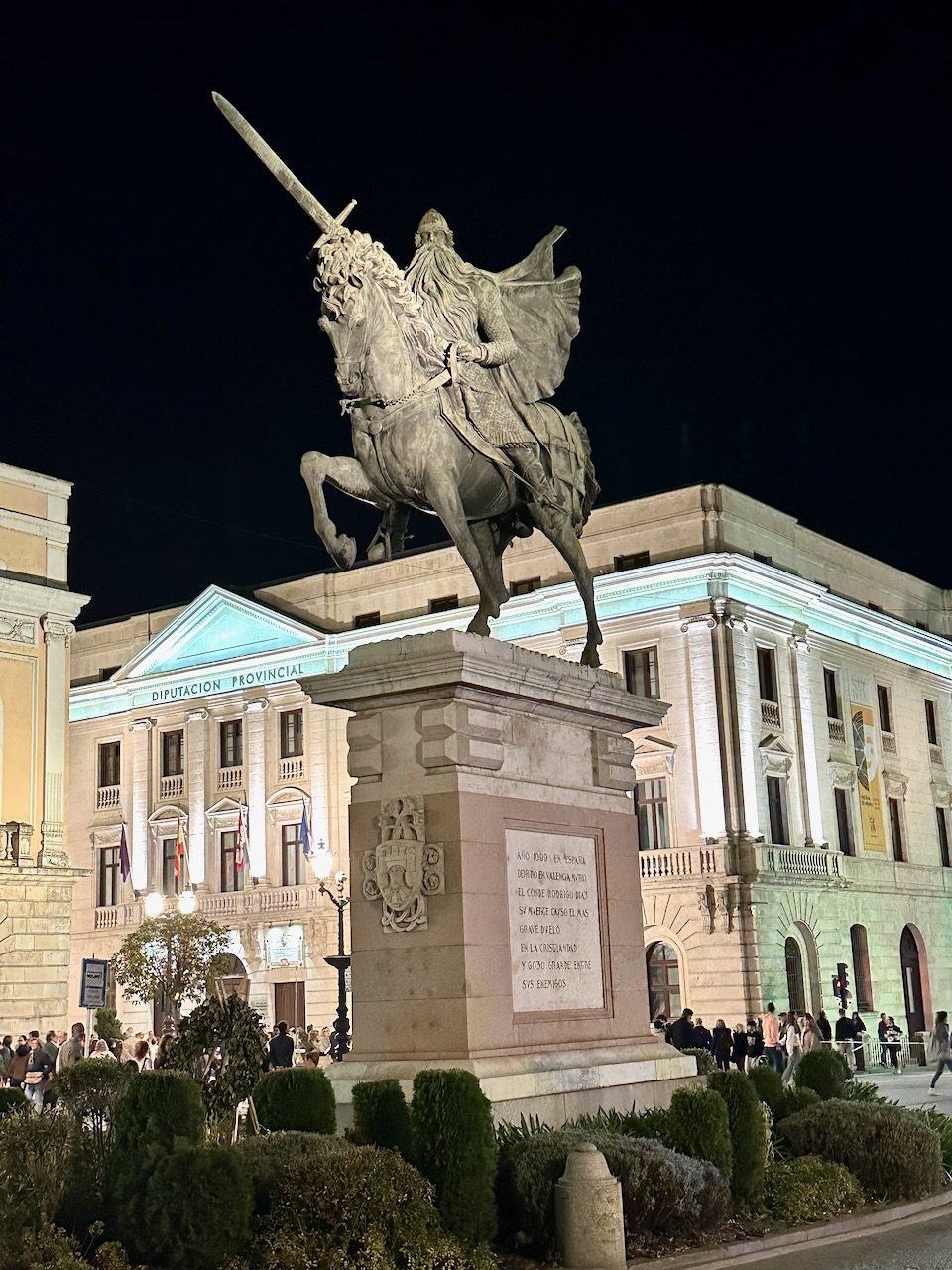
It was coming up on 8:30, and we had dinner reservations. We walked past the statue of El Cid, built in the 1950s. El Cid was an 11th-century Castilian knight and national hero of Spain, plus he looked nothing like Charlton Heston.
As people milled about outside we walked into the historic Restaurante Casa Ojeda, which has been a Burgos staple since 1912. The downstairs bar which serves tapas was packed but …
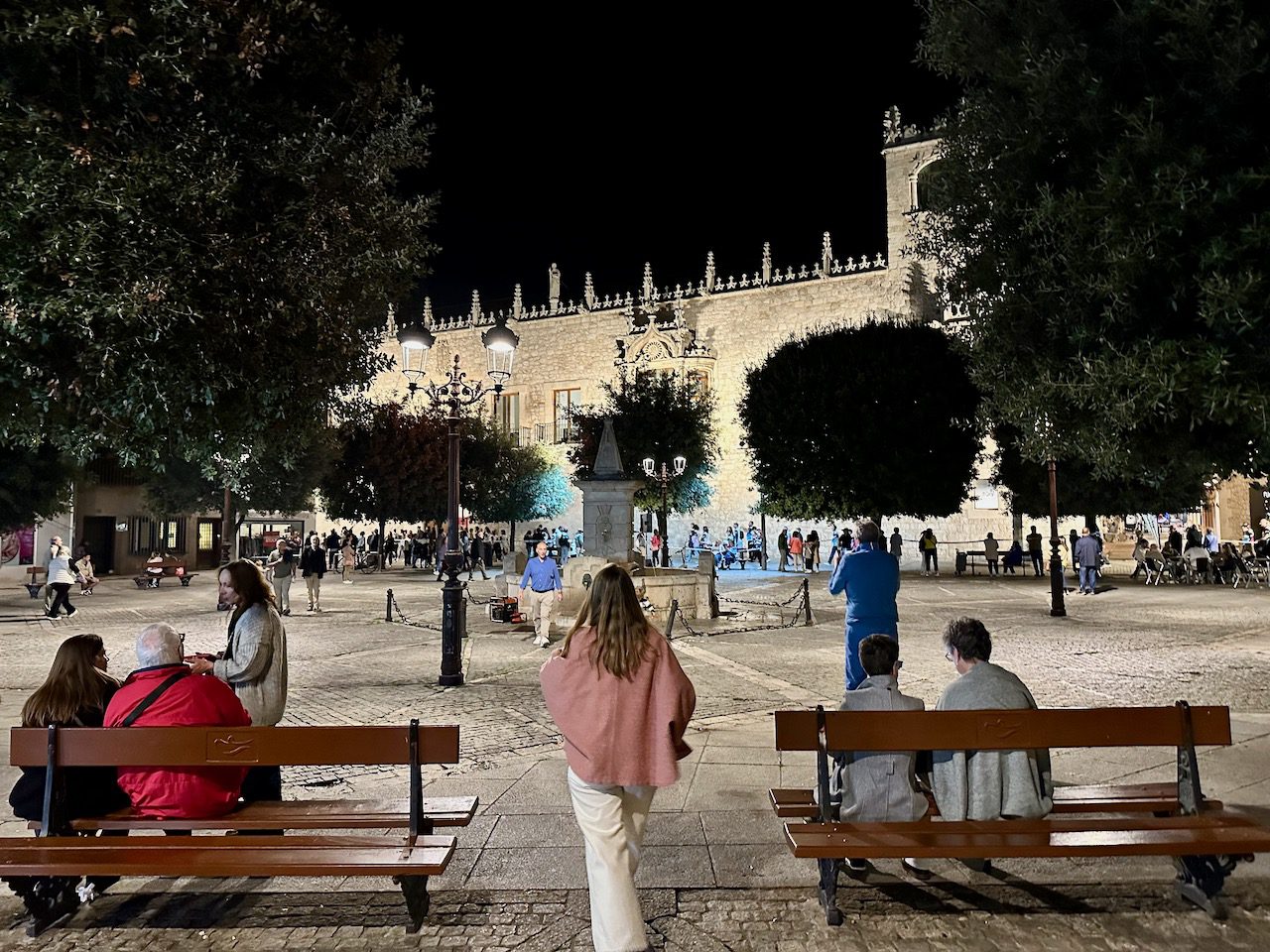

… the formal upstairs dining room was, of course, nearly empty as the early Americans showed up for dinner. That changed quickly.
We started with what now is one of my new all-time favorite soups, Sopa de Ajo (garlic soup).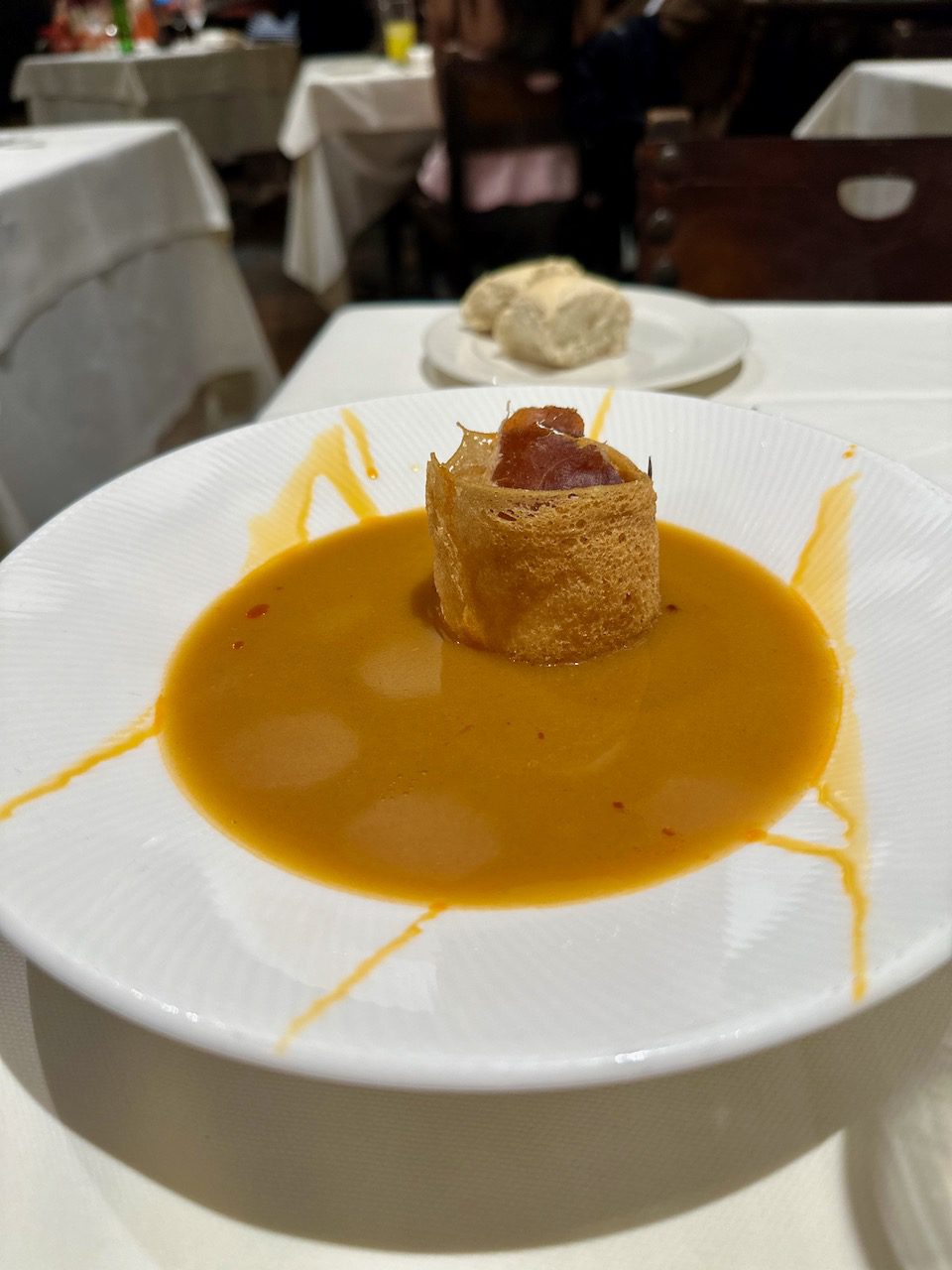
Tracy had a steak with sherry sauce.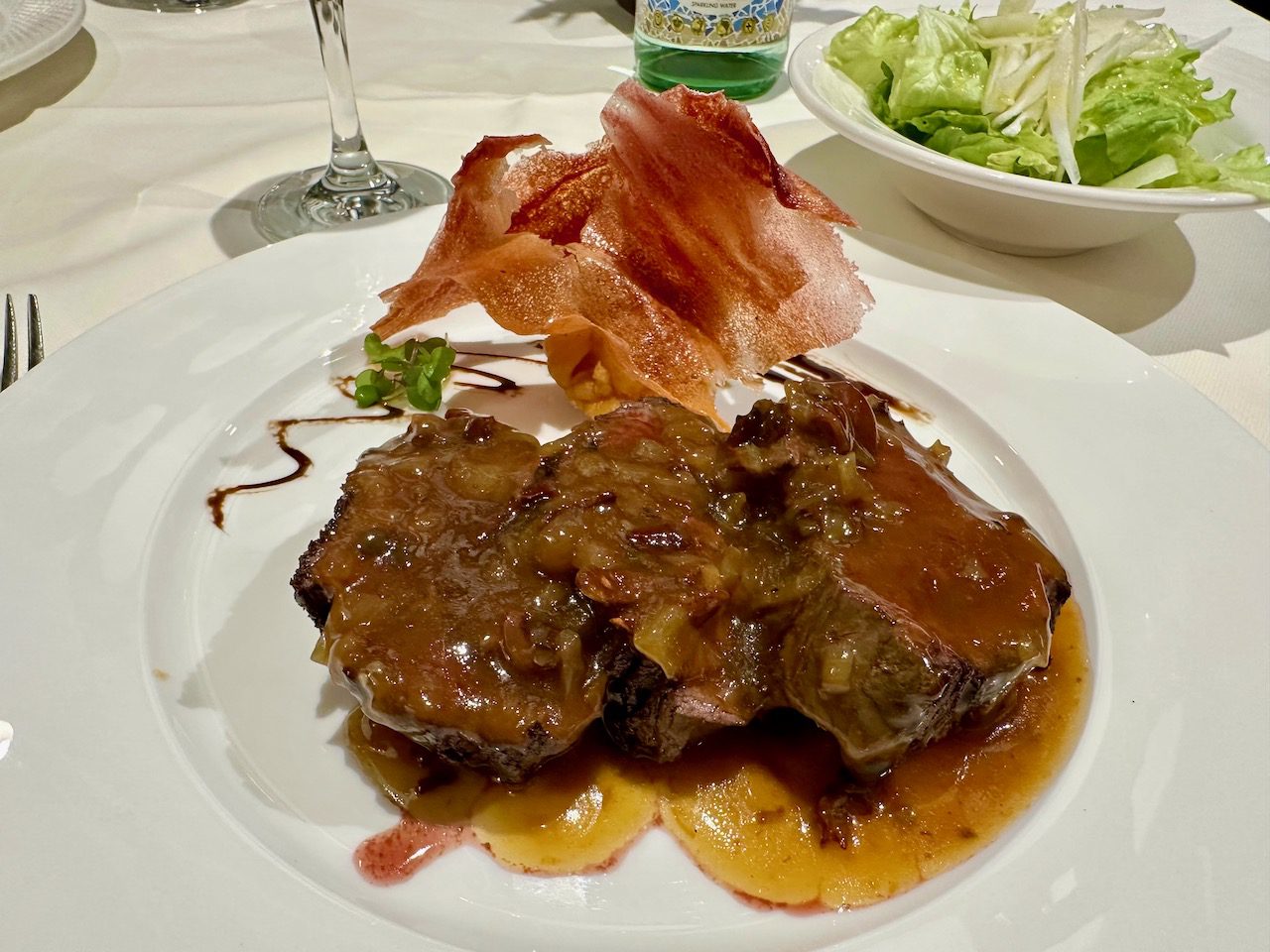
I opted for the Burgalese specialty, roast suckling lamb. I know this is a delicacy with its tender meat and crispy skin, and it tasted fine, however I prefer a grilled lamb chop. Also, as we discovered throughout this trip, there is a distinct lack of vegetable choices on menus, although I got a side of lettuce. And for me to say that is quite something. After returning home we learned that vegetables are more prominent in home cooking, while eating out is reserved mainly for meat-focused menus.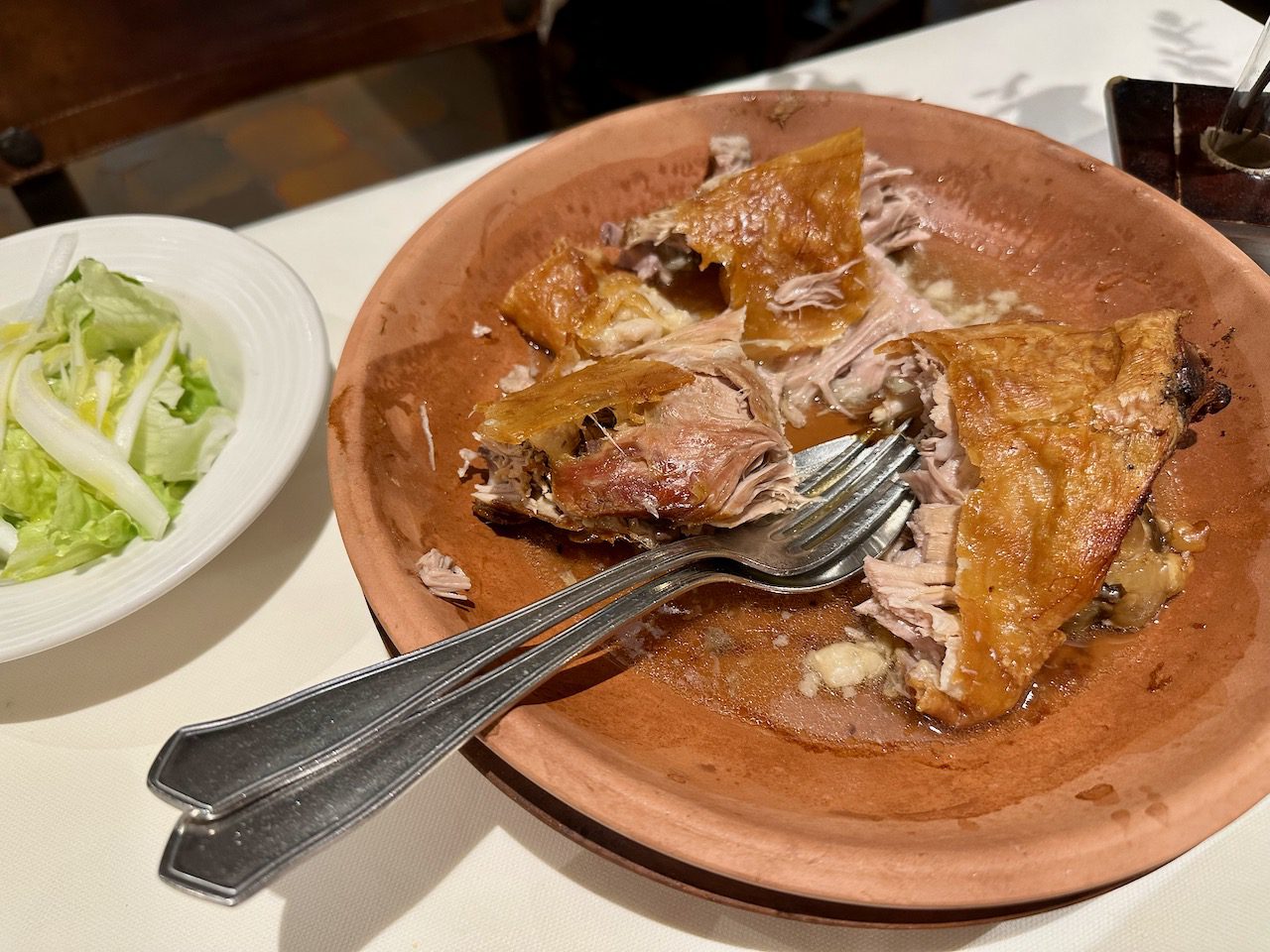
I loved their “famous” dessert, the “Renowned Puff Pastry Cake” sprinkled with crispy candy pearls. So much so that Tracy took a series of photos of me cleaning the plate.

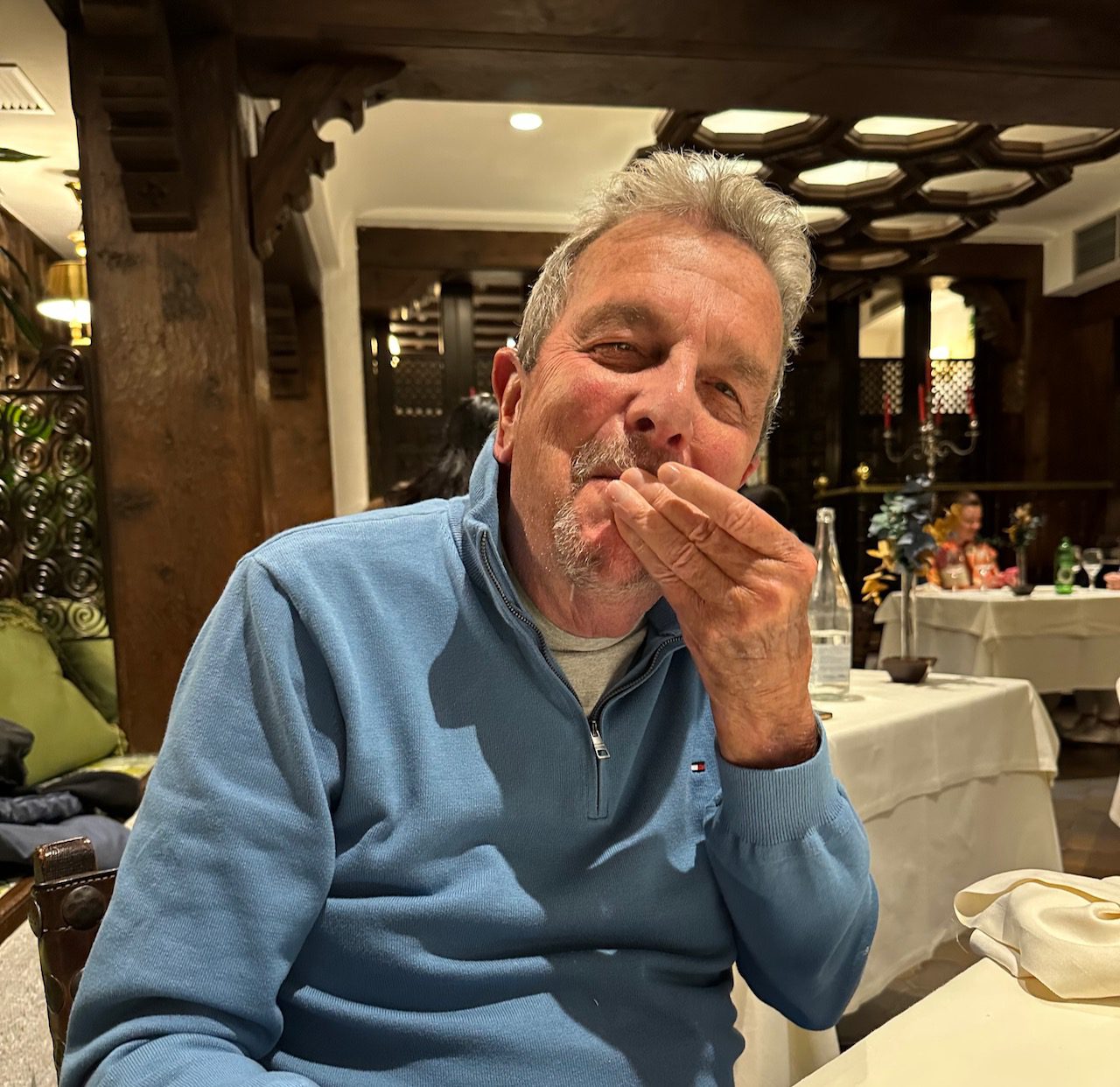
As we departed a little after 11 pm, the downstairs section was full of energy and the party was still going on outside. Ah, to be young again.
We returned to our hotel under a gorgeous black velvet sky, which made the cathedral pop so much that Tracy thought it “looked like it was made from spun sugar.”


It was another late night for us, but another surprise city street party made it all worthwhile. Sleep when you’re dead.
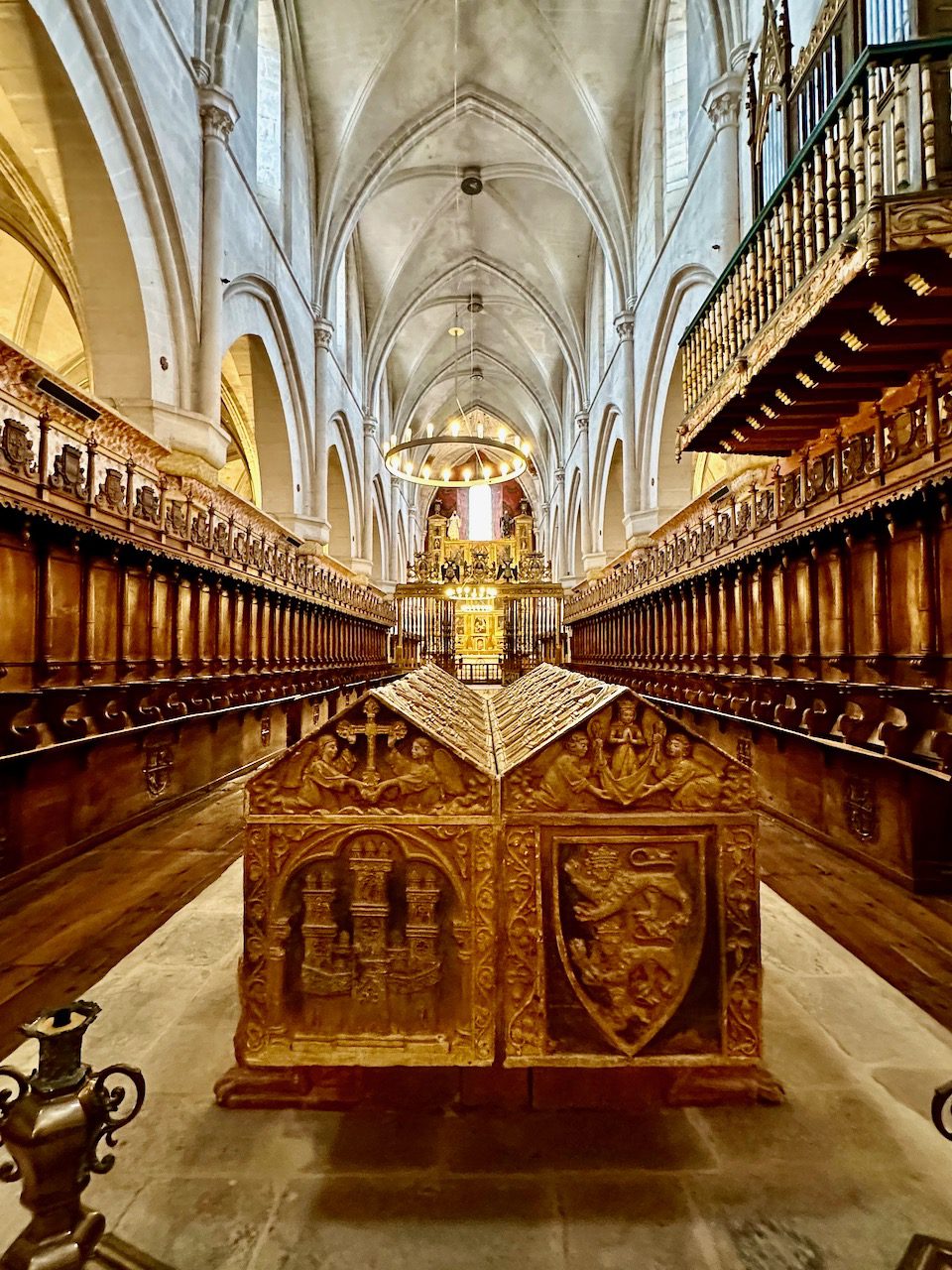 Tomorrow would start with another Spanish-only tour at the magnificent Monasterio de Santa María la Real de Las Huelgas, where one didn’t need to know the language to be dazzled. Strolling through Burgos after our tour we decided this looked like a town we could live in. Then we’d head a long way out of town to see the mausoleum of King John II and Queen Isabel of Portugal (Cartuja de Miraflores), complete with some of the most gorgeous frescoes and murals we’ve ever seen. On a rainy night, our dinner started off a little uneven, but eventually turned into a really fun dining experience.
Chapter Eight: Dawning Of A New Day In Burgos
Day Eight – Red Skies In The Morning…, Why Didn’t I Take That Extra Semester Of Spanish?, My Kind Of Town, A Feast For The Senses, The Helpful Attendant, Stiffed, Chocolate & Olive Oil, Burgos In The Rain, None Shall Pass and A Change Of Attitude