
Chapter Five: A Hidden Gem Highlights A Busy Day In Madrid
December 29, 2025
Chapter Seven: Burgos Bound
January 12, 2026Celebrating España: MaiTaiTom’s Still “Insane For Spain”
Chapter Six: Topping Off Our Terrific Time In Madrid
Day Six: Former Palace of the Marquis of Matallana, Current Palace of the House of Alba, Tilting At Statues, Cervantes Squared, The Fourth Largest Dome In Europe, Tales From Spain’s Largest Crypt and Another Sebastian Dining Winner
Our final day in Madrid had arrived, and we were out early to another lesser known house museum, Museo del Romanticismo, which is the former palace of the Marquis of Matallana built in 1776. The palace was transformed into the Museo del Romanticismo in 1924, preserving its original look and collections of art. It focuses on the upper middle class (we were allowed in anyway) during what was being called the Romantic period (19th century), which somehow existed without Hallmark movies.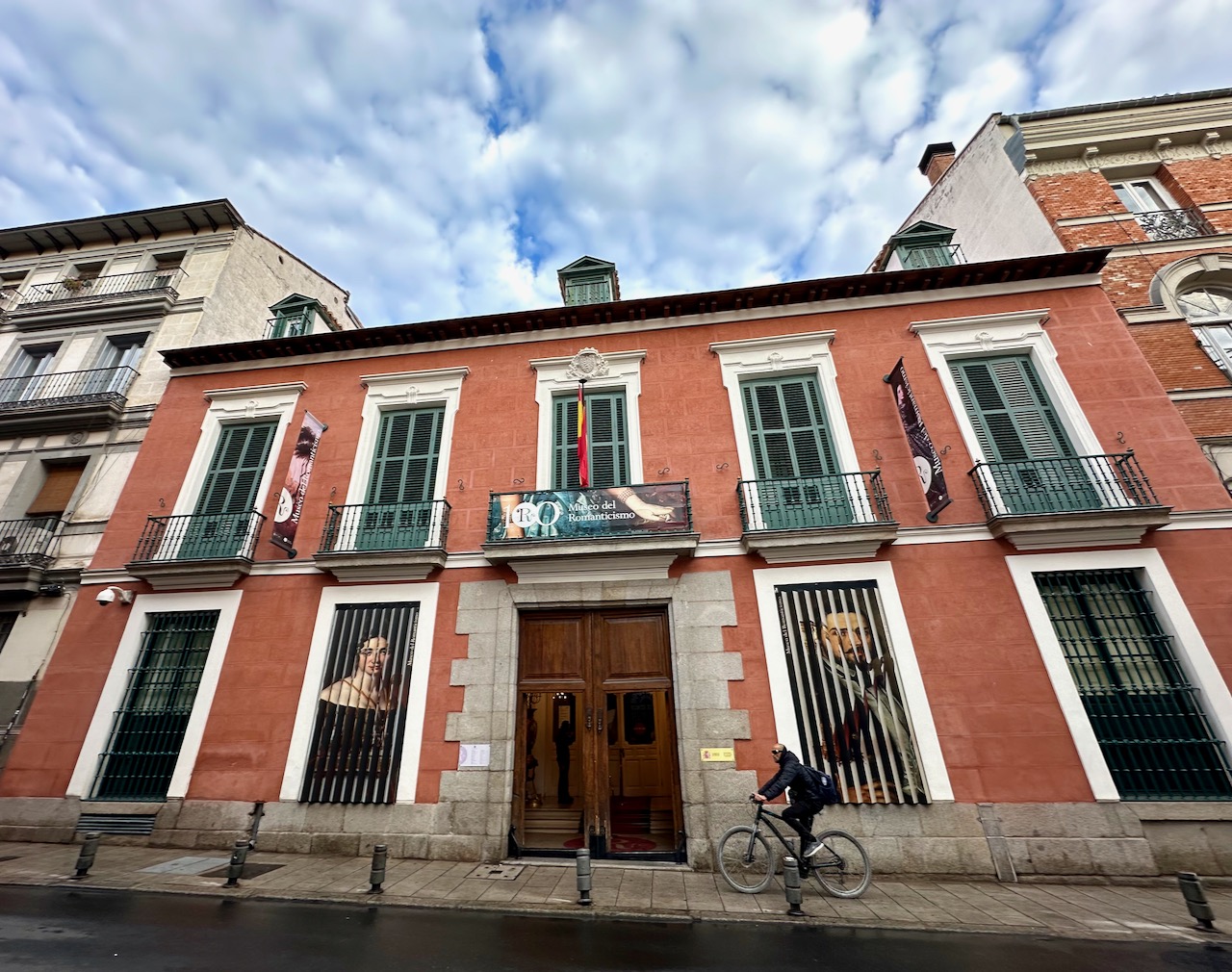
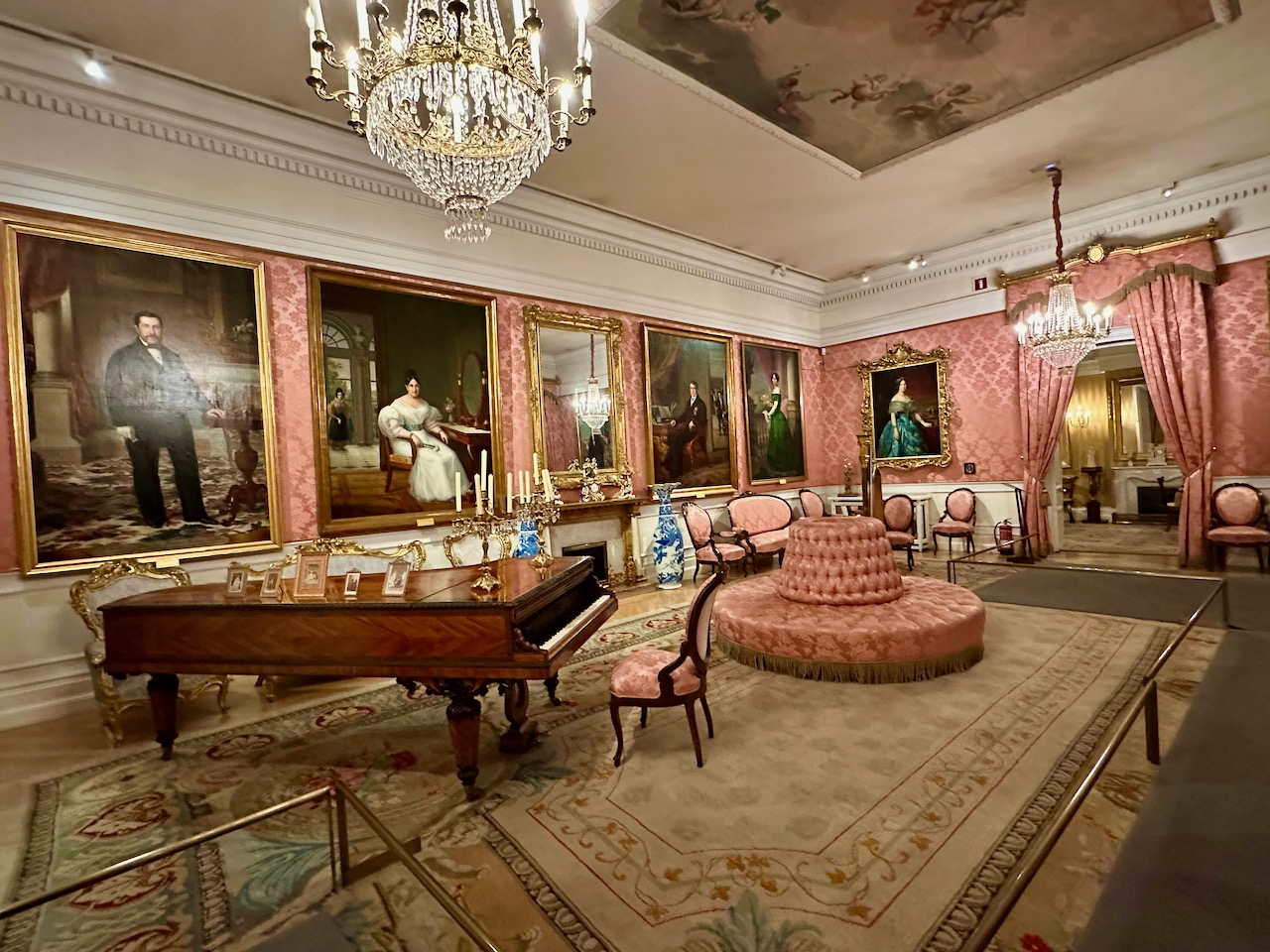
Unlike the day before at Museo Lazaro Galdiano, when we arrived shortly after opening, this museum was already filling up with people. However, we were still able to take a lot of photos in rooms sans visitors. There are 30 pianos scattered throughout the house.
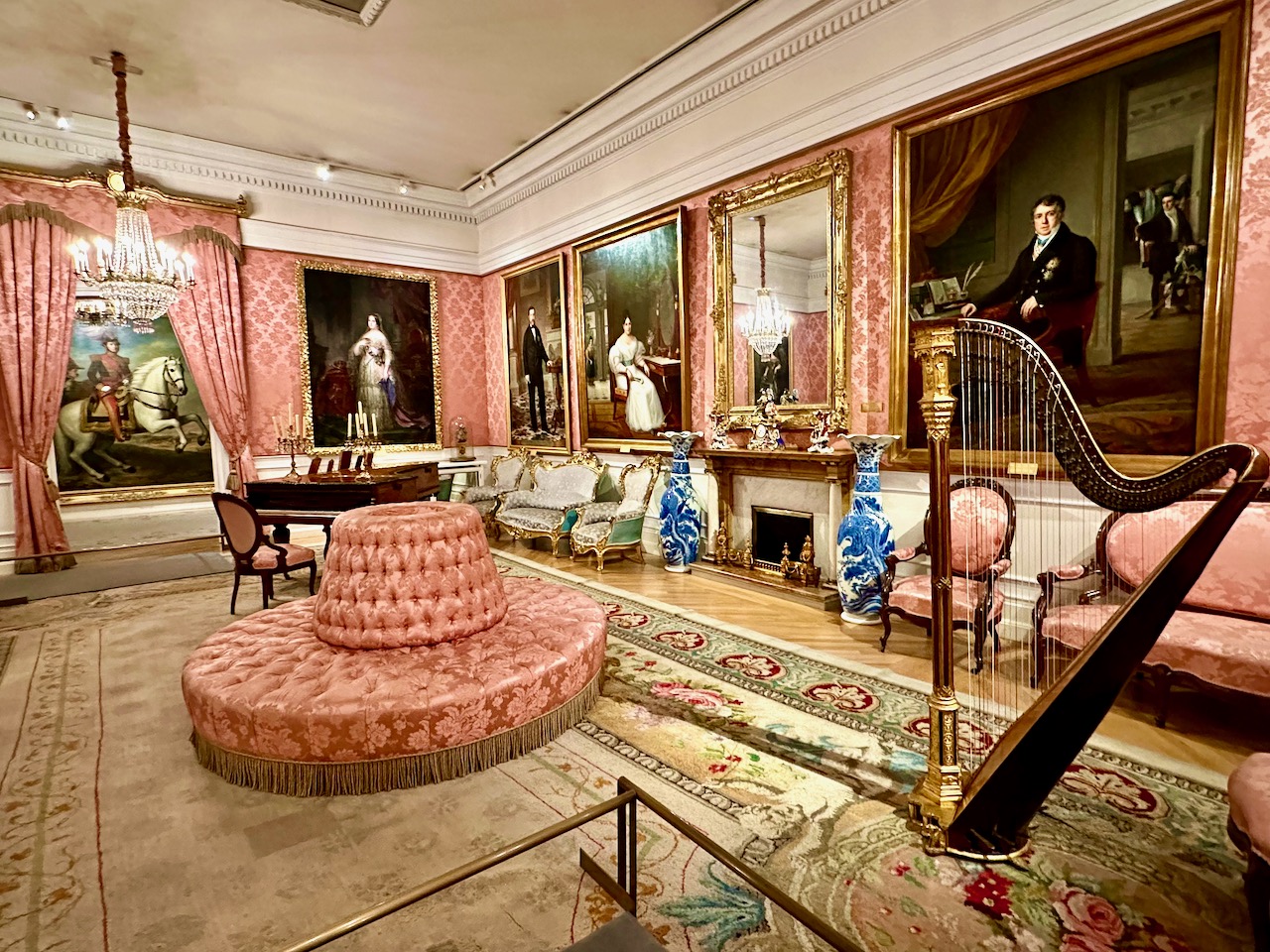
The painting viewable through the curtains is the Equestrian Portrait of Juan Prim (1844), a Spanish general and statesman, who was briefly Prime Minister of Spain until he was assassinated.
La Plaza Partida (also known as The Divided Bull Ring) is by Spanish artist Eugenio Lucas Velázquez. 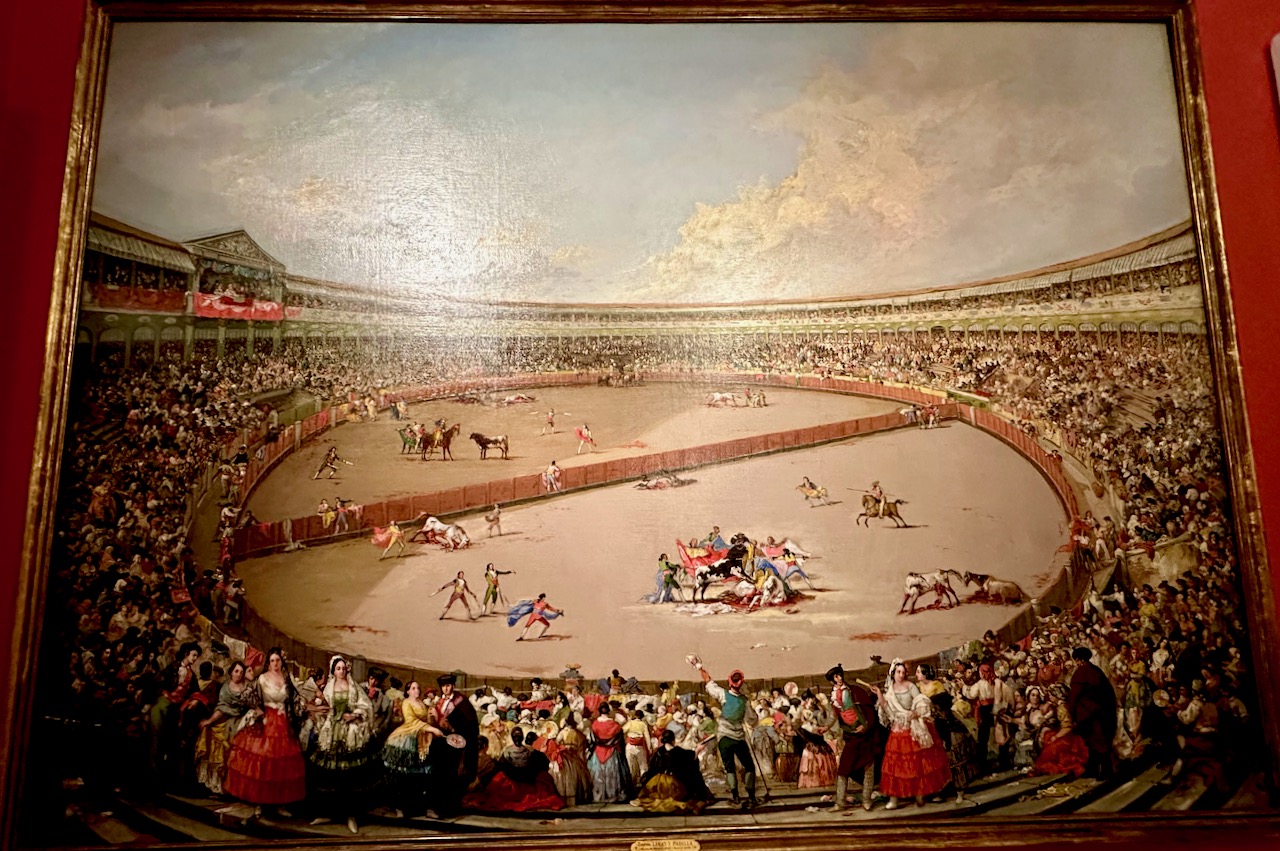
Stepping into the oratory, there is a painting of Saint Gregory the Great, who was also Pope Gregory I.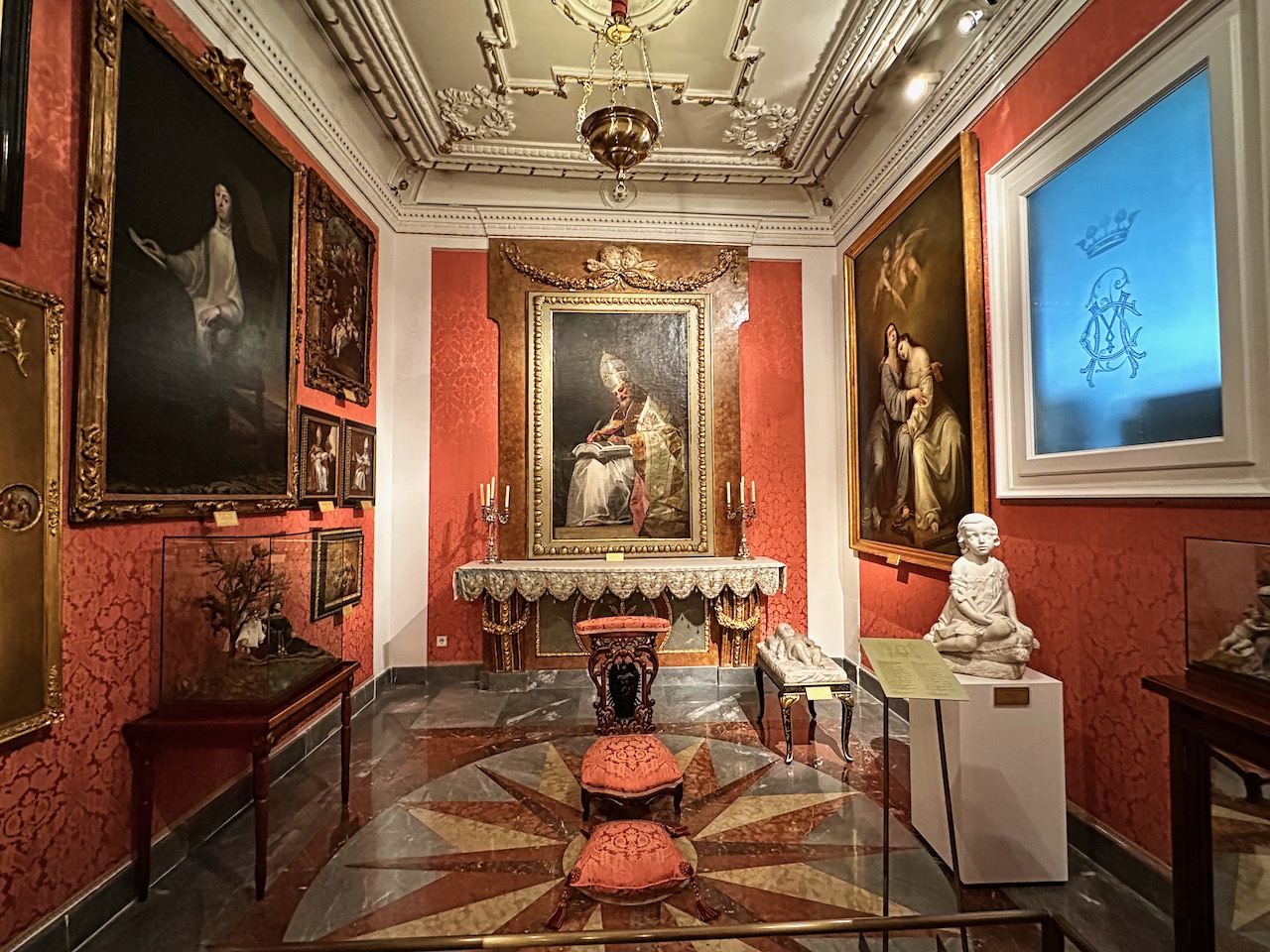
Not wanting to be Lions or Broncos fans, these children are Playing with a Ram.
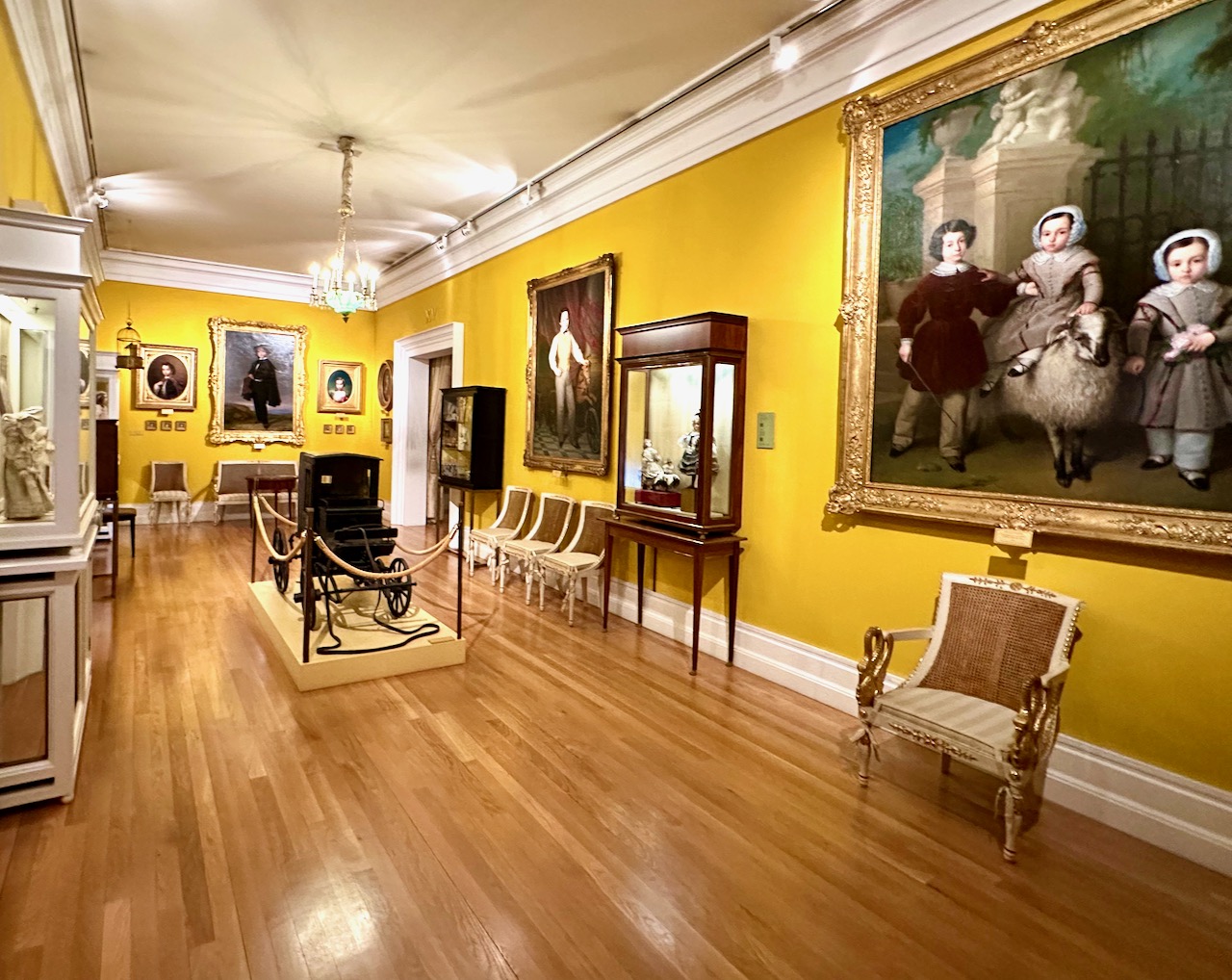

The rooms were all painted in vivid colors.
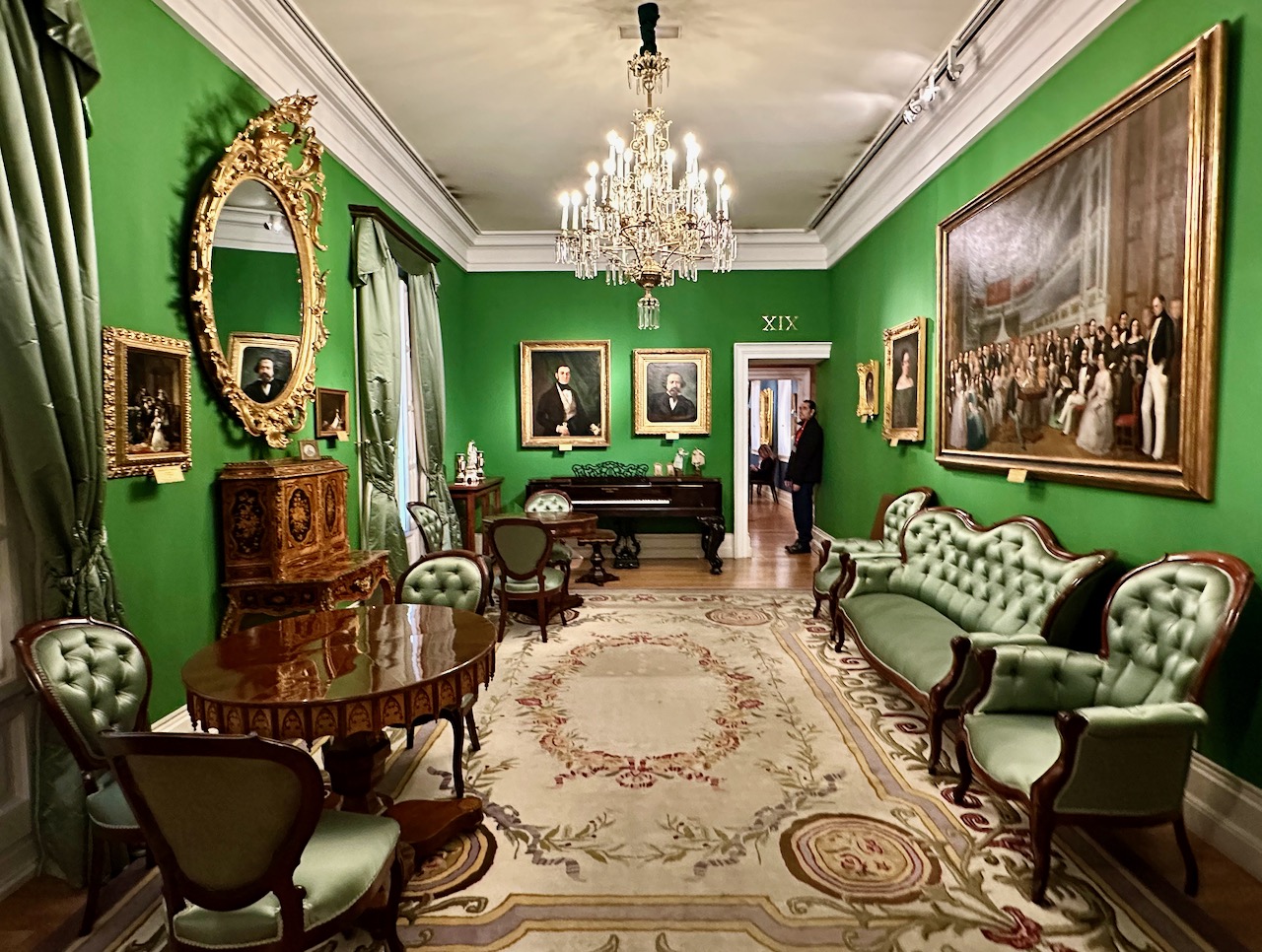

I had probably seen too many paintings on this trip, because the first thing I thought of when looking at these portraits was that the guy in the bottom center painting looked like Weird Al Yankovic, while the gentleman above him reminded me of Johnny Cash.
Loved the emerald green of some of the rooms, but I must admit I never really got into the flow of what we were seeing.


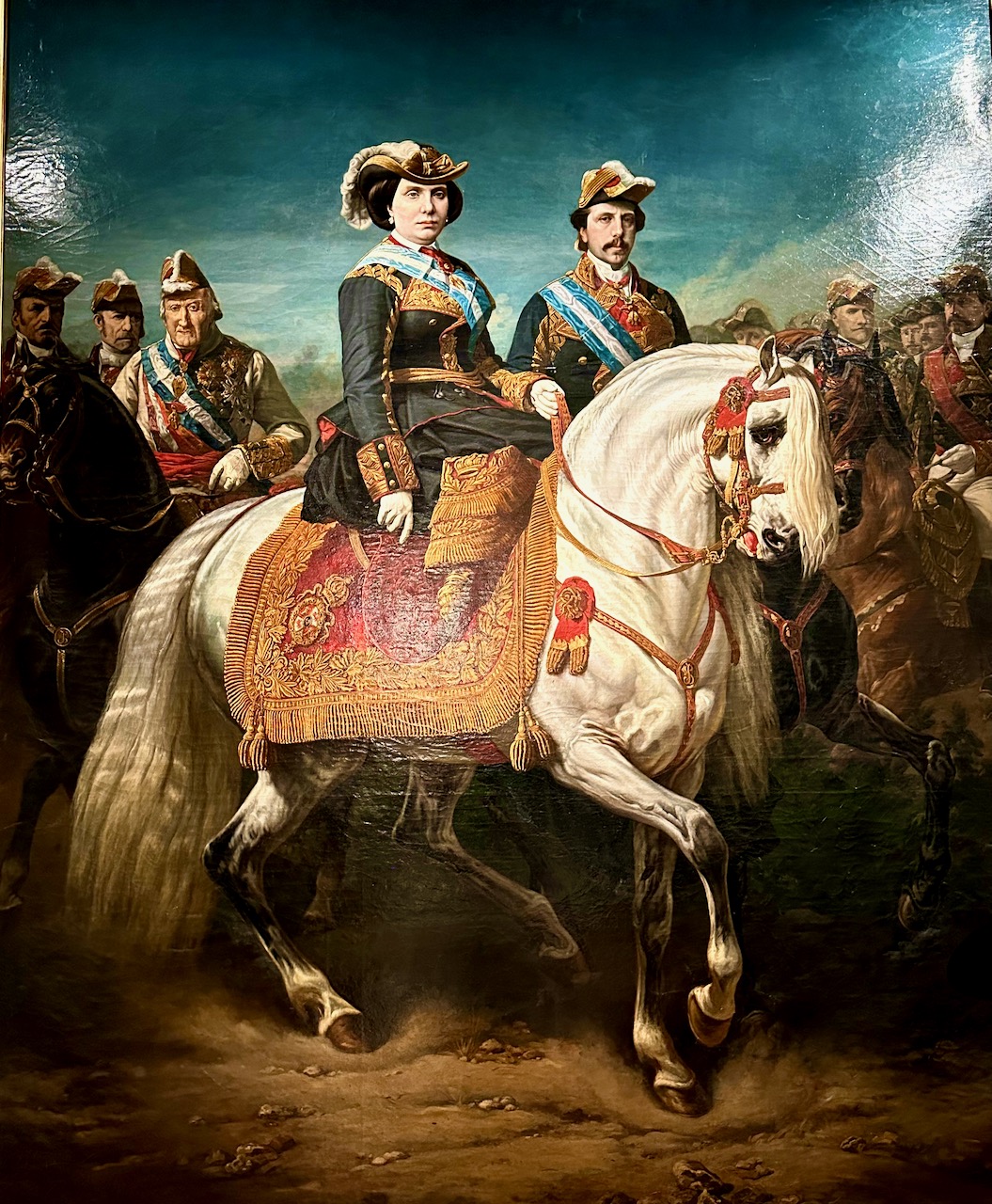
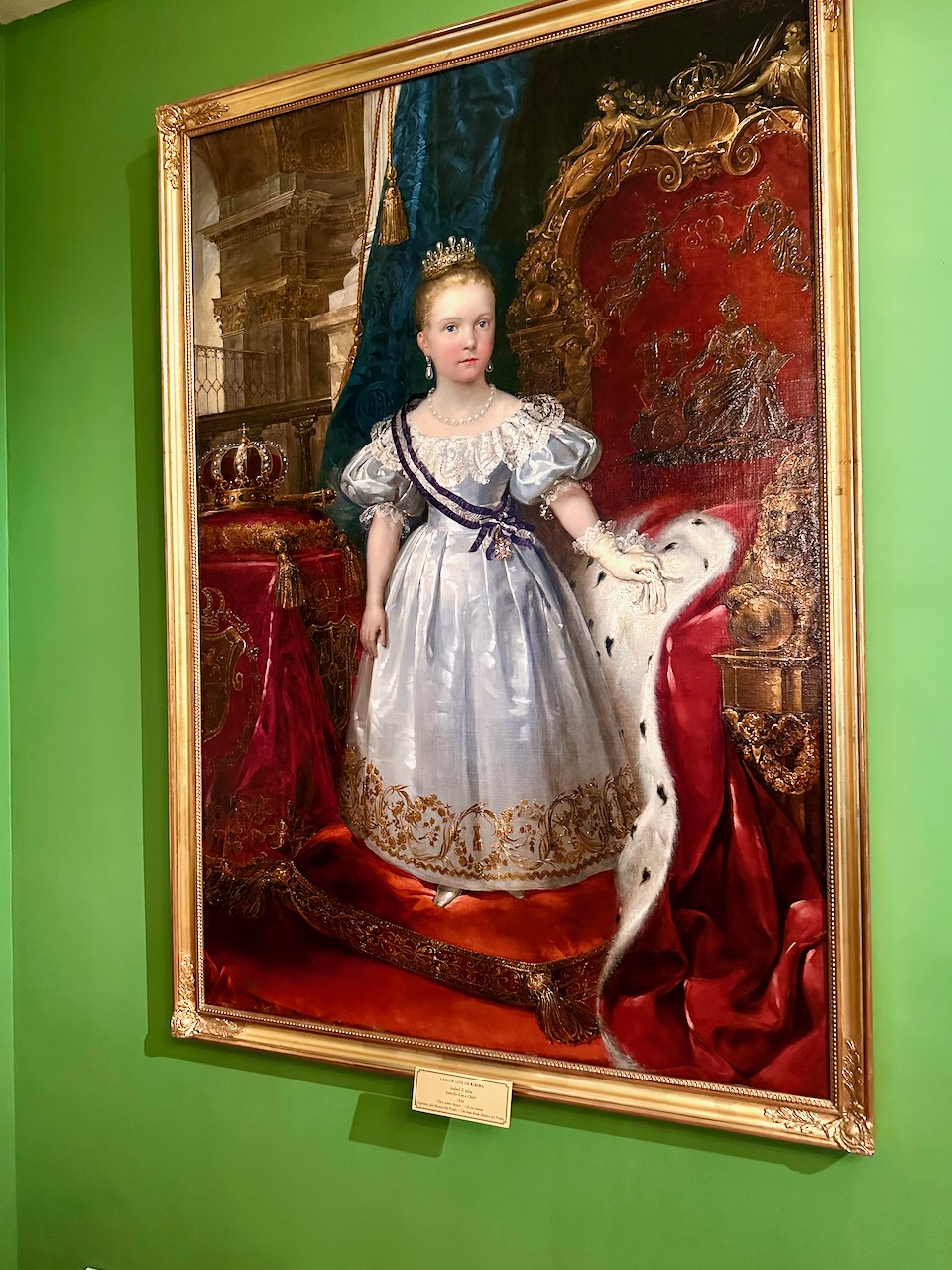
Isabella II as a child, and as Queen inspecting the troops.
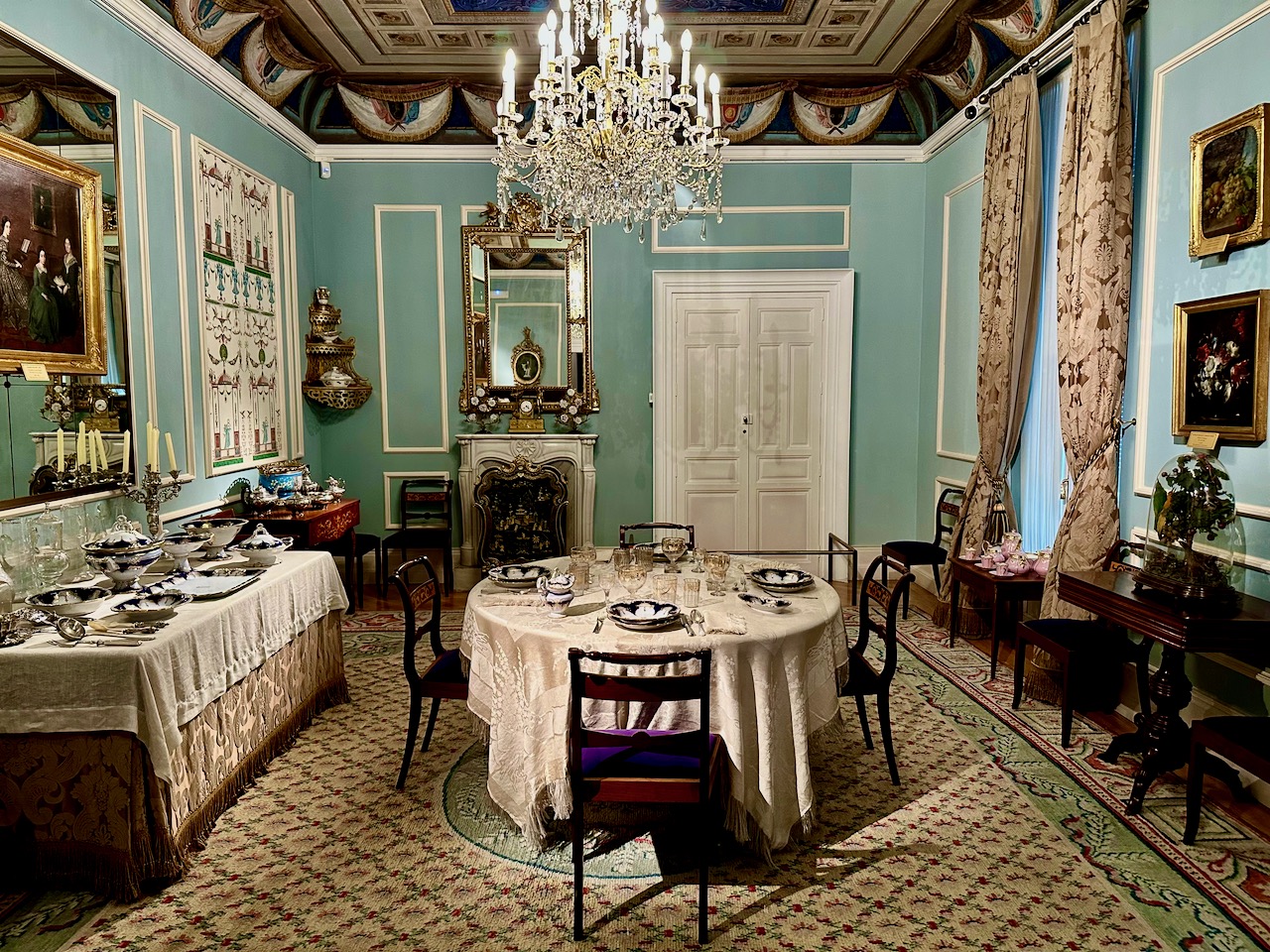
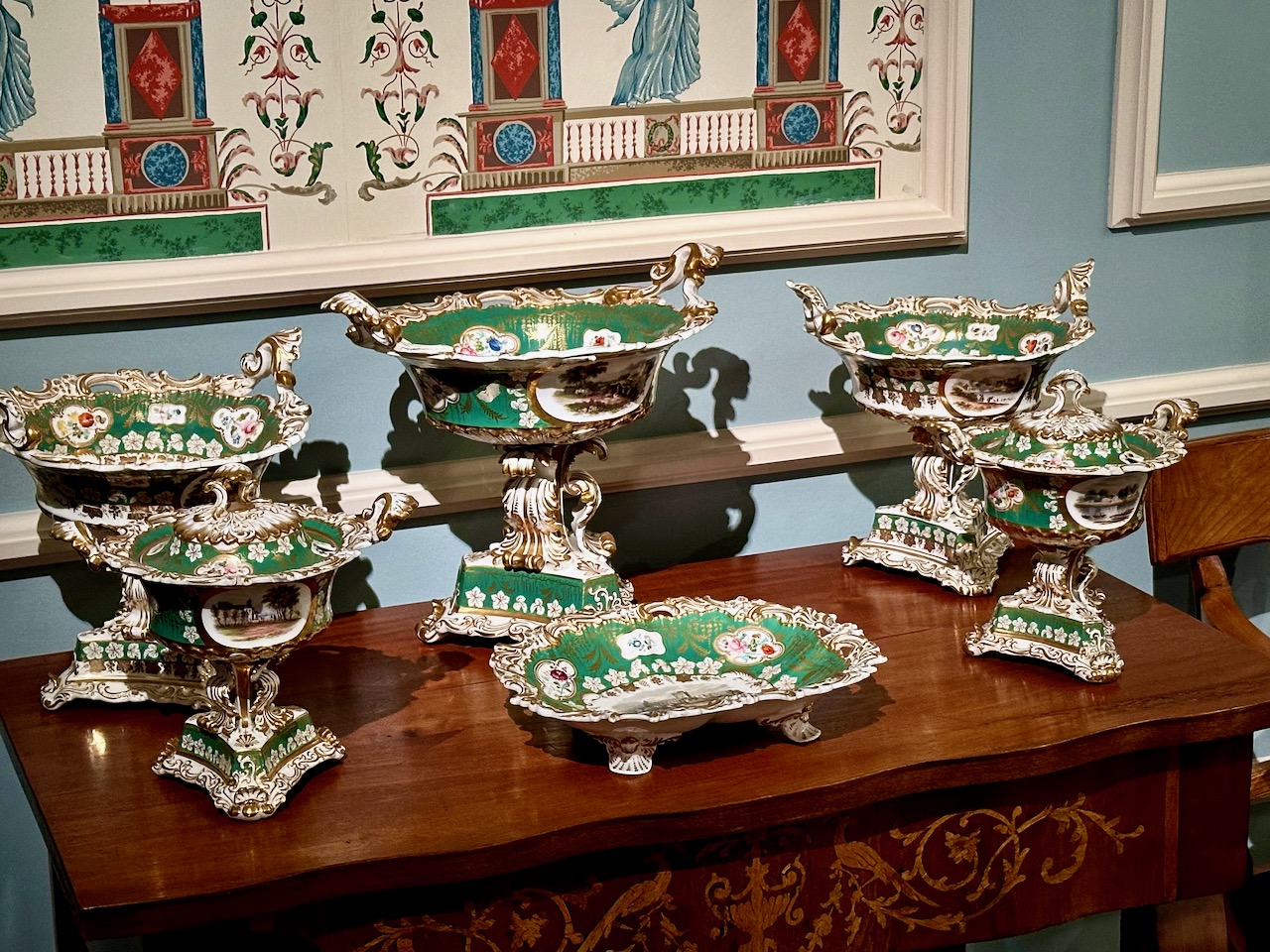
Our final stop was in the dining room, and then we immediately headed off to breakfast.
We had started our morning at the Room Mate Alba, and soon we arrived at the home of the House of Alba, the 18th century Palacio de Liria. For more than six centuries, this family have been important art collectors in Madrid.
We explored the French Garden, redesigned in the early 20th century. There’s also a pet cemetery, which holds the remains of many of their family pets. They should see our closet, which sadly is a veritable pet mausoleum.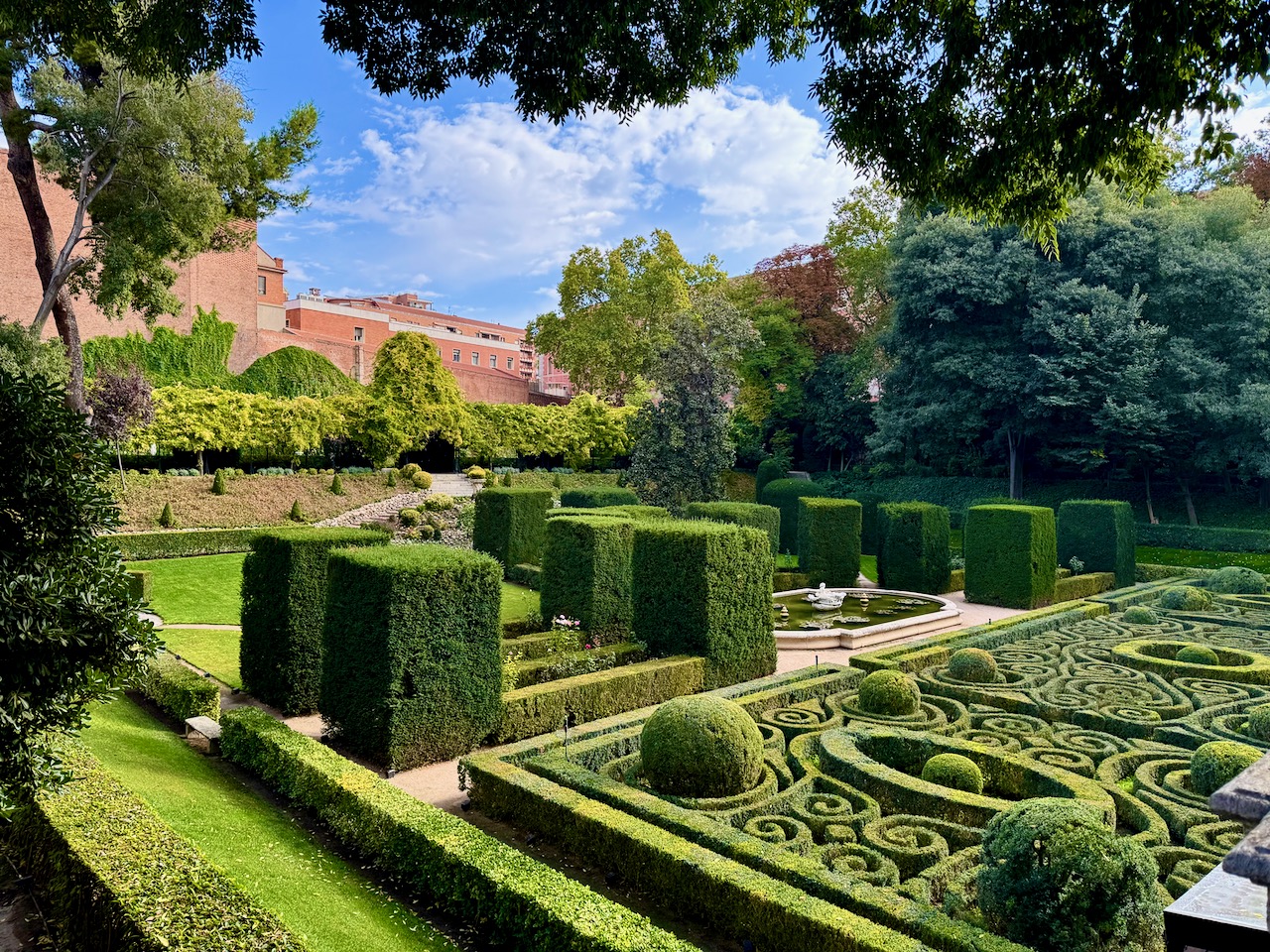
The library of the Duchess of Alba started us off.


So this is how the other half live. These sedan chairs were how the wealthy used to get around, being carried by two men. Not the best way to attain 10,000 steps.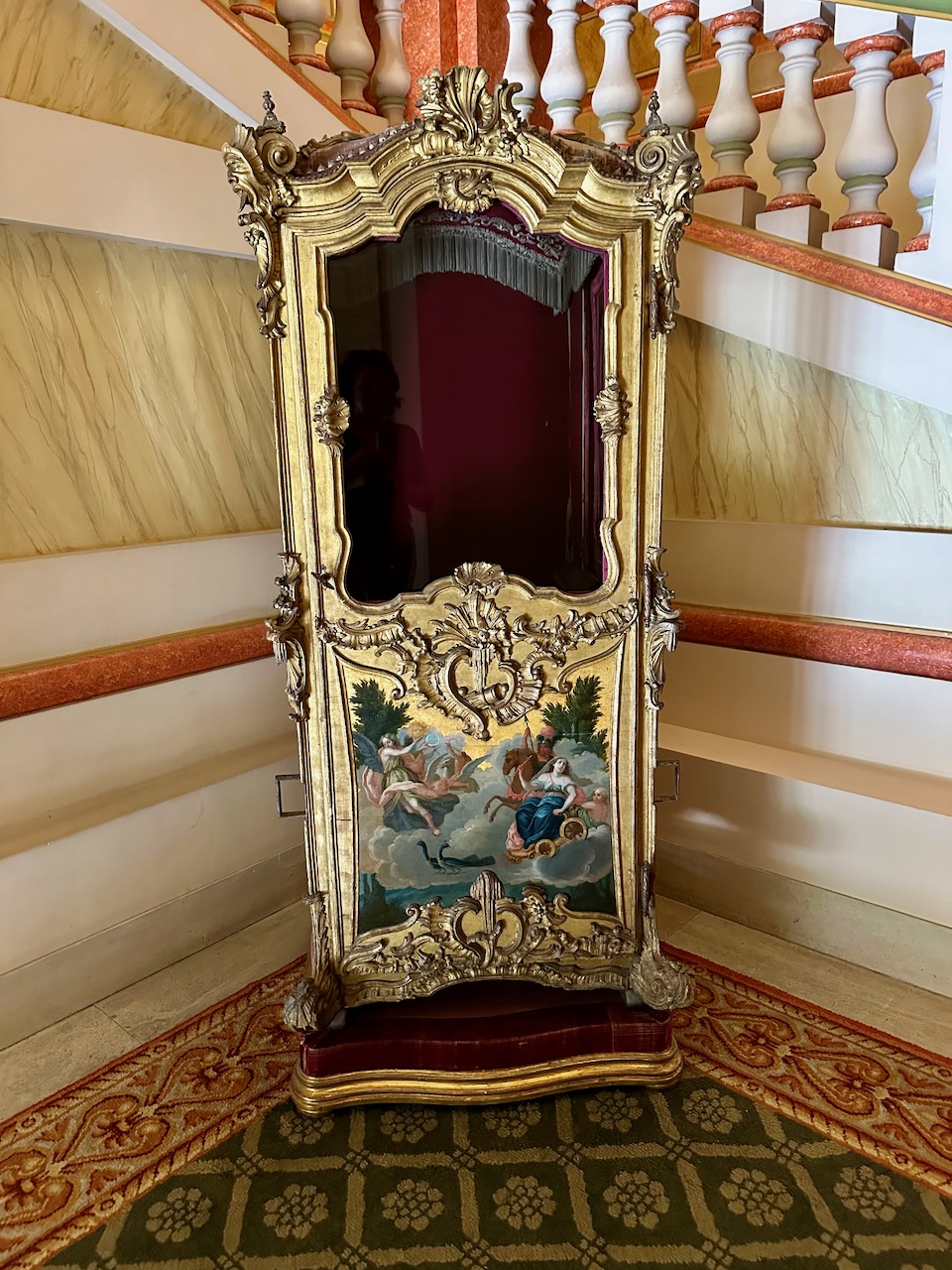
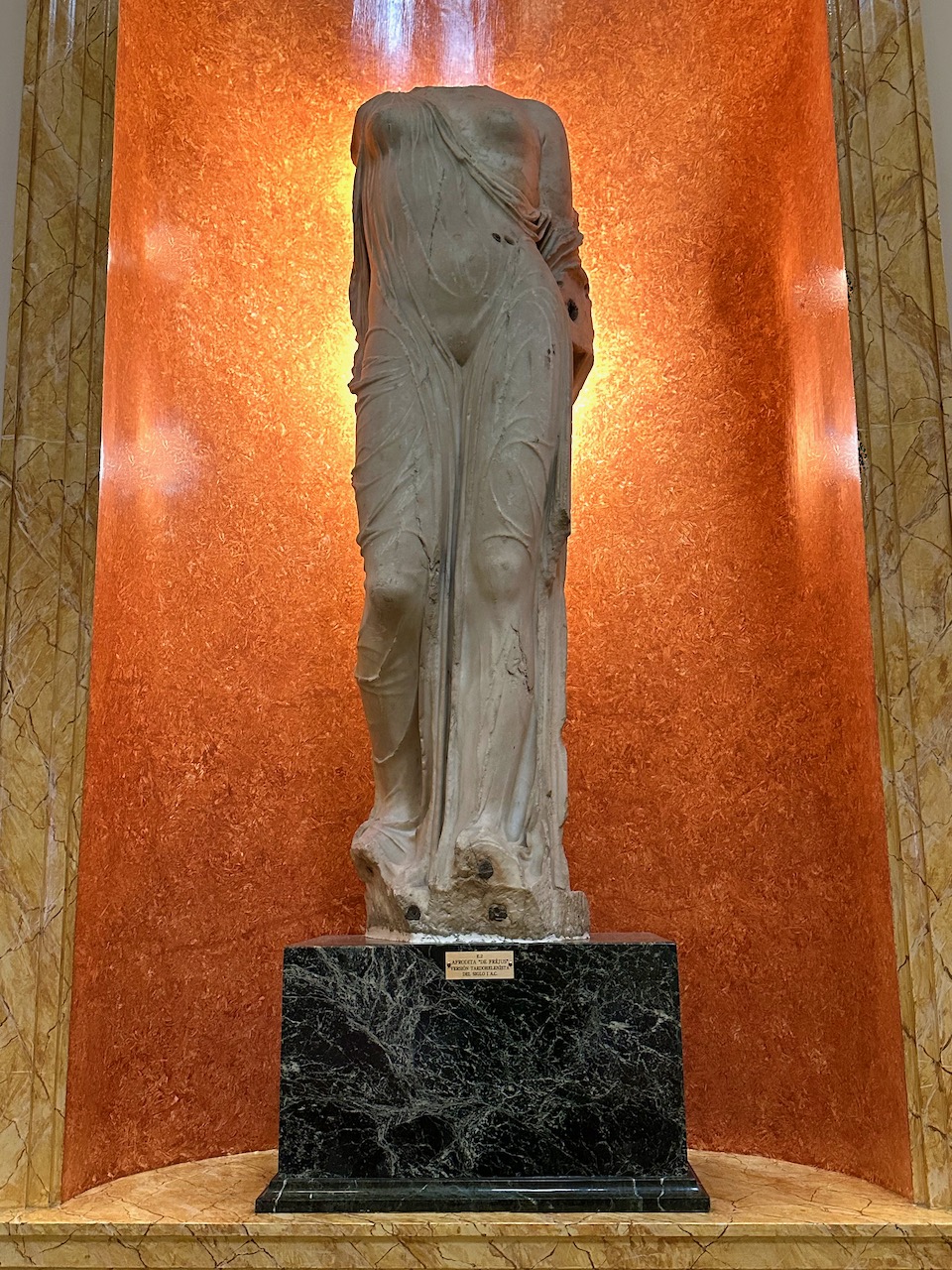
We climbed the Imperial staircase, and were greeted by Aphrodite, or at least part of her.
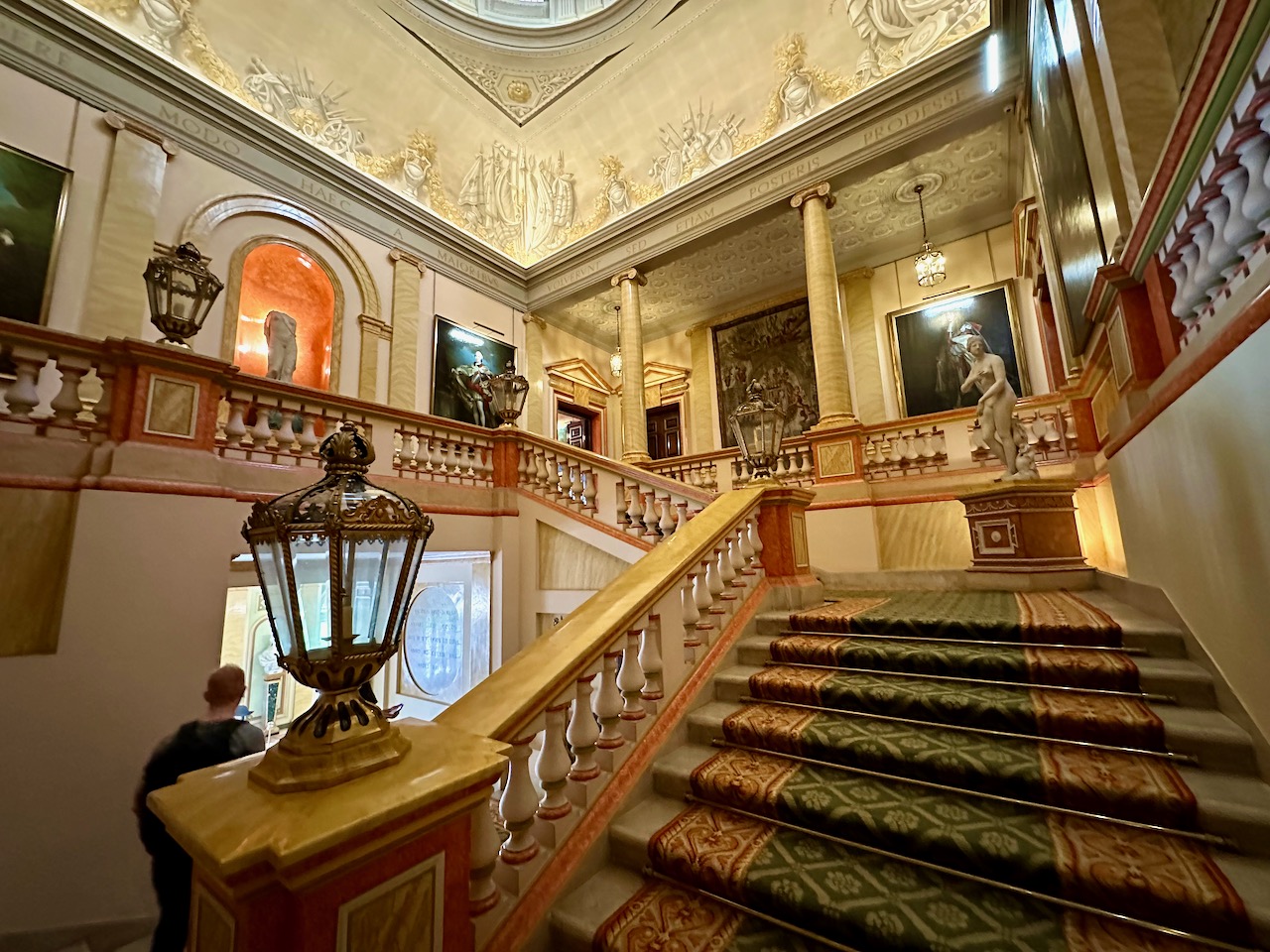
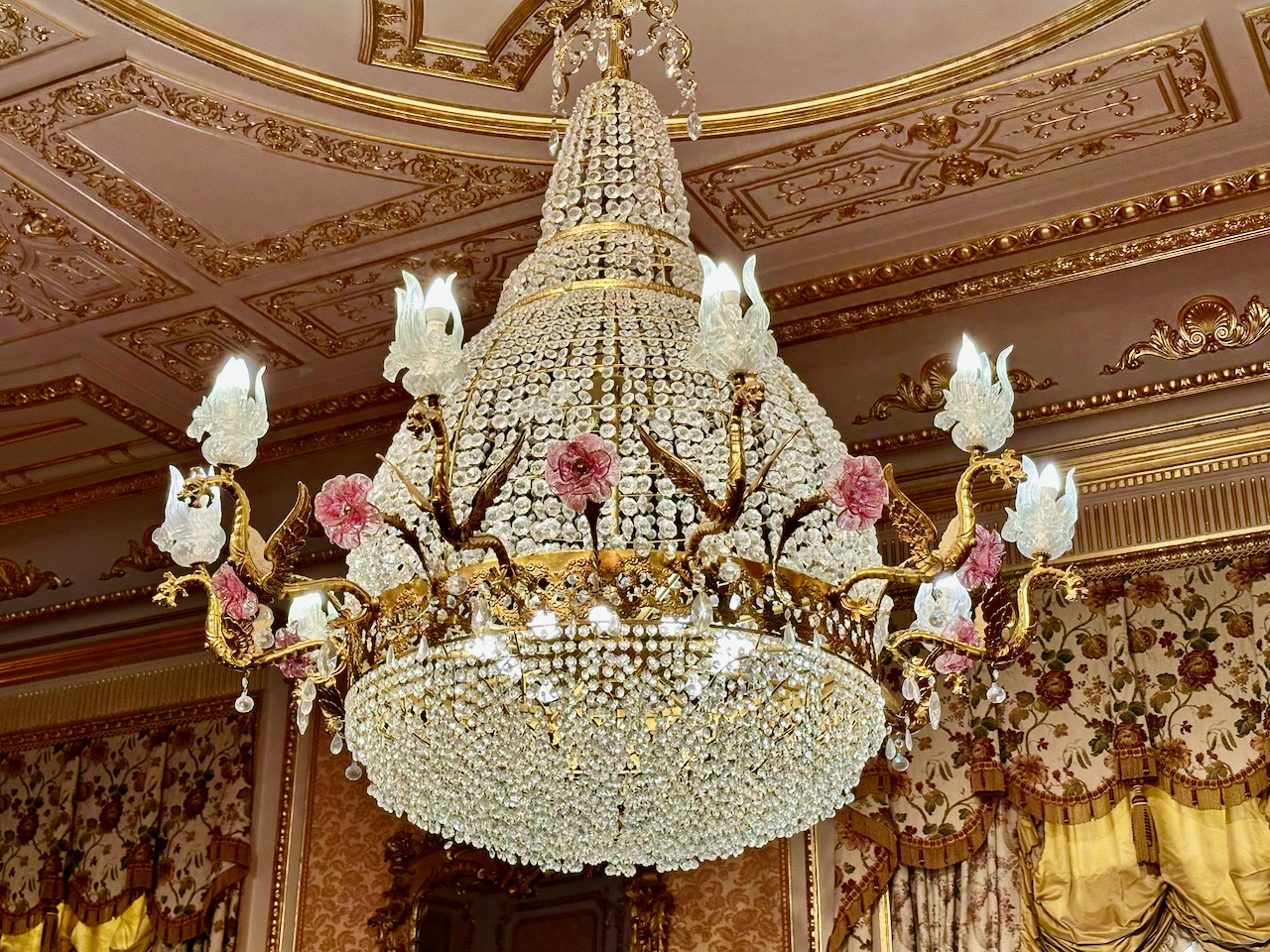
The opulent ballroom featured a chandelier the size of Alaska.
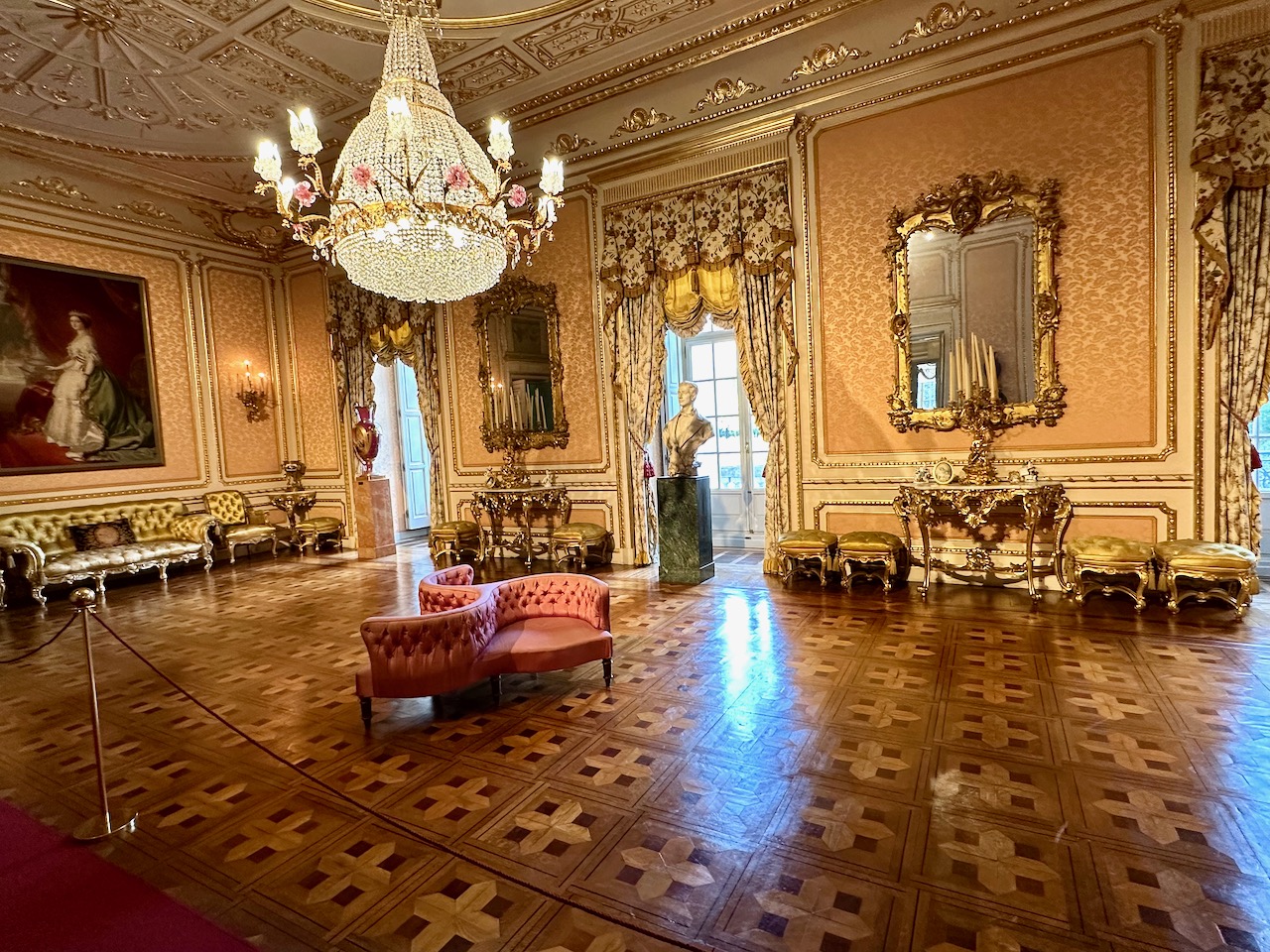
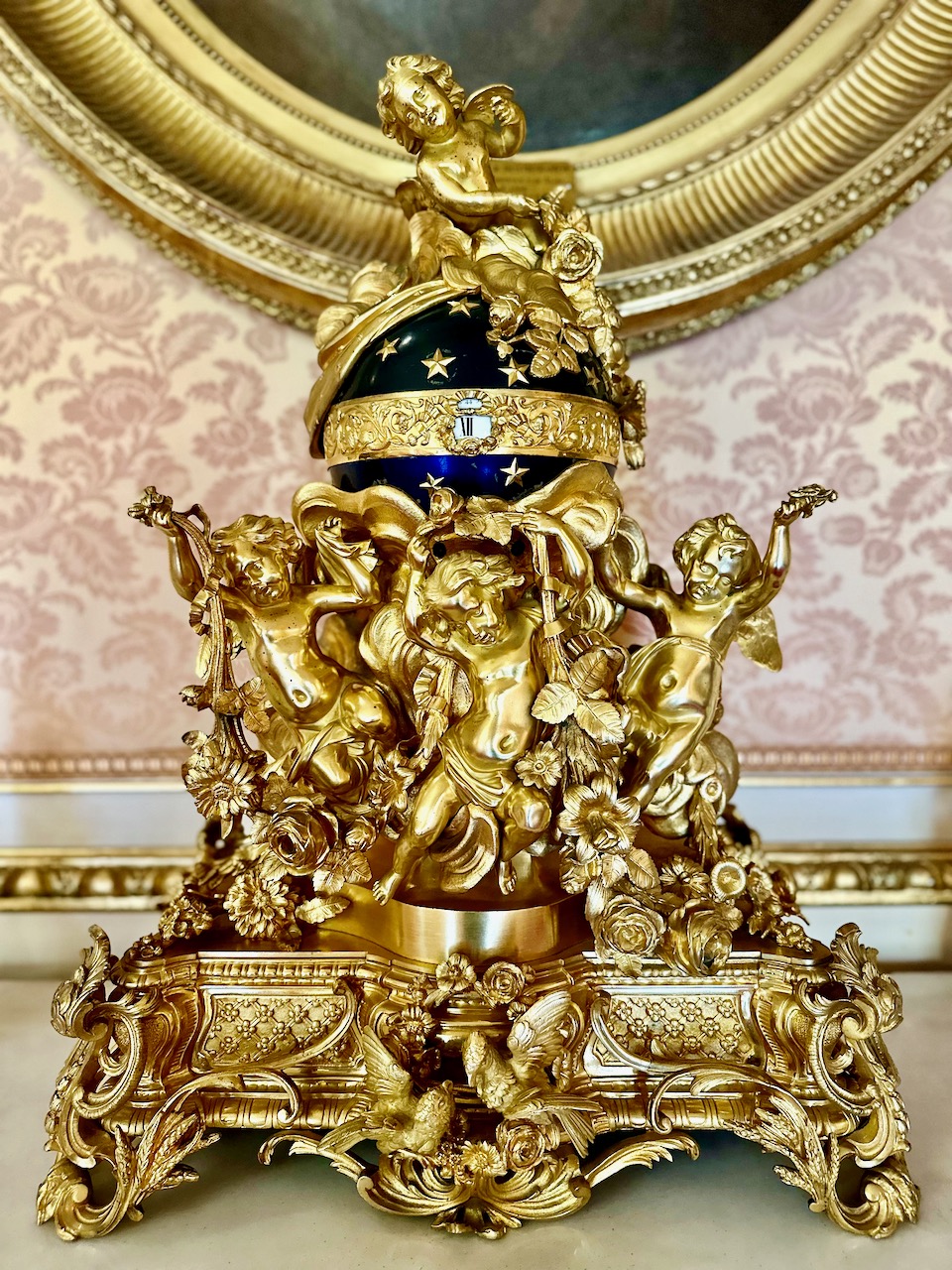
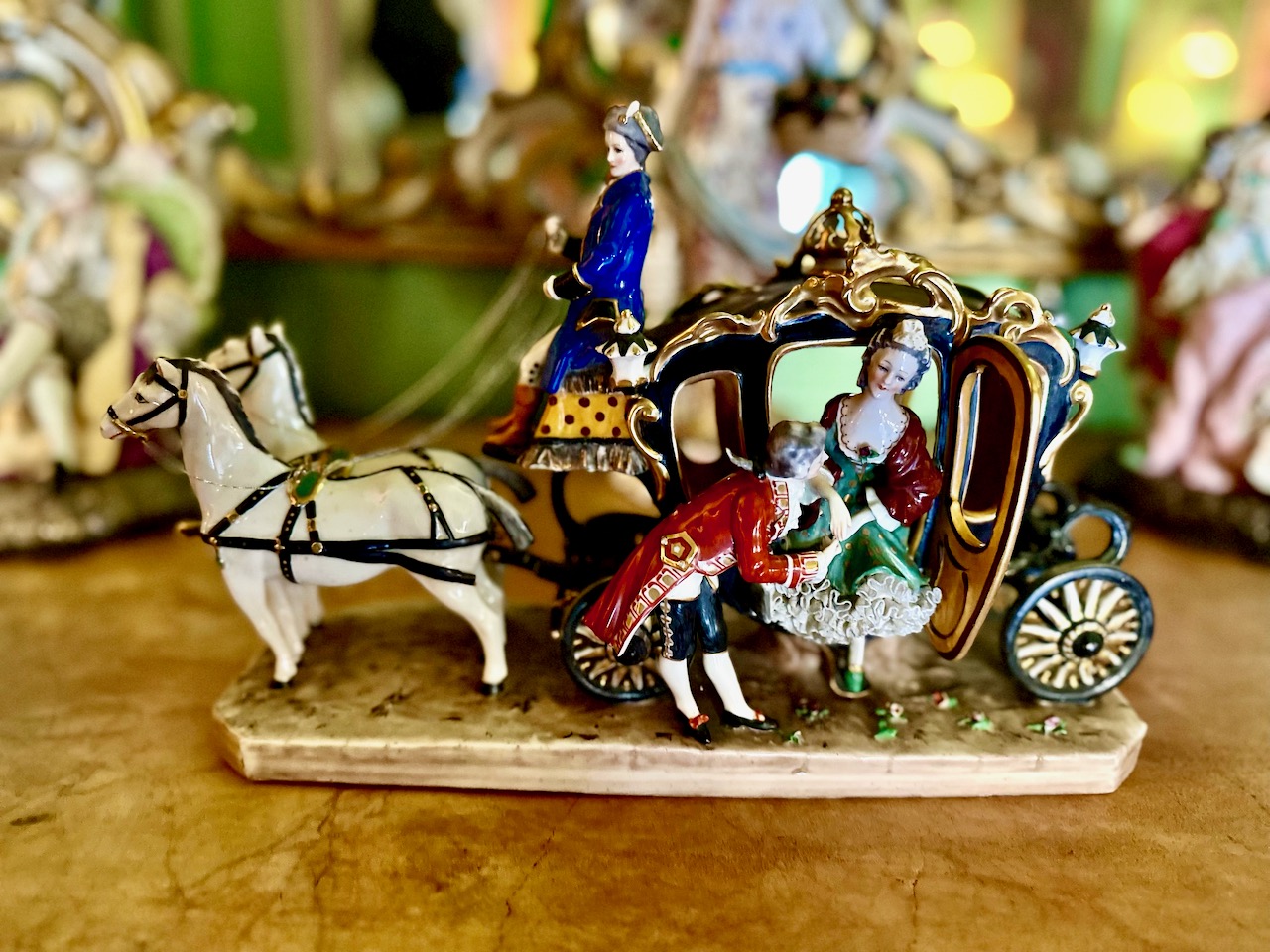
There were some beautiful decorative art pieces interspersed throughout the palace.
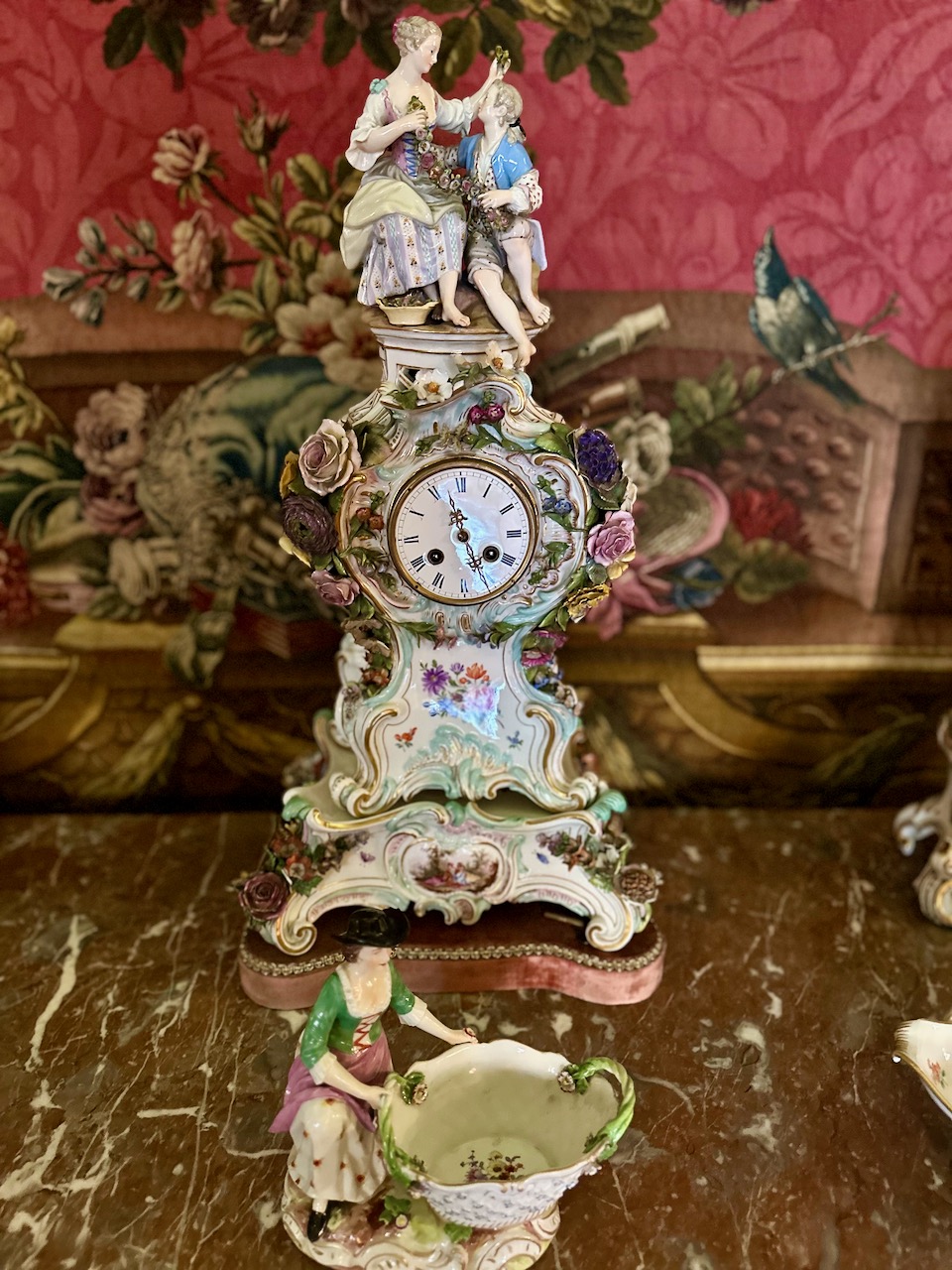
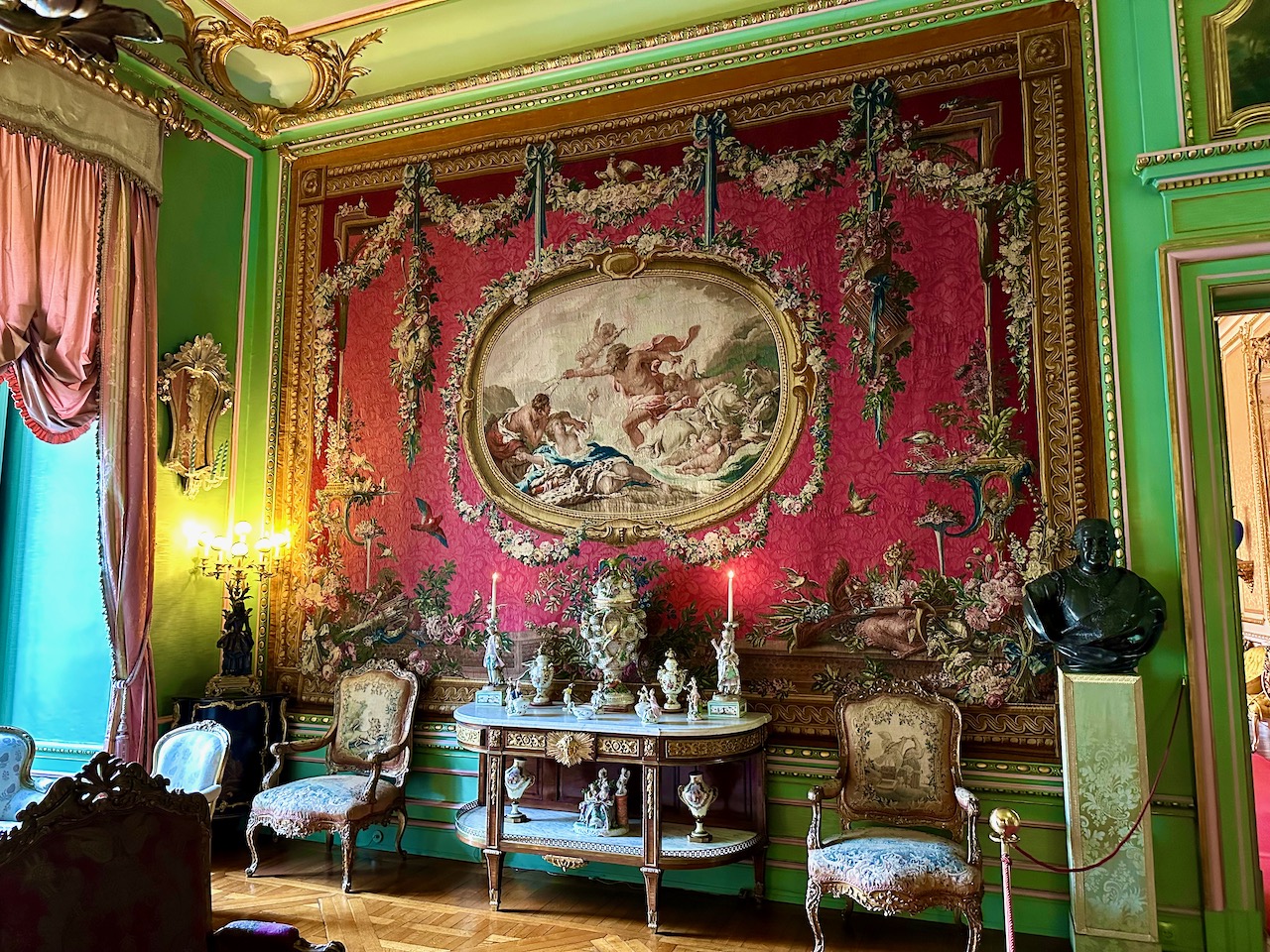
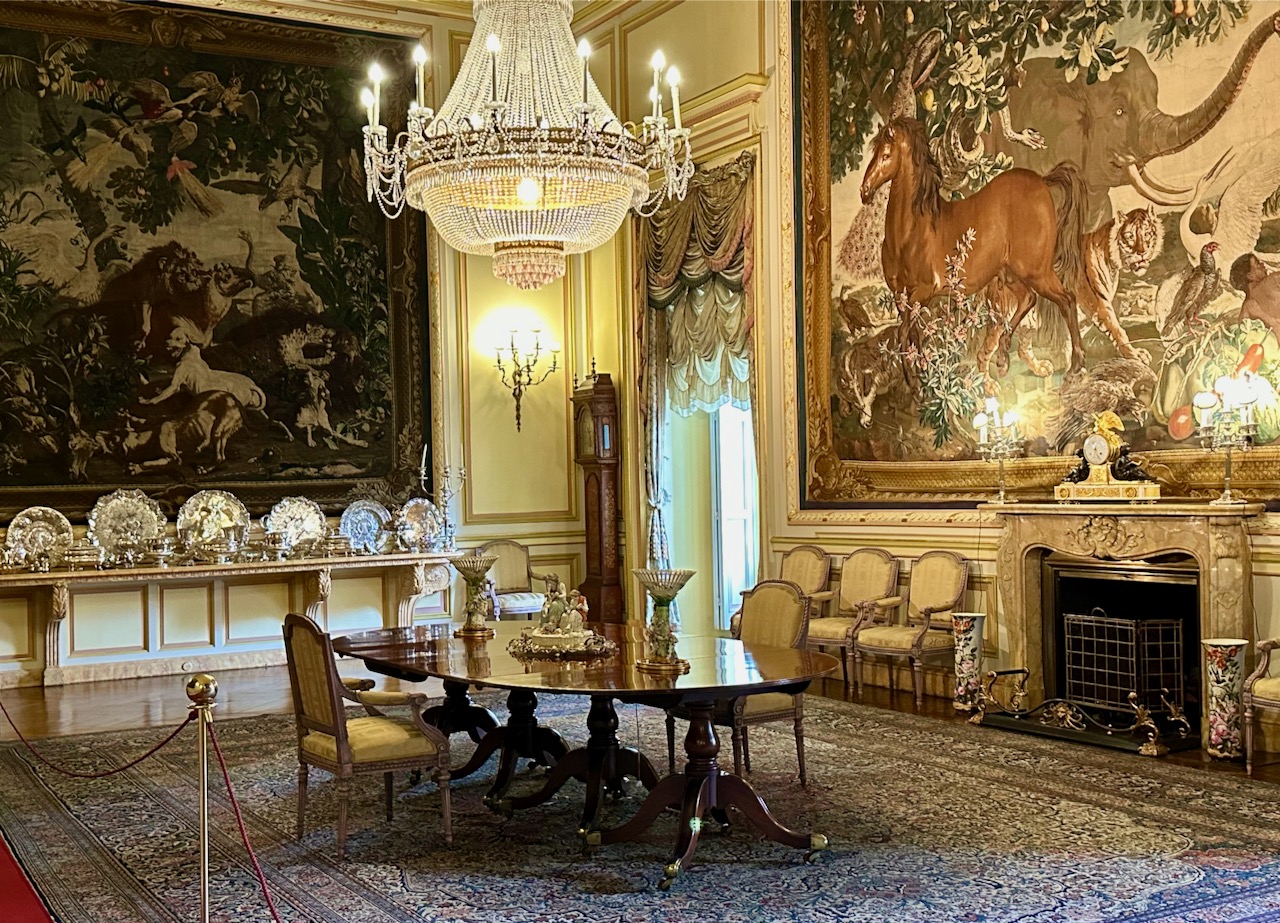
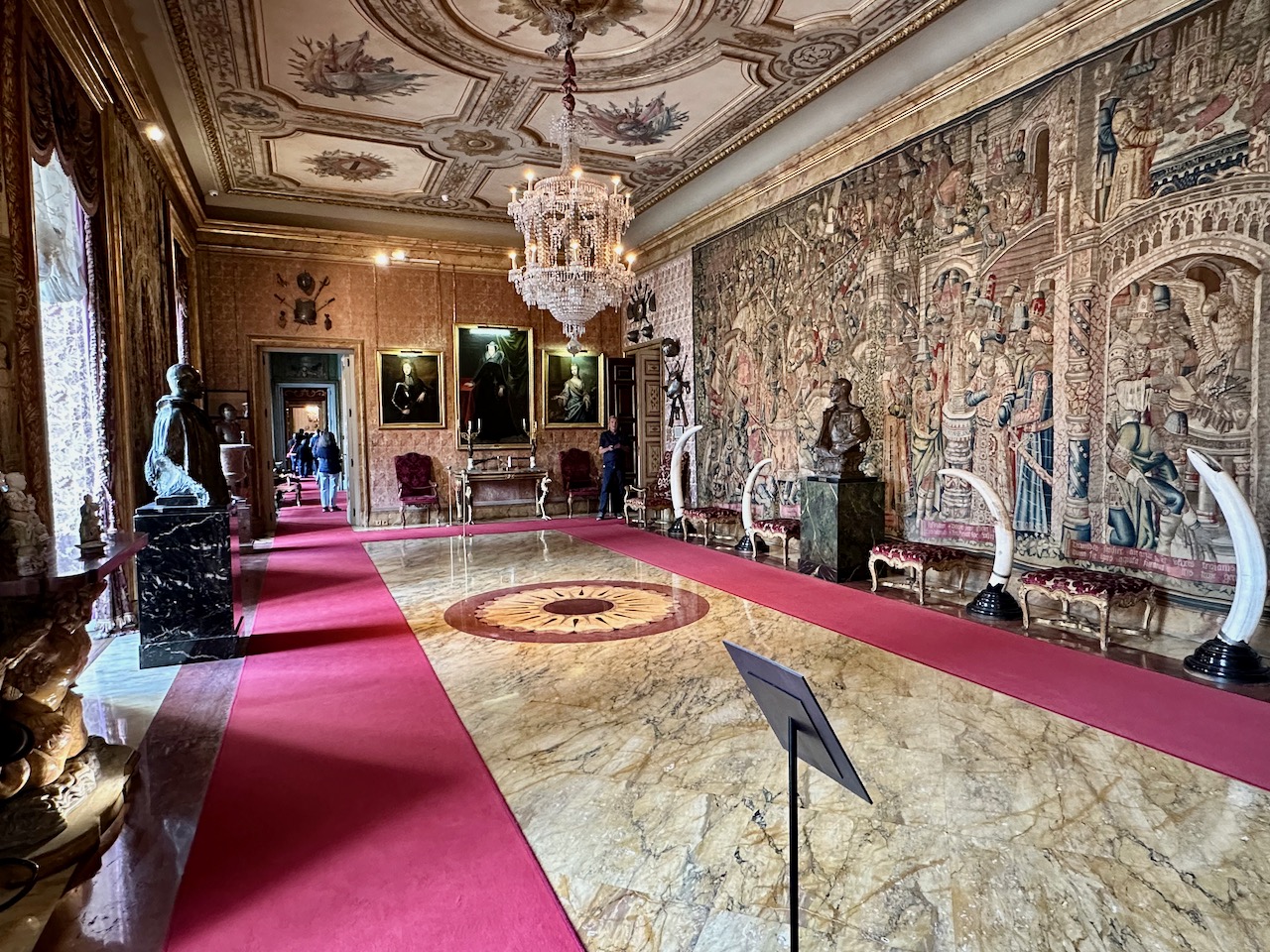
We hadn’t seen any tapestries in the past 24 hours, so we got our fix in a couple of different rooms.
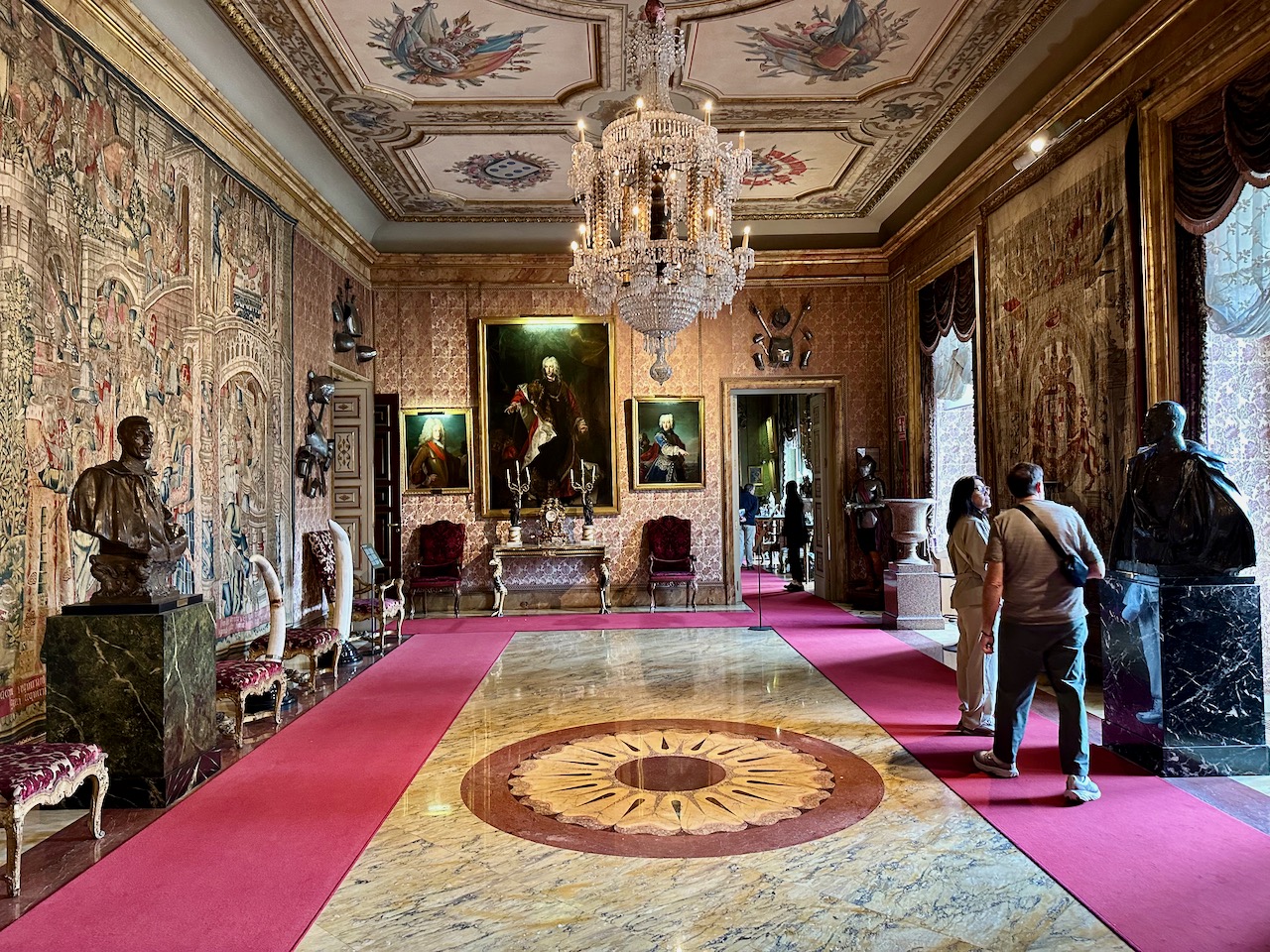
This room was depressing to me because those tusks belonged to beautiful creatures at one time.
Italian Renaissance master Giovanni Bellini’s Madonna and Child with Saints was hard to miss. 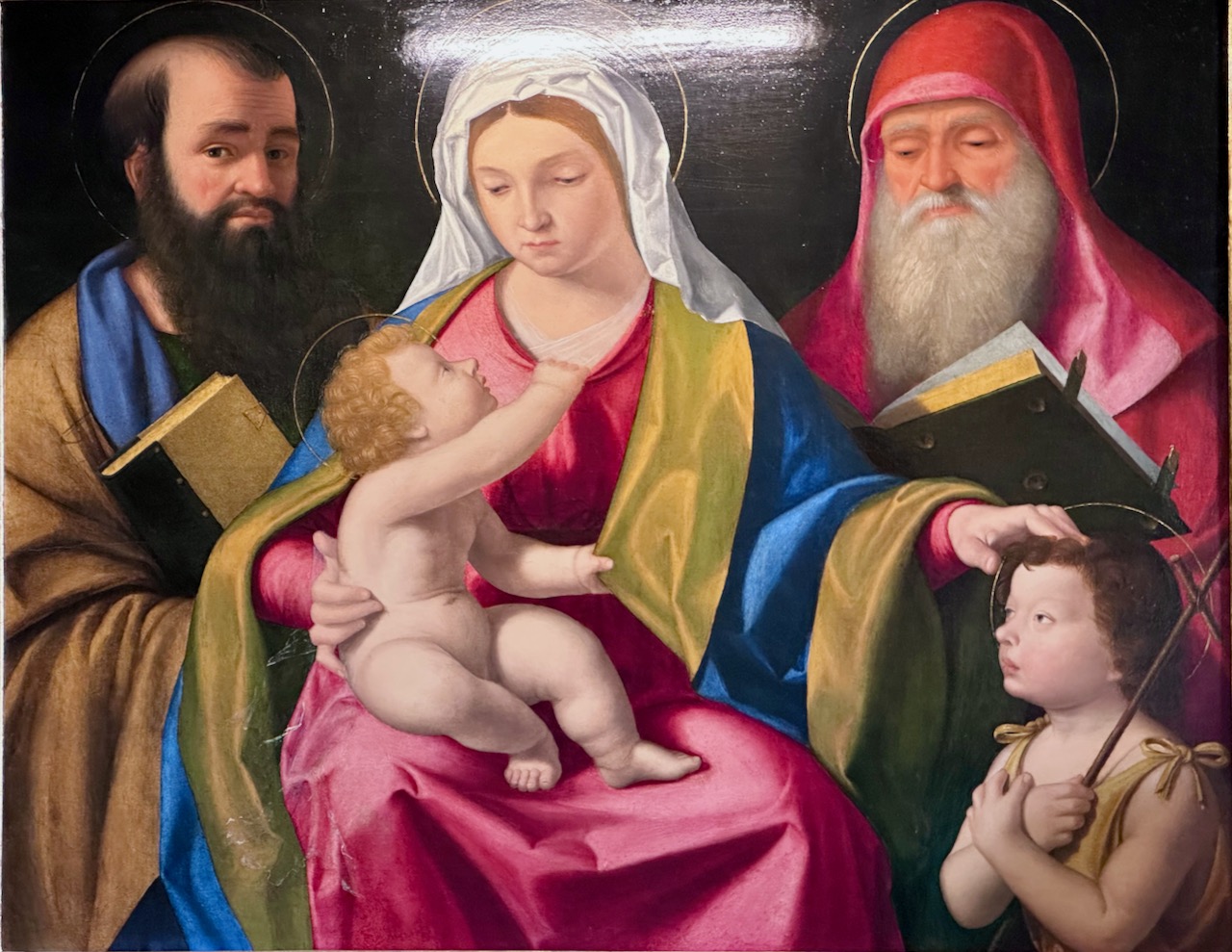
This palace houses masterpieces from Velázquez, El Greco, Ribera, Rubens and Titian, along with historic documents like letters from Christopher Columbus. The palace was severely damaged by a fire during the Spanish Civil War and subsequently rebuilt, but thankfully many pieces of the collection were saved. We entered the Goya Room.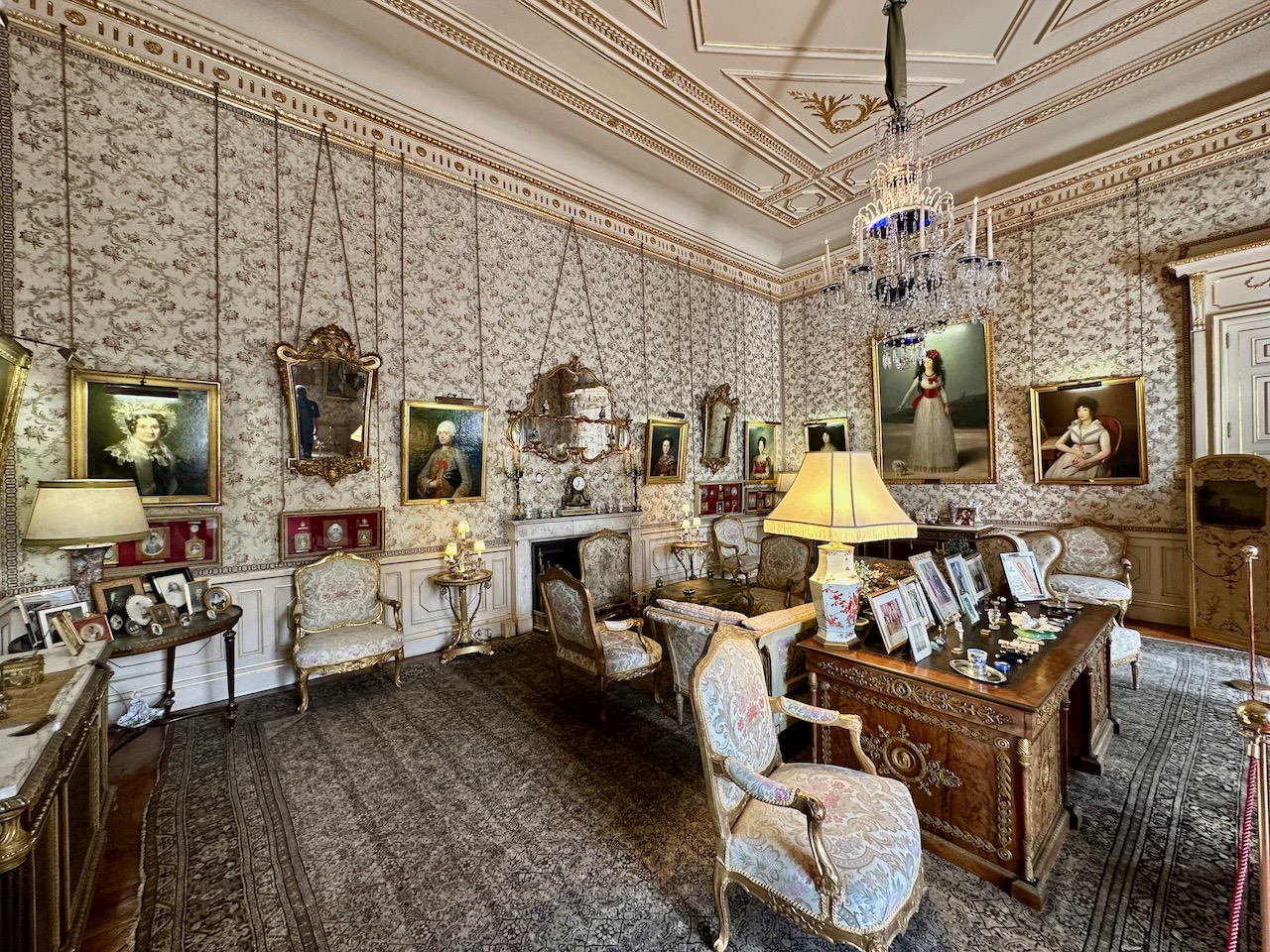
The White Duchess by Goya depicts María Cayetana de Silva, 13th Duchess of Alba, who was said to be a “protector of artists.”
Oh, those chandeliers.
In the Flamenco Hall hangs a portrait of the third Duke of Alba, Fernando Álvarez de Toledo y Pimentel and María Enríquez de Toledo.
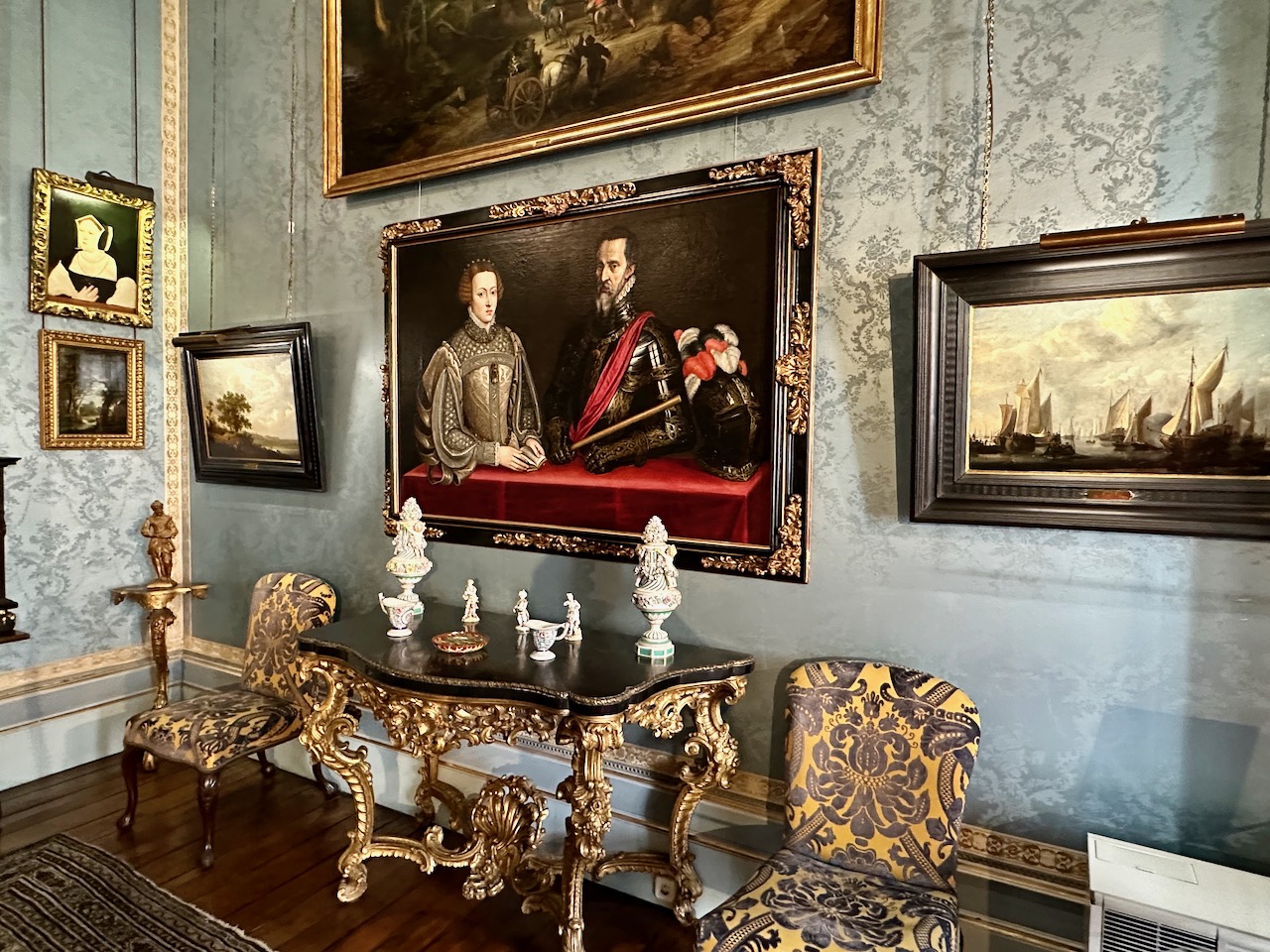
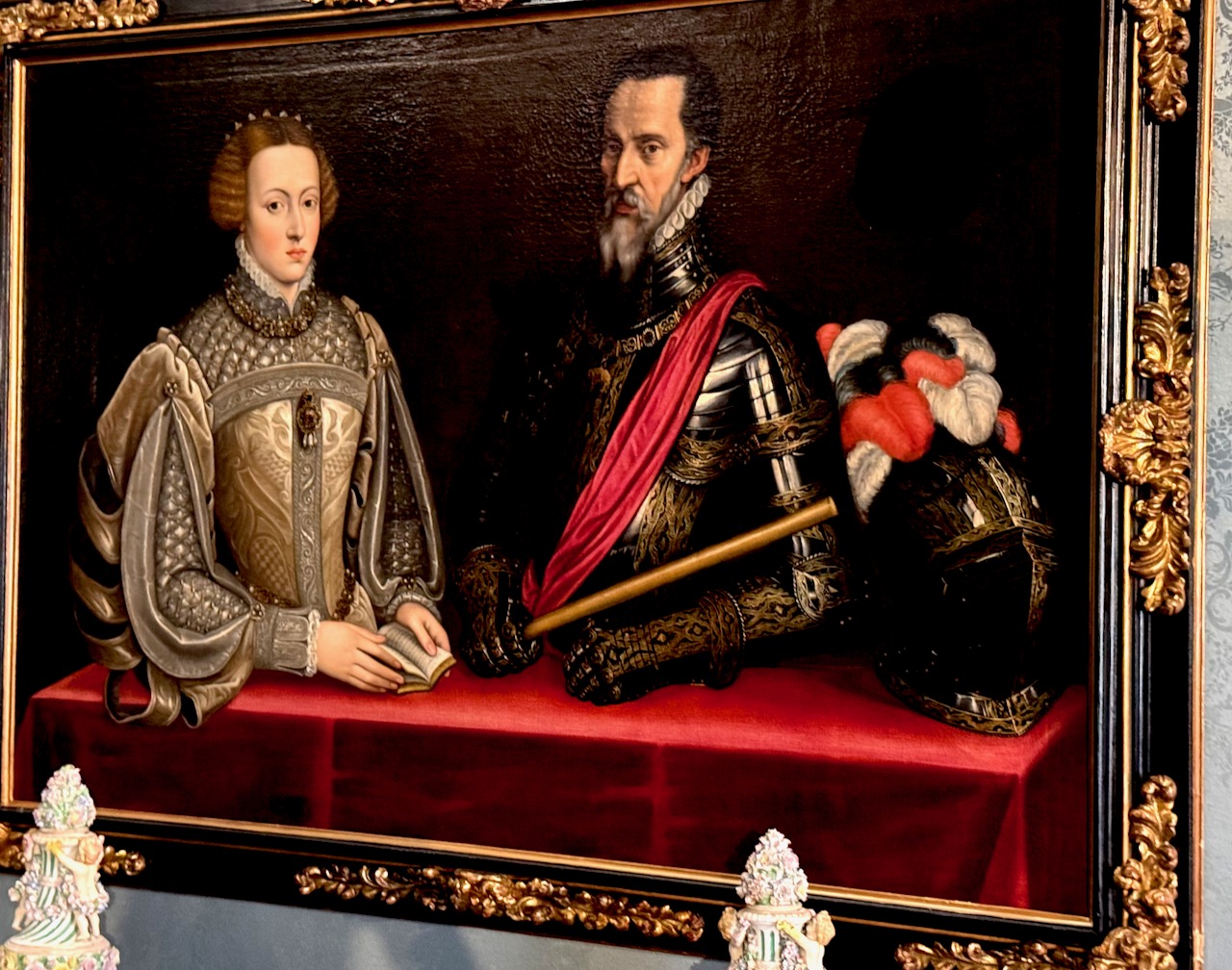
Peter Paul Rubens painted Emperor Charles V and Empress Isabella, which was actually a copy of Titian’s painting lost in the fire.
Paintings by the masters continued.
 The chandeliers became more vibrant as we neared the end of our tour.

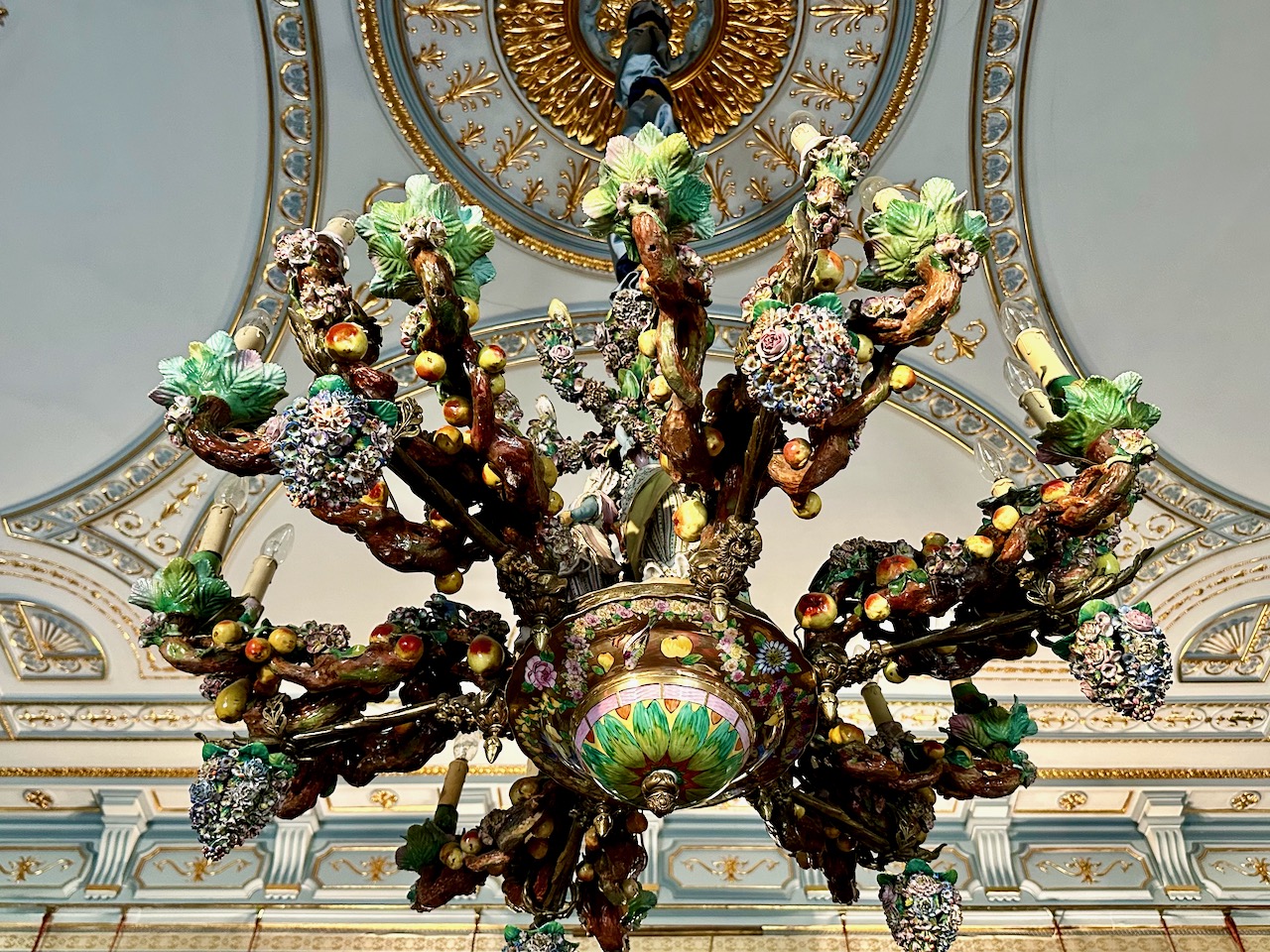
Surely, you jest.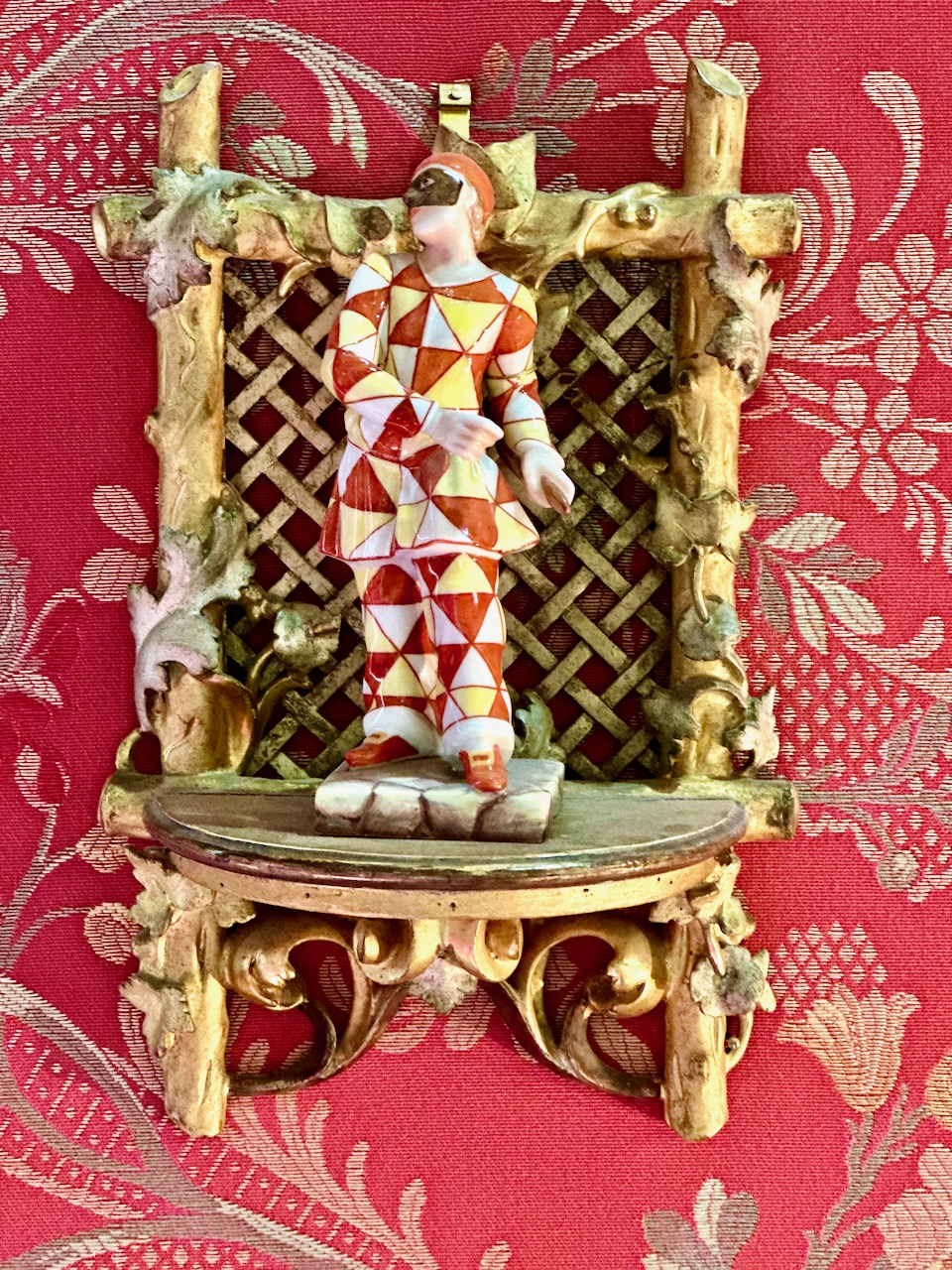
Once again, Tracy had a favorite painting here. This oil painting is a 1921 portrait of María del Rosario de Silva y Gurtubay, the 17th Duchess of Alba, by the Spanish artist Ignacio Zuloaga. She was only 33 when she died of tuberculosis.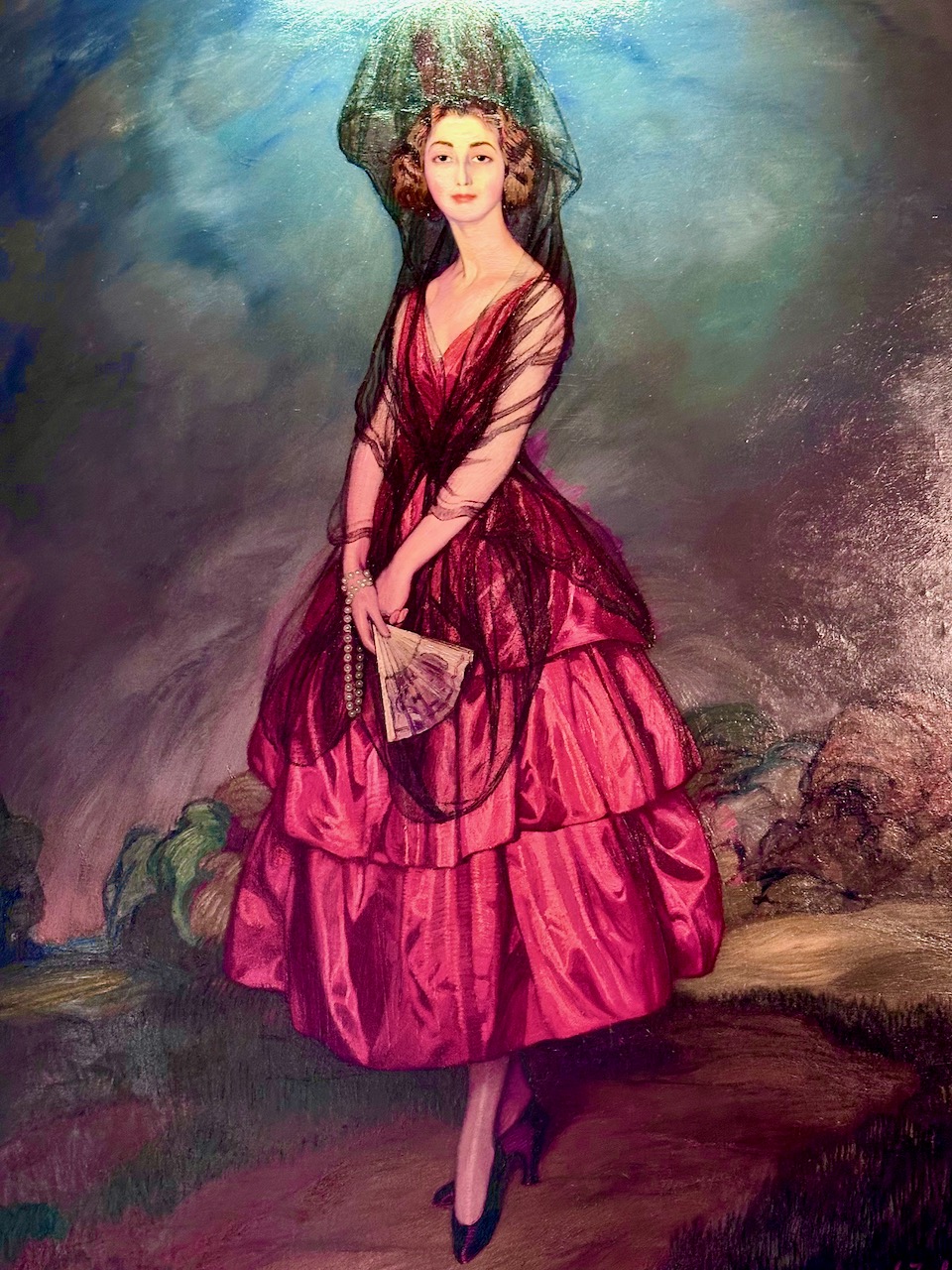
After exiting, we walked by a 19th century coach.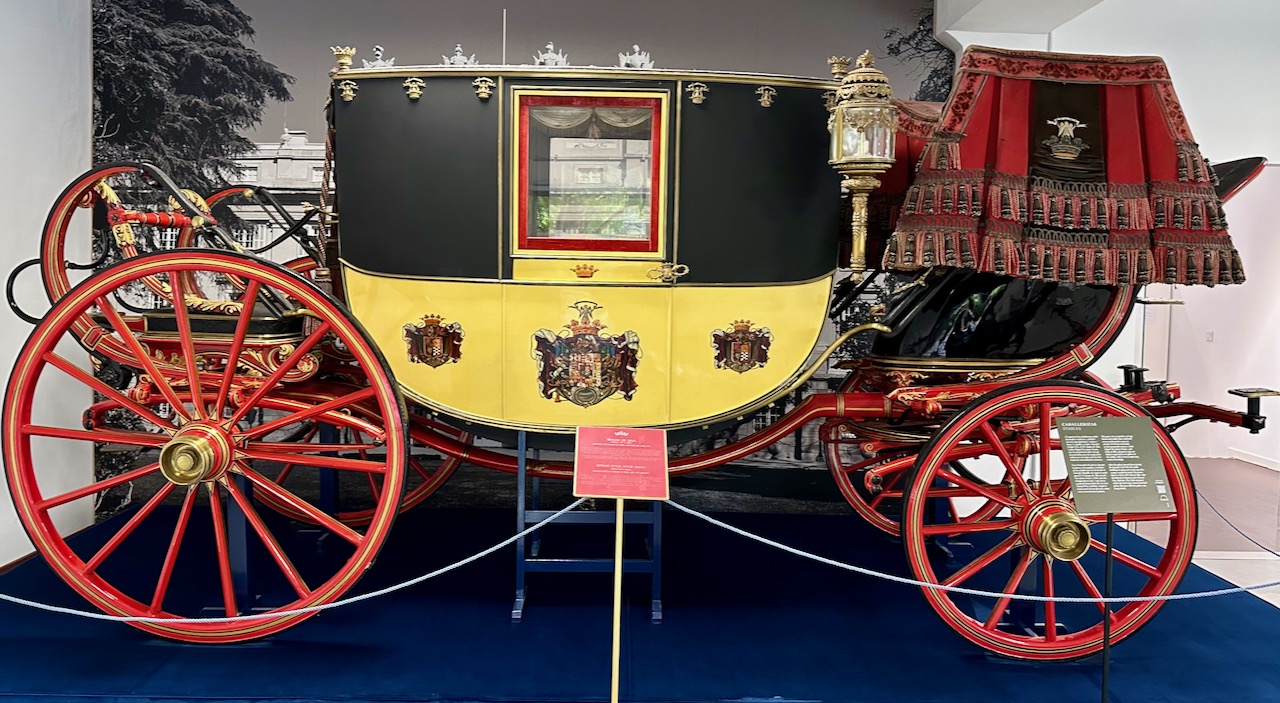
The Liria Palace had not been on my radar while planning this trip, but we were happy we found it on our final morning walk.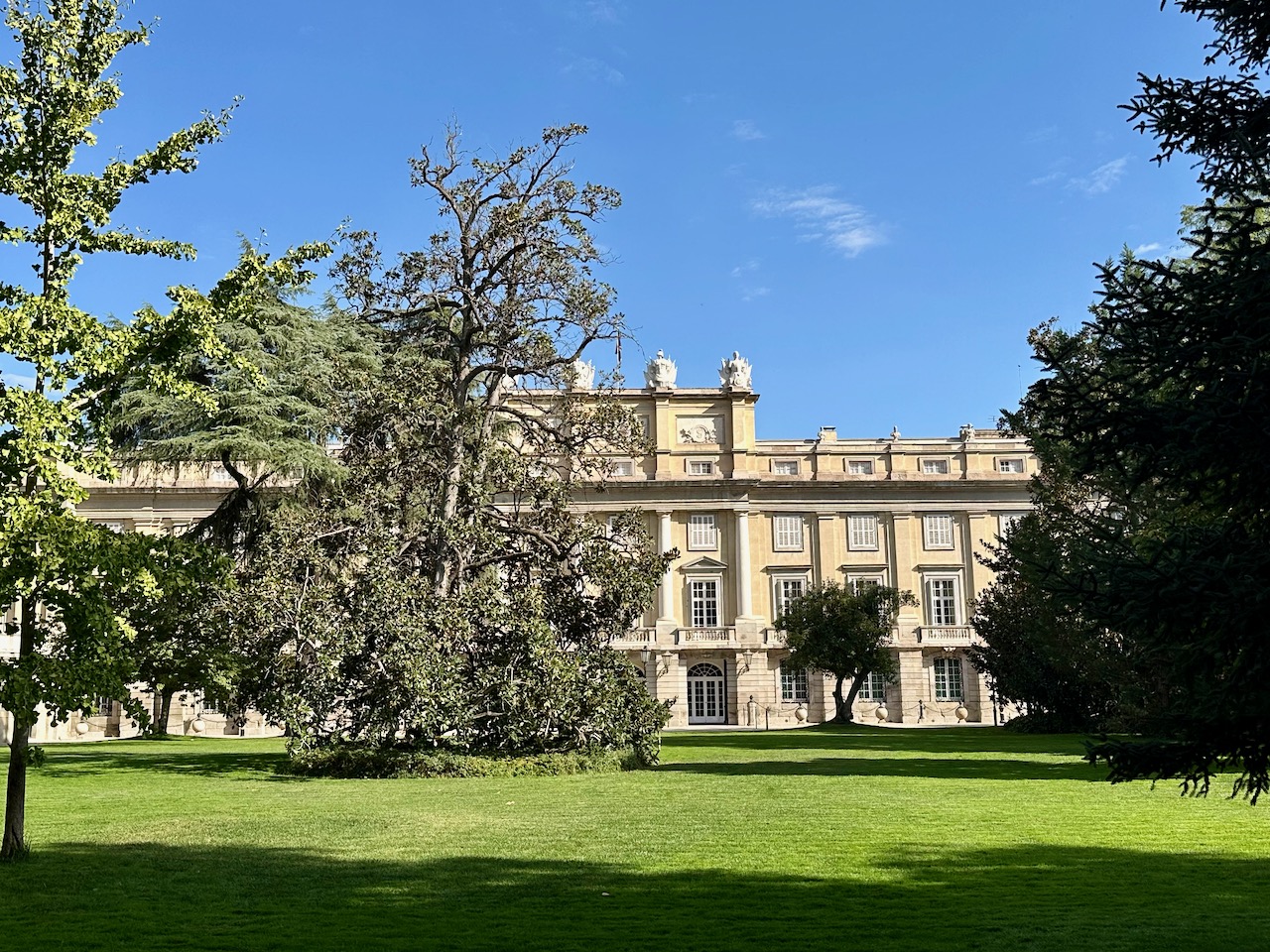
I knew we were near the Plaza de España, and I had wanted to see one monument there, so it was time to wander over to where the Gran Via ends (or I guess begins if you start from here) and check out Monumento Cervantes. First we saw the backside of the statue with a woman who “symbolizes literature.”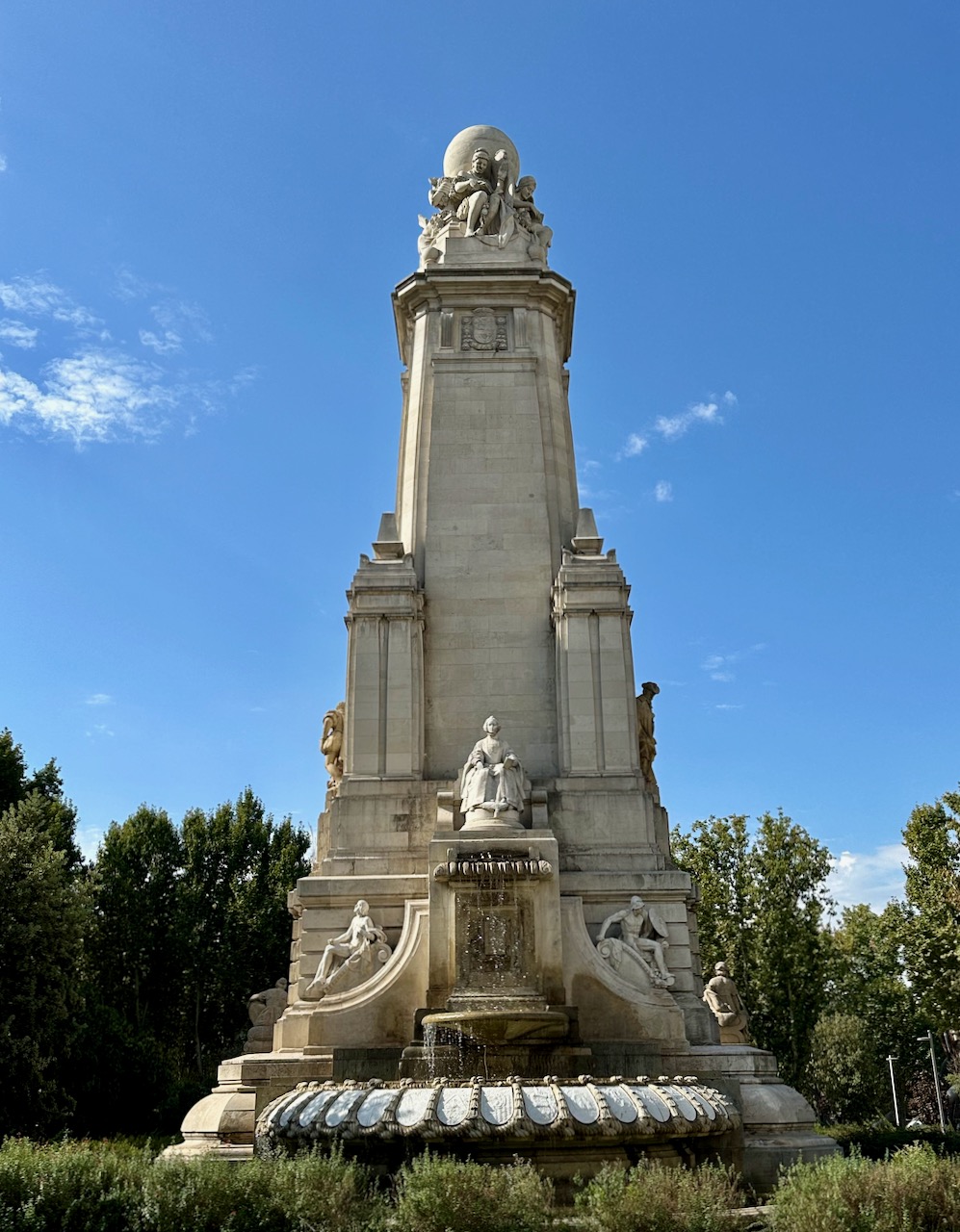
Walking around to the front, we saw the gigantic statue commissioned by King Alfonso III on the 300th anniversary of the second part of Don Quixote. Cervantes sits above Don Quixote and Sancho Panza.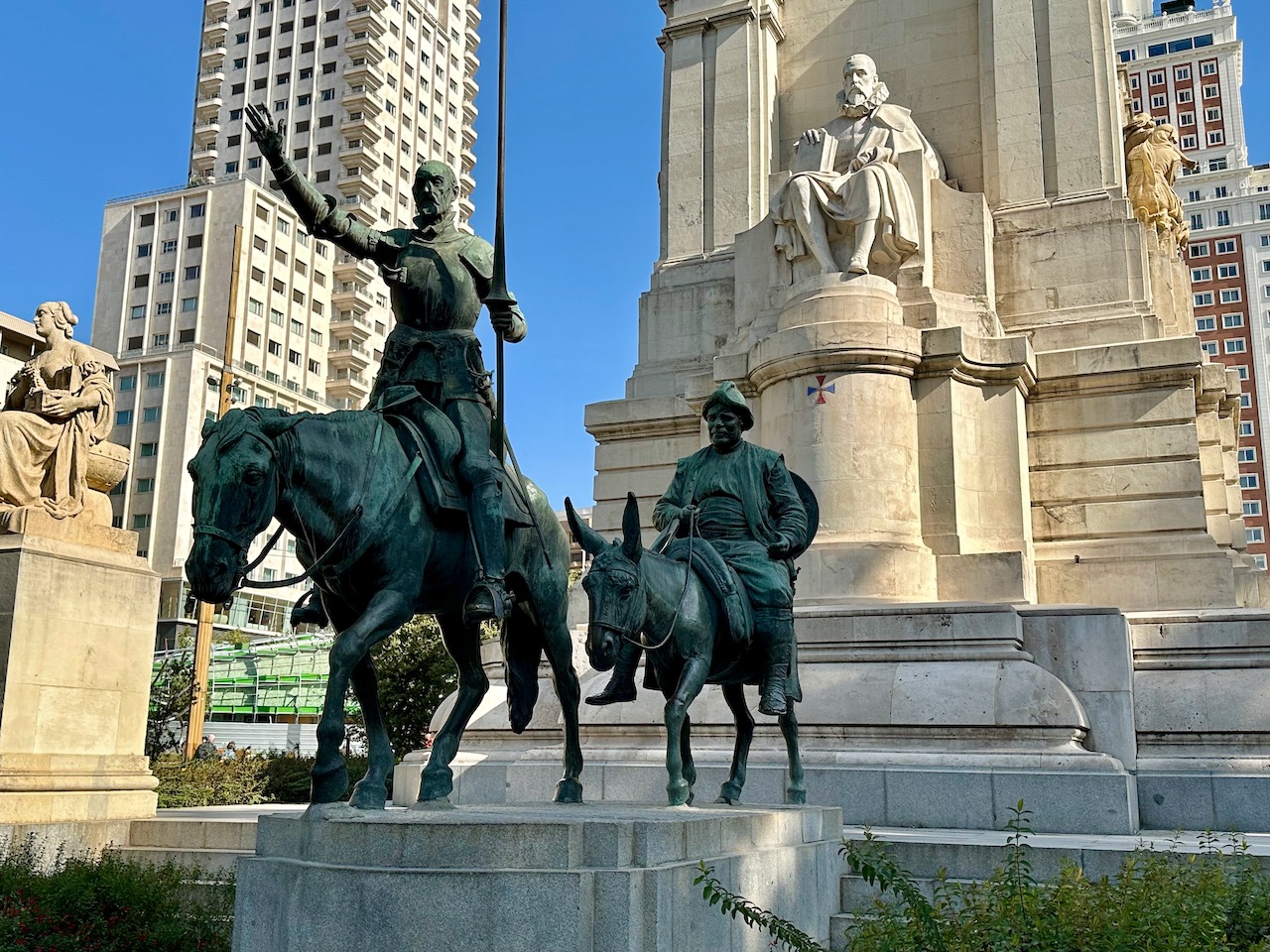
And what’s that really tall building seen in the background? When constructed in the mid 1950s, the 36-floor Torre de Madrid was the tallest concrete building in the world. In addition, upon its completion it was designated the tallest office building in Western Europe. It remained the tallest building in Spain until 1988.


It was time for lunch, and keeping with the Cervantes theme, we returned to our neighborhood and Cervantes Cervecería, a tapas place our bartender Sebastian had recommended.


We’d walked by it on numerous occasions, and it was always busy. Today was no different. We got one of the last tables.


We each had Tostada des Gambas, Pulgade Jabuguito and Ternera (steak). Delicious!


After a brief stop at the hotel to pack, we decided to give the elusive Basílica de San Francisco el Grande one last chance for a visit. Our taxi pulled up a little before its 4 p.m. opening time (we hoped) at La Plaza de San Francisco, and we explored the nearby garden while we waited.
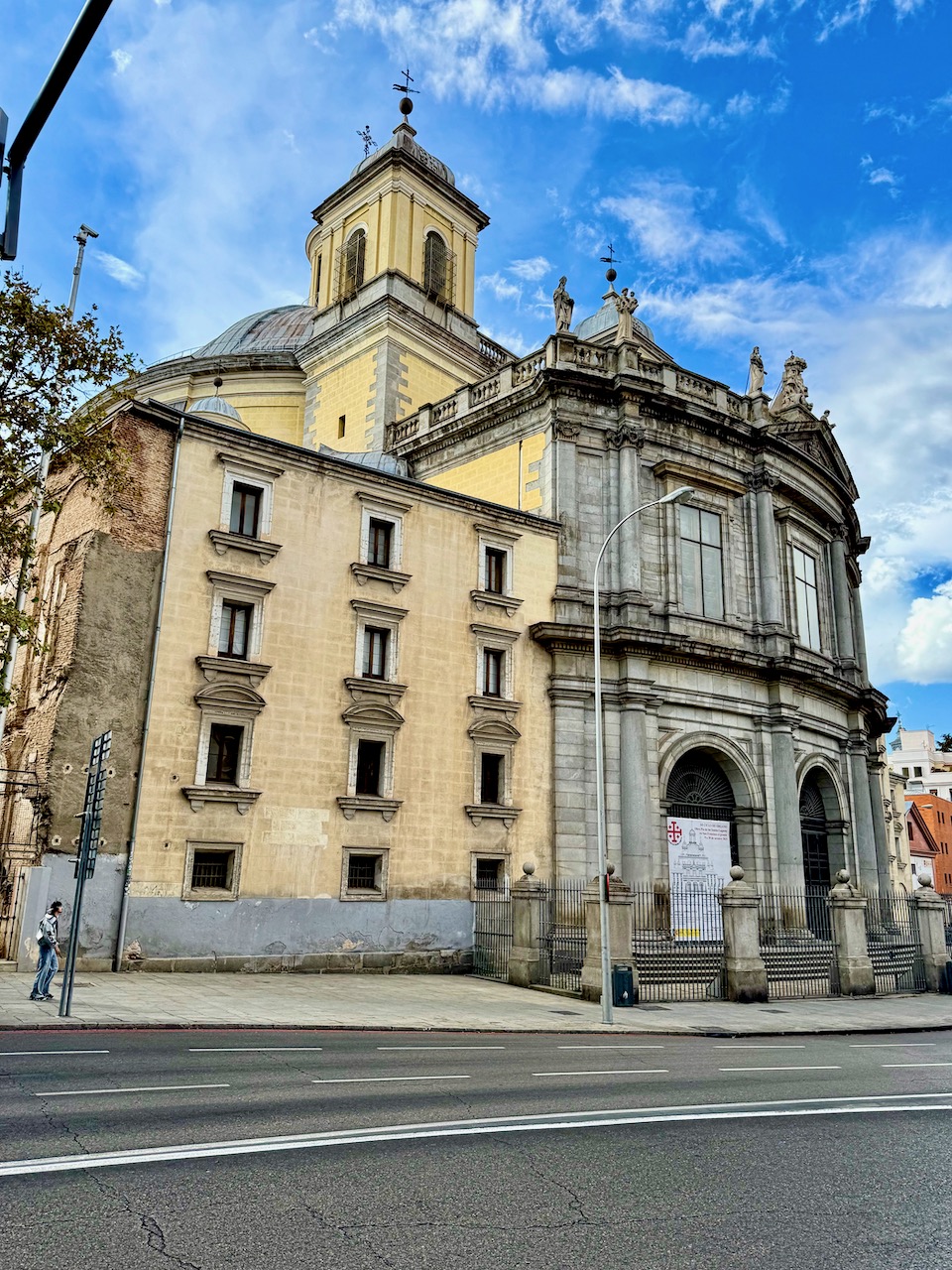

Like Moses parting the Red Sea, exactly at 4 p.m. the gates opened followed by the door. I didn’t even need a staff. Wow! The neoclassical basilica was even more beautiful than I remembered from visiting in 2015, and thankfully Tracy was with me so my iPhone wielding spouse photographer took over.
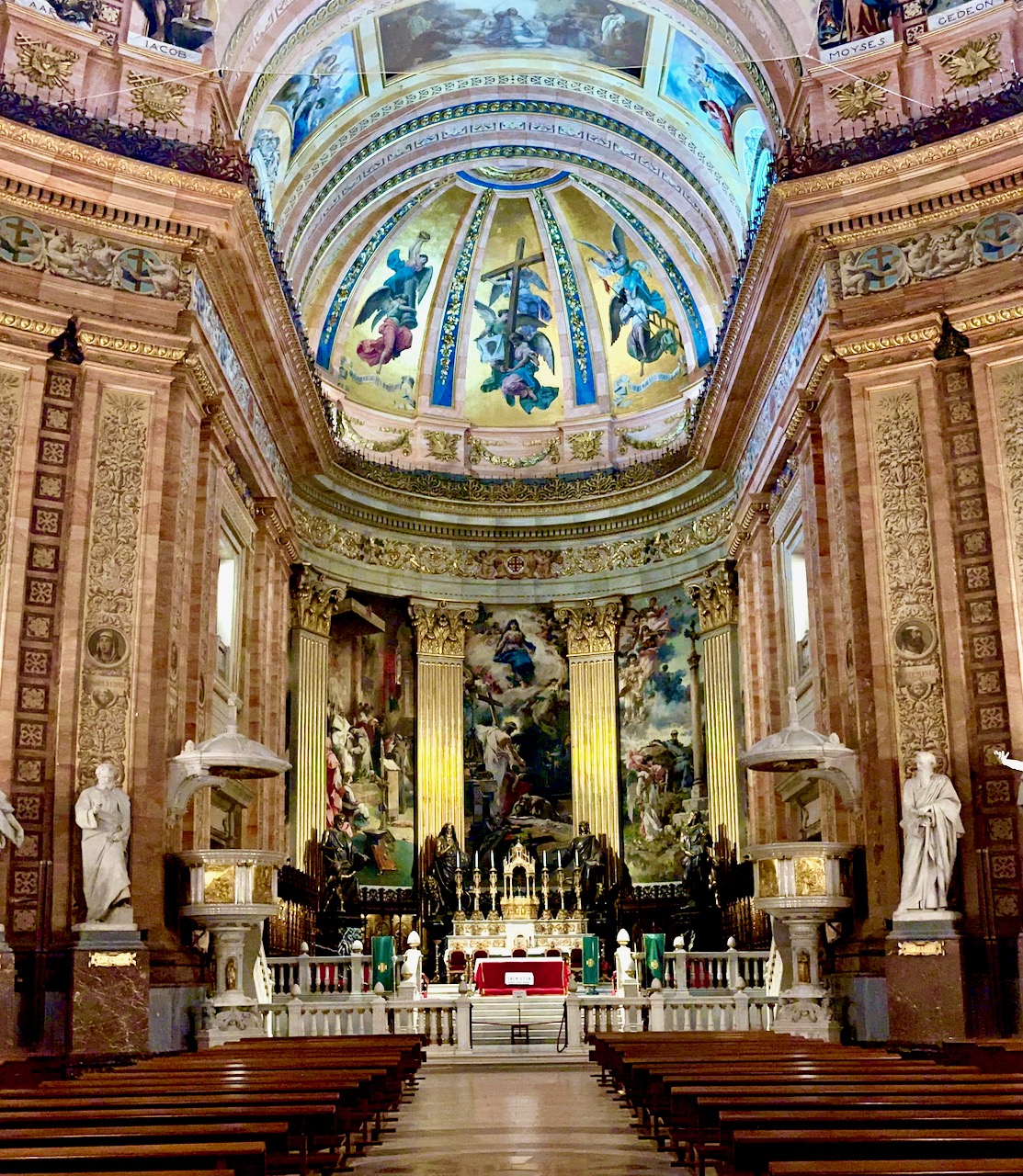

Built in the 18th century (consecrated in 1784), it was elevated to a minor basilica by Pope John XXIII in 1962. Erected on the site where a convent founded by none other than St. Francis of Assisi back in the early 1200s. The main altar is made from Carrera marble.
The big star of the show is its dome that’s said to be the fourth biggest dome in Europe after the Pantheon, St. Peter’s Basilica and the Duomo di Firenze. It is also the largest dome in Spain, measuring (approximately) 108 feet (32.9 meters) in diameter and 190 feet (58 meters) high.


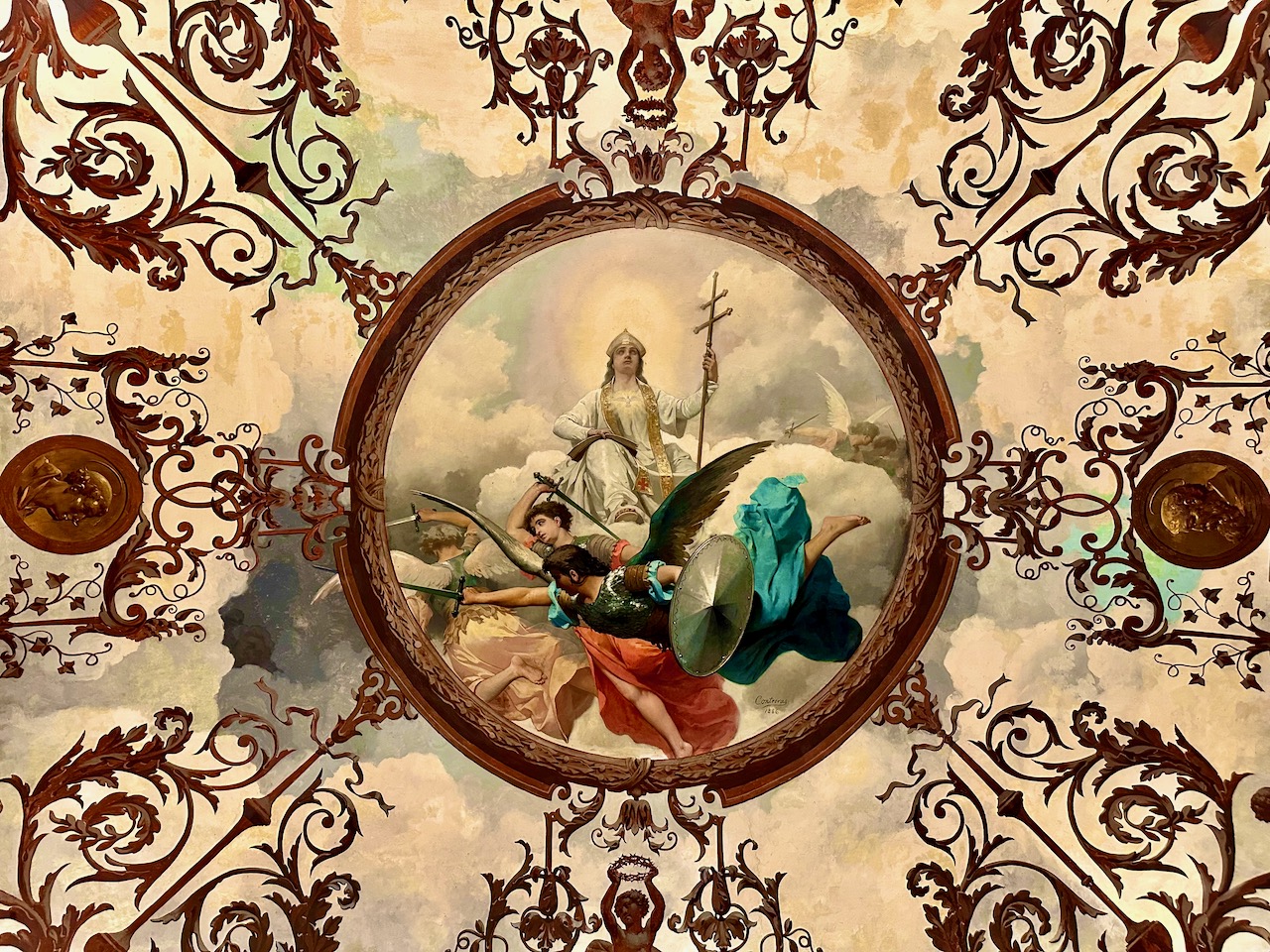
Speaking of domes, all six of its chapels also have smaller domes which contain quite a collection of artwork.
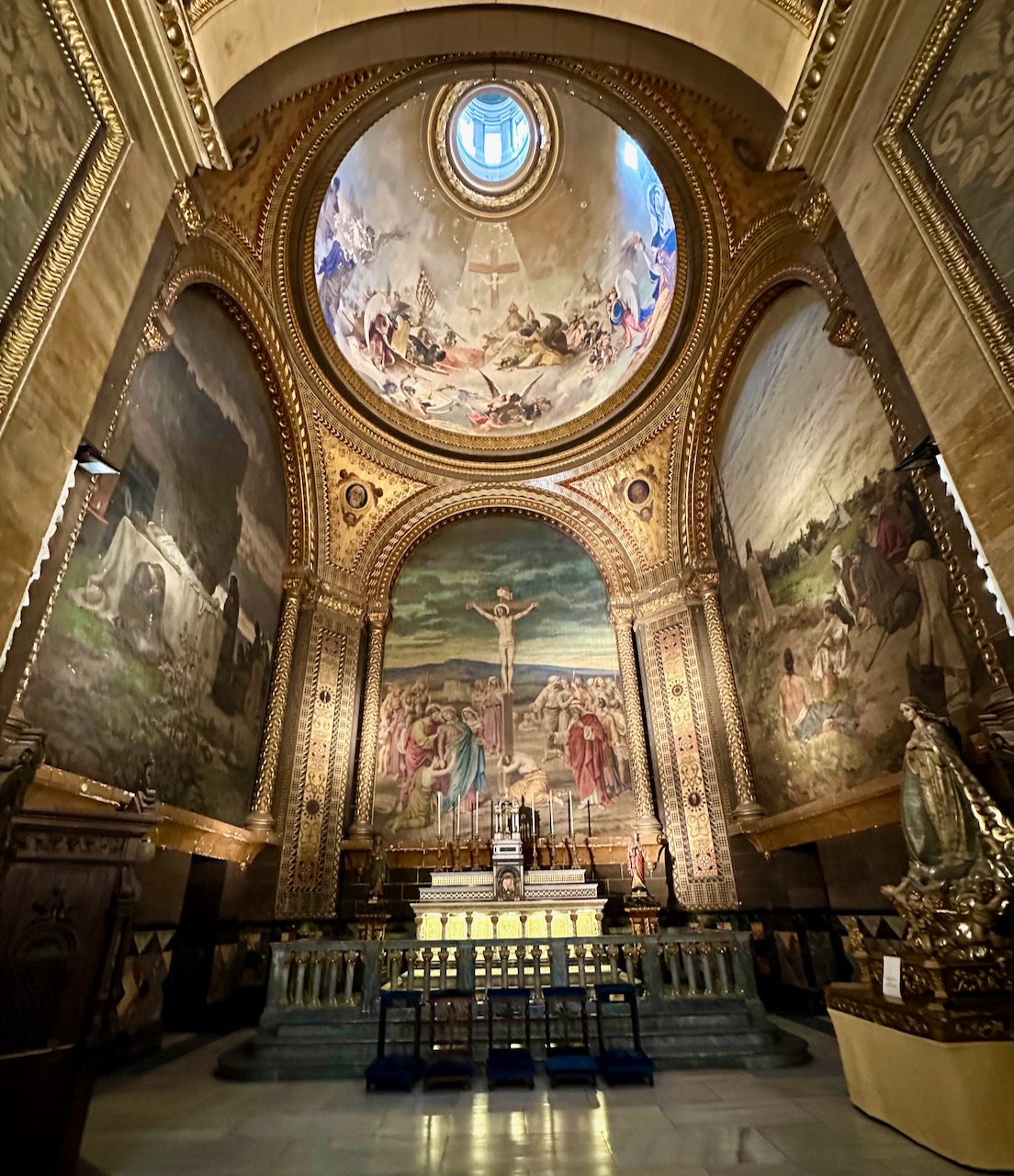

We walked around the expansive church to all the side chapels.


A famous painting, Goya’s St. Bernardino of Siena Preaching to Alfonso V of Aragon highlights the San Bernardino de Siena Chapel.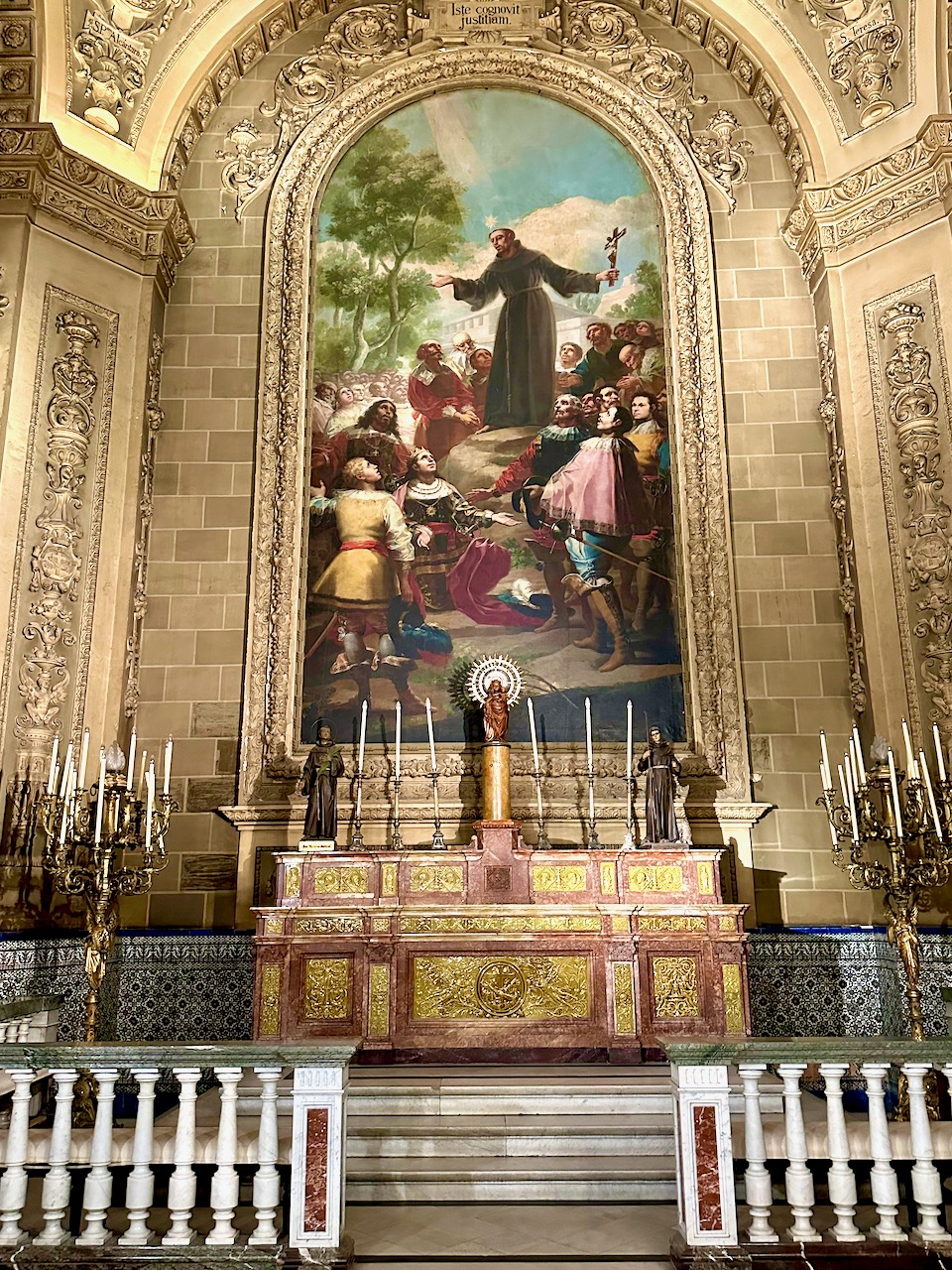
There were paintings in the vault that are above the main chapel.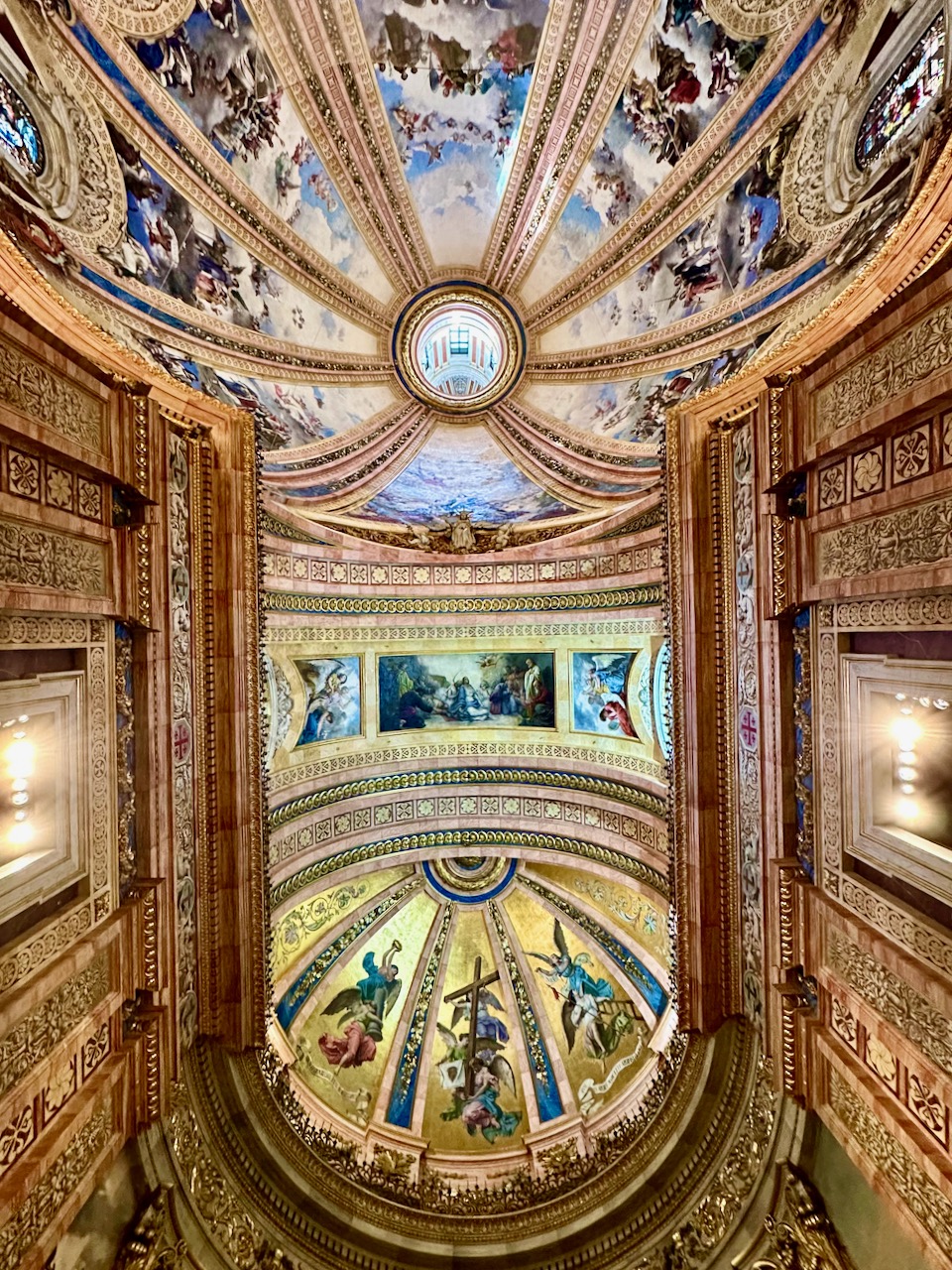
We walked behind the main altar and arrived in the museum and sacristy, which holds more priceless pieces of art, many of them detailing the life of St. Francis.

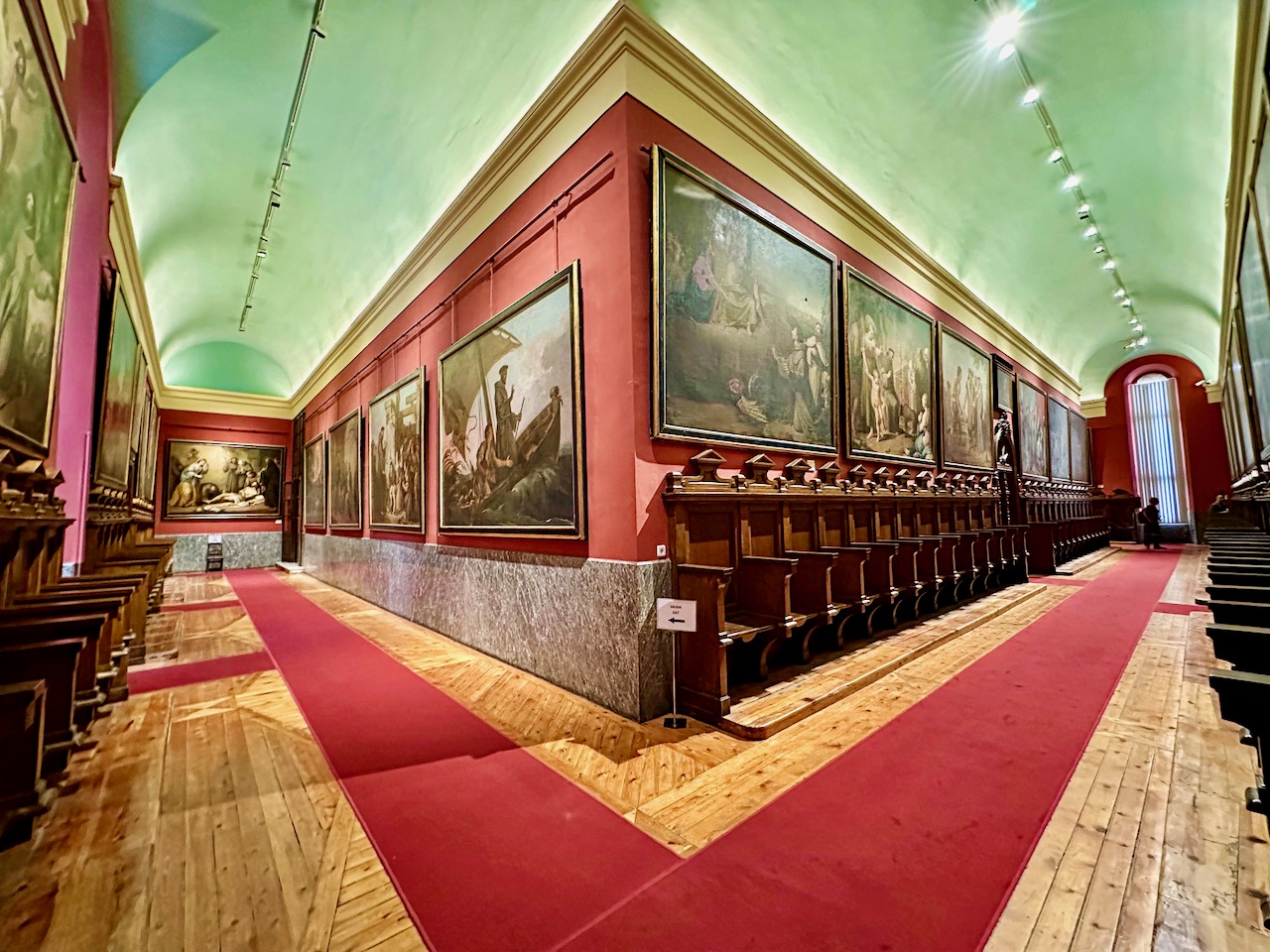
This area is beautiful to walk through.
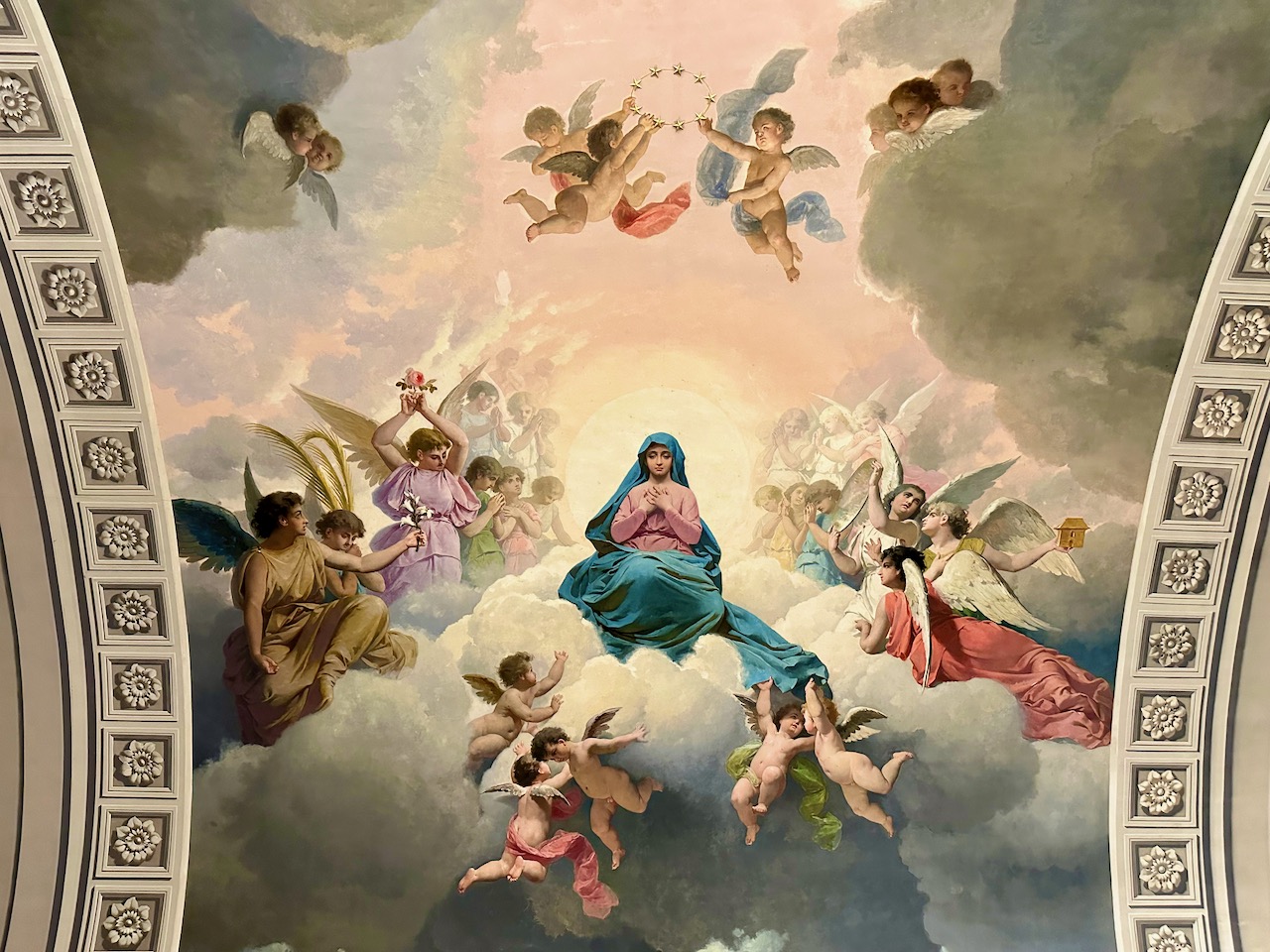
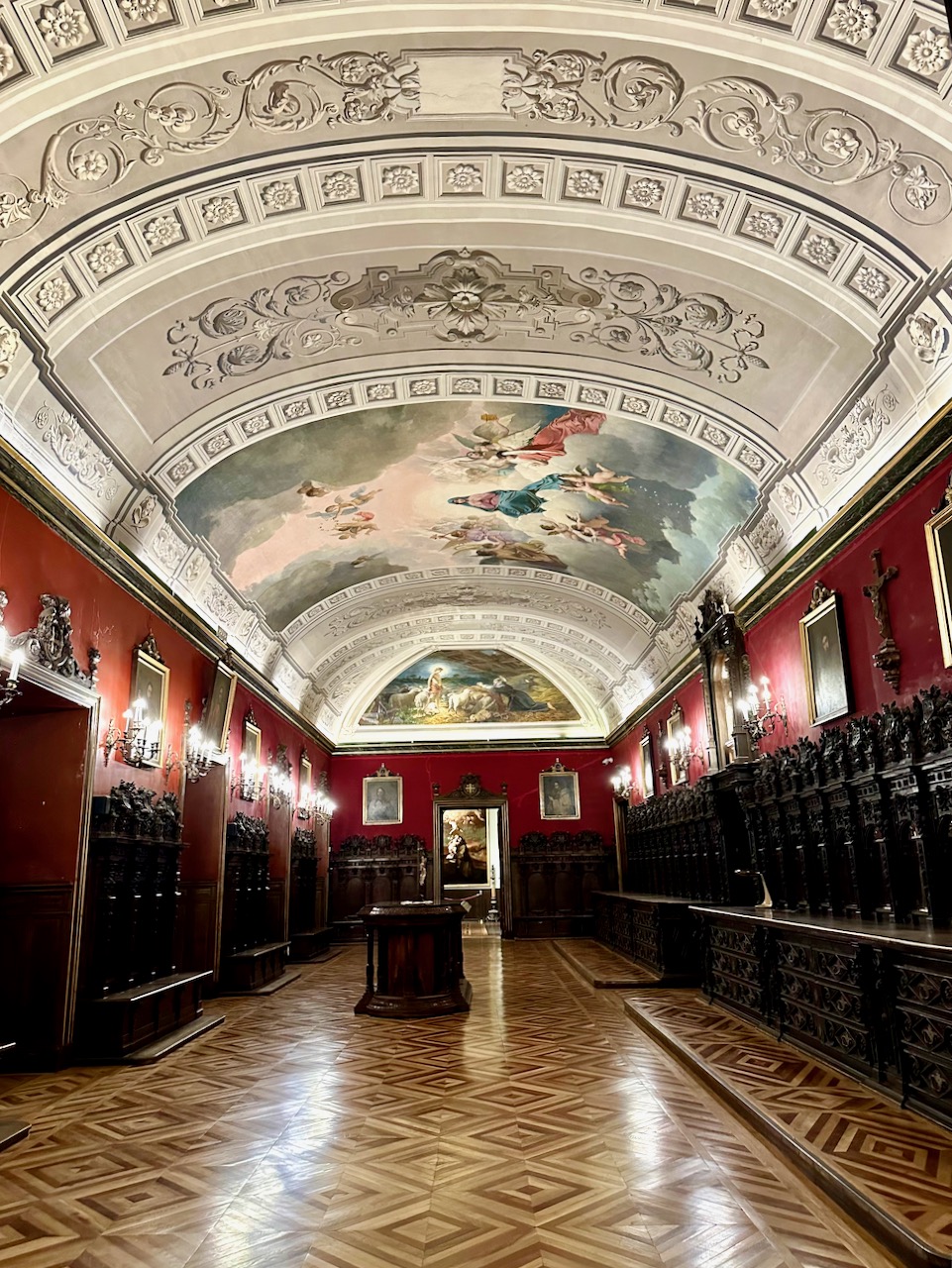
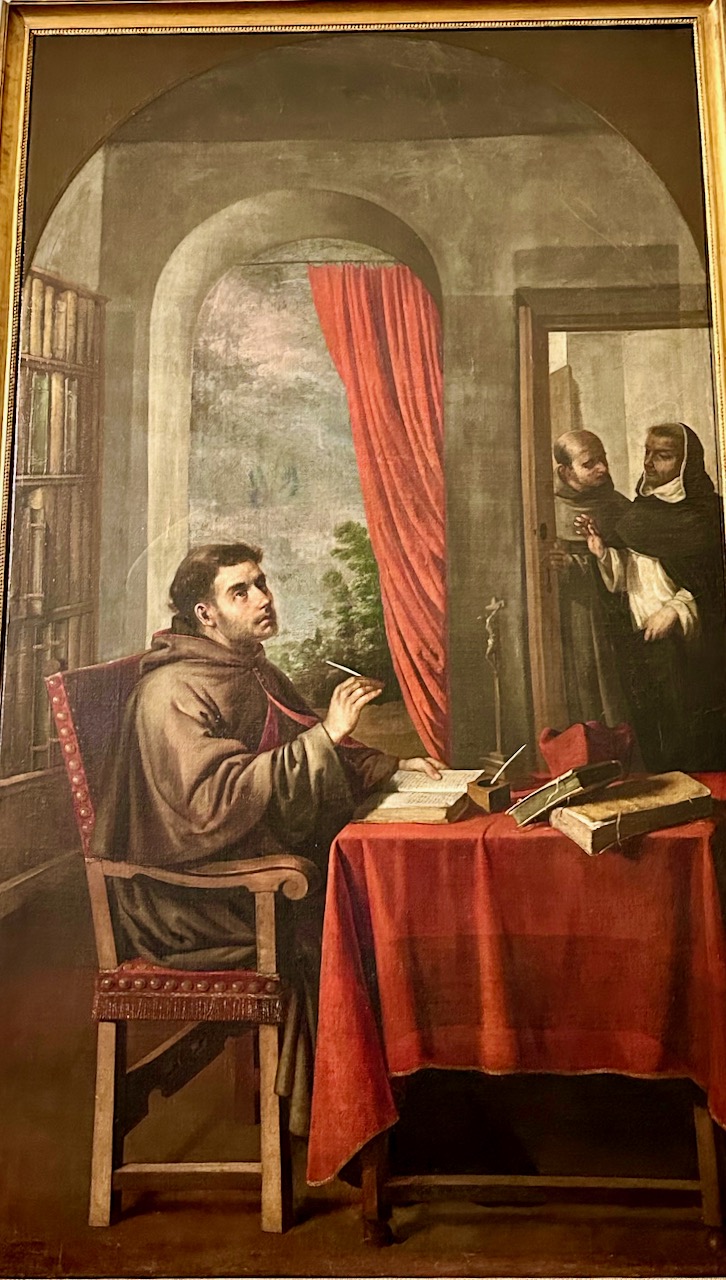
At the end of this hallway on the left is the famous painting Saint Bonaventure Receiving the Visit of Thomas Aquinas by Francisco de Zurbarán.
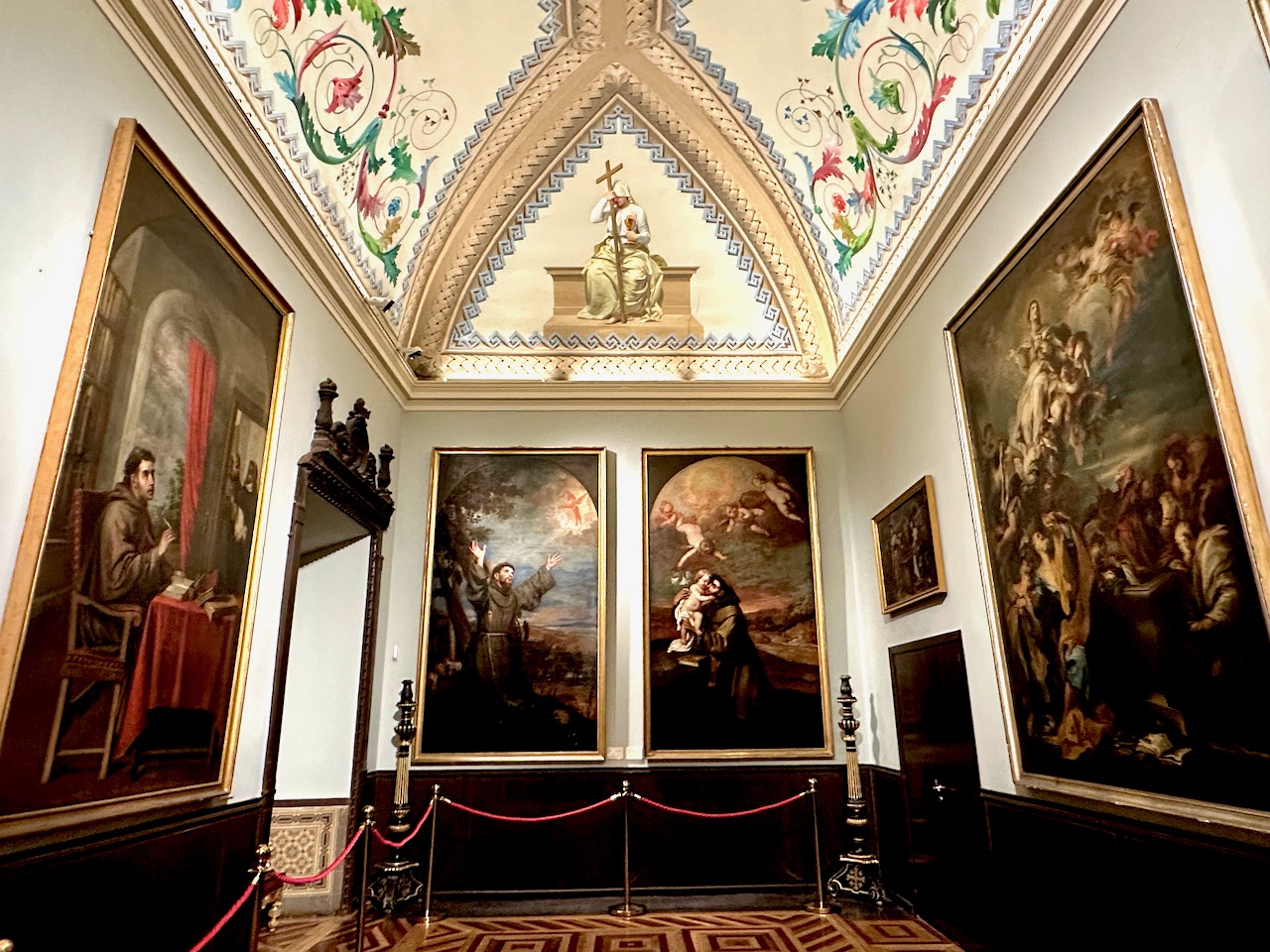
The two paintings at the end of the wall are by Alonso Cano.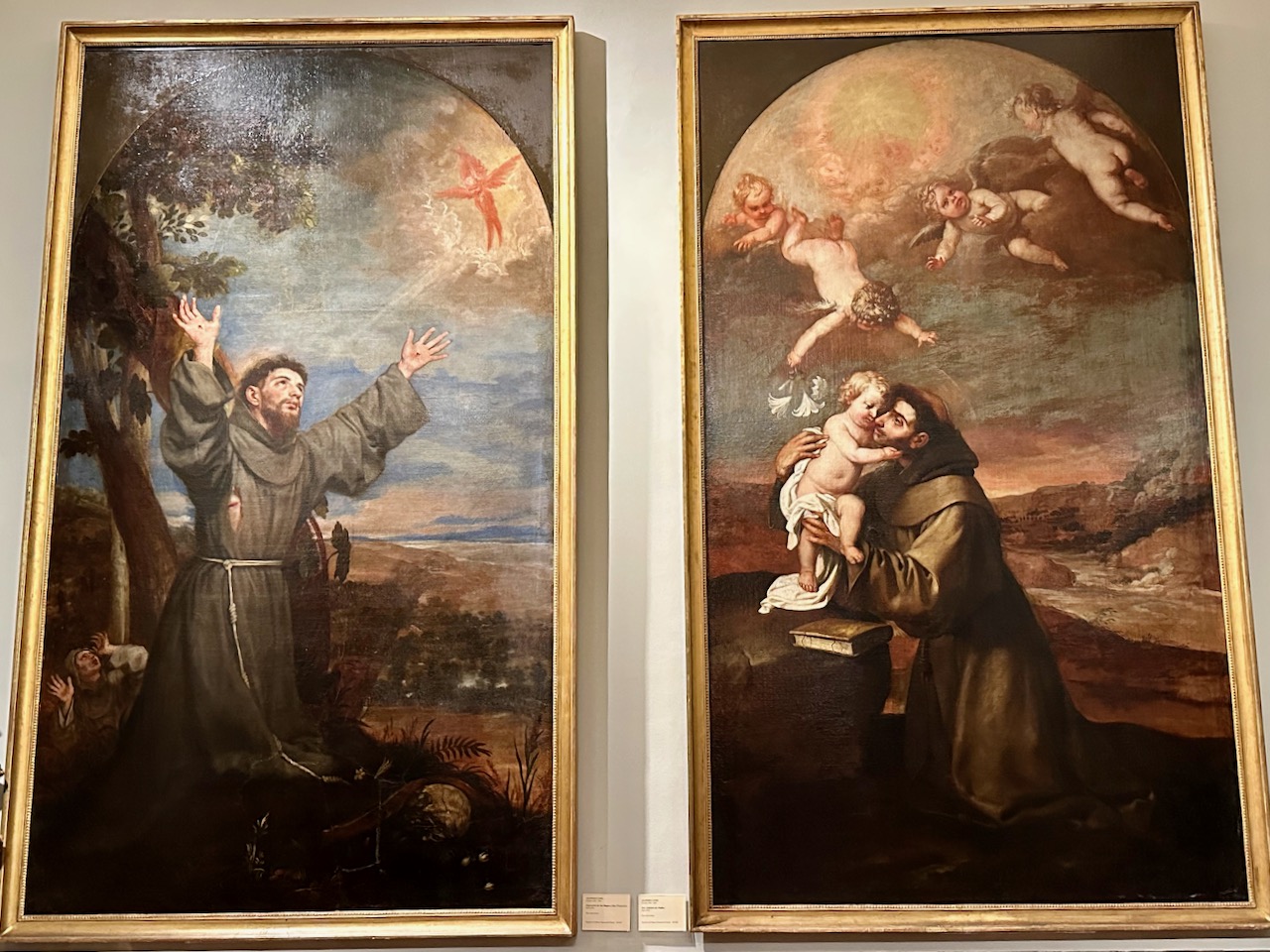
Attention to detail was everywhere.
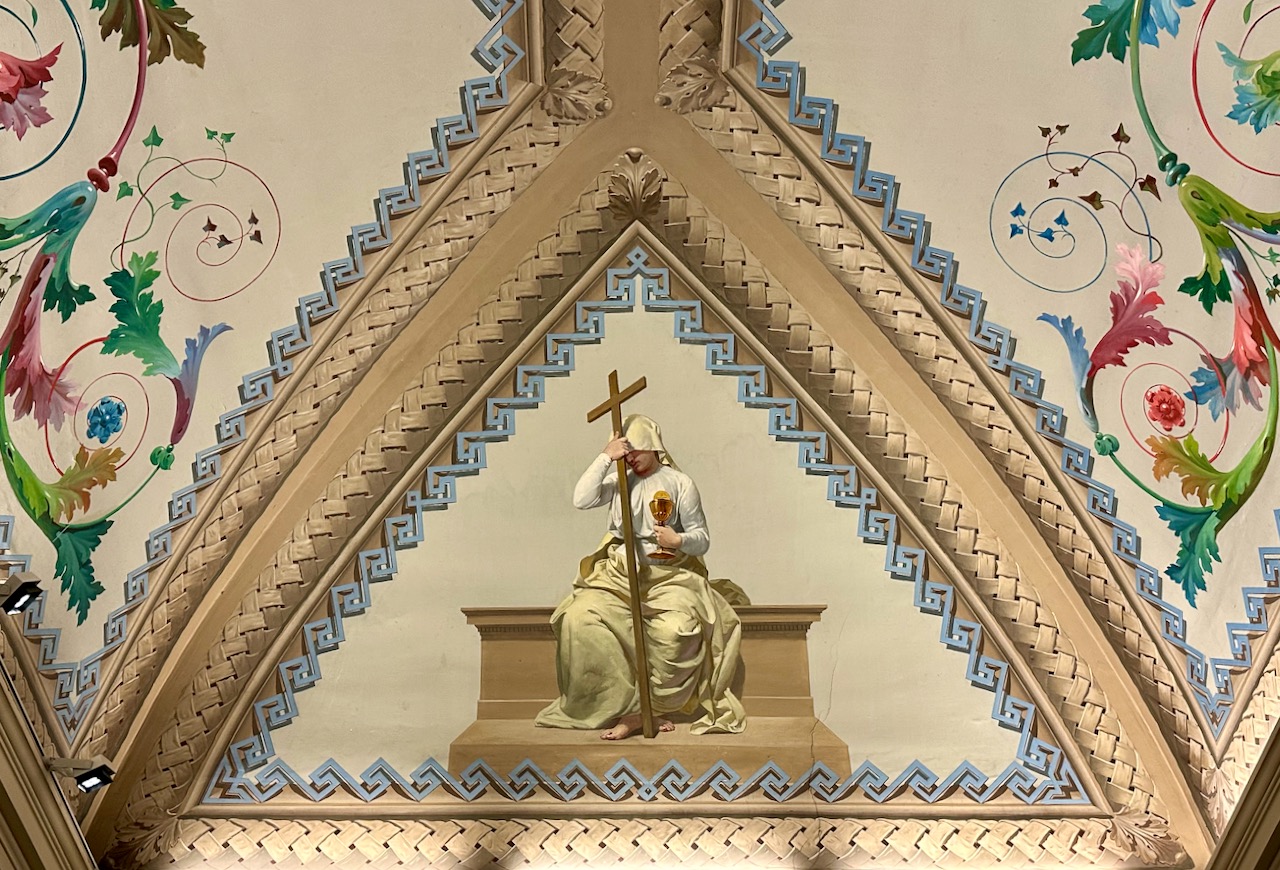
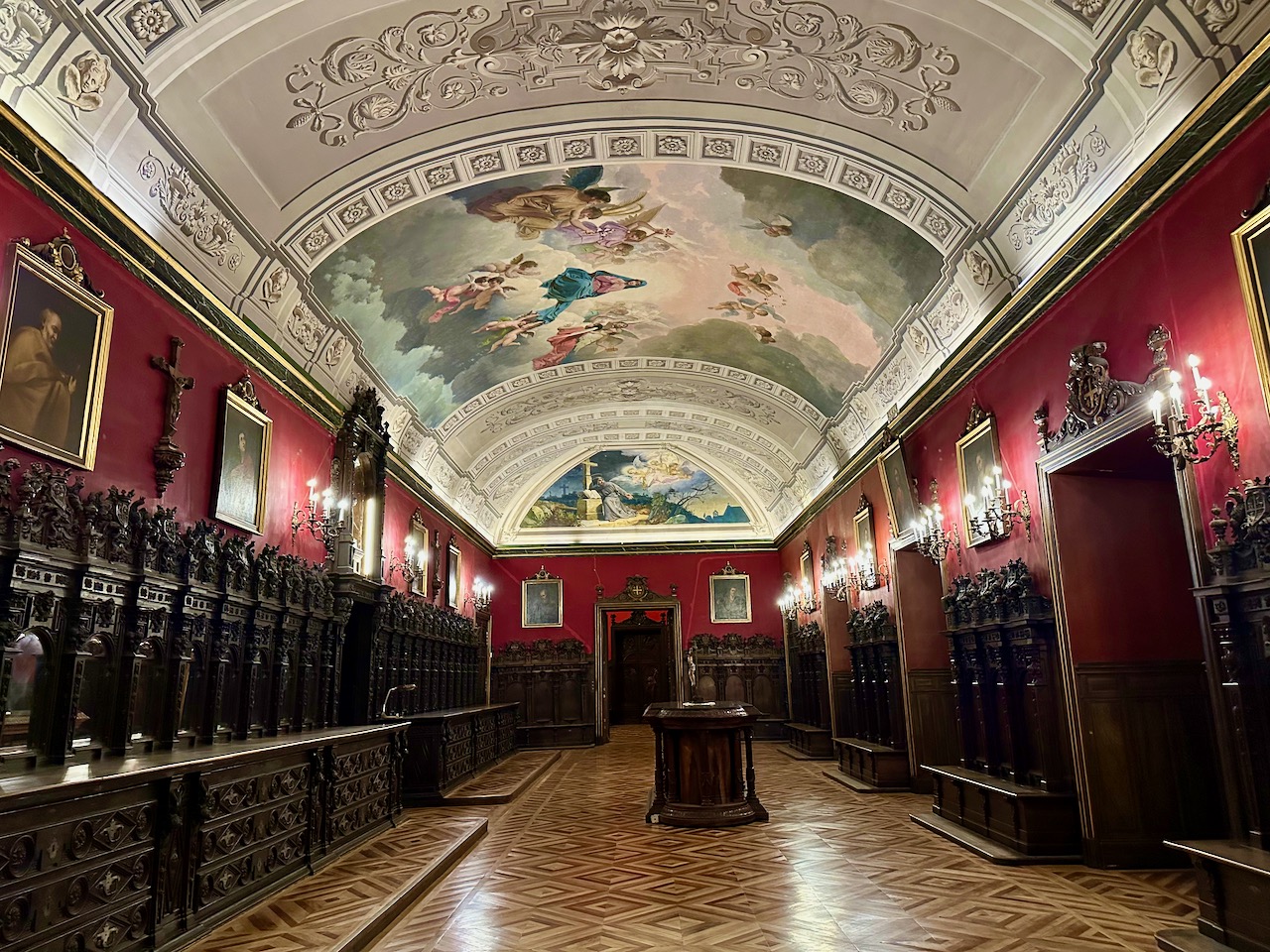

The final painting we looked at was St. Francis having a chat with the birds. He’d love our backyard.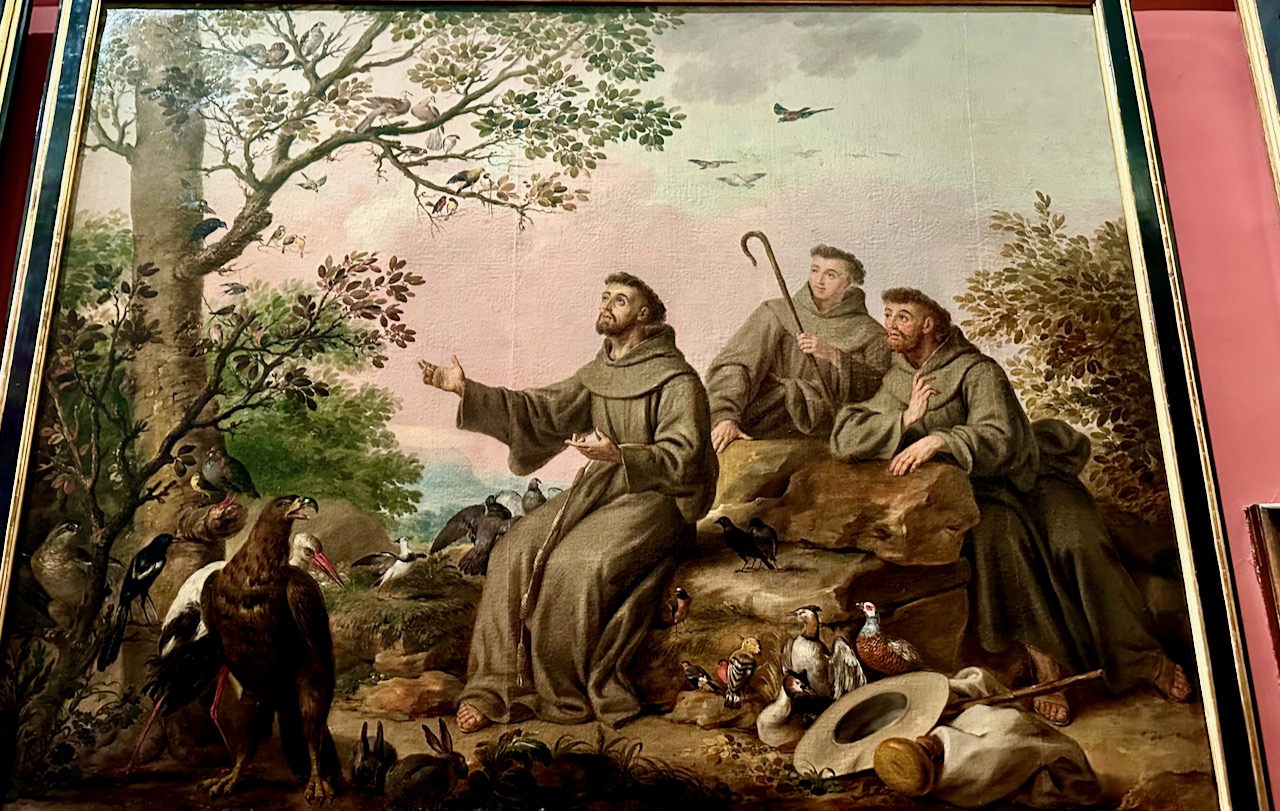
 Basílica de San Francisco el Grande might not be the easiest to schedule on your Madrid trip, but is certainly well worth the effort.
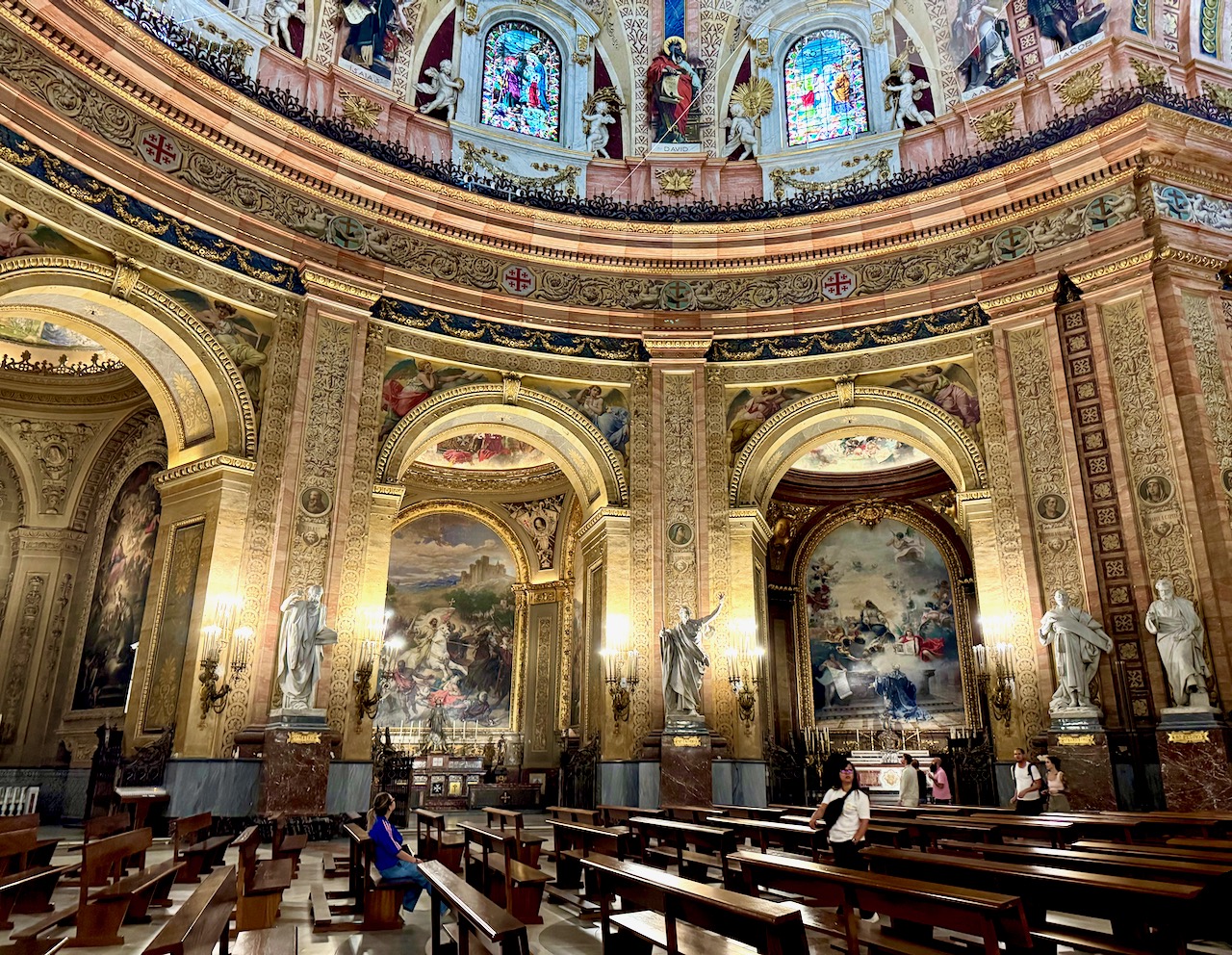
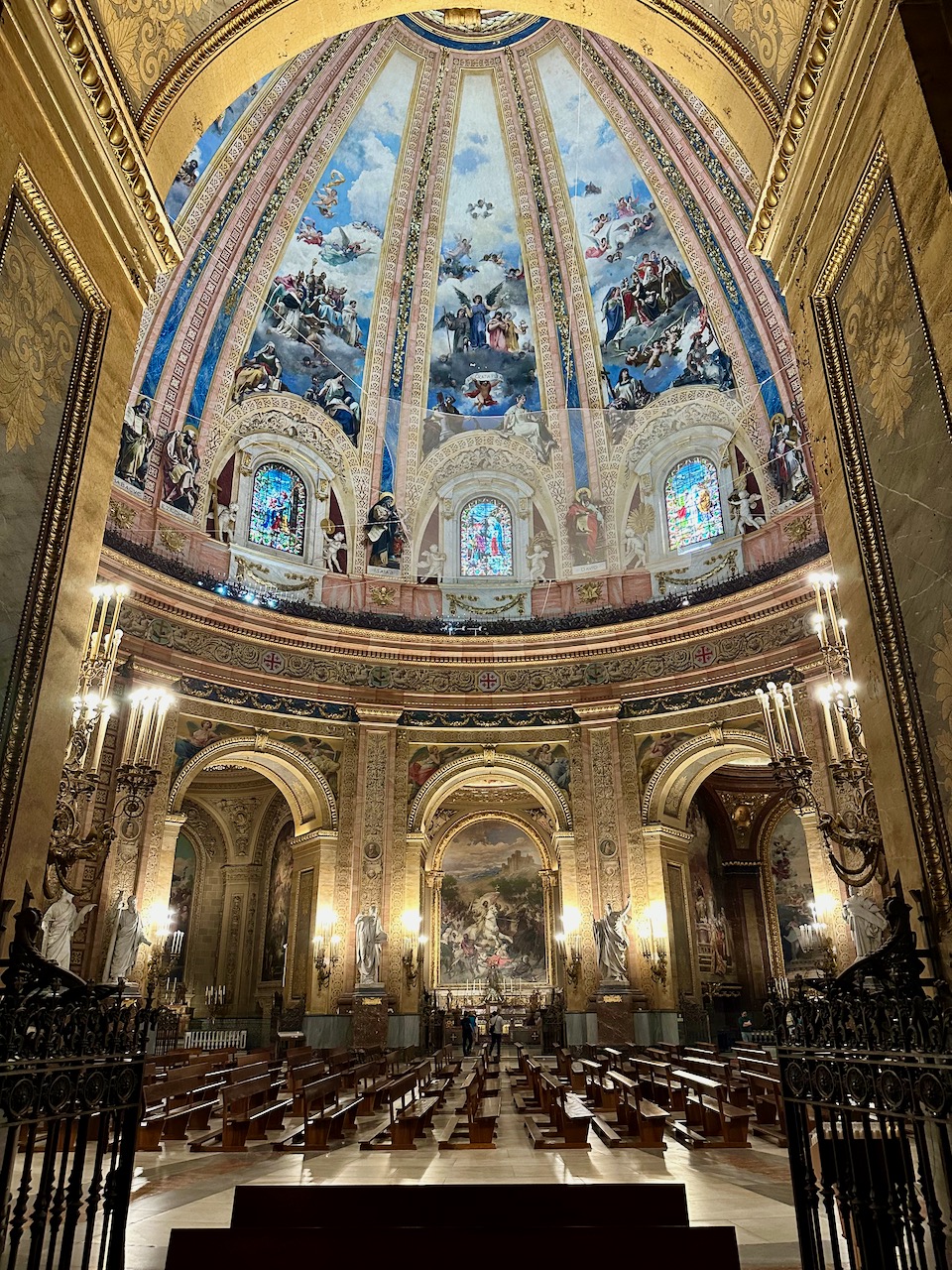
St. Thomas said even he didn’t have a doubt we’d be back.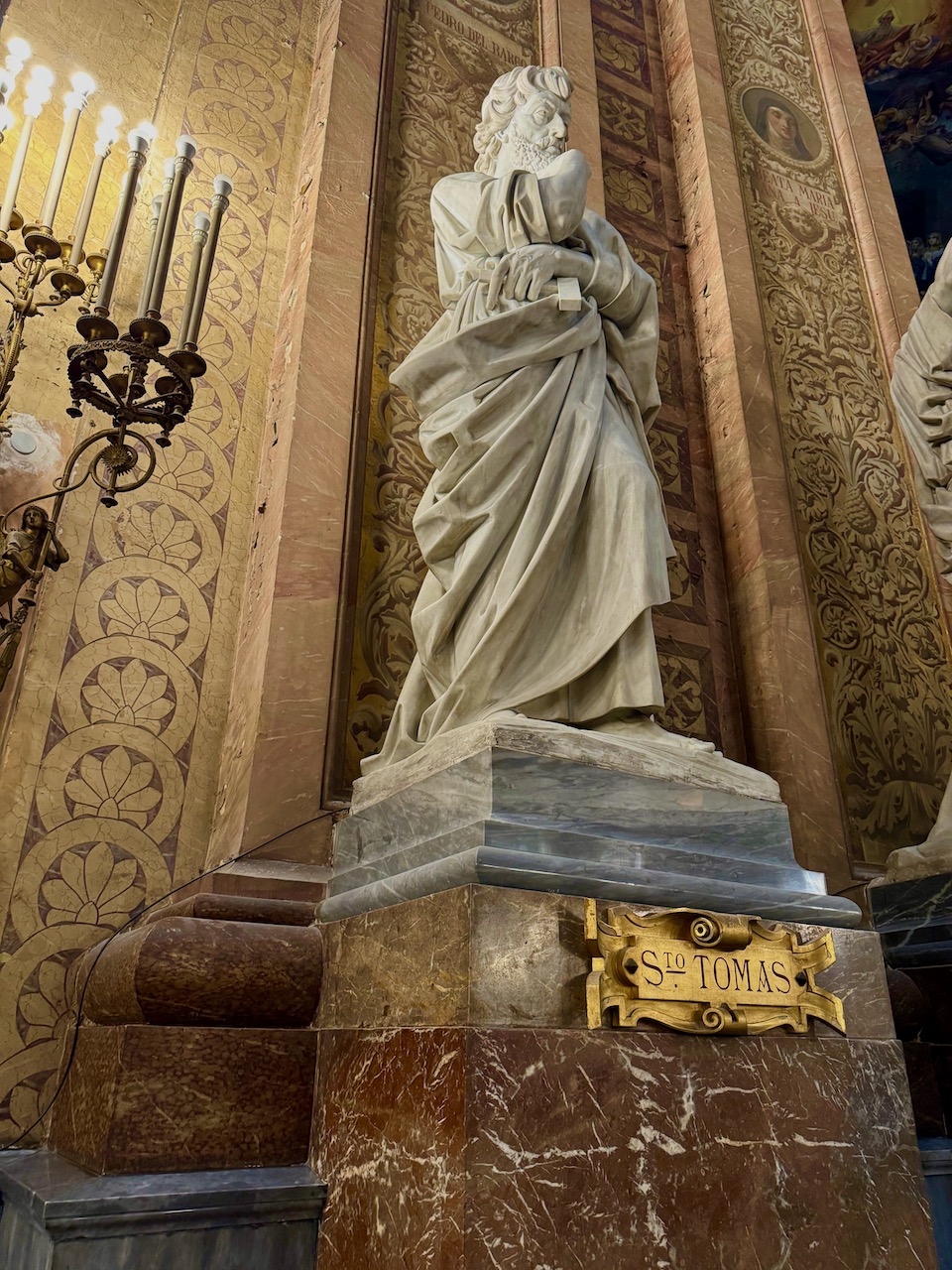
It was not quite 5 p.m. when we exited, and Tracy reminded me, “You know the crypt opens at 5.” It was less than a ten minute walk to Cripta de la Almudena. You could see the Almudena Cathedral in the distance.
The line had already formed when we got there a few minutes before 5. I asked if they take Crypta currency, and I was told a €1 donation was suggested
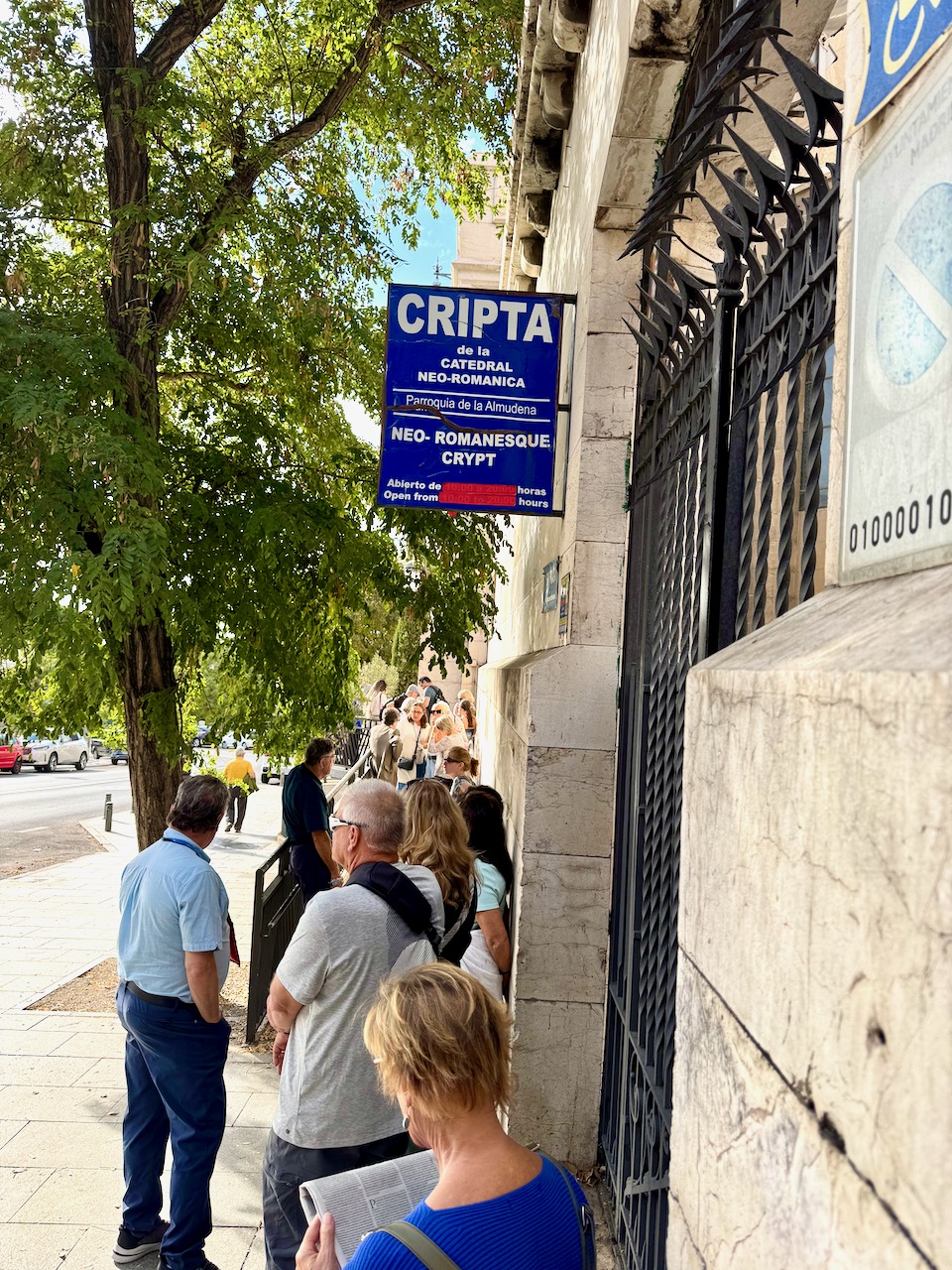
Once inside we saw the first two of 20 private chapels where various Spanish aristocracy are located under the cathedral.
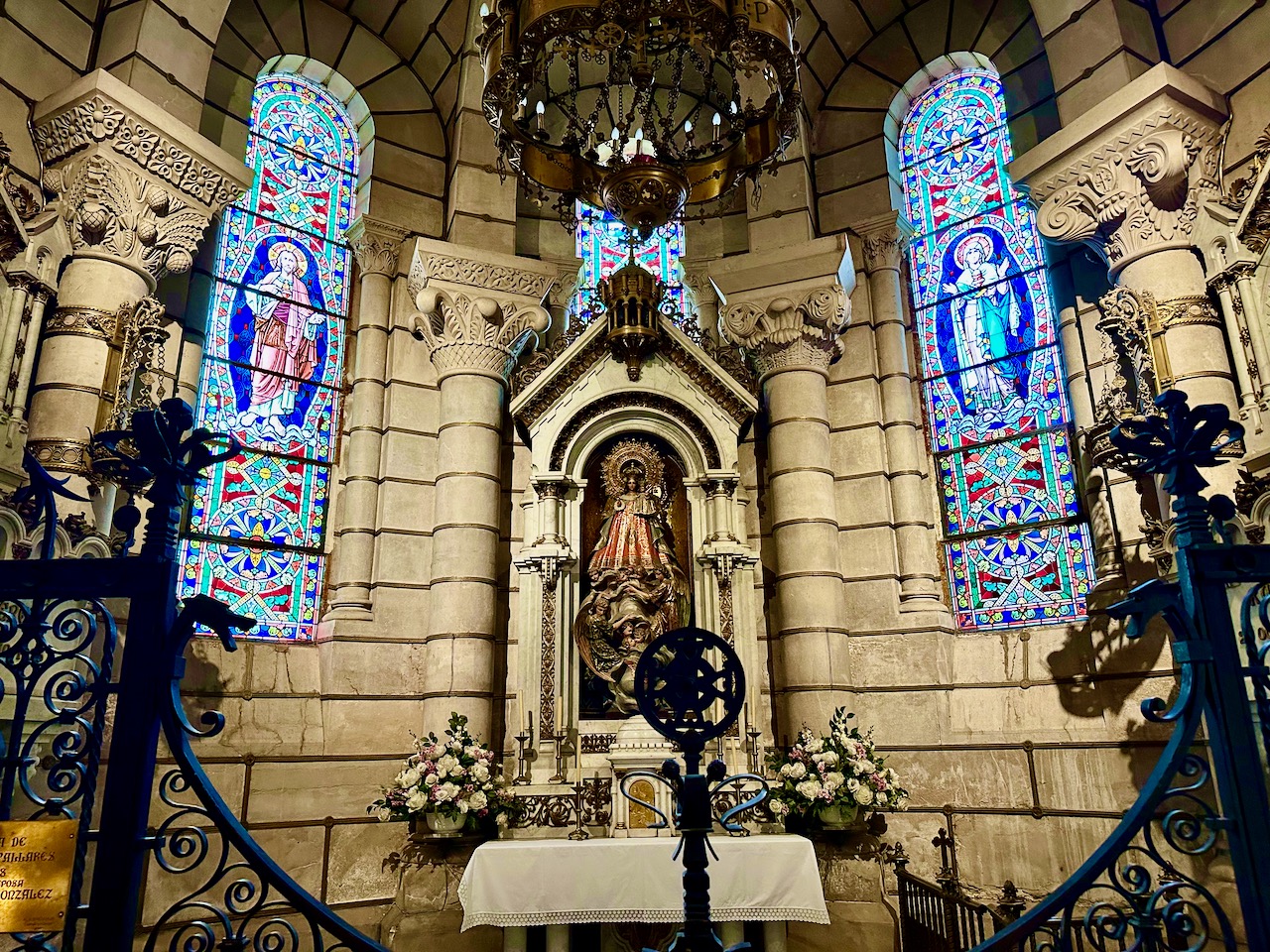
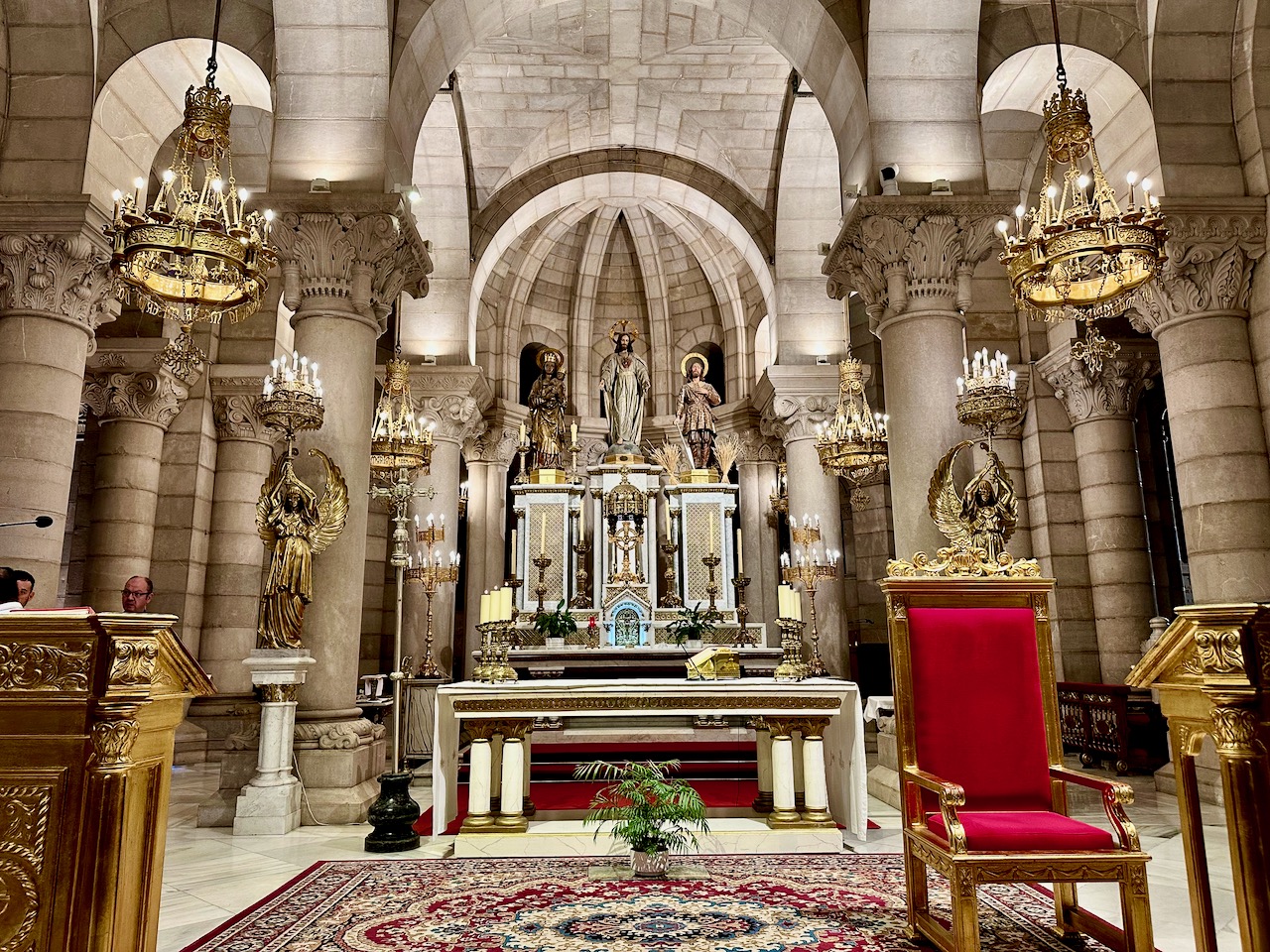
Containing more than 400 columns crowned with biblical figures, this is considered to be one of the largest crypts in the world, and certainly the largest in Spain. The site was once occupied by a medieval mosque, while construction on the crypt began in 1911.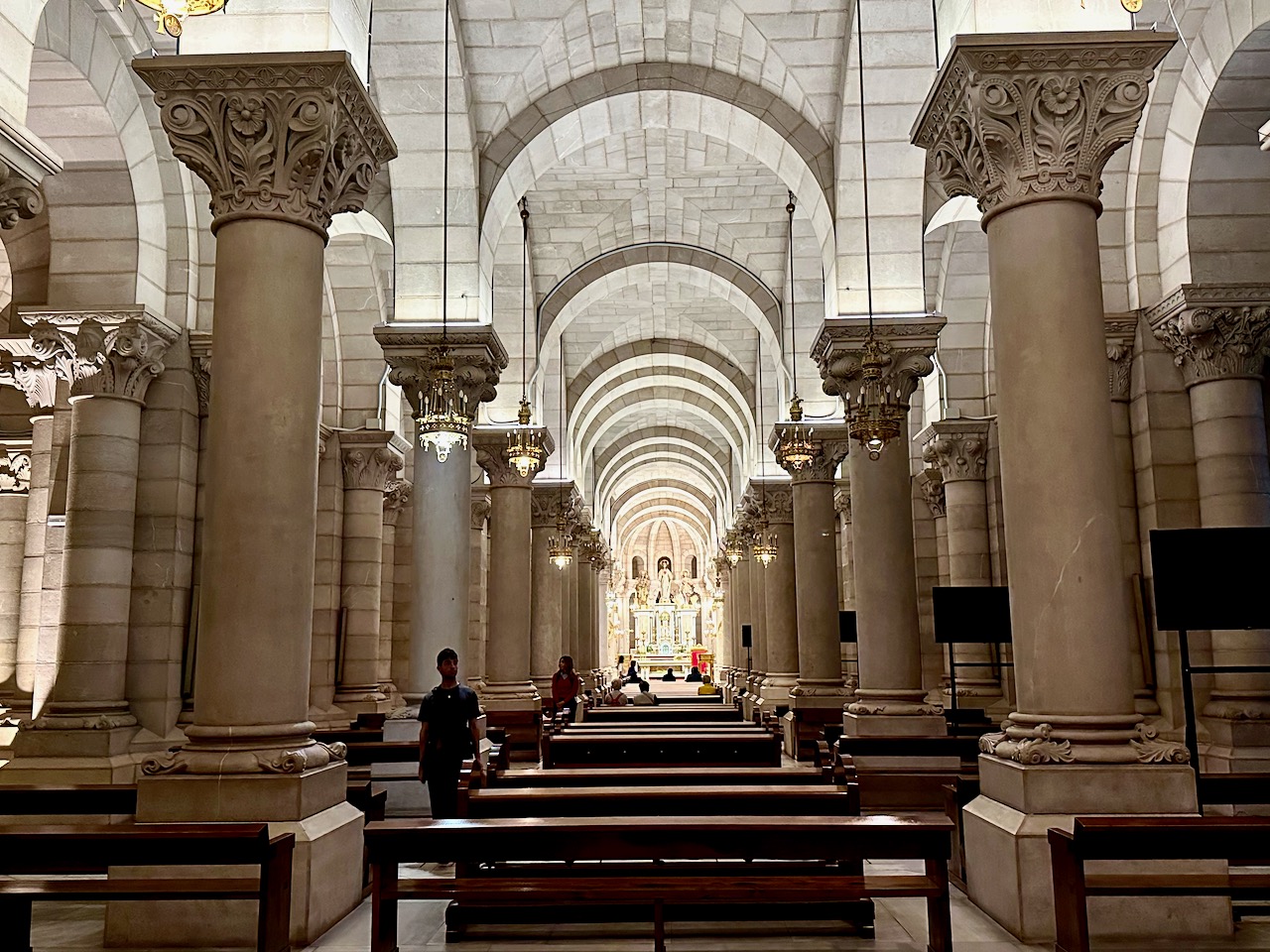
The 16th-century image of the Virgin of the Almudena (Our Lady of the Fleur de Lis) is one of the many crypt highlights. It was discovered during the 19th century at the demolition of the old Church of Santa María.
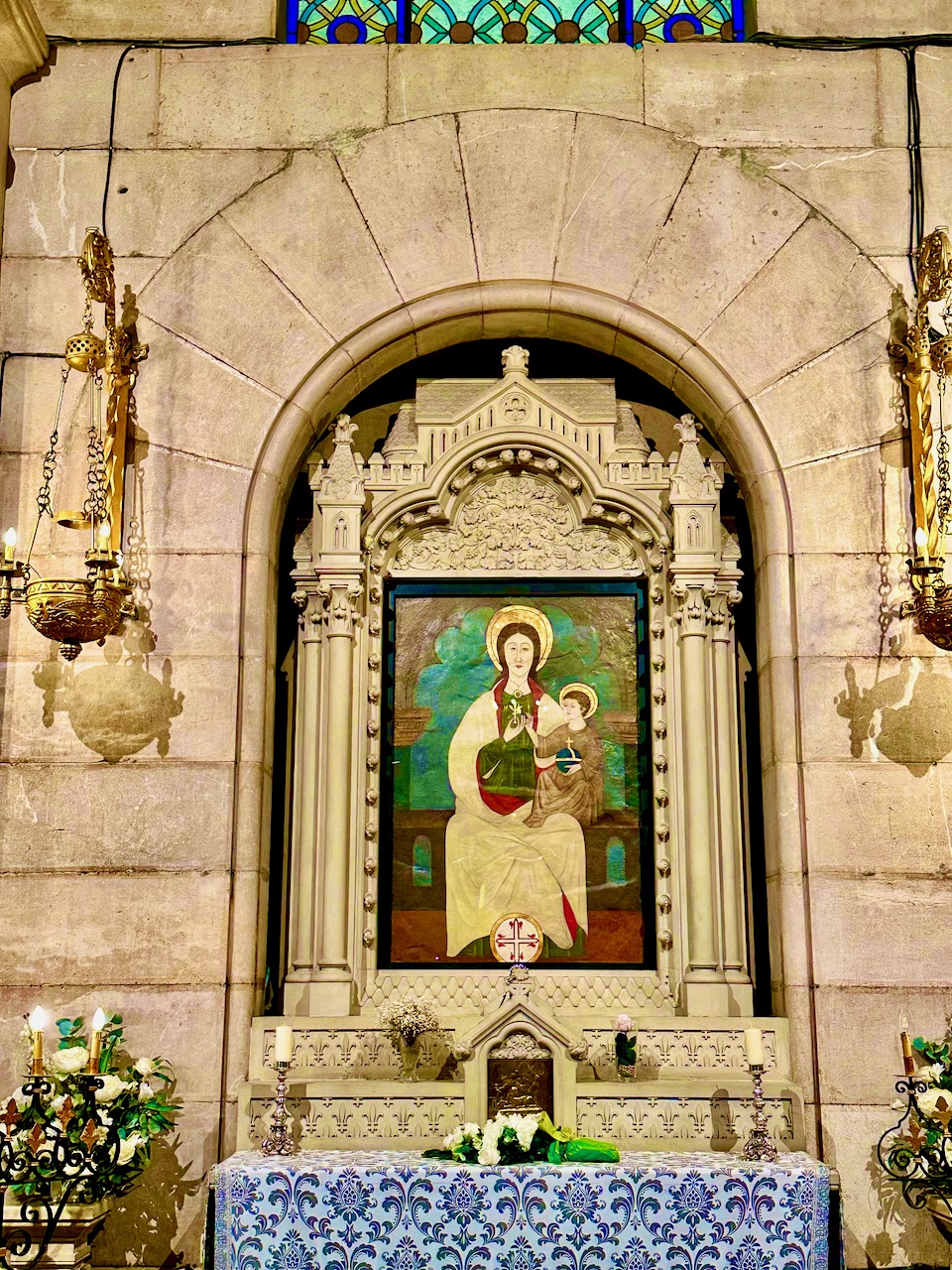 Not every crypt we’ve visited has been a worthwhile stop. This is one of the most beautiful we have seen.
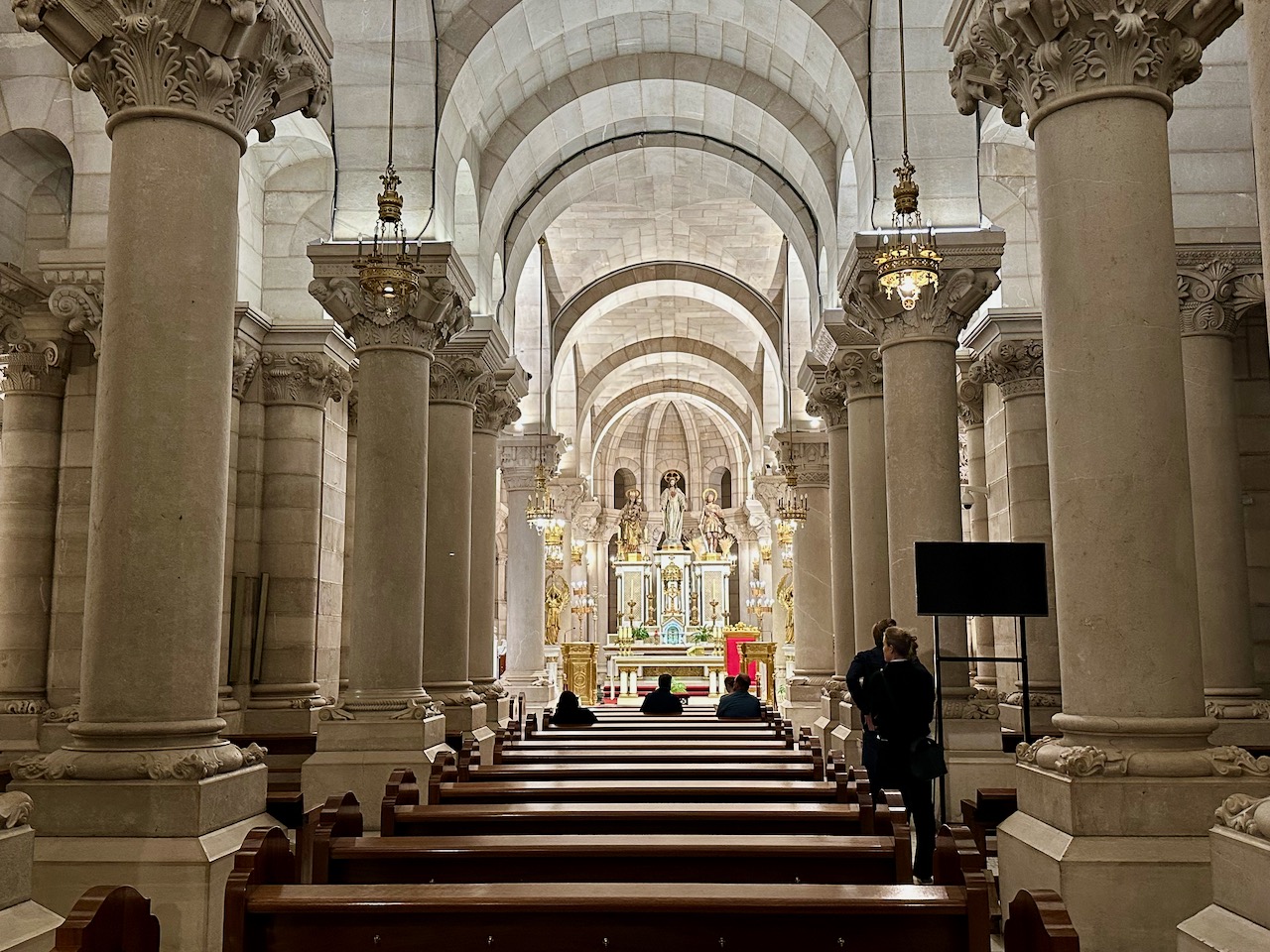
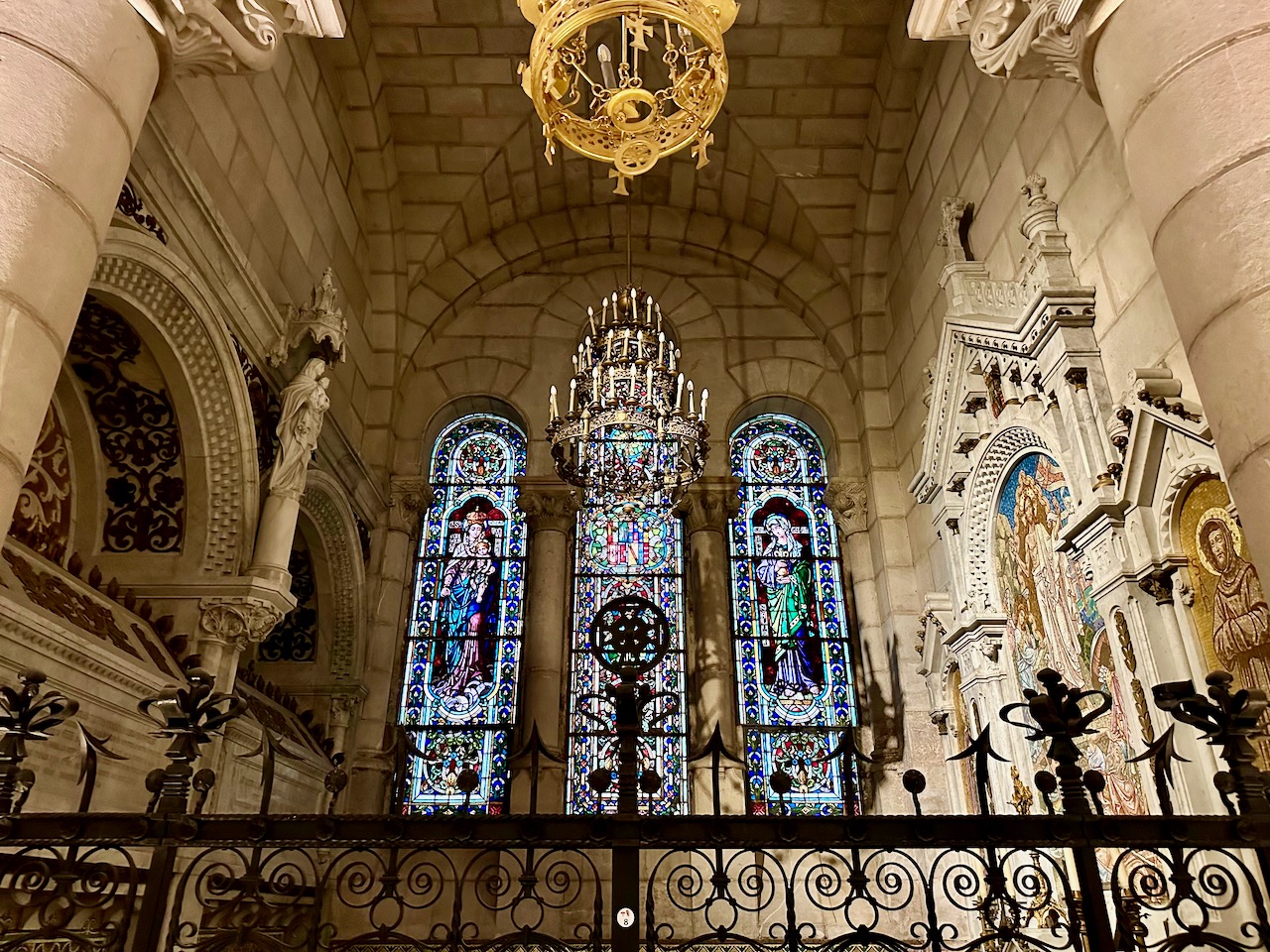
This funerary chapel “pays homage to the Fontalba family.”
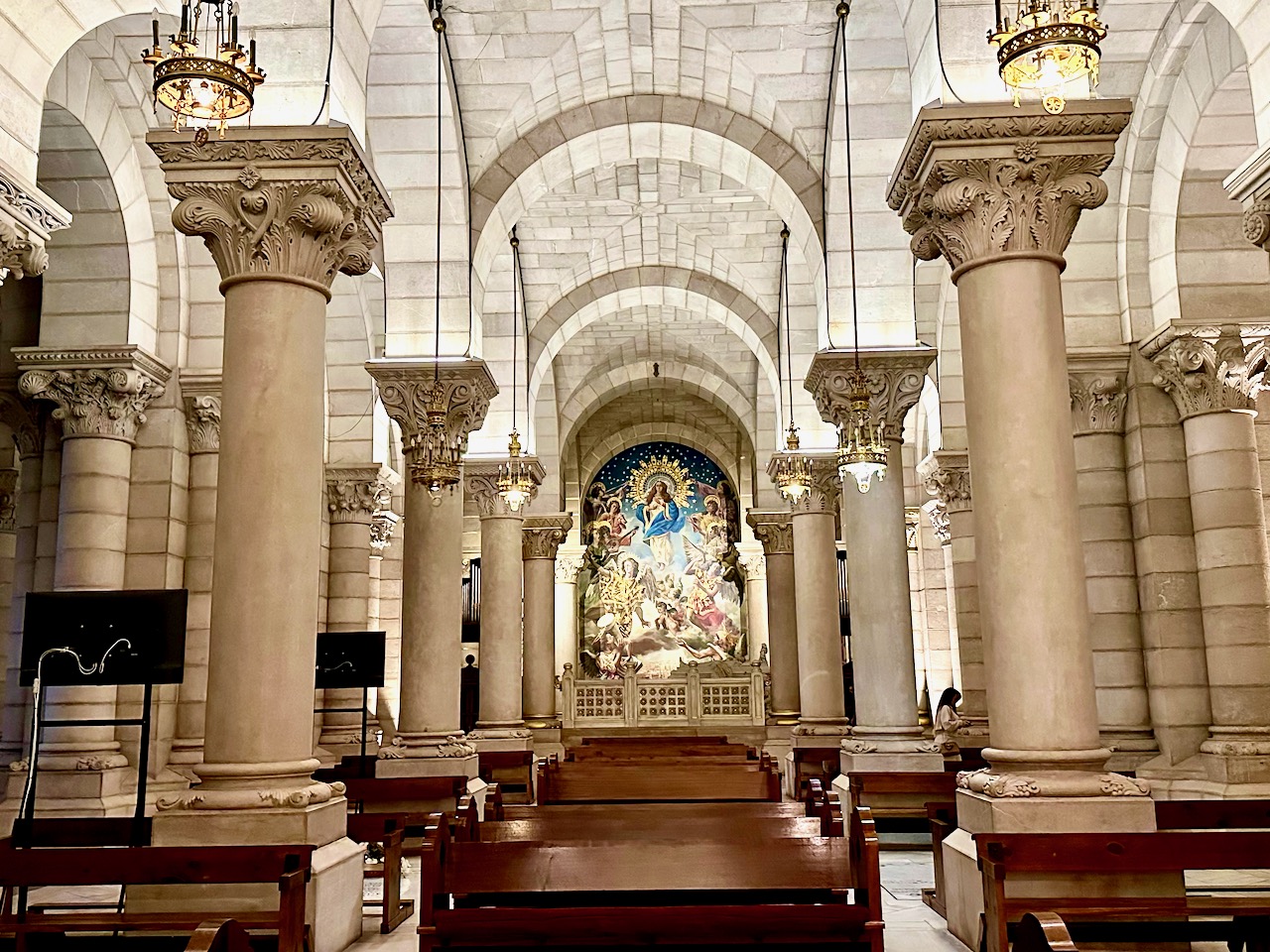
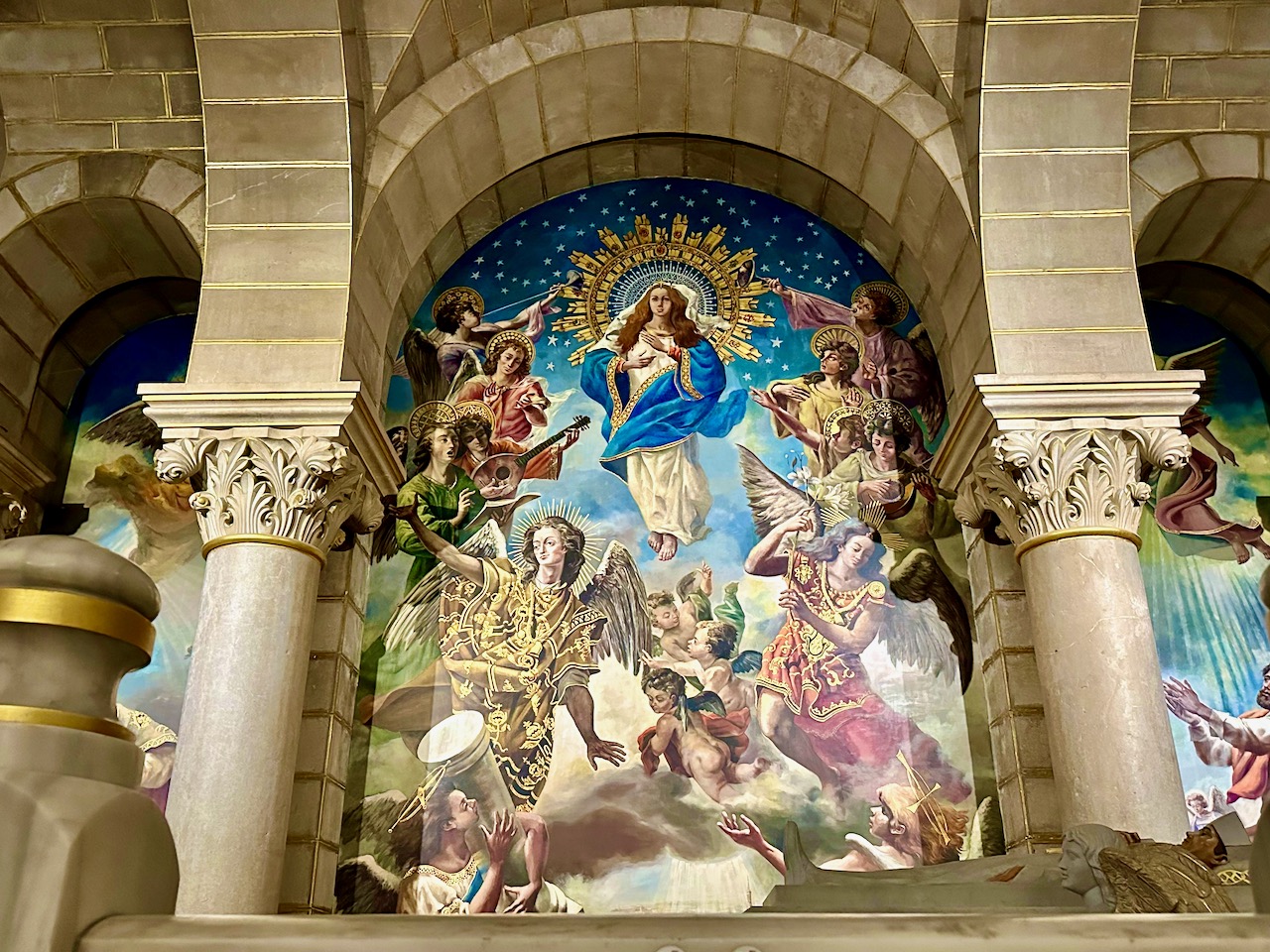
The final site on our Madrid bingo card had been filled.
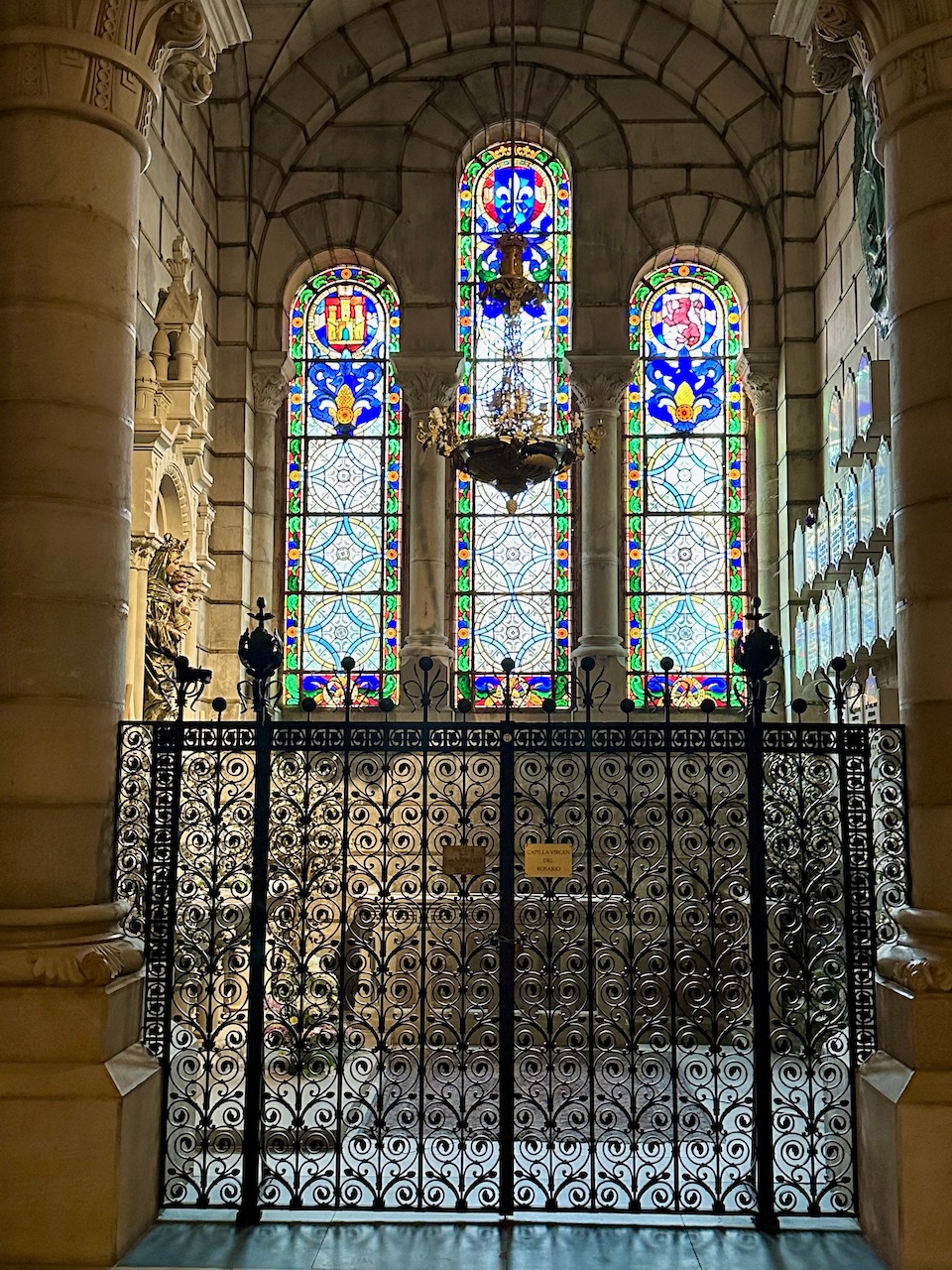
One last photo of the exterior, and we were done.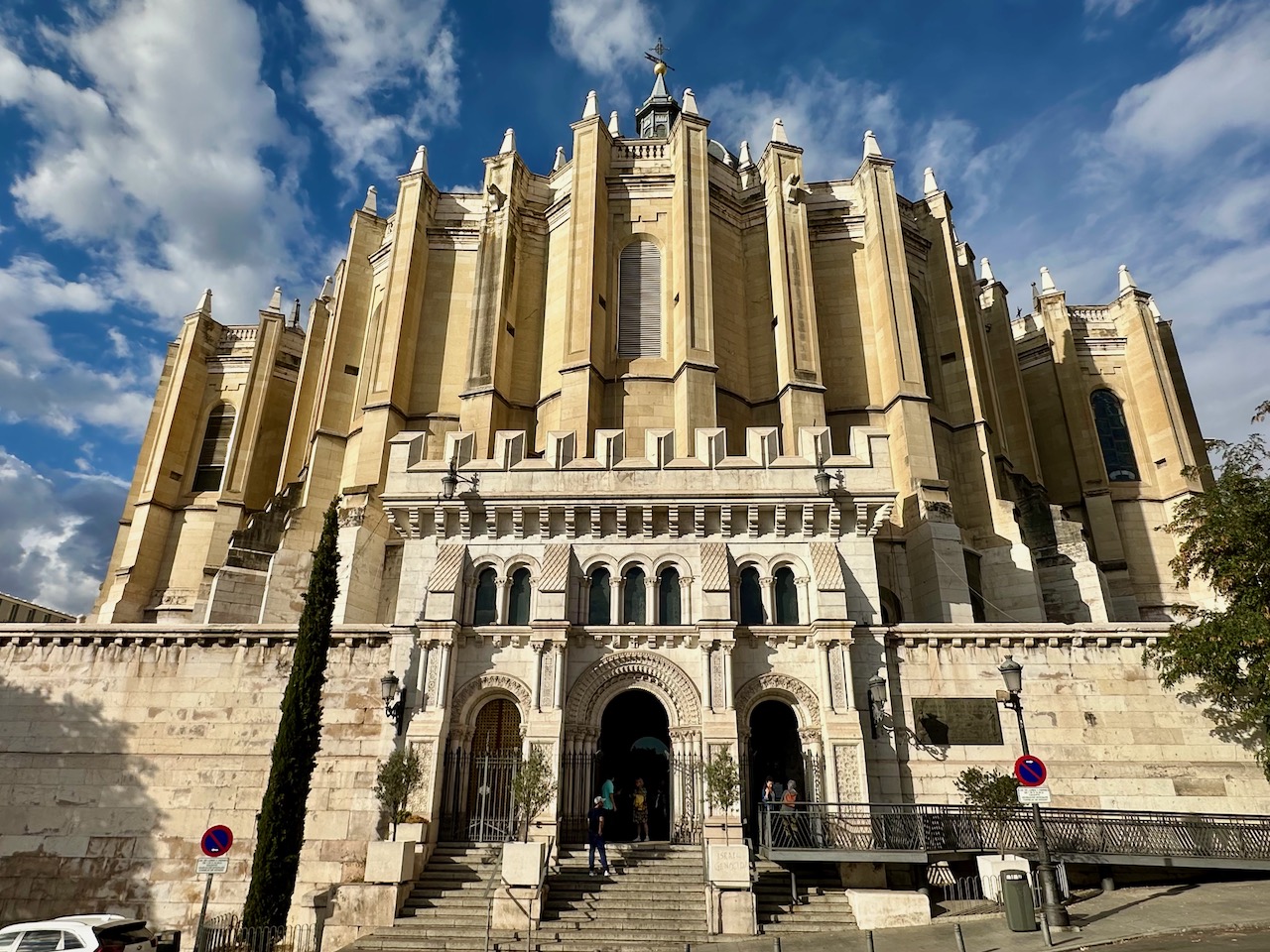
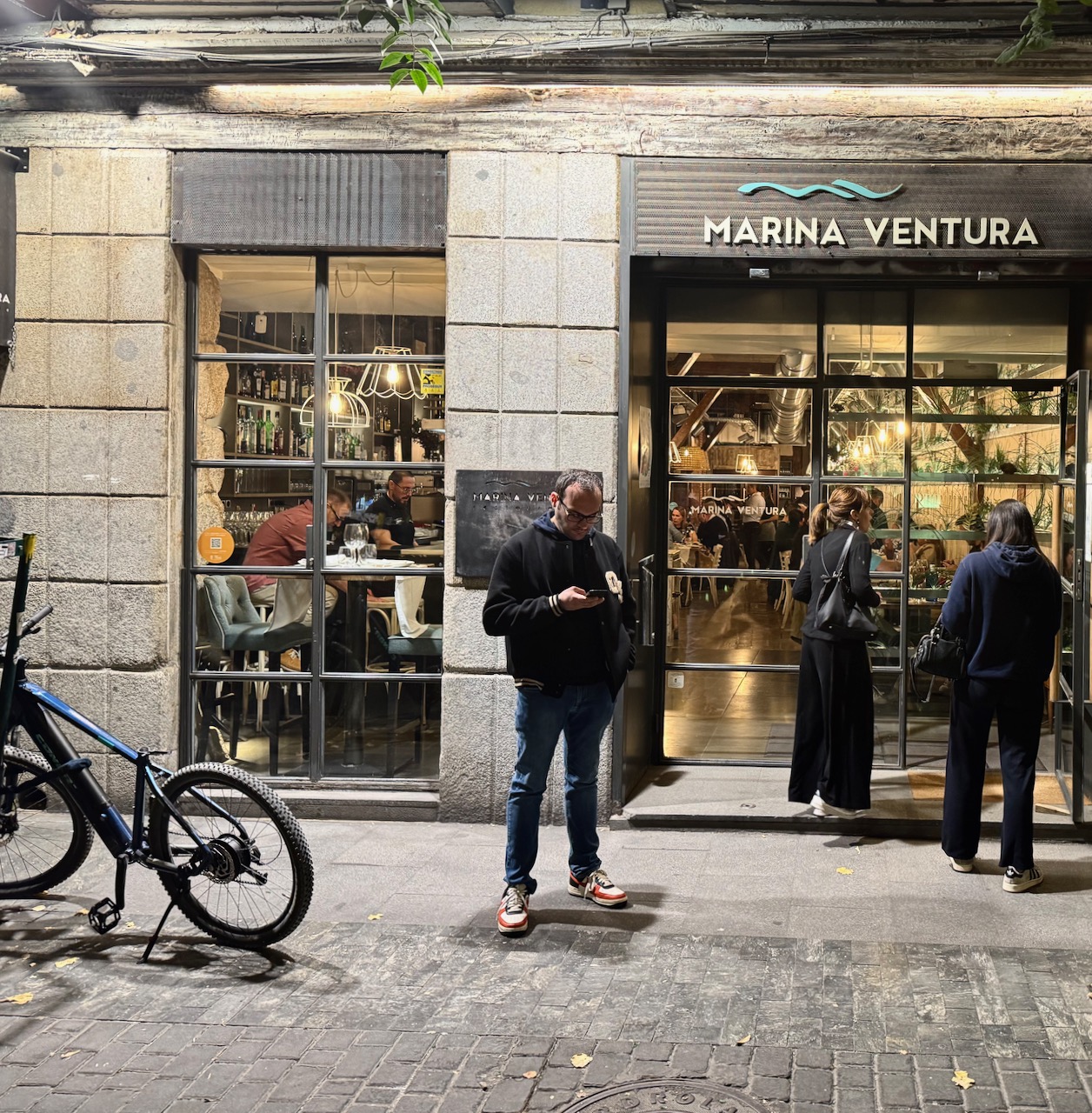
We had booked a late dinner, but were fairly exhausted (ok, a lot exhausted … this getting old thing is tougher than I imagined), so we made a change of plans and decided to see if we could get in at a restaurant bartender Sebastian suggested we try. Even though no one was there when we arrived at Restaurante Arrocería Marina Ventura, our hostess was doubtful we could be seated as they were fully booked for the evening. Taking pity on two weary travelers, she checked with the manager who found us a seat. Within a half hour the place was jammed.
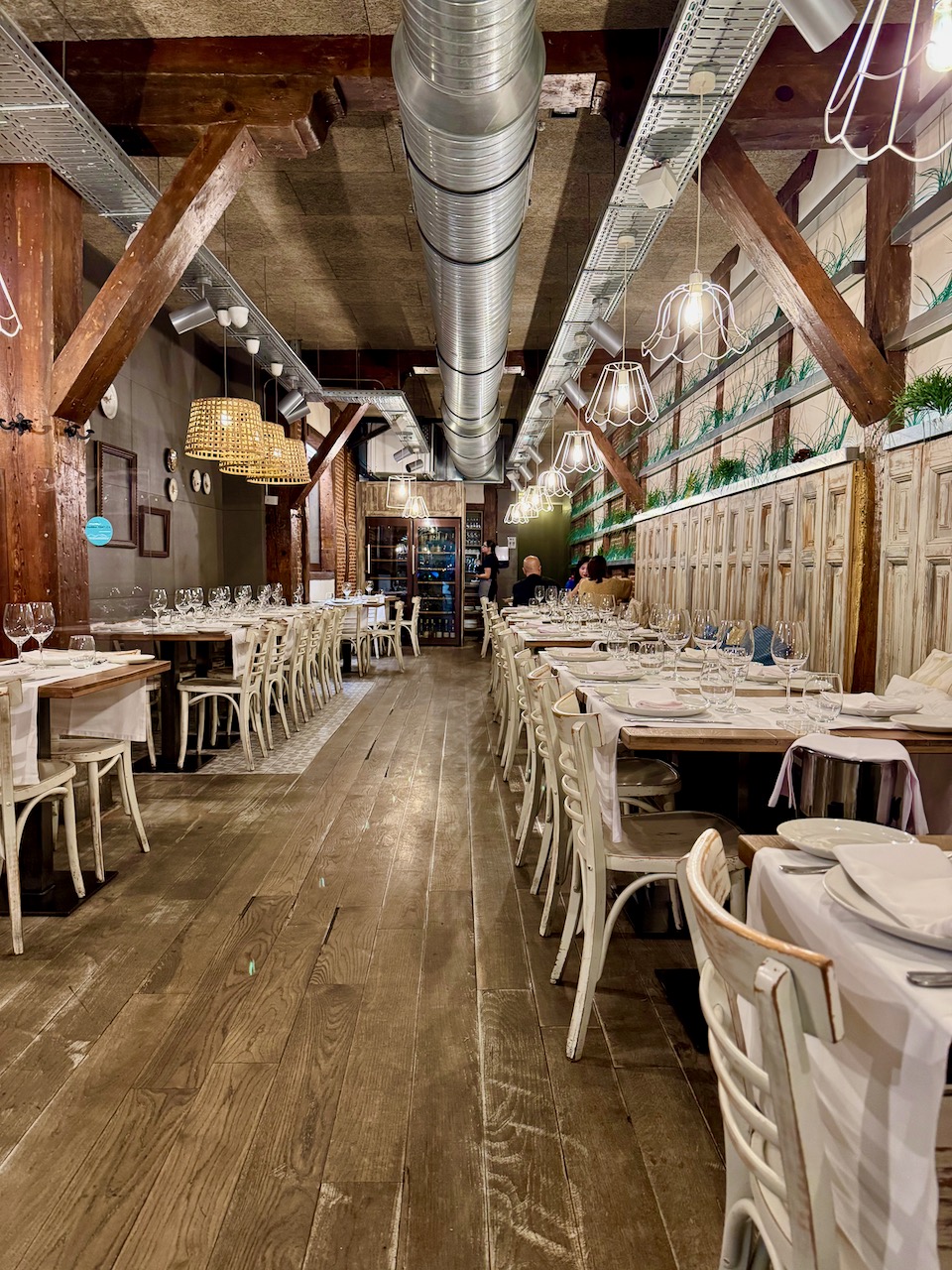
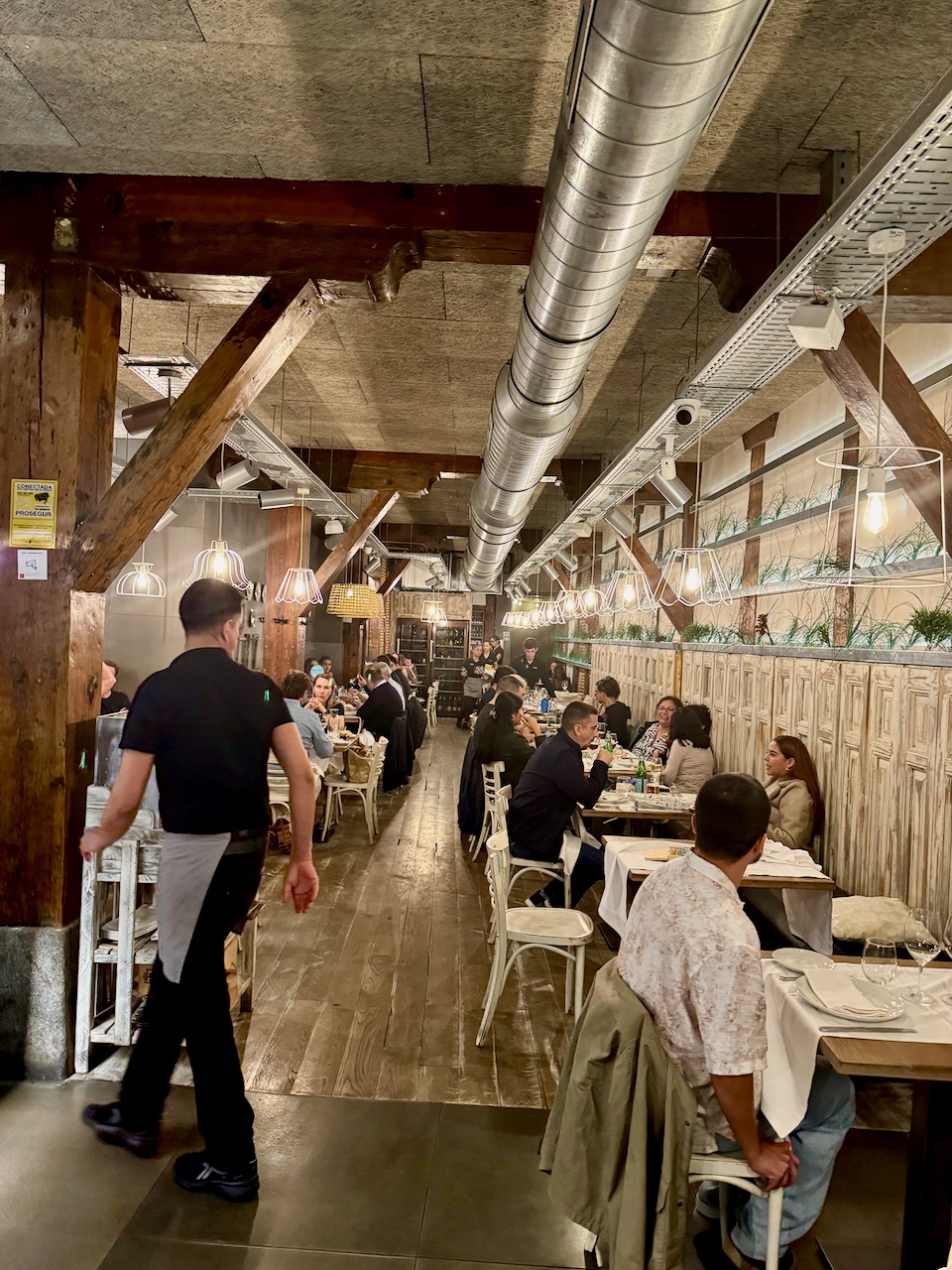
Sebastian had recommended this restaurant as one of his favorite spots for paella, so we ordered a shrimp paella. While waiting for our meal, we started with an appetizer of fried goat and brie cheeses with caramelized onion. Yum! I am not a paella expert …
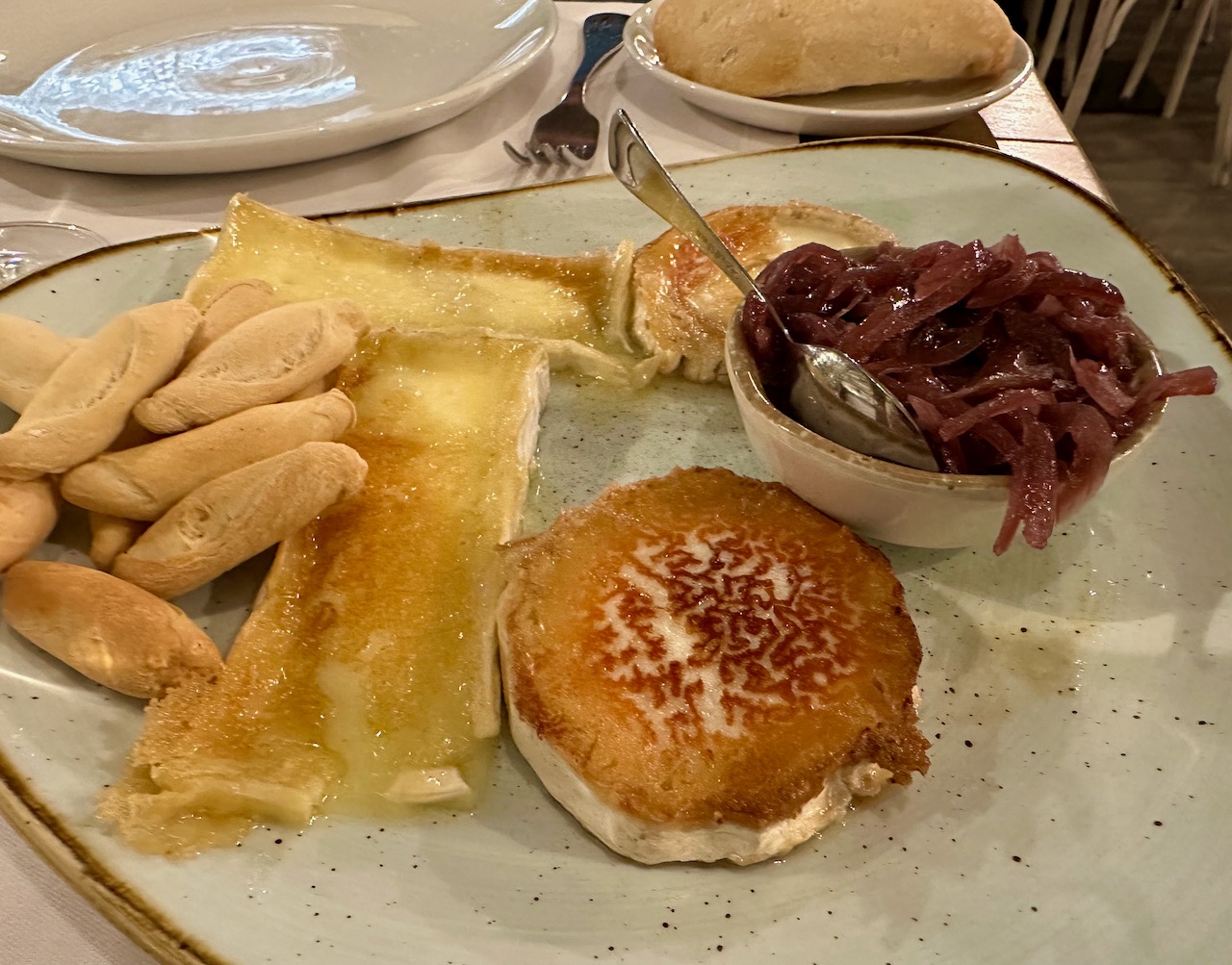
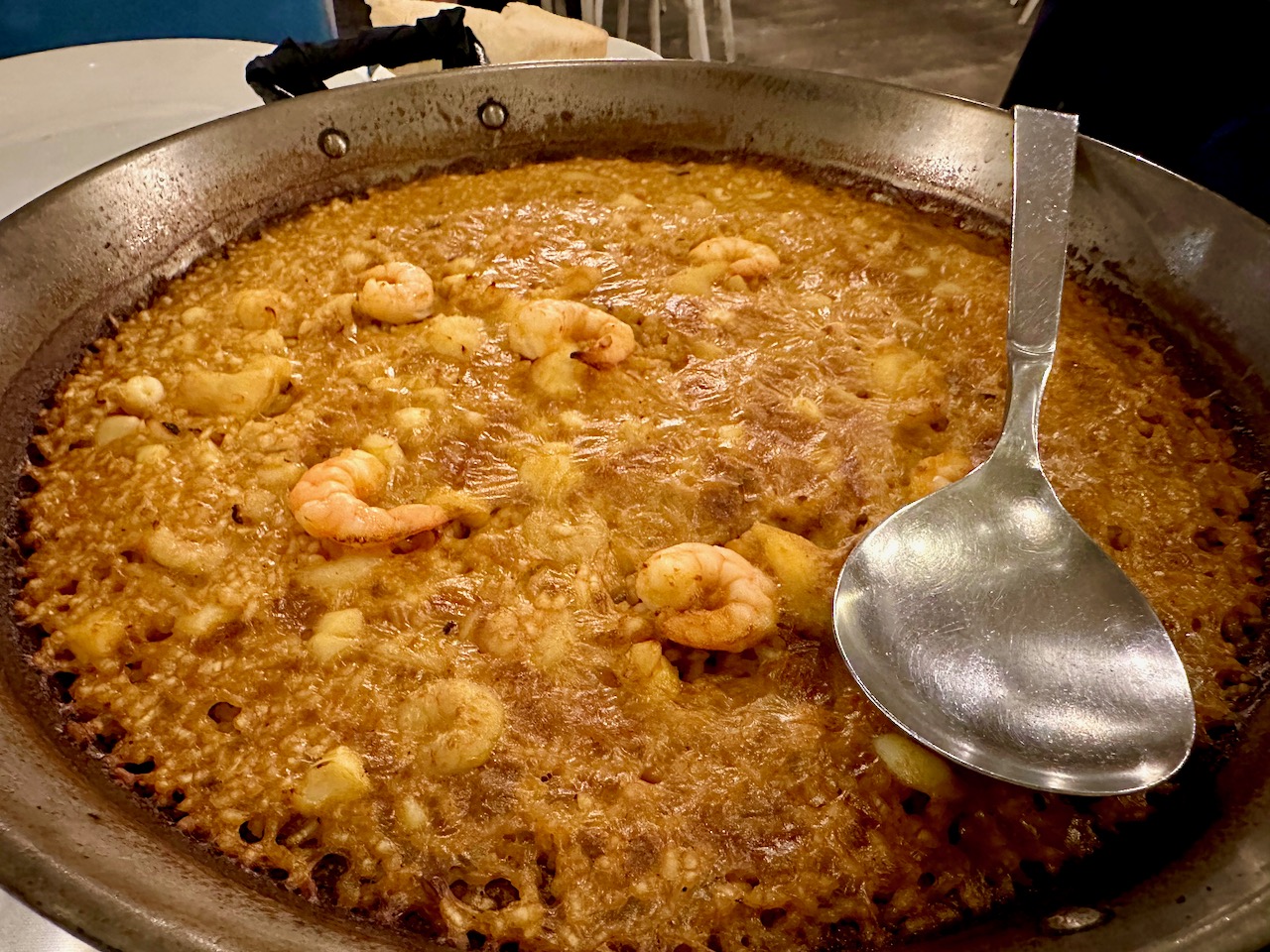
… but it was very good.
Back at our hotel, we shared a final toast of wine with Sebastian, and thanked him profusely for his company and recommendations while staying at Room Mate Alba. A cool, professional guy.
Once again, we loved our time in Madrid. Another spot on the worldwide map where, if we were 30 years younger, we could live for awhile. Las Letras is the perfect place to base yourself, because it’s in the heart of the action, and every night the street scene is vibrant. Viva Madrid indeed!
 Tomorrow, we’d be up at the crack of dawn (ouch), take a taxi to the airport where we would pick up our rental car. As usual, we would encounter a couple of unusual episodes during our journey to and from Burgos, about 2 1/2 hours north of Madrid.
Burgos is part of the Camino de Santiago walking route and on our first day we’d hit a spot with an amazing collection of altarpieces, stroll along the peaceful Paseo del Espolón for lunch and explore another show stopping cathedral. That night, we were back in the thick of another city party reveling with the locals and eating tapas before settling in at one of the town’s nicest restaurants where I’d fall in love with garlic soup and try a local delicacy.
Chapter Seven: Burgos Bound
Day Seven: Damn Is This Electric?, No Parking, Retirement Home for Altarpieces, Promenading Along The Paseo, A “Gothic Treasure,” El Cid’s Final Resting Place, It’s A Marathon Not A Sprint, Party Time In Burgos, Taking It On The Lamb and “It Looks Like Spun Sugar!”