Chapter Four: Get Me To The Church(es) On Time
December 20, 2025
Chapter Six: Topping Off Our Terrific Time In Madrid
January 2, 2026Celebrating España: MaiTaiTom’s Still “Insane For Spain”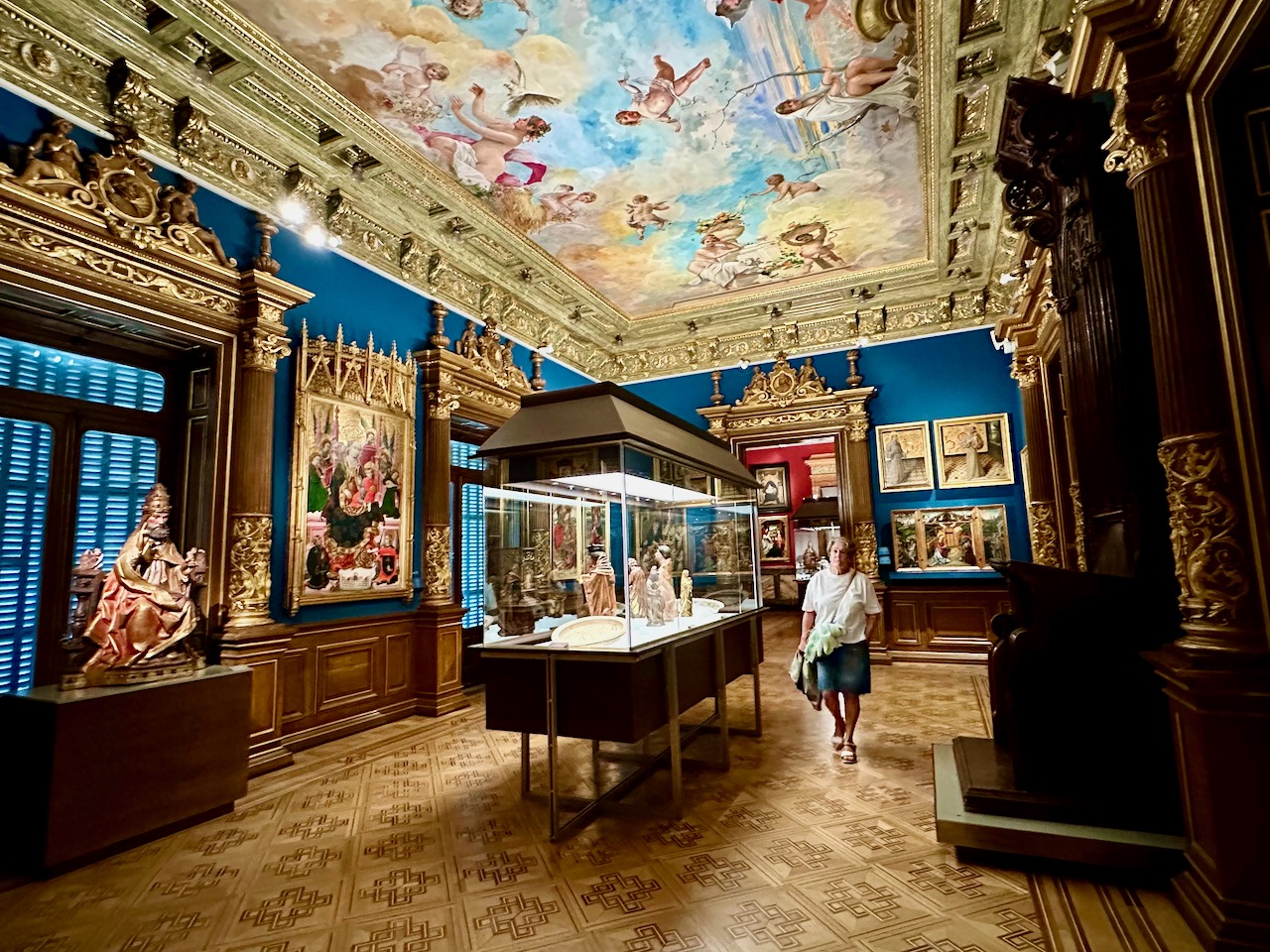
Chapter Five: A Hidden Gem Highlights A Busy Day In Madrid
Day Five: Transportation Choice, A Museum All To Ourselves, Should We Steal The Bosch Or The Goya?, Witchcraft, A Church & National Monument, The Trampling Tours, Visiting An Old Favorite, Is This Place Ever Open?, The Days Of Wine & Doughnuts, Feeling Blue and Basqueing in The Warmth Of Tomato Soup
Tracy and I ended up sleeping in (sleeping in to me is we made it to 8 a.m.), but soon we were off to visit a “hidden gem” of a museum. We had 9:30 reservations, and since we were running a little late, I decided to check my Uber app for a ride, and was astounded not only by the wait time, but also the exorbitant price. With a taxi rolling toward us, we hailed it and in about 20 minutes we arrived at Museo Lázaro Galdiano in Madrid’s Salamanca neighborhood. By the way, the taxi was less than half of what Uber was charging.
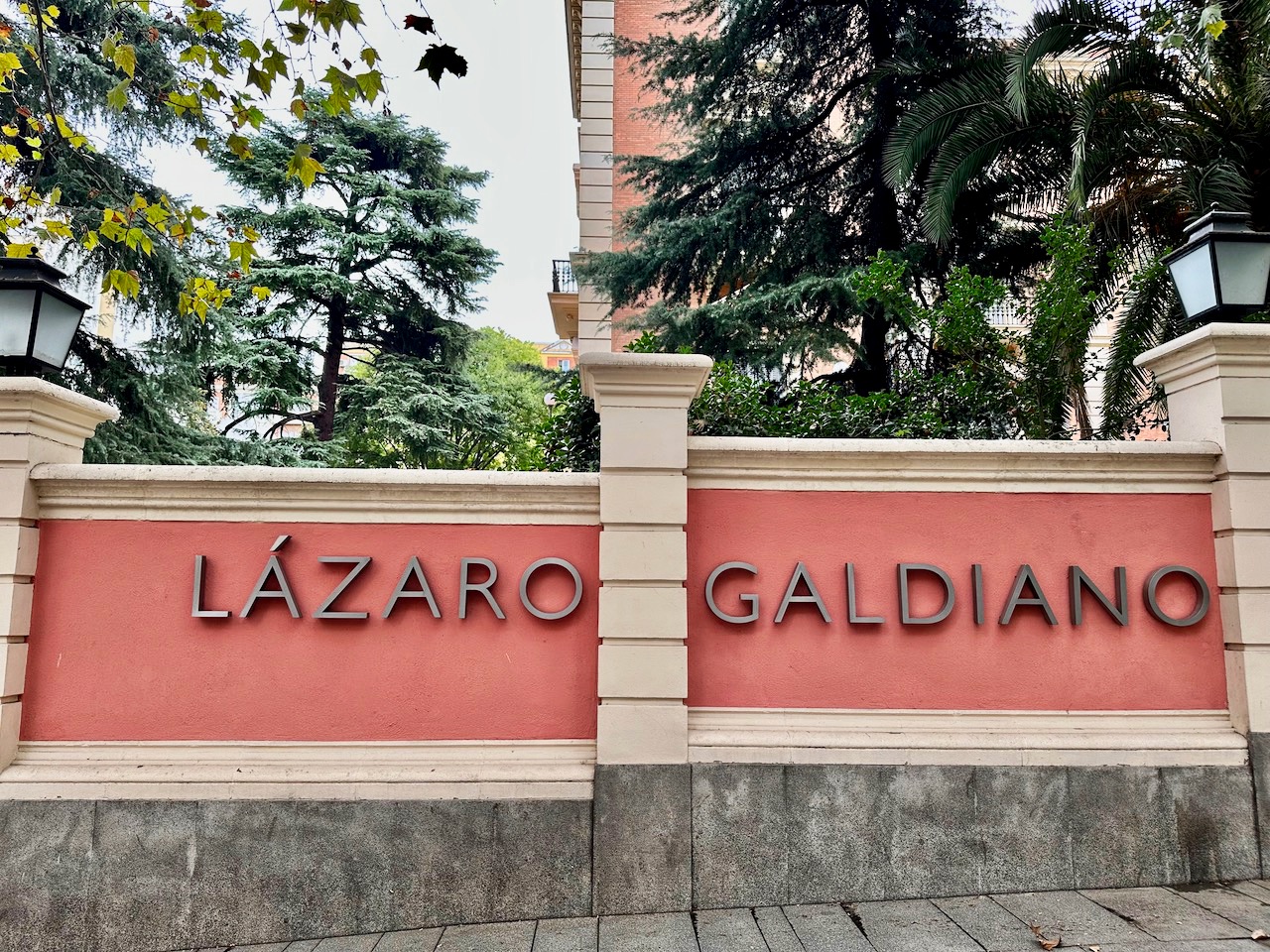
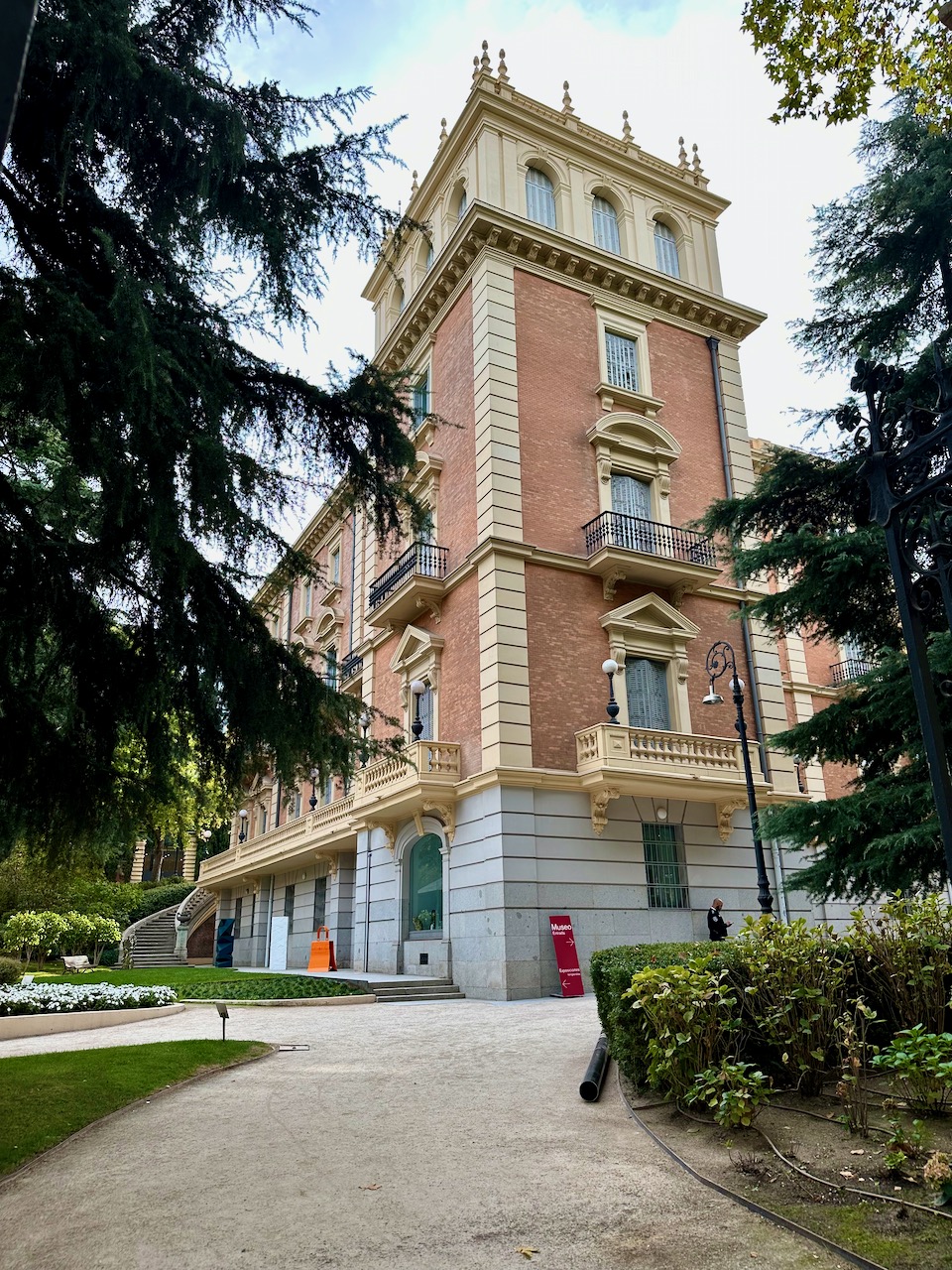
The museum is housed in an early 20th mansion owned by José Lazaro Galdiano (also known as La Mansión Parque Florido after his wife’s maiden name), who was not only a savvy financier and publisher, but luckily for us an avid art collector. Works by such renowned artists as Bosch, El Greco, Velázquez and Goya can be seen here in a much more relaxed atmosphere than in the Prado. Upon his death in 1947 he had acquired one of the most notable art collections in all of Spain, and he bequeathed more than 12,500 pieces to the Spanish state. The mansion turned museum was opened to the public in 1951.
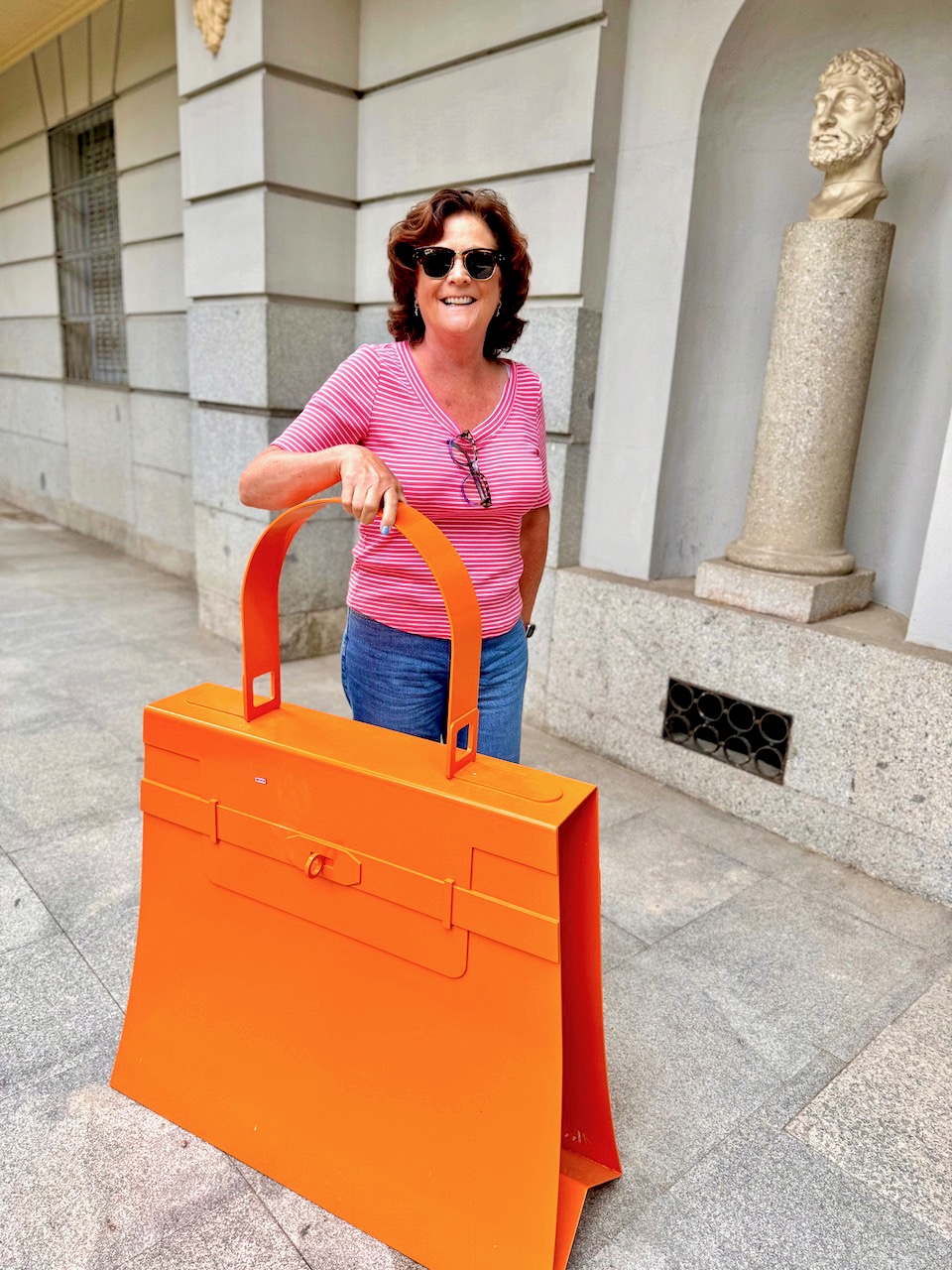
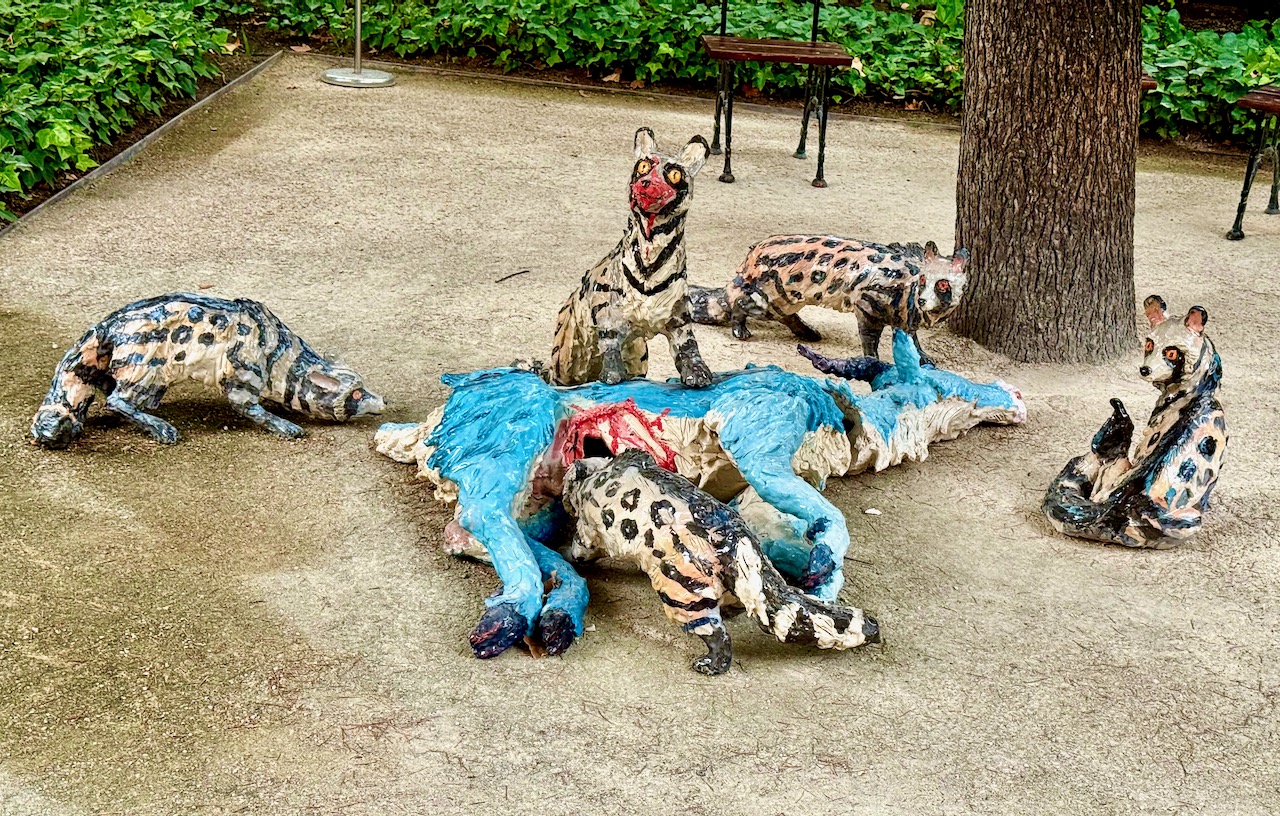
Before entering, Tracy’s workout routine helped her carry this purse she saw outside. Take that Dooney & Bourke. Actually, the purse was part of an art exhibition of sculptures displayed on the grounds of the mansion. It also included Feast of the Civets.
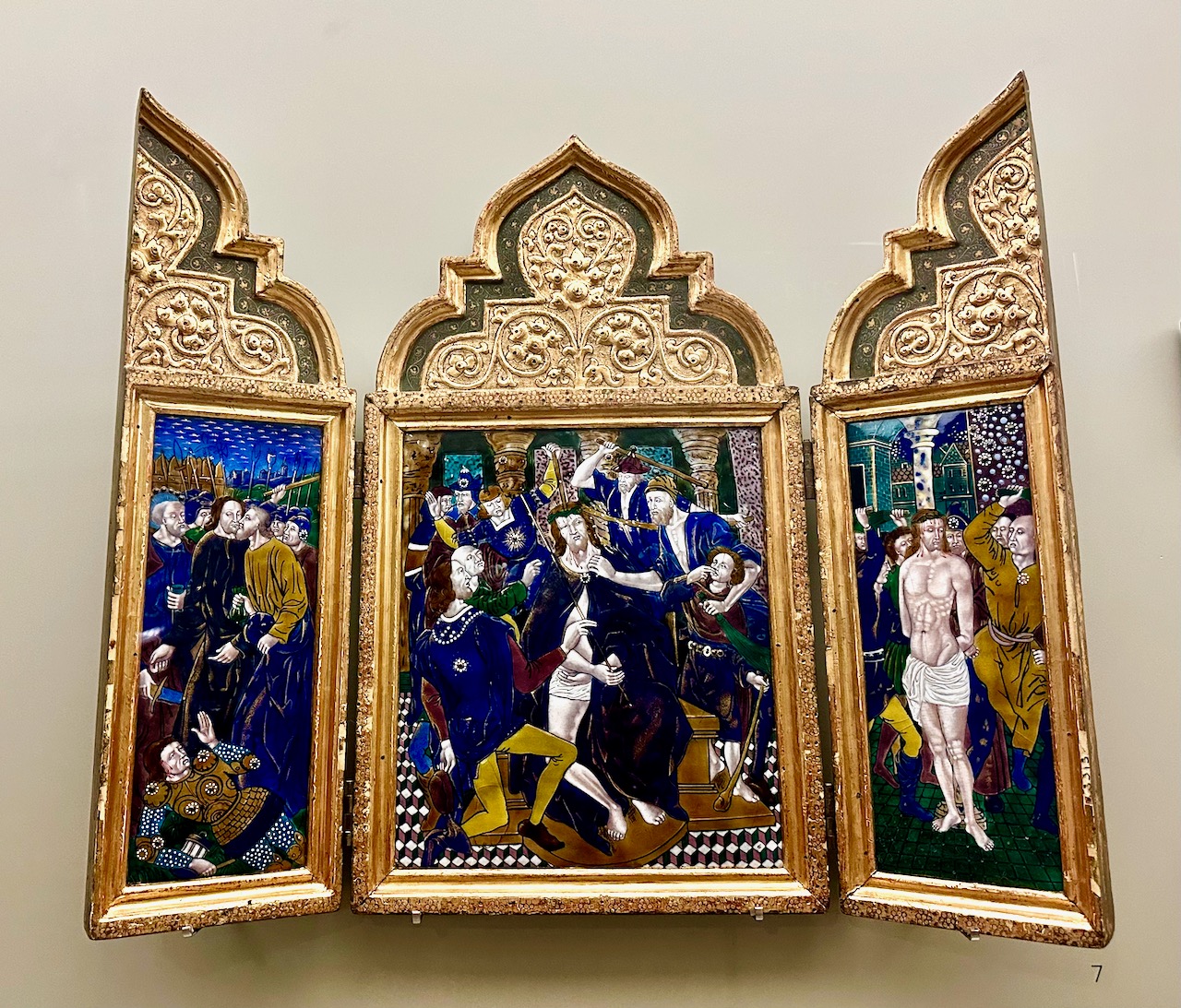
The mansion encompasses four floors, and we were pleasantly surprised to find we had the museum all to ourselves, most likely because we had arrived promptly when the museum opened. We started on the top floor and worked our way down. The top floor contained textiles, coins and armory which are not really our cup of tea, so we quickly moved down a floor to a room containing religious art including a Limoges enameled triptych from the early 16th century and a painting of Saint John the Baptist from the late 15th century.
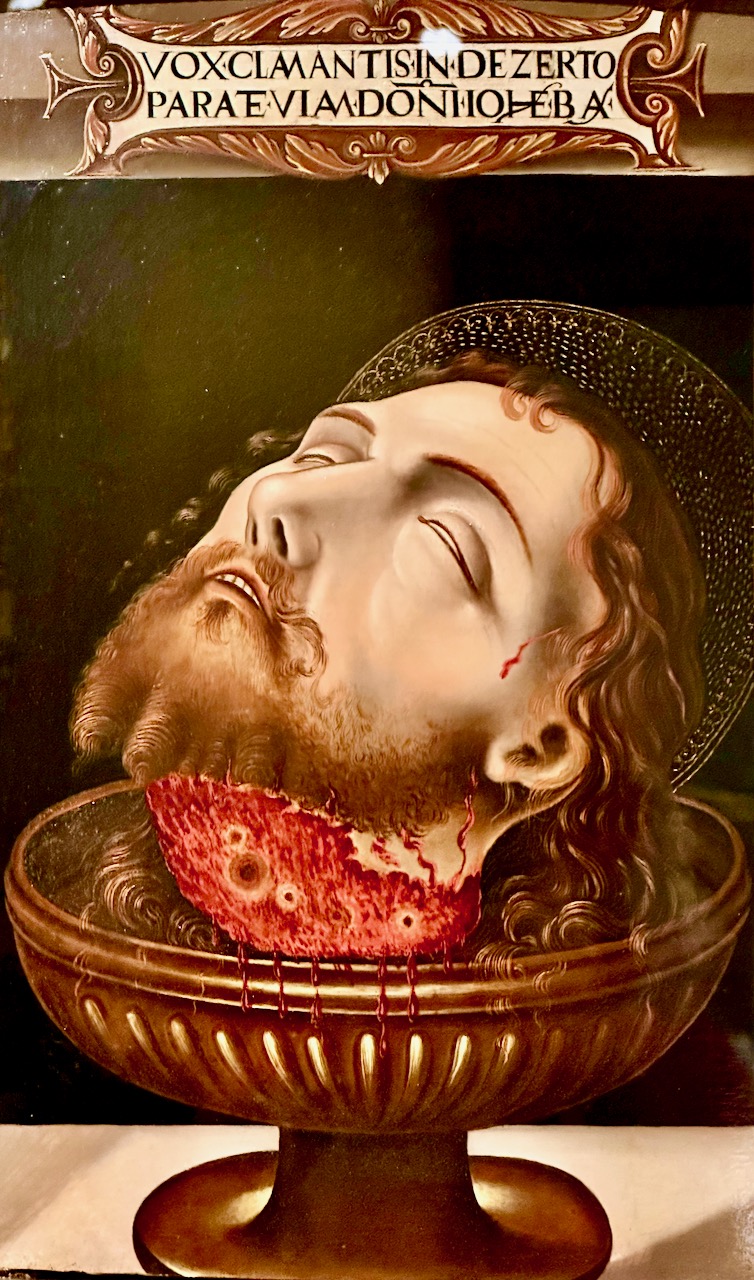
This painting of a young Christ had long been thought to be by da Vinci, but someone eventually cracked the code and discovered that The Adolescent Saviour was actually painted by Giovanni Antonio Boltraffio, one of da Vinci’s students. 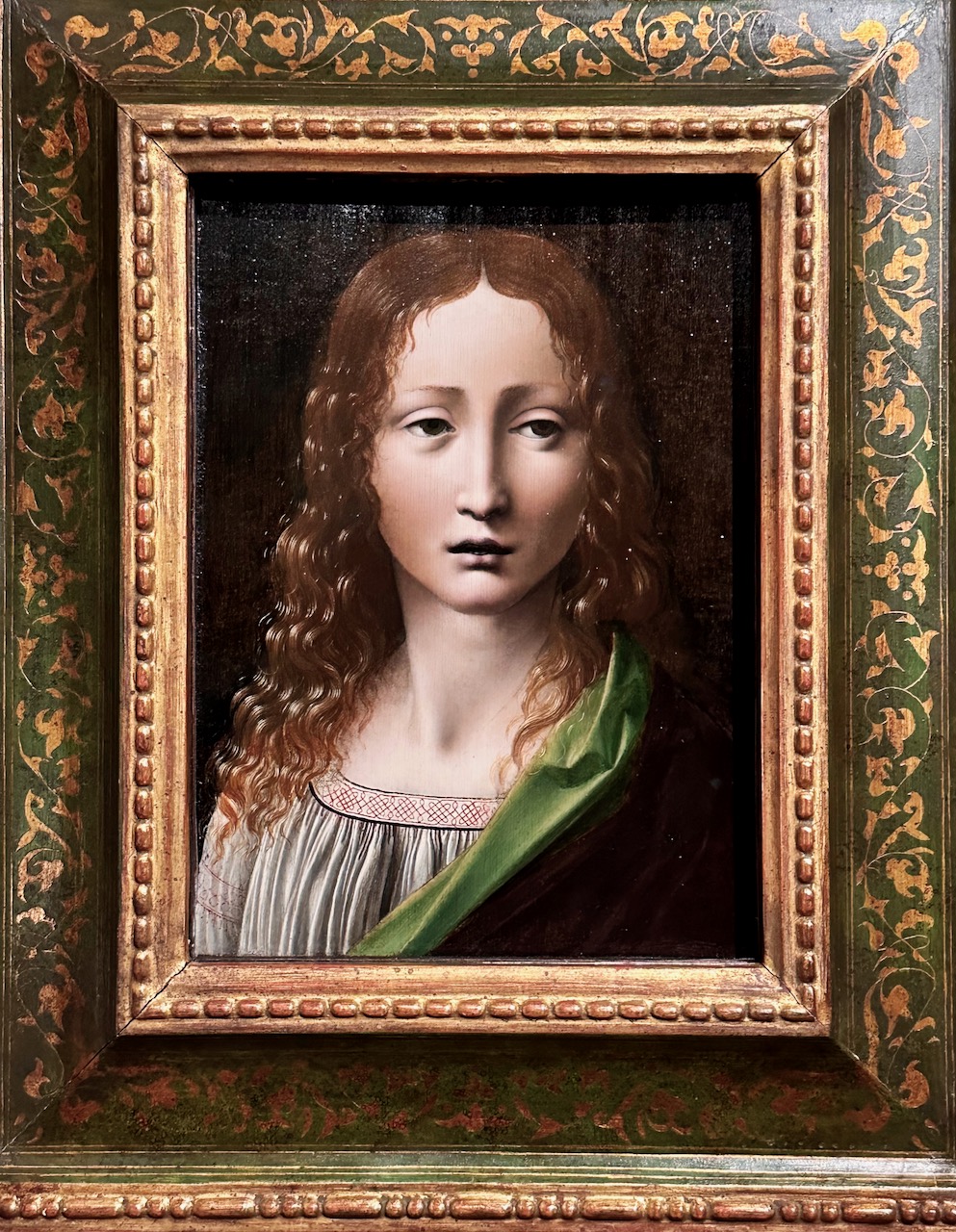
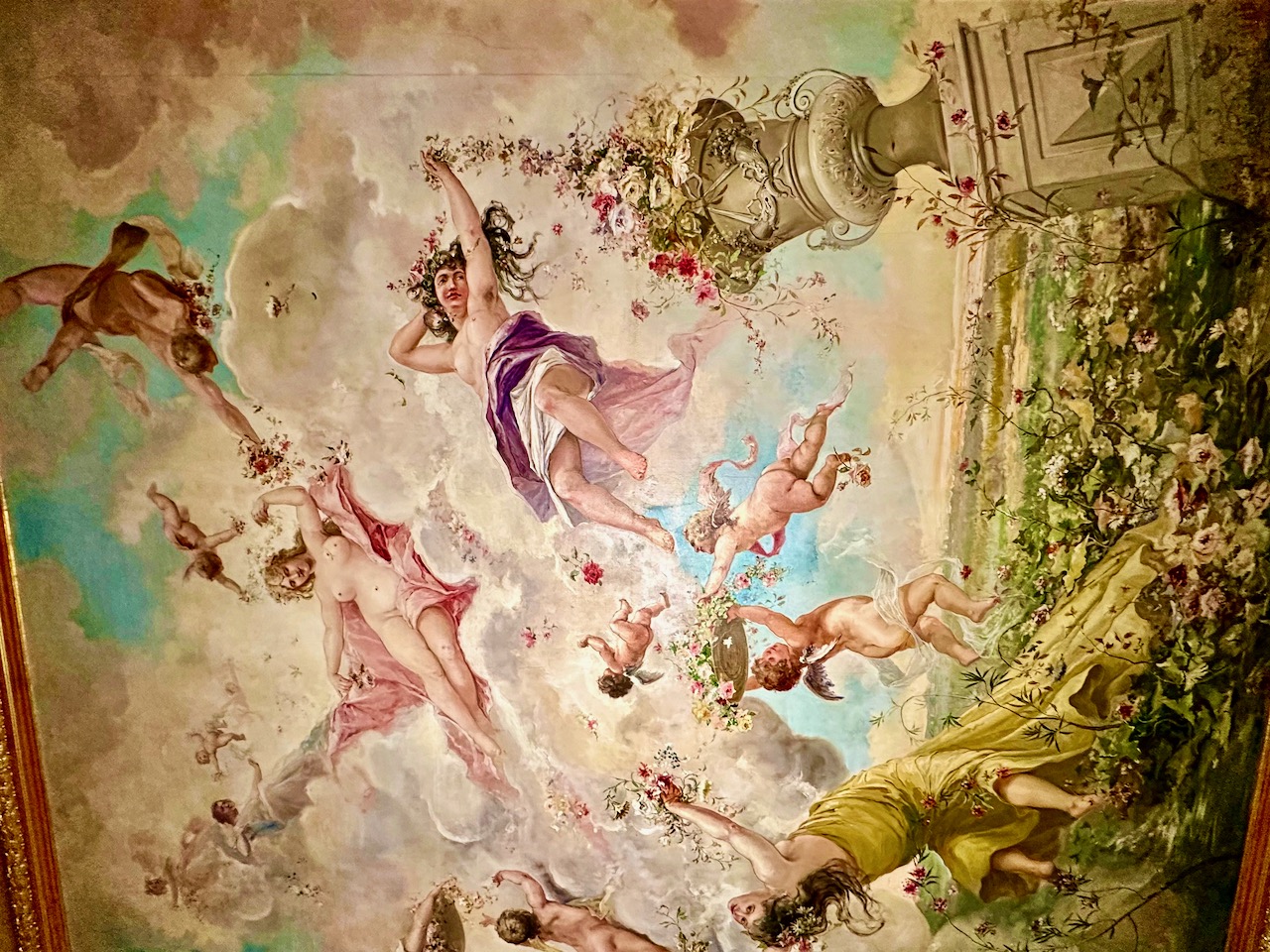
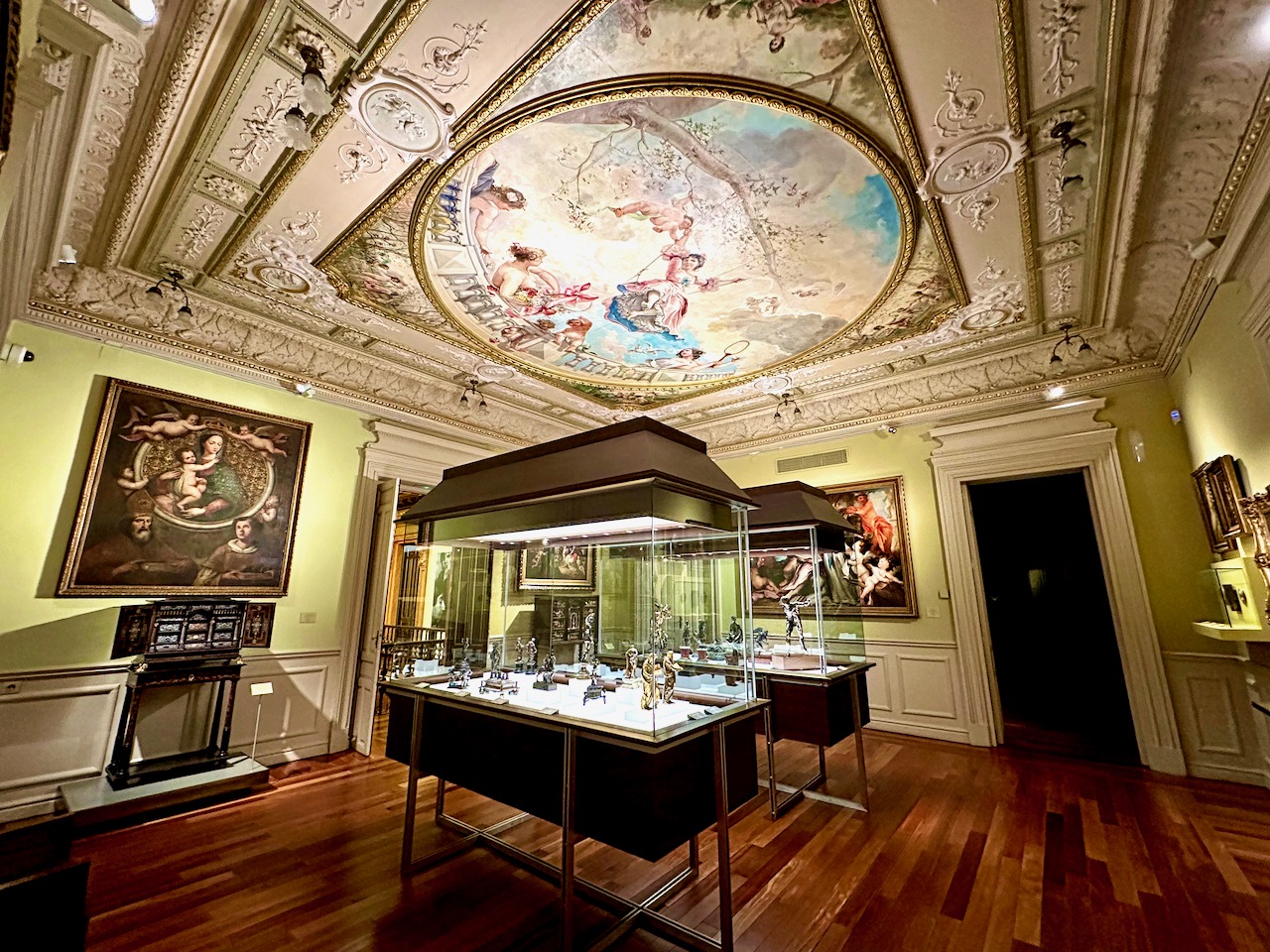
As amazing as the artwork displayed on the walls, we would be dazzled throughout by the artwork on the ceilings of many of the rooms. I think one of these two depict the goddess Flora, which could be implying the surname of Lázaro’s wife, Doña Paula Florido. I hadn’t had any coffee, so my mind was still in a haze.
I cannot tell a lie, there was a miniature George Washington in one of the cabinets.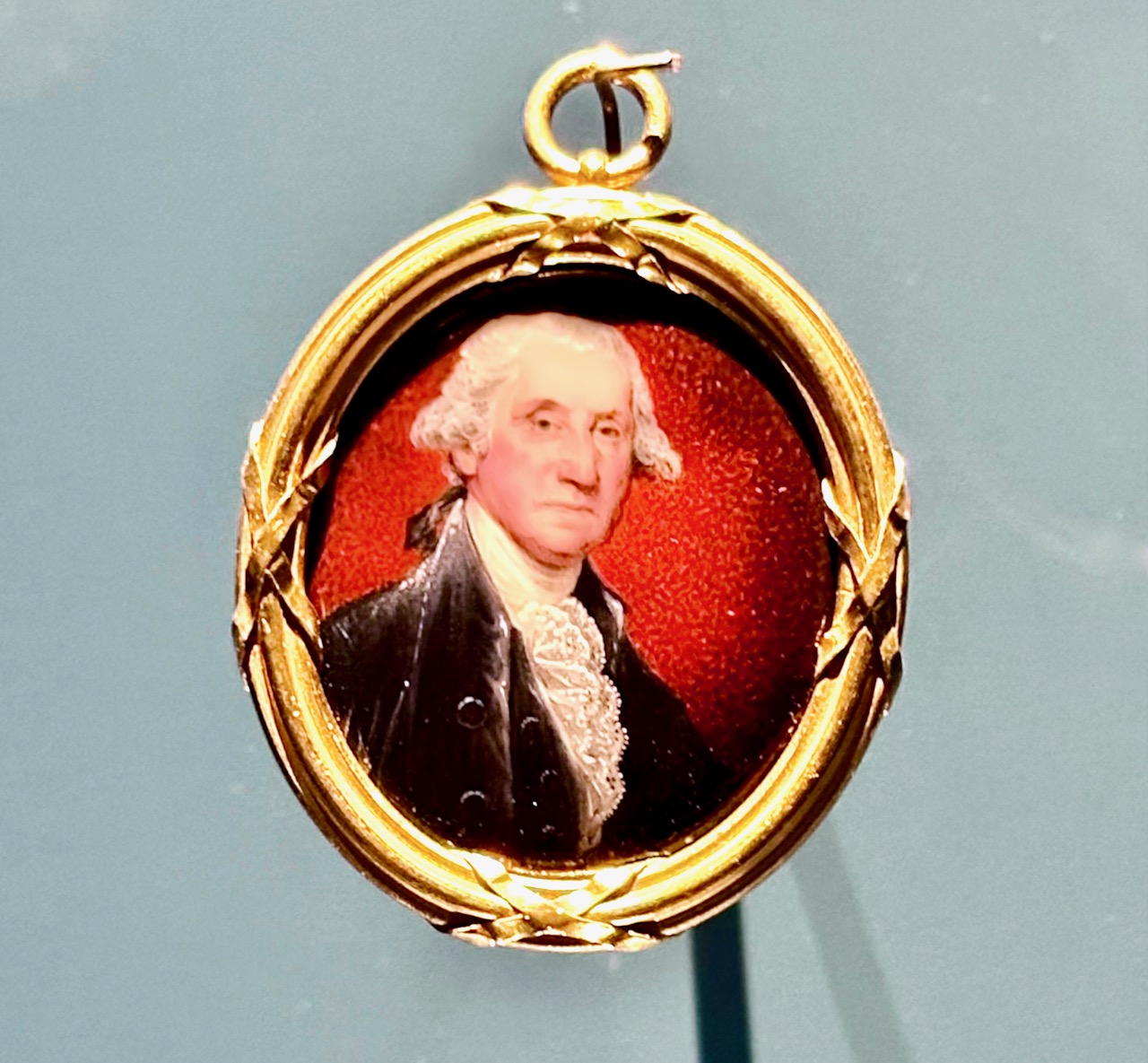
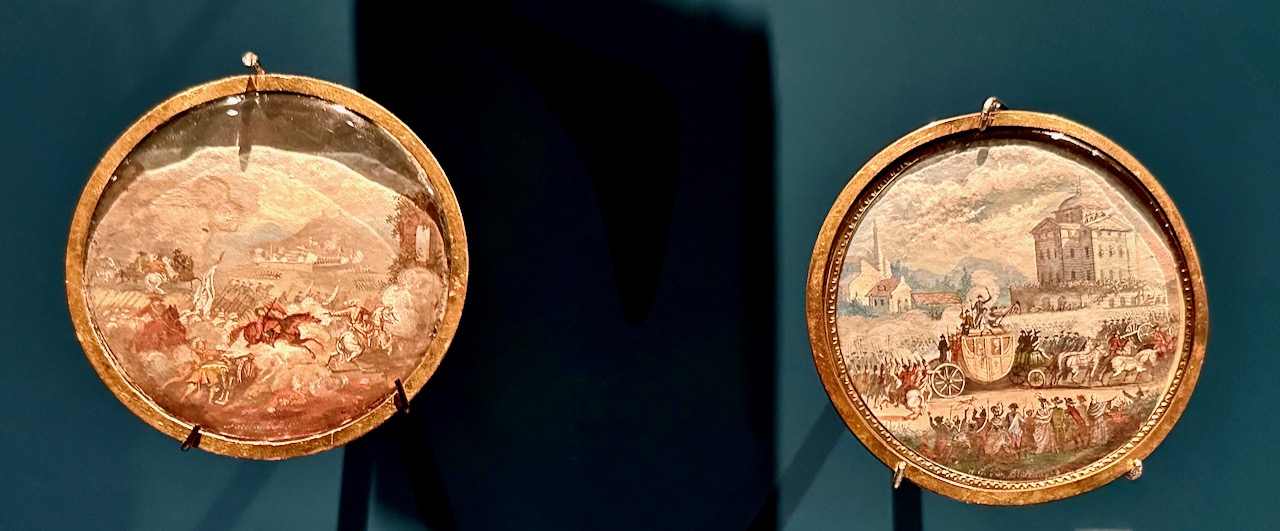
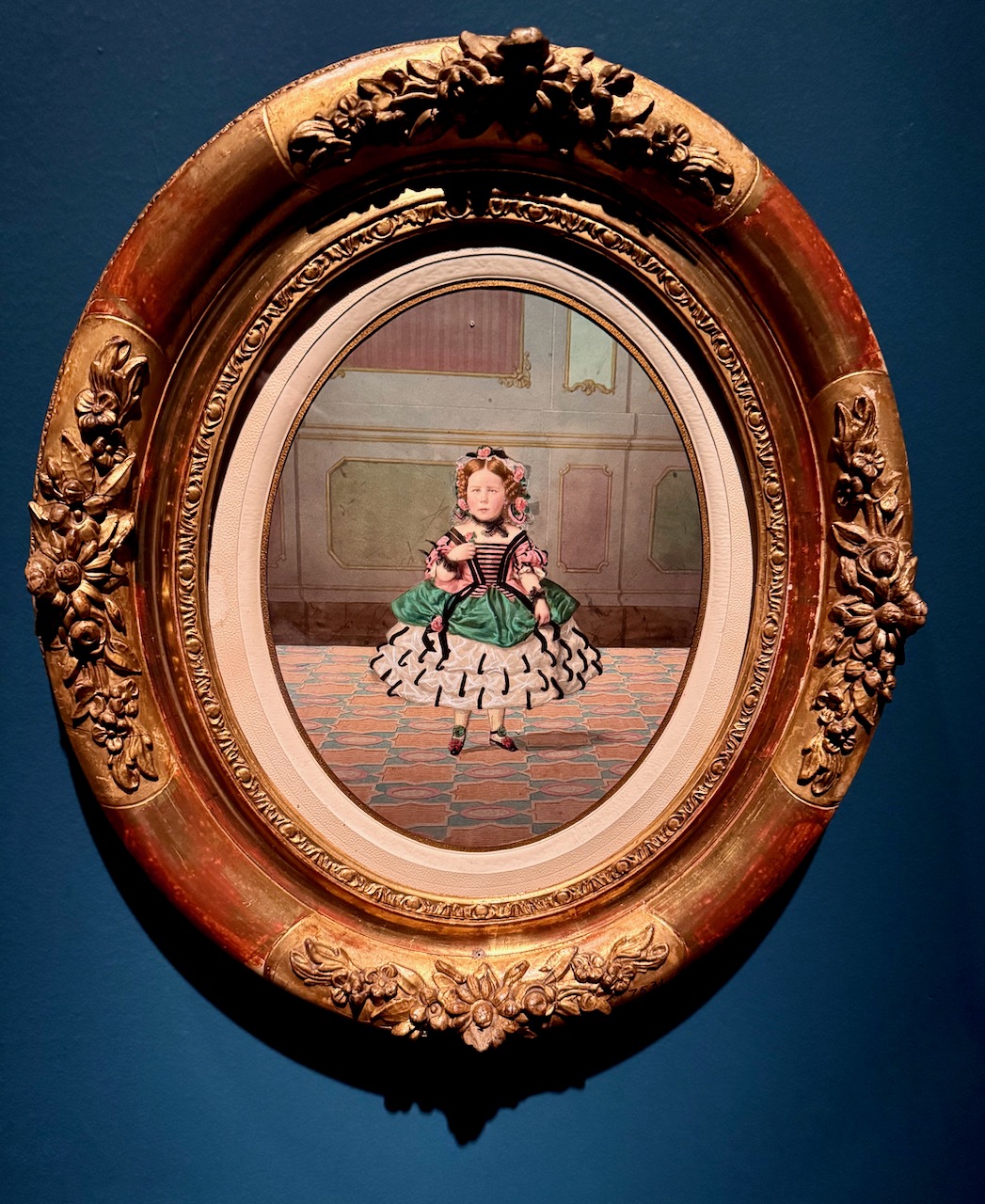
It’s too bad Kim (who paints) wasn’t here, because he would probably know more about Gouache on Vellum and Gouache on Paper techniques.
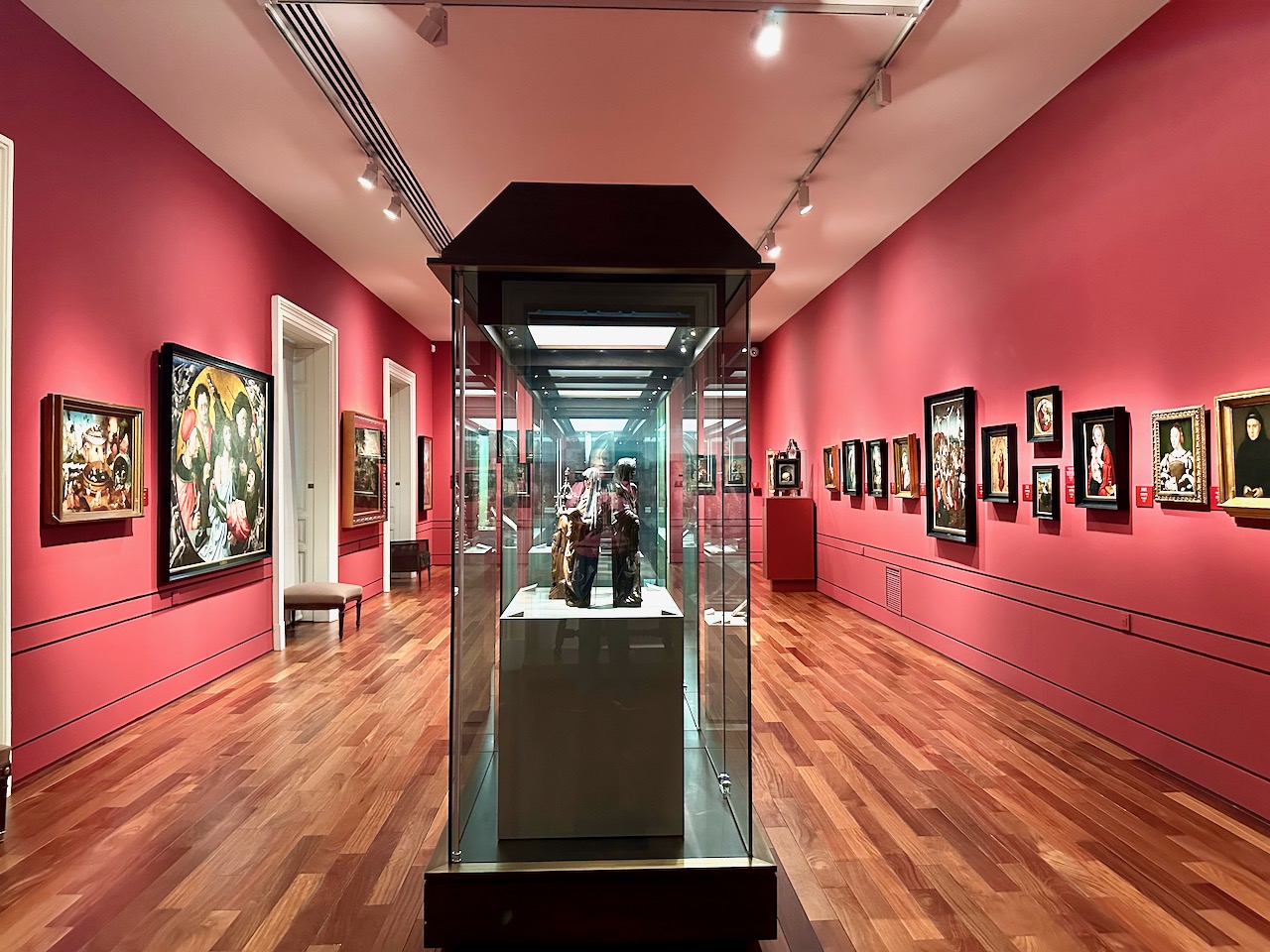
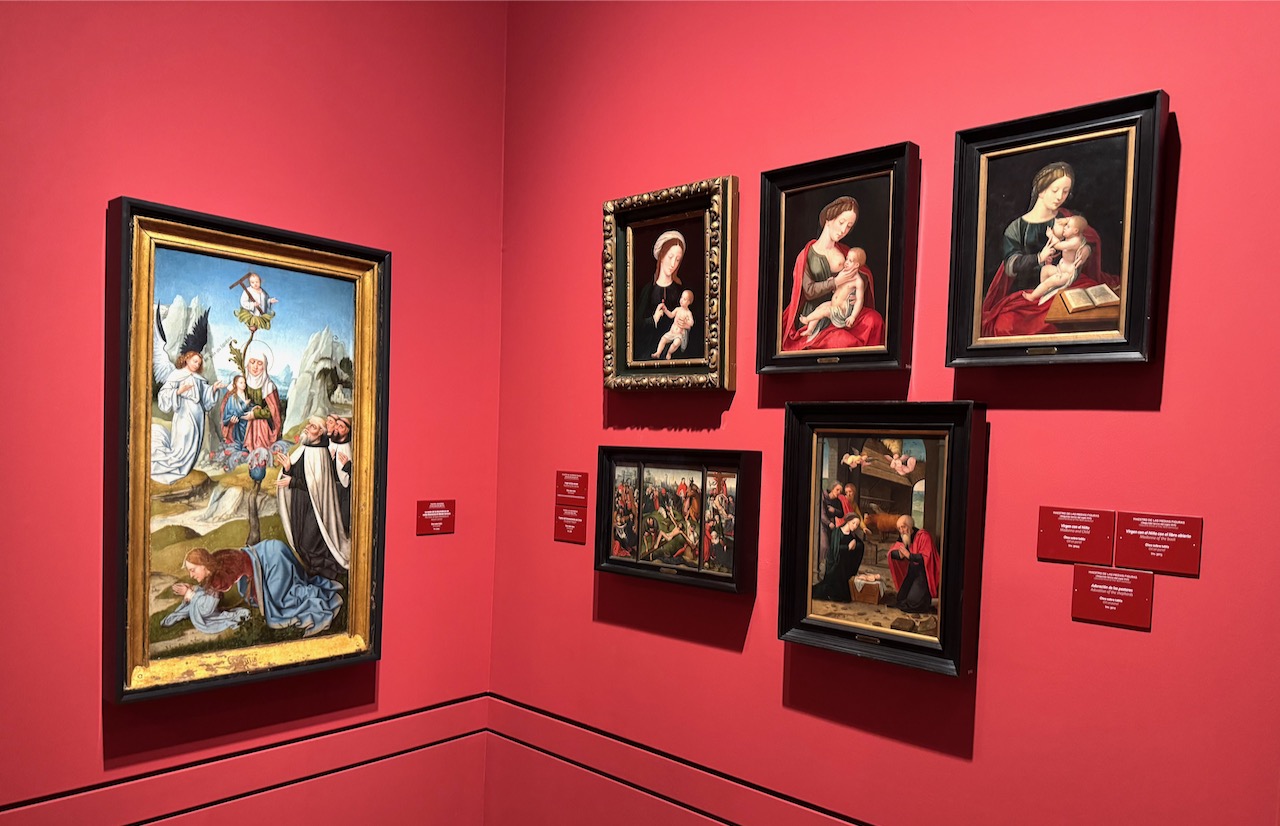
We next stepped into the room I had most looked forward to, the room containing paintings by my favorite, Hieronymus Bosch. And as you can see, we had this room all to ourselves, which gave us plenty of time to appreciate these masterpieces. In fact, we had virtually every room to ourselves.
Jan Brueghel started us off with The Animals Entering Noah’s Ark.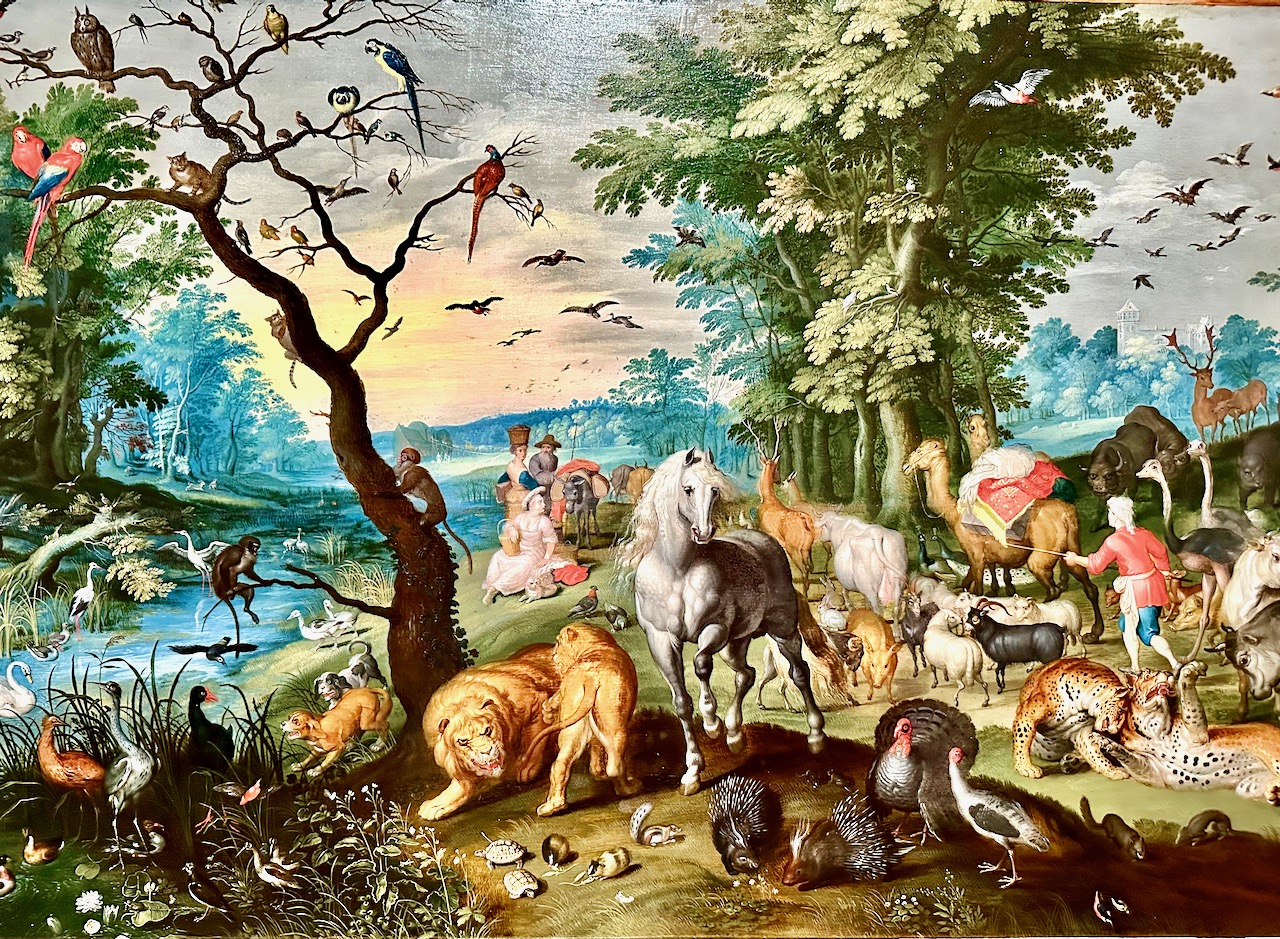
Then we spent some time with El Bosco. The first one we saw was his oil painting St. John the Baptist in the Wilderness.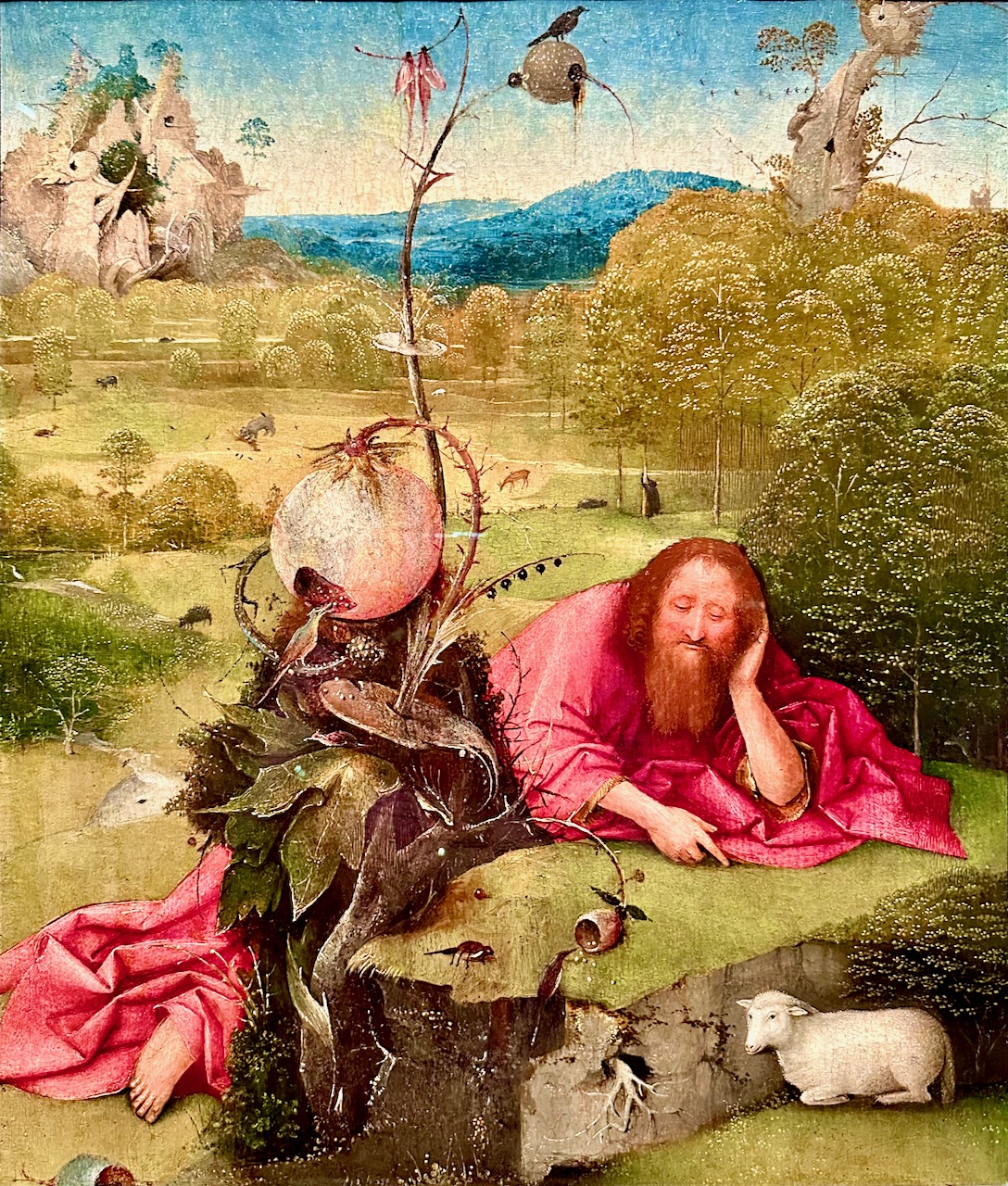
Bosch’s The View of Tondal, which “depicts the terrifying, miraculous journey of an Irish knight, Tondal, through hell, purgatory and heaven, guided by an angel, based on the popular medieval text Visio Tnugdali.” There is a lot to see in this painting, and thankfully with not a person in sight, we could spend a lot of time trying to decipher what Bosch was trying to create. Still working on it.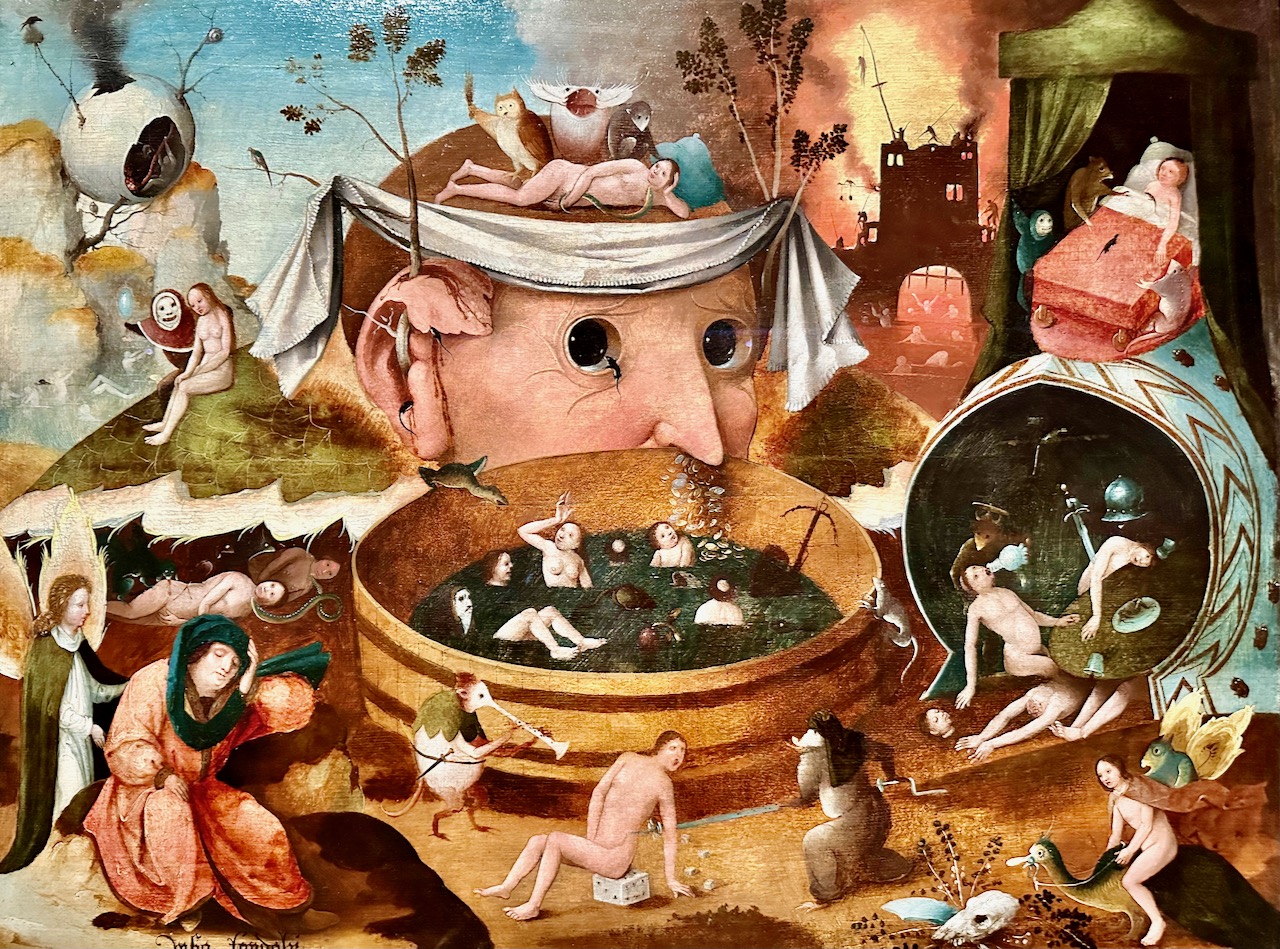
Finally, The Crowning with Thorns (aka Christ Mocked) is either a Bosch original or painted by one of his followers.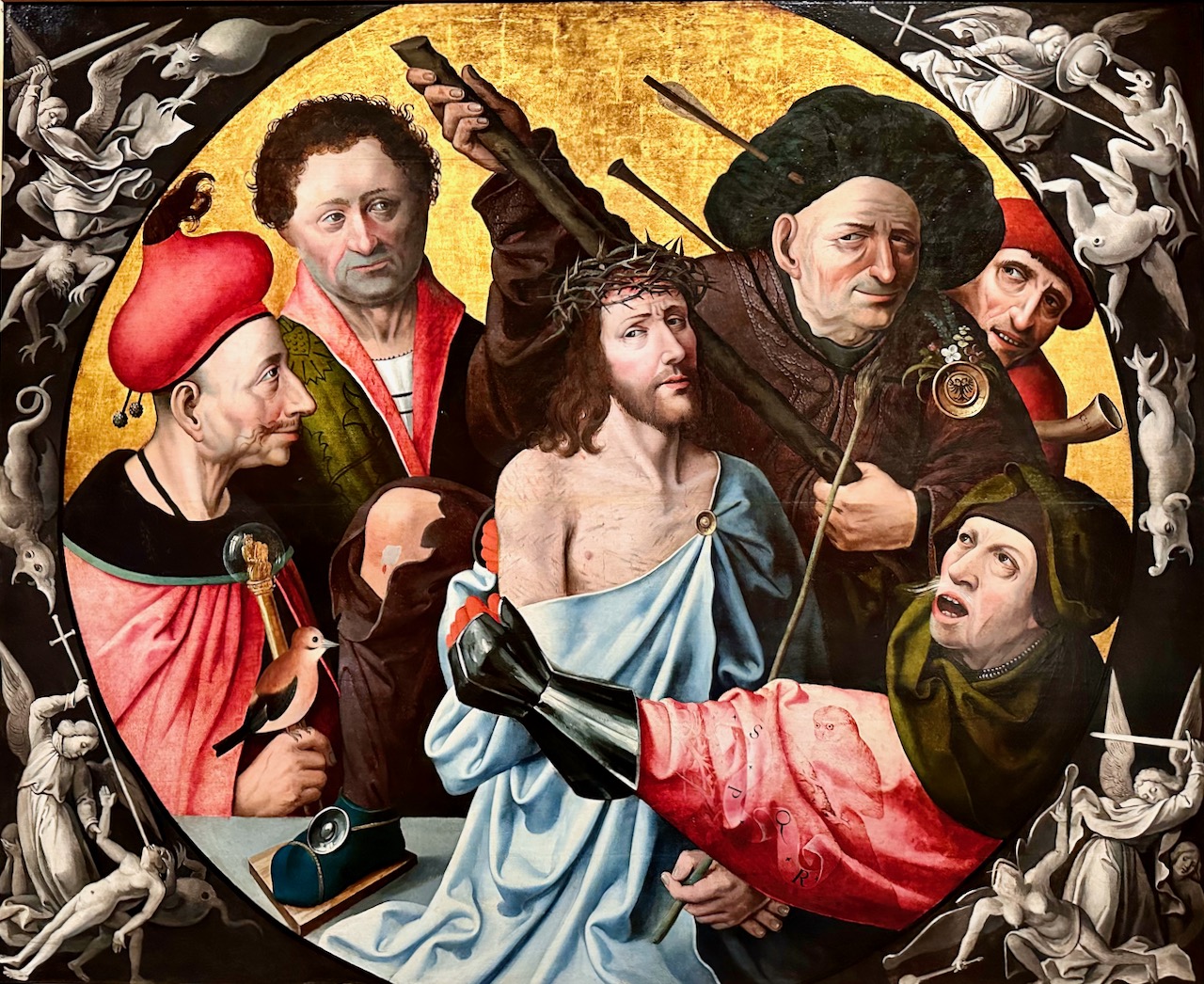
Although it looked like one of those portable alters we had seen earlier in the trip, I believe this is called an Art Cabinet, because these were popular in mid 17th-century Antwerp.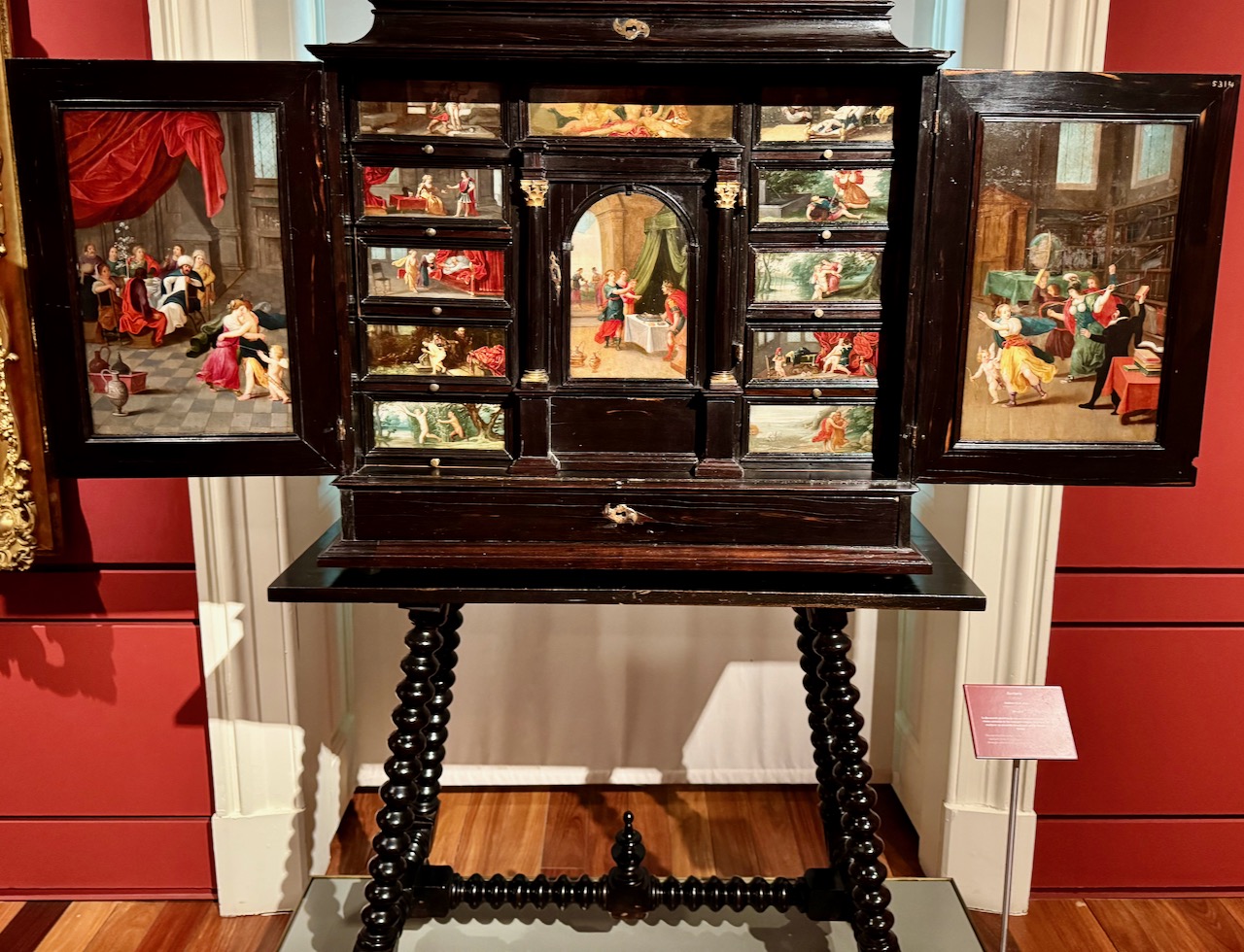
We read the ceiling in what was the family sitting room is “an illusion to the Lázaro family,” with their mansion in the background.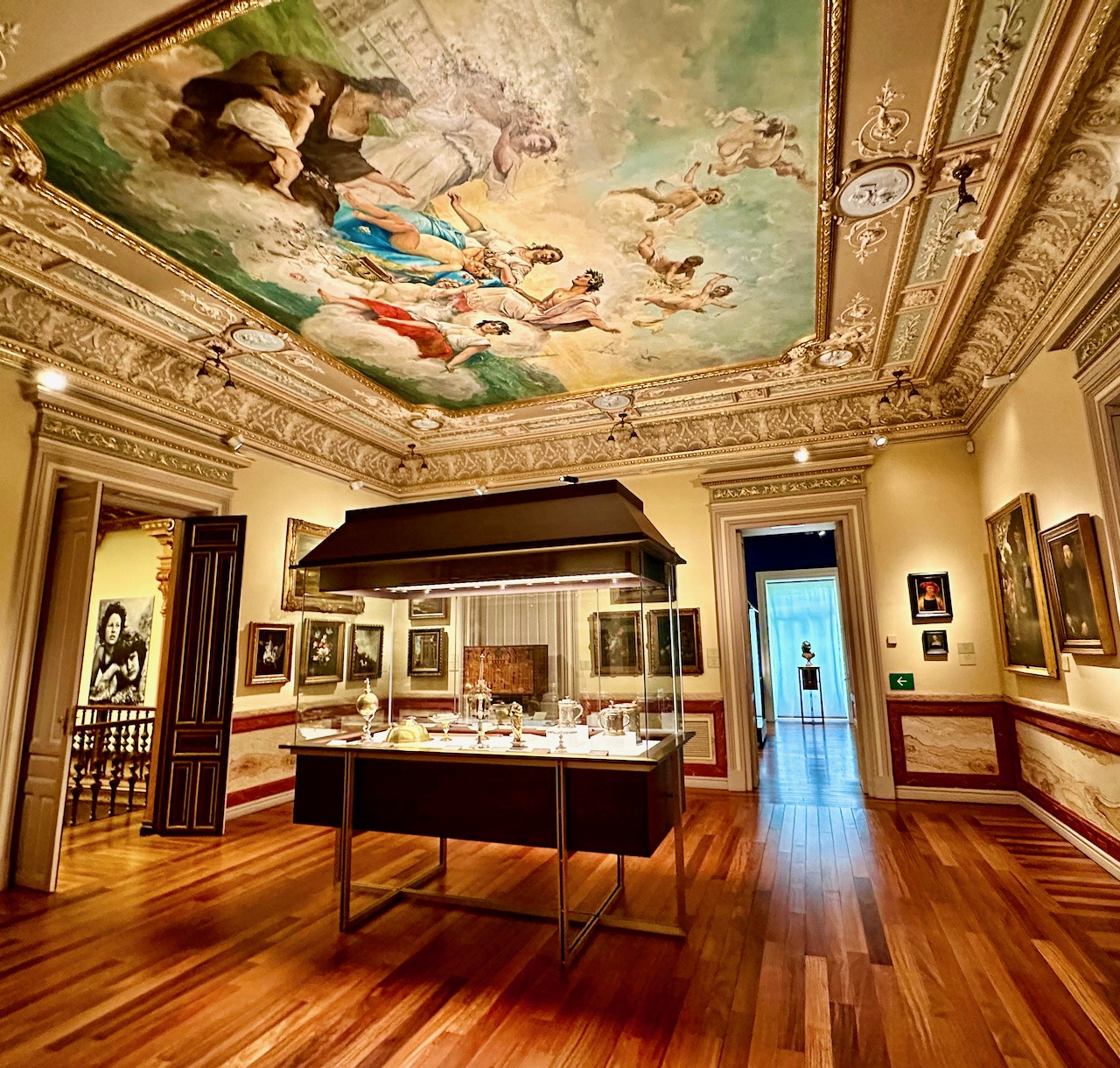
Another of our favorite artists, Lucas Cranach, created the 15th-century Christ Child Triumphant Over Death and Sin. Lázaro’s collection included art from the 14th to early 20th centuries.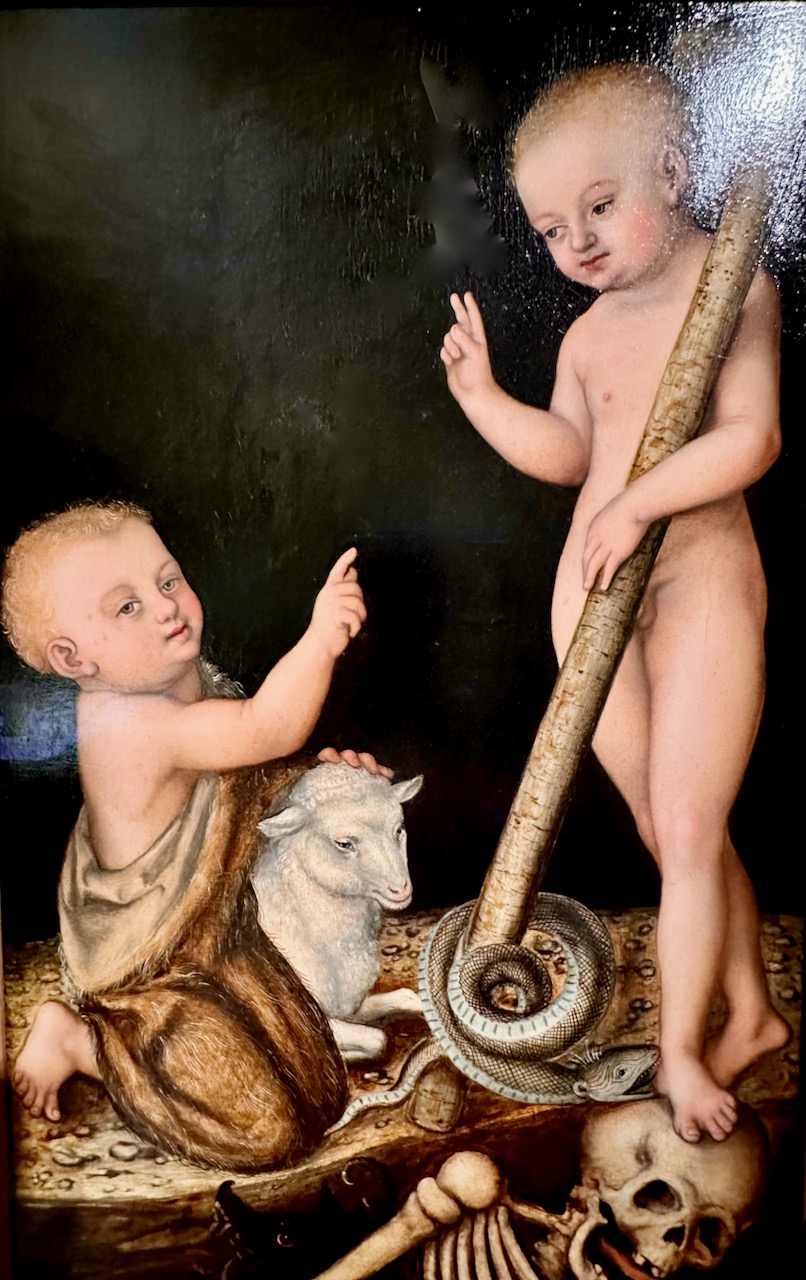
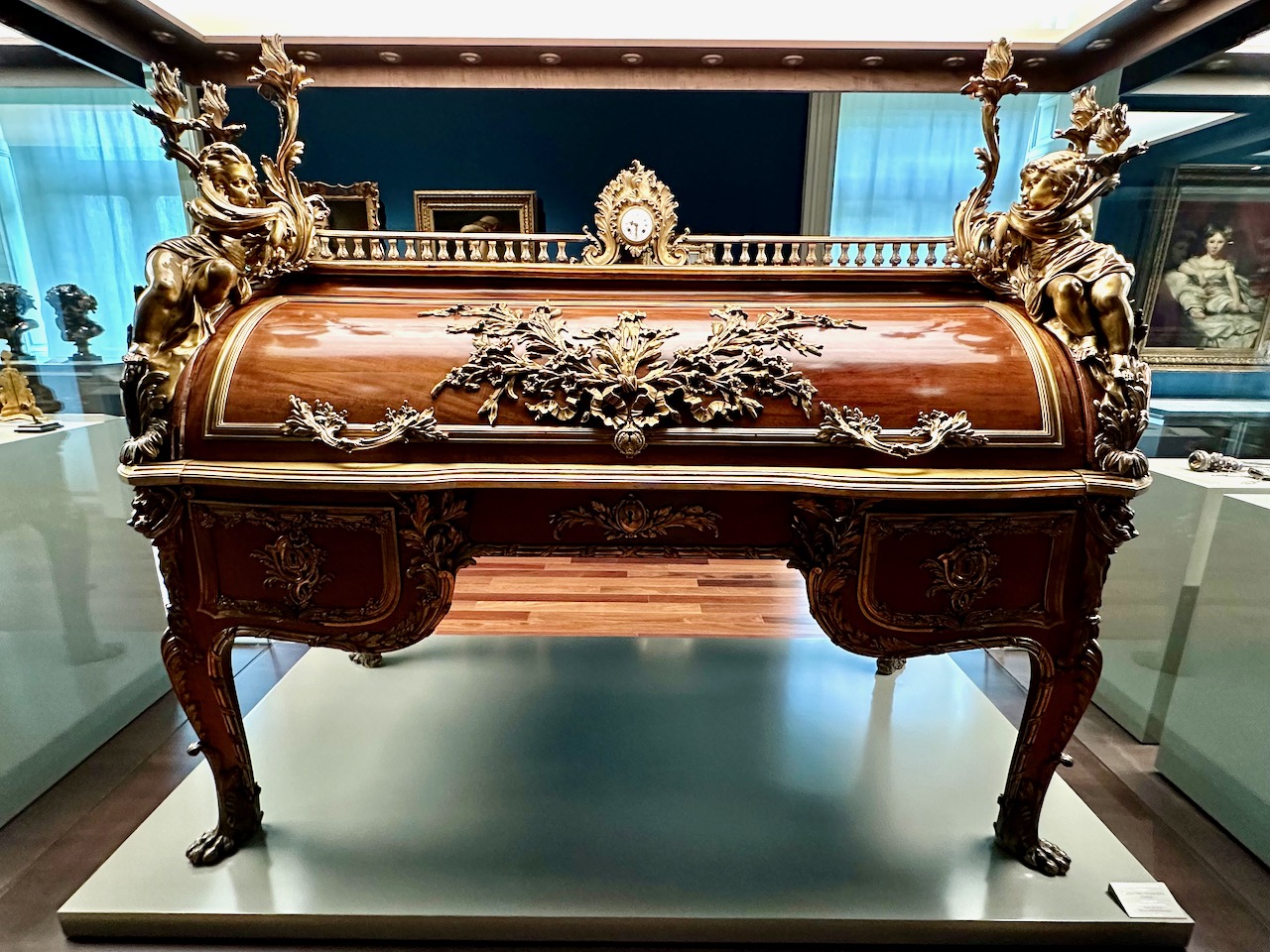
It included furniture like this French Cylinder Desk from the 19th century.
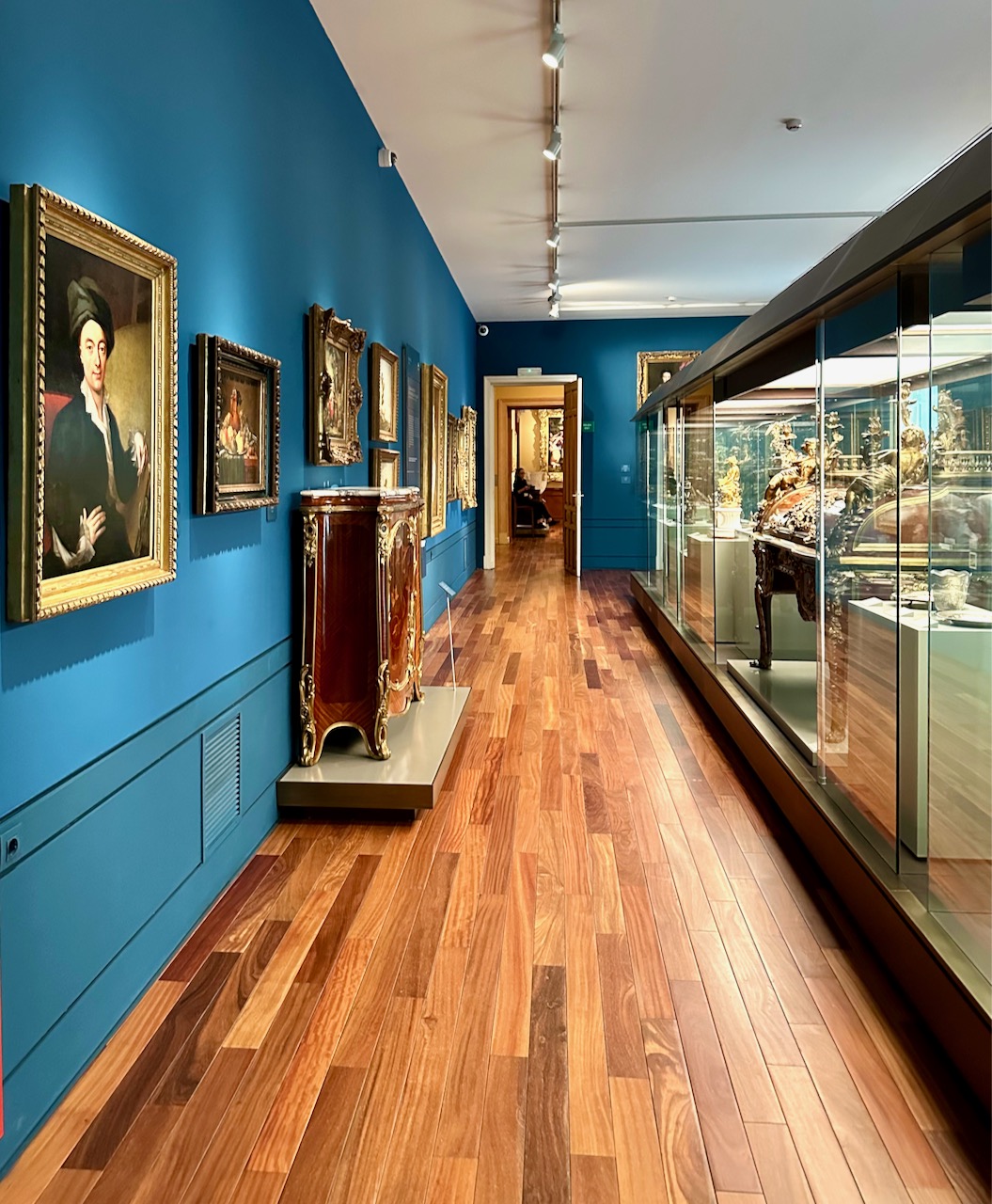
We stomped over to Allegory of the Wine Harvest.
The ceiling Exaltation of Literature and Wisdom in Lázaro’s office-library was painted between 1906 and 1908.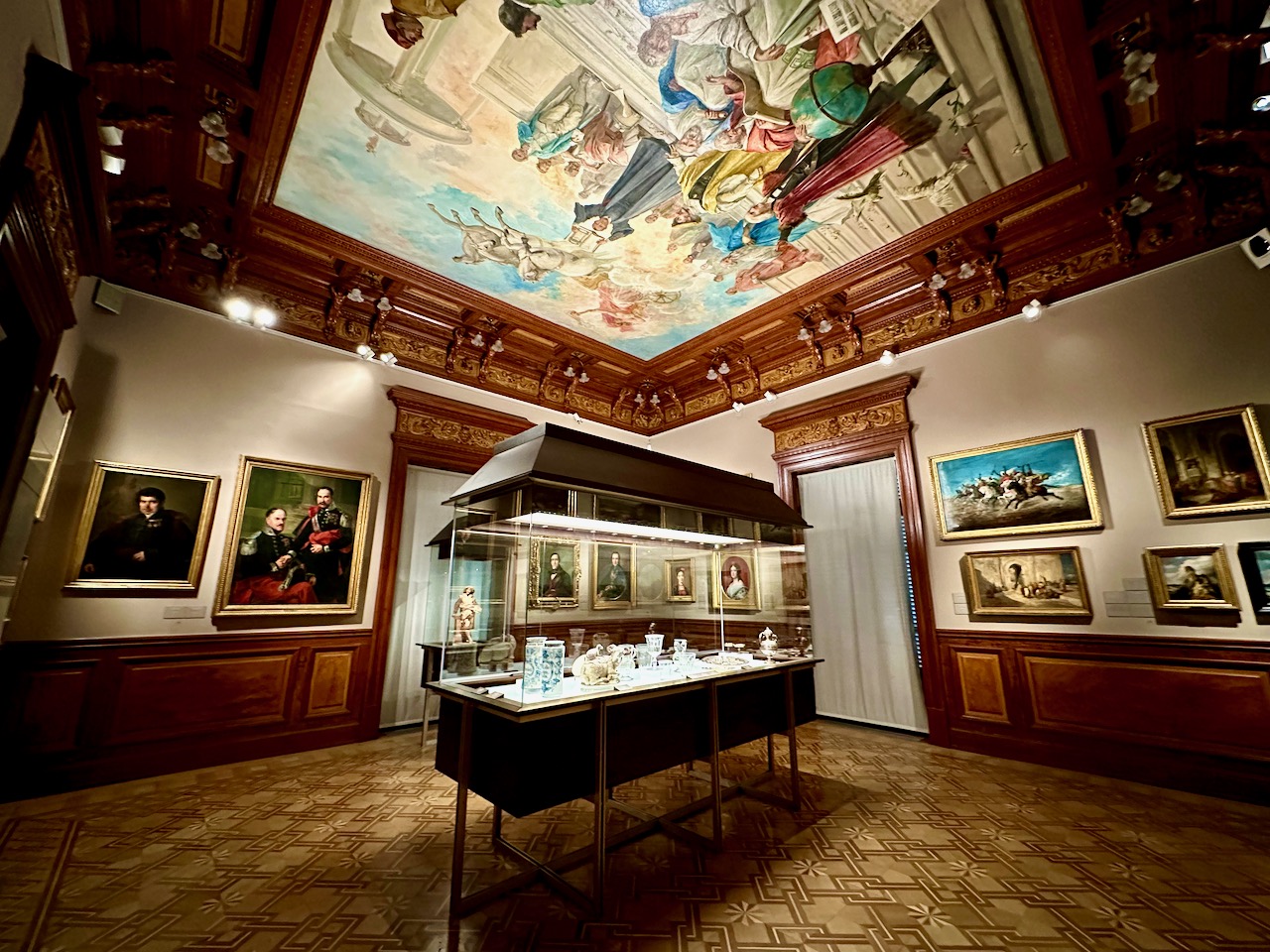
Vibrant colors from paintings to ceilings highlight each room.

Now it was time to check out two of Goya’s most famous paintings, The Witches and The Witches Sabbath (The Great He-Goat). Satan (Goat) is surrounded by witches and is said to be a protest against those who supported witch-hunting during the Spanish Inquisition.


We were not nearly done and more than an hour into our self-guided tour, we still had not encountered very many people.
If you’d like to visit a fantastic house museum less-traveled, you can’t do better than this.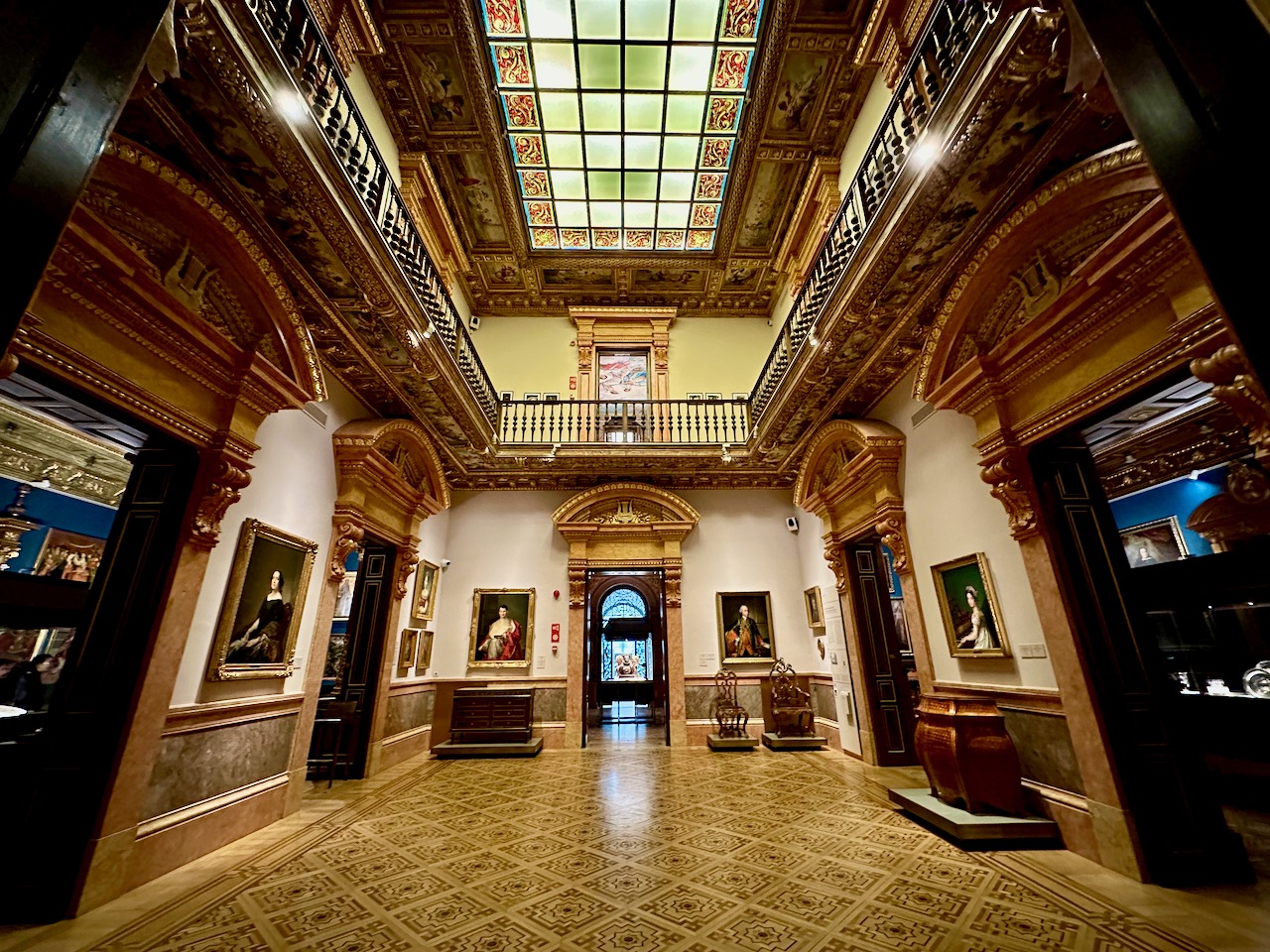
We focused on these two paintings as we walked.
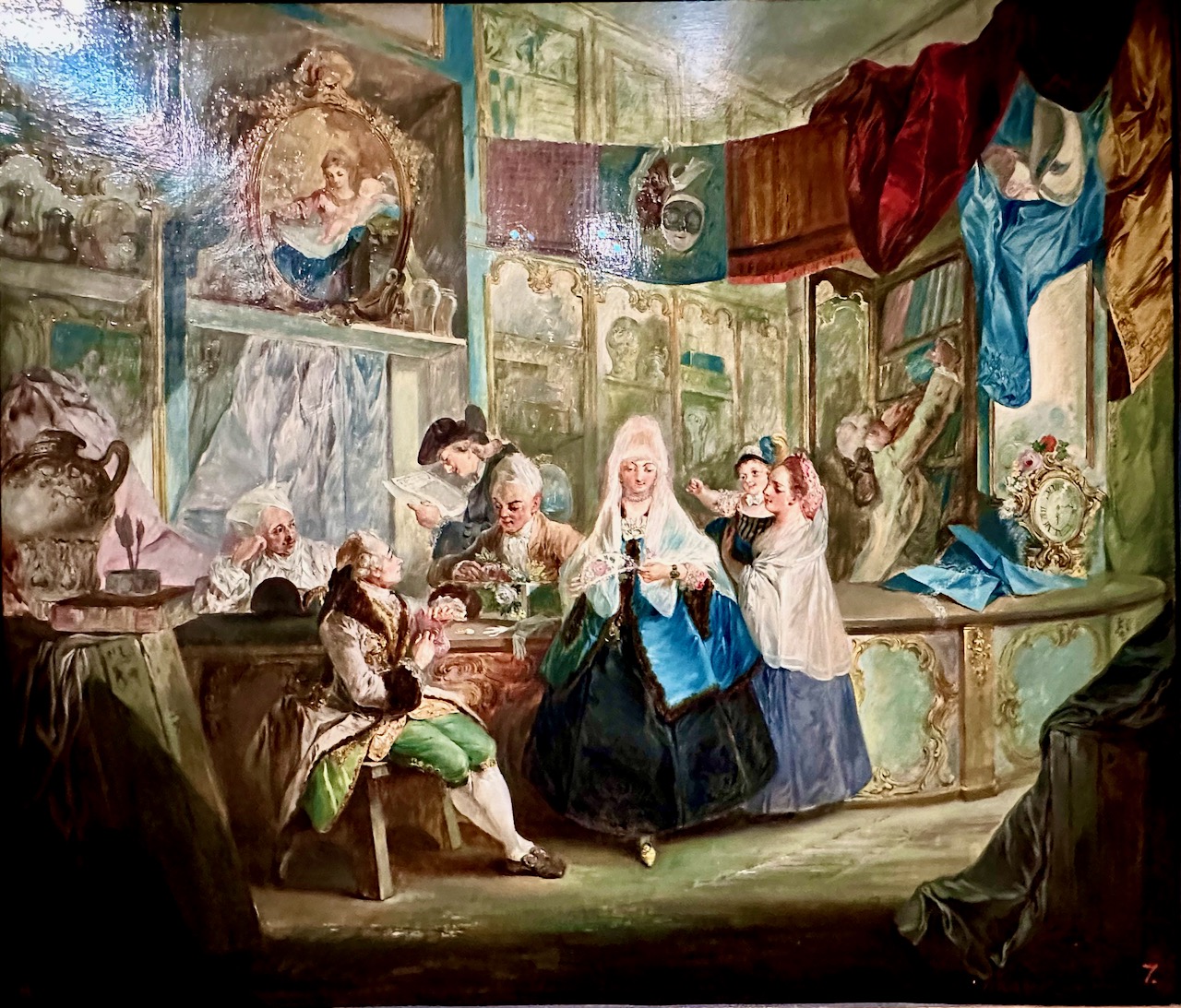
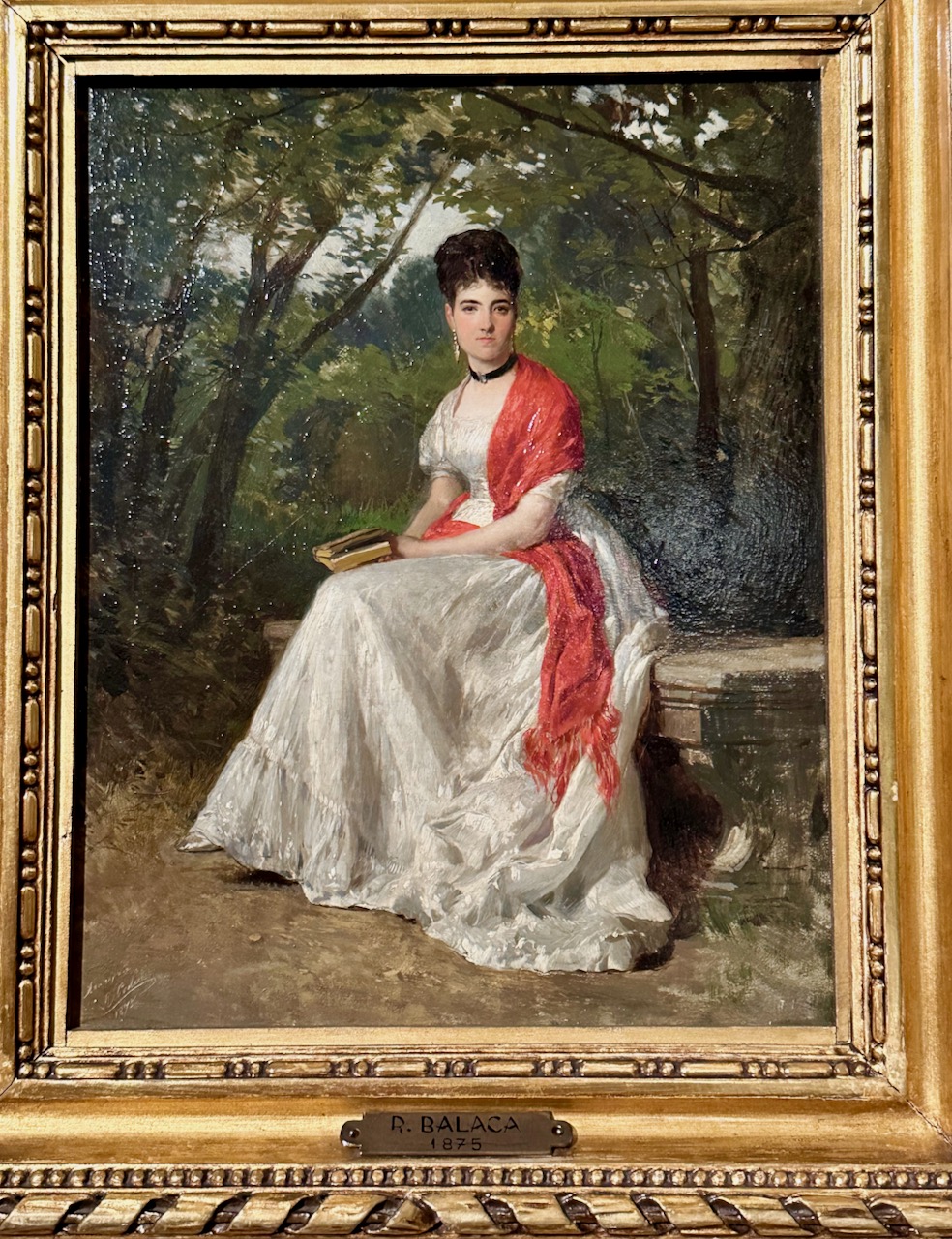
It was time to see El Greco …

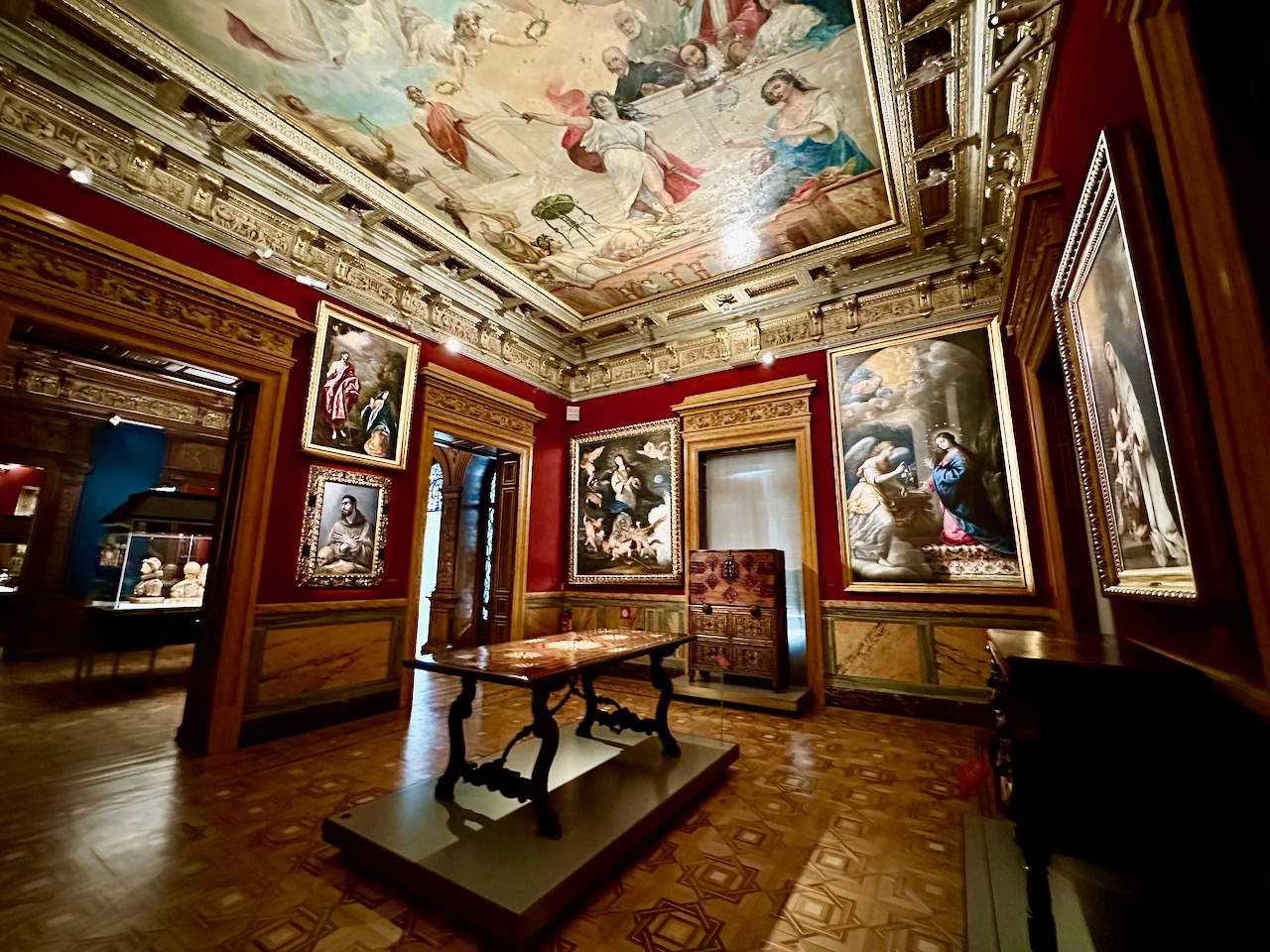
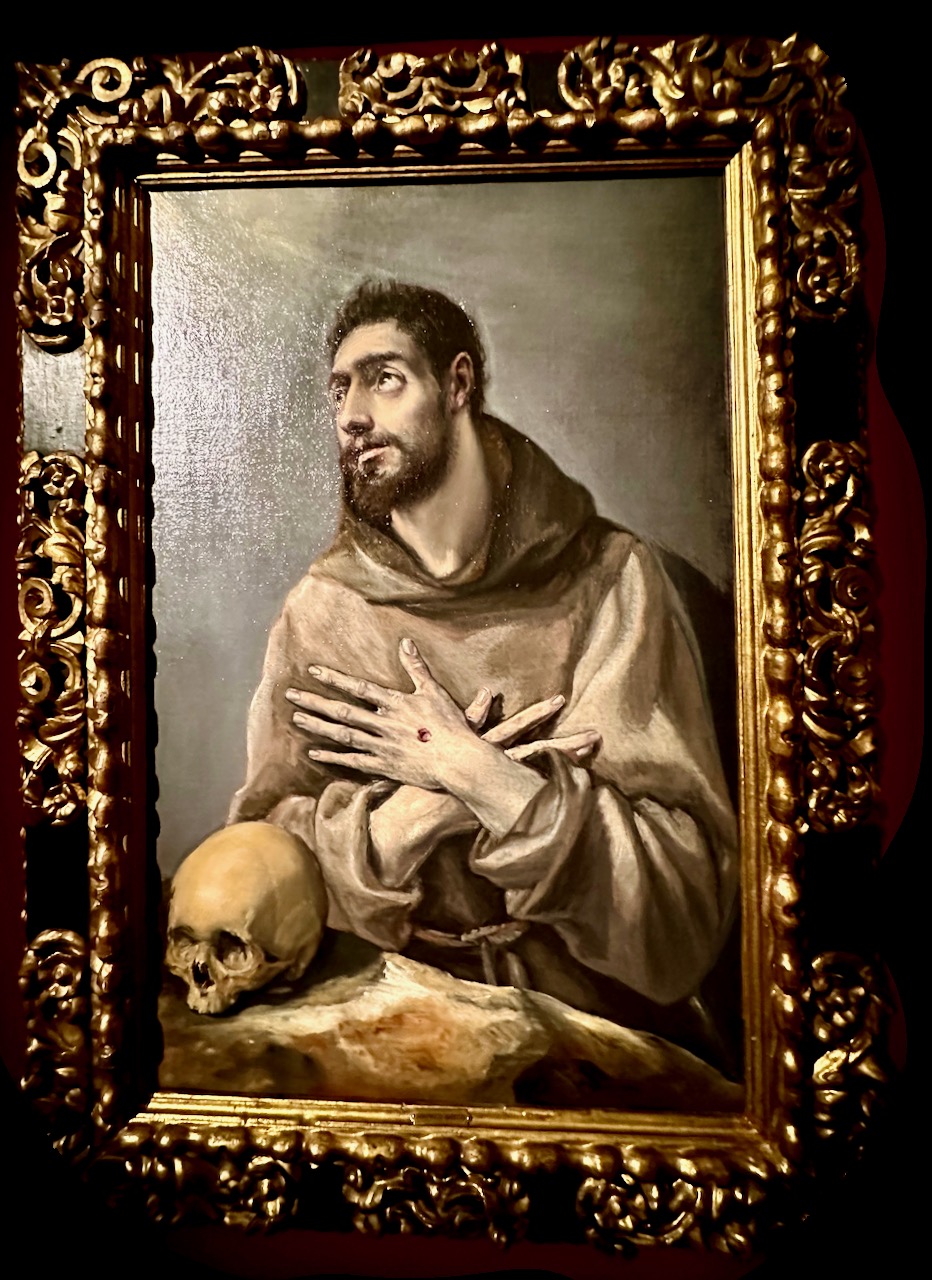
… and his painting of St. Francis of Assisi.
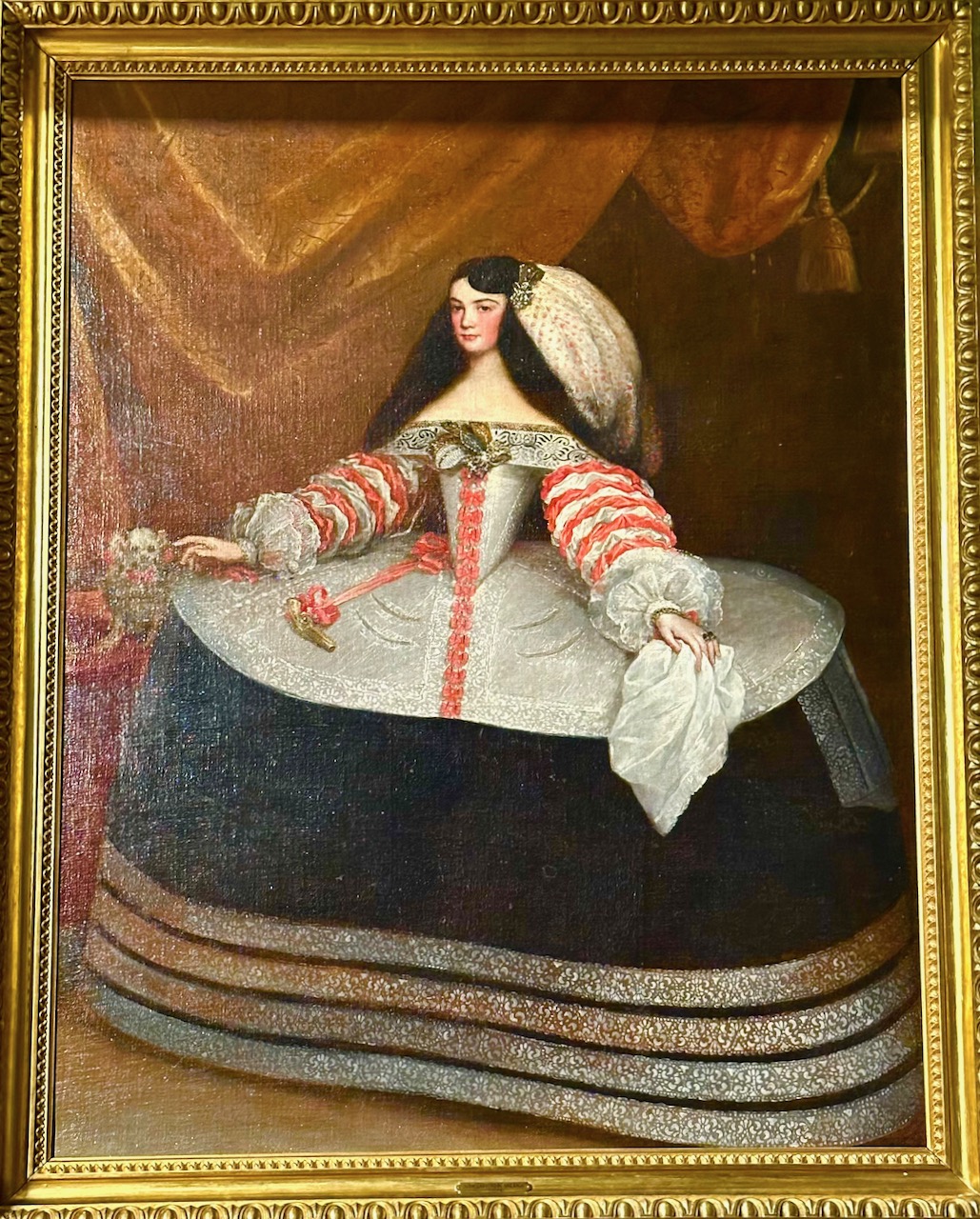
Tracy’s favorite painting was in this room, Inés de Zúñiga, Countess of Monterrey, by Juan Carreño de Miranda. If you click to enlarge you’ll see she appears to have a gun hanging from that pink ribbon, but according to Google Arts and Culture, it’s a “curious toilet bag shaped as a pistol.”
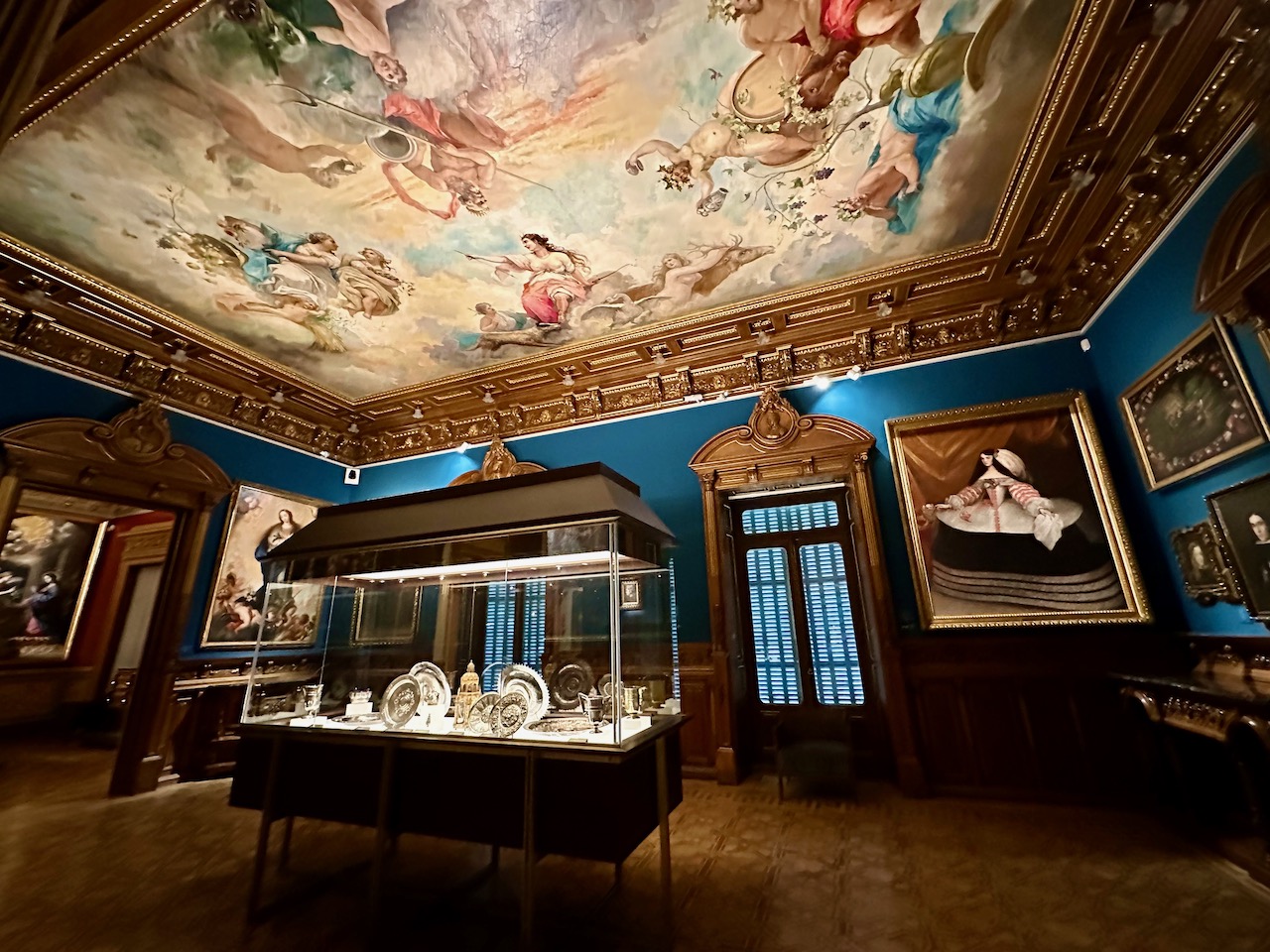
Each room tried to outdo the previous one.
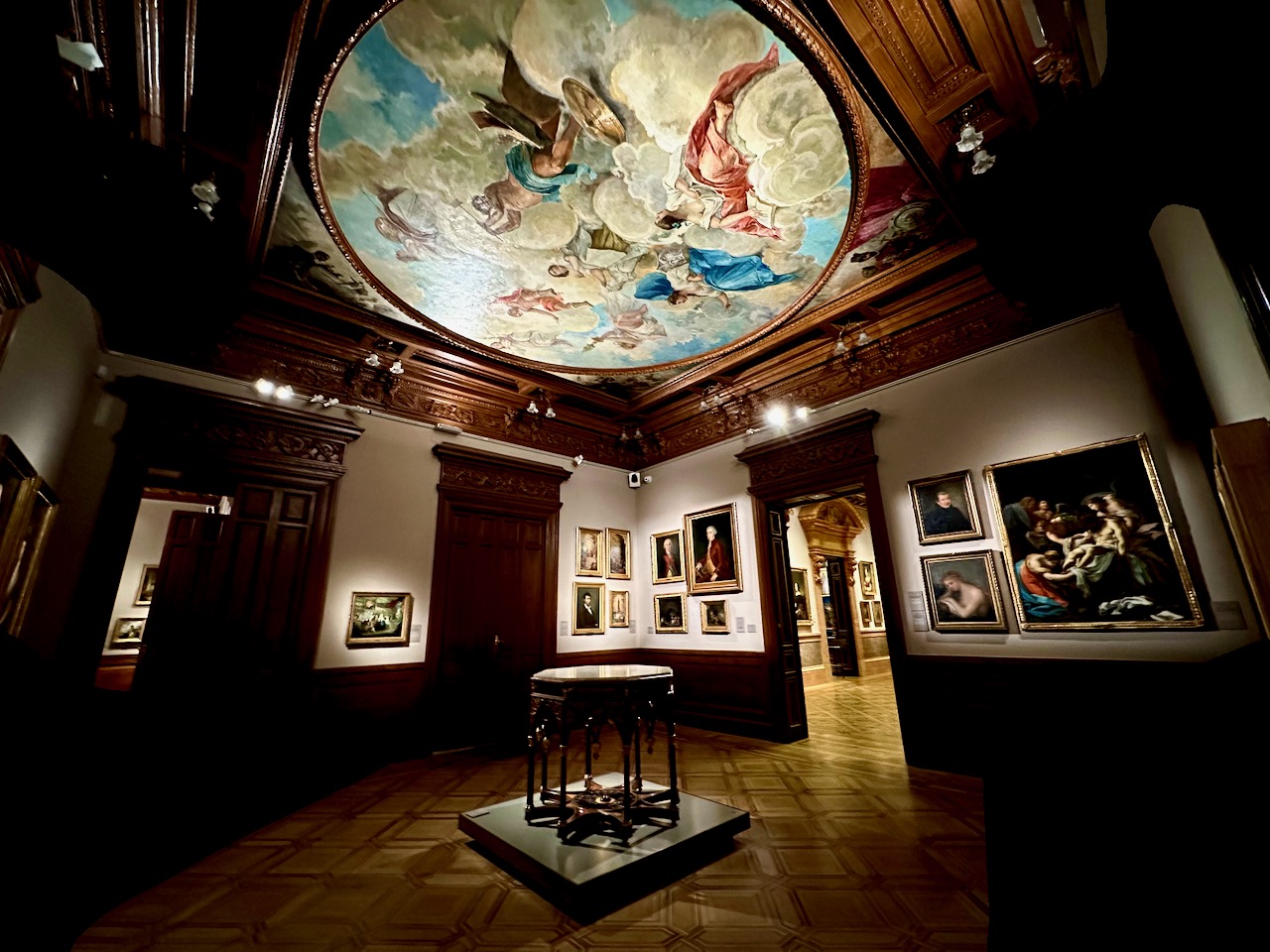
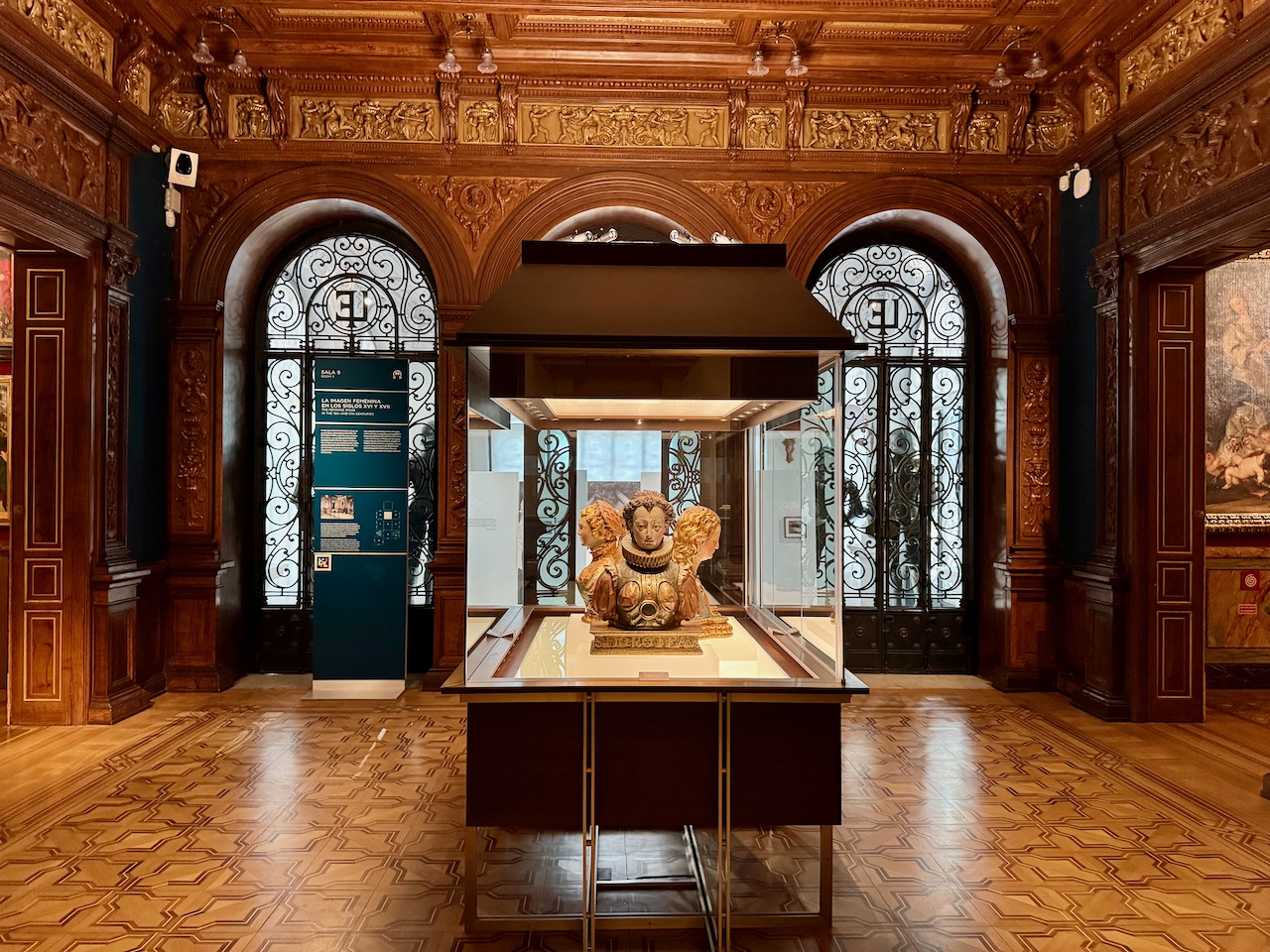
This room would have looked better if some idiot (that would be me) hadn’t stepped into Tracy’s photo.
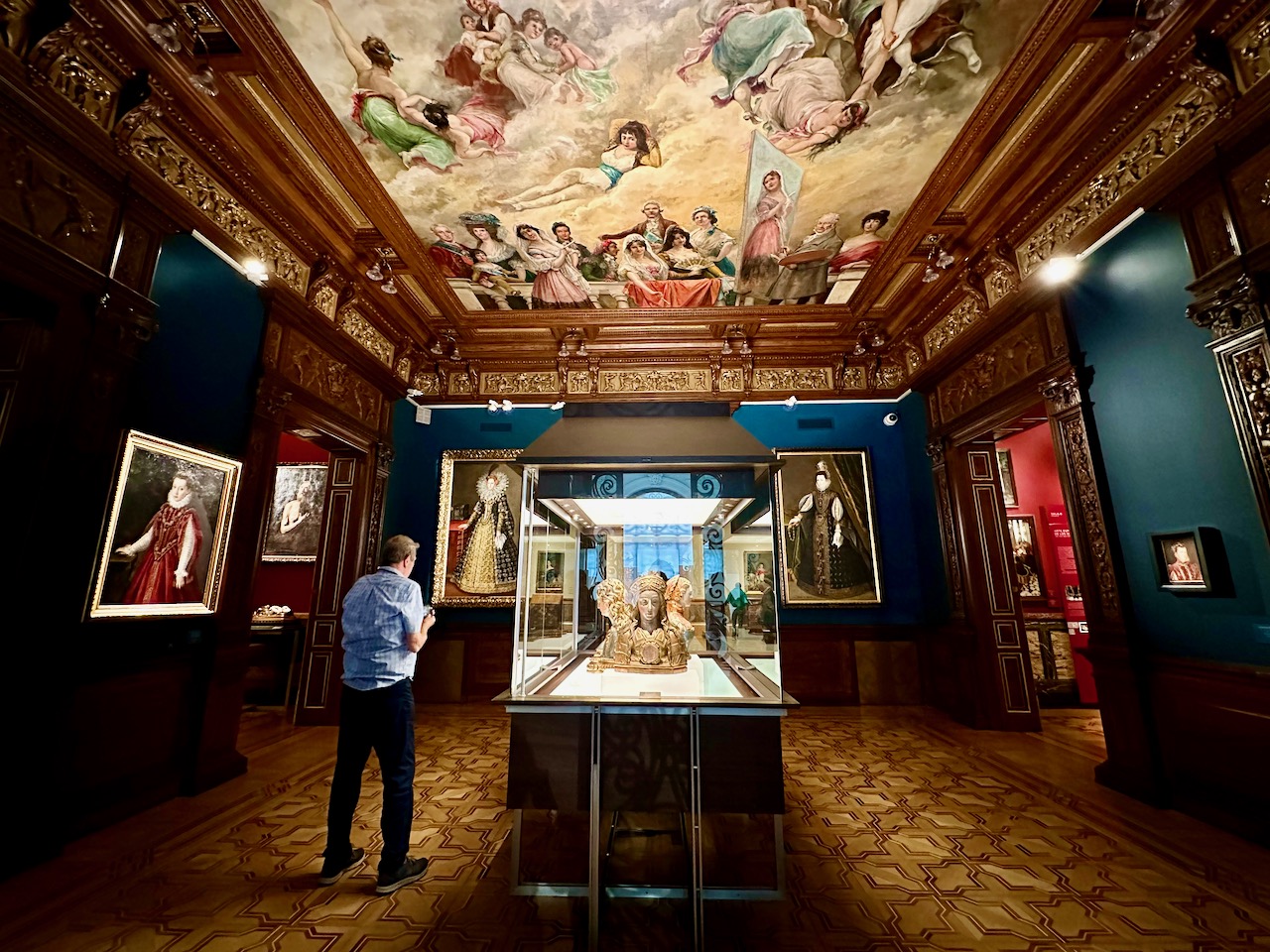
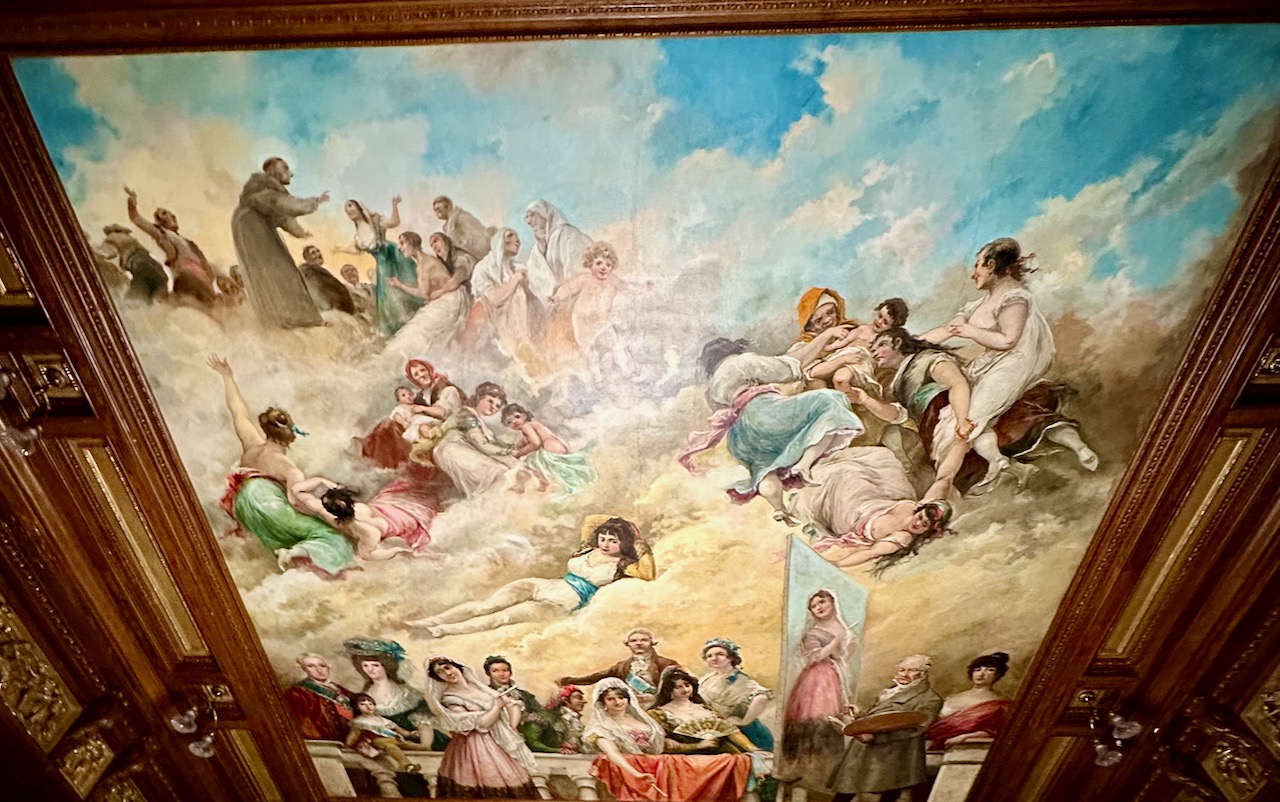
St. Michael was well represented throughout.
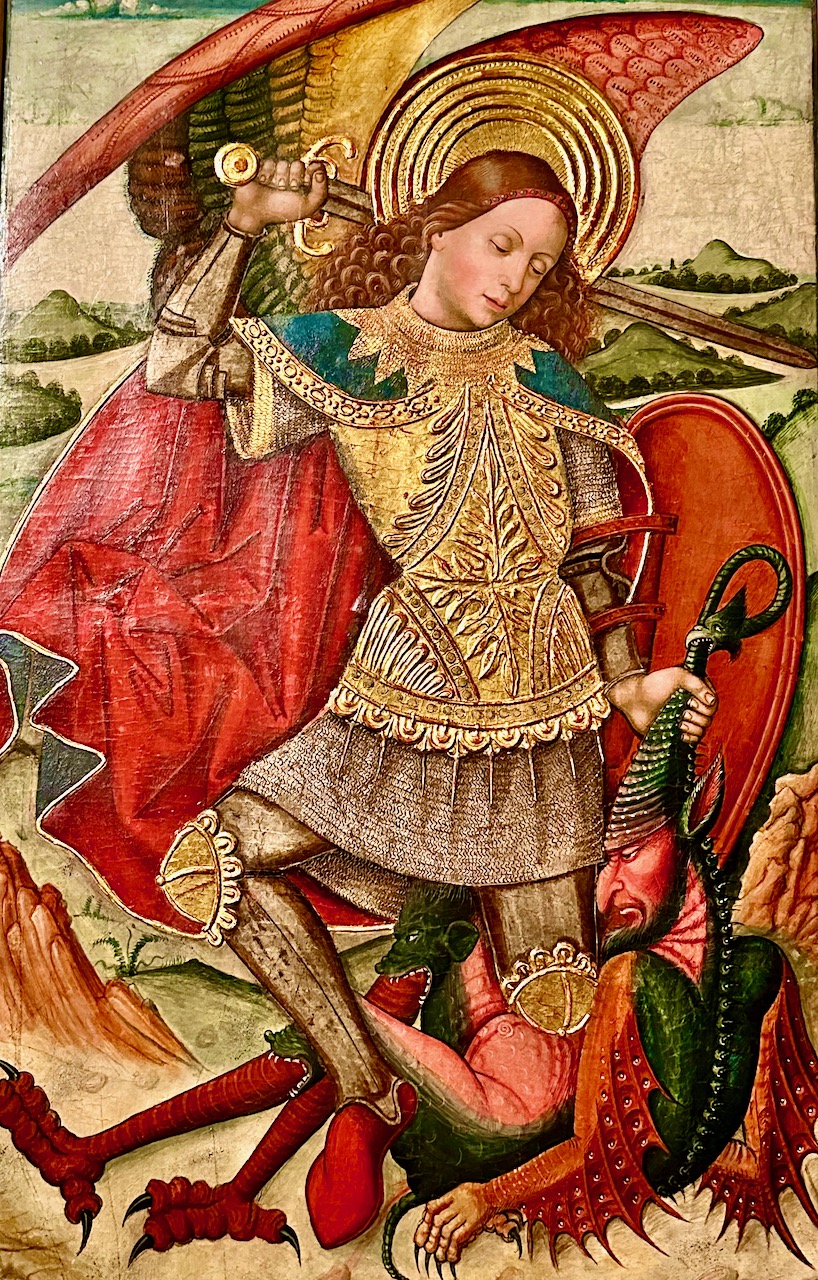
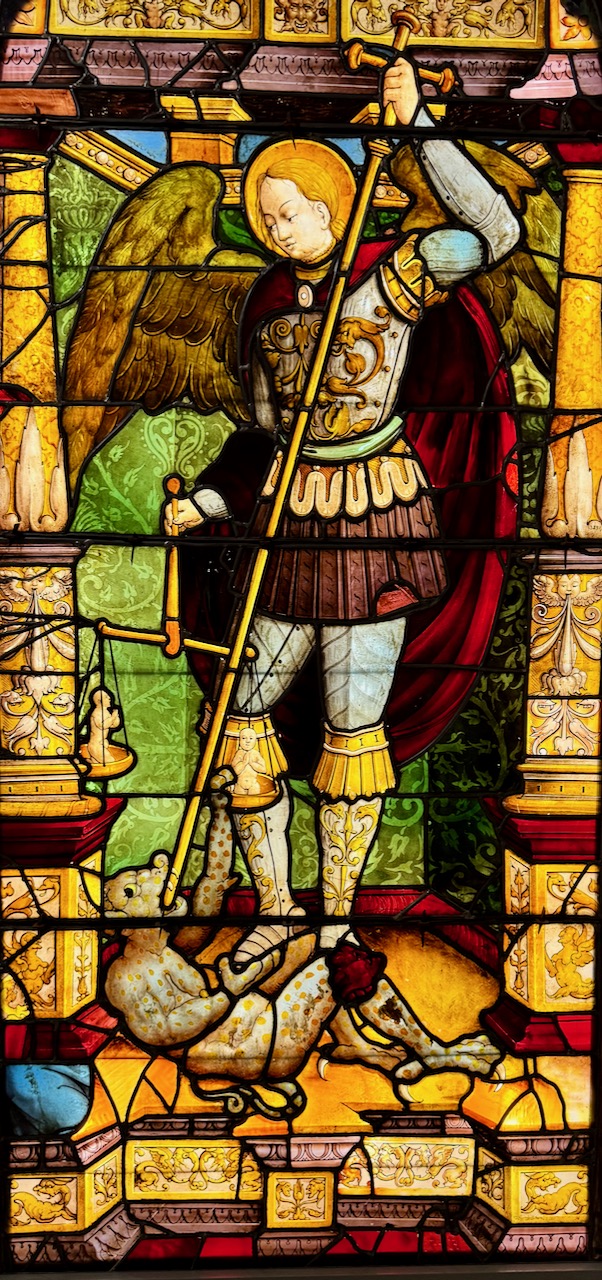
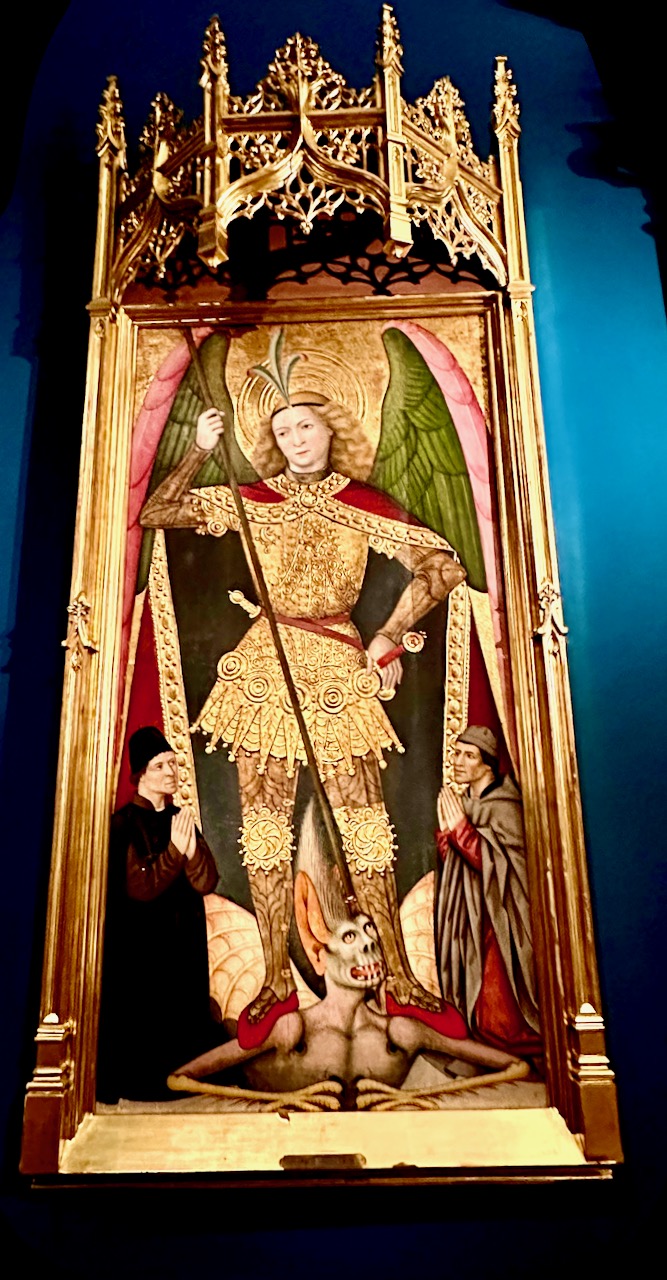
This guy didn’t have a devil of a chance.
The vivid colors of the paintings along with the richness of the colors of the walls really made everything pop.
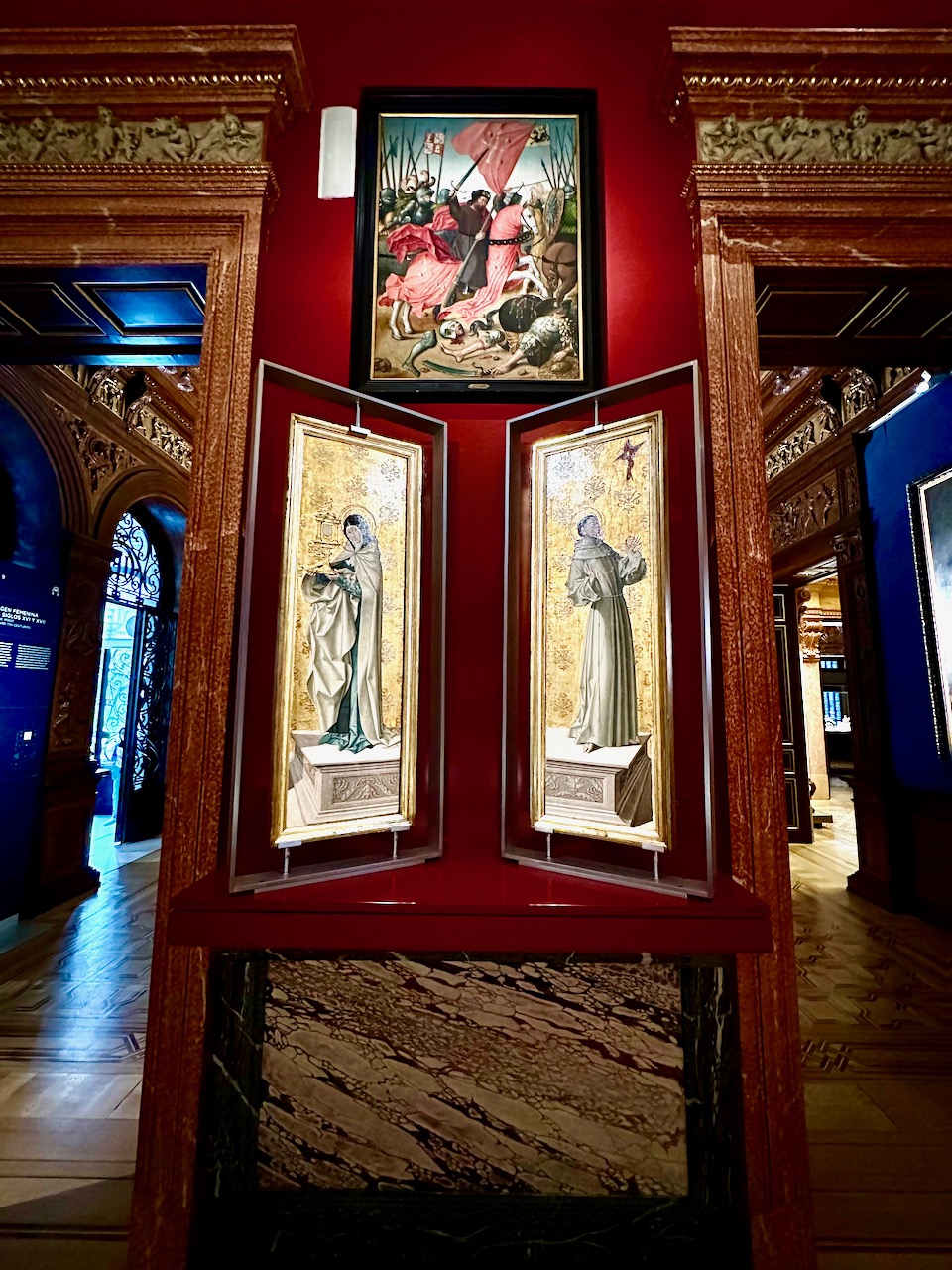
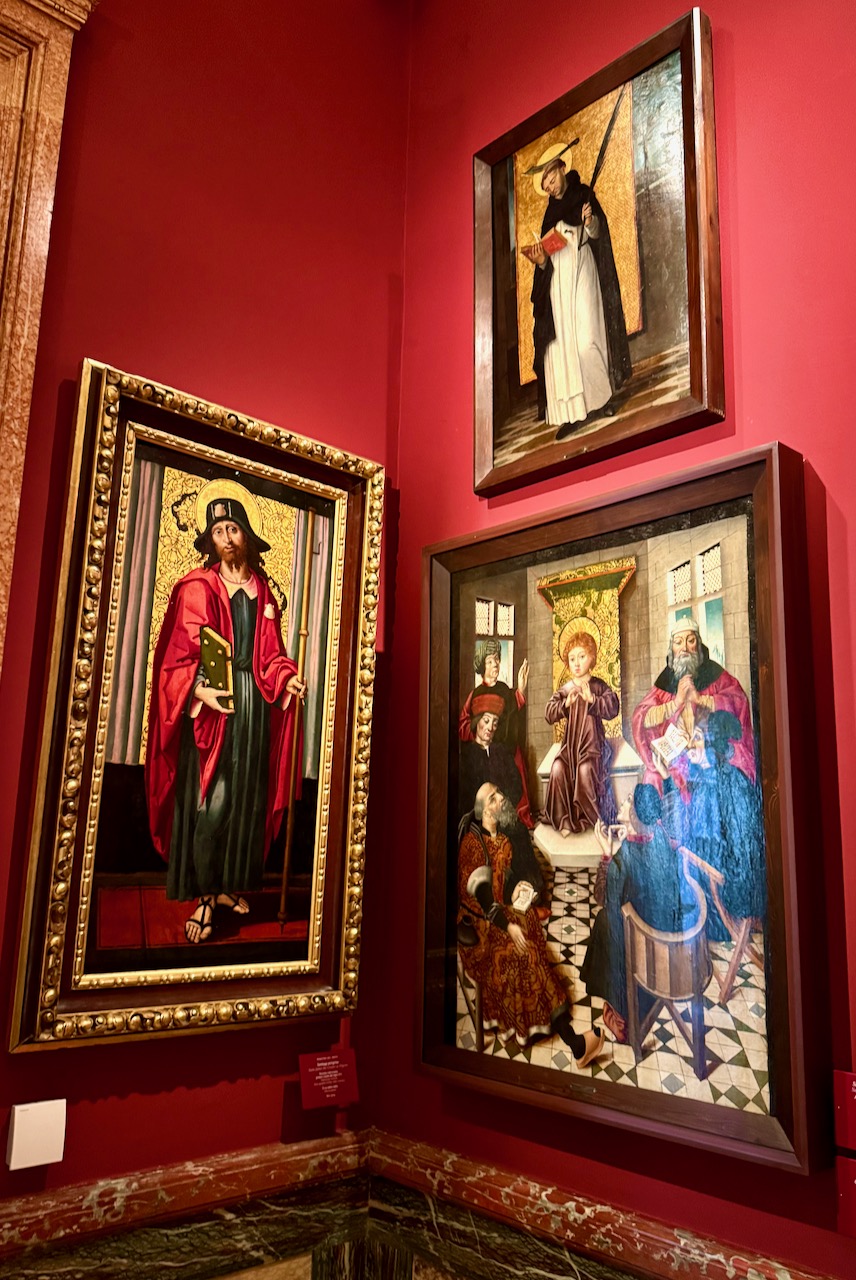
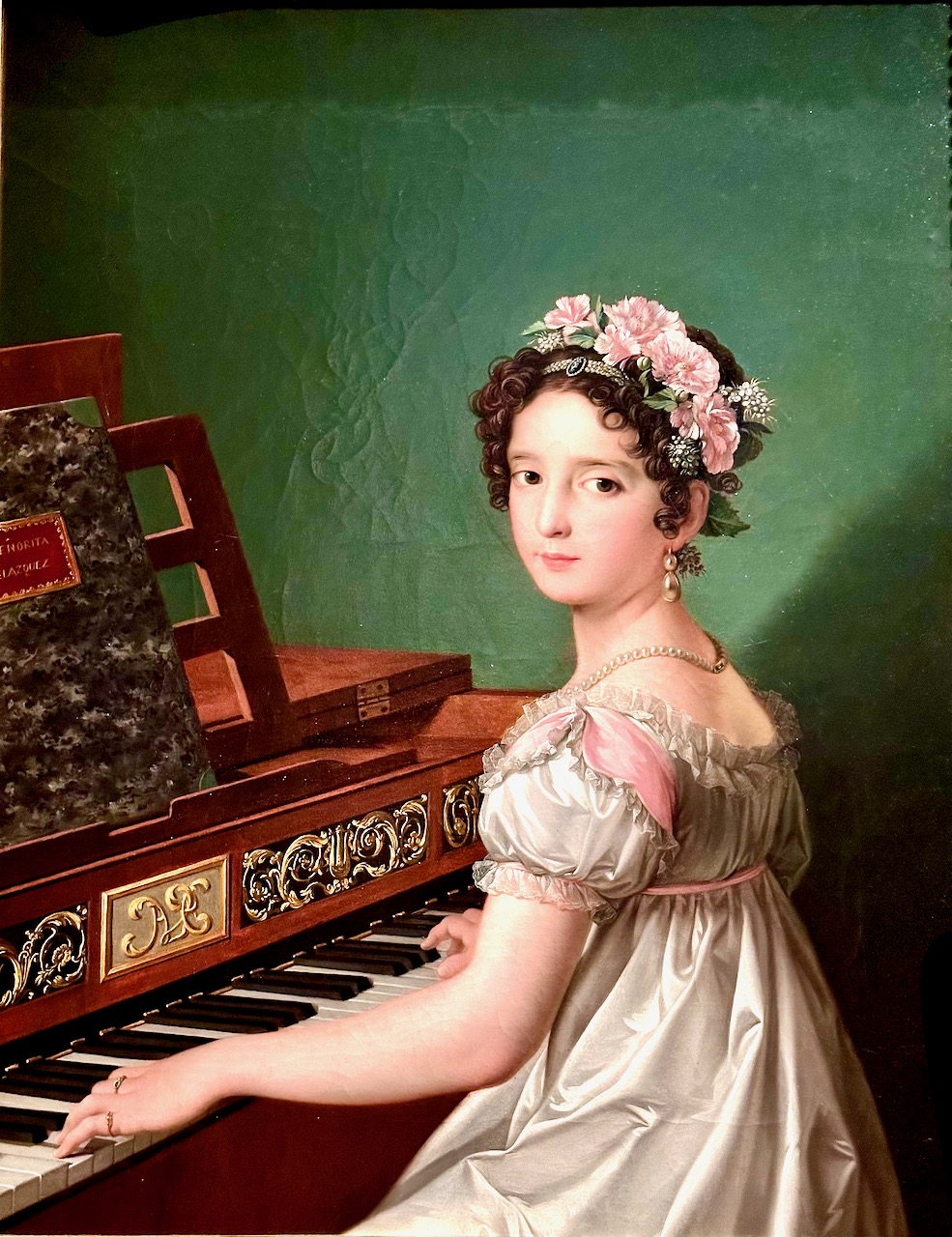
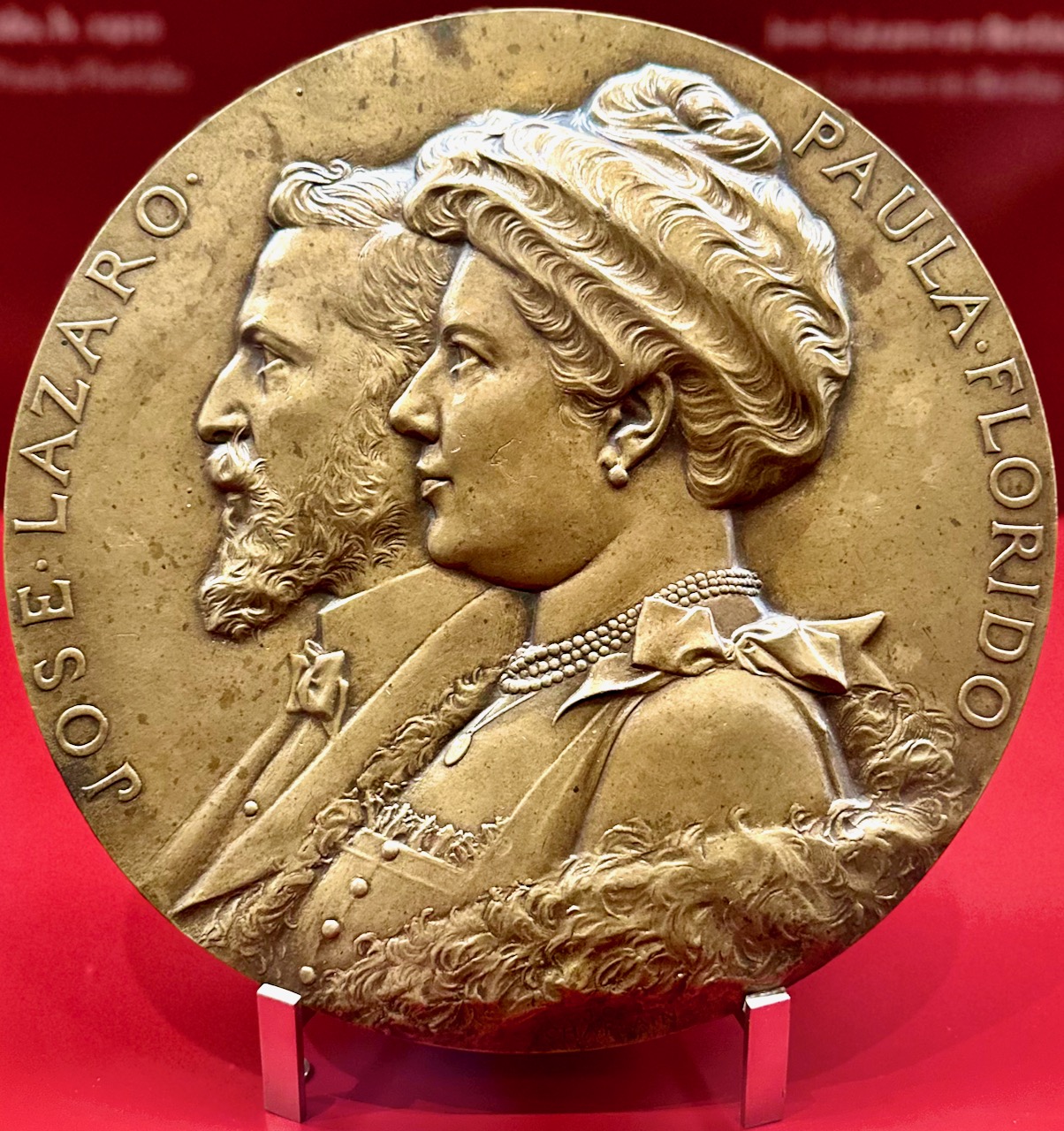
On the way out we paid our respects to the couple who donated all this to Spain.

We spent nearly two quality hours at this exquisite museum. When we left, it was much busier. Go early!
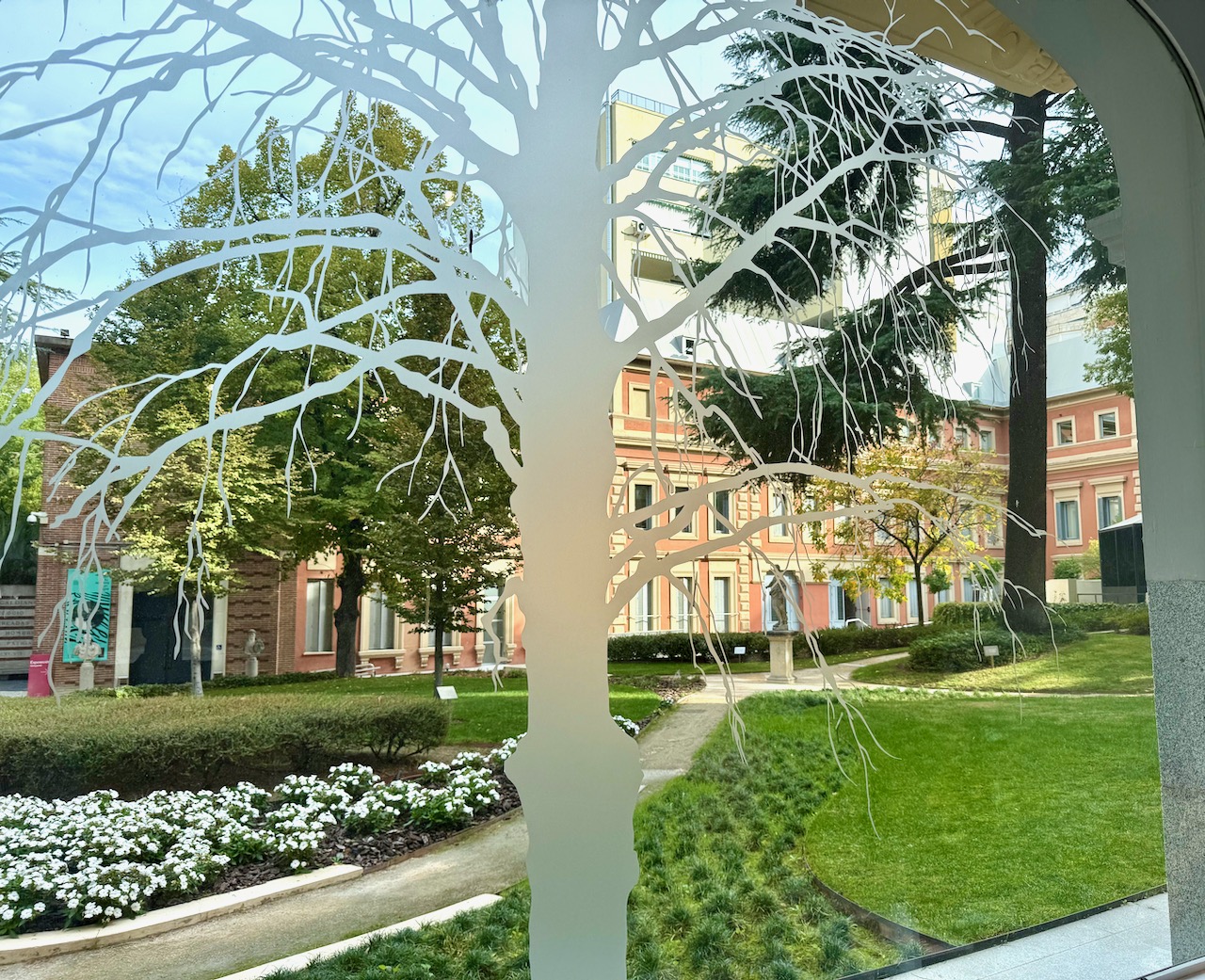
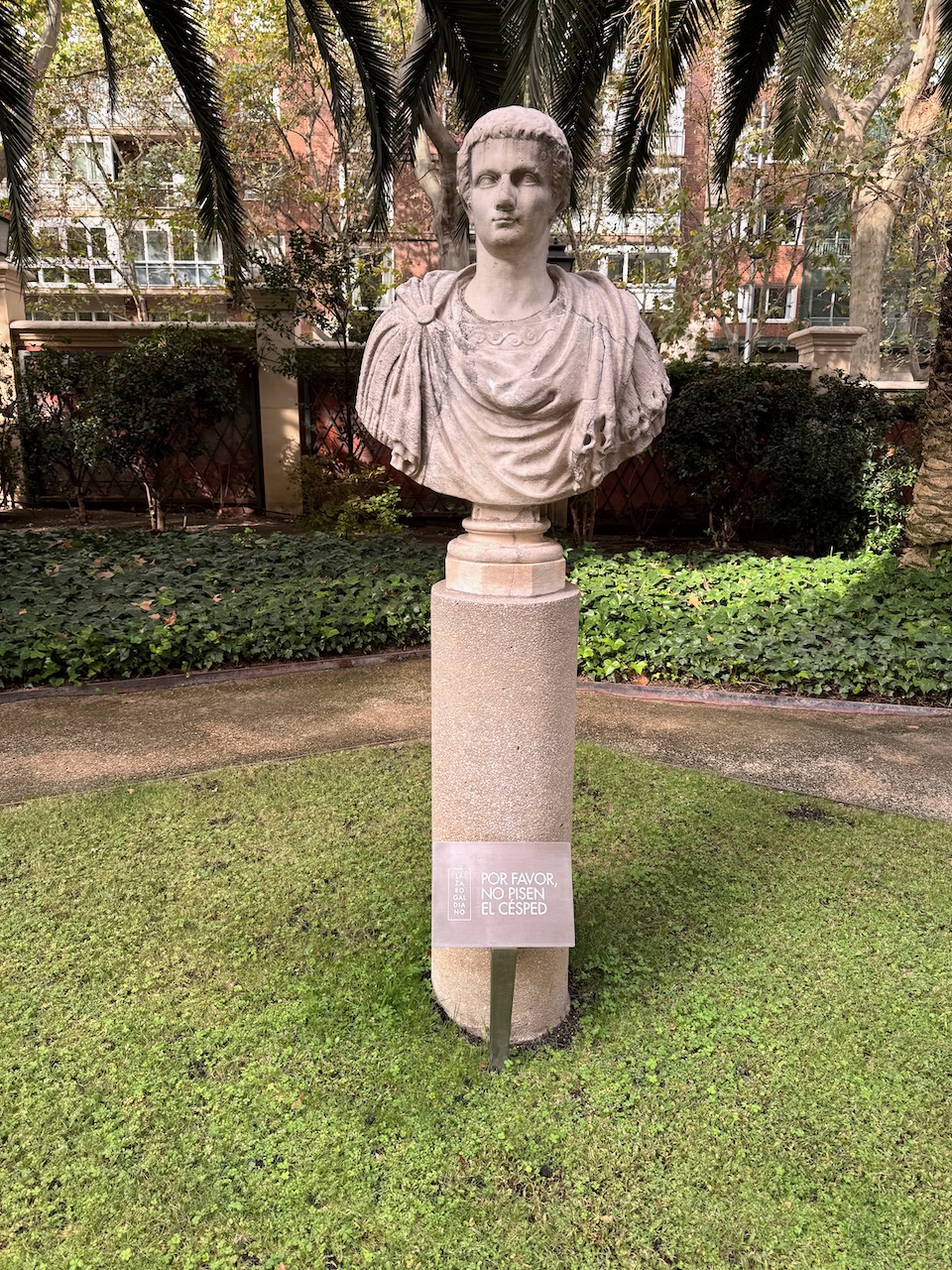
Did I tell you not to miss it?
We had purchased timed tickets to the Prado, but since we arrived early, we decided to duck into the adjacent Iglesia de San Jerónimo el Real.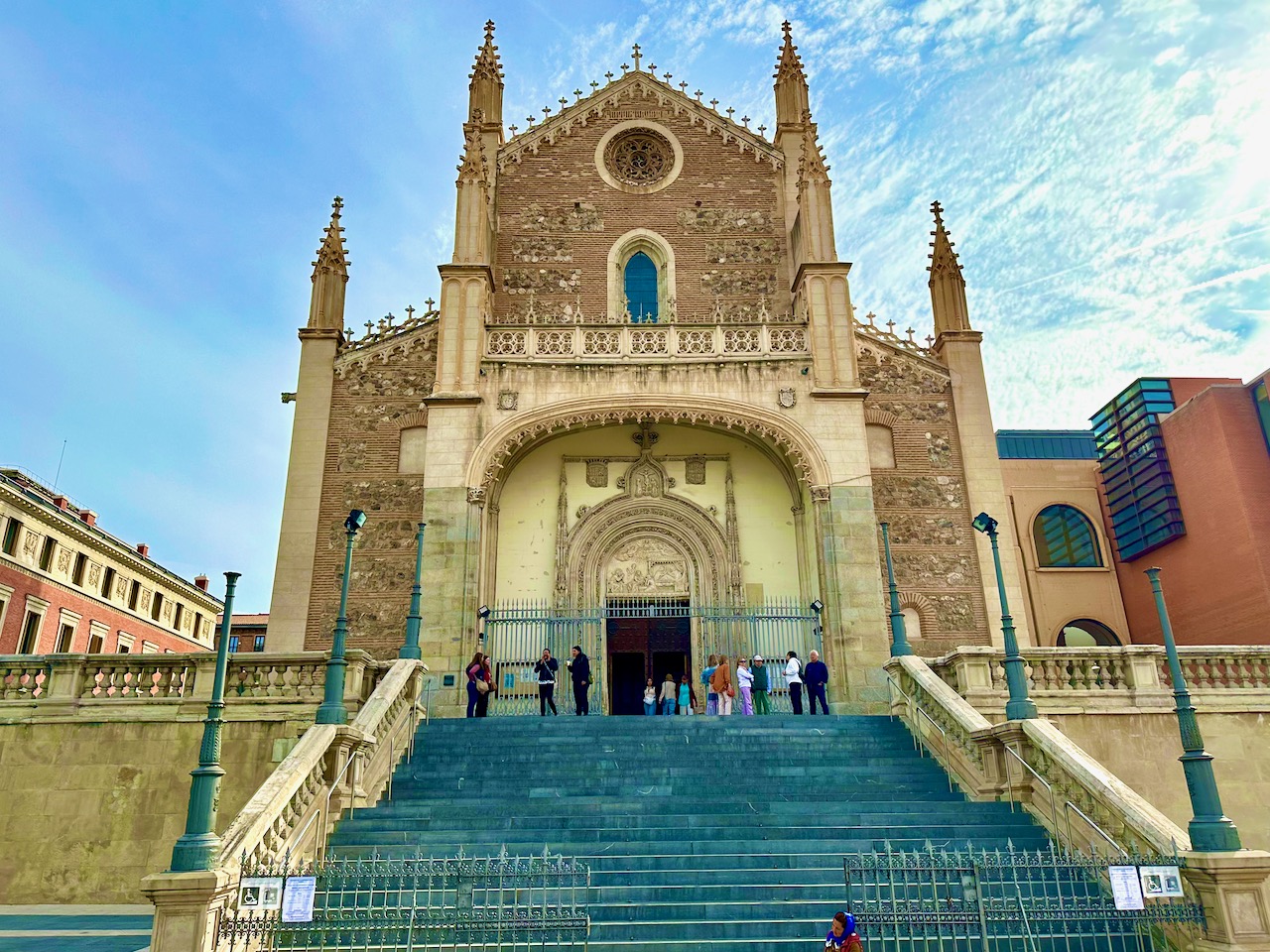
We had visited in 2015, so this was going to be a quick visit.

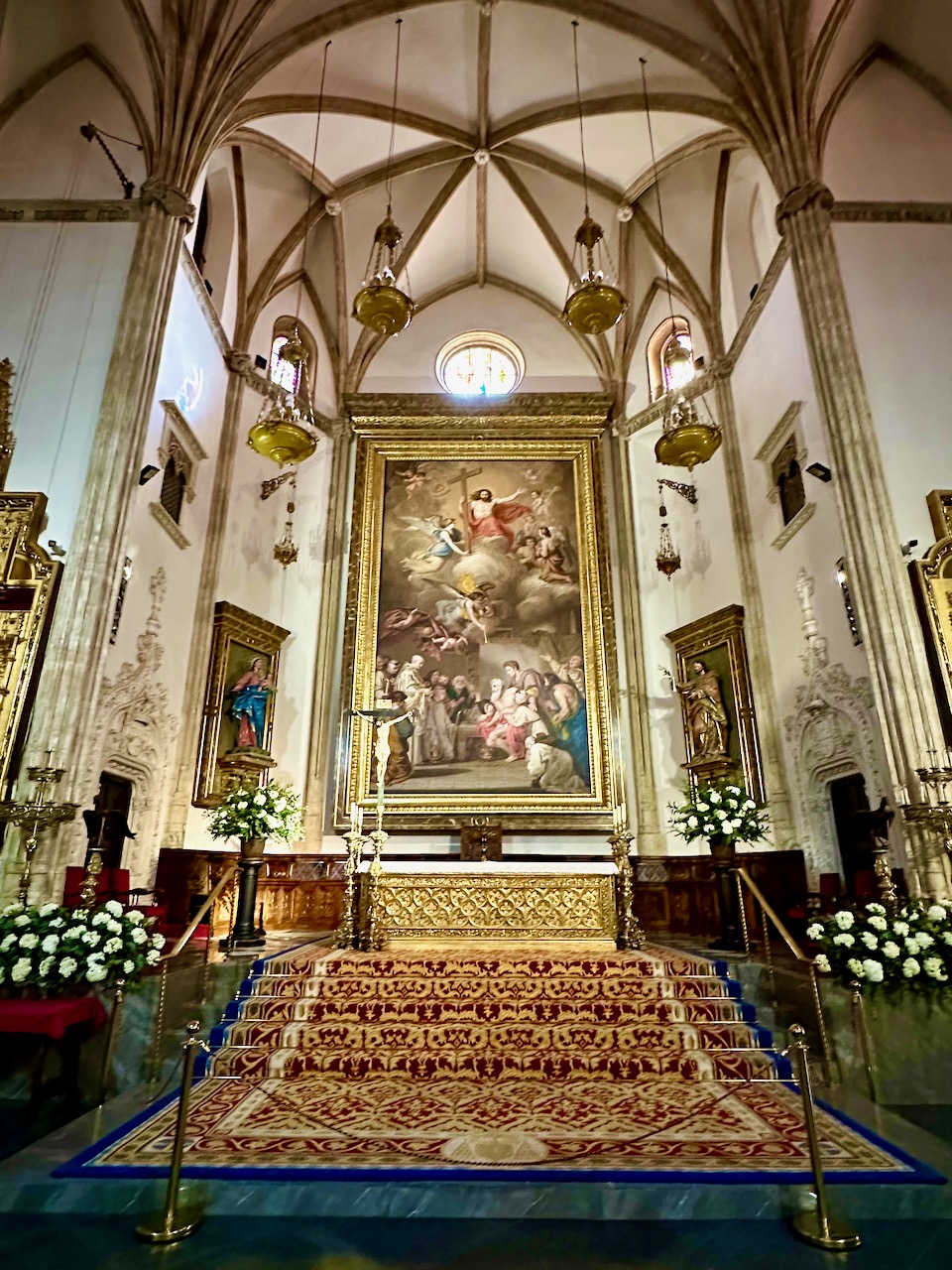
The Last Communion of Saint Jerome (center) was painted by Spanish artist Rafael Tegeo Díaz in 1829.

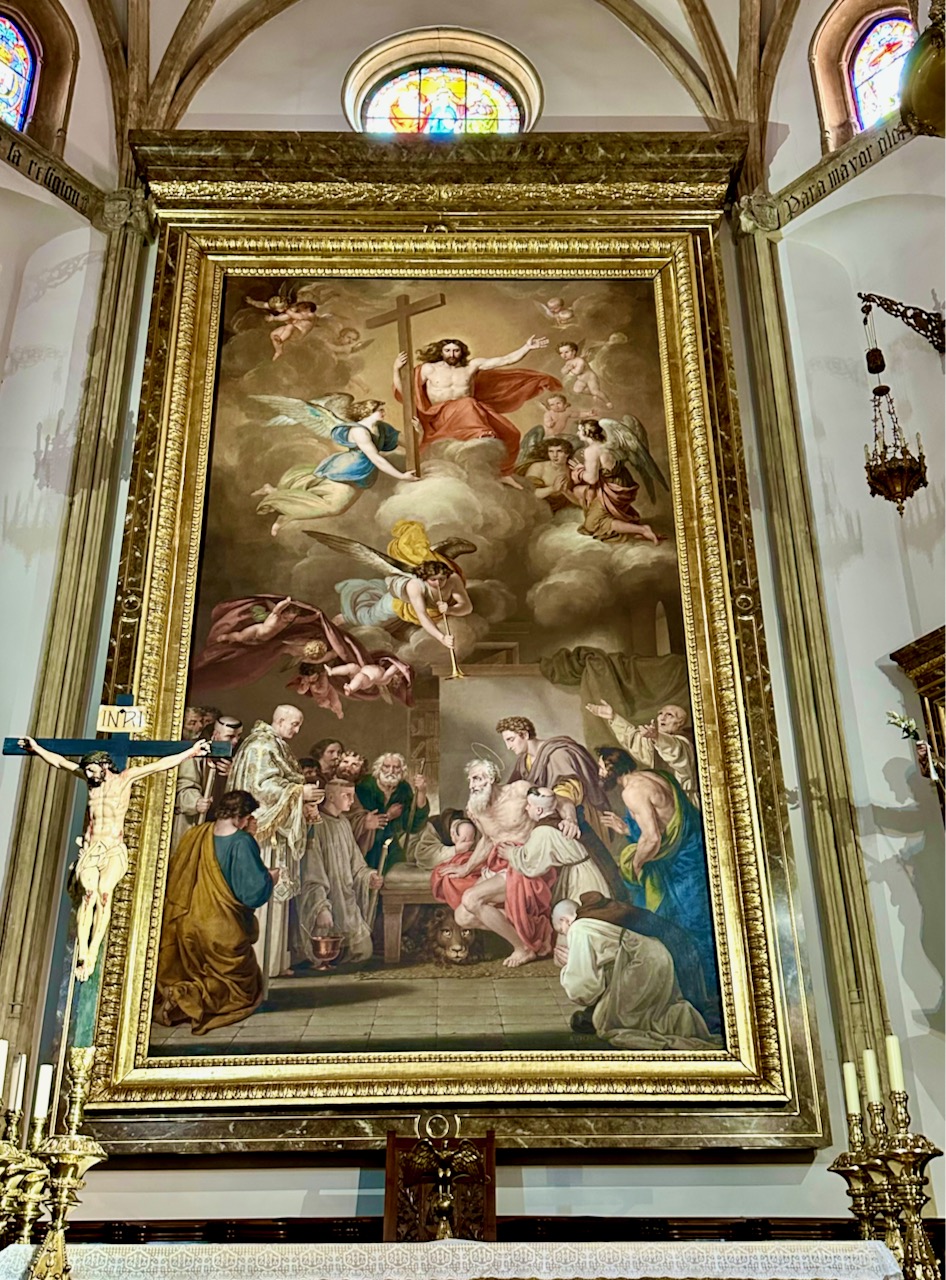
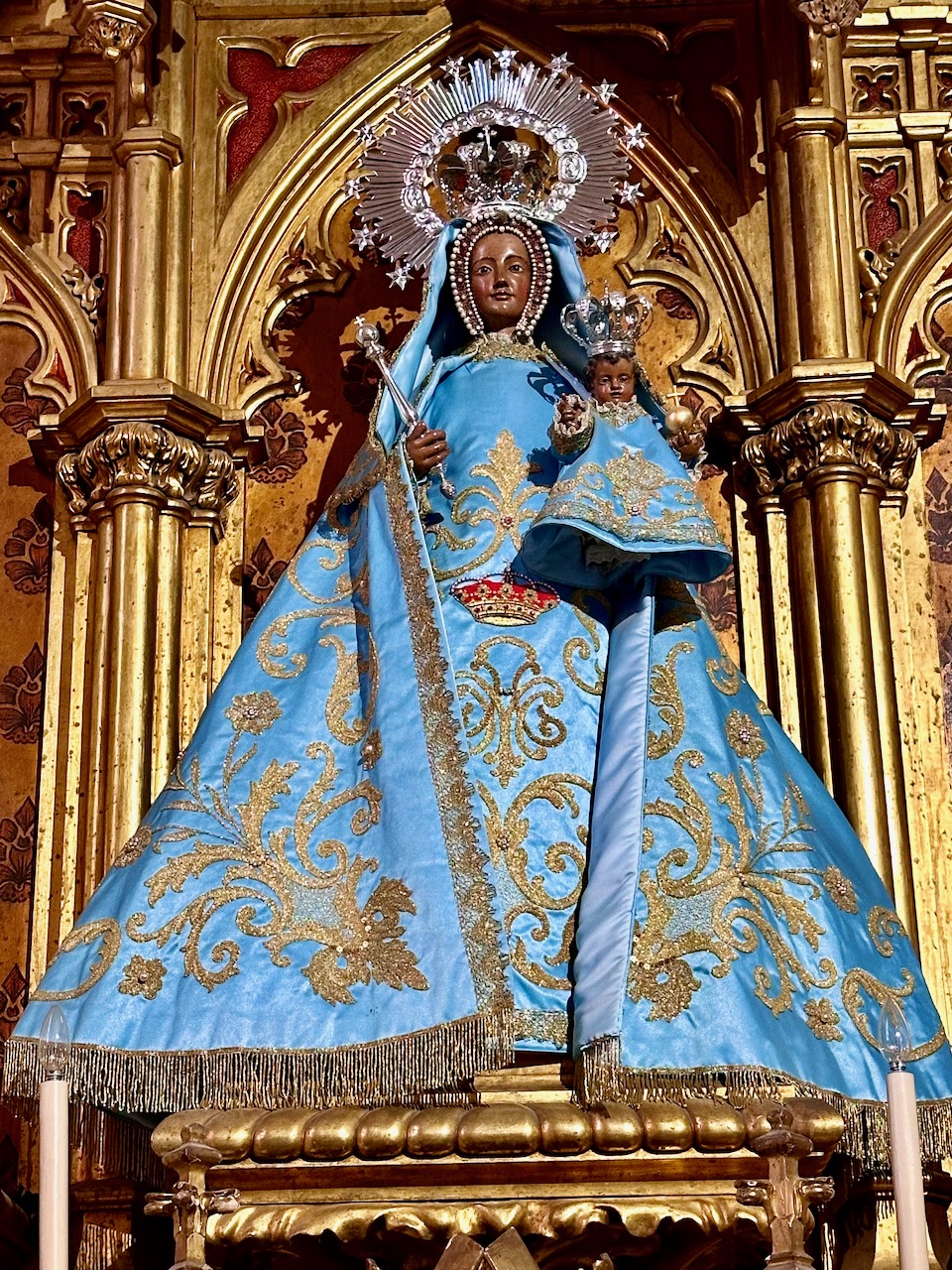
Admiring the stained glass it was still 30 minutes before our timed admission, but we decided to see if we could get into the Prado early.

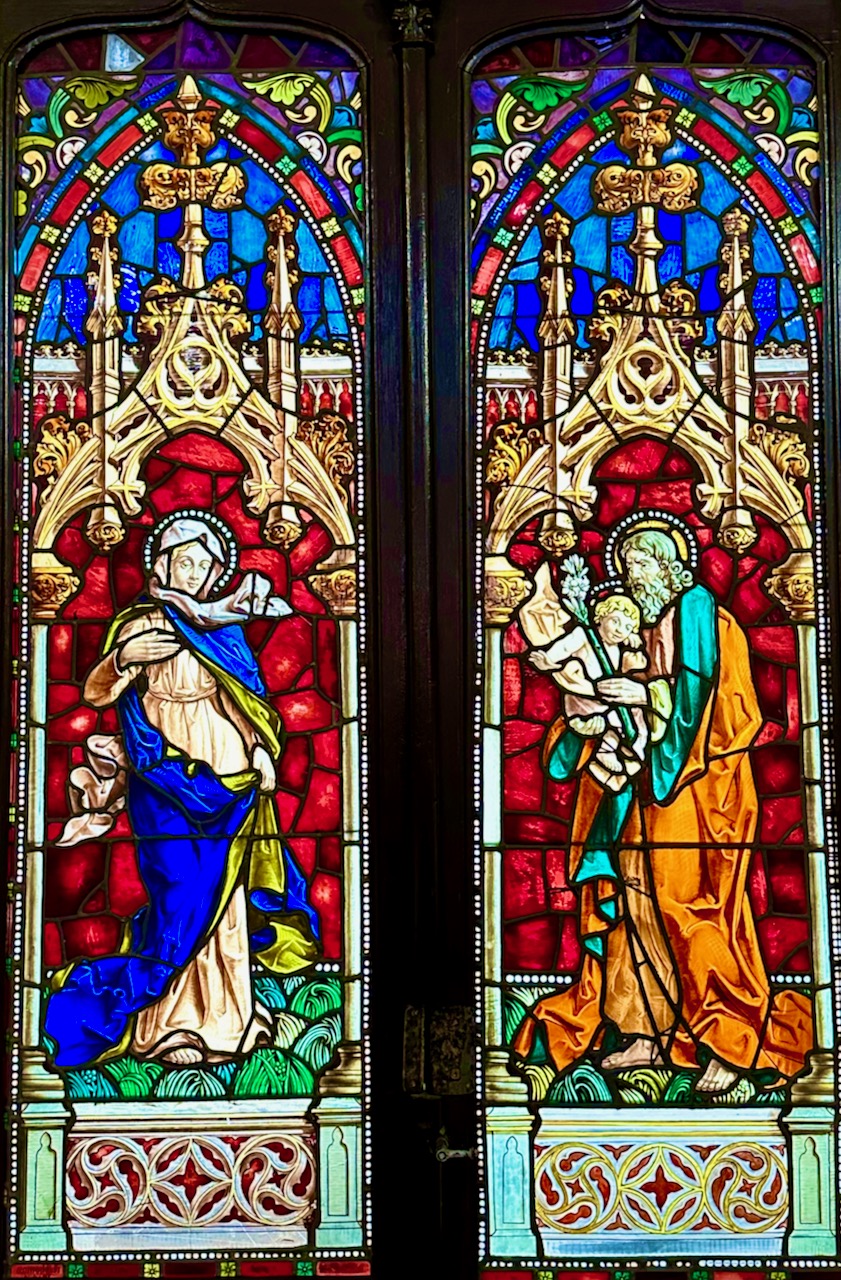
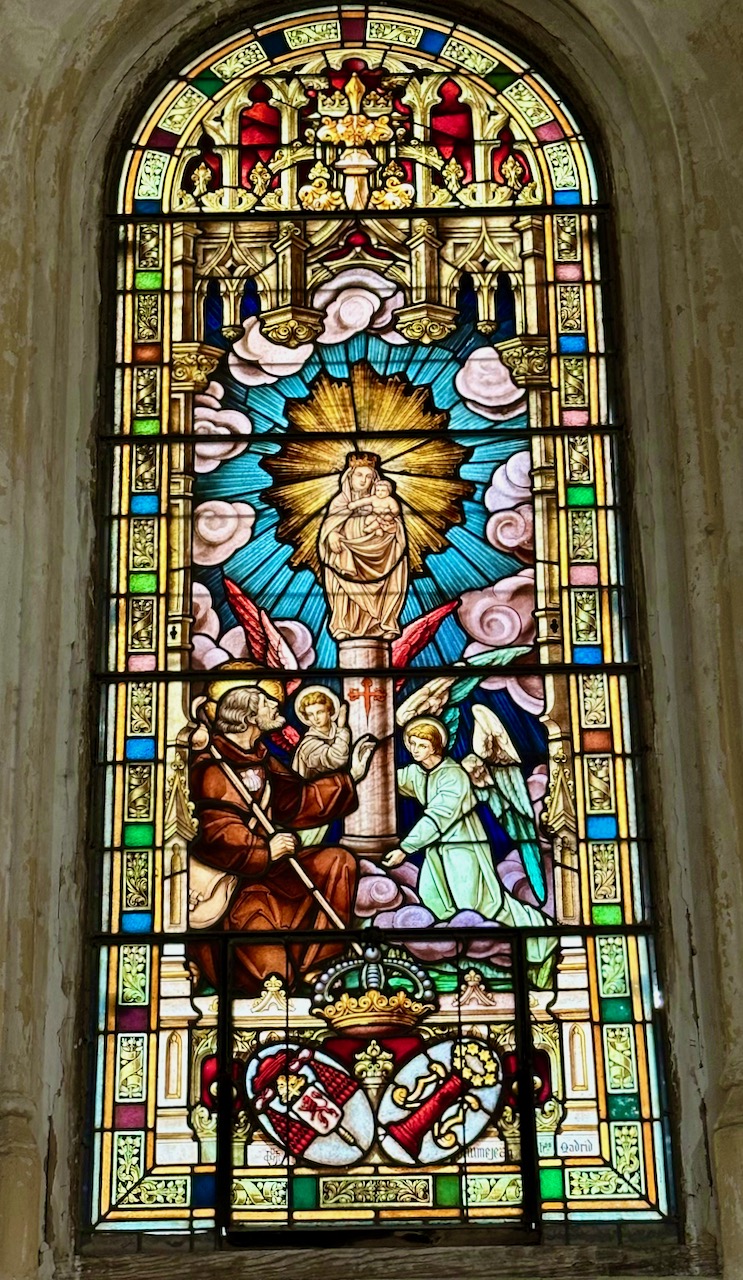
When Tracy, Kim, Mary and I came here in 2015, we all agreed that the Prado was the best art museum we had ever visited. We spent more than three hours viewing the museum’s “Greatest Hits,” which might be our museum record. I remembered it as crowded, but not overly crowded. That was not going to be the case on this afternoon, which we should have guessed earlier by the endless line of tour buses parked nearby. In hindsight, we should have heeded Maribel’s advice and booked an early morning ticket.
The crowds could still be manageable, because there were places to enjoy the paintings in somewhat pleasant surroundings. Of course, I wanted to visit the room with all the Bosch paintings, and for a fleeting moment it didn’t seem too bad. That was, until the first tour group made its way over to the Garden of Earthly Delights, El Bosco’s most famous painting.
In a scene reminiscent of what happened to us in the cathedral in Strasbourg last year, a group of about 20 individuals moved en masse closing around the painting so that anyone not in their tour group would be unable to look at the painting. Then they all stood there for what seemed like an interminable amount of time while the guide explained the painting to them.
It was like this in the next few rooms, where you and a few others would be viewing a painting only to be displaced by yet another tour group. I guess we were spoiled by our morning visit to a museum where you could actually admire the art for a few moments in peace. After an hour, we had had enough. You are not allowed to take photos in here, which makes sense with the crowds. However, Tracy did snap a photo of a group in front of another painting, which I think was a van der Weyden, although with more than 25 people in front of me it was hard to tell.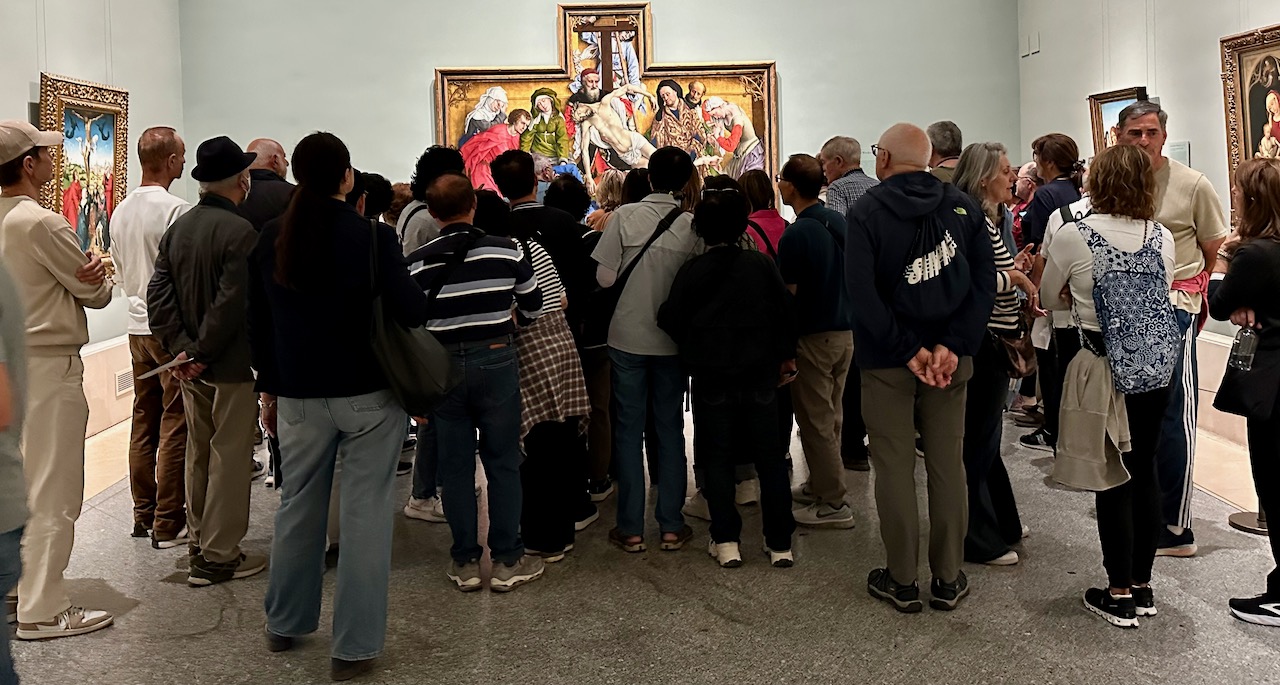
We decided to walk to lunch back in our neighborhood …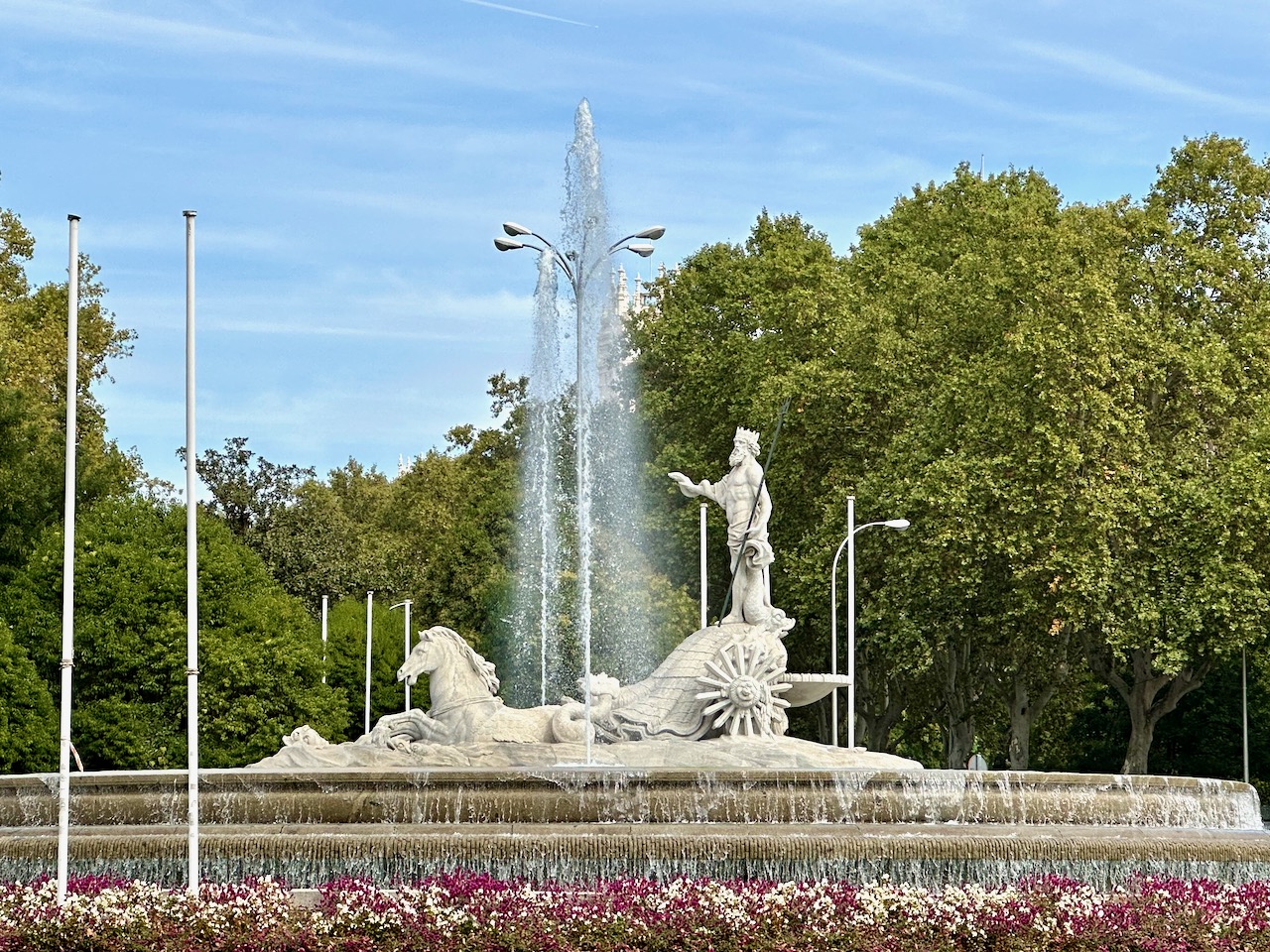
… and wouldn’t you know it, I finally got a great look at The Garden of Earthly Delights … at a store selling fans. Well, I am a Bosch fan.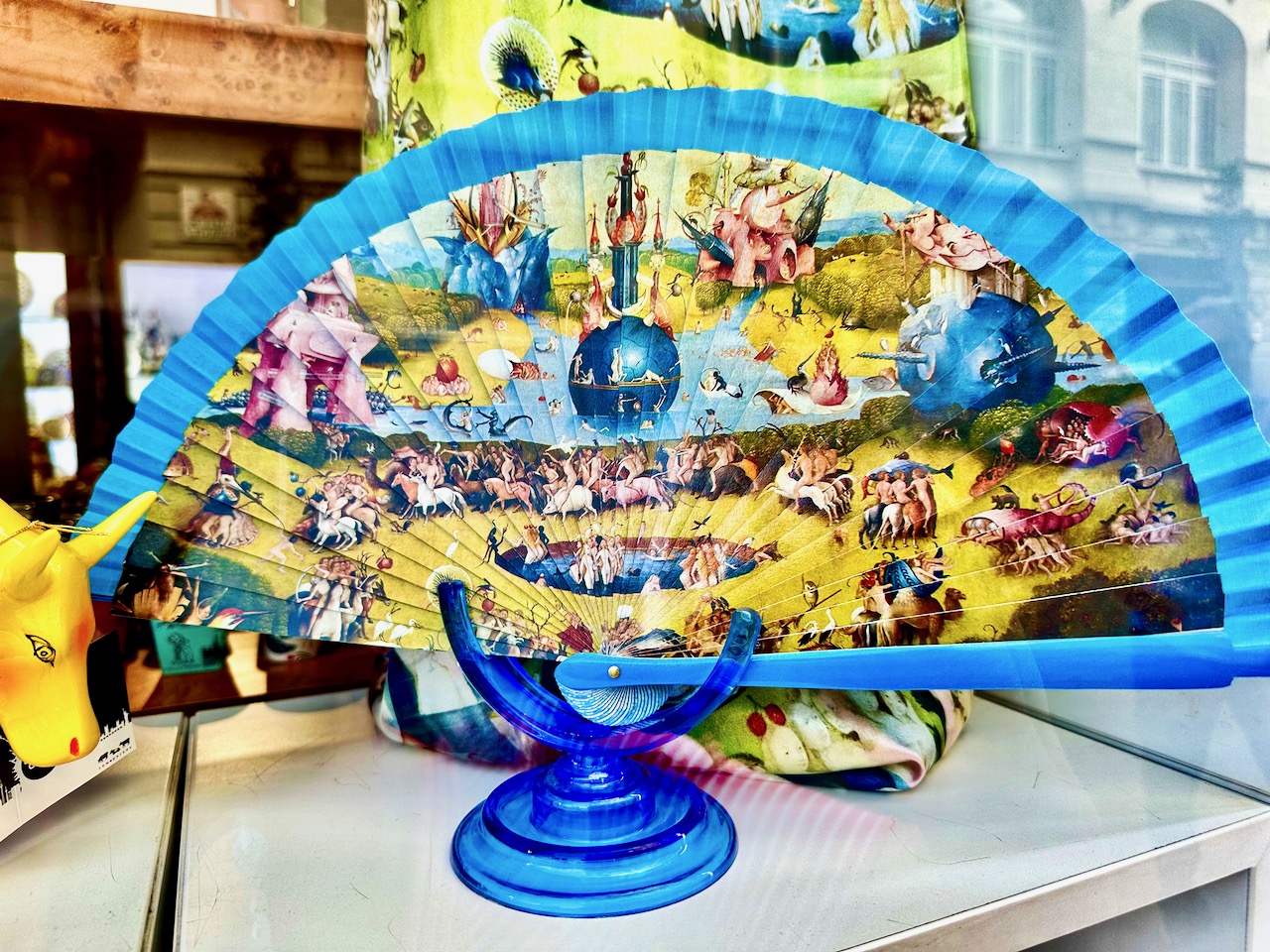
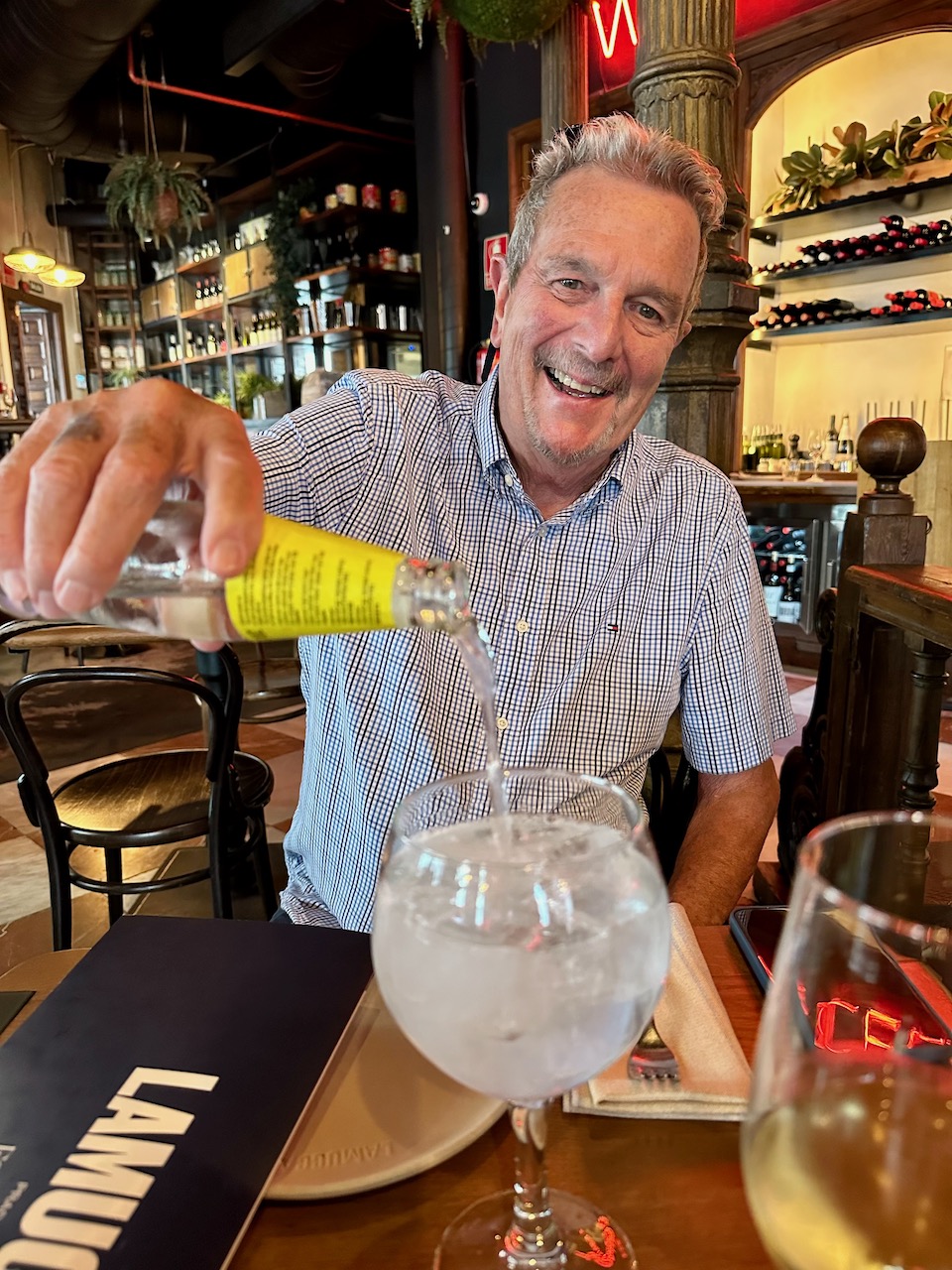
Nearby we looked for Lamucca de Prado, where we had dined ten years previously with Kim and Mary and some other college friends. Their GinTonic was high on my list.
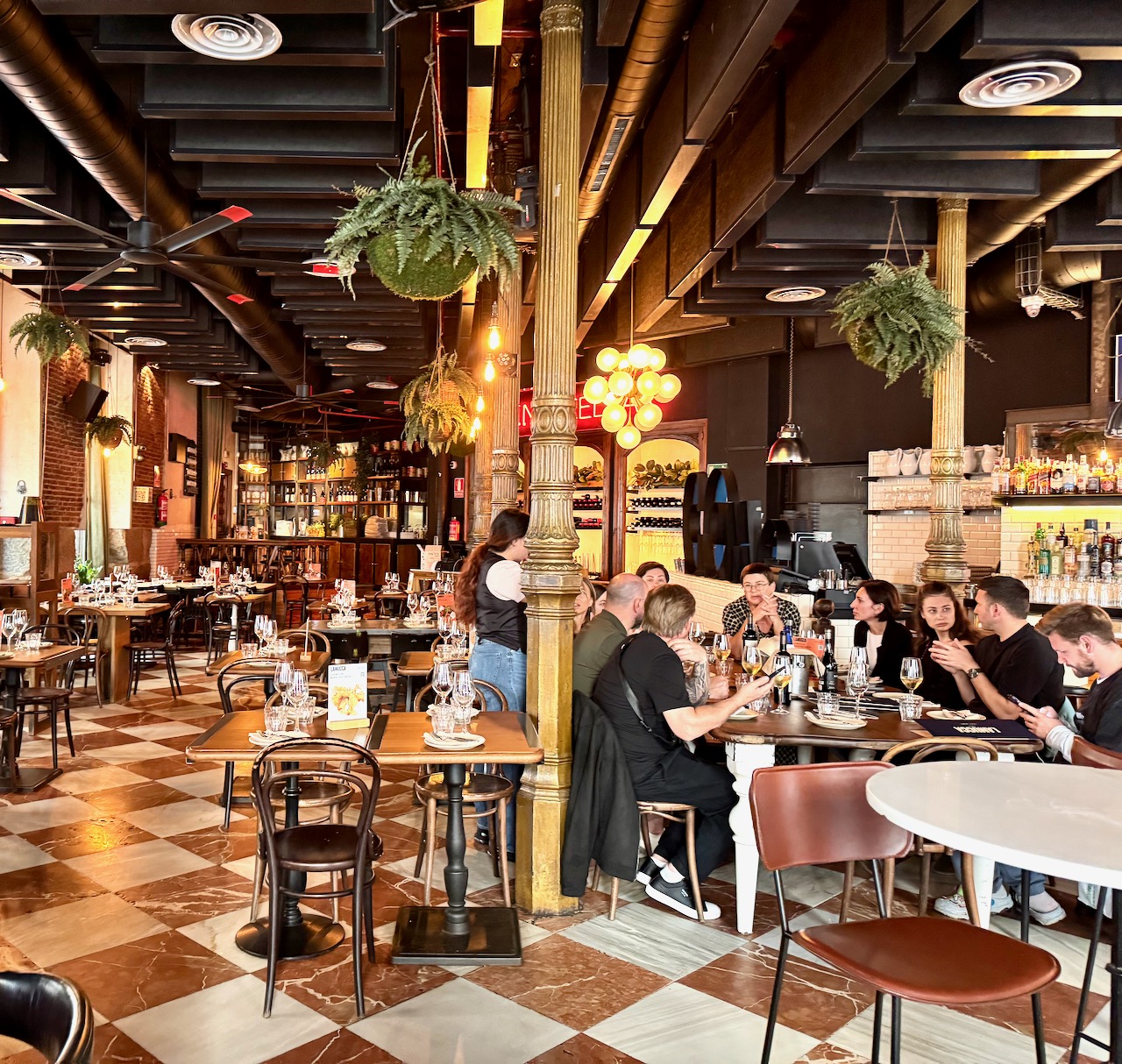
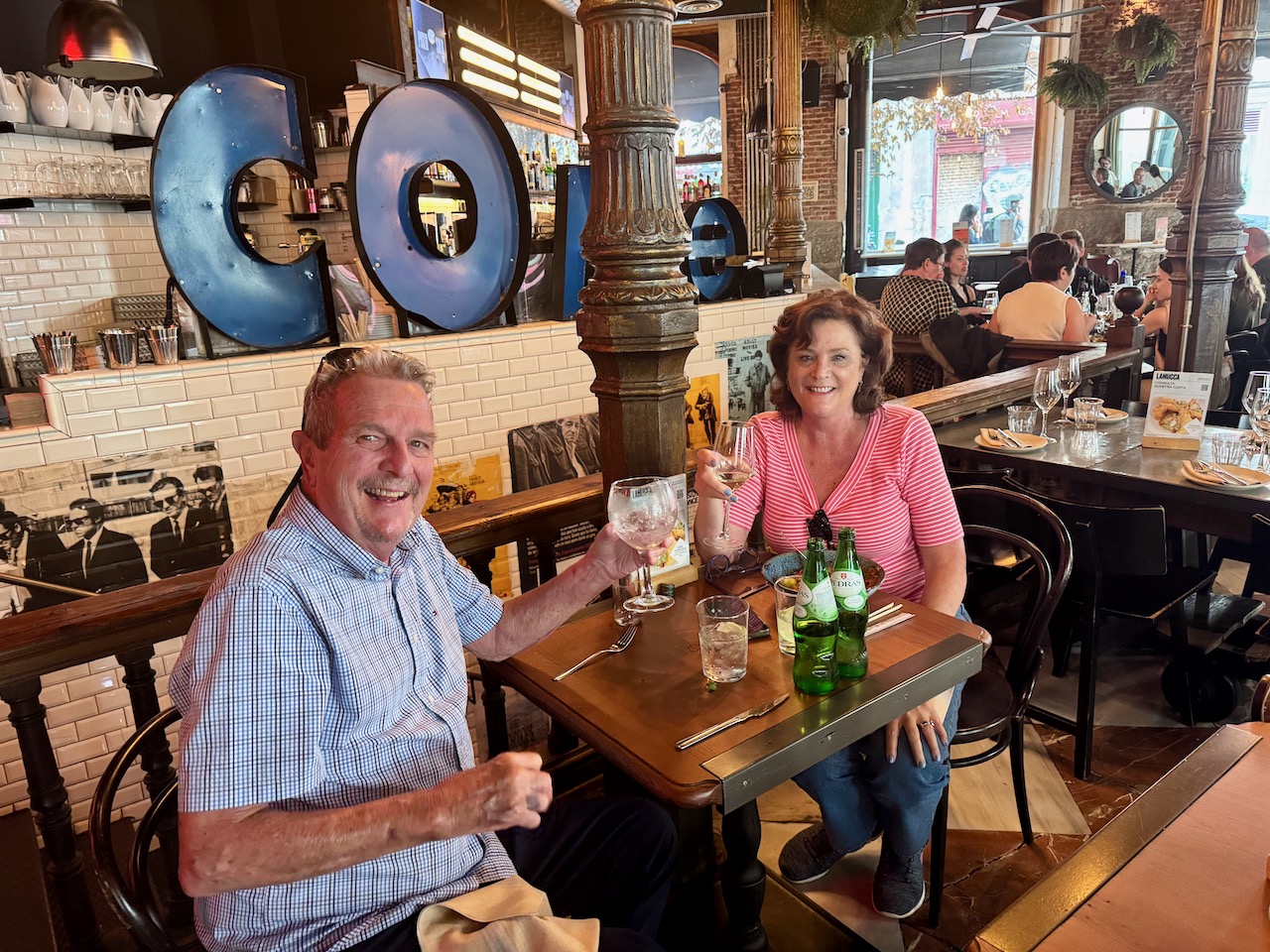
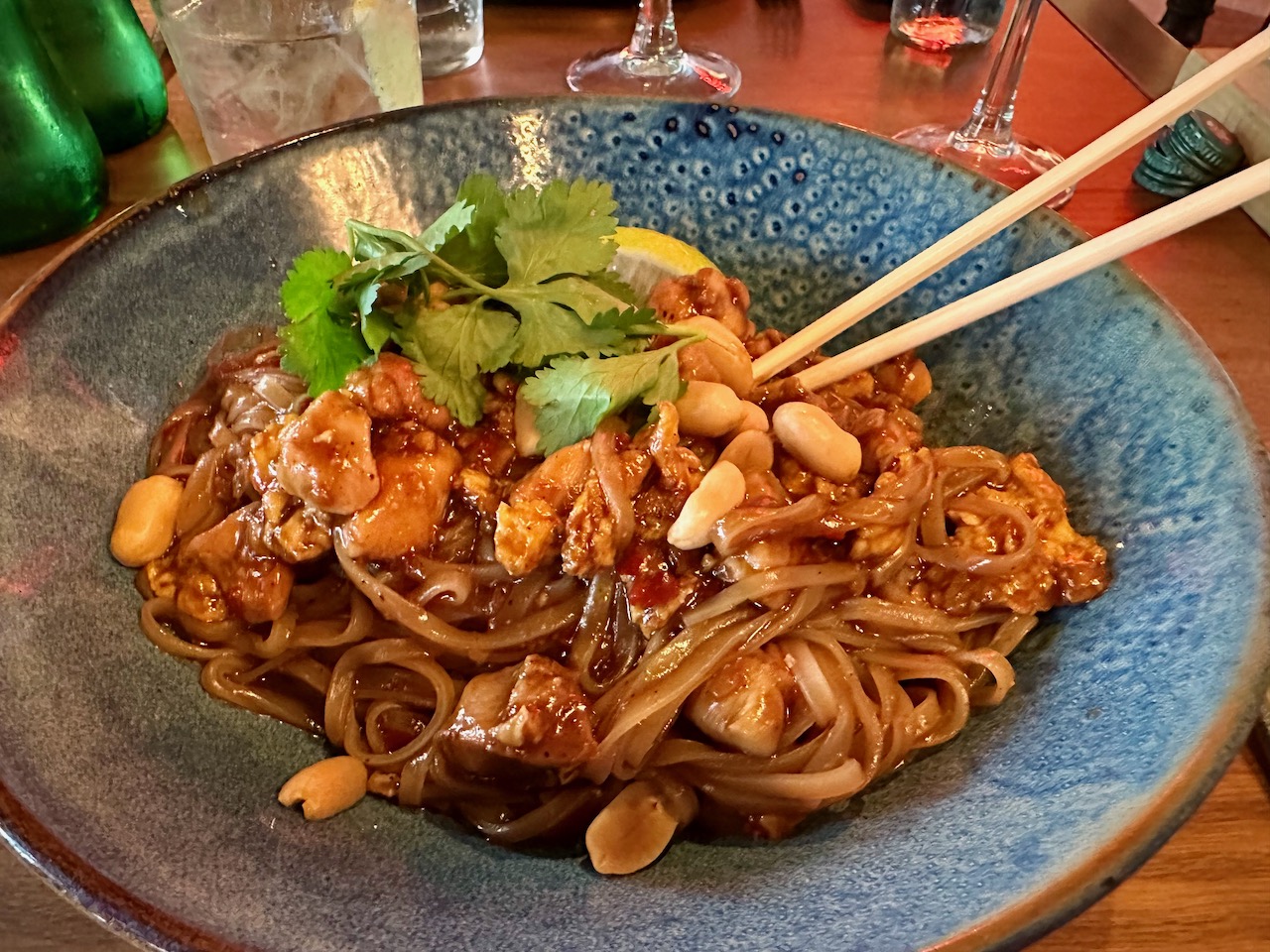
The food was good. I had the tacos de cochinita pilbil with pineapple and coriander and an apple pie for dessert, while Tracy tried the Pad Thai with chicken, peanuts, egg and coriander.
We took about a short siesta, and were back out on a mission to see Basílica de San Francisco el Grande. The basilica has some weird hours making it difficult to plan a visit but after carefully looking at its scheduled hours before leaving, and double-checking the website after arriving, I was confident it would be open after 4 p.m. on this day. Well, the taxi dropped us off, and there wasn’t a soul around. I walked to the gate, which was locked. Then Tracy said, “I guess you didn’t read the part that there is a special event and the church is closed.” After singing, “San Franceso, open your metal gate,” we had to pivot to Plan B.
Walking back toward Plaza Mayor, we decided upon a new destination of the Mercado de San Miguel, which first opened in 1916. The mercado made the Prado seem much less crowded. It attracts more than 10 million visitors a year, and about a million of them were here on this afternoon.
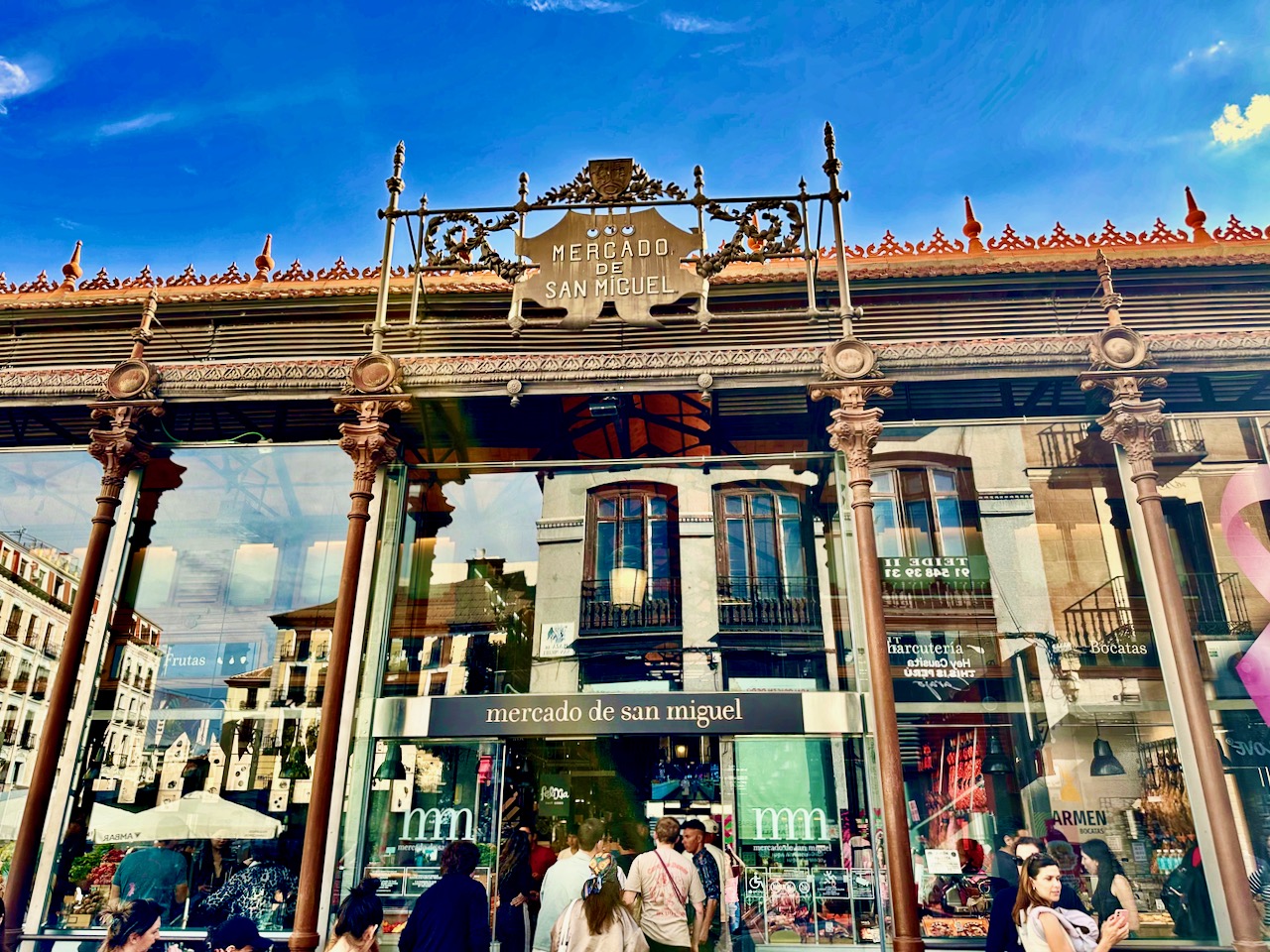
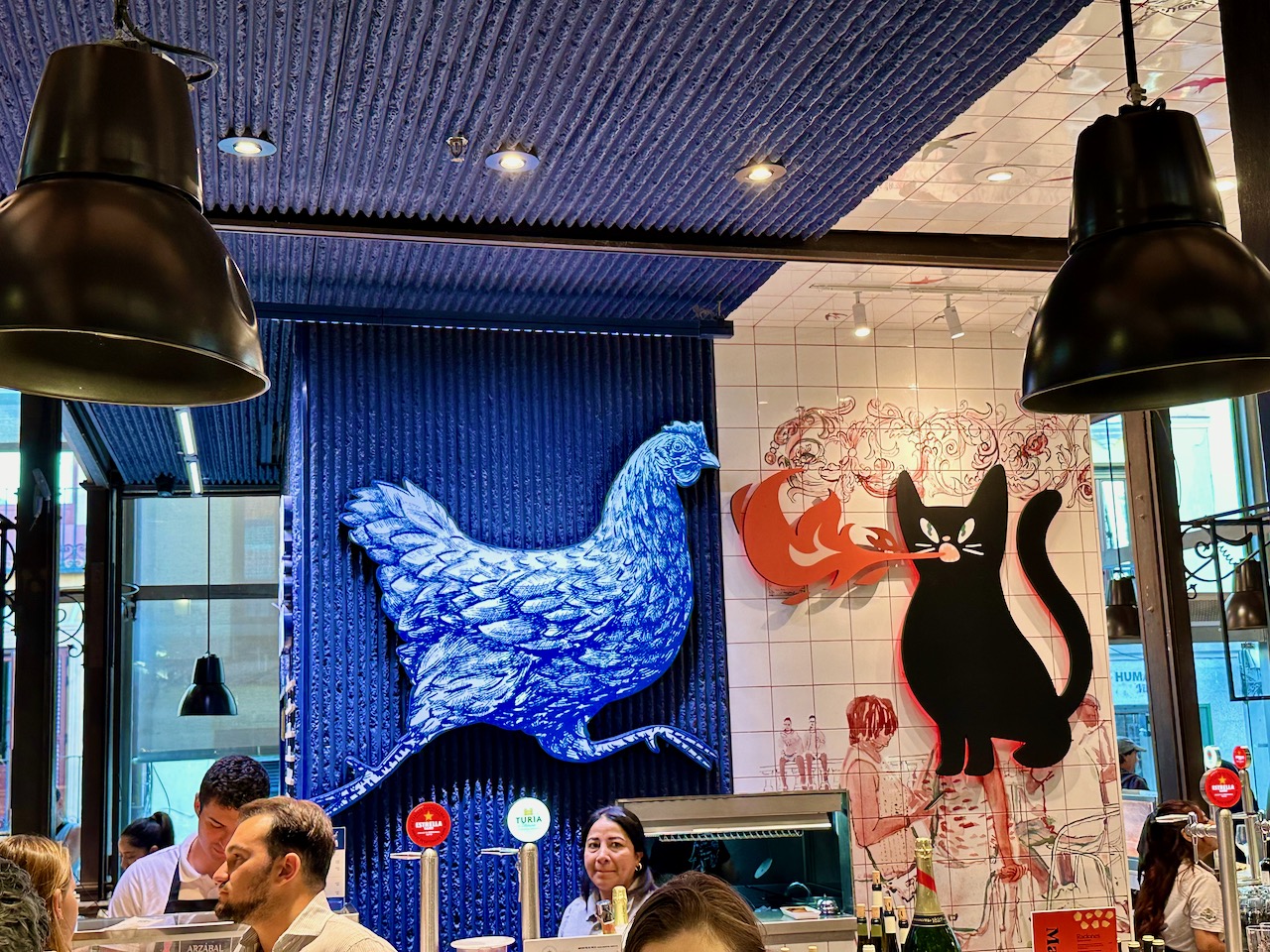
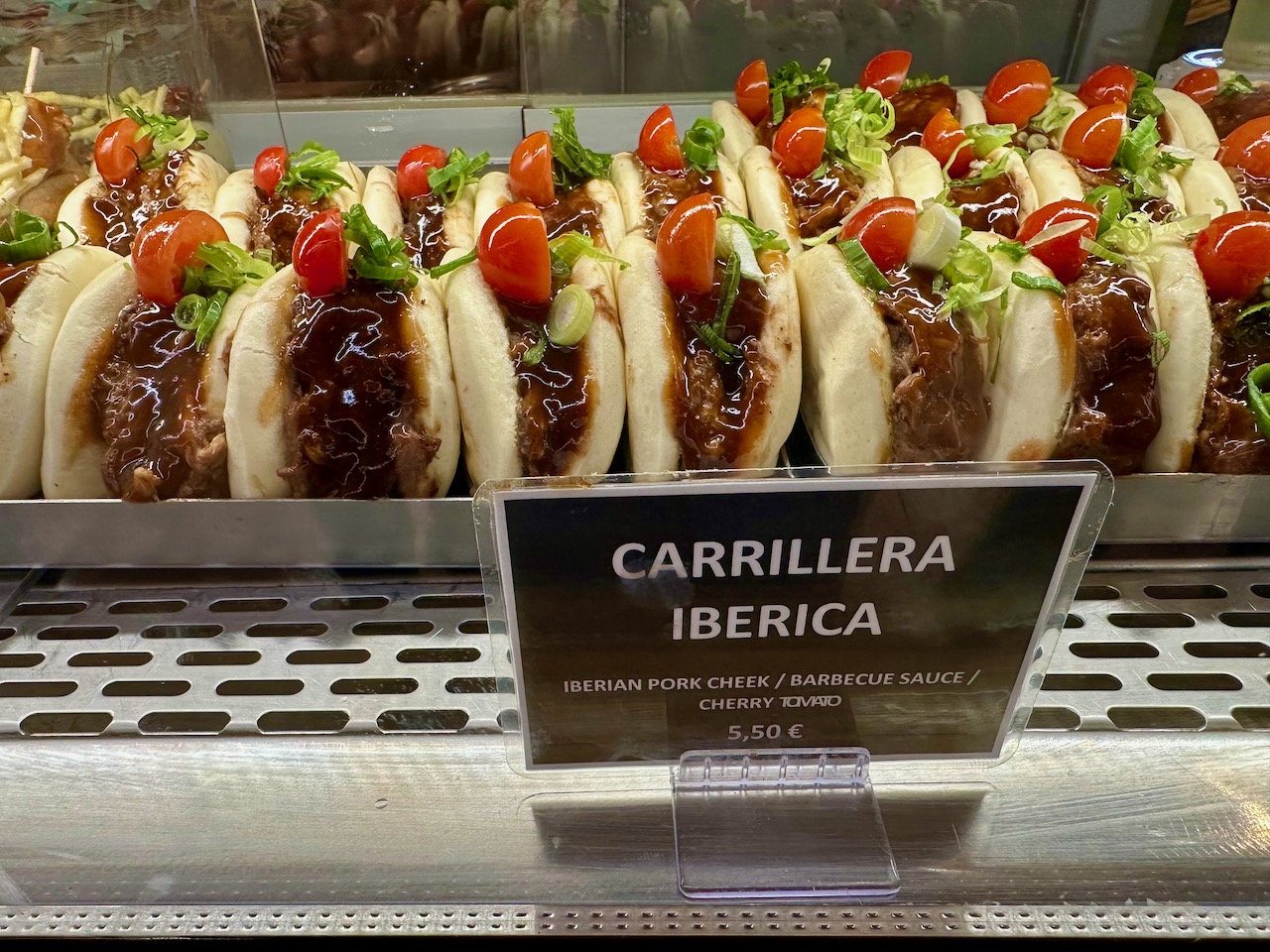
More than 30 stands are located throughout selling some of the most delicious (and pretty) varieties of food.
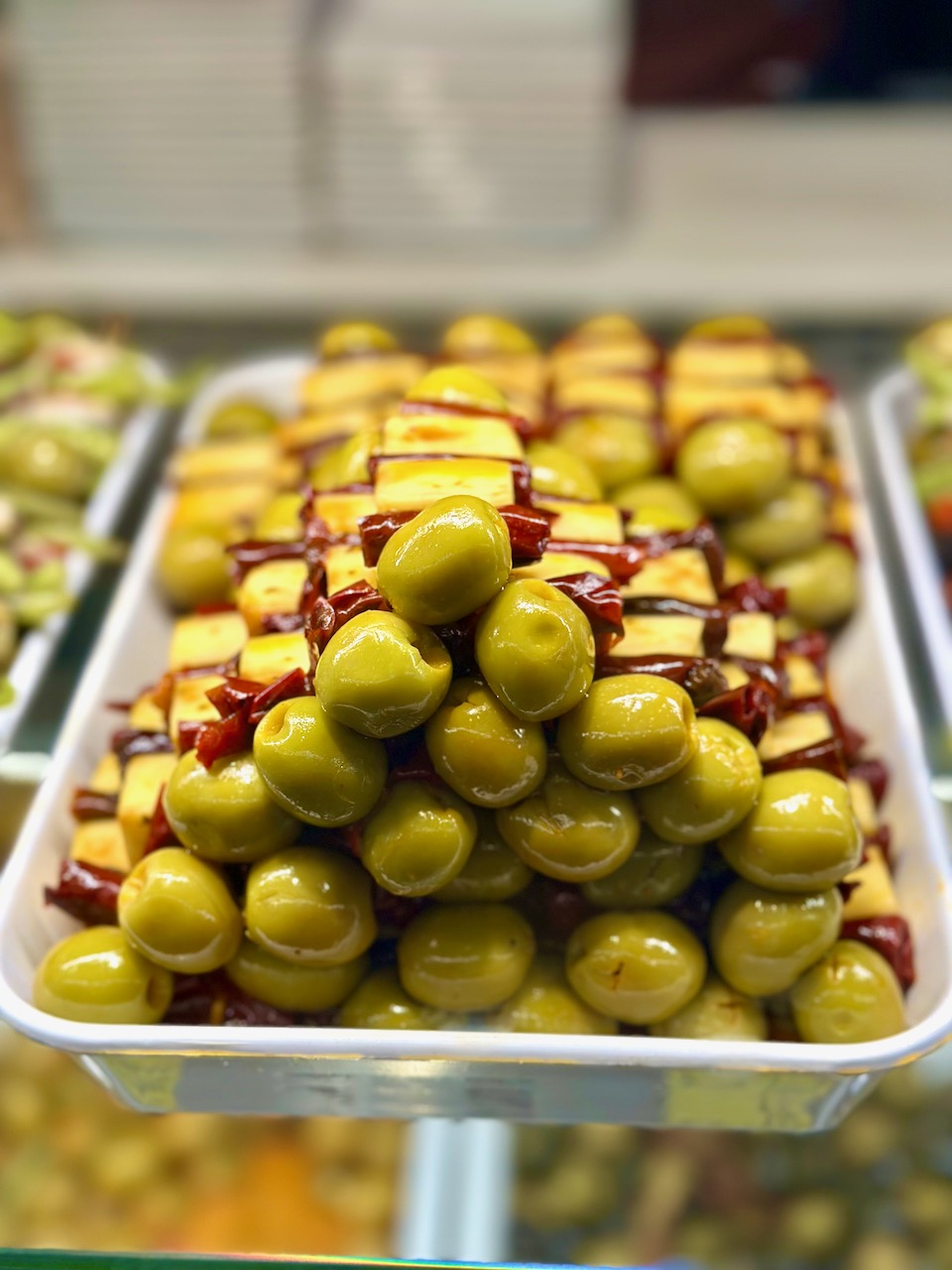
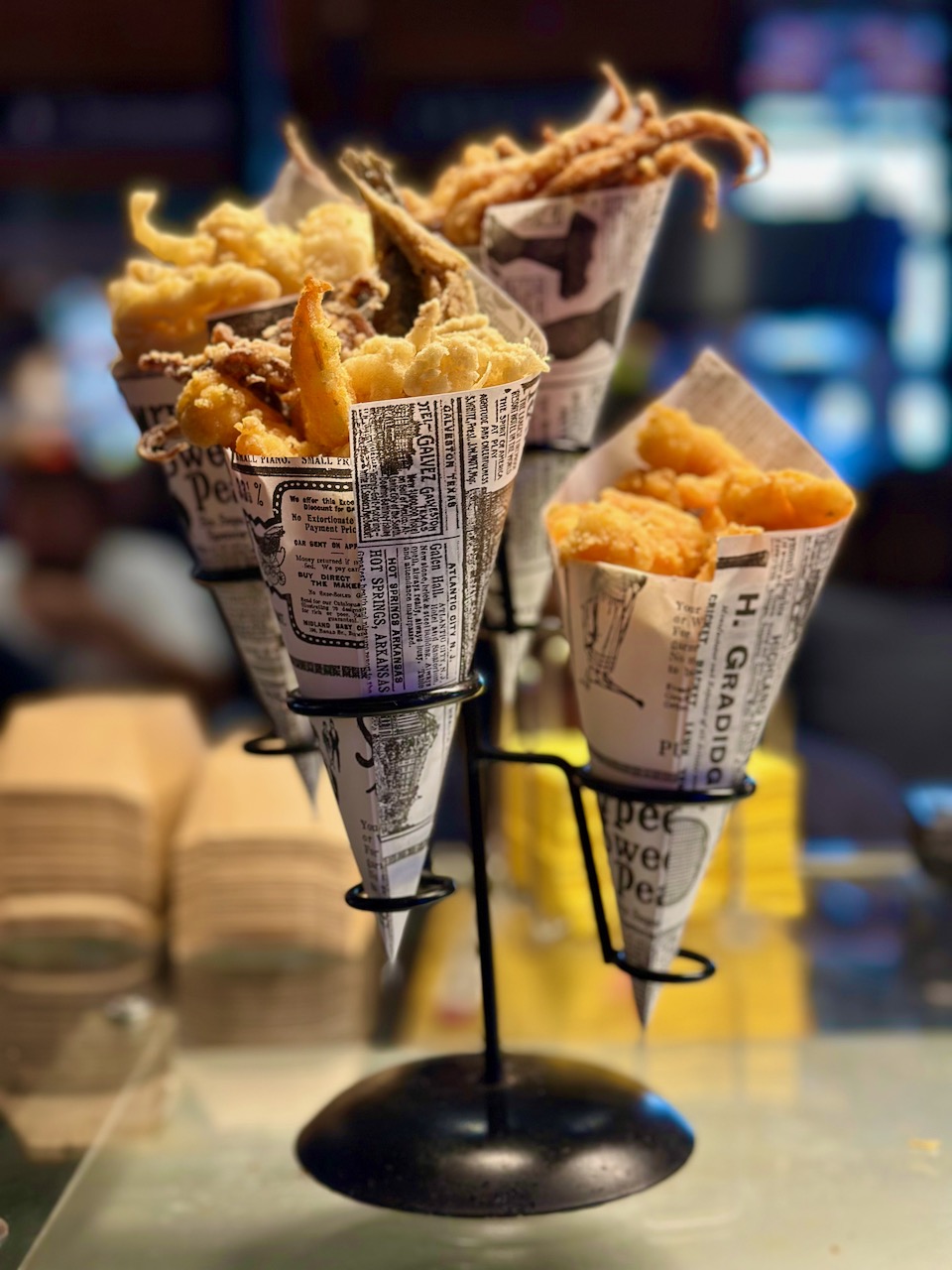
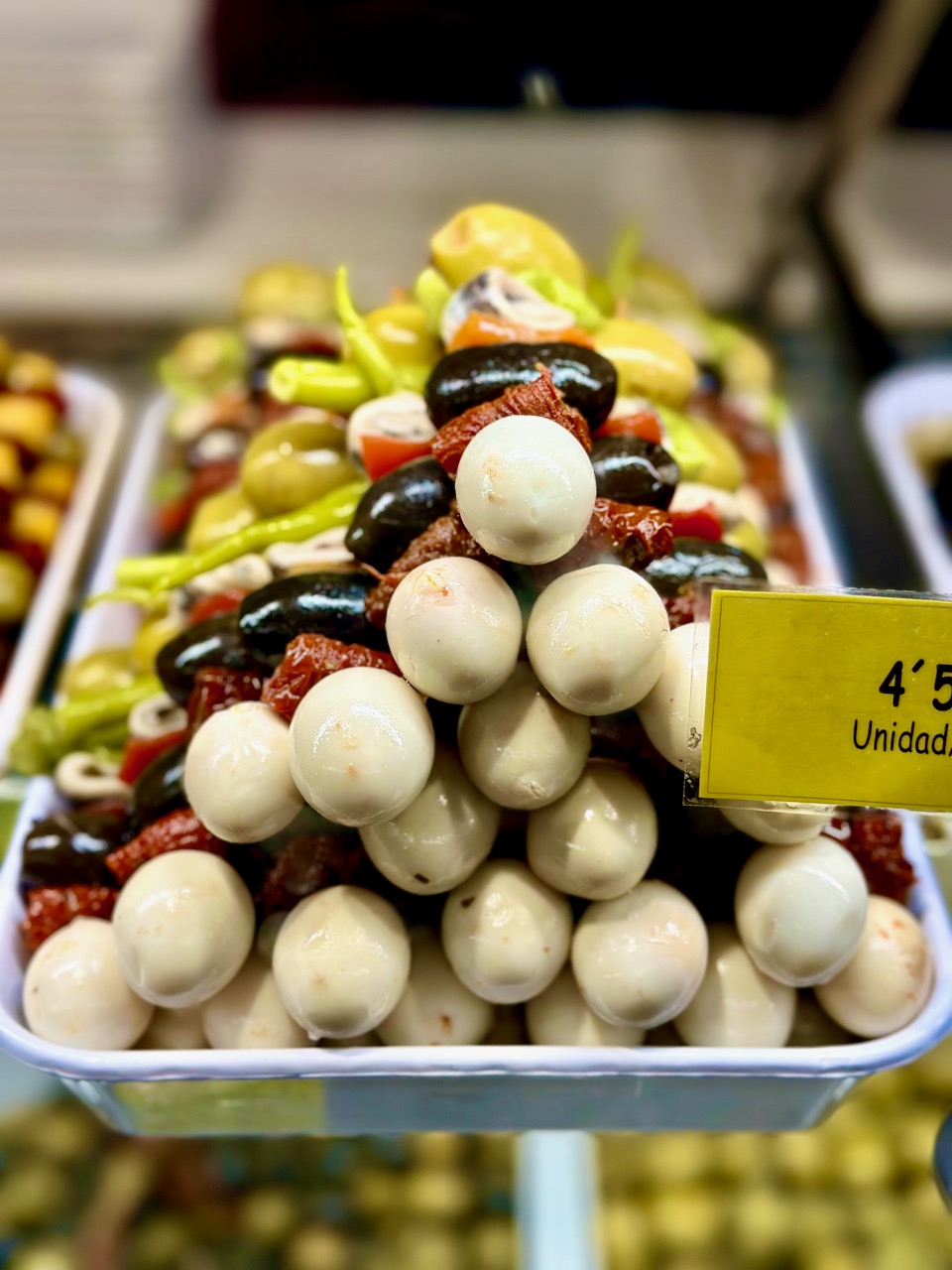
Even though we had only eaten a little more than an hour previously, we certainly were tempted.

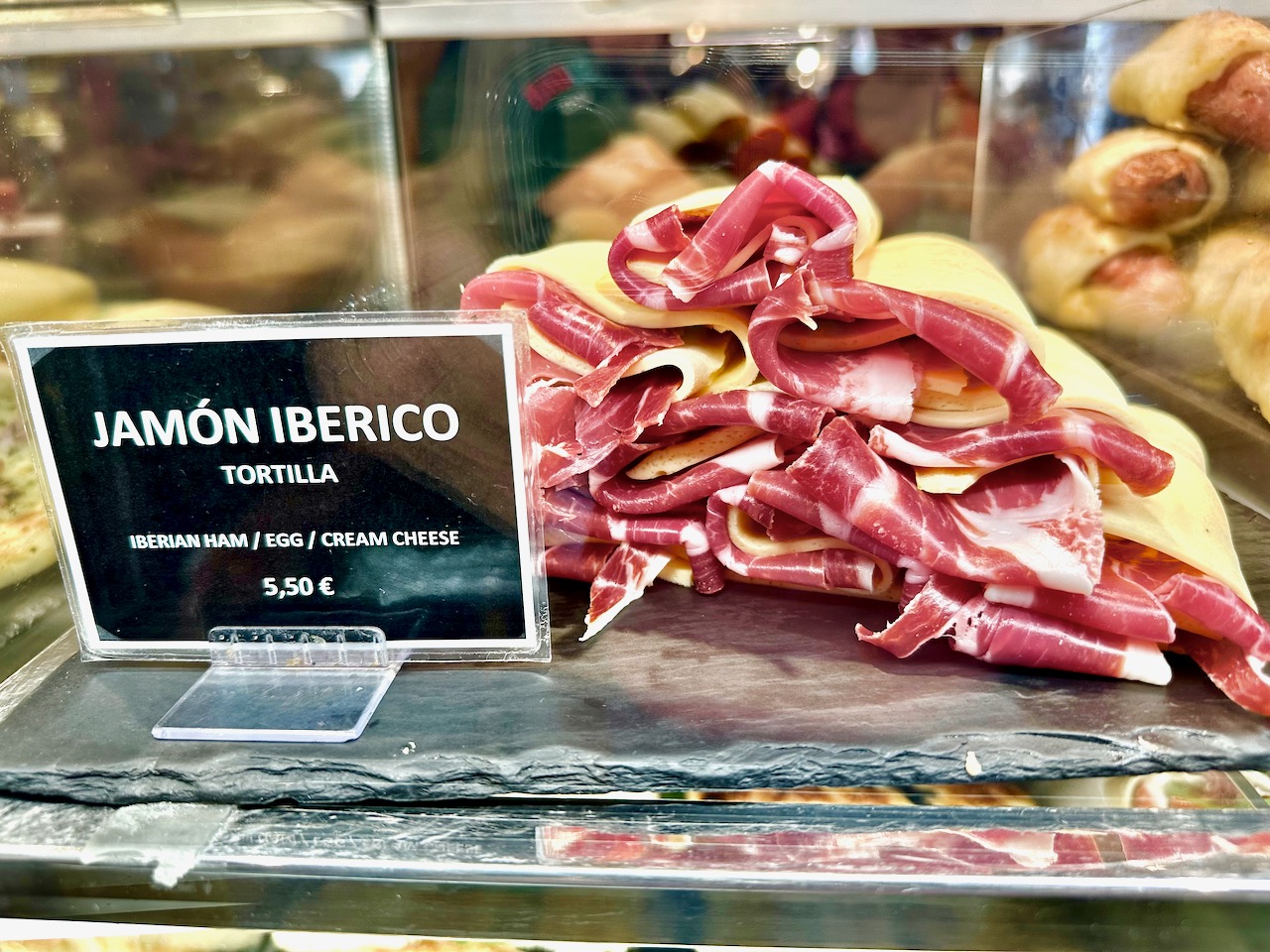
Arzabel Market was just one of the vendors.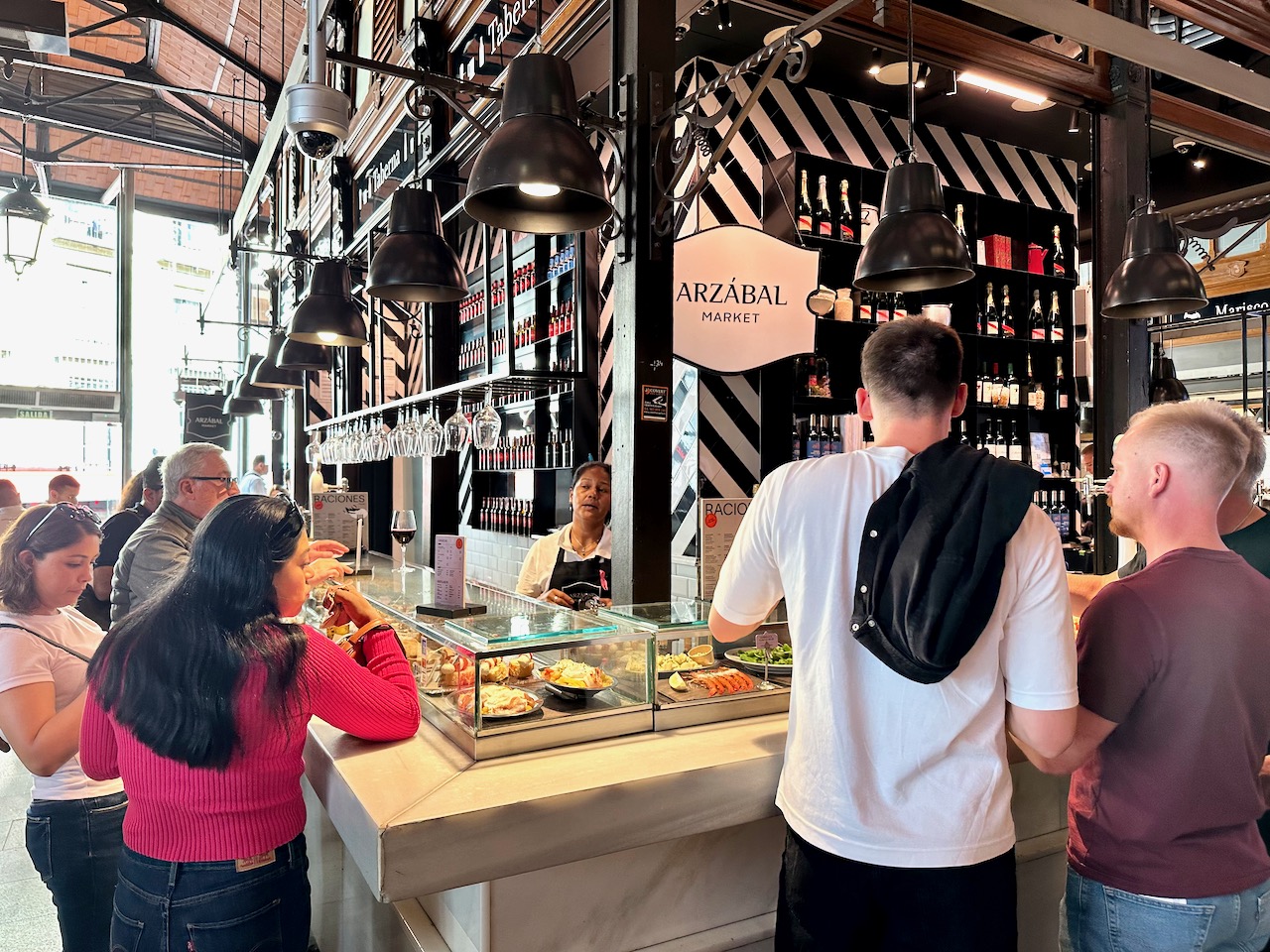
Hermanos Pollo not only had a chicken, but also a black cat graphic. I assume you only eat the chicken.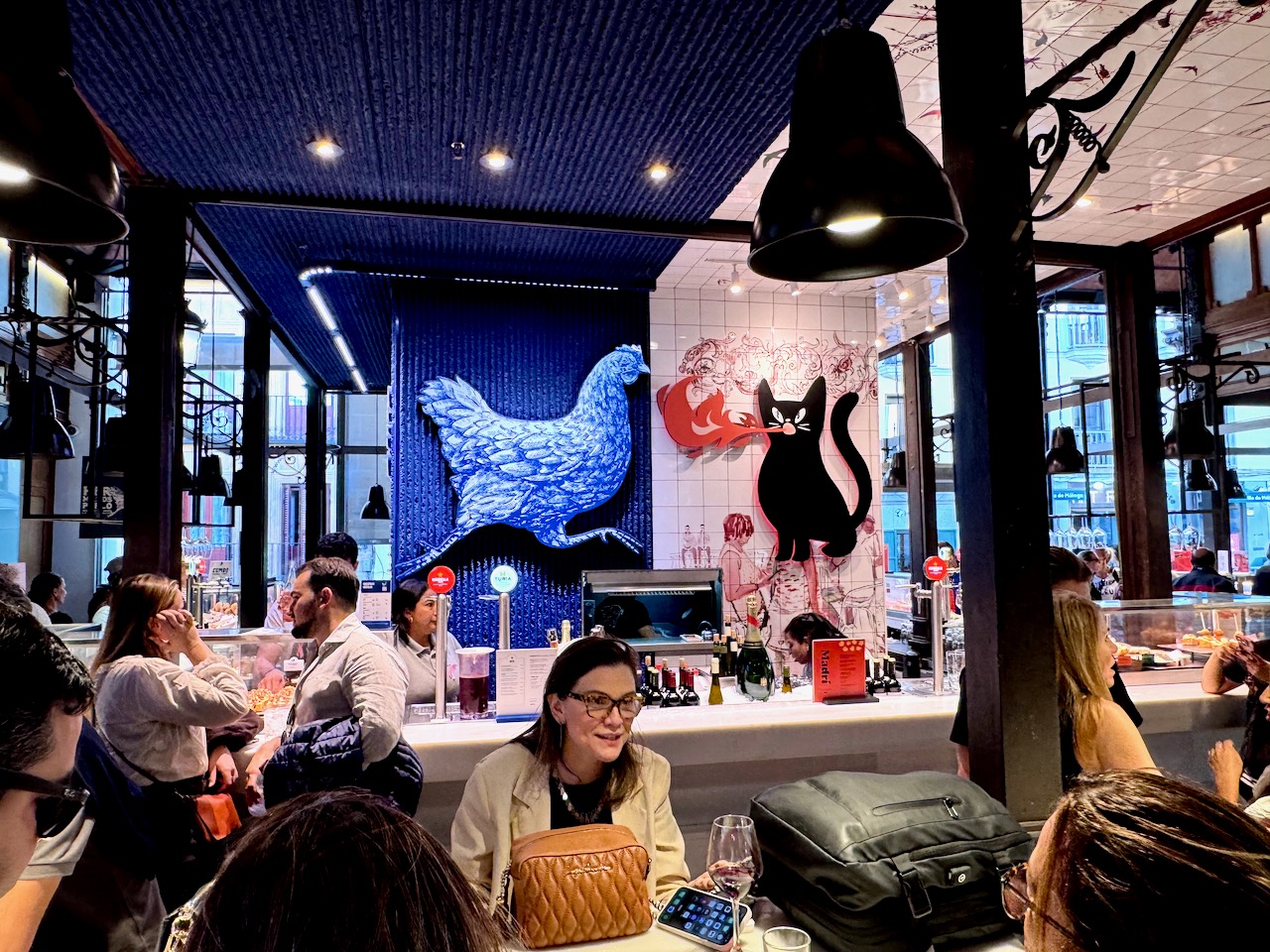
Tracy and I enjoyed a glass of wine, and nearby was a stall calling my name. 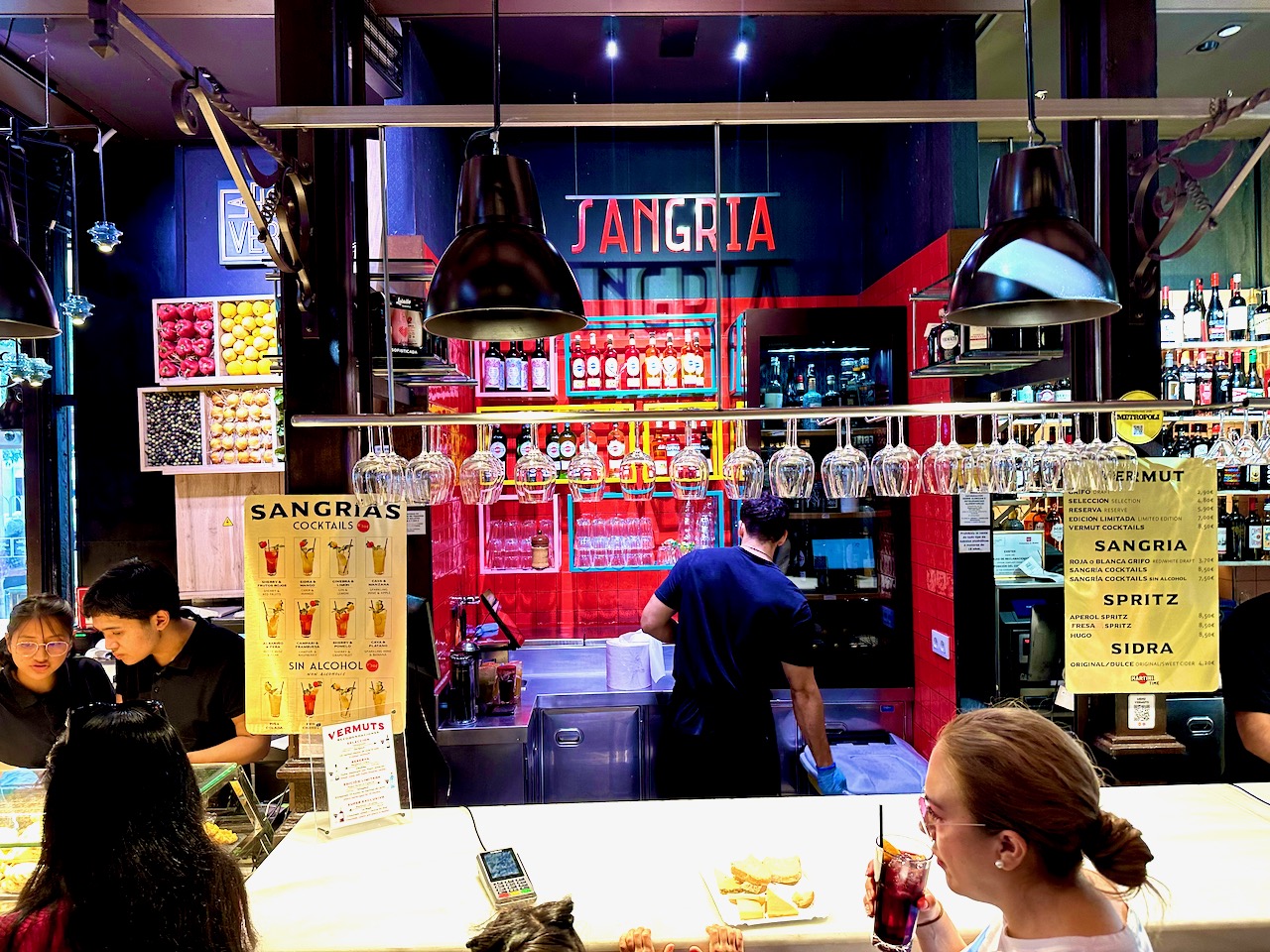 The Madre Amiga was selling doughnuts along with other delicious looking pastries. This artisan bakery won us over, and we learned that, yes, doughnuts pair nice with wine. Who says we’re not foodies?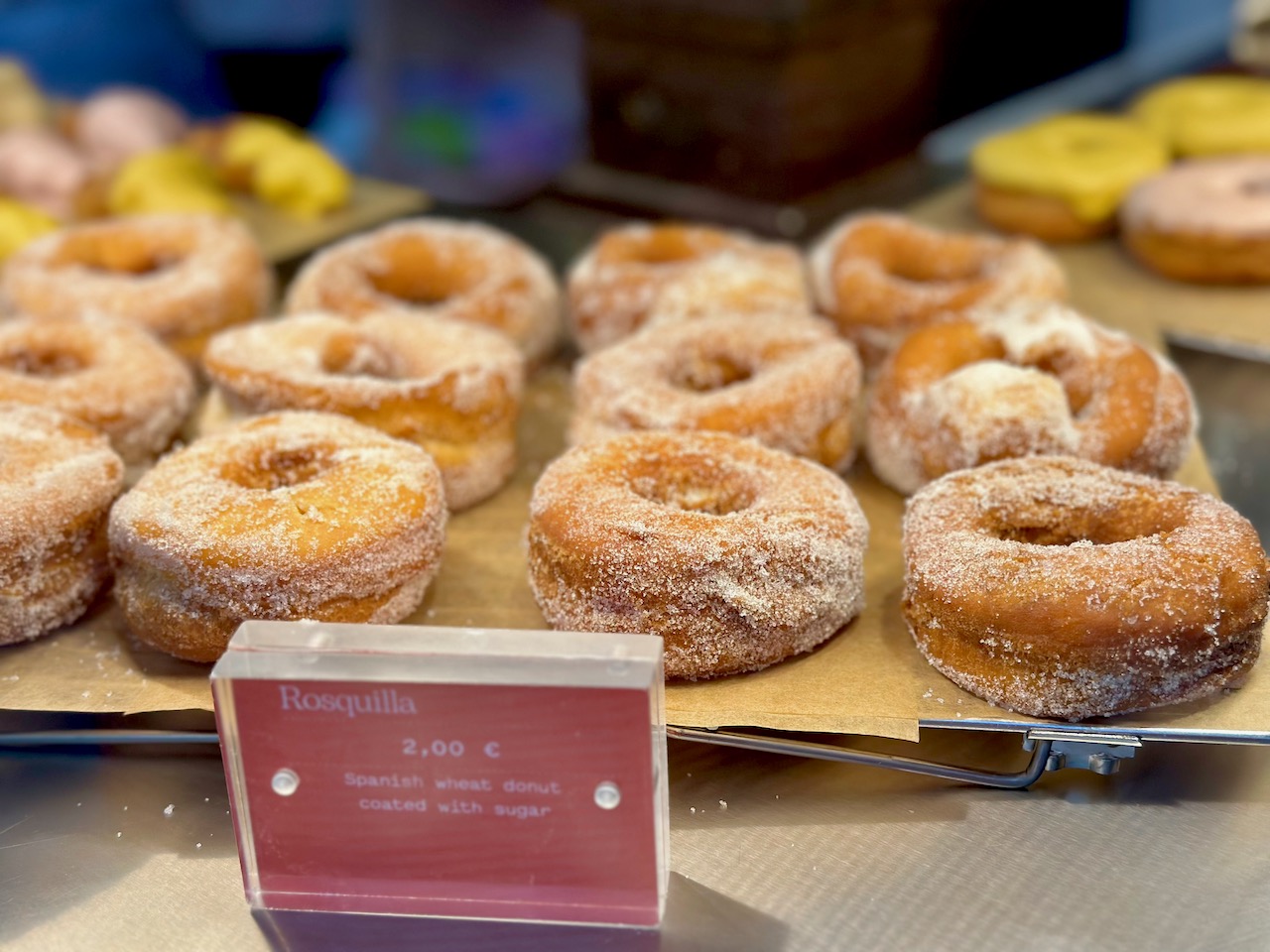
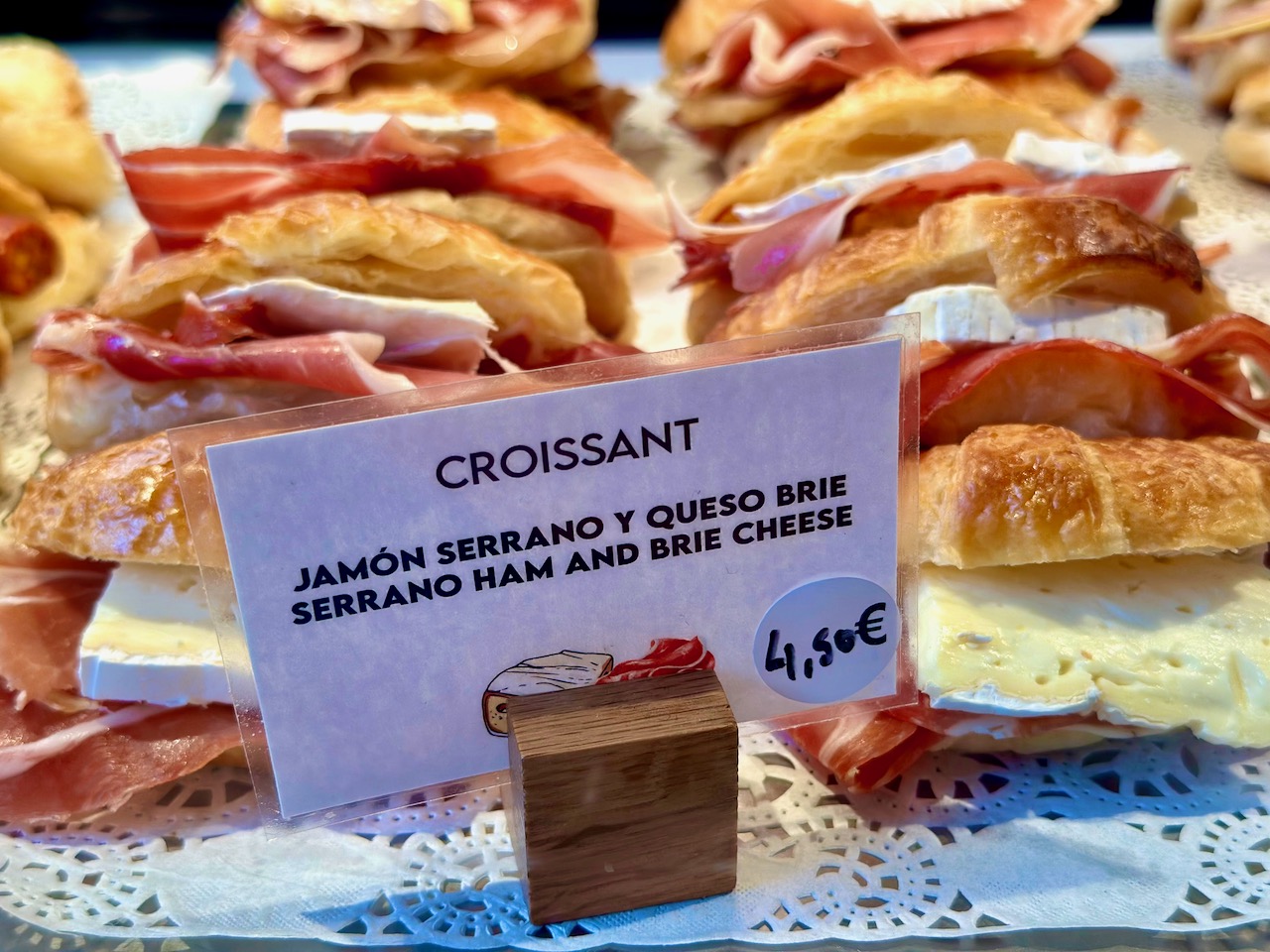
We decided to depart before getting sucked in for more tapas.
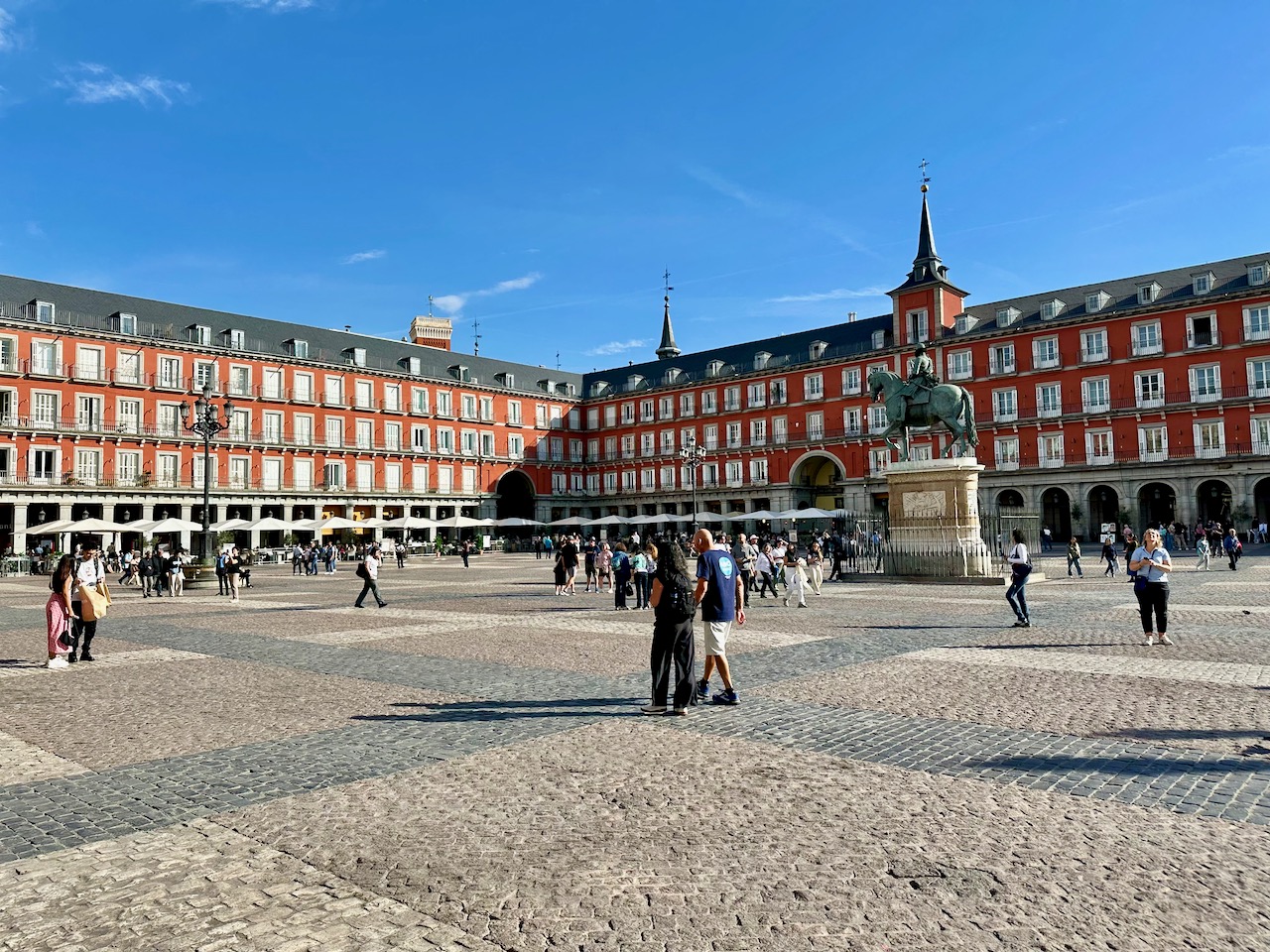
The nearby Plaza Mayor looked much spiffier on this afternoon than it did on our first full day.
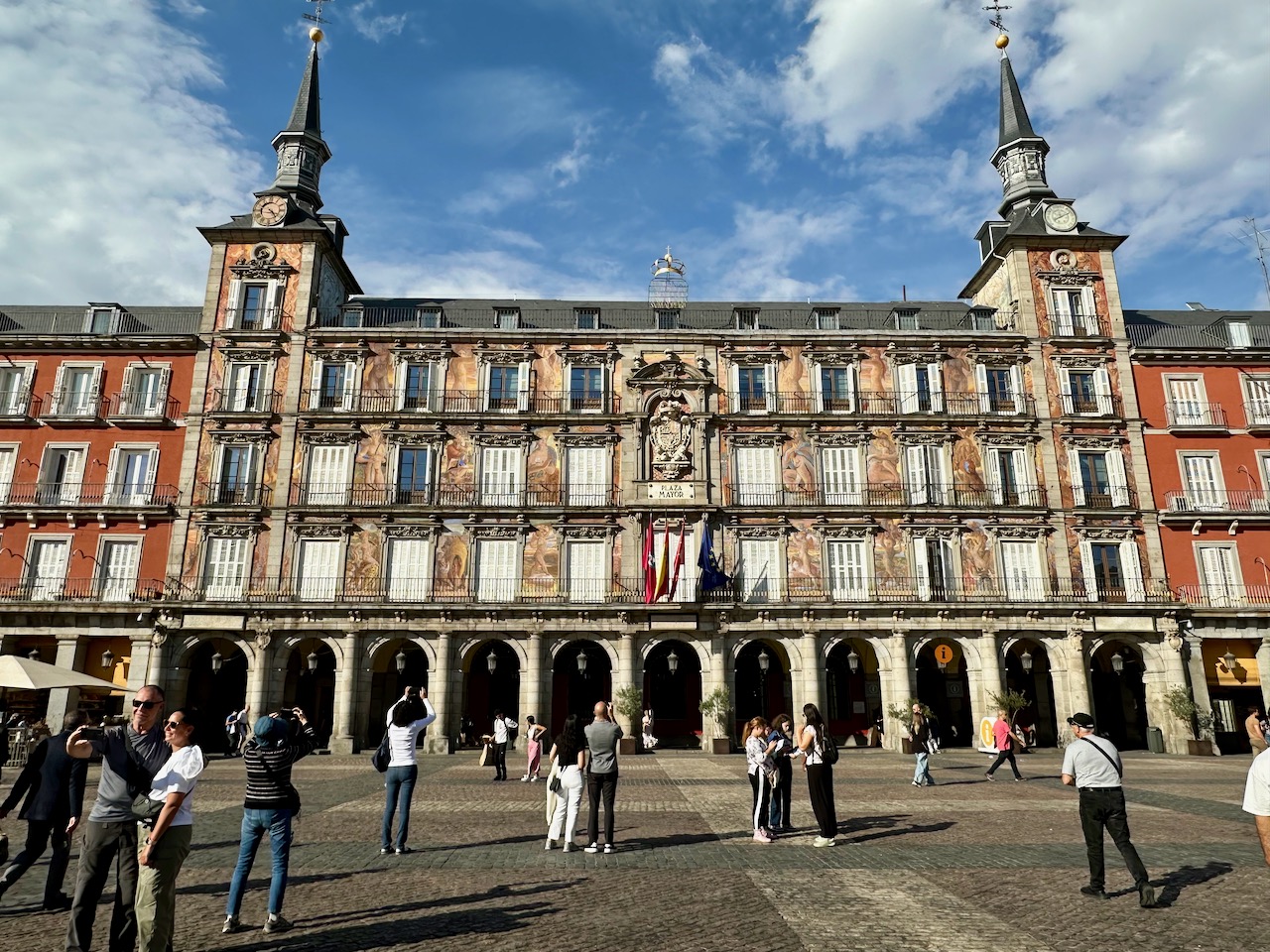
Philip III never looked better.


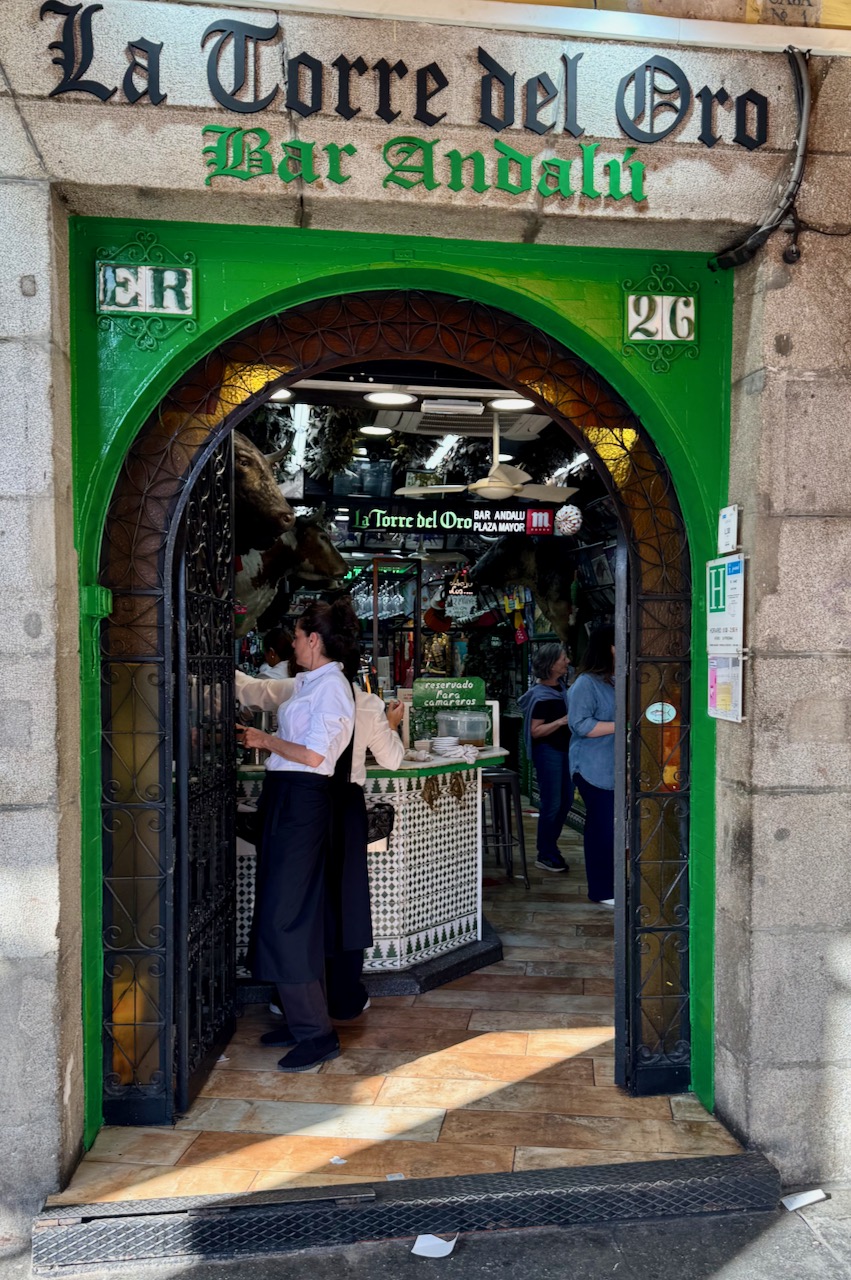
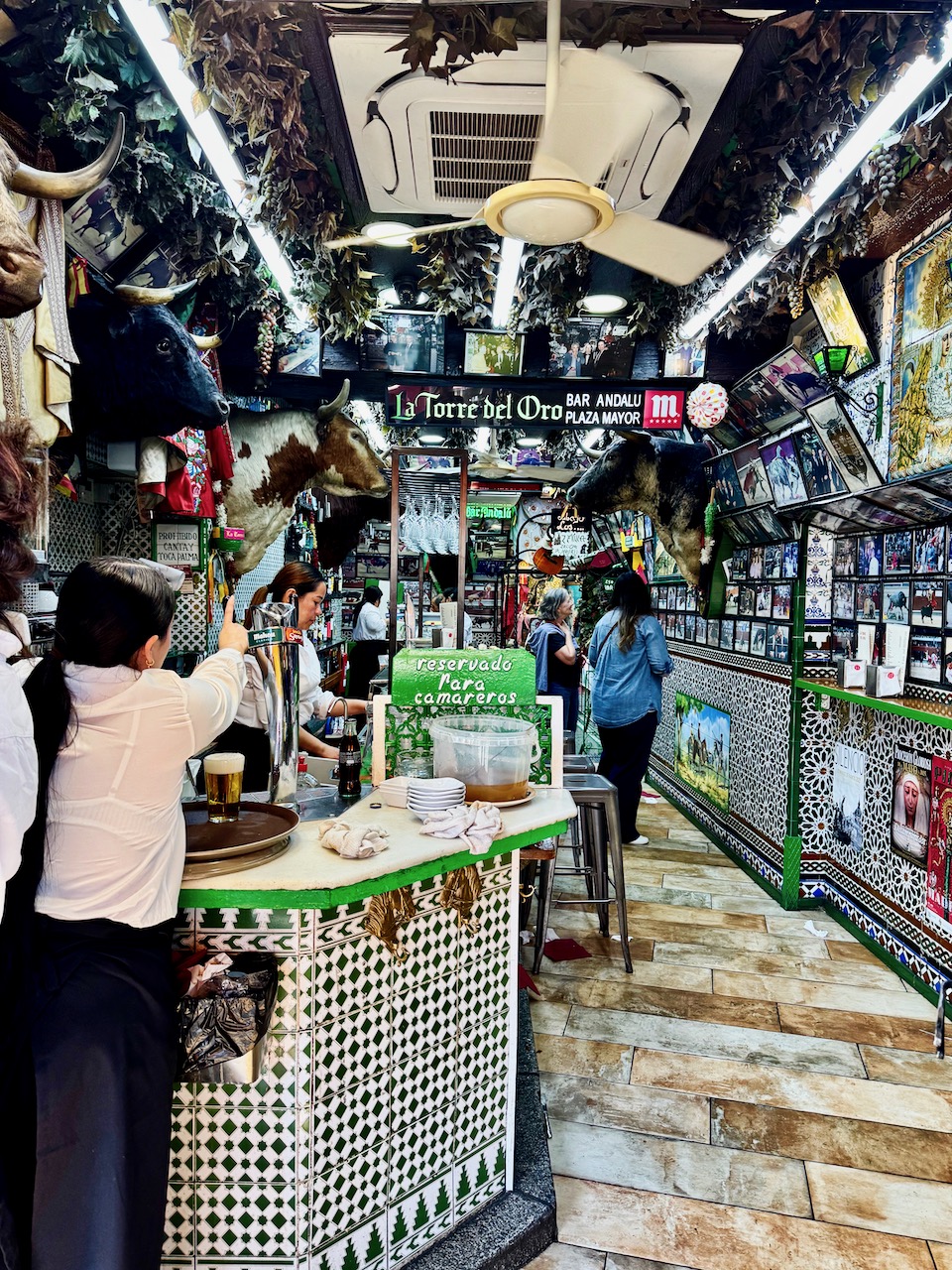
One place I wanted to see was La Torre del Oro, a bar de tapas place that is plastered with photos of bullfighters. Since we didn’t want to get plastered, we decided to skip drinking here.
On the way back to the hotel, our friend was still sweeping away.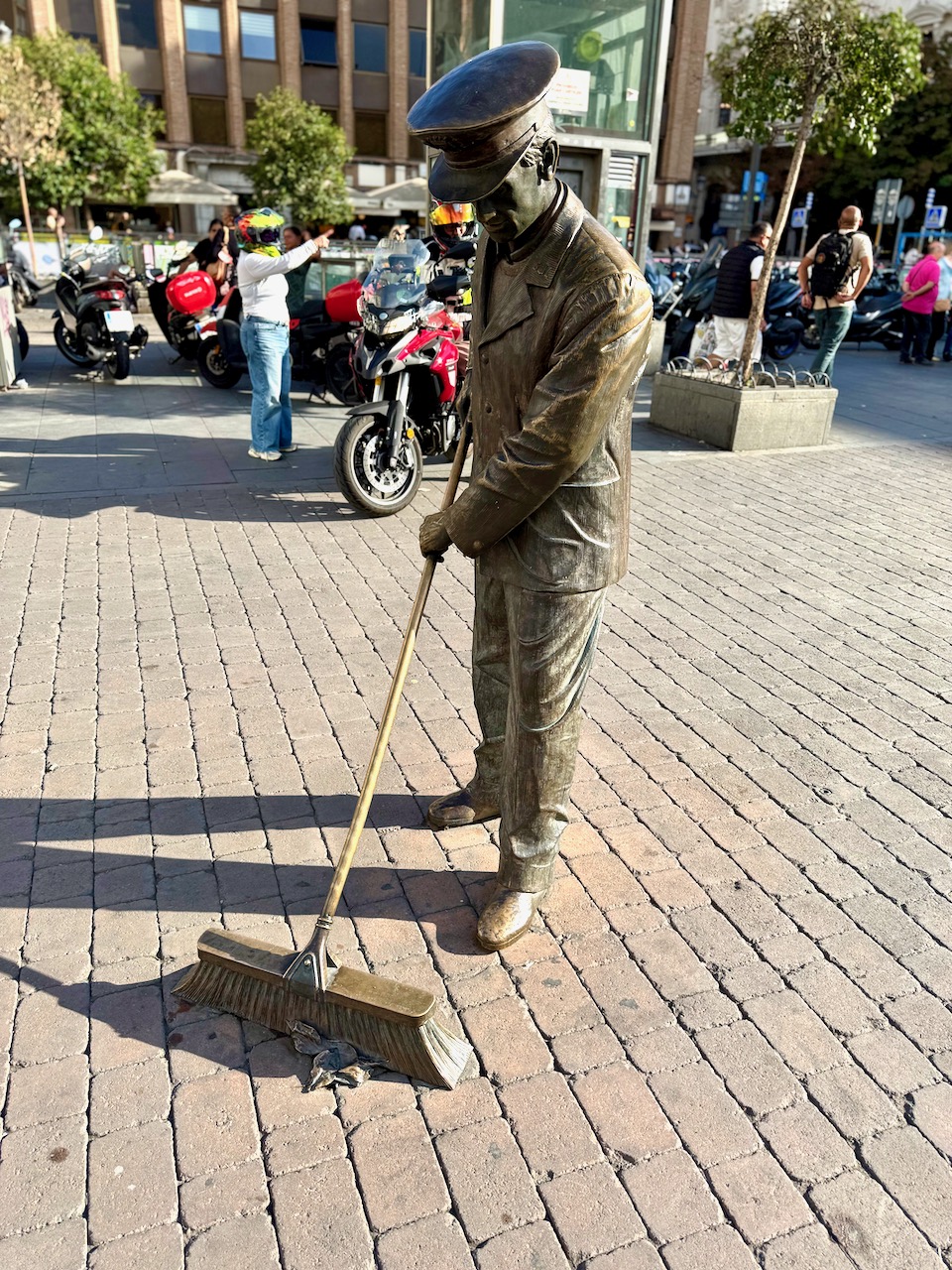
After our second mini-siesta, we ventured out for some blue hour photos on the Gran Via. The first sight was a historic building that is now a Four Seasons Hotel. The Palacio de la Equitativa (named for an insurance company) building, with its distinctive tower, was constructed during the latter part of the 19th century.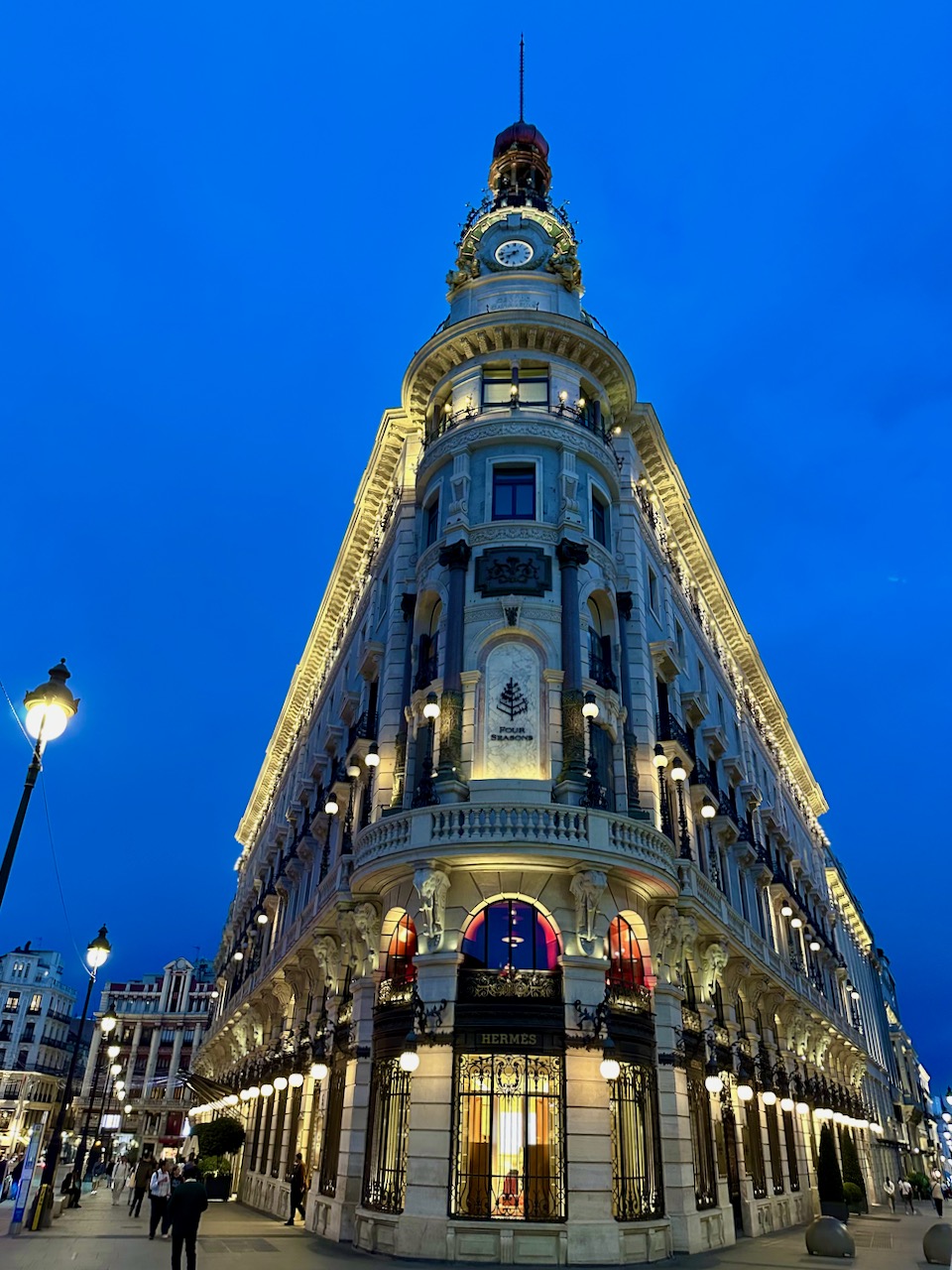
Spain’s Ministry of Education and Vocational Training dates back to 1916. It was designed by architect Ricardo Velázquez Bosco (no relation to El Bosco). I thought the car driving by was rooting for the Chargers, but was told that Bolt is a ride share company.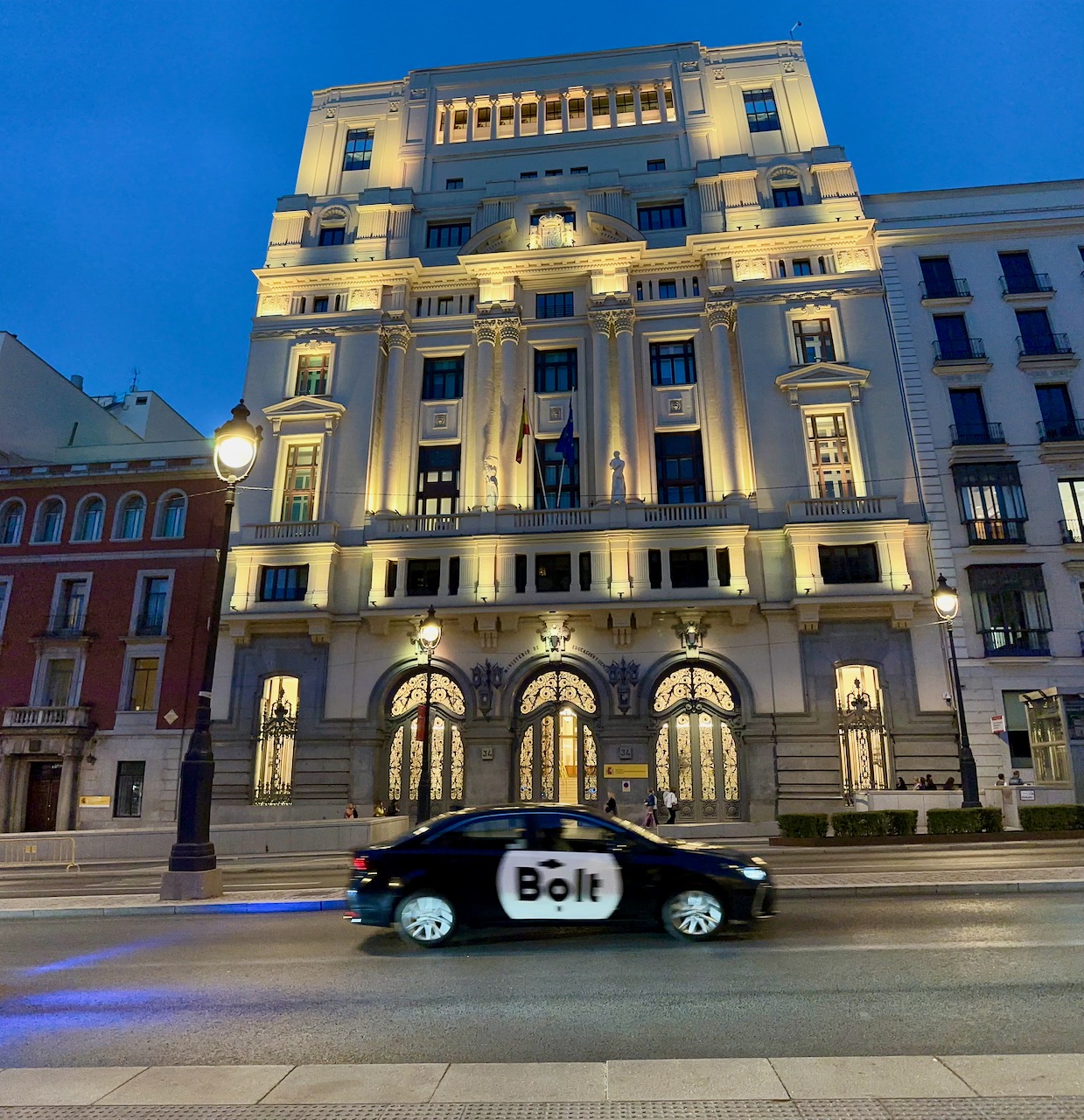
Hey didn’t we have drinks on this rooftop on our first night? It seemed like months ago.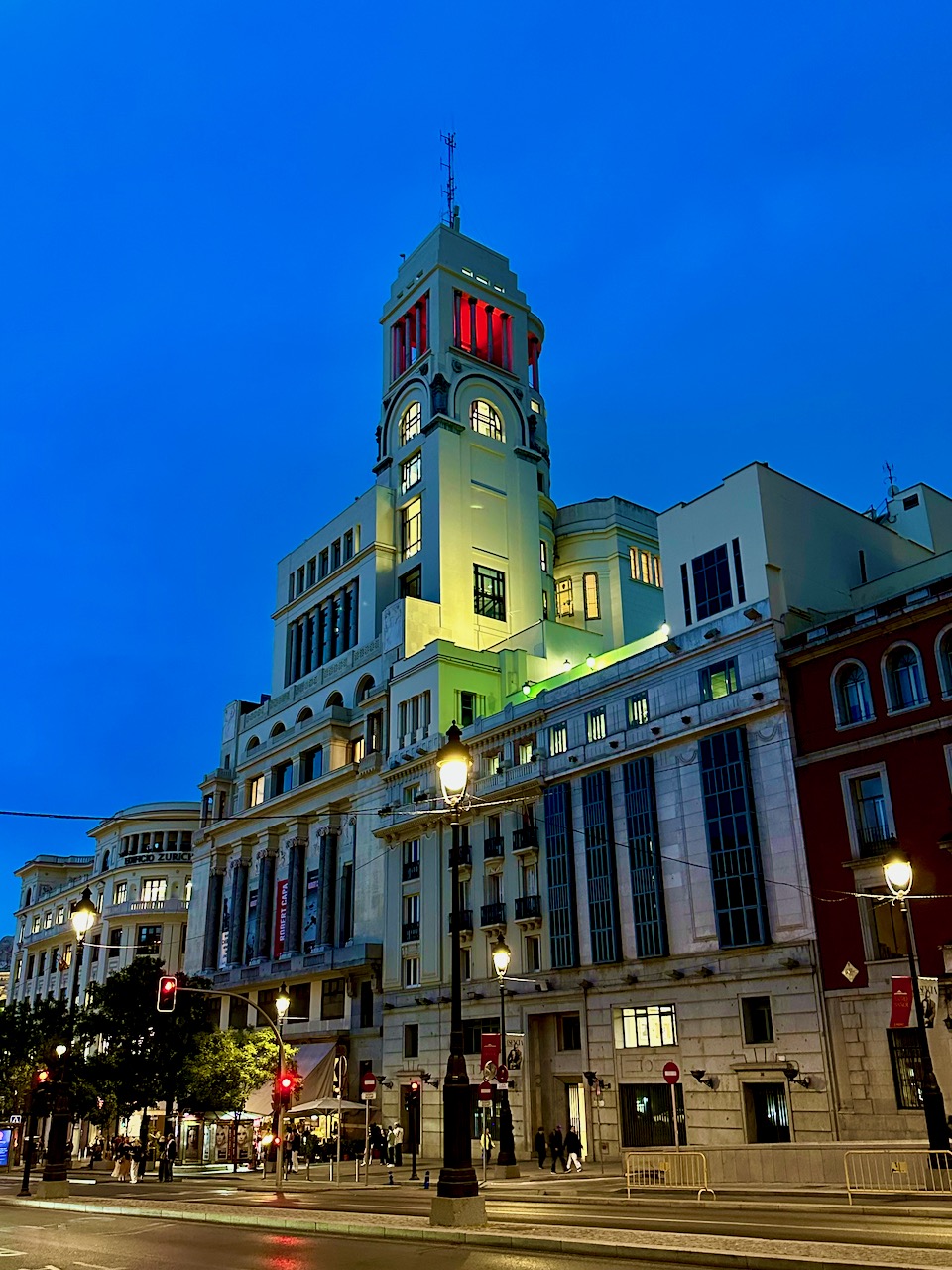
I love the different types of buildings around this part of the city.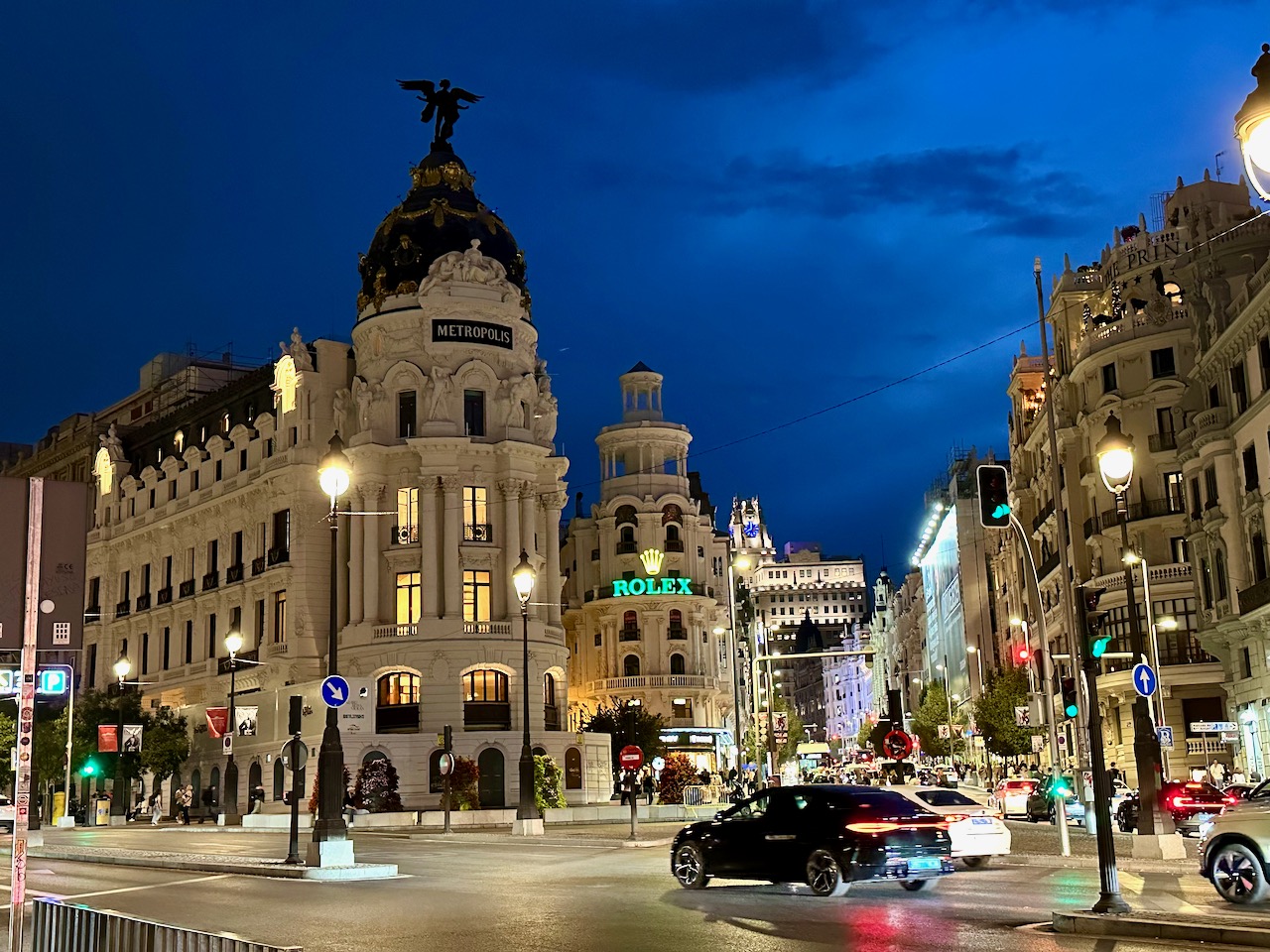
We realized we had taken a rather circuitous route to dinner, but we did arrive at Marcelle for our 8:30 dinner reservations. We had walked past this restaurant more than a few times during the week, and it is very close to Vinoteca Moratin where we had dined two nights previously.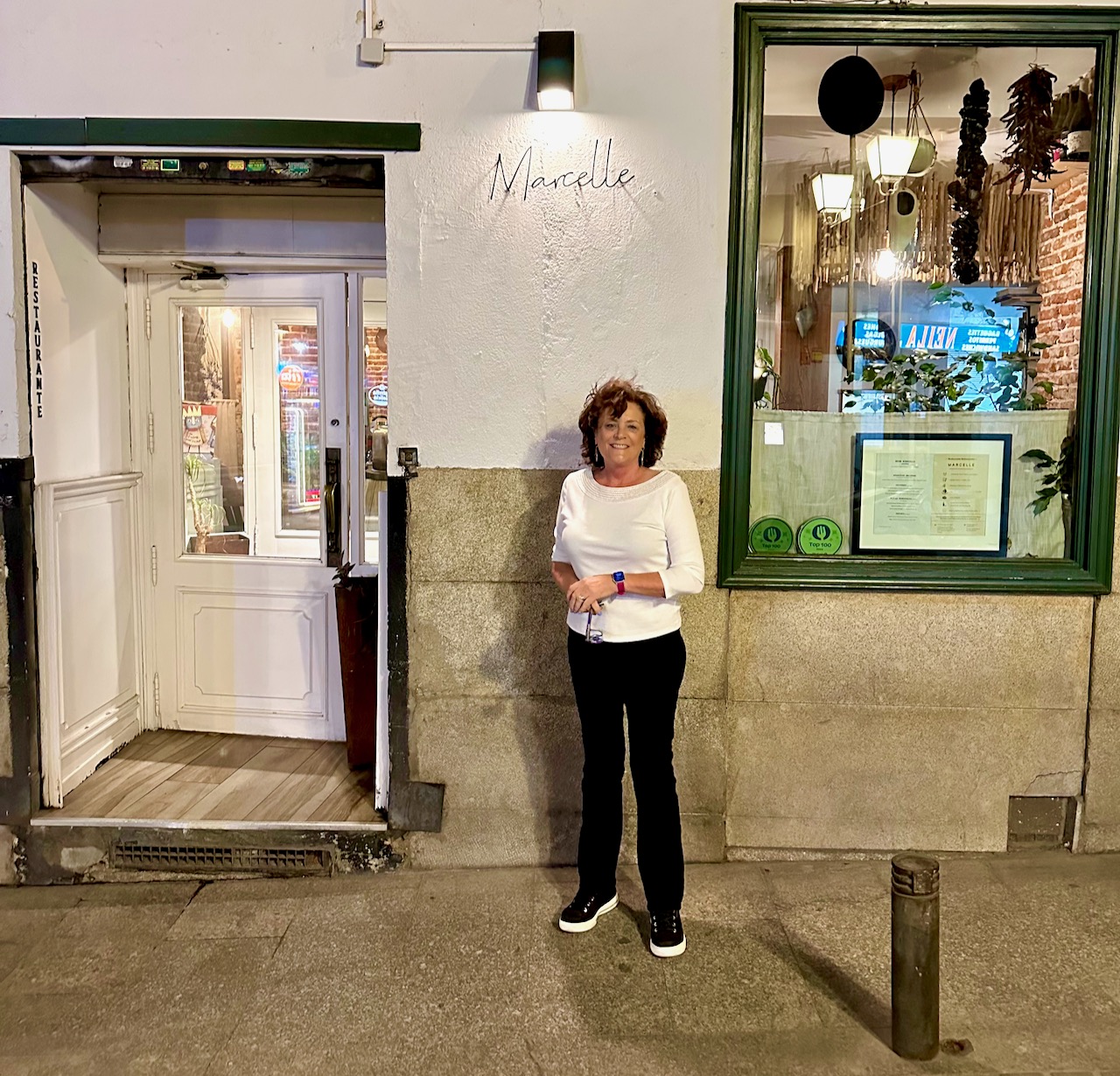
Our friends who visited Madrid during the Spanish Open tennis tournament had recommended this establishment that serves food from France’s Basque region. I seem to recall the wife is from the Basque region and her husband, the chef, mans the grill. Don’t hold me to that.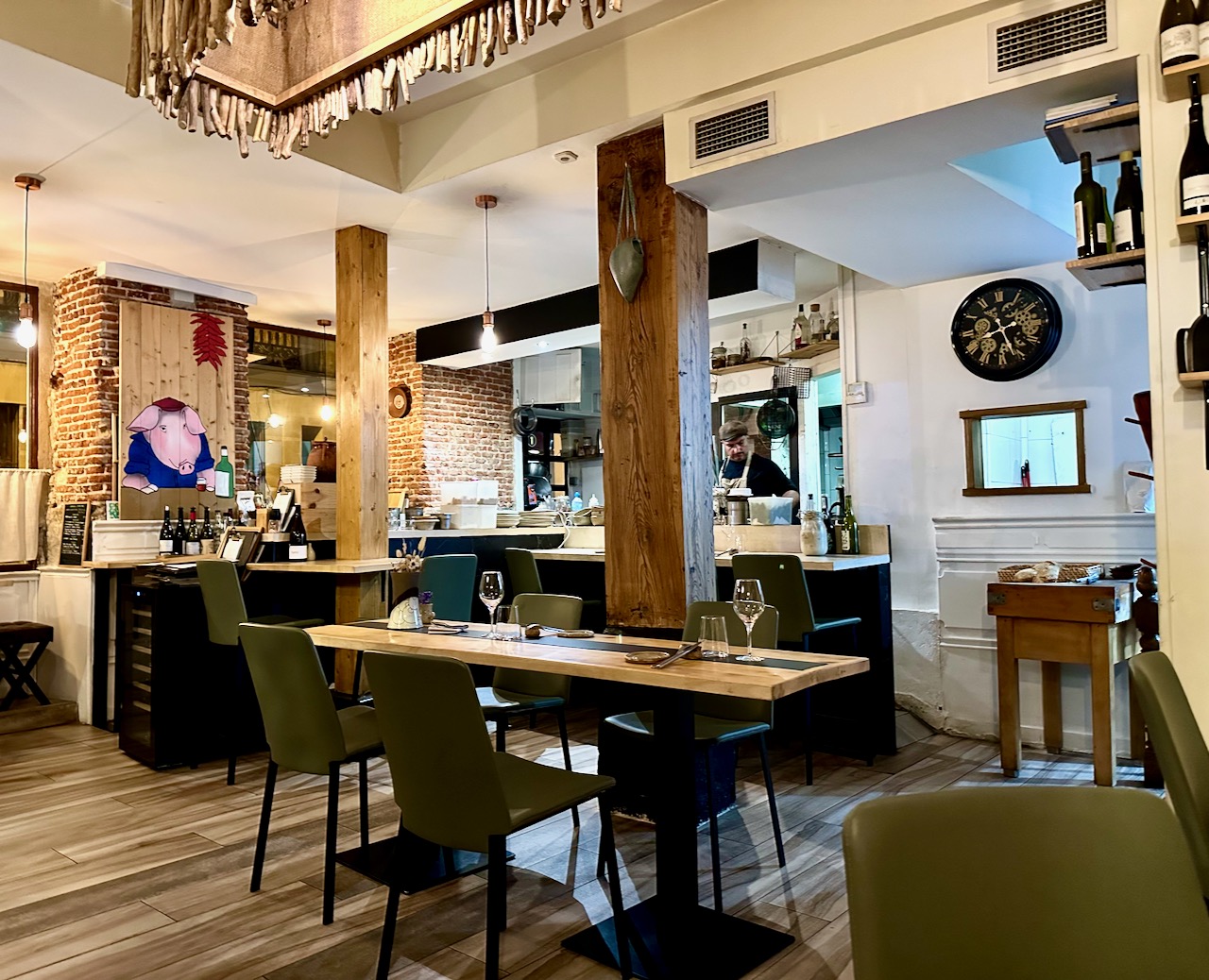
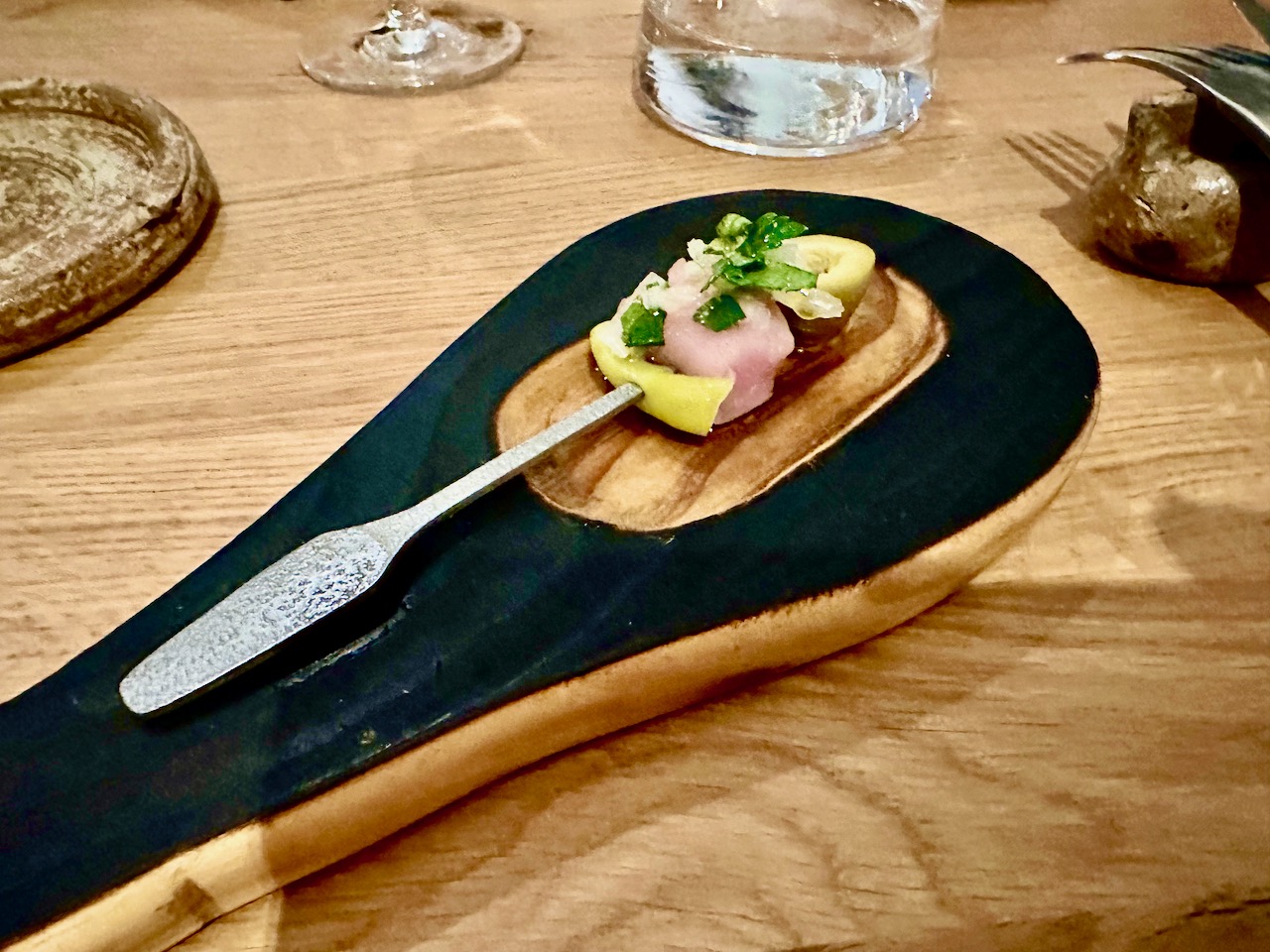
We started with two amuse bouche dishes, the first being fish with a spicy pimento olive on a skewer. Wow, especially as I finally found an olive I like. Afterward we were served a burnt tomato soup that was outrageously delicious.
The menu is small and the three courses come to €42. For my main, I had a perfectly grilled veal. It was delicious.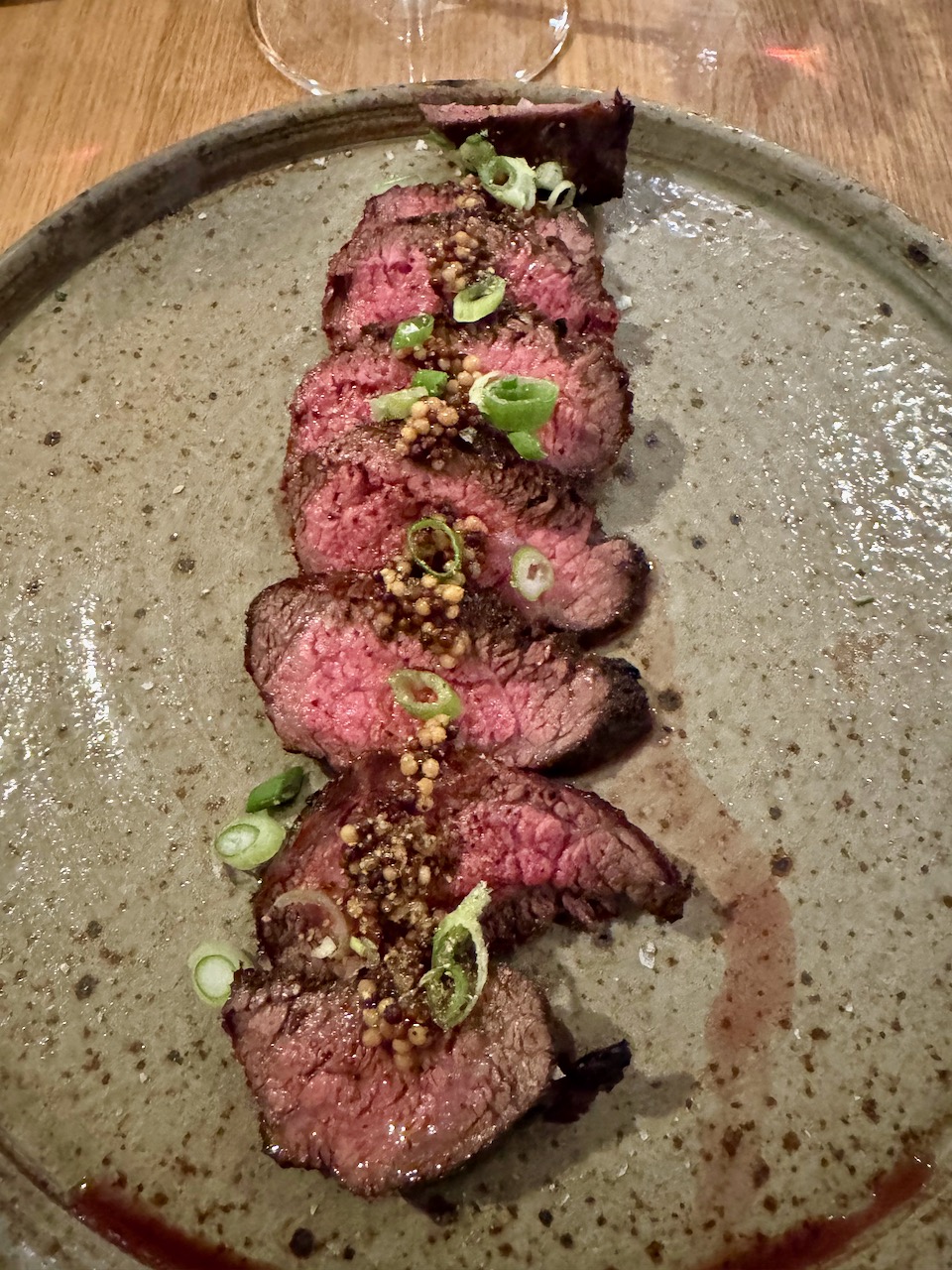
Tracy enjoyed her eggplant tarte tatin with grilled Iberian pork with mustard and roasted potatoes on the side.
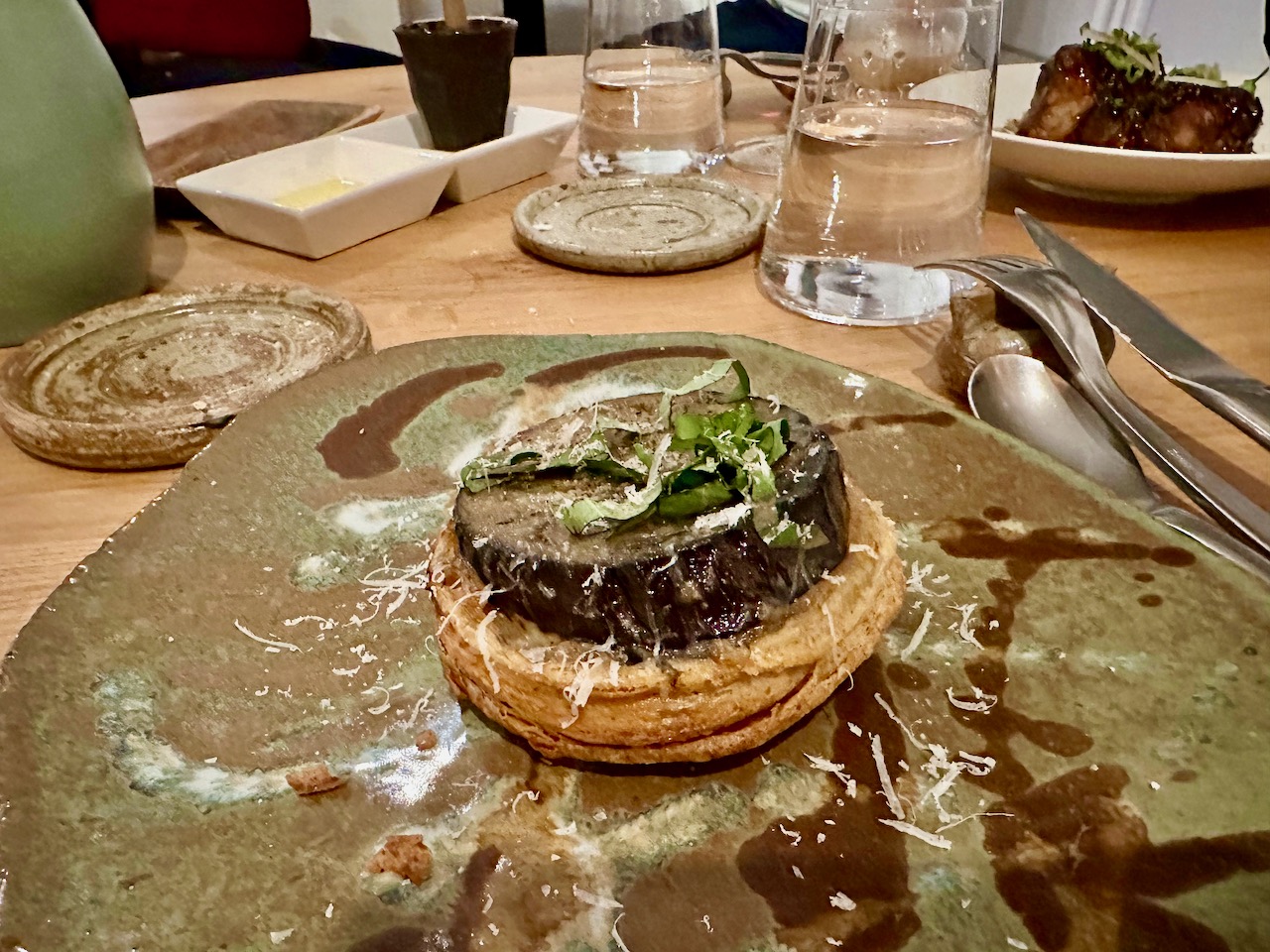
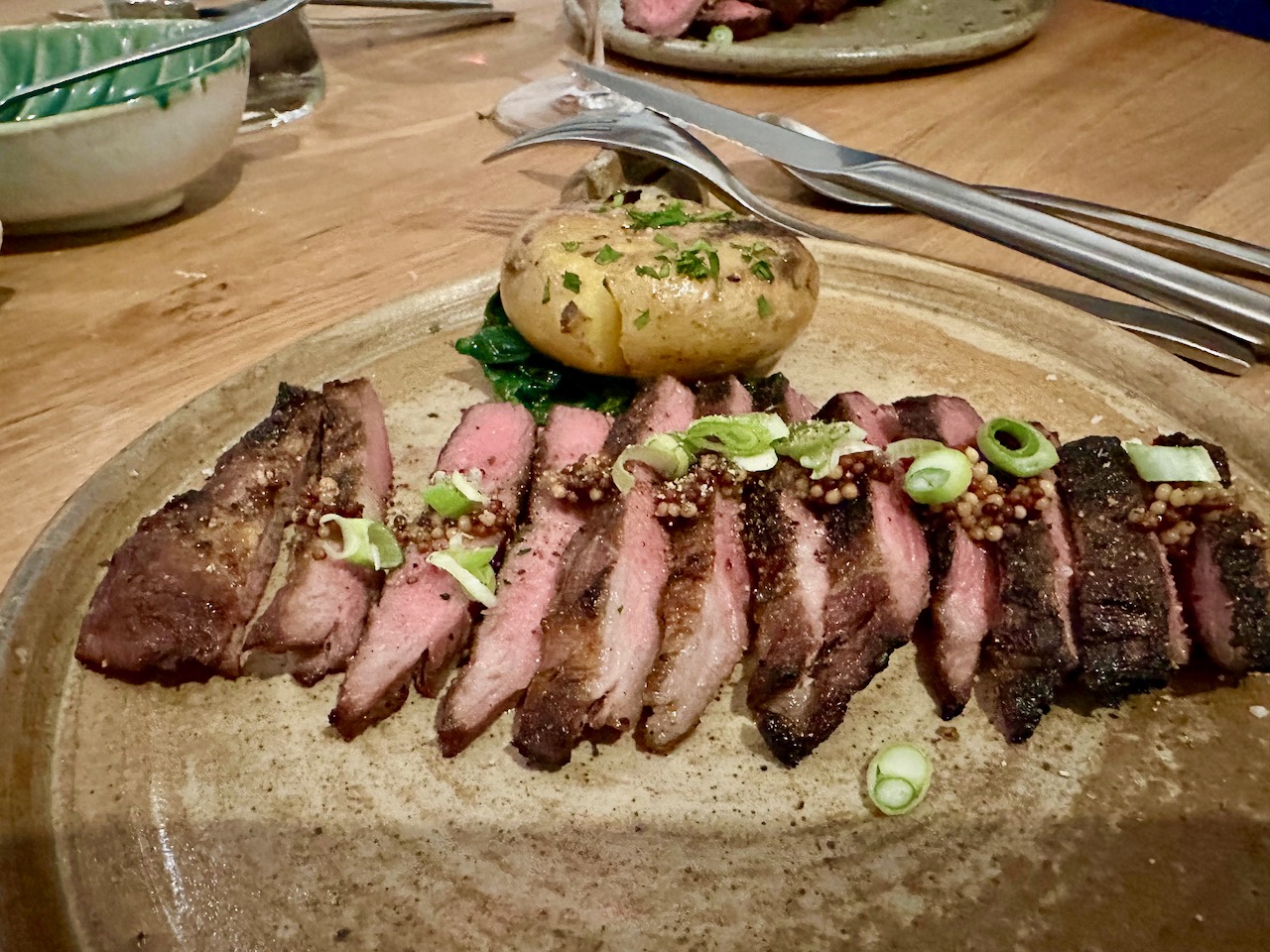
For dessert, I went with the Crème Brûlée and Tracy the chocolate sorbet. It was a fantastic meal, in a quaint, intimate setting. Tres bien!
 We only had one more day remaining in Madrid.
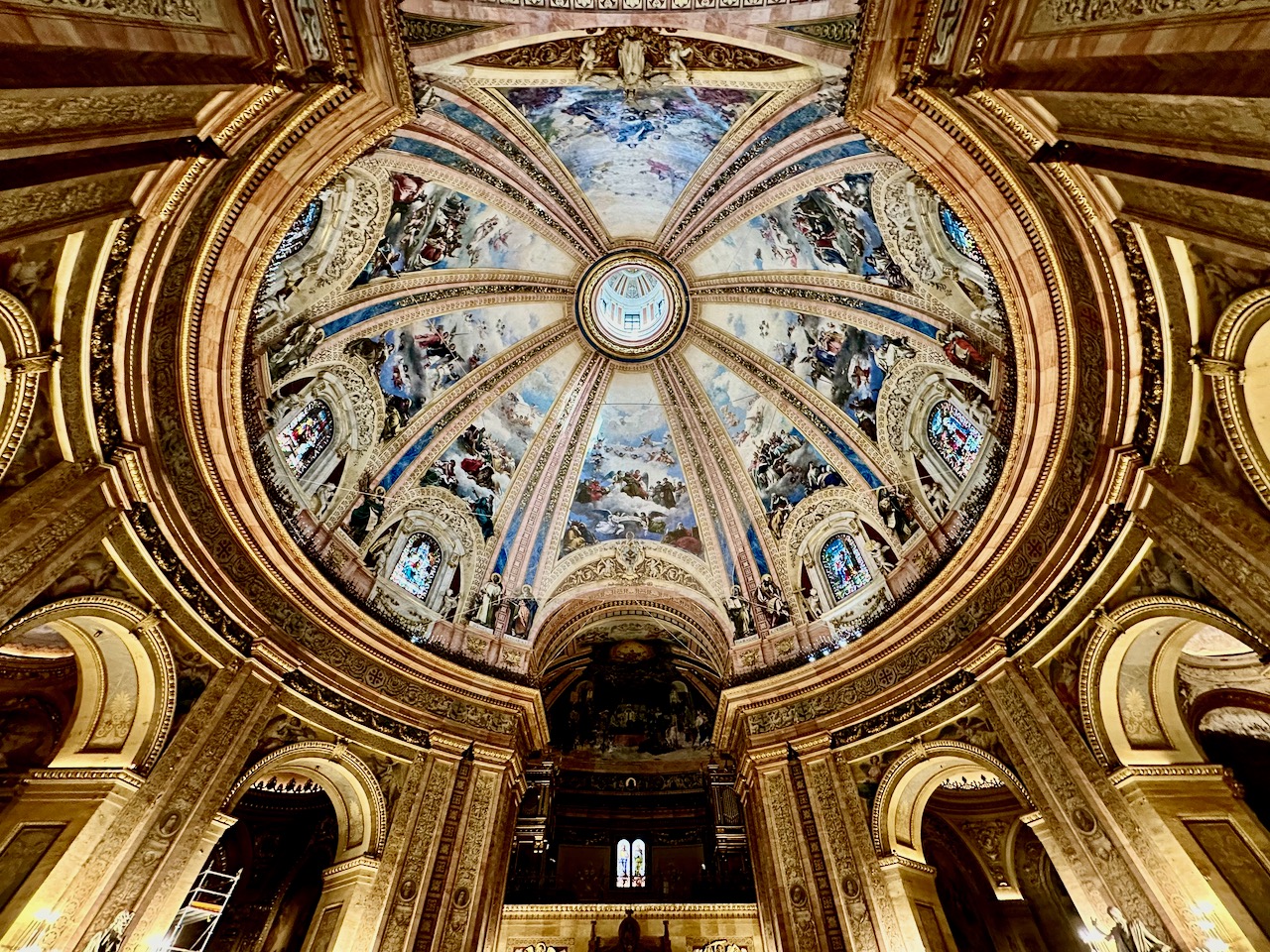
We started with a visit to a quirky museum, Museo del Romanticism, then made our way to the Liria Palace, checked out the Plaza de España and its famed Monumento Cervantes, kept that theme at a tapas joint that also uses his name, finally made it inside Basílica de San Francisco el Grande and to end our busy last day, we walked a short distance to check out the Cripta de la Almudena.
One final dinner, a nightcap with our new favorite bartender and our time was up in one of my favorite European cities.
Next: Chapter Six: No Time For A Siesta On Our Last Day In Madrid.
Day Six: Former Palace of the Marquis of Matallana, Current Palace for the Duke of Alba, Tilting At Statue, Cervantes Squared, All Packed, The Fourth Largest Dome In Europe, The Largest Crypt In Spain, Another Sebastian Dining Winner and Paying Our Farewell To The Man Himself