Chapter Eleven: Sensational Segovia
April 30, 2026
Chapter Thirteen – The Palace Less Visited & Epilogue
June 10, 2026Celebrating España: MaiTaiTom’s Still “Insane For Spain”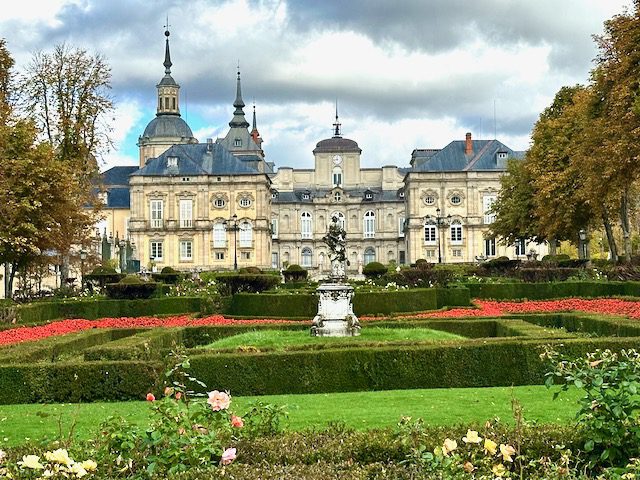
Chapter Twelve – Royal Site of La Granja de San Ildefonso
Day Twelve – Retreat For Spanish Monarchs, Modeled After Versailles, Gorgeous Gardens/Fabulous Fountains, One Last Spin Around Segovia and Out Of Lock
Early in the morning, a taxi whisked us the 11 kilometers to the small town of San Ildefonso, where we would spend a couple of hours wandering the Palacio Real de La Granja de San Ildefonso (Royal Palace of La Granja de San Ildefonso), its royal chapel and finally the expansive (and gorgeous) gardens. As we pulled into the circular entrance with a view of the chapel, an autumn chill was in the air.

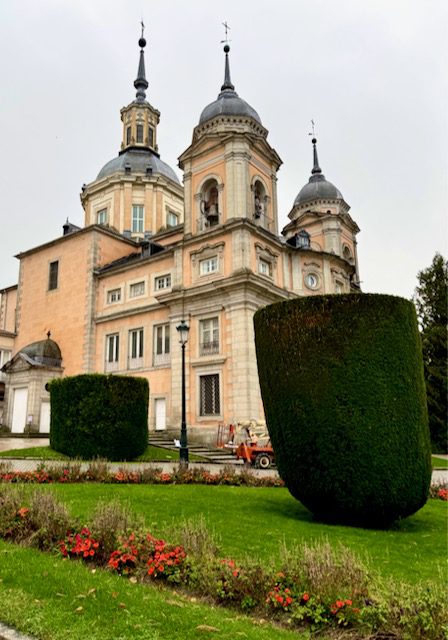
Philip V’s reign in Spain took him mainly to this plain (ok, it’s really in the hills), which he became enamored with in the early 18th century. So much so, he decided to construct a Baroque summer palace and gardens decorated with fountains and sculptures that would become a retreat for Spanish monarchs. It was also the palace were Philip’s widow, Queen Elisabeth, was exiled after his passing until her son, Charles III, became king in 1759 after the death of his older half-brother, Ferdinand VI.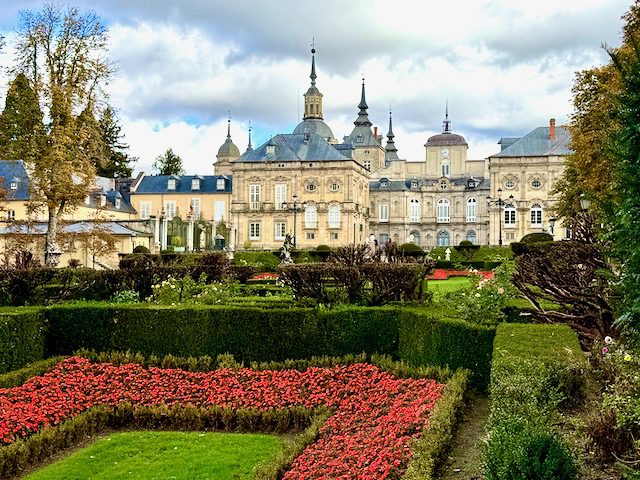
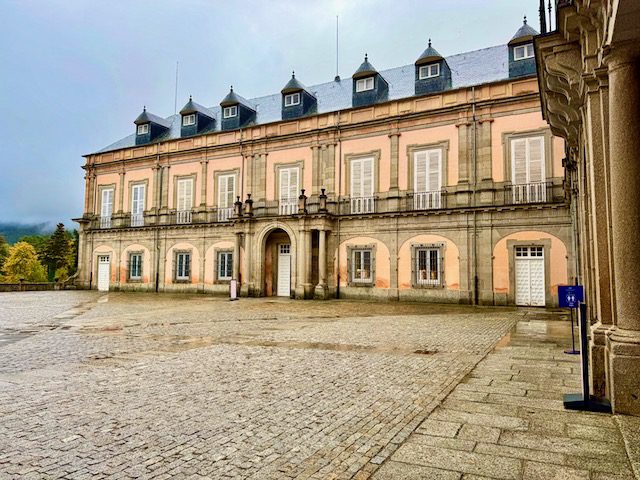
Waiting for the palace to open, we grabbed a quick bite in town, and then wandered back to the palace. Entering through the courtyard, we climbed the staircase to the palace. The site had originally been a hunting grounds for Castillian kings. It was then sold to monks and then purchased by Philip V to build the palace.

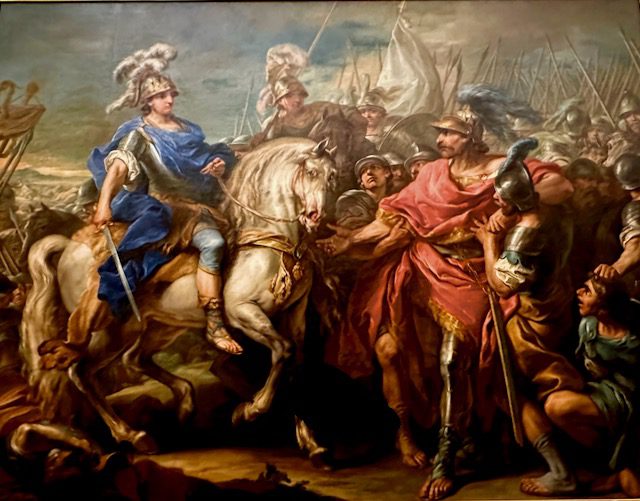
The Room of the Halberdiers (the guards who protect the king and queen) was first up.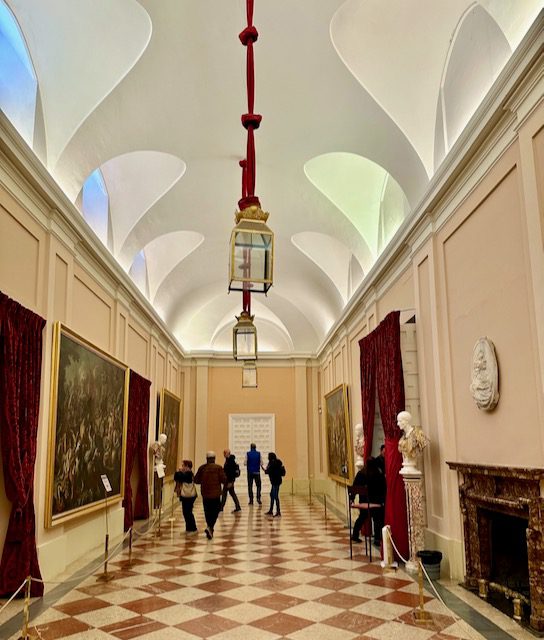
The room contains a number of paintings highlighting the exploits of Alexander The Great.

Not surprisingly, the Portrait Gallery has a number of royal family portraits from the collection of Philip V and Elisabeth Farnese.
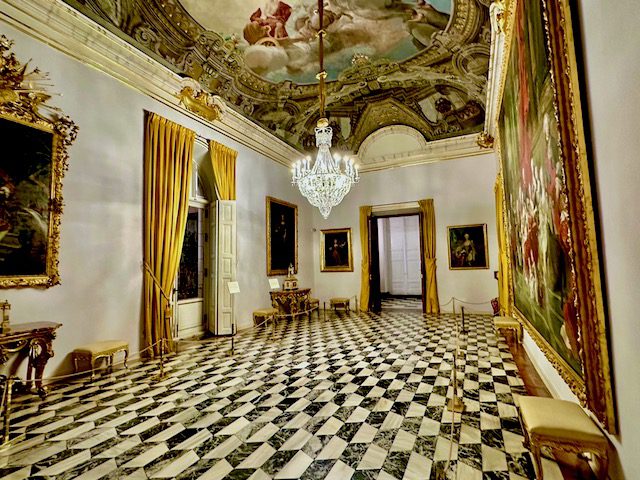
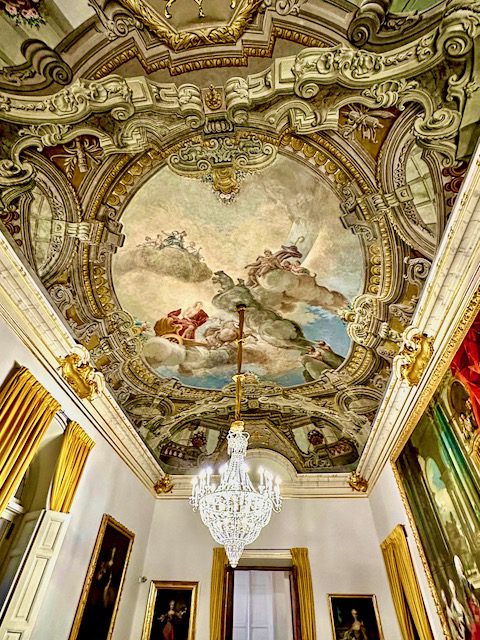
The room, originally called the “Room of the Covered Dishes,” includes portraits of the future Carlos III, who was Duke of Parma at the time, and “The Family of Philip V.”
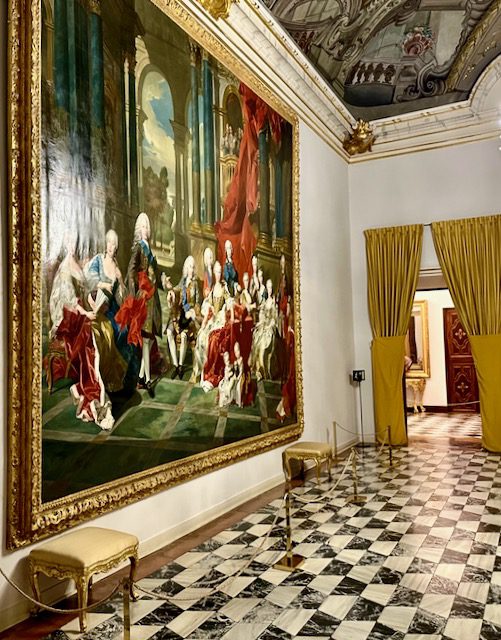
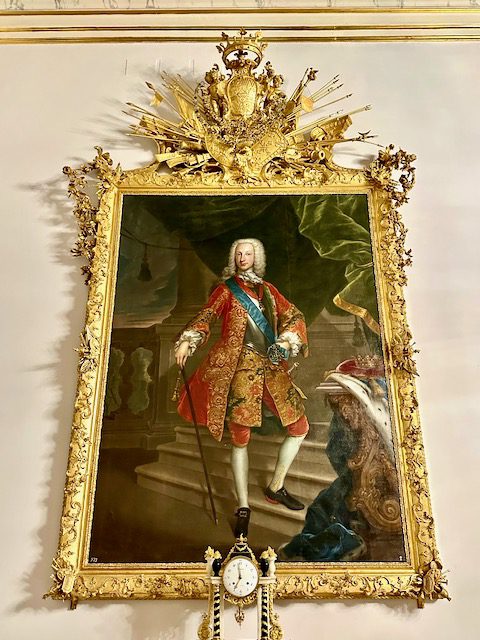
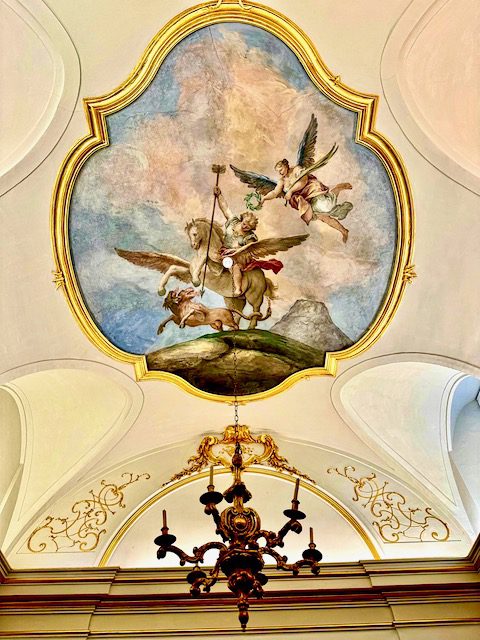
The Dressing Room also contained a number of pieces of artwork, including …
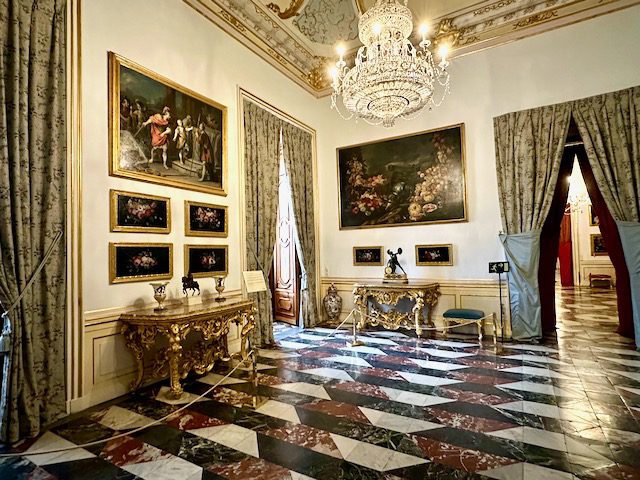
… Alexander The Great in the Temple of Jerusalem.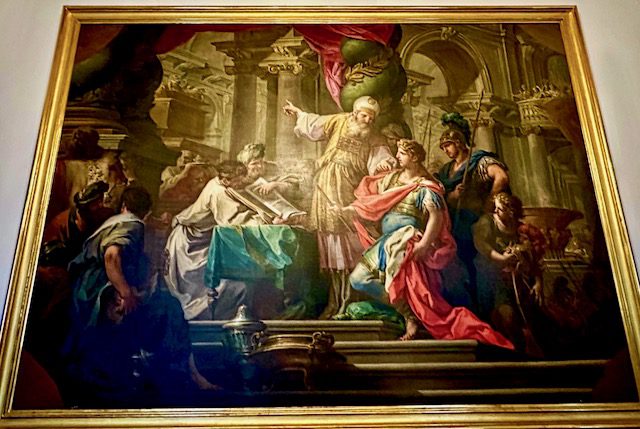
Now this is one big bedroom, complete with rosewood bed.
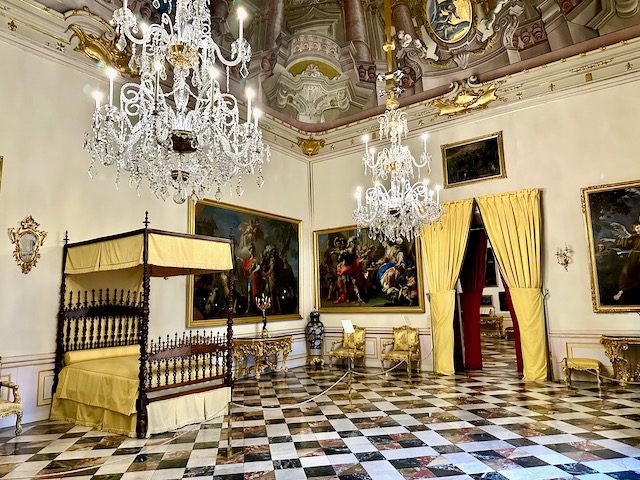
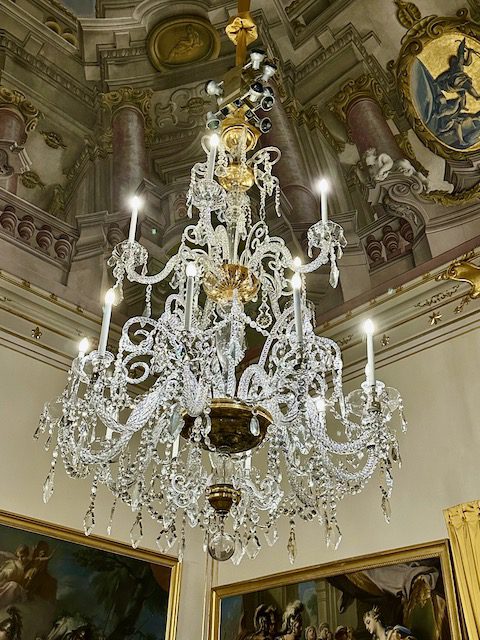

It has a fantastic view out toward the Parterre of the New Cascade, which was unfortunately under renovation when we visited.
The ceiling (I believe) shows the Marriage of Eros and Psyche.
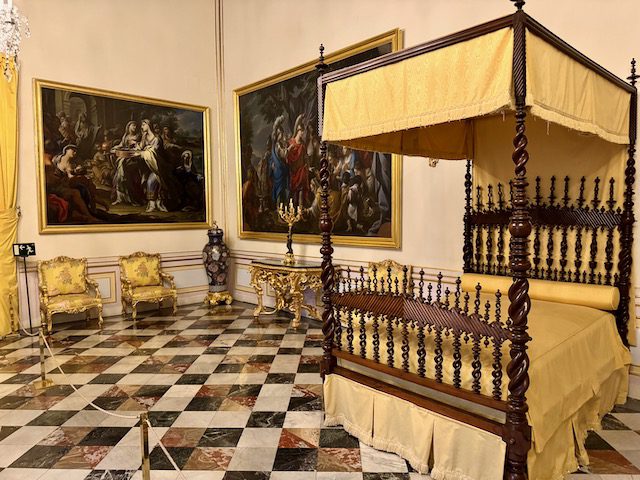

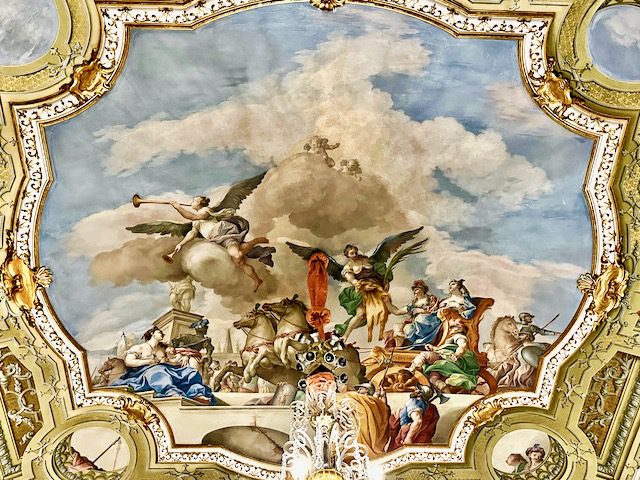
The Queen’s Room ceiling is a crowning achievement. Maybe that’s the Marriage of Eros and Psyche. So many ceilings.
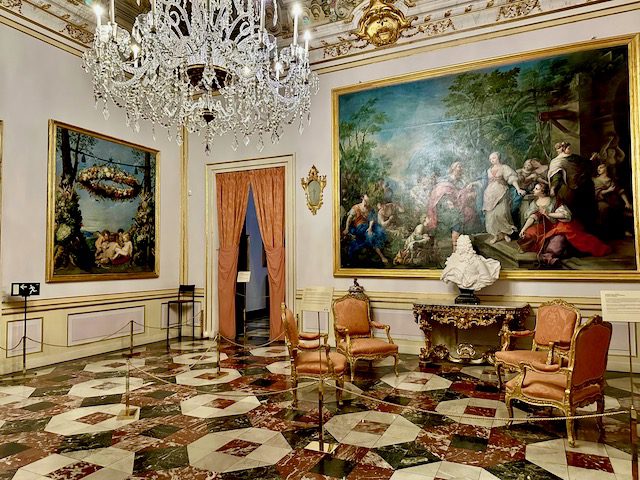
I was waiting for Monty Hall to tell us what’s behind these curtains.


Looks like we won a clock and some vases.

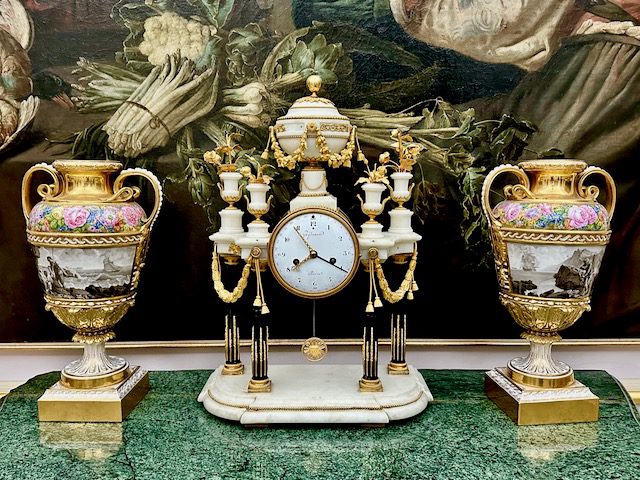
The Principal Dining Room was once used as the bedchamber of Philip V.

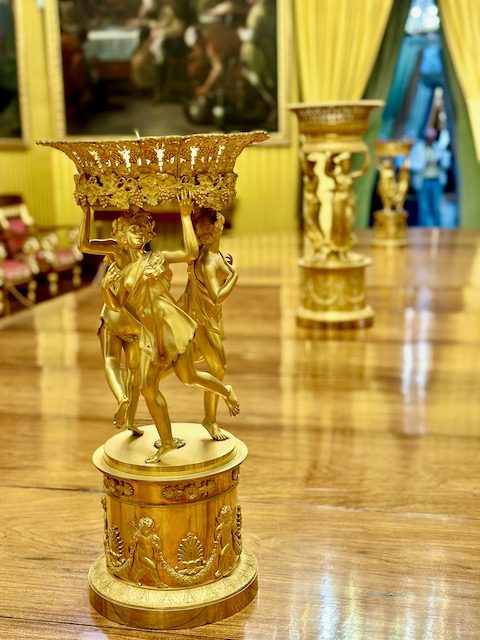
We didn’t have to reflect long as to why this is called The Mirror Room.
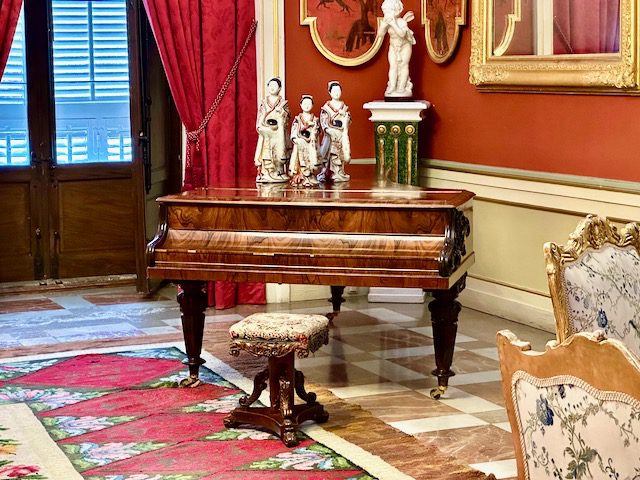
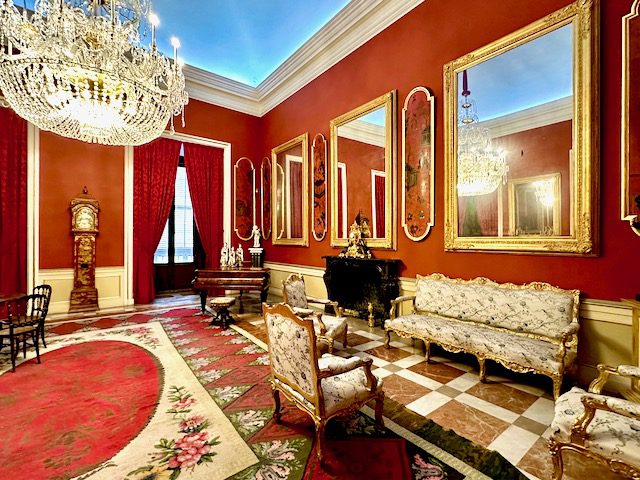
Once again we caught a glimpse of the gardens we would stroll through after our palace visit.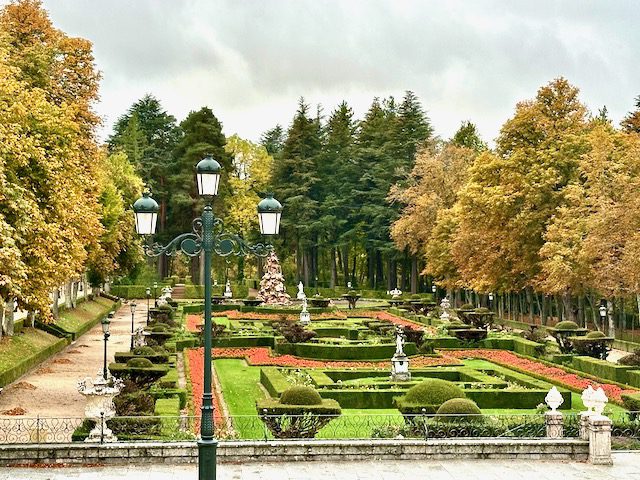
Numerous decorated hallways line the palace.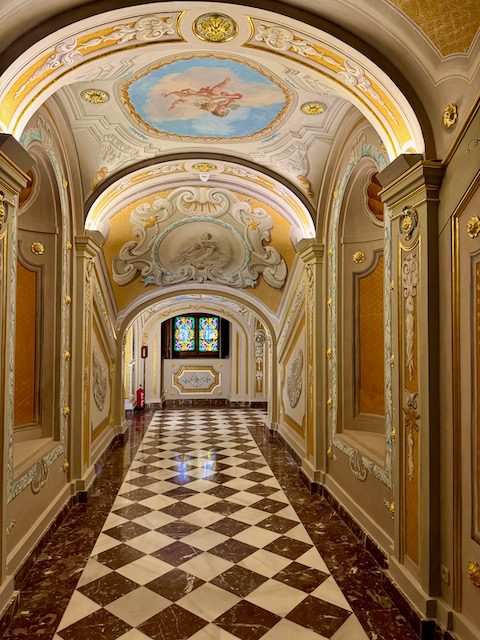
A fire in 1918 damaged the Lacquer Room, and there are still a few reminders in the room whose panels were made in the style of the Chinese Room of Turin’s Palazzo Reale.


We entered the Sale de Hércules where another decorated hallway greeted us. At the end of this hallway is the Room of the Shells and the18th century Fountain of Galatea featuring the “Greek goddess of the calm sea,” Amphitrite.


Philip had wanted to construct his own version of Versailles. Viewing the opulent rooms with statues and elegantly frescoed ceilings, I think he accomplished his quest. I believe this is Augustus Caesar.
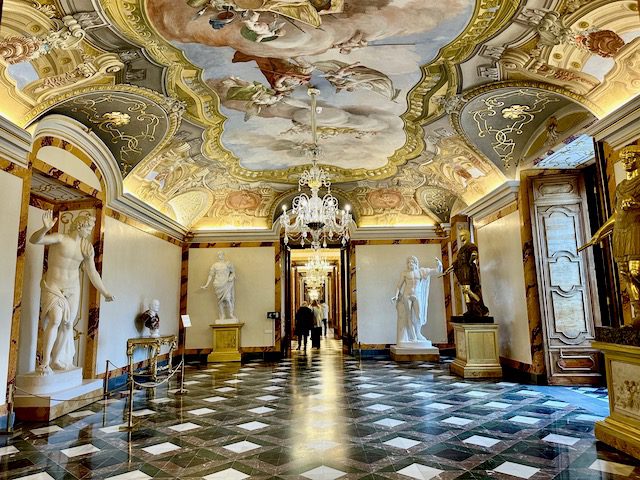
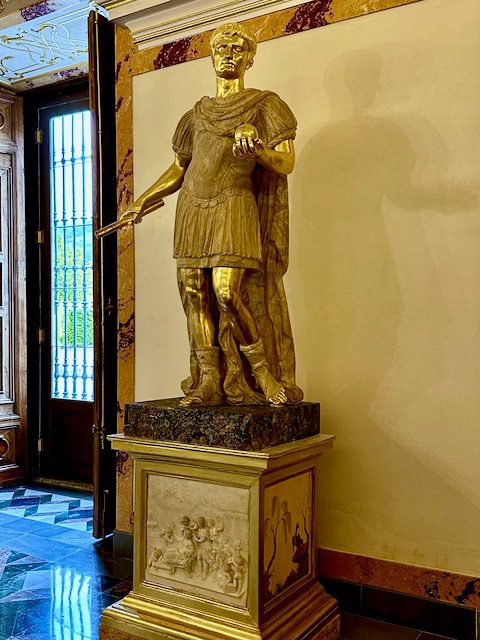
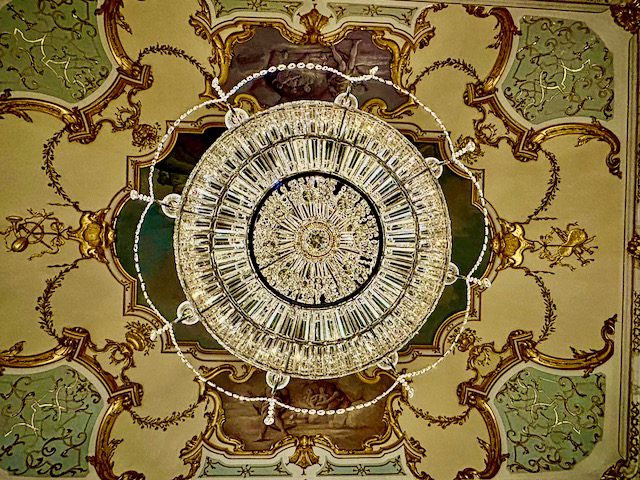
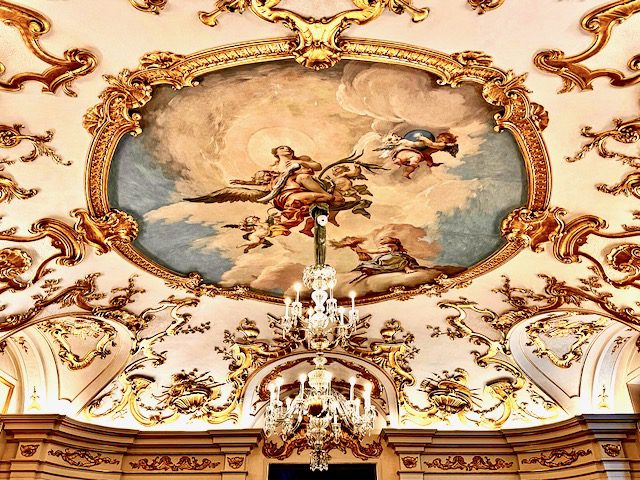
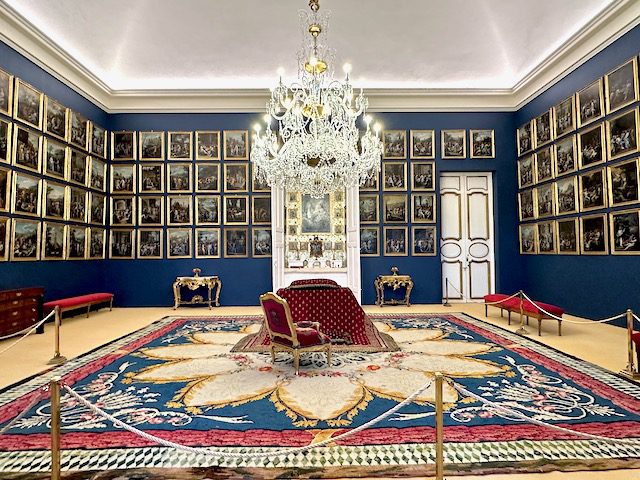
Room after room featured incredible frescoes.


Tracy focused on this one.
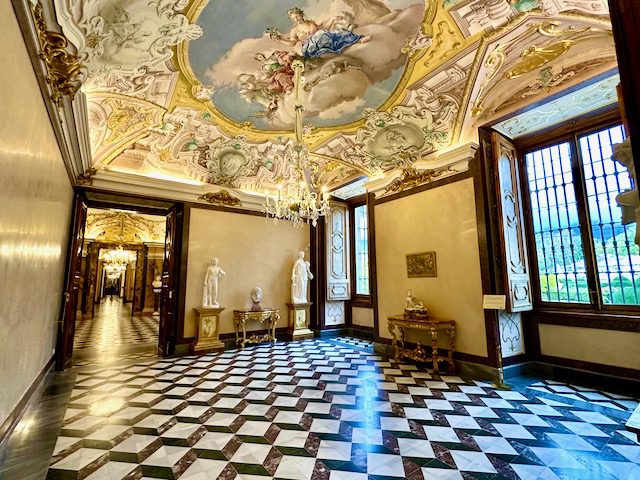

I mean really focused.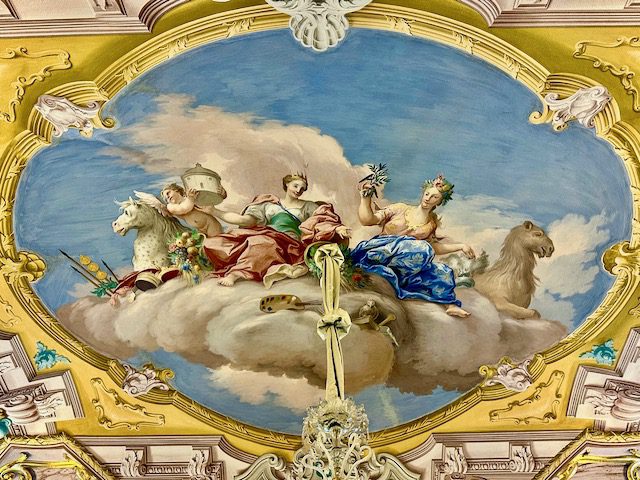
Different room … another cool ceiling fresco.
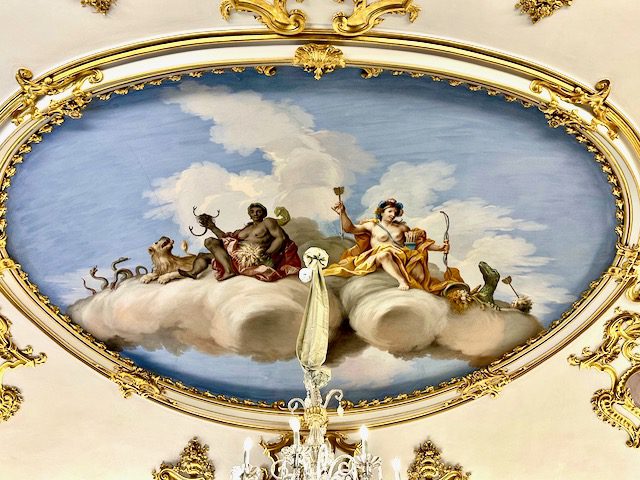 Every room …
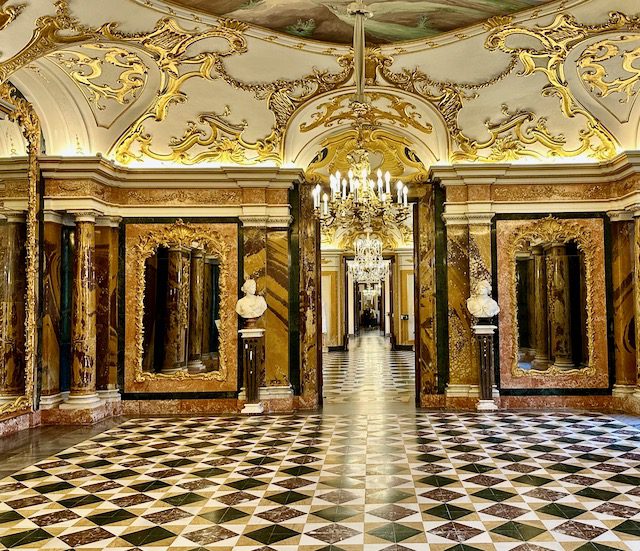 \
\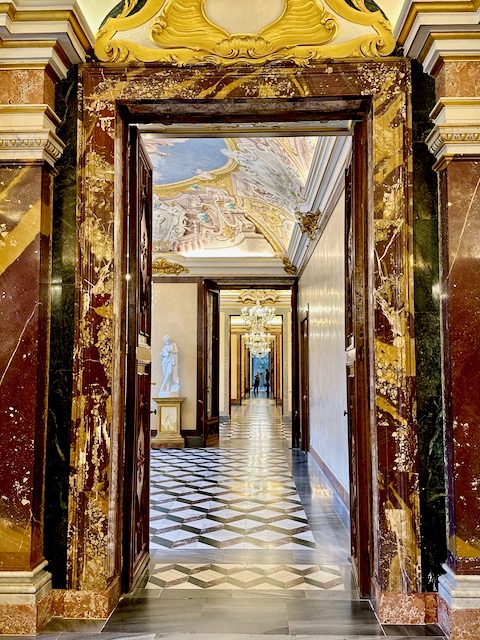
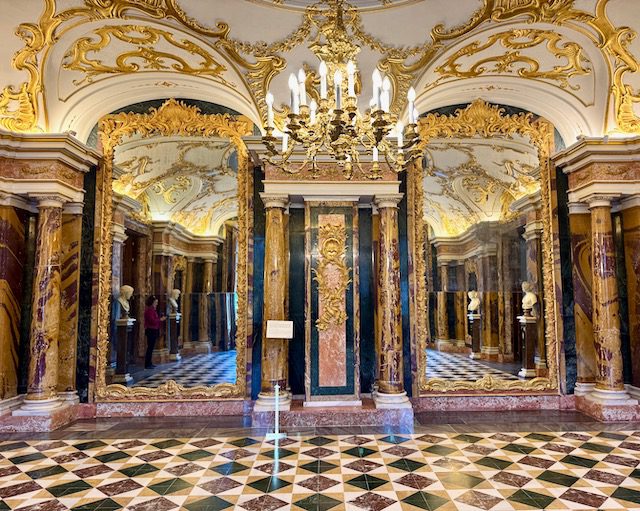
… attempted to top the previous one.
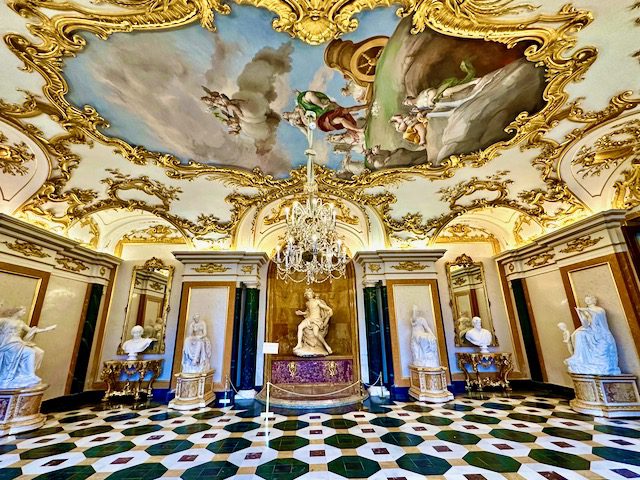

We’d almost decided to spend a quiet day in Segovia. I’m glad we didn’t.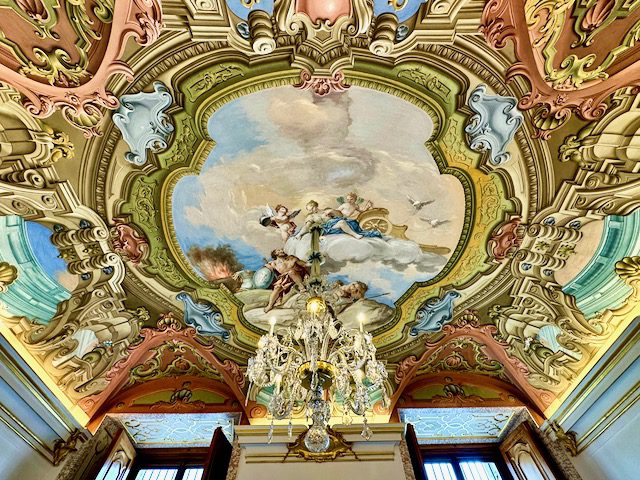
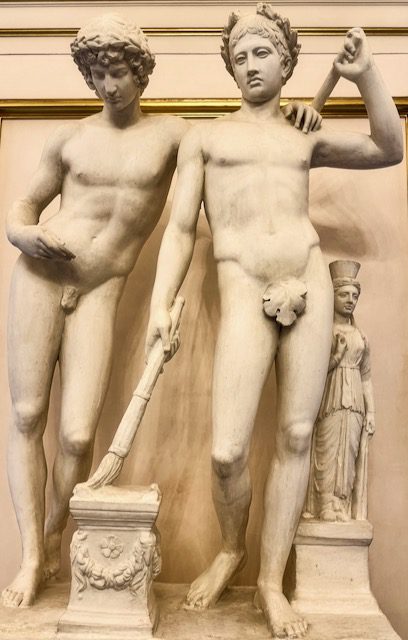
In the Room of Truth (certain unnamed politicians are forbidden to enter) is the plaster cast of Castor and Pollux offering a Sacrifice to the Goddess Persephone. The original from the early 1st century was kept here until 1839 and now resides at the Prado Museum.

Palacio Real de La Granja de San Ildefonso was already one of our favorite stops during our two weeks in Spain, and we weren’t nearly done exploring.

Located steps from the royal palace is the Collegiate Church, which was completed in 1723.

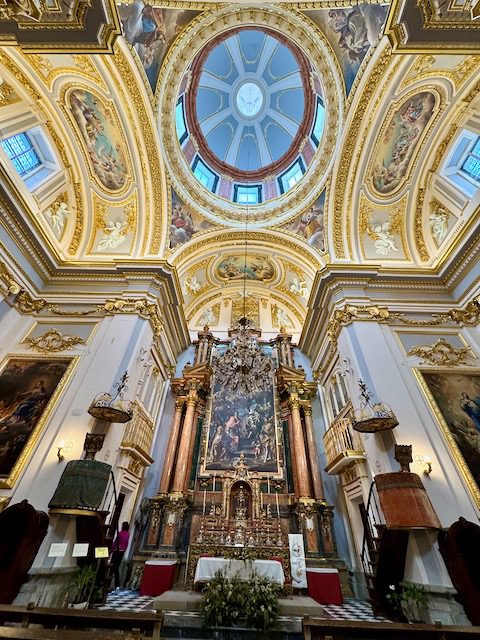
During the reign of Charles III the interior of the church was renovated.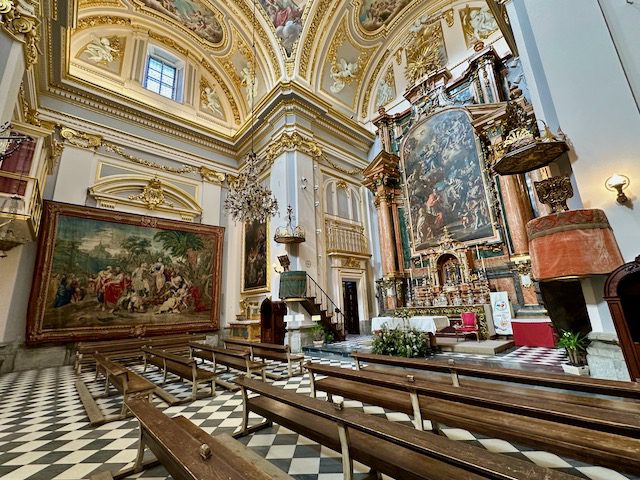
The Baroque inspired altar is accompanied by the painting La Santísima Trinidad (The Holy Trinity).


The marble Royal Mausoleum and Chapel holds the marble cenotaph of Philip V and Queen Elisabeth and the Capilla de las Reliquias.
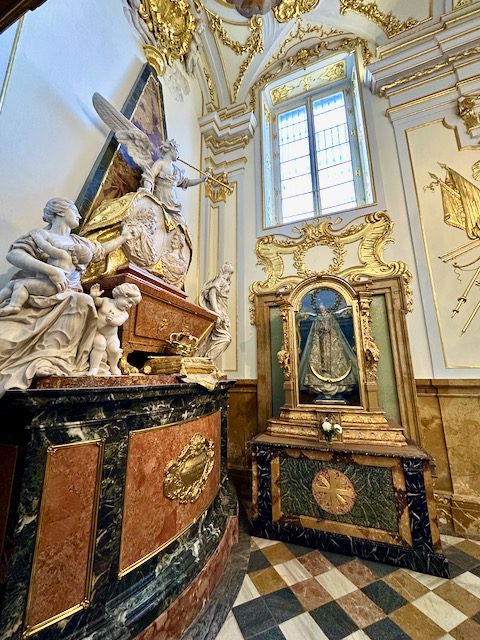
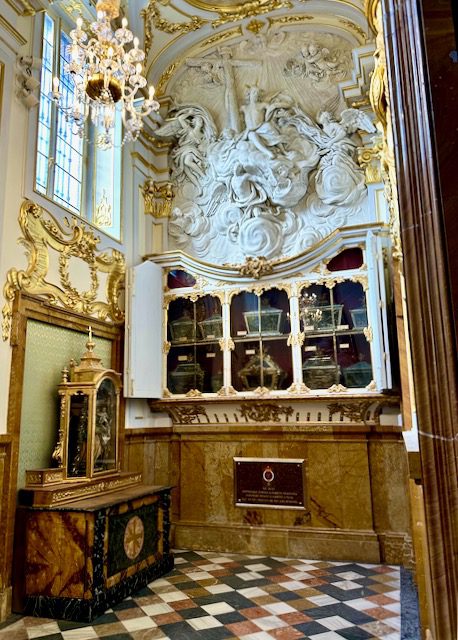
The church made for a good interlude …
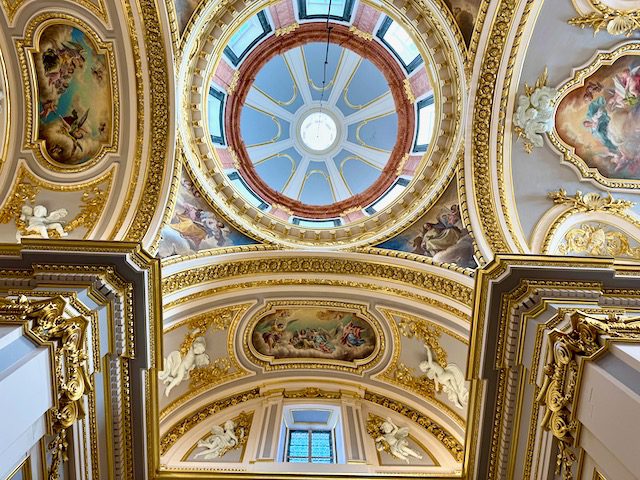
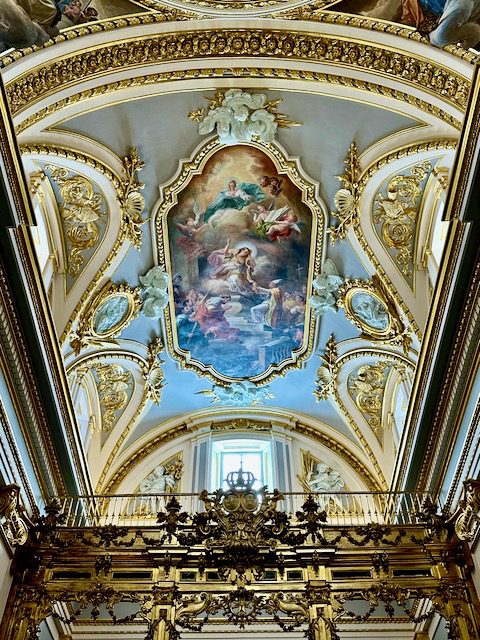
… but the day was warming up so we decided to venture outside and check out those gardens Philip had designed to become his “Spanish Versailles.”
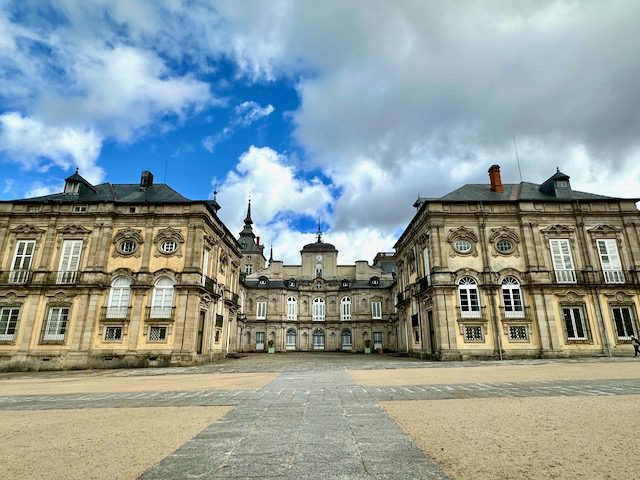
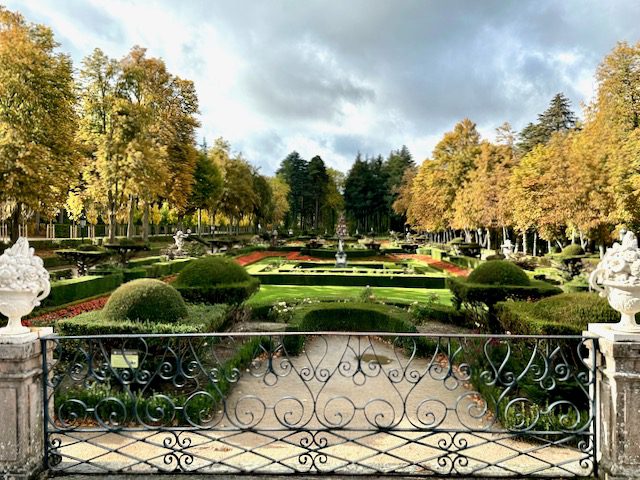
Designed in the French style, the gardens encompass more than 360 acres.

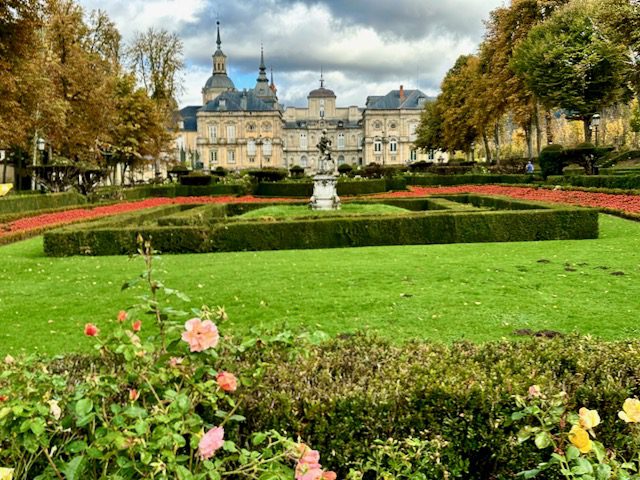
There are also more than 2,000 classical sculptures and 26 monumental fountains that feature mythological themes.
Among the first fountain we saw as we wandered the gardens was the Fuente de la Fama designed to shoot water more than 150 feet in the air. Like all the fountains in the garden, they utilize a “complex 18th-century hydraulic system” to enable the magical water eruptions.
I read that it “depicts the goddess Fame sounding her trumpet while mounted on Pegasus, while figures symbolizing Envy and Ignorance lie vanquished.”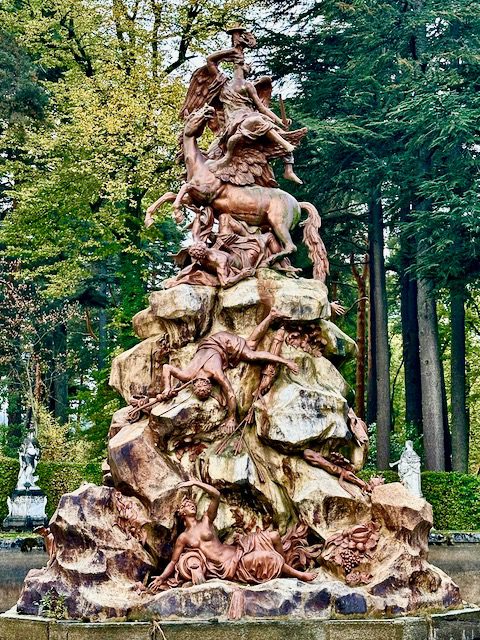
Walking the well groomed paths we came upon the humongous Fuente de los Baños de Diana (Baths of Diana). This fountain and its sculptures was no ordinary undertaking with the project lasting from 1920 to 1945. The fountain tells the tale of hunter Actaeon surprising the goddess Diana as she bathed. He then turns her into a deer to be eaten by his own dogs. When the fountains in the gardens are working it supposedly puts on a three-minute show, which led to a famous quote by Philip V.


It seems Philip was forever stressed out as to how much the palace and its gardens was costing to construct (estimates in today’s currency put the cost at around $2 billion). The fountain alone cost three million reales de vellón, the Spanish currency at the time. He famously lamented, “It has cost me three millions and amused me three minutes.” Just think if he tried to build a ballroom.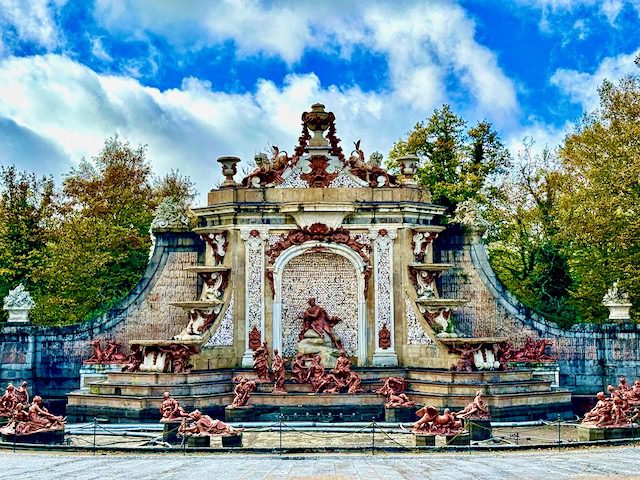
Fuente de los Dragones with its mythical dragons, is “entirely fed by a mountain reservoir,” bypassing the need for modern pumps.


This, like all the fountains, function just as they did back in the day of King Philip.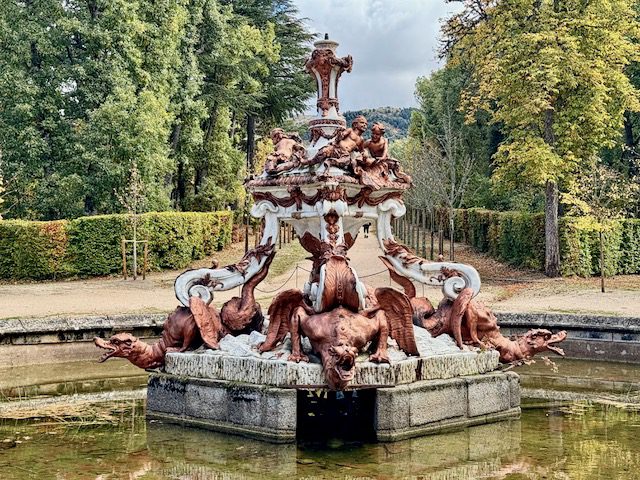
Sadly for us, La fuente de La Cascada Nueva was under renovation when we visited. This project which includes restoring the marble and hydraulic system is estimated to cost 6 million euros. Philip would be more than worried.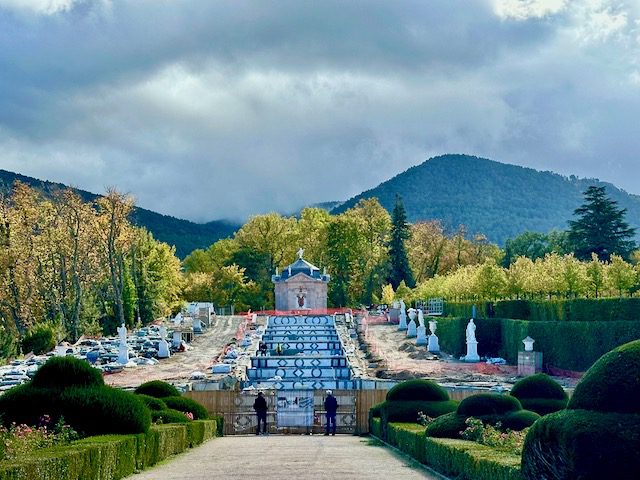
Outside of a weary traveler shown in front of the palace, a perfect autumn afternoon was shaping up.


Another one of the majestic fountains, Fuente de la Selva (Fountain of the Jungle), was also under renovation.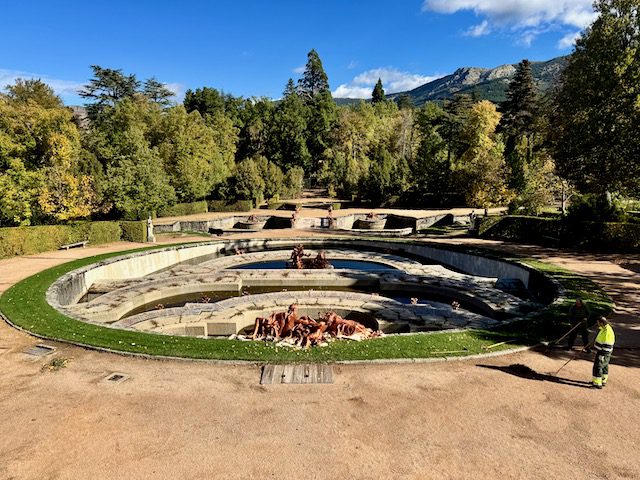
After nearly three hours of exploring the palace and gardens, we decided it was time to head into the nearby town of La Granja de San Ildefonso for some lunch.
We caught one last glimpse of the Collegiate Church.

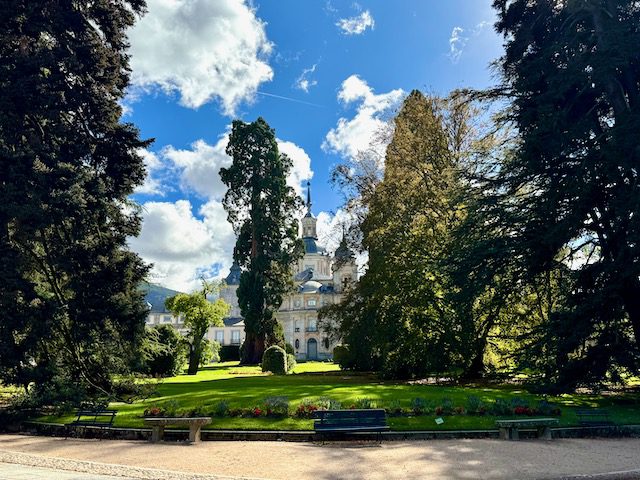
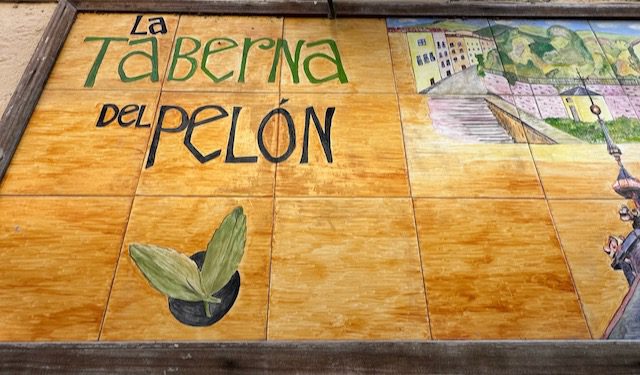
La Taberna del Pelón was our luncheon choice, and it was a good one.
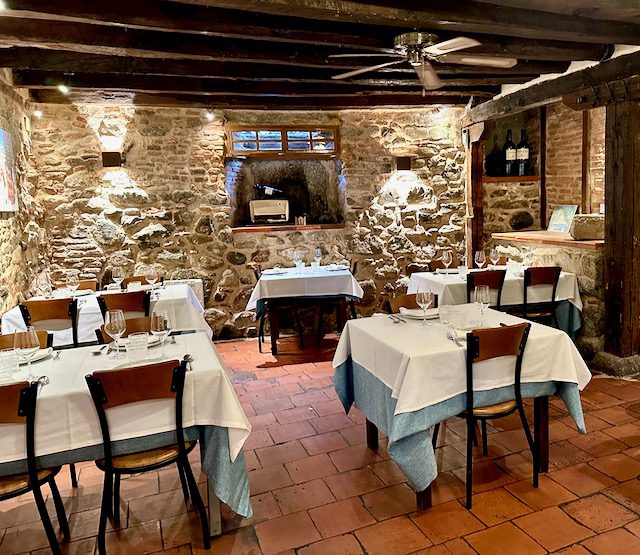
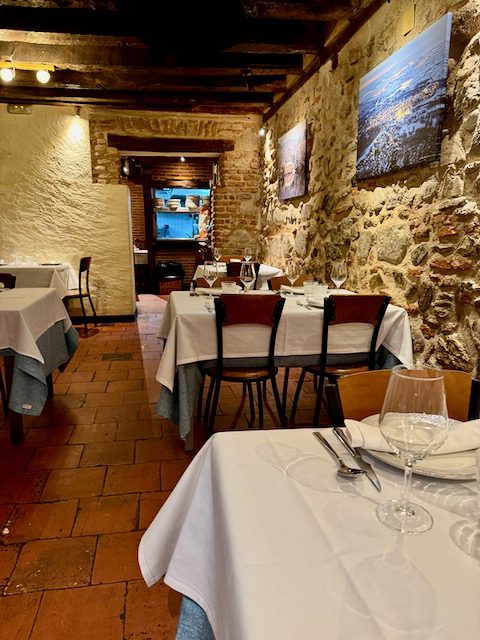
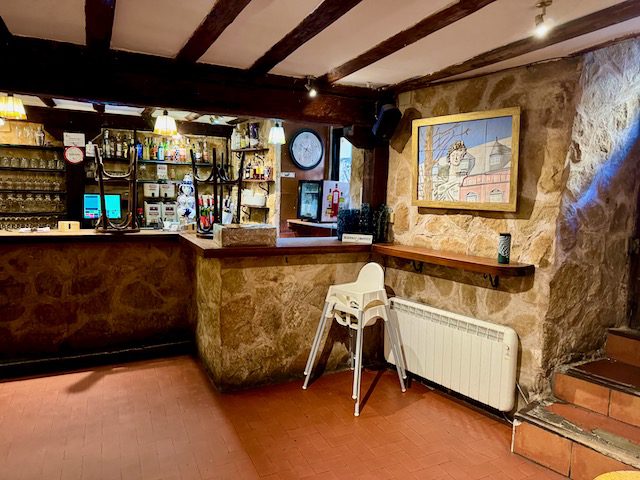
We loved the cozy interior.
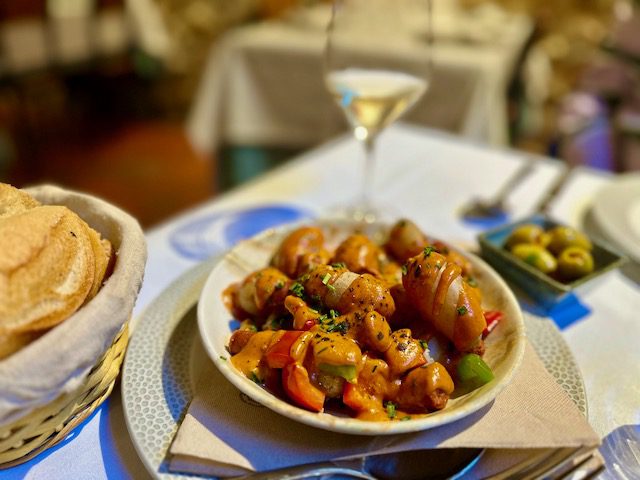
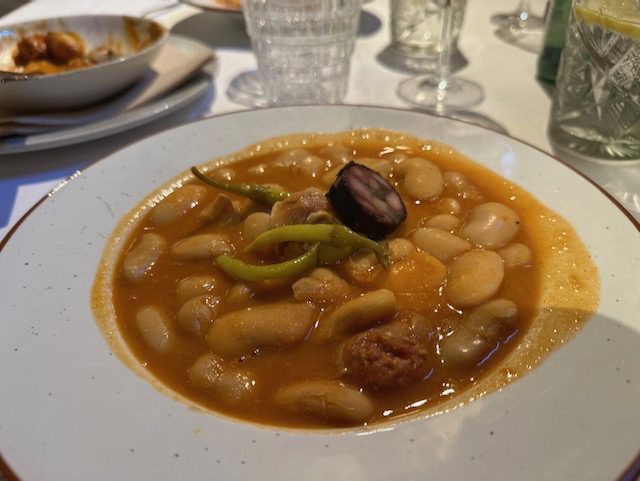
As nice as the ambiance, the food also hit the mark. The starter of baby potatoes with chorizo, peppers and a spicy sauce was a Wow! dish to be sure. The gigantic bean soup was a winner, too. We enjoyed our lunch with a terrific play list featuring some new (to us) music including songs by the Belgian band with the Spanish name of Vaya Con Dios.
Our attentive server, Jaime, was kind enough to call us a taxi, although we could have waited for the bus.
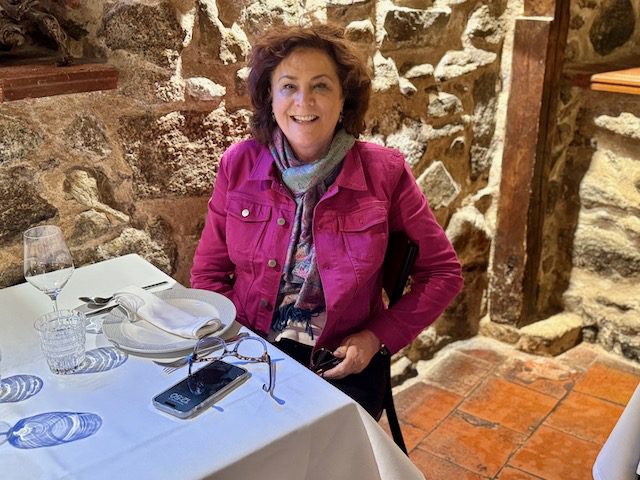
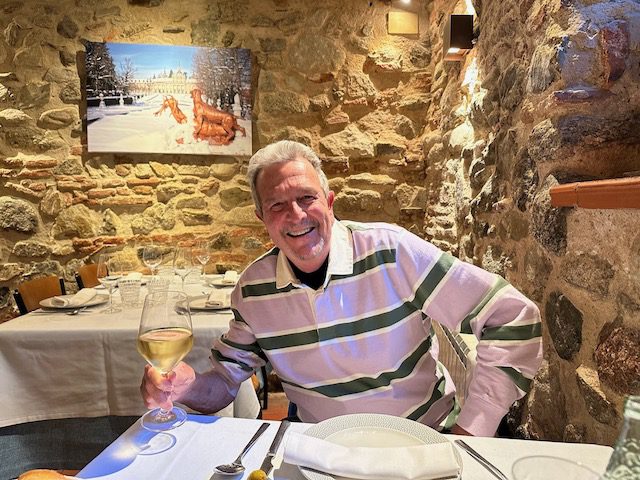
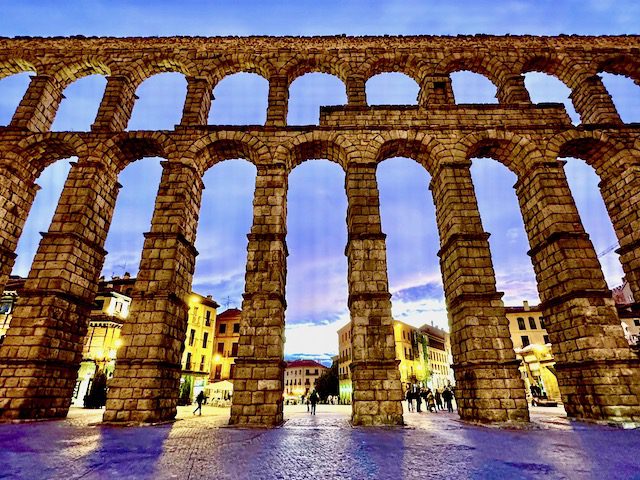
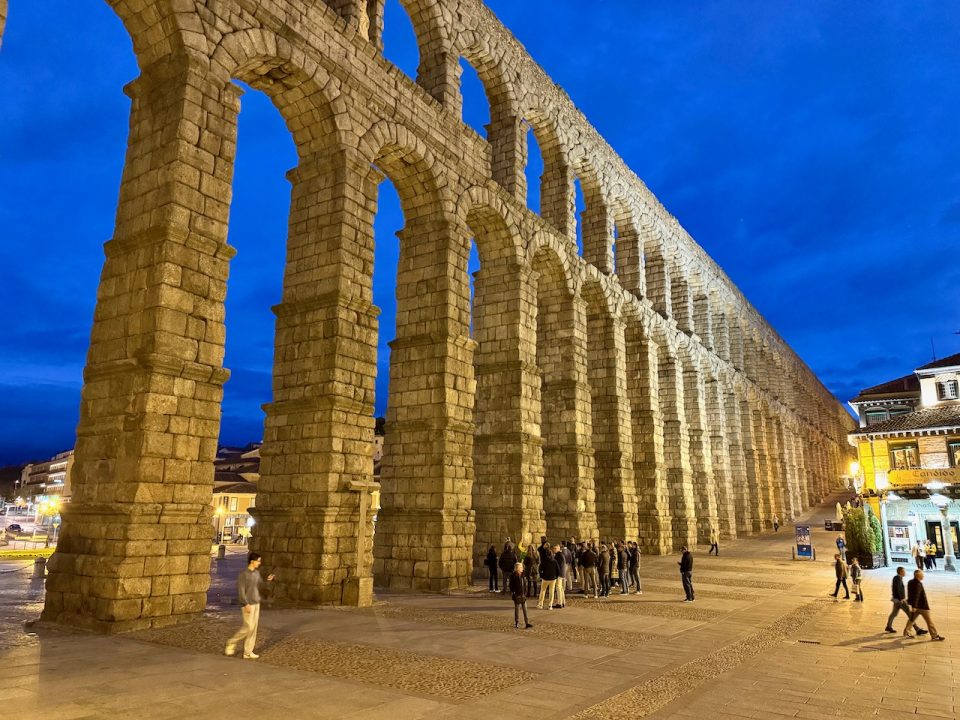
The taxi dropped us off at Acueducto de Segovia, where nearby we partook of the afternoon sunshine with a glass of vino.
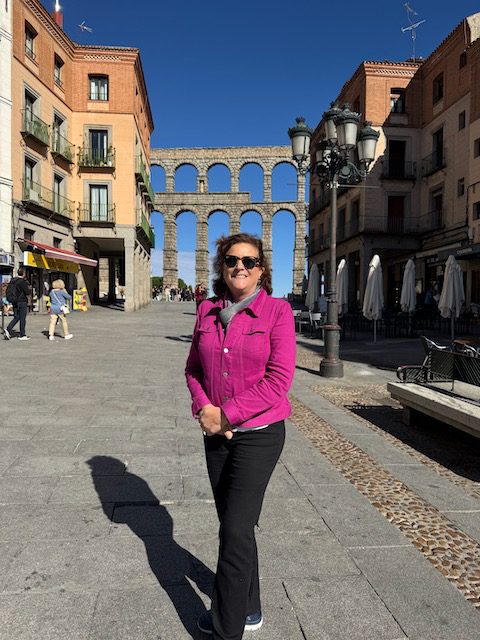
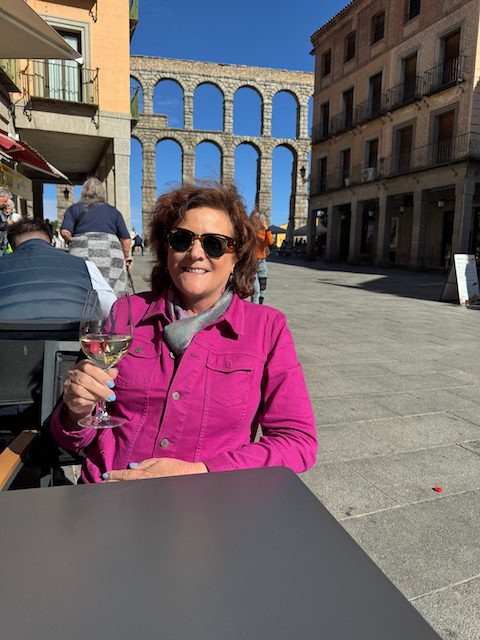
Walking back to the hotel we strolled by Iglesia de San Martín and got a better view of Monumento a Juan Bravo.
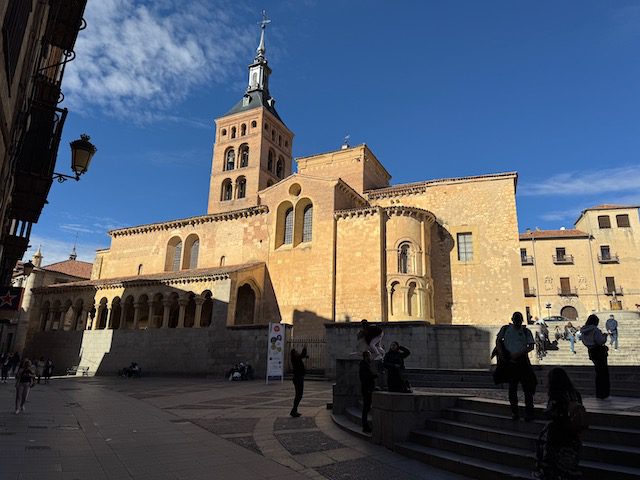
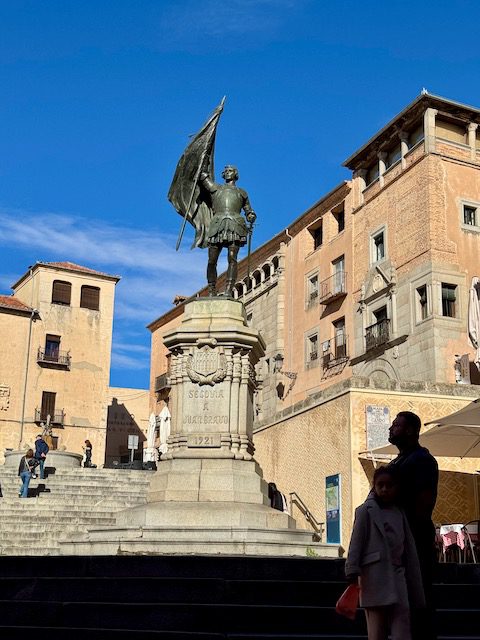
It was a beautiful day in Segovia. Many people make Segovia a day trip, but we think a couple or three days here is an even better idea.
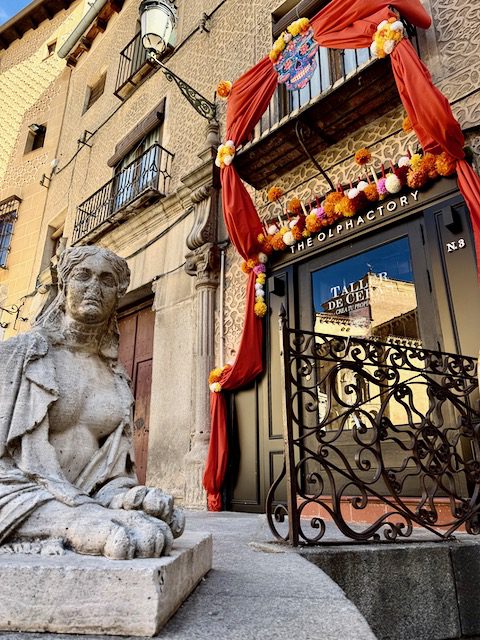
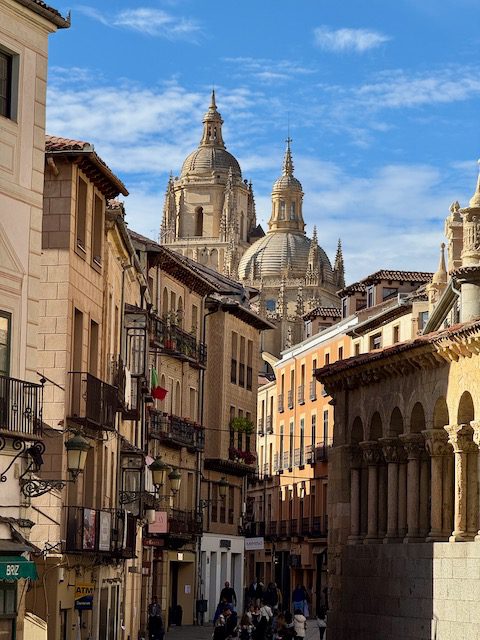
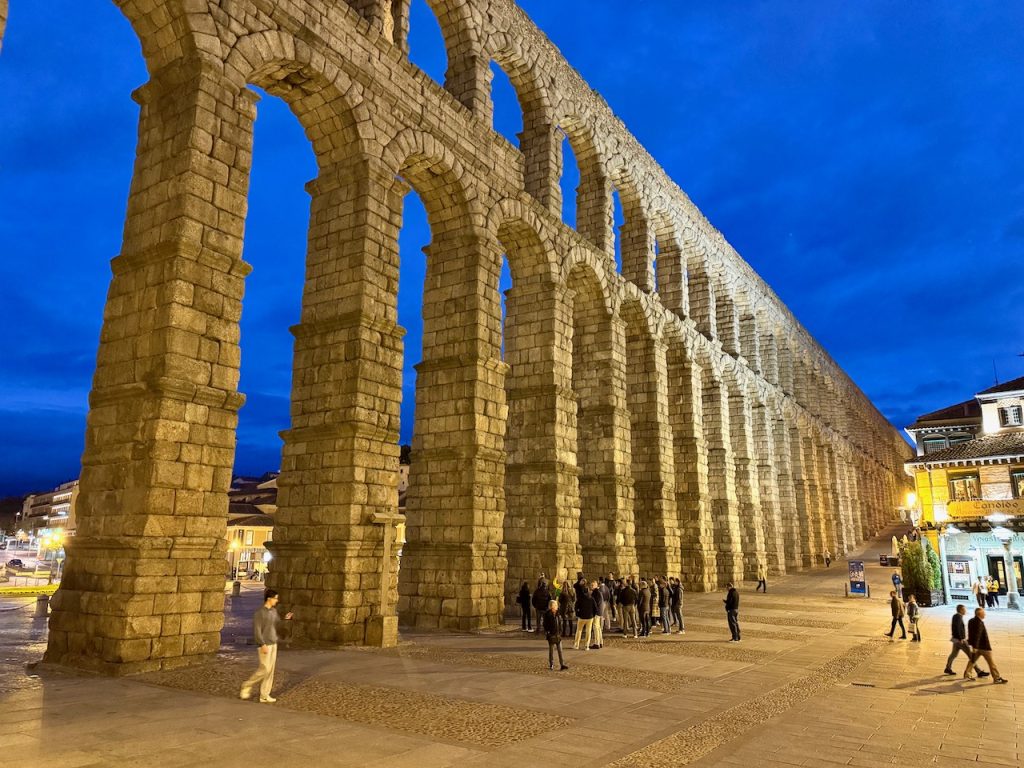
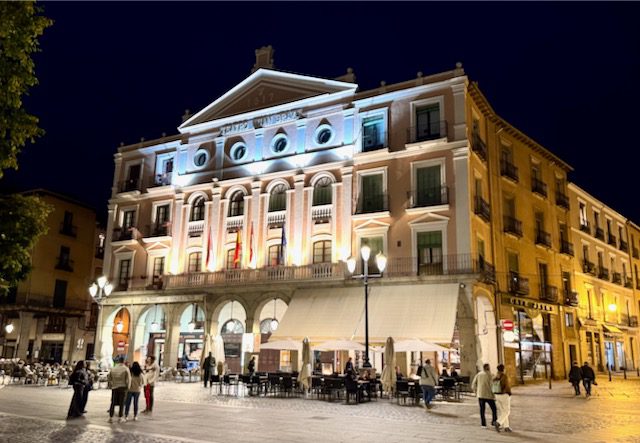
That evening it was back outside to take some blue hour photos in the Plaza Mayor.
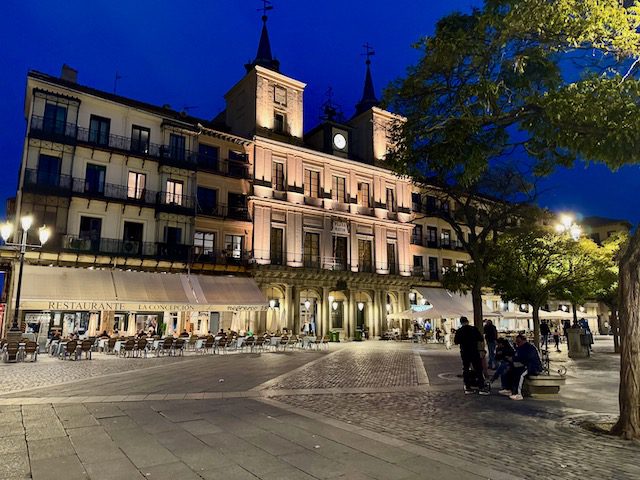
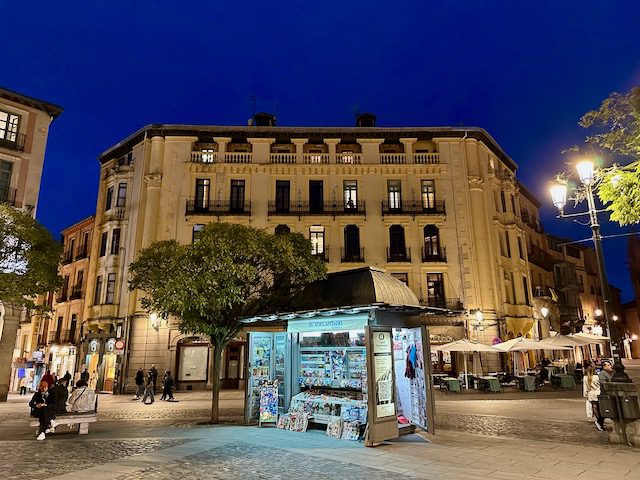
It was a glorious evening and people were out and about.
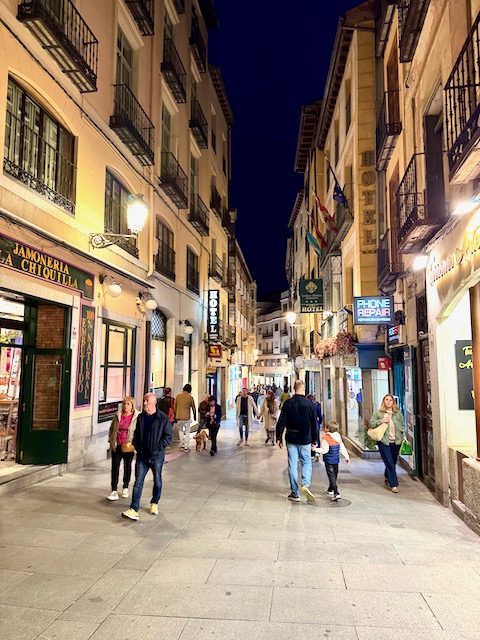
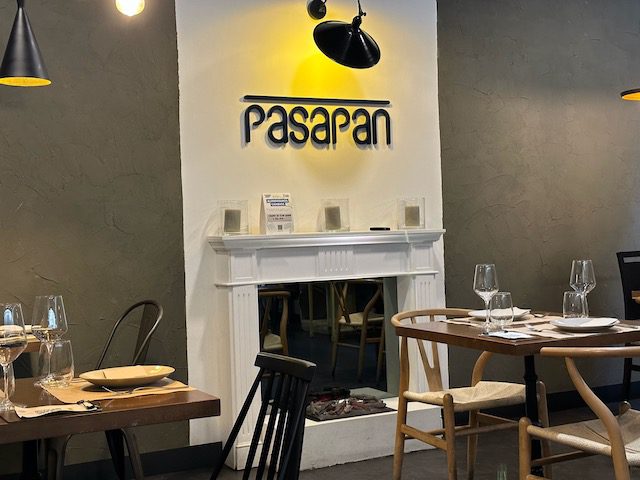
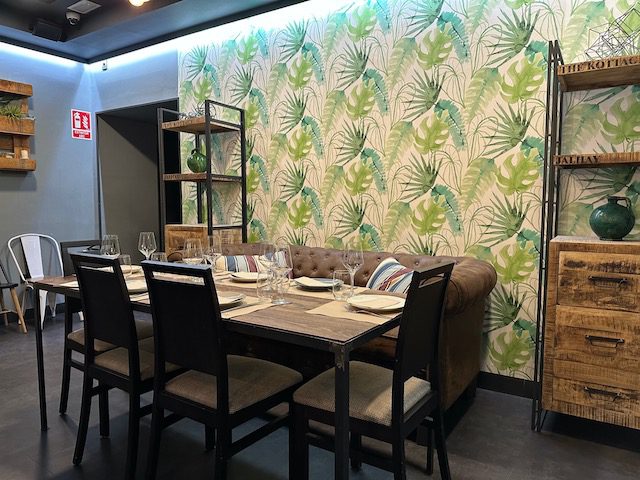
Dinner this night was at the charmingly decorated Restaurante Pasapán, which turned out to be kind of a hit and miss.
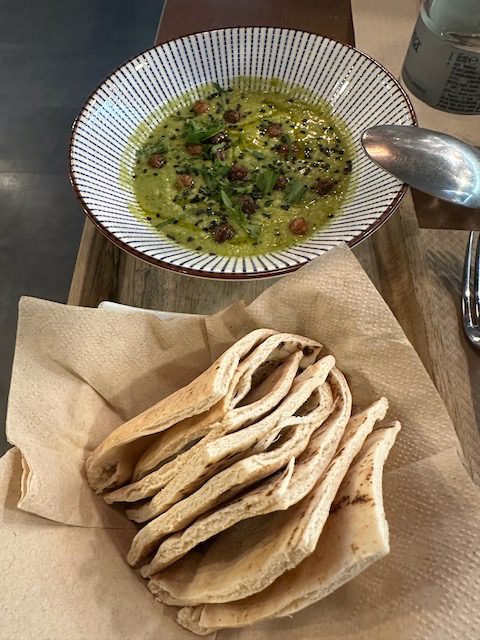
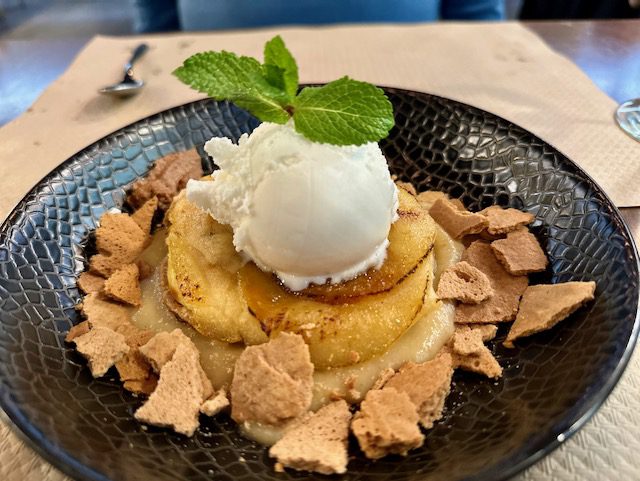
The salad with prawns, herby hummus and freshly baked apple pie were quite good, but my dinner of pork ribs glazed with Korean barbecue sauce fell short. They do have a lot of dishes on their menu that look terrific.
We were pretty tired from our long day and were looking for a good night’s rest before we headed out on our last day in Spain. Alas, when we attempted to close the hotel room door, the door lock became stuck open. Since the door would not close and there was no one on the premisses who could fix it, we had to pack up and move to another room.
 I will say the hotel staff was not very accommodating and seemed put off by our problem. Not to mention, we were not compensated at all for our trouble. Maybe a free coffee the next morning might have been a nice gesture. Oh well.
On our last day, we would head to the Madrid Airport hotel, but not without visiting one more royal palace along the way.
Chapter Thirteen – The Palace Less Visited & Epilogue
Days Thirteen & Fourteen – Going Stag, A Quick Tour Through Riofrio, The Photo Comes In Handy, Heading Home & Reflections of España