Chapter Eight: Marvelous Monasteries Of Burgos
February 4, 2026Celebrating España: MaiTaiTom’s Still “Insane For Spain”
Chapter Nine: Just One Of Those Days – On To León
A Key Development Delays Our Drive To León, Tight Fit; Gothic Cathedral Contest, “House Of Light,” Losing My Religion (For A Moment), Important Stop On The Camino de Santiago Pilgrimage Route, Passing Up A Famous Museum (For A Moment), Unfortunately Not Passing Up a Non-Famous Museum, Should Have Stuck To First Instinct, Closed Palacio, and Enjoying “The Wet Neighborhood”
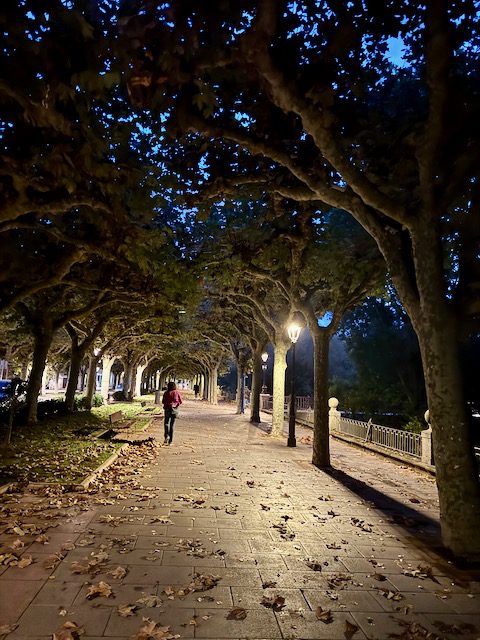 Up before dawn so we could get an early start to León, Tracy and I checked out of the hotel and bid adios to the very helpful Valentina at the front desk. We walked in darkness along Paseo de la Audiencia to our black Mercedes rental car. Tracy was already unhappy with me (that whole before the crack of dawn thing). As we neared the car, I hit the key fob to pop open the car. Nothing.
Tracy snatched the fob from me assuming that in my pre-dawn morning stupor I was doing something wrong (usually not a bad assumption). Silence. Being the brilliant wife she is, she assumed the fob battery must have died, but no problem. She pulled the key out of the side of the fob and tried to open the door. No luck. Tracy and I had once again found ourselves in the “Rental Car Twilight Zone,” a place we had sadly visited on numerous prior trips.
We called the broker we had rented through, Auto Europe. They informed me we would have to call roadside assistance for Hertz (the actual rental car agency). Hertz’s number would be on the key fob (it was not) or on the paperwork (it was not). Finally, they said the number would be inside the car. Yes, the same car we could not open.
Through the darkness we trudged back to the AC Burgos Hotel, and asked Valentina if she could contact Hertz at the Madrid Airport where we had rented the car. There was no answer.
Valentina then contacted Hertz roadside assistance, who could not provide roadside assistance for some unexplained reason.
While Valentina was on the phone,Tracy googled a nearby Mercedes dealership in Burgos. Valentina called the service department, and they explained that you needed to pull the door handle up simultaneously as you turned the key. Relieved, we once again bid adios to Valentina, this time taking our luggage she had been guarding.
It was now daylight as we walked back to our car. When we reached the car, Tracy came to a shocking realization. We had been trying to enter the WRONG CAR! We hurried past, thankful that the car alarm had not gone off and that roadside assistance had not been helpful. We quickly found our car as it chirped at us when I pressed the key fob. Popping open the trunk, we stowed our luggage and made a quick getaway, glad that no one would know of our stupidity … well, until now.
It was a little less than two hour drive to León.
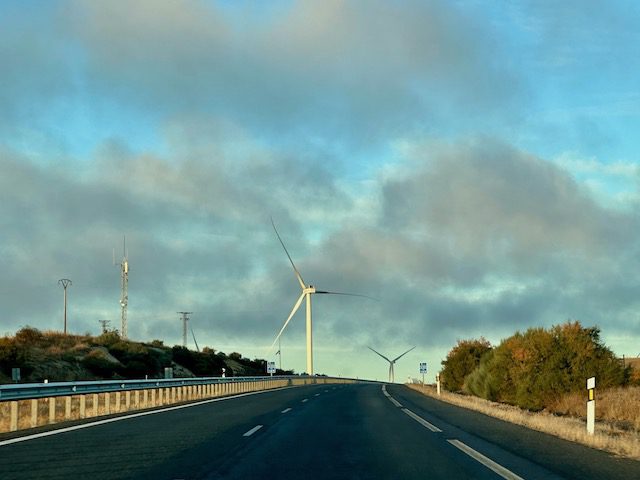
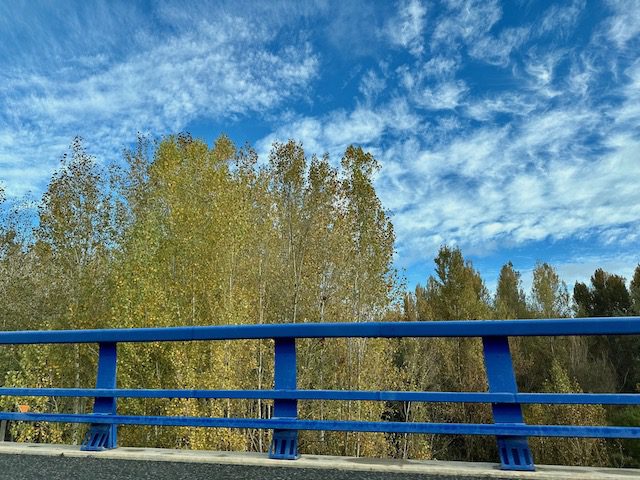
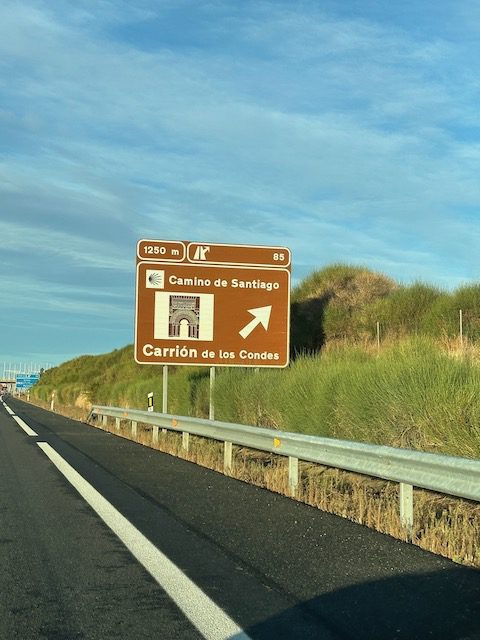
Along the way we saw signs for the Camino de Santiago, where hiking pilgrims don’t worry about silly things like key fobs.
GPS directed us to a parking lot situated underneath the hotel. The parking spots should have a sign that they are for Ozempic users only, because as you can see, it was quite a tight fit to get out. Tracy even used her scarf as a buffer, so our car door wouldn’t damage the car next to us. Frightened they might need the Jaws of Life to extricate me, I wangled free, and upstairs we went to the lobby of the NH Collection León Plaza Mayor to deposit our luggage.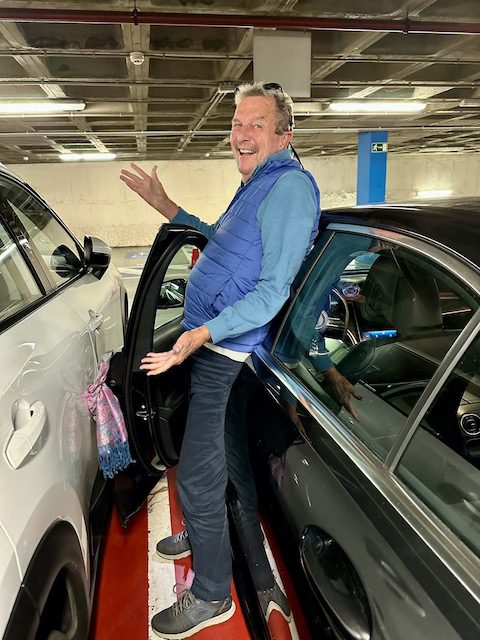
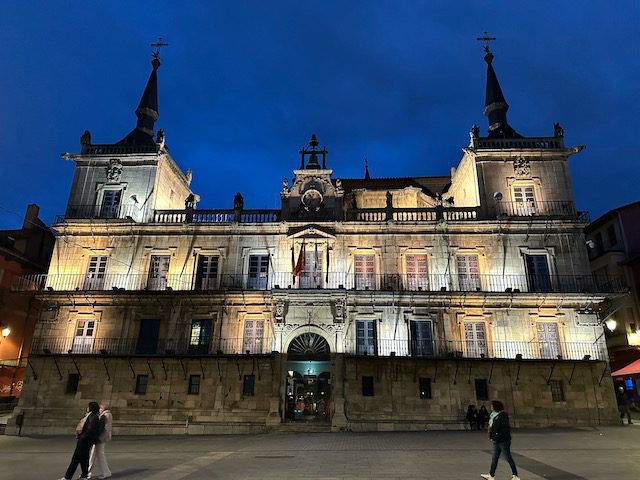
Walking past the Old Town Hall on Plaza Mayor …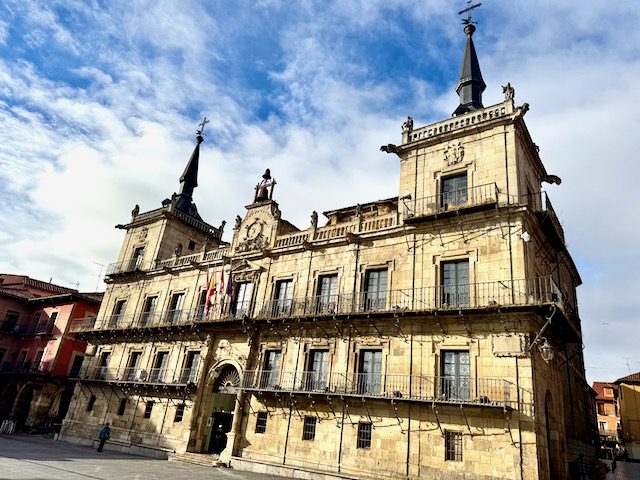
… it was less than five minutes to walk to (where else?) a cathedral, namely the Santa María de Regla de León Cathedral, a major stop along the Camino de Santiago route. The church was constructed in the 13th and early 14th centuries in the French Gothic style. We read that there were over 200 similar style cathedrals erected across Europe during this same time period in a race to see who could build the largest and most beautiful cathedral. (I am beginning to feel that Tracy and I have seen a large portion of these cathedrals in our travels.)
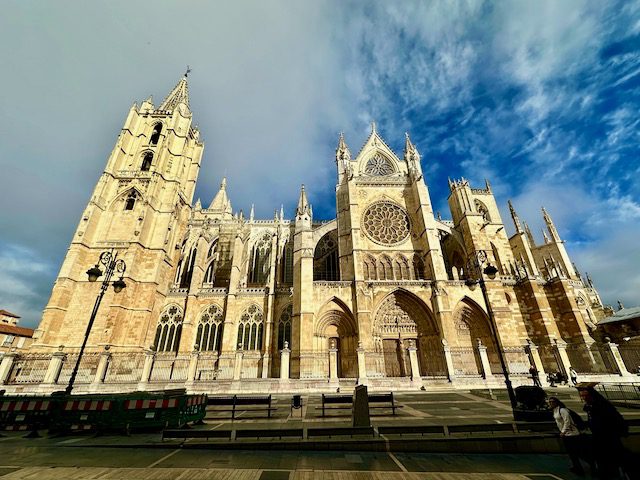
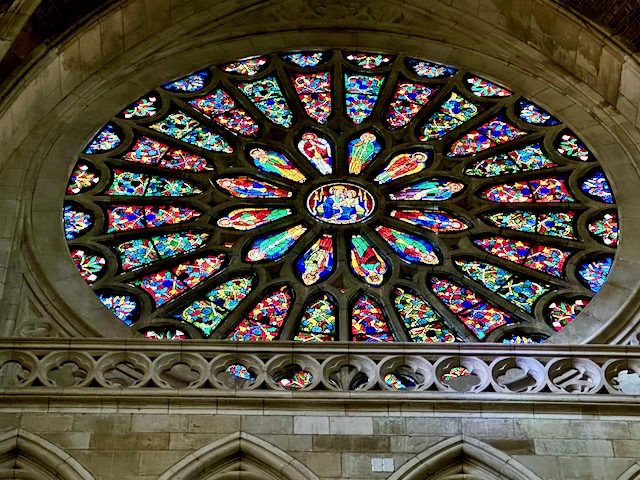
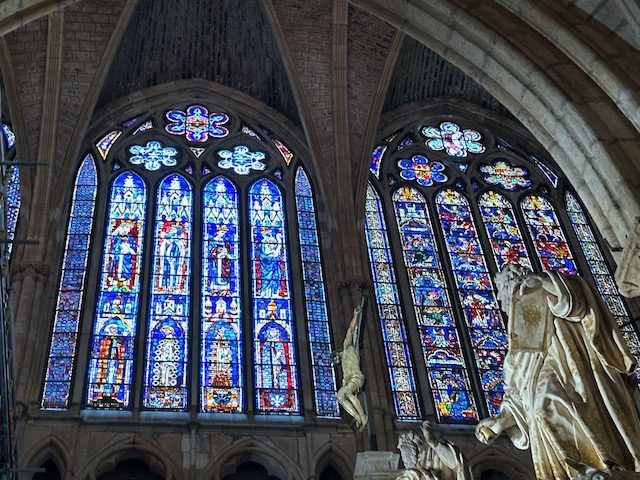
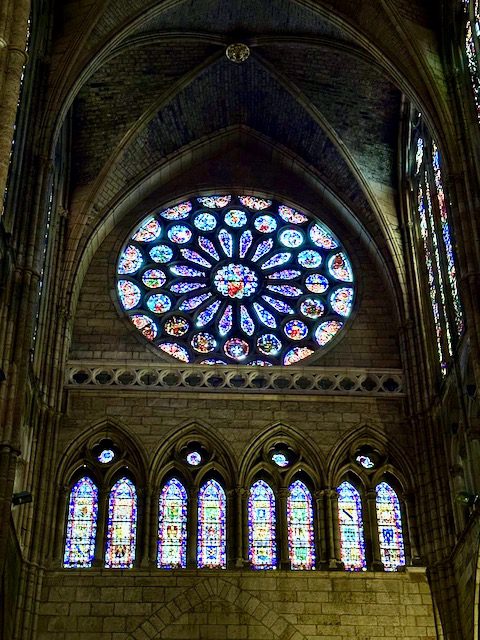
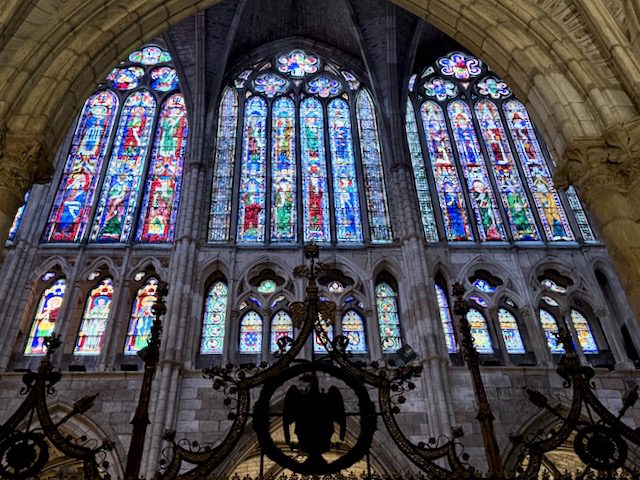
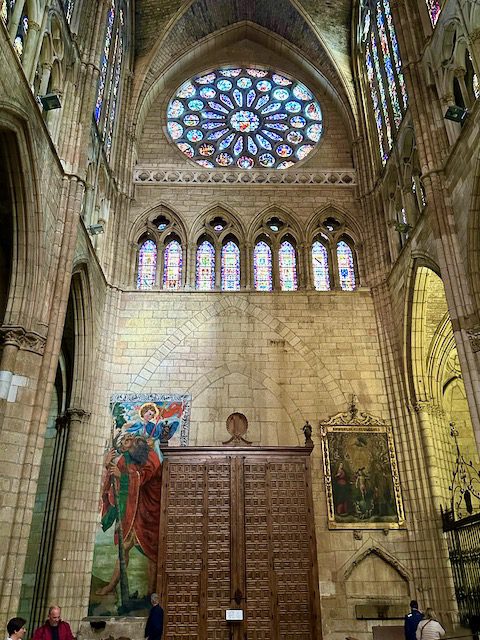
Called by many the “House of Light” due to more than 19,000 square feet of stained glass windows illuminating the interior of the cathedral, it was “the first monument declared a Monument of Cultural Interest by the Royal Order of Spain in August 1844.”
Much of the stained glass is from the 13th and 14th centuries.

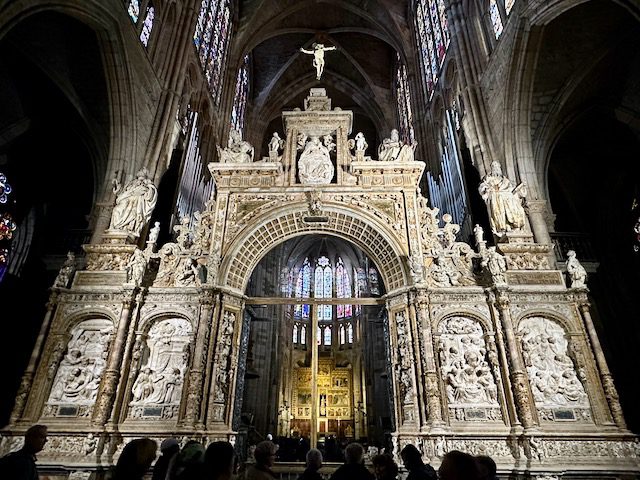
The 16th century alabaster Trascoro is something to behold, and was conceived as a triumphal arch.

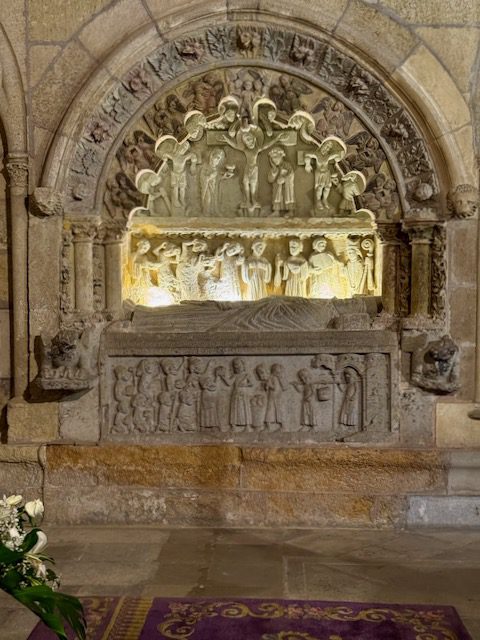
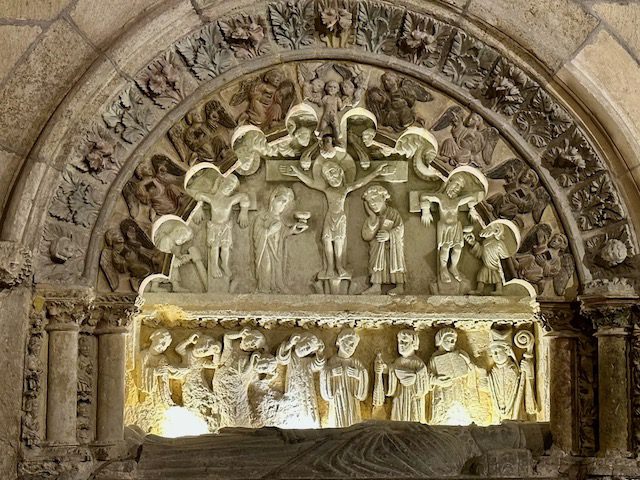
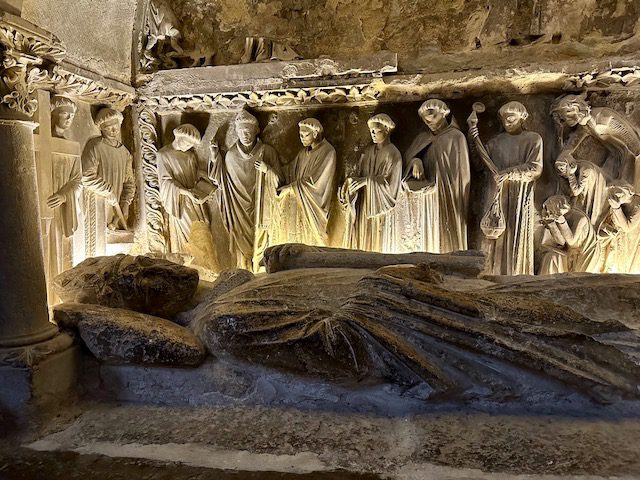
We stopped by one of the many tombs in the cathedral. The tomb of Bishop Rodrigo Alvarez el Zamorano, who died in 1232, is topped by a Calvary scene in addition to grieving figures and charity scenes.
So many gorgeous windows!
We visited the Chapel of Santo Cristo …
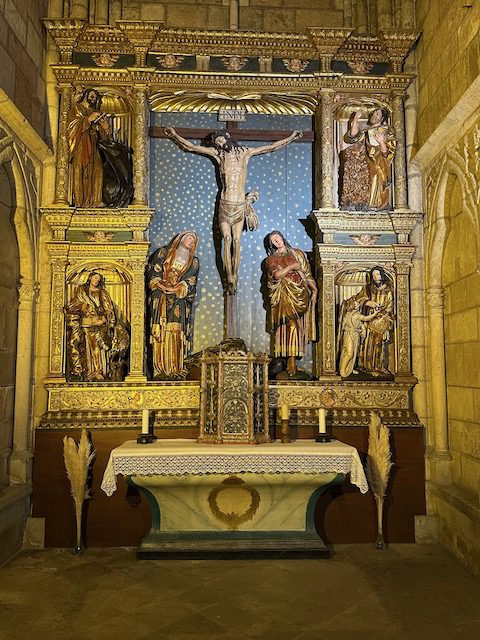
… and the Chapel of Saint Anthony of Padua with its polychrome wood carving of the Portuguese saint.
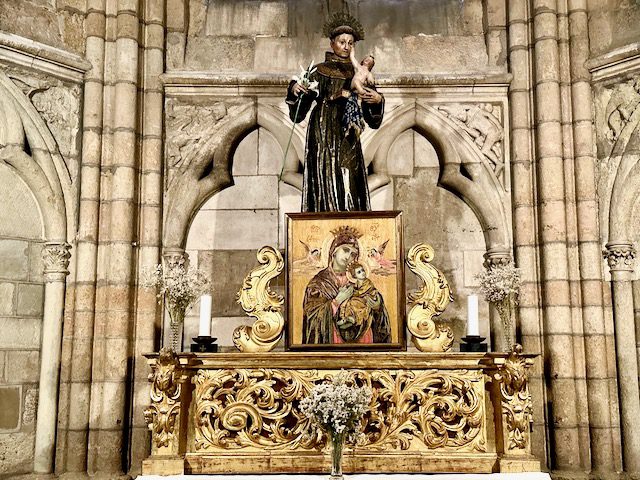
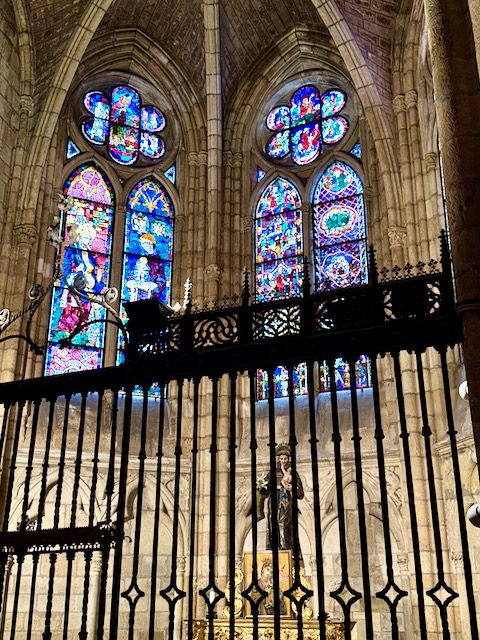
I believe I read that Saint Clement and Saint Anthony are portrayed in the stained glass windows.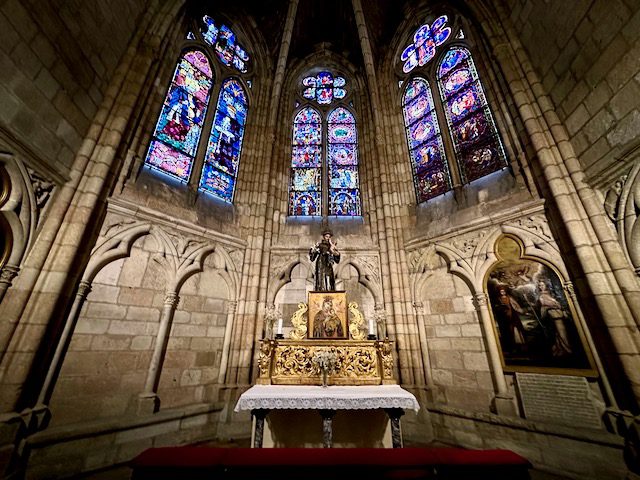
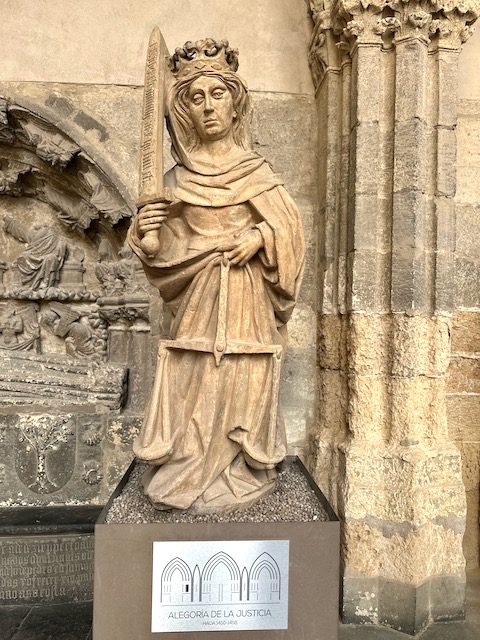
This stone carving was originally in the main doorway of the cathedral, but was moved to the Chapel of the White Virgin (which alludes to the limestone’s white color).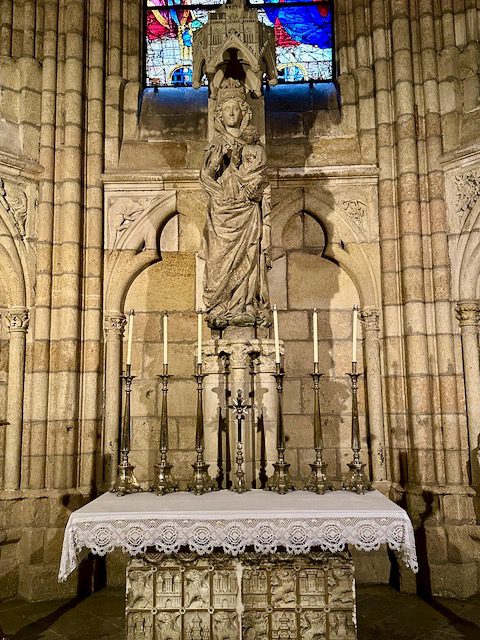
There are two 14th century tombs flanking the statue.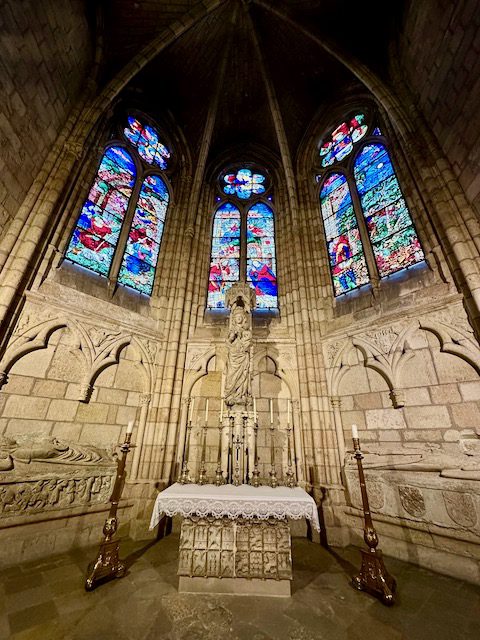
Speaking of tombs, the Sepulcro de Ordoño II (Tomb of Ordoño II) stands out from all the others.
The sculpted depiction of Ordoño lying in state is surrounded by religious carvings including a central scene of the Crucifixion.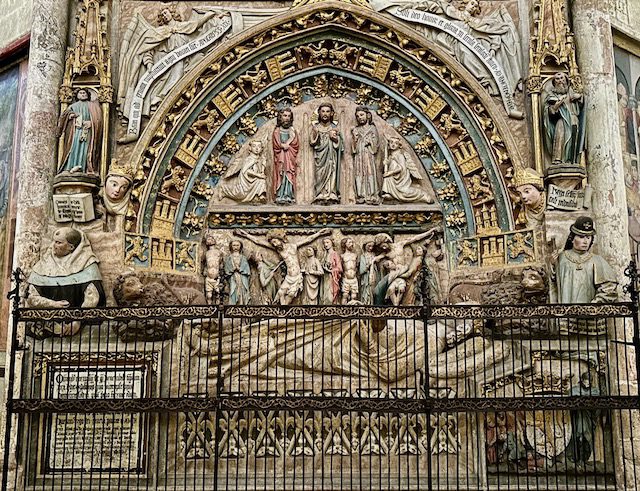
Some of the windows stretch 40 feet high.
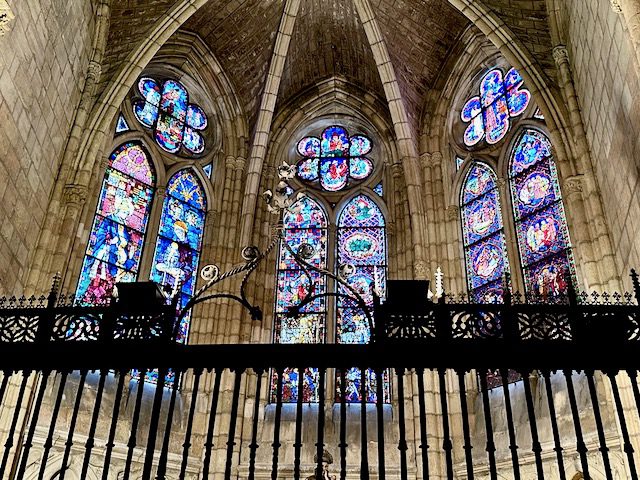
The Nativity Chapel dates from the late 15th century.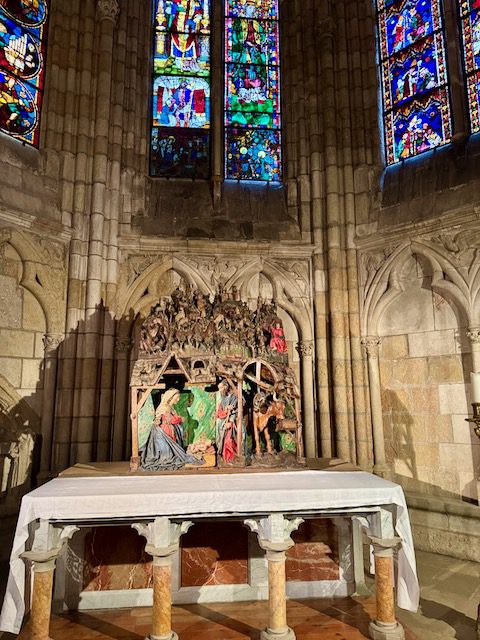
In the Main Chapel is a 15th century altarpiece painted by Nicolás Francés.
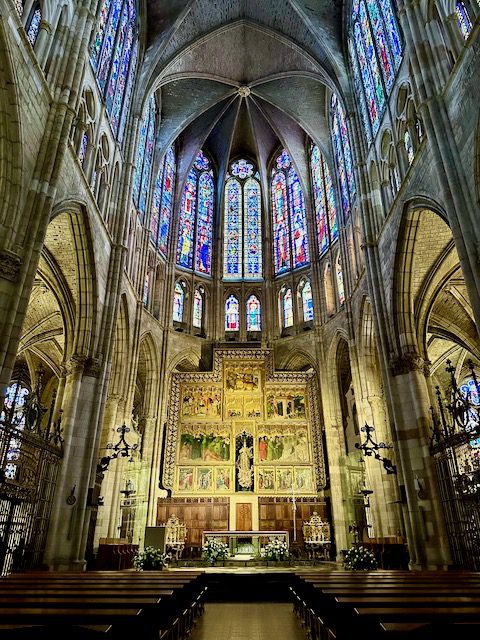
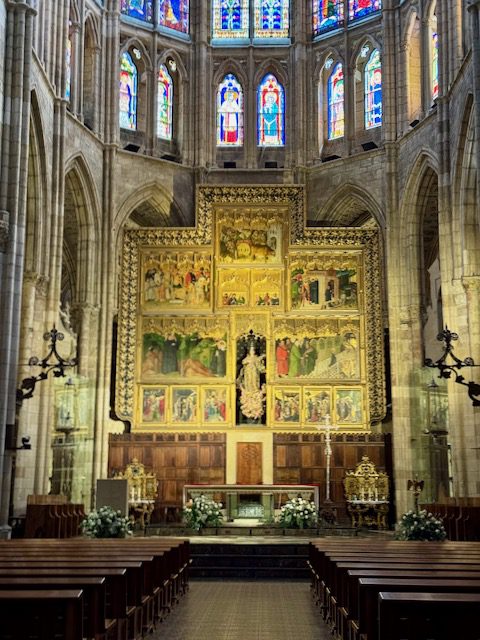
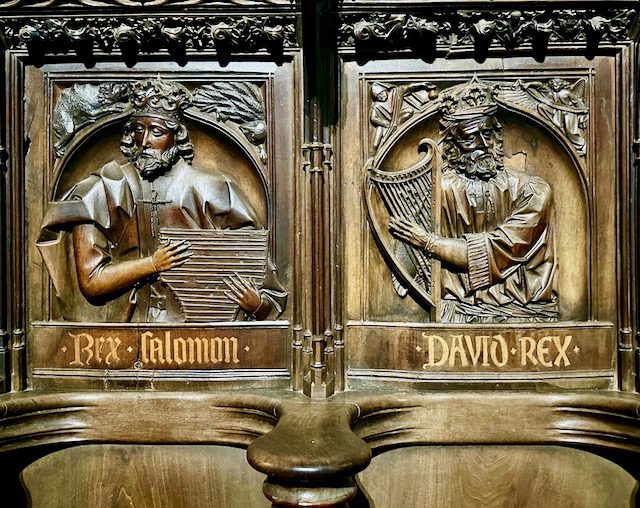
The choir, one of the oldest in Spain, is “a masterpiece of 15th-century art, featuring intricately carved wooden stalls.” 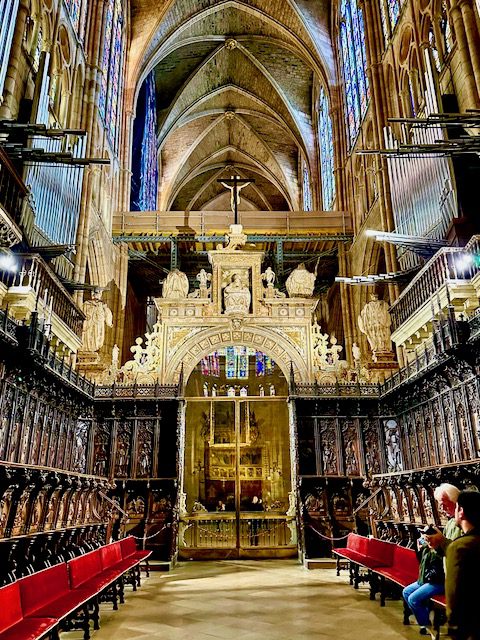
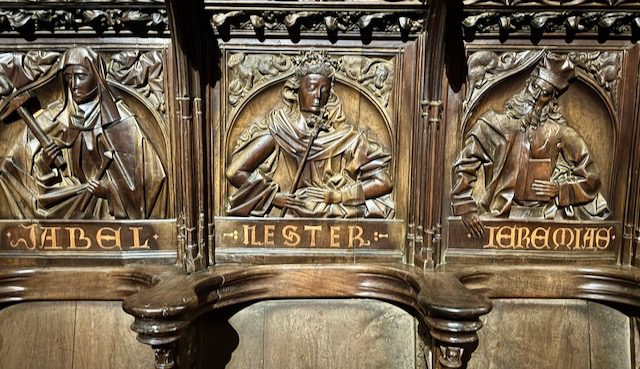
The workmanship on these stalls is amazing.
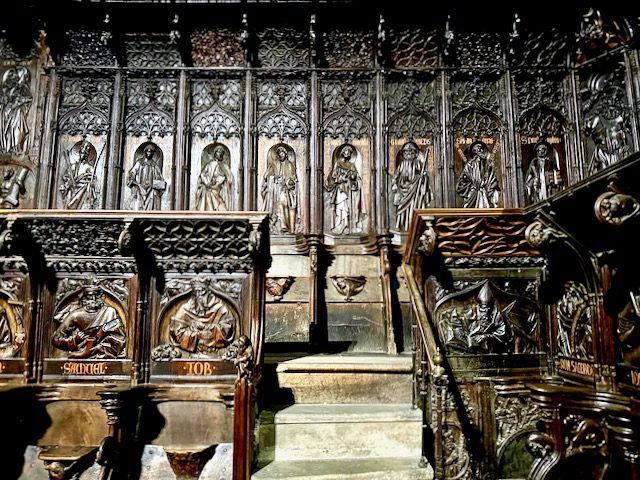
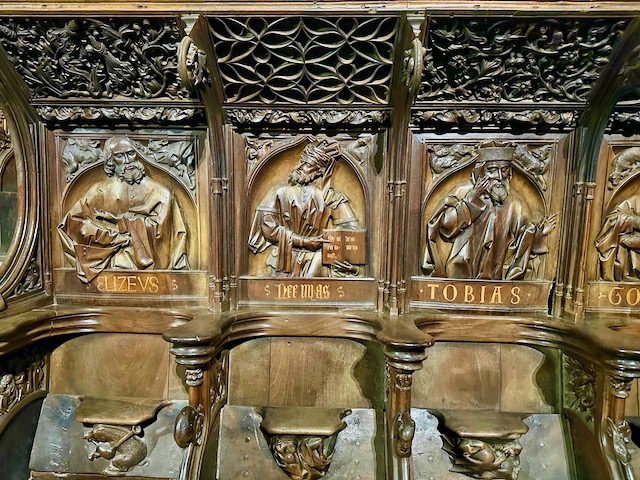
Detailed carvings include saints, apostles and a myriad of other characters.
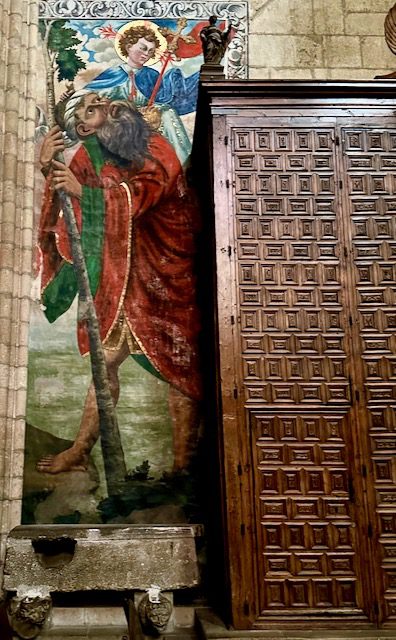
This painting might be of St. Christopher, but don’t hold me to that. I read he is also the Patron Saint of motorists, and I wondered if had still been sleeping while we attempted to get in the wrong car earlier.
The tomb of León’s Bishop, Martín Fernández, has the grieving mourners shown above. He died in 1289.
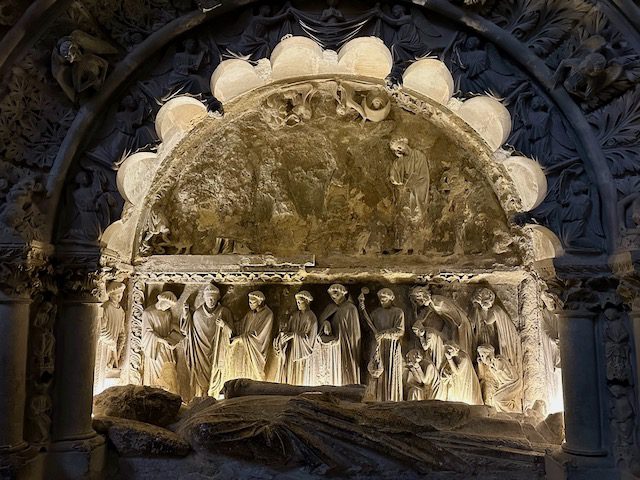
We spent a little more than hour here, and it is a spectacular cathedral.
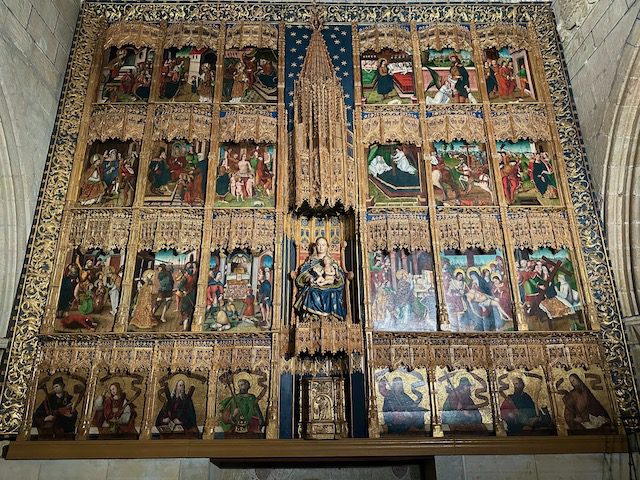
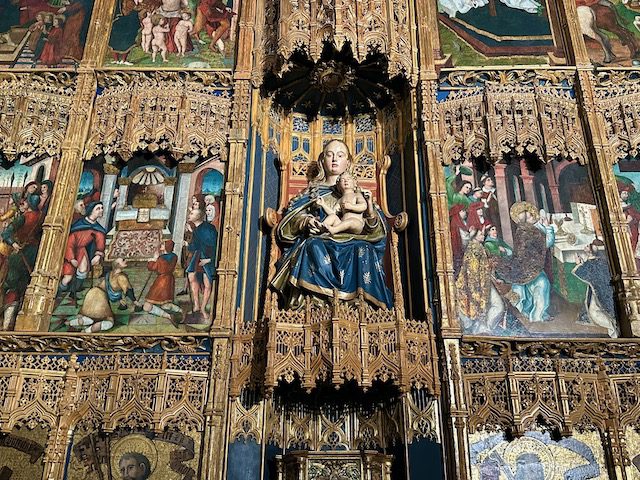
However, we might have been suffering a slight case of “Cathedral Overload.”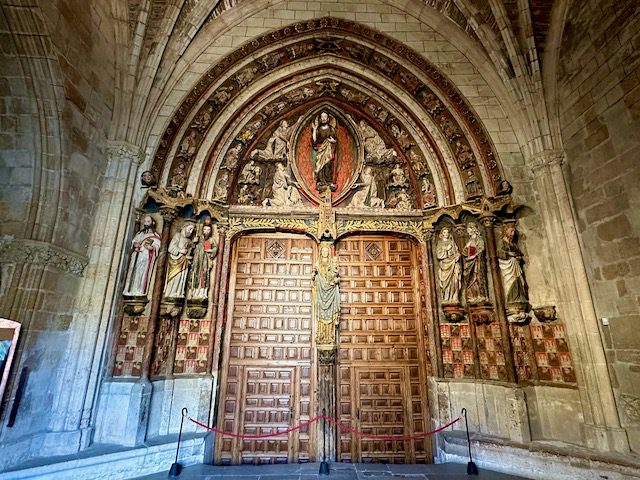
By the time we hit the Cloister and its many statues, we decided to bypass the Cathedral Museum.


This little fellow showed us the way.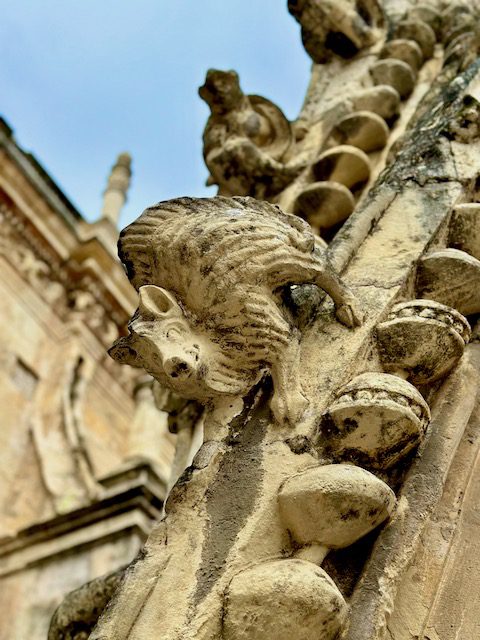
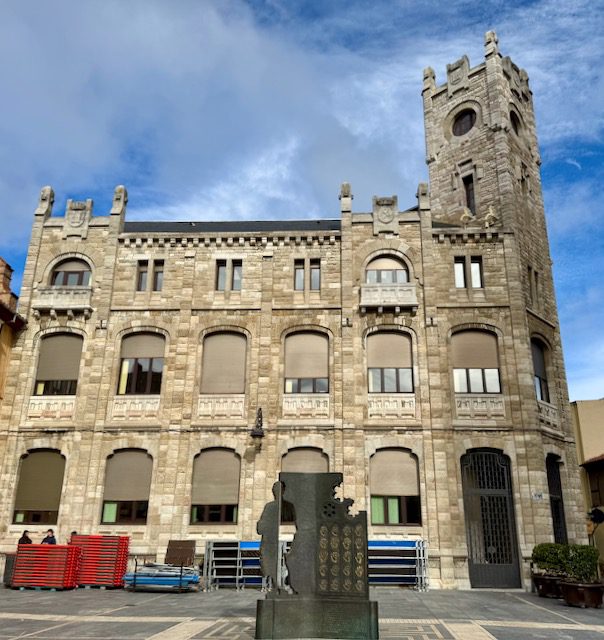
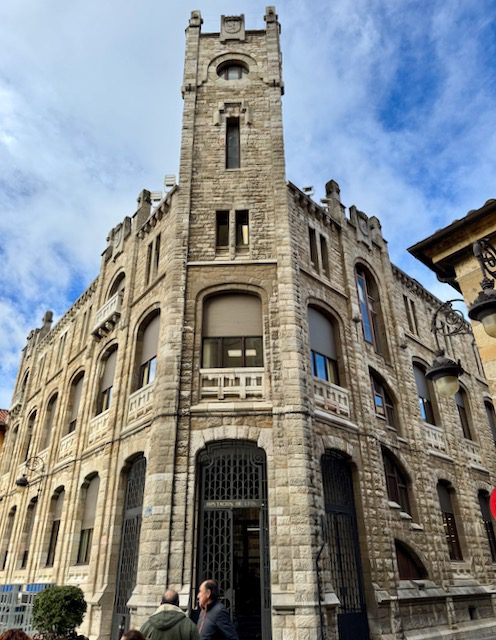
The weather was cooperating so far, although rain was predicted for later in the evening. We admired Antiguo Edificio de Correos, León’s old post office and telegraph building located in nearby Plaza de Regla, which dates back to the early 20th century.
Not far from the cathedral was this plaque honoring Paco Pérez Herrero, a popular poet.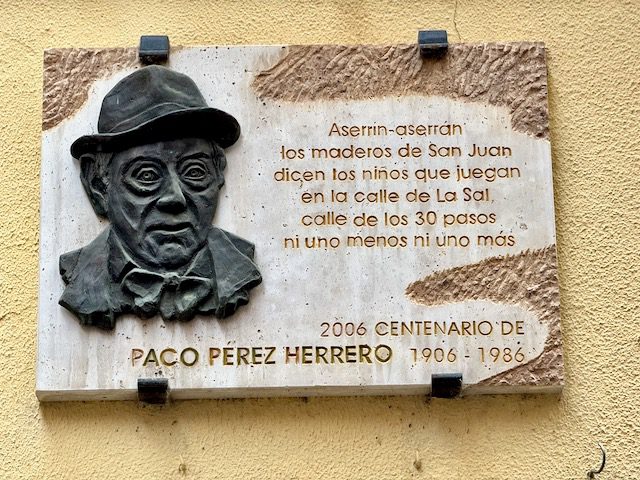
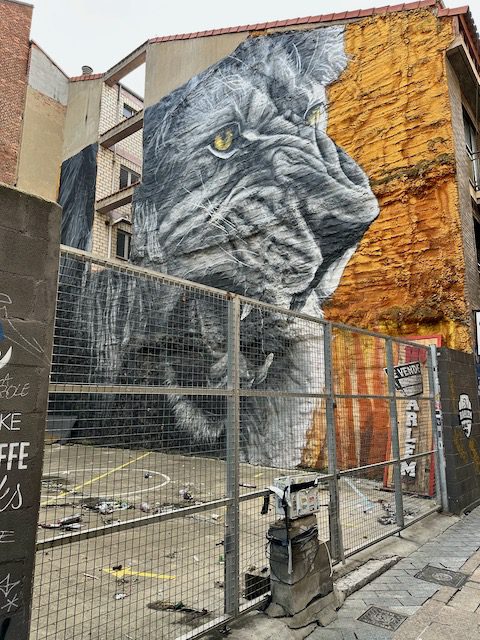
There was some cool street art as we meandered through town, including one of my favorite all-time athletes. We floated like a butterfly past it.

We reached Plaza San Martín, which is situated in Barrio Húmedo, an area we would get to know more of the next couple of evenings.

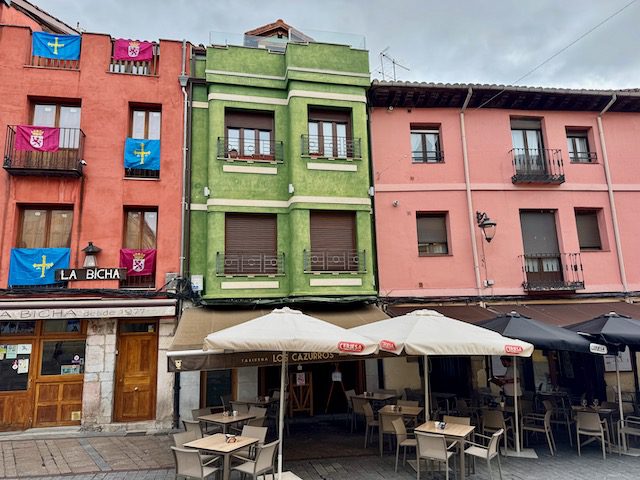
I guess “Cathedral Overload” did not include small churches, because we headed for the picturesque Plaza del Grano, an area that served as a grain market during medieval times. It is located on what we were told was a very important stage of the Camino de Santiago pilgrimage route. On the square stands the 12th-century Church of Santa Maria Del Camino (aka Iglesia De Nuestra Señora Del Mercado).
It is one of the oldest churches in León, and its centerpiece is a 15th century Pietà.
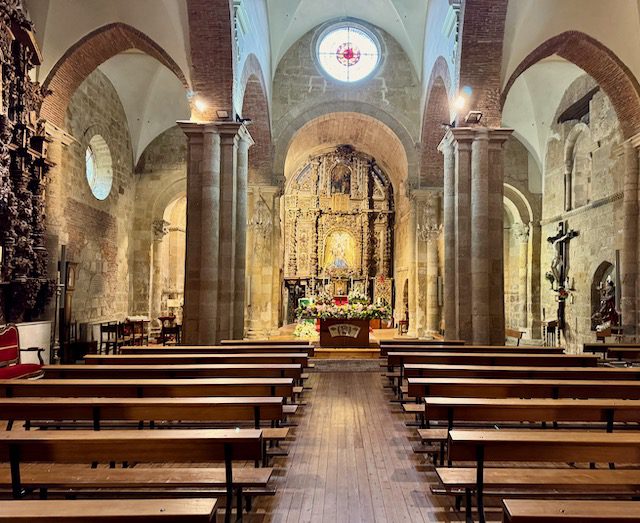

It’s a charming little church.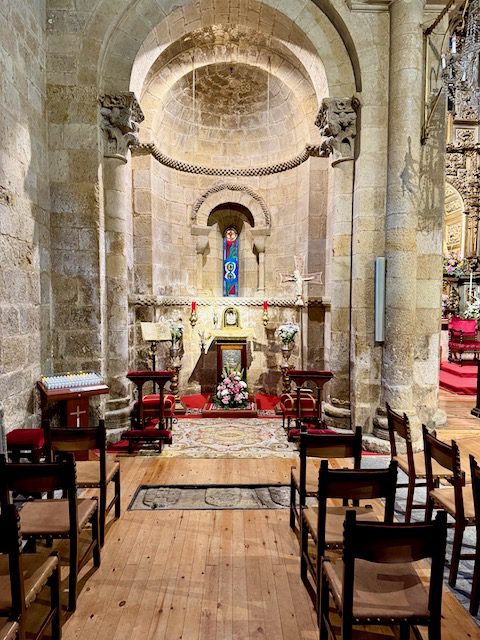
Next stop was the Plaza San Marcelo, and from there we could see Museo Casa Botines Gaudí. Gaudi erected the seven-story building at the end of the 19th century, and until 2017 it was a bank.
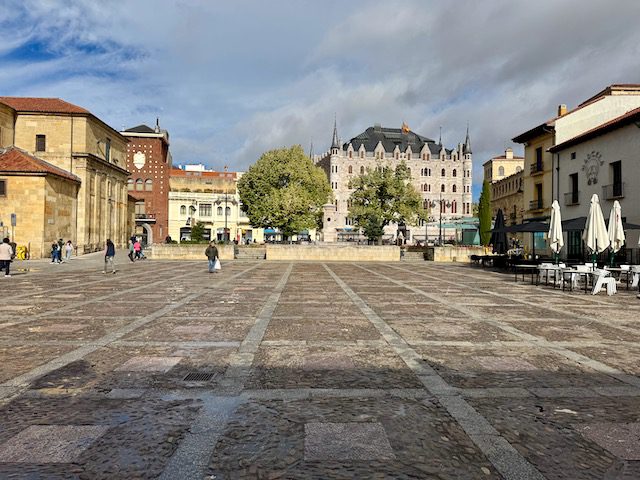
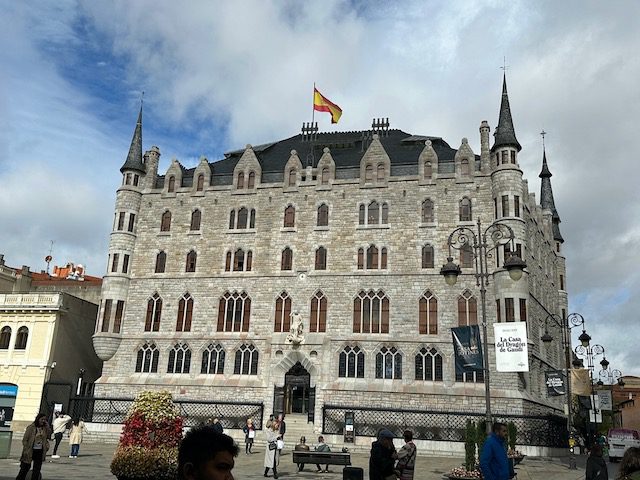
At that time, the Fundación Obra Social de Castilla y León converted it into a museum. I had read mixed reviews, so for the moment we passed.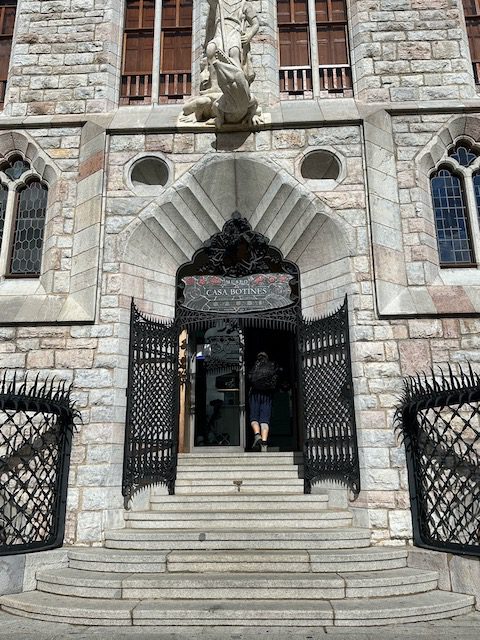
I did sit down with the architect for a quick one-sided chat as he sketched Casa Botines.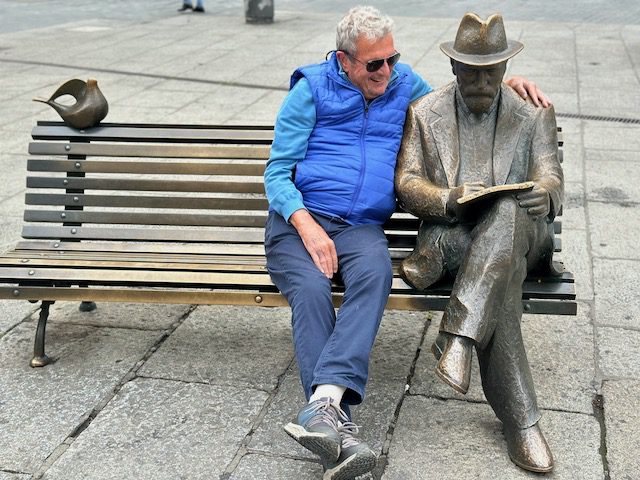
On Plaza de San Marcelo, we took a look at the municipal building, also known as the Ayuntamiento de León or Palacio de Jabalquinto, constructed around 1585. It serves as the city council building for León.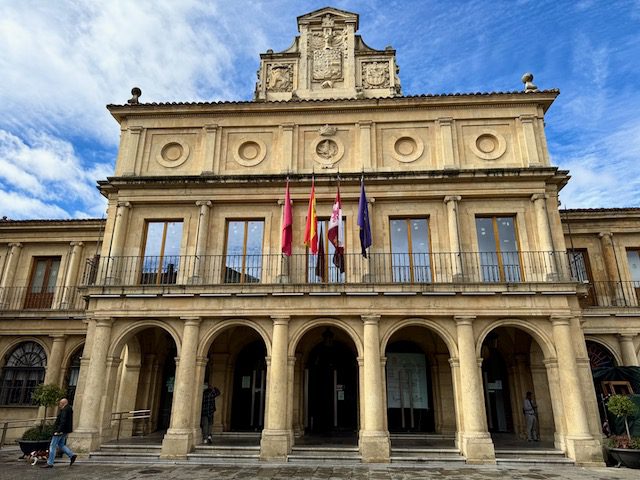
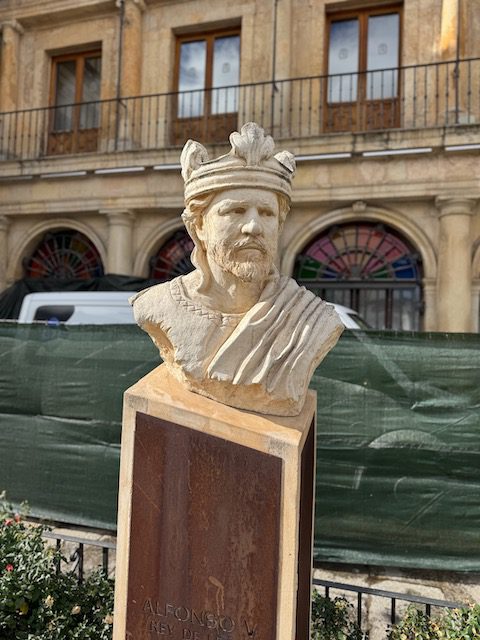
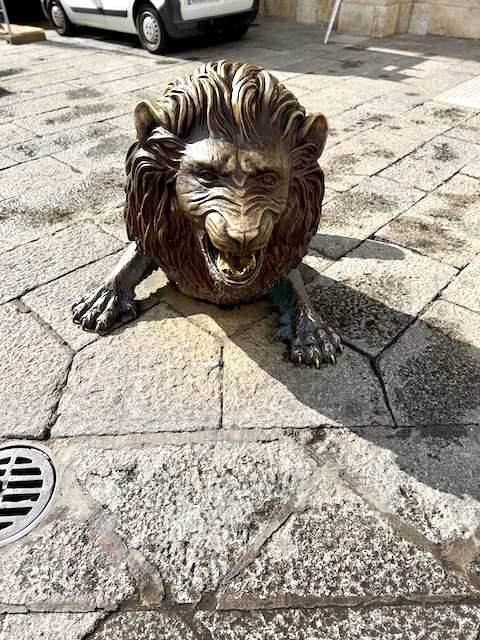
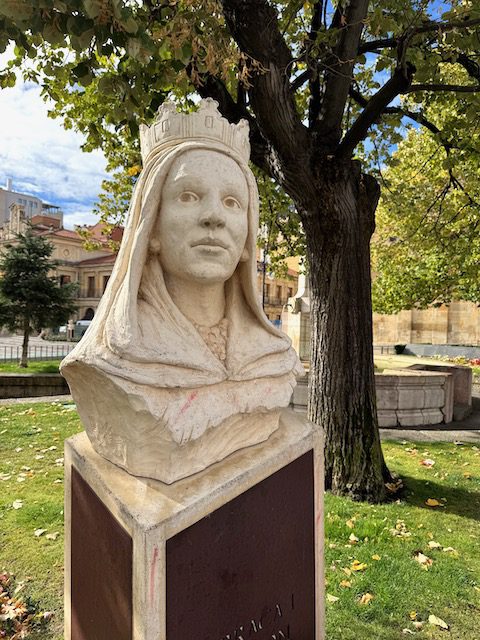
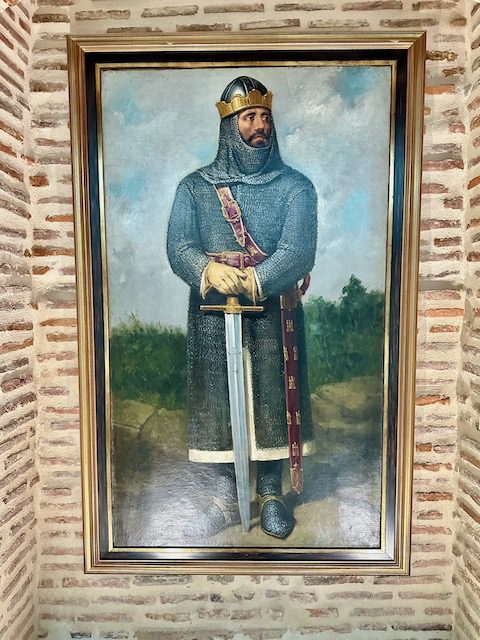
There are a few statues of interest located in and around the square, including one honoring 10th-century King of León Alfonso V, a lion emerging from a sewer, and Urraca of León, a 12th-century queen who ruled the Kingdom of León, Galicia, and Castile.
We made our second uninspiring luncheon decision of the trip, and the name of the place has been lost to history.
Palacio del Conde Luna, which houses a museum dedicated to the history of the province of León, looked promising. It was completely refurbished to become an office of the University of Washington, and since my dad was a Husky, we went inside.
.
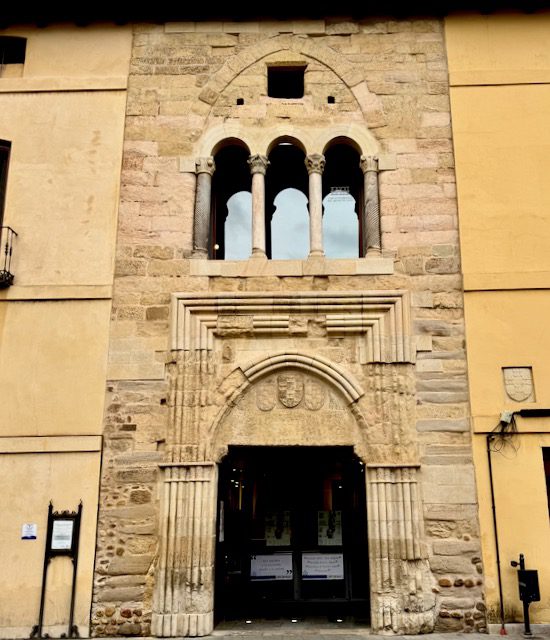
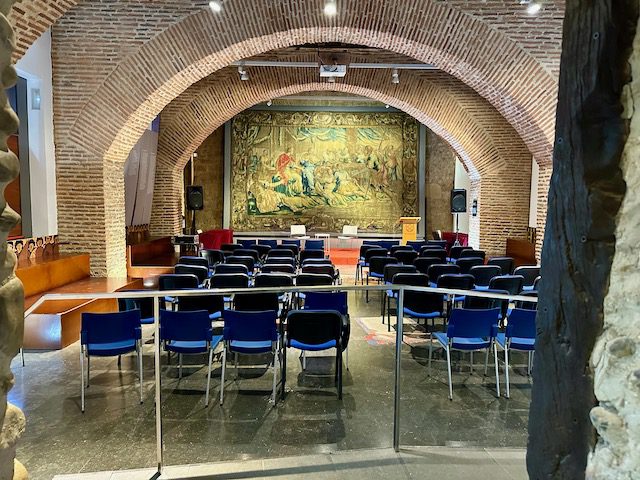
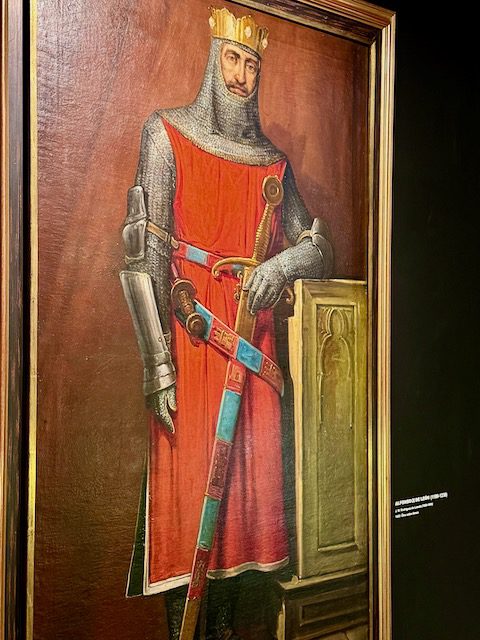
Unfortunately, we did not find it very interesting. The interior is rather sparsely decorated, and I read afterward it would be better to visit with a private tour. It was free, however.
Back at the hotel, Tracy took a siesta while I decided to explore the town a little more.
I found my way back to Gaudi’s ‘modernista’ Casa Botines, and despite the differing reviews, I decided to give it a try. This would be another place where a tour might be better, because the museum, in my opinion, has a rather confusing layout, and is probably better suited for Gaudi aficionados. I thought the exterior was much more interesting than the interior.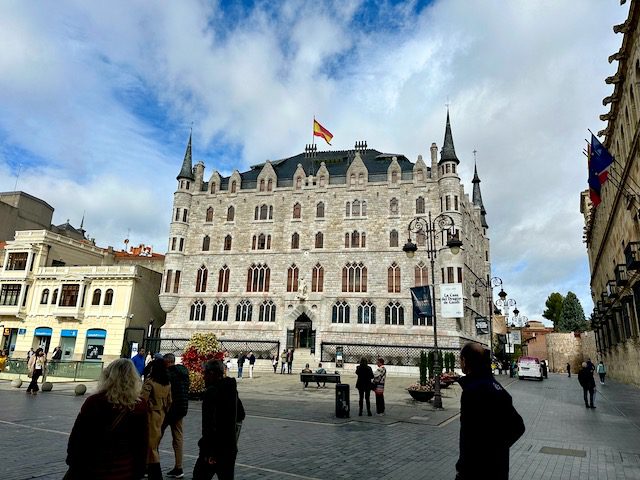
At the nearby Plaza de Santo Domingo, a flowing fountain …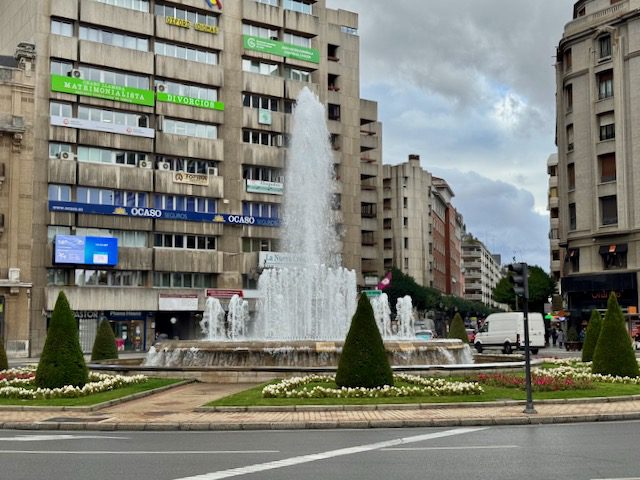
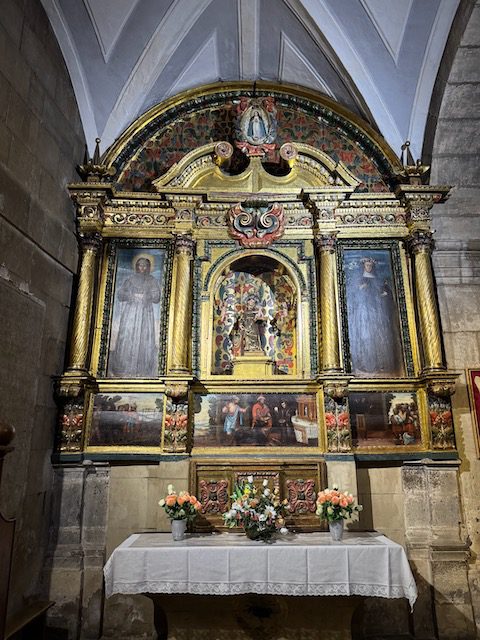
… and, wouldn’t you know it, another church.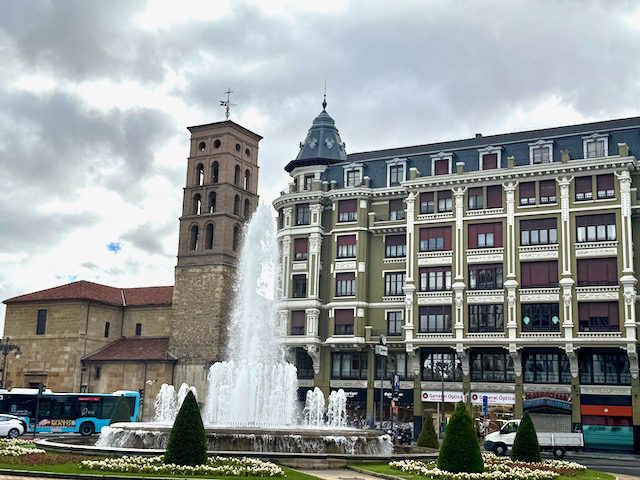
Parroquia de San Marcelo is one of the oldest in the city dating back to 850, having been rebuilt on several occasions. It’s dedicated to Saint Marcellus, patron saint of the city and also a Roman centurion. He is depicted in an 18th-century altarpiece.
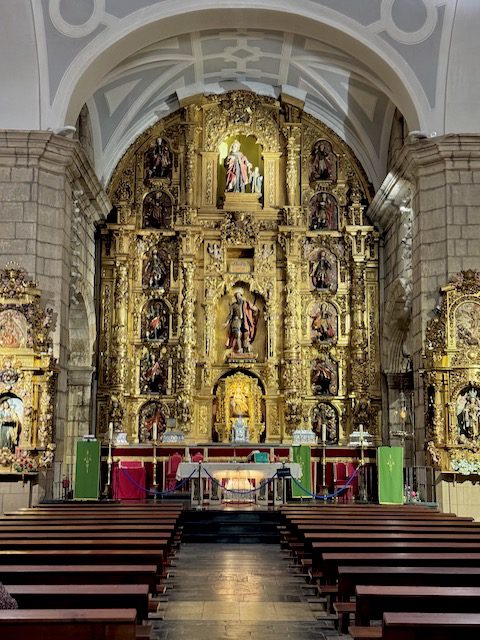
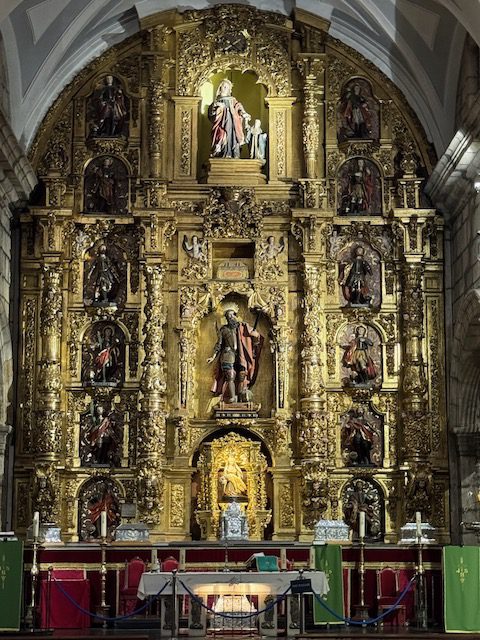
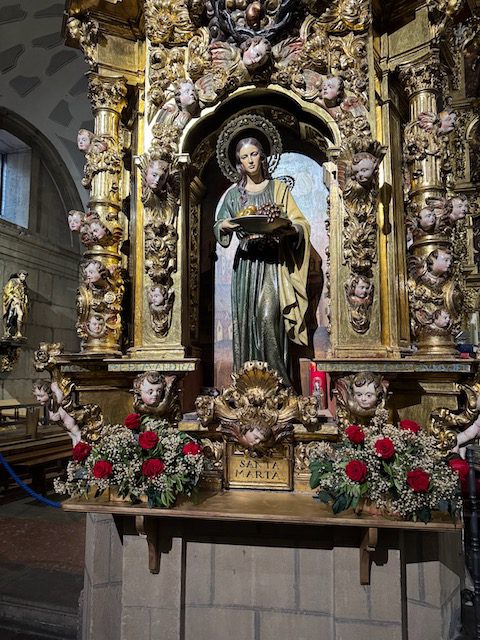
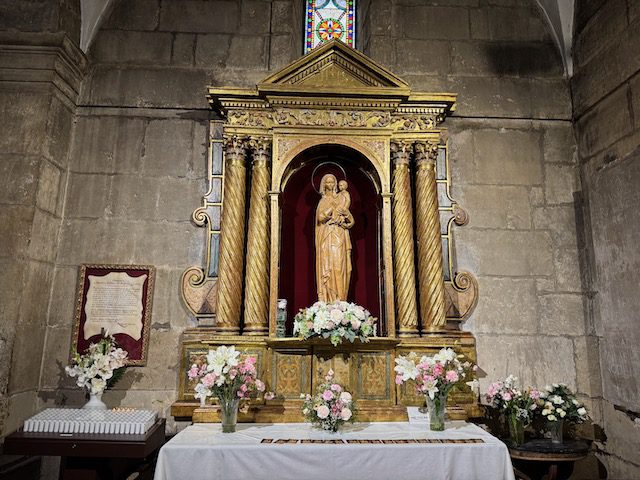
I spent about 15 minutes checking it out.
Walking back to the hotel in the late afternoon, I passed the Palacio de los Guzmanes, a place that had interested me in my trip planning. However, it was not open either day we were in León.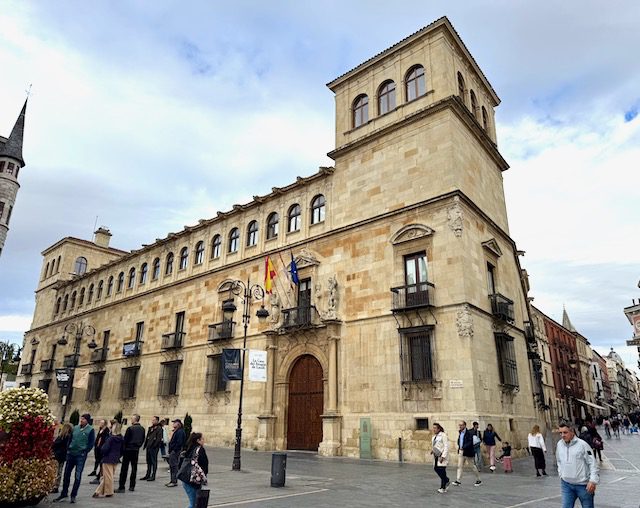
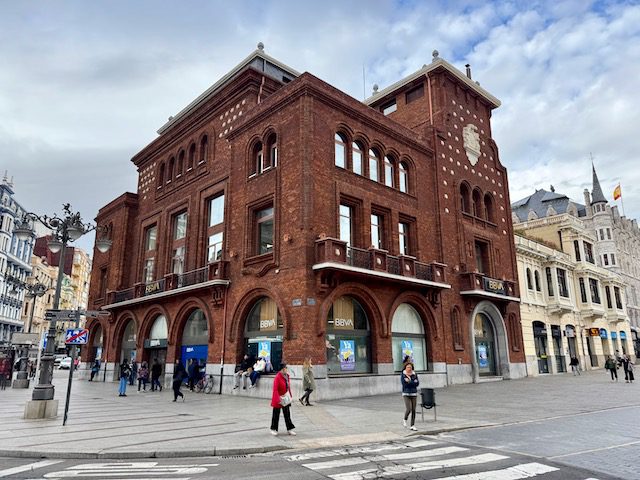
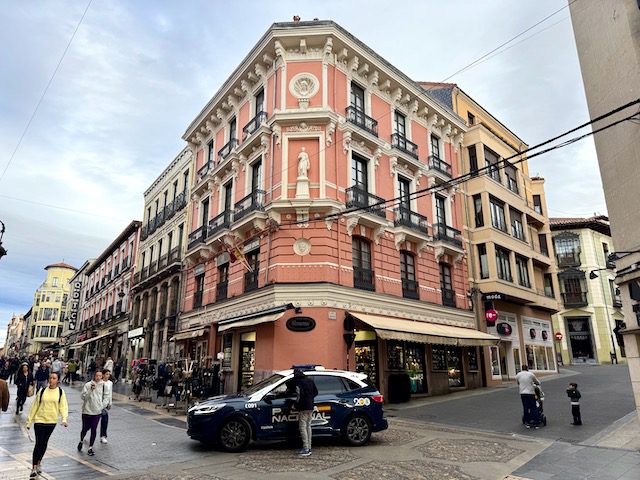
There were many interesting styles of architecture in that area.
Adjacent to our hotel on Plaza Mayor was a bar, which tempted me to order a glass of Guinness.
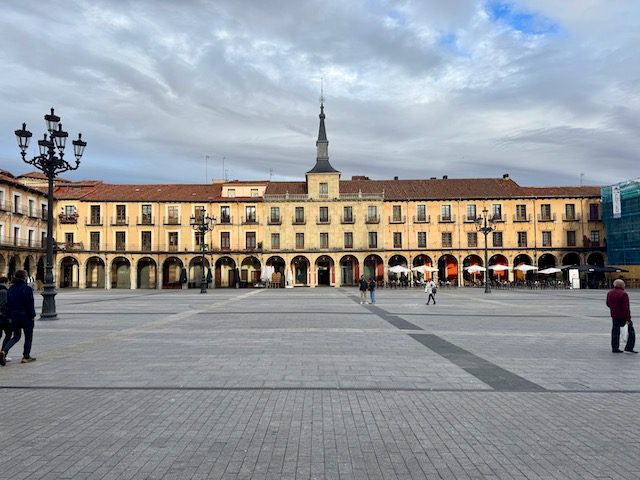
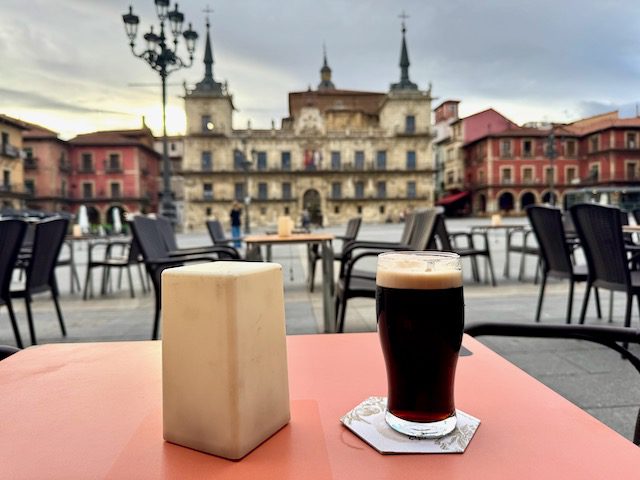
Gathering the now rested Tracy, we wandered through the nearly empty Plaza Mayor …
… a short distance to Plaza de San Martín, right in the heart of Barrio Húmedo (“Wet Neighborhood”). I had read, “The Wet Quarter nickname originates from the high density of bars and restaurants in the area and the tradition of ‘going out for tapas,’ where a small snack is typically served free with every drink. At night, the plaza is a popular hub for social life, lined with outdoor terraces.” Our first stop was Los Cazurros. Delicious.
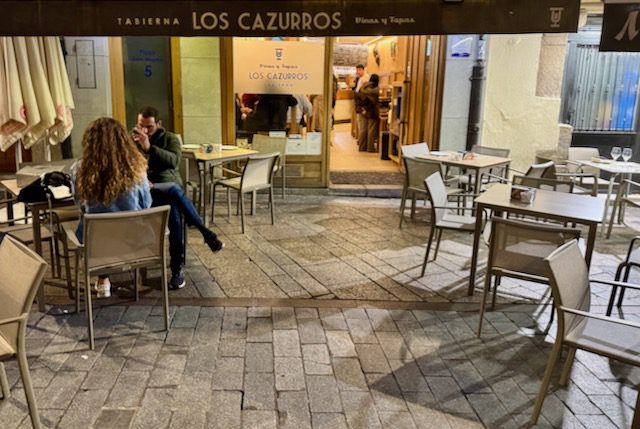

We then ventured about 100 feet to Entrepeñas for more wine and tapas. At both establishments, the people assembled were jovial and seemed to be mostly filled with friends and neighbors, as there were no English speakers (except us). It was such a cool vibe to be hanging in this area for about an hour.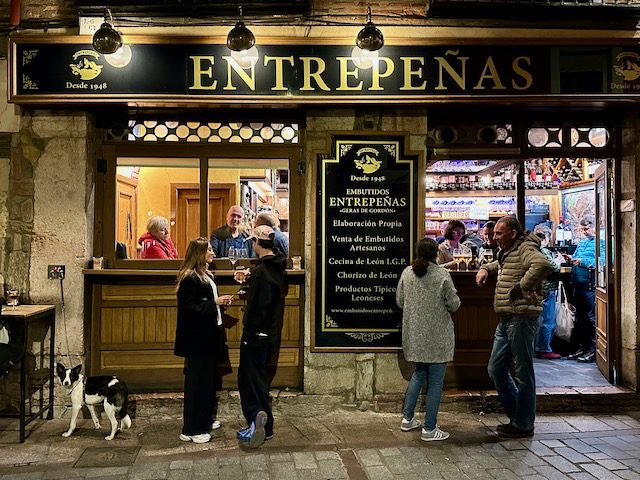
What does one do after a few tapas and wine? Eat dinner, of course. We checked out more street art along the way. Murals like these are common along the Camino de Santiago pilgrimage route. I read they serve as a visual diary of the pilgrims passing through. The scallop shell is the traditional symbol of the Camino de Santiago pilgrimage.


We had chosen Casa Mando, known for its Leonese cuisine.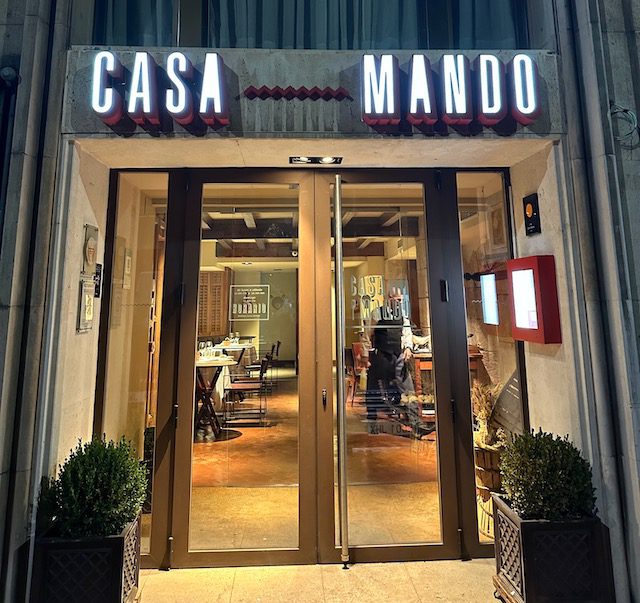
Tracy thought the dining area consisting of four private rooms “elegant,” and the service was impeccable.
We have cut back on eating out at home because prices in the Los Angeles area are simply out of control. Our meal on this evening was fantastic, and although prices were not inexpensive, they were reasonable. Our ham croquettes to start were very good.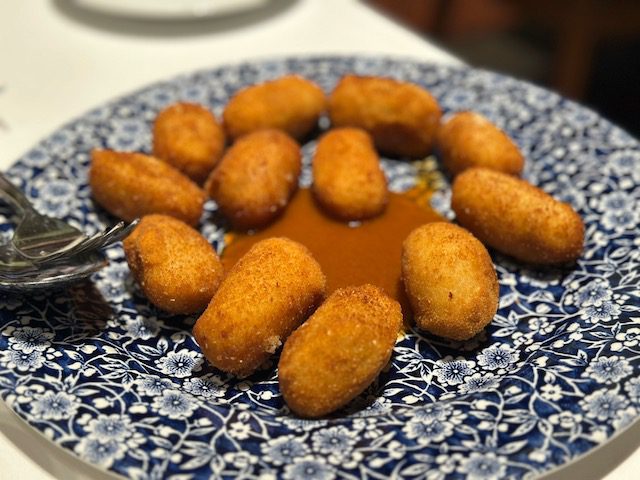
For my main dish I ordered the Solomillo stroganoff. When it arrived, I was a little worried, because on top of the meat were pickles. Pickles are not one of my favorite foods, but when in León… Served on a bed of rice this dish was great, including the pickles. Tracy enjoyed her beef cheek cannelloni.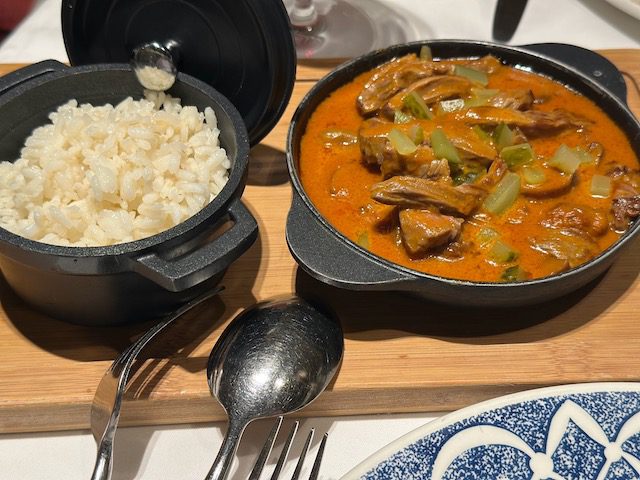
Despite an evening of tapas, wine and dinner, we had enough room left to order the table-side flambéed Baked Alaska for dessert. Instead of being chocolate, strawberry and vanilla, this one had a citron interior. I could have eaten another one, even though I had consumed more food on this evening than I do in an entire weekend at home.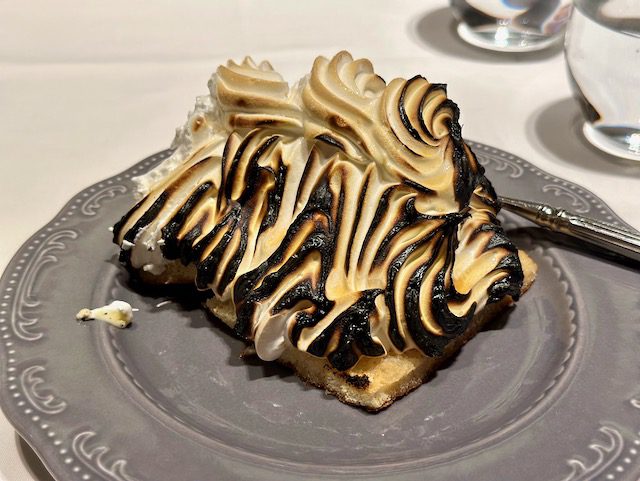
At the table next to us were three local college students who struck up a conversation with two elderly tourists, well one elderly person and his wife. When they found out we were from the U.S., one of them excitedly said he’d be coming to New York City in 2026 for the World Cup. They were very nice and offered to take a photo of the two of us.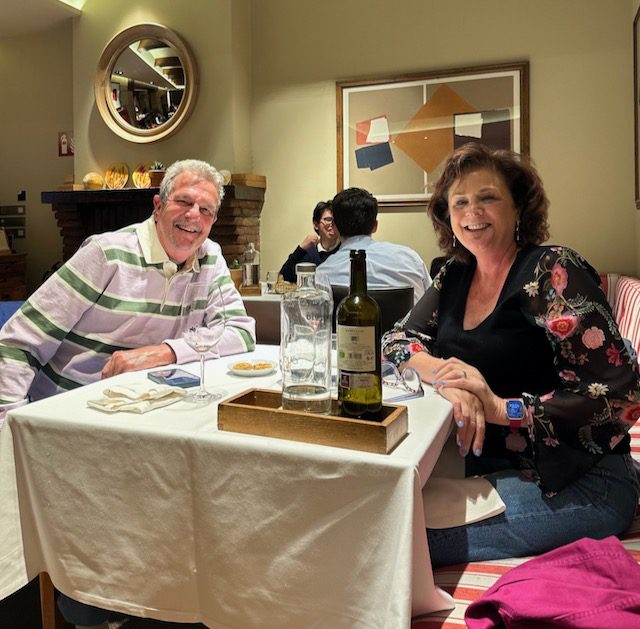
It was drizzling heavily on the walk home, giving the “Wet Neighborhood” an entirely new meaning.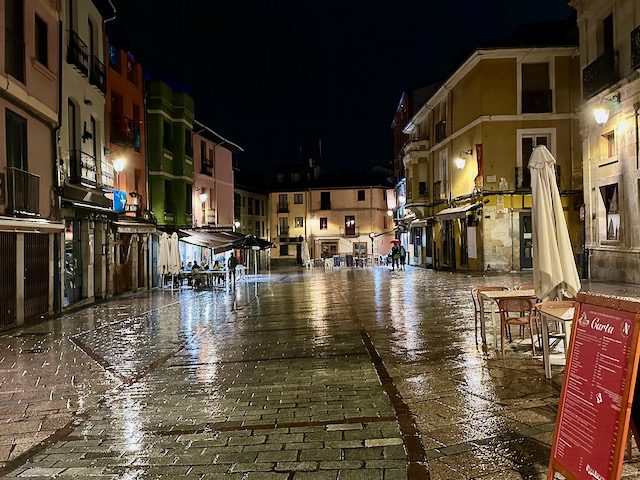
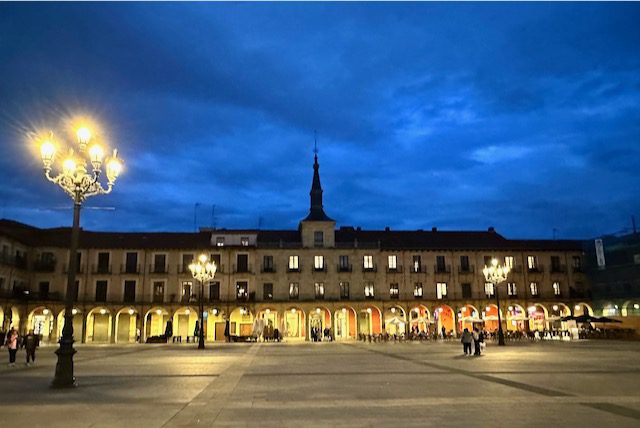
Plaza Mayor was devoid of people as we hurried back to the hotel with the rain now coming down heavily.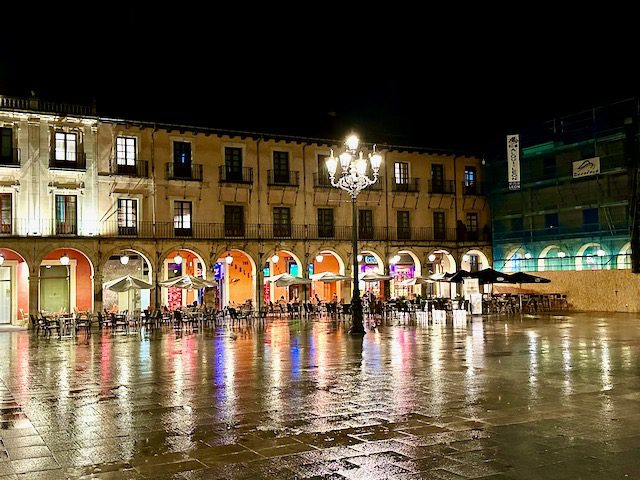
Tracy took a “Mirror Selfie” of our drenched selves as we got into the hotel elevator.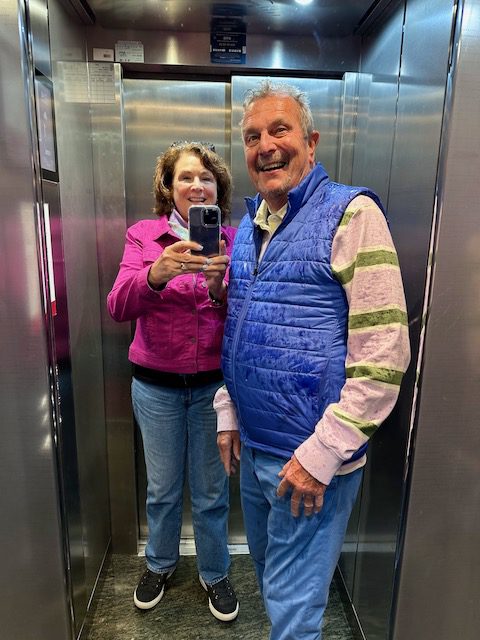
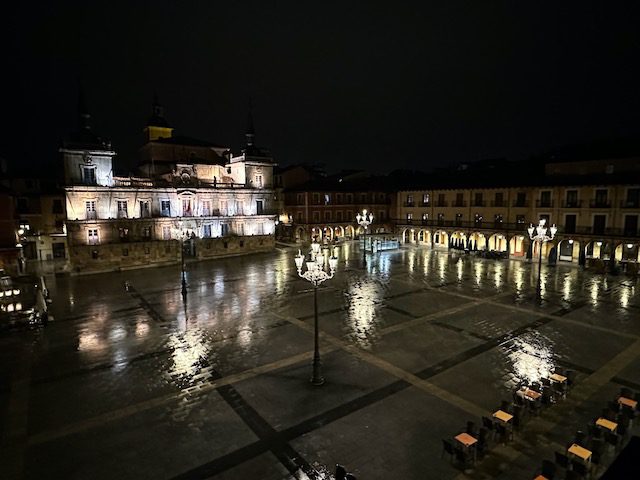
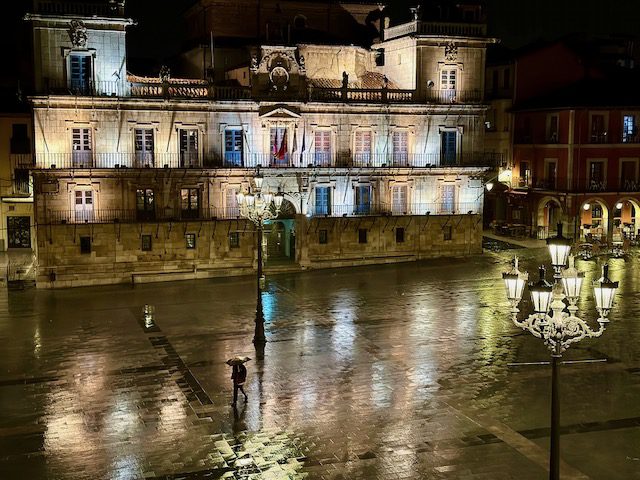
Back in our very comfy hotel room, we took one last photo of the Plaza Mayor.
Tomorrow would be our last day in León, and we started at the Royal Collegiate Church of Saint Isidore, where we met our only grumpy person of the trip “guarding” the “Sistine Chapel of Romanesque art.”
 Next we’d see Convento de San Marcos (Parador de León), which not only is a historical convent, but also a very upscale hotel. Our bad lunch the day before was all but forgotten as we had a really good meal in our favorite part of town, Barrio Húmedo.
Later in the afternoon, little did we know that when we stopped into the pharmacy, we had stepped into a local landmark. Finally, after another tapas stop, we’d dine at a restaurant with very good food near the cathedral, even though the server was, shall we say, distracted by a device that distracts us all these days.
Chapter Ten: Last Day In León
Day Ten – No Spanish Sistine Photos, I’m Glad She Didn’t Have A Ruler, Upscale Convent, Strolling the Gran Via, You Can’t Beat This Barrio Spot, Germs Be Gone In León’s Oldest Pharmacy, More Tapas Please, Hold The Phone and A Rainy Night In León