Monterey Bay Aquarium – Monterey, California
July 15, 2026
Loon Point Beach – Carpinteria, CA
August 26, 2026A Capital Idea: The Oldest Art Museum in the Western United States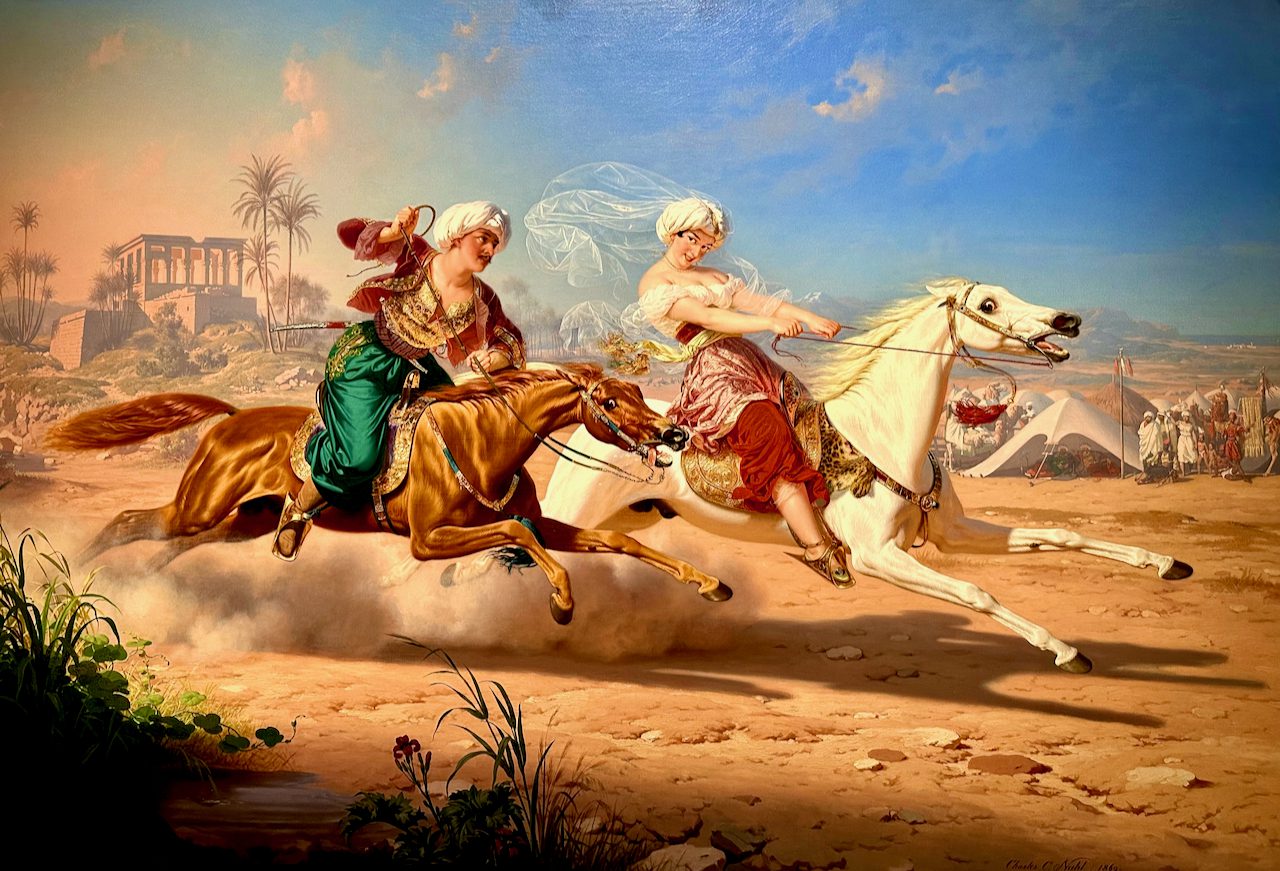
Crocker Art Museum – Sacramento, CA
Visited May 2026
While perusing the internet one evening, Tracy became enamored with a magnificent painting entitled “Flaming June” by British artist Sir Frederic Leighton. When she learned it would be featured at a special exhibition at Sacramento’s Crocker Art Museum in the spring of 2026, she said, “We have to go see it in person.”
I knew we’d soon be traveling to California’s capital because the last time this happened was in 2017 when she was infatuated with a photo of John Singer Sargent’s masterpiece, “Carnation, Lily, Lily, Rose,” which is located at the Tate Britain in London. Next thing you know, we were on a plane across the pond. When Tracy talks, I listen (sometimes).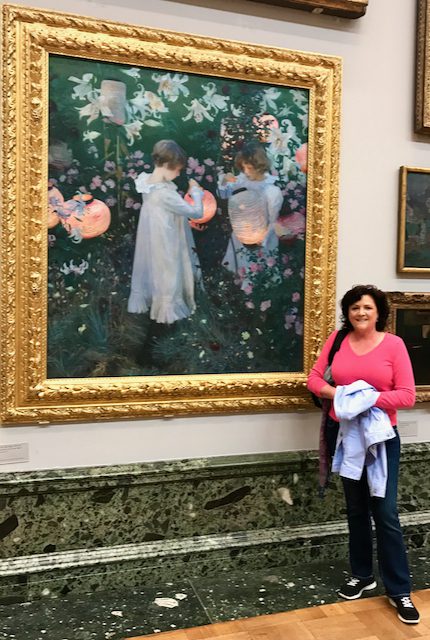
I had never heard of the Crocker Art Museum (I had only heard of Crocker Bank), which is kind of crazy considering I subsequently read it is the “oldest art museum in the western United States.” Even Tracy who grew up near Sacramento had never heard of it.
But first, a little history: Judge Edwin Bryan Crocker and his brother, Charles, were railroad tycoons who built their fortunes on the Central Pacific Railroad. Charles’ side of the family moved to San Francisco and expanded into banking, while Judge Crocker and his wife, Margaret, remained in Sacramento. This portrait of Judge Crocker by Stephen William Shaw is from 1873.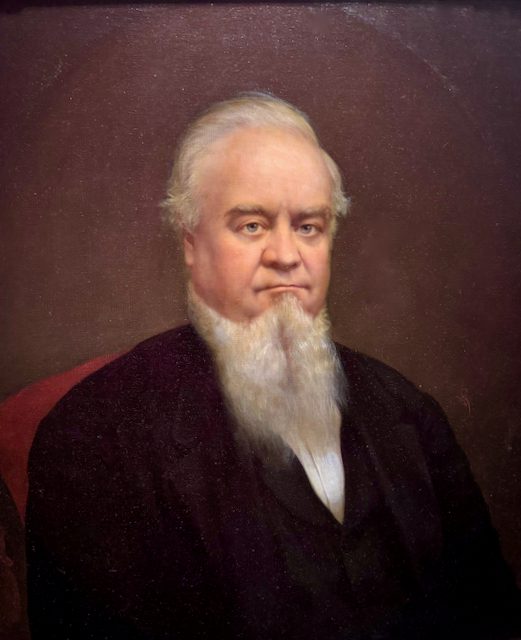
After Judge Crocker suffered a stroke and retired in 1869, the Crockers spent three years on a grand tour of Europe collecting art. Upon their return, they continued to collect California landscape paintings from “then-contemporary artists.”
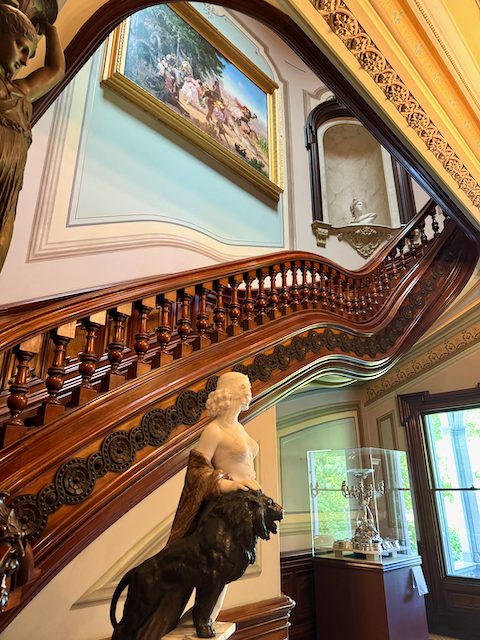
In 1872, they renovated their Sacramento mansion to include an addition to display their growing art collection. 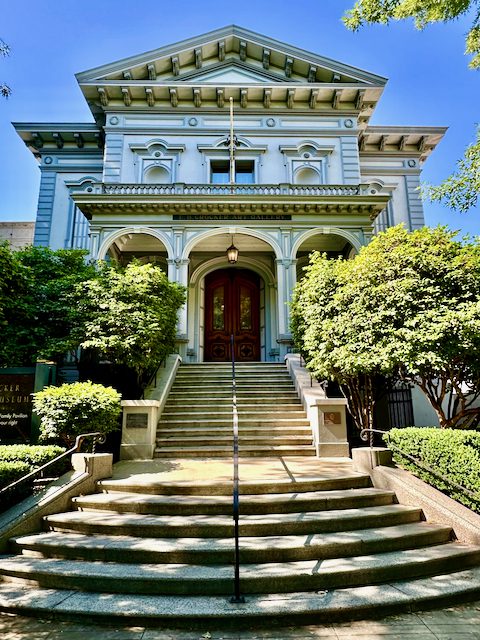
Local architect, Seth Babson, “envisioned the home and gallery as an integrated complex, unique in design and built from the finest materials. The gallery building included a bowling alley, skating rink, and billiards room on the ground floor; a natural history museum and a library on the first floor; and gallery space on the second floor.”
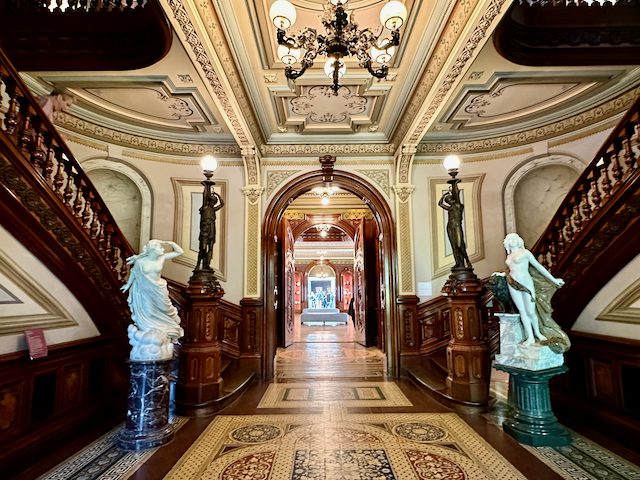
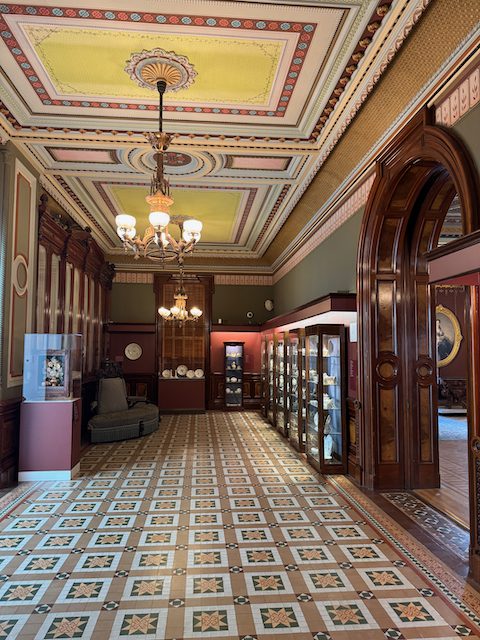
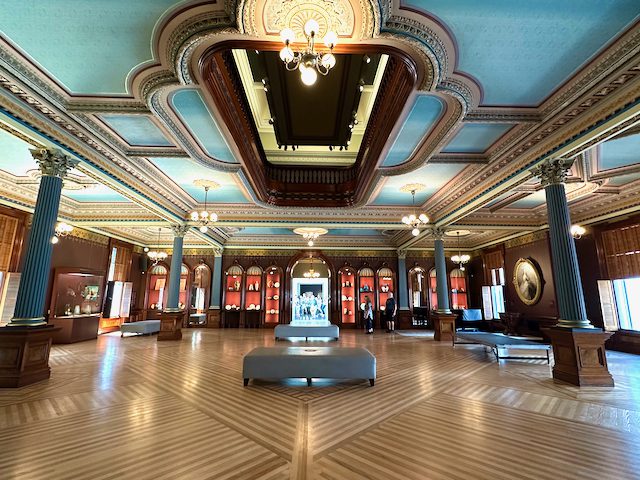
Judge Crocker passed away in 1875. Margaret, who continued to be a great influence and benefactor in Sacramento, gifted the mansion and art collection to the city of Sacramento in 1885.
In 2010, a 100,000 square-foot addition, which tripled the museum’s size, was built next door to the mansion. Along with friends Kim and Mary (they can’t seem to get rid of us), we arrived at the museum not knowing what to expect. And what a pleasant surprise it turned out to be!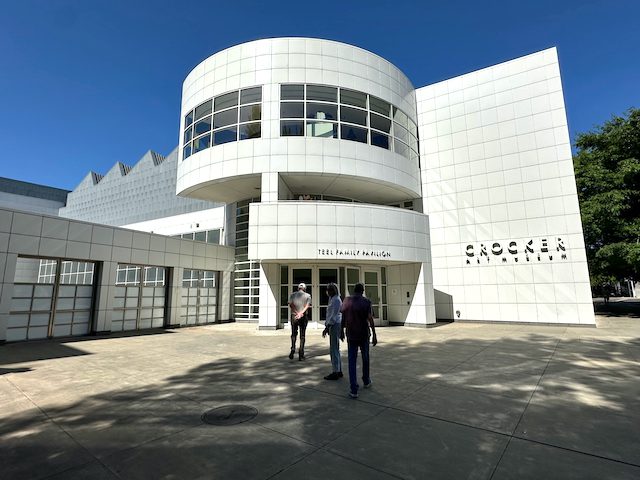
The museum holds a diverse collection of more than 25,000 objects and artwork that range from American to Contemporary to California landscapes to art from across the world, plus a whole lot more. We all enjoyed reading the informational gallery cards next to each piece which, in addition to the title and artist, included background information on the subject of the painting, the artist’s history and hints as what to look for in each painting. Many of the artists in this collection seemed to be either from California or had settled here permanently.
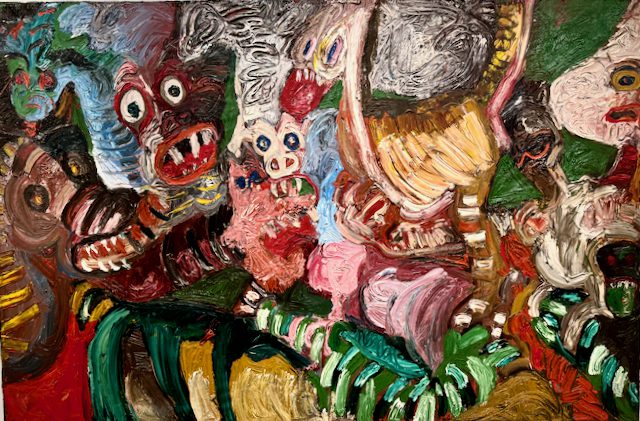
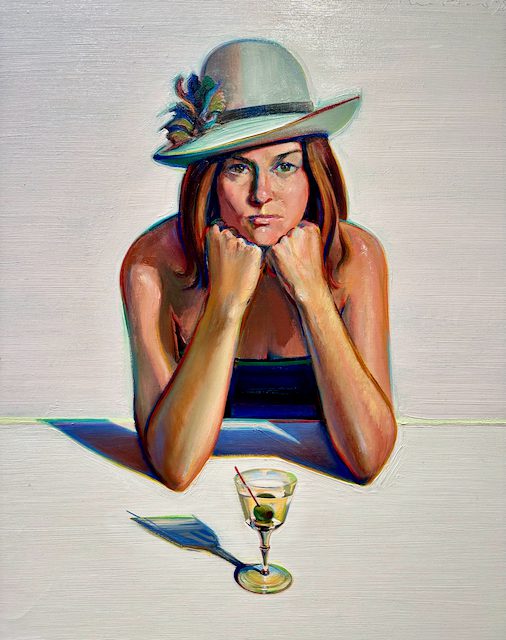
Entering the museum, a large mural, Home Sweet Home (After Seurat, Manet and Pippin), greeted us. Wangari Mathenge, an American born in Kenya is known for “depicting the black female experience in Africa and the United States.” The gallery card gave us a better perspective of her work.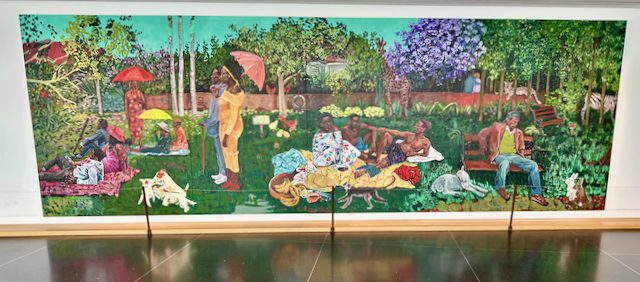 The first room contained interesting paintings that included Mike Henderson’s Crazy Dreams (something I could relate to) and a painting by Wayne Thiebaud, The Martini Girl. According to the gallery card, the “story (of Martini Girl) seems to be that she enjoys a good martini.” He could have painted Tracy, although he would have had to substitute a lemon twist for the olive.
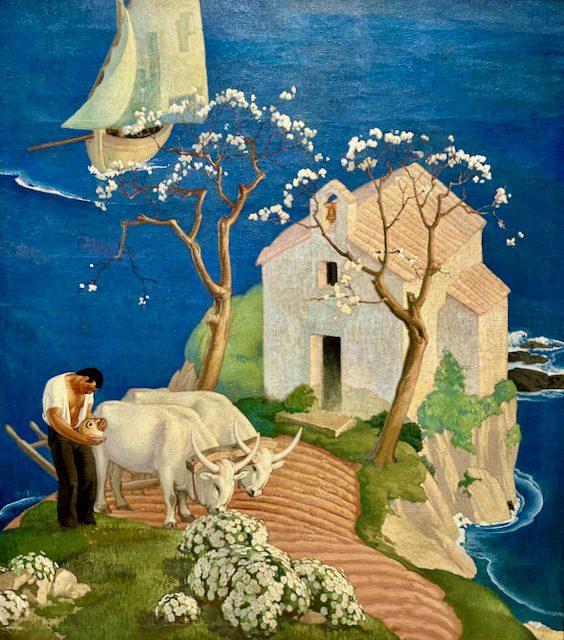
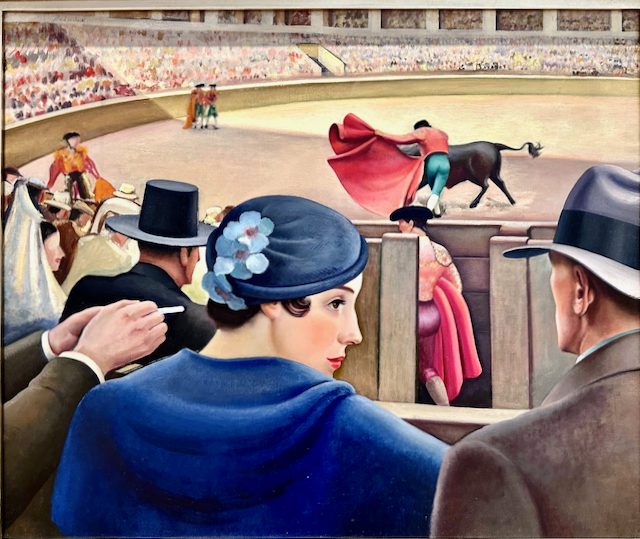
Next we viewed Primavera by Dunbar Dyson Beck showing a European farmer tilling a field and The Bull Fight by Edna M. Reindel featuring a woman at a bullfight who is “perhaps loosely based on Lady Brett Ashley from Ernest Hemingway’s 1926 novel, The Sun Also Rises.”
Kim, who is a gifted painter himself, especially enjoyed the California landscape section.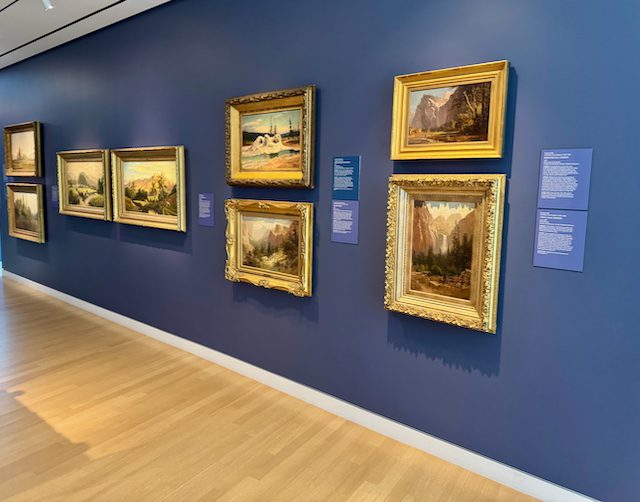
There were a number of paintings to admire, such as Monterey Cypress by Guy Rose and San Geronimo Valley by Thaddeus Welch.
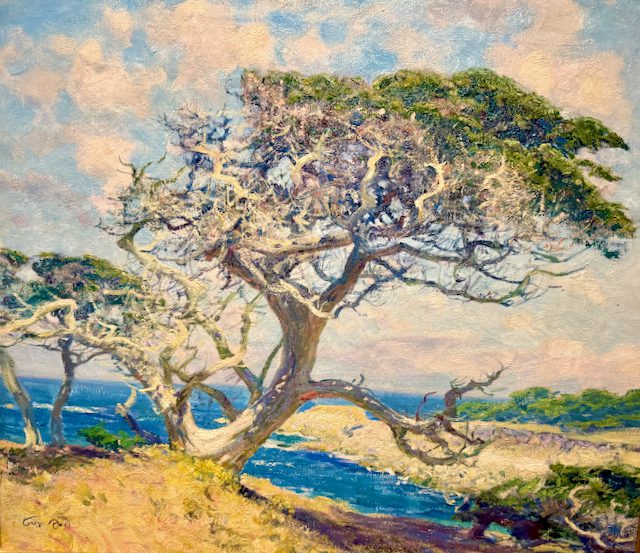
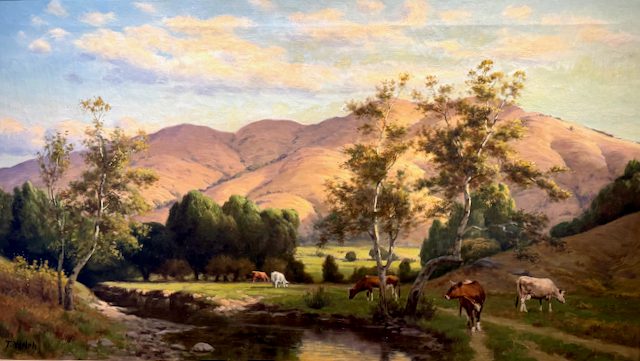
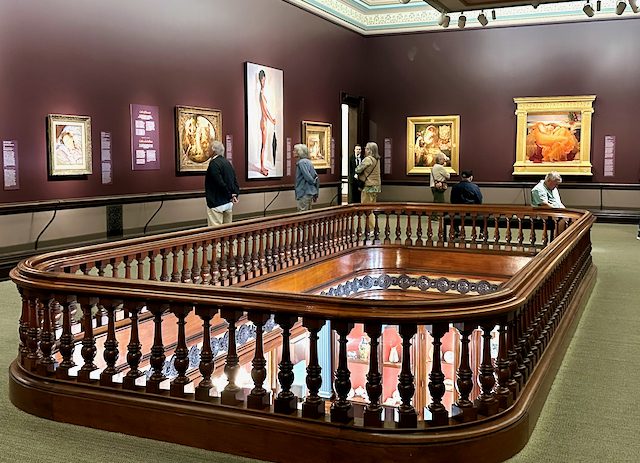
Upstairs we came upon the painting Tracy wanted to see, which was part an exhibition (The Sense of Beauty: Six Centuries of Painting from Museo de Arte de Ponce) of paintings from Puerto Rico’s Museo de Arte de Ponce. The museum has been closed for renovations after devastating earthquakes in 2020, but several of the most famous works from its collection have been on a traveling exhibition around the world including The Met, the Frick, the Prado and Tate Britain, all of which we’ve been fortunate to visit throughout the years.
Sol Ardiente de Junio (Flaming June) is an 1895 oil on canvas painting by British Victorian painter, draughtsman, and sculptor, Sir Frederic Leighton. The dazzling painting of a sleeping woman went missing from the 1930 to 1962, and after it resurfaced the Museo de Arte de Ponce purchased it in 1963 for its collection for about $5,600.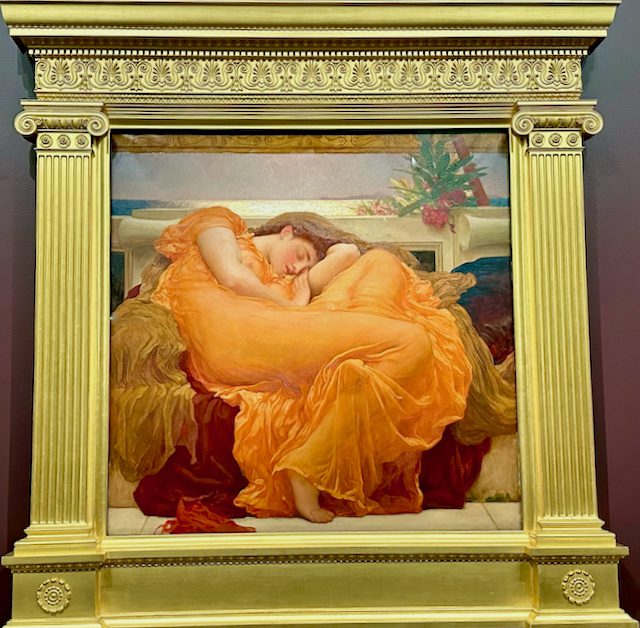
Interesting fact: Leighton was knighted in 1878 and on January 24, 1896, he became the first painter to be awarded a peerage. Leighton died on January 25, 1896, one day after the patent creating him Baron Leighton of Stretton was officially issued, resulting in the shortest-lived peerage in British history.
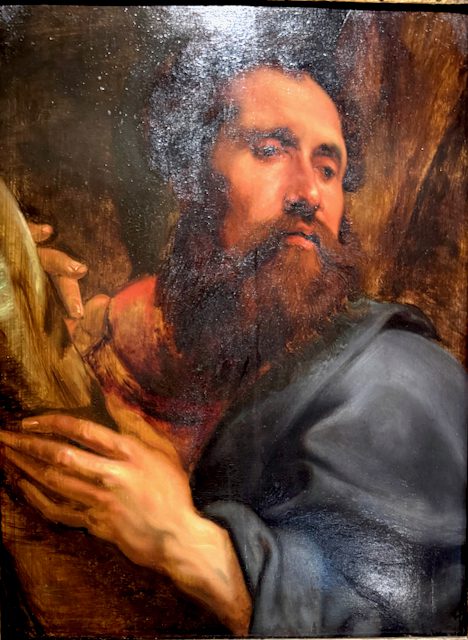
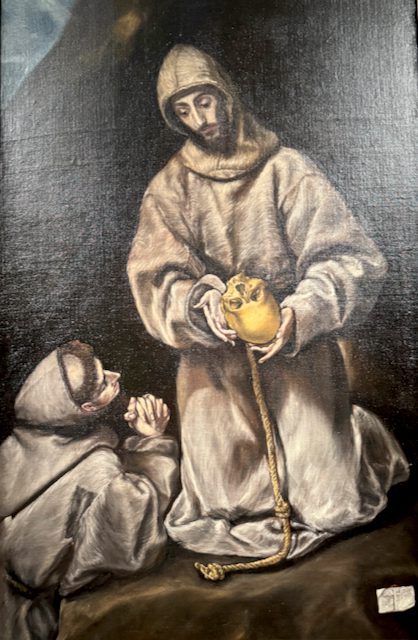
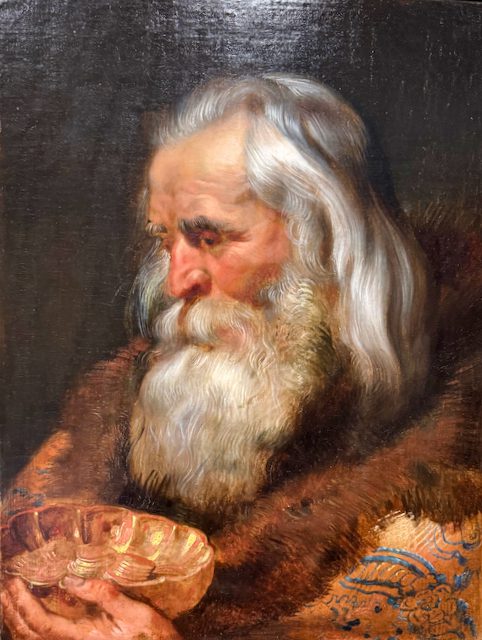
The exhibition at the Crocker showcased 60 items spanning six centuries. Peter Paul Rubens Head Of The Oldest of the Three Kings, El Greco’s Saint Francis of Assisi and Anthony van Dyck’s Saint Andrew were just a few of the highlights.
Our favorite? Lucas Cranach the Elder’s Judith with the Head of Holofernes. Holofernes was an Assyrian general who led an attack on Judith’s city. She became so upset she beheaded him. Coincidentally, that’s the same look Tracy gives me when I forget to empty the dishwasher. I guess I’m lucky to still have my head attached.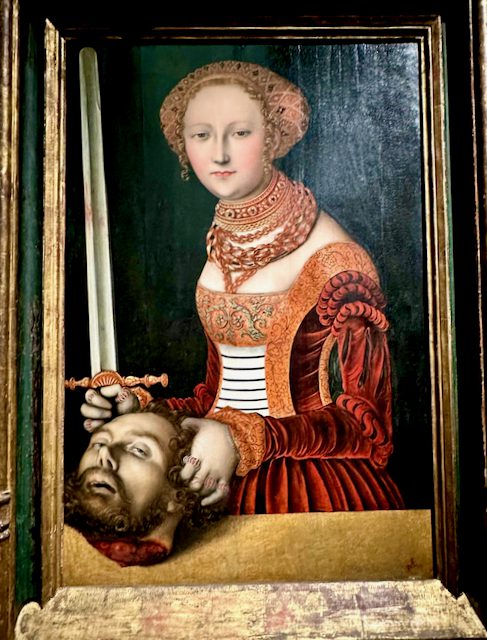
Kim and Tracy both admired Ramon de Madrazo y Garreta’s Woman In A Garden, also from the Museo de Arte de Ponce.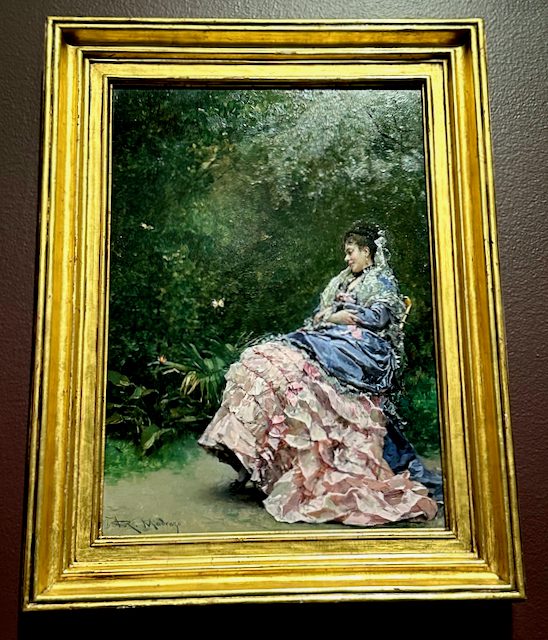
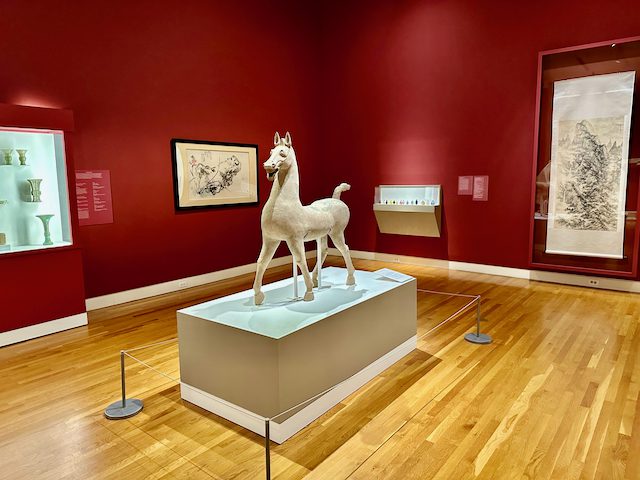
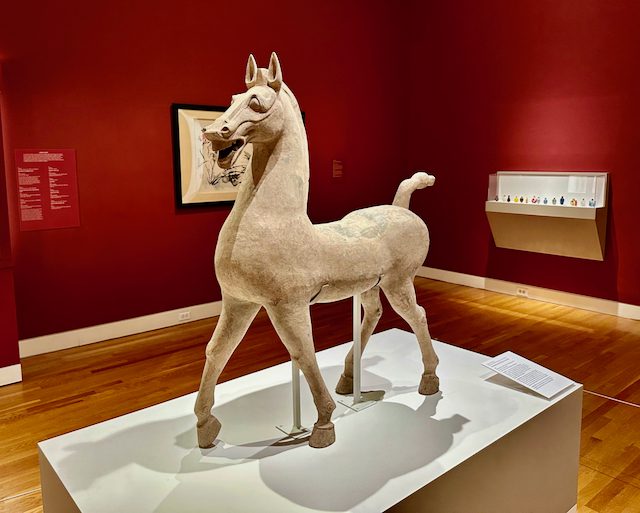
Galloping through the next room, the Funerary Sculpture of a Horse from the Eastern Han dynasty (25-220 CE) took center stage. We are always amazed how pieces like this survive through the centuries.
Next we took an Azerbaijan magic carpet ride (Yahya Bakuvi by Faig Ahmed).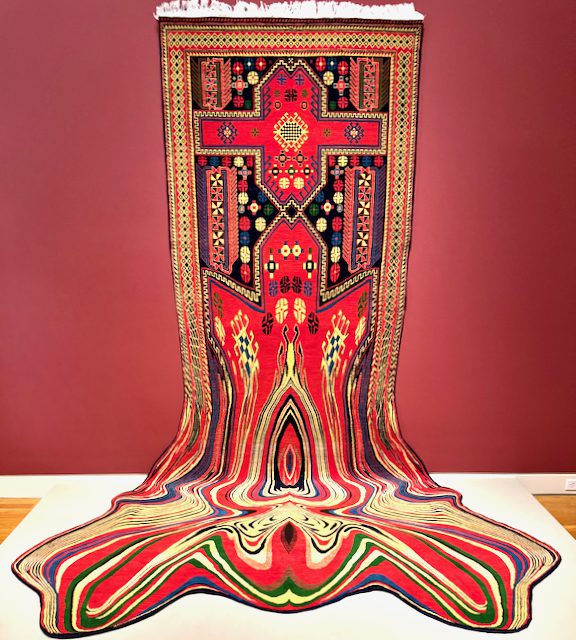
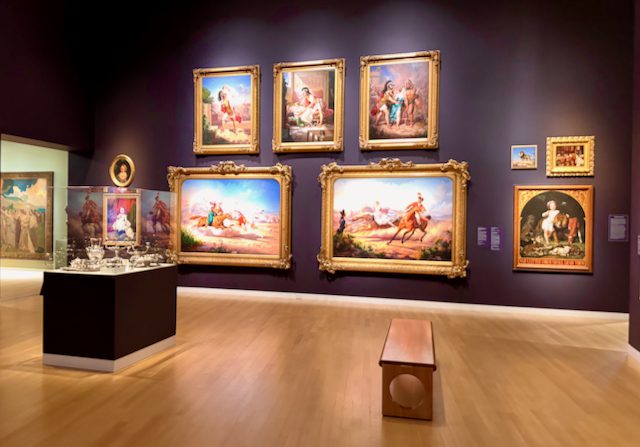
Some of my favorite paintings in the museum popped off the wall of the next room. According to the gallery cards, Charles Christian Nahl was commissioned to paint all of these works for the Crockers. The top three paintings, The Romans and the Sabines: The Abduction; The Captivity; The Invasion were deemed too “provocative for Sacramento” and were donated to the De Young Museum in “the more liberal city of San Francisco.” The Crocker Museum repurchased the paintings in 2005.
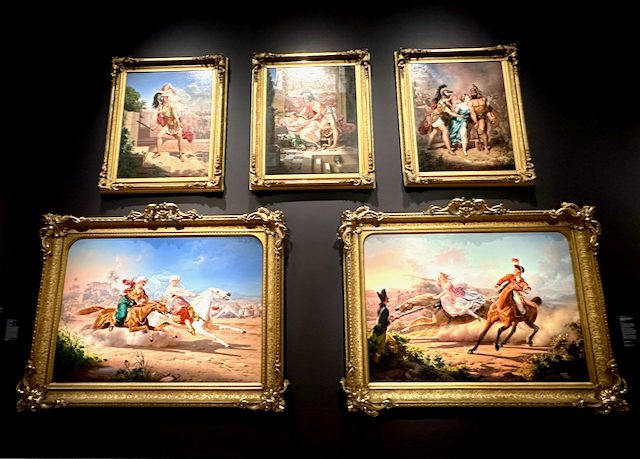
Nahl’s The Patriotic Race depicts a dramatic scene from The Revolutionary War.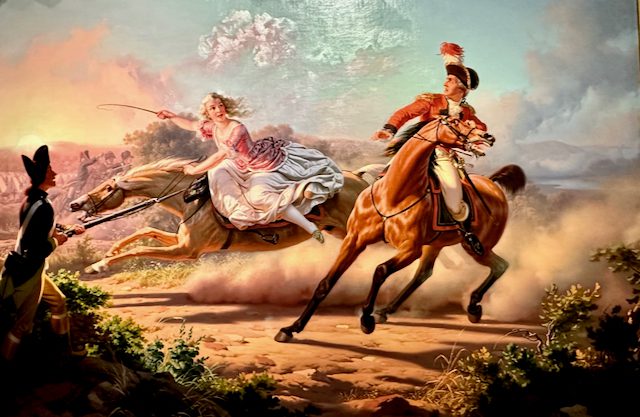
Nahl also painted The Love Chase where a young man “woos the daughter of a Sheik.”
Theodore Wores, originally from San Francisco, sketched and painted frequently in San Francisco’s Chinatown area, like this 1884 creation, Chinese Restaurant.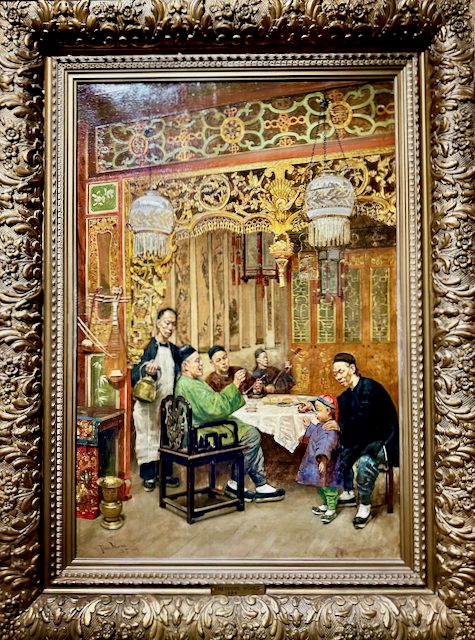
Two American impressionistic painters, Childe Hassam’s An Outdoor Portrait of Miss Weir and John Hubbard Rich’s Day Dreams, certainly made quite an impression on us.
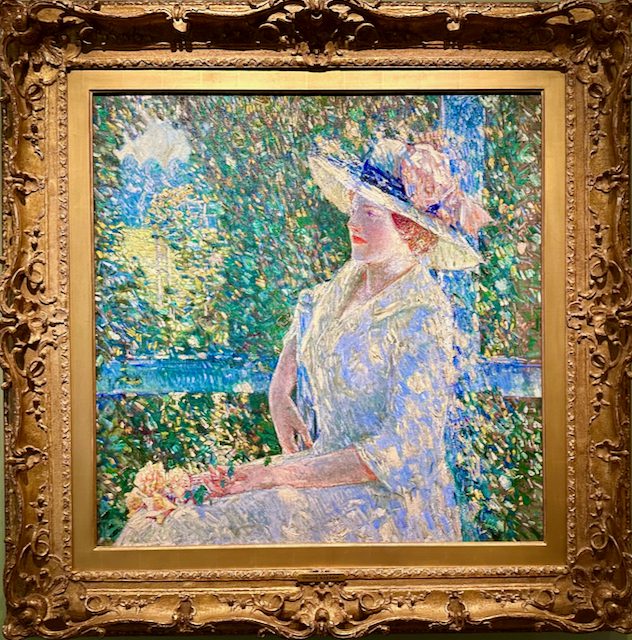
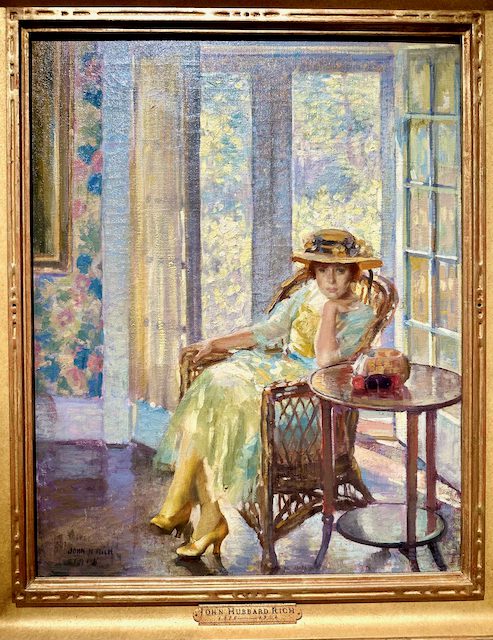
Clark Hobart’s A Dream Of California caught my eye. Of course, if there’s a dog in the painting, I like it.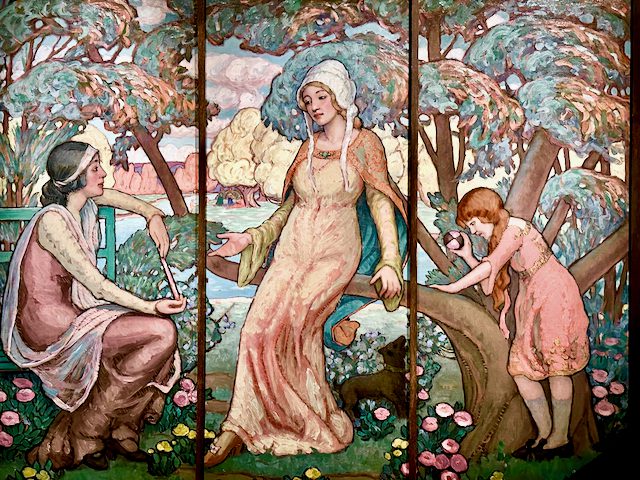
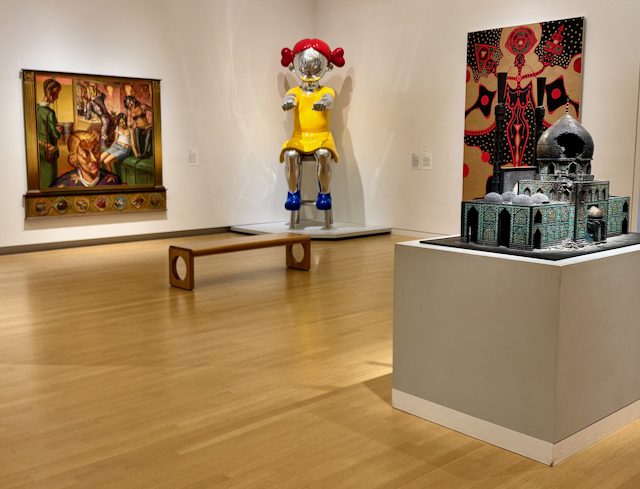
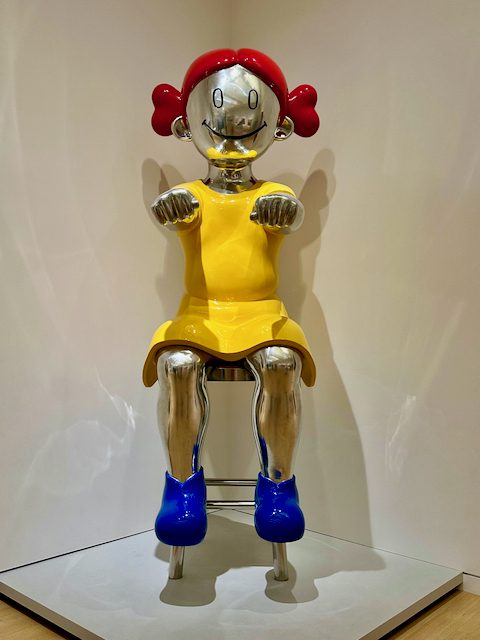
Next we stepped into a little whimsey, including Big Girl (Yellow), a creation by Richard Jackson, which according to the gallery card, “would ‘pee’ yellow paint, a nod to Jackson Pollock, who dripped and splattered paint on his canvases” if activated. Also per the card, “Big Girl has not yet been activated.”
Israeli artist Yoram Wolberger “often bases his large-scale sculptures on childhood toys that reveal typecasts in American culture.” This one, Red Indian #2, was made of reinforced fiberglass and pigmented resin.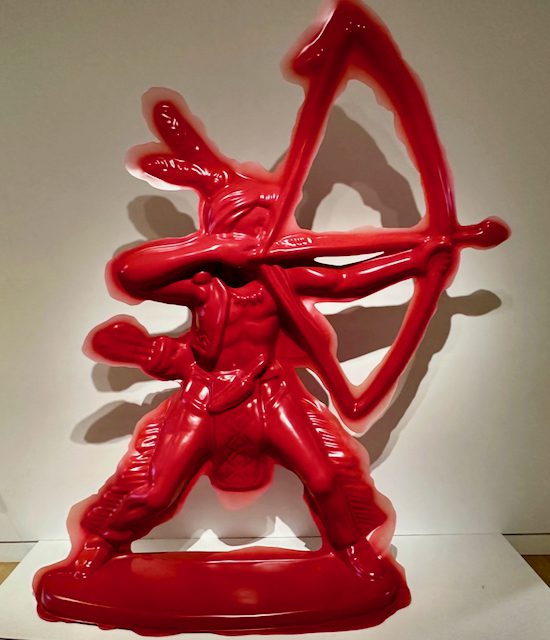
Luis Jiménez was a renowned sculptor and graphic artist from New Mexico known primarily for his large polychromed fiberglass sculptures, often depicting Southwestern and Hispanic themes. This piece “features a leaping Texas longhorn alongside a skeletal dancing figure—known as la Calaca—reflecting themes of the American West, history, and human mortality.”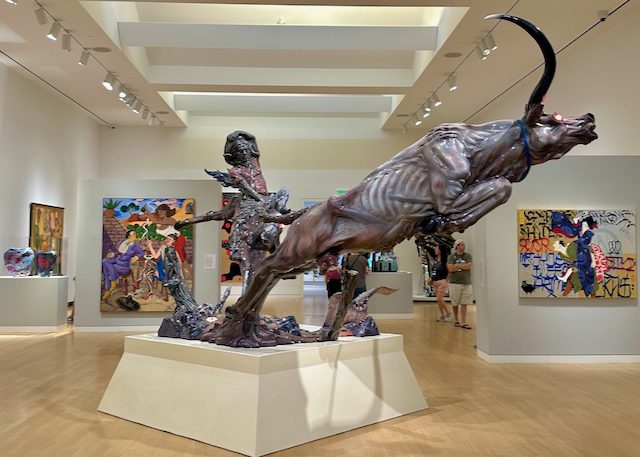
Speaking of which, Jiménez had a tough life and a tragic death. As a youth, his left eye was shot by a BB gun, which gave him headaches throughout his life. As a young adult, he became temporarily paralyzed in an automobile accident. In 2006, the 65-year old artist was “killed when a large section of his 32-foot-high work Blue Mustang, intended for Denver International Airport, came loose from a hoist and severed an artery in his leg.” Flags in New Mexico were flown at half-staff following his death.
There were more fascinating pieces in this room. Gajin Fujita’s Xing The River Styx tells the story of Shirosaburo, a 14th century samurai shown in his final moments when the ghost of his deceased wife (who he killed) gets her ultimate revenge.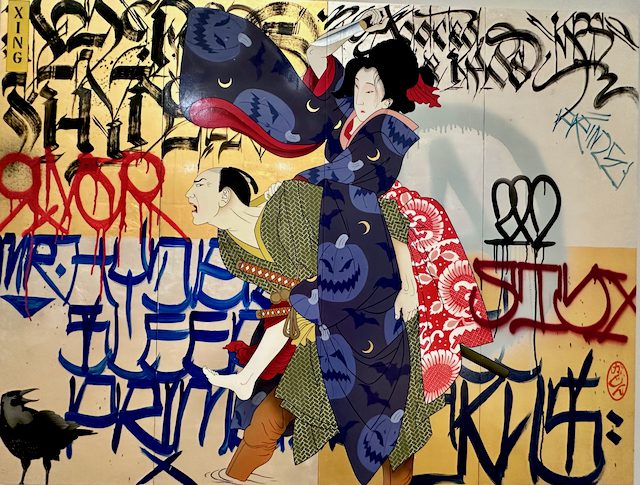
Nomadic Mnidoos by Rabette Before Horses Strickland (an Anishinaabe artist and an enrolled member of the Red Cliff Band of Lake Superior Chippewa Indians) includes a guy riding a giant turtle, another on a bear and lots of other cool stuff going on.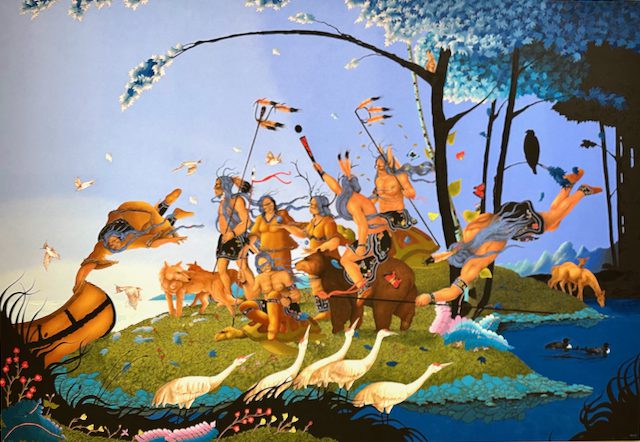
My favorite: Xochiplli’s Ecstastic Universe, where the Aztec “Prince of Flowers” is actually a self-portrait of the artist (Tino Rodriguez) in a vibrantly colorful and symbolic setting. And you thought a bird in the hand was tough. It was kind of like a Hispanic version of Bosch to me. I spent a long time looking at this one.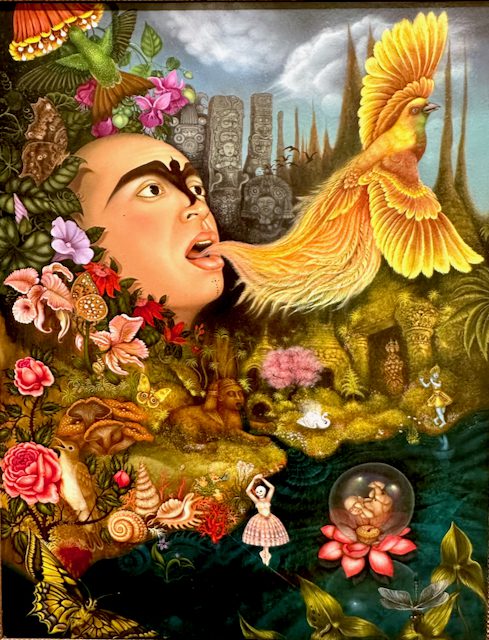
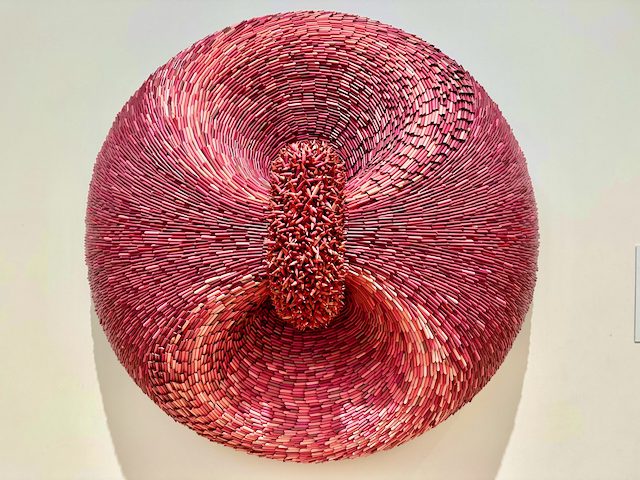
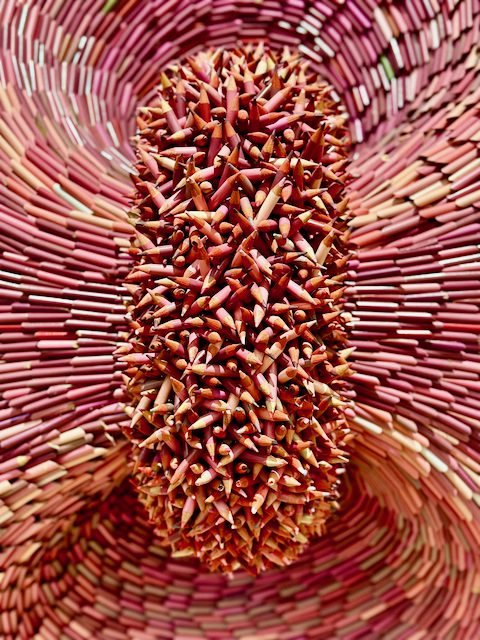
We got the lead out with this cool relief made entirely with colored pencils (Pinch by Federico Uribe).
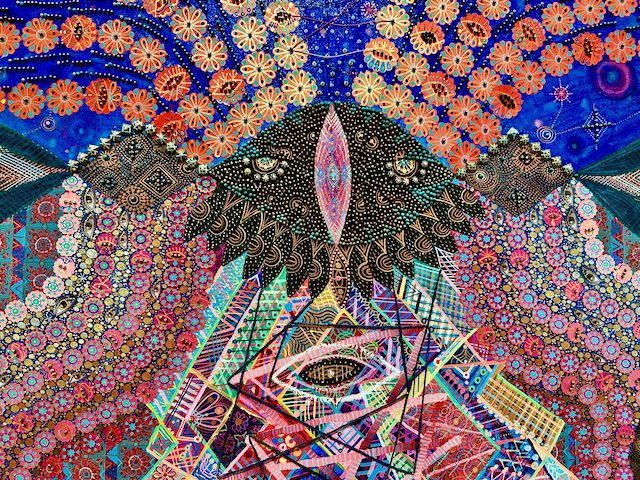
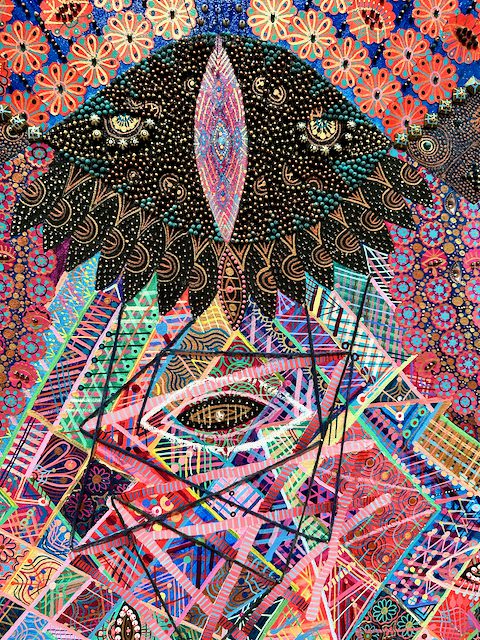
Asad Faulwell utilized paint, paper, string and “thousands of pins” in creating Protector, his dazzling 2021 creation.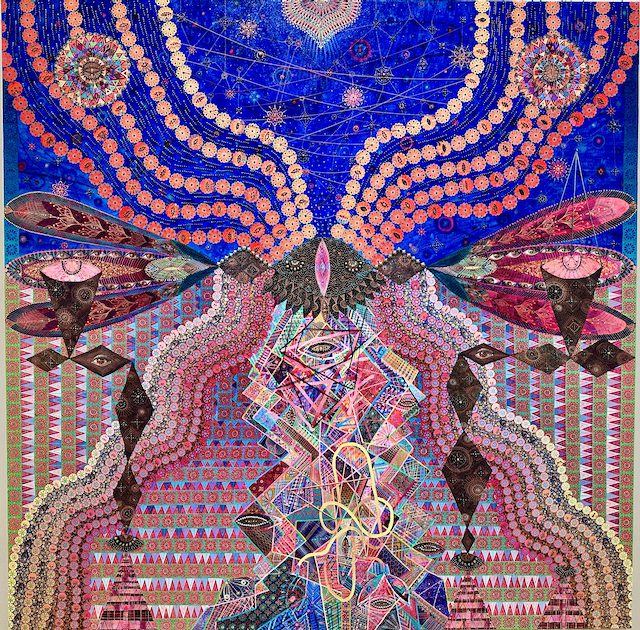
Yes, we were mesmerized.
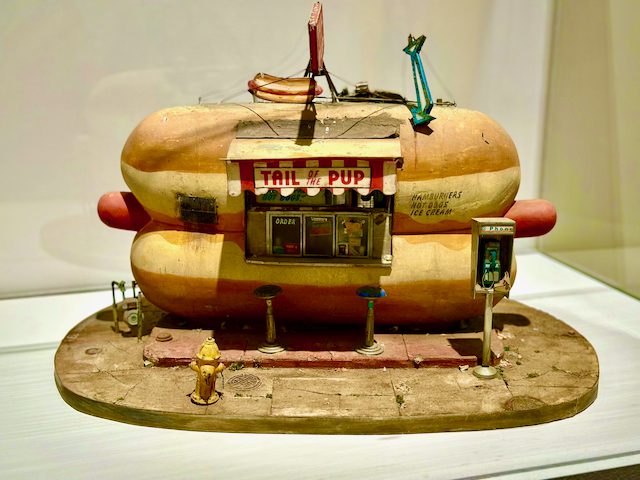
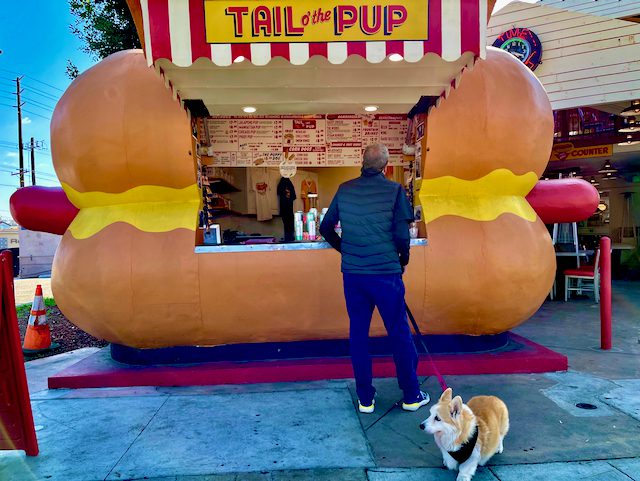
Hot dog, we’ve actually visited the real place shown in this 1992 diorama by Tim Prythero. Tail o’ the Pup is an iconic West Hollywood landmark and was one of the last stops for our late, beautiful corgi Remi’s last outings.
Kehinde Wiley is known for his “naturalistic paintings of Black subjects that reference the work of Old Master paintings.” This painting is “a nod to the Dutch Golden Age and, perhaps the work of Hans Holbein the Younger.” I liked the painting, but thought it would be better if the subject was wearing a Padres jacket.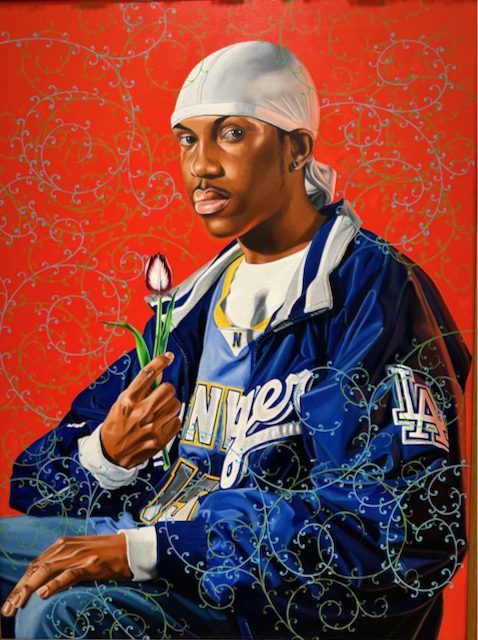
We saw Wiley’s portrait of Barrack Obama when we visited the National Portrait Gallery in Washington DC in 2018.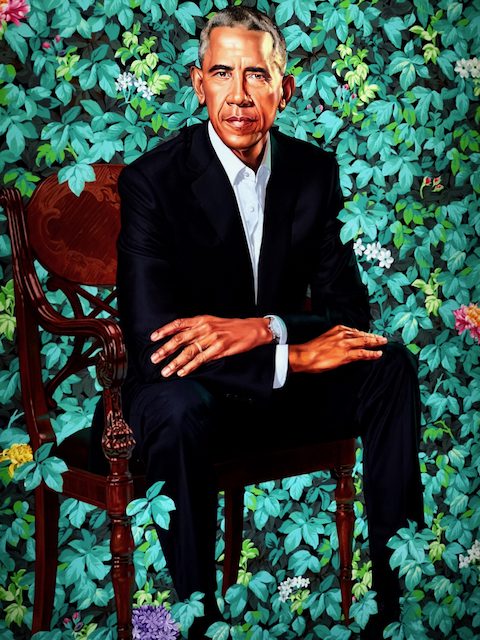
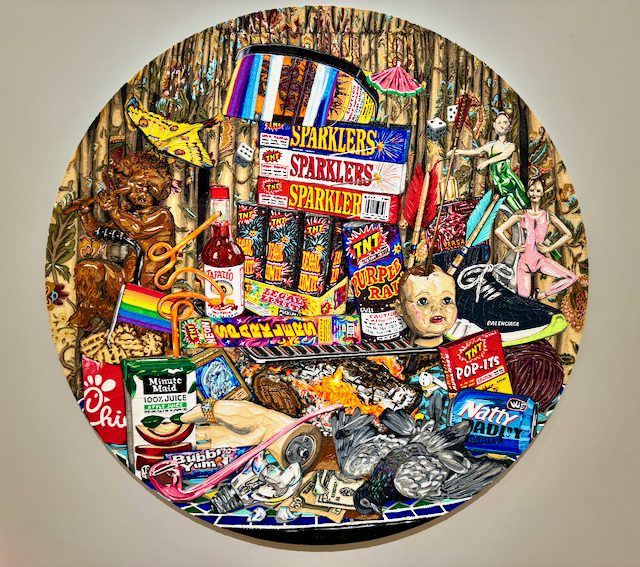
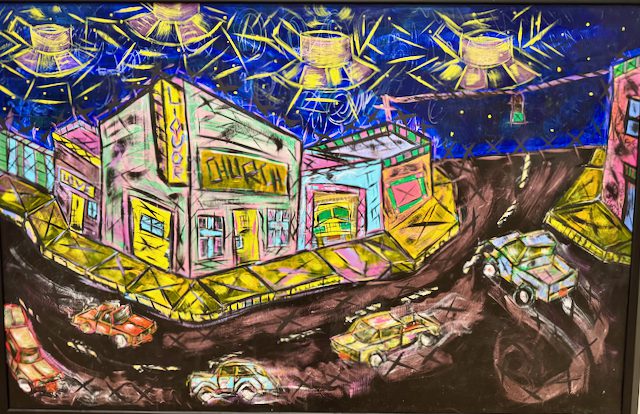
There were many more stunningly cool, colorful creations like Anthony White’s On The Edge and David Flury giving his rendition of Flying Saucers and Low-Riders …
… but alas it was time for lunch.
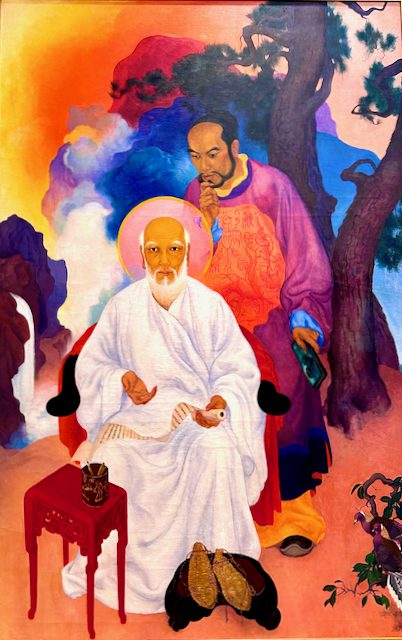 After seeing the list of events and exhibitions this engaging museum hosts, Tracy said if we lived in this area we would definitely become members.
The Crocker is an intriguing museum with an interesting and eclectic collection. While we are not art connoisseurs or experts by a long shot, we were very impressed. Kim greatly enjoyed the California landscapes, Tracy thought the contemporary collection was more interesting than the Broad in downtown LA, and I like pretty much anything that is colorful (remember we are NOT connoisseurs). And Flaming Jane? It was more gorgeous up close than in the photos. I’m glad Tracy talked us all into visiting the Crocker, and if you’re in the Sacramento area, it’s definitely a museum that you should not miss. You never know what you’ll see next.
Crocker Art Museum
216 O Street
Sacramento, CA 96814
916.808.7000
Wednesday & Friday – Sunday 10 am – 5 pm
Thursday 10 am – 9 pm
Monday/Tuesday – Closed
Adult $15
Senior & College Students $10
Youths (Ages 6-17) $8
Child (Under 5) Free
Parking Street, parking lots & public garages
Website