Chapter Ten: A Good Food Day In León
April 12, 2026
Chapter Twelve – Royal Site of La Granja de San Ildefonso
May 30, 2026Celebrating España: MaiTaiTom’s Still “Insane For Spain”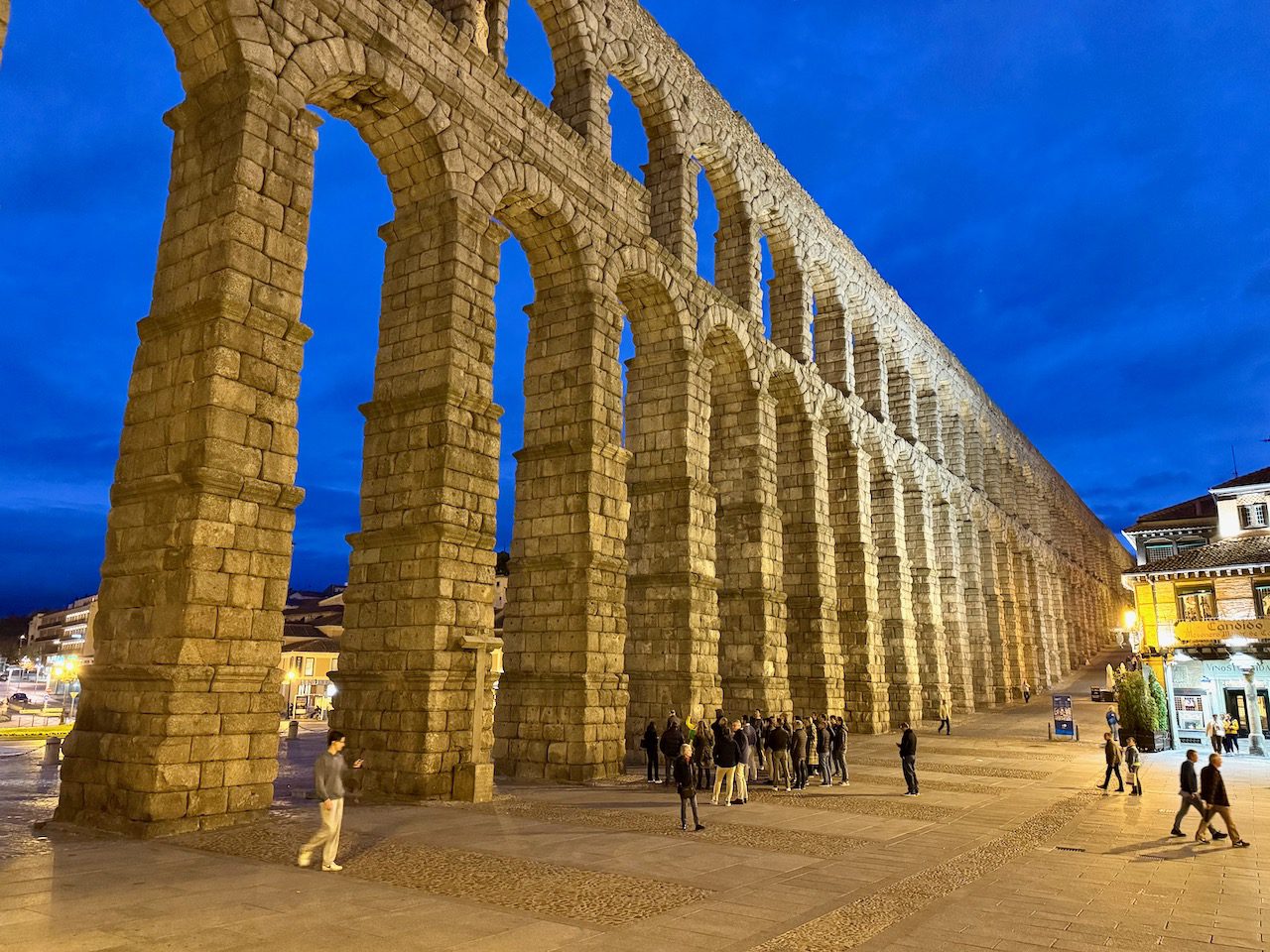
Chapter Eleven: Sensational Segovia
Day Eleven – Navigating Carefully Into Segovia, Hotel In A Former Convent, Gothic Masterpiece, Noble Rooms, Formidable Fortress, Medieval Man-Spreading, Vibrant Nightlife, Amazing Aqueduct, Oldest Restaurant In Segovia, Family Ties and I Don’t Need To See Who I Eat
Up before daylight and on the road to Segovia (about a 2 1/2 hour drive). The GPS in our rental mobile stopped working once inside Segovia, but thankfully we were able to get it on our phones, which was important because some of Segovia’s streets are quite narrow and it would have been difficult to navigate without it. Somehow we arrived at the Aurea Convento Capuchinos Parking garage with only one small wrong turn along the way.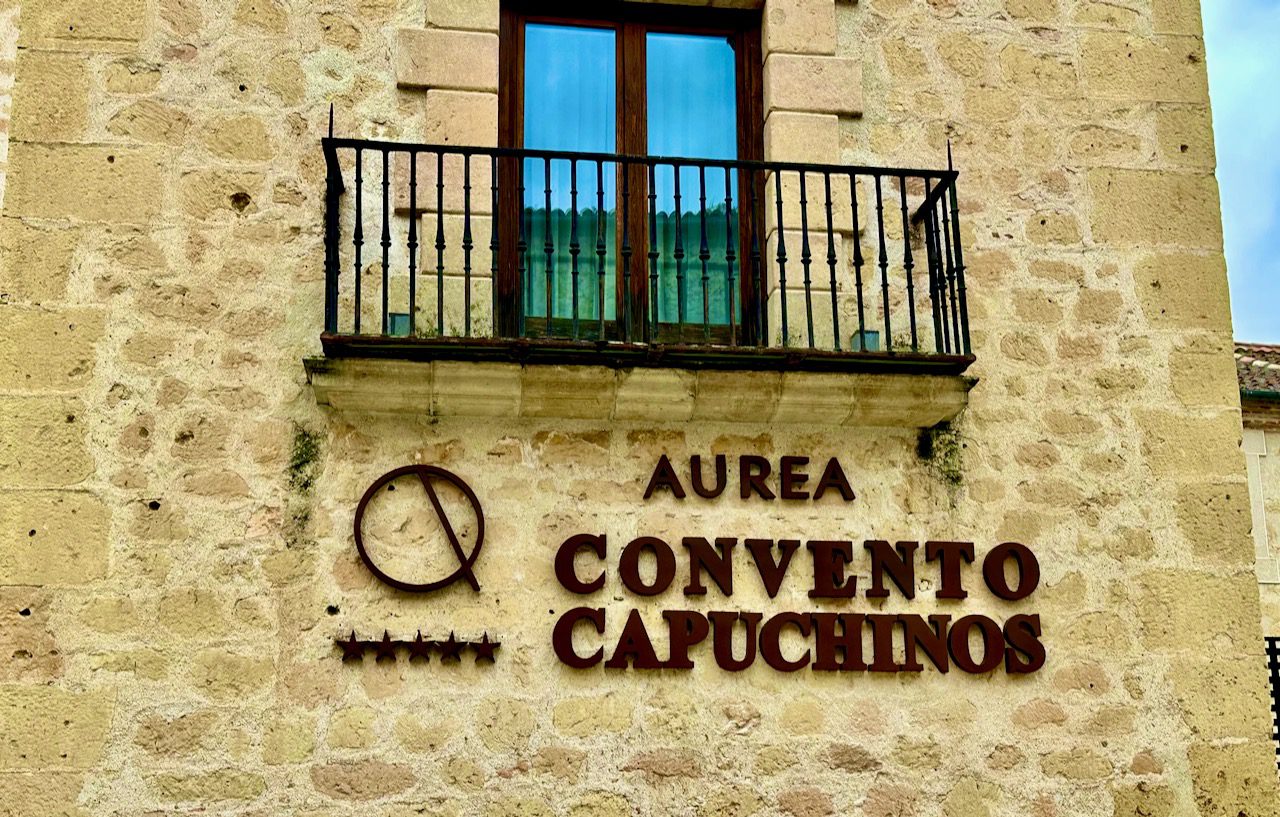
The hotel was previously a convent and a church. Speaking of churches, we had one more cathedral to see on this trip, so we immediately headed out to the 16th-century Catedral de Segovia. It was the last Gothic cathedral constructed in Spain and is known as La Dama de las Catedrales.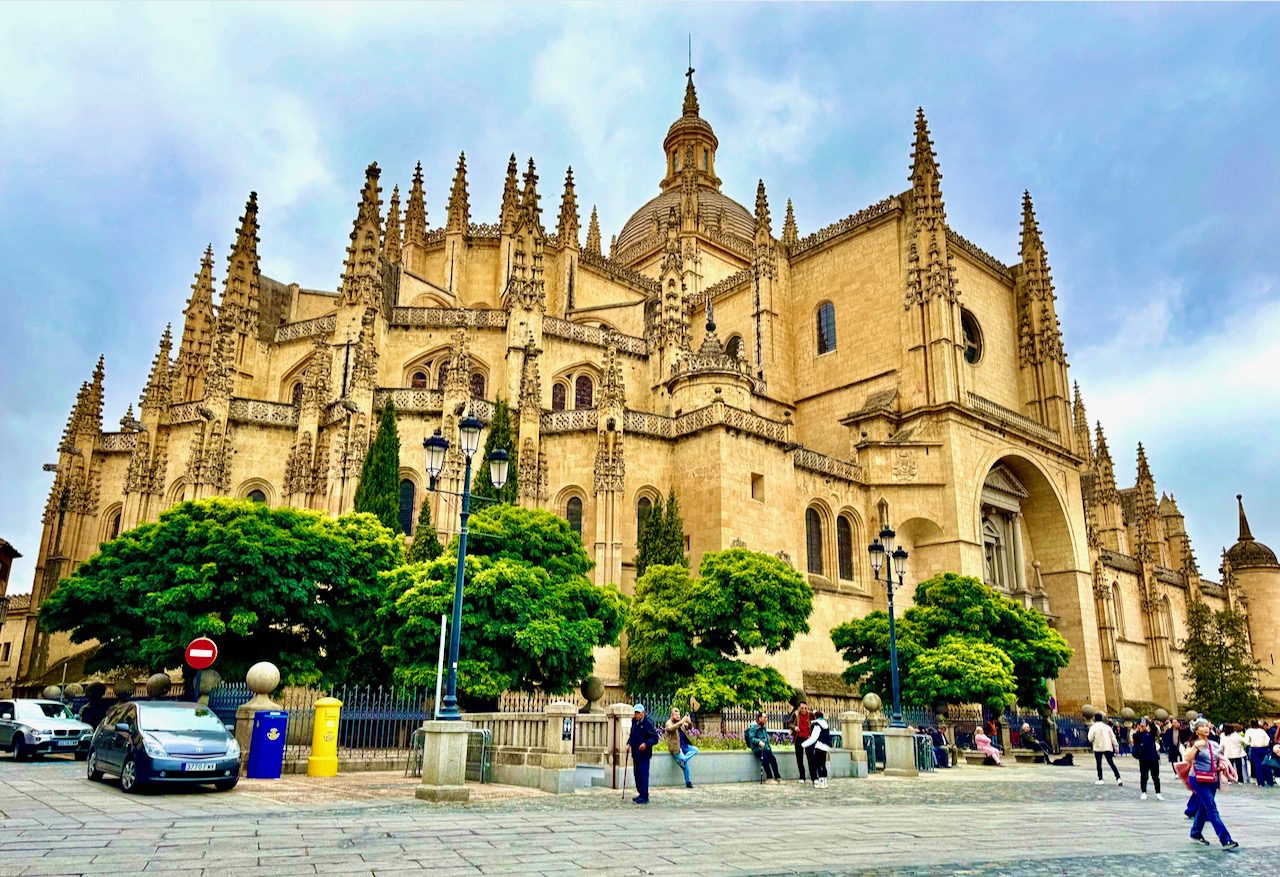
We entered through Puerta de San Frutos (North Entrance), where we caught a glimpse of the sculpture of Saint James the Apostle, which was visible above the entrance. The cathedral was celebrating its 500th anniversary in 2025 with many special events. Our entrance was not one of them.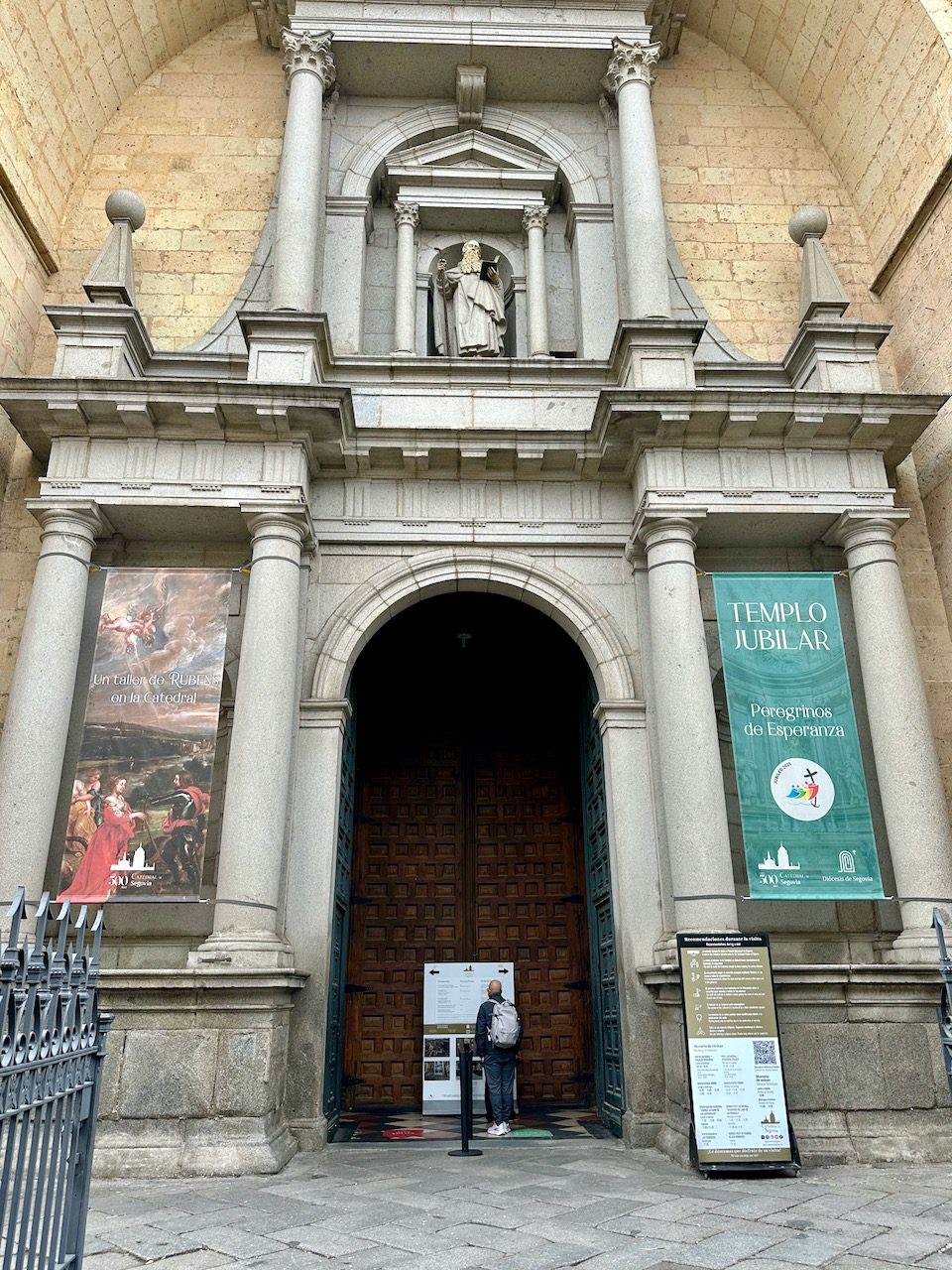
For its 400th anniversary, a copy of Peter Paul Rubens’ Landscape with St. George and the Dragon was displayed at the cathedral. The copy from Rubens’s workshop was created in the mid 1630s while the original was still in Rubens’ studio. The painting has quite a history, including being purchased by Napoleon III, who gifted it to a physician. It was looted by the Nazis in 1944, returned to the family in 1950, sold at auction, stolen in 1967 and later recovered.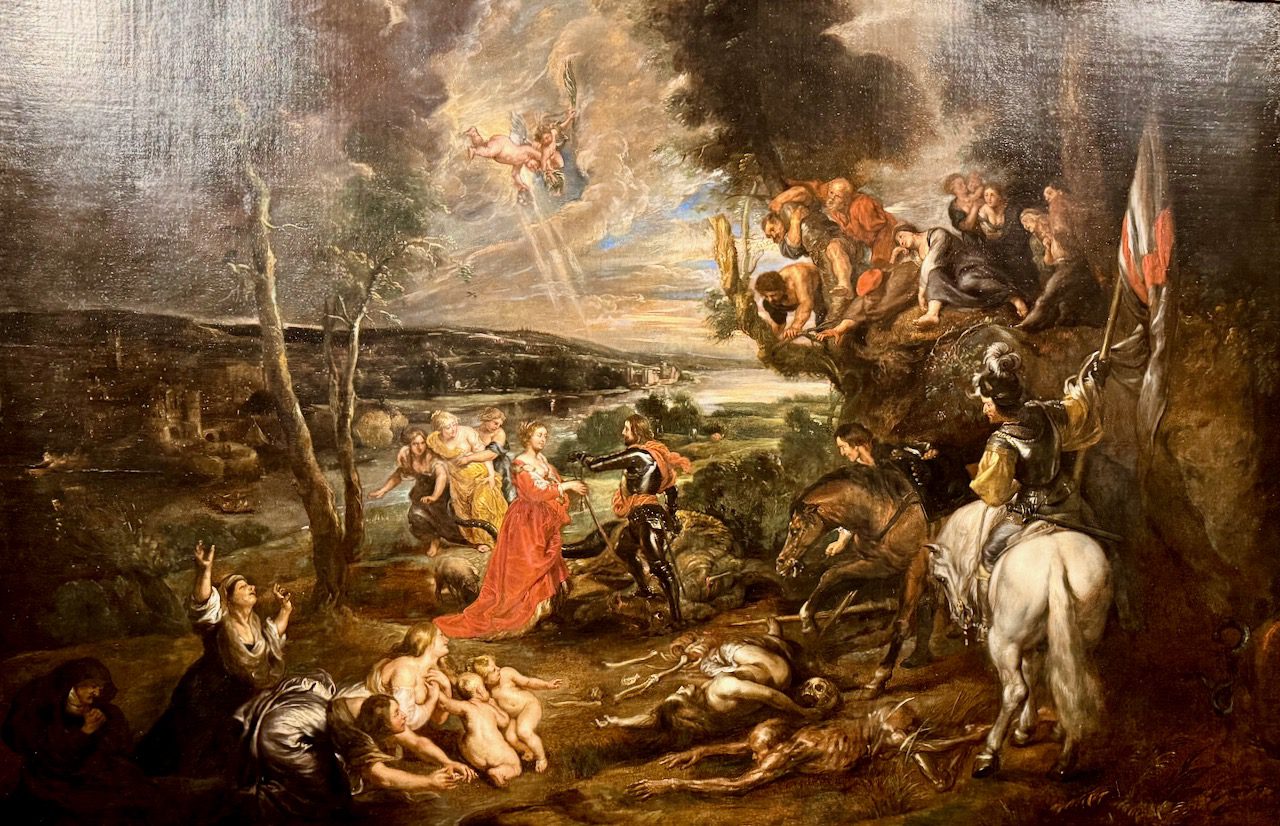
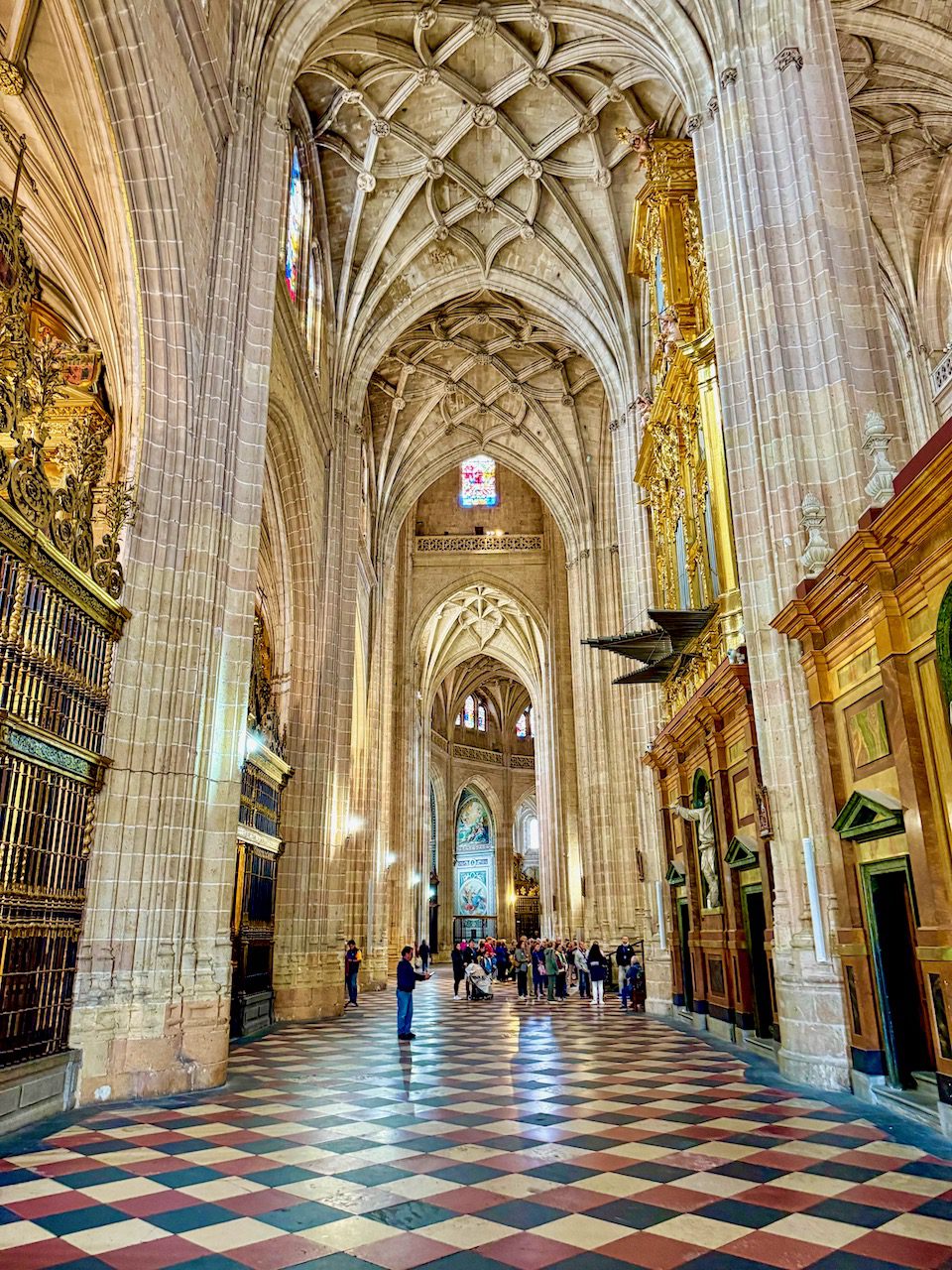
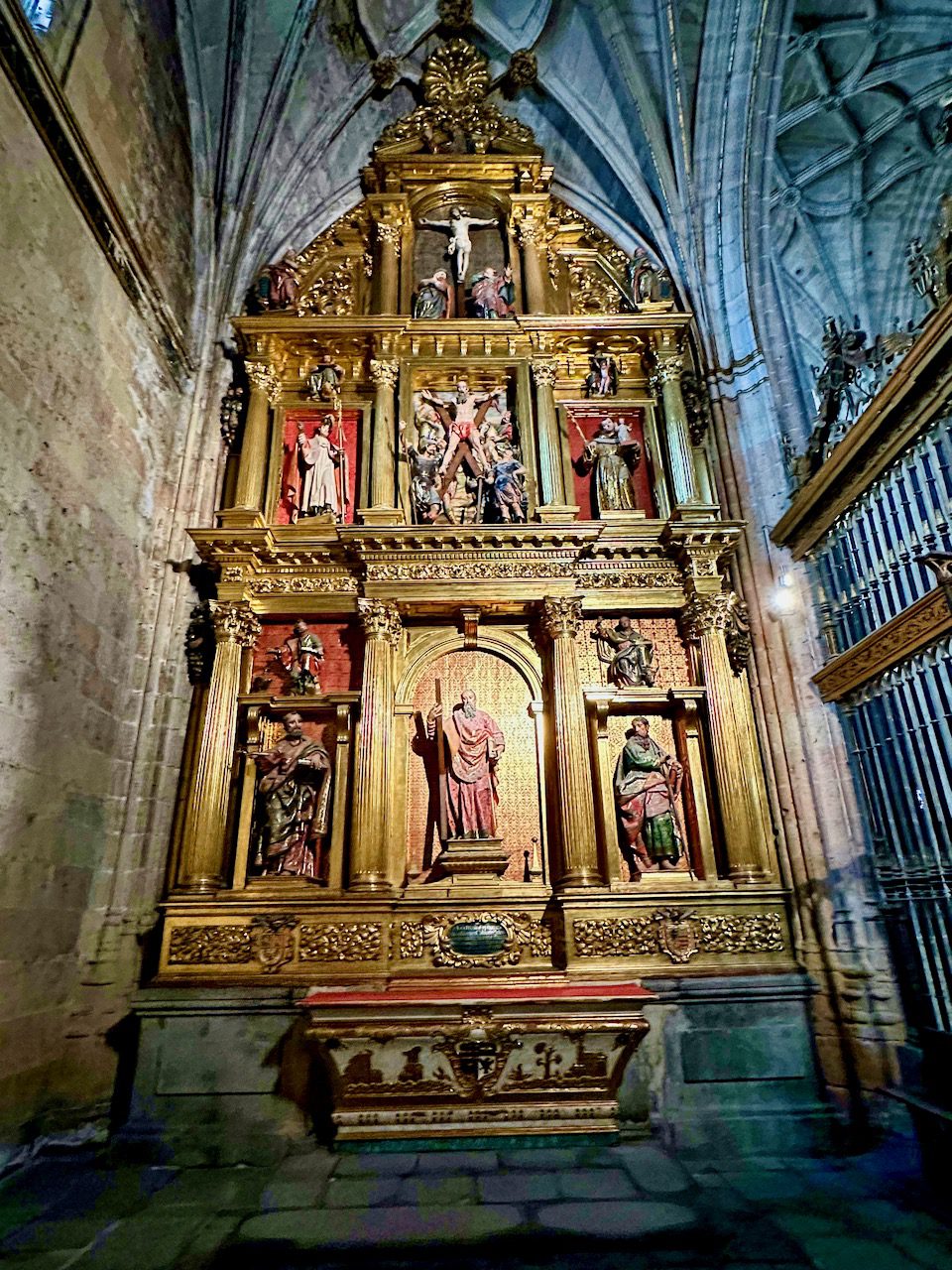
Despite being a tad tired of looking at cathedrals, we perked up when we saw the magnificent interior. It contains 20 chapels, including the Capilla de San Andrés with its 16th century altarpiece.
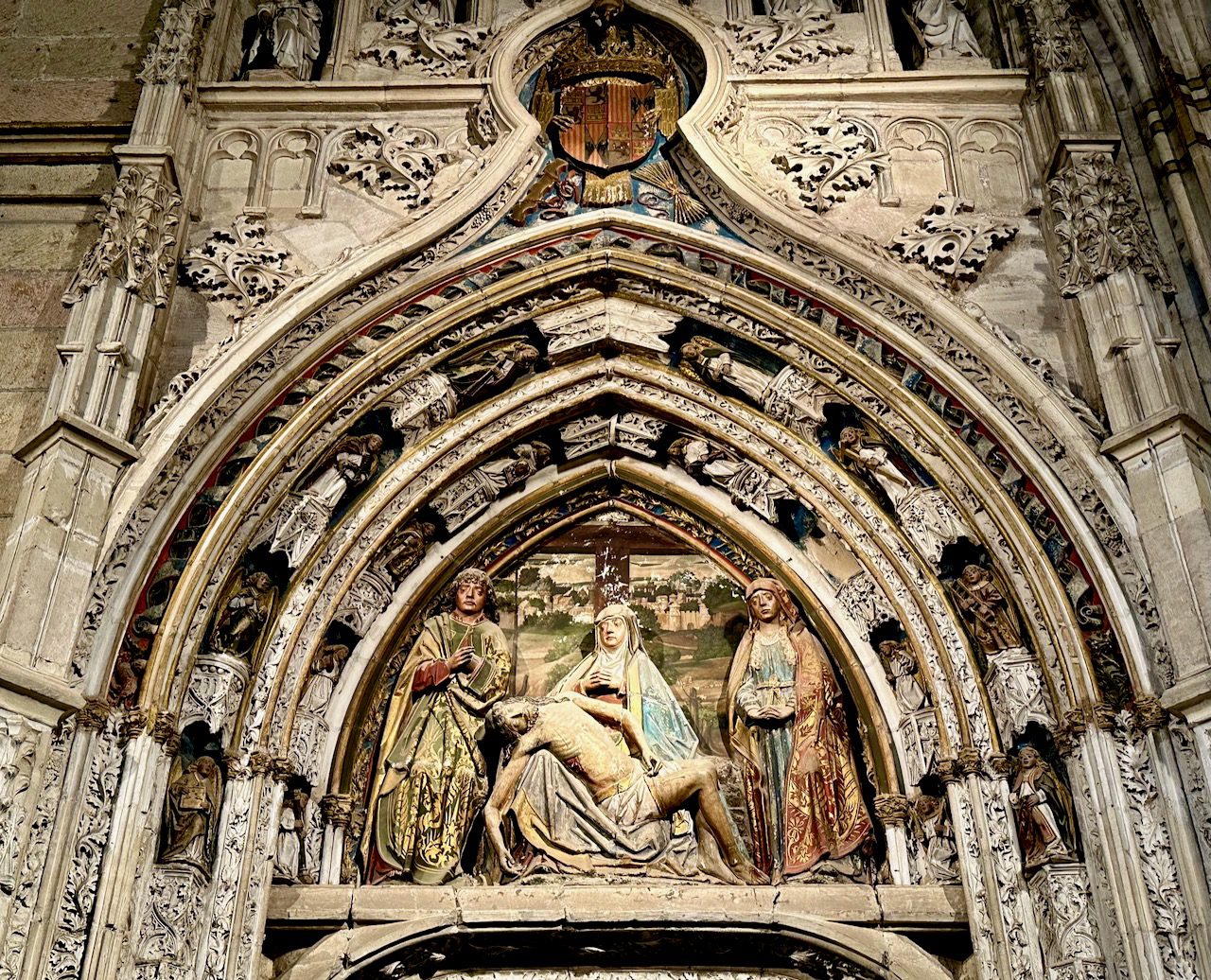
The Chapel of the Pietà (Capilla de la Piedad), also known as the Chapel of the Holy Burial, has a centerpiece with a sculpted scene of the Holy Burial (Santo Entierro), which was created in 1571.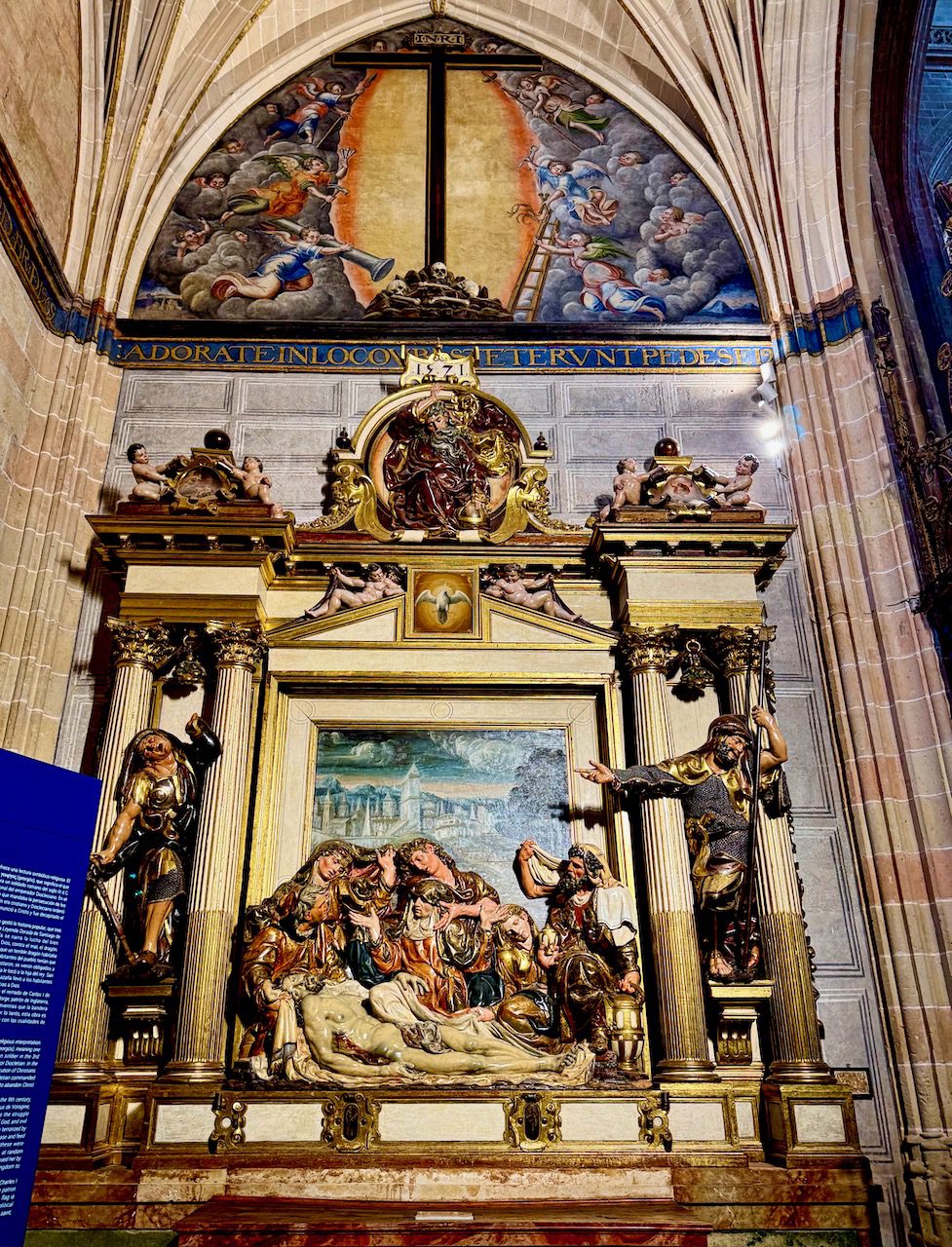
Chapel of Saints Cosmas and Damian (Capilla de San Cosme y San Damián) came up next.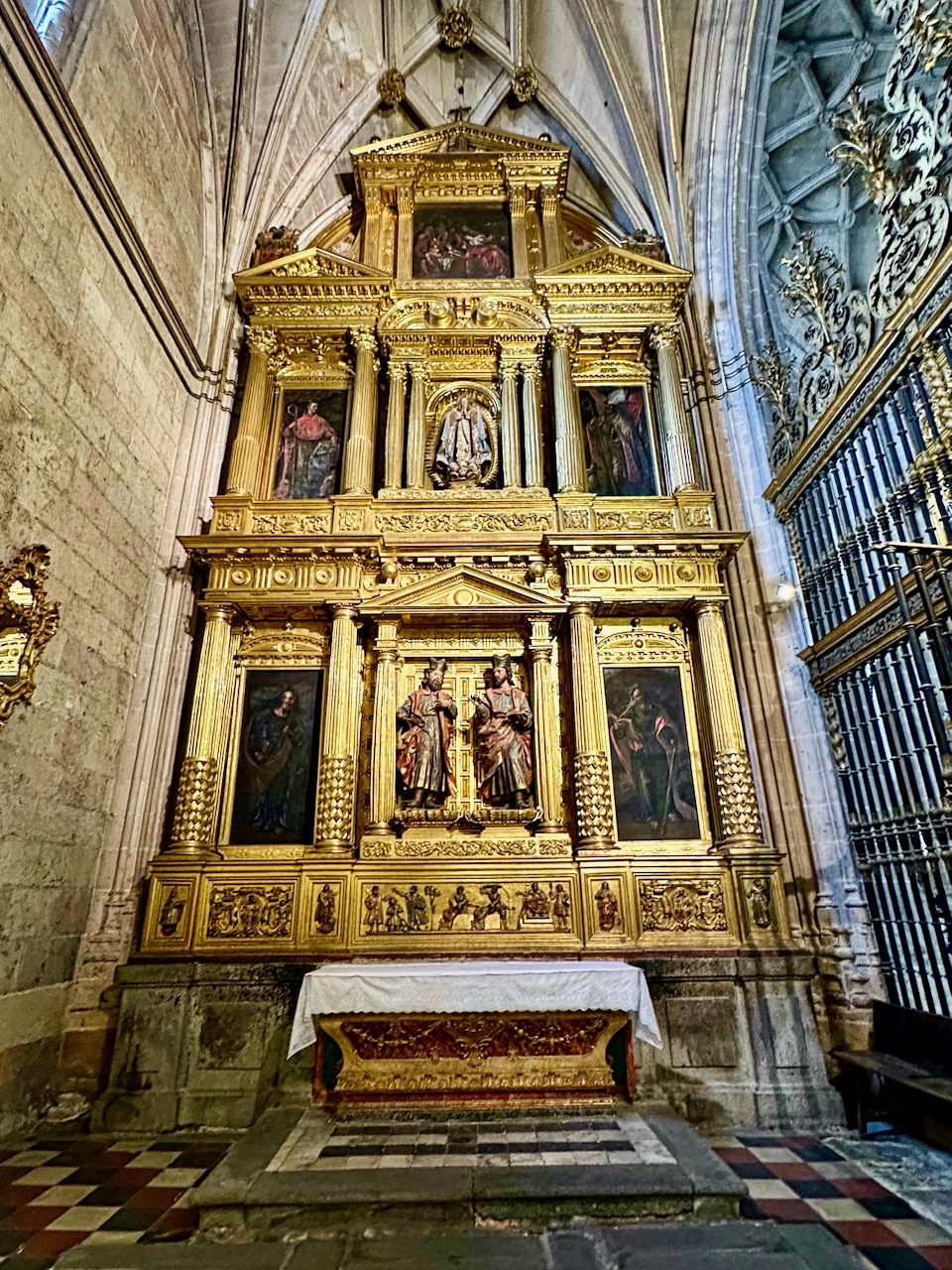
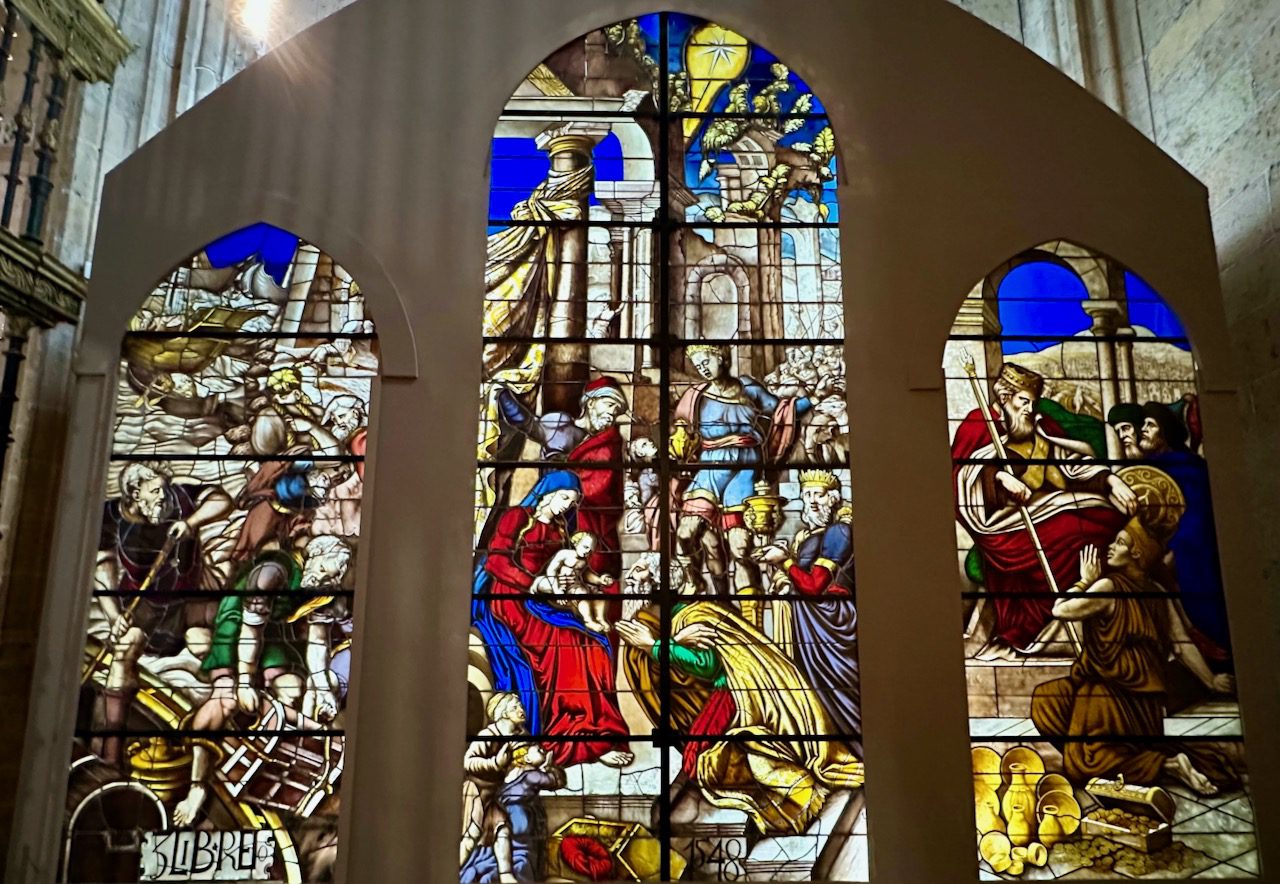
There are 157 stained glass windows in the Segovia Cathedral, none more famous than The Adoration of the Magi (1548), part of a larger program depicting the life of Christ in the Chapel of St. Gregory.

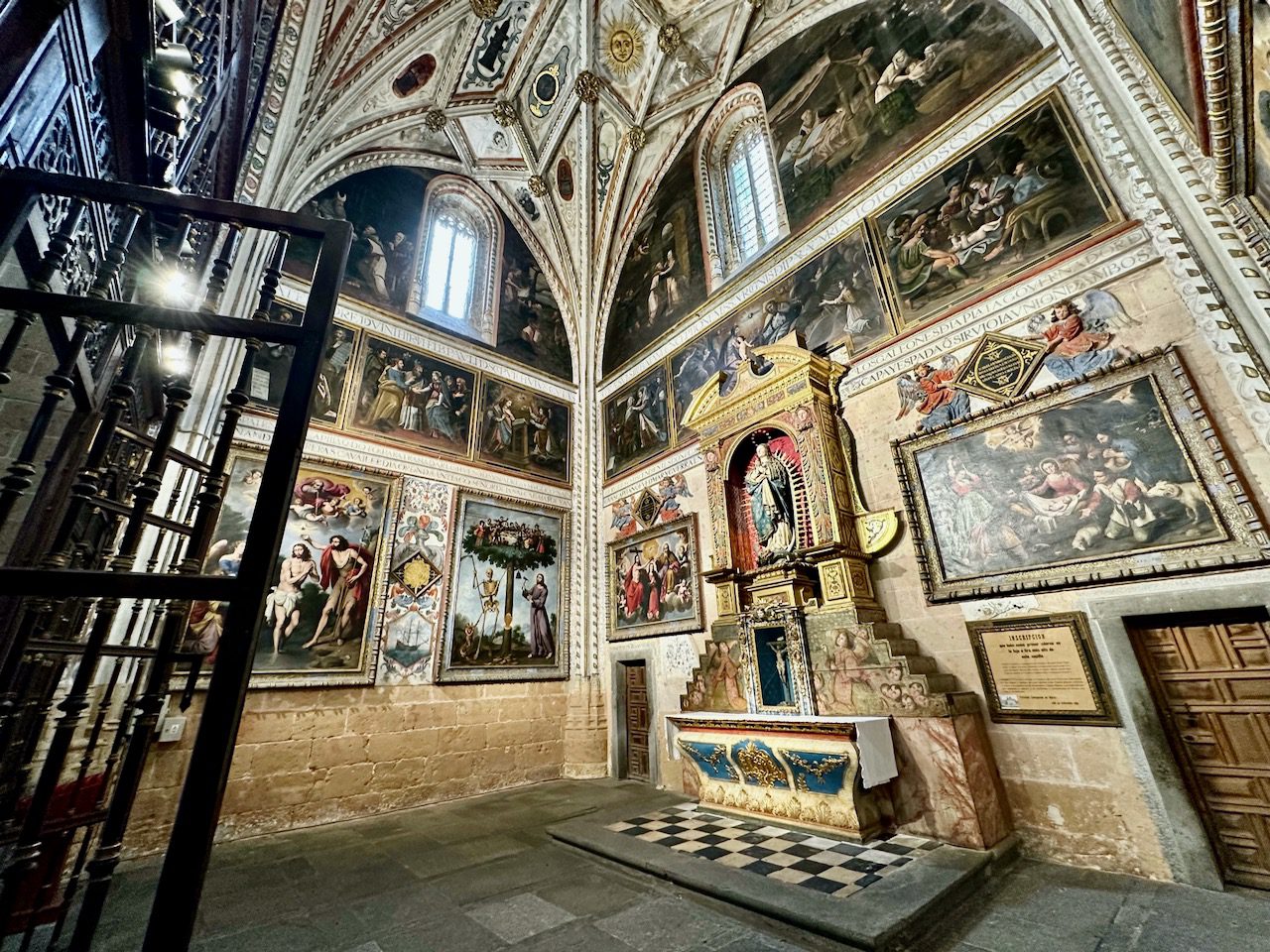
There are 21 paintings in the late Gothic Capilla de la Inmaculada Concepción (Chapel of the Immaculate Conception).


One that stands out is El Árbol de la Vida (The Tree of Life) showing “a skeleton representing Death fells the tree with a scythe, while a small demon assists by pulling a rope. Above, figures banquet in the tree branches, representing worldly pleasures and sins. On the right, Jesus stands with a hammer, symbolizing the opportunity for salvation and conversion.”

The trascoro (back-choir) area is originally from the Riofrío Palace (where we would visit in a couple of days). It’s crowned by sculptures of Saint Peter, Saint Paul and the Holy Trinity, while the left section contains a niche with the effigy of Saint Philip and on the right is Saint Elizabeth.
We stopped by and saw Santa Barbara, the saint, not the city …
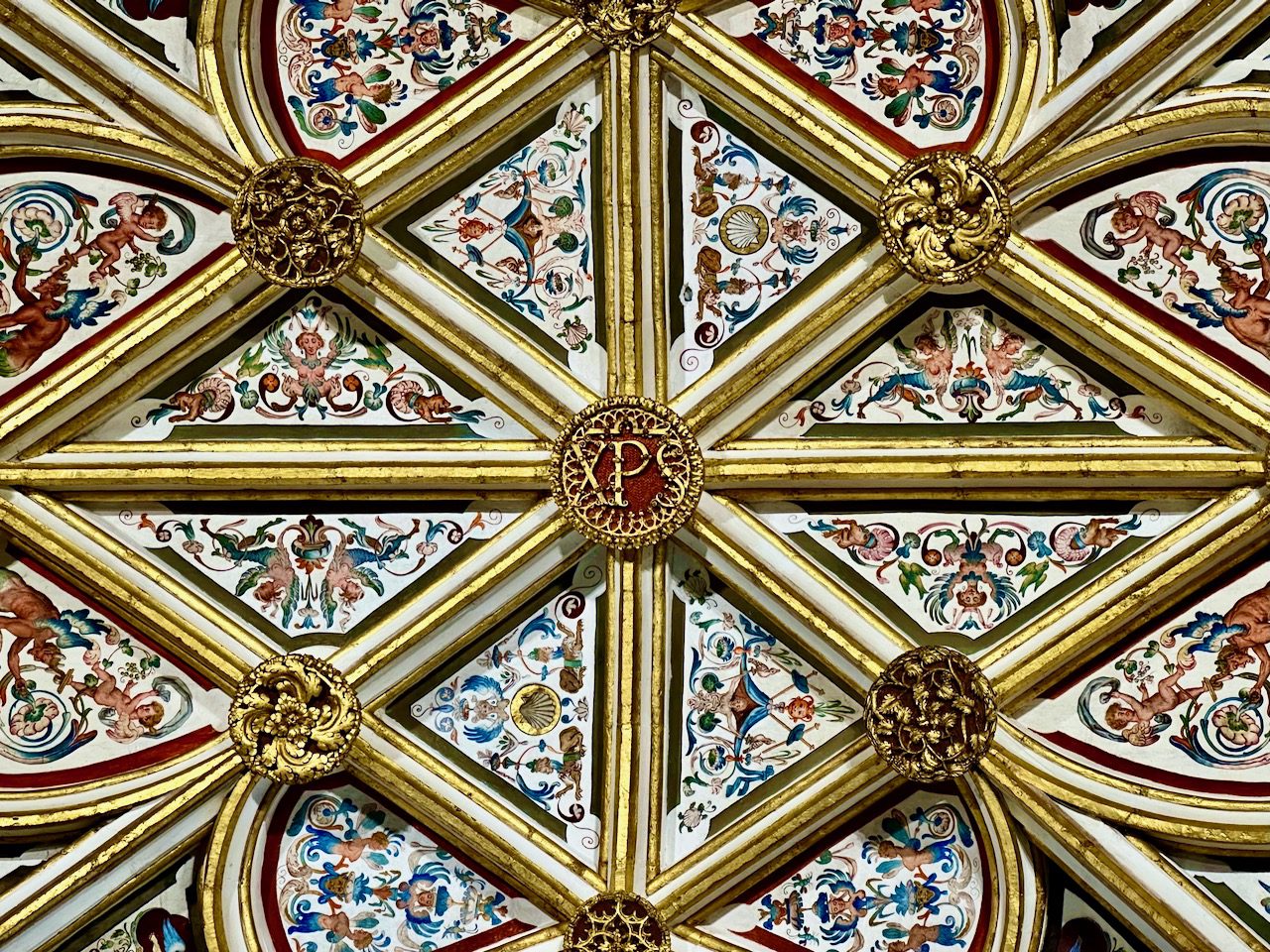
… and Capilla del Cristo Yacente (Chapel of the Reclining Christ Chapel), with its elaborate ceiling.


Capilla del Cristo del Consuelo also showcases a beautiful ceiling.
Before the entryway to the cloisters …
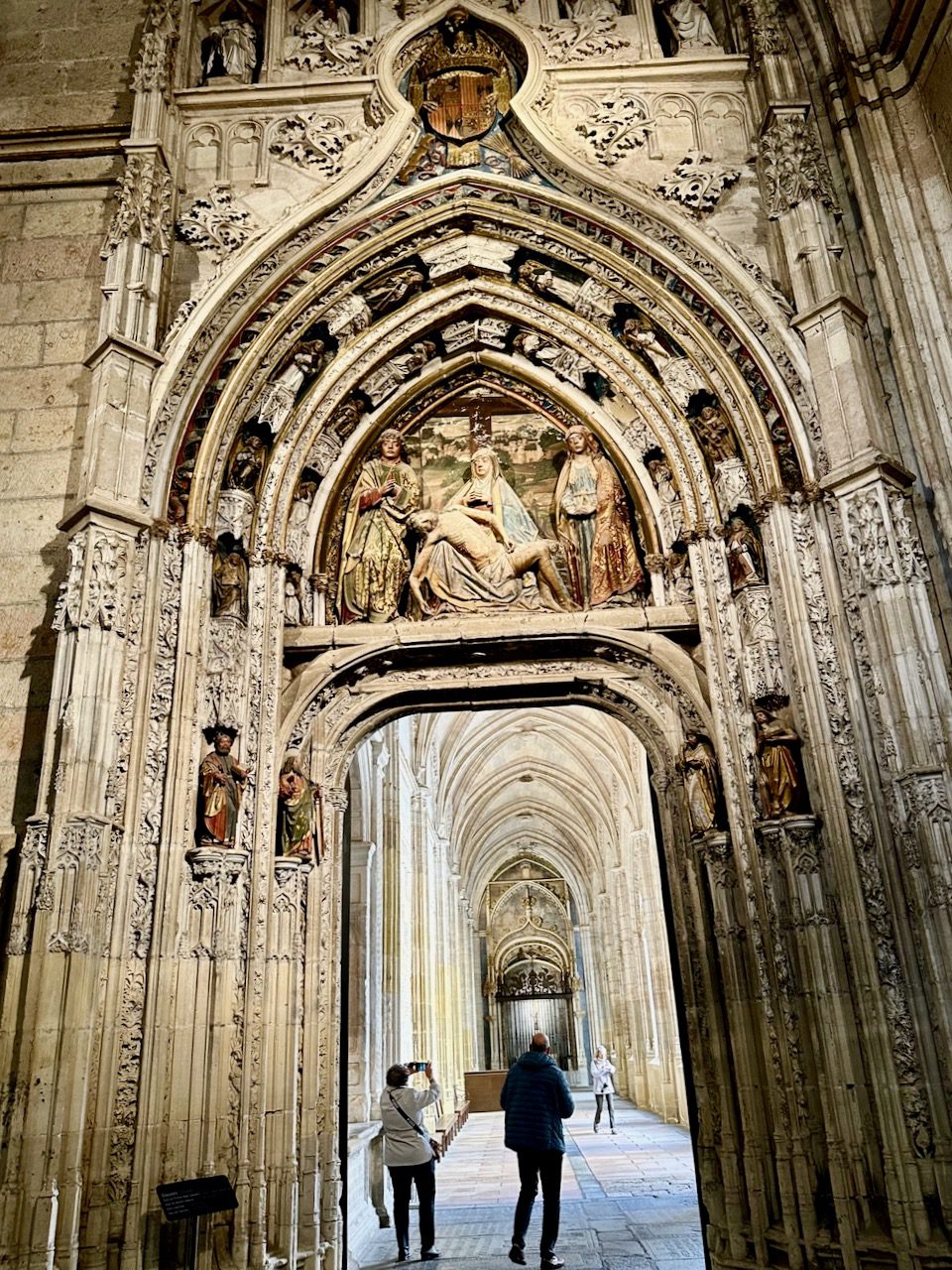
… we saw one of the cathedral’s massive pipe organs.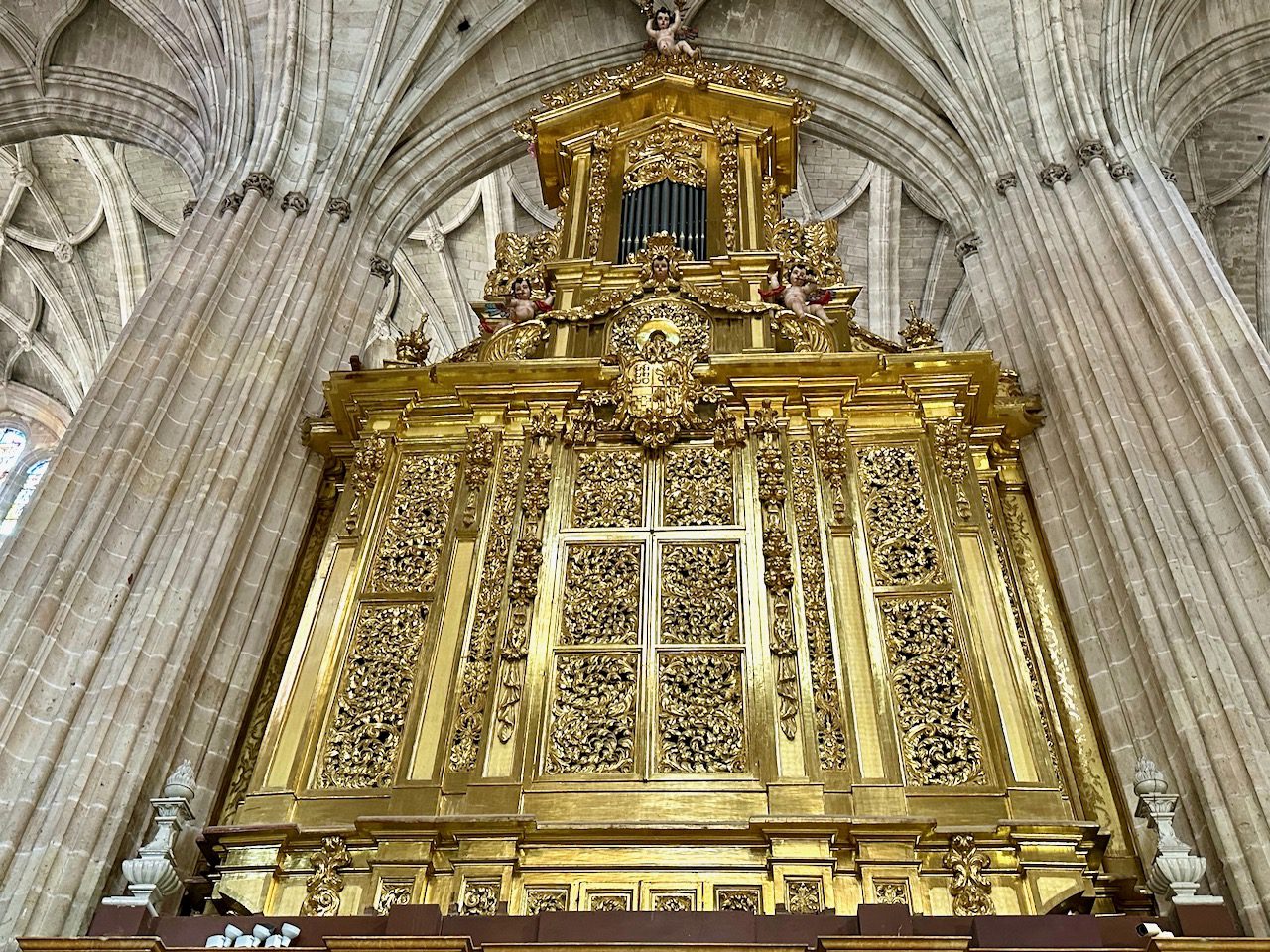
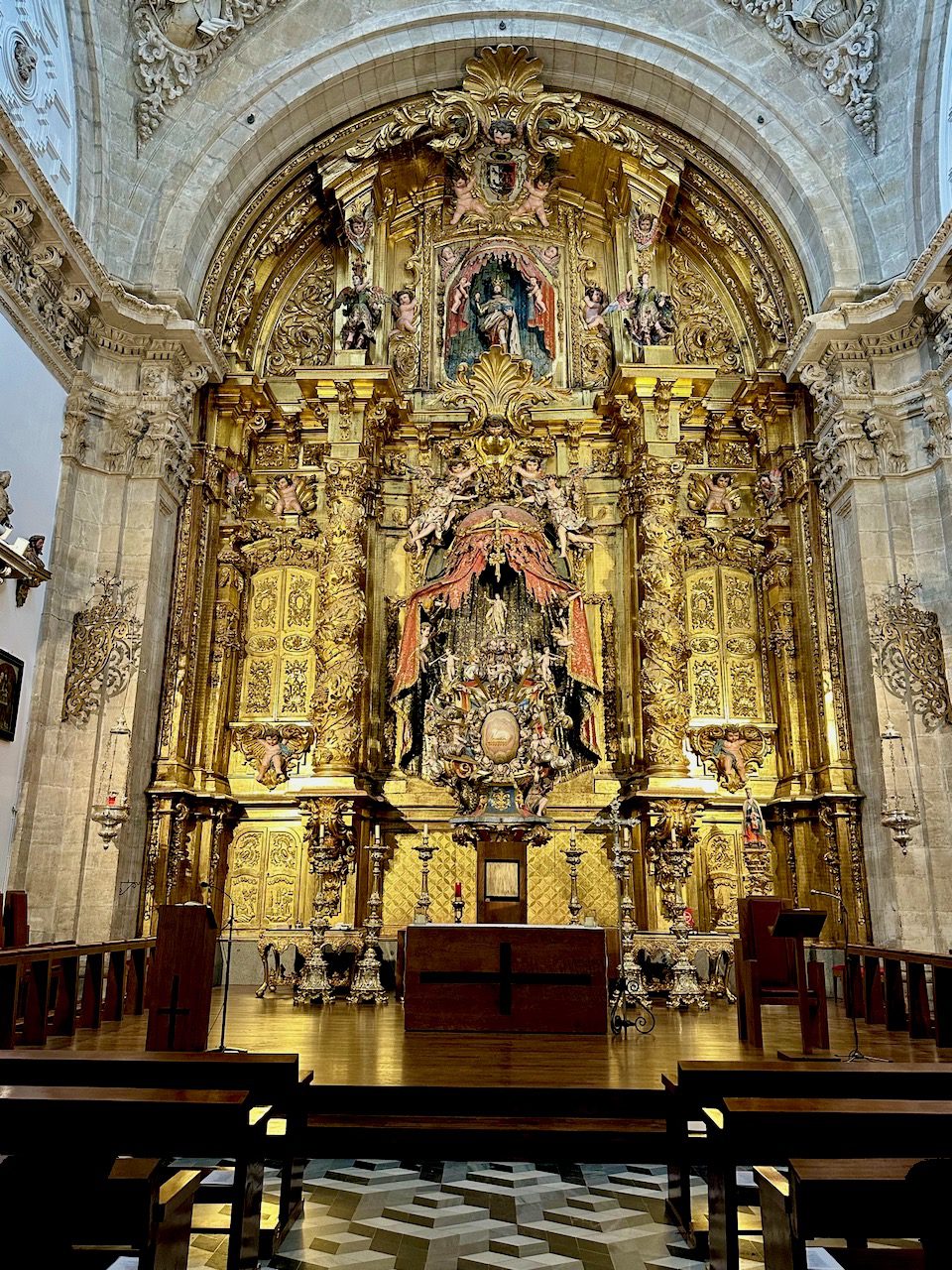
The Chapel of the Blessed Sacrament (also known as the Capilla del Sagrario or Capilla de los Ayala Berganza) has a gold encrusted altarpiece from 1700.

The chapels kept coming from the baroque altarpiece in the Chapel of San Antón dating from the 17th century …
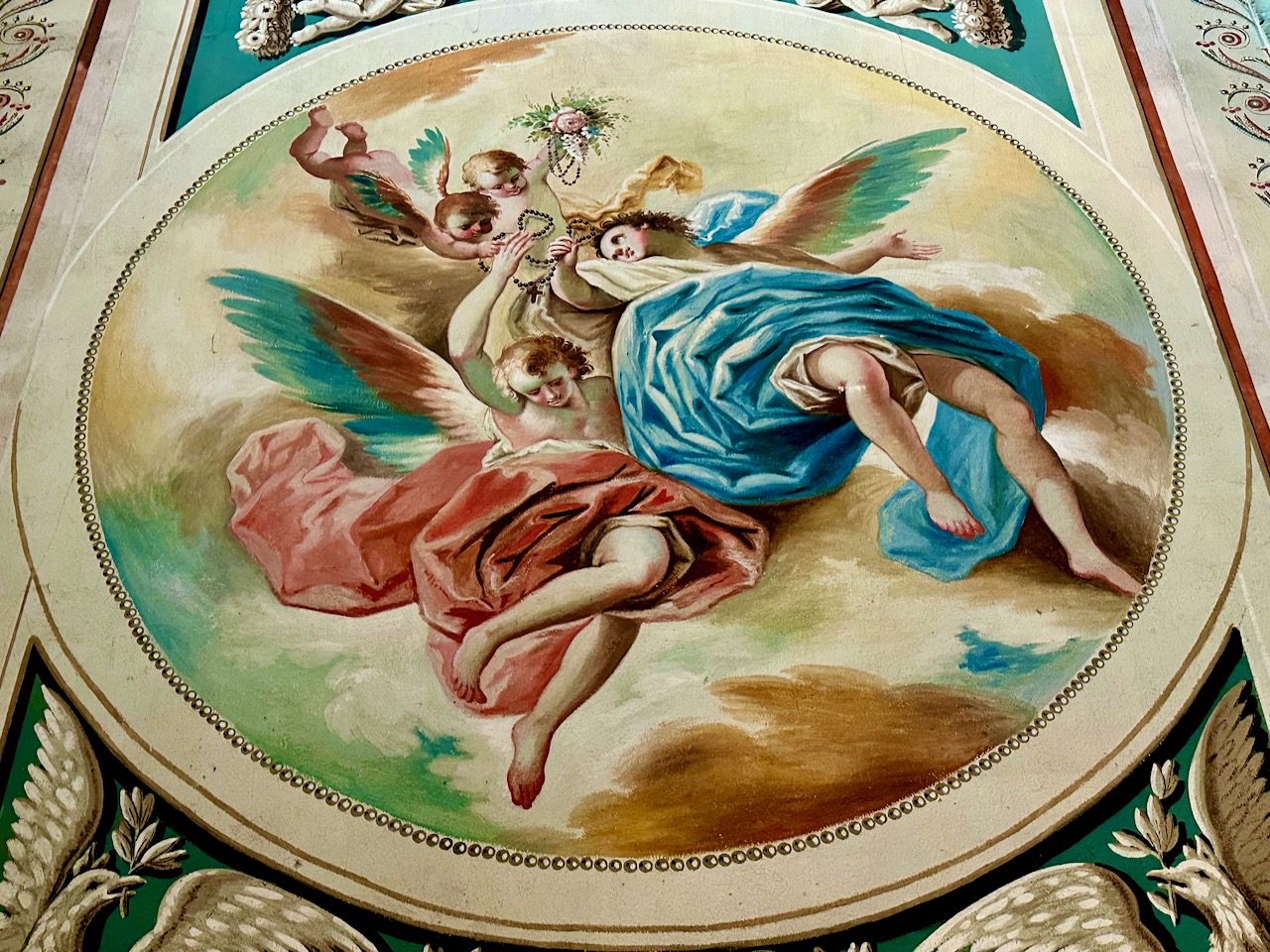
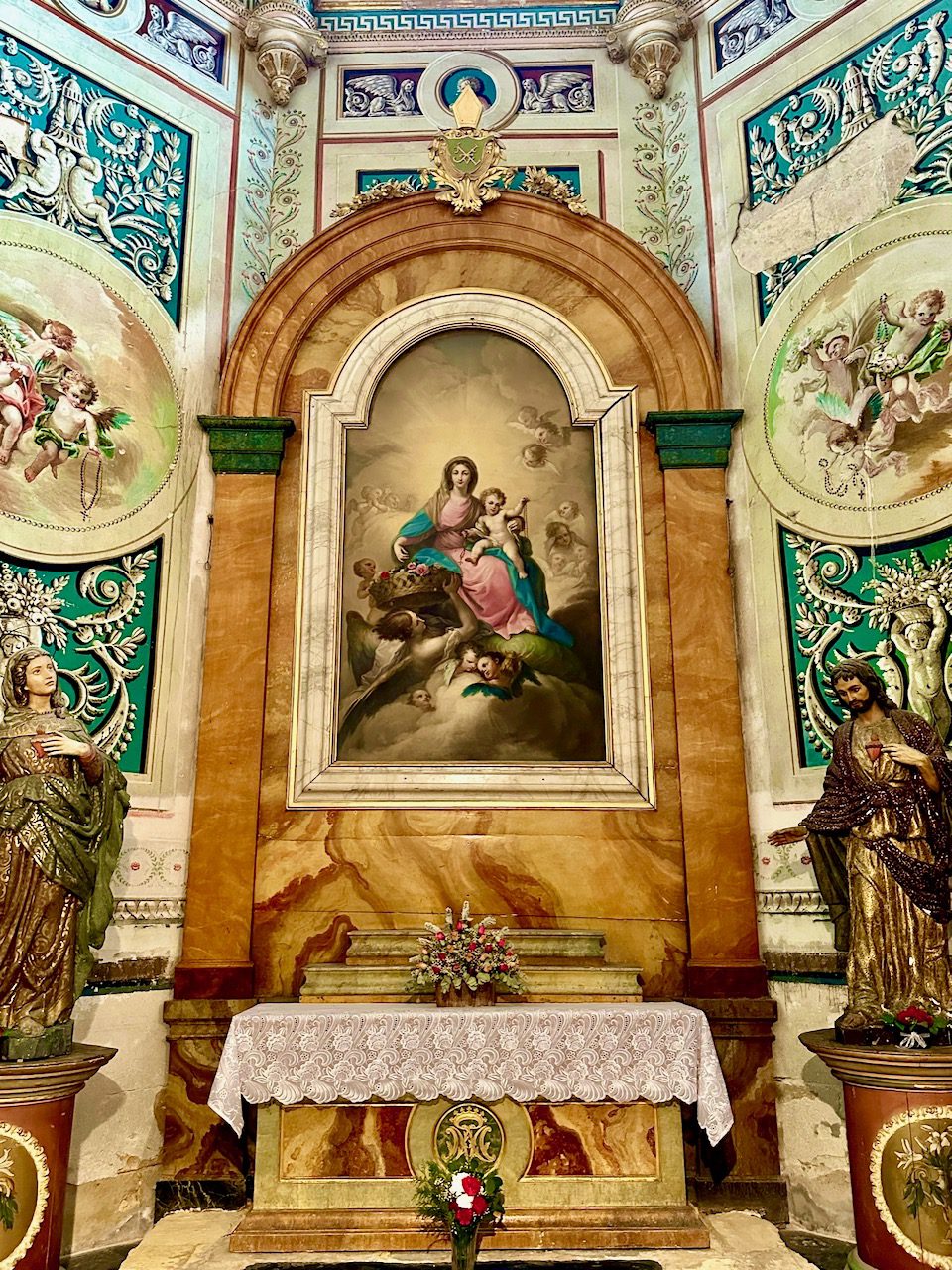
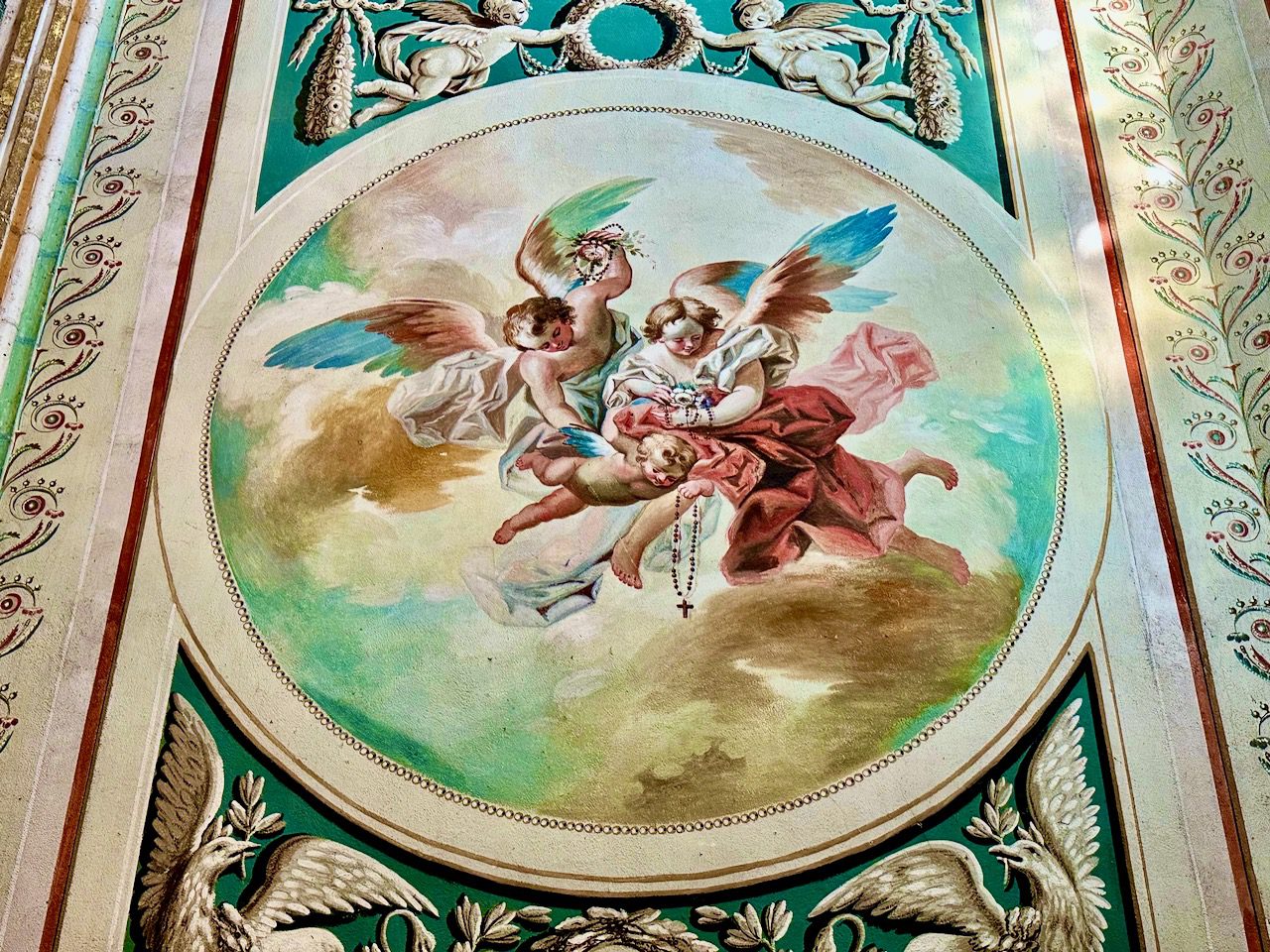
… to the vivid Rosary Chapel.
The tomb inside the Sala de Santa Catalina features a carved and painted effigy of Pedro Enríquez de Castilla, who was the illegitimate son of King Henry II of Castile.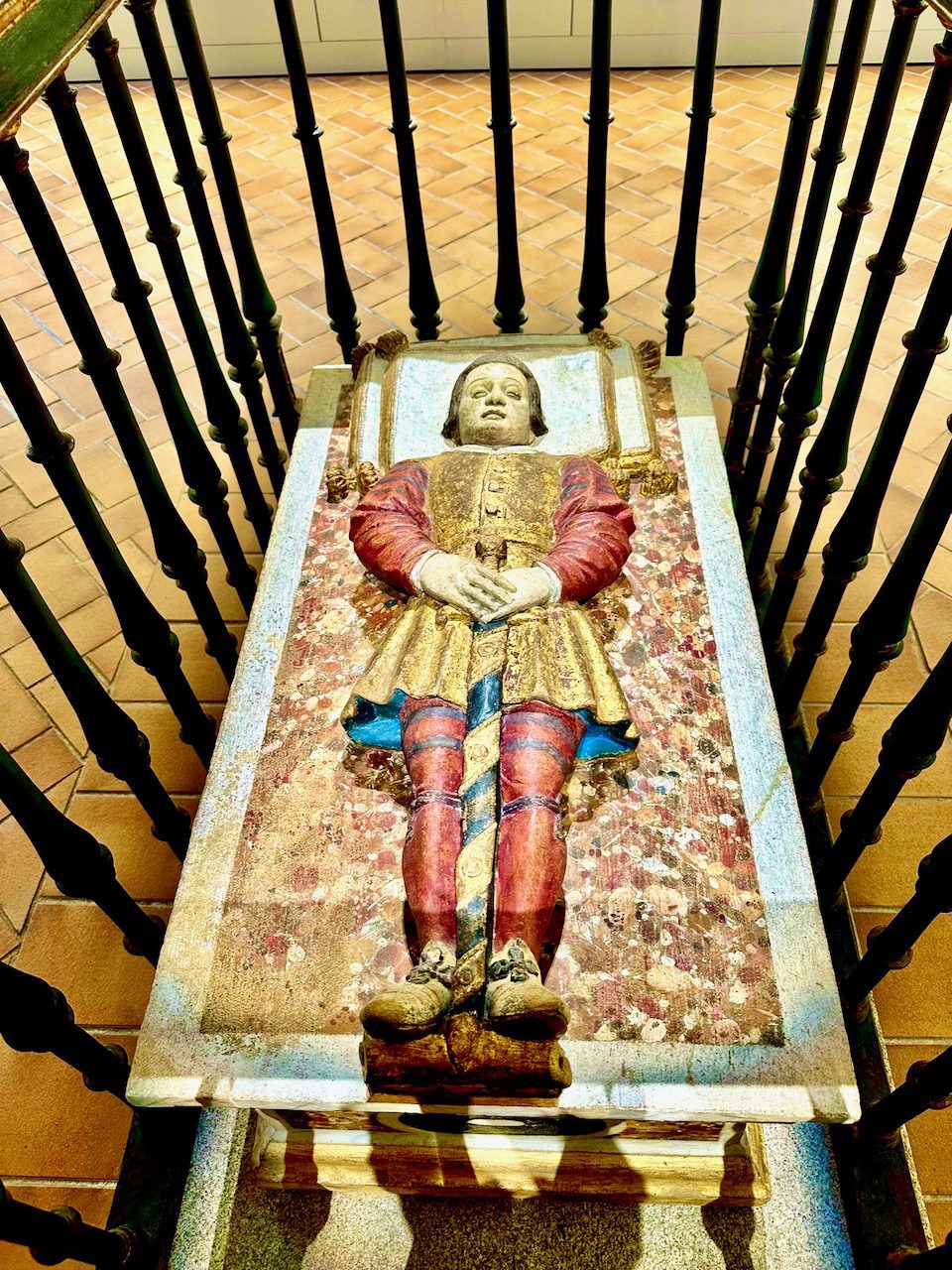
There are also liturgical objects.
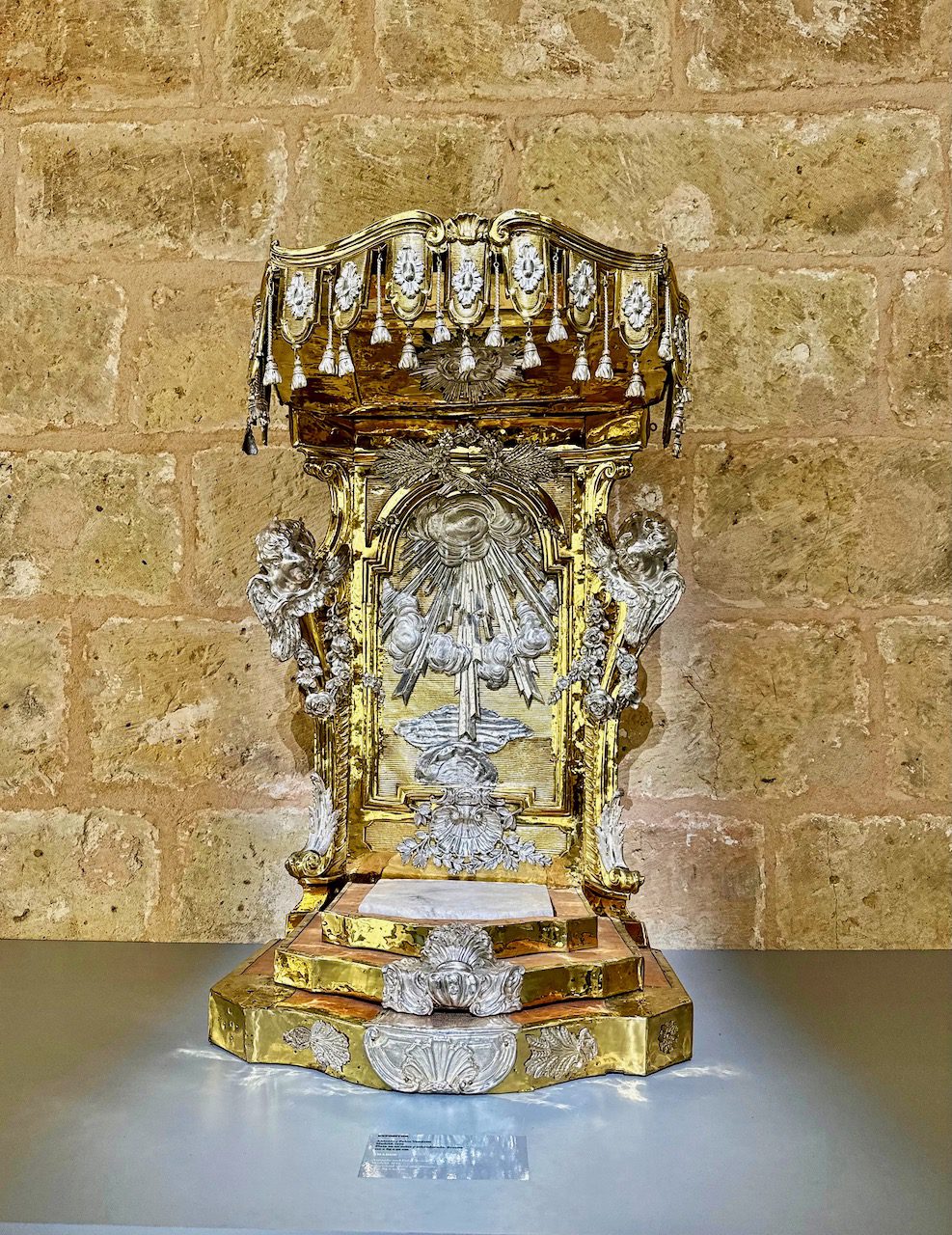
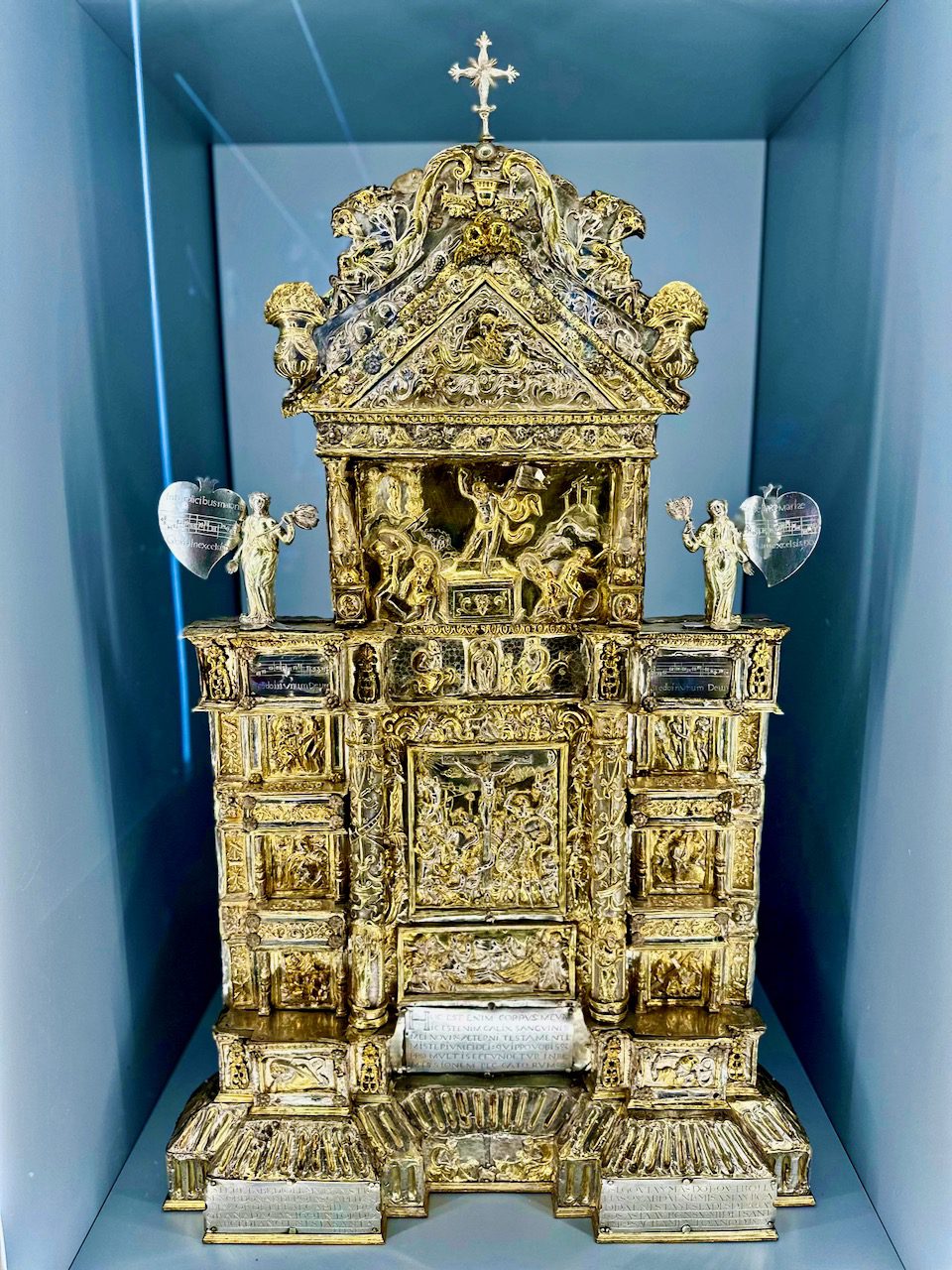
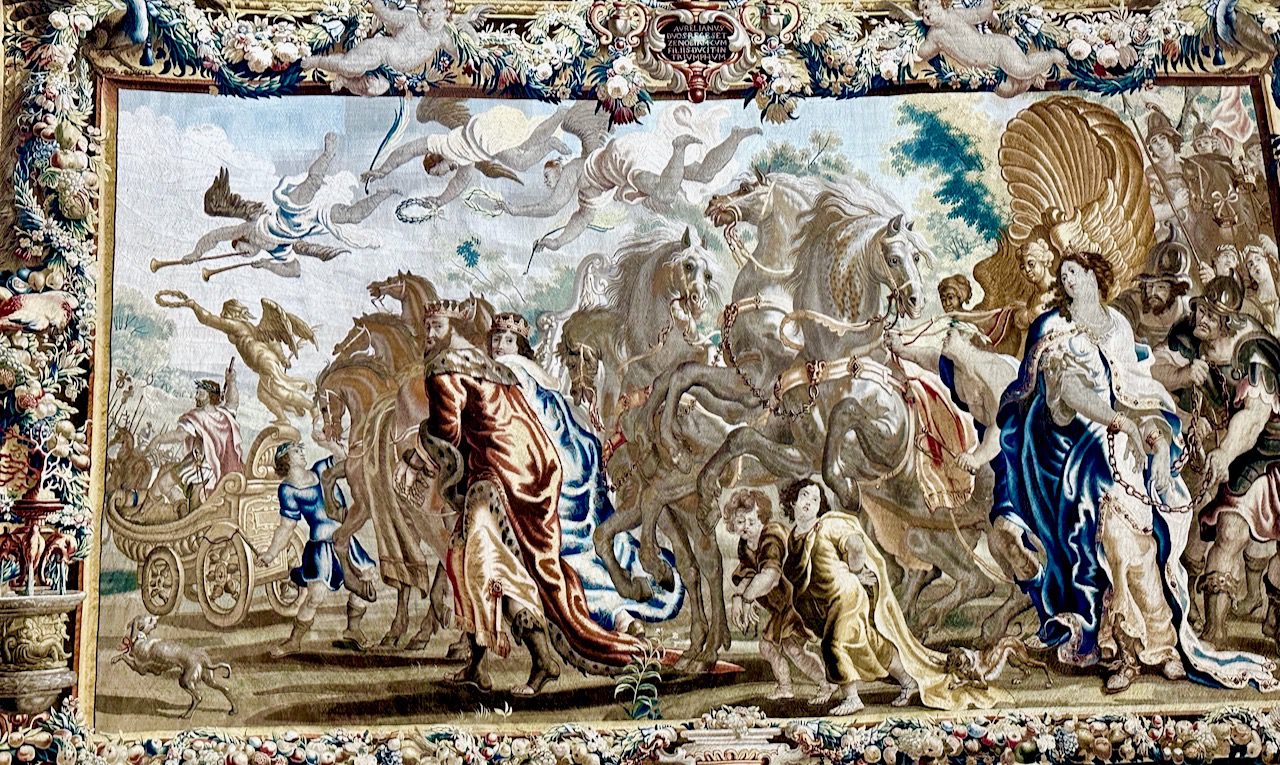
Finally, we visited the Chapter House (or Sala Capitular) with walls covered with a collection of Flemish tapestries.
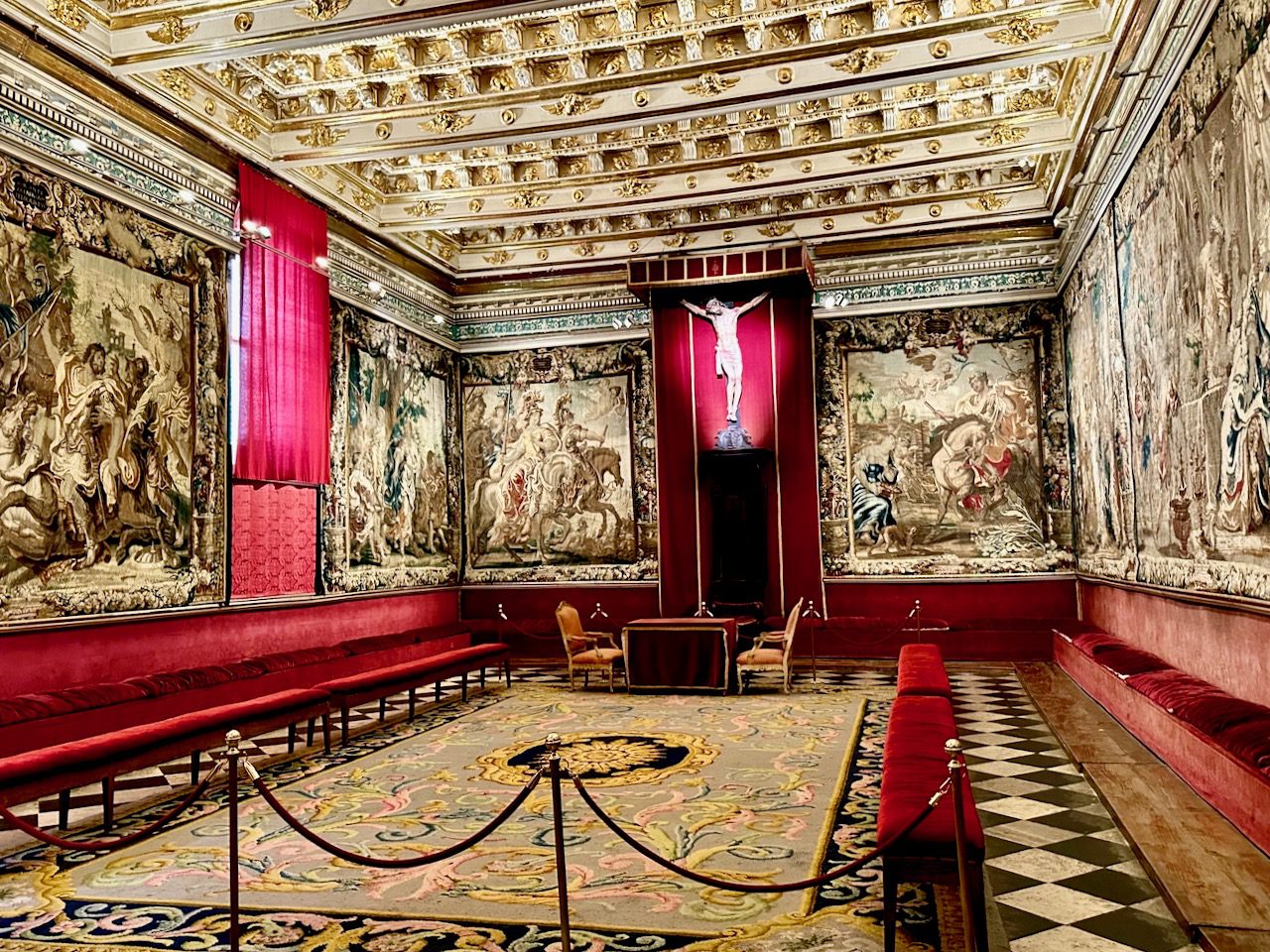
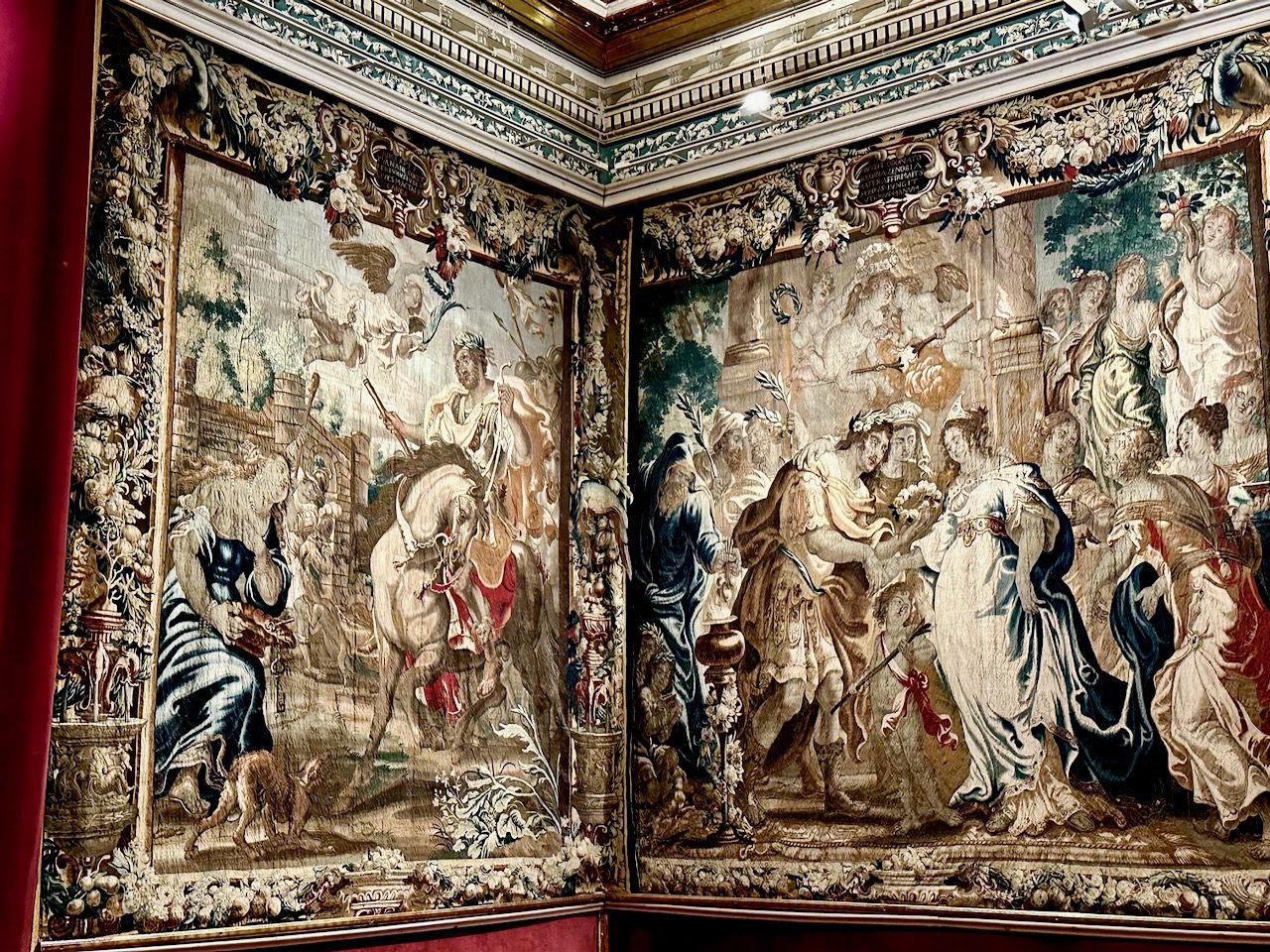
Most famously the “Zenobia, Queen of Palmyra” series.

Back outside we looked around Plaza Mayor for a bite to eat and found …

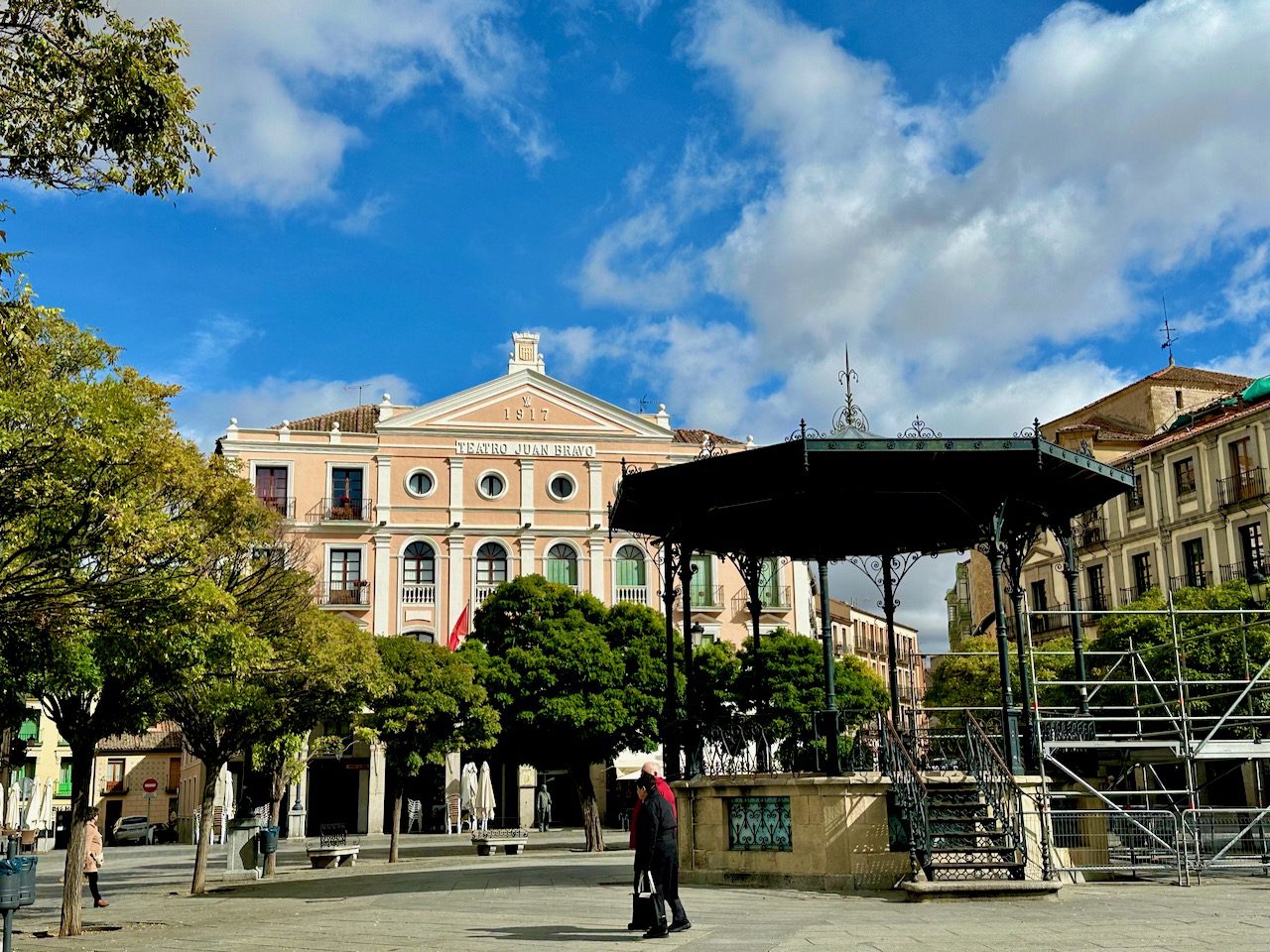
… Pandora, which was not shaped like a box.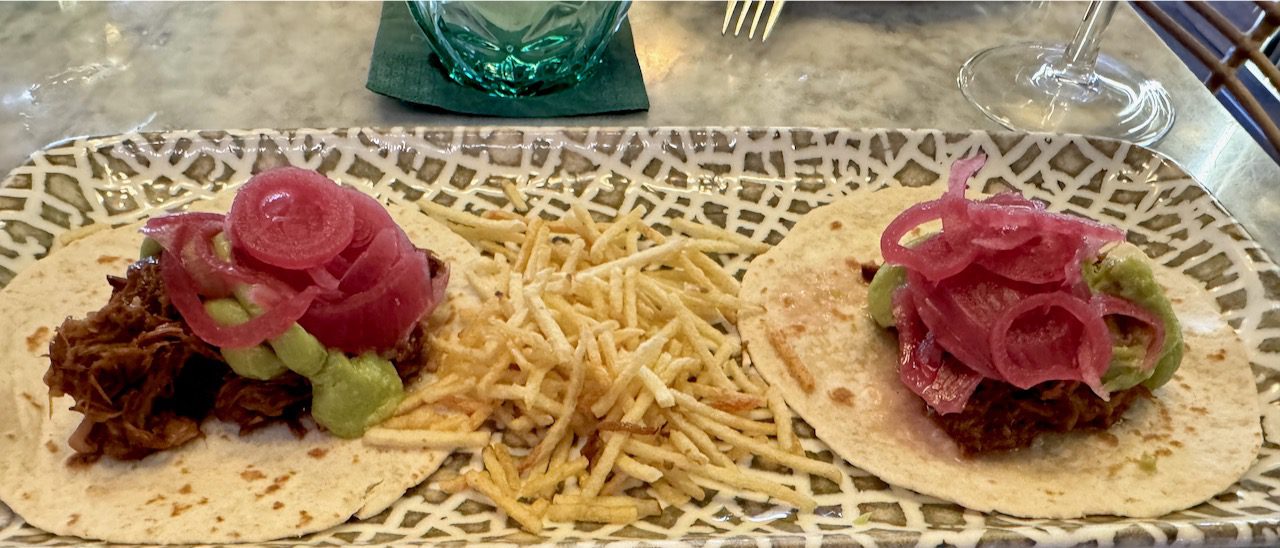
Buying a ticket to the cathedral also included entrance to the Palacio Episcopal, the former residence of the bishops in Segovia. After lunch we walked to Place San Esteban, where before entering the palace we saw Iglesia de San Esteban and its 12th-century Romanesque bell tower, known as the “Queen of Towers.”
Palacio Episcopal houses artistic works including paintings, sculptures and goldsmiths belonging to the Diocese, along with its living quarters featuring “Noble Rooms.” Just like the cathedral, as we entered the palace and walked up the 18th-century Imperial Staircase, Peter Paul Rubens again greeted us, this time with a tapestry that reproduced his triptych of The Raising of the Cross, which we had seen at the Antwerp Cathedral the previous year.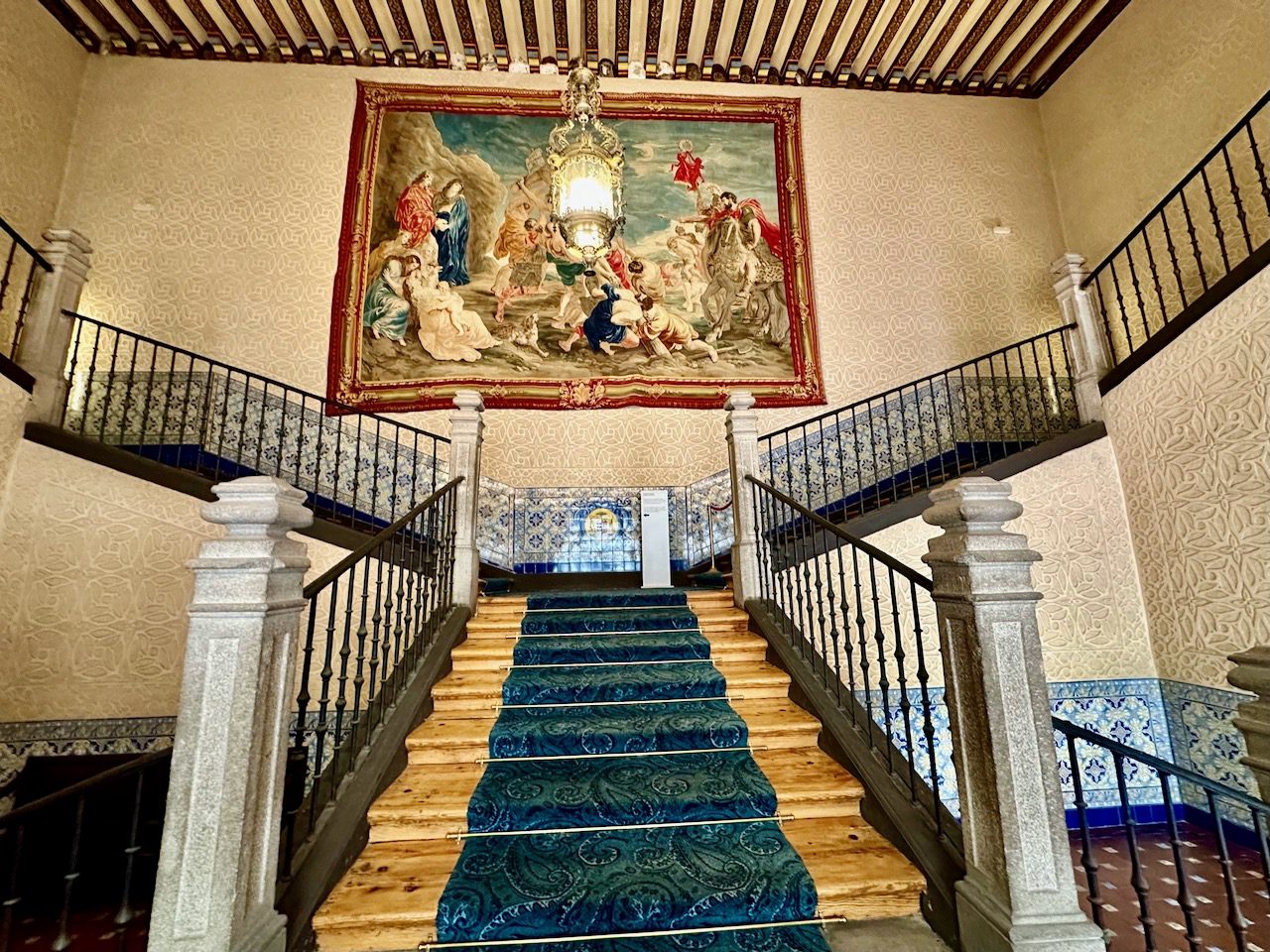
The building dates back to the mid 1550s and was sold to the Salcedo family in the 1600s, which is why it’s also called Palacio de los Salcedo. It fell into disrepair until the 1700s when it became the new headquarters of the Episcopal Palace until the latter part of the 20th century. We checked out Saint Matthew and Saint Gabriel.
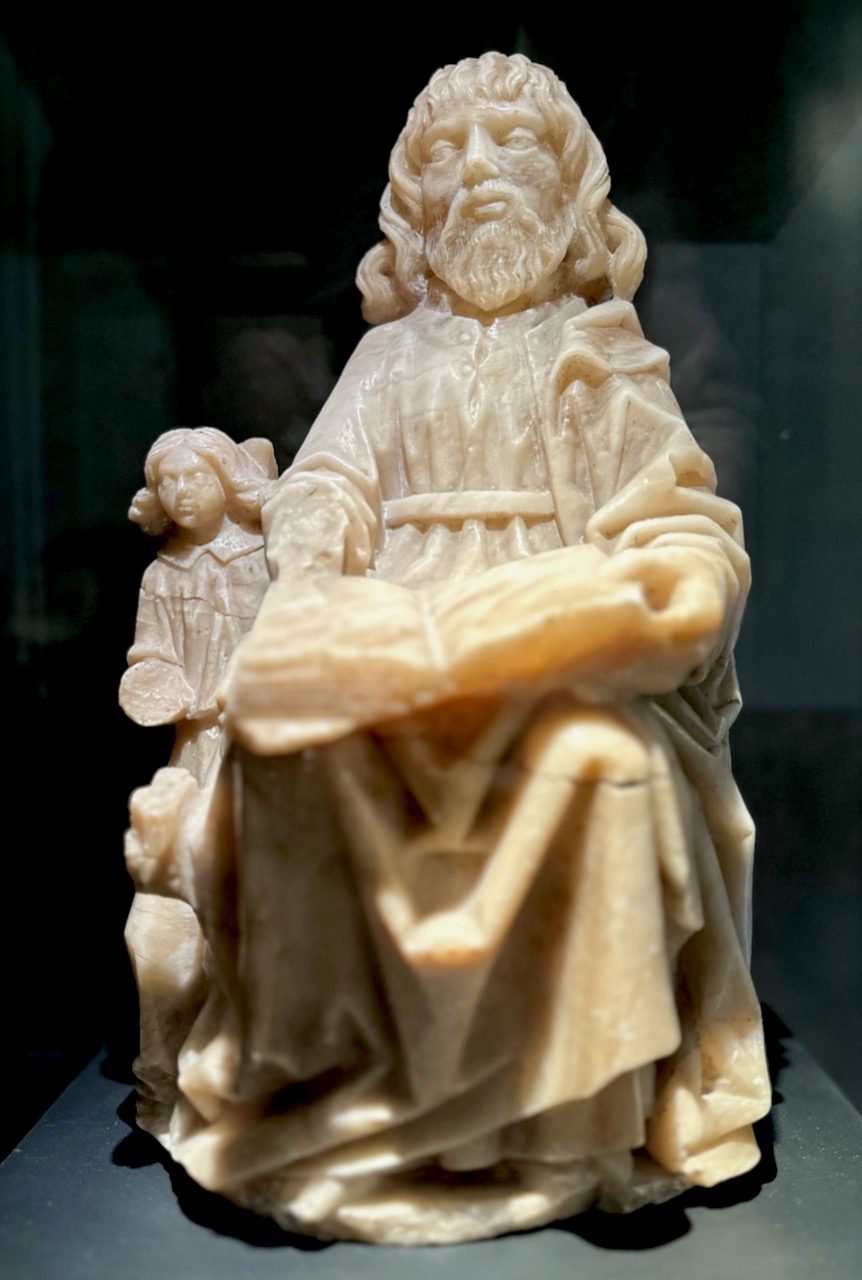
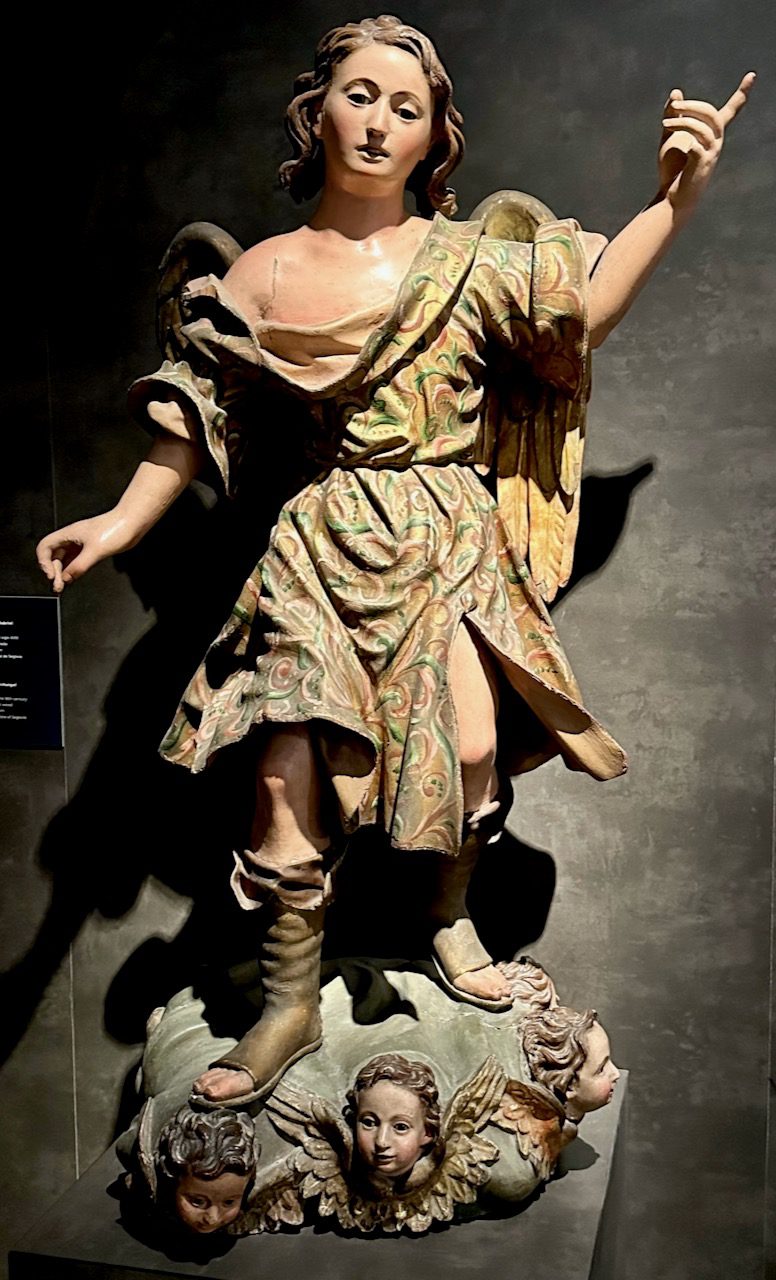
We visited the rooms with paintings …
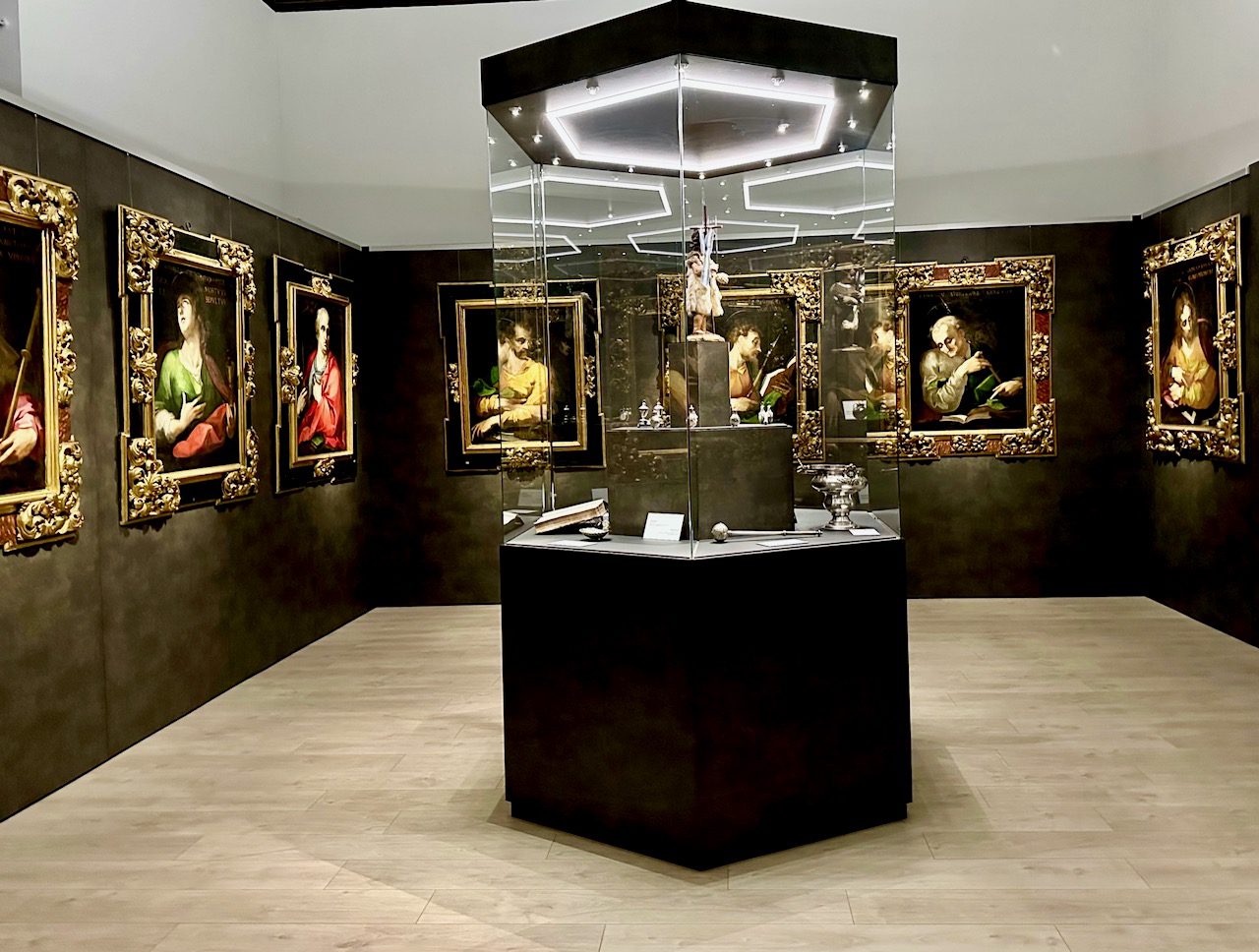

… including The Return of the Prodigal Son and a copy of another Rubens, The Martyrdom of St. Lawrence.

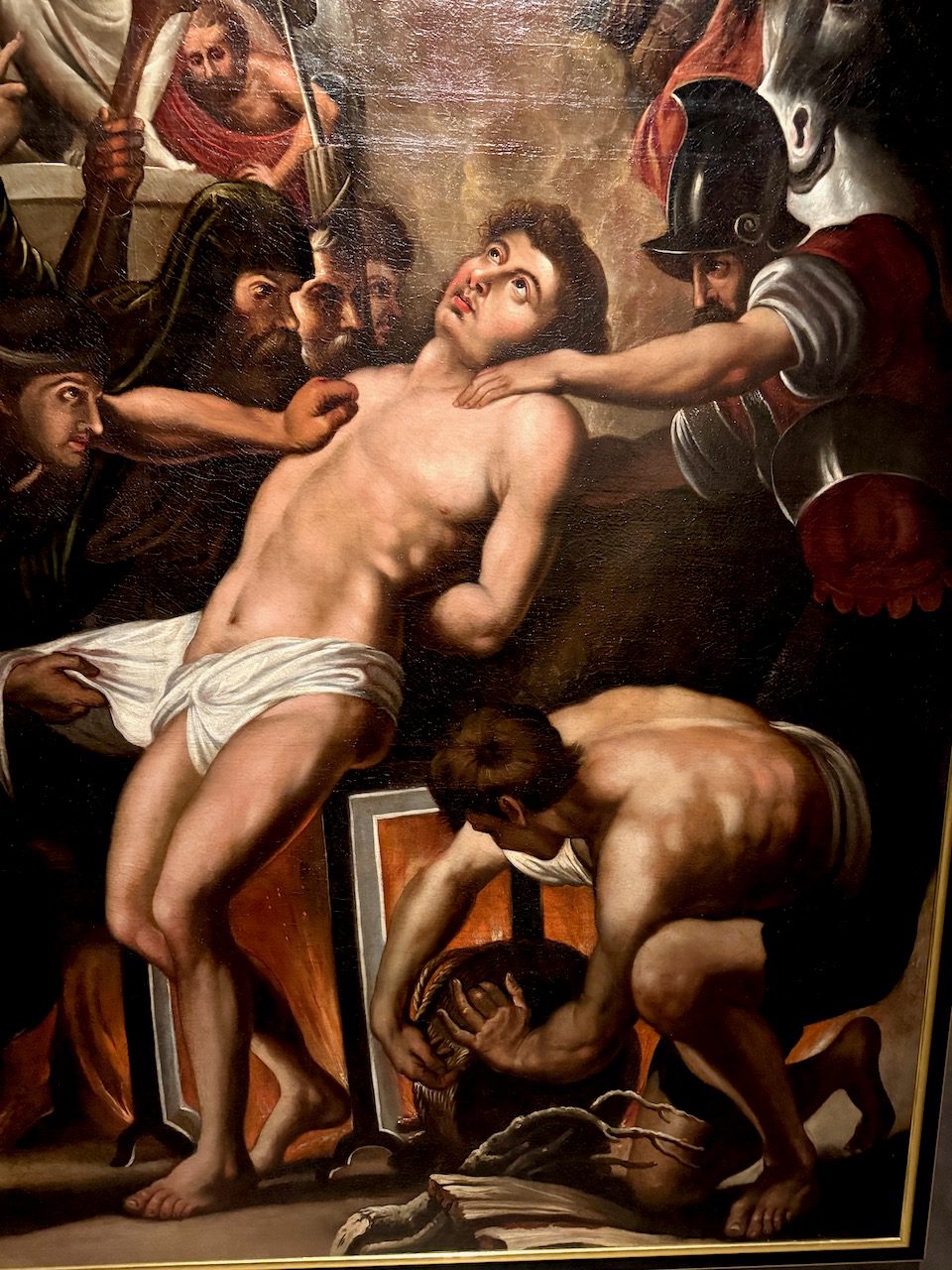
There was lots more religious bling.
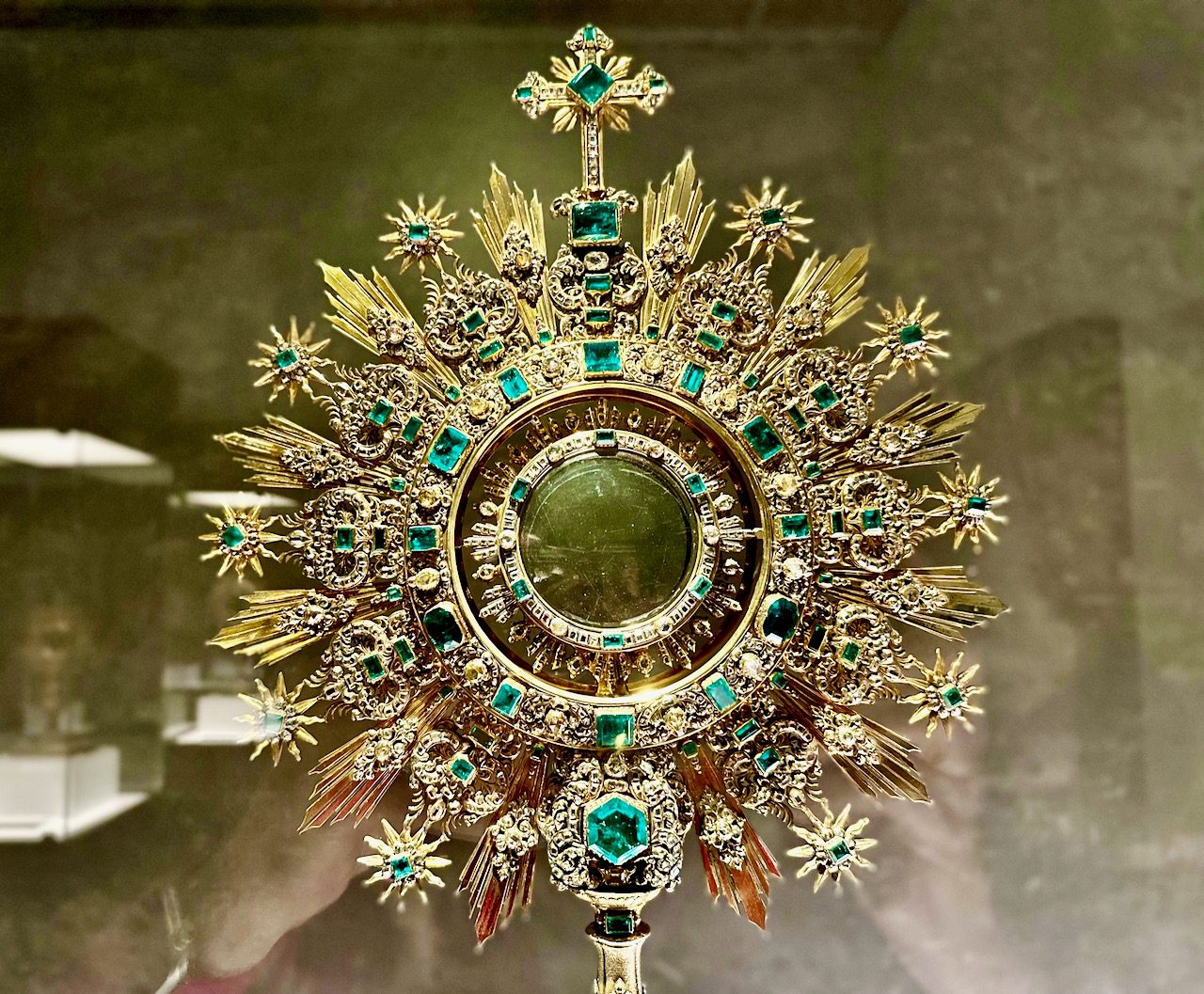
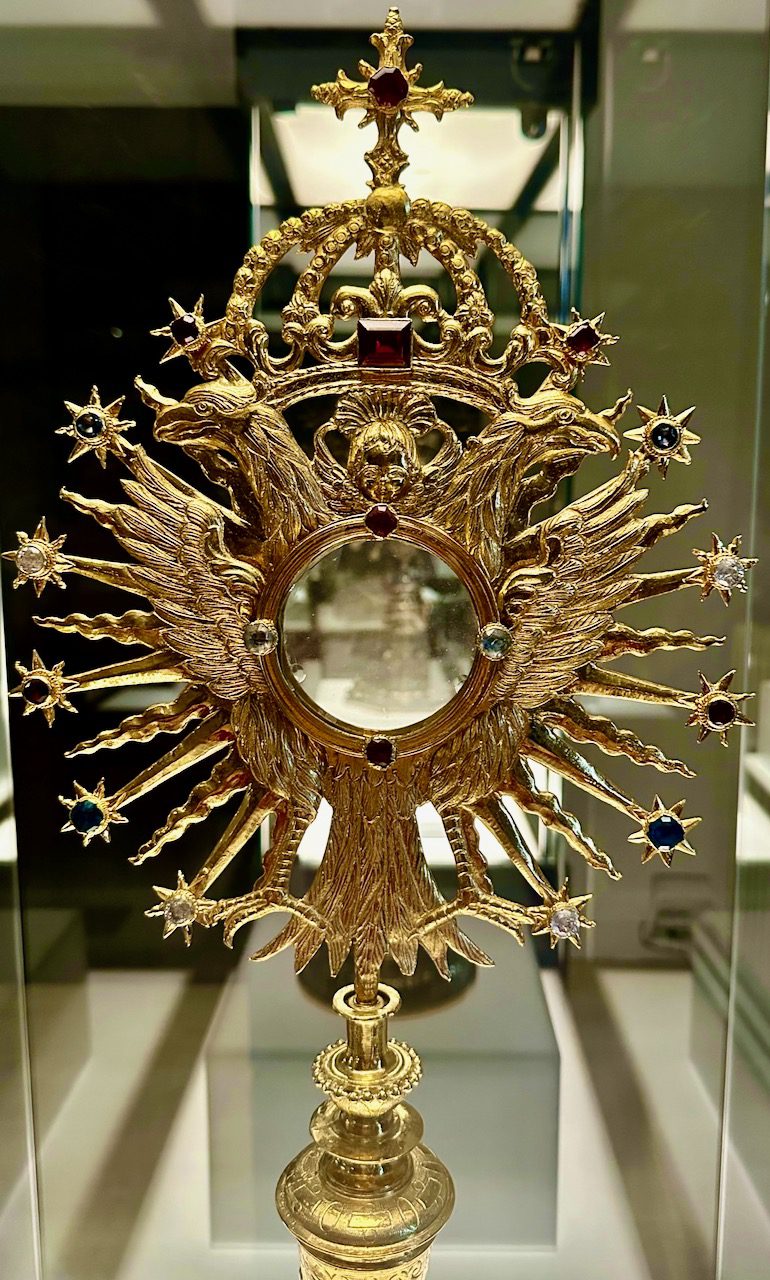
After a couple of more items …
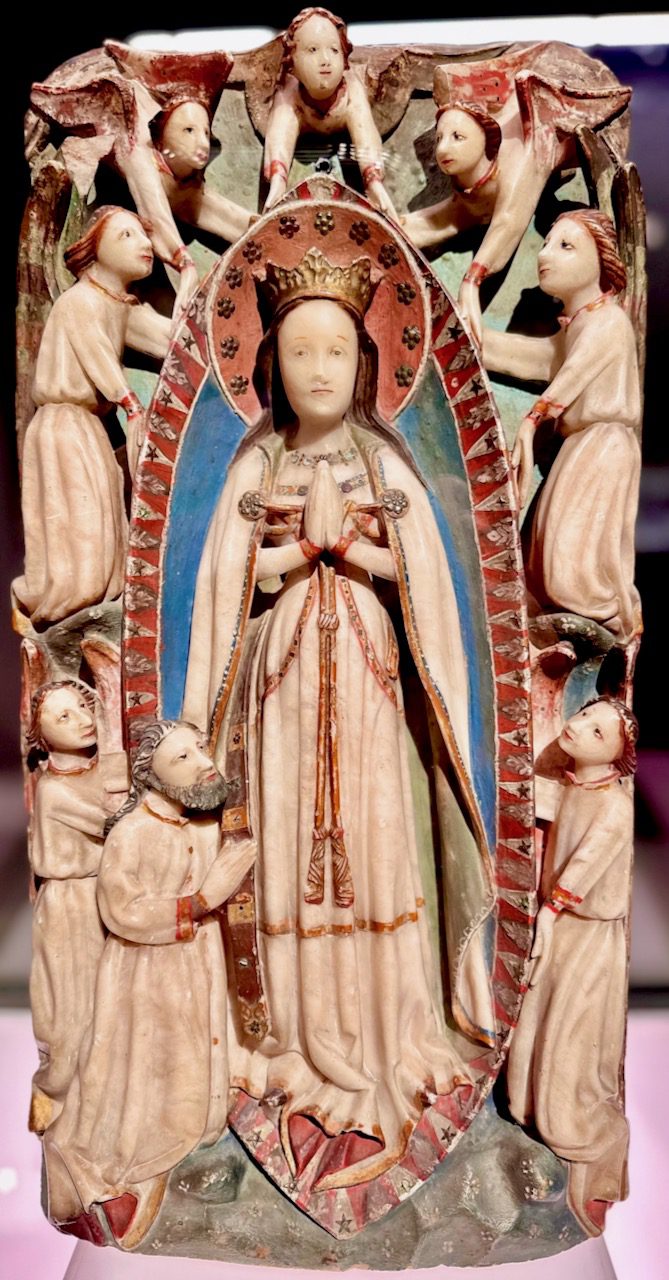
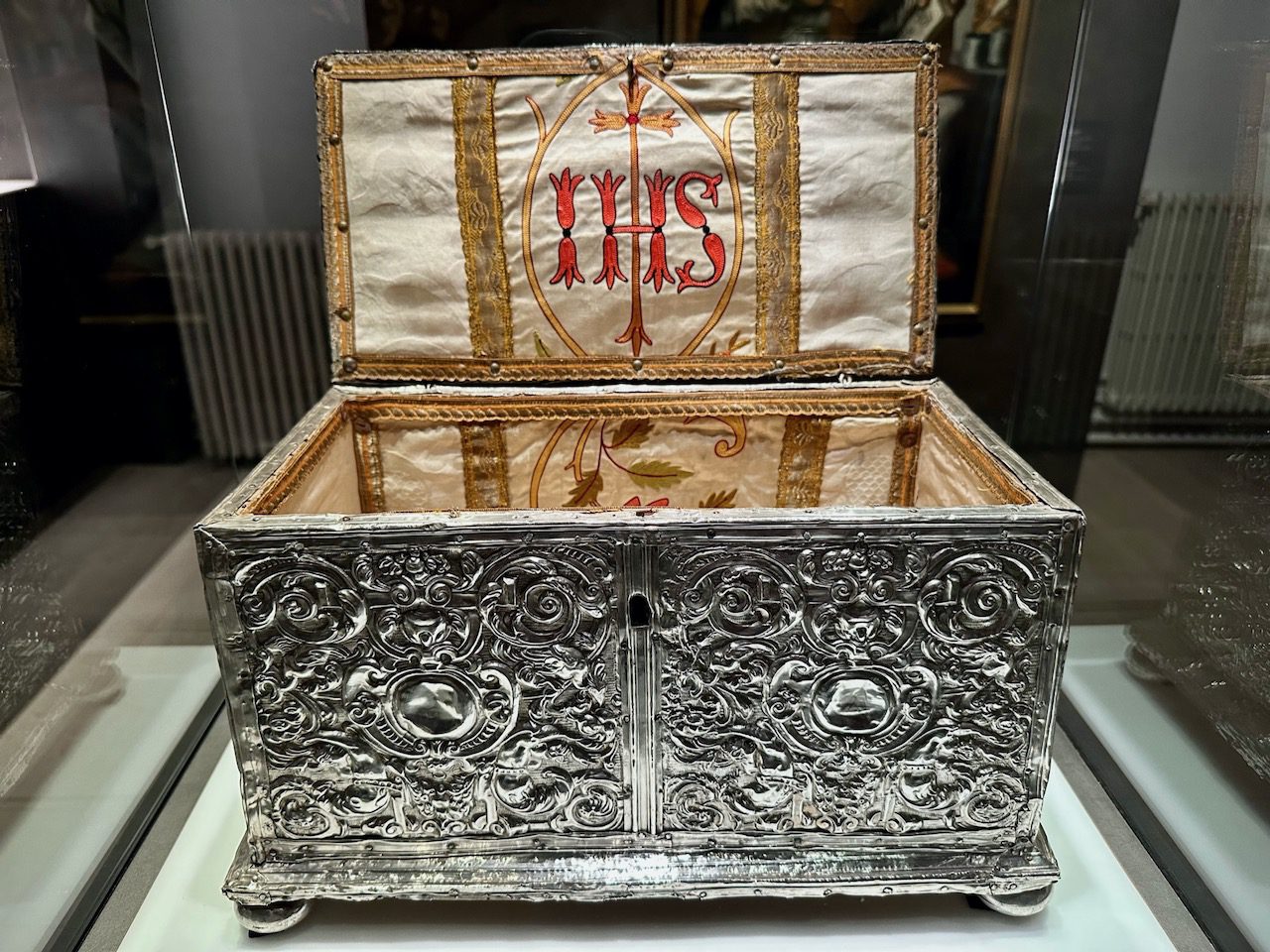
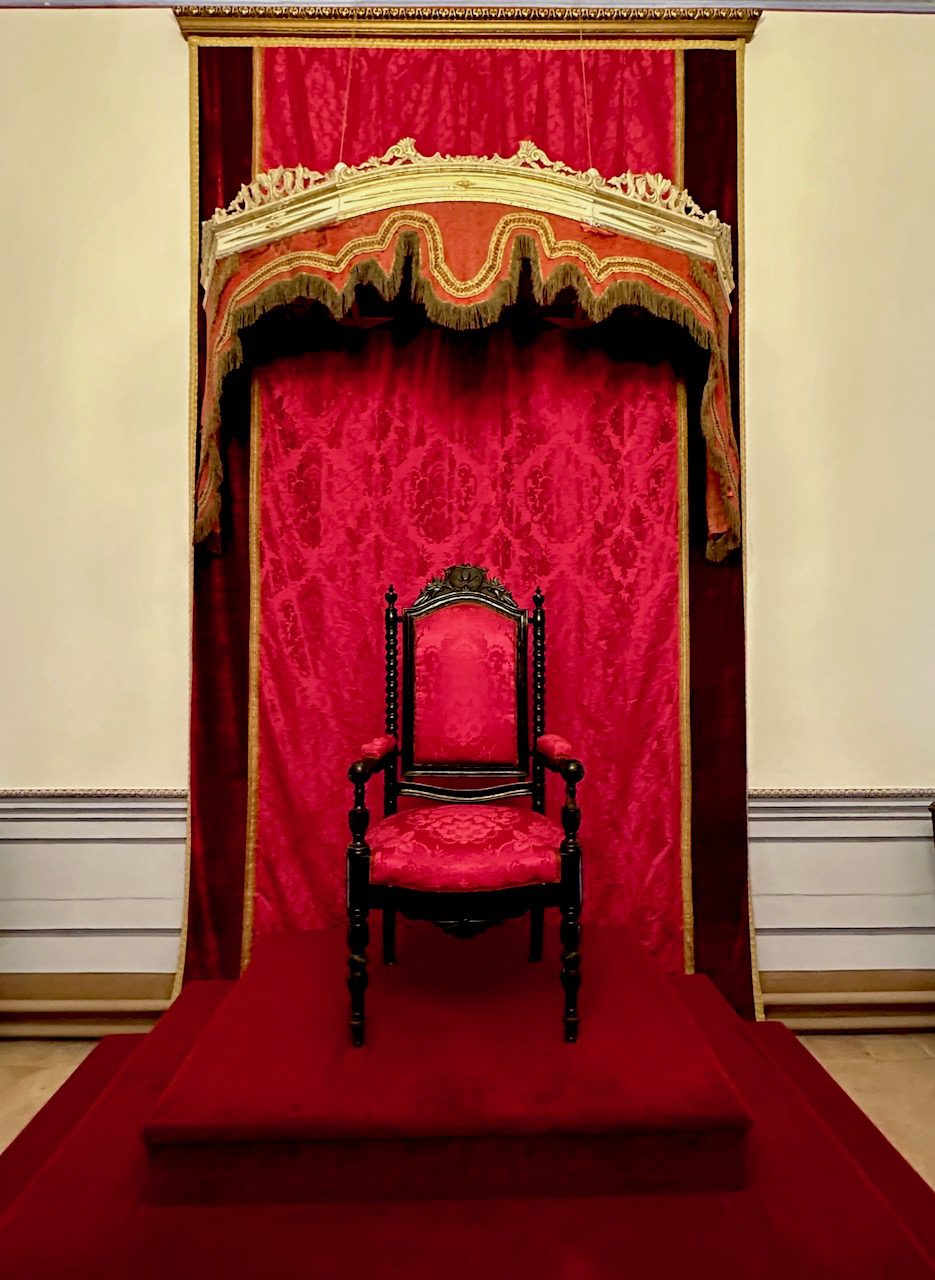
… it was off to the state rooms, including, of course, the Throne Room.
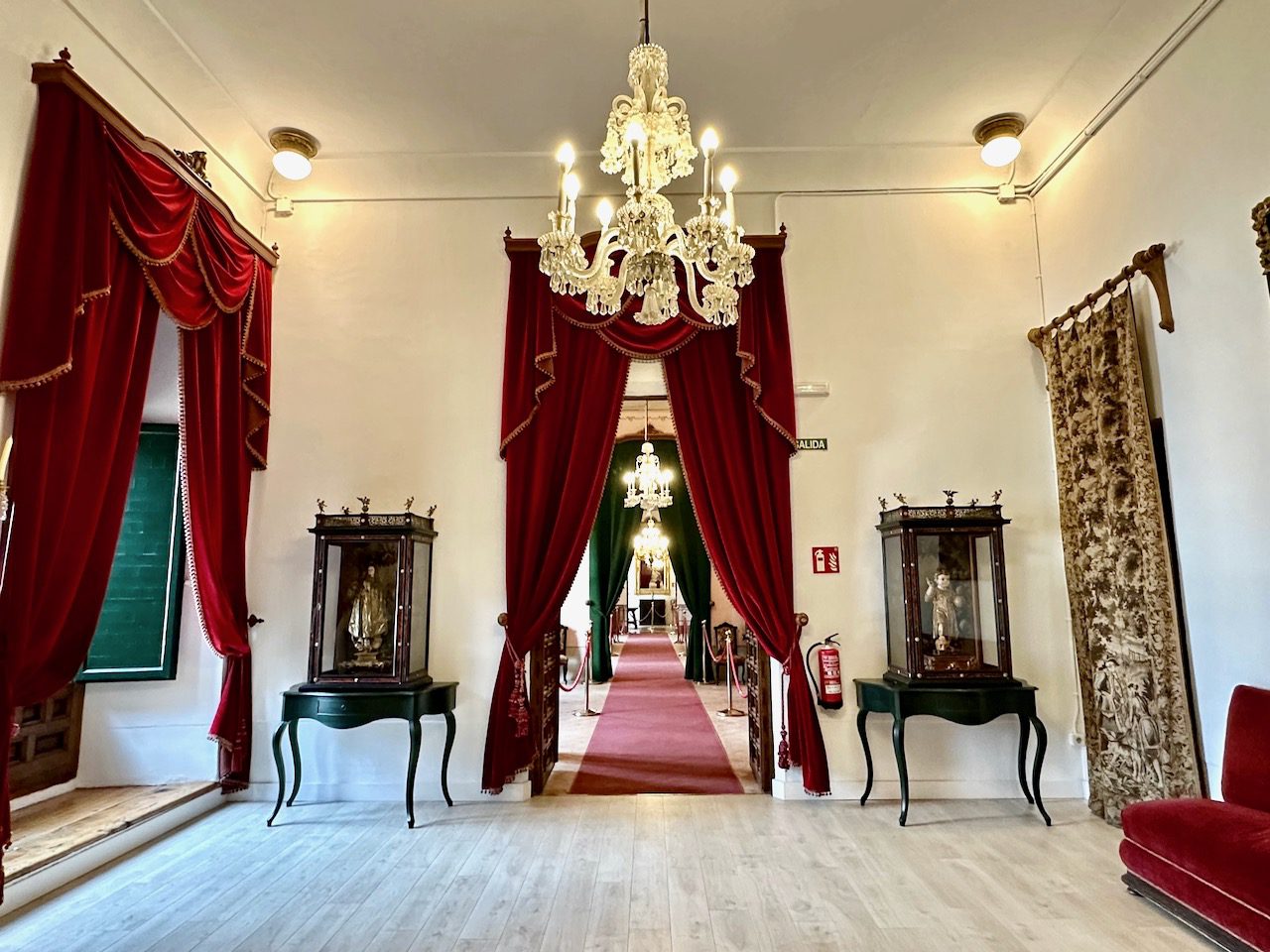
The Bishops’s office is where all the work was accomplished.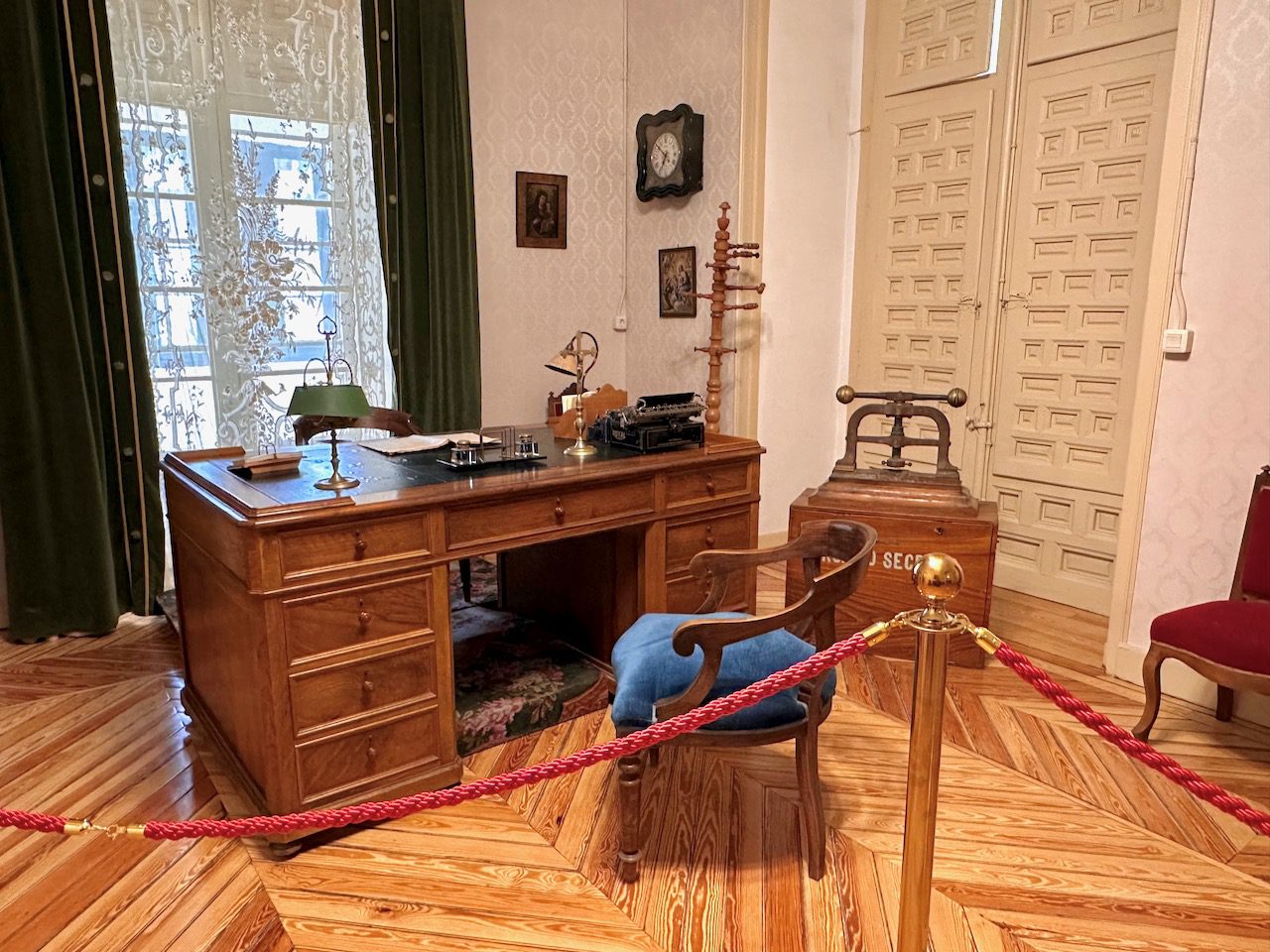
The Reception Room had a light fixture that Tracy covets for our entry hall, except for the fact it is larger than our entry hall.
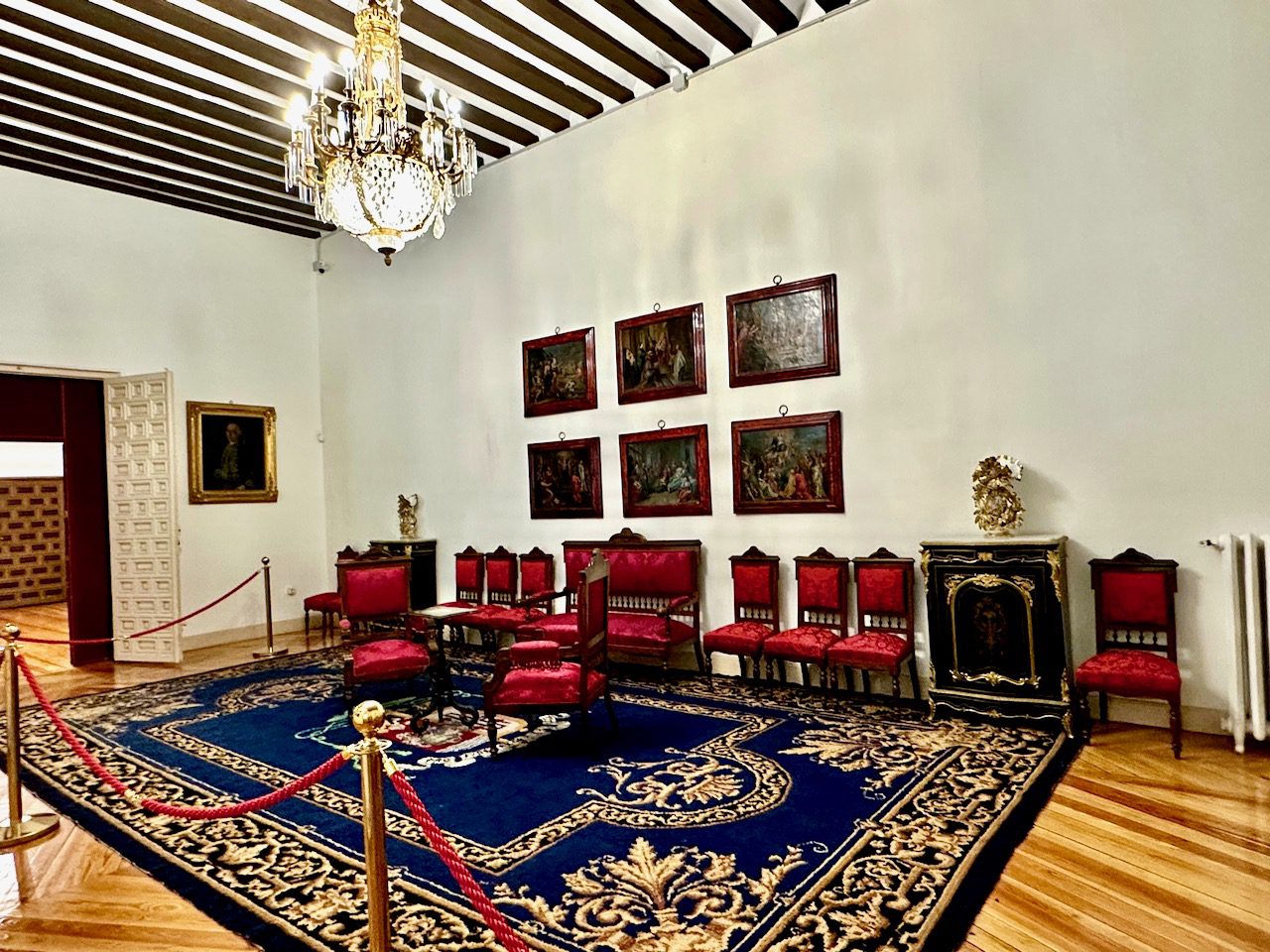
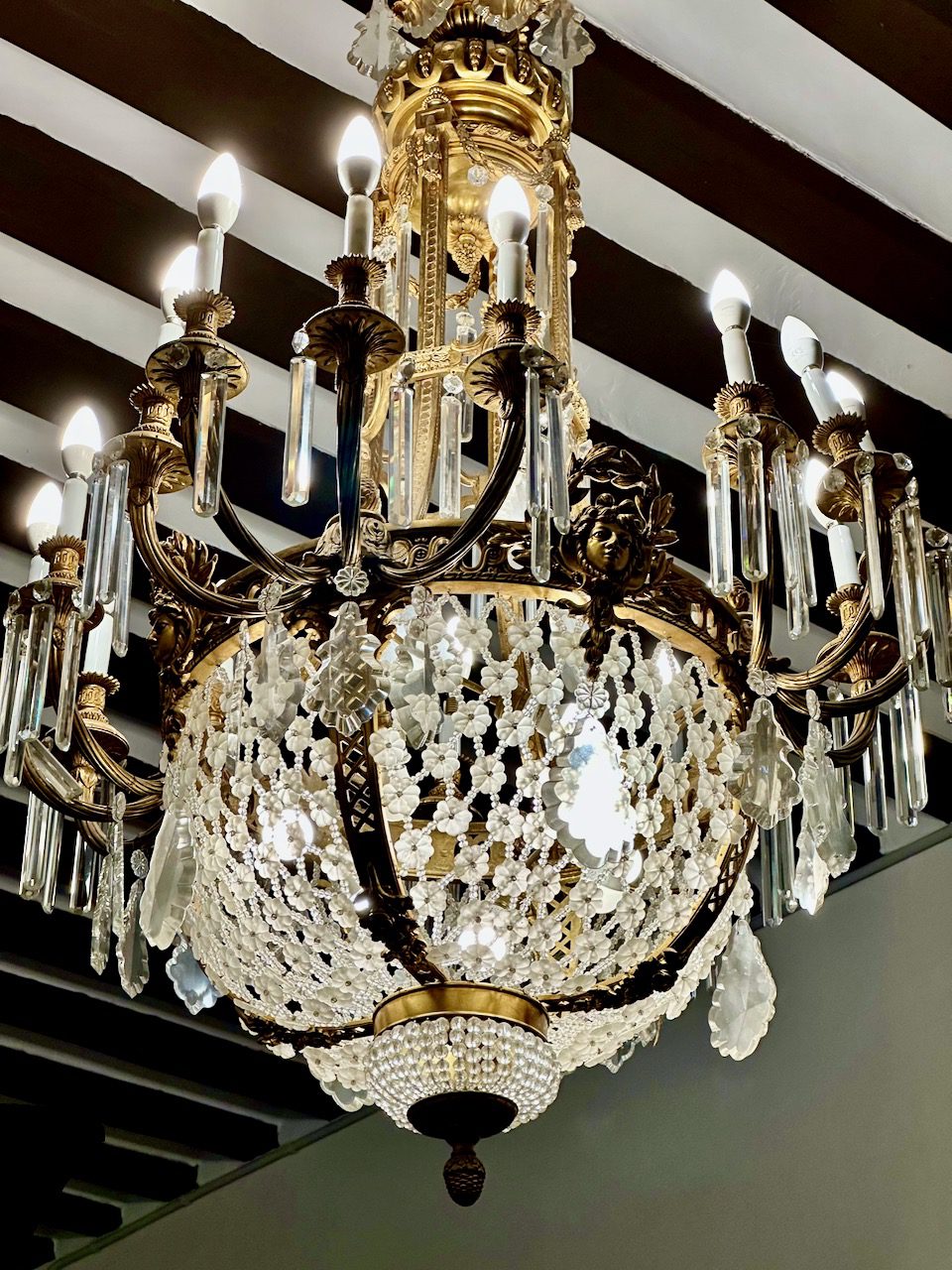
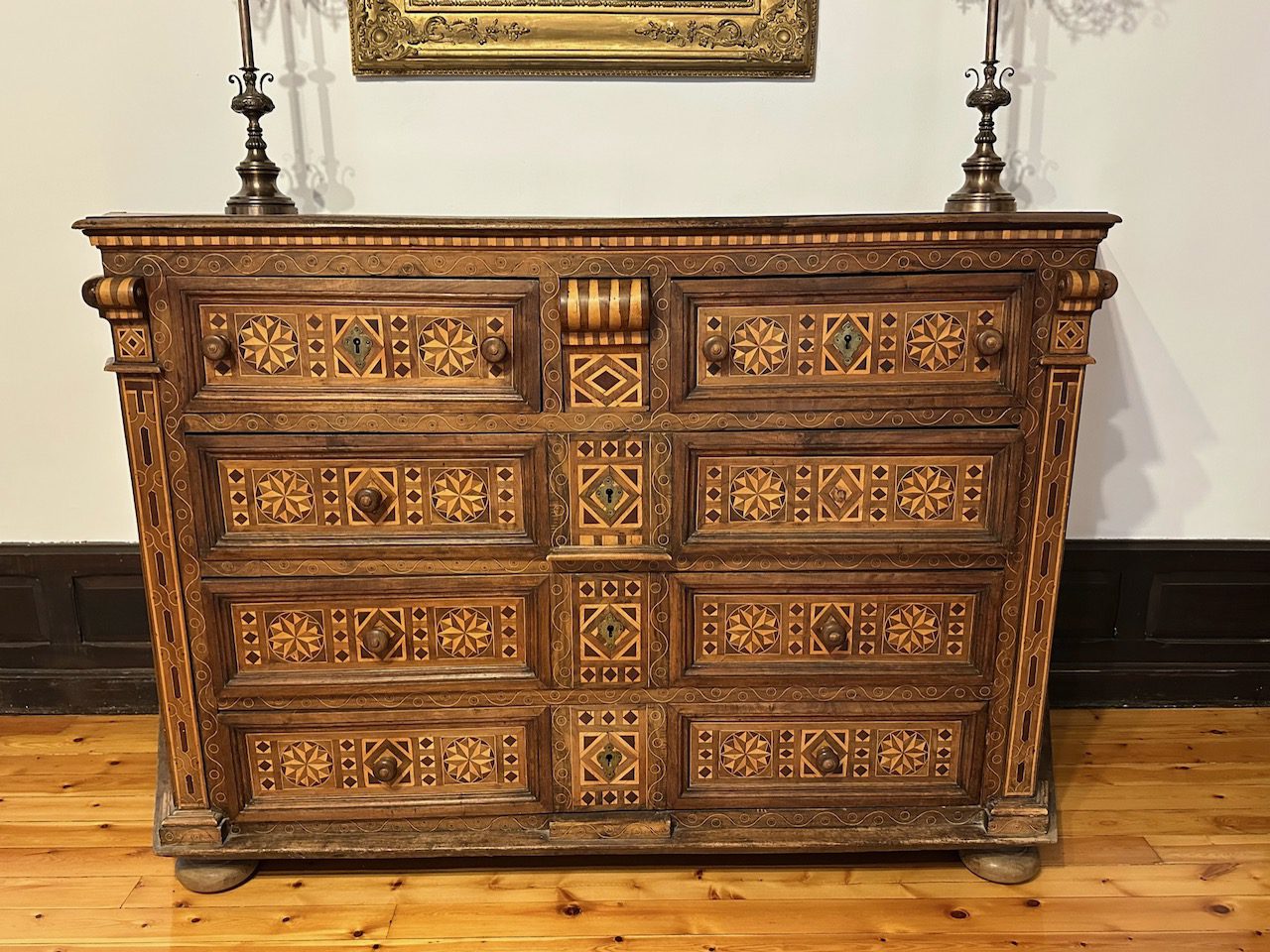
A couple of more rooms, and we were on our way. We had a castle we needed to see.

Has that church gotten bigger since we were inside the palace?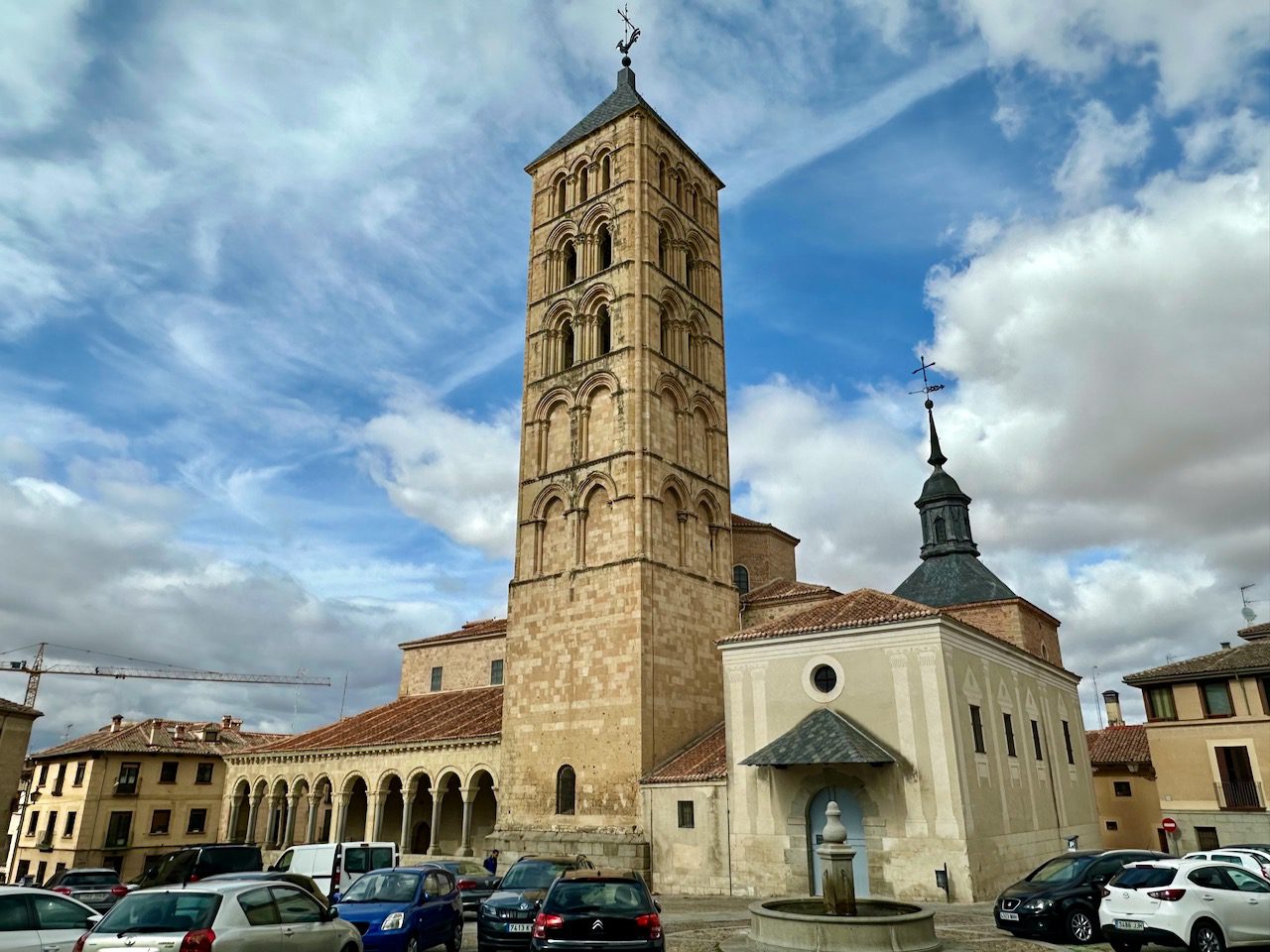
We headed across town toward the western section of Segovia’s old city and its Real Alcázar de Segovia. I asked Tracy where the fake one was, and she quickly walked away. Along the way we entered the Puerta de la Claustra, the only surviving gate of the old Jewish district of the city. The arch dates back to the 16th century and features a small image of the Virgen de la Piedad, which is a copy of the one located in the Segovia Cathedral.
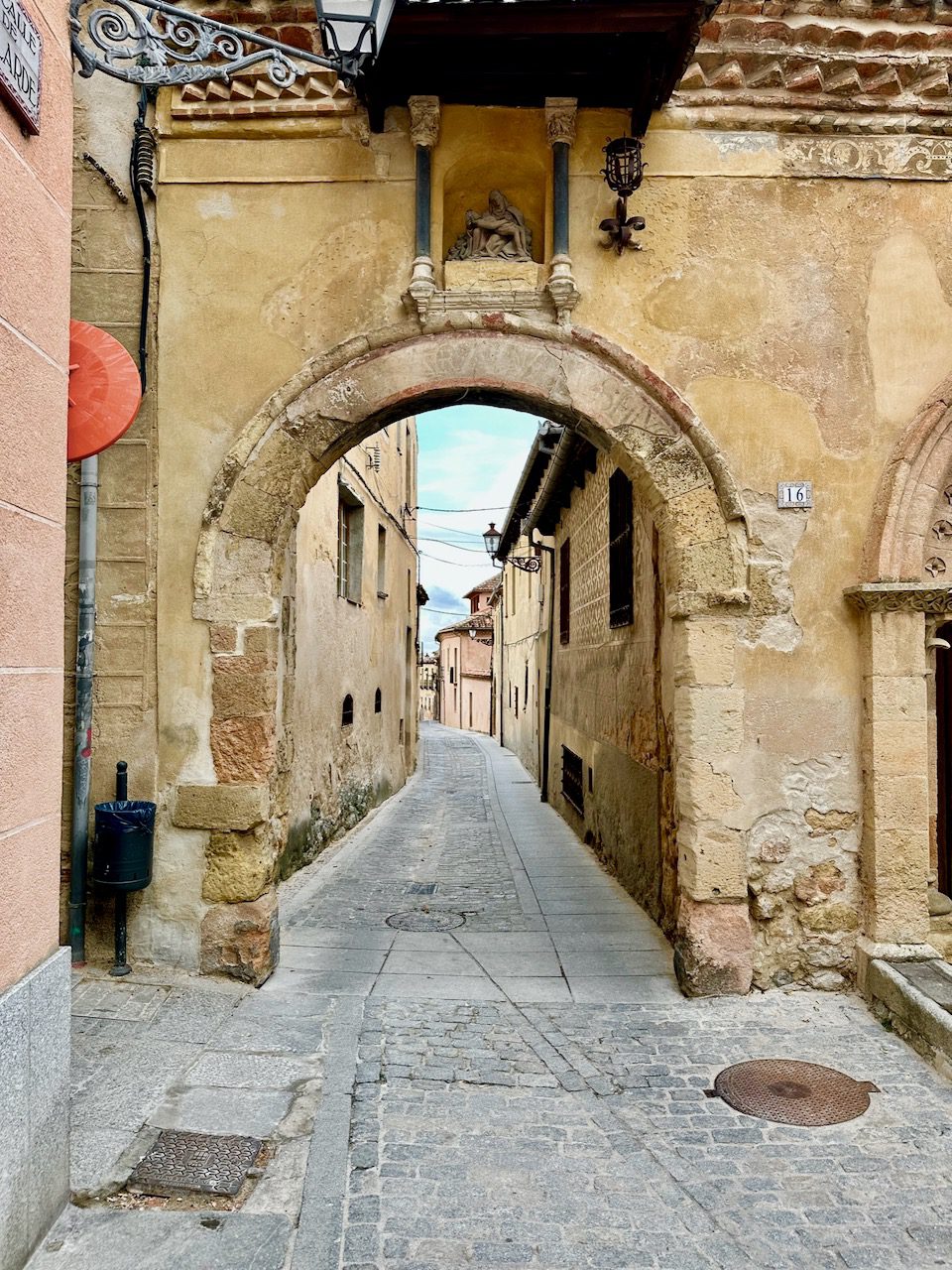
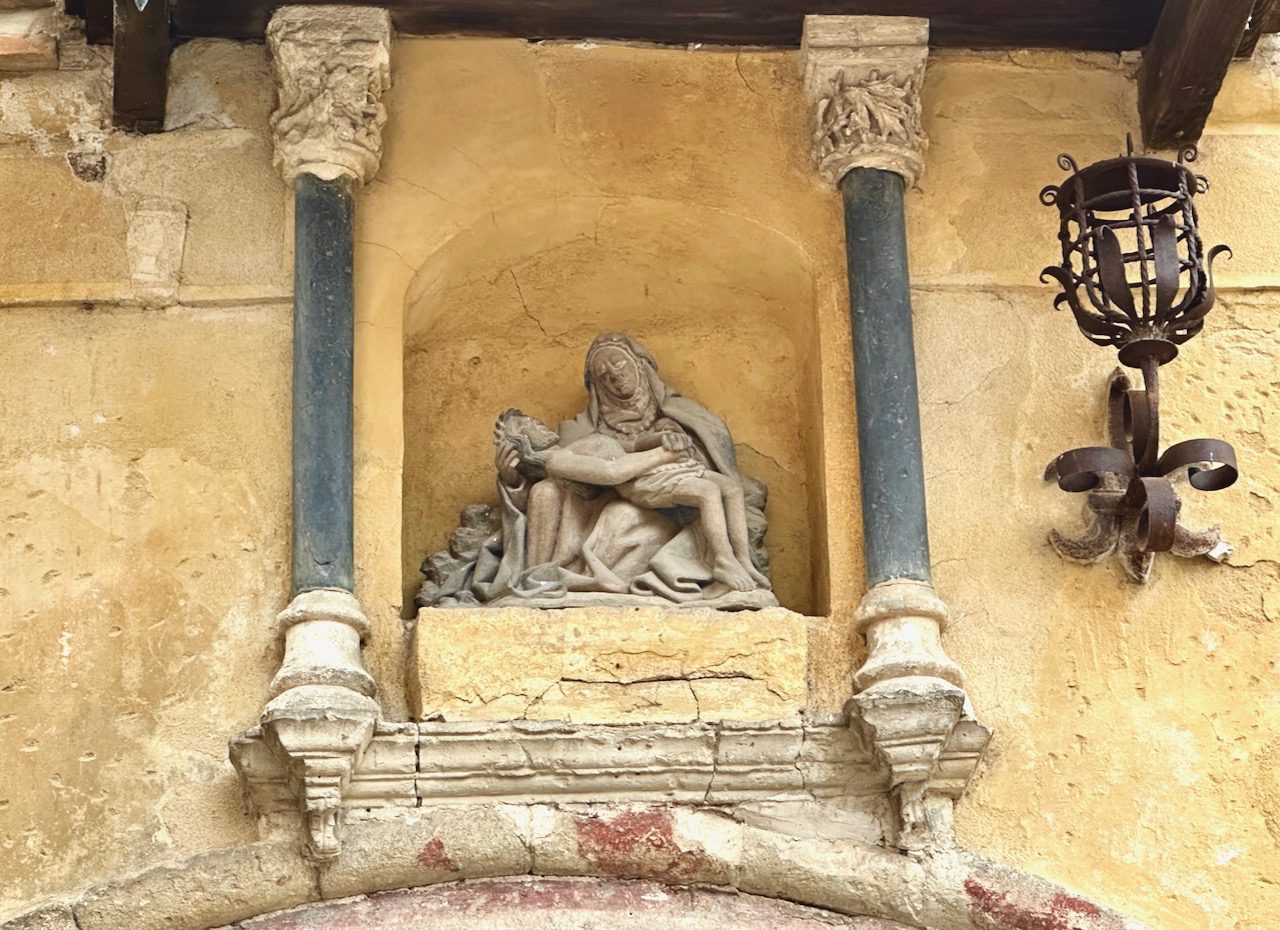
Continuing on, we came upon a statue of St. John of the Cross, who was a famed Spanish Catholic priest, mystic and Carmelite friar who lived here in the 1600s.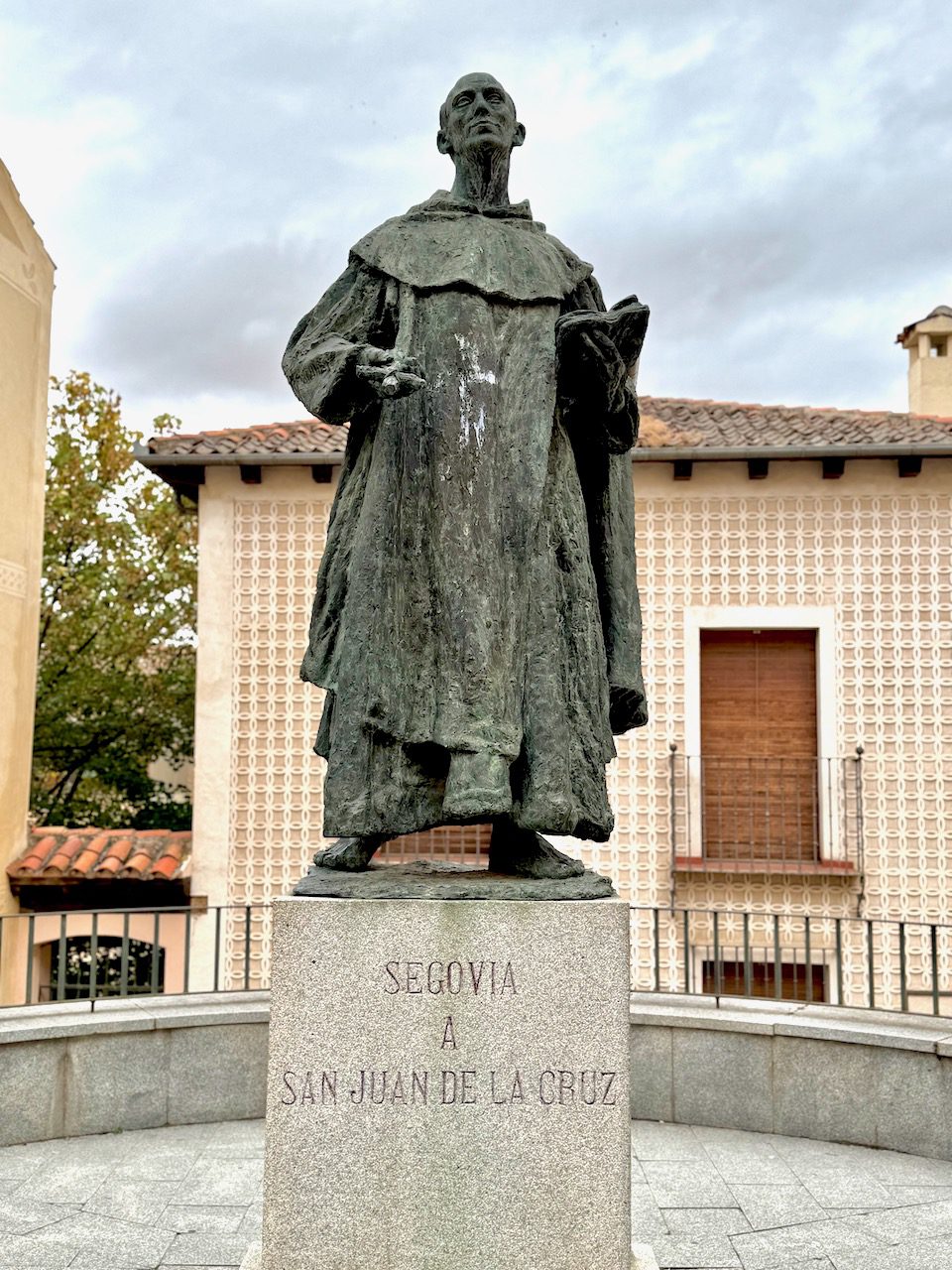
As we approached the Alcázar, a gate commemorating the 1817 visit to the Alcázar of King Ferdinand VII and wife Maria Isabel of Braganza beckoned us.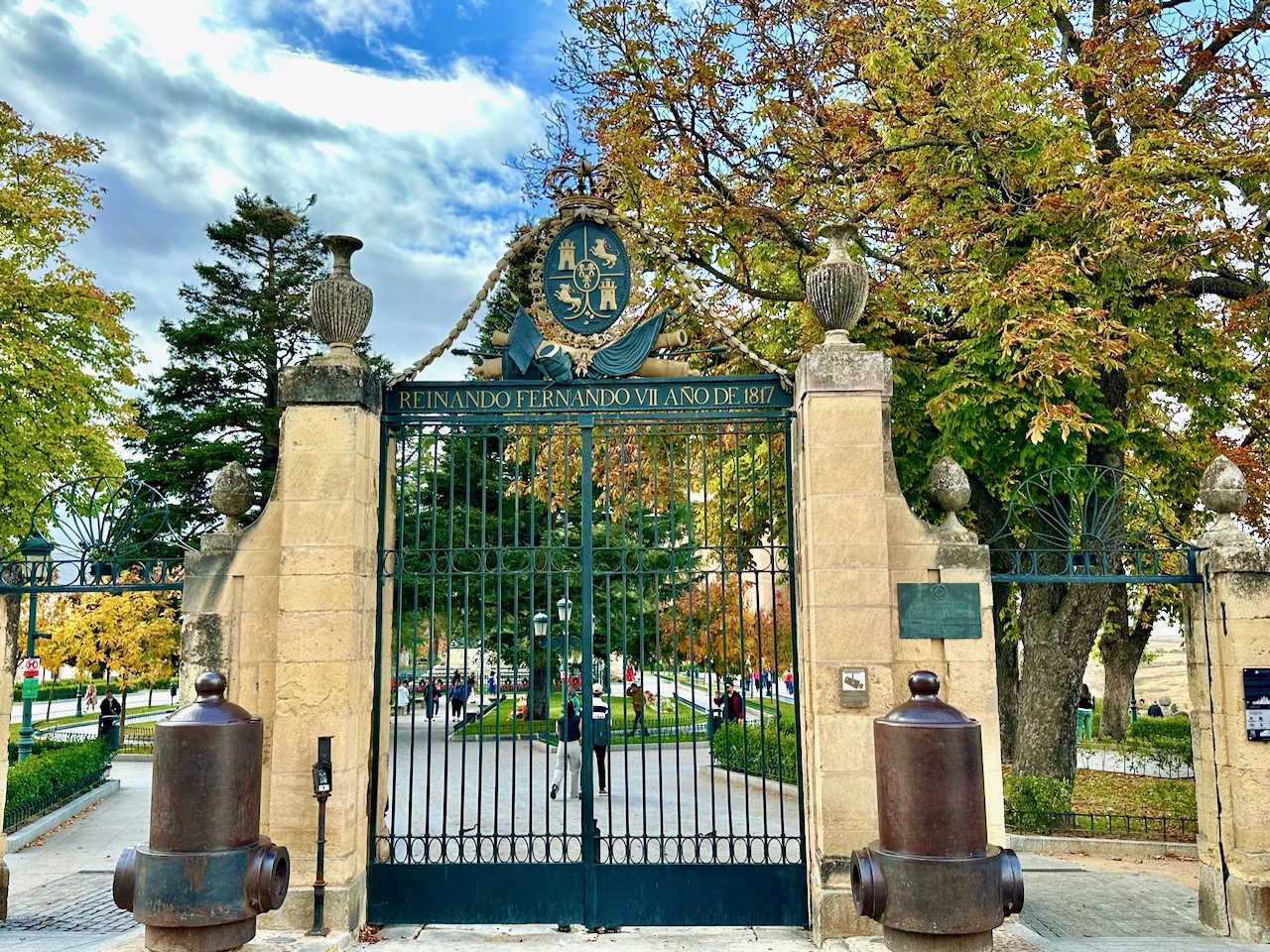
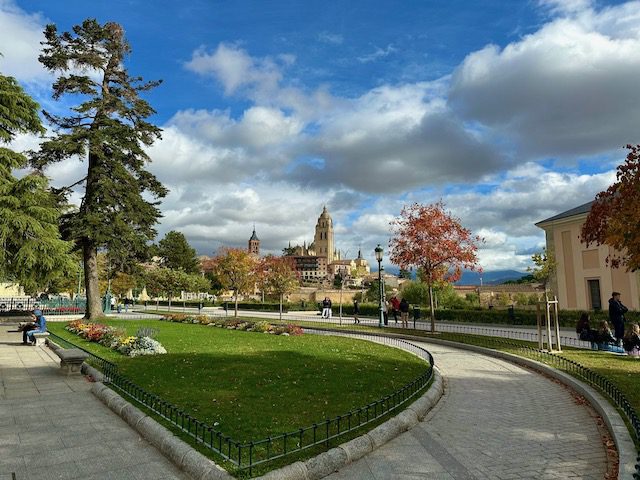
The Plaza de la Reina Victoria Eugenia, which was named after the wife of Alfonso VII, is a beautiful area to stroll, and many people were doing just that. The views back toward town and the cathedral were fantastic, especially with the leaves alerting us autumn had arrived.
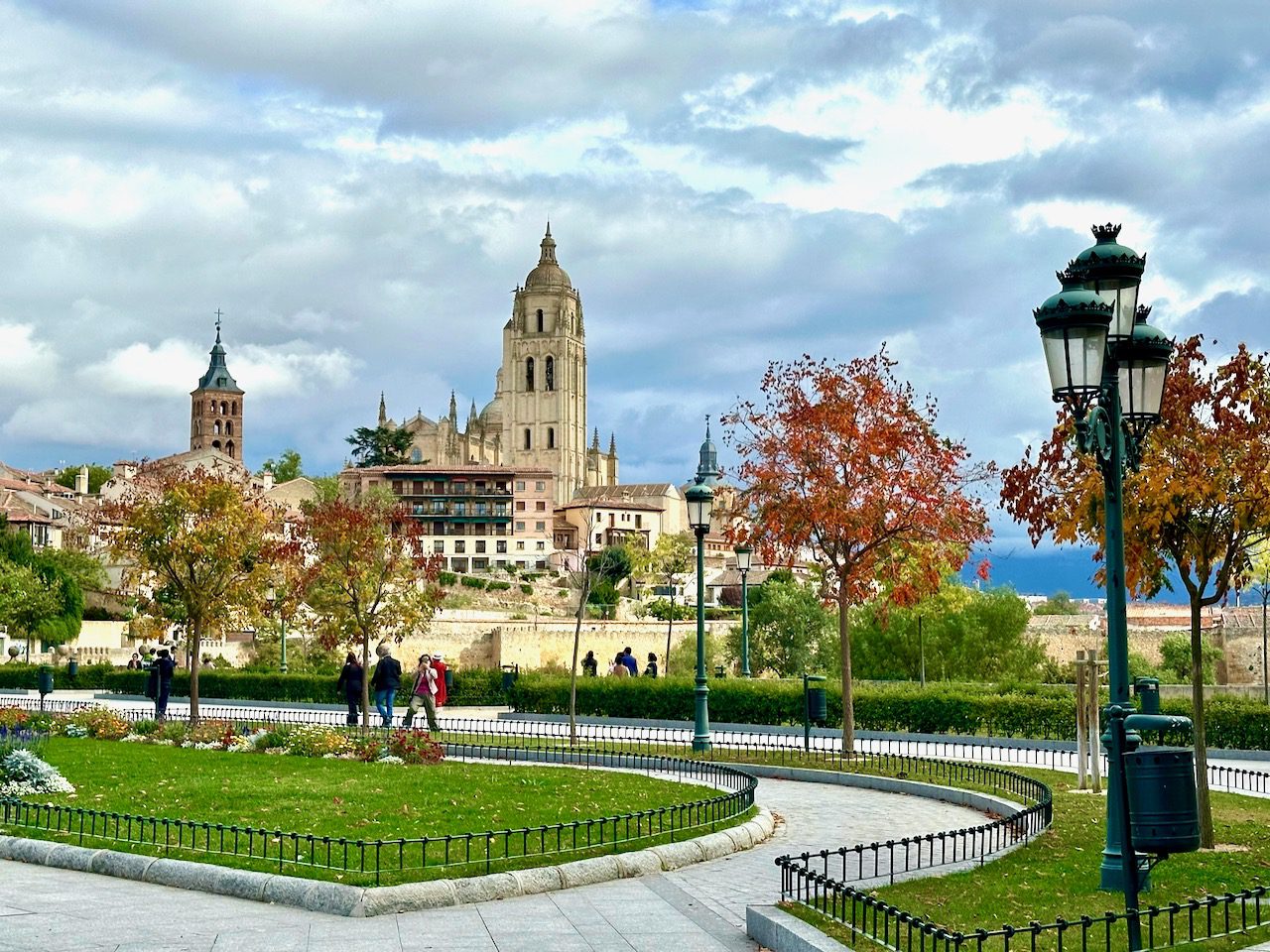 There were also views over the valley.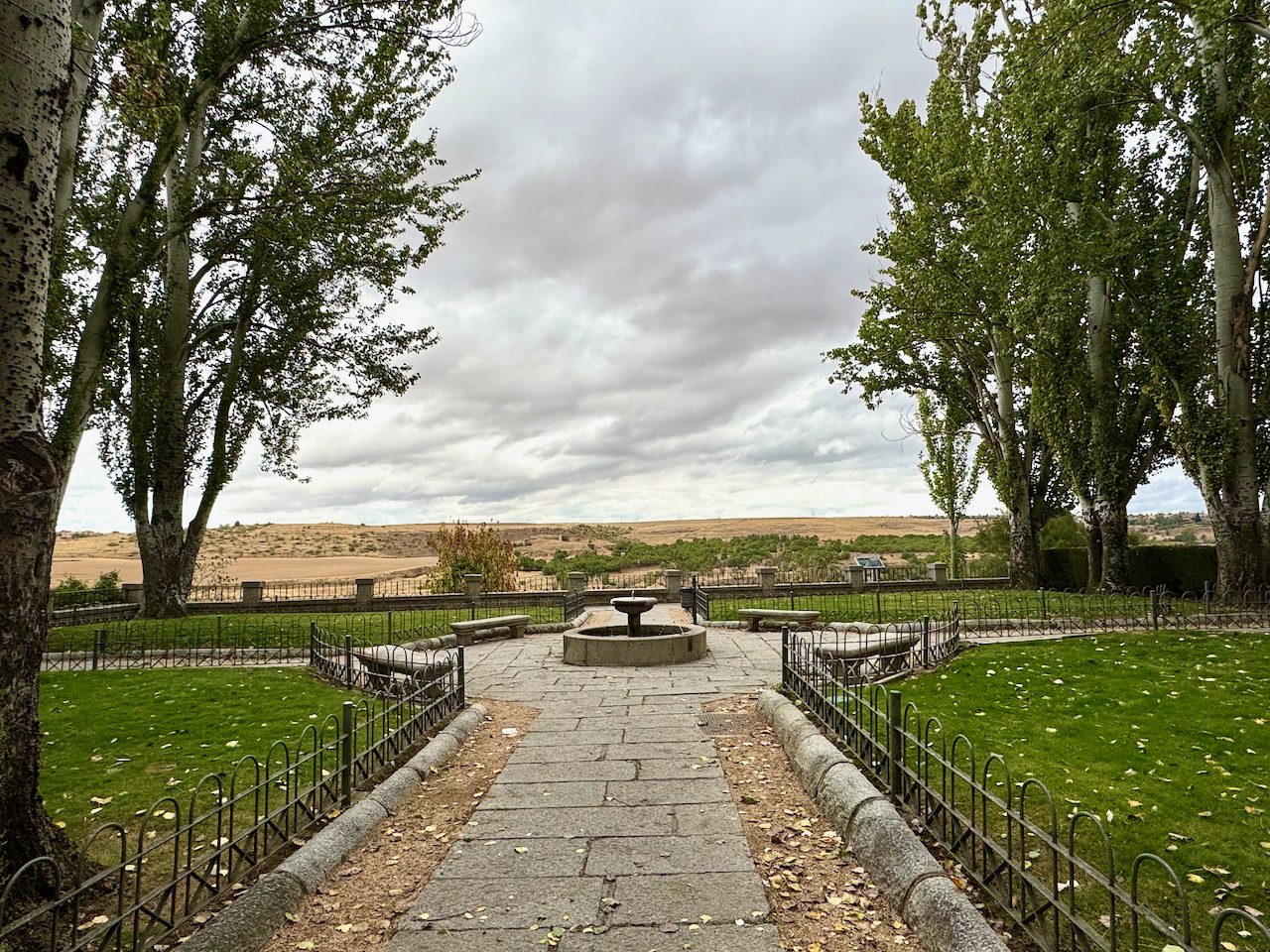
In the plaza is the 1910 Monument to Daoiz and Velarde. Spanish artillery captains Luis Daoíz and Pedro Velarde died fighting for Spanish independence during the 1808 uprising against Napoleon.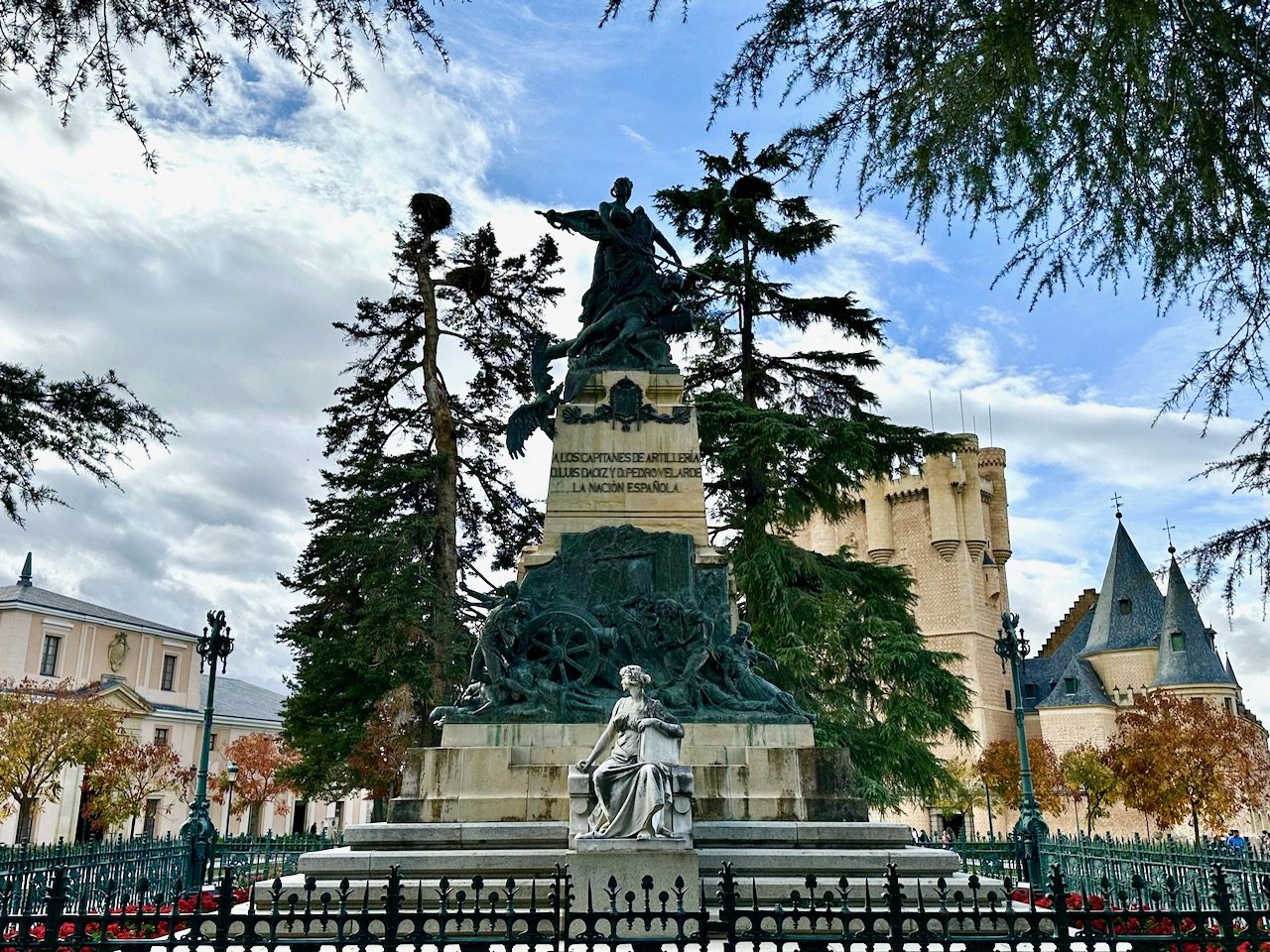
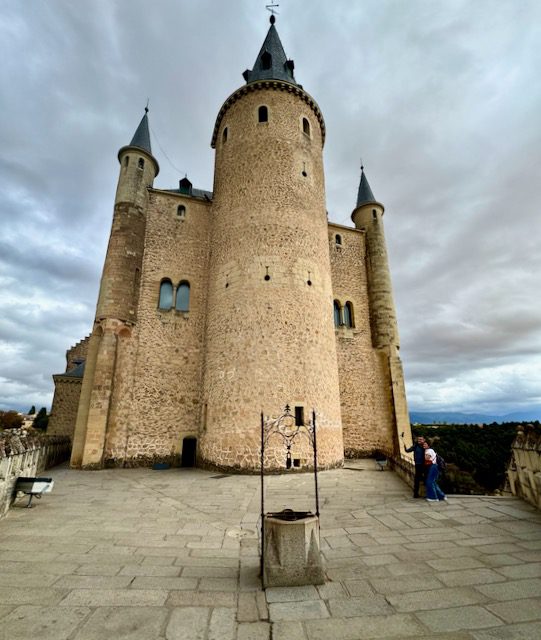
In front of us loomed the imposing medieval castle, Real Alcázar de Segovia, which has has been utilized through the centuries as a royal palace and a fortress for the Castilian monarchs. It was constructed in the 12th-century, but after a fire in 1862, it was rebuilt in the form of a “storybook castle of 16th-century Northern Europe.” The Tower Of Juan II loomed large.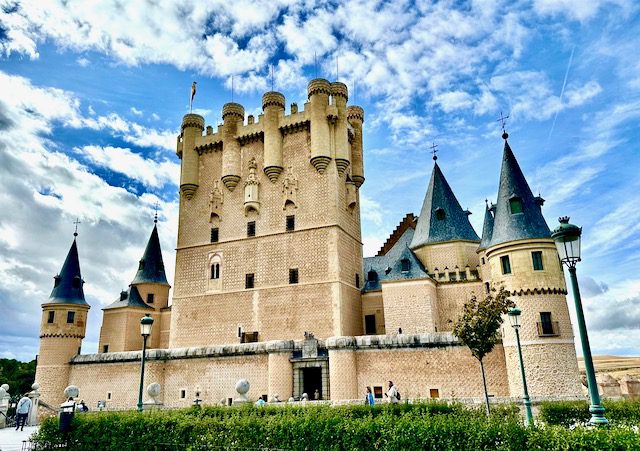
It’s so storybook-like that it is said it is “famously recognized as one of the inspirations for the castle in Disney’s Snow White and the Seven Dwarfs.” Being both Happy and Sleepy, Tracy and I entered.
Ceramic tiles depict a historic map of Spain and Portugal, complete with “traditional nautical illustrations, including galleons in the Atlantic Ocean and Mediterranean Sea.”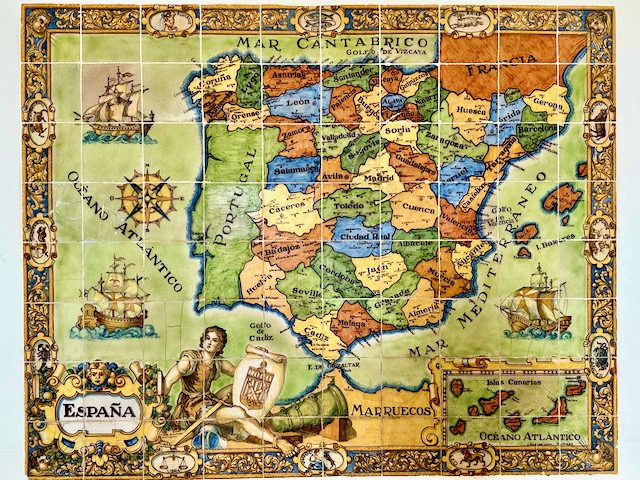
Although still daytime, we were wished a good knight.
Long live the Queen and King with the two thrones for Queen Isabella I of Castile and King Ferdinand II of Aragon. Above the thrones is the royal motto “Tanto Monta,” signifying that the King and Queen had equal authority. 
The Mudejar ceiling in the Throne Room is magnificent.


As is the stained glass window.


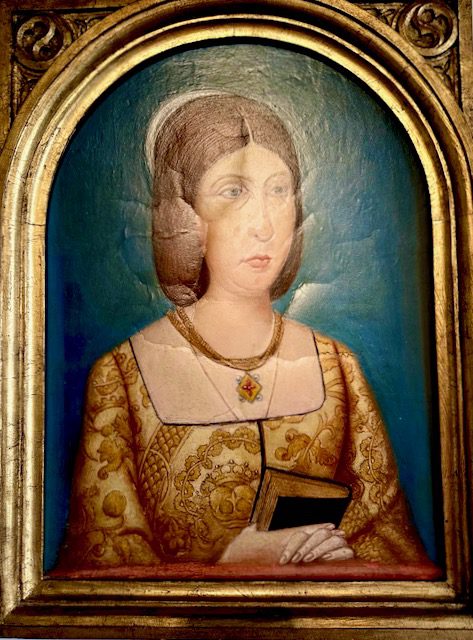
There are also portraits of Isabella and Ferdinand.


Ahoy mates. We’ve entered the Hall of the Galley, named because the ceiling resembles an upside-down hull. The mural depicts the coronation of Queen Isabella.


The stained glass representing Spanish monarchs dazzled.
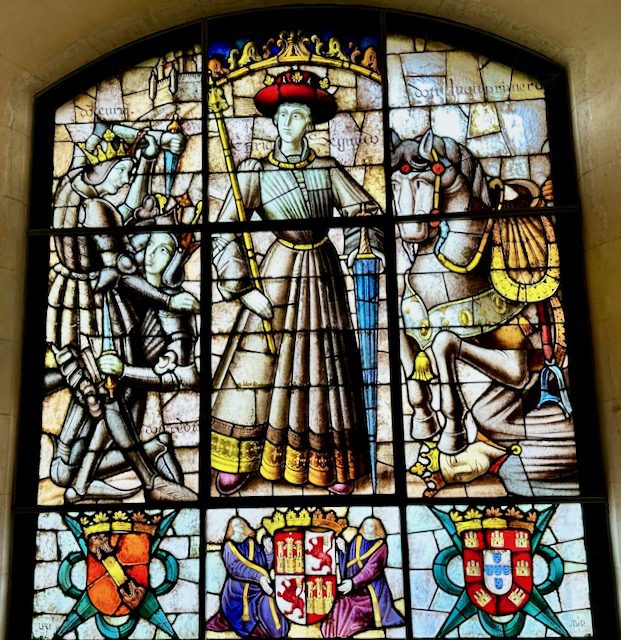


We stopped by the King’s Chambers.


The Hall Of Monarchs (aka Sala de Reyes (Hall of Kings) was commissioned during the reign of Alfonso X El Sabio (the Wise).
Check out the frieze of 52 polychrome statues of Kings and Queens of Asturias, León, and Castile.


It is not a documented fact that Don Enrique de Lorena, the Count of Portugal (l) was the first person to be seen man-spreading in public.


Next up was the red and gold striped walls of the Sala del Cordón (Belt Room). The name originated from the golden Franciscan cord or lace that wraps around its walls. From here we could look outside toward Iglesia de la Vera Cruz (Church of the True Cross), which was consecrated in 1208.


The stained glass window features King Alfonso VI on the left and Bishop Pedro de Agen.

Also in this room is a panel with Santa Lucía, Santa Barbara, San Pedro and San Pablo, along with a painting of Isabella.

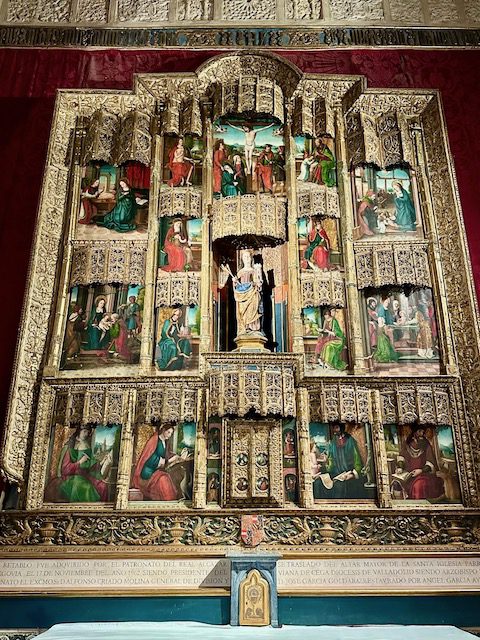
One of the oldest parts of the Alcázar is the chapel, which hosted the marriage of King Philip II to Anna of Austria in 1570 and has a 16th-century Castilian school altarpiece Retablo de la Pasión (Altarpiece of the Passion).

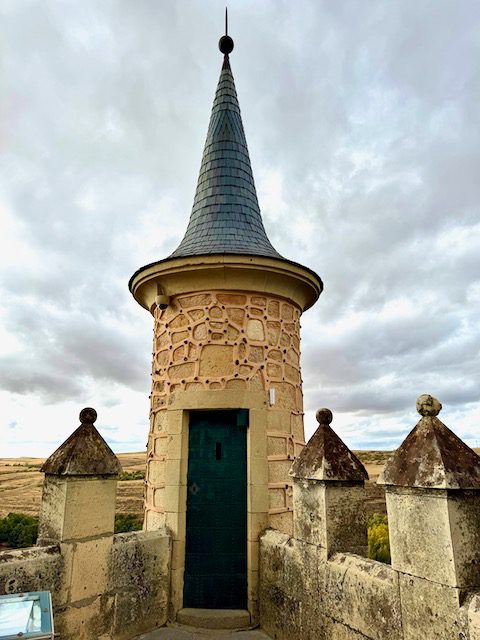
We ventured up to the Tower Of Juan II.
From there, we looked down on the maze that really isn’t a maze, but more of a decorative formal garden.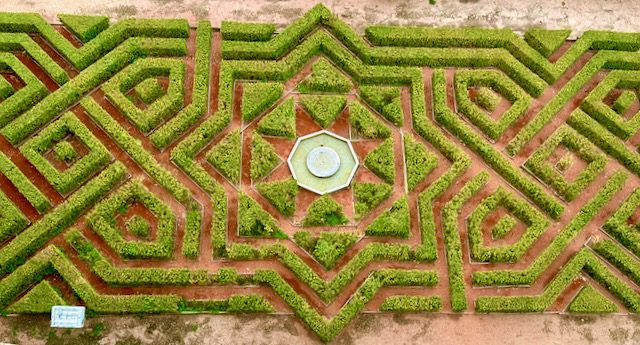
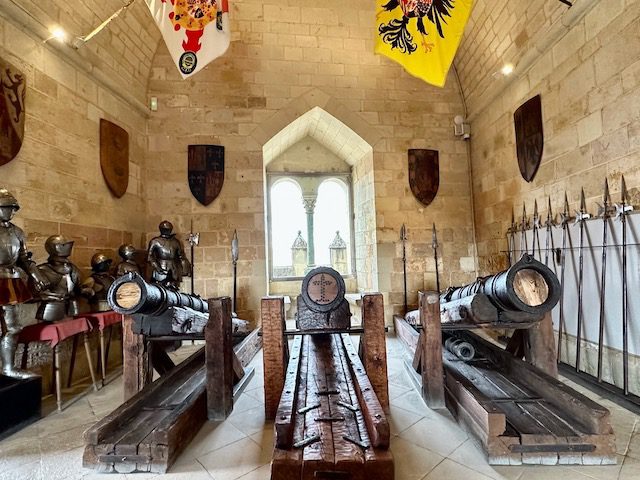
We passed through the armory and finally the courtyard.
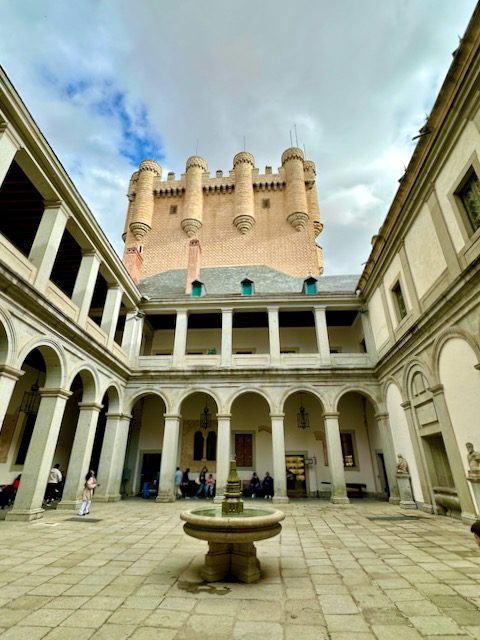
I could see why Alcázar de Segovia is one of Spain’s top places to visit.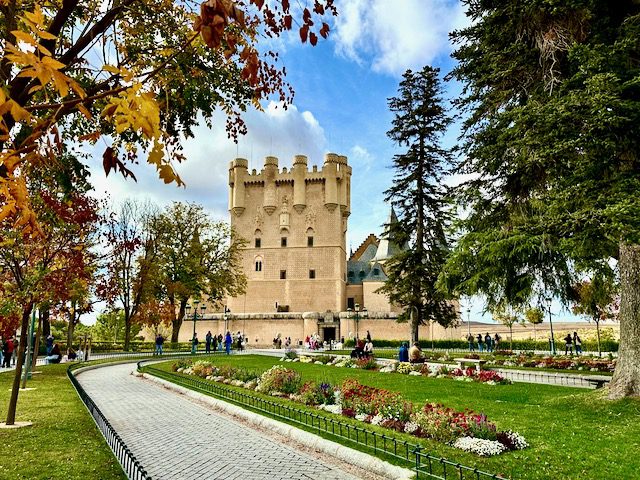
We spent some time just strolling around Plaza de la Reina Victoria Eugenia soaking up the surrounding views and very pleasant autumn weather.

Walking back to town we passed by Iglesia de San Andrés (Church of Saint Andrew), a 12th-century Romanesque-style Catholic temple located in the Plaza de la Merced. It had locked its doors knowing we were in the vicinity.
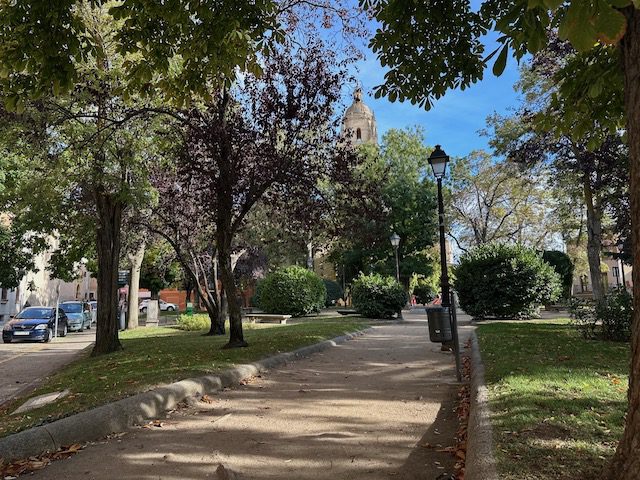
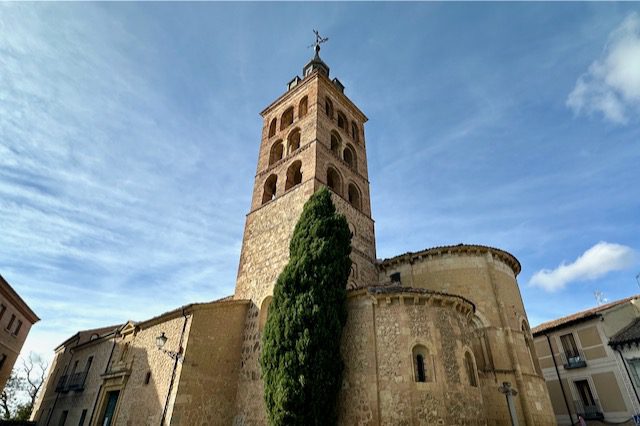
We passed by the bronze statue of renowned Spanish poet Antonio Machado honoring his life and time spent teaching in Segovia.
I read lion statues can be found throughout Segovia, many of them feature these lions with long tongues sticking out.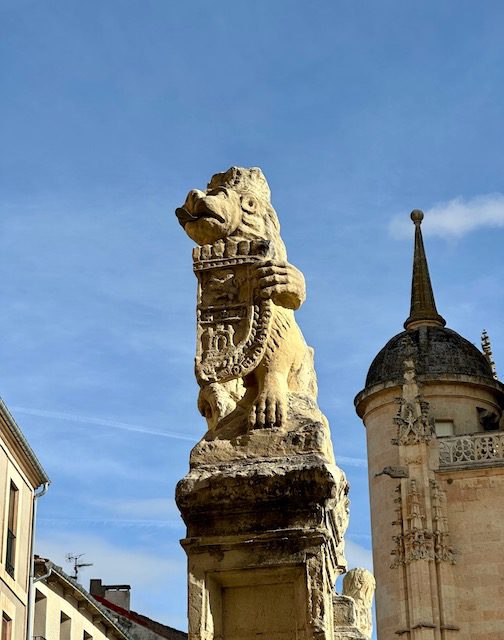
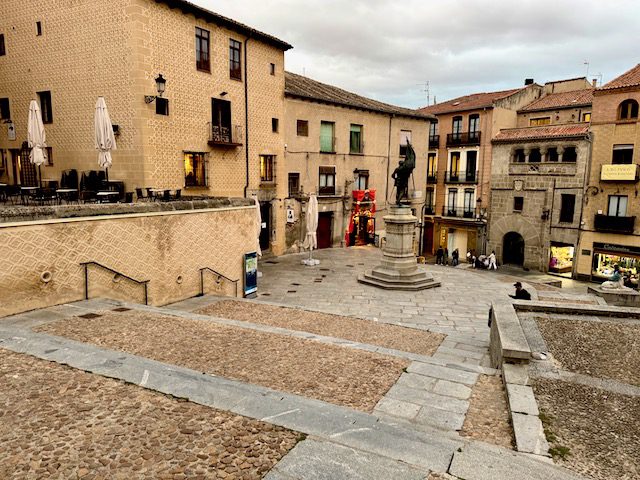
After freshening up for dinner, it was off to a different part of Segovia. Speaking of lions, on the Plaza de Medina del Campo is the 19th century Fuente de los Leones, with two children holding a fish. The plaza is in front of the Church of San Martín.

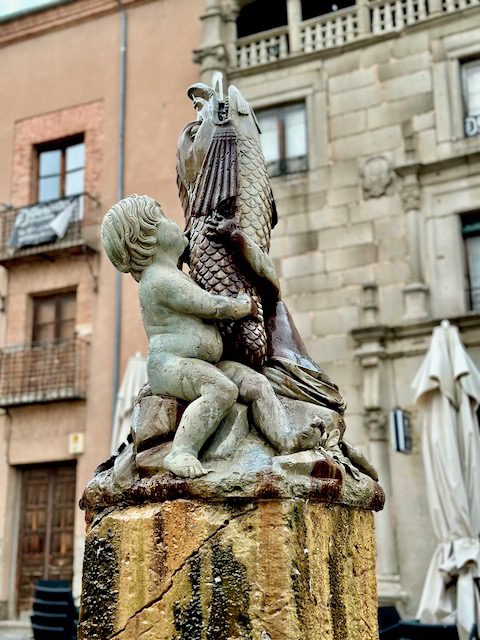
Also in the plaza is the Monumento a Juan Bravo, a bronze statue dedicated to the Castilian nobleman who led a revolt against Emperor Charles V.

As we walked along Calle Juan Bravo we passed by Casa de los Picos, a 5th-century aristocratic mansion, known for its unique façade covered in 617 granite blocks carved into pyramid shapes. I was ready to count them, but Tracy said there were other things we needed to see.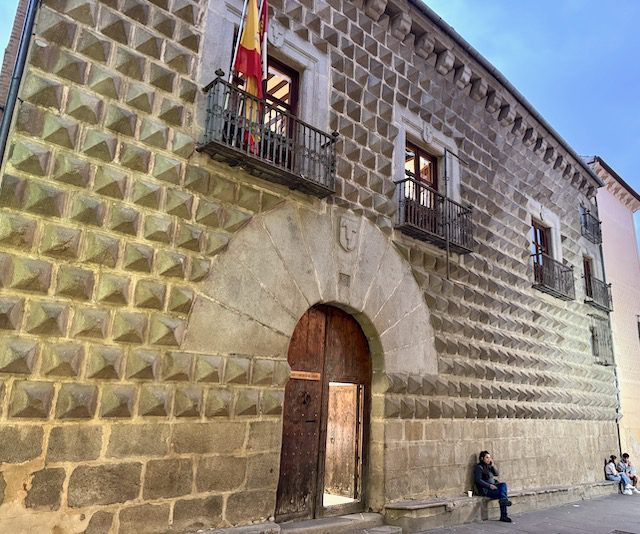
We passed by the restaurant we would dine at later in the evening, Casa Duque, Segovia’s oldest restaurant.


I caught a glimpse of the young lady taking photos of the restaurant. She looked familiar.
We were nearing what is arguably Segovia’s most famous sight.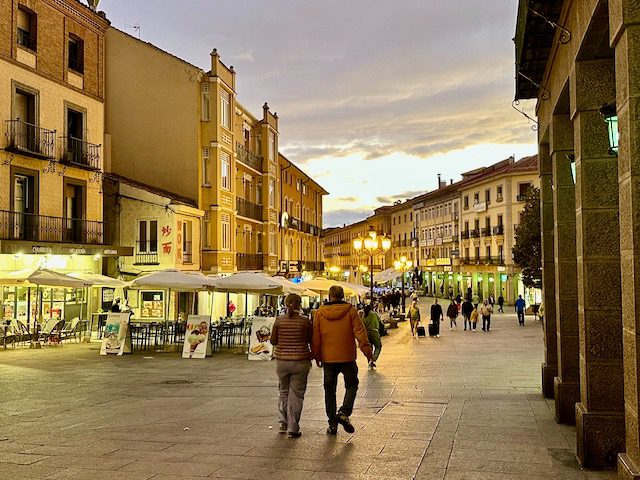
I will admit, we’ve seen many an aqueduct in our travels around Europe, some better than others.
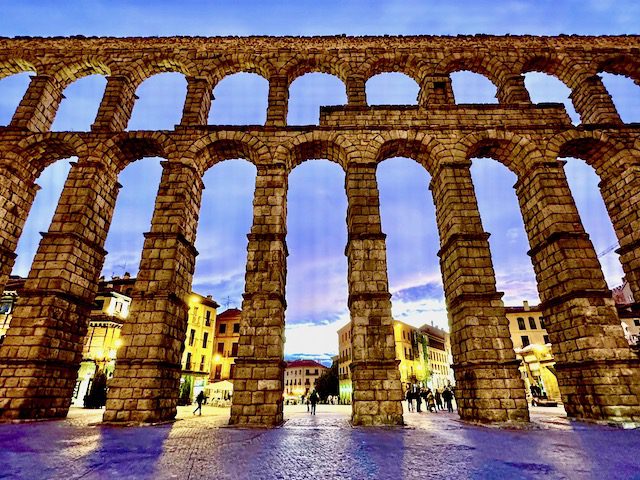
In my opinion, most don’t hold water in comparison to Acueducto de Segovia. I had read about this “monumental structure,” but one doesn’t realize until you get up next to it, just how monumental it is. Its row of 167 arches stretching more than 2,600 feet is constructed from 20,400 granite blocks without using any cement or mortar. Standing in the Plaza del Azoguejo, with the aqueduct towering more than 90 feet above you, is the perfect place to admire this majestic piece of engineering.


Numerous restaurants line the plaza, including the historic Restaurante Mesón de Cándido, sitting very near the mammoth structure.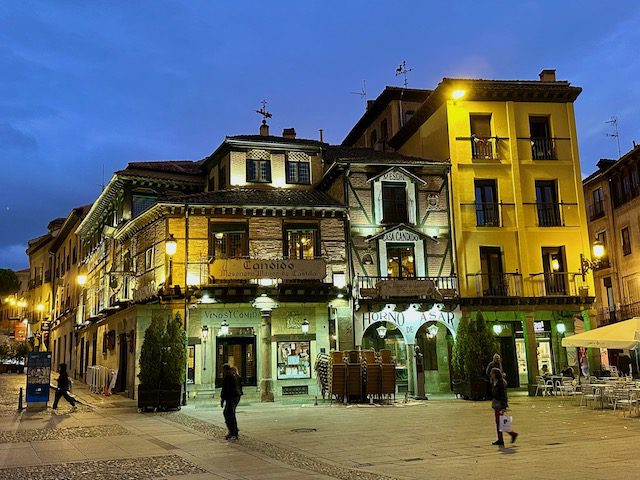
It was impressive to photograph from both sides.
We hung out until the Blue Hour for photos of the more than 2,000-year-old aqueduct (built around 50 AD), which is a UNESCO World Heritage site.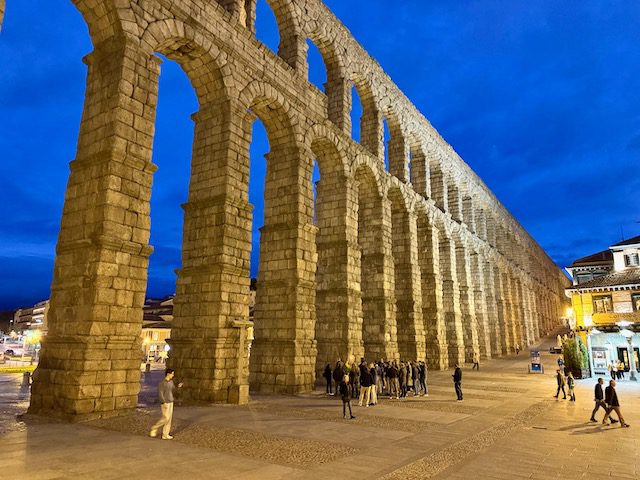
A pretty amazing sight indeed!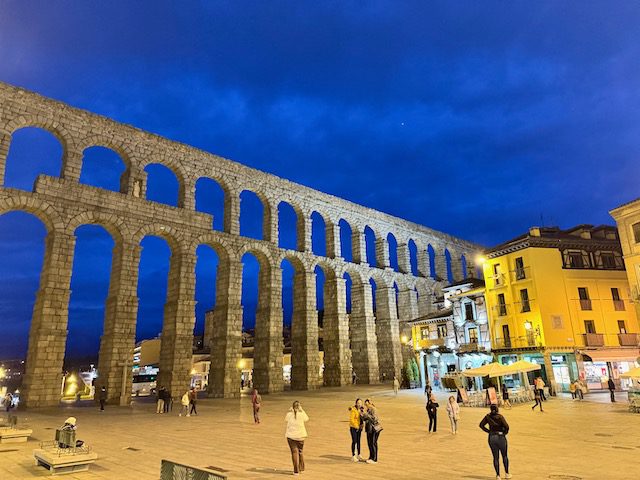
Our reservation for Casa Duque was still about 20 minutes away, so we stopped into a nearby tapas place to have our usual pre-meal of extra food. I love Spain, and thank heaven we walk six to ten miles per day on vacation.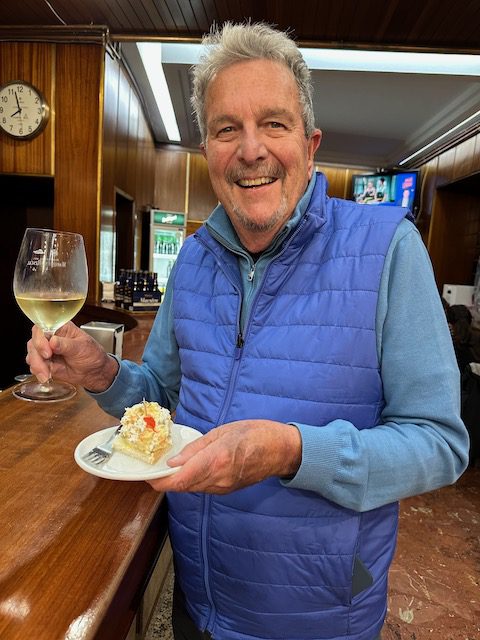
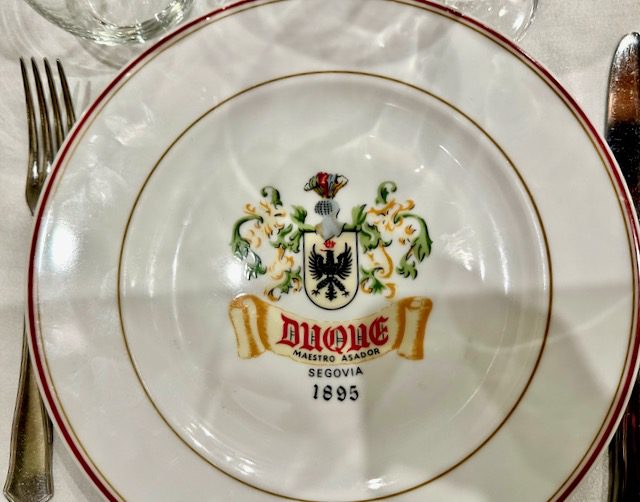
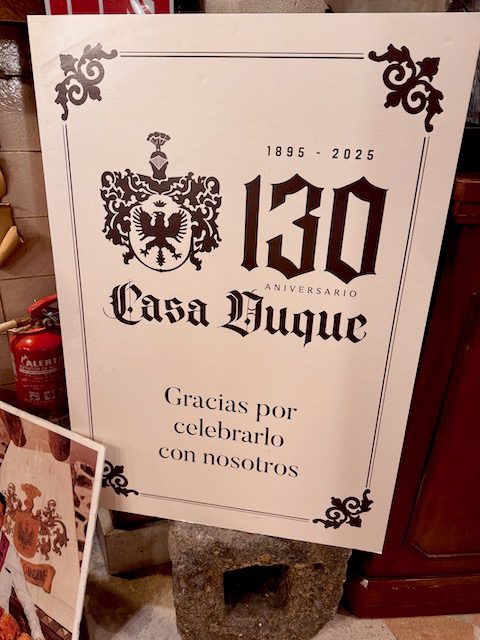
Casa Duque (Calle Cervantes, 12) has been serving wood-fired dishes since 1895, and is on the fourth generation of this family run restaurant. Our server told us he was the grandchild of the founders.
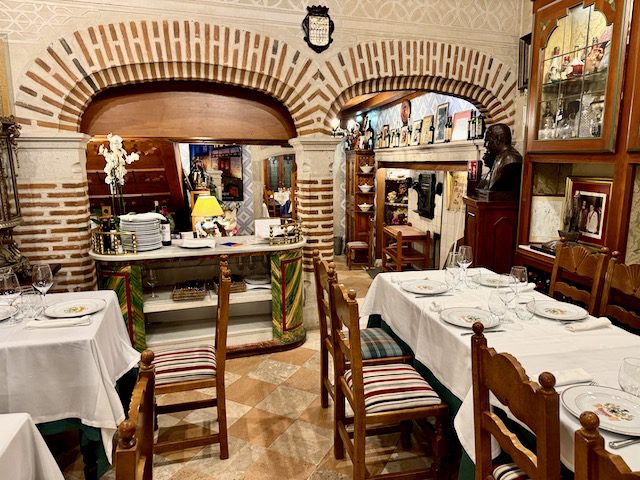
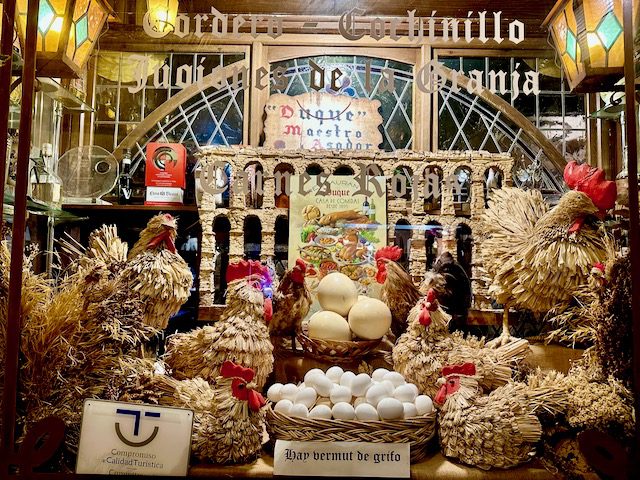
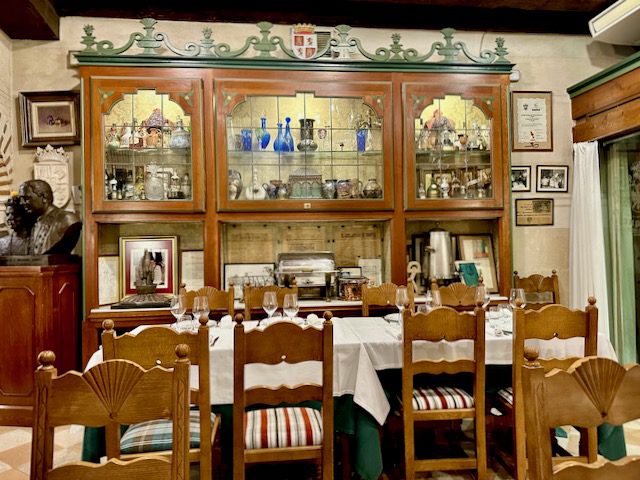
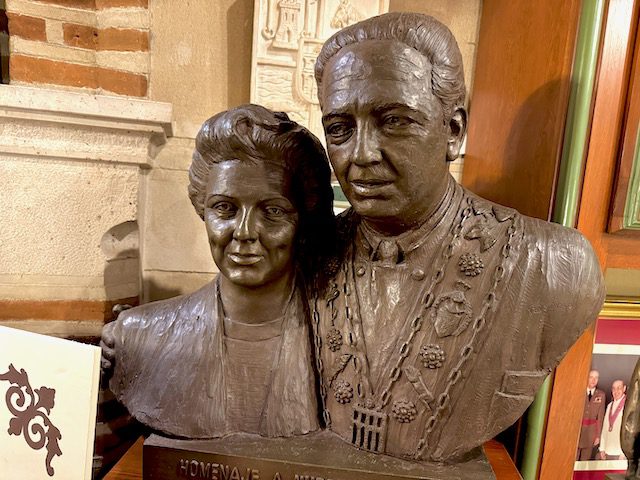
The restaurant’s interior is cozy and decorated with family photos and memorabilia.
We started out with a Casa Duque specialty, Croquetas de gambas al ajillo (garlic/prawn croquettes), which the server said his grandmother made for his birthday and then added to the menu.
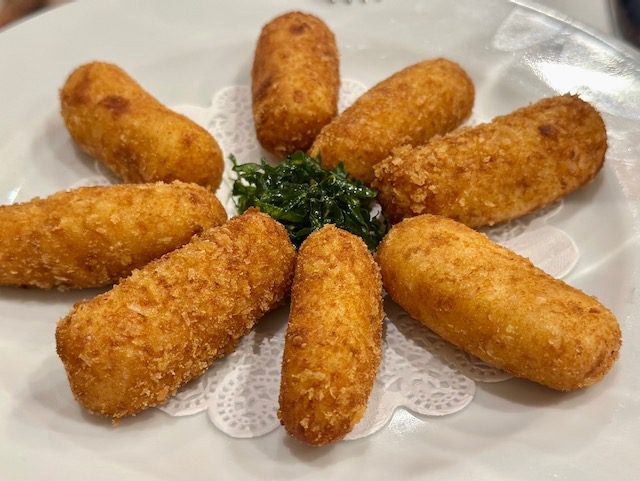
Our server was terrific throughout the evening regaling us stories about the restaurant and its history. His grandmother’s recipe is a winner.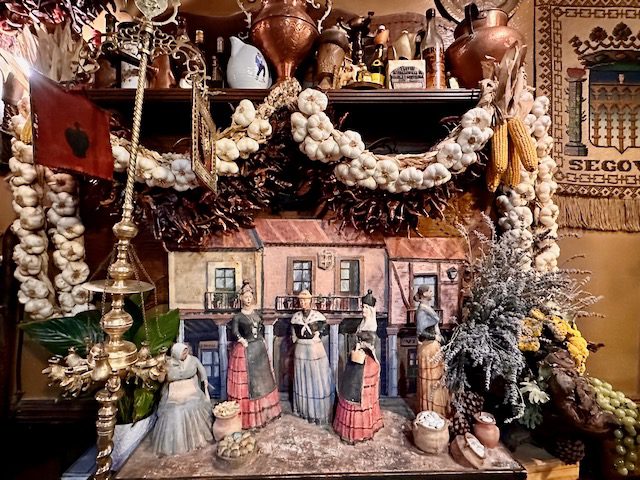
Casa Duque serves Segovia’s (and the restaurant’s) most famous dish, roasted suckling pig, which we both ordered. Tracy did, however, say that we did not need to see the entire pig as we are averse to knowing who we’re eating. The dish was good, however, like the suckling lamb a few evenings before, it was not really our favorite dish. Dessert was delicious as was the Spanish red wine from Rioja, Spain’s premier wine region.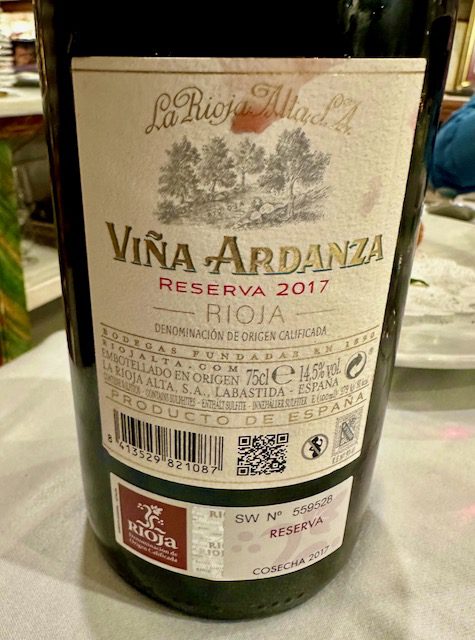
We thought about an after dinner libation, but we had put in a rather full day of walking, so sleep seemed like the more prudent choice, because by now I was feeling about 130.
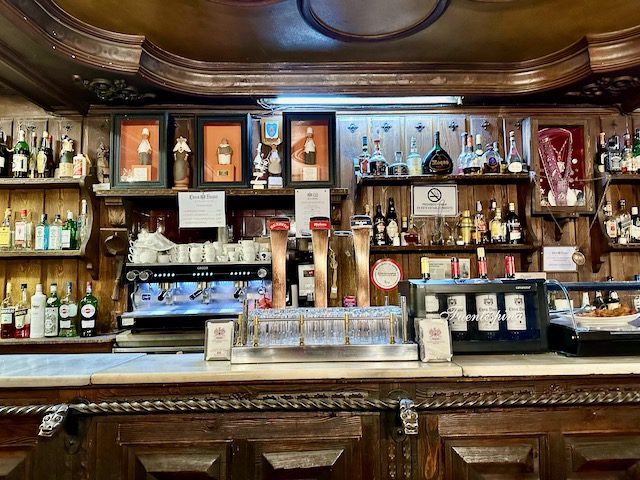
One last day in Segovia.
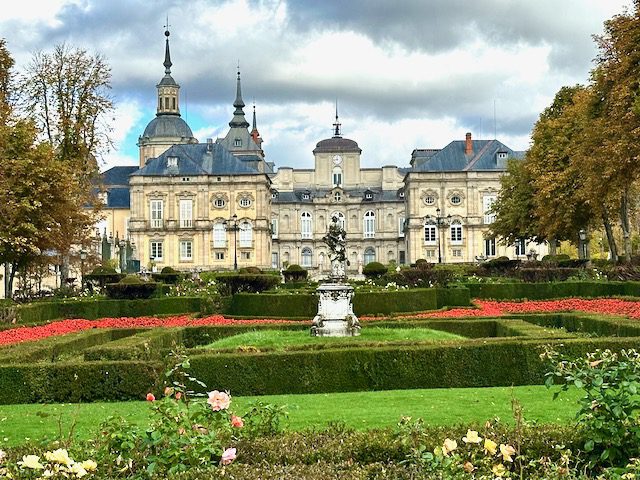
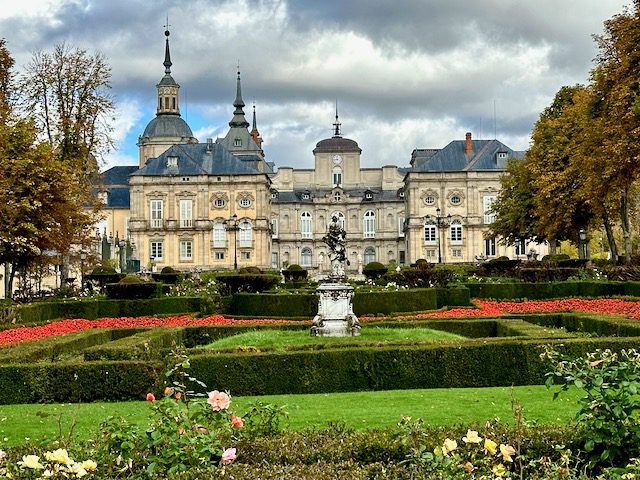 Tomorrow, we’d hail a taxi for the 11 kilometer drive to the 18th-century Royal Site of La Granja de San Ildefonso, Felipe V’s summer palace and gardens decorated with fountains and sculptures. We had a delectable lunch in the nearby town at La Taberna del Pelón. Then we were whisked back to Segovia for one last meander through town. After dinner, a room malfunction signaled it must be time to go home.
Next: Chapter Twelve – Royal Site of La Granja de San Ildefonso
Day Twelve – Retreat For Spanish Monarchs, Modeled After Versailles, Gorgeous Gardens/Fabulous Fountains, One Last Spin Around Segovia and Out Of Lock