Chapter Nine: Just One Of Those Days – On To León
March 6, 2026
Chapter Eleven: Sensational Segovia
April 30, 2026Celebrating España: MaiTaiTom’s Still “Insane For Spain”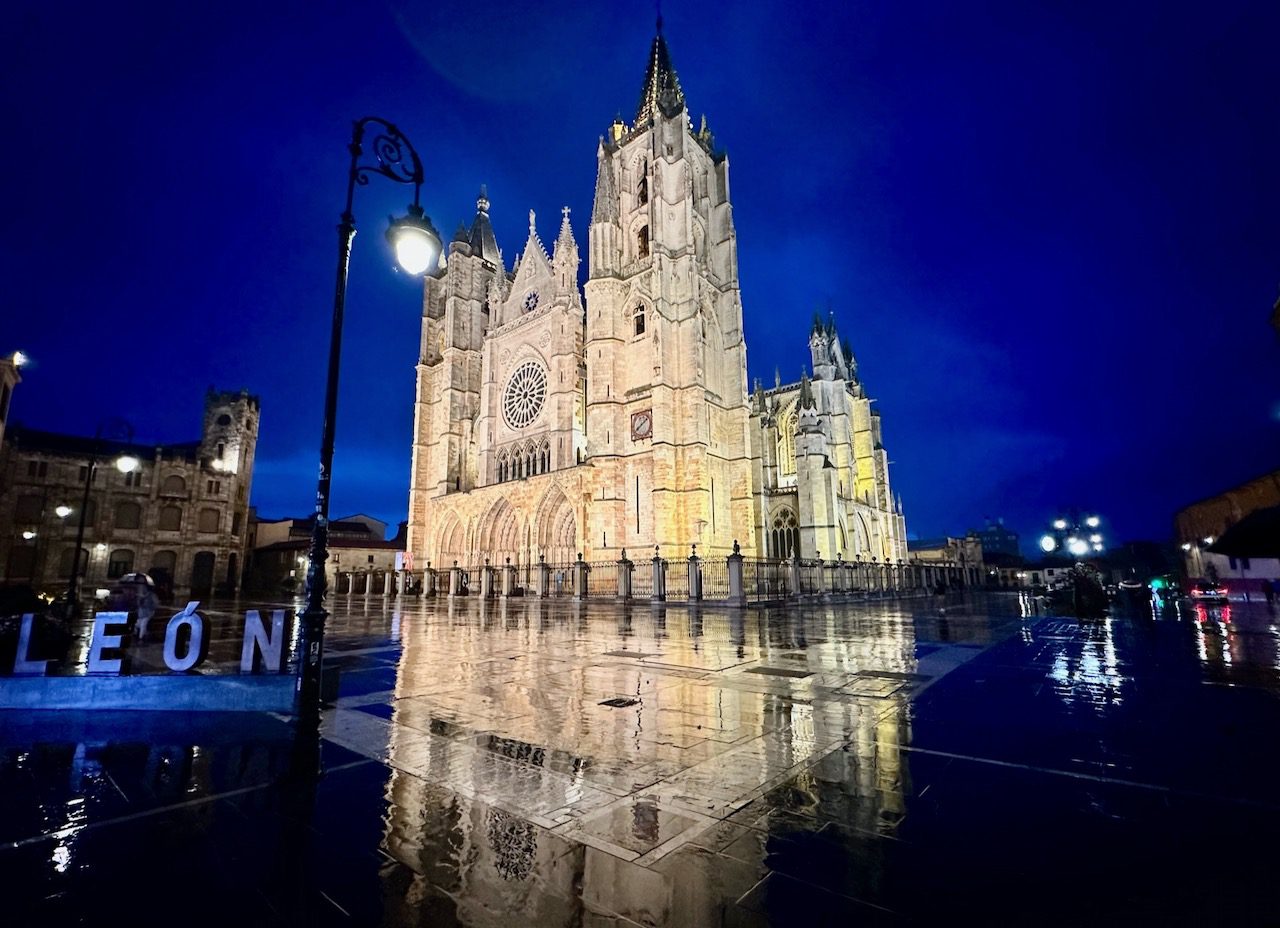
Chapter Ten: A Good Food Day In León
Day Ten – Makes Cents, No “Spanish Sistine” Pictures, I’m Glad She Didn’t Have A Ruler, Upscale Convent, Strolling the Gran Via, You Can’t Beat This Barrio Spot, Germs Be Gone In León’s Oldest Pharmacy, More Tapas Please, Hold The Phone and A Rainy Night In León
As we all know, the best way to start the day is with a healthy breakfast. Unless, of course, you’re on vacation.
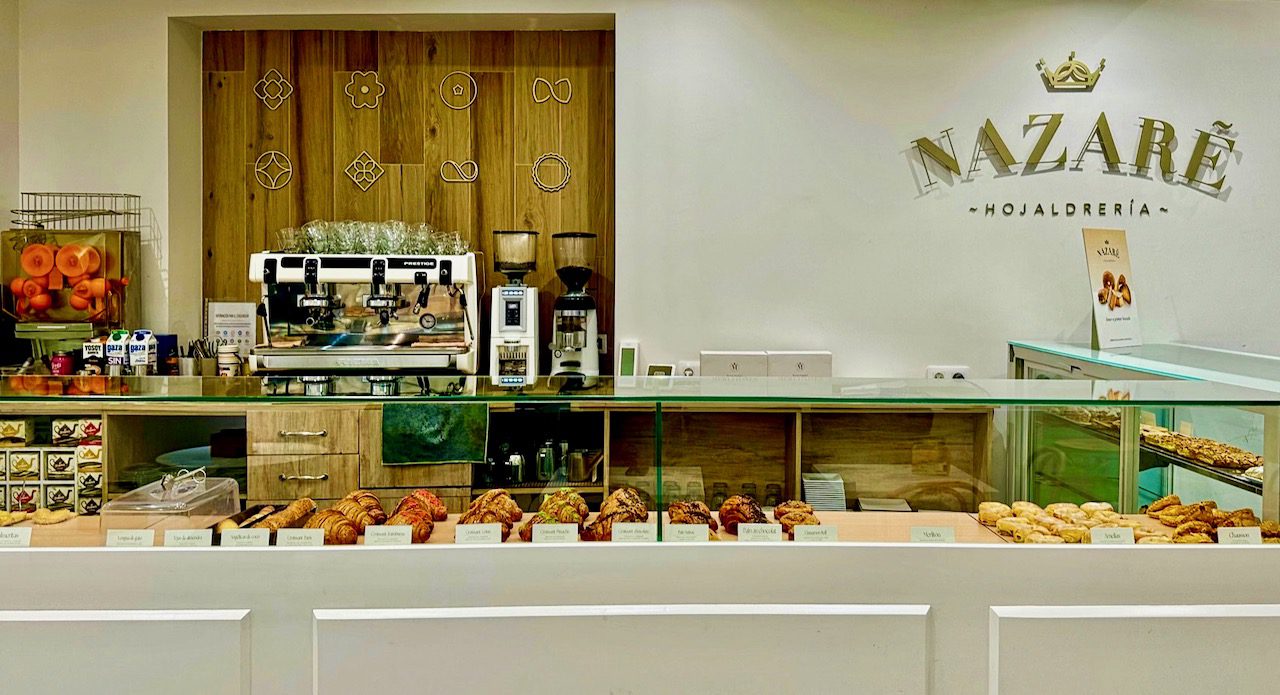
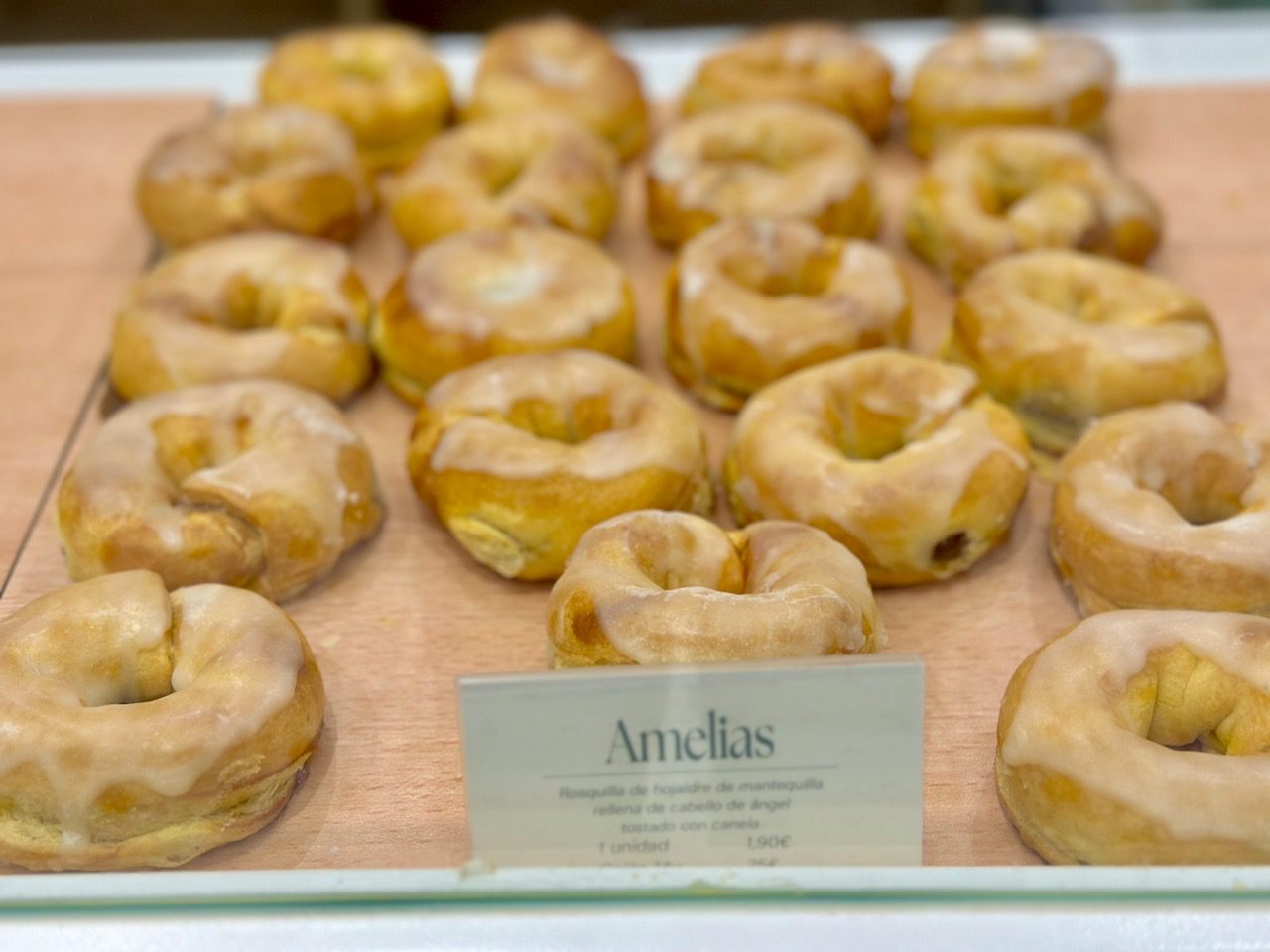
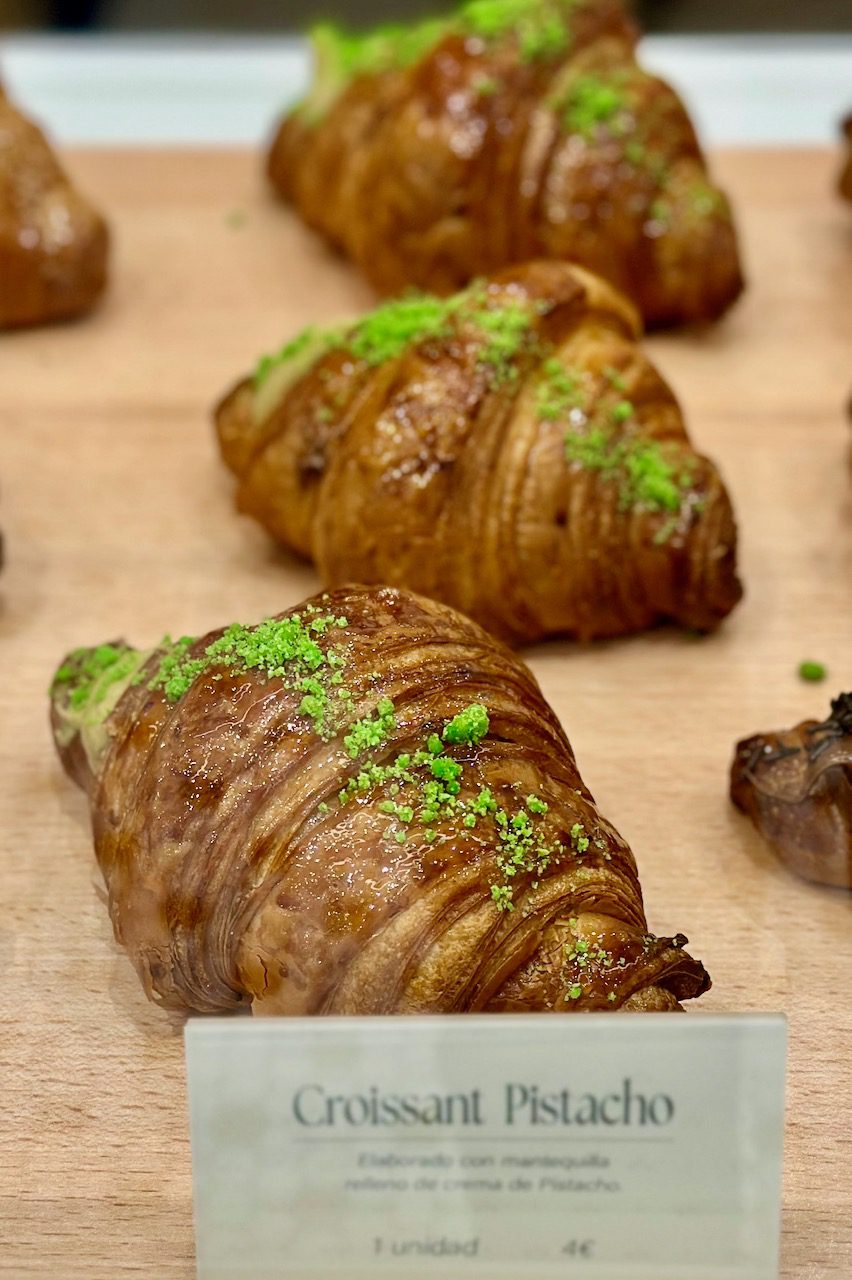
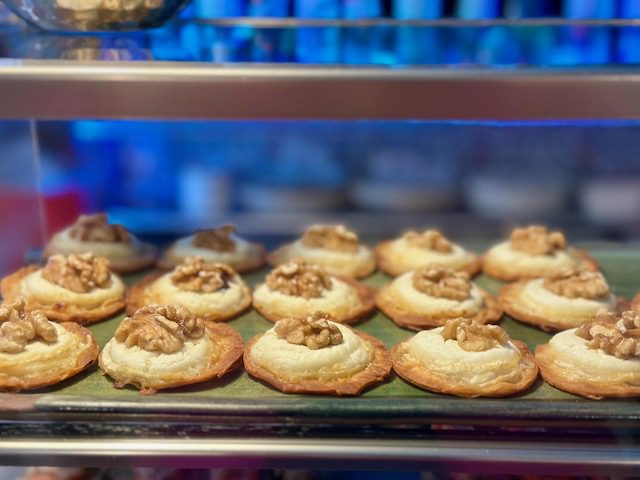
Instead we opted to duck into Nazaré Hojaldrería, a place well known for its buttery puff pasties and sweet delights. It made for a tasty way to begin our second and last day in León.
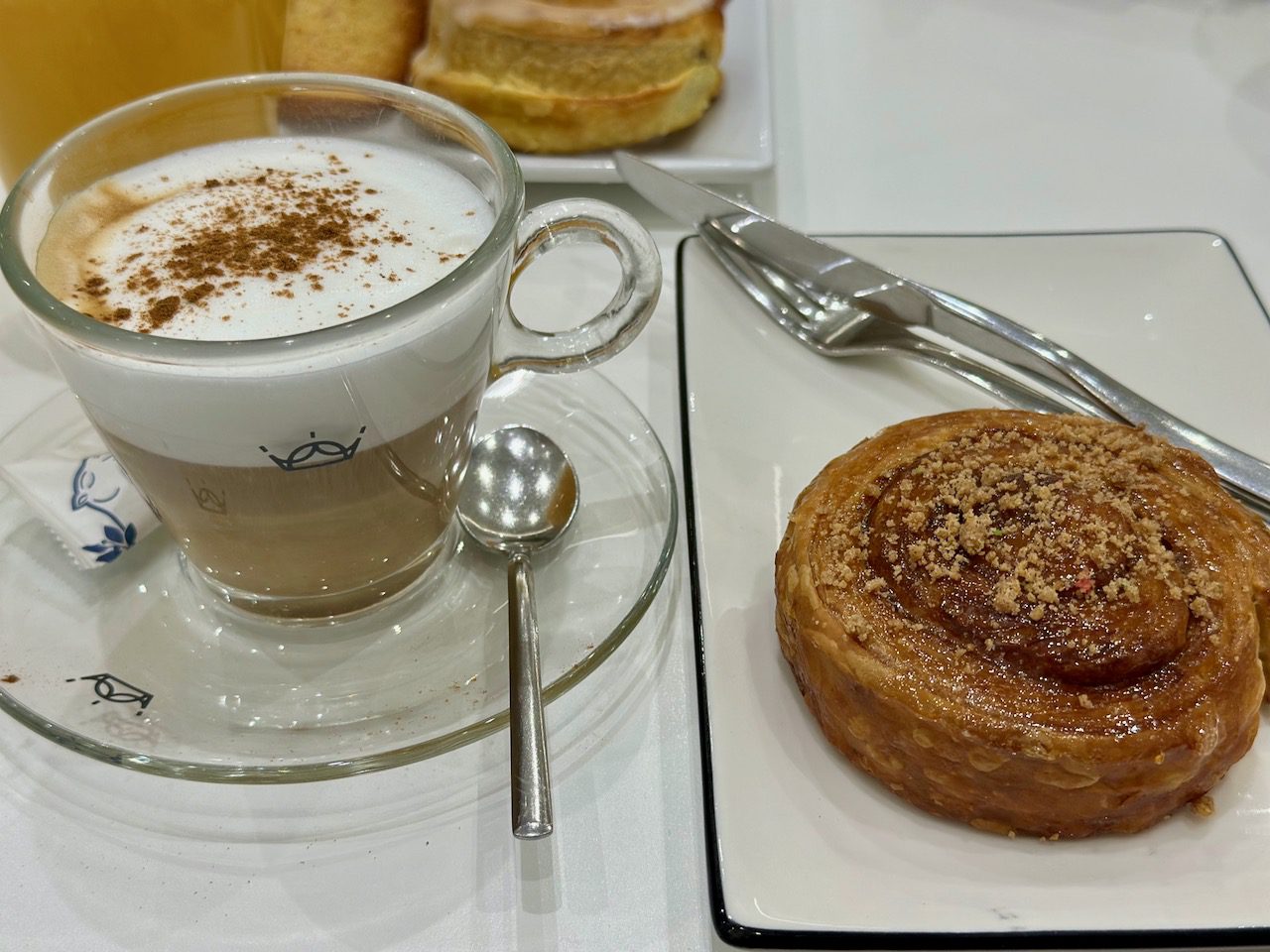
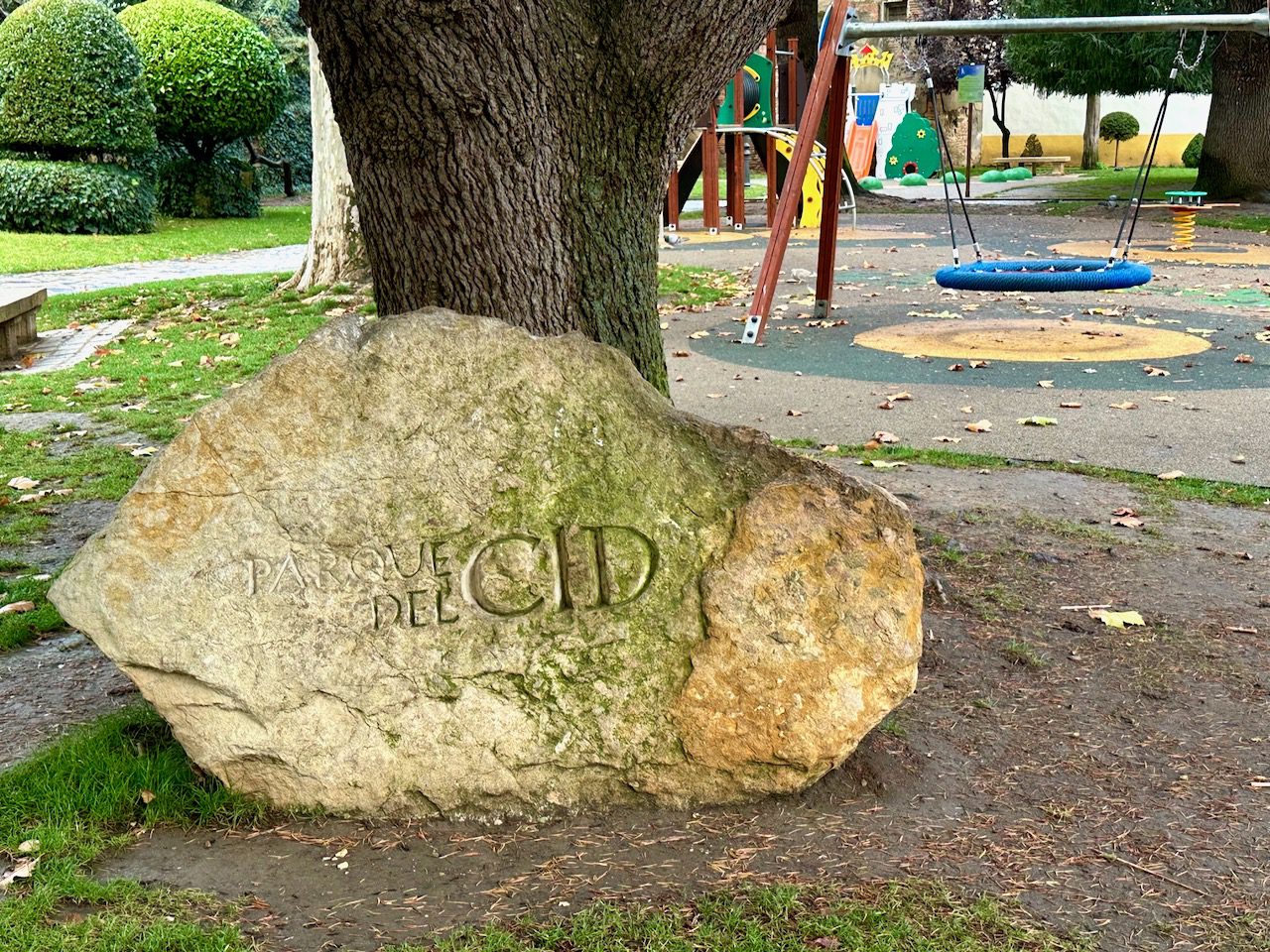
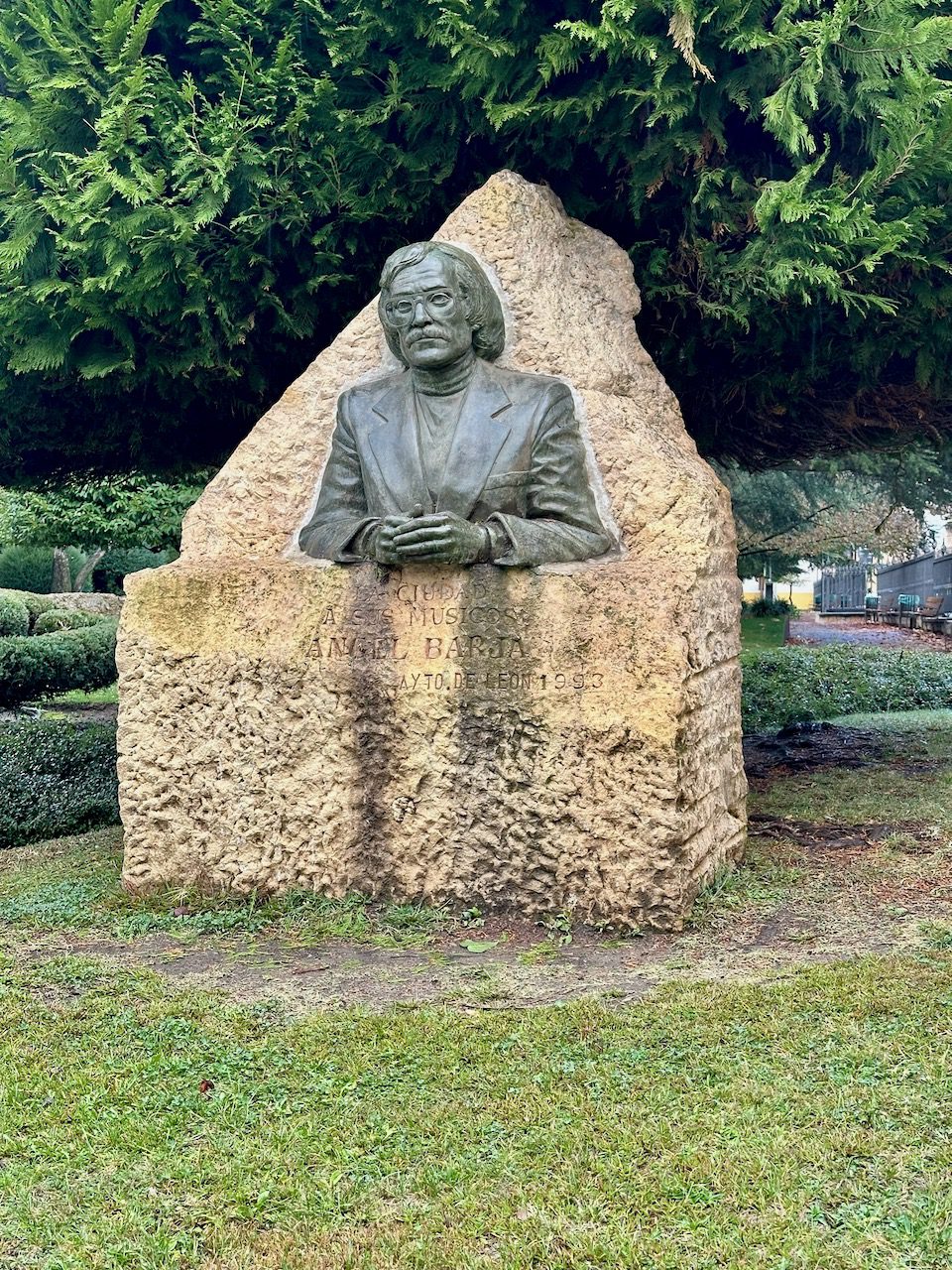
As we walked toward our first stop of the day, Real Colegiata de San Isidoro de León, we passed by Parque del Cid (aka Jardín del Cid), located near Gaudi’s Casa Botines. We saw the bronze bust dedicated to Ángel Barja, a prominent 20th century Spanish composer and musician.
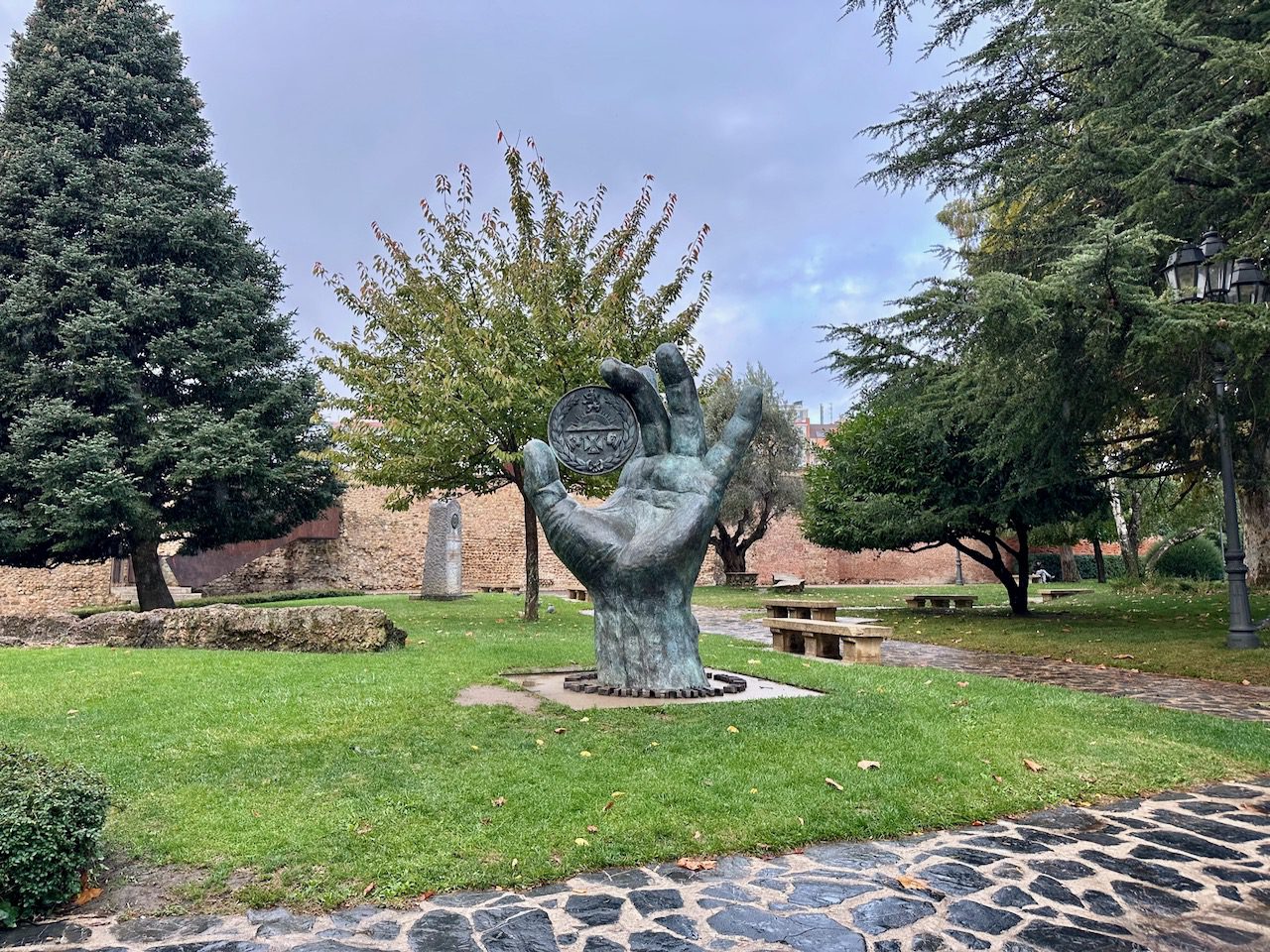
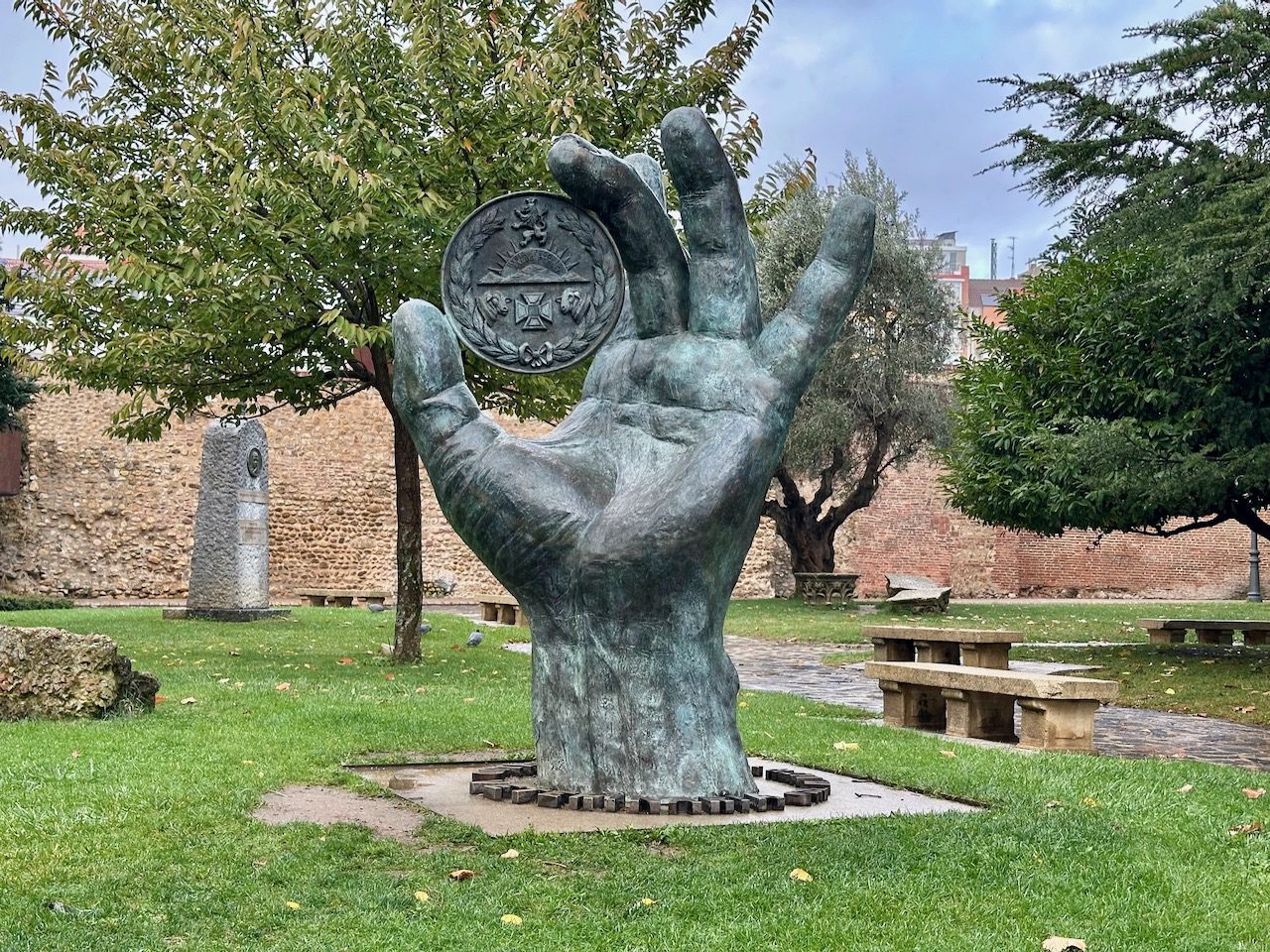
It was hard not to miss a sculpture of a giant hand holding a coin, appropriately named Monument to A Coin. It represents León being a minting city in the Middle Ages, so the sculpture makes perfect cents.
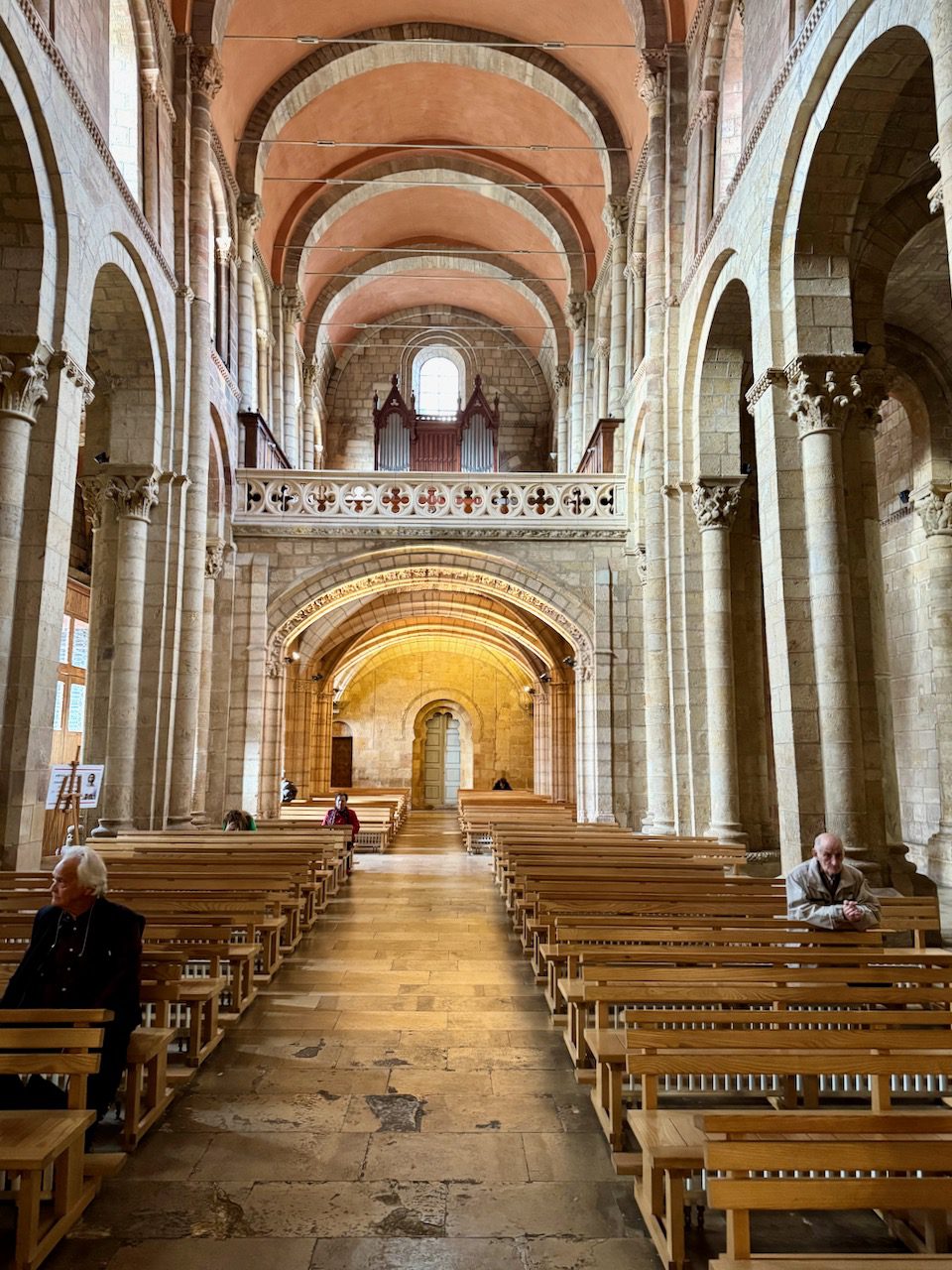
The Real Colegiata de San Isidoro de León (Royal Collegiate Church of Saint Isidore) is considered to be “one of the most important Romanesque monuments in Spain.” The original 10th-century church was renovated a couple of hundred years later. It’s another major stop for pilgrims traveling the Camino de Santiago.
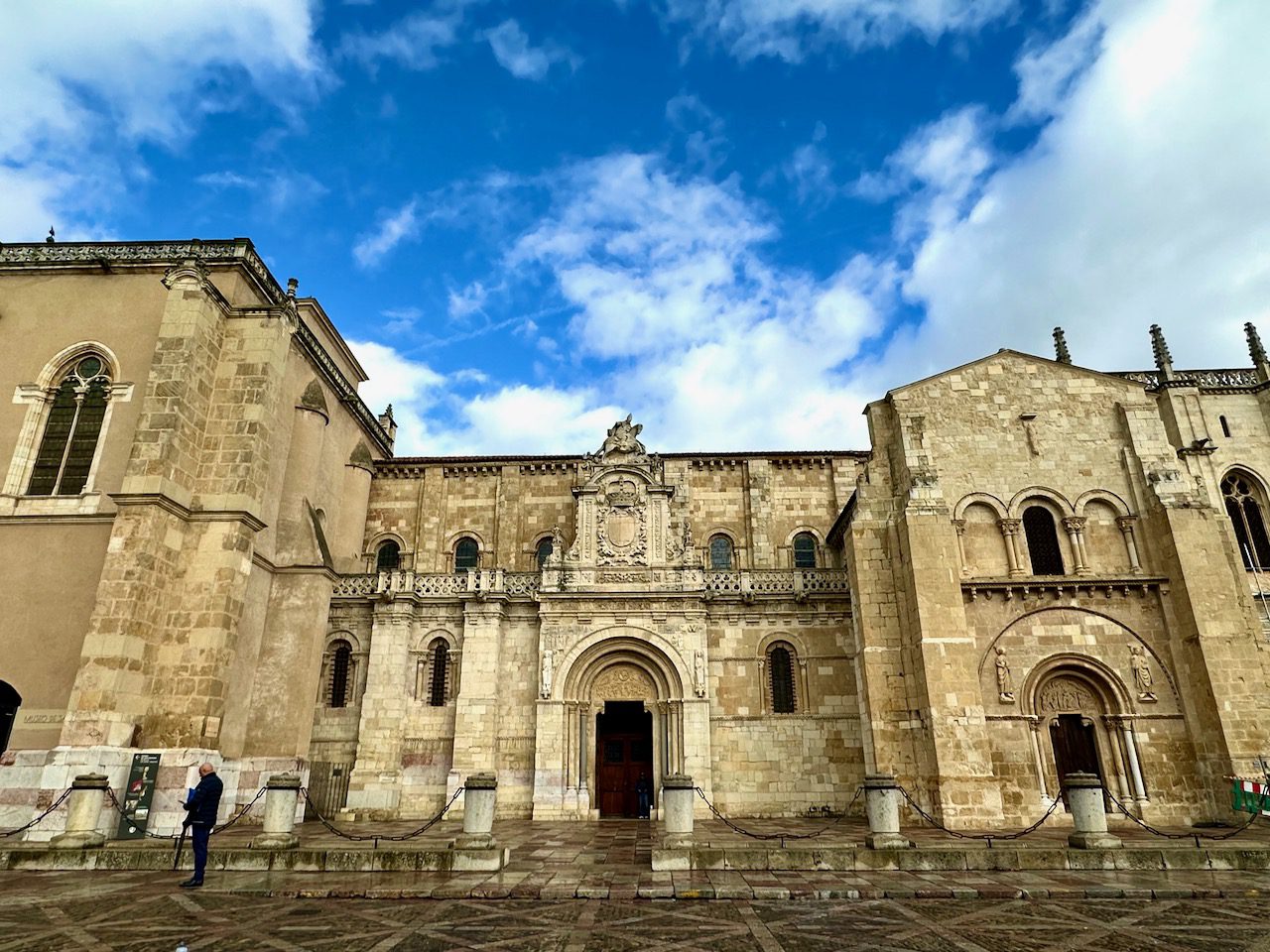
Its 11th-century Panteón Real (Royal Pantheon), which contains the remains of kings, princes and nobles and frescoed ceilings is called “The Sistine Chapel of Romanesque Art.” The Fuente de San Isidoro is located in the plaza directly in front of the Basilica of San Isidoro.
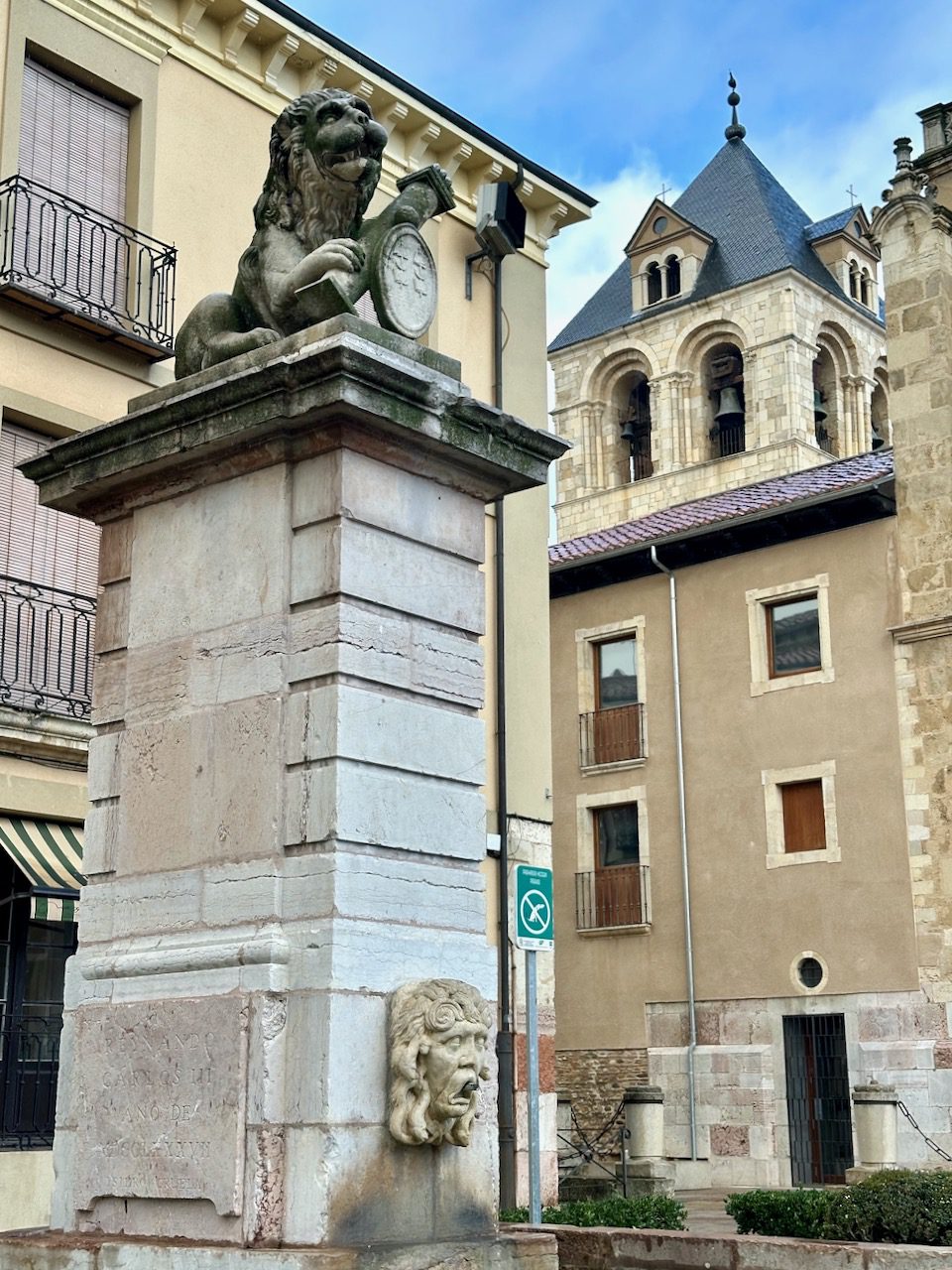

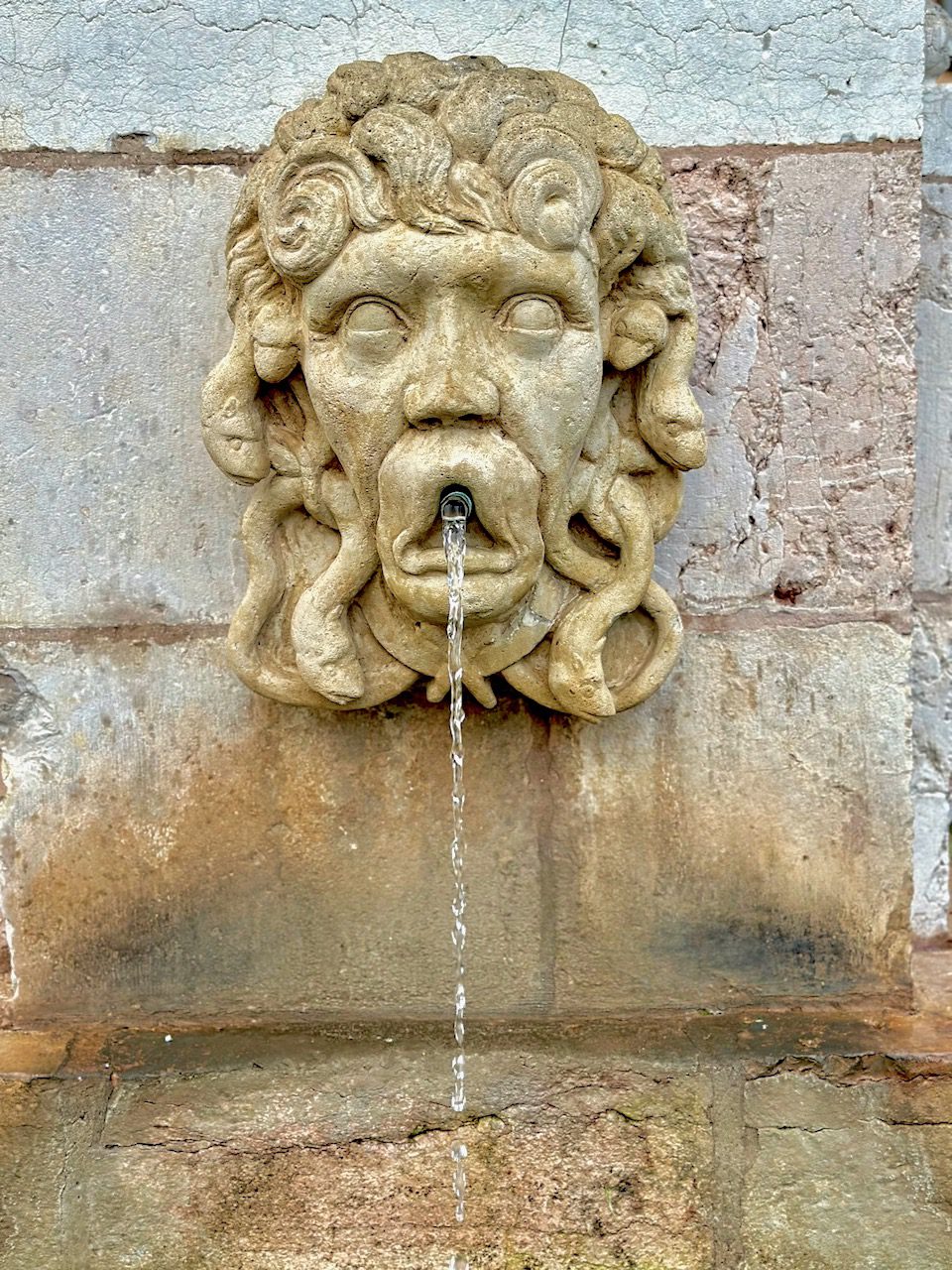
The statue of Saint Isidore of Seville is at the top. His bones are entombed inside the basilica.
The ancient cloister features intricate stone ribbed vaults and arches.
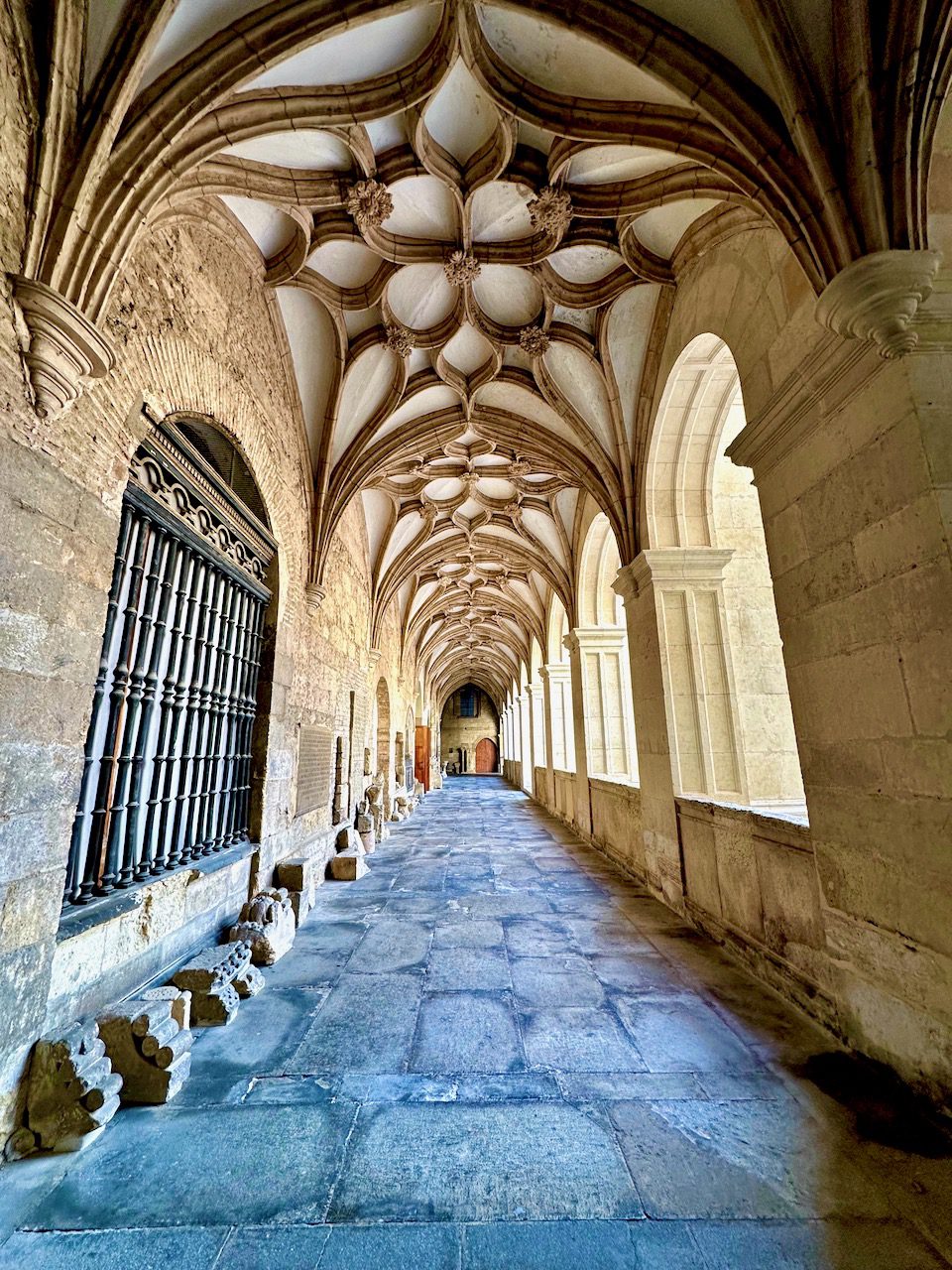
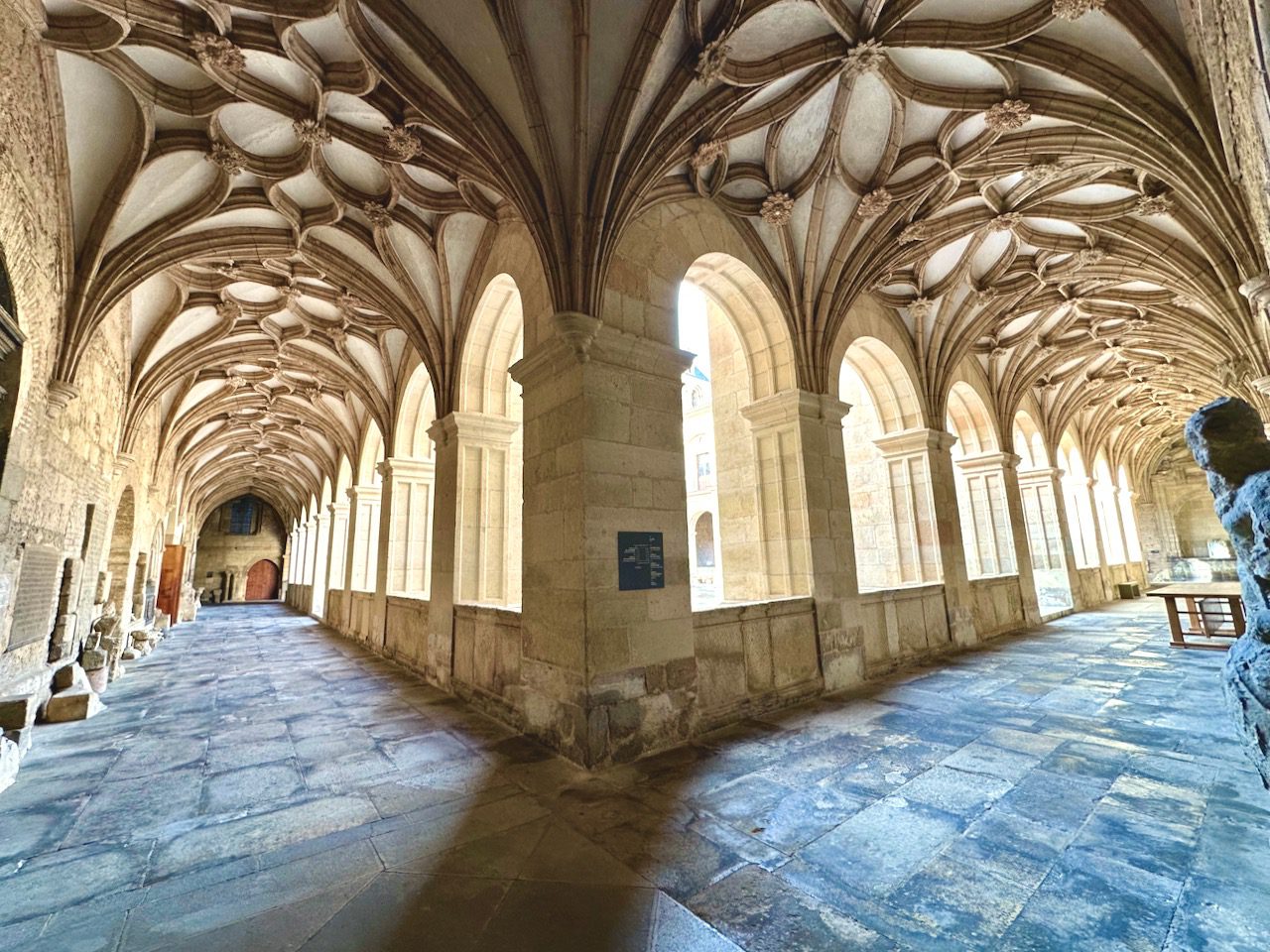
The inner courtyard was still wet from the rain.
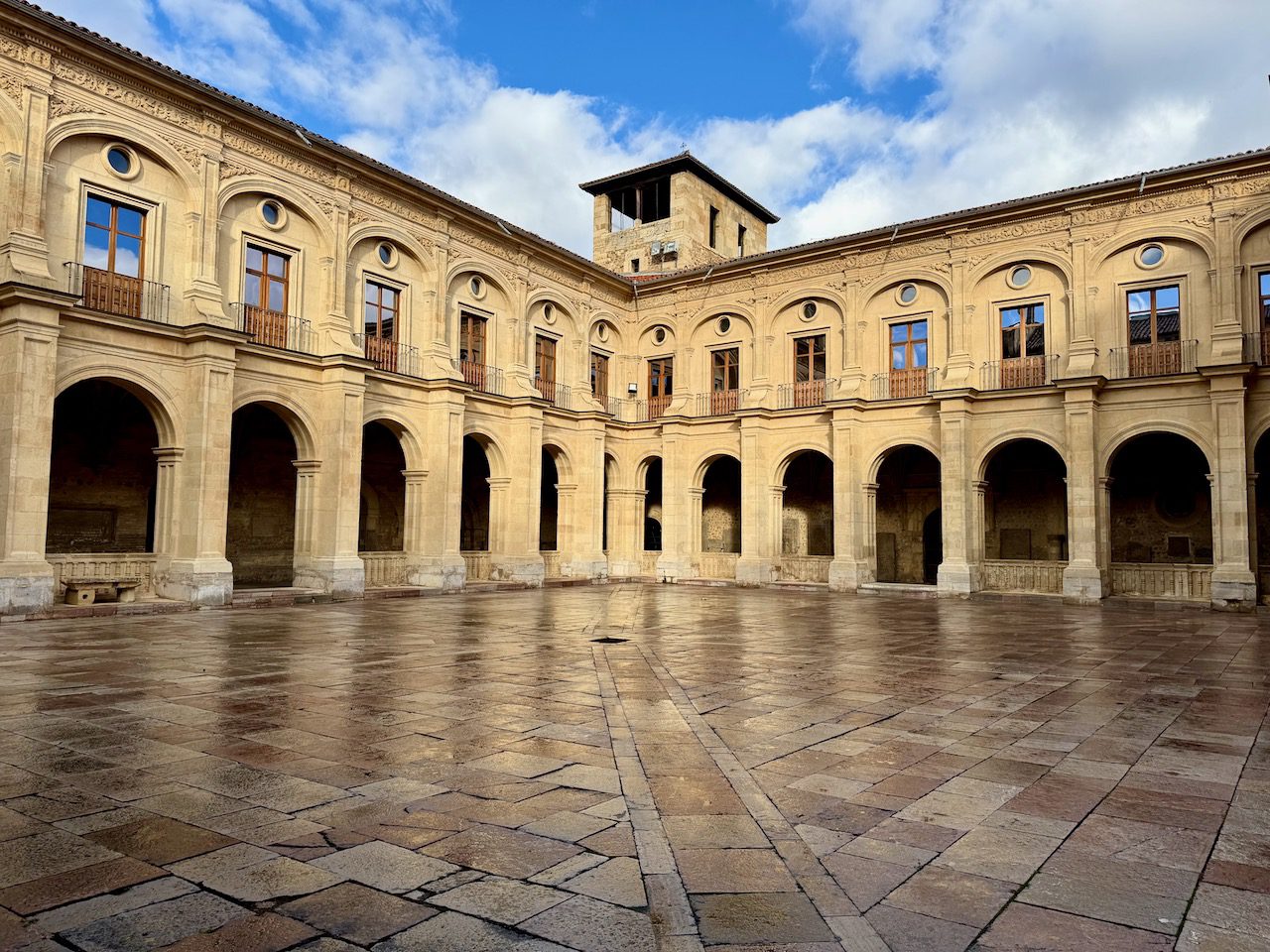
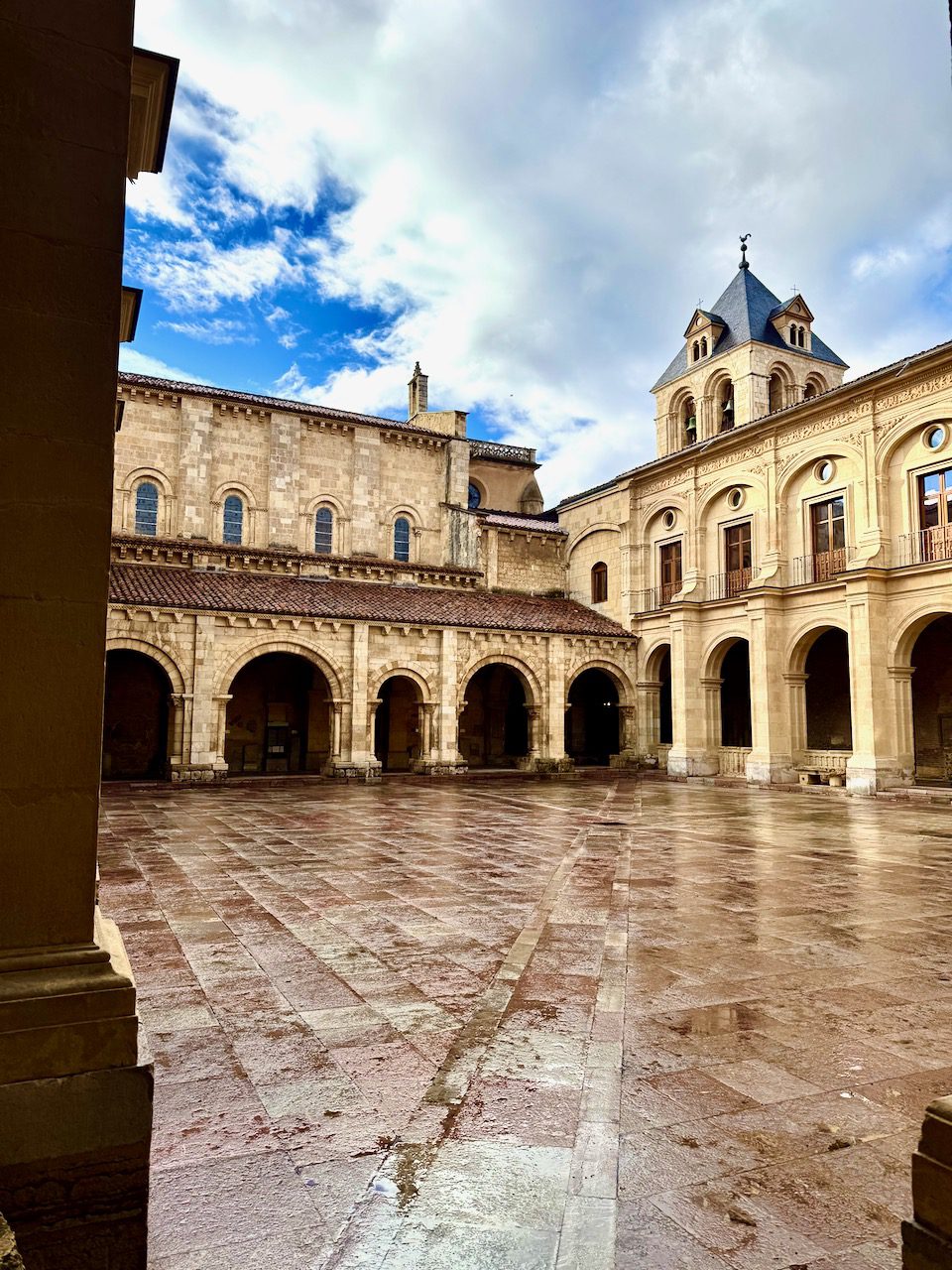
We viewed the artifacts as we wandered, but the staff on this day was not particularly helpful or informative.
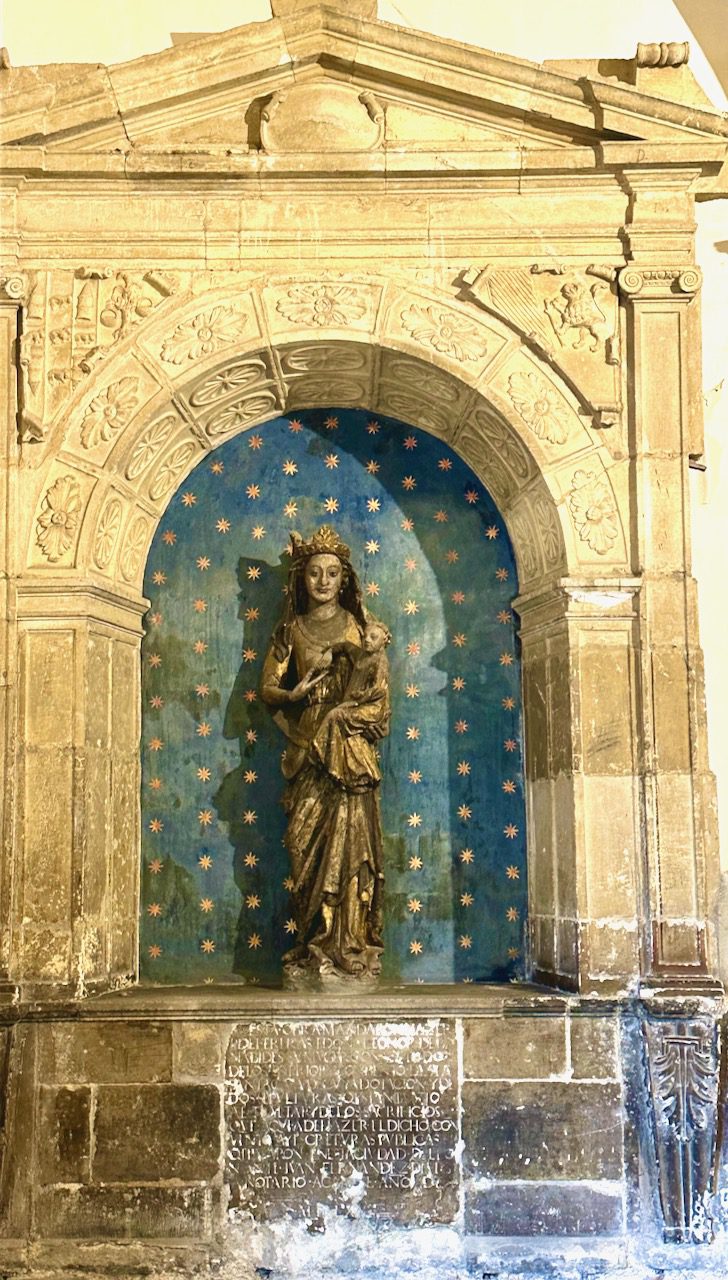
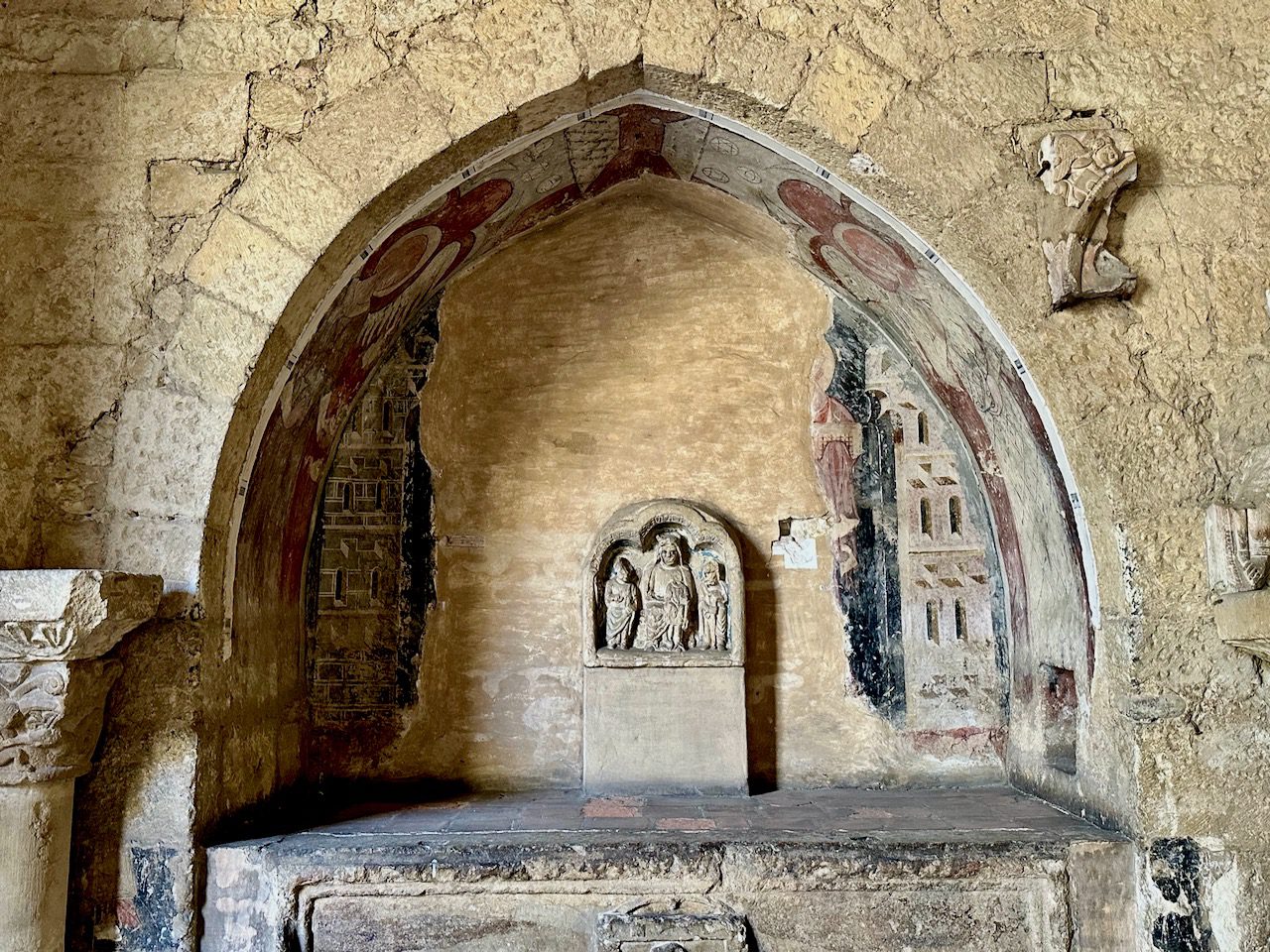
I believe the Rooster Weather Vane (Veleta del Gallo) dates from the 7th century, and originally stood on top of the church’s Romanesque tower, known as the Torre del Gallo.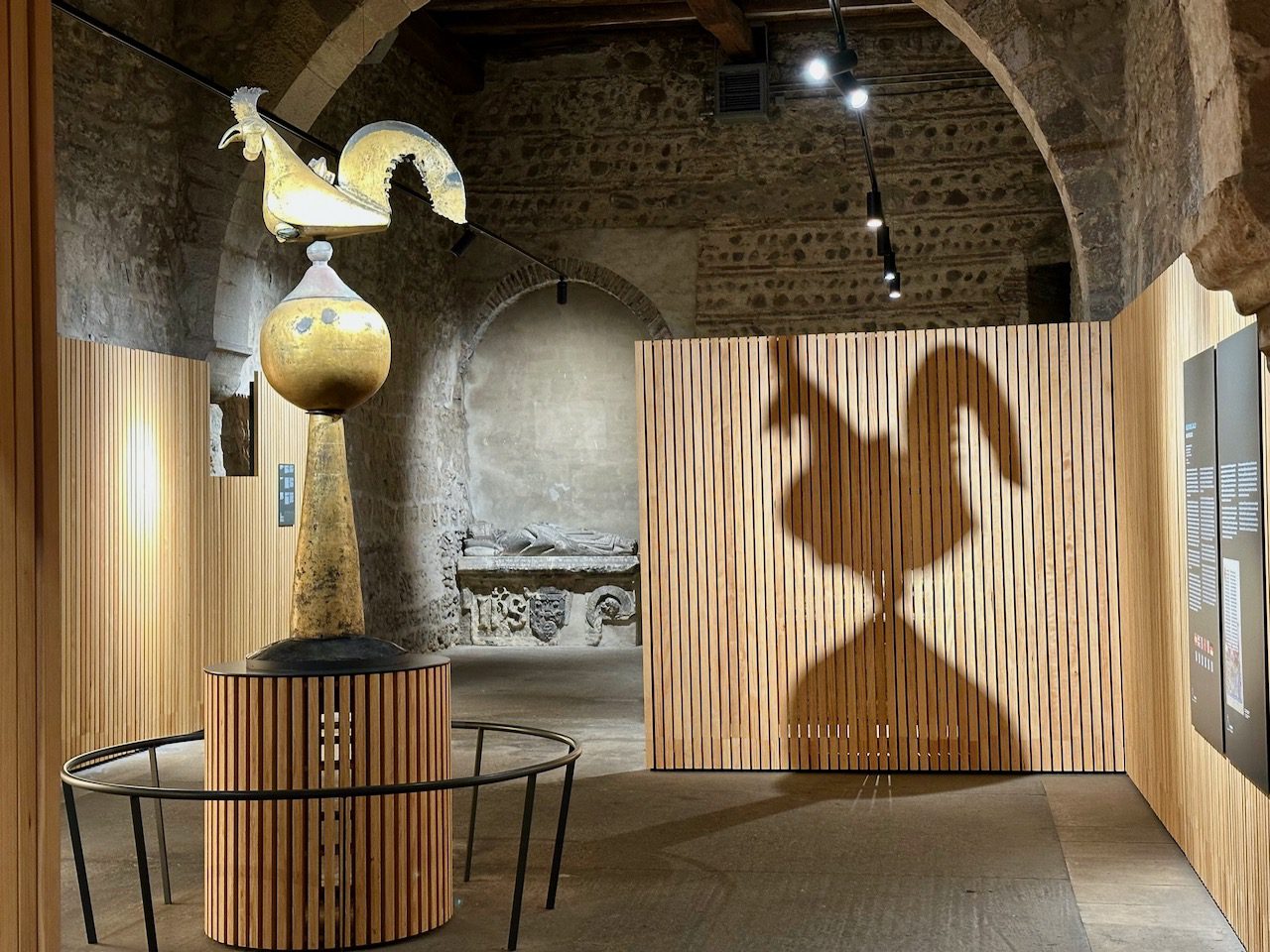
The main altar of the Basílica holds the silver urn with the remains of San Isidoro of Seville.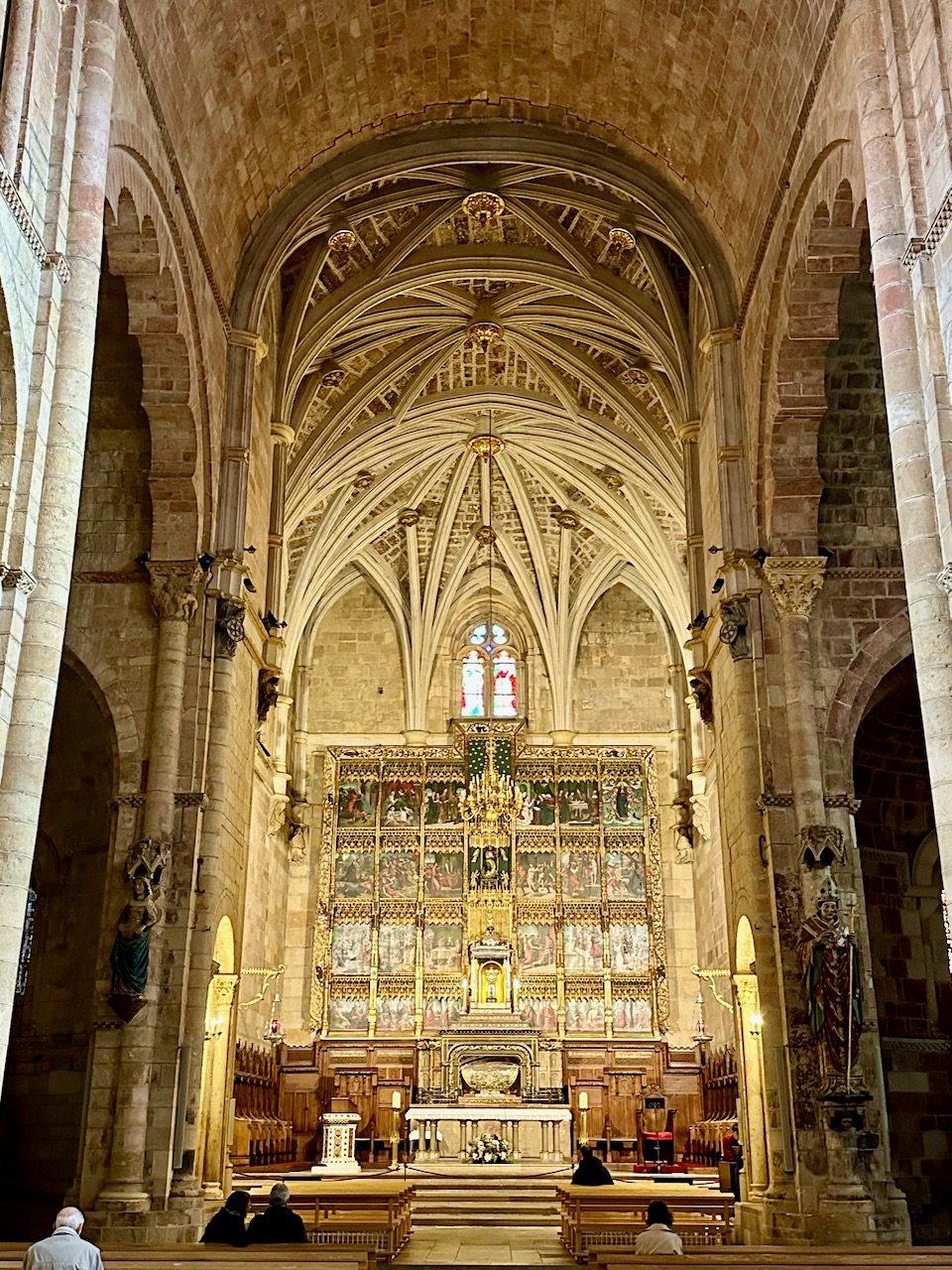
The altarpiece dates from 1525–30.

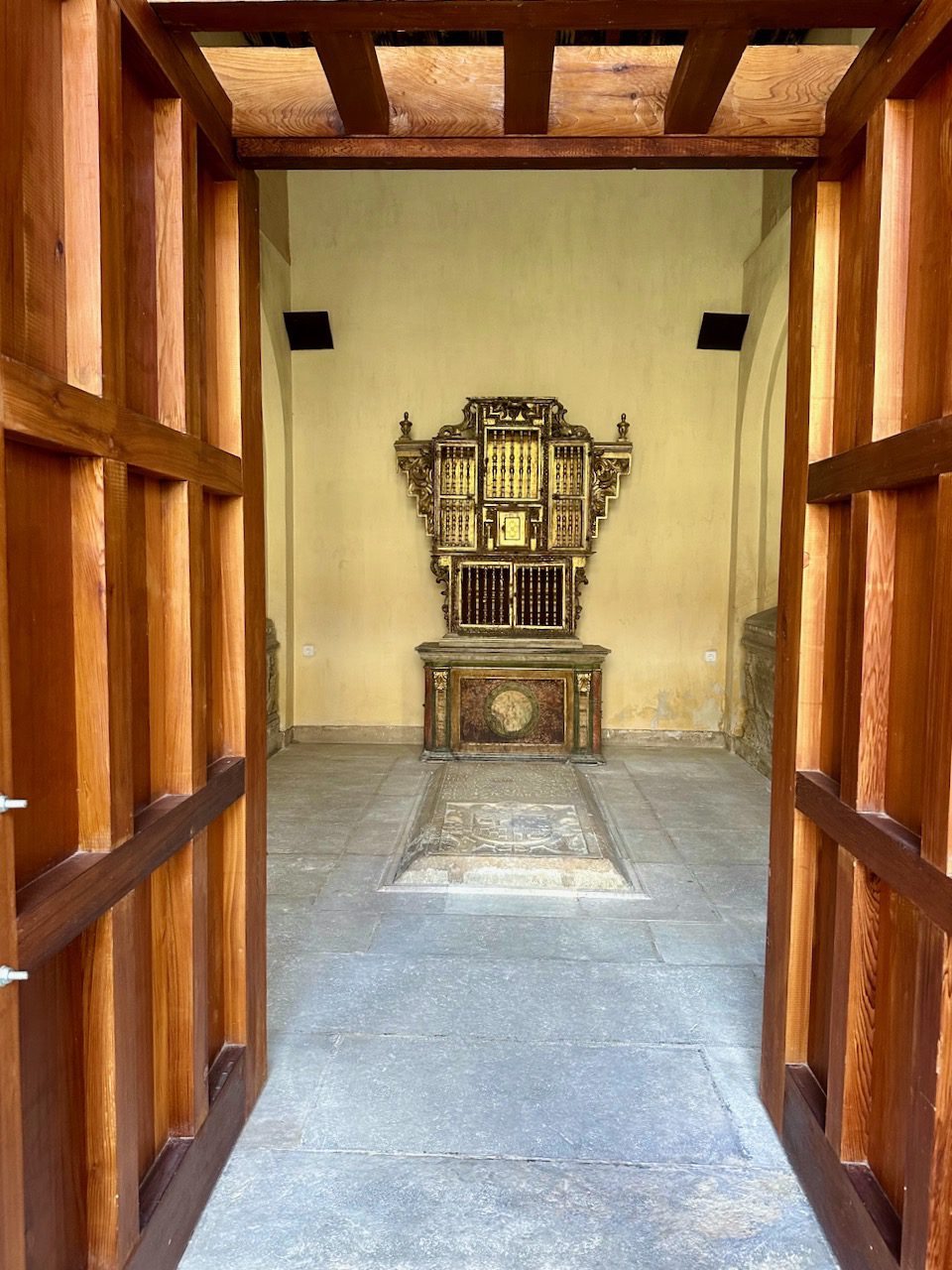
When we arrived at the Royal Pantheon we knew in advance that no photos would be allowed of the frescoes and royal tombs, but I must admit the staff on this day was rather rude, especially in their harsh way of telling the very few gathered that there were no photos allowed. Tracy said it reminded her of Catholic school when she was a kid, and she would not have been surprised to see a ruler to come down on someone’s fingers. It kind of ruined the entire experience, so we took some time to view the artwork, and made a quick exit.
There was one more point of interest we had wanted to see in León, so we walked 15 minutes (much less than a pilgrimage on the Camino) …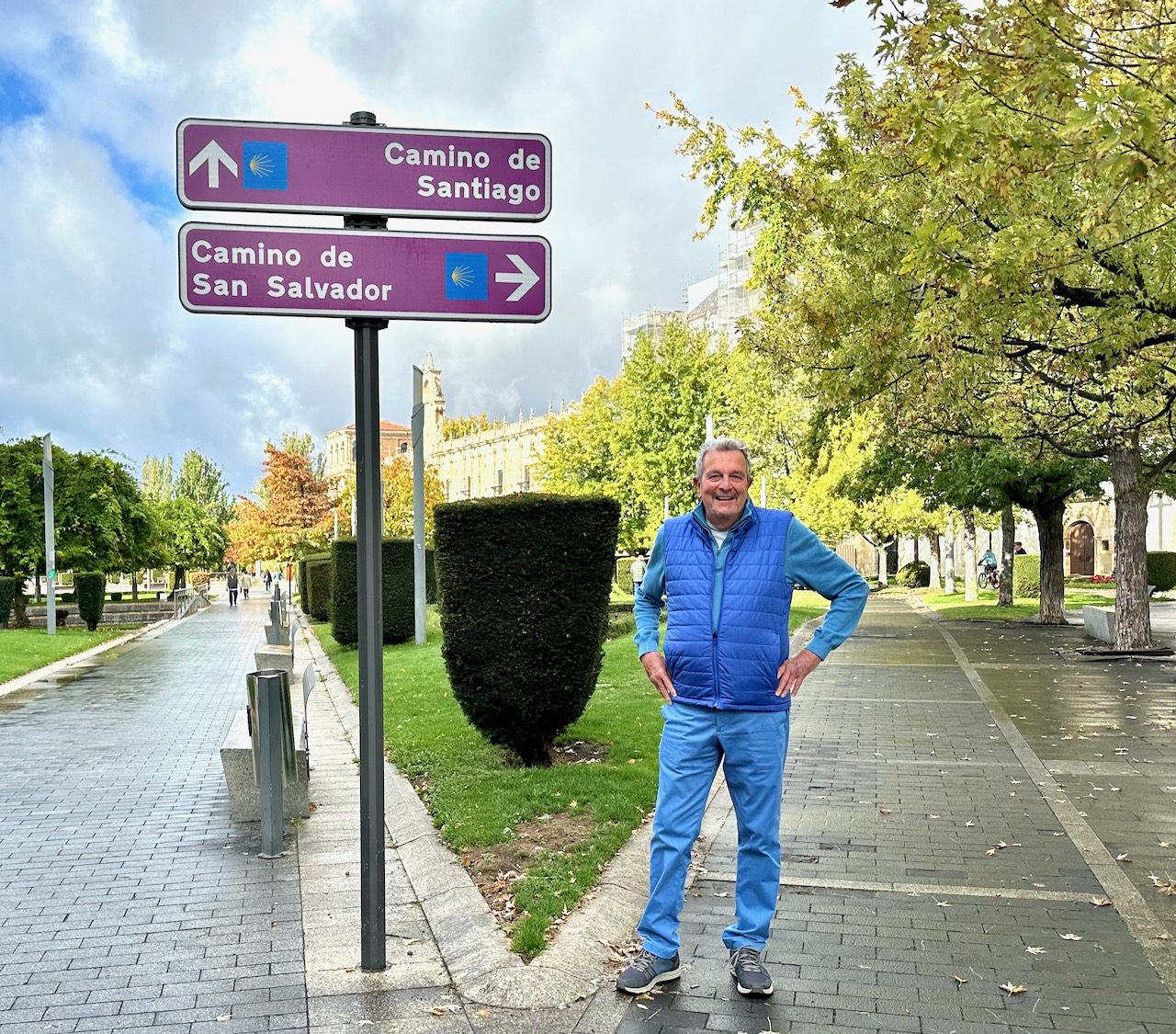
… to Convento de San Marcos (Parador de León), which is not only a convent, but also a luxury five star hotel (and way out of our price range). 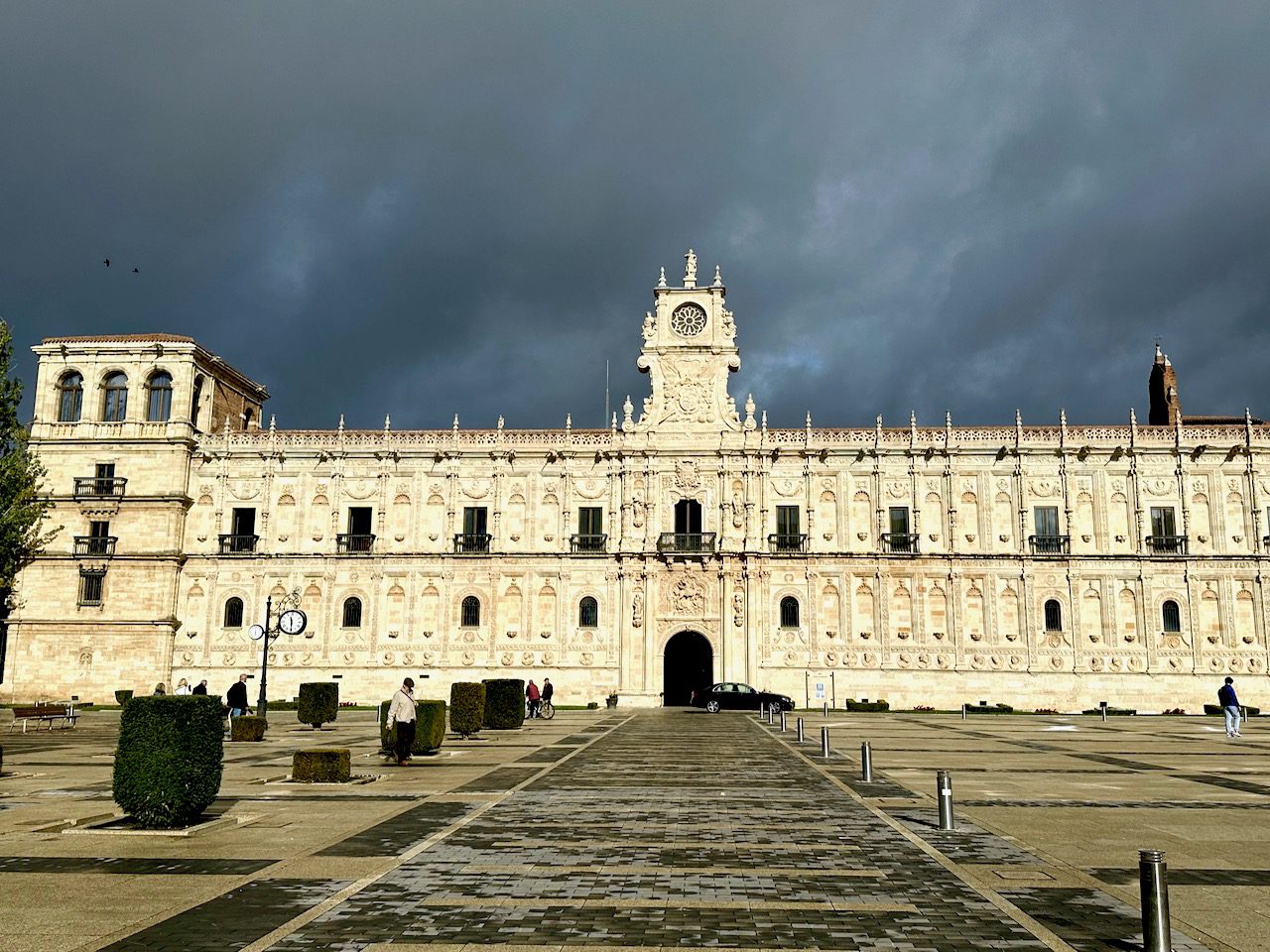
It was founded as a convent in the 12th century. The convent was part of the Order of Santiago, and it was rebuilt in the 16th century by the Catholic Monarchs.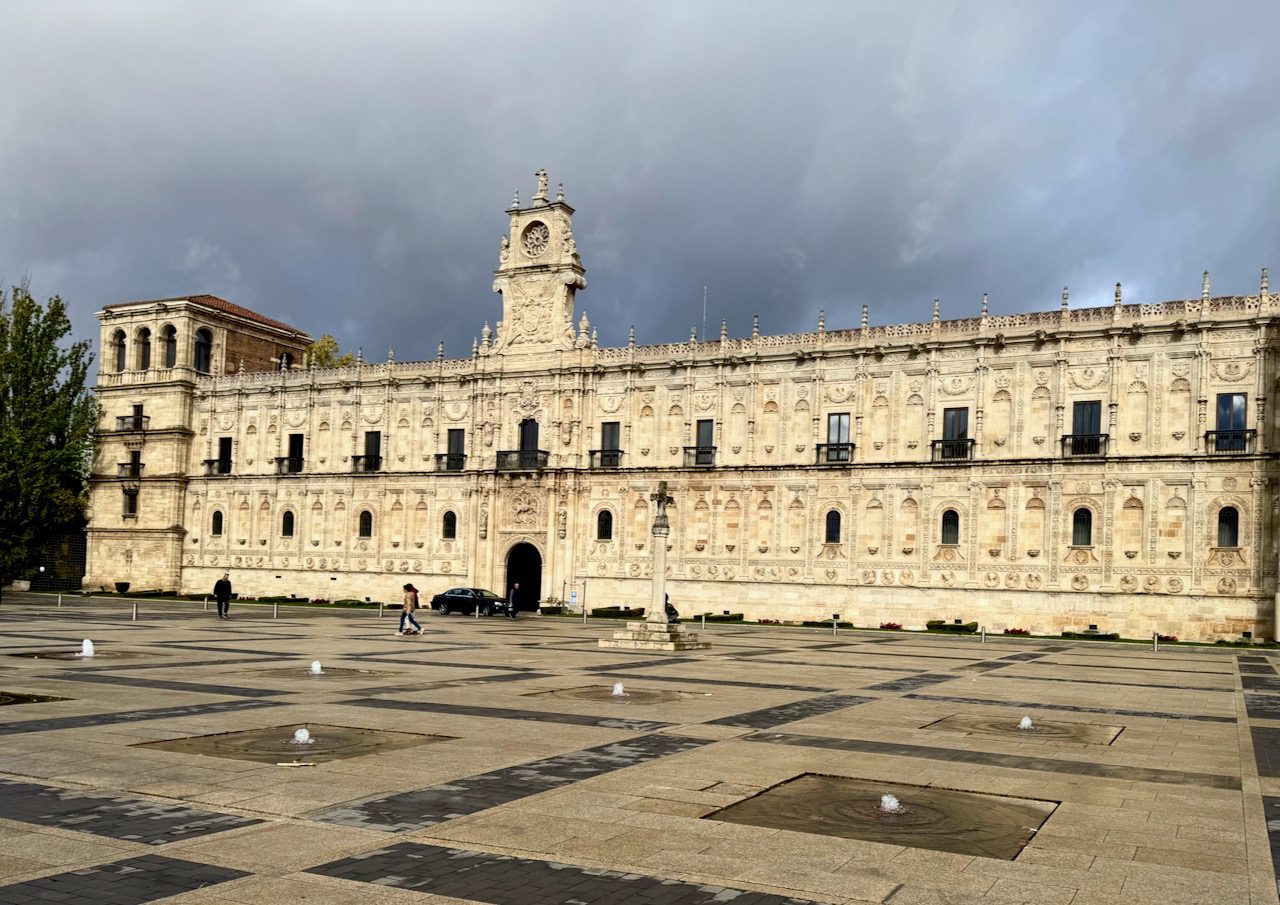
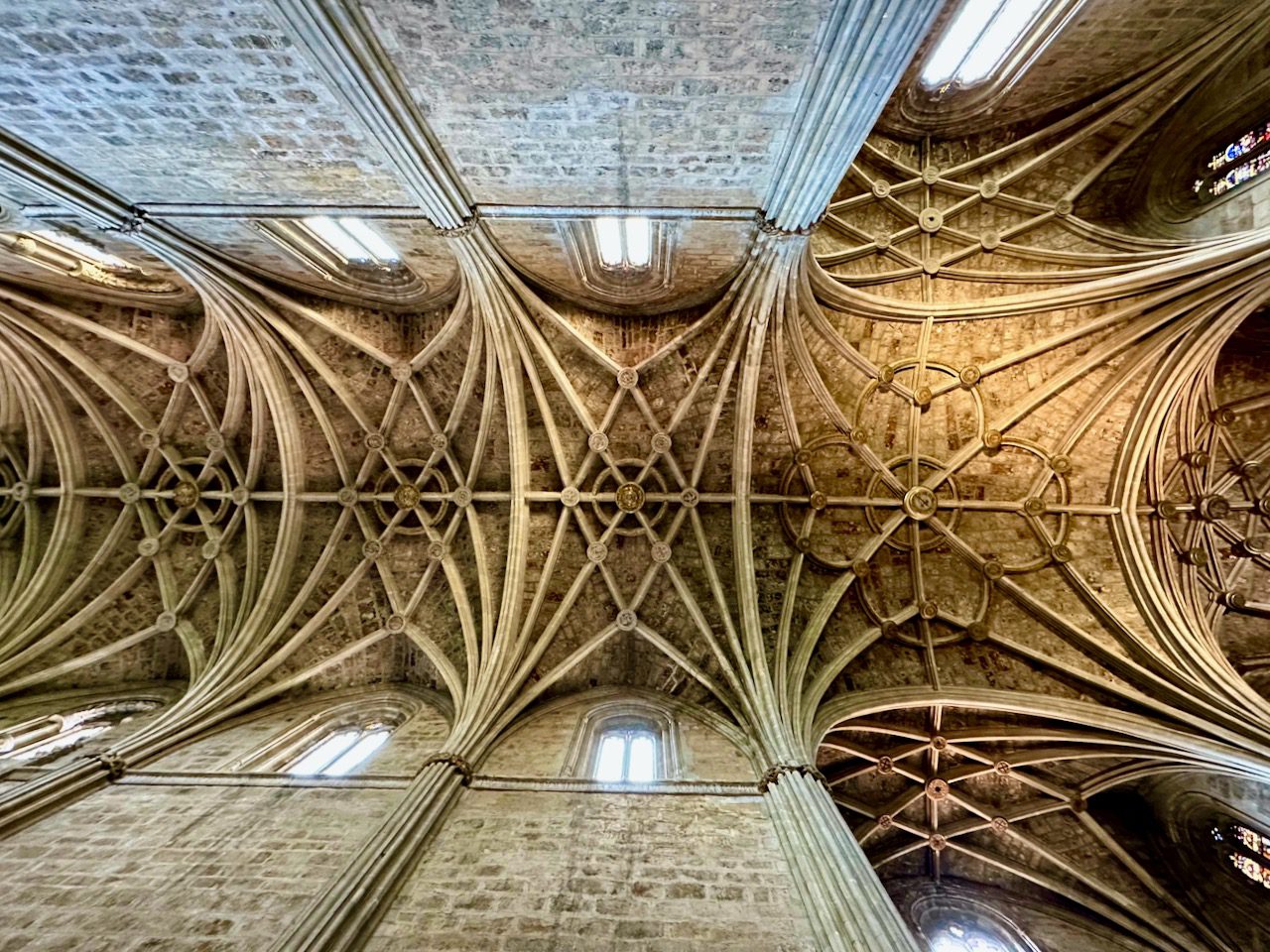
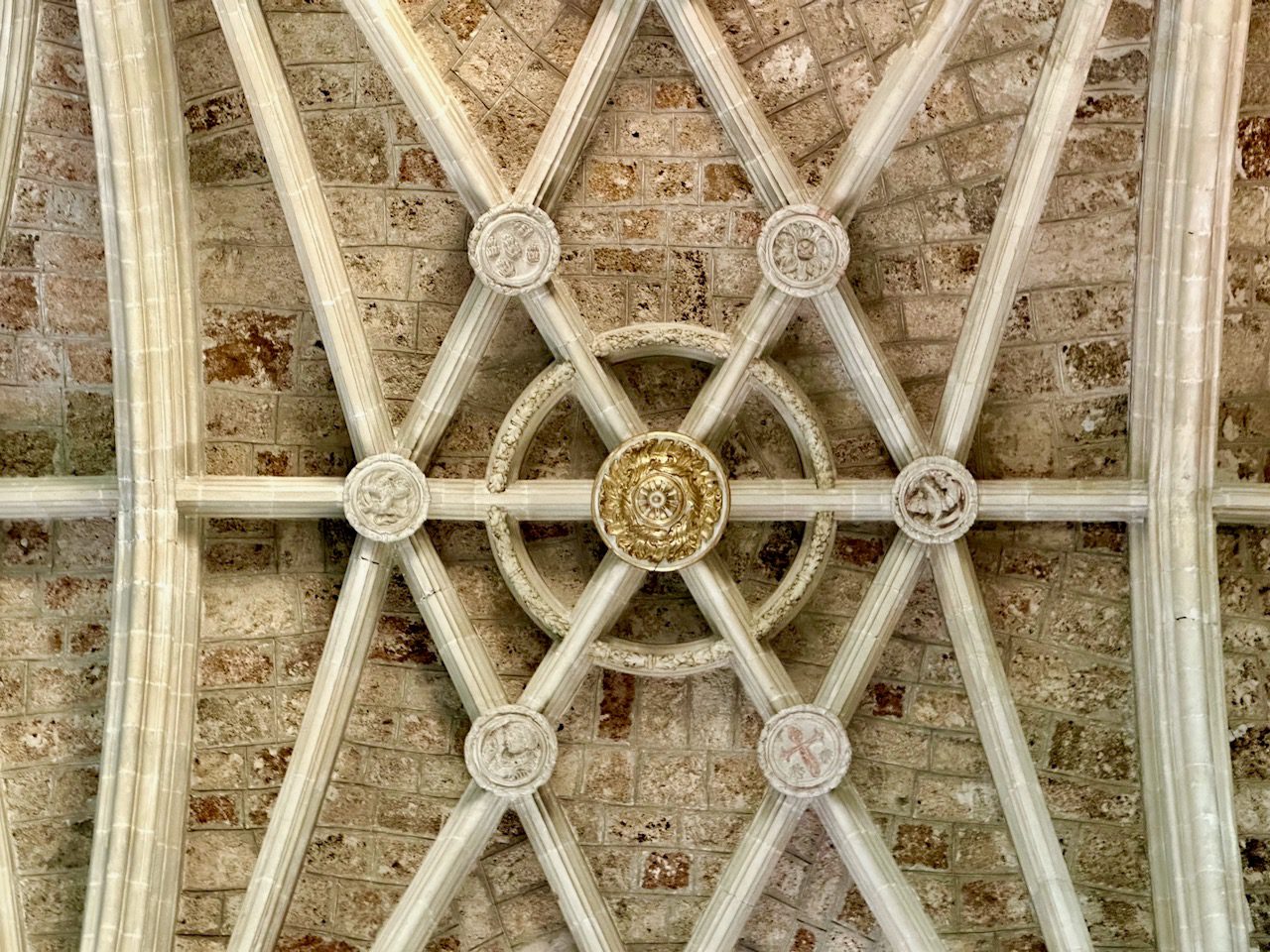
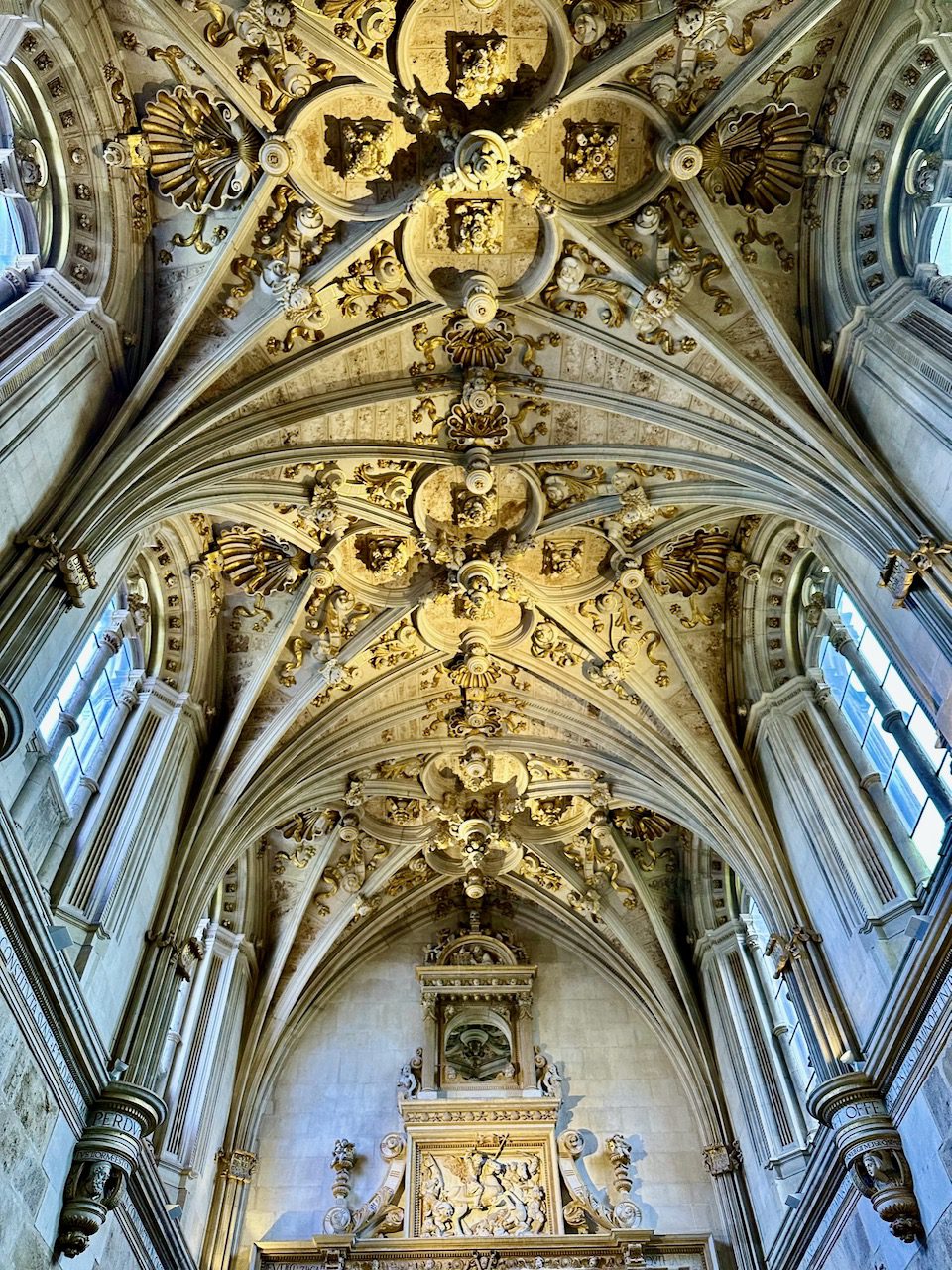
The church’s interior features Gothic vaults and a large altar.
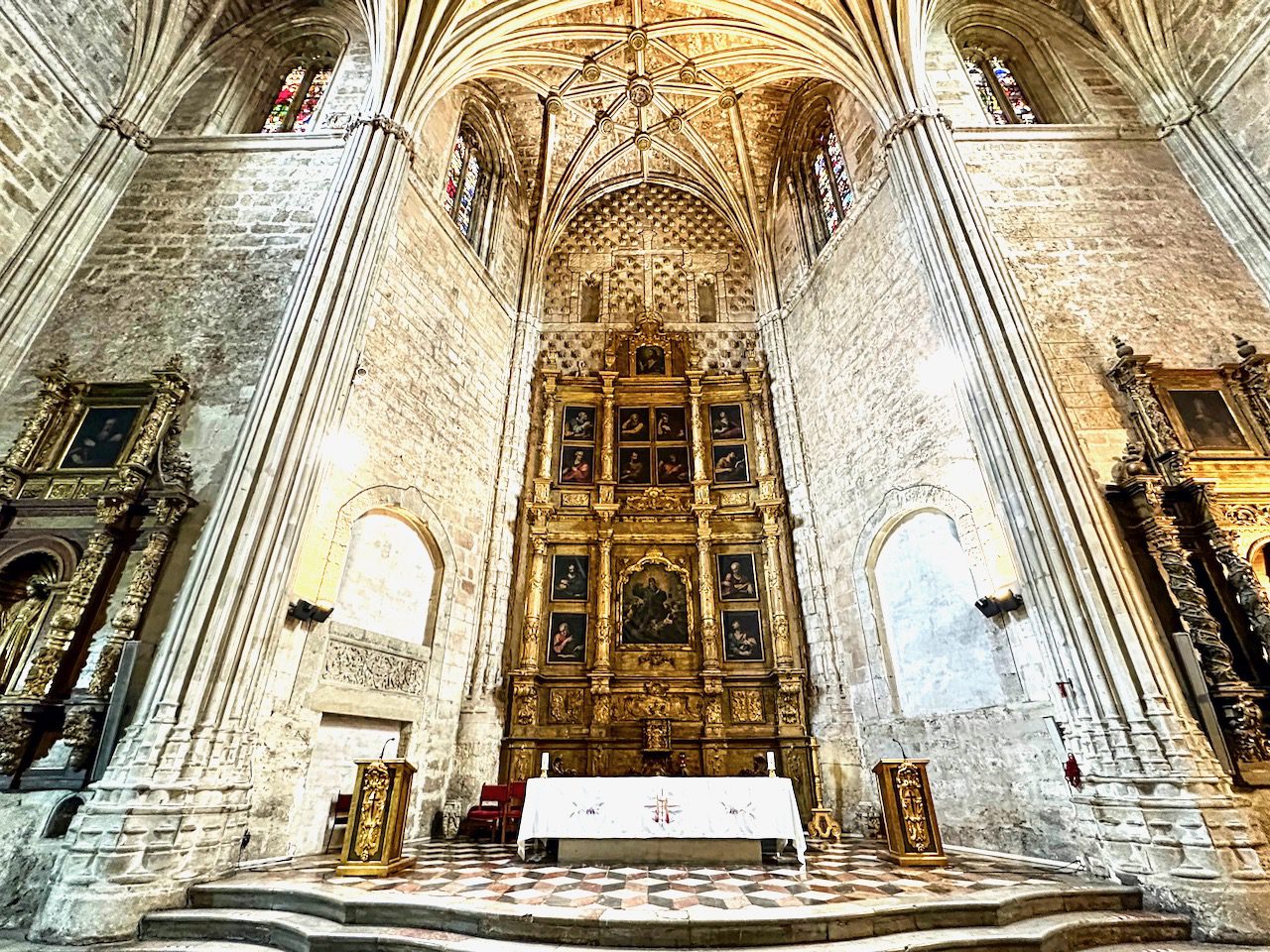
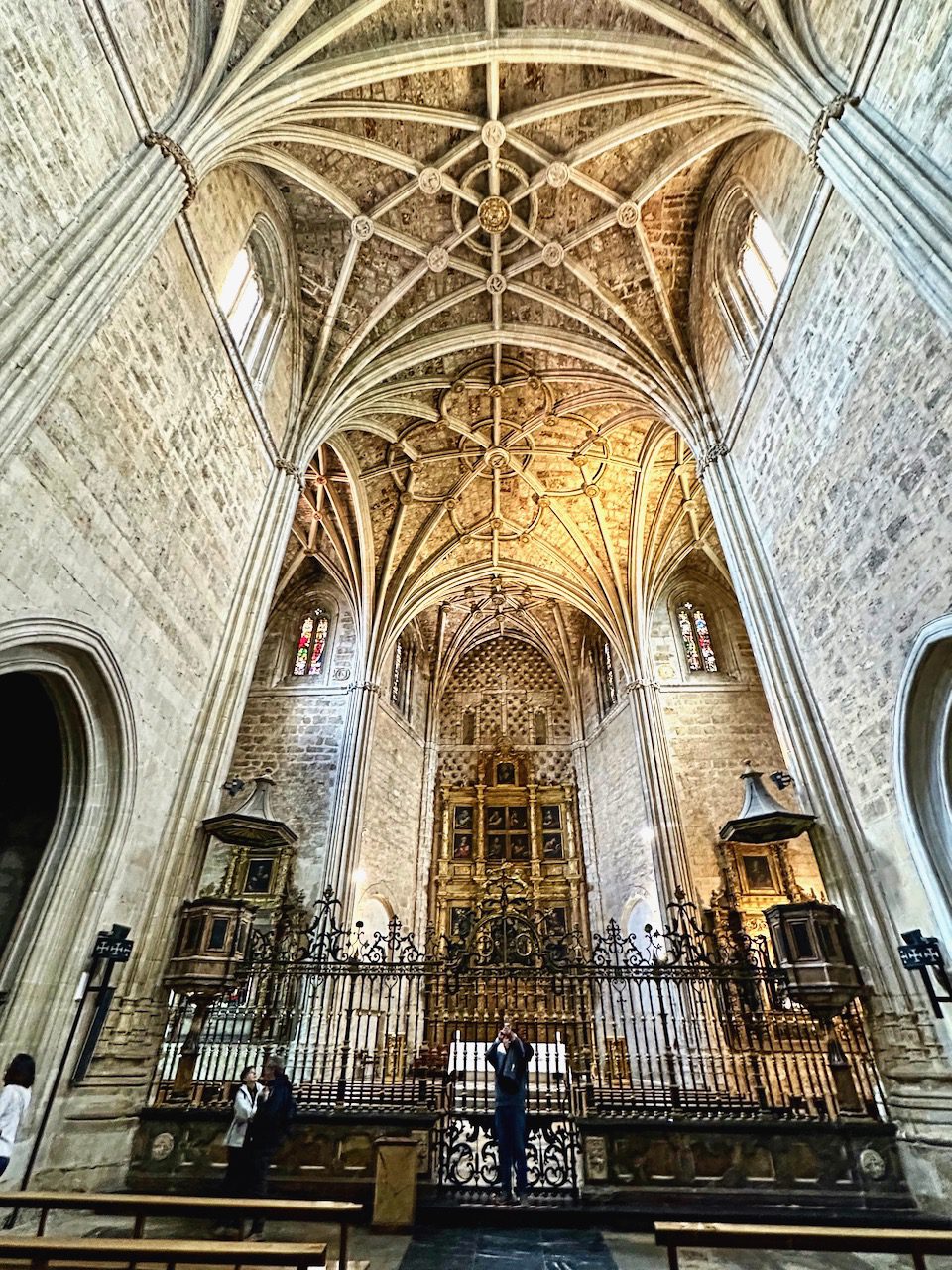
Things are always looking up for Tracy’s IPhone, especially church ceilings.
Next stop was the former sacristy of the convent, which was completed in 1549. Among other artifacts was the Tomb of Bishop Juan Quiñones de Guzmán.
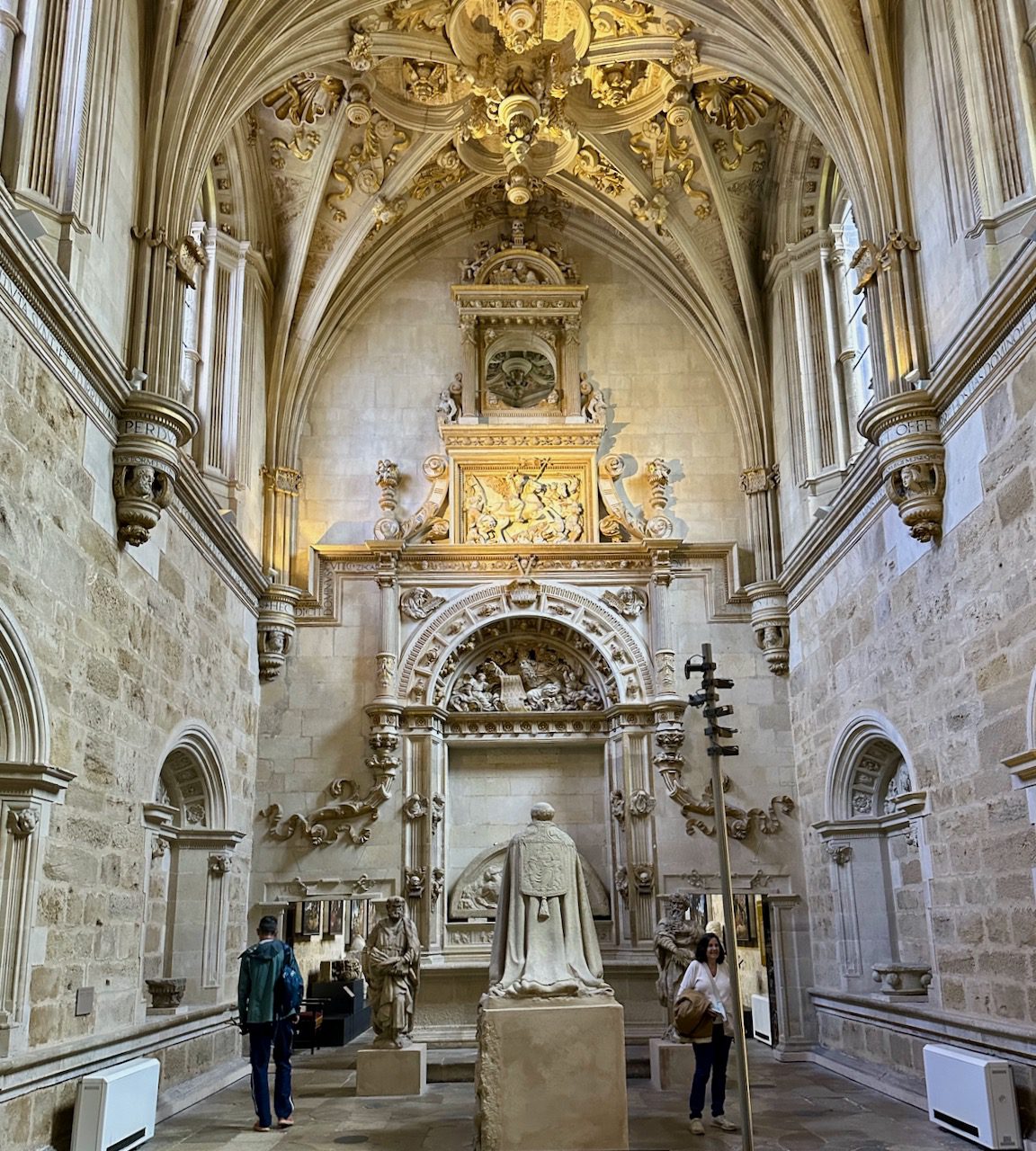
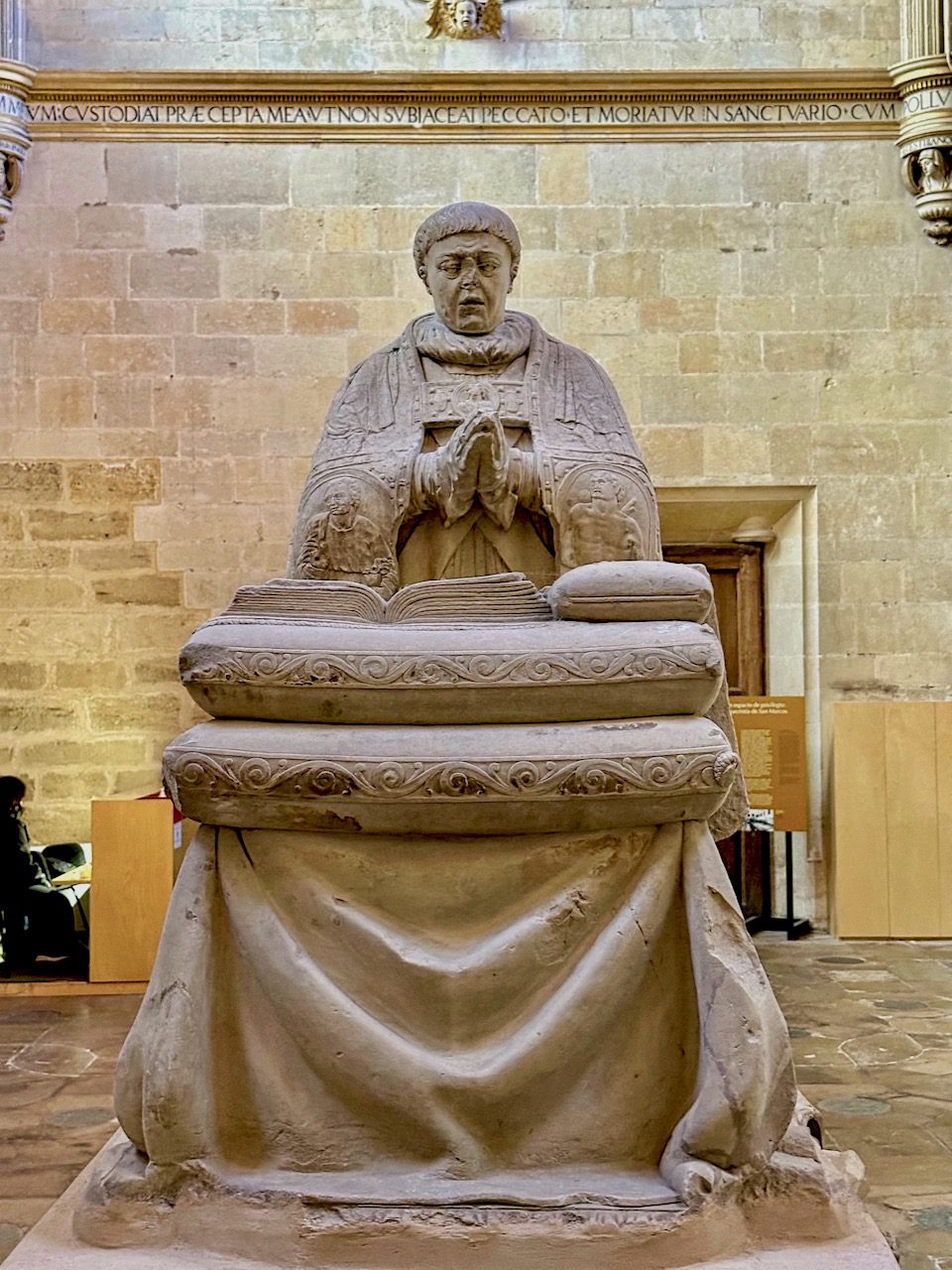
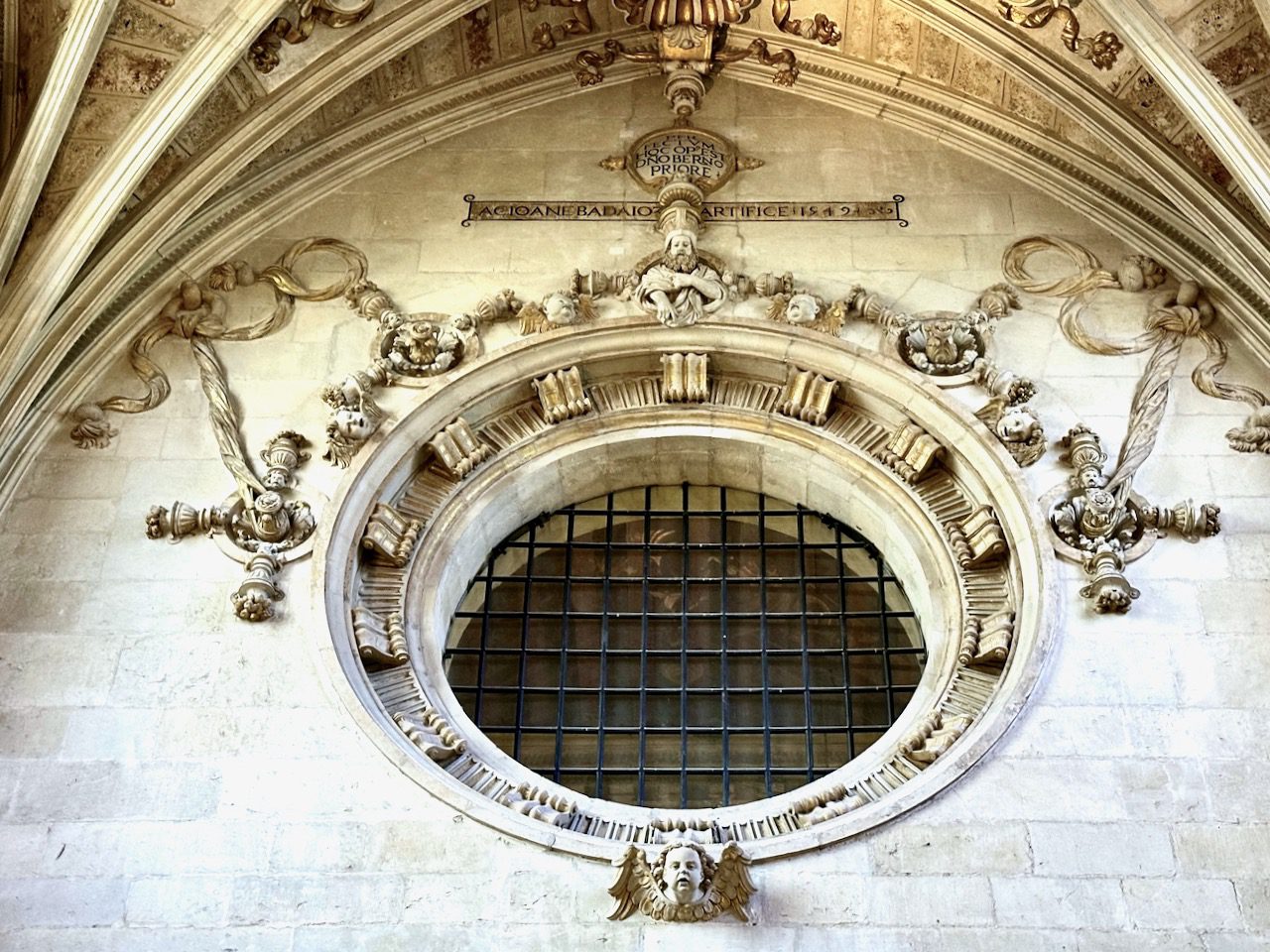
Only 20 people are allowed inside at a time. If you look at the top of the round window over the doorway facing the alter, you can see the architect, Juan de Badajoz, pointing down to what he created.

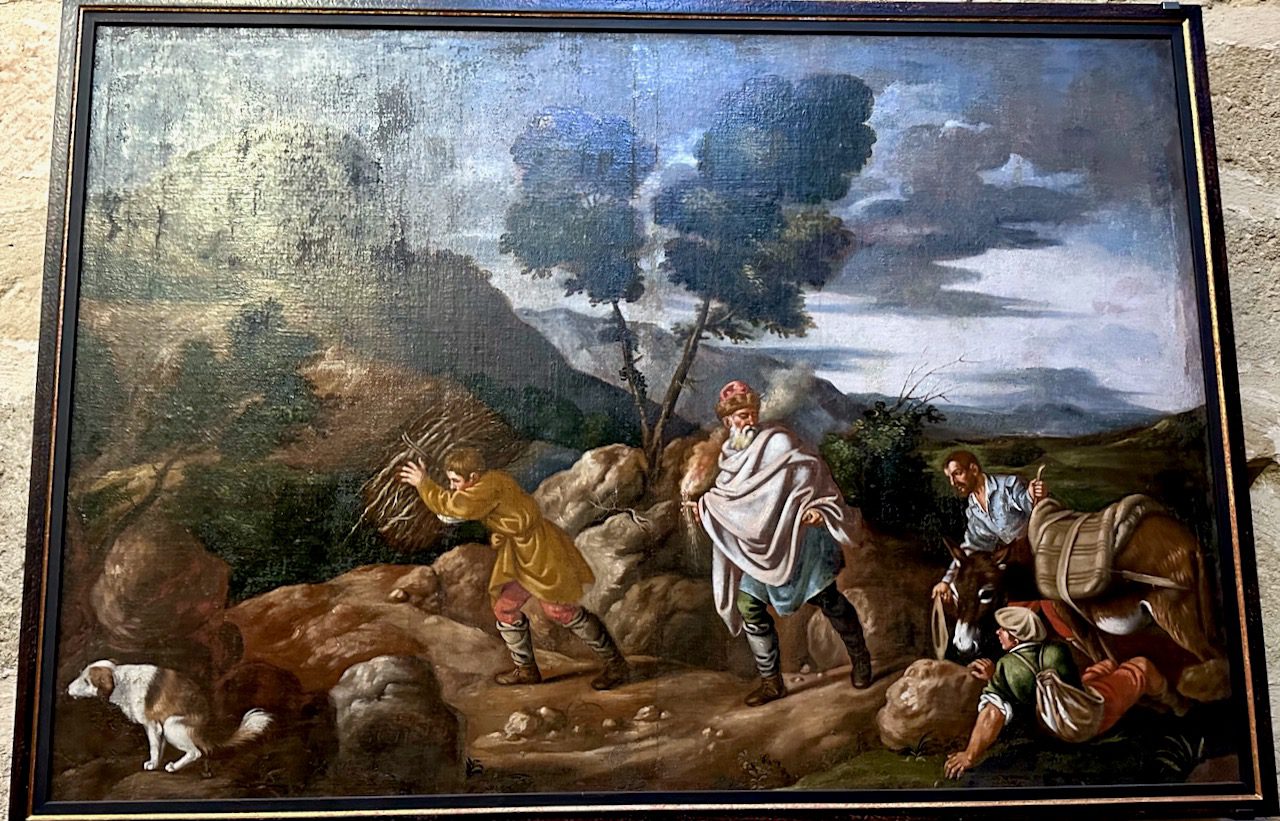
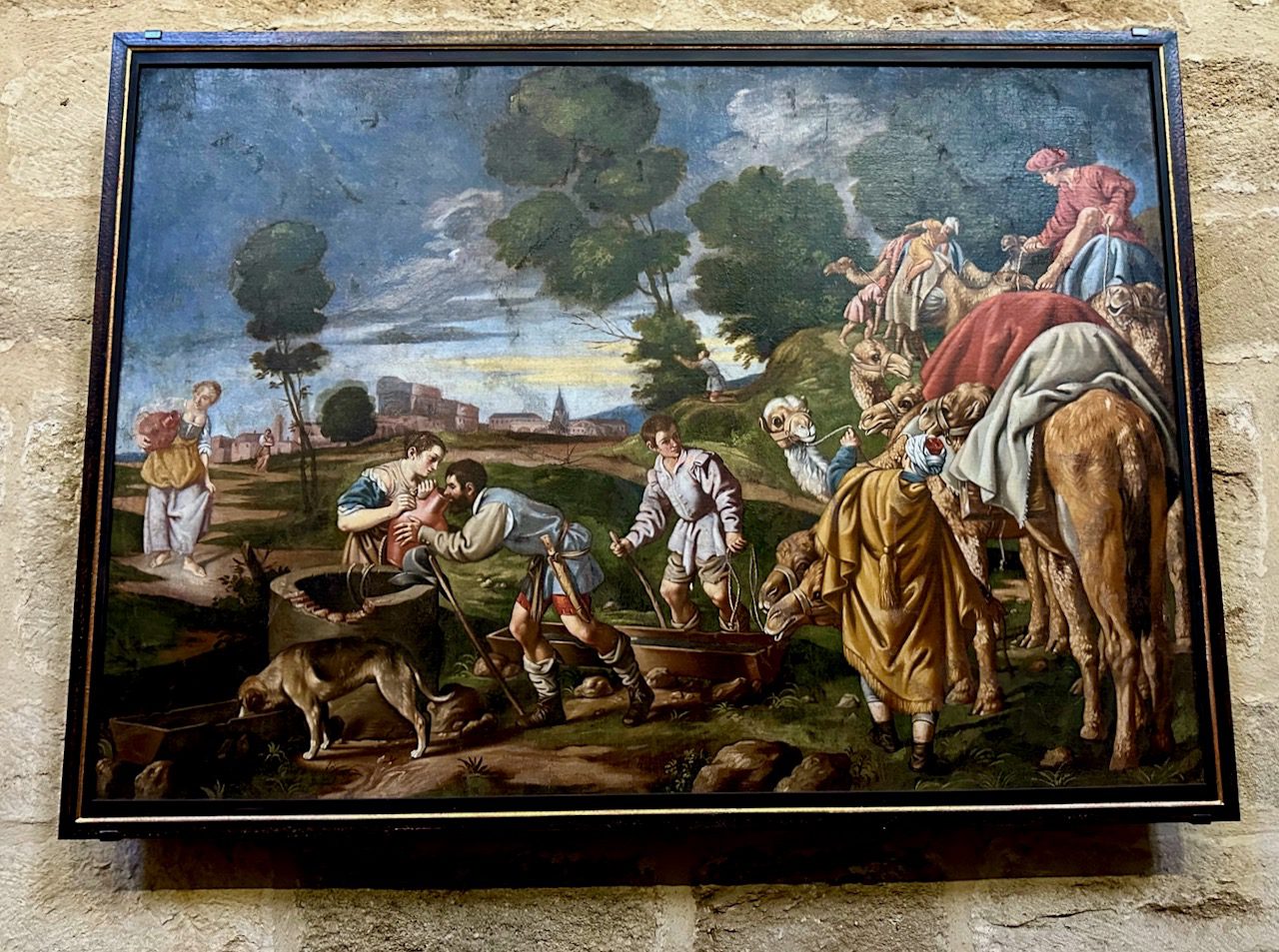
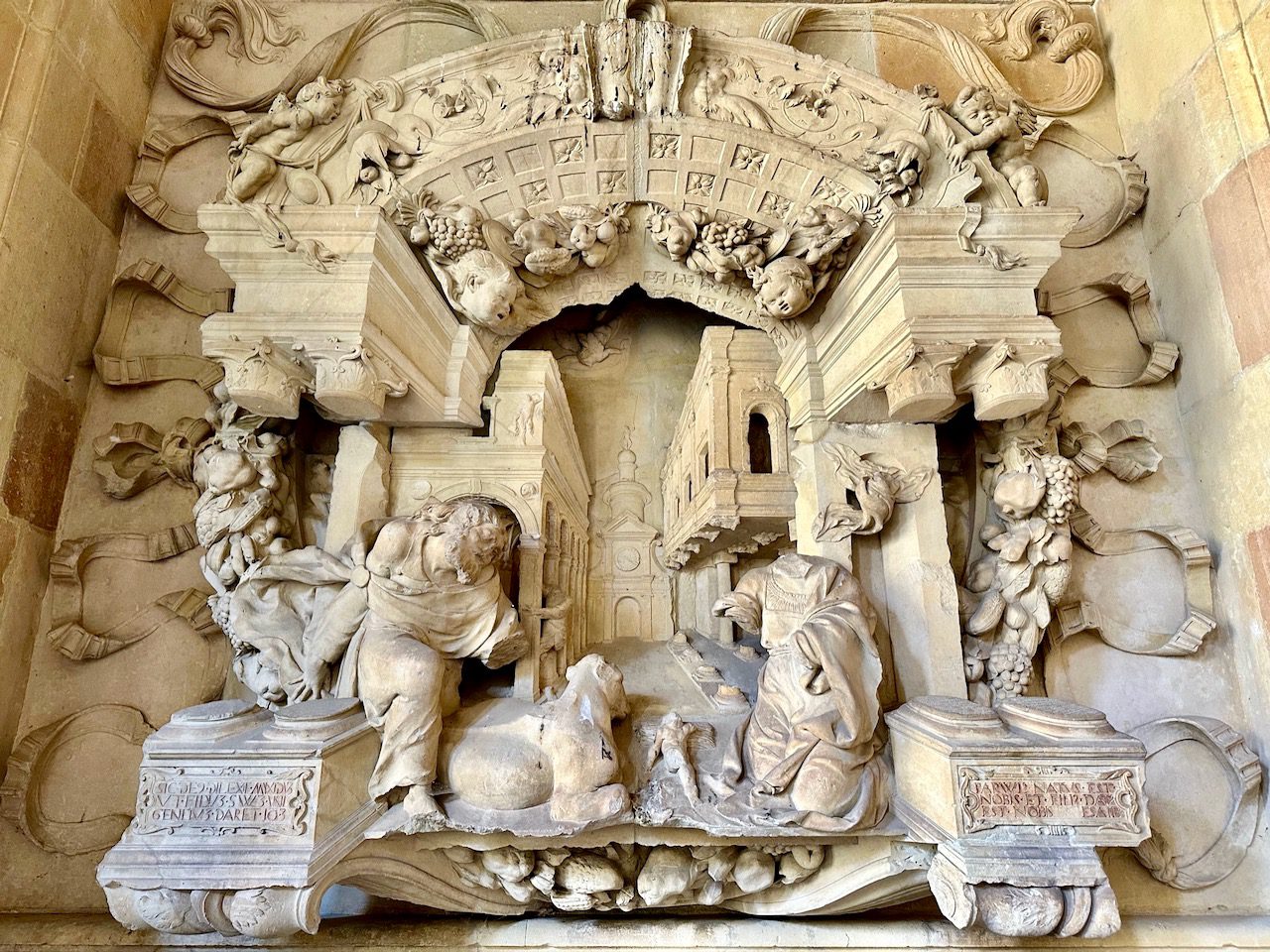
We viewed artwork like the Road To The Sacrifice of Isaac (hope they brought a poop bag) and Rebecca at the Well in the convent’s museum.
As well as sculptures.
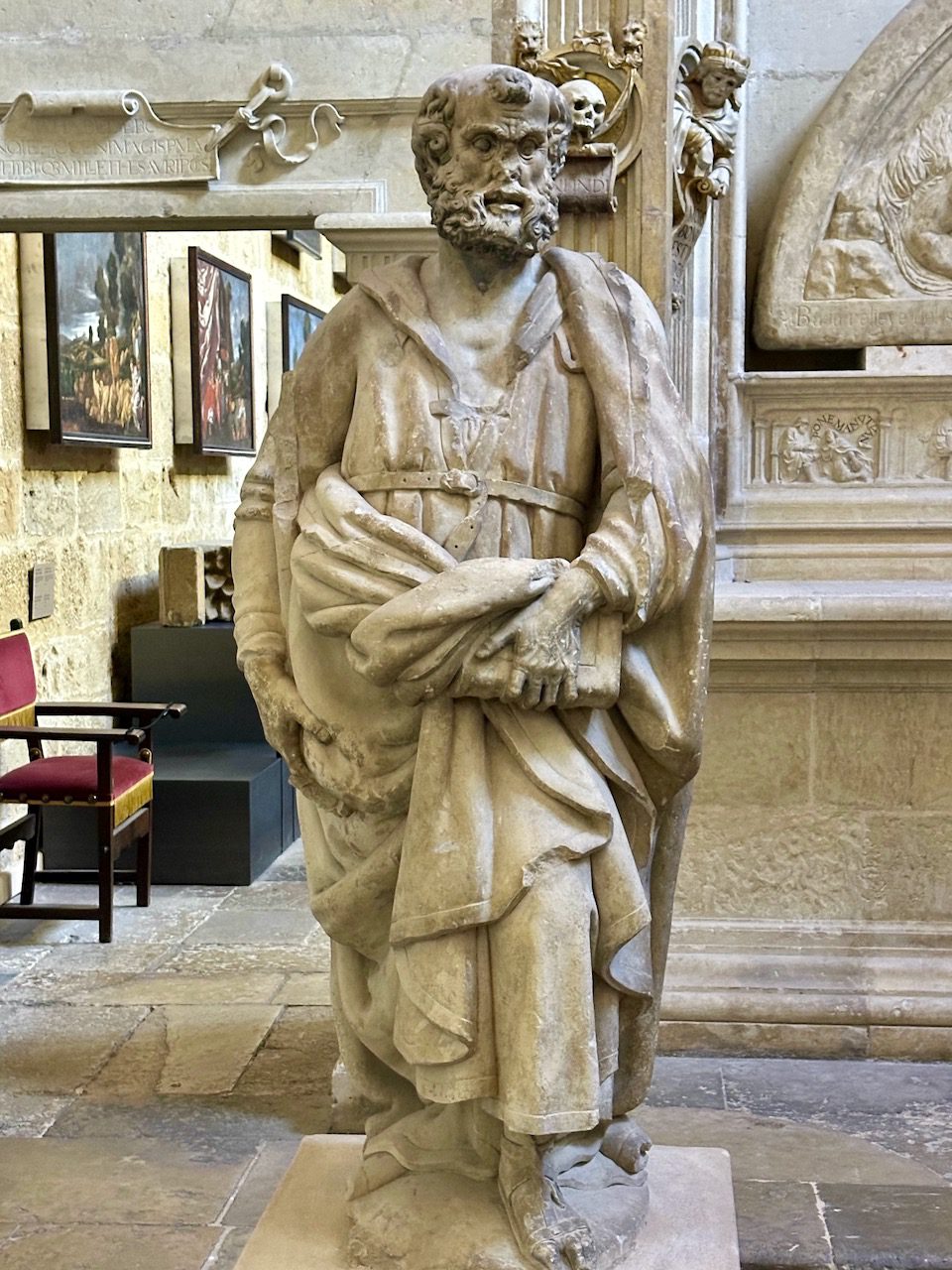
By now, we had just about been sculptured out, so we took a quick look at the Cloister …
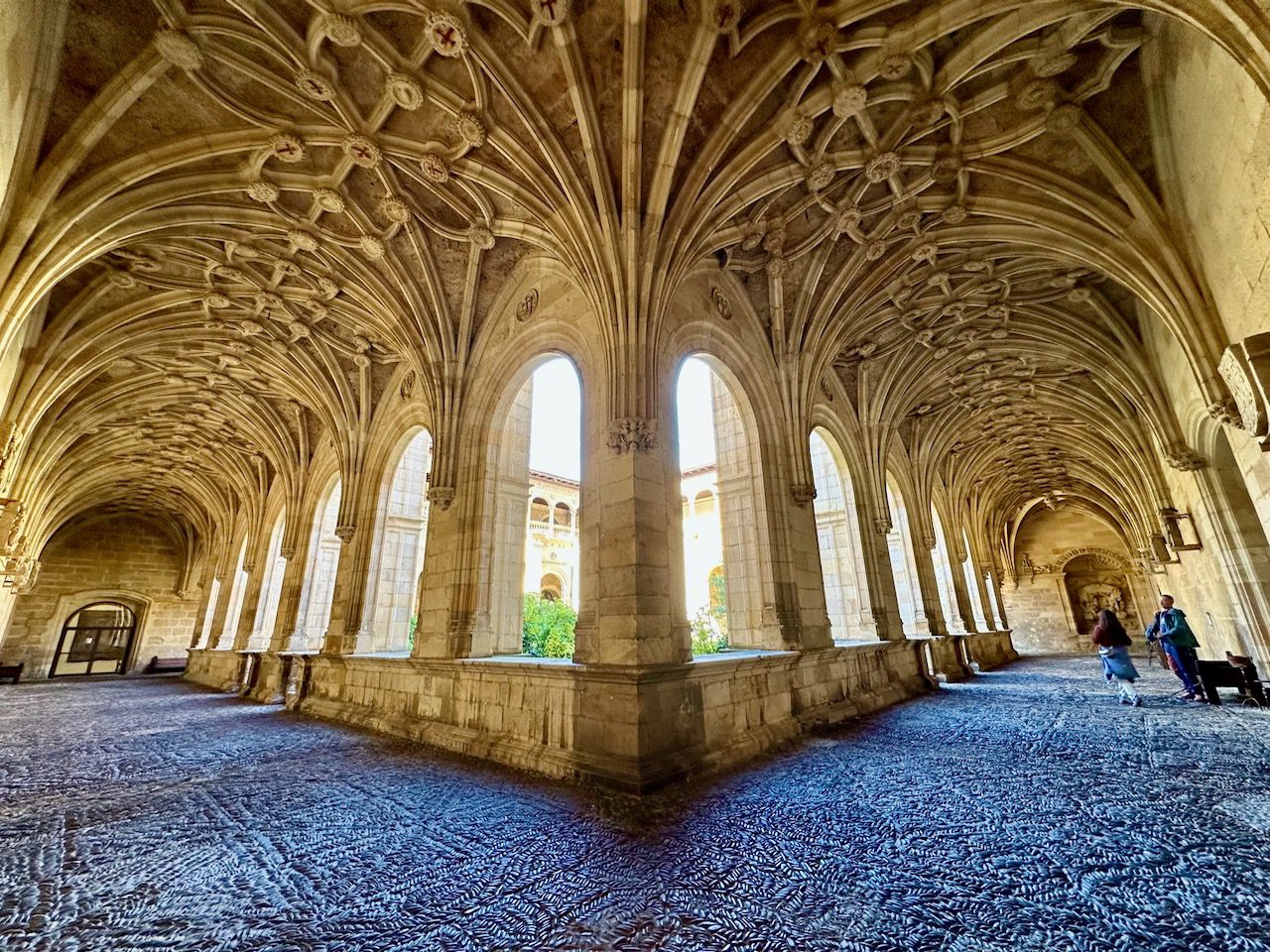

… and we were ready to call it a morning.
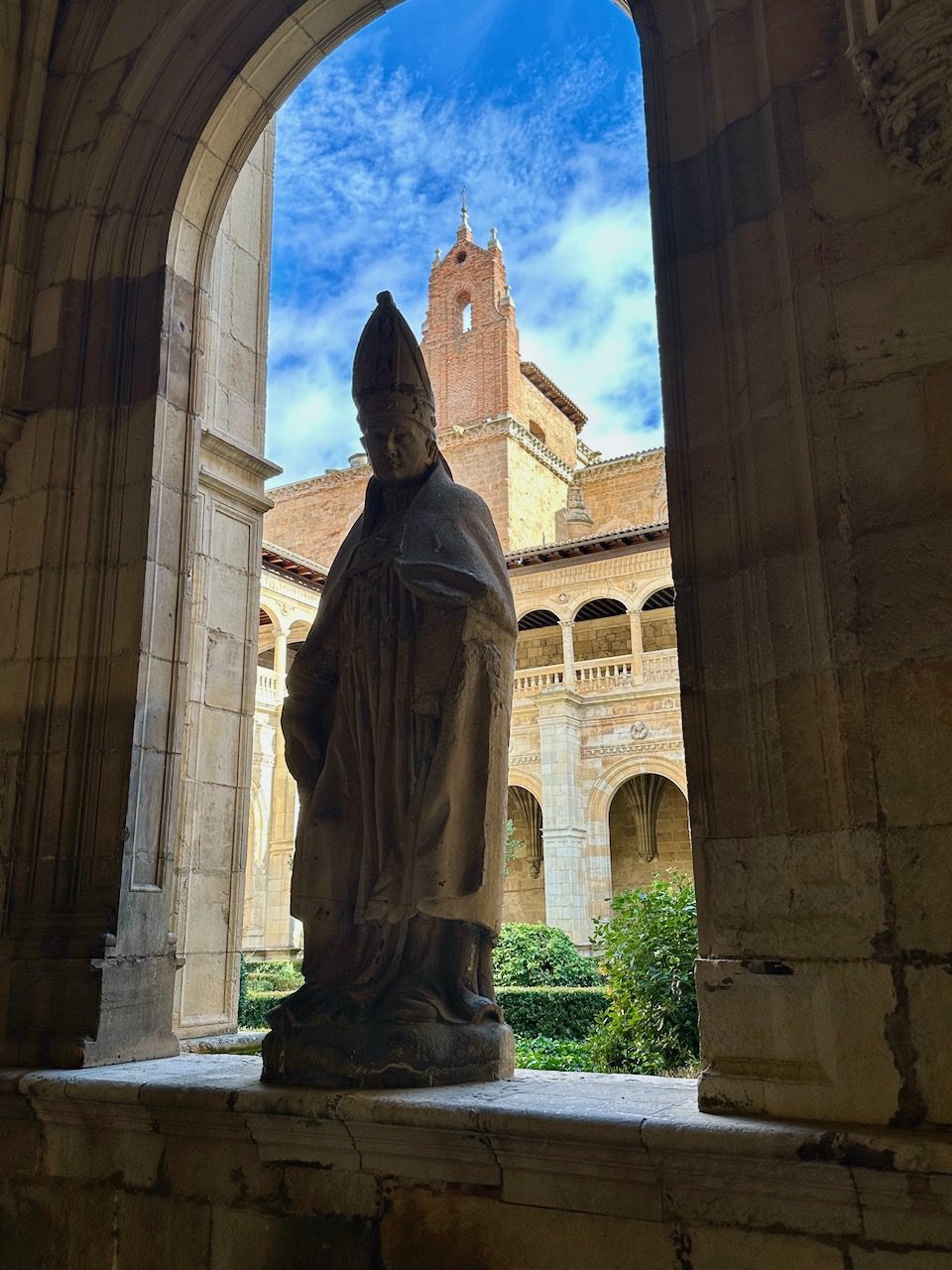
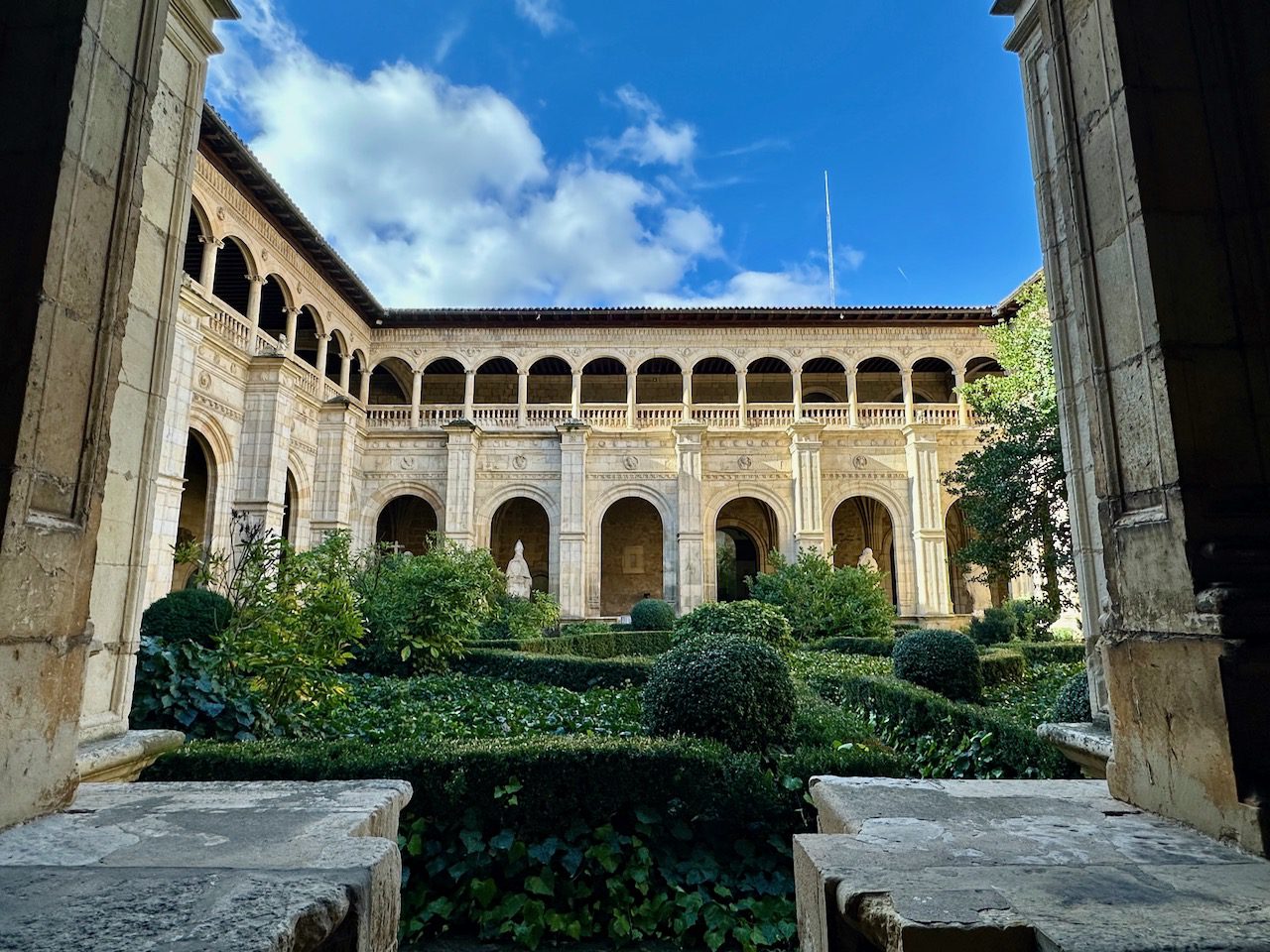
A few other artifacts and we were on our way again.
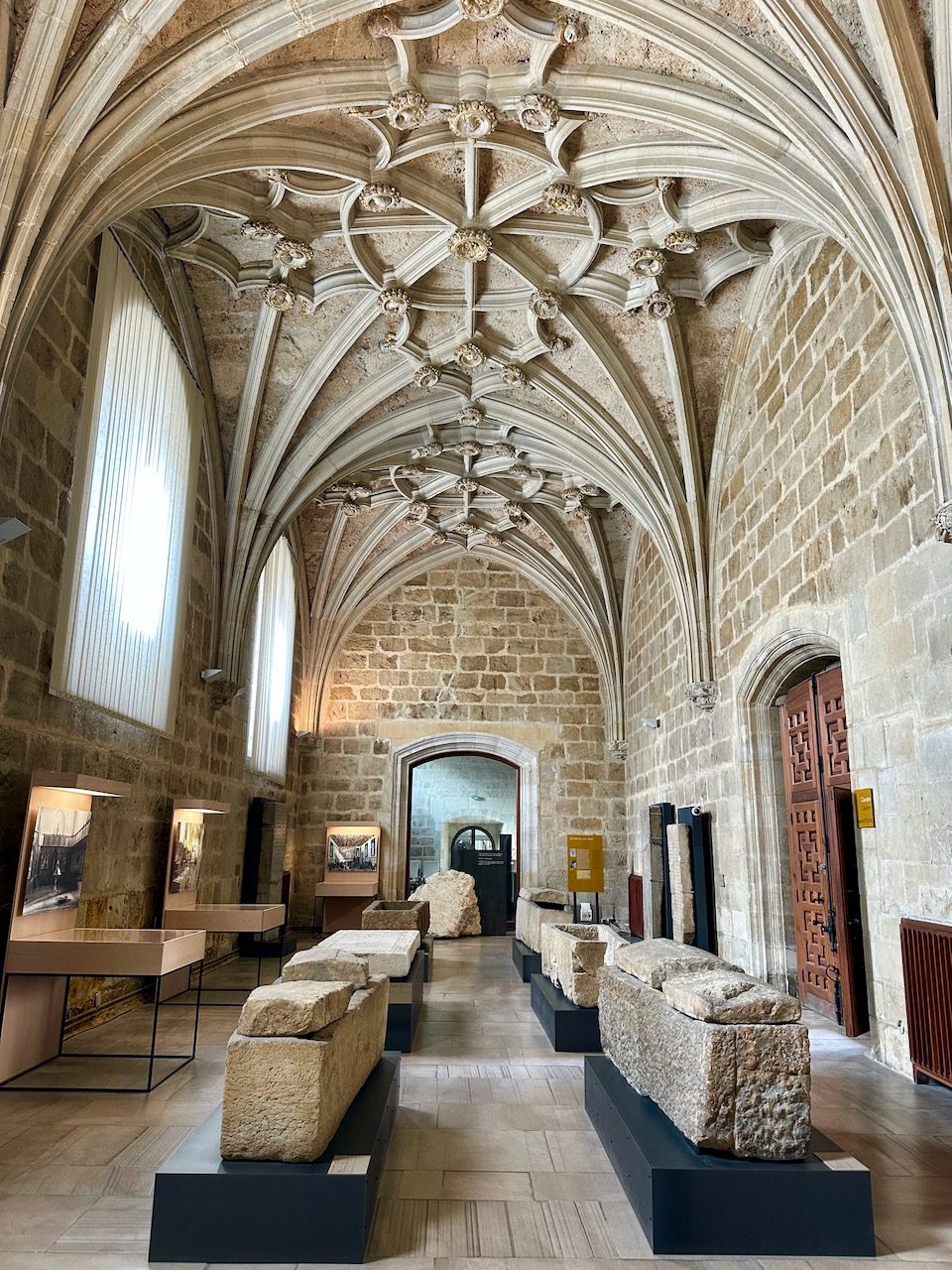
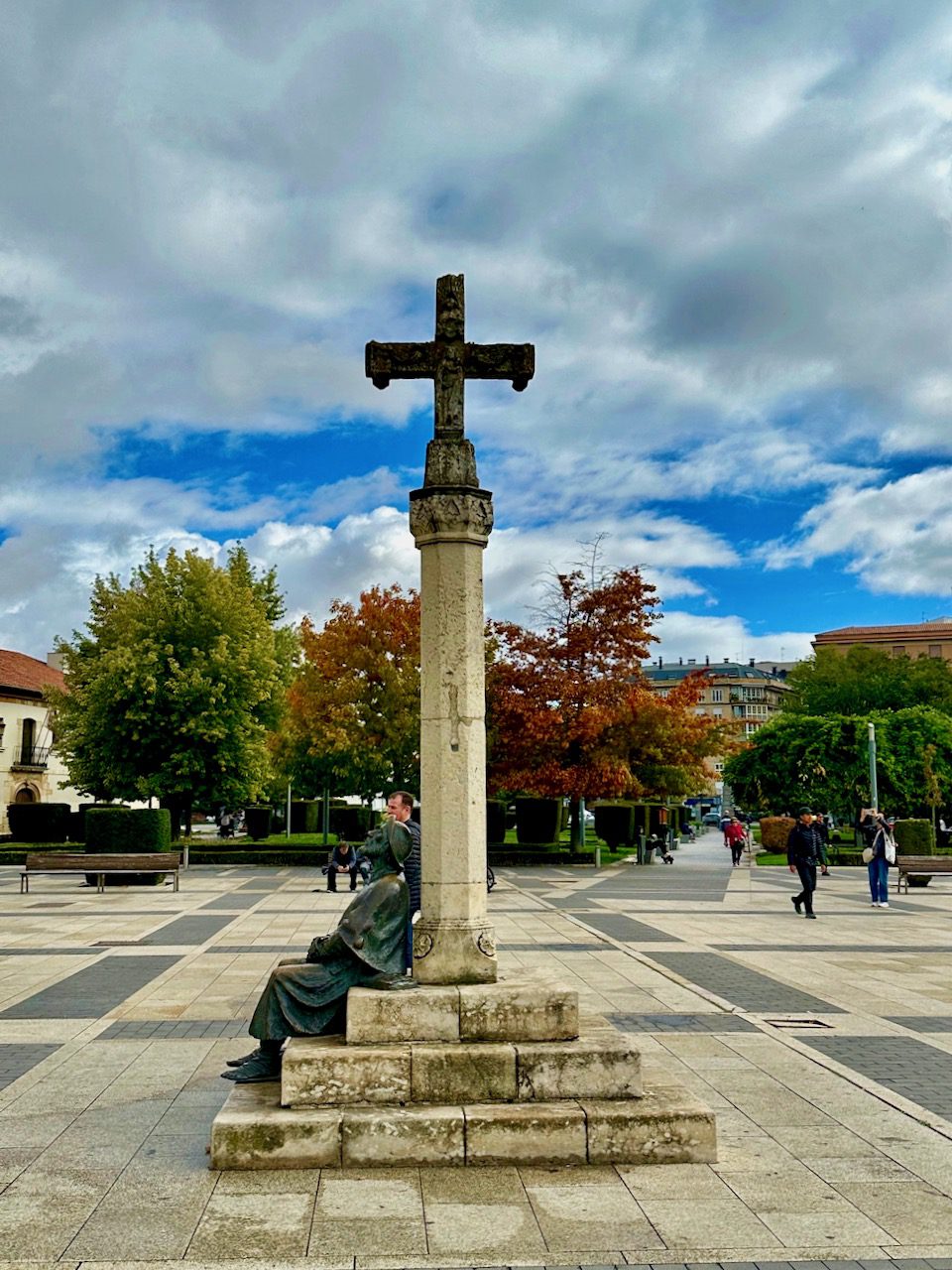
Back in the 12th century, this convent initially was established as a monastery for the Military Order of Saint James (Santiago) to provide hospital services for pilgrims on the Camino de Santiago. In front of the monastery stands Monumento al Peregrino (Pilgrim Monument), honoring the tradition of the Way of St. James. This figure represents all the travelers who have walked the Camino de Santiago over the centuries.
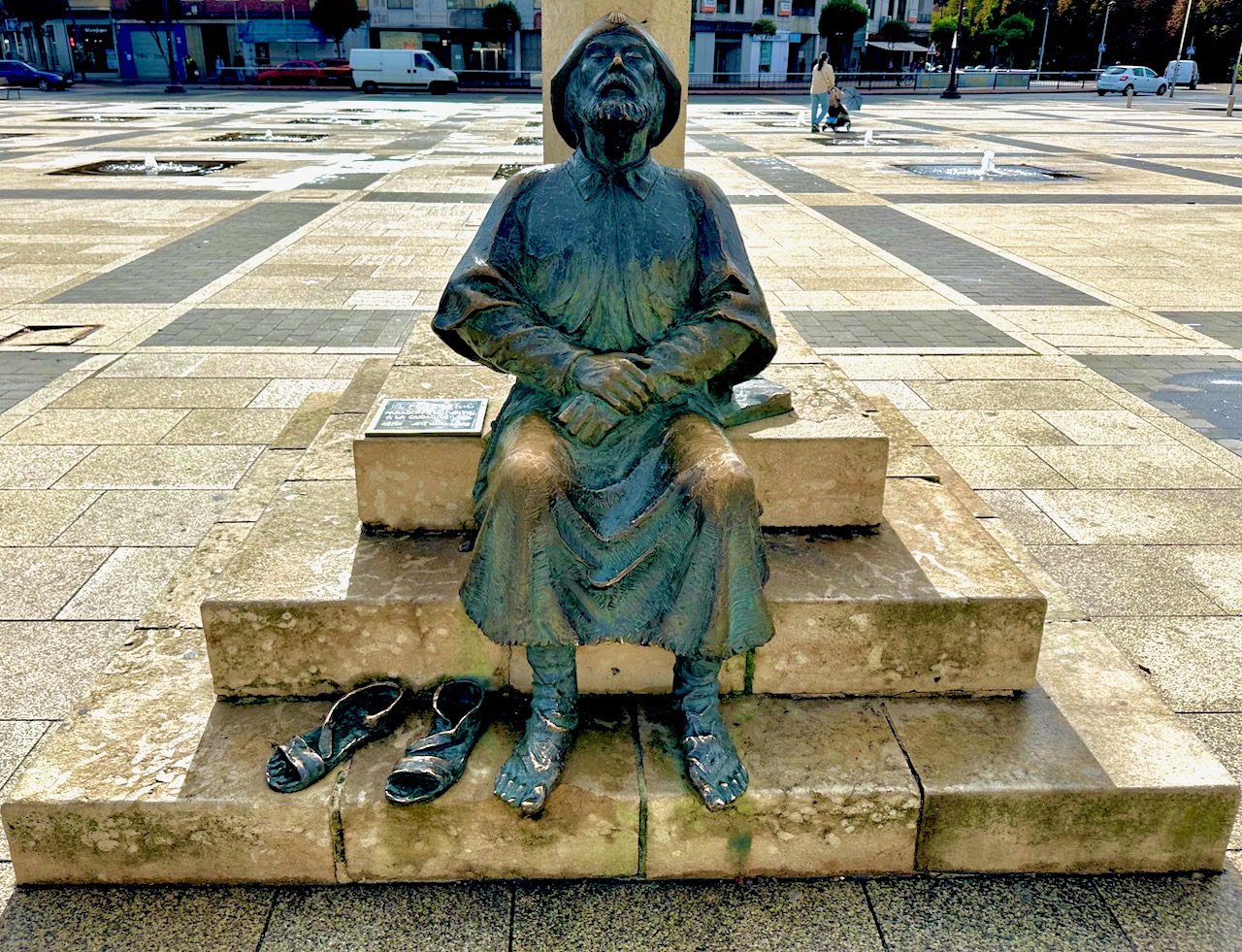
Instead of the Camino, Tracy and I decided to enjoy a walk through León now that the rain had subsided. Before heading to the Gran Via, we took in the views from the Puente de San Marcos, adjacent to the monastery.
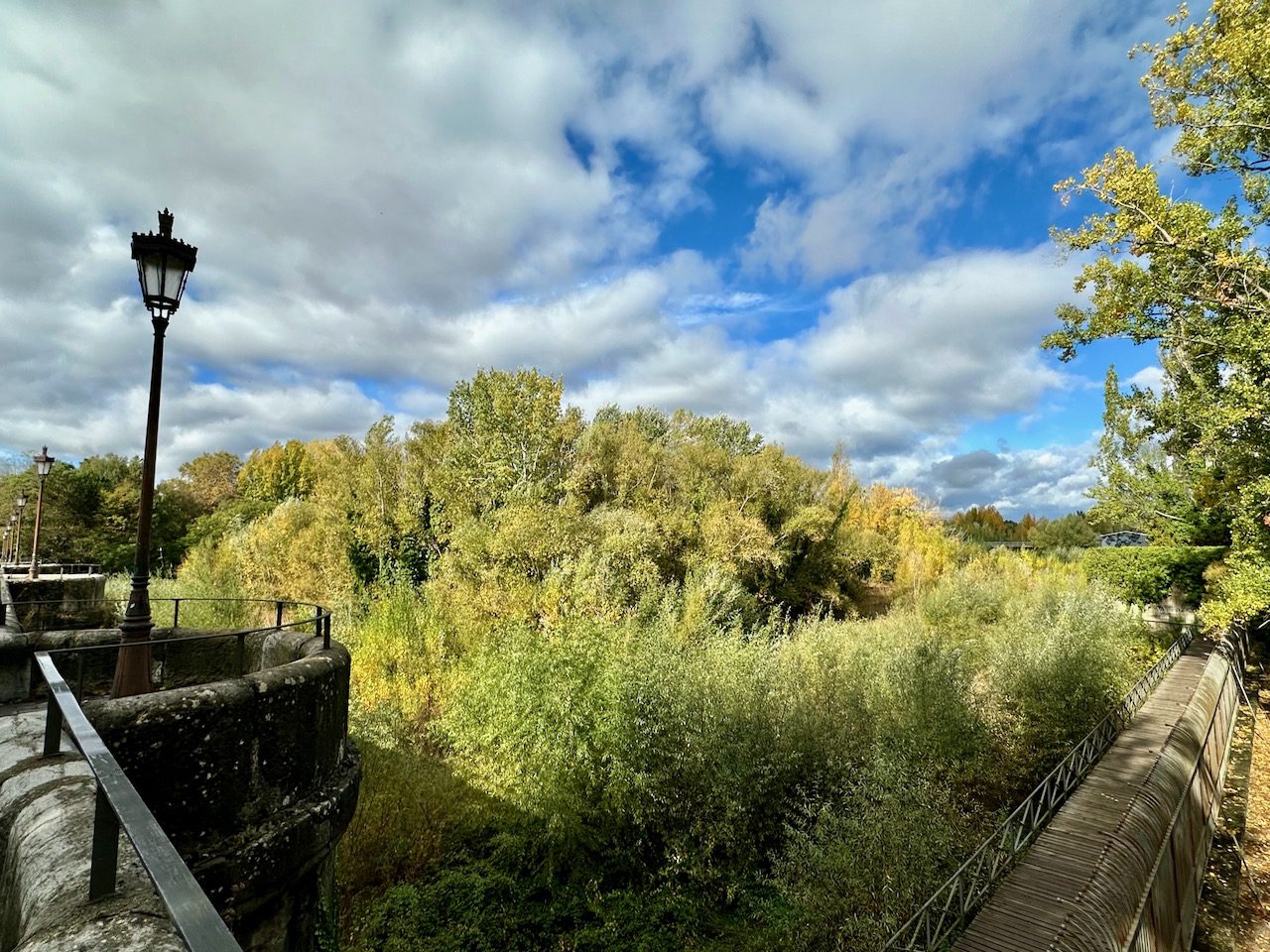
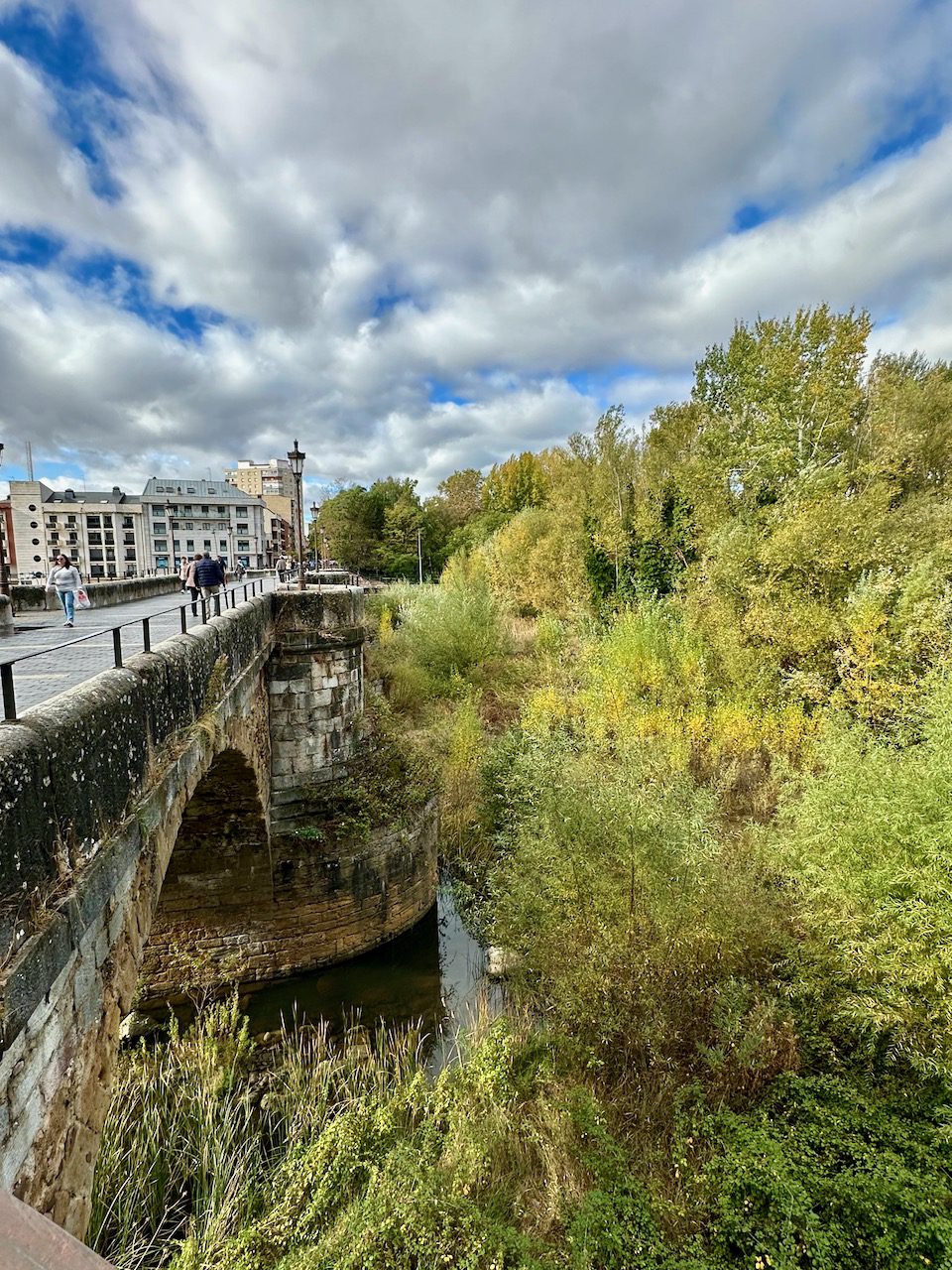
We strolled down the Gran Via …


… stopped in a couple of shops along the way …


… and attempted not to be run over by the tour bus/train.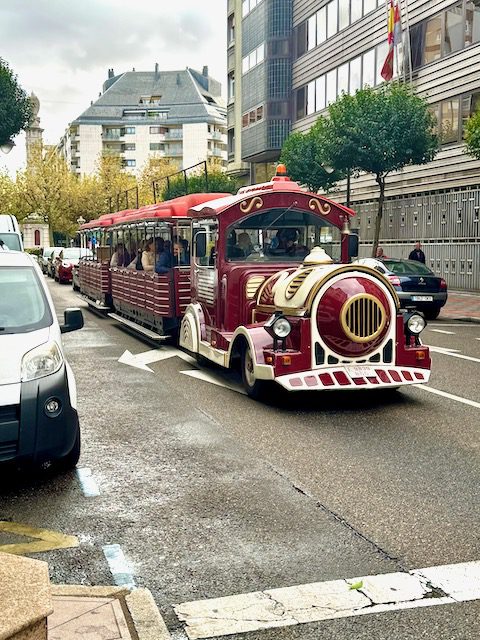
We reached the Plaza de la Inmaculada, and then found ourselves back at Plaza de Santo Domingo.


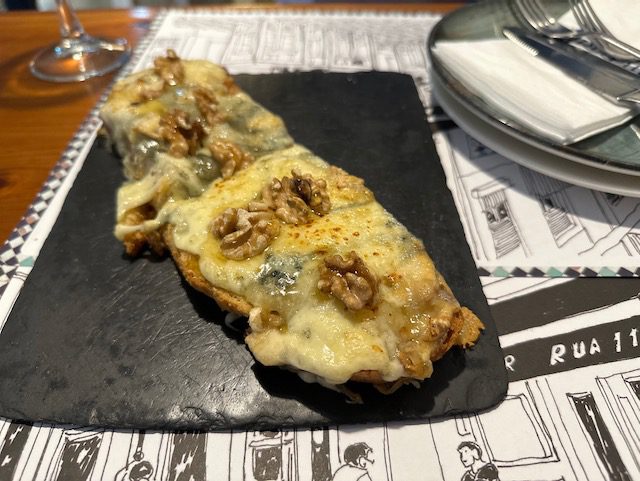
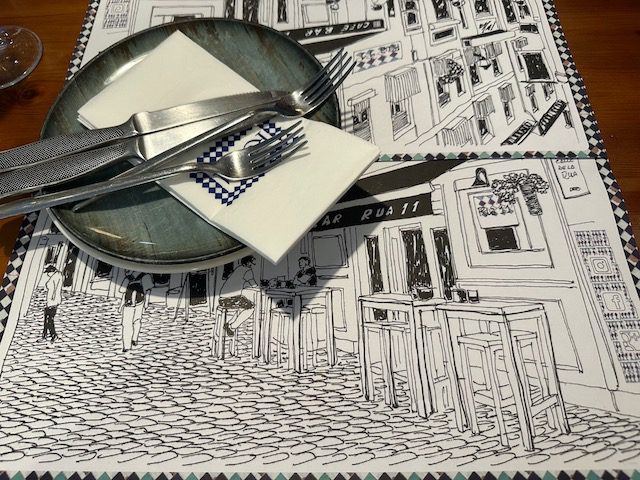
We had read about Café Bar Rúa 11 in the heart of Barrio Húmedo, and we were lucky to score the last table (there are only four) inside on a busy afternoon.

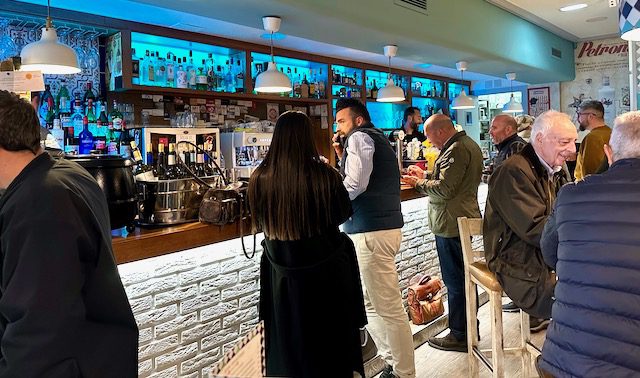
It has a very colorful interior …
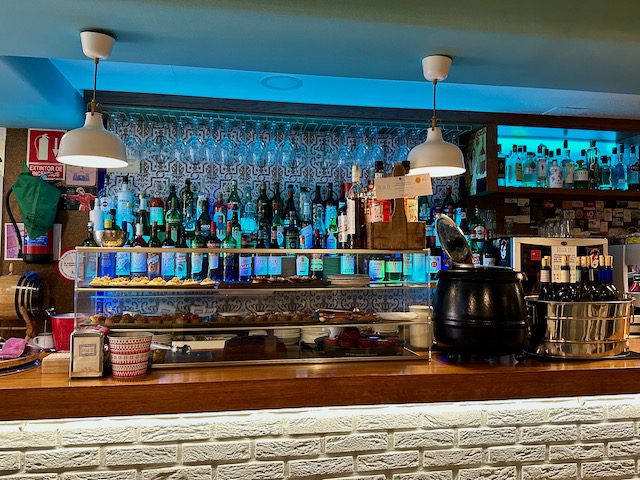
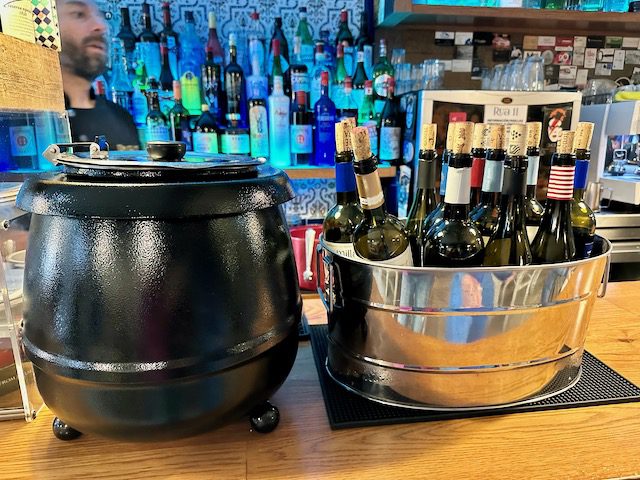
… and the food (and wine) selection was more than inviting.
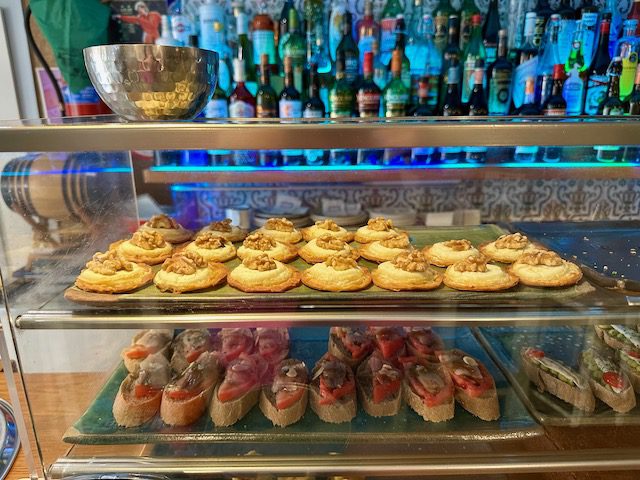
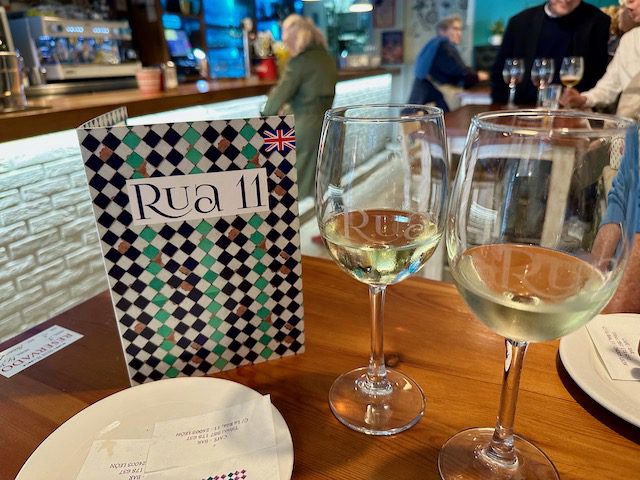
The tapas were spectacular….

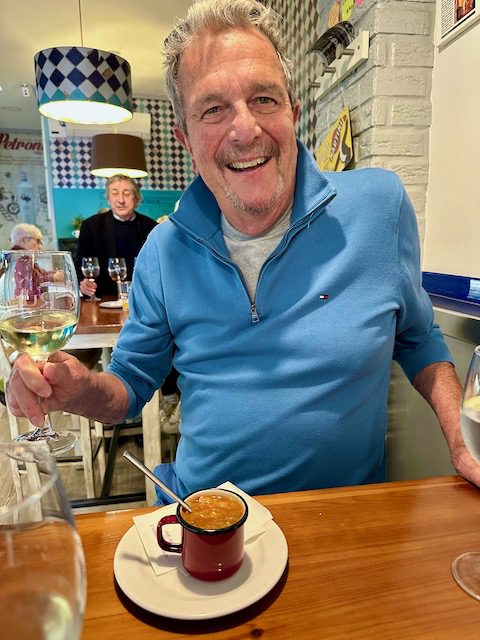
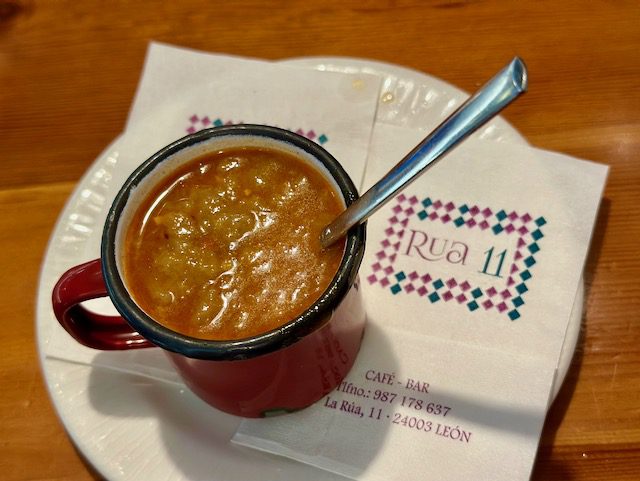
I really enjoyed my cup of Garlic Soup, as I did throughout the trip.
We also shared an assortment of cheeses with pear, walnuts and honey on toasted rustic bread. If in León, this place gets a special recommendation from us.
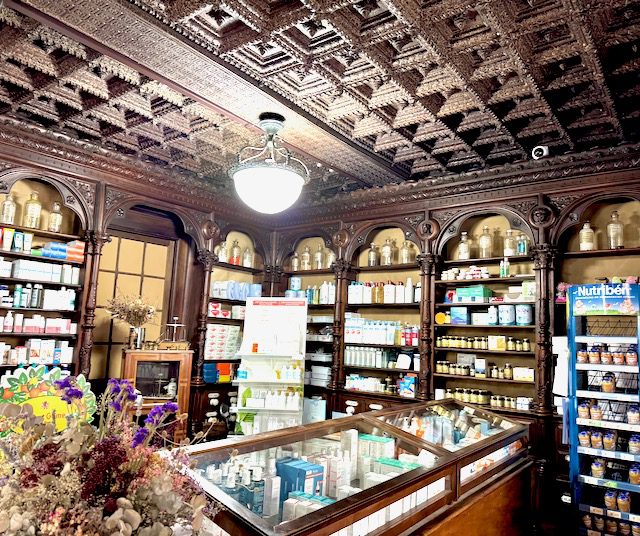
After putting our feet up for a bit at the hotel, we wandered back to the Calle Ancha, the famed León street we had strolled on numerous times before as we walked through town. Unbeknownst to us, when we stopped into a farmacia, we had stepped back in time. Near the cathedral is Farmacia Merino, which I believe is the oldest pharmacy in León. Had we looked more carefully at the exterior, we would have noticed that it was founded in 1827.
Inside are beautiful walnut cabinets complete with a large collection of historic apothecary jars and pharmaceutical instruments and a coffered ceiling.
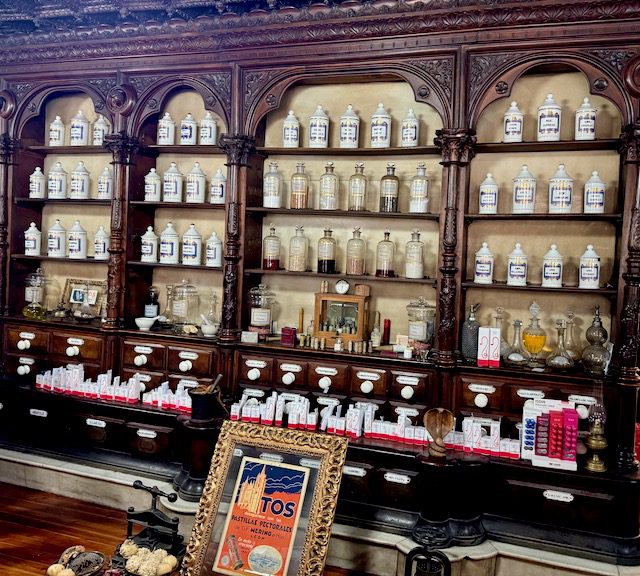
The old scale is cool, too. You can weigh in with your own opinion.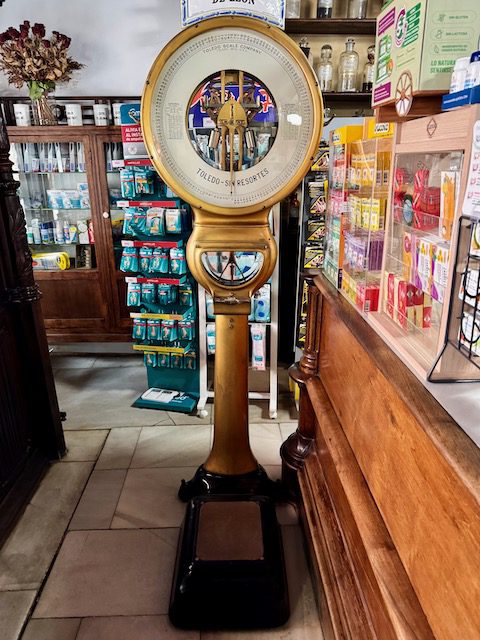
As we shopped inside, we noticed that the pharmacy is also a quick stop for walking tours. Who knew?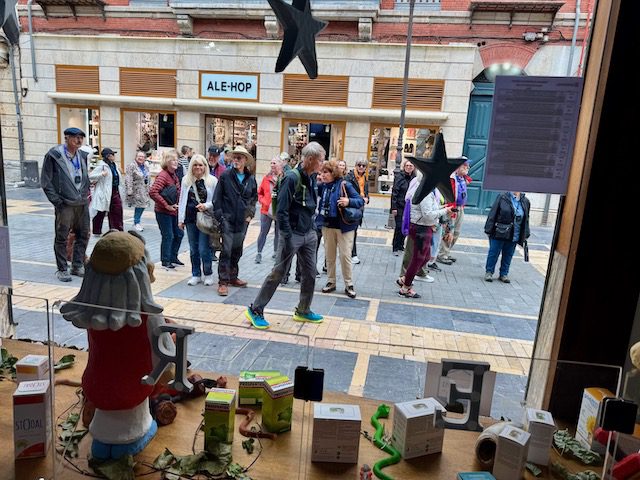
We headed back to the hotel, stopping for a sip of vino (no mas tapas, however) at our little spot in the Barrio Humido.
As 7 p.m. approached, the tapas cravings returned, and we stopped by our other favorite spot, Los Cazurros, for tapas and wine.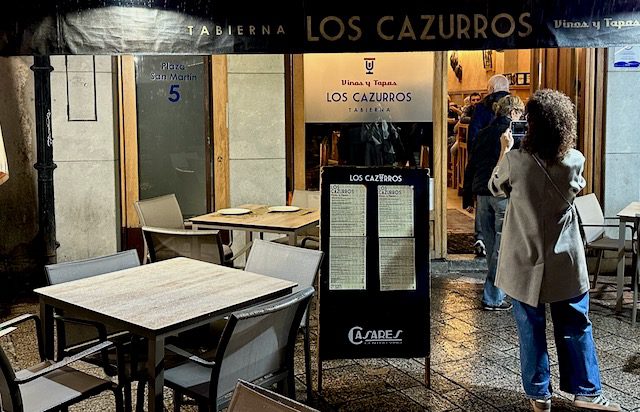
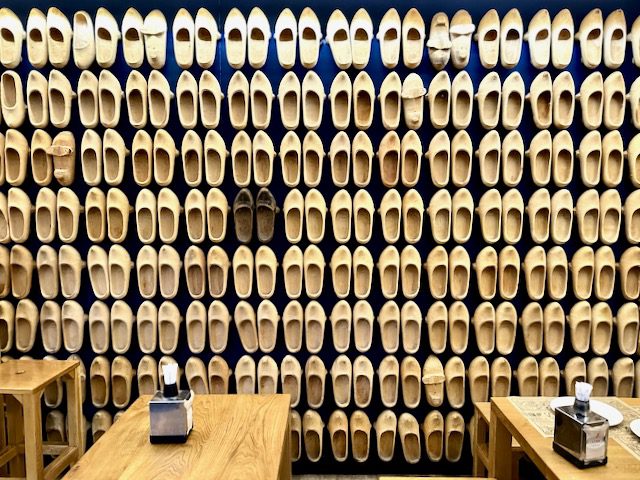
The wall mural at Los Cazurros contains a number of madreñas (traditional wooden clogs that are typical for this region).

The tapas scene in Barrio Humido made León a worthwhile and fun stop. Another huge plus was the fact in our two days here we heard virtually no English. Salud!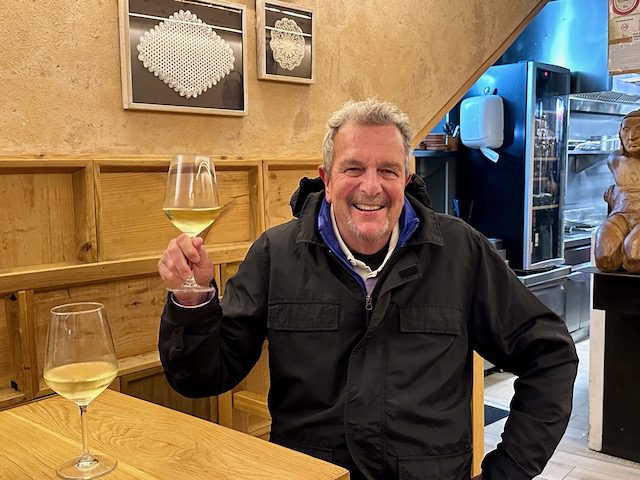
Of course, tapas were only our appetizer. As the rain pelted down, we were off to dinner.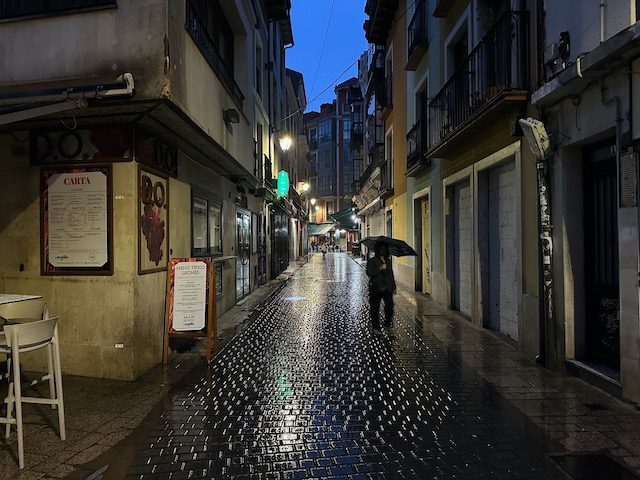
Located near the cathedral on Calle Ancha …
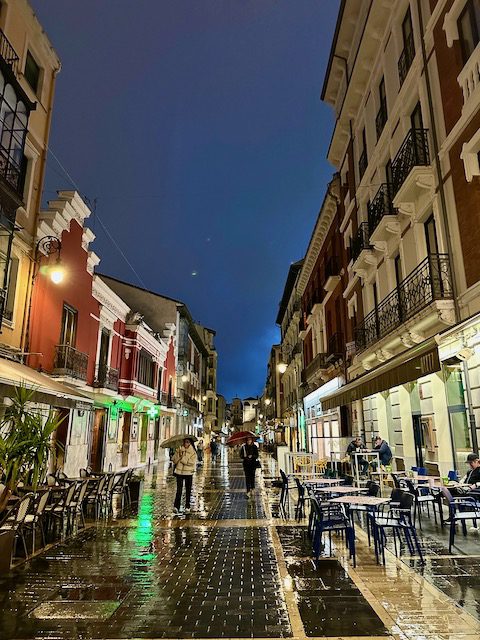

… was La Trastienda del 13. Of course, being hungry tourists, we were the first to arrive. The interior was charming.
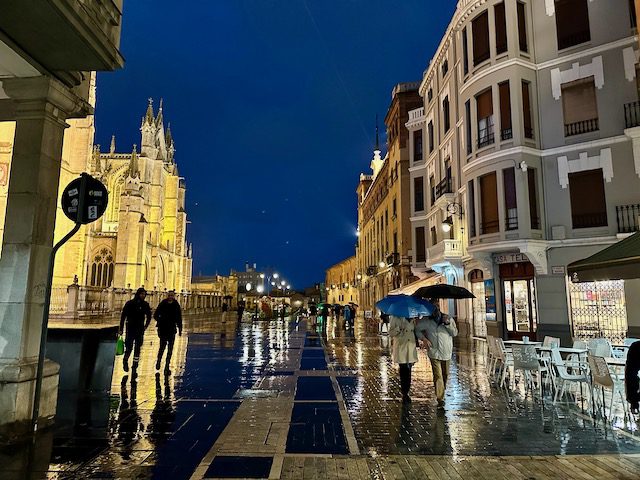
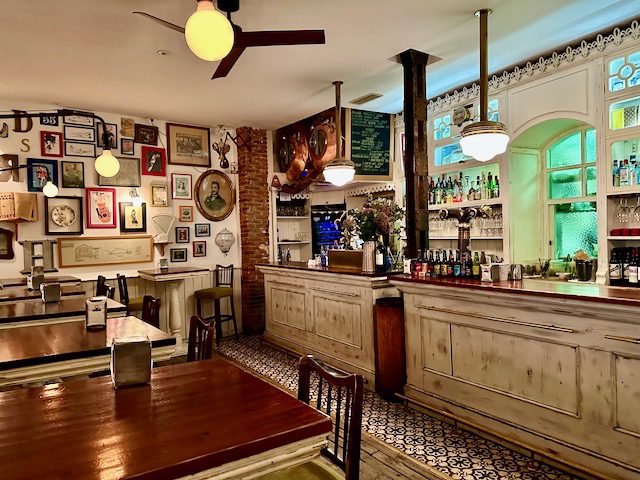
Although, the server didn’t have any other patrons to worry about, he had a hard time getting to our table because he was captivated by his cell phone. When he did eventually find time to check on us (and now other guests, as well), we were rewarded with some very good dishes, including a starter of hummus with pomegranate balsamic. Wow!
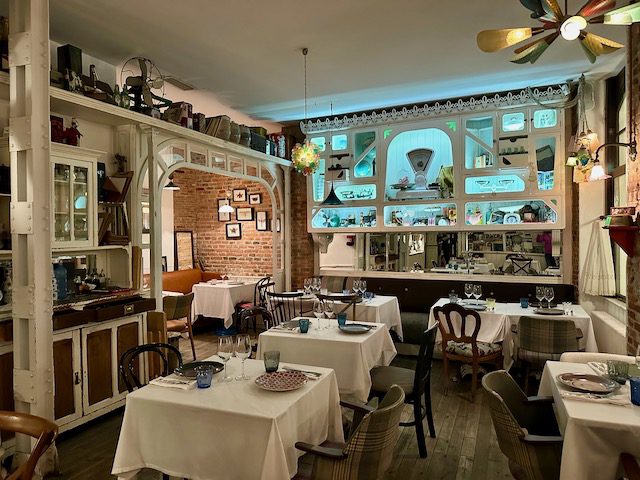
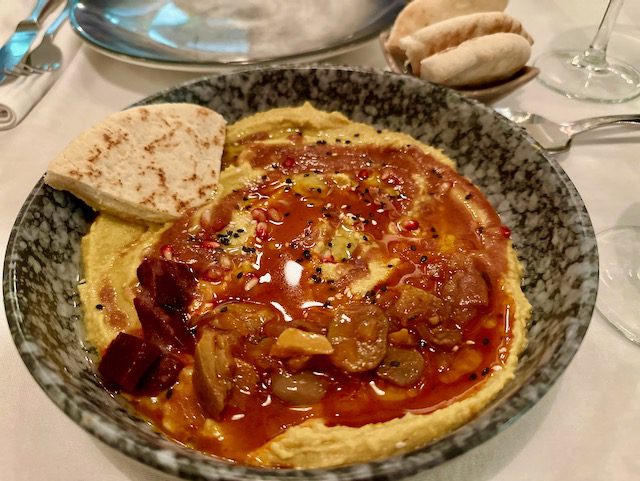
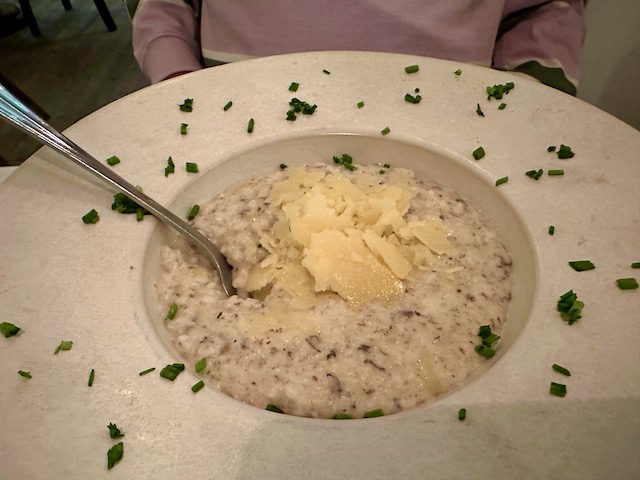
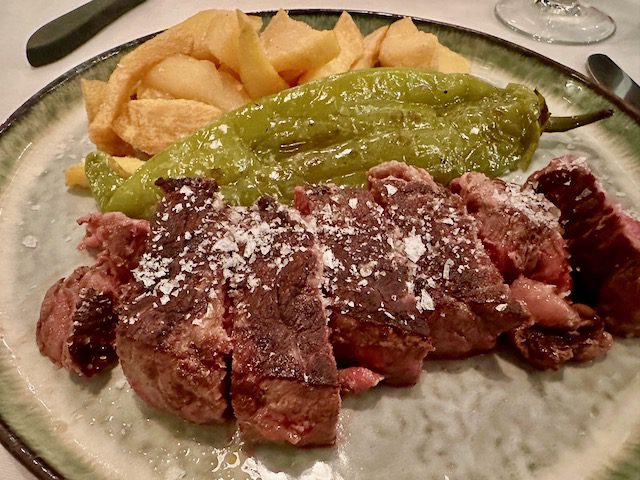
Dinner was fantastic, with Tracy’s Steak Frites and my truffle risotto earning rave reviews. I’m glad the chef didn’t phone it in on this evening.
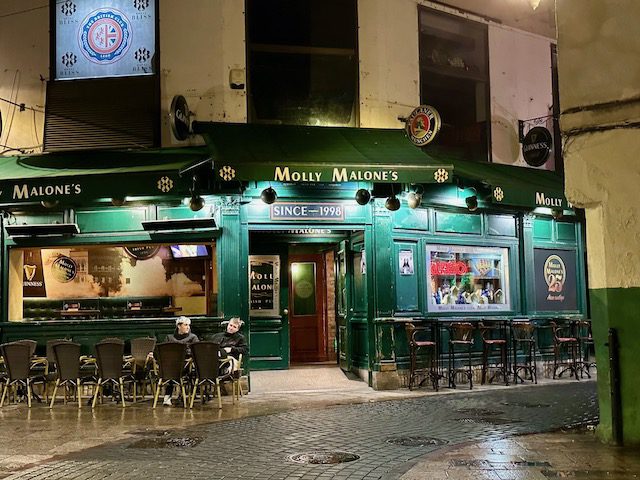
After dinner, despite the constant rain, we snapped some final night photos in before turning in for the evening.
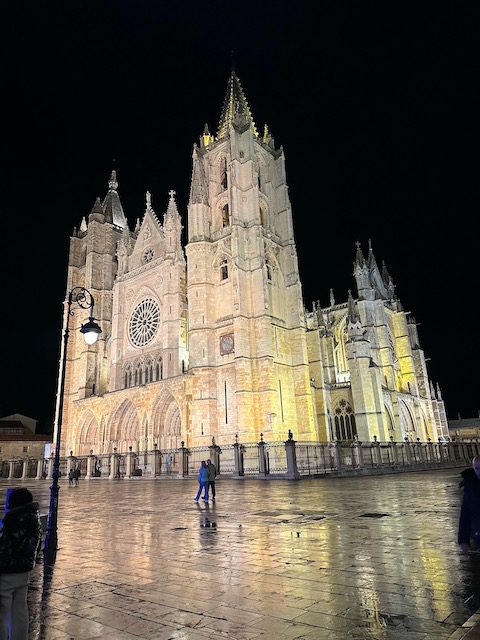

Tomorrow would turn out to be one of our busier days. We took an early drive to Segovia, the last stop on our two-week journey.
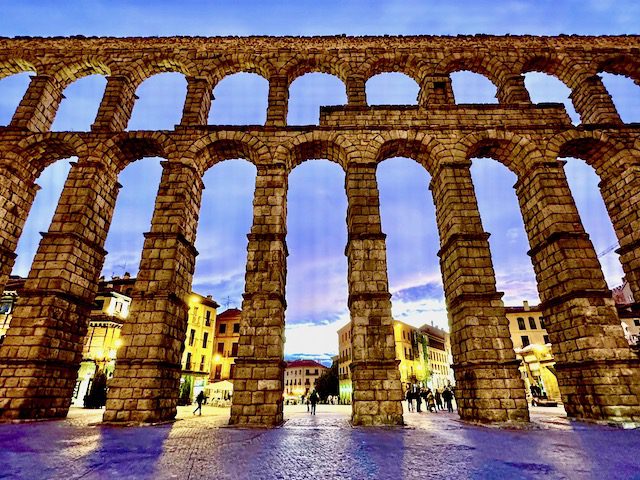
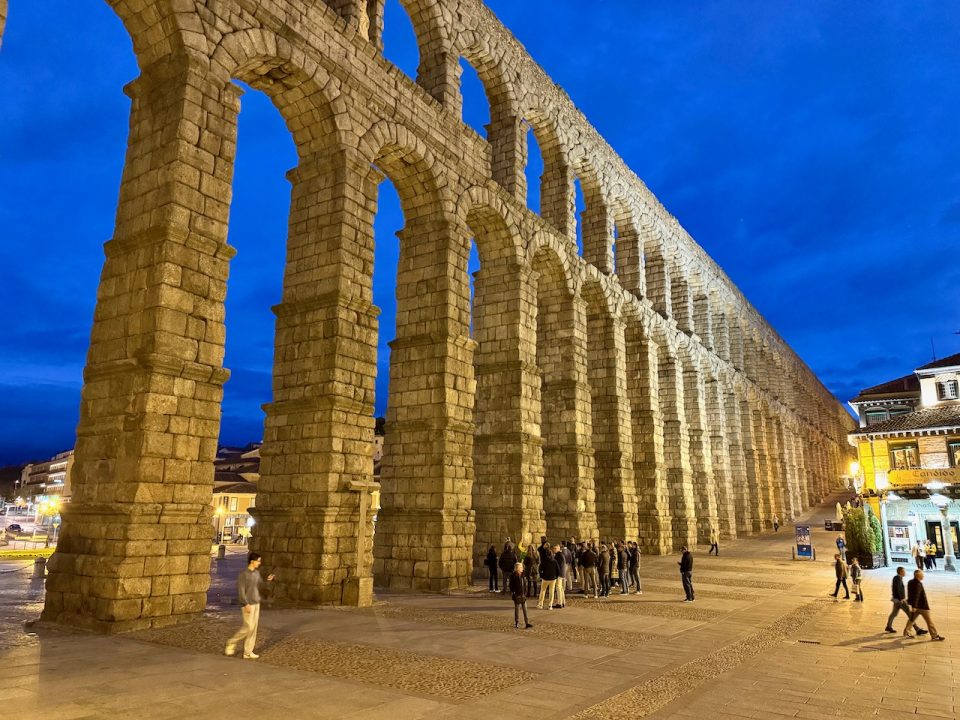
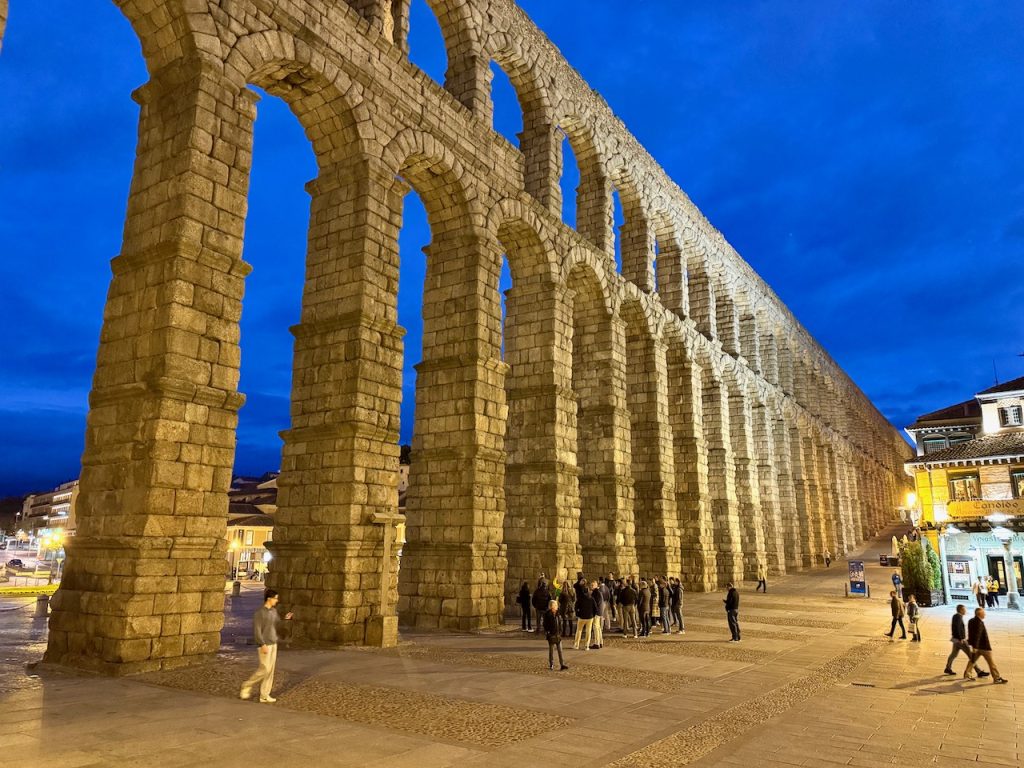
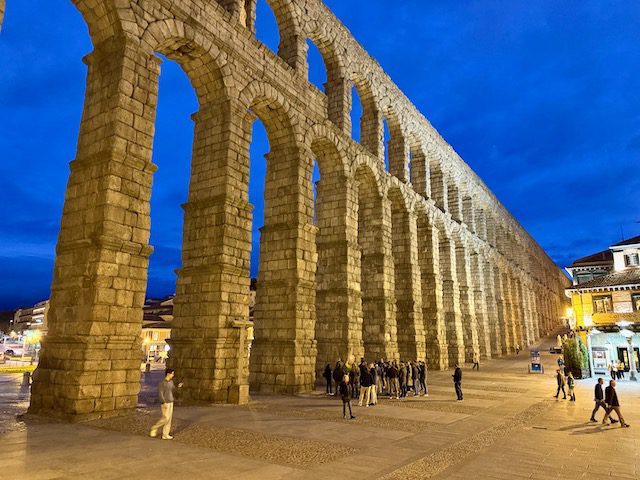 Of course, we had to check out the Catedral de Segovia. Also on our Segovia bingo card would be Palacio Episcopal, the former residence of the bishops in Segovia, and the outstanding storybook castle, Alcázar de Segovia. But the evening would be the highlight. There are aqueducts and then there are AQUEDUCTS. The 2,000 year-old UNESCO Acueducto de Segovia is is one of the two largest existing Roman structures in Spain, and it is a sight to behold. Segovia would turn out to be a great last stop on our trip.
Next: Chapter Eleven – Sensational Segovia
Day Eleven – Navigating Carefully Into Segovia, Hotel In A Former Convent, Gothic Masterpiece, Noble Rooms, Formidable Fortress, Medieval Man-Spreading, Vibrant Nightlife, Amazing Aqueduct, Oldest Restaurant In Segovia and I Don’t Need To See Who I Eat